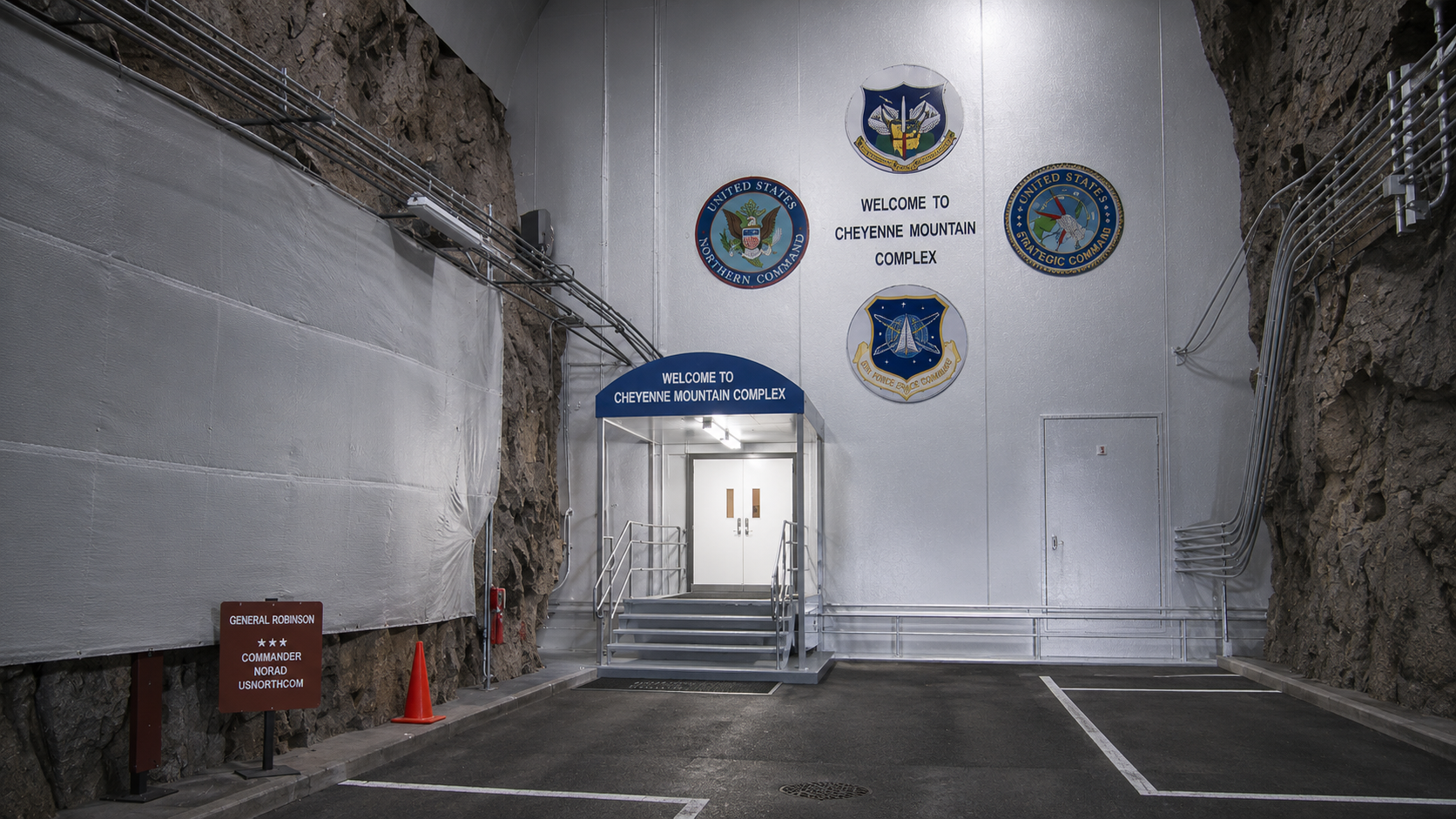
The photograph shows what lies beyond the blast doors: the interior of Cheyenne Mountain’s operational core, where corridors carved from solid granite extend hundreds of feet into the mountain. The facility was engineered to withstand a thirty-megaton nuclear detonation within 1.5 nautical miles. Its fifteen buildings sit on 1,319 steel springs, each weighing approximately one thousand pounds, designed to absorb ground shock and allow the structures to move independently of the surrounding rock during a nuclear event.
The command center processes tracking data for every object in orbit above Earth. It monitors missile launches from any point on the globe. It maintains continuous communication with every nuclear-armed submarine, bomber wing, and ICBM silo in the American arsenal. And it does all of this from inside a mountain that was hollowed out using 1960s construction technology — drill-and-blast excavation that required five years and generated visible spoil piles that can still be identified in historical satellite imagery.
This is the critical point: Cheyenne Mountain was built with the worst tunneling technology available to the classified world. Everything constructed after it — every facility that used the nuclear subterrene, every installation that benefited from six decades of materials science advancement — is larger, deeper, and more capable than what you see in this photograph. The interior of Cheyenne Mountain is not the state of the art. It is the starting point. And they stopped showing you what came after it.
From Transhuman Genocide: The Underground Report — the book that maps what they built beneath your feet.