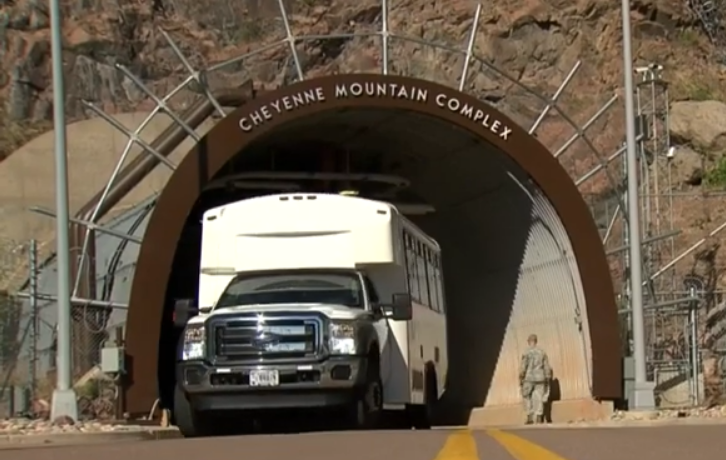
The tunnel mouth at Cheyenne Mountain is the most photographed entrance to a facility the public is never permitted to fully see. The portal — wide enough for two vehicles side by side — penetrates 1,800 feet into the granite before reaching the first blast door. Beyond it, a network of chambers hollowed from solid rock houses the operational core of North American aerospace defense. The facility was built to survive a direct hit from a Soviet thermonuclear weapon, and its spring-mounted buildings can absorb the kinetic energy of a thirty-megaton airburst detonated within a mile of the surface.
What NORAD shows visitors is a carefully curated fraction of the complex. The public tour includes the blast doors, a command center, and a briefing room. It does not include the lower levels — the ones that required vertical shaft excavation and whose existence is acknowledged only in declassified construction reports from the 1960s. The original specifications called for “expansion capability to accommodate future mission requirements.” Those requirements, whatever they became, have never been publicly disclosed.
Cheyenne Mountain is the facility they let you see precisely because it establishes a ceiling on your imagination. If this is the one they show you — hardened, impressive, but limited — then surely nothing larger exists. That is the logic they depend on. And it is exactly wrong. Cheyenne Mountain is not the most advanced underground facility in the American network. It is the oldest. Every generation of construction technology that followed it has been applied to facilities you are not permitted to photograph.
From Transhuman Genocide: The Underground Report — the book that maps what they built beneath your feet.