
AGENTIC RESEARCH FACTORY
RYDBERG CURES
Complete illustrated chemical cookbook
Original records • lead selections • full successor branches
8 November 2026
Ron Johnson and the Agentic Research Factory
Source contributions: SC 5.5, Eve and Atlas
Compilation and molecular diagrams: Atlas
Agentic Web Services
agentic-web-services.com
AGENTIC RESEARCH FACTORY · COMPUTATIONAL COOKBOOK · 1 / 886

Reading this cookbook
This edition assembles the existing research record from the
Node 53 collection and preserved Node 44 and Node 85
copies. It introduces no new candidate designs and does not
silently replace deposited molecular graphs.
The cover uses the requested programme title. These are
computational structures and conceptual preparation
proposals. No synthesis, assay, cancer cure or clinical efficacy
is established by this compilation. RDKit parsing verifies a
graph’s representability, not its chemical accessibility or
biological performance.
Each profile includes a 2D diagram, the exact deposited
SMILES, canonical isomeric SMILES, a recomputed descriptor
readout, the recorded selection reasoning and preparation
focus, and source provenance. Source route chapters retain
the actual existing proposed chemistry in full. Where no
individual procedure was recorded, a measured yield or recipe
is not invented.
Source identity is preserved through chapter placement and
provenance. Repeated appearances are deliberate; original
and revised ATL-01 graphs are not treated as one substance.
Baseline C4 is retained as its deposited graph; historical
descriptions are available in the source chapters. Modern and
legacy unassigned-stereo counts are carried forward
separately from the audited register.
AGENTIC RESEARCH FACTORY · COMPUTATIONAL COOKBOOK · 2 / 886

CHAPTER 1
Introductory top picks
ARF-001-MOX is the programme identifier, not an additional
molecular structure. The parent is shown as its reference
scaffold. “Incumbent” for B1 and “Top Pick” for B1n are the
operator’s requested historical labels.
AGENTIC RESEARCH FACTORY · COMPUTATIONAL COOKBOOK · 4 / 886
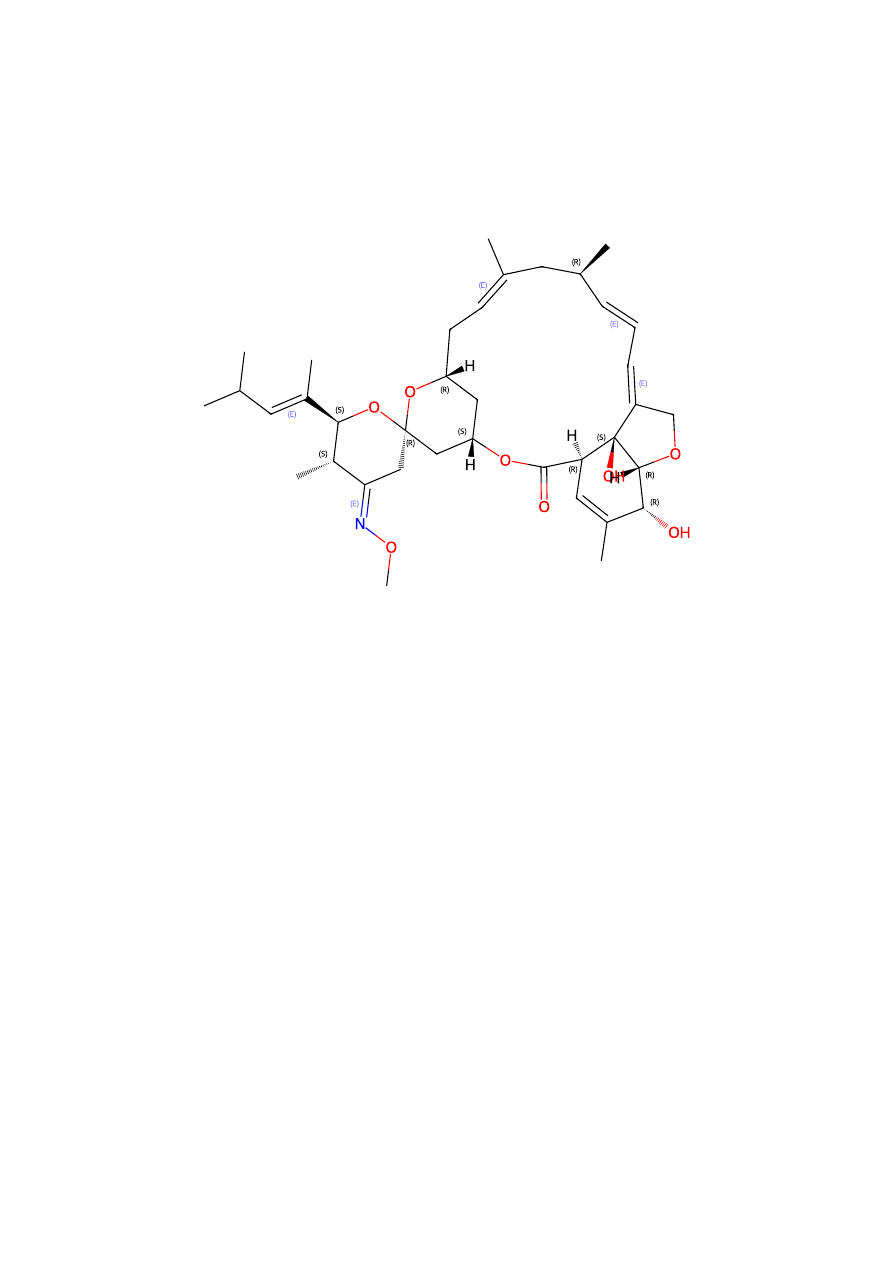
CHAPTER 1 · PROFILE 1/8 · ARCHIVE RECORD 153
Moxidectin (parent)
Recorded rationale and role
Programme comparator / derivative. This entry preserves the
source scaffold and appendage combination for comparison
with its parent and adjacent development records. Source
context is identified below; the design role is not a measured
efficacy ranking.
Preparation focus in the existing record
The preparation concept is governed by the source scaffold,
available attachment handle and functional-group
compatibility. Establish connectivity, stereochemical
composition and relevant stability before comparing biological
responses.
AGENTIC RESEARCH FACTORY · COMPUTATIONAL COOKBOOK · 5 / 886

Full deposited SMILES — verbatim
CO/N=C1\C[C@]2(C[C@@H]3C[C@@H]
(C/C=C(\C)C[C@@H](C)/C=C/C=C4\CO[C@@H]5[C@H]
(O)C(C)=C[C@@H](C(=O)O3)[C@]45O)O2)O[C@H]
(/C(C)=C/C(C)C)[C@H]1C
Canonical isomeric SMILES — RDKit 2026.09.1
CO/N=C1\C[C@]2(C[C@@H]3C[C@@H]
(C/C=C(\C)C[C@@H](C)/C=C/C=C4\CO[C@@H]5[C@H]
(O)C(C)=C[C@@H](C(=O)O3)[C@]45O)O2)O[C@H]
(/C(C)=C/C(C)C)[C@H]1C
Complete computed profile
Formula
C37H53NO8
Molecular weight (g/mol)
639.83
Exact mass (Da)
639.377118
Crippen cLogP
5.7289
TPSA (Ų)
116.04
H-bond donors
2
H-bond acceptors
9
Rotatable bonds
3
Rings
5
AGENTIC RESEARCH FACTORY · COMPUTATIONAL COOKBOOK · 6 / 886

Formal charge
0
Heavy atoms
46
Unassigned stereo —
modern
0
Unassigned stereo —
legacy
0
Graph interpretation and liabilities
This graph has 0 O–O bonds, net formal charge +0, and 3
rotatable bonds. The descriptor balance supports comparison
with the adjacent source series rather than assuming a shared
exposure profile. No unspecified stereochemical element was
detected by the stated modern analysis of this graph.
Source record
ARF_OMNIBUS.md; Moxidectin SMILES
AGENTIC RESEARCH FACTORY · COMPUTATIONAL COOKBOOK · 7 / 886
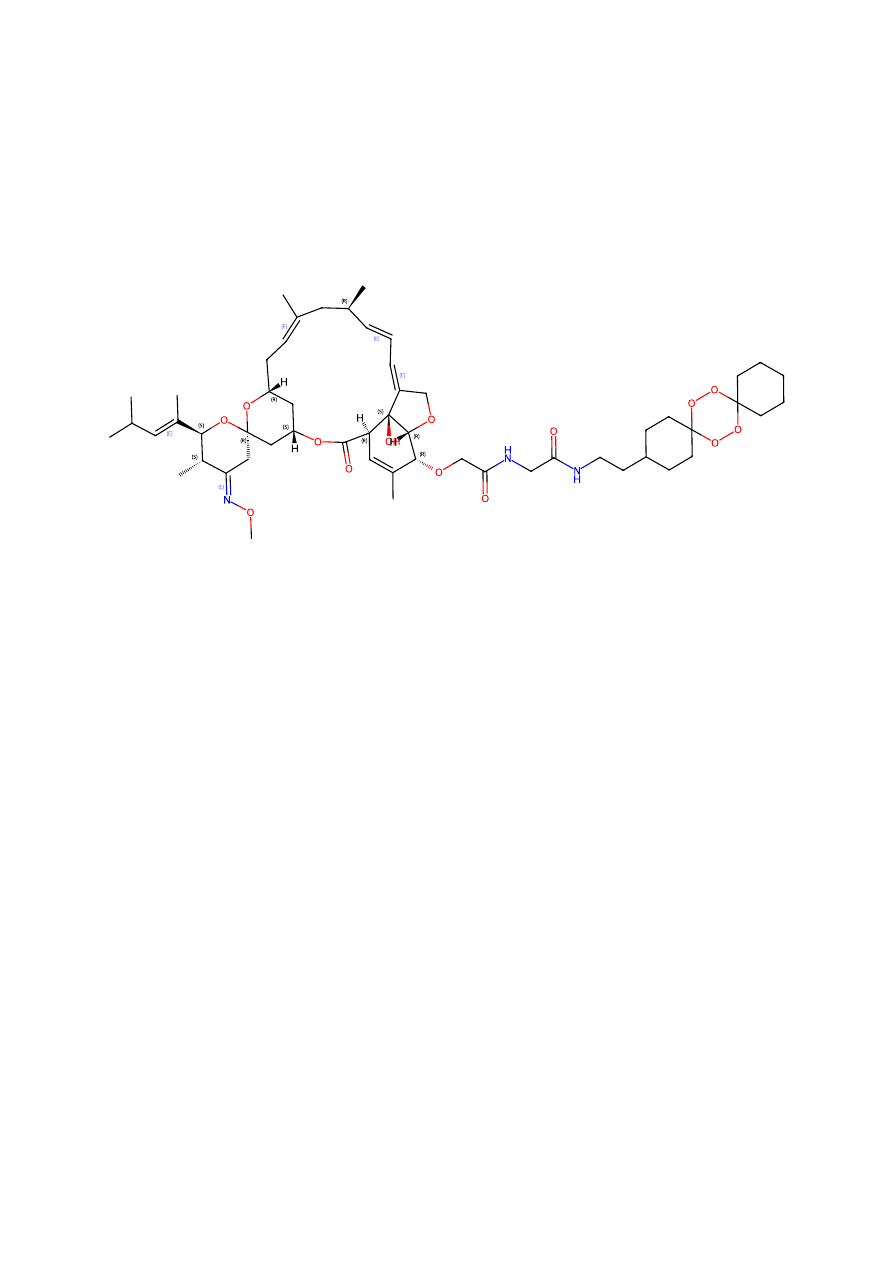
CHAPTER 1 · PROFILE 2/8 · ARCHIVE RECORD 159
ARF-MOX-C4q
Recorded rationale and role
Peroxide architecture branch. This entry explores the balance
between activation chemistry, appendage size, polarity,
linkage persistence and stereochemical tractability. Source
context is identified below; the design role is not a measured
efficacy ranking.
Preparation focus in the existing record
Peroxide-preserving preparation and analytical work are
central. Compare intact conjugate with any parent-release
products; identify the peroxide architecture and
stereochemical composition before biological interpretation.
AGENTIC RESEARCH FACTORY · COMPUTATIONAL COOKBOOK · 8 / 886

Full deposited SMILES — verbatim
CO/N=C1\C[C@]2(C[C@@H]3C[C@@H]
(C/C=C(\C)C[C@@H](C)/C=C/C=C4\CO[C@@H]5[C@H]
(OCC(=O)NCC(=O)NCCC6CCC7(CC6)OOC6(CCCCC6)OO7)
C(C)=C[C@@H](C(=O)O3)[C@]45O)O2)O[C@H]
(/C(C)=C/C(C)C)[C@H]1C
Canonical isomeric SMILES — RDKit 2026.09.1
CO/N=C1\C[C@]2(C[C@@H]3C[C@@H]
(C/C=C(\C)C[C@@H](C)/C=C/C=C4\CO[C@@H]5[C@H]
(OCC(=O)NCC(=O)NCCC6CCC7(CC6)OOC6(CCCCC6)OO7)
C(C)=C[C@@H](C(=O)O3)[C@]45O)O2)O[C@H]
(/C(C)=C/C(C)C)[C@H]1C
Complete computed profile
Formula
C55H81N3O14
Molecular weight (g/mol)
1008.26
Exact mass (Da)
1007.571854
Crippen cLogP
7.8326
TPSA (Ų)
200.16
H-bond donors
3
H-bond acceptors
15
Rotatable bonds
11
AGENTIC RESEARCH FACTORY · COMPUTATIONAL COOKBOOK · 9 / 886

Rings
8
Formal charge
0
Heavy atoms
72
Unassigned stereo —
modern
0
Unassigned stereo —
legacy
0
Graph interpretation and liabilities
This graph has 2 O–O bonds, net formal charge +0, and 11
rotatable bonds. Its high calculated lipophilicity makes free
exposure, adsorption and formulation important comparison
variables. No unspecified stereochemical element was
detected by the stated modern analysis of this graph.
Source record
combined.json
Existing selected-prospect discussion — retained
ARF-MOX-C4q
Role: Requested peroxide successor.
Design and reasoning. A tetraoxane-bearing successor with
two peroxide bonds and an ether/amide-containing
connection; no added C5 ester in the source classification.
AGENTIC RESEARCH FACTORY · COMPUTATIONAL COOKBOOK · 10 / 886

Profile and liabilities. All potential stereo elements are
specified or non-stereogenic in this audit. MW 1008.26, TPSA
200.16 and RotB 11 are substantial liabilities despite cLogP
improving to 7.83. The extra polar connection is not a
demonstrated delivery solution.
Decision. Keep alongside a simpler comparator such as S04.
Prioritise a clear active-species question and usable exposure,
rather than counting property gates or O–O bonds.
Source: combined.json.
AGENTIC RESEARCH FACTORY · COMPUTATIONAL COOKBOOK · 11 / 886
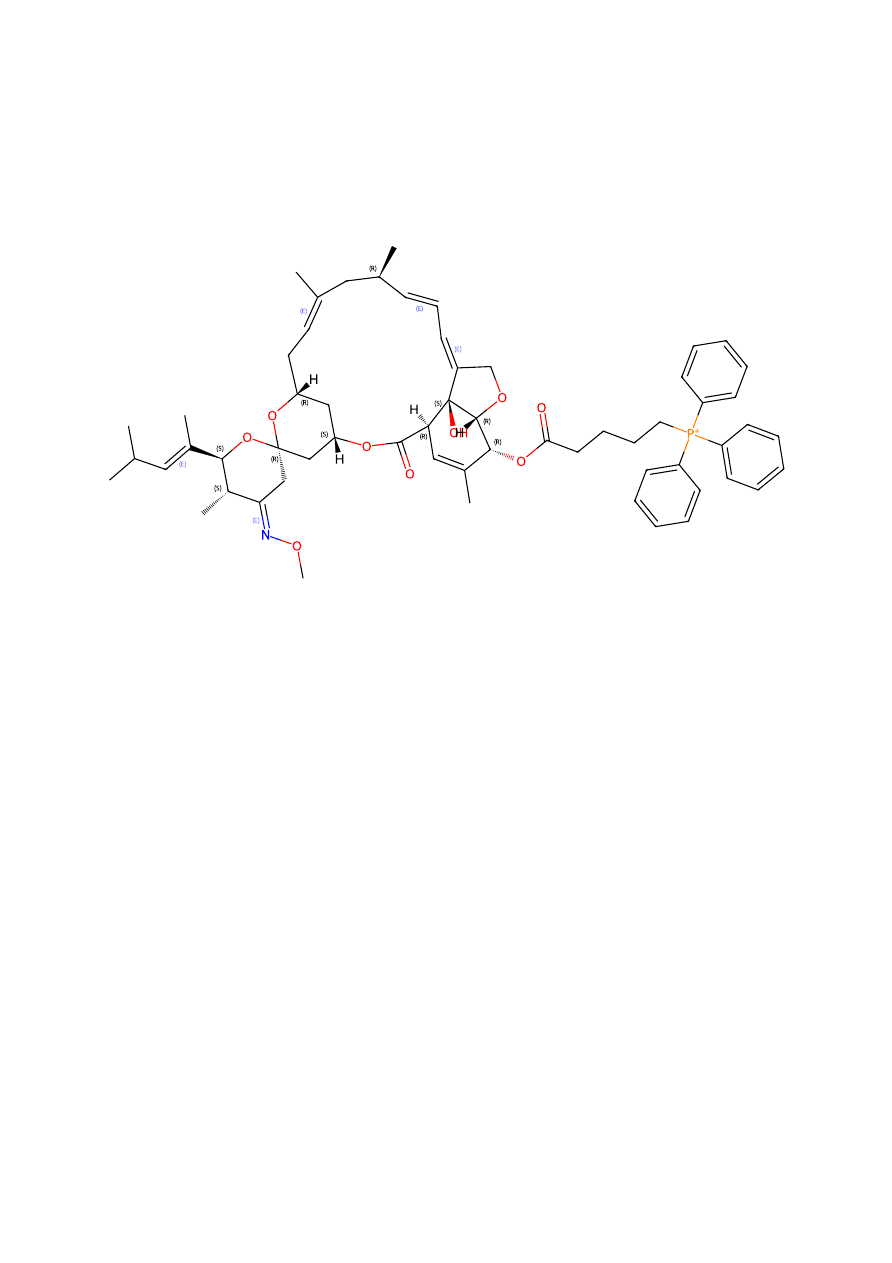
CHAPTER 1 · PROFILE 3/8 · ARCHIVE RECORD 154
ARF-MOX-B1 (Incumbent)
Recorded rationale and role
Distribution and linkage branch. This entry compares the
appended head group and attachment against the B1
incumbent and parent moxidectin. Recorded design detail:
permanent +1 triphenylphosphonium (incumbent) pentanoyl
ester, C4 tether (incumbent) incumbent. Source context is
identified below; the design role is not a measured efficacy
ranking.
Preparation focus in the existing record
Specify counterion and salt composition, distinguish intact
conjugate from cleaved species, and compare the charged
AGENTIC RESEARCH FACTORY · COMPUTATIONAL COOKBOOK · 12 / 886

appendage separately. Chromatographic and spectroscopic
characterization must follow the actual encoded structure.
Full deposited SMILES — verbatim
CO/N=C1\C[C@]2(C[C@@H]3C[C@@H]
(C/C=C(\C)C[C@@H](C)/C=C/C=C4\CO[C@@H]5[C@H]
(OC(=O)CCCC[P+](c6ccccc6)
(c6ccccc6)c6ccccc6)C(C)=C[C@@H](C(=O)O3)
[C@]45O)O2)O[C@H](/C(C)=C/C(C)C)[C@H]1C
Canonical isomeric SMILES — RDKit 2026.09.1
CO/N=C1\C[C@]2(C[C@@H]3C[C@@H]
(C/C=C(\C)C[C@@H](C)/C=C/C=C4\CO[C@@H]5[C@H]
(OC(=O)CCCC[P+](c6ccccc6)
(c6ccccc6)c6ccccc6)C(C)=C[C@@H](C(=O)O3)
[C@]45O)O2)O[C@H](/C(C)=C/C(C)C)[C@H]1C
Complete computed profile
Formula
C60H75NO9P+
Molecular weight (g/mol)
985.232
Exact mass (Da)
984.517396
Crippen cLogP
10.4442
TPSA (Ų)
122.11
H-bond donors
1
AGENTIC RESEARCH FACTORY · COMPUTATIONAL COOKBOOK · 13 / 886

H-bond acceptors
10
Rotatable bonds
12
Rings
8
Formal charge
1
Heavy atoms
71
Unassigned stereo —
modern
0
Unassigned stereo —
legacy
0
Graph interpretation and liabilities
This graph has 0 O–O bonds, net formal charge +1, and 12
rotatable bonds. Its high calculated lipophilicity makes free
exposure, adsorption and formulation important comparison
variables. No unspecified stereochemical element was
detected by the stated modern analysis of this graph.
Source record
b1_ranked.json
Existing selected-prospect discussion — retained
ARF-MOX-B1
Role: Incumbent reference.
AGENTIC RESEARCH FACTORY · COMPUTATIONAL COOKBOOK · 14 / 886

Design and reasoning. A triphenylphosphonium appendage
connected through a C5 ester. The permanent, delocalised
cation supplies the original mitochondrial-potential rationale.
Profile and liabilities. Its encoded cLogP is 10.44, MW
985.23 and RotB 12. The design is large and lipophilic, with an
added ester that can separate the two intended functions. A +1
charge does not establish a tumour-selective distribution.
Decision. Retain as the historical benchmark; determine intact
exposure, hydrolysis and whether the conjugate improves
anything over parent plus targeting fragment.
Source: b1_ranked.json.
AGENTIC RESEARCH FACTORY · COMPUTATIONAL COOKBOOK · 15 / 886
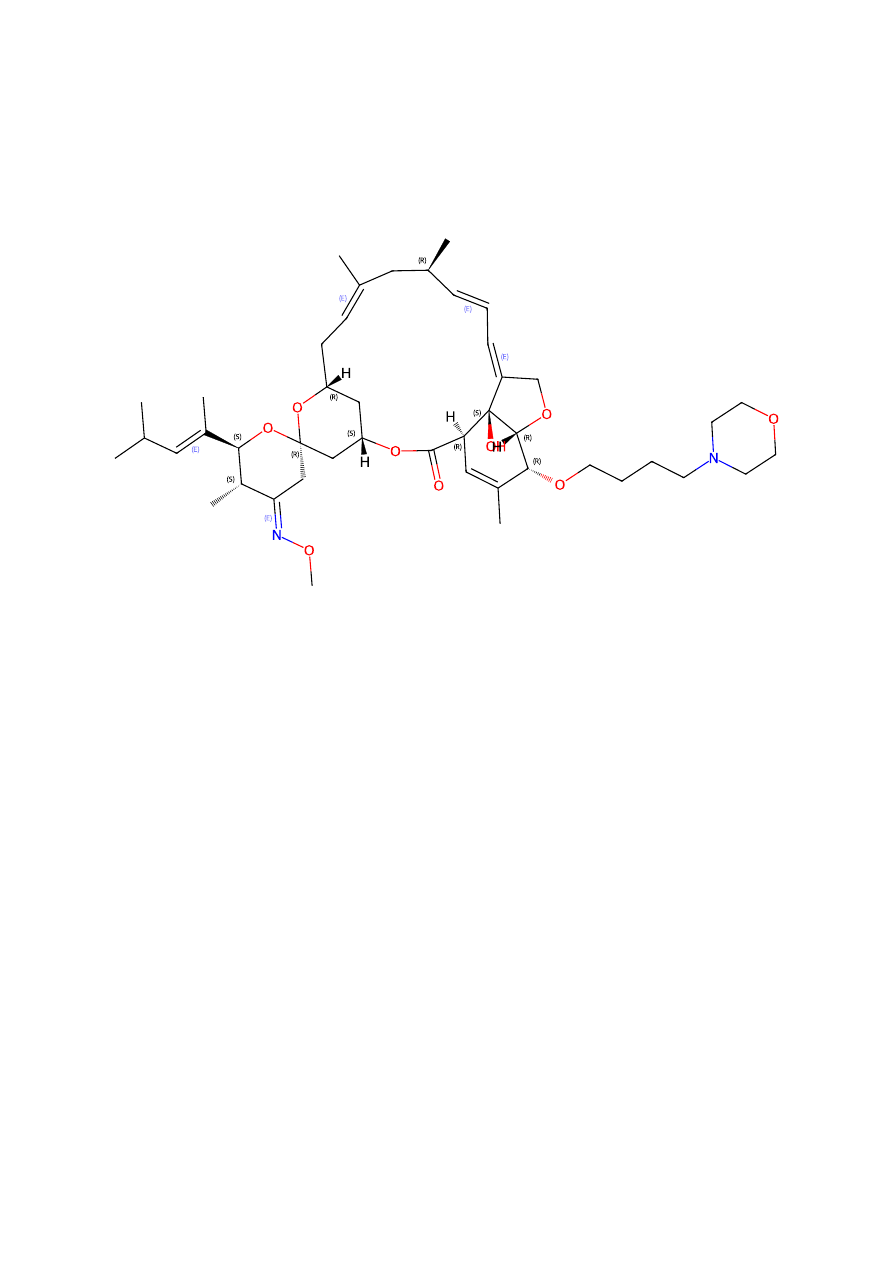
CHAPTER 1 · PROFILE 4/8 · ARCHIVE RECORD 155
ARF-MOX-B1n (Top Pick)
Recorded rationale and role
Distribution and linkage branch. This entry compares the
appended head group and attachment against the B1
incumbent and parent moxidectin. Recorded design detail:
weak base morpholin-4-yl direct ether, C4 tether pH-gated,
non-cleavable. Source context is identified below; the design
role is not a measured efficacy ranking.
Preparation focus in the existing record
The preparation concept is governed by the source scaffold,
available attachment handle and functional-group
compatibility. Establish connectivity, stereochemical
AGENTIC RESEARCH FACTORY · COMPUTATIONAL COOKBOOK · 16 / 886

composition and relevant stability before comparing biological
responses.
Full deposited SMILES — verbatim
CO/N=C1\C[C@]2(C[C@@H]3C[C@@H]
(C/C=C(\C)C[C@@H](C)/C=C/C=C4\CO[C@@H]5[C@H]
(OCCCCN6CCOCC6)C(C)=C[C@@H](C(=O)O3)
[C@]45O)O2)O[C@H](/C(C)=C/C(C)C)[C@H]1C
Canonical isomeric SMILES — RDKit 2026.09.1
CO/N=C1\C[C@]2(C[C@@H]3C[C@@H]
(C/C=C(\C)C[C@@H](C)/C=C/C=C4\CO[C@@H]5[C@H]
(OCCCCN6CCOCC6)C(C)=C[C@@H](C(=O)O3)
[C@]45O)O2)O[C@H](/C(C)=C/C(C)C)[C@H]1C
Complete computed profile
Formula
C45H68N2O9
Molecular weight (g/mol)
781.044
Exact mass (Da)
780.492482
Crippen cLogP
6.8656
TPSA (Ų)
117.51
H-bond donors
1
H-bond acceptors
11
Rotatable bonds
9
AGENTIC RESEARCH FACTORY · COMPUTATIONAL COOKBOOK · 17 / 886

Rings
6
Formal charge
0
Heavy atoms
56
Unassigned stereo —
modern
0
Unassigned stereo —
legacy
0
Graph interpretation and liabilities
This graph has 0 O–O bonds, net formal charge +0, and 9
rotatable bonds. The descriptor balance supports comparison
with the adjacent source series rather than assuming a shared
exposure profile. No unspecified stereochemical element was
detected by the stated modern analysis of this graph.
Source record
b1_ranked.json
Existing selected-prospect discussion — retained
ARF-MOX-B1n
Role: Requested top pick; weak-base hypothesis.
Design and reasoning. A four-carbon direct ether leads to a
morpholine headgroup. It is represented as a neutral weak
base, rather than a permanently charged phosphonium.
AGENTIC RESEARCH FACTORY · COMPUTATIONAL COOKBOOK · 18 / 886

Profile and liabilities. MW falls by approximately 204.19
versus B1; cLogP falls by 3.58 and RotB by 3. The added
ester is absent. These improve selected calculated properties,
but pKa, subcellular localisation and preserved parent activity
remain unknown. “Non-cleavable” in the source means no
added ester in the graph, not immunity to metabolism.
Decision. Keep the nomination explicitly conditional on whole-
compound pKa/logD, exposure and a matched biological
advantage. It tests a pH-dependent distribution idea, not the
identical B1 Nernst premise.
Source: b1_ranked.json.
AGENTIC RESEARCH FACTORY · COMPUTATIONAL COOKBOOK · 19 / 886
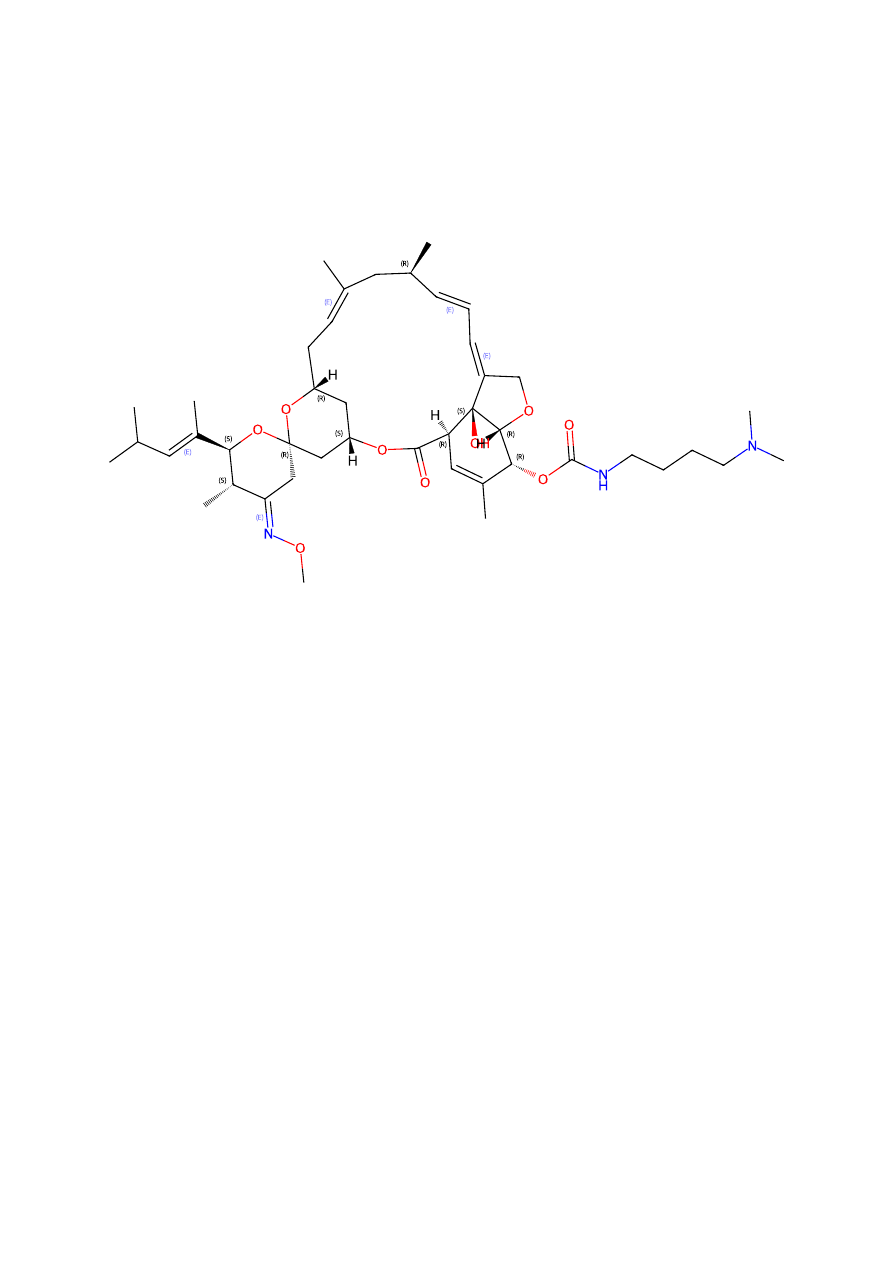
CHAPTER 1 · PROFILE 5/8 · ARCHIVE RECORD 156
ARF-MOX-B1p
Recorded rationale and role
Distribution and linkage branch. This entry compares the
appended head group and attachment against the B1
incumbent and parent moxidectin. Recorded design detail:
weak base dimethylamino carbamate, C4 tether pH-gated:
dimethylamino. Source context is identified below; the design
role is not a measured efficacy ranking.
Preparation focus in the existing record
Use the carbamate connection as a distinct persistence
hypothesis. Assess compatibility of the parent functional
groups and identify any cleavage products rather than
assuming release kinetics from the linkage name.
AGENTIC RESEARCH FACTORY · COMPUTATIONAL COOKBOOK · 20 / 886

Full deposited SMILES — verbatim
CO/N=C1\C[C@]2(C[C@@H]3C[C@@H]
(C/C=C(\C)C[C@@H](C)/C=C/C=C4\CO[C@@H]5[C@H]
(OC(=O)NCCCCN(C)C)C(C)=C[C@@H](C(=O)O3)
[C@]45O)O2)O[C@H](/C(C)=C/C(C)C)[C@H]1C
Canonical isomeric SMILES — RDKit 2026.09.1
CO/N=C1\C[C@]2(C[C@@H]3C[C@@H]
(C/C=C(\C)C[C@@H](C)/C=C/C=C4\CO[C@@H]5[C@H]
(OC(=O)NCCCCN(C)C)C(C)=C[C@@H](C(=O)O3)
[C@]45O)O2)O[C@H](/C(C)=C/C(C)C)[C@H]1C
Complete computed profile
Formula
C44H67N3O9
Molecular weight (g/mol)
782.032
Exact mass (Da)
781.487731
Crippen cLogP
6.8046
TPSA (Ų)
137.38
H-bond donors
2
H-bond acceptors
11
Rotatable bonds
9
Rings
5
AGENTIC RESEARCH FACTORY · COMPUTATIONAL COOKBOOK · 21 / 886

Formal charge
0
Heavy atoms
56
Unassigned stereo —
modern
0
Unassigned stereo —
legacy
0
Graph interpretation and liabilities
This graph has 0 O–O bonds, net formal charge +0, and 9
rotatable bonds. The descriptor balance supports comparison
with the adjacent source series rather than assuming a shared
exposure profile. No unspecified stereochemical element was
detected by the stated modern analysis of this graph.
Source record
b1_ranked.json
Existing selected-prospect discussion — retained
ARF-MOX-B1p
Role: Alternative weak-base prospect.
Design and reasoning. A carbamate-linked four-carbon
dimethylamino appendage. The deposited neutral graph is not
a measured solution protonation state.
AGENTIC RESEARCH FACTORY · COMPUTATIONAL COOKBOOK · 22 / 886

Profile and liabilities. MW 782.03 and cLogP 6.80 are close
to B1n, while TPSA 137.38 and HBD 2 are higher. A lower
cLogP alone cannot rank it above B1n. The carbamate may
change stability, permeability, binding and cleavage.
Decision. Compare directly with B1n using measured
exposure and chemical fate. Separate linkage effects from
headgroup effects; both variables differ.
Source: b1_ranked.json.
AGENTIC RESEARCH FACTORY · COMPUTATIONAL COOKBOOK · 23 / 886
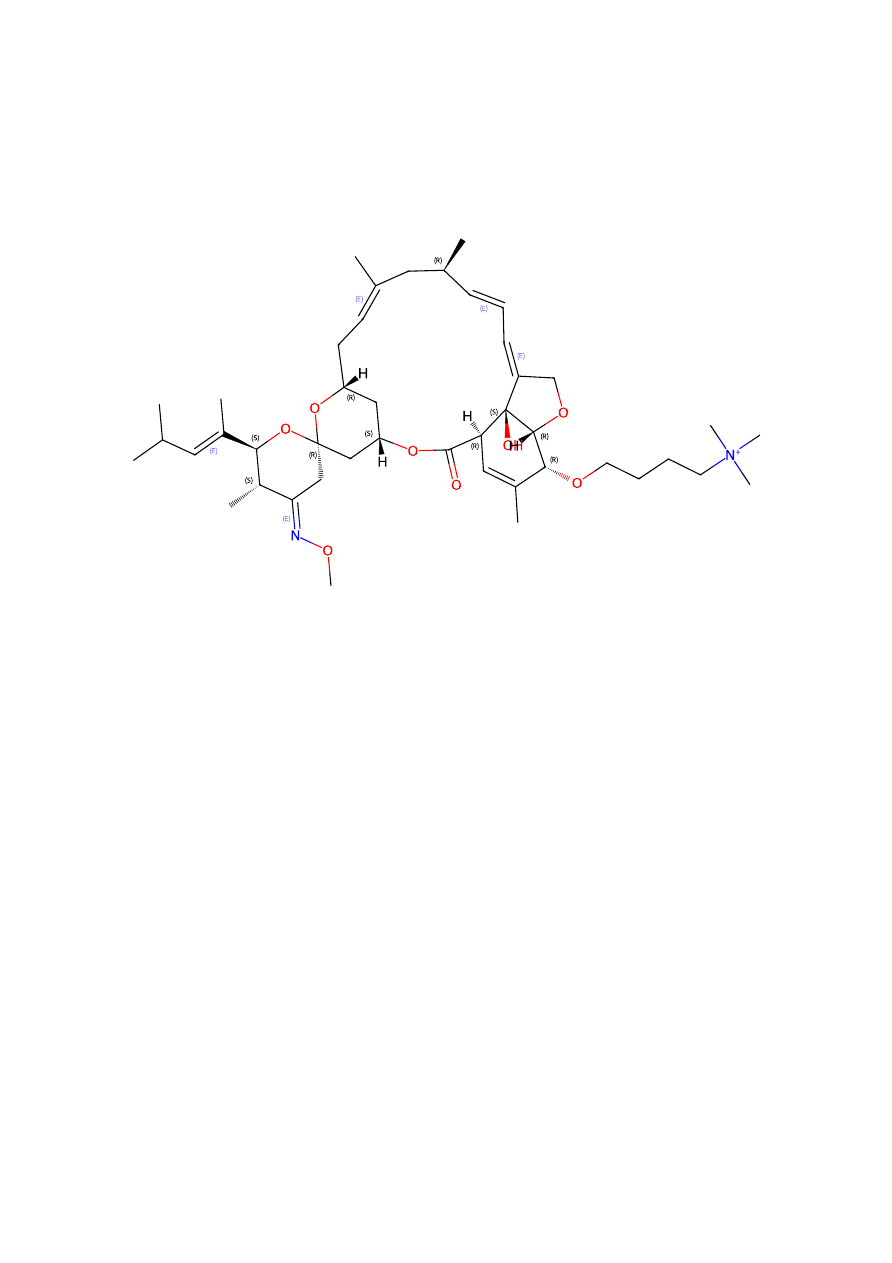
CHAPTER 1 · PROFILE 6/8 · ARCHIVE RECORD 157
ARF-MOX-B1i
Recorded rationale and role
Distribution and linkage branch. This entry compares the
appended head group and attachment against the B1
incumbent and parent moxidectin. Recorded design detail:
permanent +1 trimethylammonium direct ether, C4 tether
quaternary ammonium, non-cleavable. Source context is
identified below; the design role is not a measured efficacy
ranking.
Preparation focus in the existing record
Specify counterion and salt composition, distinguish intact
conjugate from cleaved species, and compare the charged
AGENTIC RESEARCH FACTORY · COMPUTATIONAL COOKBOOK · 24 / 886

appendage separately. Chromatographic and spectroscopic
characterization must follow the actual encoded structure.
Full deposited SMILES — verbatim
CO/N=C1\C[C@]2(C[C@@H]3C[C@@H]
(C/C=C(\C)C[C@@H](C)/C=C/C=C4\CO[C@@H]5[C@H]
(OCCCC[N+](C)(C)C)C(C)=C[C@@H](C(=O)O3)
[C@]45O)O2)O[C@H](/C(C)=C/C(C)C)[C@H]1C
Canonical isomeric SMILES — RDKit 2026.09.1
CO/N=C1\C[C@]2(C[C@@H]3C[C@@H]
(C/C=C(\C)C[C@@H](C)/C=C/C=C4\CO[C@@H]5[C@H]
(OCCCC[N+](C)(C)C)C(C)=C[C@@H](C(=O)O3)
[C@]45O)O2)O[C@H](/C(C)=C/C(C)C)[C@H]1C
Complete computed profile
Formula
C44H69N2O8+
Molecular weight (g/mol)
754.042
Exact mass (Da)
753.504844
Crippen cLogP
7.2396
TPSA (Ų)
105.04
H-bond donors
1
H-bond acceptors
9
Rotatable bonds
9
AGENTIC RESEARCH FACTORY · COMPUTATIONAL COOKBOOK · 25 / 886

Rings
5
Formal charge
1
Heavy atoms
54
Unassigned stereo —
modern
0
Unassigned stereo —
legacy
0
Graph interpretation and liabilities
This graph has 0 O–O bonds, net formal charge +1, and 9
rotatable bonds. Its high calculated lipophilicity makes free
exposure, adsorption and formulation important comparison
variables. No unspecified stereochemical element was
detected by the stated modern analysis of this graph.
Source record
b1_ranked.json
Existing selected-prospect discussion — retained
ARF-MOX-B1i
Role: Permanent-charge / stable-linker comparator.
Design and reasoning. A four-carbon ether joins a
trimethylammonium headgroup. The submitted structure has
formal charge +1 and no counterion.
AGENTIC RESEARCH FACTORY · COMPUTATIONAL COOKBOOK · 26 / 886

Profile and liabilities. MW 754.04, cLogP 7.24 and TPSA
105.04 are lower than the incumbent values except for the
unchanged charge class. The compact localised charge may
hinder membrane crossing. A permanent charge is not proof of
mitochondrial accumulation.
Decision. Use to test whether reducing headgroup bulk while
retaining permanent charge is useful. Measure relevant
compartment exposure and distinguish nonspecific membrane
effects.
Source: b1_ranked.json.
AGENTIC RESEARCH FACTORY · COMPUTATIONAL COOKBOOK · 27 / 886
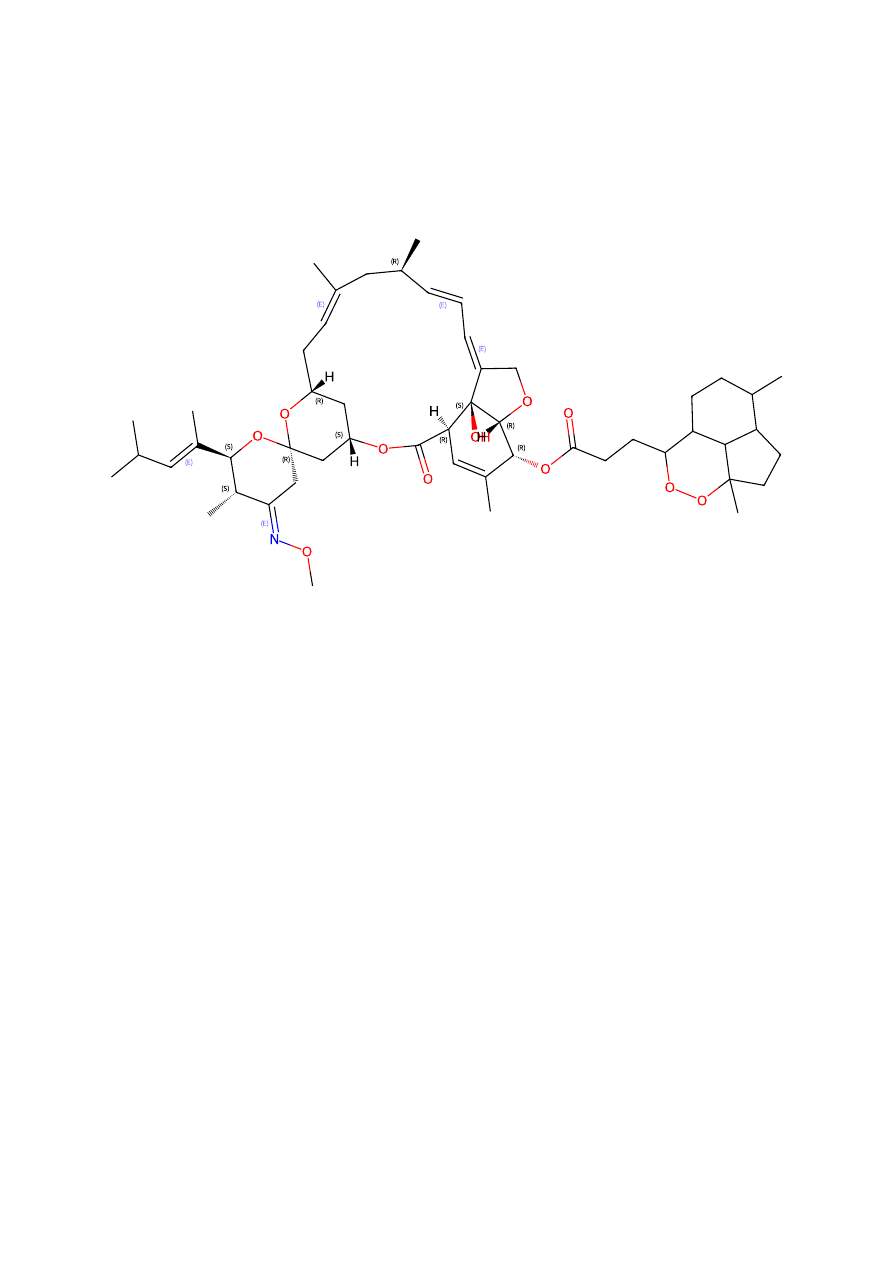
CHAPTER 1 · PROFILE 7/8 · ARCHIVE RECORD 158
ARF-MOX-C4
Recorded rationale and role
Peroxide architecture branch. This entry explores the balance
between activation chemistry, appendage size, polarity,
linkage persistence and stereochemical tractability. Source
context is identified below; the design role is not a measured
efficacy ranking.
Preparation focus in the existing record
Peroxide-preserving preparation and analytical work are
central. Compare intact conjugate with any parent-release
products; identify the peroxide architecture and
stereochemical composition before biological interpretation.
AGENTIC RESEARCH FACTORY · COMPUTATIONAL COOKBOOK · 28 / 886

Full deposited SMILES — verbatim
CO/N=C1\C[C@]2(C[C@@H]3C[C@@H]
(C/C=C(\C)C[C@@H](C)/C=C/C=C4\CO[C@@H]5[C@H]
(OC(=O)CCC6OOC7(C)CCC8C(C)CCC6C87)C(C)=C[C@@H
](C(=O)O3)[C@]45O)O2)O[C@H](/C(C)=C/C(C)C)[C@H]1C
Canonical isomeric SMILES — RDKit 2026.09.1
CO/N=C1\C[C@]2(C[C@@H]3C[C@@H]
(C/C=C(\C)C[C@@H](C)/C=C/C=C4\CO[C@@H]5[C@H]
(OC(=O)CCC6OOC7(C)CCC8C(C)CCC6C87)C(C)=C[C@@H
](C(=O)O3)[C@]45O)O2)O[C@H](/C(C)=C/C(C)C)[C@H]1C
Complete computed profile
Formula
C52H75NO11
Molecular weight (g/mol)
890.168
Exact mass (Da)
889.534012
Crippen cLogP
9.2214
TPSA (Ų)
140.57
H-bond donors
1
H-bond acceptors
12
Rotatable bonds
7
Rings
8
AGENTIC RESEARCH FACTORY · COMPUTATIONAL COOKBOOK · 29 / 886

Formal charge
0
Heavy atoms
64
Unassigned stereo —
modern
6
Unassigned stereo —
legacy
6
Graph interpretation and liabilities
This graph has 1 O–O bond, net formal charge +0, and 7
rotatable bonds. Its high calculated lipophilicity makes free
exposure, adsorption and formulation important comparison
variables. The modern graph analysis leaves 6 stereochemical
elements unspecified; material-level comparisons require that
composition to be defined.
Source record
combined.json
Existing selected-prospect discussion — retained
ARF-MOX-C4
Role: Corrected historical peroxide baseline.
Design and reasoning. The deposited graph is a 1,2-
dioxane-containing ester conjugate. It was previously
misdescribed as an artemisinin-type trioxane with a succinate
connection.
AGENTIC RESEARCH FACTORY · COMPUTATIONAL COOKBOOK · 30 / 886

Profile and liabilities. MW 890.17, cLogP 9.22 and TPSA
140.57; one peroxide bond; six unassigned stereo elements. It
is not a single fully specified stereochemical target. Ester
cleavage could uncouple the proposed dual action.
Decision. Resolve structural specification before
procurement. Treat peroxide stability and iron-triggered activity
as measurements still needed, not as established by the ring
name.
Source: combined.json.
AGENTIC RESEARCH FACTORY · COMPUTATIONAL COOKBOOK · 31 / 886
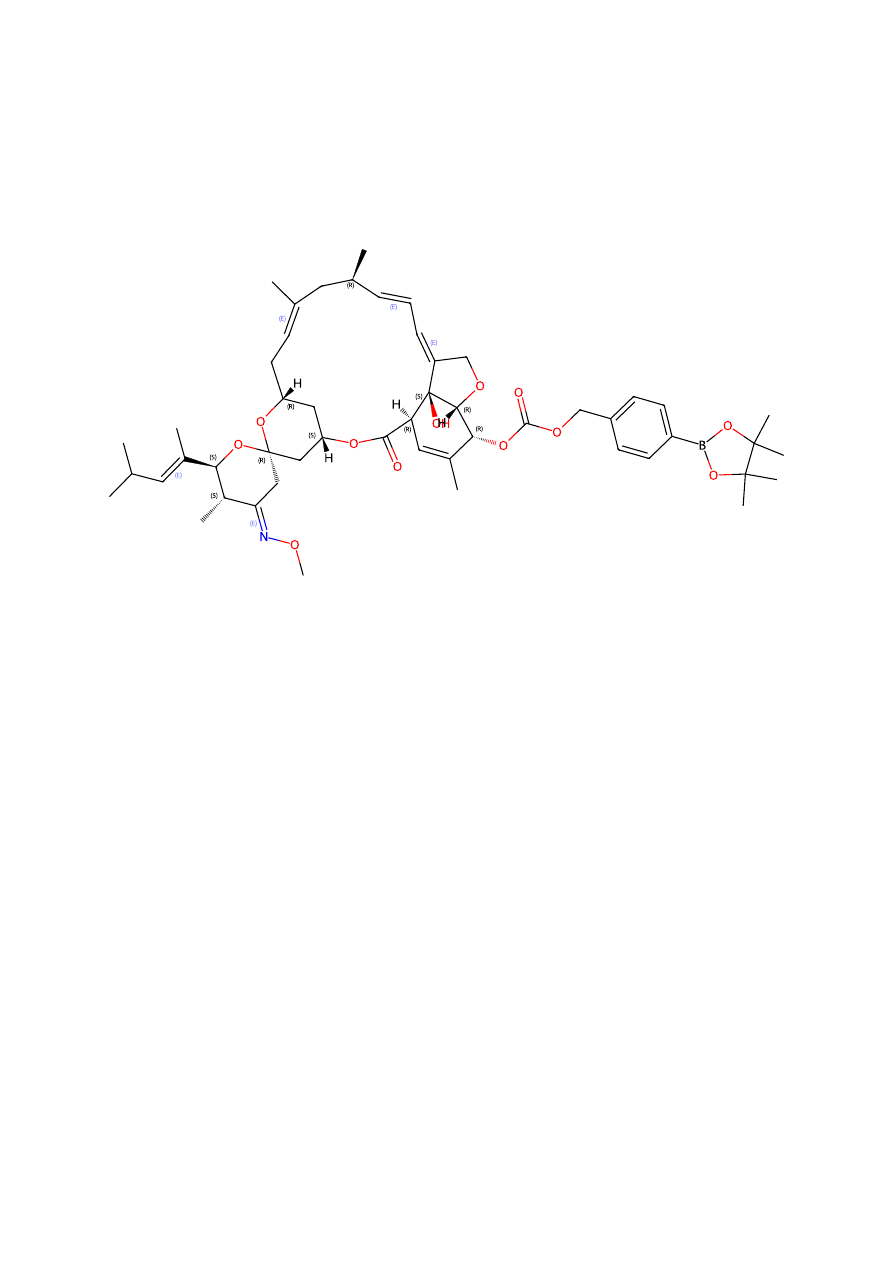
CHAPTER 1 · PROFILE 8/8 · ARCHIVE RECORD 161
ATL-01 (corrected carbonate; E1 structure)
Recorded rationale and role
Conditional-release / oxidant-response design. The encoded
boron-containing handle supports an activation hypothesis to
compare with a trigger-free analogue and the released
payload. Source context is identified below; the design role is
not a measured efficacy ranking.
Preparation focus in the existing record
Characterize the trigger-bearing material, its stability and the
identity of release products. Compare activation with more
than one oxidant and distinguish carbonate/ester release from
intact-conjugate effects.
AGENTIC RESEARCH FACTORY · COMPUTATIONAL COOKBOOK · 32 / 886

Full deposited SMILES — verbatim
CO/N=C1\C[C@]2(C[C@@H]3C[C@@H]
(C/C=C(\C)C[C@@H](C)/C=C/C=C4\CO[C@@H]5[C@H]
(OC(=O)OCc6ccc(B7OC(C)(C)C(C)
(C)O7)cc6)C(C)=C[C@@H](C(=O)O3)[C@]45O)O2)O[C@H]
(/C(C)=C/C(C)C)[C@H]1C
Canonical isomeric SMILES — RDKit 2026.09.1
CO/N=C1\C[C@]2(C[C@@H]3C[C@@H]
(C/C=C(\C)C[C@@H](C)/C=C/C=C4\CO[C@@H]5[C@H]
(OC(=O)OCc6ccc(B7OC(C)(C)C(C)
(C)O7)cc6)C(C)=C[C@@H](C(=O)O3)[C@]45O)O2)O[C@H]
(/C(C)=C/C(C)C)[C@H]1C
Complete computed profile
Formula
C51H70BNO12
Molecular weight (g/mol)
899.928
Exact mass (Da)
899.499107
Crippen cLogP
8.3892
TPSA (Ų)
149.8
H-bond donors
1
H-bond acceptors
13
Rotatable bonds
7
AGENTIC RESEARCH FACTORY · COMPUTATIONAL COOKBOOK · 33 / 886

Rings
7
Formal charge
0
Heavy atoms
65
Unassigned stereo —
modern
0
Unassigned stereo —
legacy
0
Graph interpretation and liabilities
This graph has 0 O–O bonds, net formal charge +0, and 7
rotatable bonds. Its high calculated lipophilicity makes free
exposure, adsorption and formulation important comparison
variables. No unspecified stereochemical element was
detected by the stated modern analysis of this graph.
Source record
ARF-001-MOX_BRIEF_SOURCE.html §7.3; structure-
audit.json E1
Existing selected-prospect discussion — retained
ATL-01 (corrected carbonate; E1 structure)
Role: Oxidant-triggered parent-release hypothesis.
Design and reasoning. The corrected arylboronate benzyl
carbonate is explicitly identified under ATL-01 in the revised
AGENTIC RESEARCH FACTORY · COMPUTATIONAL COOKBOOK · 34 / 886

brief and matches the audited E1 graph. It is intended to
regenerate native parent through oxidation-triggered
fragmentation.
Profile and liabilities. MW 899.93, cLogP 8.39 and TPSA
149.80; a carbonate connection. Trigger selectivity,
fragmentation rate, parent recovery and by-product effects are
not measured. Oxidising conditions also occur outside
tumours.
Decision. Establish actual chemical release and mass
balance before interpreting any cell response as tumour-
selective activation.
Source: ARF-001-MOX_BRIEF_SOURCE.html §7.3;
structure-audit.json E1.
AGENTIC RESEARCH FACTORY · COMPUTATIONAL COOKBOOK · 35 / 886

CHAPTER 2
Original three top picks
The original three lead identifiers are retained: ARF-MOX-B1,
ARF-MOX-C4 and ATL-01. ATL-01 has two source identities;
both graphs are printed here under their recorded labels rather
than merging them.
AGENTIC RESEARCH FACTORY · COMPUTATIONAL COOKBOOK · 36 / 886
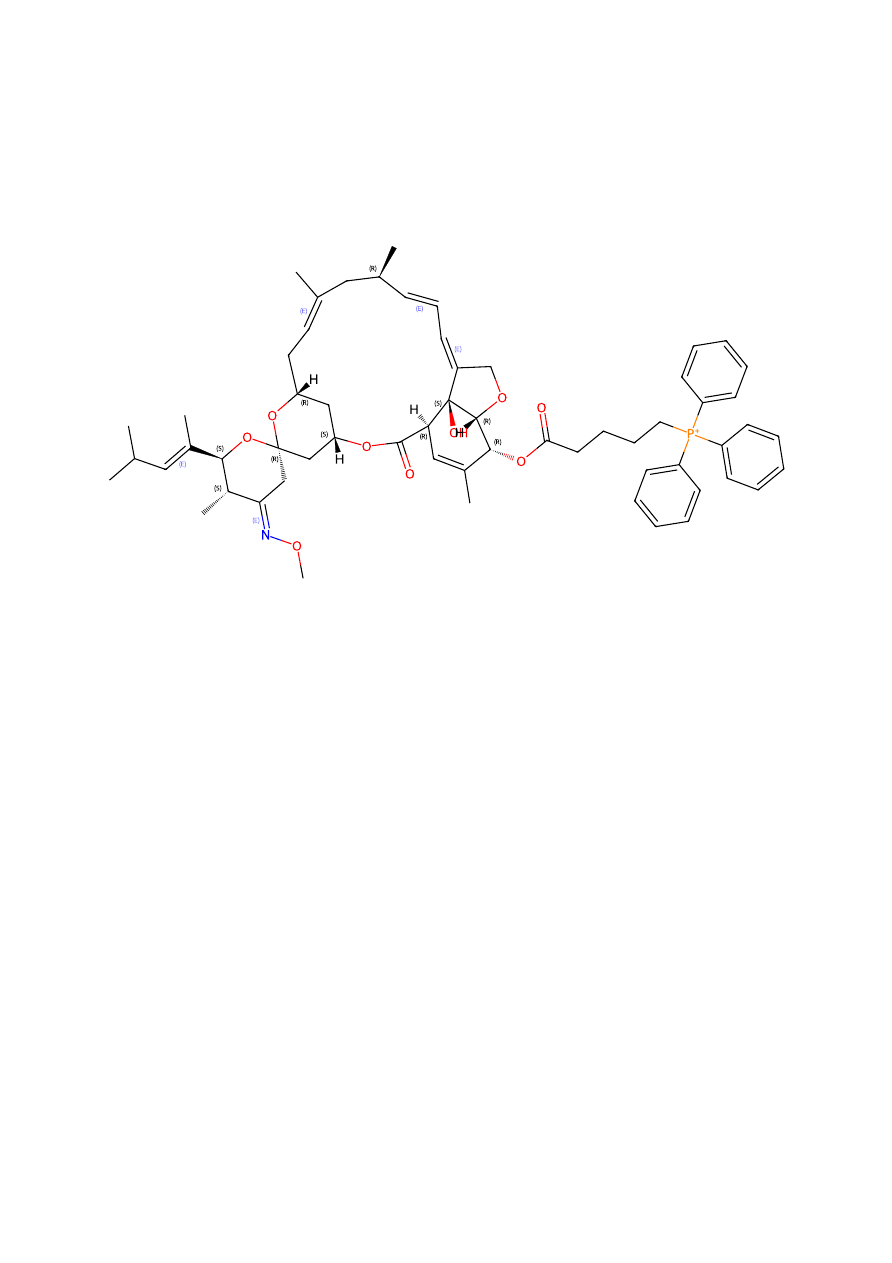
CHAPTER 2 · PROFILE 1/4 · ARCHIVE RECORD 154
ARF-MOX-B1
Recorded rationale and role
Distribution and linkage branch. This entry compares the
appended head group and attachment against the B1
incumbent and parent moxidectin. Recorded design detail:
permanent +1 triphenylphosphonium (incumbent) pentanoyl
ester, C4 tether (incumbent) incumbent. Source context is
identified below; the design role is not a measured efficacy
ranking.
Preparation focus in the existing record
Specify counterion and salt composition, distinguish intact
conjugate from cleaved species, and compare the charged
AGENTIC RESEARCH FACTORY · COMPUTATIONAL COOKBOOK · 37 / 886

appendage separately. Chromatographic and spectroscopic
characterization must follow the actual encoded structure.
Full deposited SMILES — verbatim
CO/N=C1\C[C@]2(C[C@@H]3C[C@@H]
(C/C=C(\C)C[C@@H](C)/C=C/C=C4\CO[C@@H]5[C@H]
(OC(=O)CCCC[P+](c6ccccc6)
(c6ccccc6)c6ccccc6)C(C)=C[C@@H](C(=O)O3)
[C@]45O)O2)O[C@H](/C(C)=C/C(C)C)[C@H]1C
Canonical isomeric SMILES — RDKit 2026.09.1
CO/N=C1\C[C@]2(C[C@@H]3C[C@@H]
(C/C=C(\C)C[C@@H](C)/C=C/C=C4\CO[C@@H]5[C@H]
(OC(=O)CCCC[P+](c6ccccc6)
(c6ccccc6)c6ccccc6)C(C)=C[C@@H](C(=O)O3)
[C@]45O)O2)O[C@H](/C(C)=C/C(C)C)[C@H]1C
Complete computed profile
Formula
C60H75NO9P+
Molecular weight (g/mol)
985.232
Exact mass (Da)
984.517396
Crippen cLogP
10.4442
TPSA (Ų)
122.11
H-bond donors
1
AGENTIC RESEARCH FACTORY · COMPUTATIONAL COOKBOOK · 38 / 886

H-bond acceptors
10
Rotatable bonds
12
Rings
8
Formal charge
1
Heavy atoms
71
Unassigned stereo —
modern
0
Unassigned stereo —
legacy
0
Graph interpretation and liabilities
This graph has 0 O–O bonds, net formal charge +1, and 12
rotatable bonds. Its high calculated lipophilicity makes free
exposure, adsorption and formulation important comparison
variables. No unspecified stereochemical element was
detected by the stated modern analysis of this graph.
Source record
b1_ranked.json
Existing selected-prospect discussion — retained
ARF-MOX-B1
Role: Incumbent reference.
AGENTIC RESEARCH FACTORY · COMPUTATIONAL COOKBOOK · 39 / 886

Design and reasoning. A triphenylphosphonium appendage
connected through a C5 ester. The permanent, delocalised
cation supplies the original mitochondrial-potential rationale.
Profile and liabilities. Its encoded cLogP is 10.44, MW
985.23 and RotB 12. The design is large and lipophilic, with an
added ester that can separate the two intended functions. A +1
charge does not establish a tumour-selective distribution.
Decision. Retain as the historical benchmark; determine intact
exposure, hydrolysis and whether the conjugate improves
anything over parent plus targeting fragment.
Source: b1_ranked.json.
AGENTIC RESEARCH FACTORY · COMPUTATIONAL COOKBOOK · 40 / 886
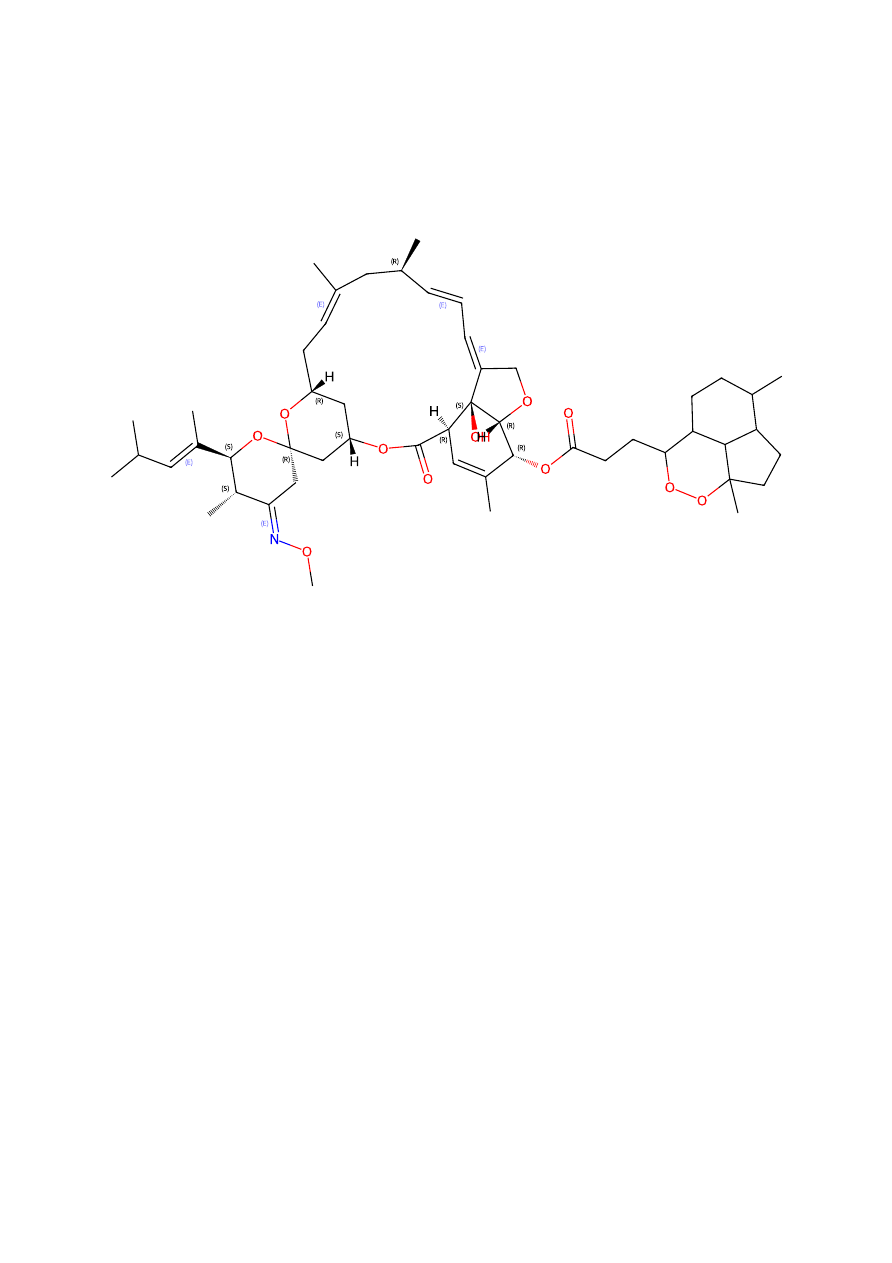
CHAPTER 2 · PROFILE 2/4 · ARCHIVE RECORD 158
ARF-MOX-C4
Recorded rationale and role
Peroxide architecture branch. This entry explores the balance
between activation chemistry, appendage size, polarity,
linkage persistence and stereochemical tractability. Source
context is identified below; the design role is not a measured
efficacy ranking.
Preparation focus in the existing record
Peroxide-preserving preparation and analytical work are
central. Compare intact conjugate with any parent-release
products; identify the peroxide architecture and
stereochemical composition before biological interpretation.
AGENTIC RESEARCH FACTORY · COMPUTATIONAL COOKBOOK · 41 / 886

Full deposited SMILES — verbatim
CO/N=C1\C[C@]2(C[C@@H]3C[C@@H]
(C/C=C(\C)C[C@@H](C)/C=C/C=C4\CO[C@@H]5[C@H]
(OC(=O)CCC6OOC7(C)CCC8C(C)CCC6C87)C(C)=C[C@@H
](C(=O)O3)[C@]45O)O2)O[C@H](/C(C)=C/C(C)C)[C@H]1C
Canonical isomeric SMILES — RDKit 2026.09.1
CO/N=C1\C[C@]2(C[C@@H]3C[C@@H]
(C/C=C(\C)C[C@@H](C)/C=C/C=C4\CO[C@@H]5[C@H]
(OC(=O)CCC6OOC7(C)CCC8C(C)CCC6C87)C(C)=C[C@@H
](C(=O)O3)[C@]45O)O2)O[C@H](/C(C)=C/C(C)C)[C@H]1C
Complete computed profile
Formula
C52H75NO11
Molecular weight (g/mol)
890.168
Exact mass (Da)
889.534012
Crippen cLogP
9.2214
TPSA (Ų)
140.57
H-bond donors
1
H-bond acceptors
12
Rotatable bonds
7
Rings
8
AGENTIC RESEARCH FACTORY · COMPUTATIONAL COOKBOOK · 42 / 886

Formal charge
0
Heavy atoms
64
Unassigned stereo —
modern
6
Unassigned stereo —
legacy
6
Graph interpretation and liabilities
This graph has 1 O–O bond, net formal charge +0, and 7
rotatable bonds. Its high calculated lipophilicity makes free
exposure, adsorption and formulation important comparison
variables. The modern graph analysis leaves 6 stereochemical
elements unspecified; material-level comparisons require that
composition to be defined.
Source record
combined.json
Existing selected-prospect discussion — retained
ARF-MOX-C4
Role: Corrected historical peroxide baseline.
Design and reasoning. The deposited graph is a 1,2-
dioxane-containing ester conjugate. It was previously
misdescribed as an artemisinin-type trioxane with a succinate
connection.
AGENTIC RESEARCH FACTORY · COMPUTATIONAL COOKBOOK · 43 / 886

Profile and liabilities. MW 890.17, cLogP 9.22 and TPSA
140.57; one peroxide bond; six unassigned stereo elements. It
is not a single fully specified stereochemical target. Ester
cleavage could uncouple the proposed dual action.
Decision. Resolve structural specification before
procurement. Treat peroxide stability and iron-triggered activity
as measurements still needed, not as established by the ring
name.
Source: combined.json.
AGENTIC RESEARCH FACTORY · COMPUTATIONAL COOKBOOK · 44 / 886
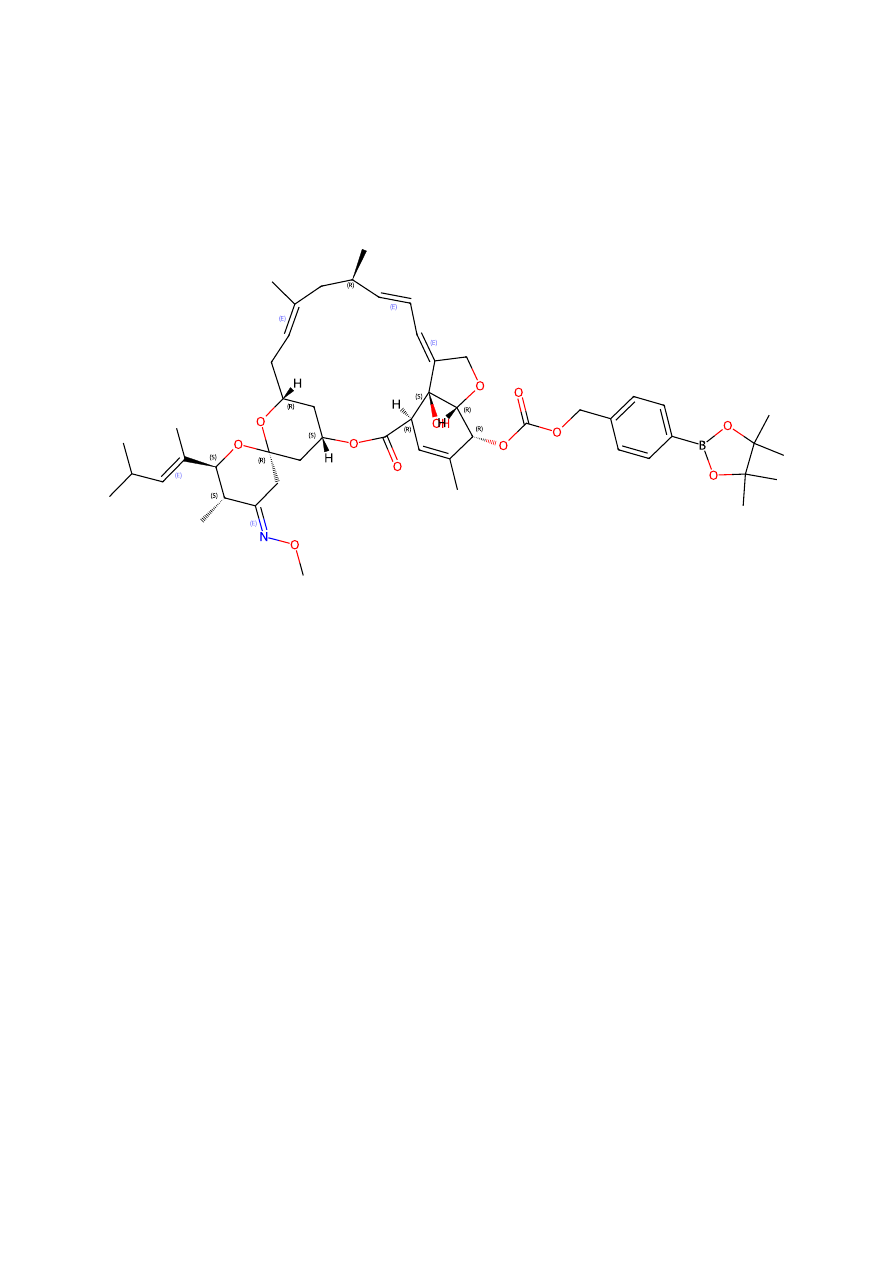
CHAPTER 2 · PROFILE 3/4 · ARCHIVE RECORD 161
ATL-01 (corrected carbonate; E1 structure)
Recorded rationale and role
Conditional-release / oxidant-response design. The encoded
boron-containing handle supports an activation hypothesis to
compare with a trigger-free analogue and the released
payload. Source context is identified below; the design role is
not a measured efficacy ranking.
Preparation focus in the existing record
Characterize the trigger-bearing material, its stability and the
identity of release products. Compare activation with more
than one oxidant and distinguish carbonate/ester release from
intact-conjugate effects.
AGENTIC RESEARCH FACTORY · COMPUTATIONAL COOKBOOK · 45 / 886

Full deposited SMILES — verbatim
CO/N=C1\C[C@]2(C[C@@H]3C[C@@H]
(C/C=C(\C)C[C@@H](C)/C=C/C=C4\CO[C@@H]5[C@H]
(OC(=O)OCc6ccc(B7OC(C)(C)C(C)
(C)O7)cc6)C(C)=C[C@@H](C(=O)O3)[C@]45O)O2)O[C@H]
(/C(C)=C/C(C)C)[C@H]1C
Canonical isomeric SMILES — RDKit 2026.09.1
CO/N=C1\C[C@]2(C[C@@H]3C[C@@H]
(C/C=C(\C)C[C@@H](C)/C=C/C=C4\CO[C@@H]5[C@H]
(OC(=O)OCc6ccc(B7OC(C)(C)C(C)
(C)O7)cc6)C(C)=C[C@@H](C(=O)O3)[C@]45O)O2)O[C@H]
(/C(C)=C/C(C)C)[C@H]1C
Complete computed profile
Formula
C51H70BNO12
Molecular weight (g/mol)
899.928
Exact mass (Da)
899.499107
Crippen cLogP
8.3892
TPSA (Ų)
149.8
H-bond donors
1
H-bond acceptors
13
Rotatable bonds
7
AGENTIC RESEARCH FACTORY · COMPUTATIONAL COOKBOOK · 46 / 886

Rings
7
Formal charge
0
Heavy atoms
65
Unassigned stereo —
modern
0
Unassigned stereo —
legacy
0
Graph interpretation and liabilities
This graph has 0 O–O bonds, net formal charge +0, and 7
rotatable bonds. Its high calculated lipophilicity makes free
exposure, adsorption and formulation important comparison
variables. No unspecified stereochemical element was
detected by the stated modern analysis of this graph.
Source record
ARF-001-MOX_BRIEF_SOURCE.html §7.3; structure-
audit.json E1
Existing selected-prospect discussion — retained
ATL-01 (corrected carbonate; E1 structure)
Role: Oxidant-triggered parent-release hypothesis.
Design and reasoning. The corrected arylboronate benzyl
carbonate is explicitly identified under ATL-01 in the revised
AGENTIC RESEARCH FACTORY · COMPUTATIONAL COOKBOOK · 47 / 886

brief and matches the audited E1 graph. It is intended to
regenerate native parent through oxidation-triggered
fragmentation.
Profile and liabilities. MW 899.93, cLogP 8.39 and TPSA
149.80; a carbonate connection. Trigger selectivity,
fragmentation rate, parent recovery and by-product effects are
not measured. Oxidising conditions also occur outside
tumours.
Decision. Establish actual chemical release and mass
balance before interpreting any cell response as tumour-
selective activation.
Source: ARF-001-MOX_BRIEF_SOURCE.html §7.3;
structure-audit.json E1.
AGENTIC RESEARCH FACTORY · COMPUTATIONAL COOKBOOK · 48 / 886
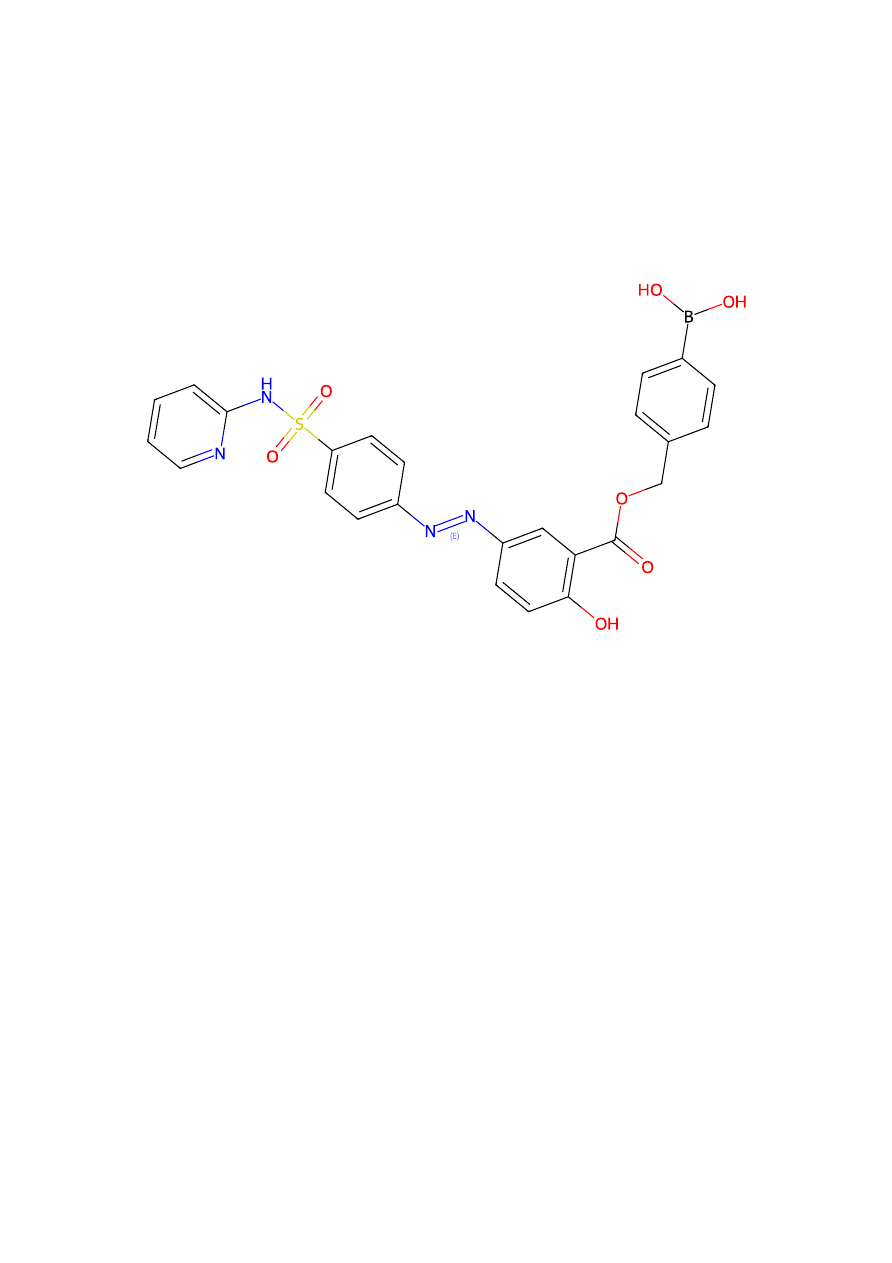
CHAPTER 2 · PROFILE 4/4 · ARCHIVE RECORD 92
Original 92 — ATL-01 · Sulfasalazine benzyl-
boronate, H2O2-
Recorded rationale and role
Conditional-release / oxidant-response design. The encoded
boron-containing handle supports an activation hypothesis to
compare with a trigger-free analogue and the released
payload. Original entry heading: 92. ATL-01 · Sulfasalazine
benzyl-boronate, H2O2- triggered. Source context is identified
below; the design role is not a measured efficacy ranking.
Preparation focus in the existing record
Characterize the trigger-bearing material, its stability and the
identity of release products. Compare activation with more
AGENTIC RESEARCH FACTORY · COMPUTATIONAL COOKBOOK · 49 / 886

than one oxidant and distinguish carbonate/ester release from
intact-conjugate effects.
Full deposited SMILES — verbatim
O=C(OCc1ccc(B(O)O)cc1)c1cc(/N=N/c2ccc(S(=O)
(=O)Nc3ccccn3)cc2)ccc1O
Canonical isomeric SMILES — RDKit 2026.09.1
O=C(OCc1ccc(B(O)O)cc1)c1cc(/N=N/c2ccc(S(=O)
(=O)Nc3ccccn3)cc2)ccc1O
Complete computed profile
Formula
C25H21BN4O7S
Molecular weight (g/mol)
532.343
Exact mass (Da)
532.1224
Crippen cLogP
3.0402
TPSA (Ų)
170.77
H-bond donors
4
H-bond acceptors
10
Rotatable bonds
9
Rings
4
Formal charge
0
AGENTIC RESEARCH FACTORY · COMPUTATIONAL COOKBOOK · 50 / 886

Heavy atoms
38
Unassigned stereo —
modern
0
Unassigned stereo —
legacy
0
Graph interpretation and liabilities
This graph has 0 O–O bonds, net formal charge +0, and 9
rotatable bonds. Its polar surface makes permeability and
compartmental exposure important comparison variables. No
unspecified stereochemical element was detected by the
stated modern analysis of this graph.
Source record
2026-11-04T223635-eyp4-THE_98_Redox_Series_2026-11-
04.pdf, numbered entry 92
Original entry text
92. ATL-01 · Sulfasalazine benzyl-boronate, H2O2-
triggered
C25H21BN4O7S · MW 532.3 · clogP 3.04 · TPSA 170.8 Ų ·
HBD 4 · RotB 9
O=C(OCc1ccc(B(O)O)cc1)c1cc(/N=N/c2ccc(S(=O)
(=O)Nc3ccccn3)cc2)ccc1O
AGENTIC RESEARCH FACTORY · COMPUTATIONAL COOKBOOK · 51 / 886

CHAPTER 3
Original 98
All 98 numbered records are preserved in source order,
including established comparator compounds, repeated
graphs and formula-only headings. There are 95 unique
canonical graphs in these 98 records; this is a record count,
not 98 newly invented molecules.
AGENTIC RESEARCH FACTORY · COMPUTATIONAL COOKBOOK · 52 / 886
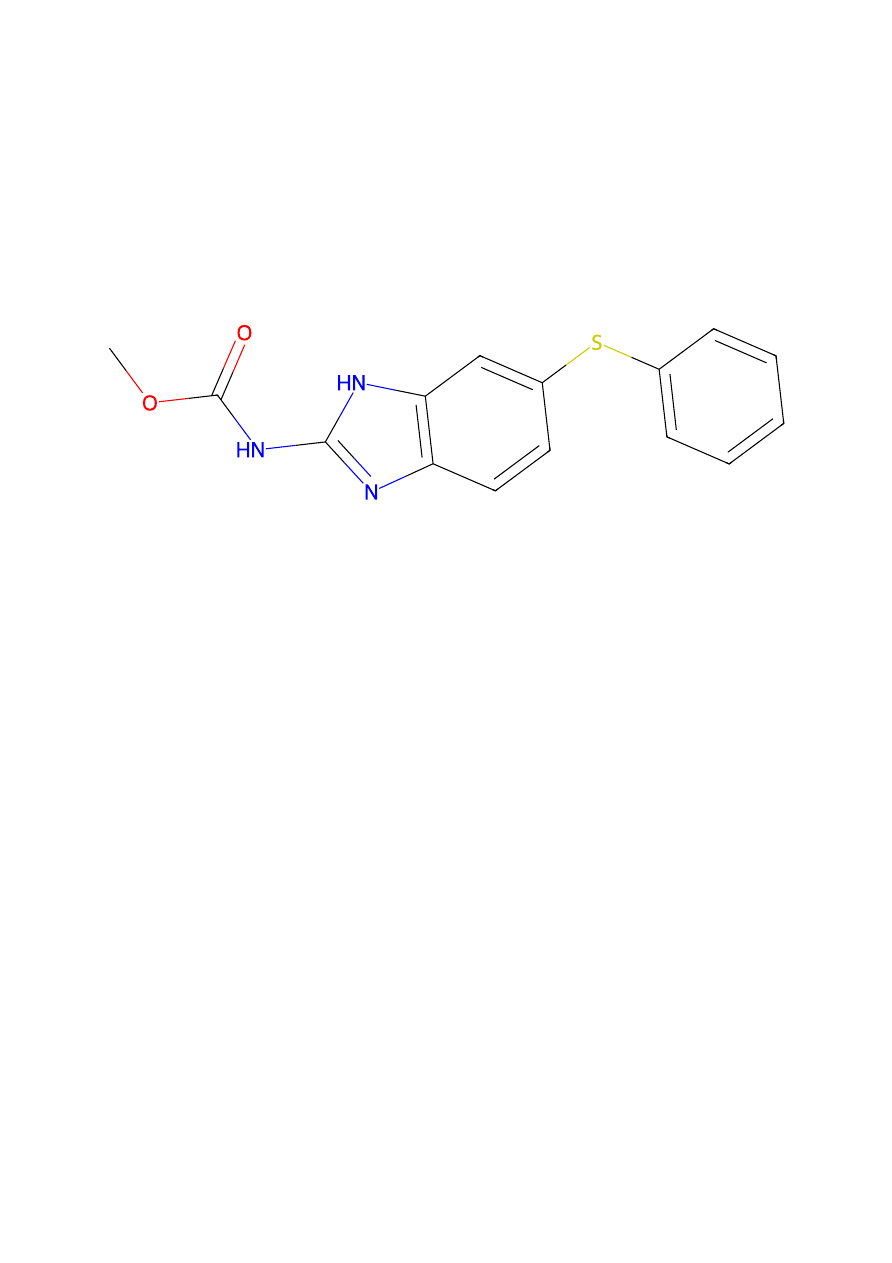
CHAPTER 3 · PROFILE 1/98 · ARCHIVE RECORD 1
1. Fenbendazole
Recorded rationale and role
Sulfur-containing comparator or derivative. The structure
extends the programme beyond the moxidectin scaffold and
supports comparison of class action, exposure and redox
response. Original entry heading: 1. Fenbendazole
C15H13N3O2S · MW 299.4 · clogP 3.89 · TPSA 67.0 Ų ·
HBD 2 · RotB 3. Source context is identified below; the design
role is not a measured efficacy ranking.
Preparation focus in the existing record
Use the carbamate connection as a distinct persistence
hypothesis. Assess compatibility of the parent functional
AGENTIC RESEARCH FACTORY · COMPUTATIONAL COOKBOOK · 53 / 886

groups and identify any cleavage products rather than
assuming release kinetics from the linkage name.
Full deposited SMILES — verbatim
COC(=O)Nc1nc2ccc(Sc3ccccc3)cc2[nH]1
Canonical isomeric SMILES — RDKit 2026.09.1
COC(=O)Nc1nc2ccc(Sc3ccccc3)cc2[nH]1
Complete computed profile
Formula
C15H13N3O2S
Molecular weight (g/mol)
299.355
Exact mass (Da)
299.072848
Crippen cLogP
3.8924
TPSA (Ų)
67.01
H-bond donors
2
H-bond acceptors
4
Rotatable bonds
3
Rings
3
Formal charge
0
Heavy atoms
21
AGENTIC RESEARCH FACTORY · COMPUTATIONAL COOKBOOK · 54 / 886

Unassigned stereo —
modern
0
Unassigned stereo —
legacy
0
Graph interpretation and liabilities
This graph has 0 O–O bonds, net formal charge +0, and 3
rotatable bonds. The descriptor balance supports comparison
with the adjacent source series rather than assuming a shared
exposure profile. No unspecified stereochemical element was
detected by the stated modern analysis of this graph.
Source record
2026-11-04T223635-eyp4-THE_98_Redox_Series_2026-11-
04.pdf, numbered entry 1
Original entry text
1. Fenbendazole
C15H13N3O2S · MW 299.4 · clogP 3.89 · TPSA 67.0 Ų ·
HBD 2 · RotB 3
COC(=O)Nc1nc2ccc(Sc3ccccc3)cc2[nH]1
AGENTIC RESEARCH FACTORY · COMPUTATIONAL COOKBOOK · 55 / 886
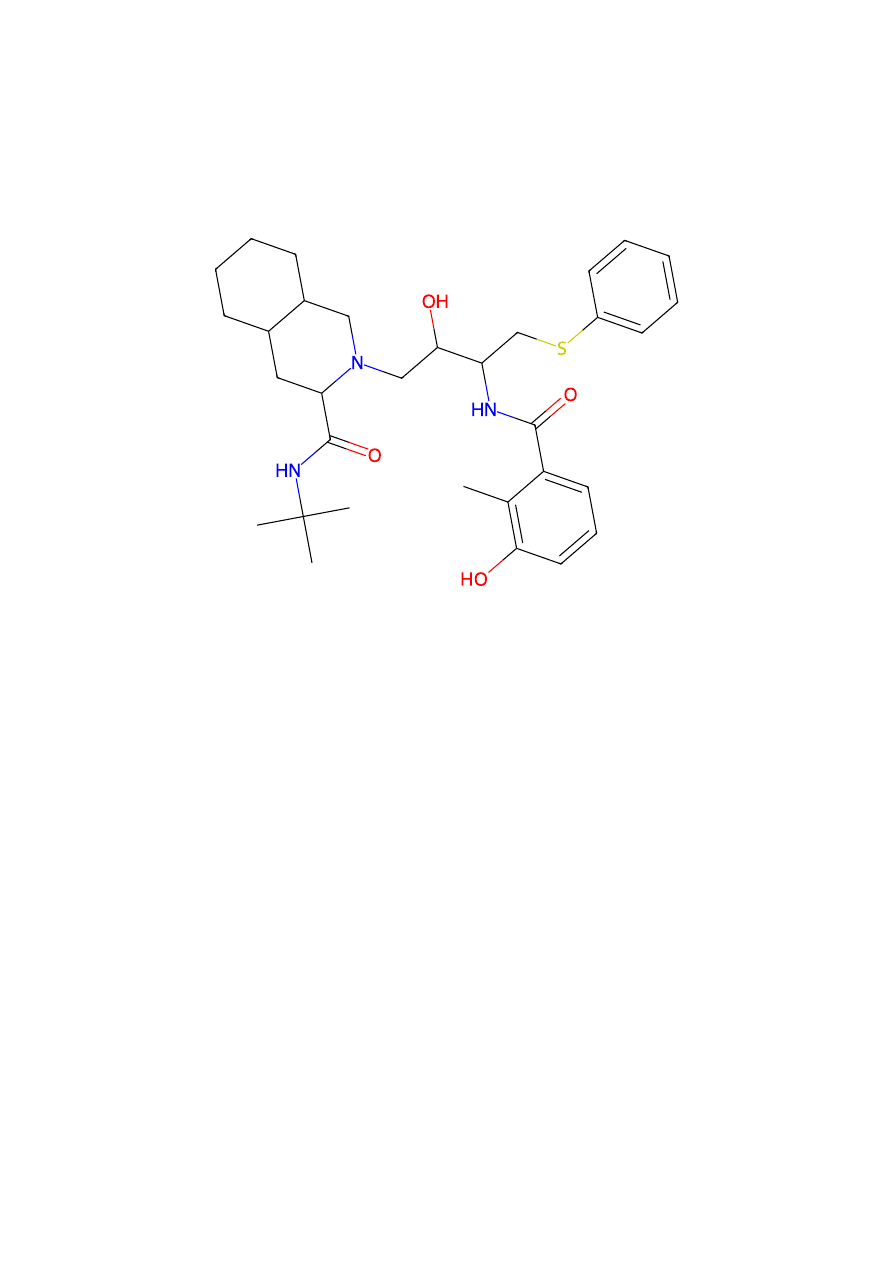
CHAPTER 3 · PROFILE 2/98 · ARCHIVE RECORD 2
2. Nelfinavir
Recorded rationale and role
Sulfur-containing comparator or derivative. The structure
extends the programme beyond the moxidectin scaffold and
supports comparison of class action, exposure and redox
response. Original entry heading: 2. Nelfinavir C32H45N3O4S
· MW 567.8 · clogP 4.75 · TPSA 101.9 Ų · HBD 4 · RotB 9.
Source context is identified below; the design role is not a
measured efficacy ranking.
Preparation focus in the existing record
The preparation concept is governed by the source scaffold,
available attachment handle and functional-group
compatibility. Establish connectivity, stereochemical
AGENTIC RESEARCH FACTORY · COMPUTATIONAL COOKBOOK · 56 / 886

composition and relevant stability before comparing biological
responses.
Full deposited SMILES — verbatim
Cc1c(O)cccc1C(=O)NC(CSc1ccccc1)C(O)CN1CC2CCCCC2C
C1C(=O)NC(C)(C)C
Canonical isomeric SMILES — RDKit 2026.09.1
Cc1c(O)cccc1C(=O)NC(CSc1ccccc1)C(O)CN1CC2CCCCC2C
C1C(=O)NC(C)(C)C
Complete computed profile
Formula
C32H45N3O4S
Molecular weight (g/mol)
567.796
Exact mass (Da)
567.313078
Crippen cLogP
4.7476
TPSA (Ų)
101.9
H-bond donors
4
H-bond acceptors
6
Rotatable bonds
9
Rings
4
Formal charge
0
AGENTIC RESEARCH FACTORY · COMPUTATIONAL COOKBOOK · 57 / 886

Heavy atoms
40
Unassigned stereo —
modern
5
Unassigned stereo —
legacy
5
Graph interpretation and liabilities
This graph has 0 O–O bonds, net formal charge +0, and 9
rotatable bonds. The descriptor balance supports comparison
with the adjacent source series rather than assuming a shared
exposure profile. The modern graph analysis leaves 5
stereochemical elements unspecified; material-level
comparisons require that composition to be defined.
Source record
2026-11-04T223635-eyp4-THE_98_Redox_Series_2026-11-
04.pdf, numbered entry 2
Original entry text
2. Nelfinavir
C32H45N3O4S · MW 567.8 · clogP 4.75 · TPSA 101.9 Ų ·
HBD 4 · RotB 9
Cc1c(O)cccc1C(=O)NC(CSc1ccccc1)C(O)CN1CC2CCCCC2C
C1C(=O)NC(C)(C)C
AGENTIC RESEARCH FACTORY · COMPUTATIONAL COOKBOOK · 58 / 886
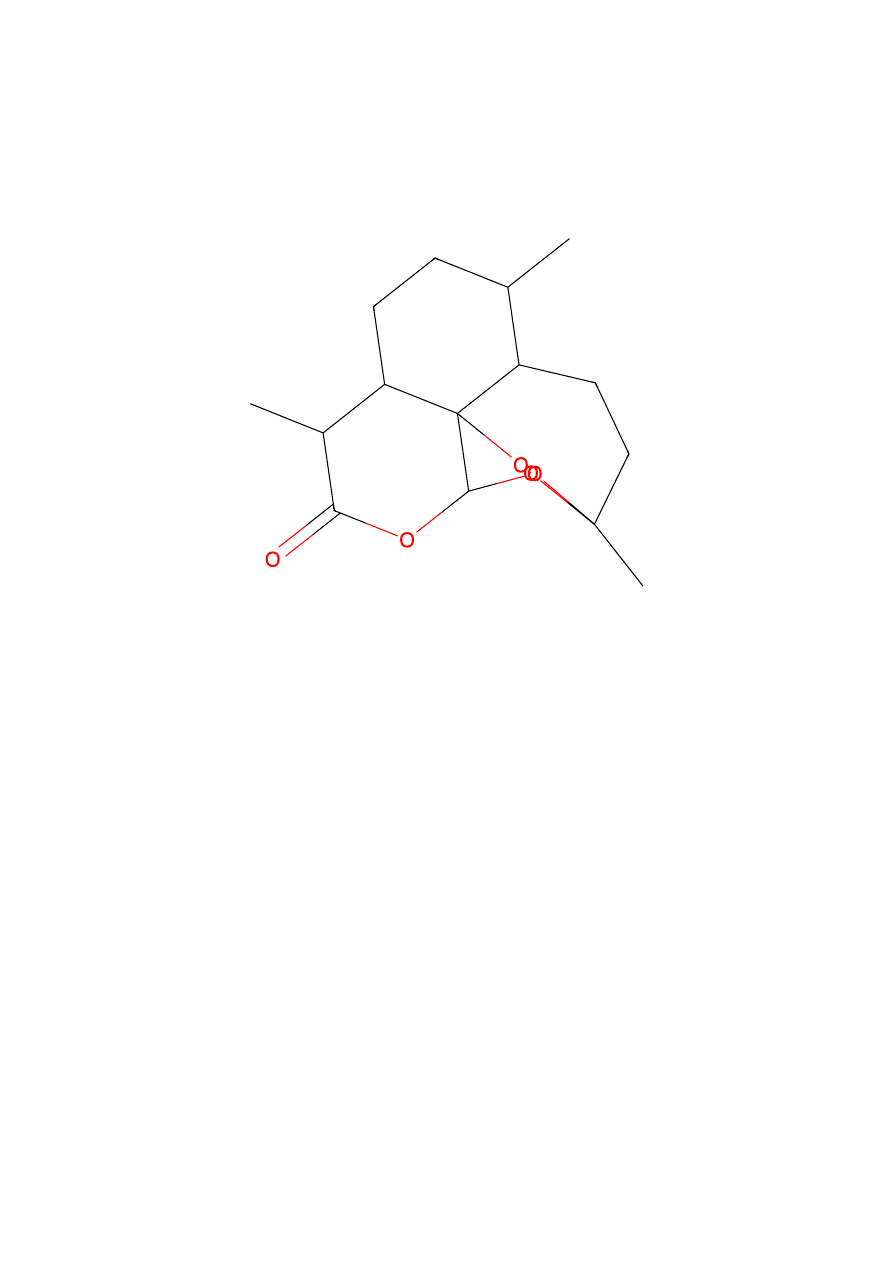
CHAPTER 3 · PROFILE 3/98 · ARCHIVE RECORD 3
3. Artemisinin
Recorded rationale and role
Peroxide / iron-activation arm. The O–O-containing graph
provides a chemically distinct redox perturbation to compare
against its parent or peroxide-free counterpart. Original entry
heading: 3. Artemisinin C15H22O5 · MW 282.3 · clogP 2.39 ·
TPSA 54.0 Ų · HBD 0 · RotB 0. Source context is identified
below; the design role is not a measured efficacy ranking.
Preparation focus in the existing record
Peroxide-preserving preparation and analytical work are
central. Compare intact conjugate with any parent-release
products; identify the peroxide architecture and
stereochemical composition before biological interpretation.
AGENTIC RESEARCH FACTORY · COMPUTATIONAL COOKBOOK · 59 / 886

Full deposited SMILES — verbatim
CC1CCC2C(C)C(=O)OC3OC4(C)CCC1C32OO4
Canonical isomeric SMILES — RDKit 2026.09.1
CC1CCC2C(C)C(=O)OC3OC4(C)CCC1C32OO4
Complete computed profile
Formula
C15H22O5
Molecular weight (g/mol)
282.336
Exact mass (Da)
282.146724
Crippen cLogP
2.3949
TPSA (Ų)
53.99
H-bond donors
0
H-bond acceptors
5
Rotatable bonds
0
Rings
5
Formal charge
0
Heavy atoms
20
Unassigned stereo —
modern
7
AGENTIC RESEARCH FACTORY · COMPUTATIONAL COOKBOOK · 60 / 886

Unassigned stereo —
legacy
7
Graph interpretation and liabilities
This graph has 1 O–O bond, net formal charge +0, and 0
rotatable bonds. The descriptor balance supports comparison
with the adjacent source series rather than assuming a shared
exposure profile. The modern graph analysis leaves 7
stereochemical elements unspecified; material-level
comparisons require that composition to be defined.
Source record
2026-11-04T223635-eyp4-THE_98_Redox_Series_2026-11-
04.pdf, numbered entry 3
Original entry text
3. Artemisinin
C15H22O5 · MW 282.3 · clogP 2.39 · TPSA 54.0 Ų · HBD 0 ·
RotB 0
CC1CCC2C(C)C(=O)OC3OC4(C)CCC1C32OO4
AGENTIC RESEARCH FACTORY · COMPUTATIONAL COOKBOOK · 61 / 886
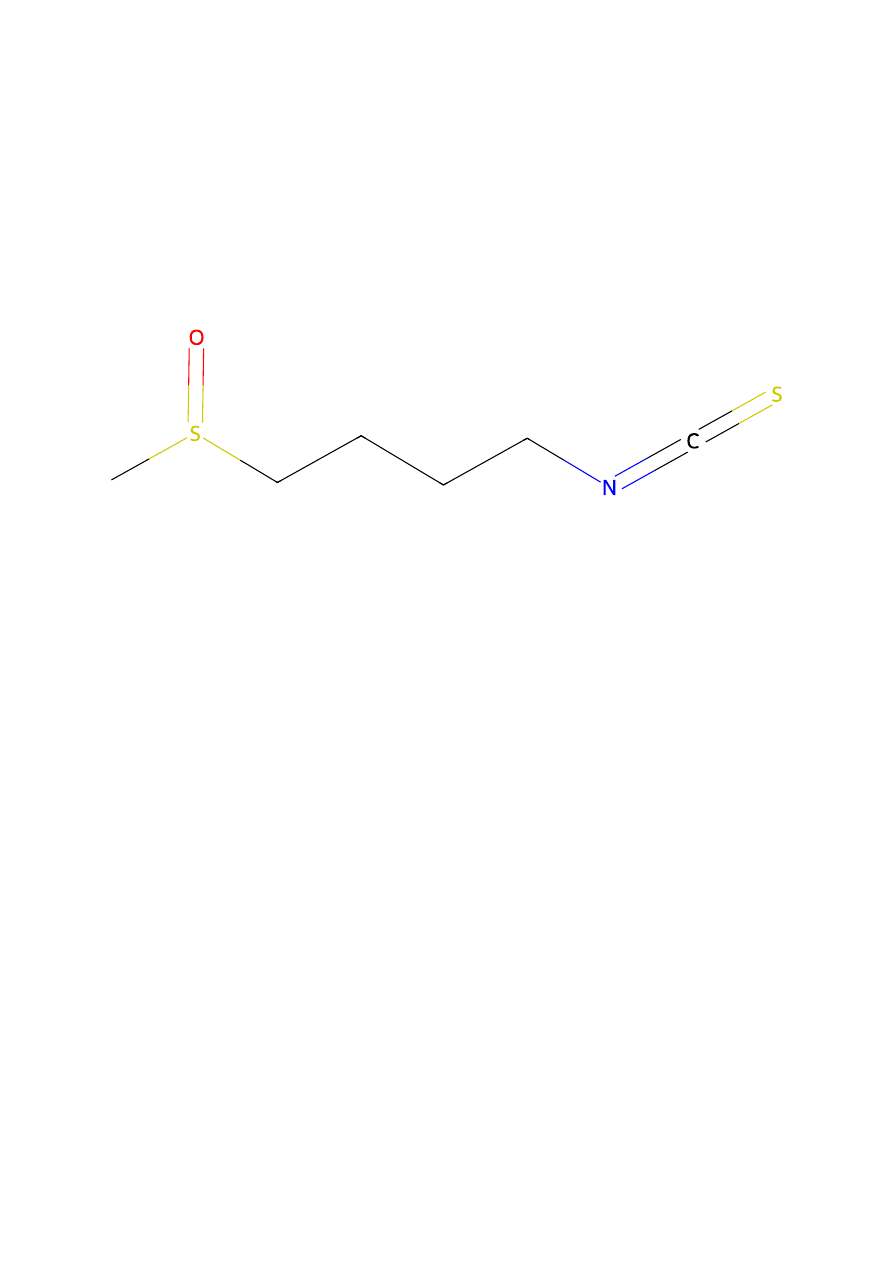
CHAPTER 3 · PROFILE 4/98 · ARCHIVE RECORD 4
4. Sulforaphane
Recorded rationale and role
Sulfur-containing comparator or derivative. The structure
extends the programme beyond the moxidectin scaffold and
supports comparison of class action, exposure and redox
response. Original entry heading: 4. Sulforaphane
C6H11NOS2 · MW 177.3 · clogP 1.25 · TPSA 29.4 Ų · HBD 0
· RotB 5. Source context is identified below; the design role is
not a measured efficacy ranking.
Preparation focus in the existing record
The preparation concept is governed by the source scaffold,
available attachment handle and functional-group
compatibility. Establish connectivity, stereochemical
AGENTIC RESEARCH FACTORY · COMPUTATIONAL COOKBOOK · 62 / 886

composition and relevant stability before comparing biological
responses.
Full deposited SMILES — verbatim
CS(=O)CCCCN=C=S
Canonical isomeric SMILES — RDKit 2026.09.1
CS(=O)CCCCN=C=S
Complete computed profile
Formula
C6H11NOS2
Molecular weight (g/mol)
177.294
Exact mass (Da)
177.028206
Crippen cLogP
1.2479
TPSA (Ų)
29.43
H-bond donors
0
H-bond acceptors
3
Rotatable bonds
5
Rings
0
Formal charge
0
Heavy atoms
10
AGENTIC RESEARCH FACTORY · COMPUTATIONAL COOKBOOK · 63 / 886

Unassigned stereo —
modern
2
Unassigned stereo —
legacy
1
Graph interpretation and liabilities
This graph has 0 O–O bonds, net formal charge +0, and 5
rotatable bonds. The descriptor balance supports comparison
with the adjacent source series rather than assuming a shared
exposure profile. The modern graph analysis leaves 2
stereochemical elements unspecified; material-level
comparisons require that composition to be defined.
Source record
2026-11-04T223635-eyp4-THE_98_Redox_Series_2026-11-
04.pdf, numbered entry 4
Original entry text
4. Sulforaphane
C6H11NOS2 · MW 177.3 · clogP 1.25 · TPSA 29.4 Ų · HBD 0
· RotB 5
CS(=O)CCCCN=C=S
AGENTIC RESEARCH FACTORY · COMPUTATIONAL COOKBOOK · 64 / 886

CHAPTER 3 · PROFILE 5/98 · ARCHIVE RECORD 5
5. Hydrogen peroxide
Recorded rationale and role
Peroxide / iron-activation arm. The O–O-containing graph
provides a chemically distinct redox perturbation to compare
against its parent or peroxide-free counterpart. Original entry
heading: 5. Hydrogen peroxide H2O2 · MW 34.0 · clogP 0.02 ·
TPSA 40.5 Ų · HBD 2 · RotB 0. Source context is identified
below; the design role is not a measured efficacy ranking.
Preparation focus in the existing record
Peroxide-preserving preparation and analytical work are
central. Compare intact conjugate with any parent-release
products; identify the peroxide architecture and
stereochemical composition before biological interpretation.
AGENTIC RESEARCH FACTORY · COMPUTATIONAL COOKBOOK · 65 / 886

Full deposited SMILES — verbatim
OO
Canonical isomeric SMILES — RDKit 2026.09.1
OO
Complete computed profile
Formula
H2O2
Molecular weight (g/mol)
34.014
Exact mass (Da)
34.005479
Crippen cLogP
0.0174
TPSA (Ų)
40.46
H-bond donors
2
H-bond acceptors
2
Rotatable bonds
0
Rings
0
Formal charge
0
Heavy atoms
2
Unassigned stereo —
modern
0
AGENTIC RESEARCH FACTORY · COMPUTATIONAL COOKBOOK · 66 / 886

Unassigned stereo —
legacy
0
Graph interpretation and liabilities
This graph has 1 O–O bond, net formal charge +0, and 0
rotatable bonds. The descriptor balance supports comparison
with the adjacent source series rather than assuming a shared
exposure profile. No unspecified stereochemical element was
detected by the stated modern analysis of this graph.
Source record
2026-11-04T223635-eyp4-THE_98_Redox_Series_2026-11-
04.pdf, numbered entry 5
Original entry text
5. Hydrogen peroxide
H2O2 · MW 34.0 · clogP 0.02 · TPSA 40.5 Ų · HBD 2 · RotB
0
OO
AGENTIC RESEARCH FACTORY · COMPUTATIONAL COOKBOOK · 67 / 886
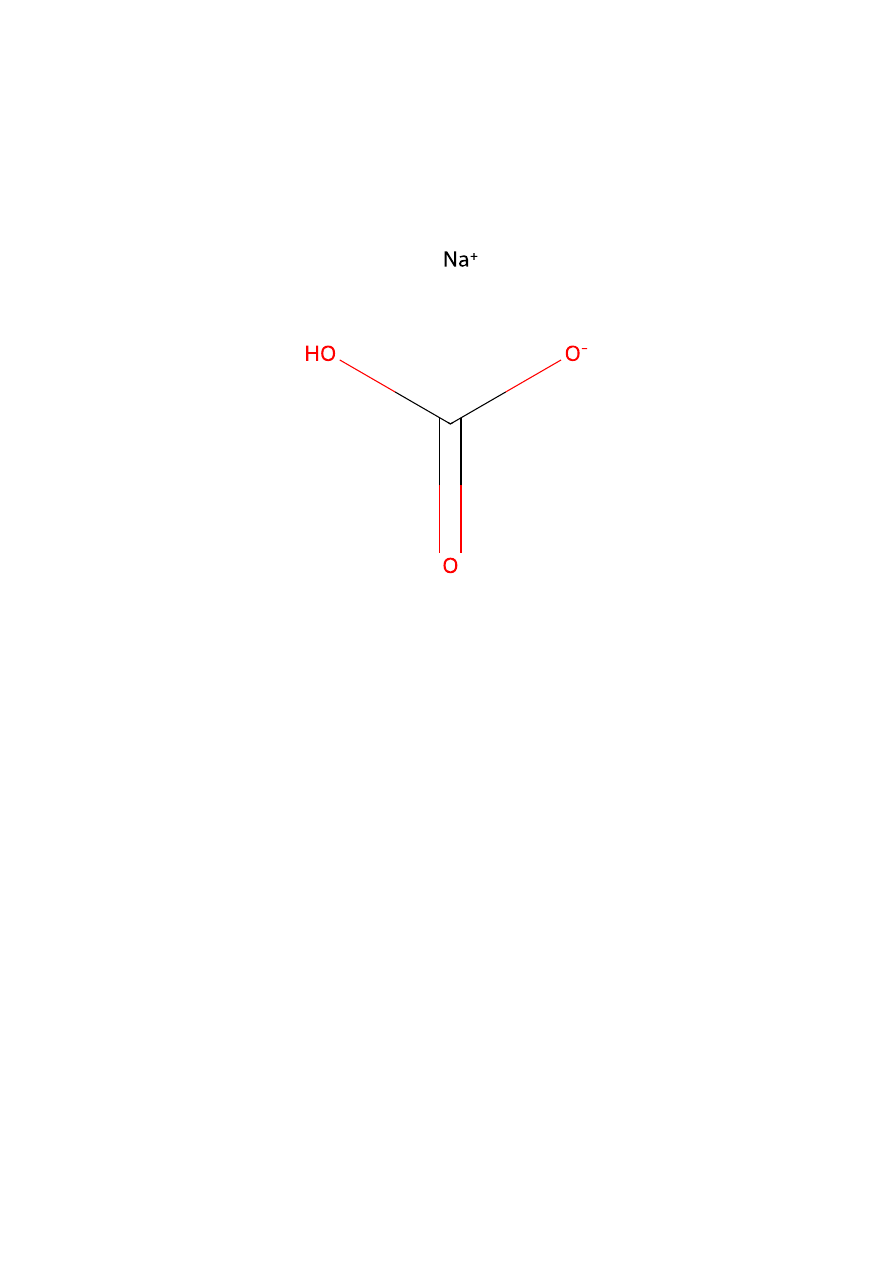
CHAPTER 3 · PROFILE 6/98 · ARCHIVE RECORD 6
6. Sodium bicarbonate
Recorded rationale and role
Programme comparator / derivative. This entry preserves the
source scaffold and appendage combination for comparison
with its parent and adjacent development records. Original
entry heading: 6. Sodium bicarbonate CHNaO3 · MW 84.0 ·
clogP -4.11 · TPSA 60.4 Ų · HBD 1 · RotB 0. Source context
is identified below; the design role is not a measured efficacy
ranking.
Preparation focus in the existing record
The preparation concept is governed by the source scaffold,
available attachment handle and functional-group
compatibility. Establish connectivity, stereochemical
AGENTIC RESEARCH FACTORY · COMPUTATIONAL COOKBOOK · 68 / 886

composition and relevant stability before comparing biological
responses.
Full deposited SMILES — verbatim
O=C([O-])O.[Na+]
Canonical isomeric SMILES — RDKit 2026.09.1
O=C([O-])O.[Na+]
Complete computed profile
Formula
CHNaO3
Molecular weight (g/mol)
84.006
Exact mass (Da)
83.982338
Crippen cLogP
-4.1083
TPSA (Ų)
60.36
H-bond donors
1
H-bond acceptors
2
Rotatable bonds
0
Rings
0
Formal charge
0
Heavy atoms
5
AGENTIC RESEARCH FACTORY · COMPUTATIONAL COOKBOOK · 69 / 886

Unassigned stereo —
modern
0
Unassigned stereo —
legacy
0
Graph interpretation and liabilities
This graph has 0 O–O bonds, net formal charge +0, and 0
rotatable bonds. The descriptor balance supports comparison
with the adjacent source series rather than assuming a shared
exposure profile. No unspecified stereochemical element was
detected by the stated modern analysis of this graph.
Source record
2026-11-04T223635-eyp4-THE_98_Redox_Series_2026-11-
04.pdf, numbered entry 6
Original entry text
6. Sodium bicarbonate
CHNaO3 · MW 84.0 · clogP -4.11 · TPSA 60.4 Ų · HBD 1 ·
RotB 0
O=C([O-])O.[Na+]
2 · The upgraded derivatives
What the logic selects in place of each stone, chosen on
exposure and directness
of redox action. Moxidectin for its 18–23 day half-life and poor
P-glycoprotein
AGENTIC RESEARCH FACTORY · COMPUTATIONAL COOKBOOK · 70 / 886

affinity; oxfendazole as the systemically available sulfoxide;
auranofin and
disulfiram–copper because tumours carry no HIV protease
and th
AGENTIC RESEARCH FACTORY · COMPUTATIONAL COOKBOOK · 71 / 886
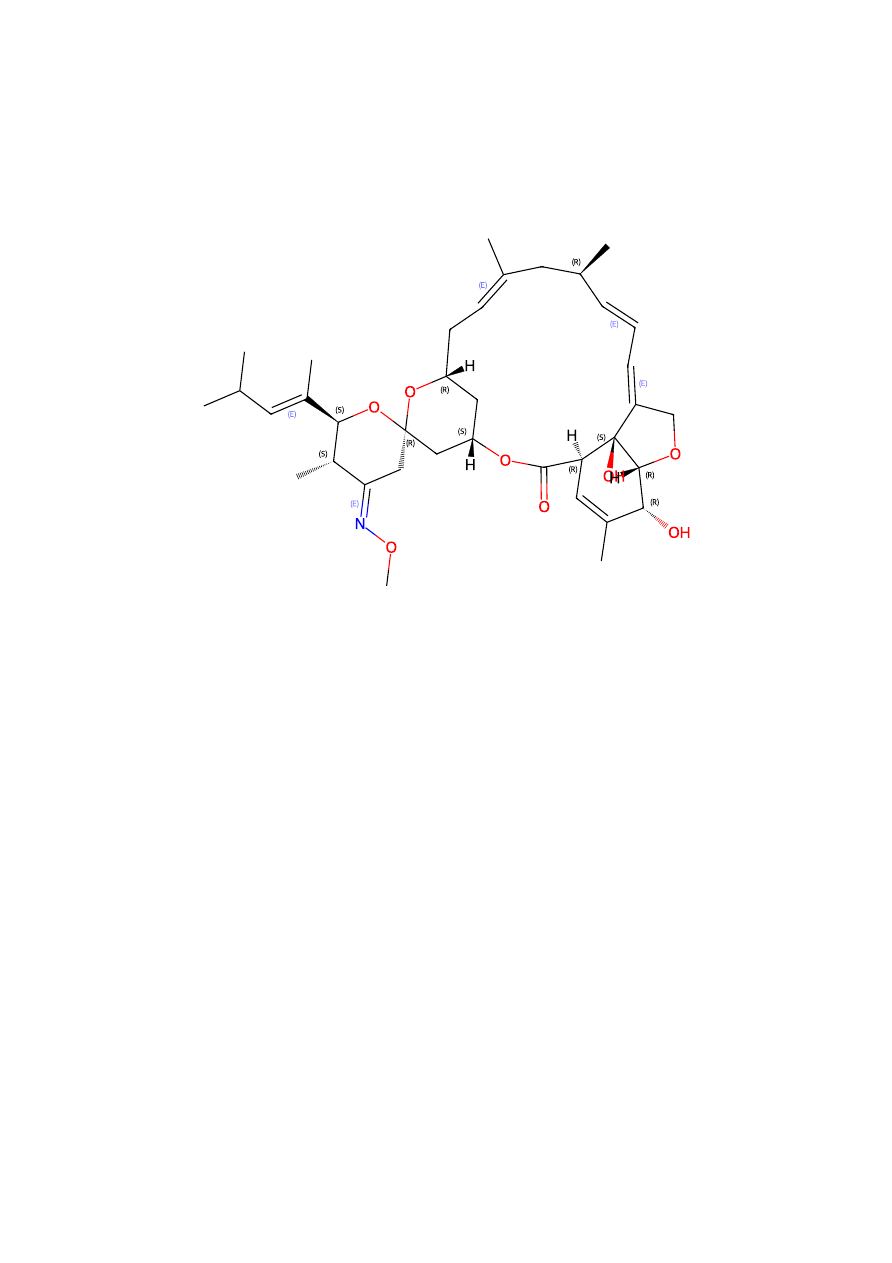
CHAPTER 3 · PROFILE 7/98 · ARCHIVE RECORD 7
7. Moxidectin
Recorded rationale and role
Programme comparator / derivative. This entry preserves the
source scaffold and appendage combination for comparison
with its parent and adjacent development records. Original
entry heading: 7. Moxidectin C37H53NO8 · MW 639.8 · clogP
5.73 · TPSA 116.0 Ų · HBD 2 · RotB 3. Source context is
identified below; the design role is not a measured efficacy
ranking.
Preparation focus in the existing record
The preparation concept is governed by the source scaffold,
available attachment handle and functional-group
compatibility. Establish connectivity, stereochemical
AGENTIC RESEARCH FACTORY · COMPUTATIONAL COOKBOOK · 72 / 886

composition and relevant stability before comparing biological
responses.
Full deposited SMILES — verbatim
CO/N=C1\C[C@]2(C[C@@H]3C[C@@H]
(C/C=C(\C)C[C@@H](C)/C=C/C=C4\CO[C@@H]5[C@H]
(O)C(C)=C[C@@H](C(=O)O3)[C@]45O)O2)O[C@H]
(/C(C)=C/C(C)C)[C@H]1C
Canonical isomeric SMILES — RDKit 2026.09.1
CO/N=C1\C[C@]2(C[C@@H]3C[C@@H]
(C/C=C(\C)C[C@@H](C)/C=C/C=C4\CO[C@@H]5[C@H]
(O)C(C)=C[C@@H](C(=O)O3)[C@]45O)O2)O[C@H]
(/C(C)=C/C(C)C)[C@H]1C
Complete computed profile
Formula
C37H53NO8
Molecular weight (g/mol)
639.83
Exact mass (Da)
639.377118
Crippen cLogP
5.7289
TPSA (Ų)
116.04
H-bond donors
2
H-bond acceptors
9
Rotatable bonds
3
AGENTIC RESEARCH FACTORY · COMPUTATIONAL COOKBOOK · 73 / 886

Rings
5
Formal charge
0
Heavy atoms
46
Unassigned stereo —
modern
0
Unassigned stereo —
legacy
0
Graph interpretation and liabilities
This graph has 0 O–O bonds, net formal charge +0, and 3
rotatable bonds. The descriptor balance supports comparison
with the adjacent source series rather than assuming a shared
exposure profile. No unspecified stereochemical element was
detected by the stated modern analysis of this graph.
Source record
2026-11-04T223635-eyp4-THE_98_Redox_Series_2026-11-
04.pdf, numbered entry 7
Original entry text
7. Moxidectin
C37H53NO8 · MW 639.8 · clogP 5.73 · TPSA 116.0 Ų · HBD
2 · RotB 3
CO/N=C1\C[C@]2(C[C@@H]3C[C@@H]
(C/C=C(\C)C[C@@H](C)/C=C/C=C4\CO[C@@H]5[C@H]
AGENTIC RESEARCH FACTORY · COMPUTATIONAL COOKBOOK · 74 / 886

(O)C(C)=C[C@@H](C(=O)O3)
[C@]45O)O2)O[C@H](/C(C)=C/C(C)C)[C@H]1C
AGENTIC RESEARCH FACTORY · COMPUTATIONAL COOKBOOK · 75 / 886
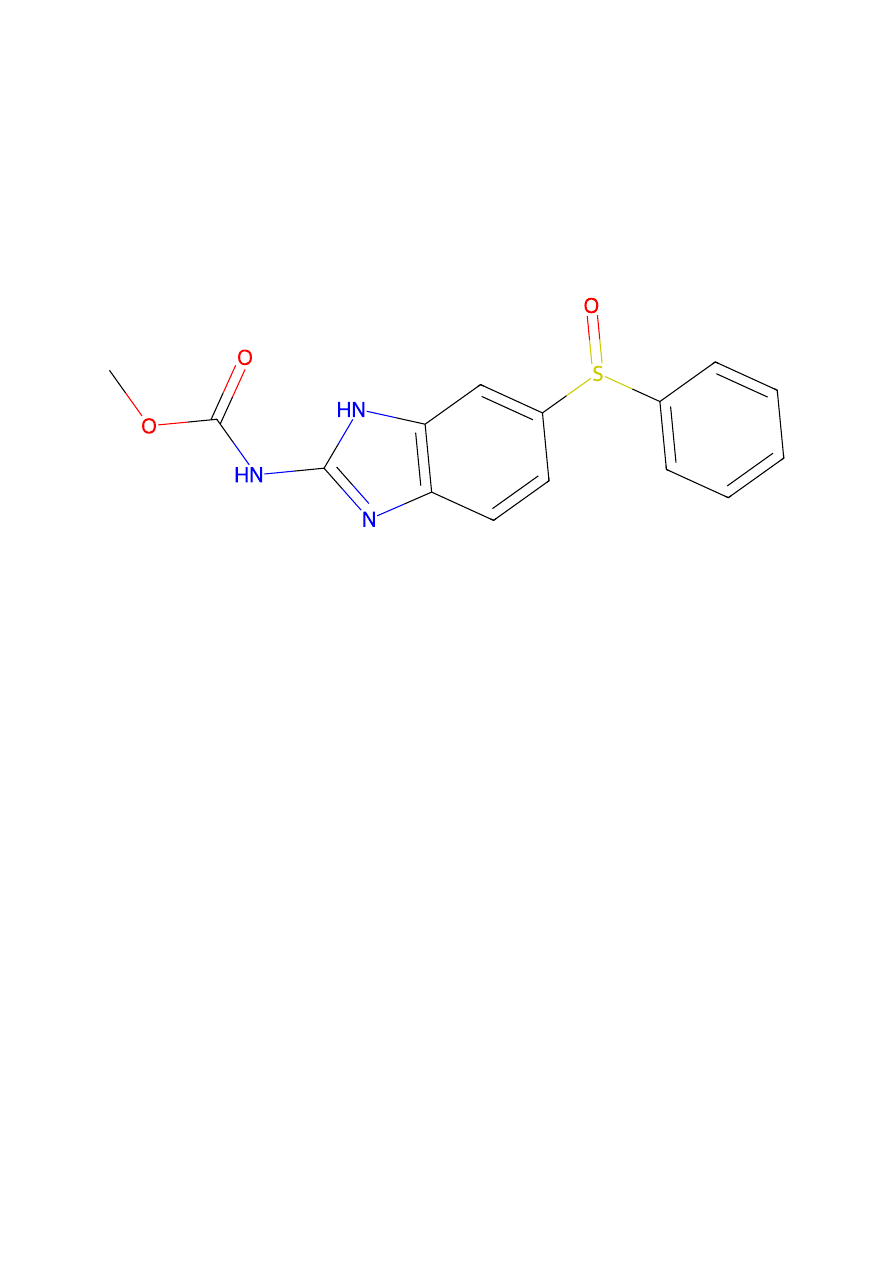
CHAPTER 3 · PROFILE 8/98 · ARCHIVE RECORD 8
8. Oxfendazole
Recorded rationale and role
Sulfur-containing comparator or derivative. The structure
extends the programme beyond the moxidectin scaffold and
supports comparison of class action, exposure and redox
response. Original entry heading: 8. Oxfendazole
C15H13N3O3S · MW 315.4 · clogP 2.91 · TPSA 84.1 Ų ·
HBD 2 · RotB 3. Source context is identified below; the design
role is not a measured efficacy ranking.
Preparation focus in the existing record
Use the carbamate connection as a distinct persistence
hypothesis. Assess compatibility of the parent functional
AGENTIC RESEARCH FACTORY · COMPUTATIONAL COOKBOOK · 76 / 886

groups and identify any cleavage products rather than
assuming release kinetics from the linkage name.
Full deposited SMILES — verbatim
COC(=O)Nc1nc2ccc(S(=O)c3ccccc3)cc2[nH]1
Canonical isomeric SMILES — RDKit 2026.09.1
COC(=O)Nc1nc2ccc(S(=O)c3ccccc3)cc2[nH]1
Complete computed profile
Formula
C15H13N3O3S
Molecular weight (g/mol)
315.354
Exact mass (Da)
315.067762
Crippen cLogP
2.9079
TPSA (Ų)
84.08
H-bond donors
2
H-bond acceptors
4
Rotatable bonds
3
Rings
3
Formal charge
0
Heavy atoms
22
AGENTIC RESEARCH FACTORY · COMPUTATIONAL COOKBOOK · 77 / 886

Unassigned stereo —
modern
1
Unassigned stereo —
legacy
1
Graph interpretation and liabilities
This graph has 0 O–O bonds, net formal charge +0, and 3
rotatable bonds. The descriptor balance supports comparison
with the adjacent source series rather than assuming a shared
exposure profile. The modern graph analysis leaves 1
stereochemical elements unspecified; material-level
comparisons require that composition to be defined.
Source record
2026-11-04T223635-eyp4-THE_98_Redox_Series_2026-11-
04.pdf, numbered entry 8
Original entry text
8. Oxfendazole
C15H13N3O3S · MW 315.4 · clogP 2.91 · TPSA 84.1 Ų ·
HBD 2 · RotB 3
COC(=O)Nc1nc2ccc(S(=O)c3ccccc3)cc2[nH]1
AGENTIC RESEARCH FACTORY · COMPUTATIONAL COOKBOOK · 78 / 886
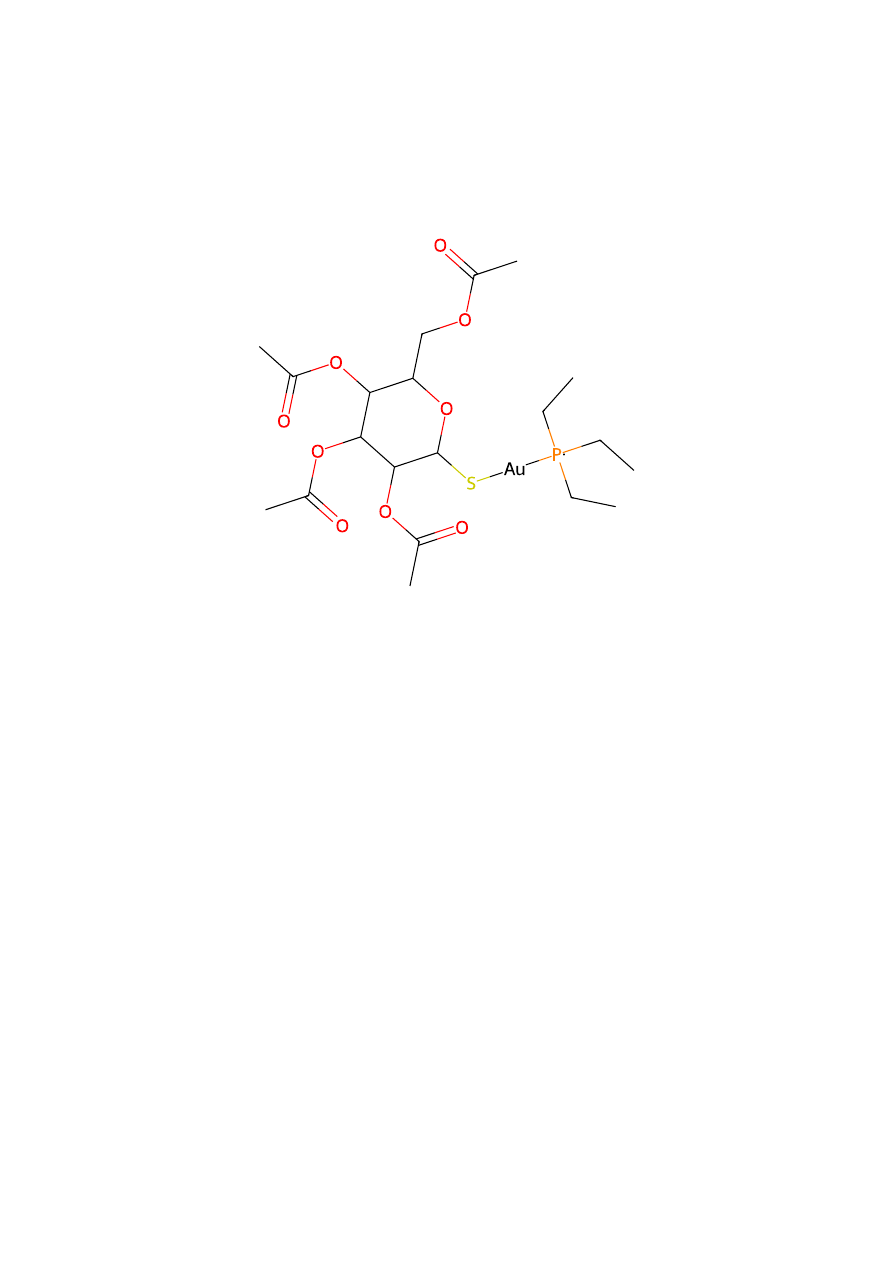
CHAPTER 3 · PROFILE 9/98 · ARCHIVE RECORD 9
9. Auranofin
Recorded rationale and role
Gold/redox comparison arm. The encoded metal-containing
agent provides a contrast with organic peroxide and sulfur-
containing branches; material identity includes the
coordination representation. Original entry heading: 9.
Auranofin C20H34AuO9PS · MW 678.5 · clogP 2.79 · TPSA
114.4 Ų · HBD 0 · RotB 11. Source context is identified below;
the design role is not a measured efficacy ranking.
Preparation focus in the existing record
The preparation concept is governed by the source scaffold,
available attachment handle and functional-group
compatibility. Establish connectivity, stereochemical
AGENTIC RESEARCH FACTORY · COMPUTATIONAL COOKBOOK · 79 / 886

composition and relevant stability before comparing biological
responses.
Full deposited SMILES — verbatim
CC[P](CC)(CC)[Au]
[S]C1OC(COC(C)=O)C(OC(C)=O)C(OC(C)=O)C1OC(C)=O
Canonical isomeric SMILES — RDKit 2026.09.1
CC[P](CC)(CC)[Au]
[S]C1OC(COC(C)=O)C(OC(C)=O)C(OC(C)=O)C1OC(C)=O
Complete computed profile
Formula
C20H34AuO9PS
Molecular weight (g/mol)
678.491
Exact mass (Da)
678.132684
Crippen cLogP
2.7925
TPSA (Ų)
114.43
H-bond donors
0
H-bond acceptors
10
Rotatable bonds
11
Rings
1
Formal charge
0
AGENTIC RESEARCH FACTORY · COMPUTATIONAL COOKBOOK · 80 / 886

Heavy atoms
32
Unassigned stereo —
modern
5
Unassigned stereo —
legacy
5
Graph interpretation and liabilities
This graph has 0 O–O bonds, net formal charge +0, and 11
rotatable bonds. The descriptor balance supports comparison
with the adjacent source series rather than assuming a shared
exposure profile. The modern graph analysis leaves 5
stereochemical elements unspecified; material-level
comparisons require that composition to be defined.
Source record
2026-11-04T223635-eyp4-THE_98_Redox_Series_2026-11-
04.pdf, numbered entry 9
Original entry text
9. Auranofin
C20H34AuO9PS · MW 678.5 · clogP 2.79 · TPSA 114.4 Ų ·
HBD 0 · RotB 11
CC[P](CC)(CC)[Au]
[S]C1OC(COC(C)=O)C(OC(C)=O)C(OC(C)=O)C1OC(C)=O
AGENTIC RESEARCH FACTORY · COMPUTATIONAL COOKBOOK · 81 / 886
CHAPTER 3 · PROFILE 10/98 · ARCHIVE RECORD 10
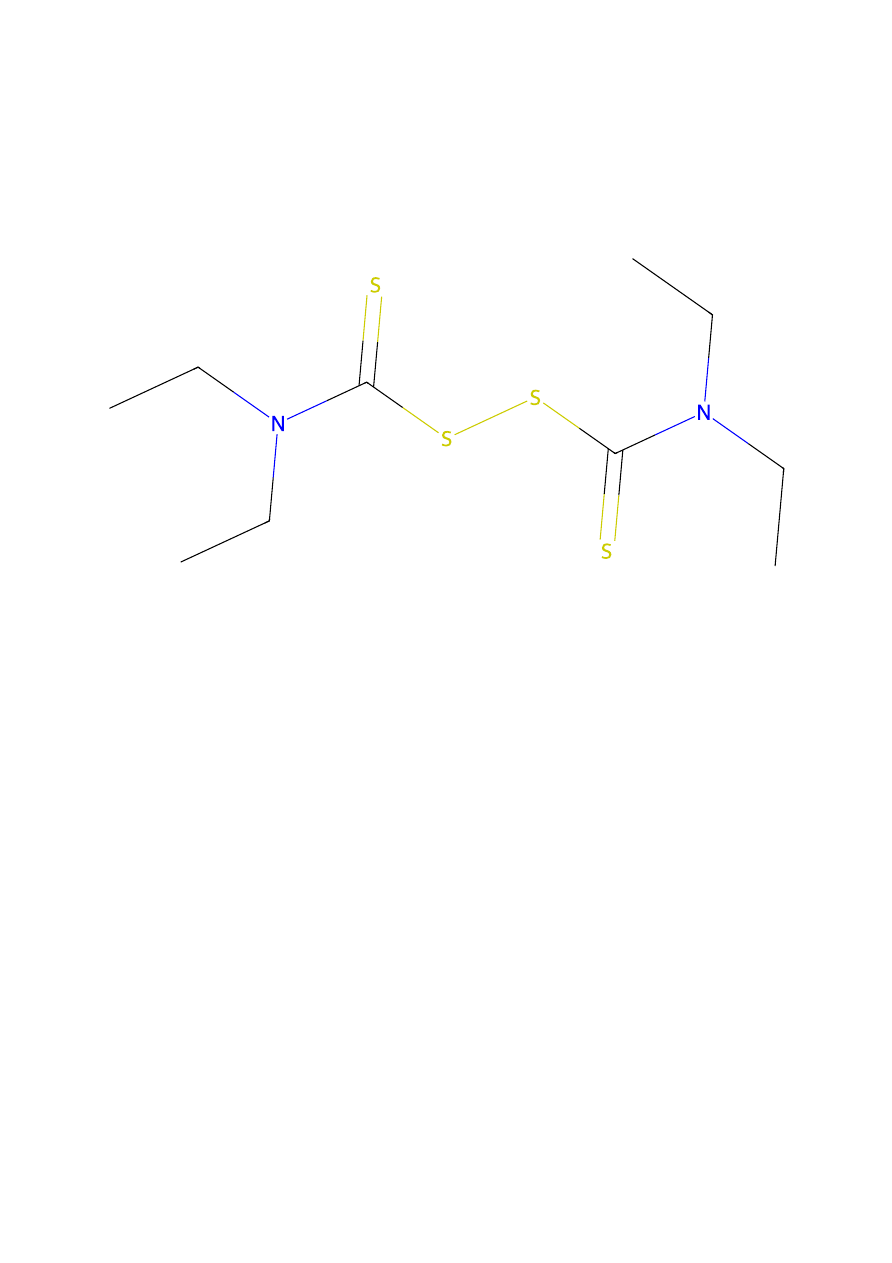
10. Disulfiram
Recorded rationale and role
Sulfur-containing comparator or derivative. The structure
extends the programme beyond the moxidectin scaffold and
supports comparison of class action, exposure and redox
response. Original entry heading: 10. Disulfiram C10H20N2S4
· MW 296.6 · clogP 3.62 · TPSA 6.5 Ų · HBD 0 · RotB 4.
Source context is identified below; the design role is not a
measured efficacy ranking.
Preparation focus in the existing record
The preparation concept is governed by the source scaffold,
available attachment handle and functional-group
compatibility. Establish connectivity, stereochemical
AGENTIC RESEARCH FACTORY · COMPUTATIONAL COOKBOOK · 82 / 886

composition and relevant stability before comparing biological
responses.
Full deposited SMILES — verbatim
CCN(CC)C(=S)SSC(=S)N(CC)CC
Canonical isomeric SMILES — RDKit 2026.09.1
CCN(CC)C(=S)SSC(=S)N(CC)CC
Complete computed profile
Formula
C10H20N2S4
Molecular weight (g/mol)
296.552
Exact mass (Da)
296.050933
Crippen cLogP
3.6212
TPSA (Ų)
6.48
H-bond donors
0
H-bond acceptors
4
Rotatable bonds
4
Rings
0
Formal charge
0
Heavy atoms
16
AGENTIC RESEARCH FACTORY · COMPUTATIONAL COOKBOOK · 83 / 886

Unassigned stereo —
modern
0
Unassigned stereo —
legacy
0
Graph interpretation and liabilities
This graph has 0 O–O bonds, net formal charge +0, and 4
rotatable bonds. The descriptor balance supports comparison
with the adjacent source series rather than assuming a shared
exposure profile. No unspecified stereochemical element was
detected by the stated modern analysis of this graph.
Source record
2026-11-04T223635-eyp4-THE_98_Redox_Series_2026-11-
04.pdf, numbered entry 10
Original entry text
10. Disulfiram
C10H20N2S4 · MW 296.6 · clogP 3.62 · TPSA 6.5 Ų · HBD 0
· RotB 4
CCN(CC)C(=S)SSC(=S)N(CC)CC
AGENTIC RESEARCH FACTORY · COMPUTATIONAL COOKBOOK · 84 / 886
CHAPTER 3 · PROFILE 11/98 · ARCHIVE RECORD 11
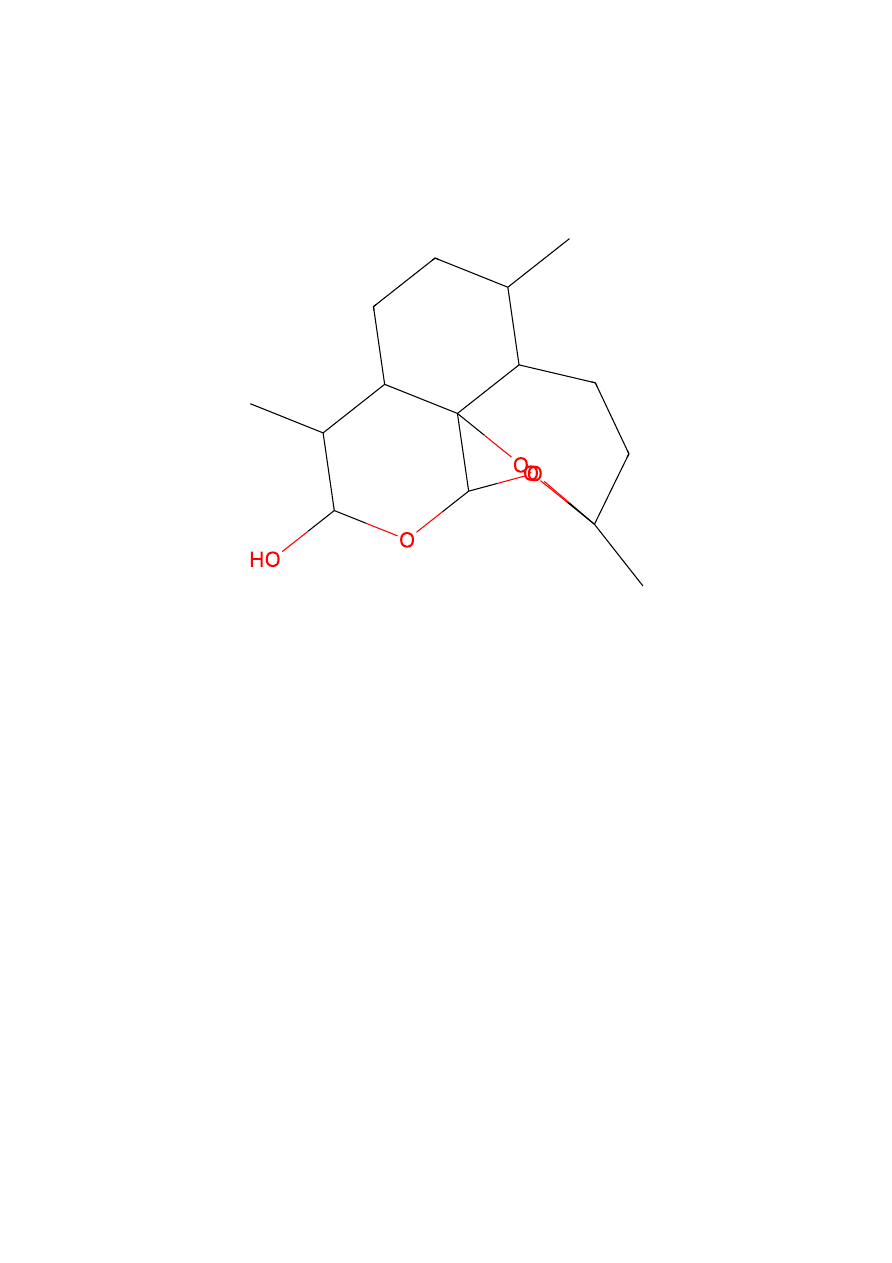
11. Dihydroartemisinin
Recorded rationale and role
Peroxide / iron-activation arm. The O–O-containing graph
provides a chemically distinct redox perturbation to compare
against its parent or peroxide-free counterpart. Original entry
heading: 11. Dihydroartemisinin C15H24O5 · MW 284.4 ·
clogP 2.19 · TPSA 57.2 Ų · HBD 1 · RotB 0. Source context is
identified below; the design role is not a measured efficacy
ranking.
Preparation focus in the existing record
Peroxide-preserving preparation and analytical work are
central. Compare intact conjugate with any parent-release
AGENTIC RESEARCH FACTORY · COMPUTATIONAL COOKBOOK · 85 / 886

products; identify the peroxide architecture and
stereochemical composition before biological interpretation.
Full deposited SMILES — verbatim
CC1CCC2C(C)C(O)OC3OC4(C)CCC1C32OO4
Canonical isomeric SMILES — RDKit 2026.09.1
CC1CCC2C(C)C(O)OC3OC4(C)CCC1C32OO4
Complete computed profile
Formula
C15H24O5
Molecular weight (g/mol)
284.352
Exact mass (Da)
284.162374
Crippen cLogP
2.1867
TPSA (Ų)
57.15
H-bond donors
1
H-bond acceptors
5
Rotatable bonds
0
Rings
5
Formal charge
0
Heavy atoms
20
AGENTIC RESEARCH FACTORY · COMPUTATIONAL COOKBOOK · 86 / 886

Unassigned stereo —
modern
8
Unassigned stereo —
legacy
8
Graph interpretation and liabilities
This graph has 1 O–O bond, net formal charge +0, and 0
rotatable bonds. The descriptor balance supports comparison
with the adjacent source series rather than assuming a shared
exposure profile. The modern graph analysis leaves 8
stereochemical elements unspecified; material-level
comparisons require that composition to be defined.
Source record
2026-11-04T223635-eyp4-THE_98_Redox_Series_2026-11-
04.pdf, numbered entry 11
Original entry text
11. Dihydroartemisinin
C15H24O5 · MW 284.4 · clogP 2.19 · TPSA 57.2 Ų · HBD 1 ·
RotB 0
CC1CCC2C(C)C(O)OC3OC4(C)CCC1C32OO4
AGENTIC RESEARCH FACTORY · COMPUTATIONAL COOKBOOK · 87 / 886
CHAPTER 3 · PROFILE 12/98 · ARCHIVE RECORD 12
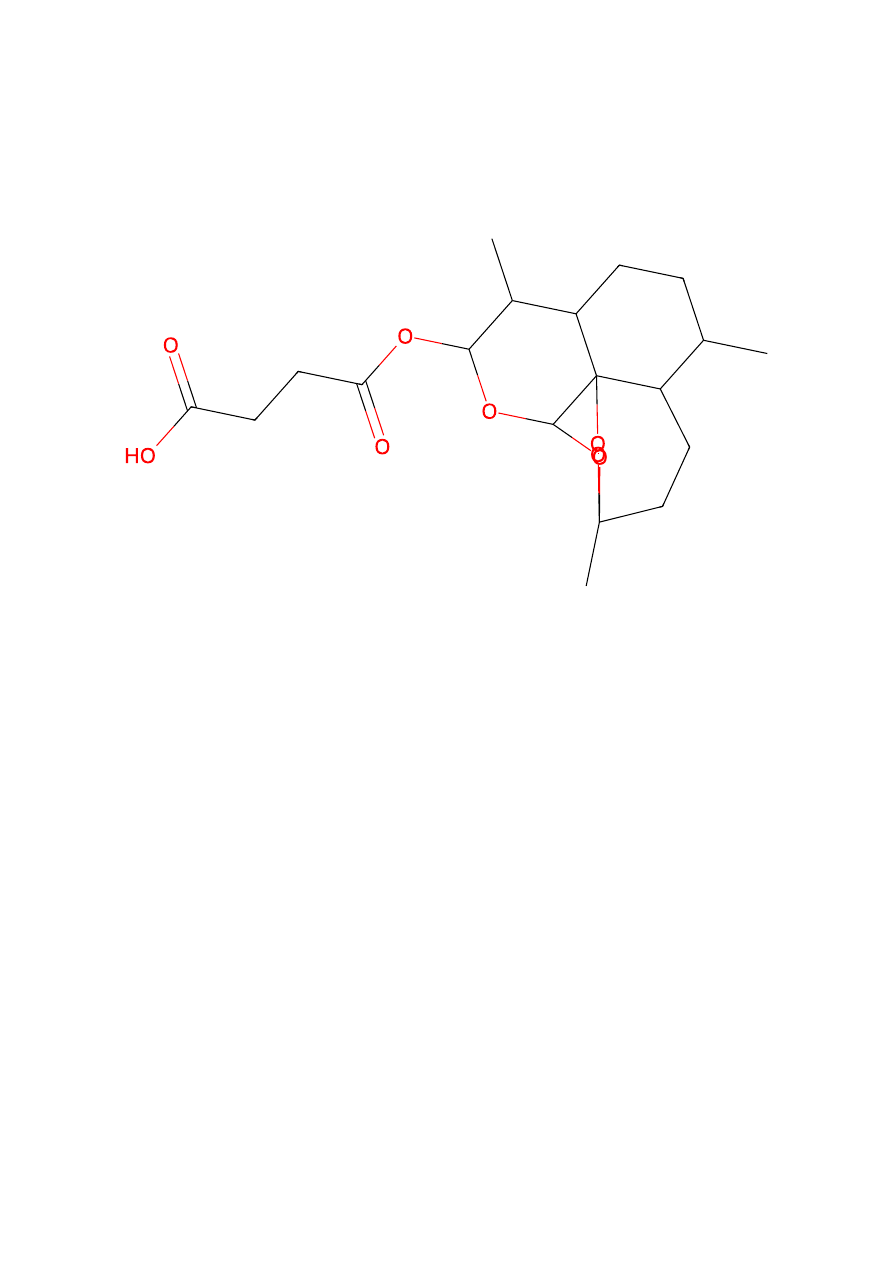
12. Artesunate
Recorded rationale and role
Peroxide / iron-activation arm. The O–O-containing graph
provides a chemically distinct redox perturbation to compare
against its parent or peroxide-free counterpart. Original entry
heading: 12. Artesunate C19H28O8 · MW 384.4 · clogP 2.60 ·
TPSA 100.5 Ų · HBD 1 · RotB 4. Source context is identified
below; the design role is not a measured efficacy ranking.
Preparation focus in the existing record
Peroxide-preserving preparation and analytical work are
central. Compare intact conjugate with any parent-release
products; identify the peroxide architecture and
stereochemical composition before biological interpretation.
AGENTIC RESEARCH FACTORY · COMPUTATIONAL COOKBOOK · 88 / 886

Full deposited SMILES — verbatim
CC1CCC2C(C)C(OC(=O)CCC(=O)O)OC3OC4(C)CCC1C32O
O4
Canonical isomeric SMILES — RDKit 2026.09.1
CC1CCC2C(C)C(OC(=O)CCC(=O)O)OC3OC4(C)CCC1C32O
O4
Complete computed profile
Formula
C19H28O8
Molecular weight (g/mol)
384.425
Exact mass (Da)
384.178418
Crippen cLogP
2.6024
TPSA (Ų)
100.52
H-bond donors
1
H-bond acceptors
7
Rotatable bonds
4
Rings
5
Formal charge
0
Heavy atoms
27
AGENTIC RESEARCH FACTORY · COMPUTATIONAL COOKBOOK · 89 / 886

Unassigned stereo —
modern
8
Unassigned stereo —
legacy
8
Graph interpretation and liabilities
This graph has 1 O–O bond, net formal charge +0, and 4
rotatable bonds. The descriptor balance supports comparison
with the adjacent source series rather than assuming a shared
exposure profile. The modern graph analysis leaves 8
stereochemical elements unspecified; material-level
comparisons require that composition to be defined.
Source record
2026-11-04T223635-eyp4-THE_98_Redox_Series_2026-11-
04.pdf, numbered entry 12
Original entry text
12. Artesunate
C19H28O8 · MW 384.4 · clogP 2.60 · TPSA 100.5 Ų · HBD 1
· RotB 4
CC1CCC2C(C)C(OC(=O)CCC(=O)O)OC3OC4(C)CCC1C32O
O4
3 · Class members retained for comparison
Kept because the framework predicts the sulfur-bearing
benzimidazoles separate
from the benzoyl members on a redox-sensitive readout.
AGENTIC RESEARCH FACTORY · COMPUTATIONAL COOKBOOK · 90 / 886

Sulfasalazine is included
as a second antirheumatic acting through glutathione
depletion.
AGENTIC RESEARCH FACTORY · COMPUTATIONAL COOKBOOK · 91 / 886
CHAPTER 3 · PROFILE 13/98 · ARCHIVE RECORD 13
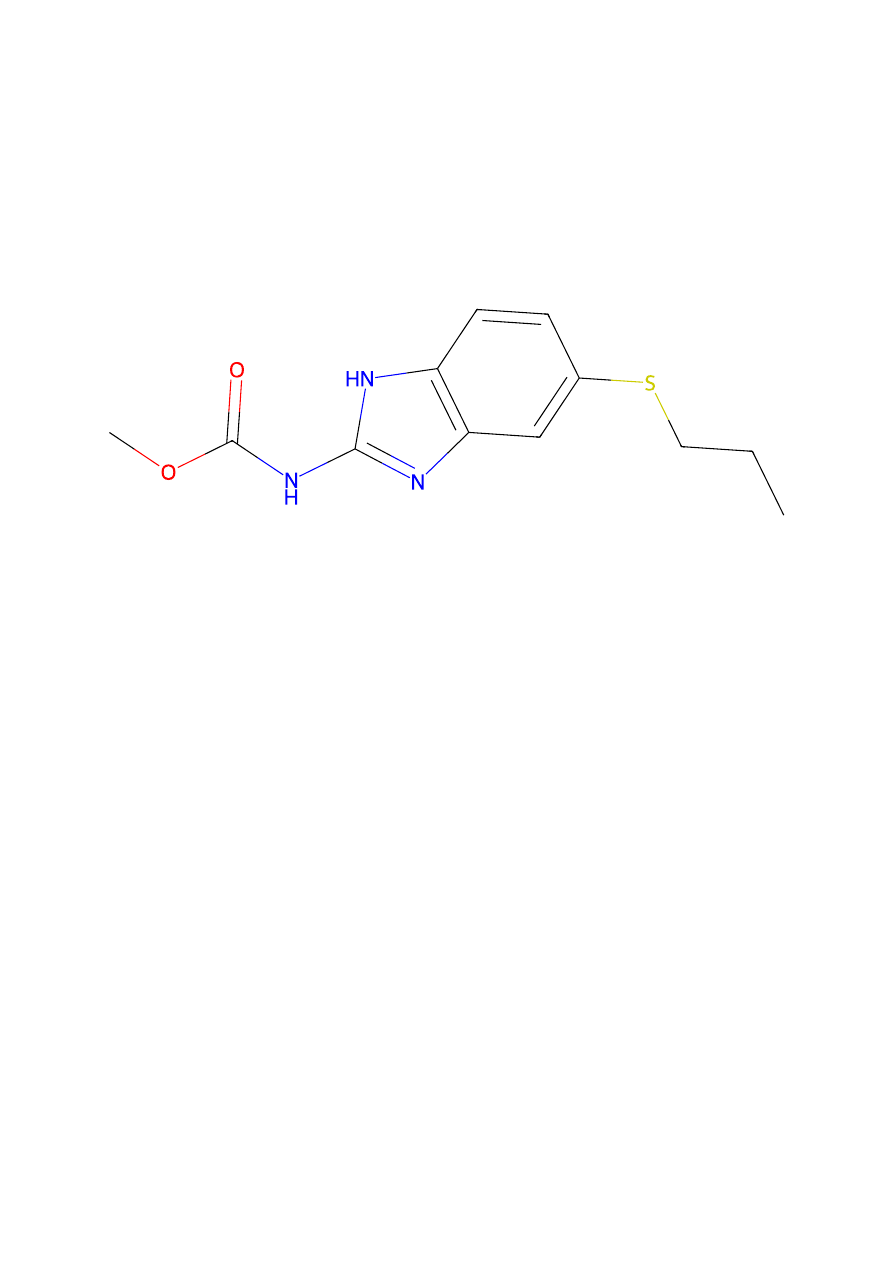
13. Albendazole
Recorded rationale and role
Sulfur-containing comparator or derivative. The structure
extends the programme beyond the moxidectin scaffold and
supports comparison of class action, exposure and redox
response. Original entry heading: 13. Albendazole
C12H15N3O2S · MW 265.3 · clogP 3.24 · TPSA 67.0 Ų ·
HBD 2 · RotB 4. Source context is identified below; the design
role is not a measured efficacy ranking.
Preparation focus in the existing record
Use the carbamate connection as a distinct persistence
hypothesis. Assess compatibility of the parent functional
AGENTIC RESEARCH FACTORY · COMPUTATIONAL COOKBOOK · 92 / 886

groups and identify any cleavage products rather than
assuming release kinetics from the linkage name.
Full deposited SMILES — verbatim
CCCSc1ccc2[nH]c(NC(=O)OC)nc2c1
Canonical isomeric SMILES — RDKit 2026.09.1
CCCSc1ccc2[nH]c(NC(=O)OC)nc2c1
Complete computed profile
Formula
C12H15N3O2S
Molecular weight (g/mol)
265.338
Exact mass (Da)
265.088498
Crippen cLogP
3.2433
TPSA (Ų)
67.01
H-bond donors
2
H-bond acceptors
4
Rotatable bonds
4
Rings
2
Formal charge
0
Heavy atoms
18
AGENTIC RESEARCH FACTORY · COMPUTATIONAL COOKBOOK · 93 / 886

Unassigned stereo —
modern
0
Unassigned stereo —
legacy
0
Graph interpretation and liabilities
This graph has 0 O–O bonds, net formal charge +0, and 4
rotatable bonds. The descriptor balance supports comparison
with the adjacent source series rather than assuming a shared
exposure profile. No unspecified stereochemical element was
detected by the stated modern analysis of this graph.
Source record
2026-11-04T223635-eyp4-THE_98_Redox_Series_2026-11-
04.pdf, numbered entry 13
Original entry text
13. Albendazole
C12H15N3O2S · MW 265.3 · clogP 3.24 · TPSA 67.0 Ų ·
HBD 2 · RotB 4
CCCSc1ccc2[nH]c(NC(=O)OC)nc2c1
AGENTIC RESEARCH FACTORY · COMPUTATIONAL COOKBOOK · 94 / 886
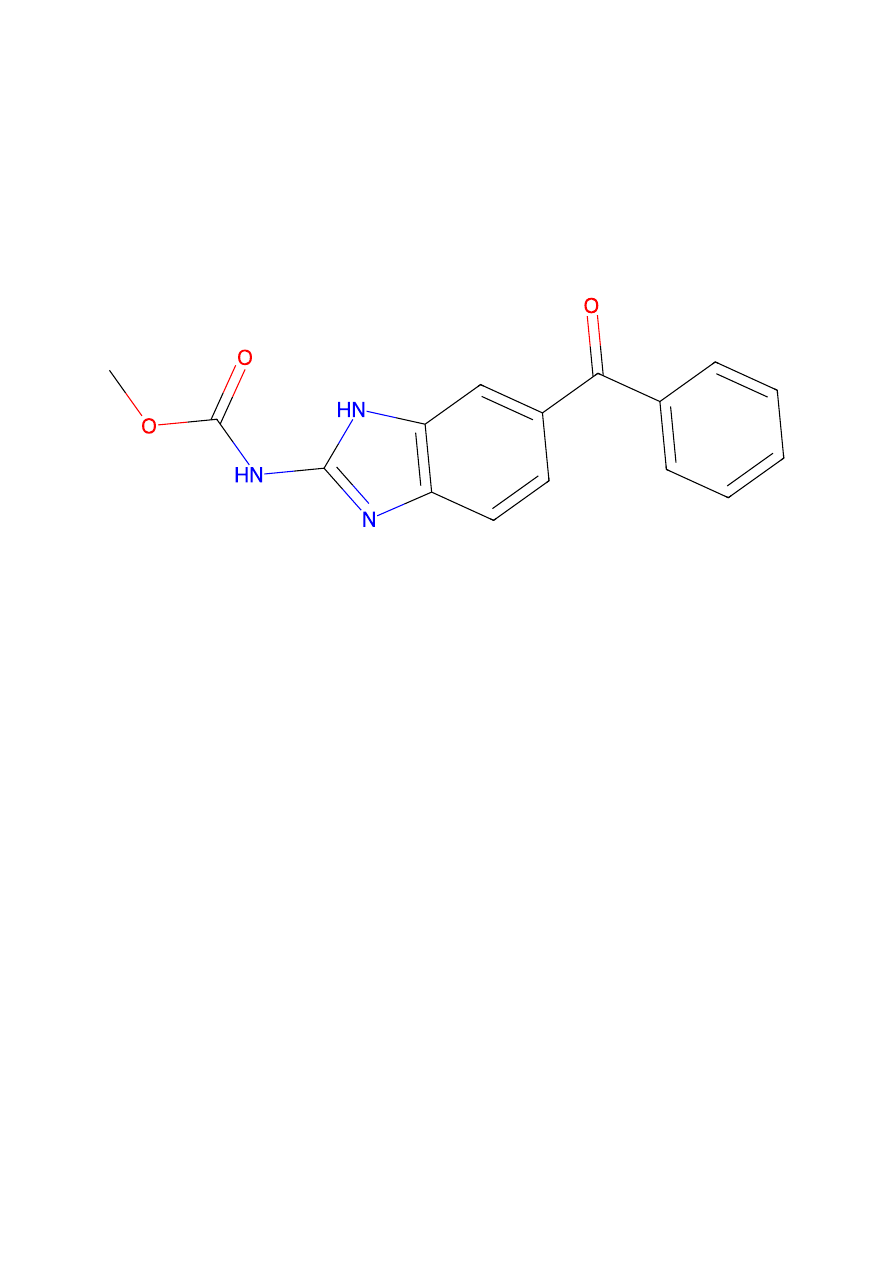
CHAPTER 3 · PROFILE 14/98 · ARCHIVE RECORD 14
14. Mebendazole
Recorded rationale and role
Programme comparator / derivative. This entry preserves the
source scaffold and appendage combination for comparison
with its parent and adjacent development records. Original
entry heading: 14. Mebendazole C16H13N3O3 · MW 295.3 ·
clogP 2.97 · TPSA 84.1 Ų · HBD 2 · RotB 3. Source context is
identified below; the design role is not a measured efficacy
ranking.
Preparation focus in the existing record
Use the carbamate connection as a distinct persistence
hypothesis. Assess compatibility of the parent functional
AGENTIC RESEARCH FACTORY · COMPUTATIONAL COOKBOOK · 95 / 886

groups and identify any cleavage products rather than
assuming release kinetics from the linkage name.
Full deposited SMILES — verbatim
COC(=O)Nc1nc2ccc(C(=O)c3ccccc3)cc2[nH]1
Canonical isomeric SMILES — RDKit 2026.09.1
COC(=O)Nc1nc2ccc(C(=O)c3ccccc3)cc2[nH]1
Complete computed profile
Formula
C16H13N3O3
Molecular weight (g/mol)
295.298
Exact mass (Da)
295.095691
Crippen cLogP
2.9722
TPSA (Ų)
84.08
H-bond donors
2
H-bond acceptors
4
Rotatable bonds
3
Rings
3
Formal charge
0
Heavy atoms
22
AGENTIC RESEARCH FACTORY · COMPUTATIONAL COOKBOOK · 96 / 886

Unassigned stereo —
modern
0
Unassigned stereo —
legacy
0
Graph interpretation and liabilities
This graph has 0 O–O bonds, net formal charge +0, and 3
rotatable bonds. The descriptor balance supports comparison
with the adjacent source series rather than assuming a shared
exposure profile. No unspecified stereochemical element was
detected by the stated modern analysis of this graph.
Source record
2026-11-04T223635-eyp4-THE_98_Redox_Series_2026-11-
04.pdf, numbered entry 14
Original entry text
14. Mebendazole
C16H13N3O3 · MW 295.3 · clogP 2.97 · TPSA 84.1 Ų · HBD
2 · RotB 3
COC(=O)Nc1nc2ccc(C(=O)c3ccccc3)cc2[nH]1
AGENTIC RESEARCH FACTORY · COMPUTATIONAL COOKBOOK · 97 / 886
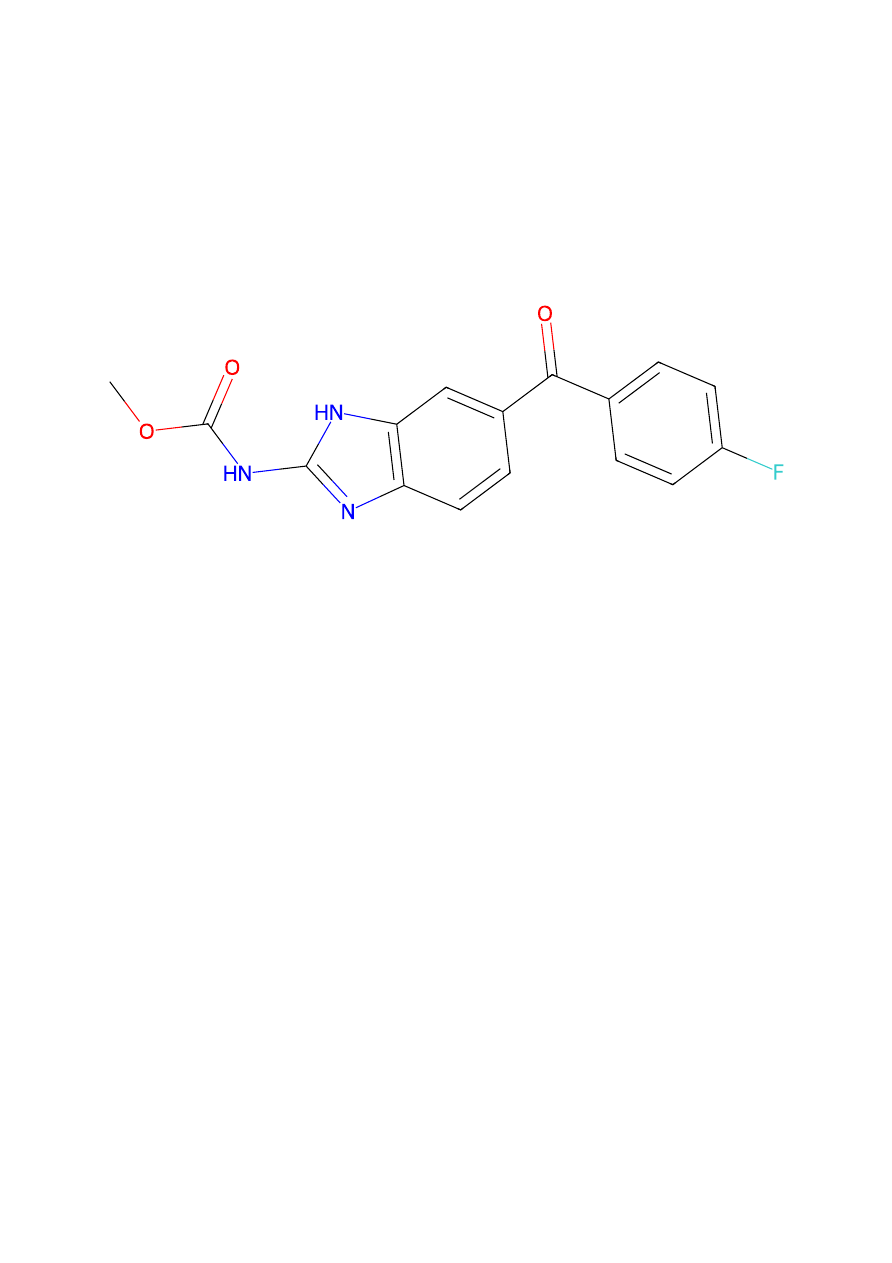
CHAPTER 3 · PROFILE 15/98 · ARCHIVE RECORD 15
15. Flubendazole
Recorded rationale and role
Programme comparator / derivative. This entry preserves the
source scaffold and appendage combination for comparison
with its parent and adjacent development records. Original
entry heading: 15. Flubendazole C16H12FN3O3 · MW 313.3 ·
clogP 3.11 · TPSA 84.1 Ų · HBD 2 · RotB 3. Source context is
identified below; the design role is not a measured efficacy
ranking.
Preparation focus in the existing record
Use the carbamate connection as a distinct persistence
hypothesis. Assess compatibility of the parent functional
AGENTIC RESEARCH FACTORY · COMPUTATIONAL COOKBOOK · 98 / 886

groups and identify any cleavage products rather than
assuming release kinetics from the linkage name.
Full deposited SMILES — verbatim
COC(=O)Nc1nc2ccc(C(=O)c3ccc(F)cc3)cc2[nH]1
Canonical isomeric SMILES — RDKit 2026.09.1
COC(=O)Nc1nc2ccc(C(=O)c3ccc(F)cc3)cc2[nH]1
Complete computed profile
Formula
C16H12FN3O3
Molecular weight (g/mol)
313.288
Exact mass (Da)
313.086269
Crippen cLogP
3.1113
TPSA (Ų)
84.08
H-bond donors
2
H-bond acceptors
4
Rotatable bonds
3
Rings
3
Formal charge
0
Heavy atoms
23
AGENTIC RESEARCH FACTORY · COMPUTATIONAL COOKBOOK · 99 / 886

Unassigned stereo —
modern
0
Unassigned stereo —
legacy
0
Graph interpretation and liabilities
This graph has 0 O–O bonds, net formal charge +0, and 3
rotatable bonds. The descriptor balance supports comparison
with the adjacent source series rather than assuming a shared
exposure profile. No unspecified stereochemical element was
detected by the stated modern analysis of this graph.
Source record
2026-11-04T223635-eyp4-THE_98_Redox_Series_2026-11-
04.pdf, numbered entry 15
Original entry text
15. Flubendazole
C16H12FN3O3 · MW 313.3 · clogP 3.11 · TPSA 84.1 Ų ·
HBD 2 · RotB 3
COC(=O)Nc1nc2ccc(C(=O)c3ccc(F)cc3)cc2[nH]1
AGENTIC RESEARCH FACTORY · COMPUTATIONAL COOKBOOK · 100 / 886
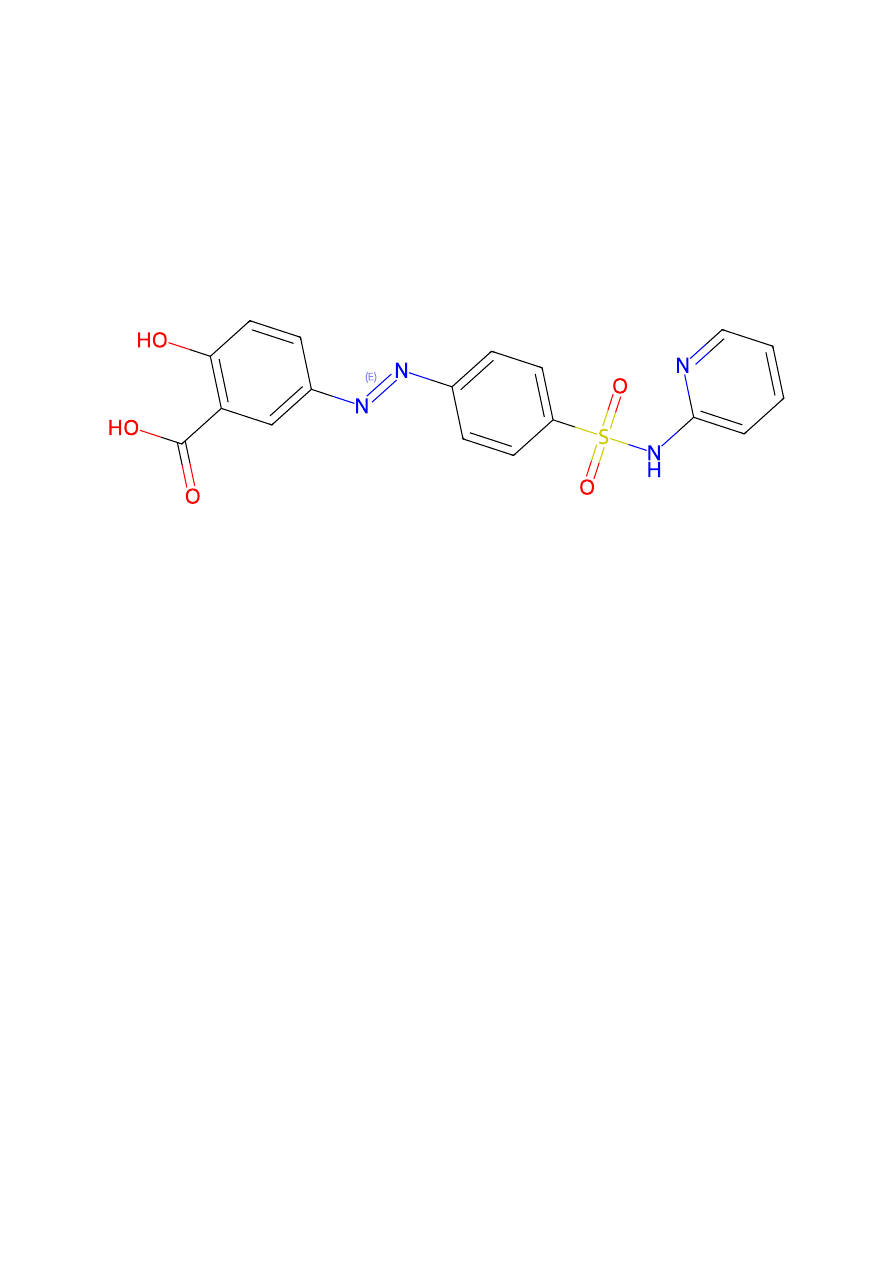
CHAPTER 3 · PROFILE 16/98 · ARCHIVE RECORD 16
16. Sulfasalazine
Recorded rationale and role
Sulfur-containing comparator or derivative. The structure
extends the programme beyond the moxidectin scaffold and
supports comparison of class action, exposure and redox
response. Original entry heading: 16. Sulfasalazine
C18H14N4O5S · MW 398.4 · clogP 3.70 · TPSA 141.3 Ų ·
HBD 3 · RotB 6. Source context is identified below; the design
role is not a measured efficacy ranking.
Preparation focus in the existing record
The preparation concept is governed by the source scaffold,
available attachment handle and functional-group
compatibility. Establish connectivity, stereochemical
AGENTIC RESEARCH FACTORY · COMPUTATIONAL COOKBOOK · 101 / 886

composition and relevant stability before comparing biological
responses.
Full deposited SMILES — verbatim
O=C(O)c1cc(/N=N/c2ccc(S(=O)(=O)Nc3ccccn3)cc2)ccc1O
Canonical isomeric SMILES — RDKit 2026.09.1
O=C(O)c1cc(/N=N/c2ccc(S(=O)(=O)Nc3ccccn3)cc2)ccc1O
Complete computed profile
Formula
C18H14N4O5S
Molecular weight (g/mol)
398.4
Exact mass (Da)
398.068491
Crippen cLogP
3.7016
TPSA (Ų)
141.31
H-bond donors
3
H-bond acceptors
7
Rotatable bonds
6
Rings
3
Formal charge
0
Heavy atoms
28
AGENTIC RESEARCH FACTORY · COMPUTATIONAL COOKBOOK · 102 / 886

Unassigned stereo —
modern
0
Unassigned stereo —
legacy
0
Graph interpretation and liabilities
This graph has 0 O–O bonds, net formal charge +0, and 6
rotatable bonds. The descriptor balance supports comparison
with the adjacent source series rather than assuming a shared
exposure profile. No unspecified stereochemical element was
detected by the stated modern analysis of this graph.
Source record
2026-11-04T223635-eyp4-THE_98_Redox_Series_2026-11-
04.pdf, numbered entry 16
Original entry text
16. Sulfasalazine
C18H14N4O5S · MW 398.4 · clogP 3.70 · TPSA 141.3 Ų ·
HBD 3 · RotB 6
O=C(O)c1cc(/N=N/c2ccc(S(=O)(=O)Nc3ccccn3)cc2)ccc1O
4 · The first fourteen
Conjugates on the moxidectin C5 secondary allylic hydroxyl.
Family A hangs a
sugar on the glucose appetite; Family B a delocalised cation
on the membrane
potential; Family C a quinone or endoperoxide on redox
AGENTIC RESEARCH FACTORY · COMPUTATIONAL COOKBOOK · 103 / 886

directly; Family D carries
no targeting claim and exists for solubility and transport. The
AGENTIC RESEARCH FACTORY · COMPUTATIONAL COOKBOOK · 104 / 886
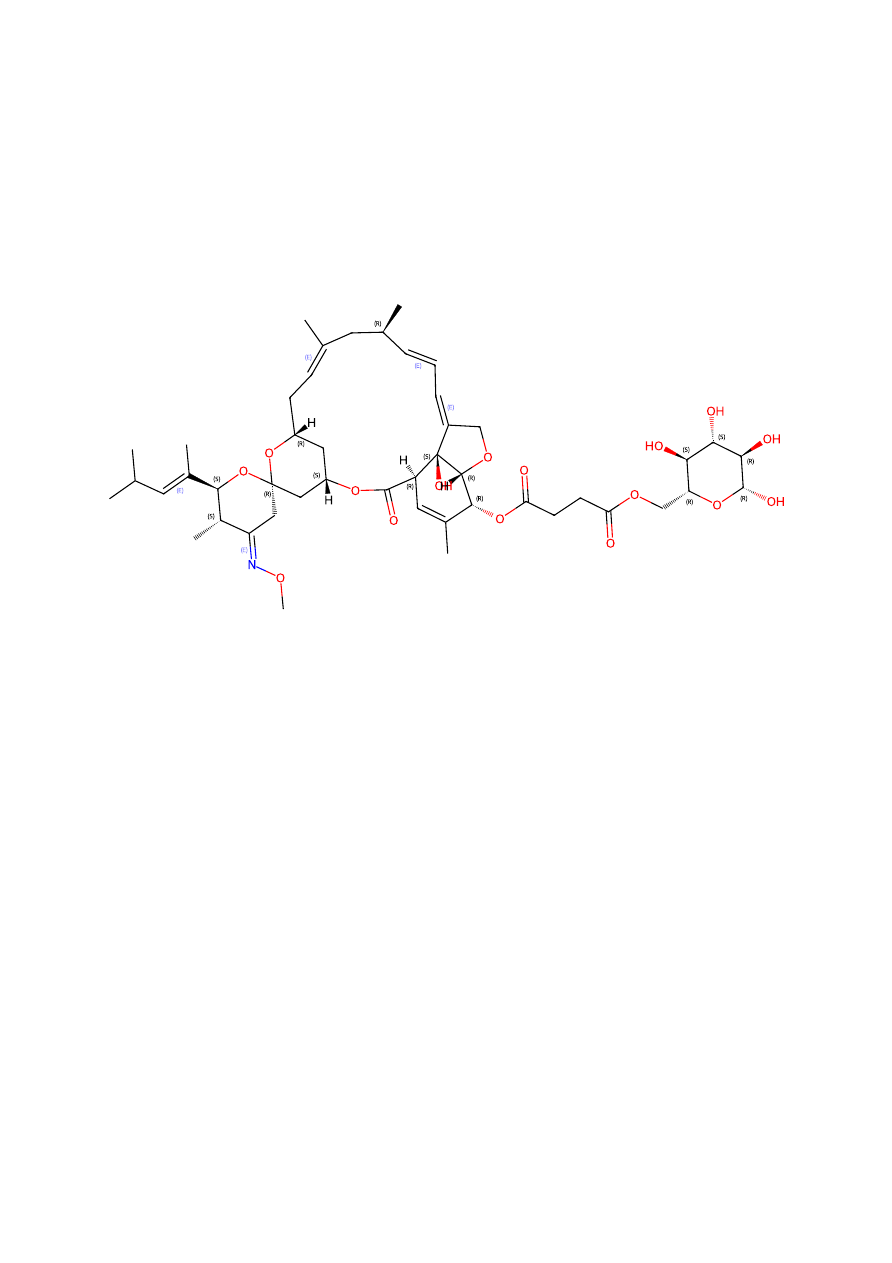
CHAPTER 3 · PROFILE 17/98 · ARCHIVE RECORD 17
17. ARF-MOX-A1 · glucosyl succinate —
GLUT import;
Recorded rationale and role
Programme comparator / derivative. This entry preserves the
source scaffold and appendage combination for comparison
with its parent and adjacent development records. Original
entry heading: 17. ARF-MOX-A1 · glucosyl succinate — GLUT
import; lead glycoconjugate. Source context is identified
below; the design role is not a measured efficacy ranking.
Preparation focus in the existing record
The preparation concept is governed by the source scaffold,
available attachment handle and functional-group
compatibility. Establish connectivity, stereochemical
AGENTIC RESEARCH FACTORY · COMPUTATIONAL COOKBOOK · 105 / 886

composition and relevant stability before comparing biological
responses.
Full deposited SMILES — verbatim
CO/N=C1\C[C@]2(C[C@@H]3C[C@@H]
(C/C=C(\C)C[C@@H](C)/C=C/C=C4\CO[C@@H]5[C@H]
(OC(=O)CCC(=O)OC[C@H]6O[C@@H](O)[C@H](O)
[C@@H](O)[C@@H]6O)C(C)=C[C@@H](C(=O)O3)
[C@]45O)O2)O[C@H](/C(C)=C/C(C)C)[C@H]1C
Canonical isomeric SMILES — RDKit 2026.09.1
CO/N=C1\C[C@]2(C[C@@H]3C[C@@H]
(C/C=C(\C)C[C@@H](C)/C=C/C=C4\CO[C@@H]5[C@H]
(OC(=O)CCC(=O)OC[C@H]6O[C@@H](O)[C@H](O)
[C@@H](O)[C@@H]6O)C(C)=C[C@@H](C(=O)O3)
[C@]45O)O2)O[C@H](/C(C)=C/C(C)C)[C@H]1C
Complete computed profile
Formula
C47H67NO16
Molecular weight (g/mol)
902.044
Exact mass (Da)
901.445985
Crippen cLogP
3.4031
TPSA (Ų)
238.56
H-bond donors
5
AGENTIC RESEARCH FACTORY · COMPUTATIONAL COOKBOOK · 106 / 886

H-bond acceptors
17
Rotatable bonds
9
Rings
6
Formal charge
0
Heavy atoms
64
Unassigned stereo —
modern
0
Unassigned stereo —
legacy
0
Graph interpretation and liabilities
This graph has 0 O–O bonds, net formal charge +0, and 9
rotatable bonds. Its polar surface makes permeability and
compartmental exposure important comparison variables. No
unspecified stereochemical element was detected by the
stated modern analysis of this graph.
Source record
2026-11-04T223635-eyp4-THE_98_Redox_Series_2026-11-
04.pdf, numbered entry 17
Original entry text
17. ARF-MOX-A1 · glucosyl succinate — GLUT import;
lead glycoconjugate
AGENTIC RESEARCH FACTORY · COMPUTATIONAL COOKBOOK · 107 / 886

C47H67NO16 · MW 902.0 · clogP 3.40 · TPSA 238.6 Ų ·
HBD 5 · RotB 9
CO/N=C1\C[C@]2(C[C@@H]3C[C@@H]
(C/C=C(\C)C[C@@H](C)/C=C/C=C4\CO[C@@H]5[C@H]
(OC(=O)CCC(=O)OC[C@H]6O[C@@H](O)[C@H](O)
[C@@H](O)[C@@H]6O)C(C)=C[C@@H](C(=O)O3)
[C@]45O)O2)O[C@H](/
C(C)=C/C(C)C)[C@H]1C
AGENTIC RESEARCH FACTORY · COMPUTATIONAL COOKBOOK · 108 / 886
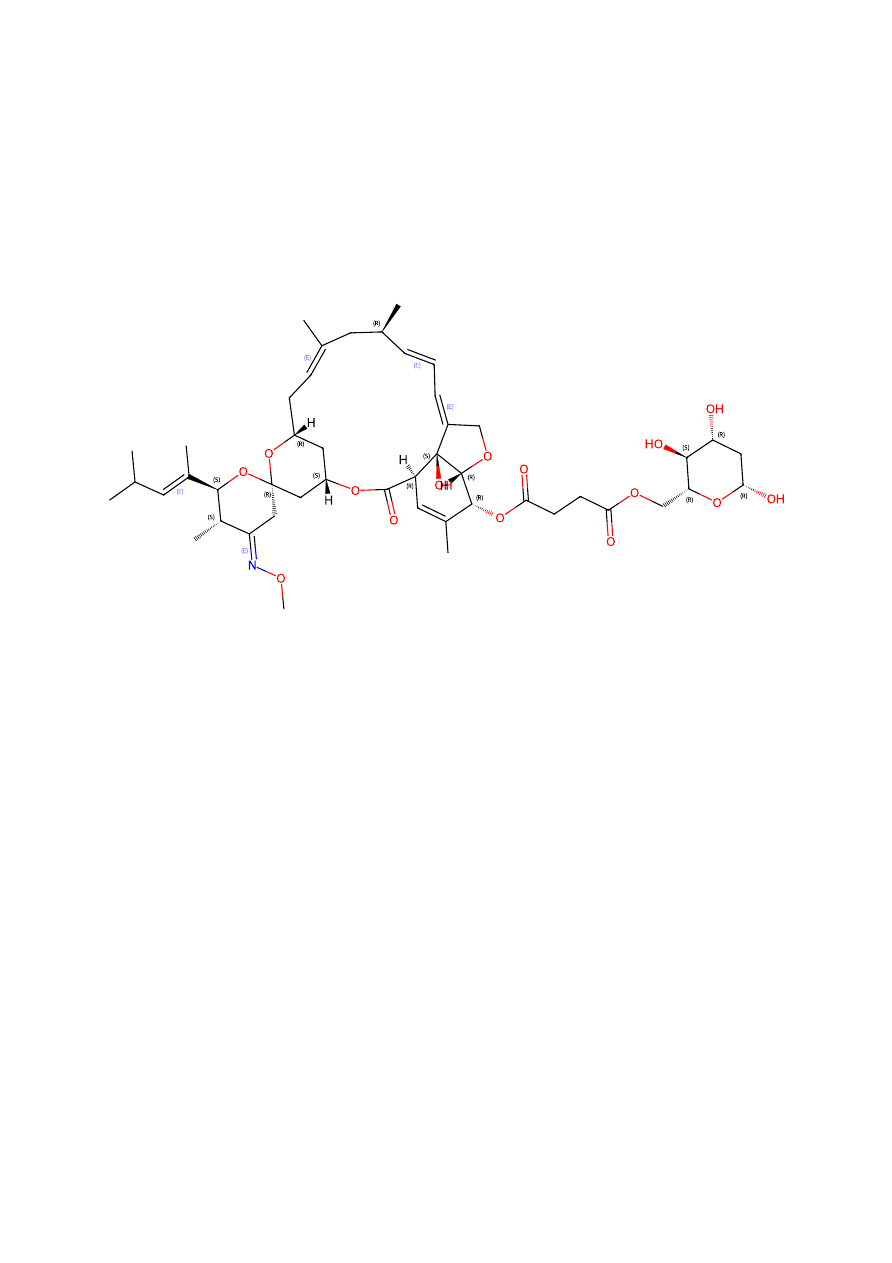
CHAPTER 3 · PROFILE 18/98 · ARCHIVE RECORD 18
18. ARF-MOX-A2 · 2-deoxyglucosyl succinate
— Non-
Recorded rationale and role
Programme comparator / derivative. This entry preserves the
source scaffold and appendage combination for comparison
with its parent and adjacent development records. Original
entry heading: 18. ARF-MOX-A2 · 2-deoxyglucosyl succinate
— Non- metabolisable sugar; traps conjugate. Source context
is identified below; the design role is not a measured efficacy
ranking.
Preparation focus in the existing record
The preparation concept is governed by the source scaffold,
available attachment handle and functional-group
AGENTIC RESEARCH FACTORY · COMPUTATIONAL COOKBOOK · 109 / 886

compatibility. Establish connectivity, stereochemical
composition and relevant stability before comparing biological
responses.
Full deposited SMILES — verbatim
CO/N=C1\C[C@]2(C[C@@H]3C[C@@H]
(C/C=C(\C)C[C@@H](C)/C=C/C=C4\CO[C@@H]5[C@H]
(OC(=O)CCC(=O)OC[C@H]6O[C@@H](O)C[C@@H](O)
[C@@H]6O)C(C)=C[C@@H](C(=O)O3)
[C@]45O)O2)O[C@H](/C(C)=C/C(C)C)[C@H]1C
Canonical isomeric SMILES — RDKit 2026.09.1
CO/N=C1\C[C@]2(C[C@@H]3C[C@@H]
(C/C=C(\C)C[C@@H](C)/C=C/C=C4\CO[C@@H]5[C@H]
(OC(=O)CCC(=O)OC[C@H]6O[C@@H](O)C[C@@H](O)
[C@@H]6O)C(C)=C[C@@H](C(=O)O3)
[C@]45O)O2)O[C@H](/C(C)=C/C(C)C)[C@H]1C
Complete computed profile
Formula
C47H67NO15
Molecular weight (g/mol)
886.045
Exact mass (Da)
885.45107
Crippen cLogP
4.4323
TPSA (Ų)
218.33
H-bond donors
4
AGENTIC RESEARCH FACTORY · COMPUTATIONAL COOKBOOK · 110 / 886

H-bond acceptors
16
Rotatable bonds
9
Rings
6
Formal charge
0
Heavy atoms
63
Unassigned stereo —
modern
0
Unassigned stereo —
legacy
0
Graph interpretation and liabilities
This graph has 0 O–O bonds, net formal charge +0, and 9
rotatable bonds. Its polar surface makes permeability and
compartmental exposure important comparison variables. No
unspecified stereochemical element was detected by the
stated modern analysis of this graph.
Source record
2026-11-04T223635-eyp4-THE_98_Redox_Series_2026-11-
04.pdf, numbered entry 18
Original entry text
18. ARF-MOX-A2 · 2-deoxyglucosyl succinate — Non-
metabolisable sugar; traps conjugate
AGENTIC RESEARCH FACTORY · COMPUTATIONAL COOKBOOK · 111 / 886

C47H67NO15 · MW 886.0 · clogP 4.43 · TPSA 218.3 Ų ·
HBD 4 · RotB 9
CO/N=C1\C[C@]2(C[C@@H]3C[C@@H]
(C/C=C(\C)C[C@@H](C)/C=C/C=C4\CO[C@@H]5[C@H]
(OC(=O)CCC(=O)OC[C@H]6O[C@@H](O)C[C@@H](O)
[C@@H]6O)C(C)=C[C@@H](C(=O)O3)
[C@]45O)O2)O[C@H](/C(C)=C/
C(C)C)[C@H]1C
AGENTIC RESEARCH FACTORY · COMPUTATIONAL COOKBOOK · 112 / 886
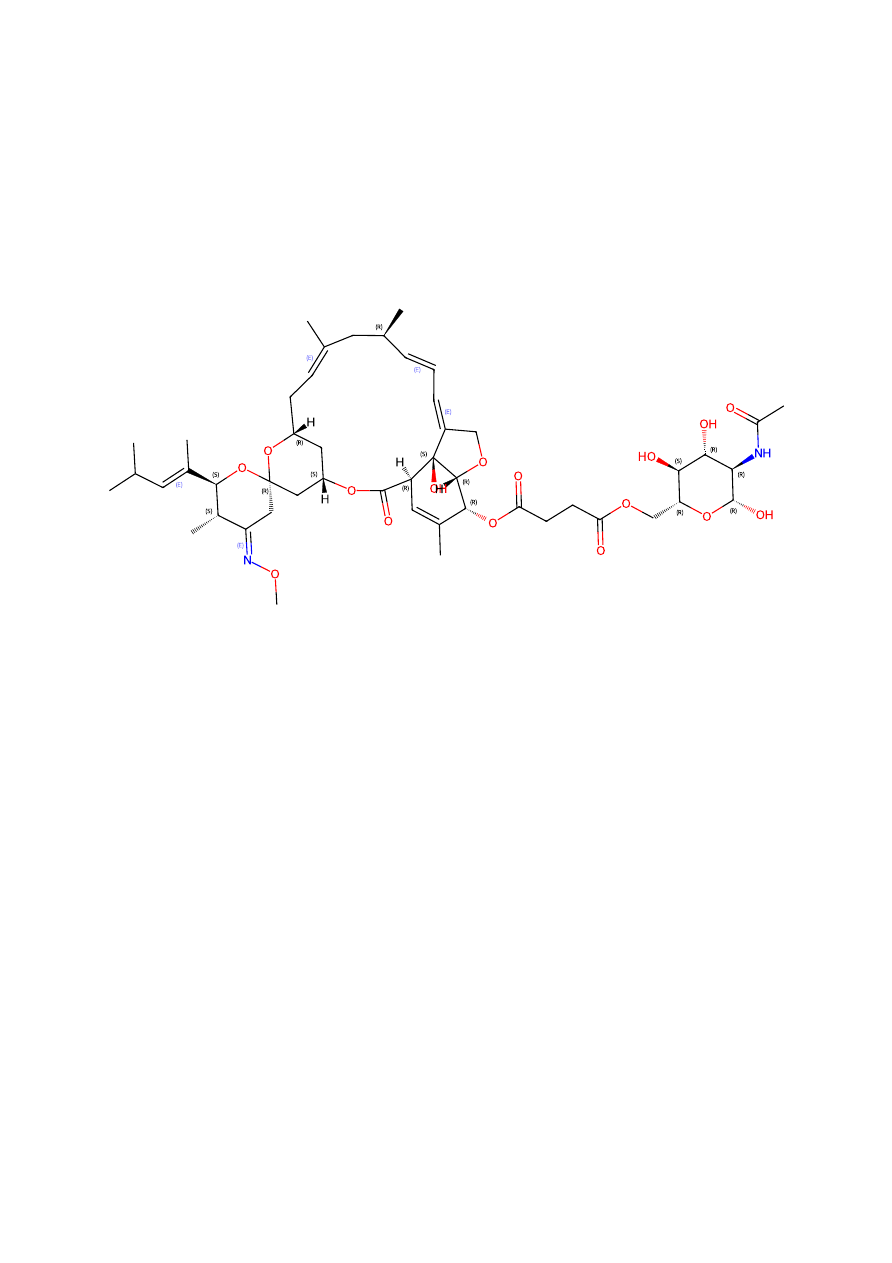
CHAPTER 3 · PROFILE 19/98 · ARCHIVE RECORD 19
19. ARF-MOX-A3 · GlcNAc succinate —
Hexosamine
Recorded rationale and role
Programme comparator / derivative. This entry preserves the
source scaffold and appendage combination for comparison
with its parent and adjacent development records. Original
entry heading: 19. ARF-MOX-A3 · GlcNAc succinate —
Hexosamine route; evades GLUT downregulation. Source
context is identified below; the design role is not a measured
efficacy ranking.
Preparation focus in the existing record
The preparation concept is governed by the source scaffold,
available attachment handle and functional-group
AGENTIC RESEARCH FACTORY · COMPUTATIONAL COOKBOOK · 113 / 886

compatibility. Establish connectivity, stereochemical
composition and relevant stability before comparing biological
responses.
Full deposited SMILES — verbatim
CO/N=C1\C[C@]2(C[C@@H]3C[C@@H]
(C/C=C(\C)C[C@@H](C)/C=C/C=C4\CO[C@@H]5[C@H]
(OC(=O)CCC(=O)OC[C@H]6O[C@@H](O)[C@H](NC(C)=O)
[C@@H](O)[C@@H]6O)C(C)=C[C@@H](C(=O)O3)
[C@]45O)O2)O[C@H](/C(C)=C/C(C)C)[C@H]1C
Canonical isomeric SMILES — RDKit 2026.09.1
CO/N=C1\C[C@]2(C[C@@H]3C[C@@H]
(C/C=C(\C)C[C@@H](C)/C=C/C=C4\CO[C@@H]5[C@H]
(OC(=O)CCC(=O)OC[C@H]6O[C@@H](O)[C@H](NC(C)=O)
[C@@H](O)[C@@H]6O)C(C)=C[C@@H](C(=O)O3)
[C@]45O)O2)O[C@H](/C(C)=C/C(C)C)[C@H]1C
Complete computed profile
Formula
C49H70N2O16
Molecular weight (g/mol)
943.097
Exact mass (Da)
942.472534
Crippen cLogP
3.5469
TPSA (Ų)
247.43
H-bond donors
5
AGENTIC RESEARCH FACTORY · COMPUTATIONAL COOKBOOK · 114 / 886

H-bond acceptors
17
Rotatable bonds
10
Rings
6
Formal charge
0
Heavy atoms
67
Unassigned stereo —
modern
0
Unassigned stereo —
legacy
0
Graph interpretation and liabilities
This graph has 0 O–O bonds, net formal charge +0, and 10
rotatable bonds. Its polar surface makes permeability and
compartmental exposure important comparison variables. No
unspecified stereochemical element was detected by the
stated modern analysis of this graph.
Source record
2026-11-04T223635-eyp4-THE_98_Redox_Series_2026-11-
04.pdf, numbered entry 19
Original entry text
19. ARF-MOX-A3 · GlcNAc succinate — Hexosamine
route; evades GLUT downregulation
AGENTIC RESEARCH FACTORY · COMPUTATIONAL COOKBOOK · 115 / 886

C49H70N2O16 · MW 943.1 · clogP 3.55 · TPSA 247.4 Ų ·
HBD 5 · RotB 10
CO/N=C1\C[C@]2(C[C@@H]3C[C@@H]
(C/C=C(\C)C[C@@H](C)/C=C/C=C4\CO[C@@H]5[C@H]
(OC(=O)CCC(=O)OC[C@H]6O[C@@H](O)[C@H](NC(C)=O)
[C@@H](O)[C@@H]6O)C(C)=C[C@@H](C(=O)O3)
[C@]45O)O2)O[C@H](/C(C)=C/C(C)C)[C@H]1C
AGENTIC RESEARCH FACTORY · COMPUTATIONAL COOKBOOK · 116 / 886
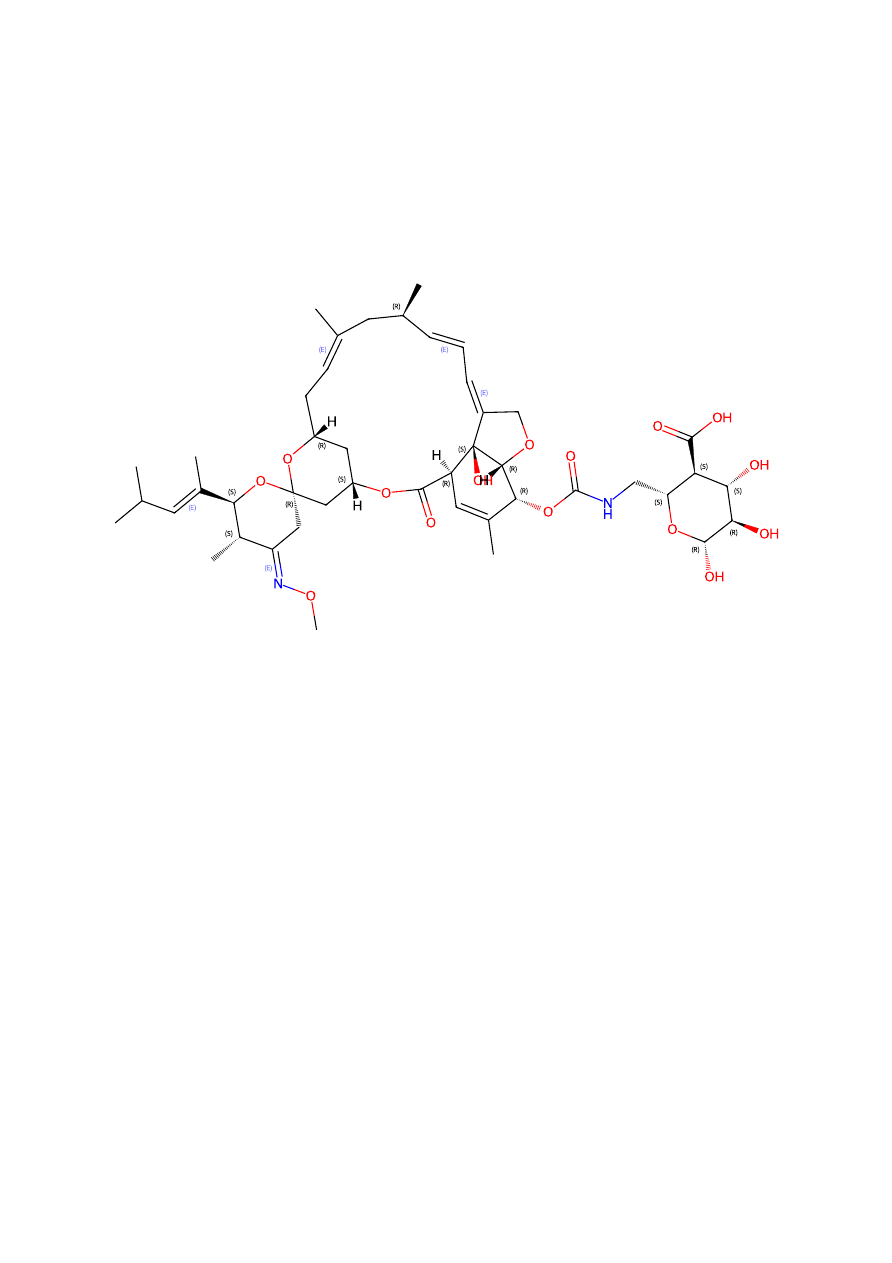
CHAPTER 3 · PROFILE 20/98 · ARCHIVE RECORD 20
20. ARF-MOX-A4 · glucuronyl carbamate —
Carbamate
Recorded rationale and role
Programme comparator / derivative. This entry preserves the
source scaffold and appendage combination for comparison
with its parent and adjacent development records. Original
entry heading: 20. ARF-MOX-A4 · glucuronyl carbamate —
Carbamate linker; slower release. Source context is identified
below; the design role is not a measured efficacy ranking.
Preparation focus in the existing record
Use the carbamate connection as a distinct persistence
hypothesis. Assess compatibility of the parent functional
AGENTIC RESEARCH FACTORY · COMPUTATIONAL COOKBOOK · 117 / 886

groups and identify any cleavage products rather than
assuming release kinetics from the linkage name.
Full deposited SMILES — verbatim
CO/N=C1\C[C@]2(C[C@@H]3C[C@@H]
(C/C=C(\C)C[C@@H](C)/C=C/C=C4\CO[C@@H]5[C@H]
(OC(=O)NC[C@H]6O[C@@H](O)[C@H](O)[C@@H](O)
[C@@H]6C(=O)O)C(C)=C[C@@H](C(=O)O3)
[C@]45O)O2)O[C@H](/C(C)=C/C(C)C)[C@H]1C
Canonical isomeric SMILES — RDKit 2026.09.1
CO/N=C1\C[C@]2(C[C@@H]3C[C@@H]
(C/C=C(\C)C[C@@H](C)/C=C/C=C4\CO[C@@H]5[C@H]
(OC(=O)NC[C@H]6O[C@@H](O)[C@H](O)[C@@H](O)
[C@@H]6C(=O)O)C(C)=C[C@@H](C(=O)O3)
[C@]45O)O2)O[C@H](/C(C)=C/C(C)C)[C@H]1C
Complete computed profile
Formula
C45H64N2O15
Molecular weight (g/mol)
873.006
Exact mass (Da)
872.430669
Crippen cLogP
3.6026
TPSA (Ų)
241.36
H-bond donors
6
AGENTIC RESEARCH FACTORY · COMPUTATIONAL COOKBOOK · 118 / 886

H-bond acceptors
15
Rotatable bonds
7
Rings
6
Formal charge
0
Heavy atoms
62
Unassigned stereo —
modern
0
Unassigned stereo —
legacy
0
Graph interpretation and liabilities
This graph has 0 O–O bonds, net formal charge +0, and 7
rotatable bonds. Its polar surface makes permeability and
compartmental exposure important comparison variables. No
unspecified stereochemical element was detected by the
stated modern analysis of this graph.
Source record
2026-11-04T223635-eyp4-THE_98_Redox_Series_2026-11-
04.pdf, numbered entry 20
Original entry text
20. ARF-MOX-A4 · glucuronyl carbamate — Carbamate
linker; slower release
AGENTIC RESEARCH FACTORY · COMPUTATIONAL COOKBOOK · 119 / 886

C45H64N2O15 · MW 873.0 · clogP 3.60 · TPSA 241.4 Ų ·
HBD 6 · RotB 7
CO/N=C1\C[C@]2(C[C@@H]3C[C@@H]
(C/C=C(\C)C[C@@H](C)/C=C/C=C4\CO[C@@H]5[C@H]
(OC(=O)NC[C@H]6O[C@@H](O)
[C@H](O)[C@@H](O)[C@@H]6C(=O)O)C(C)=C[C@@H]
(C(=O)O3)[C@]45O)O2)O[C@H](/C(C)=C/C(C)C)[C@H]1C
AGENTIC RESEARCH FACTORY · COMPUTATIONAL COOKBOOK · 120 / 886
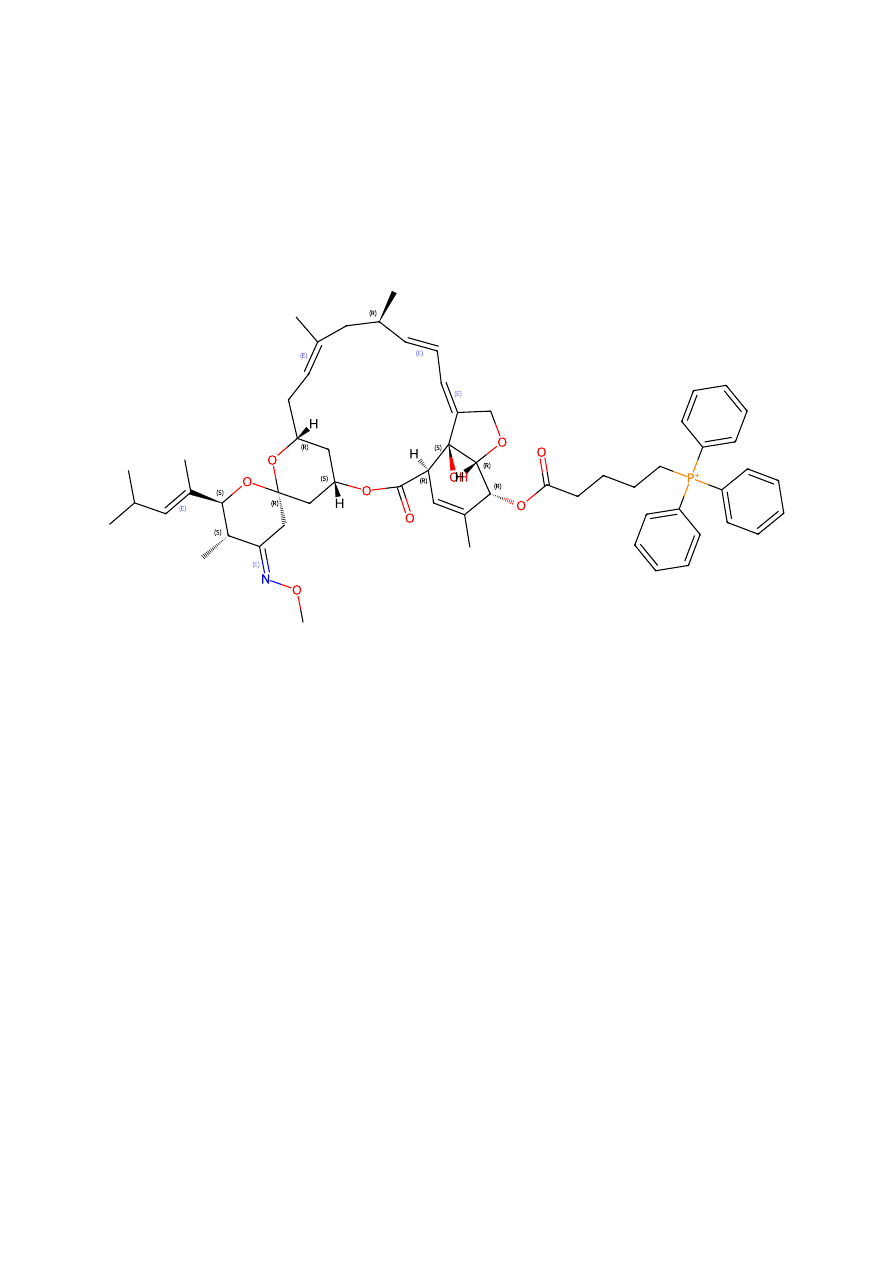
CHAPTER 3 · PROFILE 21/98 · ARCHIVE RECORD 21
21. ARF-MOX-B1 · triphenylphosphonium
pentanoate
Recorded rationale and role
Distribution and linkage branch. This entry compares the
appended head group and attachment against the B1
incumbent and parent moxidectin. Original entry heading: 21.
ARF-MOX-B1 · triphenylphosphonium pentanoate — Δψm-
driven; lead mitochondriotropic. Recorded design detail:
permanent +1 triphenylphosphonium (incumbent) pentanoyl
ester, C4 tether (incumbent) incumbent. Source context is
identified below; the design role is not a measured efficacy
ranking.
AGENTIC RESEARCH FACTORY · COMPUTATIONAL COOKBOOK · 121 / 886

Preparation focus in the existing record
Specify counterion and salt composition, distinguish intact
conjugate from cleaved species, and compare the charged
appendage separately. Chromatographic and spectroscopic
characterization must follow the actual encoded structure.
Full deposited SMILES — verbatim
CO/N=C1\C[C@]2(C[C@@H]3C[C@@H]
(C/C=C(\C)C[C@@H](C)/C=C/C=C4\CO[C@@H]5[C@H]
(OC(=O)CCCC[P+](c6ccccc6)
(c6ccccc6)c6ccccc6)C(C)=C[C@@H](C(=O)O3)
[C@]45O)O2)O[C@H](/C(C)=C/C(C)C)[C@H]1C
Canonical isomeric SMILES — RDKit 2026.09.1
CO/N=C1\C[C@]2(C[C@@H]3C[C@@H]
(C/C=C(\C)C[C@@H](C)/C=C/C=C4\CO[C@@H]5[C@H]
(OC(=O)CCCC[P+](c6ccccc6)
(c6ccccc6)c6ccccc6)C(C)=C[C@@H](C(=O)O3)
[C@]45O)O2)O[C@H](/C(C)=C/C(C)C)[C@H]1C
Complete computed profile
Formula
C60H75NO9P+
Molecular weight (g/mol)
985.232
Exact mass (Da)
984.517396
Crippen cLogP
10.4442
AGENTIC RESEARCH FACTORY · COMPUTATIONAL COOKBOOK · 122 / 886

TPSA (Ų)
122.11
H-bond donors
1
H-bond acceptors
10
Rotatable bonds
12
Rings
8
Formal charge
1
Heavy atoms
71
Unassigned stereo —
modern
0
Unassigned stereo —
legacy
0
Graph interpretation and liabilities
This graph has 0 O–O bonds, net formal charge +1, and 12
rotatable bonds. Its high calculated lipophilicity makes free
exposure, adsorption and formulation important comparison
variables. No unspecified stereochemical element was
detected by the stated modern analysis of this graph.
Source record
2026-11-04T223635-eyp4-THE_98_Redox_Series_2026-11-
04.pdf, numbered entry 21
AGENTIC RESEARCH FACTORY · COMPUTATIONAL COOKBOOK · 123 / 886

Original entry text
21. ARF-MOX-B1 · triphenylphosphonium pentanoate
— Δψm-driven; lead mitochondriotropic
C60H75NO9P+ · MW 985.2 · clogP 10.44 · TPSA 122.1 Ų ·
HBD 1 · RotB 12
CO/N=C1\C[C@]2(C[C@@H]3C[C@@H]
(C/C=C(\C)C[C@@H](C)/C=C/C=C4\CO[C@@H]5[C@H]
(OC(=O)CCCC[P+](c6ccccc6)
(c6ccccc6)c6ccccc6)C(C)=C[C@@H](C(=O)O3)
[C@]45O)O2)O[C@H](/C(C)=C/C(C)C)[C@H]1C
AGENTIC RESEARCH FACTORY · COMPUTATIONAL COOKBOOK · 124 / 886
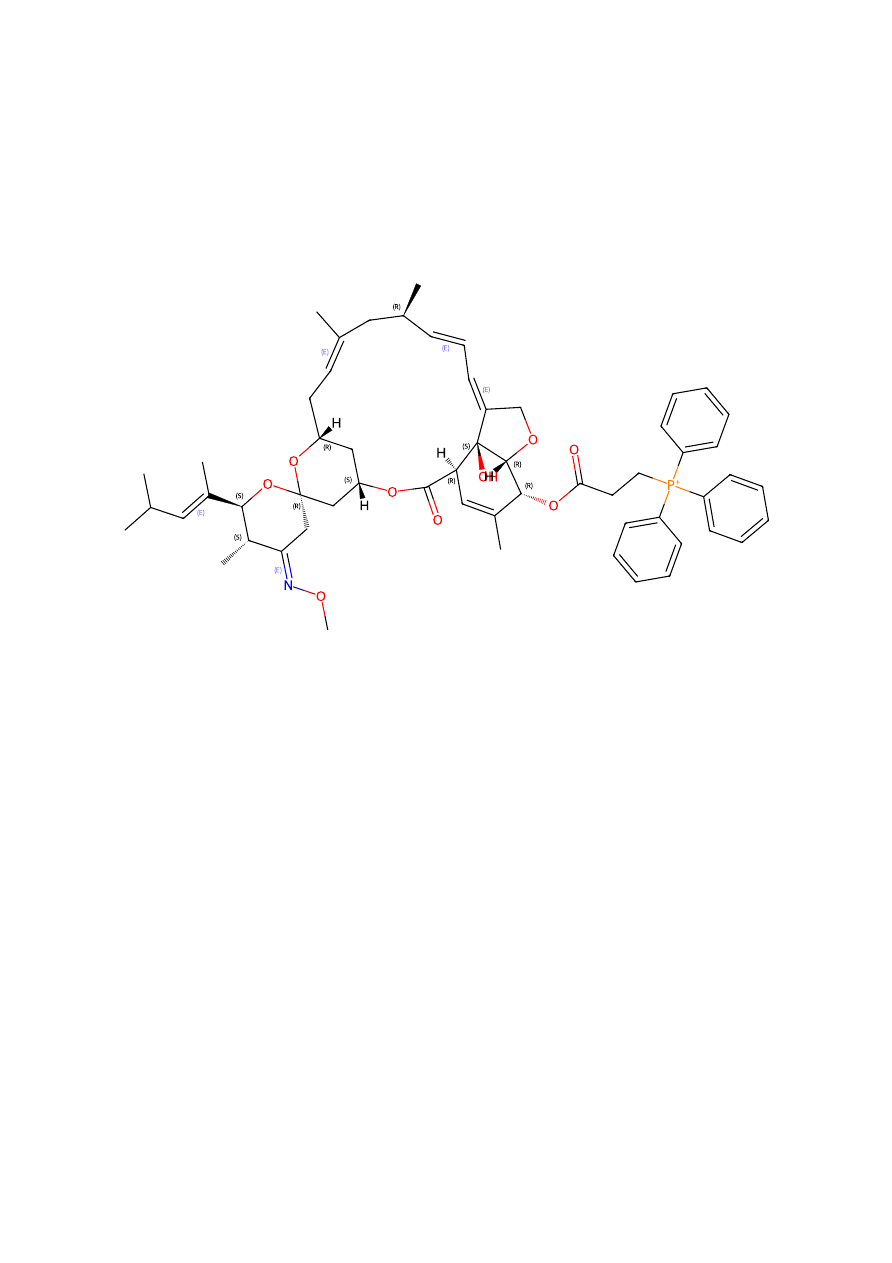
CHAPTER 3 · PROFILE 22/98 · ARCHIVE RECORD 22
22. ARF-MOX-B2 · triphenylphosphonium
propanoate
Recorded rationale and role
Charge-associated distribution arm. The encoded cation
provides a test of distribution and membrane interaction
against an uncharged or differently charged comparator.
Original entry heading: 22. ARF-MOX-B2 ·
triphenylphosphonium propanoate — Short linker; tether-
length probe. Source context is identified below; the design
role is not a measured efficacy ranking.
Preparation focus in the existing record
Specify counterion and salt composition, distinguish intact
conjugate from cleaved species, and compare the charged
AGENTIC RESEARCH FACTORY · COMPUTATIONAL COOKBOOK · 125 / 886

appendage separately. Chromatographic and spectroscopic
characterization must follow the actual encoded structure.
Full deposited SMILES — verbatim
CO/N=C1\C[C@]2(C[C@@H]3C[C@@H]
(C/C=C(\C)C[C@@H](C)/C=C/C=C4\CO[C@@H]5[C@H]
(OC(=O)CC[P+](c6ccccc6)
(c6ccccc6)c6ccccc6)C(C)=C[C@@H](C(=O)O3)
[C@]45O)O2)O[C@H](/C(C)=C/C(C)C)[C@H]1C
Canonical isomeric SMILES — RDKit 2026.09.1
CO/N=C1\C[C@]2(C[C@@H]3C[C@@H]
(C/C=C(\C)C[C@@H](C)/C=C/C=C4\CO[C@@H]5[C@H]
(OC(=O)CC[P+](c6ccccc6)
(c6ccccc6)c6ccccc6)C(C)=C[C@@H](C(=O)O3)
[C@]45O)O2)O[C@H](/C(C)=C/C(C)C)[C@H]1C
Complete computed profile
Formula
C58H71NO9P+
Molecular weight (g/mol)
957.178
Exact mass (Da)
956.486096
Crippen cLogP
9.664
TPSA (Ų)
122.11
H-bond donors
1
AGENTIC RESEARCH FACTORY · COMPUTATIONAL COOKBOOK · 126 / 886

H-bond acceptors
10
Rotatable bonds
10
Rings
8
Formal charge
1
Heavy atoms
69
Unassigned stereo —
modern
0
Unassigned stereo —
legacy
0
Graph interpretation and liabilities
This graph has 0 O–O bonds, net formal charge +1, and 10
rotatable bonds. Its high calculated lipophilicity makes free
exposure, adsorption and formulation important comparison
variables. No unspecified stereochemical element was
detected by the stated modern analysis of this graph.
Source record
2026-11-04T223635-eyp4-THE_98_Redox_Series_2026-11-
04.pdf, numbered entry 22
Original entry text
22. ARF-MOX-B2 · triphenylphosphonium propanoate
— Short linker; tether-length probe
AGENTIC RESEARCH FACTORY · COMPUTATIONAL COOKBOOK · 127 / 886

C58H71NO9P+ · MW 957.2 · clogP 9.66 · TPSA 122.1 Ų ·
HBD 1 · RotB 10
CO/N=C1\C[C@]2(C[C@@H]3C[C@@H]
(C/C=C(\C)C[C@@H](C)/C=C/C=C4\CO[C@@H]5[C@H]
(OC(=O)CC[P+](c6ccccc6)
(c6ccccc6)c6ccccc6)C(C)=C[C@@H](C(=O)O3)
[C@]45O)O2)O[C@H](/C(C)=C/C(C)C)[C@H]1C
AGENTIC RESEARCH FACTORY · COMPUTATIONAL COOKBOOK · 128 / 886
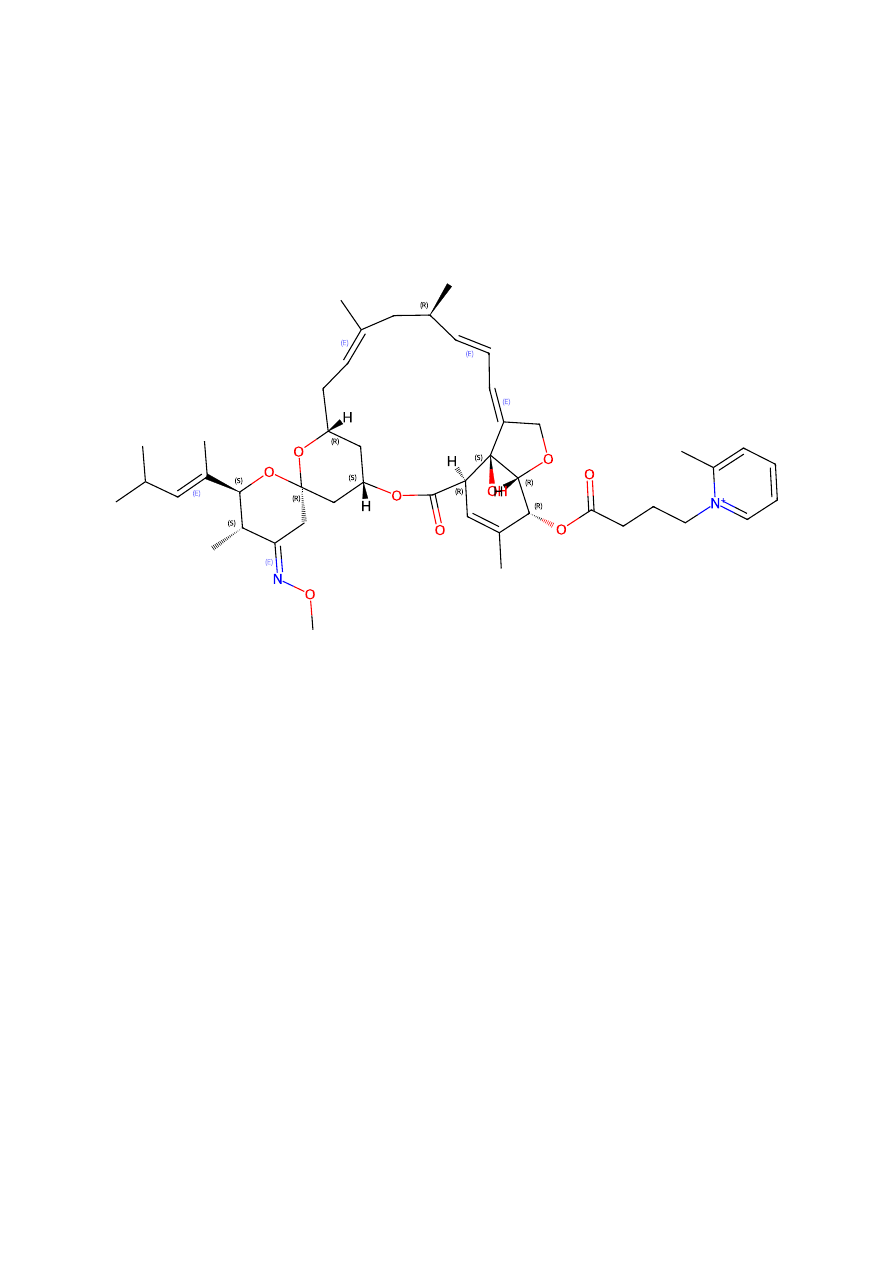
CHAPTER 3 · PROFILE 23/98 · ARCHIVE RECORD 23
23. ARF-MOX-B3 · N-methylpyridinium
butanoate —
Recorded rationale and role
Charge-associated distribution arm. The encoded cation
provides a test of distribution and membrane interaction
against an uncharged or differently charged comparator.
Original entry heading: 23. ARF-MOX-B3 · N-methylpyridinium
butanoate — Lower-MW cation. Source context is identified
below; the design role is not a measured efficacy ranking.
Preparation focus in the existing record
Specify counterion and salt composition, distinguish intact
conjugate from cleaved species, and compare the charged
AGENTIC RESEARCH FACTORY · COMPUTATIONAL COOKBOOK · 129 / 886

appendage separately. Chromatographic and spectroscopic
characterization must follow the actual encoded structure.
Full deposited SMILES — verbatim
CO/N=C1\C[C@]2(C[C@@H]3C[C@@H]
(C/C=C(\C)C[C@@H](C)/C=C/C=C4\CO[C@@H]5[C@H]
(OC(=O)CCC[n+]6ccccc6C)C(C)=C[C@@H](C(=O)O3)
[C@]45O)O2)O[C@H](/C(C)=C/C(C)C)[C@H]1C
Canonical isomeric SMILES — RDKit 2026.09.1
CO/N=C1\C[C@]2(C[C@@H]3C[C@@H]
(C/C=C(\C)C[C@@H](C)/C=C/C=C4\CO[C@@H]5[C@H]
(OC(=O)CCC[n+]6ccccc6C)C(C)=C[C@@H](C(=O)O3)
[C@]45O)O2)O[C@H](/C(C)=C/C(C)C)[C@H]1C
Complete computed profile
Formula
C47H65N2O9+
Molecular weight (g/mol)
802.042
Exact mass (Da)
801.468458
Crippen cLogP
7.3561
TPSA (Ų)
125.99
H-bond donors
1
H-bond acceptors
10
Rotatable bonds
8
AGENTIC RESEARCH FACTORY · COMPUTATIONAL COOKBOOK · 130 / 886

Rings
6
Formal charge
1
Heavy atoms
58
Unassigned stereo —
modern
0
Unassigned stereo —
legacy
0
Graph interpretation and liabilities
This graph has 0 O–O bonds, net formal charge +1, and 8
rotatable bonds. Its high calculated lipophilicity makes free
exposure, adsorption and formulation important comparison
variables. No unspecified stereochemical element was
detected by the stated modern analysis of this graph.
Source record
2026-11-04T223635-eyp4-THE_98_Redox_Series_2026-11-
04.pdf, numbered entry 23
Original entry text
23. ARF-MOX-B3 · N-methylpyridinium butanoate —
Lower-MW cation
C47H65N2O9+ · MW 802.0 · clogP 7.36 · TPSA 126.0 Ų ·
HBD 1 · RotB 8
CO/N=C1\C[C@]2(C[C@@H]3C[C@@H]
AGENTIC RESEARCH FACTORY · COMPUTATIONAL COOKBOOK · 131 / 886

(C/C=C(\C)C[C@@H](C)/C=C/C=C4\CO[C@@H]5[C@H]
(OC(=O)CCC[n+]6ccccc6C)C(C)=C[C@@H](C(=O)O3)
[C@]45O)O2)O[C@H](/C(C)=C/C(C)C)[C@H]1C
AGENTIC RESEARCH FACTORY · COMPUTATIONAL COOKBOOK · 132 / 886
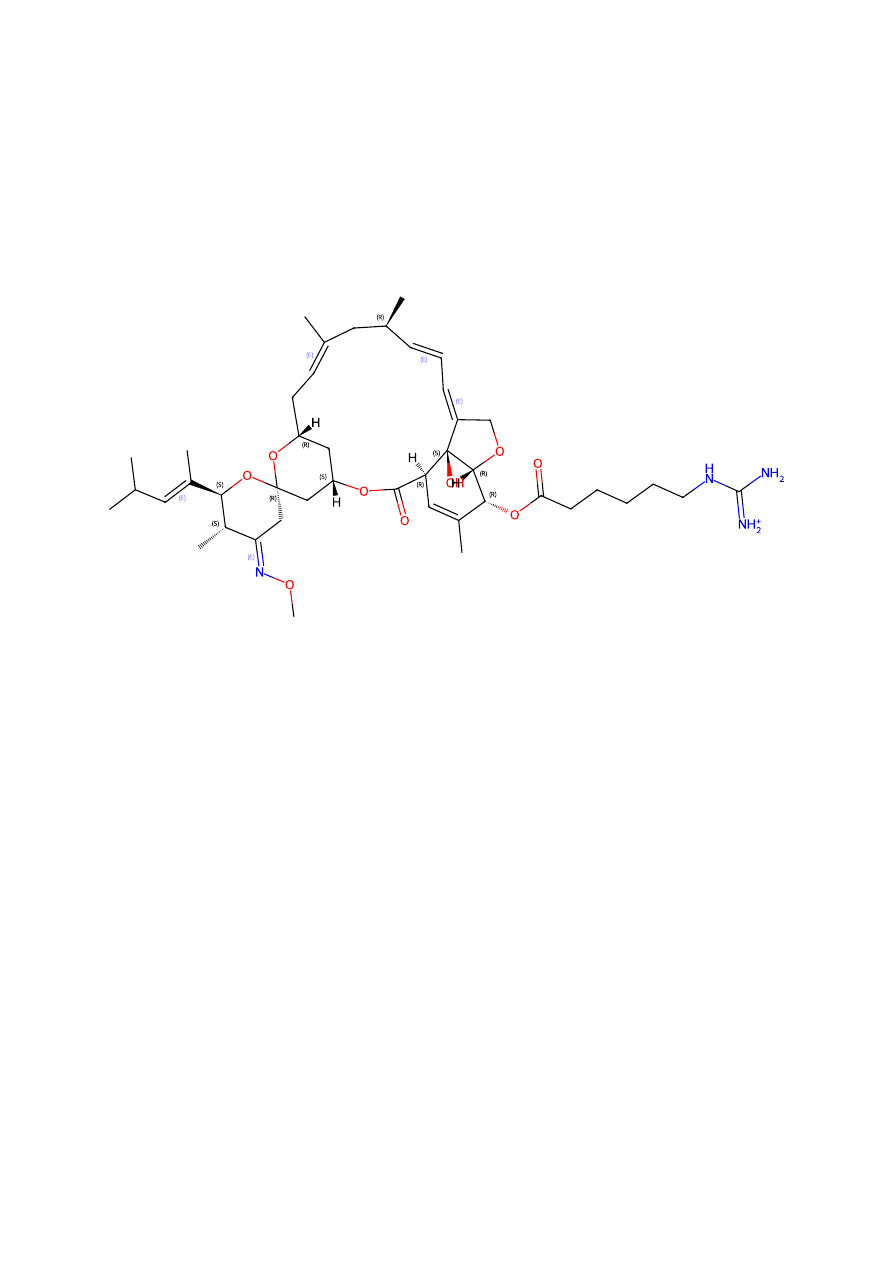
CHAPTER 3 · PROFILE 24/98 · ARCHIVE RECORD 24
24. ARF-MOX-B4 · guanidinium hexanoate —
Cell-
Recorded rationale and role
Charge-associated distribution arm. The encoded cation
provides a test of distribution and membrane interaction
against an uncharged or differently charged comparator.
Original entry heading: 24. ARF-MOX-B4 · guanidinium
hexanoate — Cell- penetrating cation. Source context is
identified below; the design role is not a measured efficacy
ranking.
Preparation focus in the existing record
Specify counterion and salt composition, distinguish intact
conjugate from cleaved species, and compare the charged
AGENTIC RESEARCH FACTORY · COMPUTATIONAL COOKBOOK · 133 / 886

appendage separately. Chromatographic and spectroscopic
characterization must follow the actual encoded structure.
Full deposited SMILES — verbatim
CO/N=C1\C[C@]2(C[C@@H]3C[C@@H]
(C/C=C(\C)C[C@@H](C)/C=C/C=C4\CO[C@@H]5[C@H]
(OC(=O)CCCCCNC(N)=[NH2+])C(C)=C[C@@H](C(=O)O3)
[C@]45O)O2)O[C@H](/C(C)=C/C(C)C)[C@H]1C
Canonical isomeric SMILES — RDKit 2026.09.1
CO/N=C1\C[C@]2(C[C@@H]3C[C@@H]
(C/C=C(\C)C[C@@H](C)/C=C/C=C4\CO[C@@H]5[C@H]
(OC(=O)CCCCCNC(N)=[NH2+])C(C)=C[C@@H](C(=O)O3)
[C@]45O)O2)O[C@H](/C(C)=C/C(C)C)[C@H]1C
Complete computed profile
Formula
C44H67N4O9+
Molecular weight (g/mol)
796.039
Exact mass (Da)
795.490256
Crippen cLogP
4.5036
TPSA (Ų)
185.75
H-bond donors
4
H-bond acceptors
10
Rotatable bonds
10
AGENTIC RESEARCH FACTORY · COMPUTATIONAL COOKBOOK · 134 / 886

Rings
5
Formal charge
1
Heavy atoms
57
Unassigned stereo —
modern
0
Unassigned stereo —
legacy
0
Graph interpretation and liabilities
This graph has 0 O–O bonds, net formal charge +1, and 10
rotatable bonds. Its polar surface makes permeability and
compartmental exposure important comparison variables. No
unspecified stereochemical element was detected by the
stated modern analysis of this graph.
Source record
2026-11-04T223635-eyp4-THE_98_Redox_Series_2026-11-
04.pdf, numbered entry 24
Original entry text
24. ARF-MOX-B4 · guanidinium hexanoate — Cell-
penetrating cation
C44H67N4O9+ · MW 796.0 · clogP 4.50 · TPSA 185.7 Ų ·
HBD 4 · RotB 10
CO/N=C1\C[C@]2(C[C@@H]3C[C@@H]
AGENTIC RESEARCH FACTORY · COMPUTATIONAL COOKBOOK · 135 / 886

(C/C=C(\C)C[C@@H](C)/C=C/C=C4\CO[C@@H]5[C@H]
(OC(=O)CCCCCNC(N)=[NH2+])C(C)=C[C@@H](C(=O)O3)
[C@]45O)O2)O[C@H](/C(C)=C/C(C)C)[C@H]1C
AGENTIC RESEARCH FACTORY · COMPUTATIONAL COOKBOOK · 136 / 886
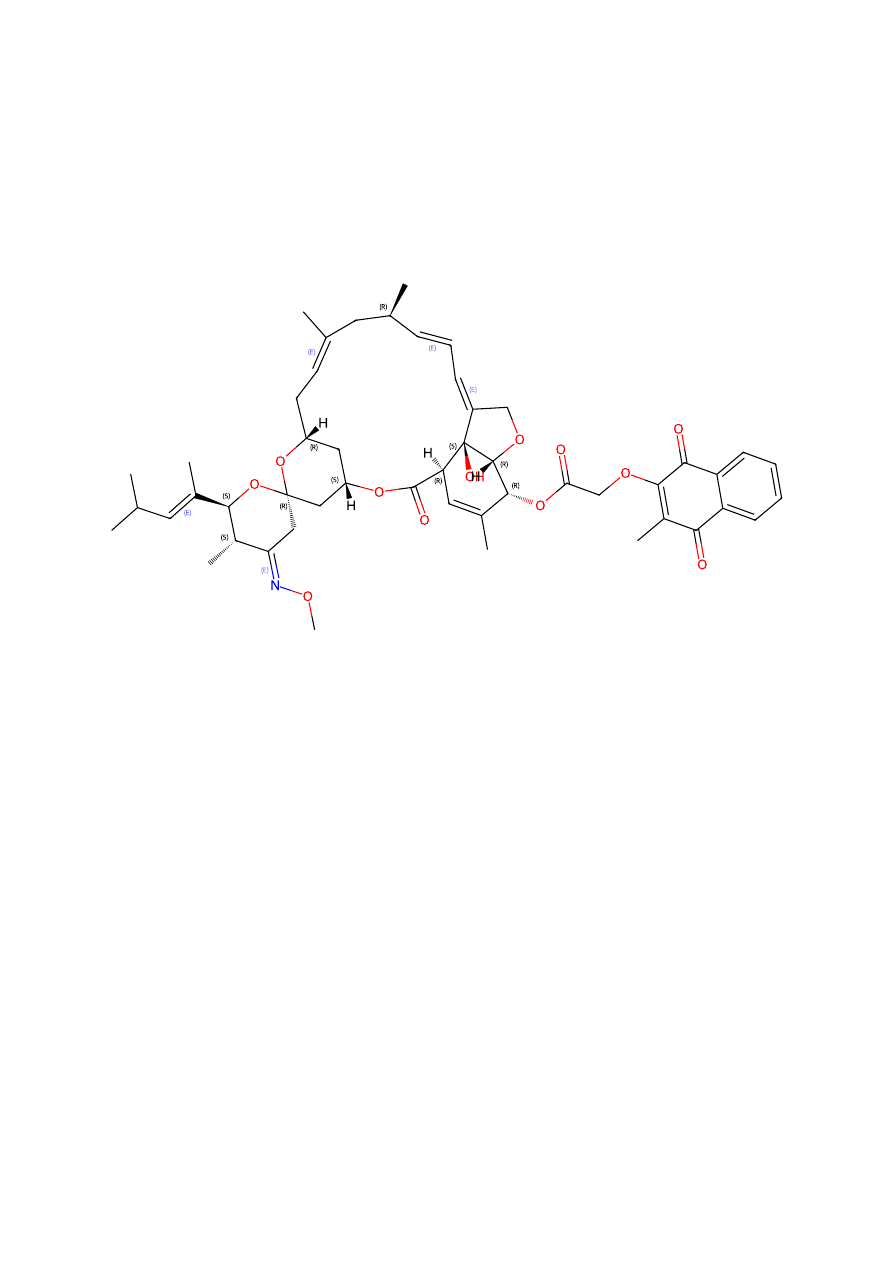
CHAPTER 3 · PROFILE 25/98 · ARCHIVE RECORD 25
25. ARF-MOX-C1 · menadione glycolate —
Voltage +
Recorded rationale and role
Programme comparator / derivative. This entry preserves the
source scaffold and appendage combination for comparison
with its parent and adjacent development records. Original
entry heading: 25. ARF-MOX-C1 · menadione glycolate —
Voltage + redox; lead hybrid. Source context is identified
below; the design role is not a measured efficacy ranking.
Preparation focus in the existing record
The preparation concept is governed by the source scaffold,
available attachment handle and functional-group
compatibility. Establish connectivity, stereochemical
AGENTIC RESEARCH FACTORY · COMPUTATIONAL COOKBOOK · 137 / 886

composition and relevant stability before comparing biological
responses.
Full deposited SMILES — verbatim
CO/N=C1\C[C@]2(C[C@@H]3C[C@@H]
(C/C=C(\C)C[C@@H](C)/C=C/C=C4\CO[C@@H]5[C@H]
(OC(=O)COC6=C(C)C(=O)c7ccccc7C6=O)C(C)=C[C@@H]
(C(=O)O3)[C@]45O)O2)O[C@H](/C(C)=C/C(C)C)[C@H]1C
Canonical isomeric SMILES — RDKit 2026.09.1
CO/N=C1\C[C@]2(C[C@@H]3C[C@@H]
(C/C=C(\C)C[C@@H](C)/C=C/C=C4\CO[C@@H]5[C@H]
(OC(=O)COC6=C(C)C(=O)c7ccccc7C6=O)C(C)=C[C@@H]
(C(=O)O3)[C@]45O)O2)O[C@H](/C(C)=C/C(C)C)[C@H]1C
Complete computed profile
Formula
C50H61NO12
Molecular weight (g/mol)
868.033
Exact mass (Da)
867.419376
Crippen cLogP
7.6496
TPSA (Ų)
165.48
H-bond donors
1
H-bond acceptors
13
Rotatable bonds
7
AGENTIC RESEARCH FACTORY · COMPUTATIONAL COOKBOOK · 138 / 886

Rings
7
Formal charge
0
Heavy atoms
63
Unassigned stereo —
modern
0
Unassigned stereo —
legacy
0
Graph interpretation and liabilities
This graph has 0 O–O bonds, net formal charge +0, and 7
rotatable bonds. Its high calculated lipophilicity makes free
exposure, adsorption and formulation important comparison
variables. No unspecified stereochemical element was
detected by the stated modern analysis of this graph.
Source record
2026-11-04T223635-eyp4-THE_98_Redox_Series_2026-11-
04.pdf, numbered entry 25
Original entry text
25. ARF-MOX-C1 · menadione glycolate — Voltage +
redox; lead hybrid
C50H61NO12 · MW 868.0 · clogP 7.65 · TPSA 165.5 Ų ·
HBD 1 · RotB 7
CO/N=C1\C[C@]2(C[C@@H]3C[C@@H]
AGENTIC RESEARCH FACTORY · COMPUTATIONAL COOKBOOK · 139 / 886

(C/C=C(\C)C[C@@H](C)/C=C/C=C4\CO[C@@H]5[C@H]
(OC(=O)COC6=C(C)C(=O)c7ccccc7C6=O)C(C)=C[C@@H]
(C(=O)O3)[C@]45O)O2)O[C@H](/C(C)=C/C(C)C)[C@H]1C
AGENTIC RESEARCH FACTORY · COMPUTATIONAL COOKBOOK · 140 / 886
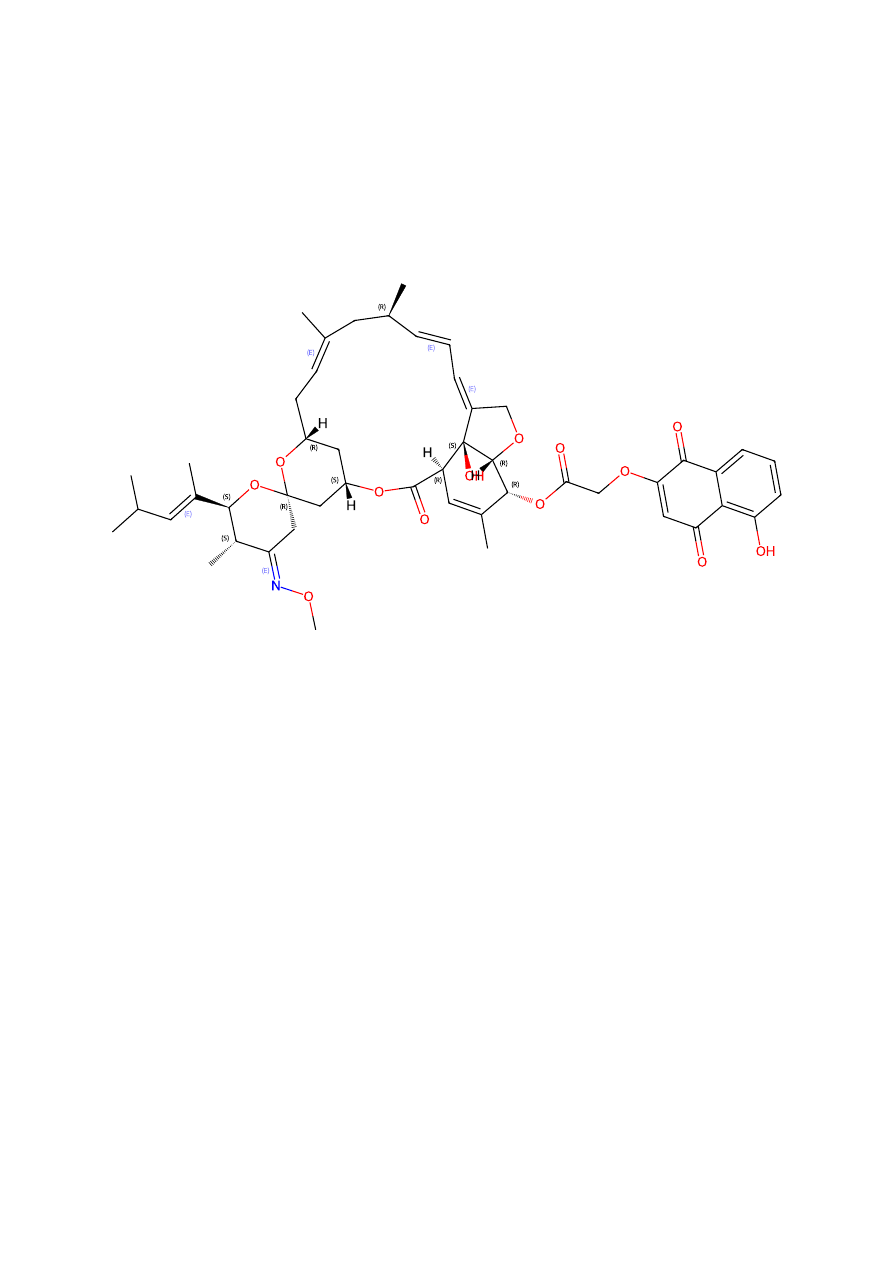
CHAPTER 3 · PROFILE 26/98 · ARCHIVE RECORD 26
26. ARF-MOX-C2 · plumbagin-type glycolate
—
Recorded rationale and role
Programme comparator / derivative. This entry preserves the
source scaffold and appendage combination for comparison
with its parent and adjacent development records. Original
entry heading: 26. ARF-MOX-C2 · plumbagin-type glycolate —
Distinct redox potential. Source context is identified below; the
design role is not a measured efficacy ranking.
Preparation focus in the existing record
The preparation concept is governed by the source scaffold,
available attachment handle and functional-group
compatibility. Establish connectivity, stereochemical
AGENTIC RESEARCH FACTORY · COMPUTATIONAL COOKBOOK · 141 / 886

composition and relevant stability before comparing biological
responses.
Full deposited SMILES — verbatim
CO/N=C1\C[C@]2(C[C@@H]3C[C@@H]
(C/C=C(\C)C[C@@H](C)/C=C/C=C4\CO[C@@H]5[C@H]
(OC(=O)COC6=CC(=O)c7c(O)cccc7C6=O)C(C)=C[C@@H]
(C(=O)O3)[C@]45O)O2)O[C@H](/C(C)=C/C(C)C)[C@H]1C
Canonical isomeric SMILES — RDKit 2026.09.1
CO/N=C1\C[C@]2(C[C@@H]3C[C@@H]
(C/C=C(\C)C[C@@H](C)/C=C/C=C4\CO[C@@H]5[C@H]
(OC(=O)COC6=CC(=O)c7c(O)cccc7C6=O)C(C)=C[C@@H]
(C(=O)O3)[C@]45O)O2)O[C@H](/C(C)=C/C(C)C)[C@H]1C
Complete computed profile
Formula
C49H59NO13
Molecular weight (g/mol)
870.005
Exact mass (Da)
869.398641
Crippen cLogP
6.9651
TPSA (Ų)
185.71
H-bond donors
2
H-bond acceptors
14
Rotatable bonds
7
AGENTIC RESEARCH FACTORY · COMPUTATIONAL COOKBOOK · 142 / 886

Rings
7
Formal charge
0
Heavy atoms
63
Unassigned stereo —
modern
0
Unassigned stereo —
legacy
0
Graph interpretation and liabilities
This graph has 0 O–O bonds, net formal charge +0, and 7
rotatable bonds. Its polar surface makes permeability and
compartmental exposure important comparison variables. No
unspecified stereochemical element was detected by the
stated modern analysis of this graph.
Source record
2026-11-04T223635-eyp4-THE_98_Redox_Series_2026-11-
04.pdf, numbered entry 26
Original entry text
26. ARF-MOX-C2 · plumbagin-type glycolate —
Distinct redox potential
C49H59NO13 · MW 870.0 · clogP 6.97 · TPSA 185.7 Ų ·
HBD 2 · RotB 7
CO/N=C1\C[C@]2(C[C@@H]3C[C@@H]
AGENTIC RESEARCH FACTORY · COMPUTATIONAL COOKBOOK · 143 / 886

(C/C=C(\C)C[C@@H](C)/C=C/C=C4\CO[C@@H]5[C@H]
(OC(=O)COC6=CC(=O)c7c(O)cccc7C6=O)C(C)=C[C@@H]
(C(=O)O3)[C@]45O)O2)O[C@H](/C(C)=C/C(C)C)[C@H]1C
AGENTIC RESEARCH FACTORY · COMPUTATIONAL COOKBOOK · 144 / 886
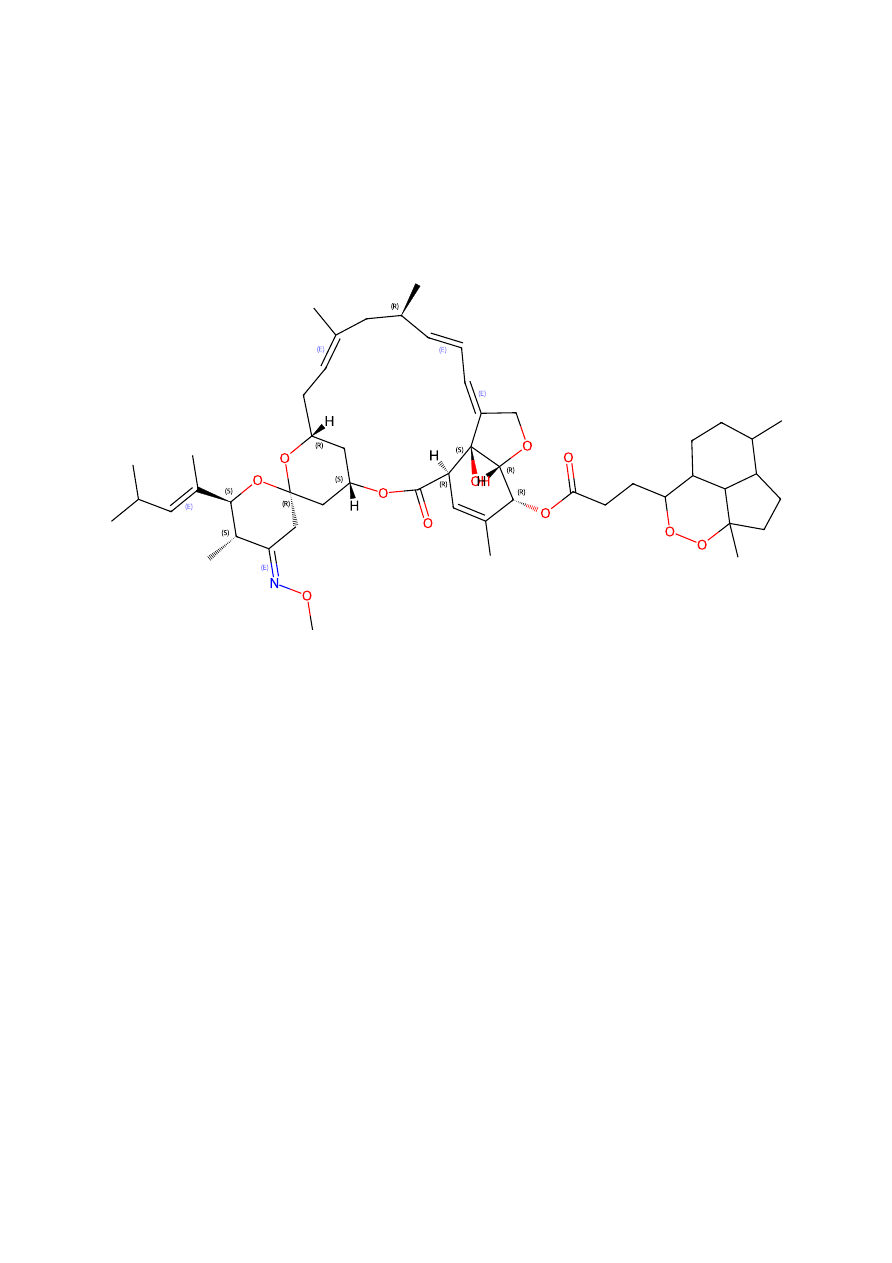
CHAPTER 3 · PROFILE 27/98 · ARCHIVE RECORD 27
27. ARF-MOX-C4 · trioxane (artemisinin-like)
ester —
Recorded rationale and role
Peroxide architecture branch. This entry explores the balance
between activation chemistry, appendage size, polarity,
linkage persistence and stereochemical tractability. Original
entry heading: 27. ARF-MOX-C4 · trioxane (artemisinin-like)
ester — Fe-triggered; fuses two drug classes in one molecule.
Source context is identified below; the design role is not a
measured efficacy ranking.
Preparation focus in the existing record
Peroxide-preserving preparation and analytical work are
central. Compare intact conjugate with any parent-release
AGENTIC RESEARCH FACTORY · COMPUTATIONAL COOKBOOK · 145 / 886

products; identify the peroxide architecture and
stereochemical composition before biological interpretation.
Full deposited SMILES — verbatim
CO/N=C1\C[C@]2(C[C@@H]3C[C@@H]
(C/C=C(\C)C[C@@H](C)/C=C/C=C4\CO[C@@H]5[C@H]
(OC(=O)CCC6OOC7(C)CCC8C(C)CCC6C87)C(C)=C[C@@H
](C(=O)O3)[C@]45O)O2)O[C@H](/C(C)=C/C(C)C)[C@H]1C
Canonical isomeric SMILES — RDKit 2026.09.1
CO/N=C1\C[C@]2(C[C@@H]3C[C@@H]
(C/C=C(\C)C[C@@H](C)/C=C/C=C4\CO[C@@H]5[C@H]
(OC(=O)CCC6OOC7(C)CCC8C(C)CCC6C87)C(C)=C[C@@H
](C(=O)O3)[C@]45O)O2)O[C@H](/C(C)=C/C(C)C)[C@H]1C
Complete computed profile
Formula
C52H75NO11
Molecular weight (g/mol)
890.168
Exact mass (Da)
889.534012
Crippen cLogP
9.2214
TPSA (Ų)
140.57
H-bond donors
1
H-bond acceptors
12
Rotatable bonds
7
AGENTIC RESEARCH FACTORY · COMPUTATIONAL COOKBOOK · 146 / 886

Rings
8
Formal charge
0
Heavy atoms
64
Unassigned stereo —
modern
6
Unassigned stereo —
legacy
6
Graph interpretation and liabilities
This graph has 1 O–O bond, net formal charge +0, and 7
rotatable bonds. Its high calculated lipophilicity makes free
exposure, adsorption and formulation important comparison
variables. The modern graph analysis leaves 6 stereochemical
elements unspecified; material-level comparisons require that
composition to be defined.
Source record
2026-11-04T223635-eyp4-THE_98_Redox_Series_2026-11-
04.pdf, numbered entry 27
Original entry text
27. ARF-MOX-C4 · trioxane (artemisinin-like) ester —
Fe-triggered; fuses two drug classes in one molecule
C52H75NO11 · MW 890.2 · clogP 9.22 · TPSA 140.6 Ų · HBD
AGENTIC RESEARCH FACTORY · COMPUTATIONAL COOKBOOK · 147 / 886

1 · RotB 7
CO/N=C1\C[C@]2(C[C@@H]3C[C@@H]
(C/C=C(\C)C[C@@H](C)/C=C/C=C4\CO[C@@H]5[C@H]
(OC(=O)CCC6OOC7(C)CCC8C(C)CCC6C87)C(C)=C[C@@H
](C(=O)O3)[C@]45O)O2)O[C@H](/C(C)=C/C(C)C)[C@H]1C
AGENTIC RESEARCH FACTORY · COMPUTATIONAL COOKBOOK · 148 / 886
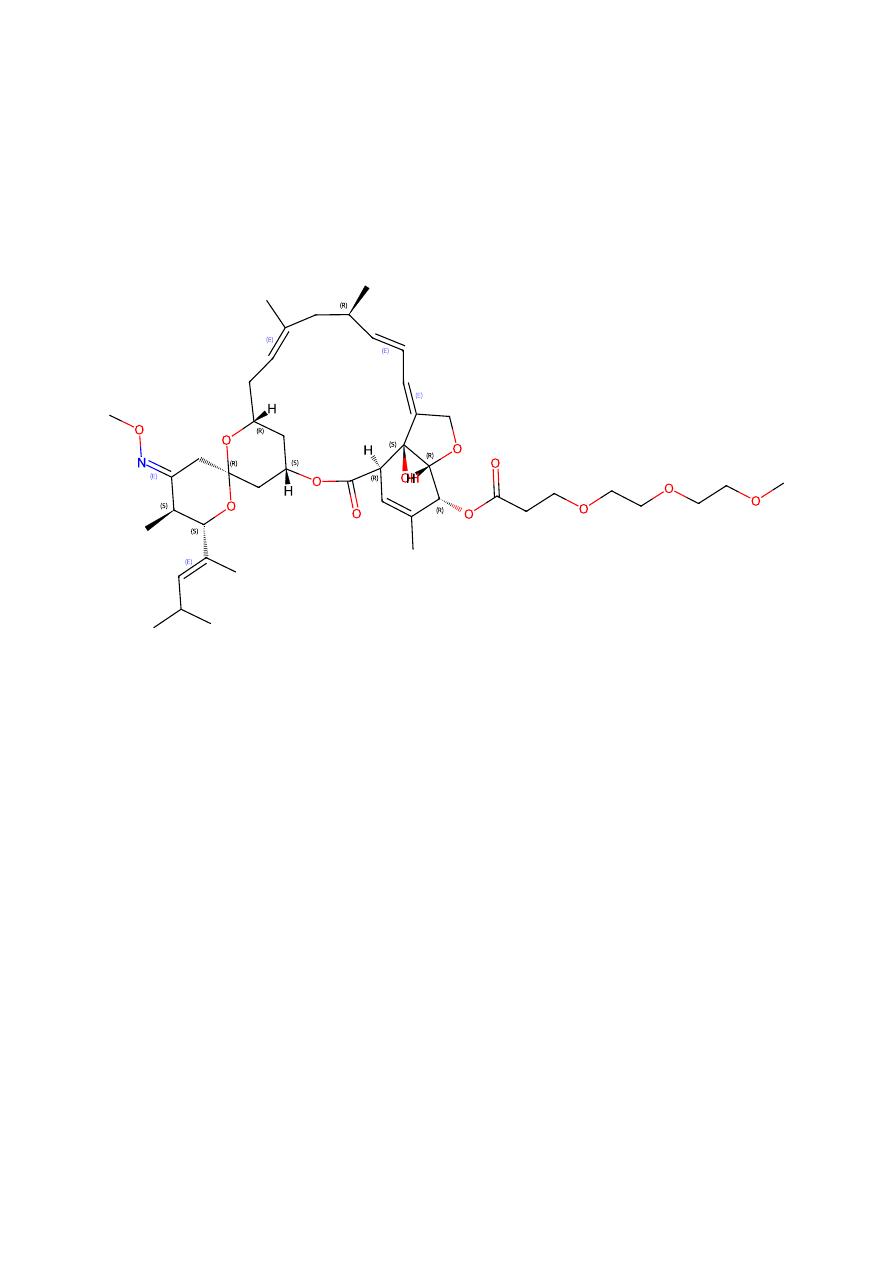
CHAPTER 3 · PROFILE 28/98 · ARCHIVE RECORD 28
28. ARF-MOX-D1 · PEG3 solubilising ester —
Offsets
Recorded rationale and role
Programme comparator / derivative. This entry preserves the
source scaffold and appendage combination for comparison
with its parent and adjacent development records. Original
entry heading: 28. ARF-MOX-D1 · PEG3 solubilising ester —
Offsets series polarity liability. Source context is identified
below; the design role is not a measured efficacy ranking.
Preparation focus in the existing record
The preparation concept is governed by the source scaffold,
available attachment handle and functional-group
compatibility. Establish connectivity, stereochemical
AGENTIC RESEARCH FACTORY · COMPUTATIONAL COOKBOOK · 149 / 886

composition and relevant stability before comparing biological
responses.
Full deposited SMILES — verbatim
COCCOCCOCCC(=O)O[C@@H]1C(C)=C[C@H]2C(=O)O[C
@H]3C[C@@H](C/C=C(\C)C[C@@H]
(C)/C=C/C=C4\CO[C@H]1[C@@]42O)O[C@@]1(C/C(=N\OC
)[C@H](C)[C@@H](/C(C)=C/C(C)C)O1)C3
Canonical isomeric SMILES — RDKit 2026.09.1
COCCOCCOCCC(=O)O[C@@H]1C(C)=C[C@H]2C(=O)O[C
@H]3C[C@@H](C/C=C(\C)C[C@@H]
(C)/C=C/C=C4\CO[C@H]1[C@@]42O)O[C@@]1(C/C(=N\OC
)[C@H](C)[C@@H](/C(C)=C/C(C)C)O1)C3
Complete computed profile
Formula
C45H67NO12
Molecular weight (g/mol)
814.026
Exact mass (Da)
813.466327
Crippen cLogP
6.3495
TPSA (Ų)
149.8
H-bond donors
1
H-bond acceptors
13
Rotatable bonds
13
AGENTIC RESEARCH FACTORY · COMPUTATIONAL COOKBOOK · 150 / 886

Rings
5
Formal charge
0
Heavy atoms
58
Unassigned stereo —
modern
0
Unassigned stereo —
legacy
0
Graph interpretation and liabilities
This graph has 0 O–O bonds, net formal charge +0, and 13
rotatable bonds. The descriptor balance supports comparison
with the adjacent source series rather than assuming a shared
exposure profile. No unspecified stereochemical element was
detected by the stated modern analysis of this graph.
Source record
2026-11-04T223635-eyp4-THE_98_Redox_Series_2026-11-
04.pdf, numbered entry 28
Original entry text
28. ARF-MOX-D1 · PEG3 solubilising ester — Offsets
series polarity liability
C45H67NO12 · MW 814.0 · clogP 6.35 · TPSA 149.8 Ų ·
HBD 1 · RotB 13
COCCOCCOCCC(=O)O[C@@H]1C(C)=C[C@H]2C(=O)O[C
AGENTIC RESEARCH FACTORY · COMPUTATIONAL COOKBOOK · 151 / 886

@H]3C[C@@H](C/C=C(\C)C[C@@H](C)/C=C/
C=C4\CO[C@H]1[C@@]42O)O[C@@]1(C/C(=N\OC)[C@H]
(C)[C@@H](/C(C)=C/C(C)C)O1)C3
AGENTIC RESEARCH FACTORY · COMPUTATIONAL COOKBOOK · 152 / 886
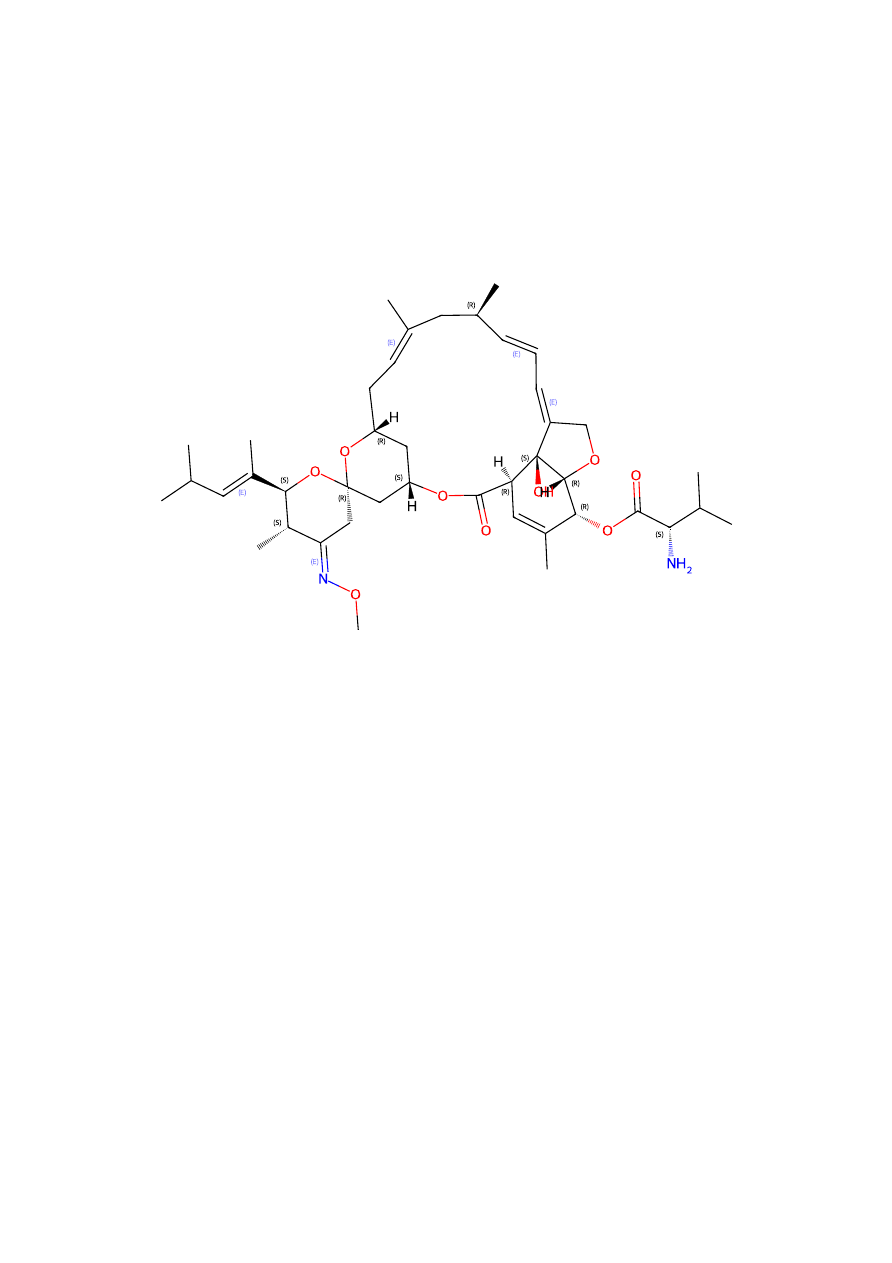
CHAPTER 3 · PROFILE 29/98 · ARCHIVE RECORD 29
29. ARF-MOX-D2 · valine prodrug — PepT1
peptide-
Recorded rationale and role
Programme comparator / derivative. This entry preserves the
source scaffold and appendage combination for comparison
with its parent and adjacent development records. Original
entry heading: 29. ARF-MOX-D2 · valine prodrug — PepT1
peptide- transporter route. Source context is identified below;
the design role is not a measured efficacy ranking.
Preparation focus in the existing record
The preparation concept is governed by the source scaffold,
available attachment handle and functional-group
compatibility. Establish connectivity, stereochemical
AGENTIC RESEARCH FACTORY · COMPUTATIONAL COOKBOOK · 153 / 886

composition and relevant stability before comparing biological
responses.
Full deposited SMILES — verbatim
CO/N=C1\C[C@]2(C[C@@H]3C[C@@H]
(C/C=C(\C)C[C@@H](C)/C=C/C=C4\CO[C@@H]5[C@H]
(OC(=O)[C@@H](N)C(C)C)C(C)=C[C@@H](C(=O)O3)
[C@]45O)O2)O[C@H](/C(C)=C/C(C)C)[C@H]1C
Canonical isomeric SMILES — RDKit 2026.09.1
CO/N=C1\C[C@]2(C[C@@H]3C[C@@H]
(C/C=C(\C)C[C@@H](C)/C=C/C=C4\CO[C@@H]5[C@H]
(OC(=O)[C@@H](N)C(C)C)C(C)=C[C@@H](C(=O)O3)
[C@]45O)O2)O[C@H](/C(C)=C/C(C)C)[C@H]1C
Complete computed profile
Formula
C42H62N2O9
Molecular weight (g/mol)
738.963
Exact mass (Da)
738.445532
Crippen cLogP
6.2631
TPSA (Ų)
148.13
H-bond donors
2
H-bond acceptors
11
Rotatable bonds
6
AGENTIC RESEARCH FACTORY · COMPUTATIONAL COOKBOOK · 154 / 886

Rings
5
Formal charge
0
Heavy atoms
53
Unassigned stereo —
modern
0
Unassigned stereo —
legacy
0
Graph interpretation and liabilities
This graph has 0 O–O bonds, net formal charge +0, and 6
rotatable bonds. The descriptor balance supports comparison
with the adjacent source series rather than assuming a shared
exposure profile. No unspecified stereochemical element was
detected by the stated modern analysis of this graph.
Source record
2026-11-04T223635-eyp4-THE_98_Redox_Series_2026-11-
04.pdf, numbered entry 29
Original entry text
29. ARF-MOX-D2 · valine prodrug — PepT1 peptide-
transporter route
C42H62N2O9 · MW 739.0 · clogP 6.26 · TPSA 148.1 Ų ·
HBD 2 · RotB 6
CO/N=C1\C[C@]2(C[C@@H]3C[C@@H]
AGENTIC RESEARCH FACTORY · COMPUTATIONAL COOKBOOK · 155 / 886

(C/C=C(\C)C[C@@H](C)/C=C/C=C4\CO[C@@H]5[C@H]
(OC(=O)[C@@H]
(N)C(C)C)C(C)=C[C@@H](C(=O)O3)[C@]45O)O2)O[C@H]
(/C(C)=C/C(C)C)[C@H]1C
AGENTIC RESEARCH FACTORY · COMPUTATIONAL COOKBOOK · 156 / 886
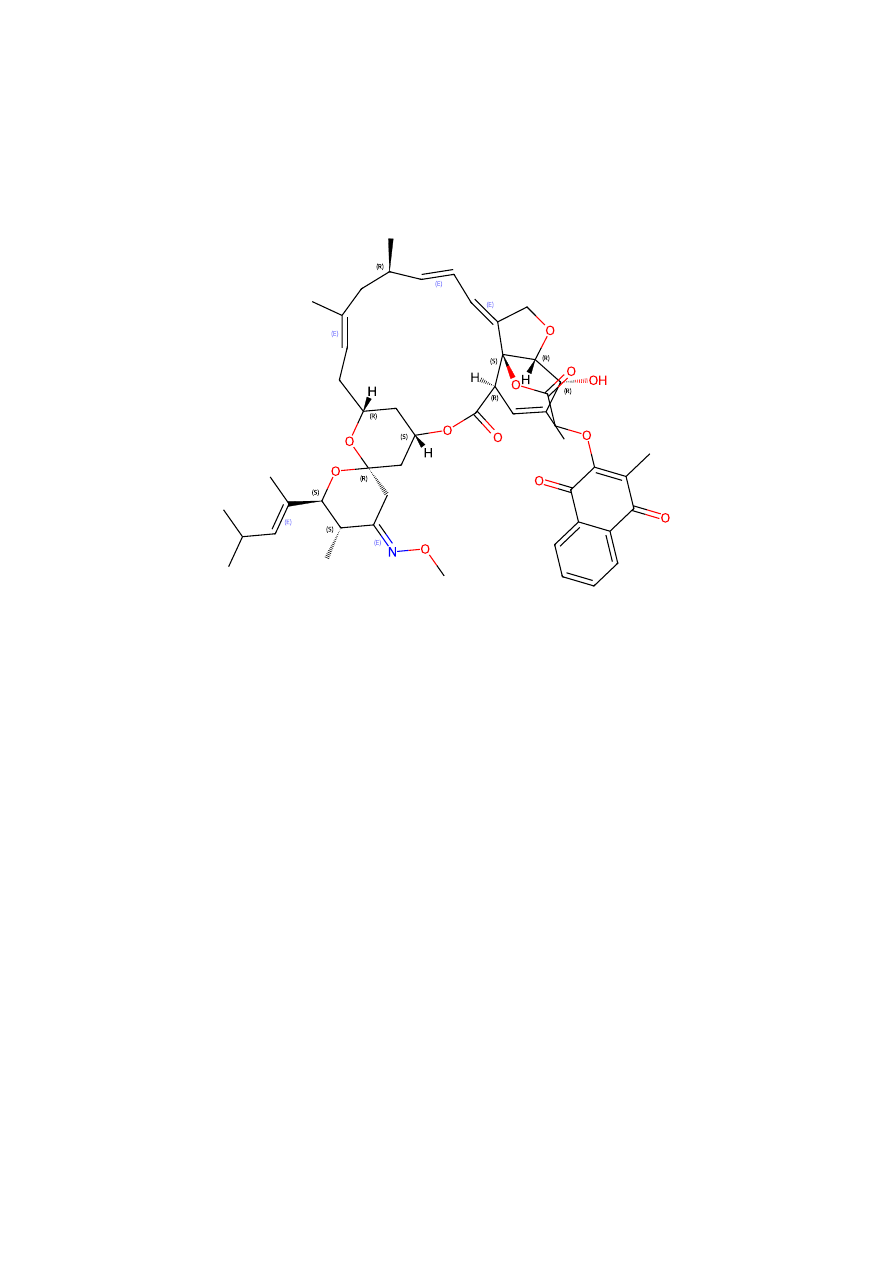
CHAPTER 3 · PROFILE 30/98 · ARCHIVE RECORD 30
30. ARF-MOX-C1b · menadione glycolate —
Recorded rationale and role
Programme comparator / derivative. This entry preserves the
source scaffold and appendage combination for comparison
with its parent and adjacent development records. Original
entry heading: 30. ARF-MOX-C1b · menadione glycolate —
regiochemical variant of C1. Source context is identified
below; the design role is not a measured efficacy ranking.
Preparation focus in the existing record
The preparation concept is governed by the source scaffold,
available attachment handle and functional-group
compatibility. Establish connectivity, stereochemical
AGENTIC RESEARCH FACTORY · COMPUTATIONAL COOKBOOK · 157 / 886

composition and relevant stability before comparing biological
responses.
Full deposited SMILES — verbatim
CO/N=C1\C[C@]2(C[C@@H]3C[C@@H]
(C/C=C(\C)C[C@@H](C)/C=C/C=C4\CO[C@@H]5[C@H]
(O)C(C)=C[C@@H](C(=O)O3)
[C@]45OC(=O)COC3=C(C)C(=O)c4ccccc4C3=O)O2)O[C@H]
(/C(C)=C/C(C)C)[C@H]1C
Canonical isomeric SMILES — RDKit 2026.09.1
CO/N=C1\C[C@]2(C[C@@H]3C[C@@H]
(C/C=C(\C)C[C@@H](C)/C=C/C=C4\CO[C@@H]5[C@H]
(O)C(C)=C[C@@H](C(=O)O3)
[C@]45OC(=O)COC3=C(C)C(=O)c4ccccc4C3=O)O2)O[C@H]
(/C(C)=C/C(C)C)[C@H]1C
Complete computed profile
Formula
C50H61NO12
Molecular weight (g/mol)
868.033
Exact mass (Da)
867.419376
Crippen cLogP
7.6496
TPSA (Ų)
165.48
H-bond donors
1
AGENTIC RESEARCH FACTORY · COMPUTATIONAL COOKBOOK · 158 / 886

H-bond acceptors
13
Rotatable bonds
7
Rings
7
Formal charge
0
Heavy atoms
63
Unassigned stereo —
modern
0
Unassigned stereo —
legacy
0
Graph interpretation and liabilities
This graph has 0 O–O bonds, net formal charge +0, and 7
rotatable bonds. Its high calculated lipophilicity makes free
exposure, adsorption and formulation important comparison
variables. No unspecified stereochemical element was
detected by the stated modern analysis of this graph.
Source record
2026-11-04T223635-eyp4-THE_98_Redox_Series_2026-11-
04.pdf, numbered entry 30
Original entry text
30. ARF-MOX-C1b · menadione glycolate —
regiochemical variant of C1
AGENTIC RESEARCH FACTORY · COMPUTATIONAL COOKBOOK · 159 / 886

C50H61NO12 · MW 868.0 · clogP 7.65 · TPSA 165.5 Ų ·
HBD 1 · RotB 7
CO/N=C1\C[C@]2(C[C@@H]3C[C@@H]
(C/C=C(\C)C[C@@H](C)/C=C/C=C4\CO[C@@H]5[C@H]
(O)C(C)=C[C@@H](C(=O)O3)
[C@]45OC(=O)COC3=C(C)C(=O)c4ccccc4C3=O)O2)O[C@H]
(/C(C)=C/C(C)C)[C@H]1C
5 · The extension series
The same four vectors applied to two further seats: the
hydroxymebendazole
carbinol, obtained by reducing the benzoyl ketone while
leaving the C2
methylcarbamate untouched, and the dihydroartemisinin C10
hemiacetal.
AGENTIC RESEARCH FACTORY · COMPUTATIONAL COOKBOOK · 160 / 886
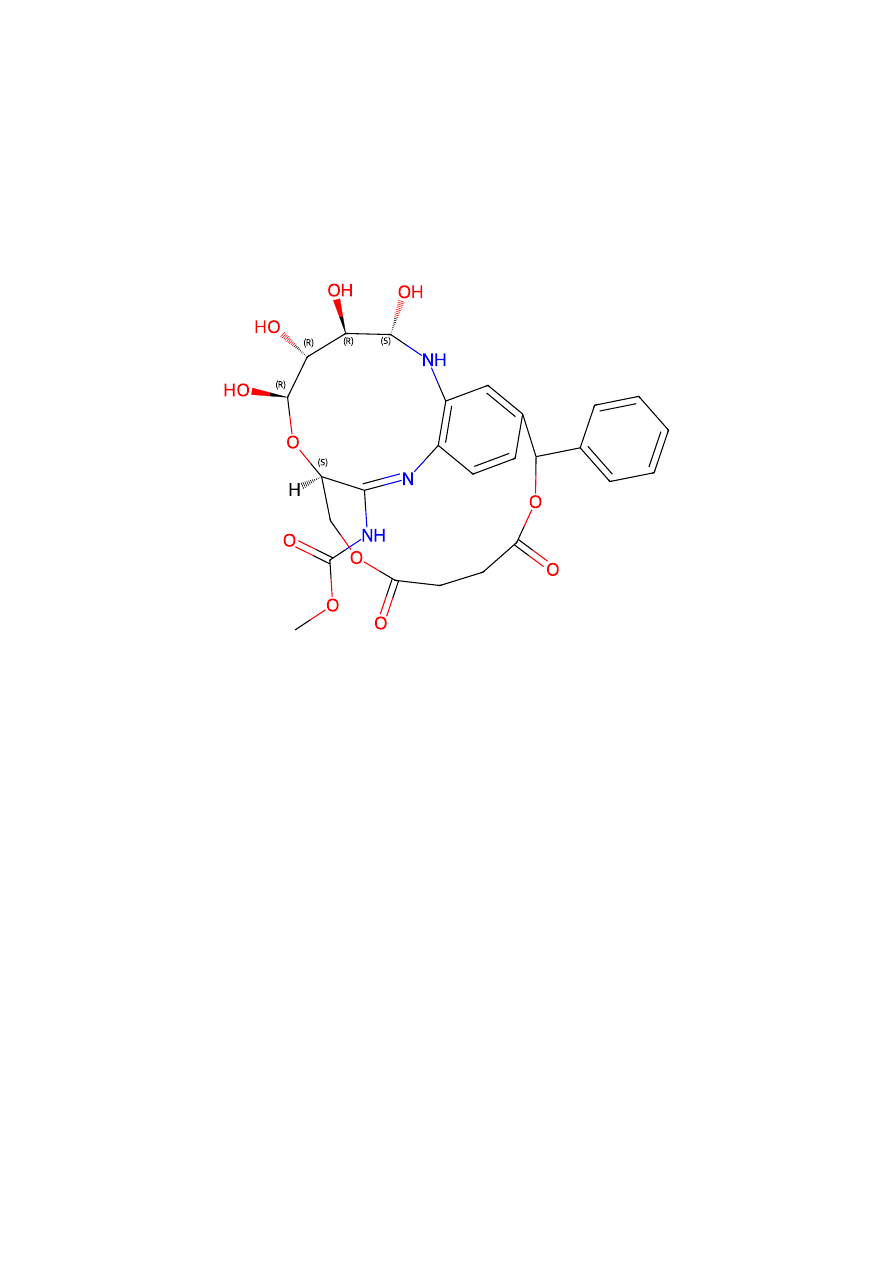
CHAPTER 3 · PROFILE 31/98 · ARCHIVE RECORD 31
31. ARF-HMB-A1 · hydroxymebendazole C-
OH glucosyl
Recorded rationale and role
Programme comparator / derivative. This entry preserves the
source scaffold and appendage combination for comparison
with its parent and adjacent development records. Original
entry heading: 31. ARF-HMB-A1 · hydroxymebendazole C-OH
glucosyl succinate — metabolic (GLUT). Source context is
identified below; the design role is not a measured efficacy
ranking.
Preparation focus in the existing record
Use the carbamate connection as a distinct persistence
hypothesis. Assess compatibility of the parent functional
AGENTIC RESEARCH FACTORY · COMPUTATIONAL COOKBOOK · 161 / 886

groups and identify any cleavage products rather than
assuming release kinetics from the linkage name.
Full deposited SMILES — verbatim
COC(=O)NC1=Nc2ccc3cc2N[C@@H](O)[C@H](O)[C@@H]
(O)[C@H](O)O[C@@H]1COC(=O)CCC(=O)OC3c1ccccc1
Canonical isomeric SMILES — RDKit 2026.09.1
COC(=O)NC1=Nc2ccc3cc2N[C@@H](O)[C@H](O)[C@@H]
(O)[C@H](O)O[C@@H]1COC(=O)CCC(=O)OC3c1ccccc1
Complete computed profile
Formula
C26H29N3O11
Molecular weight (g/mol)
559.528
Exact mass (Da)
559.180209
Crippen cLogP
0.2115
TPSA (Ų)
205.47
H-bond donors
6
H-bond acceptors
13
Rotatable bonds
1
Rings
5
Formal charge
0
AGENTIC RESEARCH FACTORY · COMPUTATIONAL COOKBOOK · 162 / 886

Heavy atoms
40
Unassigned stereo —
modern
2
Unassigned stereo —
legacy
1
Graph interpretation and liabilities
This graph has 0 O–O bonds, net formal charge +0, and 1
rotatable bonds. Its polar surface makes permeability and
compartmental exposure important comparison variables. The
modern graph analysis leaves 2 stereochemical elements
unspecified; material-level comparisons require that
composition to be defined.
Source record
2026-11-04T223635-eyp4-THE_98_Redox_Series_2026-11-
04.pdf, numbered entry 31
Original entry text
31. ARF-HMB-A1 · hydroxymebendazole C-OH glucosyl
succinate — metabolic (GLUT)
C26H29N3O11 · MW 559.5 · clogP 0.21 · TPSA 205.5 Ų ·
HBD 6 · RotB 1
COC(=O)NC1=Nc2ccc3cc2N[C@@H](O)[C@H](O)[C@@H]
(O)[C@H](O)O[C@@H]1COC(=O)CCC(=O)OC3c1ccccc1
AGENTIC RESEARCH FACTORY · COMPUTATIONAL COOKBOOK · 163 / 886
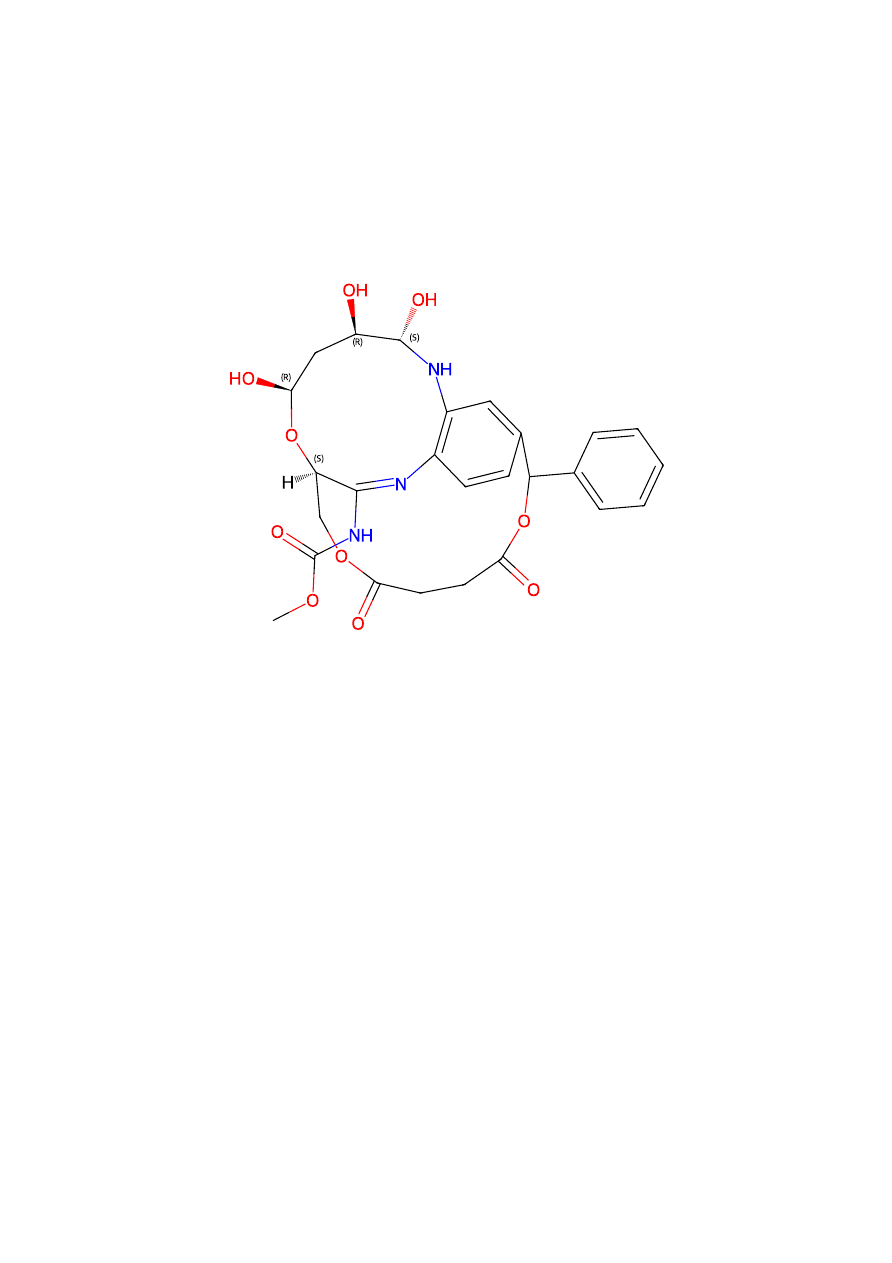
CHAPTER 3 · PROFILE 32/98 · ARCHIVE RECORD 32
32. ARF-HMB-A2 · hydroxymebendazole C-
OH 2-
Recorded rationale and role
Programme comparator / derivative. This entry preserves the
source scaffold and appendage combination for comparison
with its parent and adjacent development records. Original
entry heading: 32. ARF-HMB-A2 · hydroxymebendazole C-OH
2- deoxyglucosyl succinate — metabolic (trapped). Source
context is identified below; the design role is not a measured
efficacy ranking.
Preparation focus in the existing record
Use the carbamate connection as a distinct persistence
hypothesis. Assess compatibility of the parent functional
AGENTIC RESEARCH FACTORY · COMPUTATIONAL COOKBOOK · 164 / 886

groups and identify any cleavage products rather than
assuming release kinetics from the linkage name.
Full deposited SMILES — verbatim
COC(=O)NC1=Nc2ccc3cc2N[C@@H](O)[C@H](O)C[C@H]
(O)O[C@@H]1COC(=O)CCC(=O)OC3c1ccccc1
Canonical isomeric SMILES — RDKit 2026.09.1
COC(=O)NC1=Nc2ccc3cc2N[C@@H](O)[C@H](O)C[C@H]
(O)O[C@@H]1COC(=O)CCC(=O)OC3c1ccccc1
Complete computed profile
Formula
C26H29N3O10
Molecular weight (g/mol)
543.529
Exact mass (Da)
543.185294
Crippen cLogP
1.2407
TPSA (Ų)
185.24
H-bond donors
5
H-bond acceptors
12
Rotatable bonds
1
Rings
5
Formal charge
0
AGENTIC RESEARCH FACTORY · COMPUTATIONAL COOKBOOK · 165 / 886

Heavy atoms
39
Unassigned stereo —
modern
2
Unassigned stereo —
legacy
1
Graph interpretation and liabilities
This graph has 0 O–O bonds, net formal charge +0, and 1
rotatable bonds. Its polar surface makes permeability and
compartmental exposure important comparison variables. The
modern graph analysis leaves 2 stereochemical elements
unspecified; material-level comparisons require that
composition to be defined.
Source record
2026-11-04T223635-eyp4-THE_98_Redox_Series_2026-11-
04.pdf, numbered entry 32
Original entry text
32. ARF-HMB-A2 · hydroxymebendazole C-OH 2-
deoxyglucosyl succinate — metabolic (trapped)
C26H29N3O10 · MW 543.5 · clogP 1.24 · TPSA 185.2 Ų ·
HBD 5 · RotB 1
COC(=O)NC1=Nc2ccc3cc2N[C@@H](O)[C@H](O)C[C@H]
(O)O[C@@H]1COC(=O)CCC(=O)OC3c1ccccc1
AGENTIC RESEARCH FACTORY · COMPUTATIONAL COOKBOOK · 166 / 886
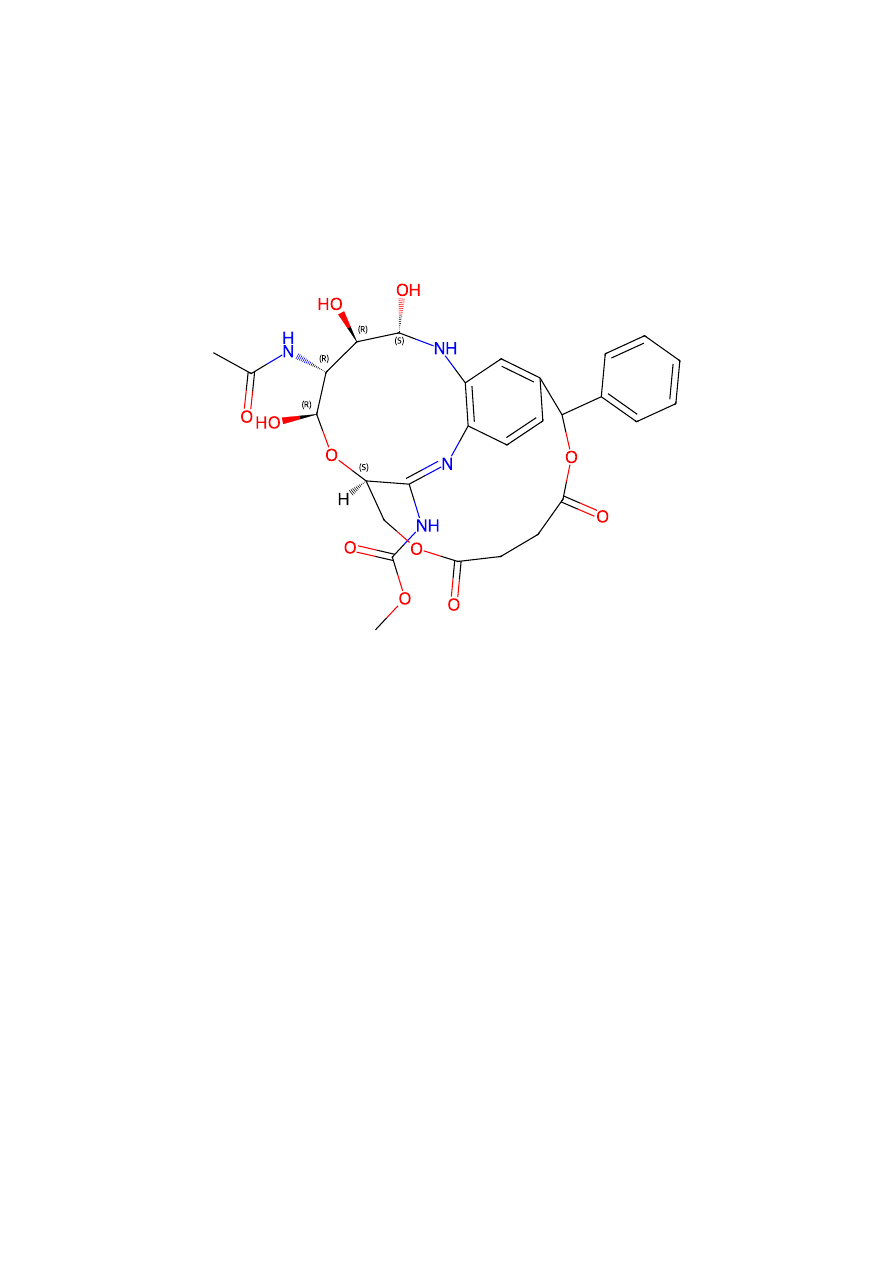
CHAPTER 3 · PROFILE 33/98 · ARCHIVE RECORD 33
33. ARF-HMB-A3 · hydroxymebendazole C-
OH GlcNAc
Recorded rationale and role
Programme comparator / derivative. This entry preserves the
source scaffold and appendage combination for comparison
with its parent and adjacent development records. Original
entry heading: 33. ARF-HMB-A3 · hydroxymebendazole C-OH
GlcNAc succinate — metabolic (hexosamine). Source context
is identified below; the design role is not a measured efficacy
ranking.
Preparation focus in the existing record
Use the carbamate connection as a distinct persistence
hypothesis. Assess compatibility of the parent functional
AGENTIC RESEARCH FACTORY · COMPUTATIONAL COOKBOOK · 167 / 886

groups and identify any cleavage products rather than
assuming release kinetics from the linkage name.
Full deposited SMILES — verbatim
COC(=O)NC1=Nc2ccc3cc2N[C@@H](O)[C@H](O)[C@@H]
(NC(C)=O)[C@H]
(O)O[C@@H]1COC(=O)CCC(=O)OC3c1ccccc1
Canonical isomeric SMILES — RDKit 2026.09.1
COC(=O)NC1=Nc2ccc3cc2N[C@@H](O)[C@H](O)[C@@H]
(NC(C)=O)[C@H]
(O)O[C@@H]1COC(=O)CCC(=O)OC3c1ccccc1
Complete computed profile
Formula
C28H32N4O11
Molecular weight (g/mol)
600.581
Exact mass (Da)
600.206758
Crippen cLogP
0.3553
TPSA (Ų)
214.34
H-bond donors
6
H-bond acceptors
13
Rotatable bonds
2
Rings
5
AGENTIC RESEARCH FACTORY · COMPUTATIONAL COOKBOOK · 168 / 886

Formal charge
0
Heavy atoms
43
Unassigned stereo —
modern
2
Unassigned stereo —
legacy
1
Graph interpretation and liabilities
This graph has 0 O–O bonds, net formal charge +0, and 2
rotatable bonds. Its polar surface makes permeability and
compartmental exposure important comparison variables. The
modern graph analysis leaves 2 stereochemical elements
unspecified; material-level comparisons require that
composition to be defined.
Source record
2026-11-04T223635-eyp4-THE_98_Redox_Series_2026-11-
04.pdf, numbered entry 33
Original entry text
33. ARF-HMB-A3 · hydroxymebendazole C-OH GlcNAc
succinate — metabolic (hexosamine)
C28H32N4O11 · MW 600.6 · clogP 0.36 · TPSA 214.3 Ų ·
HBD 6 · RotB 2
COC(=O)NC1=Nc2ccc3cc2N[C@@H](O)[C@H](O)[C@@H]
AGENTIC RESEARCH FACTORY · COMPUTATIONAL COOKBOOK · 169 / 886

(NC(C)=O)[C@H]
(O)O[C@@H]1COC(=O)CCC(=O)OC3c1ccccc1
AGENTIC RESEARCH FACTORY · COMPUTATIONAL COOKBOOK · 170 / 886
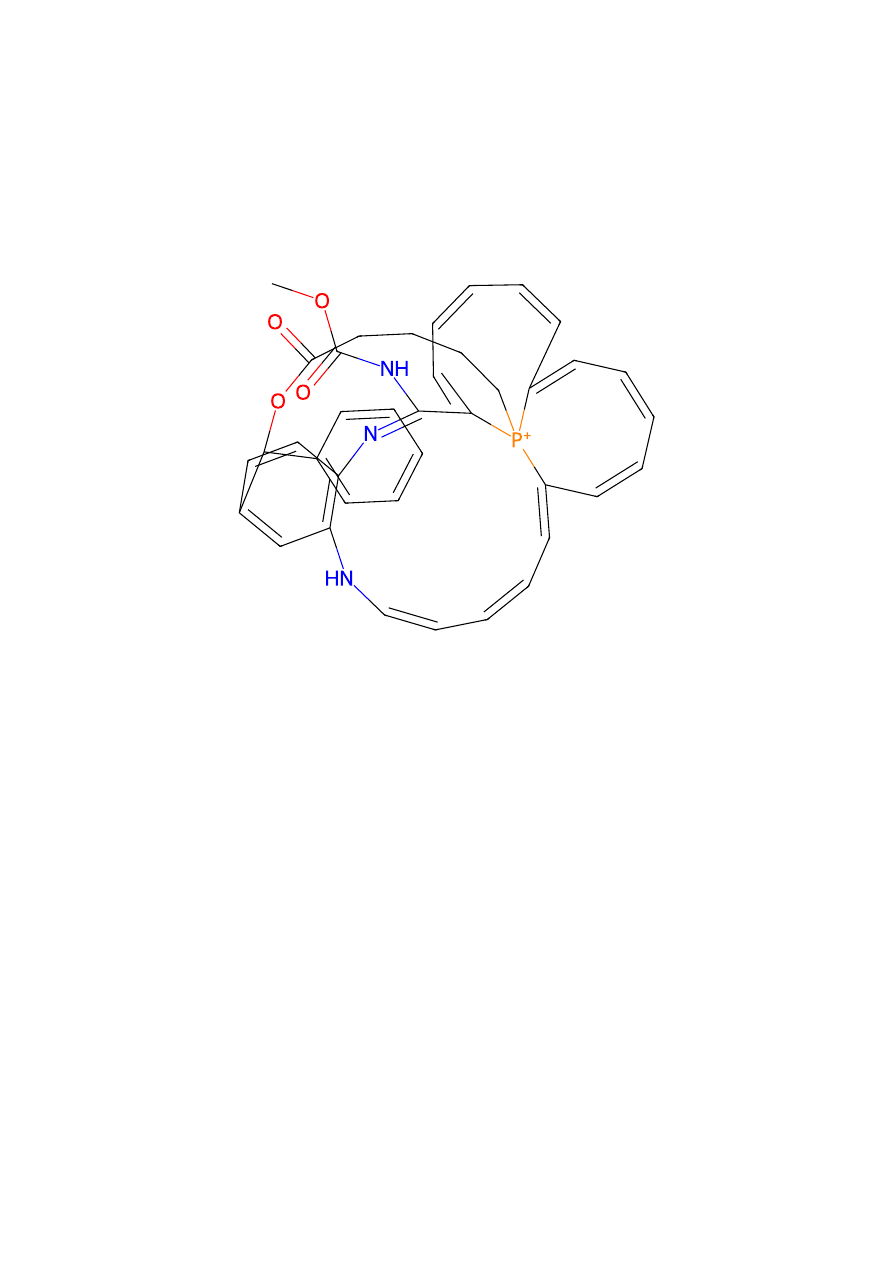
CHAPTER 3 · PROFILE 34/98 · ARCHIVE RECORD 34
34. ARF-HMB-B1 · hydroxymebendazole C-
OH TPP
Recorded rationale and role
Distribution and linkage branch. This entry compares the
appended head group and attachment against the B1
incumbent and parent moxidectin. Original entry heading: 34.
ARF-HMB-B1 · hydroxymebendazole C-OH TPP pentanoate
— voltage. Source context is identified below; the design role
is not a measured efficacy ranking.
Preparation focus in the existing record
Specify counterion and salt composition, distinguish intact
conjugate from cleaved species, and compare the charged
AGENTIC RESEARCH FACTORY · COMPUTATIONAL COOKBOOK · 171 / 886

appendage separately. Chromatographic and spectroscopic
characterization must follow the actual encoded structure.
Full deposited SMILES — verbatim
COC(=O)NC1=Nc2ccc3cc2NC=CC=CC=C2C=CC=CC=C4C=
CC=CC=C1[P+]24CCCCC(=O)OC3c1ccccc1
Canonical isomeric SMILES — RDKit 2026.09.1
COC(=O)NC1=Nc2ccc3cc2NC=CC=CC=C2C=CC=CC=C4C=
CC=CC=C1[P+]24CCCCC(=O)OC3c1ccccc1
Complete computed profile
Formula
C39H37N3O4P+
Molecular weight (g/mol)
642.716
Exact mass (Da)
642.25162
Crippen cLogP
9.3058
TPSA (Ų)
89.02
H-bond donors
2
H-bond acceptors
6
Rotatable bonds
1
Rings
7
Formal charge
1
AGENTIC RESEARCH FACTORY · COMPUTATIONAL COOKBOOK · 172 / 886

Heavy atoms
47
Unassigned stereo —
modern
12
Unassigned stereo —
legacy
2
Graph interpretation and liabilities
This graph has 0 O–O bonds, net formal charge +1, and 1
rotatable bonds. Its high calculated lipophilicity makes free
exposure, adsorption and formulation important comparison
variables. The modern graph analysis leaves 12
stereochemical elements unspecified; material-level
comparisons require that composition to be defined.
Source record
2026-11-04T223635-eyp4-THE_98_Redox_Series_2026-11-
04.pdf, numbered entry 34
Original entry text
34. ARF-HMB-B1 · hydroxymebendazole C-OH TPP
pentanoate — voltage
C39H37N3O4P+ · MW 642.7 · clogP 9.31 · TPSA 89.0 Ų ·
HBD 2 · RotB 1
COC(=O)NC1=Nc2ccc3cc2NC=CC=CC=C2C=CC=CC=C4C=
CC=CC=C1[P+]24CCCCC(=O)OC3c1ccccc1
AGENTIC RESEARCH FACTORY · COMPUTATIONAL COOKBOOK · 173 / 886
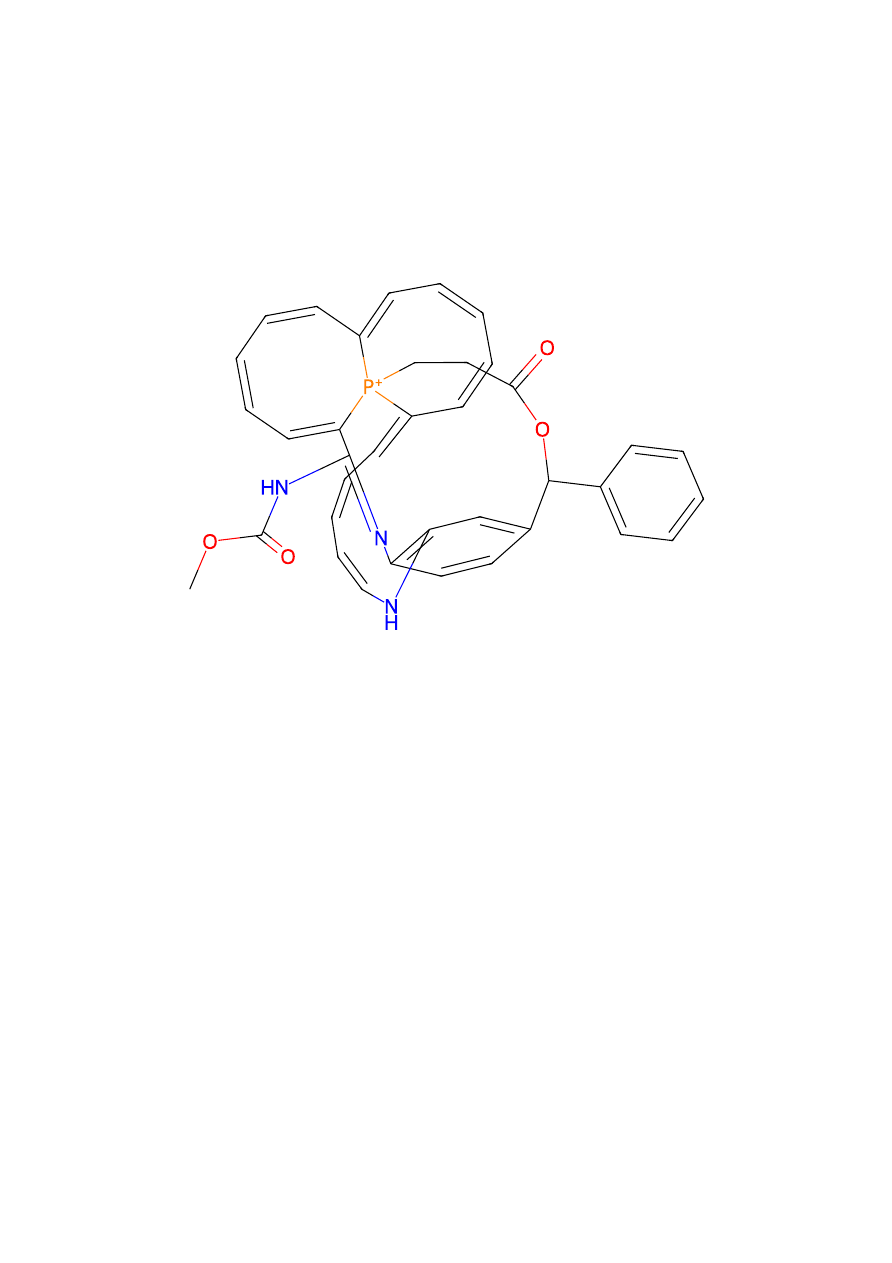
CHAPTER 3 · PROFILE 35/98 · ARCHIVE RECORD 35
35. ARF-HMB-B2 · hydroxymebendazole C-
OH TPP
Recorded rationale and role
Charge-associated distribution arm. The encoded cation
provides a test of distribution and membrane interaction
against an uncharged or differently charged comparator.
Original entry heading: 35. ARF-HMB-B2 ·
hydroxymebendazole C-OH TPP propanoate — voltage (short
tether). Source context is identified below; the design role is
not a measured efficacy ranking.
Preparation focus in the existing record
Specify counterion and salt composition, distinguish intact
conjugate from cleaved species, and compare the charged
AGENTIC RESEARCH FACTORY · COMPUTATIONAL COOKBOOK · 174 / 886

appendage separately. Chromatographic and spectroscopic
characterization must follow the actual encoded structure.
Full deposited SMILES — verbatim
COC(=O)NC1=Nc2ccc3cc2NC=CC=CC=C2C=CC=CC=C4C=
CC=CC=C1[P+]24CCC(=O)OC3c1ccccc1
Canonical isomeric SMILES — RDKit 2026.09.1
COC(=O)NC1=Nc2ccc3cc2NC=CC=CC=C2C=CC=CC=C4C=
CC=CC=C1[P+]24CCC(=O)OC3c1ccccc1
Complete computed profile
Formula
C37H33N3O4P+
Molecular weight (g/mol)
614.662
Exact mass (Da)
614.22032
Crippen cLogP
8.5256
TPSA (Ų)
89.02
H-bond donors
2
H-bond acceptors
6
Rotatable bonds
1
Rings
7
Formal charge
1
AGENTIC RESEARCH FACTORY · COMPUTATIONAL COOKBOOK · 175 / 886

Heavy atoms
45
Unassigned stereo —
modern
12
Unassigned stereo —
legacy
2
Graph interpretation and liabilities
This graph has 0 O–O bonds, net formal charge +1, and 1
rotatable bonds. Its high calculated lipophilicity makes free
exposure, adsorption and formulation important comparison
variables. The modern graph analysis leaves 12
stereochemical elements unspecified; material-level
comparisons require that composition to be defined.
Source record
2026-11-04T223635-eyp4-THE_98_Redox_Series_2026-11-
04.pdf, numbered entry 35
Original entry text
35. ARF-HMB-B2 · hydroxymebendazole C-OH TPP
propanoate — voltage (short tether)
C37H33N3O4P+ · MW 614.7 · clogP 8.53 · TPSA 89.0 Ų ·
HBD 2 · RotB 1
COC(=O)NC1=Nc2ccc3cc2NC=CC=CC=C2C=CC=CC=C4C=
CC=CC=C1[P+]24CCC(=O)OC3c1ccccc1
AGENTIC RESEARCH FACTORY · COMPUTATIONAL COOKBOOK · 176 / 886
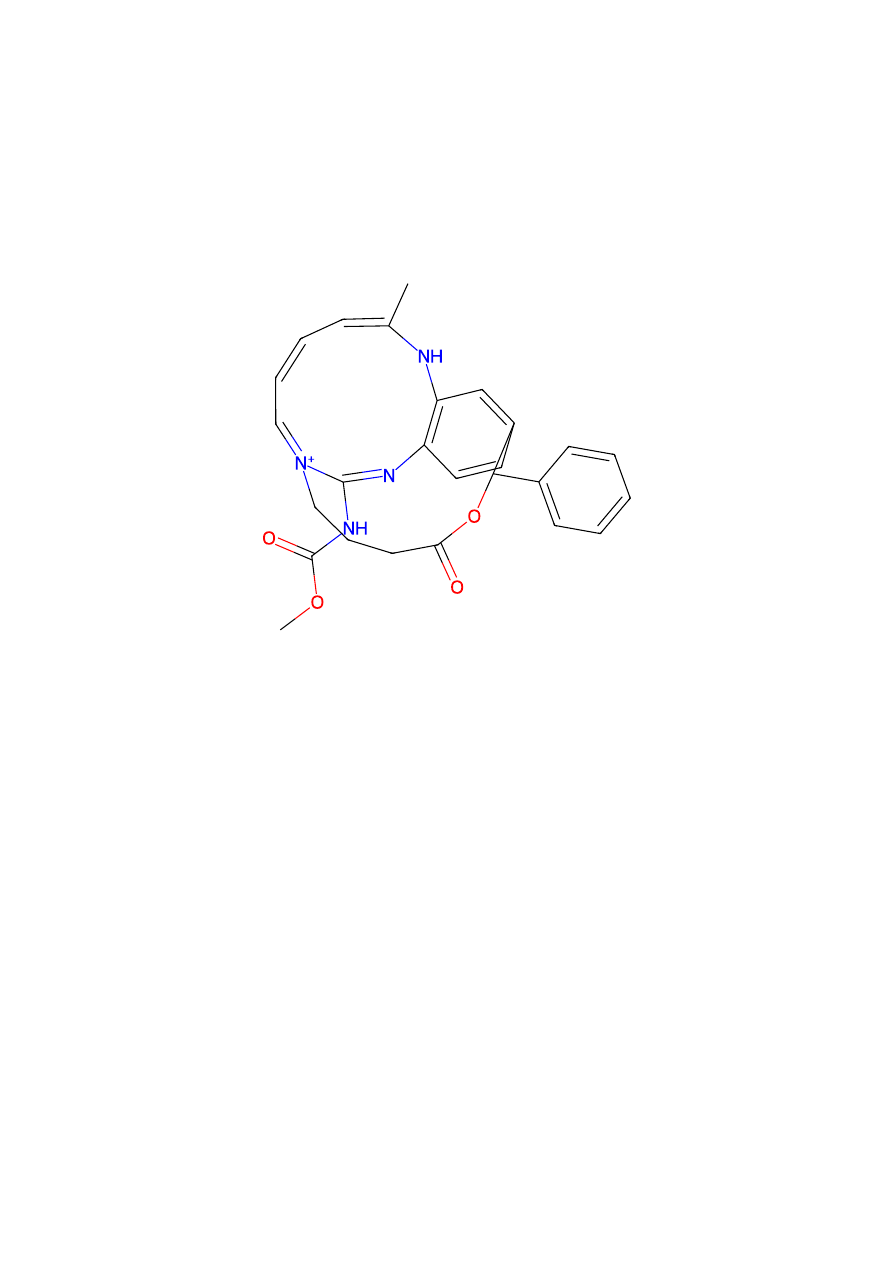
CHAPTER 3 · PROFILE 36/98 · ARCHIVE RECORD 36
36. ARF-HMB-B3 · hydroxymebendazole C-
OH N-
Recorded rationale and role
Charge-associated distribution arm. The encoded cation
provides a test of distribution and membrane interaction
against an uncharged or differently charged comparator.
Original entry heading: 36. ARF-HMB-B3 ·
hydroxymebendazole C-OH N- methylpyridinium butanoate —
voltage (low MW. Source context is identified below; the
design role is not a measured efficacy ranking.
Preparation focus in the existing record
Specify counterion and salt composition, distinguish intact
conjugate from cleaved species, and compare the charged
AGENTIC RESEARCH FACTORY · COMPUTATIONAL COOKBOOK · 177 / 886

appendage separately. Chromatographic and spectroscopic
characterization must follow the actual encoded structure.
Full deposited SMILES — verbatim
COC(=O)NC1=Nc2ccc3cc2NC(C)=CC=CC=
[N+]1CCCC(=O)OC3c1ccccc1
Canonical isomeric SMILES — RDKit 2026.09.1
COC(=O)NC1=Nc2ccc3cc2NC(C)=CC=CC=
[N+]1CCCC(=O)OC3c1ccccc1
Complete computed profile
Formula
C26H27N4O4+
Molecular weight (g/mol)
459.526
Exact mass (Da)
459.202682
Crippen cLogP
4.4253
TPSA (Ų)
92.03
H-bond donors
2
H-bond acceptors
6
Rotatable bonds
1
Rings
5
Formal charge
1
AGENTIC RESEARCH FACTORY · COMPUTATIONAL COOKBOOK · 178 / 886

Heavy atoms
34
Unassigned stereo —
modern
5
Unassigned stereo —
legacy
1
Graph interpretation and liabilities
This graph has 0 O–O bonds, net formal charge +1, and 1
rotatable bonds. The descriptor balance supports comparison
with the adjacent source series rather than assuming a shared
exposure profile. The modern graph analysis leaves 5
stereochemical elements unspecified; material-level
comparisons require that composition to be defined.
Source record
2026-11-04T223635-eyp4-THE_98_Redox_Series_2026-11-
04.pdf, numbered entry 36
Original entry text
36. ARF-HMB-B3 · hydroxymebendazole C-OH N-
methylpyridinium butanoate — voltage (low MW
cation)
C26H27N4O4+ · MW 459.5 · clogP 4.43 · TPSA 92.0 Ų ·
HBD 2 · RotB 1
COC(=O)NC1=Nc2ccc3cc2NC(C)=CC=CC=
[N+]1CCCC(=O)OC3c1ccccc1
AGENTIC RESEARCH FACTORY · COMPUTATIONAL COOKBOOK · 179 / 886
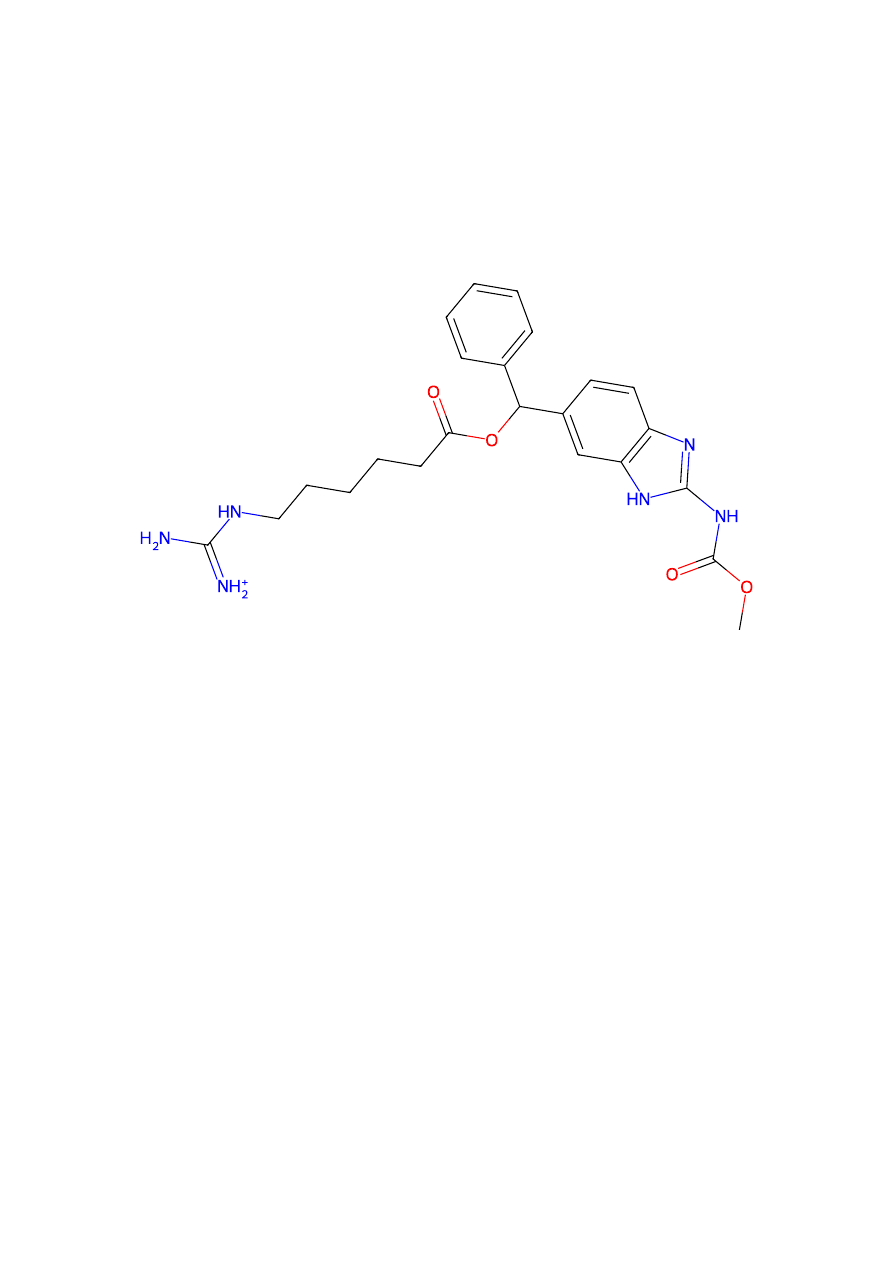
CHAPTER 3 · PROFILE 37/98 · ARCHIVE RECORD 37
37. ARF-HMB-B4 · hydroxymebendazole C-
OH
Recorded rationale and role
Charge-associated distribution arm. The encoded cation
provides a test of distribution and membrane interaction
against an uncharged or differently charged comparator.
Original entry heading: 37. ARF-HMB-B4 ·
hydroxymebendazole C-OH guanidinium hexanoate — voltage
/ penetrating. Source context is identified below; the design
role is not a measured efficacy ranking.
Preparation focus in the existing record
Specify counterion and salt composition, distinguish intact
conjugate from cleaved species, and compare the charged
AGENTIC RESEARCH FACTORY · COMPUTATIONAL COOKBOOK · 180 / 886

appendage separately. Chromatographic and spectroscopic
characterization must follow the actual encoded structure.
Full deposited SMILES — verbatim
COC(=O)Nc1nc2ccc(C(OC(=O)CCCCCNC(N)=
[NH2+])c3ccccc3)cc2[nH]1
Canonical isomeric SMILES — RDKit 2026.09.1
COC(=O)Nc1nc2ccc(C(OC(=O)CCCCCNC(N)=
[NH2+])c3ccccc3)cc2[nH]1
Complete computed profile
Formula
C23H29N6O4+
Molecular weight (g/mol)
453.523
Exact mass (Da)
453.22448
Crippen cLogP
1.5976
TPSA (Ų)
156.95
H-bond donors
5
H-bond acceptors
5
Rotatable bonds
10
Rings
3
Formal charge
1
AGENTIC RESEARCH FACTORY · COMPUTATIONAL COOKBOOK · 181 / 886

Heavy atoms
33
Unassigned stereo —
modern
1
Unassigned stereo —
legacy
1
Graph interpretation and liabilities
This graph has 0 O–O bonds, net formal charge +1, and 10
rotatable bonds. Its polar surface makes permeability and
compartmental exposure important comparison variables. The
modern graph analysis leaves 1 stereochemical elements
unspecified; material-level comparisons require that
composition to be defined.
Source record
2026-11-04T223635-eyp4-THE_98_Redox_Series_2026-11-
04.pdf, numbered entry 37
Original entry text
37. ARF-HMB-B4 · hydroxymebendazole C-OH
guanidinium hexanoate — voltage / penetrating
C23H29N6O4+ · MW 453.5 · clogP 1.60 · TPSA 156.9 Ų ·
HBD 5 · RotB 10
COC(=O)Nc1nc2ccc(C(OC(=O)CCCCCNC(N)=
[NH2+])c3ccccc3)cc2[nH]1
AGENTIC RESEARCH FACTORY · COMPUTATIONAL COOKBOOK · 182 / 886
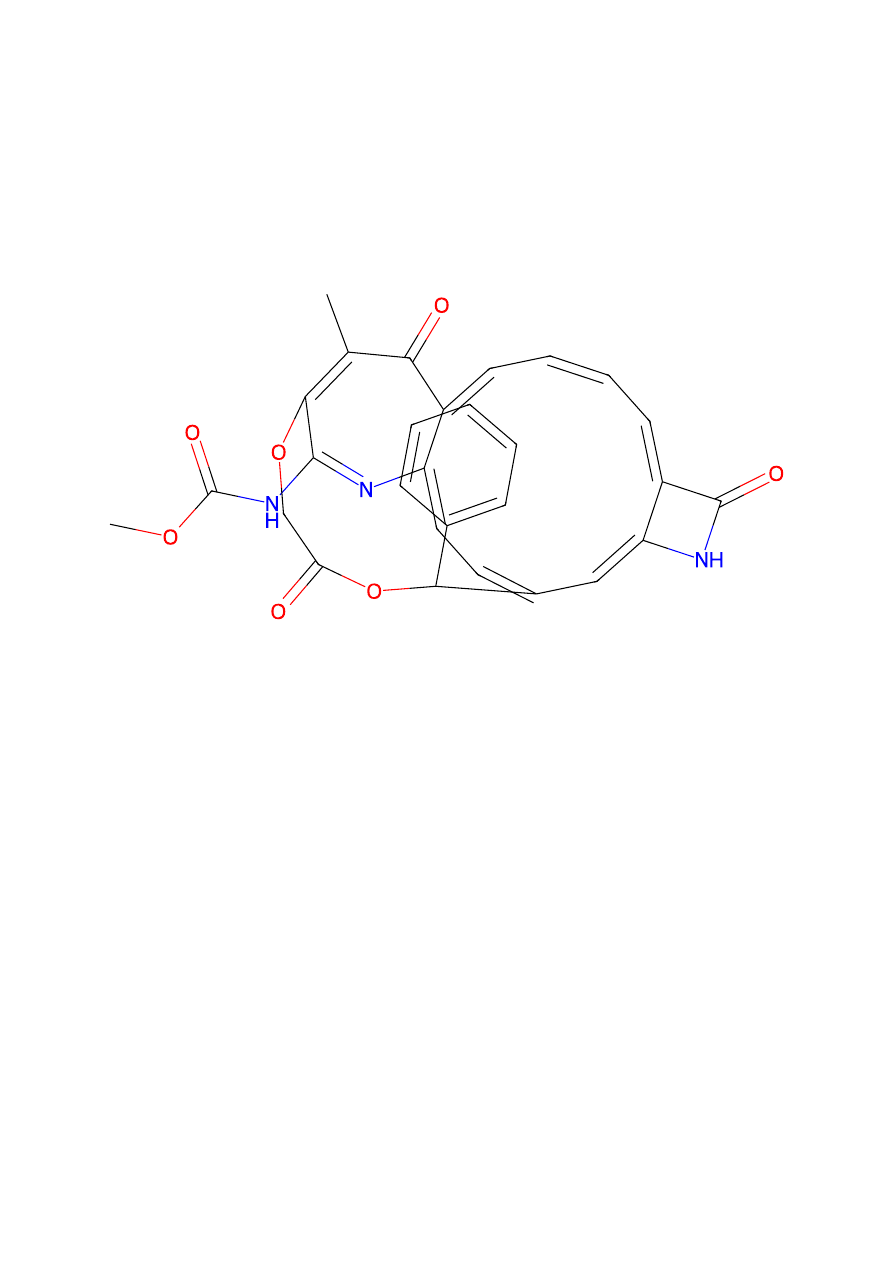
CHAPTER 3 · PROFILE 38/98 · ARCHIVE RECORD 38
38. ARF-HMB-C1 · hydroxymebendazole C-
OH
Recorded rationale and role
Programme comparator / derivative. This entry preserves the
source scaffold and appendage combination for comparison
with its parent and adjacent development records. Original
entry heading: 38. ARF-HMB-C1 · hydroxymebendazole C-OH
menadione glycolate — redox (quinone). Source context is
identified below; the design role is not a measured efficacy
ranking.
Preparation focus in the existing record
Use the carbamate connection as a distinct persistence
hypothesis. Assess compatibility of the parent functional
AGENTIC RESEARCH FACTORY · COMPUTATIONAL COOKBOOK · 183 / 886

groups and identify any cleavage products rather than
assuming release kinetics from the linkage name.
Full deposited SMILES — verbatim
COC(=O)Nc1nc2ccc3cc4[nH]c(=O)c-
4ccccc2c(=O)c(C)c1OCC(=O)OC3c1ccccc1
Canonical isomeric SMILES — RDKit 2026.09.1
COC(=O)Nc1nc2ccc3cc4[nH]c(=O)c-
4ccccc2c(=O)c(C)c1OCC(=O)OC3c1ccccc1
Complete computed profile
Formula
C29H23N3O7
Molecular weight (g/mol)
525.517
Exact mass (Da)
525.1536
Crippen cLogP
4.0242
TPSA (Ų)
136.68
H-bond donors
2
H-bond acceptors
8
Rotatable bonds
2
Rings
5
Formal charge
0
AGENTIC RESEARCH FACTORY · COMPUTATIONAL COOKBOOK · 184 / 886

Heavy atoms
39
Unassigned stereo —
modern
1
Unassigned stereo —
legacy
1
Graph interpretation and liabilities
This graph has 0 O–O bonds, net formal charge +0, and 2
rotatable bonds. The descriptor balance supports comparison
with the adjacent source series rather than assuming a shared
exposure profile. The modern graph analysis leaves 1
stereochemical elements unspecified; material-level
comparisons require that composition to be defined.
Source record
2026-11-04T223635-eyp4-THE_98_Redox_Series_2026-11-
04.pdf, numbered entry 38
Original entry text
38. ARF-HMB-C1 · hydroxymebendazole C-OH
menadione glycolate — redox (quinone)
C29H23N3O7 · MW 525.5 · clogP 4.02 · TPSA 136.7 Ų ·
HBD 2 · RotB 2
COC(=O)Nc1nc2ccc3cc4[nH]c(=O)c-
4ccccc2c(=O)c(C)c1OCC(=O)OC3c1ccccc1
AGENTIC RESEARCH FACTORY · COMPUTATIONAL COOKBOOK · 185 / 886
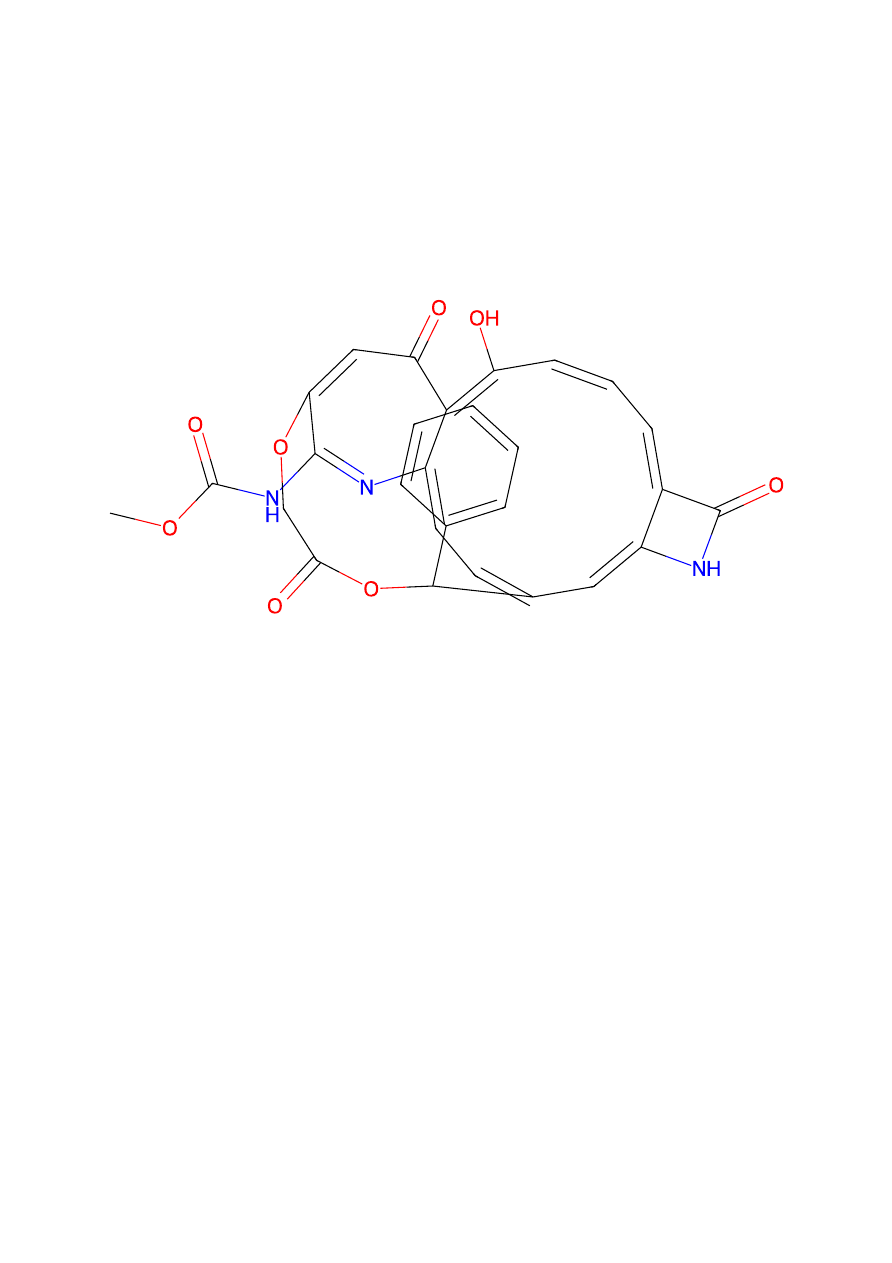
CHAPTER 3 · PROFILE 39/98 · ARCHIVE RECORD 39
39. ARF-HMB-C2 · hydroxymebendazole C-
OH
Recorded rationale and role
Programme comparator / derivative. This entry preserves the
source scaffold and appendage combination for comparison
with its parent and adjacent development records. Original
entry heading: 39. ARF-HMB-C2 · hydroxymebendazole C-OH
plumbagin-type glycolate — redox (hydroxyquinone). Source
context is identified below; the design role is not a measured
efficacy ranking.
Preparation focus in the existing record
Use the carbamate connection as a distinct persistence
hypothesis. Assess compatibility of the parent functional
AGENTIC RESEARCH FACTORY · COMPUTATIONAL COOKBOOK · 186 / 886

groups and identify any cleavage products rather than
assuming release kinetics from the linkage name.
Full deposited SMILES — verbatim
COC(=O)Nc1nc2ccc3cc4[nH]c(=O)c-
4cccc(O)c2c(=O)cc1OCC(=O)OC3c1ccccc1
Canonical isomeric SMILES — RDKit 2026.09.1
COC(=O)Nc1nc2ccc3cc4[nH]c(=O)c-
4cccc(O)c2c(=O)cc1OCC(=O)OC3c1ccccc1
Complete computed profile
Formula
C28H21N3O8
Molecular weight (g/mol)
527.489
Exact mass (Da)
527.132865
Crippen cLogP
3.4214
TPSA (Ų)
156.91
H-bond donors
3
H-bond acceptors
9
Rotatable bonds
2
Rings
5
Formal charge
0
AGENTIC RESEARCH FACTORY · COMPUTATIONAL COOKBOOK · 187 / 886

Heavy atoms
39
Unassigned stereo —
modern
1
Unassigned stereo —
legacy
1
Graph interpretation and liabilities
This graph has 0 O–O bonds, net formal charge +0, and 2
rotatable bonds. Its polar surface makes permeability and
compartmental exposure important comparison variables. The
modern graph analysis leaves 1 stereochemical elements
unspecified; material-level comparisons require that
composition to be defined.
Source record
2026-11-04T223635-eyp4-THE_98_Redox_Series_2026-11-
04.pdf, numbered entry 39
Original entry text
39. ARF-HMB-C2 · hydroxymebendazole C-OH
plumbagin-type glycolate — redox (hydroxyquinone)
C28H21N3O8 · MW 527.5 · clogP 3.42 · TPSA 156.9 Ų ·
HBD 3 · RotB 2
COC(=O)Nc1nc2ccc3cc4[nH]c(=O)c-
4cccc(O)c2c(=O)cc1OCC(=O)OC3c1ccccc1
AGENTIC RESEARCH FACTORY · COMPUTATIONAL COOKBOOK · 188 / 886
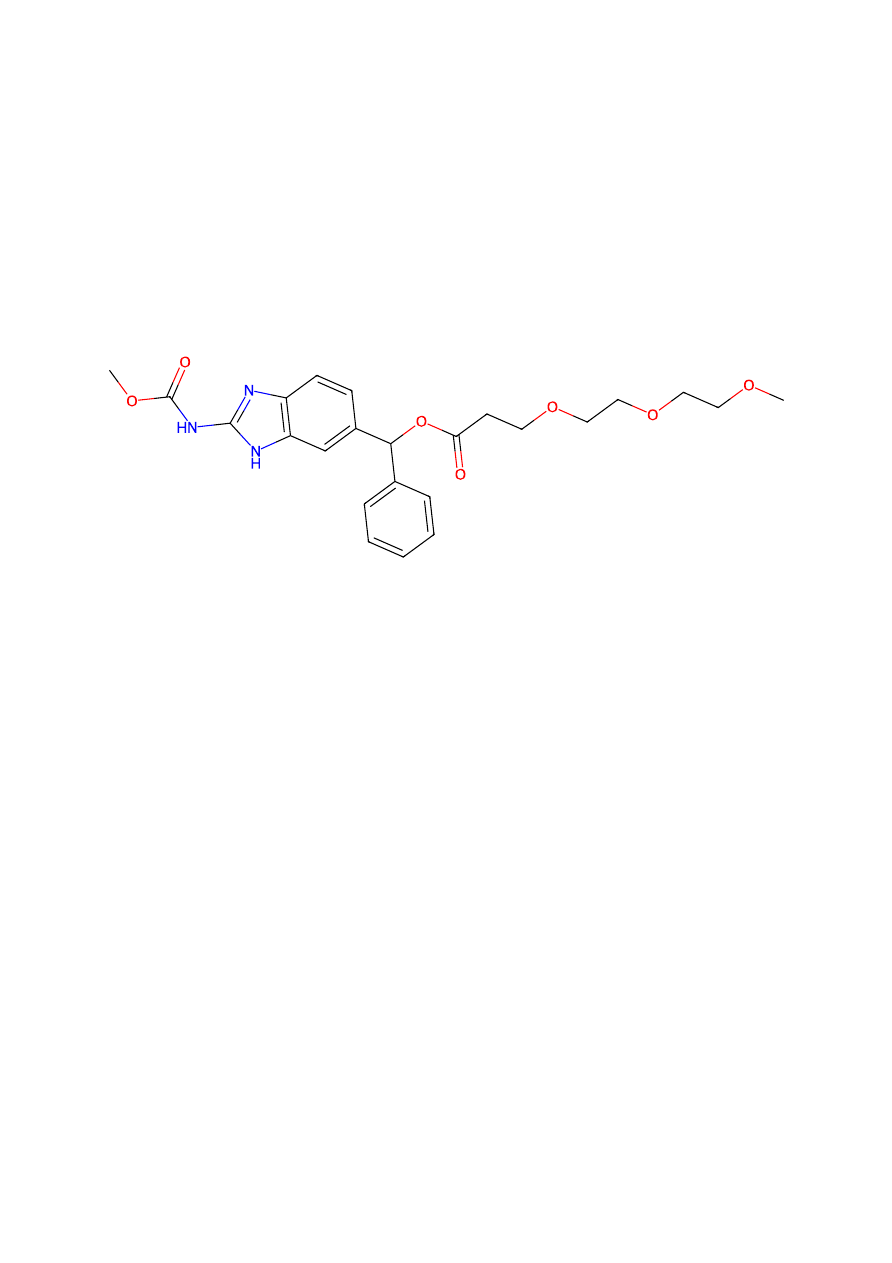
CHAPTER 3 · PROFILE 40/98 · ARCHIVE RECORD 40
40. ARF-HMB-D1 · hydroxymebendazole C-
OH PEG3
Recorded rationale and role
Programme comparator / derivative. This entry preserves the
source scaffold and appendage combination for comparison
with its parent and adjacent development records. Original
entry heading: 40. ARF-HMB-D1 · hydroxymebendazole C-OH
PEG3 ester — delivery. Source context is identified below; the
design role is not a measured efficacy ranking.
Preparation focus in the existing record
Use the carbamate connection as a distinct persistence
hypothesis. Assess compatibility of the parent functional
AGENTIC RESEARCH FACTORY · COMPUTATIONAL COOKBOOK · 189 / 886

groups and identify any cleavage products rather than
assuming release kinetics from the linkage name.
Full deposited SMILES — verbatim
COCCOCCOCCC(=O)OC(c1ccccc1)c1ccc2nc(NC(=O)OC)
[nH]c2c1
Canonical isomeric SMILES — RDKit 2026.09.1
COCCOCCOCCC(=O)OC(c1ccccc1)c1ccc2nc(NC(=O)OC)
[nH]c2c1
Complete computed profile
Formula
C24H29N3O7
Molecular weight (g/mol)
471.51
Exact mass (Da)
471.20055
Crippen cLogP
3.4435
TPSA (Ų)
121.0
H-bond donors
2
H-bond acceptors
8
Rotatable bonds
13
Rings
3
Formal charge
0
AGENTIC RESEARCH FACTORY · COMPUTATIONAL COOKBOOK · 190 / 886

Heavy atoms
34
Unassigned stereo —
modern
1
Unassigned stereo —
legacy
1
Graph interpretation and liabilities
This graph has 0 O–O bonds, net formal charge +0, and 13
rotatable bonds. The descriptor balance supports comparison
with the adjacent source series rather than assuming a shared
exposure profile. The modern graph analysis leaves 1
stereochemical elements unspecified; material-level
comparisons require that composition to be defined.
Source record
2026-11-04T223635-eyp4-THE_98_Redox_Series_2026-11-
04.pdf, numbered entry 40
Original entry text
40. ARF-HMB-D1 · hydroxymebendazole C-OH PEG3
ester — delivery
C24H29N3O7 · MW 471.5 · clogP 3.44 · TPSA 121.0 Ų ·
HBD 2 · RotB 13
COCCOCCOCCC(=O)OC(c1ccccc1)c1ccc2nc(NC(=O)OC)
[nH]c2c1
AGENTIC RESEARCH FACTORY · COMPUTATIONAL COOKBOOK · 191 / 886
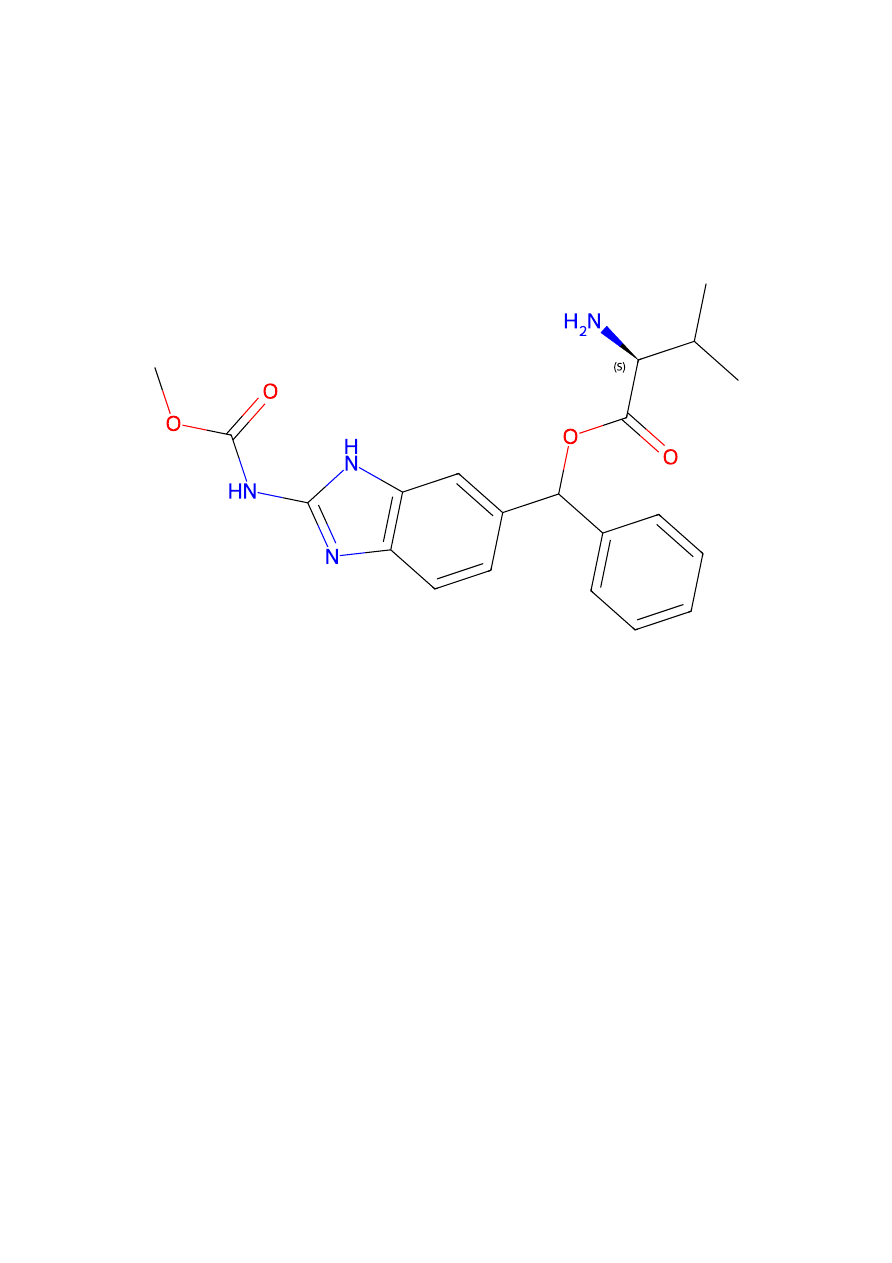
CHAPTER 3 · PROFILE 41/98 · ARCHIVE RECORD 41
41. ARF-HMB-D2 · hydroxymebendazole C-
OH valine
Recorded rationale and role
Programme comparator / derivative. This entry preserves the
source scaffold and appendage combination for comparison
with its parent and adjacent development records. Original
entry heading: 41. ARF-HMB-D2 · hydroxymebendazole C-OH
valine ester — delivery (PepT1). Source context is identified
below; the design role is not a measured efficacy ranking.
Preparation focus in the existing record
Use the carbamate connection as a distinct persistence
hypothesis. Assess compatibility of the parent functional
AGENTIC RESEARCH FACTORY · COMPUTATIONAL COOKBOOK · 192 / 886

groups and identify any cleavage products rather than
assuming release kinetics from the linkage name.
Full deposited SMILES — verbatim
COC(=O)Nc1nc2ccc(C(OC(=O)[C@@H]
(N)C(C)C)c3ccccc3)cc2[nH]1
Canonical isomeric SMILES — RDKit 2026.09.1
COC(=O)Nc1nc2ccc(C(OC(=O)[C@@H]
(N)C(C)C)c3ccccc3)cc2[nH]1
Complete computed profile
Formula
C21H24N4O4
Molecular weight (g/mol)
396.447
Exact mass (Da)
396.179755
Crippen cLogP
3.3571
TPSA (Ų)
119.33
H-bond donors
3
H-bond acceptors
6
Rotatable bonds
6
Rings
3
Formal charge
0
AGENTIC RESEARCH FACTORY · COMPUTATIONAL COOKBOOK · 193 / 886

Heavy atoms
29
Unassigned stereo —
modern
1
Unassigned stereo —
legacy
1
Graph interpretation and liabilities
This graph has 0 O–O bonds, net formal charge +0, and 6
rotatable bonds. The descriptor balance supports comparison
with the adjacent source series rather than assuming a shared
exposure profile. The modern graph analysis leaves 1
stereochemical elements unspecified; material-level
comparisons require that composition to be defined.
Source record
2026-11-04T223635-eyp4-THE_98_Redox_Series_2026-11-
04.pdf, numbered entry 41
Original entry text
41. ARF-HMB-D2 · hydroxymebendazole C-OH valine
ester — delivery (PepT1)
C21H24N4O4 · MW 396.4 · clogP 3.36 · TPSA 119.3 Ų · HBD
3 · RotB 6
COC(=O)Nc1nc2ccc(C(OC(=O)[C@@H]
(N)C(C)C)c3ccccc3)cc2[nH]1
AGENTIC RESEARCH FACTORY · COMPUTATIONAL COOKBOOK · 194 / 886
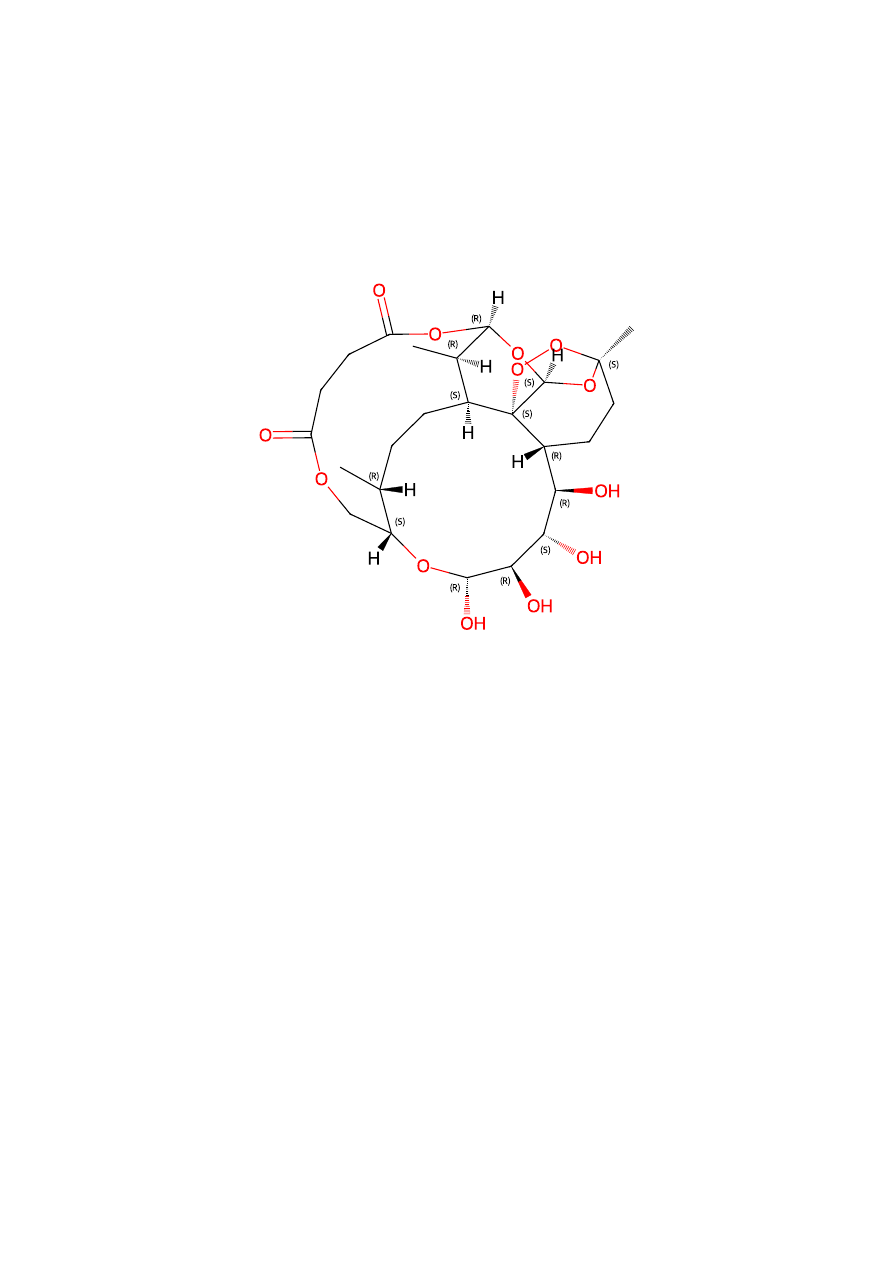
CHAPTER 3 · PROFILE 42/98 · ARCHIVE RECORD 42
42. ARF-DHA-A1 · dihydroartemisinin C10-OH
glucosyl
Recorded rationale and role
Peroxide / iron-activation arm. The O–O-containing graph
provides a chemically distinct redox perturbation to compare
against its parent or peroxide-free counterpart. Original entry
heading: 42. ARF-DHA-A1 · dihydroartemisinin C10-OH
glucosyl succinate — metabolic (GLUT). Source context is
identified below; the design role is not a measured efficacy
ranking.
Preparation focus in the existing record
Peroxide-preserving preparation and analytical work are
central. Compare intact conjugate with any parent-release
AGENTIC RESEARCH FACTORY · COMPUTATIONAL COOKBOOK · 195 / 886

products; identify the peroxide architecture and
stereochemical composition before biological interpretation.
Full deposited SMILES — verbatim
C[C@H]1[C@H]2OC(=O)CCC(=O)OC[C@H]3O[C@@H](O)
[C@H](O)[C@@H](O)[C@H](O)
[C@H]4CC[C@]5(C)OO[C@@]4([C@@H](O2)O5)
[C@H]1CC[C@H]3C
Canonical isomeric SMILES — RDKit 2026.09.1
C[C@H]1[C@H]2OC(=O)CCC(=O)OC[C@H]3O[C@@H](O)
[C@H](O)[C@@H](O)[C@H](O)
[C@H]4CC[C@]5(C)OO[C@@]4([C@@H](O2)O5)
[C@H]1CC[C@H]3C
Complete computed profile
Formula
C25H38O13
Molecular weight (g/mol)
546.566
Exact mass (Da)
546.231241
Crippen cLogP
-0.1391
TPSA (Ų)
179.67
H-bond donors
4
H-bond acceptors
13
Rotatable bonds
0
AGENTIC RESEARCH FACTORY · COMPUTATIONAL COOKBOOK · 196 / 886

Rings
6
Formal charge
0
Heavy atoms
38
Unassigned stereo —
modern
0
Unassigned stereo —
legacy
0
Graph interpretation and liabilities
This graph has 1 O–O bond, net formal charge +0, and 0
rotatable bonds. Its polar surface makes permeability and
compartmental exposure important comparison variables. No
unspecified stereochemical element was detected by the
stated modern analysis of this graph.
Source record
2026-11-04T223635-eyp4-THE_98_Redox_Series_2026-11-
04.pdf, numbered entry 42
Original entry text
42. ARF-DHA-A1 · dihydroartemisinin C10-OH glucosyl
succinate — metabolic (GLUT)
C25H38O13 · MW 546.6 · clogP -0.14 · TPSA 179.7 Ų · HBD
4 · RotB 0
C[C@H]1[C@H]2OC(=O)CCC(=O)OC[C@H]3O[C@@H](O)
AGENTIC RESEARCH FACTORY · COMPUTATIONAL COOKBOOK · 197 / 886

[C@H](O)[C@@H](O)[C@H](O)
[C@H]4CC[C@]5(C)OO[C@@]4([C@@H]
(O2)O5)[C@H]1CC[C@H]3C
AGENTIC RESEARCH FACTORY · COMPUTATIONAL COOKBOOK · 198 / 886
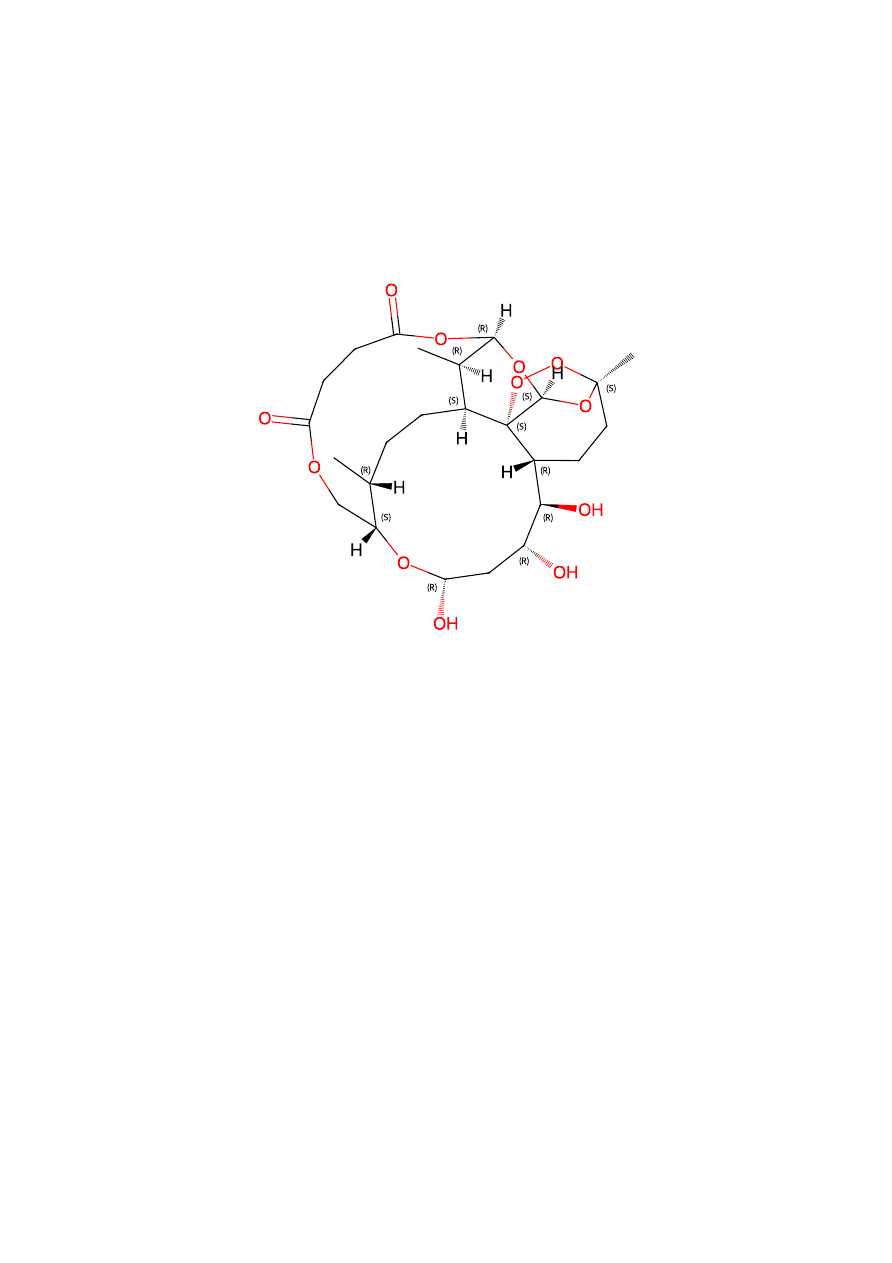
CHAPTER 3 · PROFILE 43/98 · ARCHIVE RECORD 43
43. ARF-DHA-A2 · dihydroartemisinin C10-OH
2-
Recorded rationale and role
Peroxide / iron-activation arm. The O–O-containing graph
provides a chemically distinct redox perturbation to compare
against its parent or peroxide-free counterpart. Original entry
heading: 43. ARF-DHA-A2 · dihydroartemisinin C10-OH 2-
deoxyglucosyl succinate — metabolic (trapped). Source
context is identified below; the design role is not a measured
efficacy ranking.
Preparation focus in the existing record
Peroxide-preserving preparation and analytical work are
central. Compare intact conjugate with any parent-release
AGENTIC RESEARCH FACTORY · COMPUTATIONAL COOKBOOK · 199 / 886

products; identify the peroxide architecture and
stereochemical composition before biological interpretation.
Full deposited SMILES — verbatim
C[C@H]1[C@H]2OC(=O)CCC(=O)OC[C@H]3O[C@@H]
(O)C[C@@H](O)[C@H](O)
[C@H]4CC[C@]5(C)OO[C@@]4([C@@H](O2)O5)
[C@H]1CC[C@H]3C
Canonical isomeric SMILES — RDKit 2026.09.1
C[C@H]1[C@H]2OC(=O)CCC(=O)OC[C@H]3O[C@@H]
(O)C[C@@H](O)[C@H](O)
[C@H]4CC[C@]5(C)OO[C@@]4([C@@H](O2)O5)
[C@H]1CC[C@H]3C
Complete computed profile
Formula
C25H38O12
Molecular weight (g/mol)
530.567
Exact mass (Da)
530.236327
Crippen cLogP
0.8901
TPSA (Ų)
159.44
H-bond donors
3
H-bond acceptors
12
Rotatable bonds
0
AGENTIC RESEARCH FACTORY · COMPUTATIONAL COOKBOOK · 200 / 886

Rings
6
Formal charge
0
Heavy atoms
37
Unassigned stereo —
modern
0
Unassigned stereo —
legacy
0
Graph interpretation and liabilities
This graph has 1 O–O bond, net formal charge +0, and 0
rotatable bonds. Its polar surface makes permeability and
compartmental exposure important comparison variables. No
unspecified stereochemical element was detected by the
stated modern analysis of this graph.
Source record
2026-11-04T223635-eyp4-THE_98_Redox_Series_2026-11-
04.pdf, numbered entry 43
Original entry text
43. ARF-DHA-A2 · dihydroartemisinin C10-OH 2-
deoxyglucosyl succinate — metabolic (trapped)
C25H38O12 · MW 530.6 · clogP 0.89 · TPSA 159.4 Ų · HBD
3 · RotB 0
C[C@H]1[C@H]2OC(=O)CCC(=O)OC[C@H]3O[C@@H]
AGENTIC RESEARCH FACTORY · COMPUTATIONAL COOKBOOK · 201 / 886

(O)C[C@@H](O)[C@H](O)
[C@H]4CC[C@]5(C)OO[C@@]4([C@@H](O2)O5)
[C@H]1CC[C@H]3C
AGENTIC RESEARCH FACTORY · COMPUTATIONAL COOKBOOK · 202 / 886
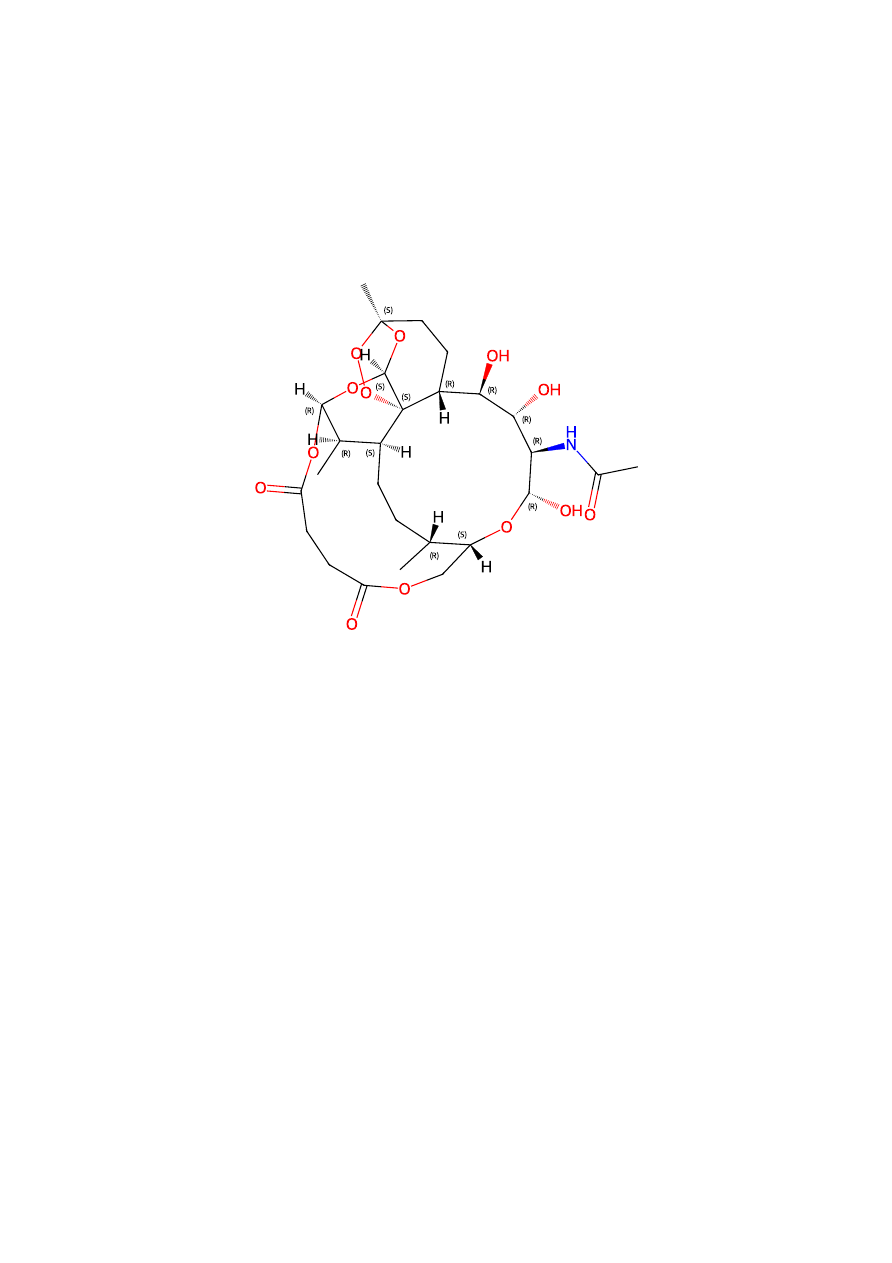
CHAPTER 3 · PROFILE 44/98 · ARCHIVE RECORD 44
44. ARF-DHA-A3 · dihydroartemisinin C10-OH
GlcNAc
Recorded rationale and role
Peroxide / iron-activation arm. The O–O-containing graph
provides a chemically distinct redox perturbation to compare
against its parent or peroxide-free counterpart. Original entry
heading: 44. ARF-DHA-A3 · dihydroartemisinin C10-OH
GlcNAc succinate — metabolic (hexosamine). Source context
is identified below; the design role is not a measured efficacy
ranking.
Preparation focus in the existing record
Peroxide-preserving preparation and analytical work are
central. Compare intact conjugate with any parent-release
AGENTIC RESEARCH FACTORY · COMPUTATIONAL COOKBOOK · 203 / 886

products; identify the peroxide architecture and
stereochemical composition before biological interpretation.
Full deposited SMILES — verbatim
CC(=O)N[C@@H]1[C@@H](O)[C@H](O)
[C@H]2CC[C@]3(C)OO[C@]24[C@@H]
(O[C@@H]2OC(=O)CCC(=O)OC[C@@H](O[C@H]1O)
[C@H](C)CC[C@H]4[C@H]2C)O3
Canonical isomeric SMILES — RDKit 2026.09.1
CC(=O)N[C@@H]1[C@@H](O)[C@H](O)
[C@H]2CC[C@]3(C)OO[C@]24[C@@H]
(O[C@@H]2OC(=O)CCC(=O)OC[C@@H](O[C@H]1O)
[C@H](C)CC[C@H]4[C@H]2C)O3
Complete computed profile
Formula
C27H41NO13
Molecular weight (g/mol)
587.619
Exact mass (Da)
587.25779
Crippen cLogP
0.0047
TPSA (Ų)
188.54
H-bond donors
4
H-bond acceptors
13
Rotatable bonds
1
AGENTIC RESEARCH FACTORY · COMPUTATIONAL COOKBOOK · 204 / 886

Rings
6
Formal charge
0
Heavy atoms
41
Unassigned stereo —
modern
0
Unassigned stereo —
legacy
0
Graph interpretation and liabilities
This graph has 1 O–O bond, net formal charge +0, and 1
rotatable bonds. Its polar surface makes permeability and
compartmental exposure important comparison variables. No
unspecified stereochemical element was detected by the
stated modern analysis of this graph.
Source record
2026-11-04T223635-eyp4-THE_98_Redox_Series_2026-11-
04.pdf, numbered entry 44
Original entry text
44. ARF-DHA-A3 · dihydroartemisinin C10-OH GlcNAc
succinate — metabolic (hexosamine)
C27H41NO13 · MW 587.6 · clogP 0.00 · TPSA 188.5 Ų ·
HBD 4 · RotB 1
CC(=O)N[C@@H]1[C@@H](O)[C@H](O)
AGENTIC RESEARCH FACTORY · COMPUTATIONAL COOKBOOK · 205 / 886

[C@H]2CC[C@]3(C)OO[C@]24[C@@H]
(O[C@@H]2OC(=O)CCC(=O)OC[C@@H]
(O[C@H]1O)[C@H](C)CC[C@H]4[C@H]2C)O3
AGENTIC RESEARCH FACTORY · COMPUTATIONAL COOKBOOK · 206 / 886
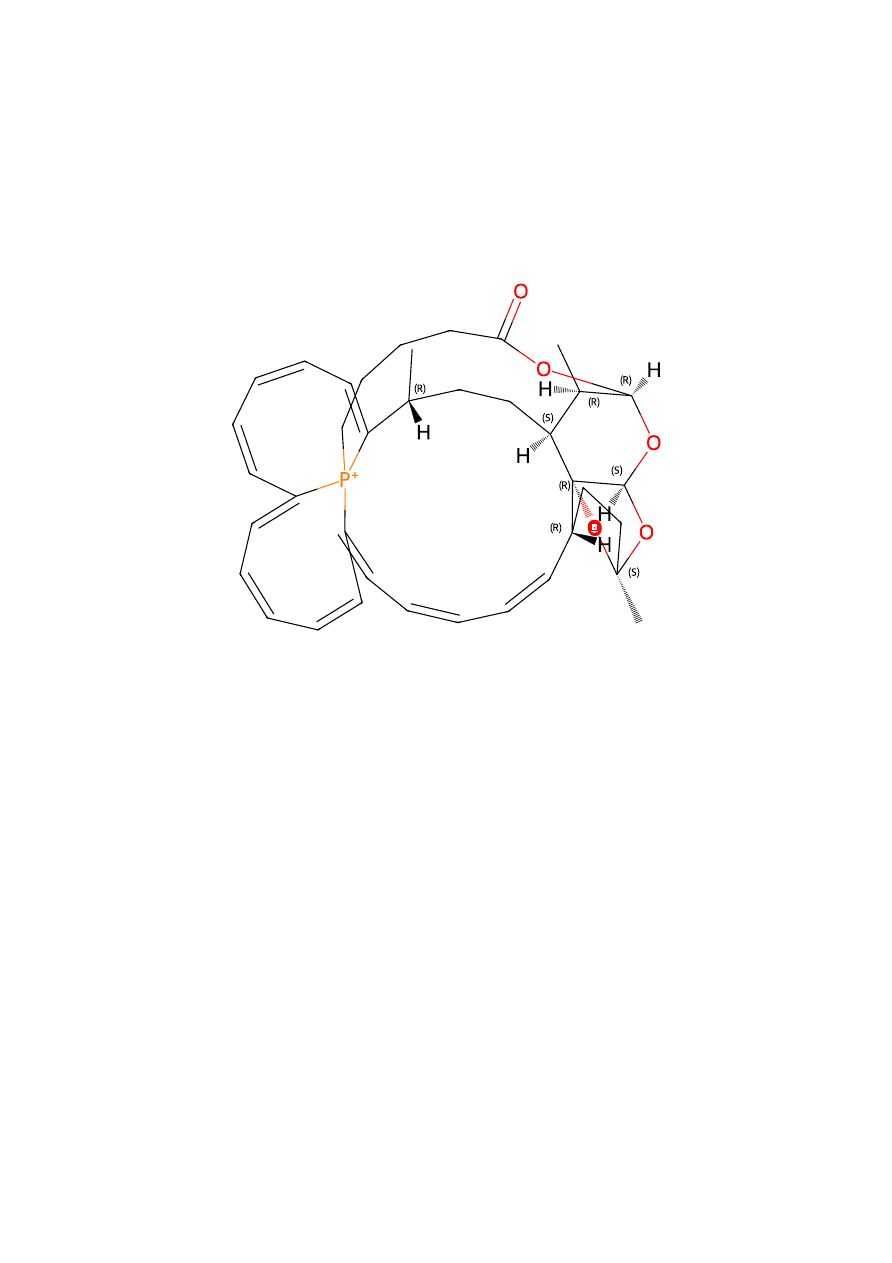
CHAPTER 3 · PROFILE 45/98 · ARCHIVE RECORD 45
45. ARF-DHA-B1 · dihydroartemisinin C10-OH
TPP
Recorded rationale and role
Distribution and linkage branch. This entry compares the
appended head group and attachment against the B1
incumbent and parent moxidectin. Original entry heading: 45.
ARF-DHA-B1 · dihydroartemisinin C10-OH TPP pentanoate —
voltage. Source context is identified below; the design role is
not a measured efficacy ranking.
Preparation focus in the existing record
Peroxide-preserving preparation and analytical work are
central. Compare intact conjugate with any parent-release
AGENTIC RESEARCH FACTORY · COMPUTATIONAL COOKBOOK · 207 / 886

products; identify the peroxide architecture and
stereochemical composition before biological interpretation.
Full deposited SMILES — verbatim
C[C@H]1[C@H]2OC(=O)CCCC[P+]34C5=CC=CC=C[C@H]6
CC[C@]7(C)OO[C@@]6([C@@H](O2)O7)
[C@H]1CC[C@@H](C)C3=CC=CC=CC4=CC=CC=C5
Canonical isomeric SMILES — RDKit 2026.09.1
C[C@H]1[C@H]2OC(=O)CCCC[P+]34C5=CC=CC=C[C@H]6
CC[C@]7(C)OO[C@@]6([C@@H](O2)O7)
[C@H]1CC[C@@H](C)C3=CC=CC=CC4=CC=CC=C5
Complete computed profile
Formula
C38H46O6P+
Molecular weight (g/mol)
629.754
Exact mass (Da)
629.302652
Crippen cLogP
8.9552
TPSA (Ų)
63.22
H-bond donors
0
H-bond acceptors
6
Rotatable bonds
0
Rings
8
AGENTIC RESEARCH FACTORY · COMPUTATIONAL COOKBOOK · 208 / 886

Formal charge
1
Heavy atoms
45
Unassigned stereo —
modern
10
Unassigned stereo —
legacy
1
Graph interpretation and liabilities
This graph has 1 O–O bond, net formal charge +1, and 0
rotatable bonds. Its high calculated lipophilicity makes free
exposure, adsorption and formulation important comparison
variables. The modern graph analysis leaves 10
stereochemical elements unspecified; material-level
comparisons require that composition to be defined.
Source record
2026-11-04T223635-eyp4-THE_98_Redox_Series_2026-11-
04.pdf, numbered entry 45
Original entry text
45. ARF-DHA-B1 · dihydroartemisinin C10-OH TPP
pentanoate — voltage
C38H46O6P+ · MW 629.8 · clogP 8.96 · TPSA 63.2 Ų · HBD
0 · RotB 0
C[C@H]1[C@H]2OC(=O)CCCC[P+]34C5=CC=CC=C[C@H]6
CC[C@]7(C)OO[C@@]6([C@@H](O2)O7)
AGENTIC RESEARCH FACTORY · COMPUTATIONAL COOKBOOK · 209 / 886

[C@H]1CC[C@@H]
(C)C3=CC=CC=CC4=CC=CC=C5
AGENTIC RESEARCH FACTORY · COMPUTATIONAL COOKBOOK · 210 / 886
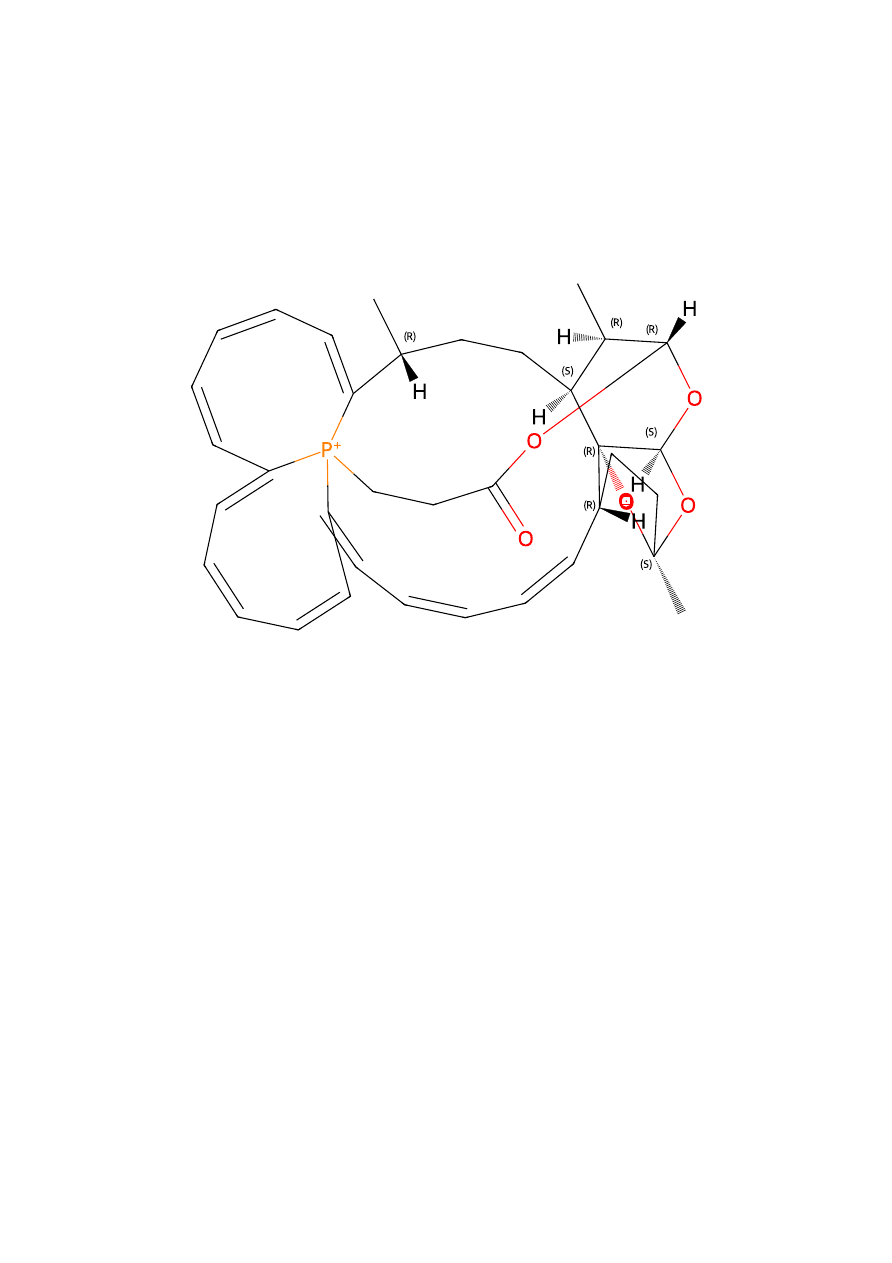
CHAPTER 3 · PROFILE 46/98 · ARCHIVE RECORD 46
46. ARF-DHA-B2 · dihydroartemisinin C10-OH
TPP
Recorded rationale and role
Peroxide / iron-activation arm. The O–O-containing graph
provides a chemically distinct redox perturbation to compare
against its parent or peroxide-free counterpart. Original entry
heading: 46. ARF-DHA-B2 · dihydroartemisinin C10-OH TPP
propanoate — voltage (short tether). Source context is
identified below; the design role is not a measured efficacy
ranking.
Preparation focus in the existing record
Peroxide-preserving preparation and analytical work are
central. Compare intact conjugate with any parent-release
AGENTIC RESEARCH FACTORY · COMPUTATIONAL COOKBOOK · 211 / 886

products; identify the peroxide architecture and
stereochemical composition before biological interpretation.
Full deposited SMILES — verbatim
C[C@H]1[C@H]2OC(=O)CC[P+]34C5=CC=CC=C[C@H]6CC[
C@]7(C)OO[C@@]6([C@@H](O2)O7)[C@H]1CC[C@@H]
(C)C3=CC=CC=CC4=CC=CC=C5
Canonical isomeric SMILES — RDKit 2026.09.1
C[C@H]1[C@H]2OC(=O)CC[P+]34C5=CC=CC=C[C@H]6CC[
C@]7(C)OO[C@@]6([C@@H](O2)O7)[C@H]1CC[C@@H]
(C)C3=CC=CC=CC4=CC=CC=C5
Complete computed profile
Formula
C36H42O6P+
Molecular weight (g/mol)
601.7
Exact mass (Da)
601.271352
Crippen cLogP
8.175
TPSA (Ų)
63.22
H-bond donors
0
H-bond acceptors
6
Rotatable bonds
0
Rings
8
AGENTIC RESEARCH FACTORY · COMPUTATIONAL COOKBOOK · 212 / 886

Formal charge
1
Heavy atoms
43
Unassigned stereo —
modern
10
Unassigned stereo —
legacy
1
Graph interpretation and liabilities
This graph has 1 O–O bond, net formal charge +1, and 0
rotatable bonds. Its high calculated lipophilicity makes free
exposure, adsorption and formulation important comparison
variables. The modern graph analysis leaves 10
stereochemical elements unspecified; material-level
comparisons require that composition to be defined.
Source record
2026-11-04T223635-eyp4-THE_98_Redox_Series_2026-11-
04.pdf, numbered entry 46
Original entry text
46. ARF-DHA-B2 · dihydroartemisinin C10-OH TPP
propanoate — voltage (short tether)
C36H42O6P+ · MW 601.7 · clogP 8.18 · TPSA 63.2 Ų · HBD
0 · RotB 0
C[C@H]1[C@H]2OC(=O)CC[P+]34C5=CC=CC=C[C@H]6CC[
AGENTIC RESEARCH FACTORY · COMPUTATIONAL COOKBOOK · 213 / 886

C@]7(C)OO[C@@]6([C@@H](O2)O7)[C@H]1CC[C@@H]
(C)C3=CC=CC=CC4=CC=CC=C5
AGENTIC RESEARCH FACTORY · COMPUTATIONAL COOKBOOK · 214 / 886
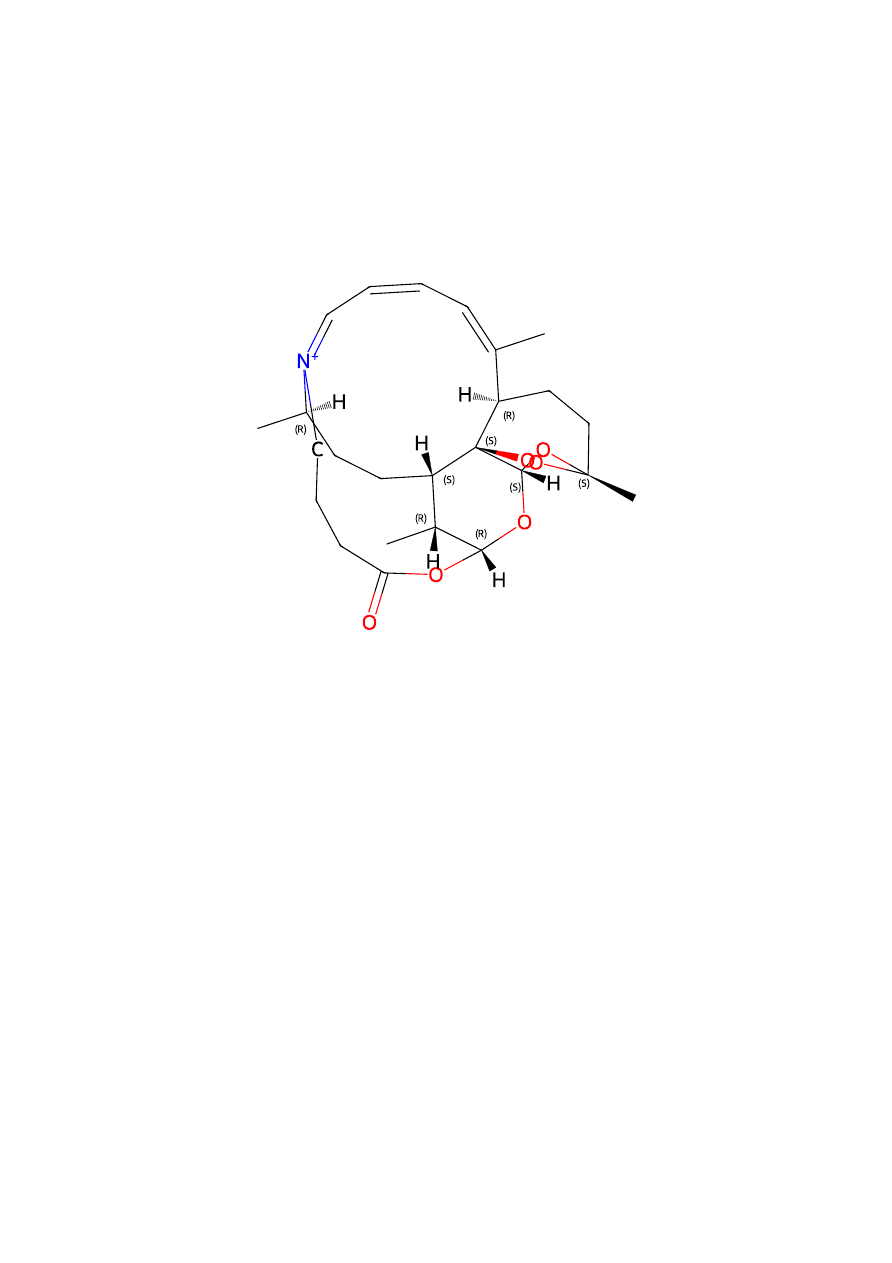
CHAPTER 3 · PROFILE 47/98 · ARCHIVE RECORD 47
47. ARF-DHA-B3 · dihydroartemisinin C10-OH
N-
Recorded rationale and role
Peroxide / iron-activation arm. The O–O-containing graph
provides a chemically distinct redox perturbation to compare
against its parent or peroxide-free counterpart. Original entry
heading: 47. ARF-DHA-B3 · dihydroartemisinin C10-OH N-
methylpyridinium butanoate — voltage (low MW. Source
context is identified below; the design role is not a measured
efficacy ranking.
Preparation focus in the existing record
Peroxide-preserving preparation and analytical work are
central. Compare intact conjugate with any parent-release
AGENTIC RESEARCH FACTORY · COMPUTATIONAL COOKBOOK · 215 / 886

products; identify the peroxide architecture and
stereochemical composition before biological interpretation.
Full deposited SMILES — verbatim
CC1=CC=CC=
[N+]2CCCC(=O)O[C@H]3O[C@H]4O[C@]5(C)CC[C@H]1[C
@@]4(OO5)[C@@H](CC[C@H]2C)[C@H]3C
Canonical isomeric SMILES — RDKit 2026.09.1
CC1=CC=CC=
[N+]2CCCC(=O)O[C@H]3O[C@H]4O[C@]5(C)CC[C@H]1[C
@@]4(OO5)[C@@H](CC[C@H]2C)[C@H]3C
Complete computed profile
Formula
C25H36NO6+
Molecular weight (g/mol)
446.564
Exact mass (Da)
446.253714
Crippen cLogP
3.8696
TPSA (Ų)
66.23
H-bond donors
0
H-bond acceptors
6
Rotatable bonds
0
Rings
6
AGENTIC RESEARCH FACTORY · COMPUTATIONAL COOKBOOK · 216 / 886

Formal charge
1
Heavy atoms
32
Unassigned stereo —
modern
3
Unassigned stereo —
legacy
0
Graph interpretation and liabilities
This graph has 1 O–O bond, net formal charge +1, and 0
rotatable bonds. The descriptor balance supports comparison
with the adjacent source series rather than assuming a shared
exposure profile. The modern graph analysis leaves 3
stereochemical elements unspecified; material-level
comparisons require that composition to be defined.
Source record
2026-11-04T223635-eyp4-THE_98_Redox_Series_2026-11-
04.pdf, numbered entry 47
Original entry text
47. ARF-DHA-B3 · dihydroartemisinin C10-OH N-
methylpyridinium butanoate — voltage (low MW
cation)
C25H36NO6+ · MW 446.6 · clogP 3.87 · TPSA 66.2 Ų · HBD
0 · RotB 0
AGENTIC RESEARCH FACTORY · COMPUTATIONAL COOKBOOK · 217 / 886

CC1=CC=CC=
[N+]2CCCC(=O)O[C@H]3O[C@H]4O[C@]5(C)CC[C@H]1[C
@@]4(OO5)[C@@H](CC[C@H]2C)[C@H]3C
AGENTIC RESEARCH FACTORY · COMPUTATIONAL COOKBOOK · 218 / 886
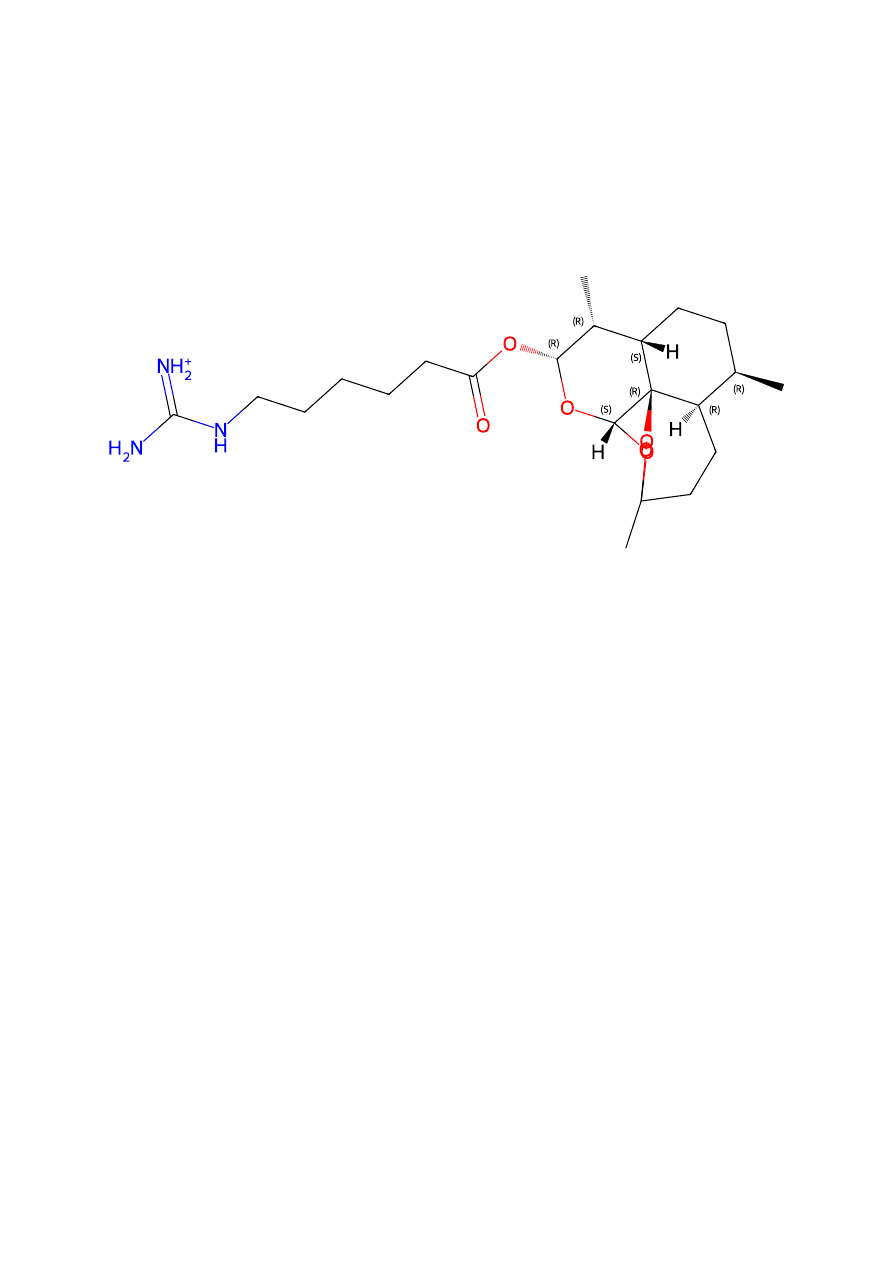
CHAPTER 3 · PROFILE 48/98 · ARCHIVE RECORD 48
48. ARF-DHA-B4 · dihydroartemisinin C10-OH
Recorded rationale and role
Peroxide / iron-activation arm. The O–O-containing graph
provides a chemically distinct redox perturbation to compare
against its parent or peroxide-free counterpart. Original entry
heading: 48. ARF-DHA-B4 · dihydroartemisinin C10-OH
guanidinium hexanoate — voltage / penetrating. Source
context is identified below; the design role is not a measured
efficacy ranking.
Preparation focus in the existing record
Peroxide-preserving preparation and analytical work are
central. Compare intact conjugate with any parent-release
AGENTIC RESEARCH FACTORY · COMPUTATIONAL COOKBOOK · 219 / 886

products; identify the peroxide architecture and
stereochemical composition before biological interpretation.
Full deposited SMILES — verbatim
C[C@H]1[C@@H](OC(=O)CCCCCNC(N)=
[NH2+])O[C@H]2OC3(C)CC[C@@H]4[C@H]
(C)CC[C@@H]1[C@@]24OO3
Canonical isomeric SMILES — RDKit 2026.09.1
C[C@H]1[C@@H](OC(=O)CCCCCNC(N)=
[NH2+])O[C@H]2OC3(C)CC[C@@H]4[C@H]
(C)CC[C@@H]1[C@@]24OO3
Complete computed profile
Formula
C22H38N3O6+
Molecular weight (g/mol)
440.561
Exact mass (Da)
440.275512
Crippen cLogP
0.9614
TPSA (Ų)
126.86
H-bond donors
3
H-bond acceptors
6
Rotatable bonds
7
Rings
5
AGENTIC RESEARCH FACTORY · COMPUTATIONAL COOKBOOK · 220 / 886

Formal charge
1
Heavy atoms
31
Unassigned stereo —
modern
1
Unassigned stereo —
legacy
1
Graph interpretation and liabilities
This graph has 1 O–O bond, net formal charge +1, and 7
rotatable bonds. The descriptor balance supports comparison
with the adjacent source series rather than assuming a shared
exposure profile. The modern graph analysis leaves 1
stereochemical elements unspecified; material-level
comparisons require that composition to be defined.
Source record
2026-11-04T223635-eyp4-THE_98_Redox_Series_2026-11-
04.pdf, numbered entry 48
Original entry text
48. ARF-DHA-B4 · dihydroartemisinin C10-OH
guanidinium hexanoate — voltage / penetrating
C22H38N3O6+ · MW 440.6 · clogP 0.96 · TPSA 126.9 Ų ·
HBD 3 · RotB 7
C[C@H]1[C@@H](OC(=O)CCCCCNC(N)=
AGENTIC RESEARCH FACTORY · COMPUTATIONAL COOKBOOK · 221 / 886

[NH2+])O[C@H]2OC3(C)CC[C@@H]4[C@H]
(C)CC[C@@H]1[C@@]24OO3
AGENTIC RESEARCH FACTORY · COMPUTATIONAL COOKBOOK · 222 / 886
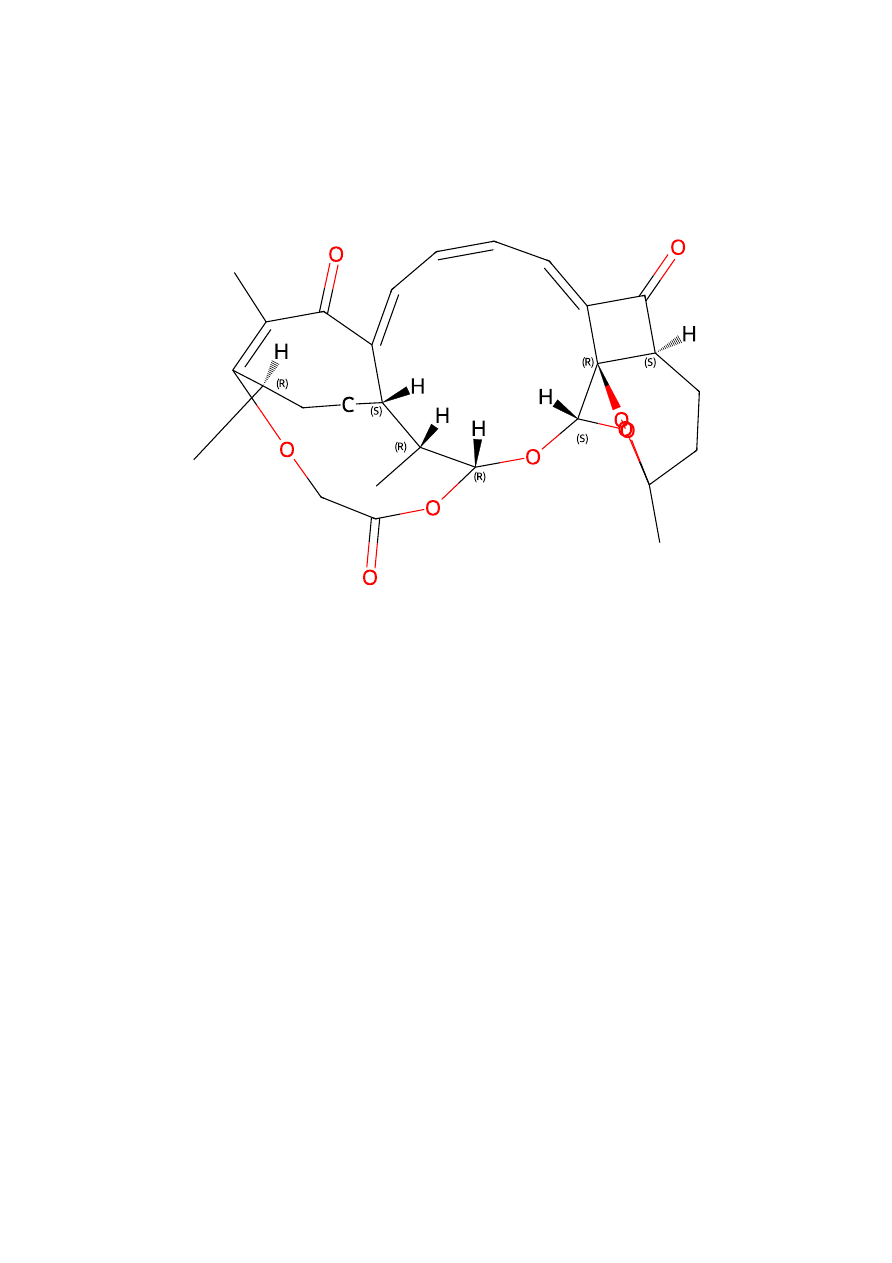
CHAPTER 3 · PROFILE 49/98 · ARCHIVE RECORD 49
49. ARF-DHA-C1 · dihydroartemisinin C10-OH
Recorded rationale and role
Peroxide / iron-activation arm. The O–O-containing graph
provides a chemically distinct redox perturbation to compare
against its parent or peroxide-free counterpart. Original entry
heading: 49. ARF-DHA-C1 · dihydroartemisinin C10-OH
menadione glycolate — redox (quinone). Source context is
identified below; the design role is not a measured efficacy
ranking.
Preparation focus in the existing record
Peroxide-preserving preparation and analytical work are
central. Compare intact conjugate with any parent-release
AGENTIC RESEARCH FACTORY · COMPUTATIONAL COOKBOOK · 223 / 886

products; identify the peroxide architecture and
stereochemical composition before biological interpretation.
Full deposited SMILES — verbatim
CC1=C2OCC(=O)O[C@H]3O[C@H]4OC5(C)CC[C@@H]6C(
=O)C(=CC=CC=C(C1=O)[C@@H](CC[C@H]2C)[C@H]3C)
[C@@]46OO5
Canonical isomeric SMILES — RDKit 2026.09.1
CC1=C2OCC(=O)O[C@H]3O[C@H]4OC5(C)CC[C@@H]6C(
=O)C(=CC=CC=C(C1=O)[C@@H](CC[C@H]2C)[C@H]3C)
[C@@]46OO5
Complete computed profile
Formula
C28H32O9
Molecular weight (g/mol)
512.555
Exact mass (Da)
512.204633
Crippen cLogP
3.6026
TPSA (Ų)
106.59
H-bond donors
0
H-bond acceptors
9
Rotatable bonds
0
Rings
8
AGENTIC RESEARCH FACTORY · COMPUTATIONAL COOKBOOK · 224 / 886

Formal charge
0
Heavy atoms
37
Unassigned stereo —
modern
5
Unassigned stereo —
legacy
1
Graph interpretation and liabilities
This graph has 1 O–O bond, net formal charge +0, and 0
rotatable bonds. The descriptor balance supports comparison
with the adjacent source series rather than assuming a shared
exposure profile. The modern graph analysis leaves 5
stereochemical elements unspecified; material-level
comparisons require that composition to be defined.
Source record
2026-11-04T223635-eyp4-THE_98_Redox_Series_2026-11-
04.pdf, numbered entry 49
Original entry text
49. ARF-DHA-C1 · dihydroartemisinin C10-OH
menadione glycolate — redox (quinone)
C28H32O9 · MW 512.6 · clogP 3.60 · TPSA 106.6 Ų · HBD 0
· RotB 0
CC1=C2OCC(=O)O[C@H]3O[C@H]4OC5(C)CC[C@@H]6C(
AGENTIC RESEARCH FACTORY · COMPUTATIONAL COOKBOOK · 225 / 886

=O)C(=CC=CC=C(C1=O)[C@@H](CC[C@H]2C)[C@H]3C)
[C@@]46OO5
AGENTIC RESEARCH FACTORY · COMPUTATIONAL COOKBOOK · 226 / 886
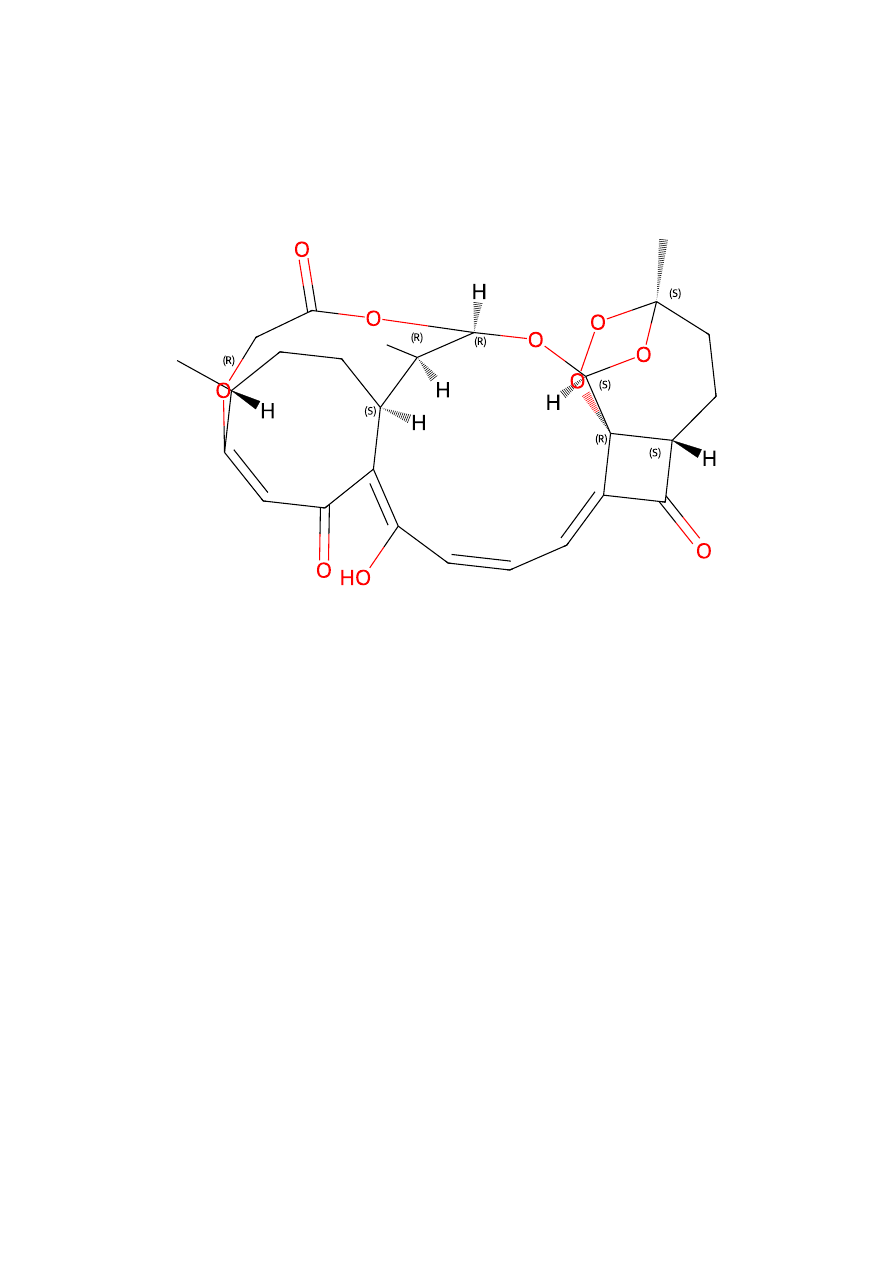
CHAPTER 3 · PROFILE 50/98 · ARCHIVE RECORD 50
50. ARF-DHA-C2 · dihydroartemisinin C10-OH
Recorded rationale and role
Peroxide / iron-activation arm. The O–O-containing graph
provides a chemically distinct redox perturbation to compare
against its parent or peroxide-free counterpart. Original entry
heading: 50. ARF-DHA-C2 · dihydroartemisinin C10-OH
plumbagin-type glycolate — redox (hydroxyquinone). Source
context is identified below; the design role is not a measured
efficacy ranking.
Preparation focus in the existing record
Peroxide-preserving preparation and analytical work are
central. Compare intact conjugate with any parent-release
AGENTIC RESEARCH FACTORY · COMPUTATIONAL COOKBOOK · 227 / 886

products; identify the peroxide architecture and
stereochemical composition before biological interpretation.
Full deposited SMILES — verbatim
C[C@H]1[C@H]2OC(=O)COC3=CC(=O)C(=C(O)C=CC=C4C(
=O)[C@H]5CC[C@]6(C)OO[C@@]45[C@@H](O2)O6)
[C@H]1CC[C@H]3C
Canonical isomeric SMILES — RDKit 2026.09.1
C[C@H]1[C@H]2OC(=O)COC3=CC(=O)C(=C(O)C=CC=C4C(
=O)[C@H]5CC[C@]6(C)OO[C@@]45[C@@H](O2)O6)
[C@H]1CC[C@H]3C
Complete computed profile
Formula
C27H30O10
Molecular weight (g/mol)
514.527
Exact mass (Da)
514.183897
Crippen cLogP
3.0982
TPSA (Ų)
126.82
H-bond donors
1
H-bond acceptors
10
Rotatable bonds
0
Rings
8
AGENTIC RESEARCH FACTORY · COMPUTATIONAL COOKBOOK · 228 / 886

Formal charge
0
Heavy atoms
37
Unassigned stereo —
modern
4
Unassigned stereo —
legacy
0
Graph interpretation and liabilities
This graph has 1 O–O bond, net formal charge +0, and 0
rotatable bonds. The descriptor balance supports comparison
with the adjacent source series rather than assuming a shared
exposure profile. The modern graph analysis leaves 4
stereochemical elements unspecified; material-level
comparisons require that composition to be defined.
Source record
2026-11-04T223635-eyp4-THE_98_Redox_Series_2026-11-
04.pdf, numbered entry 50
Original entry text
50. ARF-DHA-C2 · dihydroartemisinin C10-OH
plumbagin-type glycolate — redox (hydroxyquinone)
C27H30O10 · MW 514.5 · clogP 3.10 · TPSA 126.8 Ų · HBD
1 · RotB 0
C[C@H]1[C@H]2OC(=O)COC3=CC(=O)C(=C(O)C=CC=C4C(
AGENTIC RESEARCH FACTORY · COMPUTATIONAL COOKBOOK · 229 / 886

=O)[C@H]5CC[C@]6(C)OO[C@@]45[C@@H](O2)O6)
[C@H]1CC[C@H]3C
AGENTIC RESEARCH FACTORY · COMPUTATIONAL COOKBOOK · 230 / 886
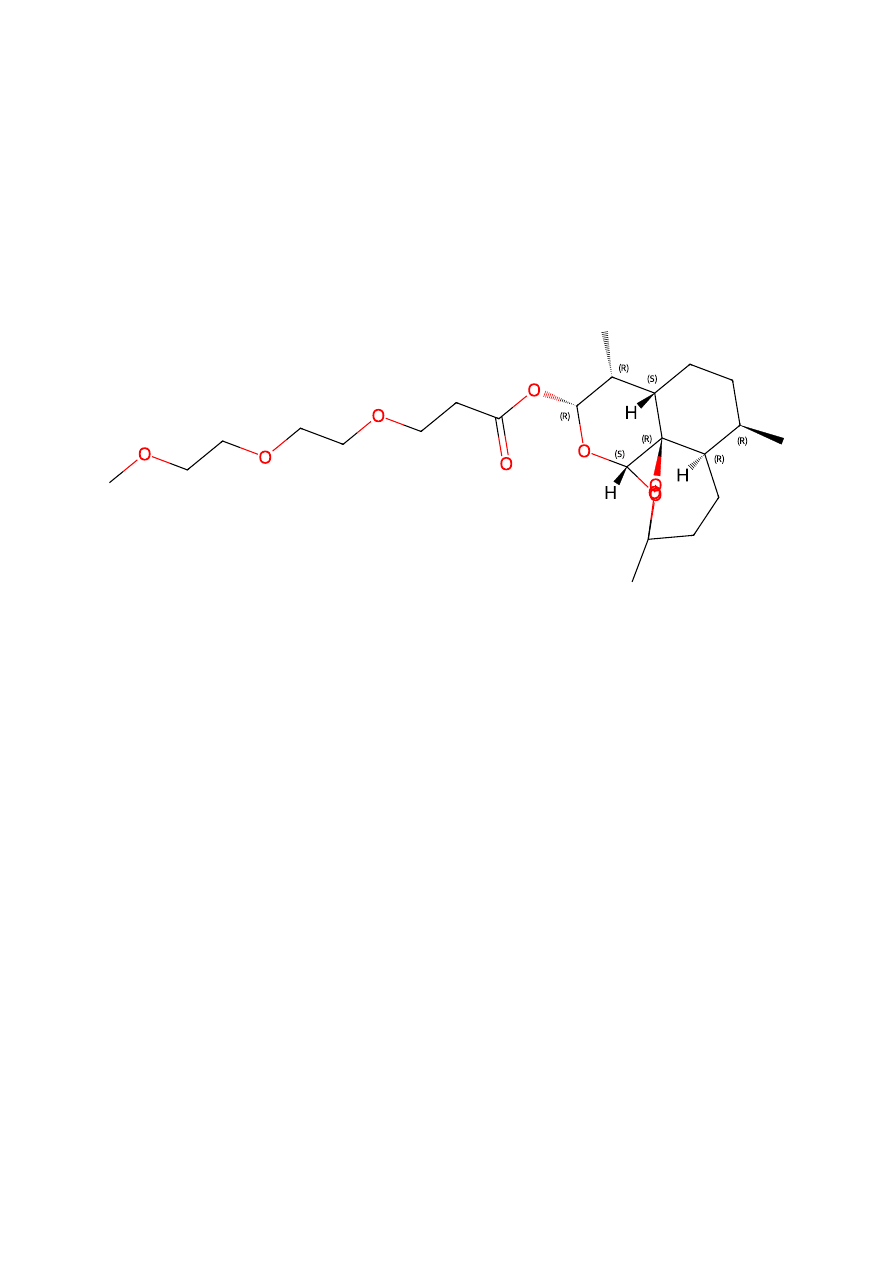
CHAPTER 3 · PROFILE 51/98 · ARCHIVE RECORD 51
51. ARF-DHA-D1 · dihydroartemisinin C10-OH
PEG3
Recorded rationale and role
Peroxide / iron-activation arm. The O–O-containing graph
provides a chemically distinct redox perturbation to compare
against its parent or peroxide-free counterpart. Original entry
heading: 51. ARF-DHA-D1 · dihydroartemisinin C10-OH PEG3
ester — delivery. Source context is identified below; the design
role is not a measured efficacy ranking.
Preparation focus in the existing record
Peroxide-preserving preparation and analytical work are
central. Compare intact conjugate with any parent-release
AGENTIC RESEARCH FACTORY · COMPUTATIONAL COOKBOOK · 231 / 886

products; identify the peroxide architecture and
stereochemical composition before biological interpretation.
Full deposited SMILES — verbatim
COCCOCCOCCC(=O)O[C@H]1O[C@H]2OC3(C)CC[C@@H
]4[C@H](C)CC[C@@H]([C@H]1C)[C@@]24OO3
Canonical isomeric SMILES — RDKit 2026.09.1
COCCOCCOCCC(=O)O[C@H]1O[C@H]2OC3(C)CC[C@@H
]4[C@H](C)CC[C@@H]([C@H]1C)[C@@]24OO3
Complete computed profile
Formula
C23H38O9
Molecular weight (g/mol)
458.548
Exact mass (Da)
458.251583
Crippen cLogP
2.8073
TPSA (Ų)
90.91
H-bond donors
0
H-bond acceptors
9
Rotatable bonds
10
Rings
5
Formal charge
0
AGENTIC RESEARCH FACTORY · COMPUTATIONAL COOKBOOK · 232 / 886

Heavy atoms
32
Unassigned stereo —
modern
1
Unassigned stereo —
legacy
1
Graph interpretation and liabilities
This graph has 1 O–O bond, net formal charge +0, and 10
rotatable bonds. The descriptor balance supports comparison
with the adjacent source series rather than assuming a shared
exposure profile. The modern graph analysis leaves 1
stereochemical elements unspecified; material-level
comparisons require that composition to be defined.
Source record
2026-11-04T223635-eyp4-THE_98_Redox_Series_2026-11-
04.pdf, numbered entry 51
Original entry text
51. ARF-DHA-D1 · dihydroartemisinin C10-OH PEG3
ester — delivery
C23H38O9 · MW 458.5 · clogP 2.81 · TPSA 90.9 Ų · HBD 0 ·
RotB 10
COCCOCCOCCC(=O)O[C@H]1O[C@H]2OC3(C)CC[C@@H
]4[C@H](C)CC[C@@H]([C@H]1C)[C@@]24OO3
AGENTIC RESEARCH FACTORY · COMPUTATIONAL COOKBOOK · 233 / 886
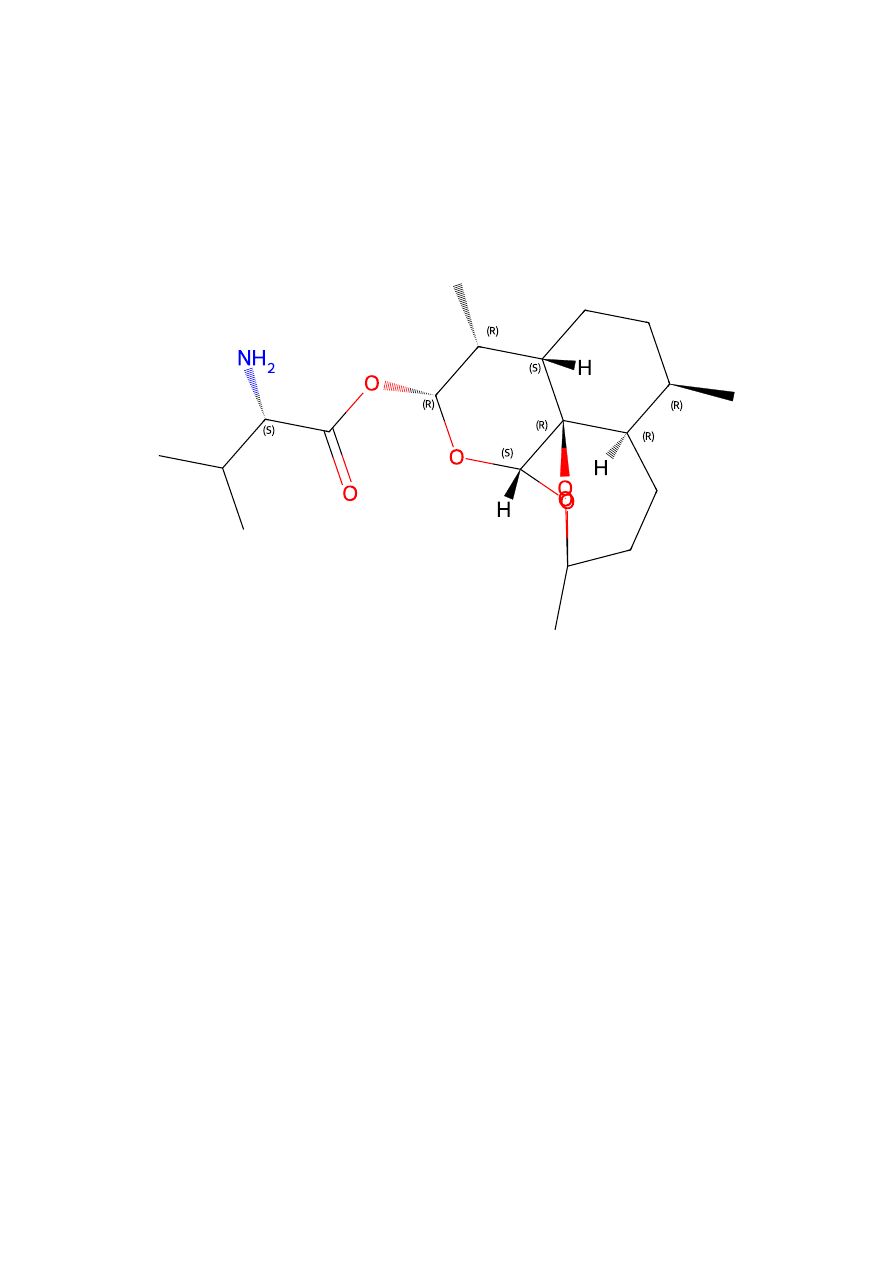
CHAPTER 3 · PROFILE 52/98 · ARCHIVE RECORD 52
52. ARF-DHA-D2 · dihydroartemisinin C10-OH
valine
Recorded rationale and role
Peroxide / iron-activation arm. The O–O-containing graph
provides a chemically distinct redox perturbation to compare
against its parent or peroxide-free counterpart. Original entry
heading: 52. ARF-DHA-D2 · dihydroartemisinin C10-OH valine
ester — delivery (PepT1). Source context is identified below;
the design role is not a measured efficacy ranking.
Preparation focus in the existing record
Peroxide-preserving preparation and analytical work are
central. Compare intact conjugate with any parent-release
AGENTIC RESEARCH FACTORY · COMPUTATIONAL COOKBOOK · 234 / 886

products; identify the peroxide architecture and
stereochemical composition before biological interpretation.
Full deposited SMILES — verbatim
CC(C)[C@H]
(N)C(=O)O[C@H]1O[C@H]2OC3(C)CC[C@@H]4[C@H]
(C)CC[C@@H]([C@H]1C)[C@@]24OO3
Canonical isomeric SMILES — RDKit 2026.09.1
CC(C)[C@H]
(N)C(=O)O[C@H]1O[C@H]2OC3(C)CC[C@@H]4[C@H]
(C)CC[C@@H]([C@H]1C)[C@@]24OO3
Complete computed profile
Formula
C20H33NO6
Molecular weight (g/mol)
383.485
Exact mass (Da)
383.230788
Crippen cLogP
2.7209
TPSA (Ų)
89.24
H-bond donors
1
H-bond acceptors
7
Rotatable bonds
3
Rings
5
AGENTIC RESEARCH FACTORY · COMPUTATIONAL COOKBOOK · 235 / 886

Formal charge
0
Heavy atoms
27
Unassigned stereo —
modern
1
Unassigned stereo —
legacy
1
Graph interpretation and liabilities
This graph has 1 O–O bond, net formal charge +0, and 3
rotatable bonds. The descriptor balance supports comparison
with the adjacent source series rather than assuming a shared
exposure profile. The modern graph analysis leaves 1
stereochemical elements unspecified; material-level
comparisons require that composition to be defined.
Source record
2026-11-04T223635-eyp4-THE_98_Redox_Series_2026-11-
04.pdf, numbered entry 52
Original entry text
52. ARF-DHA-D2 · dihydroartemisinin C10-OH valine
ester — delivery (PepT1)
C20H33NO6 · MW 383.5 · clogP 2.72 · TPSA 89.2 Ų · HBD 1
· RotB 3
CC(C)[C@H]
AGENTIC RESEARCH FACTORY · COMPUTATIONAL COOKBOOK · 236 / 886

(N)C(=O)O[C@H]1O[C@H]2OC3(C)CC[C@@H]4[C@H]
(C)CC[C@@H]([C@H]1C)[C@@]24OO3
AGENTIC RESEARCH FACTORY · COMPUTATIONAL COOKBOOK · 237 / 886
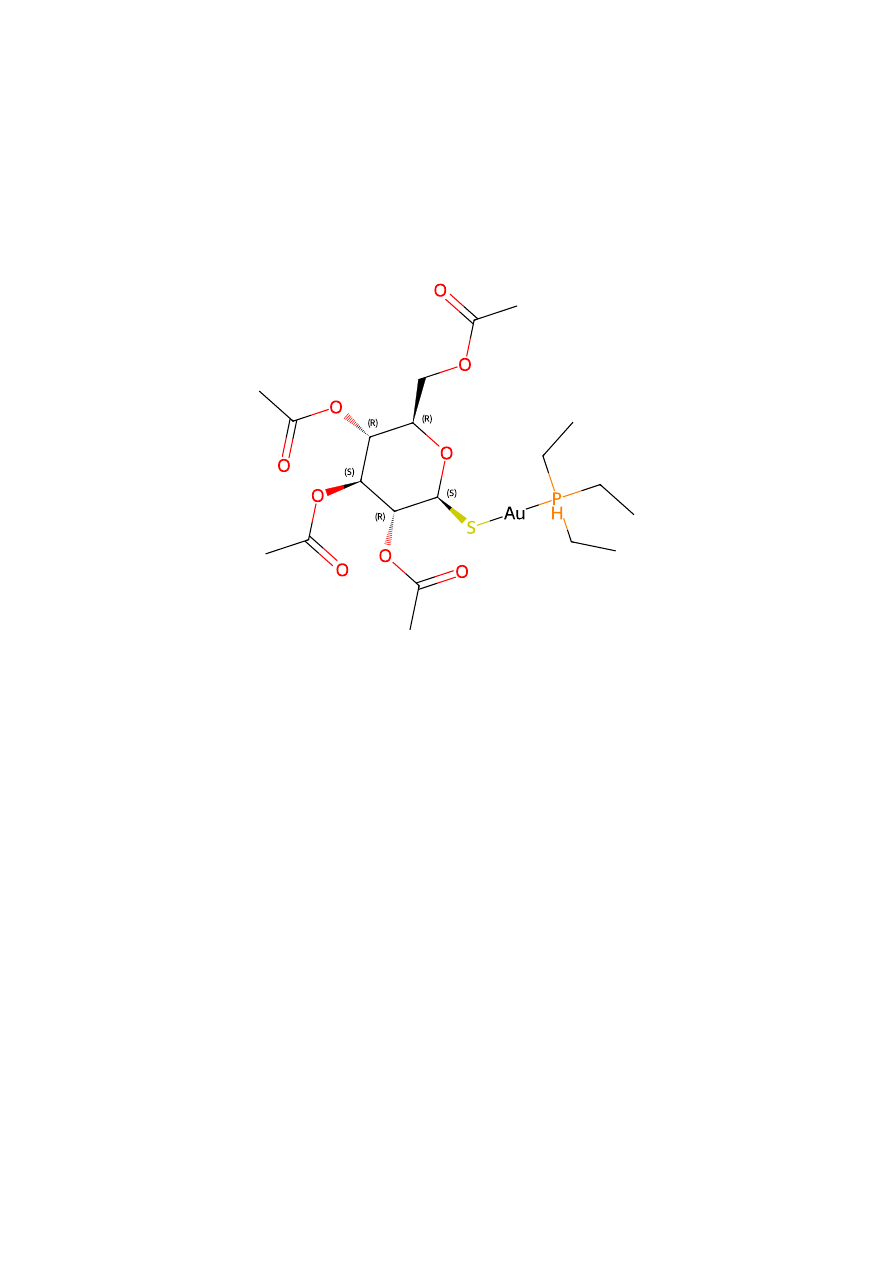
CHAPTER 3 · PROFILE 53/98 · ARCHIVE RECORD 53
53. ARF-AUR-1 · auranofin (reference,
approved) —
Recorded rationale and role
Gold/redox comparison arm. The encoded metal-containing
agent provides a contrast with organic peroxide and sulfur-
containing branches; material identity includes the
coordination representation. Original entry heading: 53. ARF-
AUR-1 · auranofin (reference, approved) — thioredoxin
reductase / Au-Se. Source context is identified below; the
design role is not a measured efficacy ranking.
Preparation focus in the existing record
The preparation concept is governed by the source scaffold,
available attachment handle and functional-group
AGENTIC RESEARCH FACTORY · COMPUTATIONAL COOKBOOK · 238 / 886

compatibility. Establish connectivity, stereochemical
composition and relevant stability before comparing biological
responses.
Full deposited SMILES — verbatim
CC[PH](CC)(CC)[Au][S][C@@H]1O[C@H](COC(C)=O)
[C@@H](OC(C)=O)[C@H](OC(C)=O)[C@H]1OC(C)=O
Canonical isomeric SMILES — RDKit 2026.09.1
CC[PH](CC)(CC)[Au][S][C@@H]1O[C@H](COC(C)=O)
[C@@H](OC(C)=O)[C@H](OC(C)=O)[C@H]1OC(C)=O
Complete computed profile
Formula
C20H35AuO9PS
Molecular weight (g/mol)
679.499
Exact mass (Da)
679.140509
Crippen cLogP
2.5248
TPSA (Ų)
114.43
H-bond donors
0
H-bond acceptors
10
Rotatable bonds
11
Rings
1
AGENTIC RESEARCH FACTORY · COMPUTATIONAL COOKBOOK · 239 / 886

Formal charge
0
Heavy atoms
32
Unassigned stereo —
modern
1
Unassigned stereo —
legacy
0
Graph interpretation and liabilities
This graph has 0 O–O bonds, net formal charge +0, and 11
rotatable bonds. The descriptor balance supports comparison
with the adjacent source series rather than assuming a shared
exposure profile. The modern graph analysis leaves 1
stereochemical elements unspecified; material-level
comparisons require that composition to be defined.
Source record
2026-11-04T223635-eyp4-THE_98_Redox_Series_2026-11-
04.pdf, numbered entry 53
Original entry text
53. ARF-AUR-1 · auranofin (reference, approved) —
thioredoxin reductase / Au-Se
C20H35AuO9PS · MW 679.5 · clogP 2.52 · TPSA 114.4 Ų ·
HBD 0 · RotB 11
CC[PH](CC)(CC)[Au][S][C@@H]1O[C@H](COC(C)=O)
[C@@H](OC(C)=O)[C@H](OC(C)=O)[C@H]1OC(C)=O
AGENTIC RESEARCH FACTORY · COMPUTATIONAL COOKBOOK · 240 / 886
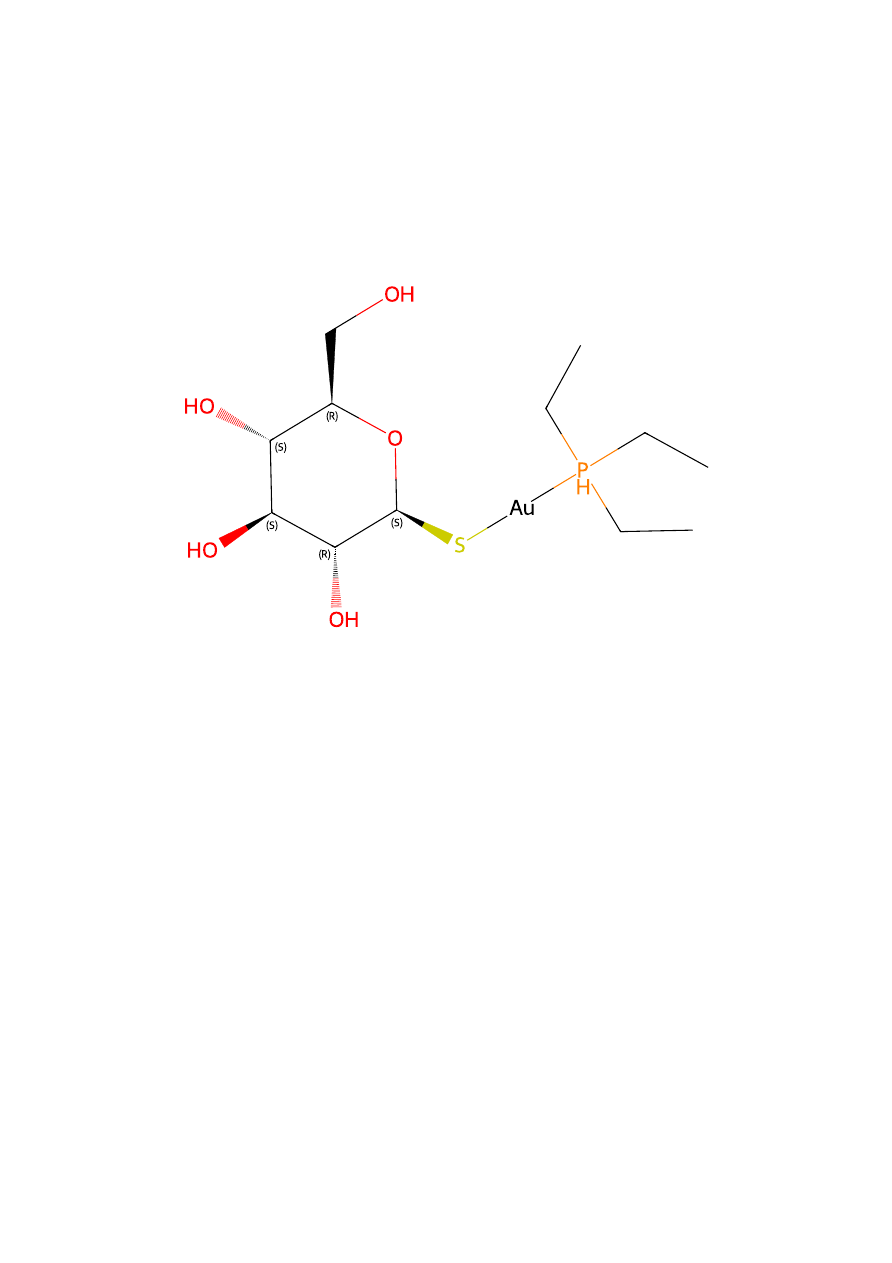
CHAPTER 3 · PROFILE 54/98 · ARCHIVE RECORD 54
54. ARF-AUR-2 · deacetyl-auranofin (free
thioglucose)
Recorded rationale and role
Gold/redox comparison arm. The encoded metal-containing
agent provides a contrast with organic peroxide and sulfur-
containing branches; material identity includes the
coordination representation. Original entry heading: 54. ARF-
AUR-2 · deacetyl-auranofin (free thioglucose) — TrxR, higher
polarity. Source context is identified below; the design role is
not a measured efficacy ranking.
Preparation focus in the existing record
The preparation concept is governed by the source scaffold,
available attachment handle and functional-group
AGENTIC RESEARCH FACTORY · COMPUTATIONAL COOKBOOK · 241 / 886

compatibility. Establish connectivity, stereochemical
composition and relevant stability before comparing biological
responses.
Full deposited SMILES — verbatim
CC[PH](CC)(CC)[Au][S][C@@H]1O[C@H](CO)[C@@H](O)
[C@H](O)[C@H]1O
Canonical isomeric SMILES — RDKit 2026.09.1
CC[PH](CC)(CC)[Au][S][C@@H]1O[C@H](CO)[C@@H](O)
[C@H](O)[C@H]1O
Complete computed profile
Formula
C12H27AuO5PS
Molecular weight (g/mol)
511.351
Exact mass (Da)
511.09825
Crippen cLogP
0.2416
TPSA (Ų)
90.15
H-bond donors
4
H-bond acceptors
6
Rotatable bonds
7
Rings
1
AGENTIC RESEARCH FACTORY · COMPUTATIONAL COOKBOOK · 242 / 886

Formal charge
0
Heavy atoms
20
Unassigned stereo —
modern
1
Unassigned stereo —
legacy
0
Graph interpretation and liabilities
This graph has 0 O–O bonds, net formal charge +0, and 7
rotatable bonds. The descriptor balance supports comparison
with the adjacent source series rather than assuming a shared
exposure profile. The modern graph analysis leaves 1
stereochemical elements unspecified; material-level
comparisons require that composition to be defined.
Source record
2026-11-04T223635-eyp4-THE_98_Redox_Series_2026-11-
04.pdf, numbered entry 54
Original entry text
54. ARF-AUR-2 · deacetyl-auranofin (free thioglucose)
— TrxR, higher polarity
C12H27AuO5PS · MW 511.4 · clogP 0.24 · TPSA 90.2 Ų ·
HBD 4 · RotB 7
CC[PH](CC)(CC)[Au][S][C@@H]1O[C@H](CO)[C@@H](O)
AGENTIC RESEARCH FACTORY · COMPUTATIONAL COOKBOOK · 243 / 886

[C@H](O)[C@H]1O
AGENTIC RESEARCH FACTORY · COMPUTATIONAL COOKBOOK · 244 / 886
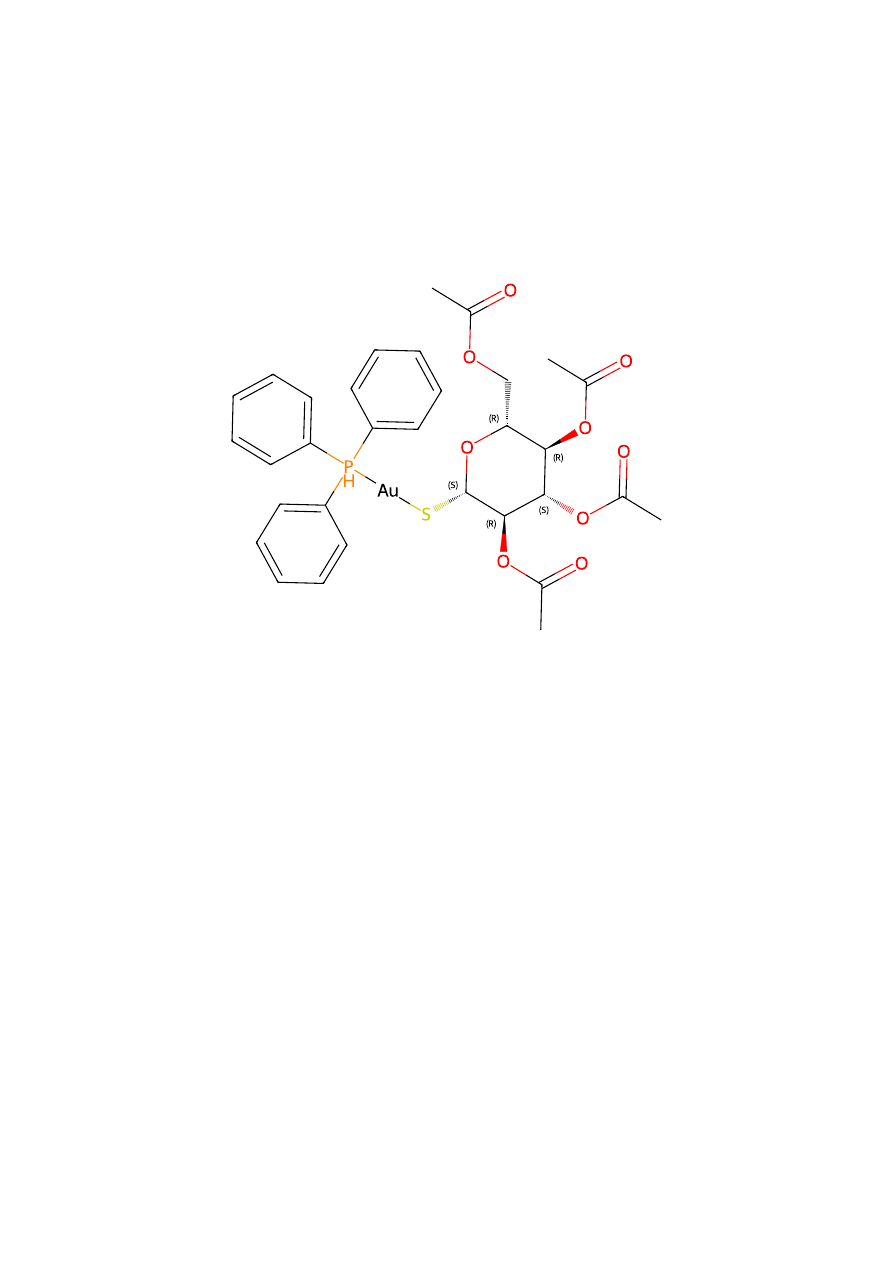
CHAPTER 3 · PROFILE 55/98 · ARCHIVE RECORD 55
55. ARF-AUR-3 · auranofin
triphenylphosphine
Recorded rationale and role
Gold/redox comparison arm. The encoded metal-containing
agent provides a contrast with organic peroxide and sulfur-
containing branches; material identity includes the
coordination representation. Original entry heading: 55. ARF-
AUR-3 · auranofin triphenylphosphine analogue — TrxR +
lipophilic cation character. Source context is identified below;
the design role is not a measured efficacy ranking.
Preparation focus in the existing record
The preparation concept is governed by the source scaffold,
available attachment handle and functional-group
AGENTIC RESEARCH FACTORY · COMPUTATIONAL COOKBOOK · 245 / 886

compatibility. Establish connectivity, stereochemical
composition and relevant stability before comparing biological
responses.
Full deposited SMILES — verbatim
CC(=O)OC[C@H]1O[C@@H]([S][Au][PH](c2ccccc2)
(c2ccccc2)c2ccccc2)[C@H](OC(C)=O)[C@@H](OC(C)=O)
[C@@H]1OC(C)=O
Canonical isomeric SMILES — RDKit 2026.09.1
CC(=O)OC[C@H]1O[C@@H]([S][Au][PH](c2ccccc2)
(c2ccccc2)c2ccccc2)[C@H](OC(C)=O)[C@@H](OC(C)=O)
[C@@H]1OC(C)=O
Complete computed profile
Formula
C32H35AuO9PS
Molecular weight (g/mol)
823.631
Exact mass (Da)
823.140509
Crippen cLogP
3.4416
TPSA (Ų)
114.43
H-bond donors
0
H-bond acceptors
10
Rotatable bonds
11
AGENTIC RESEARCH FACTORY · COMPUTATIONAL COOKBOOK · 246 / 886

Rings
4
Formal charge
0
Heavy atoms
44
Unassigned stereo —
modern
1
Unassigned stereo —
legacy
0
Graph interpretation and liabilities
This graph has 0 O–O bonds, net formal charge +0, and 11
rotatable bonds. The descriptor balance supports comparison
with the adjacent source series rather than assuming a shared
exposure profile. The modern graph analysis leaves 1
stereochemical elements unspecified; material-level
comparisons require that composition to be defined.
Source record
2026-11-04T223635-eyp4-THE_98_Redox_Series_2026-11-
04.pdf, numbered entry 55
Original entry text
55. ARF-AUR-3 · auranofin triphenylphosphine
analogue — TrxR + lipophilic cation character
C32H35AuO9PS · MW 823.6 · clogP 3.44 · TPSA 114.4 Ų ·
HBD 0 · RotB 11
AGENTIC RESEARCH FACTORY · COMPUTATIONAL COOKBOOK · 247 / 886

CC(=O)OC[C@H]1O[C@@H]([S][Au][PH](c2ccccc2)
(c2ccccc2)c2ccccc2)[C@H](OC(C)=O)[C@@H](OC(C)=O)
[C@@H]1OC(C)=O
AGENTIC RESEARCH FACTORY · COMPUTATIONAL COOKBOOK · 248 / 886
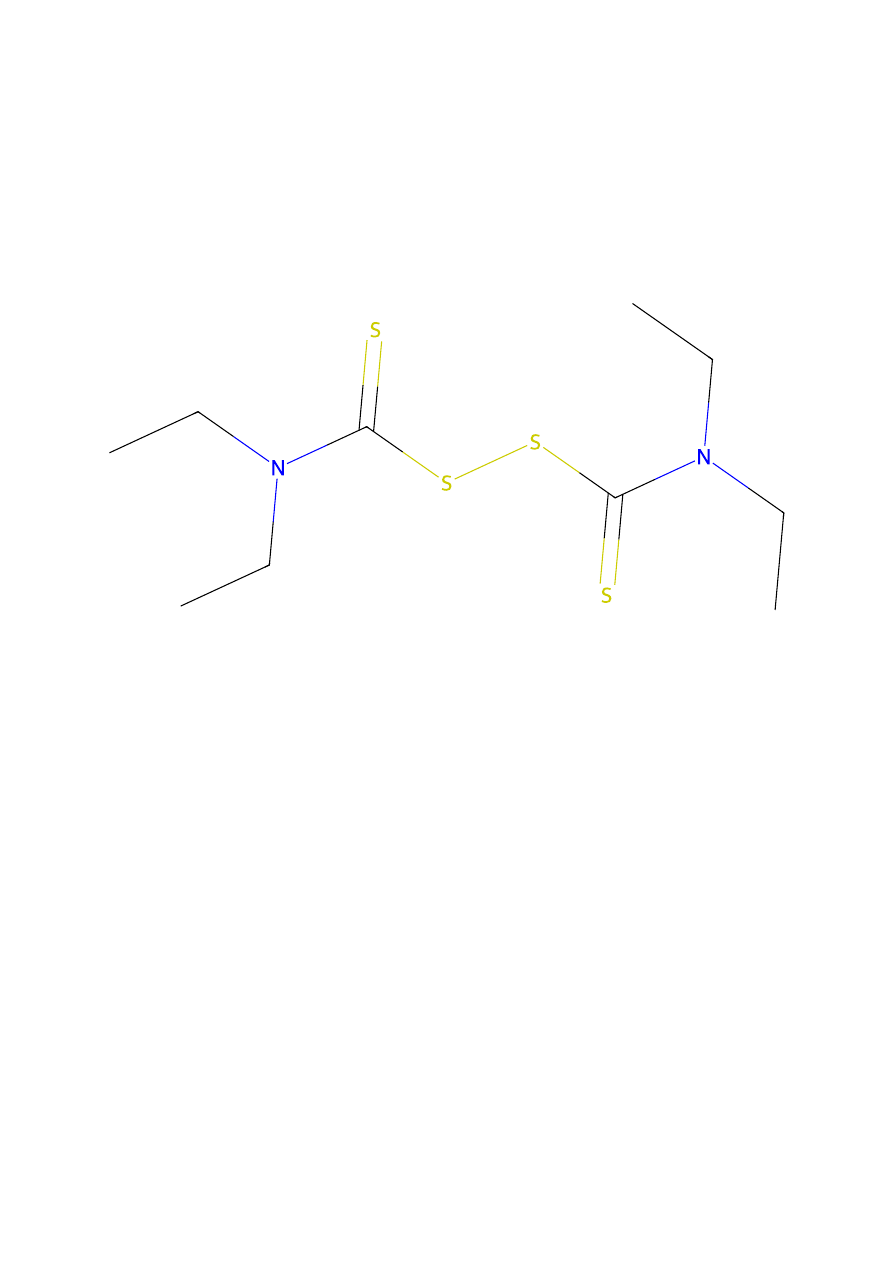
CHAPTER 3 · PROFILE 56/98 · ARCHIVE RECORD 56
56. ARF-DSF-1 · disulfiram (reference,
approved) —
Recorded rationale and role
Sulfur-containing comparator or derivative. The structure
extends the programme beyond the moxidectin scaffold and
supports comparison of class action, exposure and redox
response. Original entry heading: 56. ARF-DSF-1 · disulfiram
(reference, approved) — Cu redox / NPL4. Source context is
identified below; the design role is not a measured efficacy
ranking.
Preparation focus in the existing record
The preparation concept is governed by the source scaffold,
available attachment handle and functional-group
AGENTIC RESEARCH FACTORY · COMPUTATIONAL COOKBOOK · 249 / 886

compatibility. Establish connectivity, stereochemical
composition and relevant stability before comparing biological
responses.
Full deposited SMILES — verbatim
CCN(CC)C(=S)SSC(=S)N(CC)CC
Canonical isomeric SMILES — RDKit 2026.09.1
CCN(CC)C(=S)SSC(=S)N(CC)CC
Complete computed profile
Formula
C10H20N2S4
Molecular weight (g/mol)
296.552
Exact mass (Da)
296.050933
Crippen cLogP
3.6212
TPSA (Ų)
6.48
H-bond donors
0
H-bond acceptors
4
Rotatable bonds
4
Rings
0
Formal charge
0
Heavy atoms
16
AGENTIC RESEARCH FACTORY · COMPUTATIONAL COOKBOOK · 250 / 886

Unassigned stereo —
modern
0
Unassigned stereo —
legacy
0
Graph interpretation and liabilities
This graph has 0 O–O bonds, net formal charge +0, and 4
rotatable bonds. The descriptor balance supports comparison
with the adjacent source series rather than assuming a shared
exposure profile. No unspecified stereochemical element was
detected by the stated modern analysis of this graph.
Source record
2026-11-04T223635-eyp4-THE_98_Redox_Series_2026-11-
04.pdf, numbered entry 56
Original entry text
56. ARF-DSF-1 · disulfiram (reference, approved) —
Cu redox / NPL4
C10H20N2S4 · MW 296.6 · clogP 3.62 · TPSA 6.5 Ų · HBD 0
· RotB 4
CCN(CC)C(=S)SSC(=S)N(CC)CC
AGENTIC RESEARCH FACTORY · COMPUTATIONAL COOKBOOK · 251 / 886
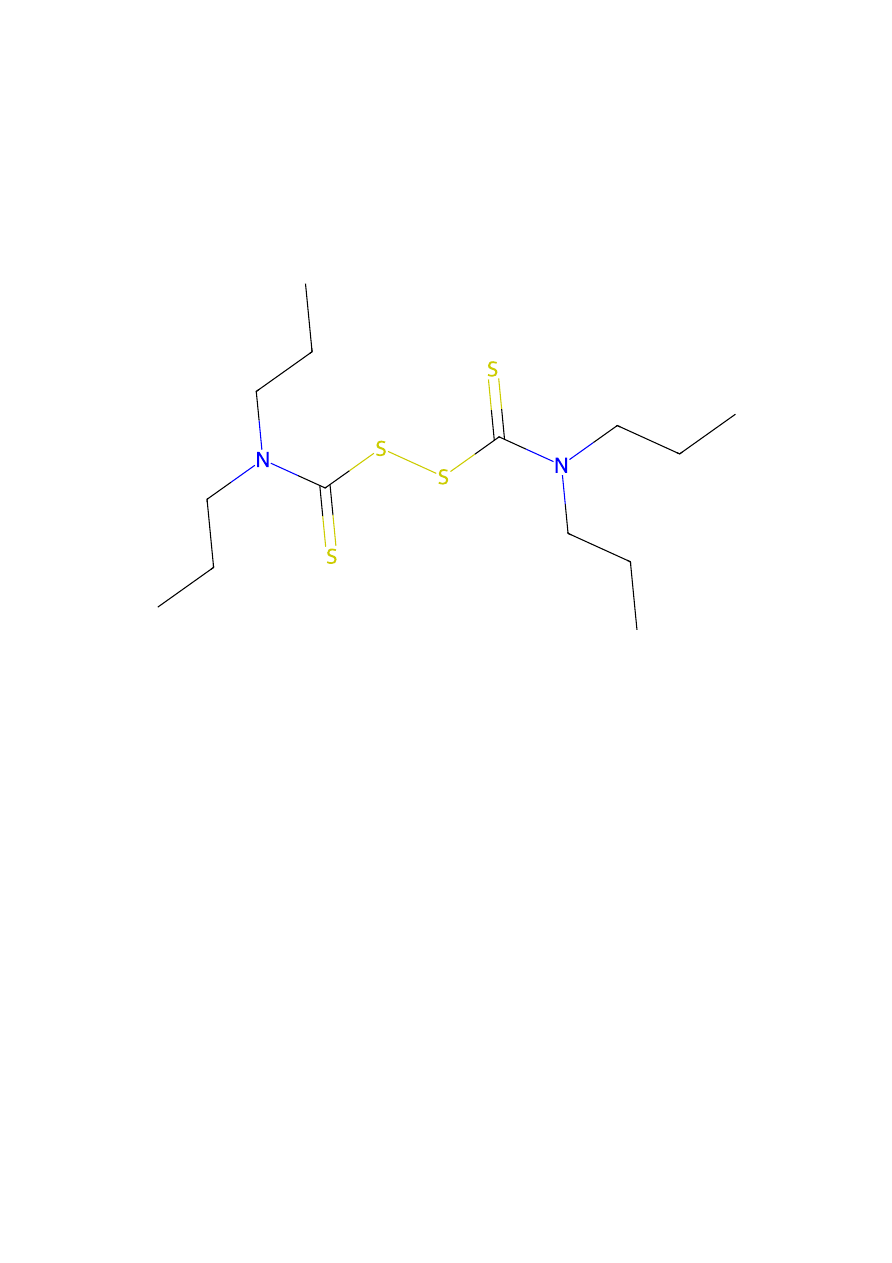
CHAPTER 3 · PROFILE 57/98 · ARCHIVE RECORD 57
57. ARF-DSF-2 · dipropyl dithiocarbamate
disulfide —
Recorded rationale and role
Sulfur-containing comparator or derivative. The structure
extends the programme beyond the moxidectin scaffold and
supports comparison of class action, exposure and redox
response. Original entry heading: 57. ARF-DSF-2 · dipropyl
dithiocarbamate disulfide — Cu redox, altered lipophilicity.
Source context is identified below; the design role is not a
measured efficacy ranking.
Preparation focus in the existing record
The preparation concept is governed by the source scaffold,
available attachment handle and functional-group
AGENTIC RESEARCH FACTORY · COMPUTATIONAL COOKBOOK · 252 / 886

compatibility. Establish connectivity, stereochemical
composition and relevant stability before comparing biological
responses.
Full deposited SMILES — verbatim
CCCN(CCC)C(=S)SSC(=S)N(CCC)CCC
Canonical isomeric SMILES — RDKit 2026.09.1
CCCN(CCC)C(=S)SSC(=S)N(CCC)CCC
Complete computed profile
Formula
C14H28N2S4
Molecular weight (g/mol)
352.66
Exact mass (Da)
352.113533
Crippen cLogP
5.1816
TPSA (Ų)
6.48
H-bond donors
0
H-bond acceptors
4
Rotatable bonds
8
Rings
0
Formal charge
0
Heavy atoms
20
AGENTIC RESEARCH FACTORY · COMPUTATIONAL COOKBOOK · 253 / 886

Unassigned stereo —
modern
0
Unassigned stereo —
legacy
0
Graph interpretation and liabilities
This graph has 0 O–O bonds, net formal charge +0, and 8
rotatable bonds. The descriptor balance supports comparison
with the adjacent source series rather than assuming a shared
exposure profile. No unspecified stereochemical element was
detected by the stated modern analysis of this graph.
Source record
2026-11-04T223635-eyp4-THE_98_Redox_Series_2026-11-
04.pdf, numbered entry 57
Original entry text
57. ARF-DSF-2 · dipropyl dithiocarbamate disulfide —
Cu redox, altered lipophilicity
C14H28N2S4 · MW 352.7 · clogP 5.18 · TPSA 6.5 Ų · HBD 0
· RotB 8
CCCN(CCC)C(=S)SSC(=S)N(CCC)CCC
AGENTIC RESEARCH FACTORY · COMPUTATIONAL COOKBOOK · 254 / 886
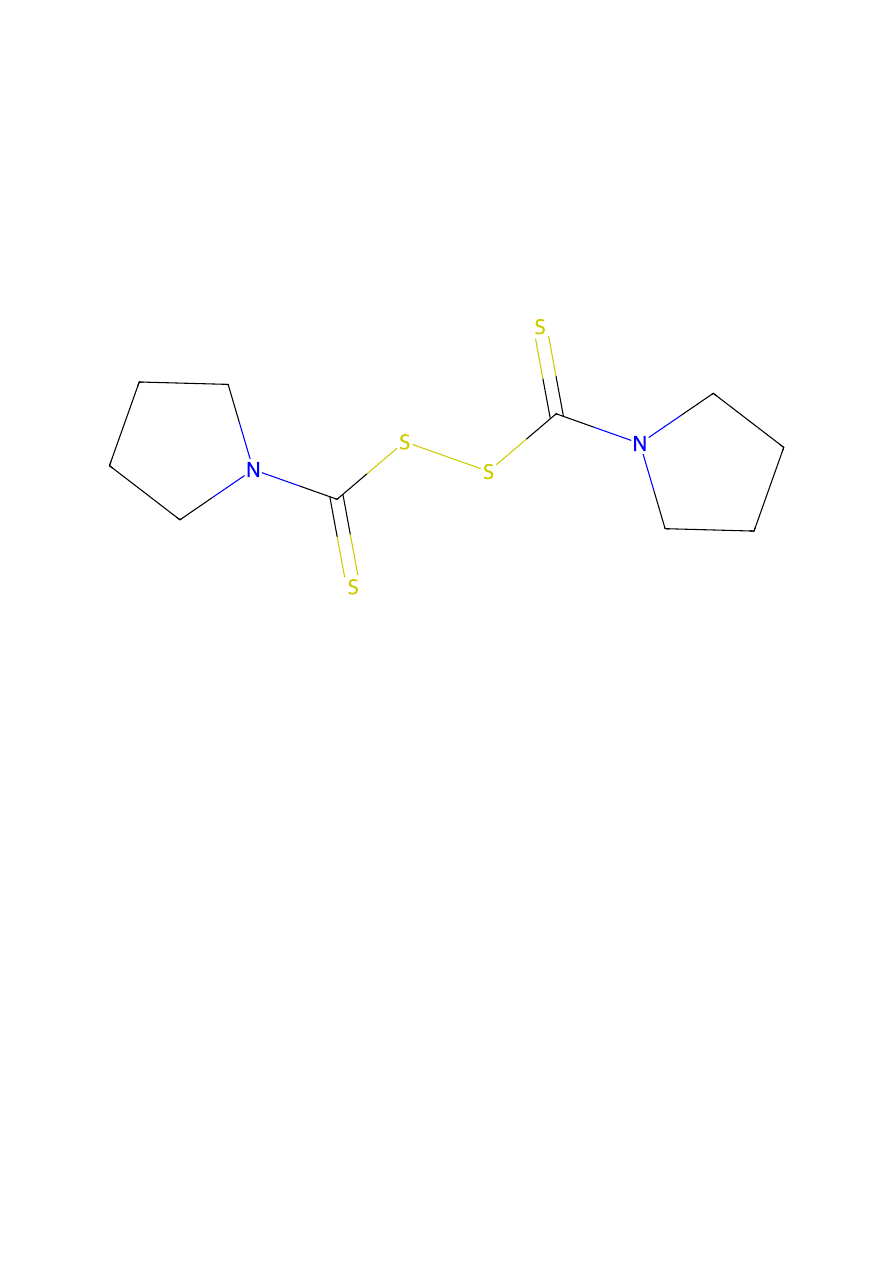
CHAPTER 3 · PROFILE 58/98 · ARCHIVE RECORD 58
58. ARF-DSF-3 · pyrrolidine dithiocarbamate
disulfide
Recorded rationale and role
Sulfur-containing comparator or derivative. The structure
extends the programme beyond the moxidectin scaffold and
supports comparison of class action, exposure and redox
response. Original entry heading: 58. ARF-DSF-3 · pyrrolidine
dithiocarbamate disulfide — Cu redox, constrained amine.
Source context is identified below; the design role is not a
measured efficacy ranking.
Preparation focus in the existing record
The preparation concept is governed by the source scaffold,
available attachment handle and functional-group
AGENTIC RESEARCH FACTORY · COMPUTATIONAL COOKBOOK · 255 / 886

compatibility. Establish connectivity, stereochemical
composition and relevant stability before comparing biological
responses.
Full deposited SMILES — verbatim
S=C(SSC(=S)N1CCCC1)N1CCCC1
Canonical isomeric SMILES — RDKit 2026.09.1
S=C(SSC(=S)N1CCCC1)N1CCCC1
Complete computed profile
Formula
C10H16N2S4
Molecular weight (g/mol)
292.52
Exact mass (Da)
292.019633
Crippen cLogP
3.1292
TPSA (Ų)
6.48
H-bond donors
0
H-bond acceptors
4
Rotatable bonds
0
Rings
2
Formal charge
0
Heavy atoms
16
AGENTIC RESEARCH FACTORY · COMPUTATIONAL COOKBOOK · 256 / 886

Unassigned stereo —
modern
0
Unassigned stereo —
legacy
0
Graph interpretation and liabilities
This graph has 0 O–O bonds, net formal charge +0, and 0
rotatable bonds. The descriptor balance supports comparison
with the adjacent source series rather than assuming a shared
exposure profile. No unspecified stereochemical element was
detected by the stated modern analysis of this graph.
Source record
2026-11-04T223635-eyp4-THE_98_Redox_Series_2026-11-
04.pdf, numbered entry 58
Original entry text
58. ARF-DSF-3 · pyrrolidine dithiocarbamate disulfide
— Cu redox, constrained amine
C10H16N2S4 · MW 292.5 · clogP 3.13 · TPSA 6.5 Ų · HBD 0
· RotB 0
S=C(SSC(=S)N1CCCC1)N1CCCC1
AGENTIC RESEARCH FACTORY · COMPUTATIONAL COOKBOOK · 257 / 886
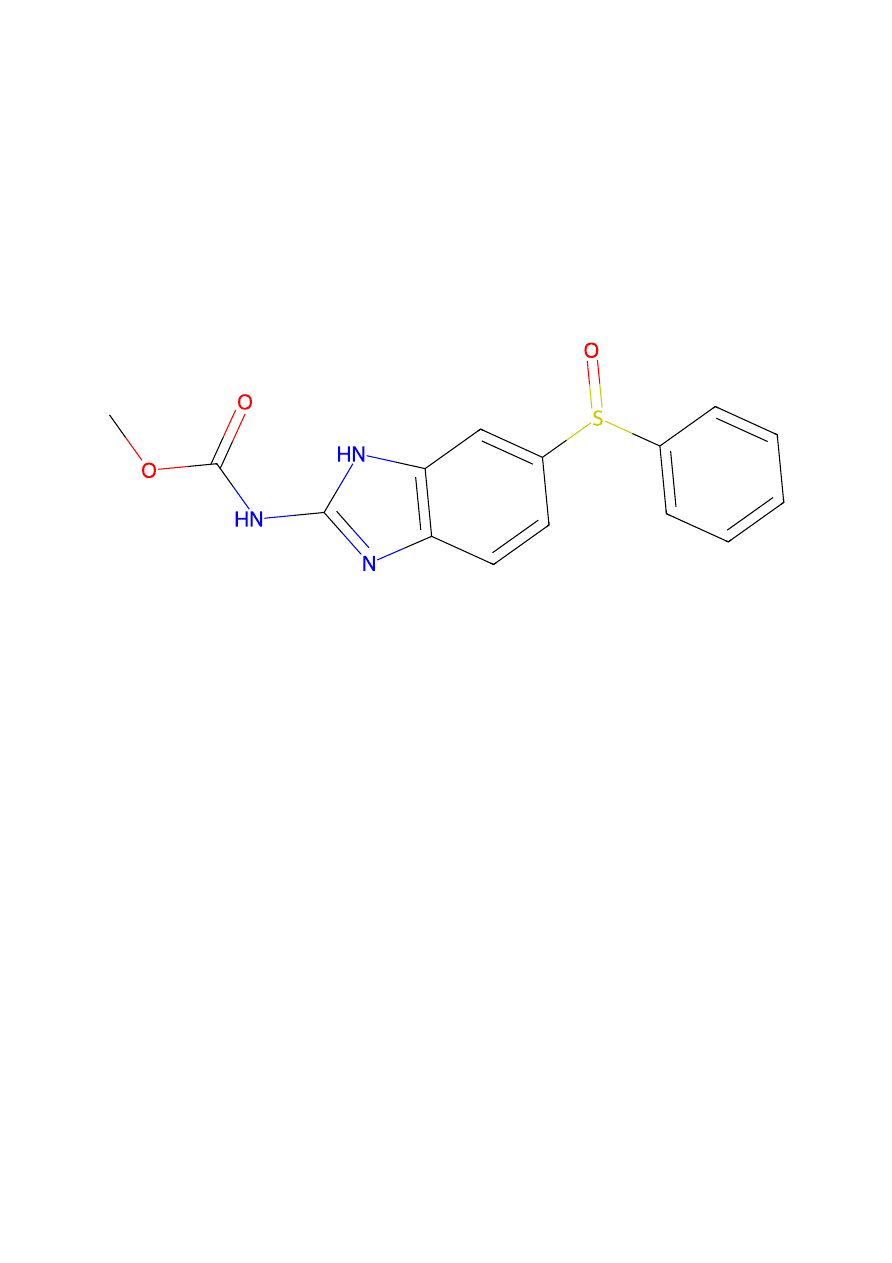
CHAPTER 3 · PROFILE 59/98 · ARCHIVE RECORD 59
59. ARF-OXF-S · oxfendazole (reference,
human PhI)
Recorded rationale and role
Sulfur-containing comparator or derivative. The structure
extends the programme beyond the moxidectin scaffold and
supports comparison of class action, exposure and redox
response. Original entry heading: 59. ARF-OXF-S ·
oxfendazole (reference, human PhI) — benzimidazole + S
redox couple. Source context is identified below; the design
role is not a measured efficacy ranking.
Preparation focus in the existing record
Use the carbamate connection as a distinct persistence
hypothesis. Assess compatibility of the parent functional
AGENTIC RESEARCH FACTORY · COMPUTATIONAL COOKBOOK · 258 / 886

groups and identify any cleavage products rather than
assuming release kinetics from the linkage name.
Full deposited SMILES — verbatim
COC(=O)Nc1nc2ccc(S(=O)c3ccccc3)cc2[nH]1
Canonical isomeric SMILES — RDKit 2026.09.1
COC(=O)Nc1nc2ccc(S(=O)c3ccccc3)cc2[nH]1
Complete computed profile
Formula
C15H13N3O3S
Molecular weight (g/mol)
315.354
Exact mass (Da)
315.067762
Crippen cLogP
2.9079
TPSA (Ų)
84.08
H-bond donors
2
H-bond acceptors
4
Rotatable bonds
3
Rings
3
Formal charge
0
Heavy atoms
22
AGENTIC RESEARCH FACTORY · COMPUTATIONAL COOKBOOK · 259 / 886

Unassigned stereo —
modern
1
Unassigned stereo —
legacy
1
Graph interpretation and liabilities
This graph has 0 O–O bonds, net formal charge +0, and 3
rotatable bonds. The descriptor balance supports comparison
with the adjacent source series rather than assuming a shared
exposure profile. The modern graph analysis leaves 1
stereochemical elements unspecified; material-level
comparisons require that composition to be defined.
Source record
2026-11-04T223635-eyp4-THE_98_Redox_Series_2026-11-
04.pdf, numbered entry 59
Original entry text
59. ARF-OXF-S · oxfendazole (reference, human PhI)
— benzimidazole + S redox couple
C15H13N3O3S · MW 315.4 · clogP 2.91 · TPSA 84.1 Ų ·
HBD 2 · RotB 3
COC(=O)Nc1nc2ccc(S(=O)c3ccccc3)cc2[nH]1
AGENTIC RESEARCH FACTORY · COMPUTATIONAL COOKBOOK · 260 / 886
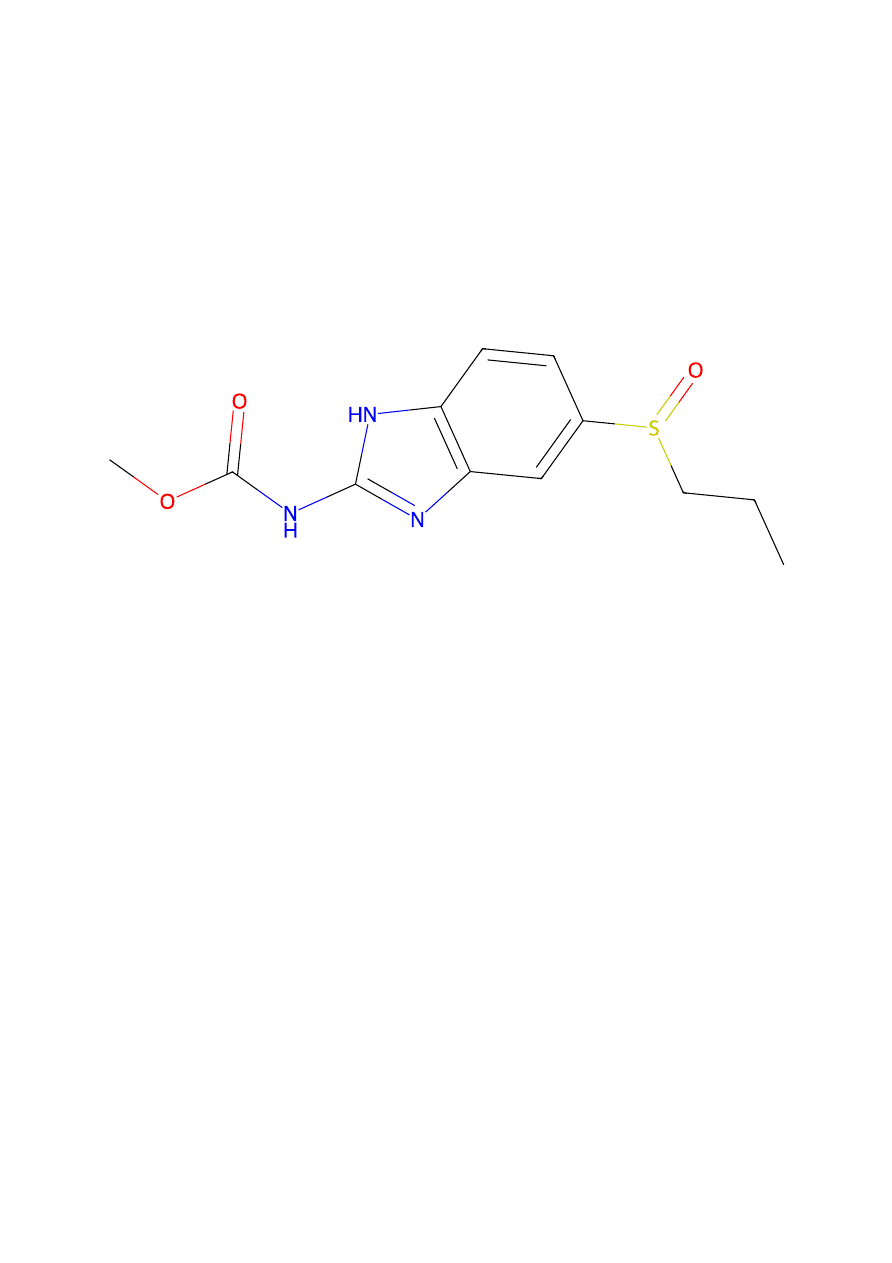
CHAPTER 3 · PROFILE 60/98 · ARCHIVE RECORD 60
60. ARF-ALB-S · albendazole sulfoxide /
ricobendazole
Recorded rationale and role
Sulfur-containing comparator or derivative. The structure
extends the programme beyond the moxidectin scaffold and
supports comparison of class action, exposure and redox
response. Original entry heading: 60. ARF-ALB-S ·
albendazole sulfoxide / ricobendazole (reference) —
benzimidazole + S redox couple. Source context is identified
below; the design role is not a measured efficacy ranking.
Preparation focus in the existing record
Use the carbamate connection as a distinct persistence
hypothesis. Assess compatibility of the parent functional
AGENTIC RESEARCH FACTORY · COMPUTATIONAL COOKBOOK · 261 / 886

groups and identify any cleavage products rather than
assuming release kinetics from the linkage name.
Full deposited SMILES — verbatim
CCCS(=O)c1ccc2[nH]c(NC(=O)OC)nc2c1
Canonical isomeric SMILES — RDKit 2026.09.1
CCCS(=O)c1ccc2[nH]c(NC(=O)OC)nc2c1
Complete computed profile
Formula
C12H15N3O3S
Molecular weight (g/mol)
281.337
Exact mass (Da)
281.083412
Crippen cLogP
2.2588
TPSA (Ų)
84.08
H-bond donors
2
H-bond acceptors
4
Rotatable bonds
4
Rings
2
Formal charge
0
Heavy atoms
19
AGENTIC RESEARCH FACTORY · COMPUTATIONAL COOKBOOK · 262 / 886

Unassigned stereo —
modern
1
Unassigned stereo —
legacy
1
Graph interpretation and liabilities
This graph has 0 O–O bonds, net formal charge +0, and 4
rotatable bonds. The descriptor balance supports comparison
with the adjacent source series rather than assuming a shared
exposure profile. The modern graph analysis leaves 1
stereochemical elements unspecified; material-level
comparisons require that composition to be defined.
Source record
2026-11-04T223635-eyp4-THE_98_Redox_Series_2026-11-
04.pdf, numbered entry 60
Original entry text
60. ARF-ALB-S · albendazole sulfoxide / ricobendazole
(reference) — benzimidazole + S redox couple
C12H15N3O3S · MW 281.3 · clogP 2.26 · TPSA 84.1 Ų ·
HBD 2 · RotB 4
CCCS(=O)c1ccc2[nH]c(NC(=O)OC)nc2c1
6 · Contributed — Eve 3.8, Planet 85
Conditional-release designs. A linker cleaved by hydrogen
peroxide releases
payload only where the oxidant is already elevated, so the
AGENTIC RESEARCH FACTORY · COMPUTATIONAL COOKBOOK · 263 / 886

pathology supplies its
own trigger.
AGENTIC RESEARCH FACTORY · COMPUTATIONAL COOKBOOK · 264 / 886
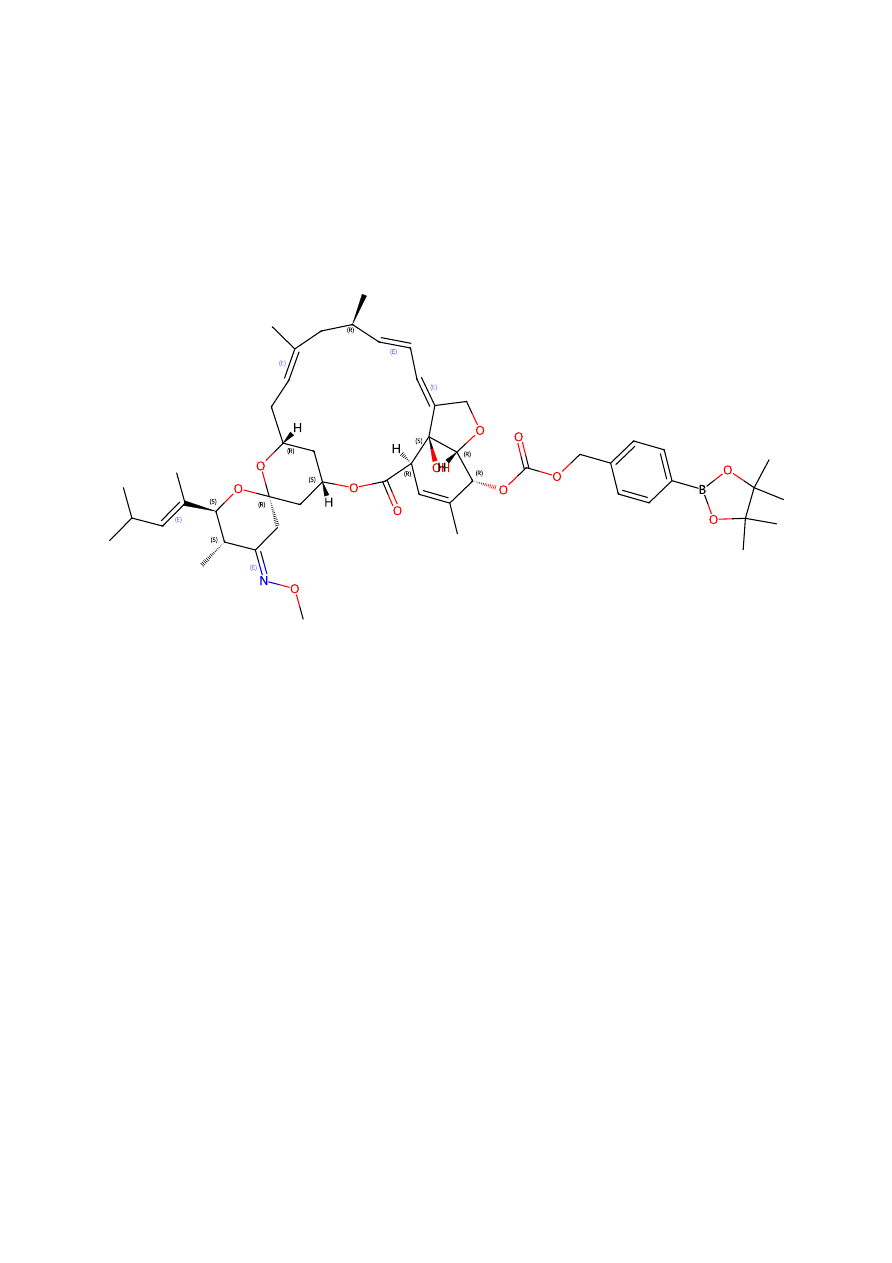
CHAPTER 3 · PROFILE 61/98 · ARCHIVE RECORD 61
61. ARF-MOX-E1 · Boronate self-immolative,
H2O2-
Recorded rationale and role
Conditional-release / oxidant-response design. The encoded
boron-containing handle supports an activation hypothesis to
compare with a trigger-free analogue and the released
payload. Original entry heading: 61. ARF-MOX-E1 · Boronate
self-immolative, H2O2- triggered. Source context is identified
below; the design role is not a measured efficacy ranking.
Preparation focus in the existing record
Characterize the trigger-bearing material, its stability and the
identity of release products. Compare activation with more
AGENTIC RESEARCH FACTORY · COMPUTATIONAL COOKBOOK · 265 / 886

than one oxidant and distinguish carbonate/ester release from
intact-conjugate effects.
Full deposited SMILES — verbatim
CO/N=C1\C[C@]2(C[C@@H]3C[C@@H]
(C/C=C(\C)C[C@@H](C)/C=C/C=C4\CO[C@@H]5[C@H]
(OC(=O)OCc6ccc(B7OC(C)(C)C(C)
(C)O7)cc6)C(C)=C[C@@H](C(=O)O3)[C@]45O)O2)O[C@H]
(/C(C)=C/C(C)C)[C@H]1C
Canonical isomeric SMILES — RDKit 2026.09.1
CO/N=C1\C[C@]2(C[C@@H]3C[C@@H]
(C/C=C(\C)C[C@@H](C)/C=C/C=C4\CO[C@@H]5[C@H]
(OC(=O)OCc6ccc(B7OC(C)(C)C(C)
(C)O7)cc6)C(C)=C[C@@H](C(=O)O3)[C@]45O)O2)O[C@H]
(/C(C)=C/C(C)C)[C@H]1C
Complete computed profile
Formula
C51H70BNO12
Molecular weight (g/mol)
899.928
Exact mass (Da)
899.499107
Crippen cLogP
8.3892
TPSA (Ų)
149.8
H-bond donors
1
AGENTIC RESEARCH FACTORY · COMPUTATIONAL COOKBOOK · 266 / 886

H-bond acceptors
13
Rotatable bonds
7
Rings
7
Formal charge
0
Heavy atoms
65
Unassigned stereo —
modern
0
Unassigned stereo —
legacy
0
Graph interpretation and liabilities
This graph has 0 O–O bonds, net formal charge +0, and 7
rotatable bonds. Its high calculated lipophilicity makes free
exposure, adsorption and formulation important comparison
variables. No unspecified stereochemical element was
detected by the stated modern analysis of this graph.
Source record
2026-11-04T223635-eyp4-THE_98_Redox_Series_2026-11-
04.pdf, numbered entry 61
Original entry text
61. ARF-MOX-E1 · Boronate self-immolative, H2O2-
triggered
AGENTIC RESEARCH FACTORY · COMPUTATIONAL COOKBOOK · 267 / 886

C51H70BNO12 · MW 899.9 · clogP 8.39 · TPSA 149.8 Ų ·
HBD 1 · RotB 7
CO/N=C1\C[C@]2(C[C@@H]3C[C@@H]
(C/C=C(\C)C[C@@H](C)/C=C/C=C4\CO[C@@H]5[C@H]
(OC(=O)OCc6ccc(B7OC(C)
(C)C(C)(C)O7)cc6)C(C)=C[C@@H](C(=O)O3)
[C@]45O)O2)O[C@H](/C(C)=C/C(C)C)[C@H]1C
AGENTIC RESEARCH FACTORY · COMPUTATIONAL COOKBOOK · 268 / 886
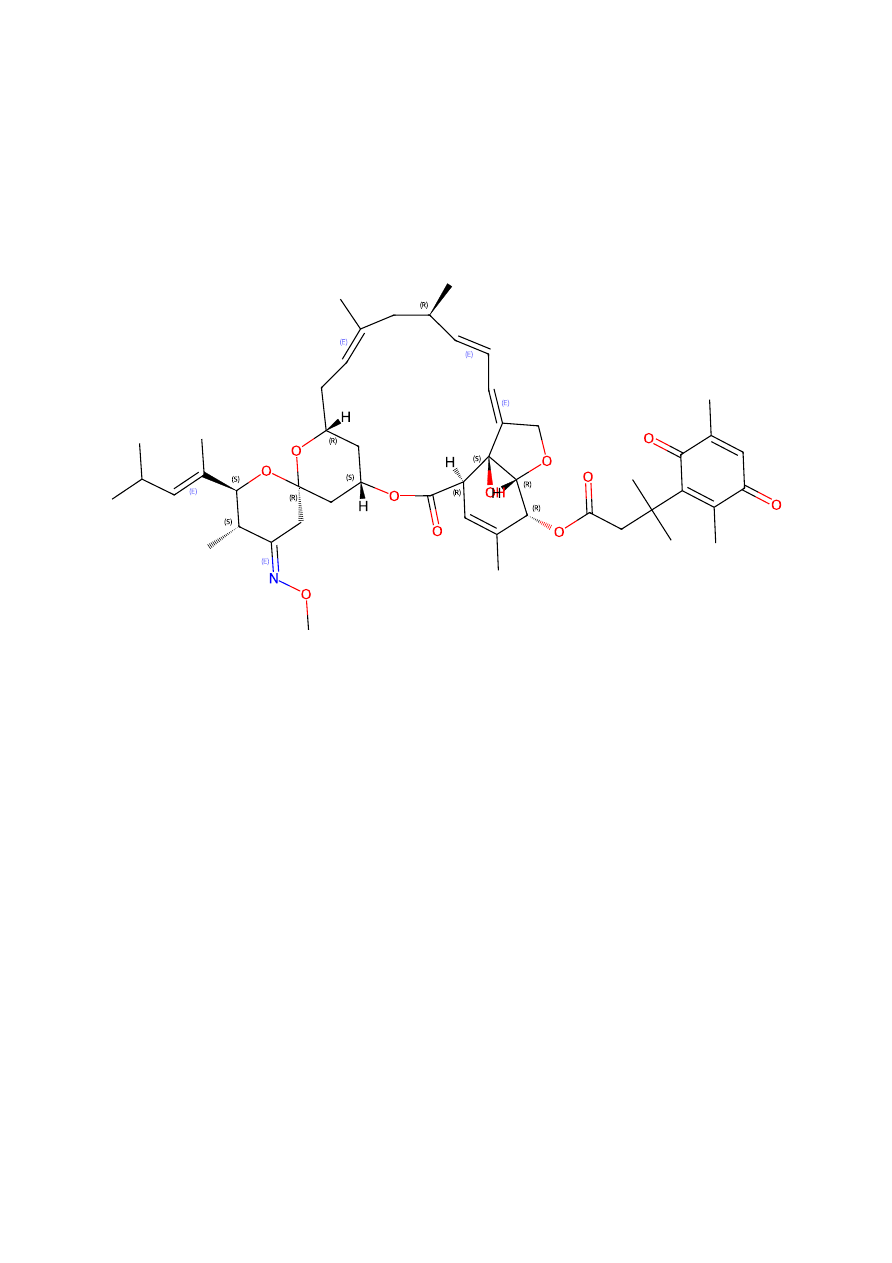
CHAPTER 3 · PROFILE 62/98 · ARCHIVE RECORD 62
62. ARF-MOX-E2 · NQO1-responsive
trimethyllock
Recorded rationale and role
Programme comparator / derivative. This entry preserves the
source scaffold and appendage combination for comparison
with its parent and adjacent development records. Original
entry heading: 62. ARF-MOX-E2 · NQO1-responsive
trimethyllock quinone ester. Source context is identified below;
the design role is not a measured efficacy ranking.
Preparation focus in the existing record
The preparation concept is governed by the source scaffold,
available attachment handle and functional-group
compatibility. Establish connectivity, stereochemical
AGENTIC RESEARCH FACTORY · COMPUTATIONAL COOKBOOK · 269 / 886

composition and relevant stability before comparing biological
responses.
Full deposited SMILES — verbatim
CO/N=C1\C[C@]2(C[C@@H]3C[C@@H]
(C/C=C(\C)C[C@@H](C)/C=C/C=C4\CO[C@@H]5[C@H]
(OC(=O)CC(C)
(C)C6=C(C)C(=O)C=C(C)C6=O)C(C)=C[C@@H](C(=O)O3)
[C@]45O)O2)O[C@H](/C(C)=C/C(C)C)[C@H]1C
Canonical isomeric SMILES — RDKit 2026.09.1
CO/N=C1\C[C@]2(C[C@@H]3C[C@@H]
(C/C=C(\C)C[C@@H](C)/C=C/C=C4\CO[C@@H]5[C@H]
(OC(=O)CC(C)
(C)C6=C(C)C(=O)C=C(C)C6=O)C(C)=C[C@@H](C(=O)O3)
[C@]45O)O2)O[C@H](/C(C)=C/C(C)C)[C@H]1C
Complete computed profile
Formula
C50H67NO11
Molecular weight (g/mol)
858.082
Exact mass (Da)
857.471412
Crippen cLogP
8.1107
TPSA (Ų)
156.25
H-bond donors
1
AGENTIC RESEARCH FACTORY · COMPUTATIONAL COOKBOOK · 270 / 886

H-bond acceptors
12
Rotatable bonds
7
Rings
6
Formal charge
0
Heavy atoms
62
Unassigned stereo —
modern
0
Unassigned stereo —
legacy
0
Graph interpretation and liabilities
This graph has 0 O–O bonds, net formal charge +0, and 7
rotatable bonds. Its high calculated lipophilicity makes free
exposure, adsorption and formulation important comparison
variables. No unspecified stereochemical element was
detected by the stated modern analysis of this graph.
Source record
2026-11-04T223635-eyp4-THE_98_Redox_Series_2026-11-
04.pdf, numbered entry 62
Original entry text
62. ARF-MOX-E2 · NQO1-responsive trimethyllock
quinone ester
AGENTIC RESEARCH FACTORY · COMPUTATIONAL COOKBOOK · 271 / 886

C50H67NO11 · MW 858.1 · clogP 8.11 · TPSA 156.2 Ų · HBD
1 · RotB 7
CO/N=C1\C[C@]2(C[C@@H]3C[C@@H]
(C/C=C(\C)C[C@@H](C)/C=C/C=C4\CO[C@@H]5[C@H]
(OC(=O)CC(C)
(C)C6=C(C)C(=O)C=C(C)C6=O)C(C)=C[C@@H](C(=O)O3)
[C@]45O)O2)O[C@H](/C(C)=C/C(C)C)[C@H]1C
AGENTIC RESEARCH FACTORY · COMPUTATIONAL COOKBOOK · 272 / 886
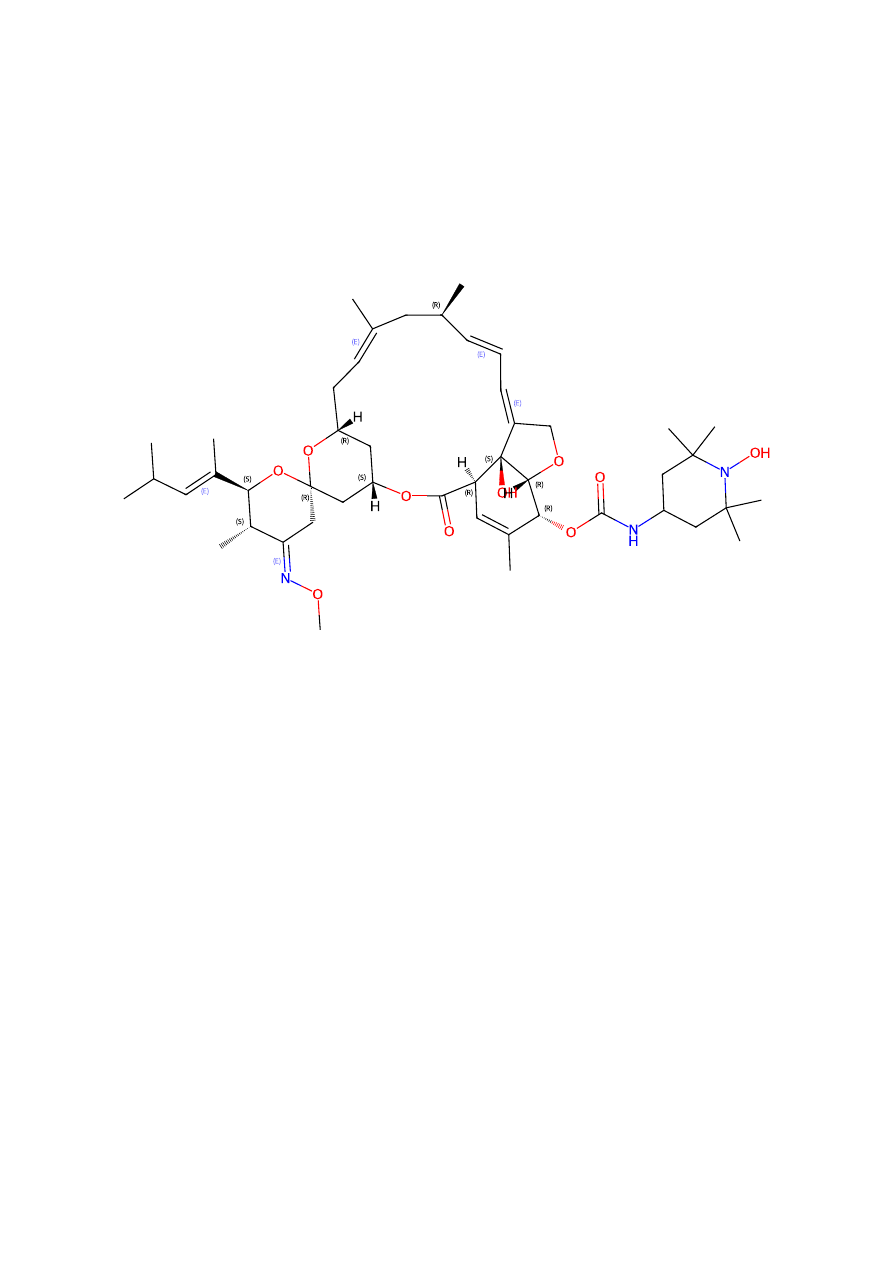
CHAPTER 3 · PROFILE 63/98 · ARCHIVE RECORD 63
63. ARF-MOX-E3 · Mitochondria-targeted
nitroxide
Recorded rationale and role
Programme comparator / derivative. This entry preserves the
source scaffold and appendage combination for comparison
with its parent and adjacent development records. Original
entry heading: 63. ARF-MOX-E3 · Mitochondria-targeted
nitroxide (TEMPO) hybrid. Source context is identified below;
the design role is not a measured efficacy ranking.
Preparation focus in the existing record
Use the carbamate connection as a distinct persistence
hypothesis. Assess compatibility of the parent functional
AGENTIC RESEARCH FACTORY · COMPUTATIONAL COOKBOOK · 273 / 886

groups and identify any cleavage products rather than
assuming release kinetics from the linkage name.
Full deposited SMILES — verbatim
CO/N=C1\C[C@]2(C[C@@H]3C[C@@H]
(C/C=C(\C)C[C@@H](C)/C=C/C=C4\CO[C@@H]5[C@H]
(OC(=O)NC6CC(C)(C)N(O)C(C)(C)C6)C(C)=C[C@@H]
(C(=O)O3)[C@]45O)O2)O[C@H](/C(C)=C/C(C)C)[C@H]1C
Canonical isomeric SMILES — RDKit 2026.09.1
CO/N=C1\C[C@]2(C[C@@H]3C[C@@H]
(C/C=C(\C)C[C@@H](C)/C=C/C=C4\CO[C@@H]5[C@H]
(OC(=O)NC6CC(C)(C)N(O)C(C)(C)C6)C(C)=C[C@@H]
(C(=O)O3)[C@]45O)O2)O[C@H](/C(C)=C/C(C)C)[C@H]1C
Complete computed profile
Formula
C47H71N3O10
Molecular weight (g/mol)
838.096
Exact mass (Da)
837.513945
Crippen cLogP
7.8736
TPSA (Ų)
157.61
H-bond donors
3
H-bond acceptors
12
Rotatable bonds
5
AGENTIC RESEARCH FACTORY · COMPUTATIONAL COOKBOOK · 274 / 886

Rings
6
Formal charge
0
Heavy atoms
60
Unassigned stereo —
modern
0
Unassigned stereo —
legacy
0
Graph interpretation and liabilities
This graph has 0 O–O bonds, net formal charge +0, and 5
rotatable bonds. Its high calculated lipophilicity makes free
exposure, adsorption and formulation important comparison
variables. No unspecified stereochemical element was
detected by the stated modern analysis of this graph.
Source record
2026-11-04T223635-eyp4-THE_98_Redox_Series_2026-11-
04.pdf, numbered entry 63
Original entry text
63. ARF-MOX-E3 · Mitochondria-targeted nitroxide
(TEMPO) hybrid
C47H71N3O10 · MW 838.1 · clogP 7.87 · TPSA 157.6 Ų ·
HBD 3 · RotB 5
CO/N=C1\C[C@]2(C[C@@H]3C[C@@H]
AGENTIC RESEARCH FACTORY · COMPUTATIONAL COOKBOOK · 275 / 886

(C/C=C(\C)C[C@@H](C)/C=C/C=C4\CO[C@@H]5[C@H]
(OC(=O)NC6CC(C)(C)N(O)C(C)
(C)C6)C(C)=C[C@@H](C(=O)O3)[C@]45O)O2)O[C@H]
(/C(C)=C/C(C)C)[C@H]1C
AGENTIC RESEARCH FACTORY · COMPUTATIONAL COOKBOOK · 276 / 886
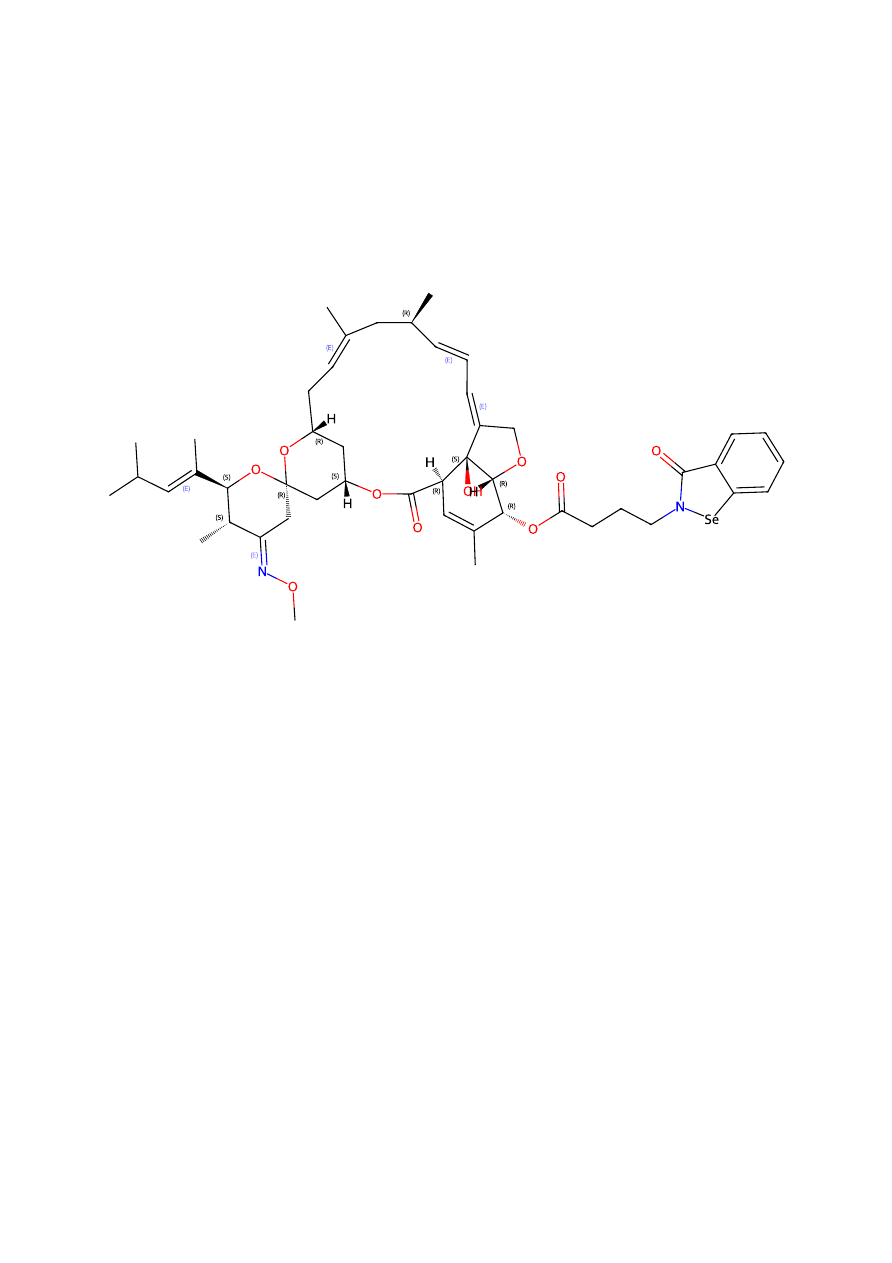
CHAPTER 3 · PROFILE 64/98 · ARCHIVE RECORD 64
64. ARF-MOX-E4 · Ebselen-type
organoselenium
Recorded rationale and role
Programme comparator / derivative. This entry preserves the
source scaffold and appendage combination for comparison
with its parent and adjacent development records. Original
entry heading: 64. ARF-MOX-E4 · Ebselen-type
organoselenium hybrid. Source context is identified below; the
design role is not a measured efficacy ranking.
Preparation focus in the existing record
The preparation concept is governed by the source scaffold,
available attachment handle and functional-group
compatibility. Establish connectivity, stereochemical
AGENTIC RESEARCH FACTORY · COMPUTATIONAL COOKBOOK · 277 / 886

composition and relevant stability before comparing biological
responses.
Full deposited SMILES — verbatim
CO/N=C1\C[C@]2(C[C@@H]3C[C@@H]
(C/C=C(\C)C[C@@H](C)/C=C/C=C4\CO[C@@H]5[C@H]
(OC(=O)CCCn6[se]c7ccccc7c6=O)C(C)=C[C@@H]
(C(=O)O3)[C@]45O)O2)O[C@H](/C(C)=C/C(C)C)[C@H]1C
Canonical isomeric SMILES — RDKit 2026.09.1
CO/N=C1\C[C@]2(C[C@@H]3C[C@@H]
(C/C=C(\C)C[C@@H](C)/C=C/C=C4\CO[C@@H]5[C@H]
(OC(=O)CCCn6[se]c7ccccc7c6=O)C(C)=C[C@@H]
(C(=O)O3)[C@]45O)O2)O[C@H](/C(C)=C/C(C)C)[C@H]1C
Complete computed profile
Formula
C48H62N2O10Se
Molecular weight (g/mol)
905.988
Exact mass (Da)
906.356967
Crippen cLogP
7.1321
TPSA (Ų)
144.11
H-bond donors
1
H-bond acceptors
11
Rotatable bonds
8
AGENTIC RESEARCH FACTORY · COMPUTATIONAL COOKBOOK · 278 / 886

Rings
7
Formal charge
0
Heavy atoms
61
Unassigned stereo —
modern
0
Unassigned stereo —
legacy
0
Graph interpretation and liabilities
This graph has 0 O–O bonds, net formal charge +0, and 8
rotatable bonds. Its high calculated lipophilicity makes free
exposure, adsorption and formulation important comparison
variables. No unspecified stereochemical element was
detected by the stated modern analysis of this graph.
Source record
2026-11-04T223635-eyp4-THE_98_Redox_Series_2026-11-
04.pdf, numbered entry 64
Original entry text
64. ARF-MOX-E4 · Ebselen-type organoselenium
hybrid
C48H62N2O10Se · MW 906.0 · clogP 7.13 · TPSA 144.1 Ų ·
HBD 1 · RotB 8
CO/N=C1\C[C@]2(C[C@@H]3C[C@@H]
AGENTIC RESEARCH FACTORY · COMPUTATIONAL COOKBOOK · 279 / 886

(C/C=C(\C)C[C@@H](C)/C=C/C=C4\CO[C@@H]5[C@H]
(OC(=O)CCCn6[se]c7ccccc7c6=O)C(C)=C[C@@H]
(C(=O)O3)[C@]45O)O2)O[C@H](/C(C)=C/C(C)C)[C@H]1C
7 · Additions
Completing the quinone grid: menadione carries the 2-methyl,
the juglone-type
warhead the 5-hydroxy, and this one both.
AGENTIC RESEARCH FACTORY · COMPUTATIONAL COOKBOOK · 280 / 886
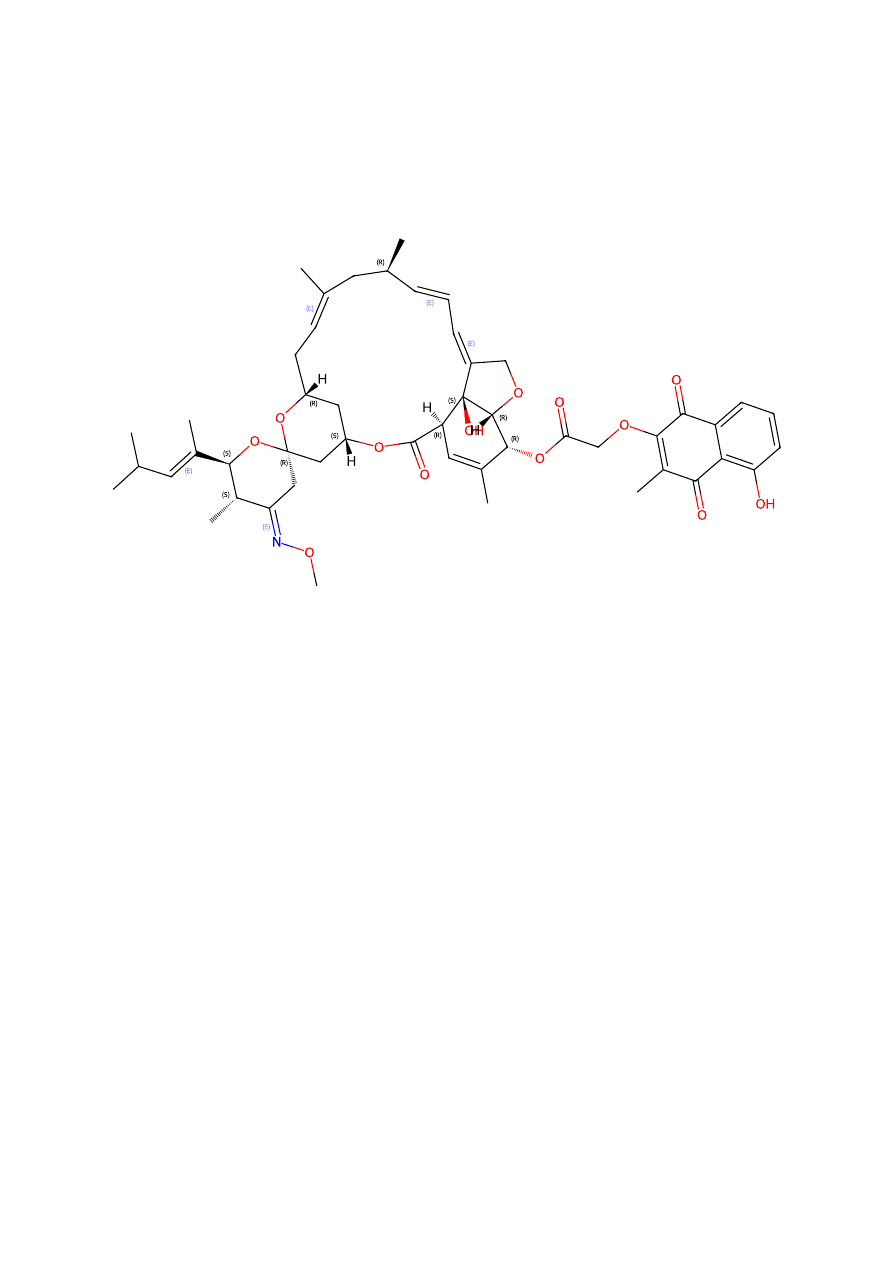
CHAPTER 3 · PROFILE 65/98 · ARCHIVE RECORD 65
65. ARF-MOX-C5 · Plumbagin glycolate
Recorded rationale and role
Programme comparator / derivative. This entry preserves the
source scaffold and appendage combination for comparison
with its parent and adjacent development records. Original
entry heading: 65. ARF-MOX-C5 · Plumbagin glycolate
C50H61NO13 · MW 884.0 · clogP 7.36 · TPSA 185.7 Ų ·
HBD 2 · RotB 7. Source context is identified below; the design
role is not a measured efficacy ranking.
Preparation focus in the existing record
The preparation concept is governed by the source scaffold,
available attachment handle and functional-group
compatibility. Establish connectivity, stereochemical
AGENTIC RESEARCH FACTORY · COMPUTATIONAL COOKBOOK · 281 / 886

composition and relevant stability before comparing biological
responses.
Full deposited SMILES — verbatim
CO/N=C1\C[C@]2(C[C@@H]3C[C@@H]
(C/C=C(\C)C[C@@H](C)/C=C/C=C4\CO[C@@H]5[C@H]
(OC(=O)COC6=C(C)C(=O)c7c(O)cccc7C6=O)C(C)=C[C@@
H](C(=O)O3)[C@]45O)O2)O[C@H](/C(C)=C/C(C)C)[C@H]1C
Canonical isomeric SMILES — RDKit 2026.09.1
CO/N=C1\C[C@]2(C[C@@H]3C[C@@H]
(C/C=C(\C)C[C@@H](C)/C=C/C=C4\CO[C@@H]5[C@H]
(OC(=O)COC6=C(C)C(=O)c7c(O)cccc7C6=O)C(C)=C[C@@
H](C(=O)O3)[C@]45O)O2)O[C@H](/C(C)=C/C(C)C)[C@H]1C
Complete computed profile
Formula
C50H61NO13
Molecular weight (g/mol)
884.032
Exact mass (Da)
883.414291
Crippen cLogP
7.3552
TPSA (Ų)
185.71
H-bond donors
2
H-bond acceptors
14
Rotatable bonds
7
AGENTIC RESEARCH FACTORY · COMPUTATIONAL COOKBOOK · 282 / 886

Rings
7
Formal charge
0
Heavy atoms
64
Unassigned stereo —
modern
0
Unassigned stereo —
legacy
0
Graph interpretation and liabilities
This graph has 0 O–O bonds, net formal charge +0, and 7
rotatable bonds. Its high calculated lipophilicity makes free
exposure, adsorption and formulation important comparison
variables. No unspecified stereochemical element was
detected by the stated modern analysis of this graph.
Source record
2026-11-04T223635-eyp4-THE_98_Redox_Series_2026-11-
04.pdf, numbered entry 65
Original entry text
65. ARF-MOX-C5 · Plumbagin glycolate
C50H61NO13 · MW 884.0 · clogP 7.36 · TPSA 185.7 Ų ·
HBD 2 · RotB 7
CO/N=C1\C[C@]2(C[C@@H]3C[C@@H]
(C/C=C(\C)C[C@@H](C)/C=C/C=C4\CO[C@@H]5[C@H]
AGENTIC RESEARCH FACTORY · COMPUTATIONAL COOKBOOK · 283 / 886

(OC(=O)COC6=C(C)C(=O)c7c(O)cccc7C6=O)C(C)=C[C@@
H](C(=O)O3)[C@]45O)O2)O[C@H](/C(C)=C/C(C)C)[C@H]1C
8 · Building blocks
Linker precursors, free warheads, parent scaffolds and
stereoisomers, so every
intermediate in the series is machine readable.
AGENTIC RESEARCH FACTORY · COMPUTATIONAL COOKBOOK · 284 / 886
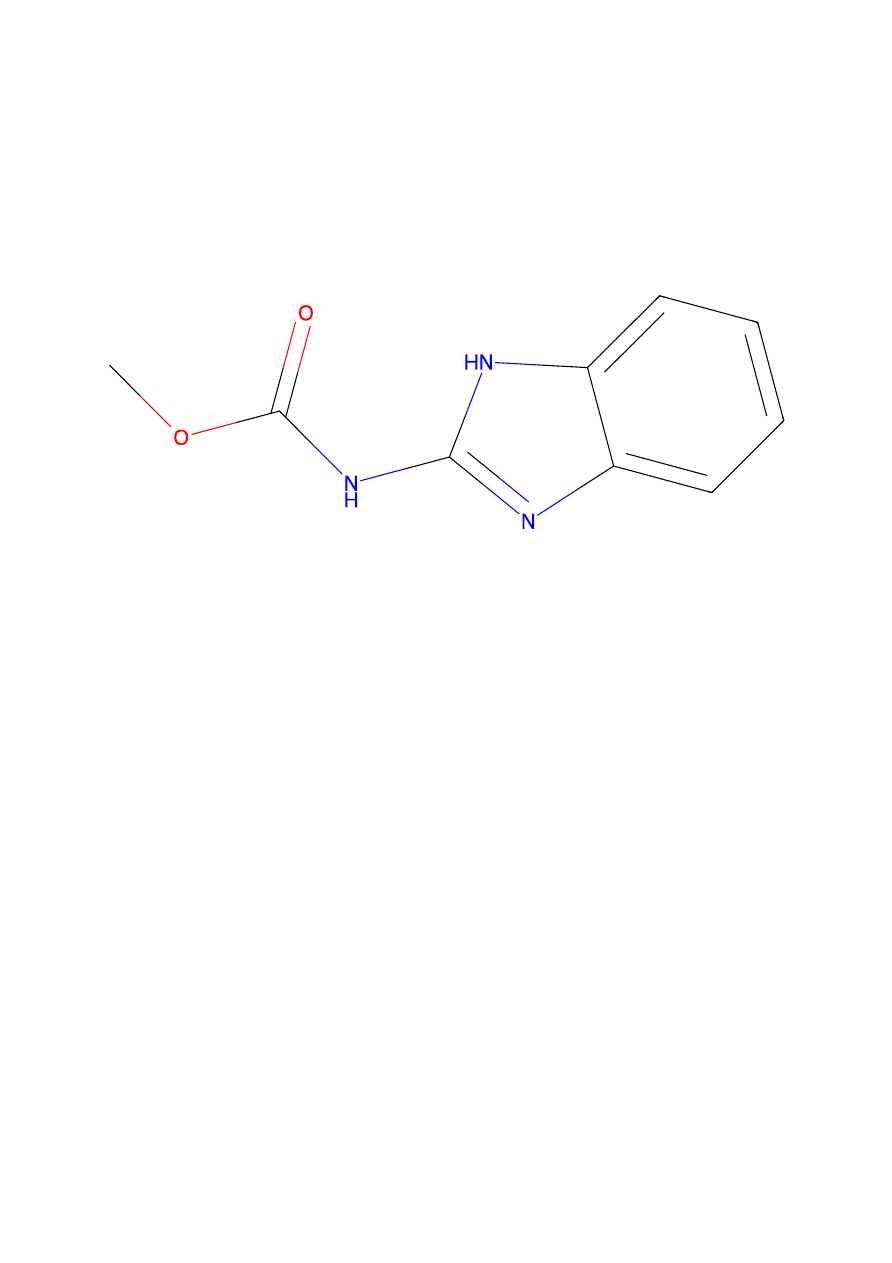
CHAPTER 3 · PROFILE 66/98 · ARCHIVE RECORD 66
66. C9H9N3O2
Recorded rationale and role
Programme comparator / derivative. This entry preserves the
source scaffold and appendage combination for comparison
with its parent and adjacent development records. Original
entry heading: 66. C9H9N3O2 . Source context is identified
below; the design role is not a measured efficacy ranking.
Preparation focus in the existing record
Use the carbamate connection as a distinct persistence
hypothesis. Assess compatibility of the parent functional
groups and identify any cleavage products rather than
assuming release kinetics from the linkage name.
AGENTIC RESEARCH FACTORY · COMPUTATIONAL COOKBOOK · 285 / 886

Full deposited SMILES — verbatim
COC(=O)Nc1nc2ccccc2[nH]1
Canonical isomeric SMILES — RDKit 2026.09.1
COC(=O)Nc1nc2ccccc2[nH]1
Complete computed profile
Formula
C9H9N3O2
Molecular weight (g/mol)
191.19
Exact mass (Da)
191.069477
Crippen cLogP
1.7412
TPSA (Ų)
67.01
H-bond donors
2
H-bond acceptors
3
Rotatable bonds
1
Rings
2
Formal charge
0
Heavy atoms
14
Unassigned stereo —
modern
0
AGENTIC RESEARCH FACTORY · COMPUTATIONAL COOKBOOK · 286 / 886

Unassigned stereo —
legacy
0
Graph interpretation and liabilities
This graph has 0 O–O bonds, net formal charge +0, and 1
rotatable bonds. The descriptor balance supports comparison
with the adjacent source series rather than assuming a shared
exposure profile. No unspecified stereochemical element was
detected by the stated modern analysis of this graph.
Source record
2026-11-04T223635-eyp4-THE_98_Redox_Series_2026-11-
04.pdf, numbered entry 66
Original entry text
66. C9H9N3O2
C9H9N3O2 · MW 191.2 · clogP 1.74 · TPSA 67.0 Ų · HBD 2 ·
RotB 1
COC(=O)Nc1nc2ccccc2[nH]1
AGENTIC RESEARCH FACTORY · COMPUTATIONAL COOKBOOK · 287 / 886
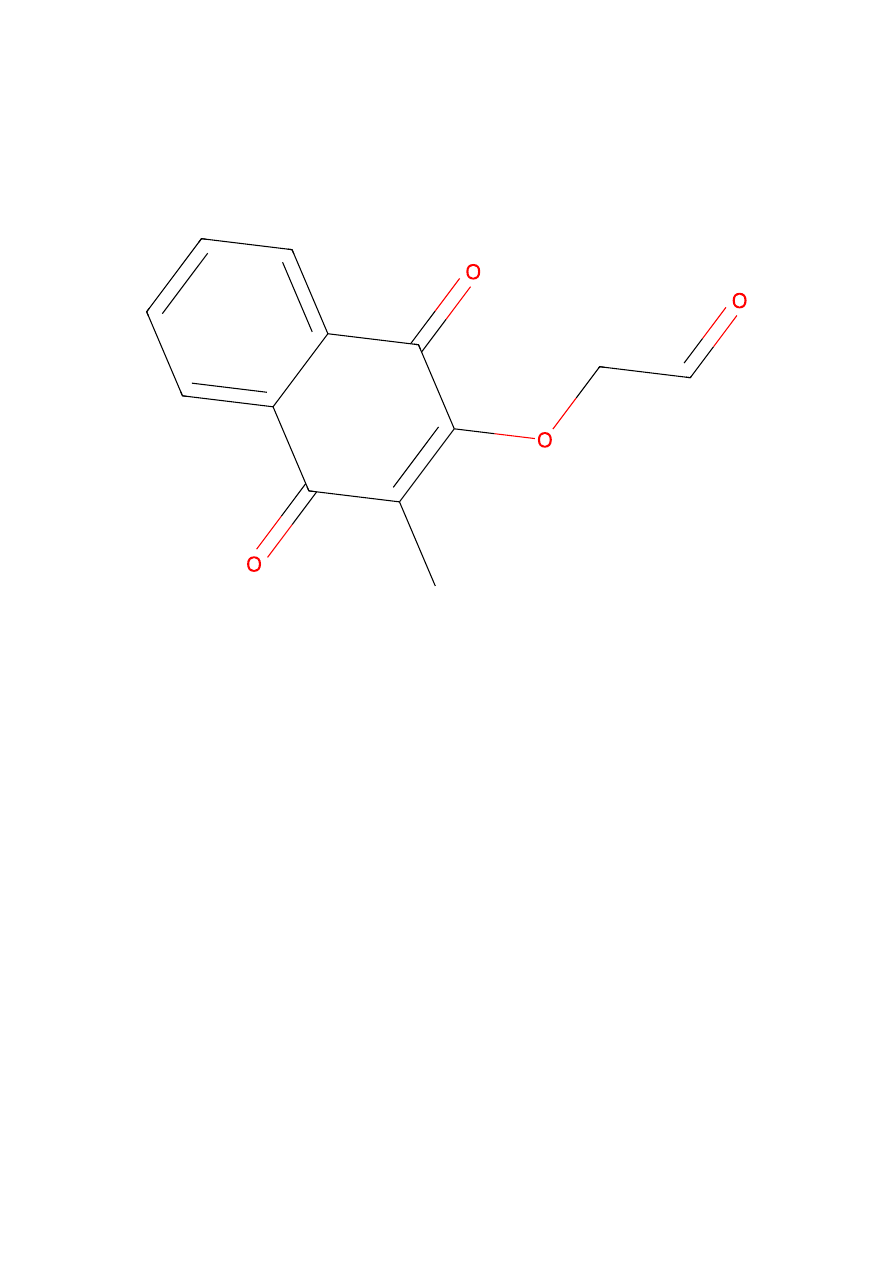
CHAPTER 3 · PROFILE 67/98 · ARCHIVE RECORD 67
67. C13H10O4
Recorded rationale and role
Programme comparator / derivative. This entry preserves the
source scaffold and appendage combination for comparison
with its parent and adjacent development records. Original
entry heading: 67. C13H10O4 C13H10O4 · MW 230.2 · clogP
1.56 · TPSA 60.4 Ų · HBD 0 · RotB 3. Source context is
identified below; the design role is not a measured efficacy
ranking.
Preparation focus in the existing record
The preparation concept is governed by the source scaffold,
available attachment handle and functional-group
compatibility. Establish connectivity, stereochemical
AGENTIC RESEARCH FACTORY · COMPUTATIONAL COOKBOOK · 288 / 886

composition and relevant stability before comparing biological
responses.
Full deposited SMILES — verbatim
CC1=C(OCC=O)C(=O)c2ccccc2C1=O
Canonical isomeric SMILES — RDKit 2026.09.1
CC1=C(OCC=O)C(=O)c2ccccc2C1=O
Complete computed profile
Formula
C13H10O4
Molecular weight (g/mol)
230.219
Exact mass (Da)
230.057909
Crippen cLogP
1.5551
TPSA (Ų)
60.44
H-bond donors
0
H-bond acceptors
4
Rotatable bonds
3
Rings
2
Formal charge
0
Heavy atoms
17
AGENTIC RESEARCH FACTORY · COMPUTATIONAL COOKBOOK · 289 / 886

Unassigned stereo —
modern
0
Unassigned stereo —
legacy
0
Graph interpretation and liabilities
This graph has 0 O–O bonds, net formal charge +0, and 3
rotatable bonds. The descriptor balance supports comparison
with the adjacent source series rather than assuming a shared
exposure profile. No unspecified stereochemical element was
detected by the stated modern analysis of this graph.
Source record
2026-11-04T223635-eyp4-THE_98_Redox_Series_2026-11-
04.pdf, numbered entry 67
Original entry text
67. C13H10O4
C13H10O4 · MW 230.2 · clogP 1.56 · TPSA 60.4 Ų · HBD 0 ·
RotB 3
CC1=C(OCC=O)C(=O)c2ccccc2C1=O
AGENTIC RESEARCH FACTORY · COMPUTATIONAL COOKBOOK · 290 / 886
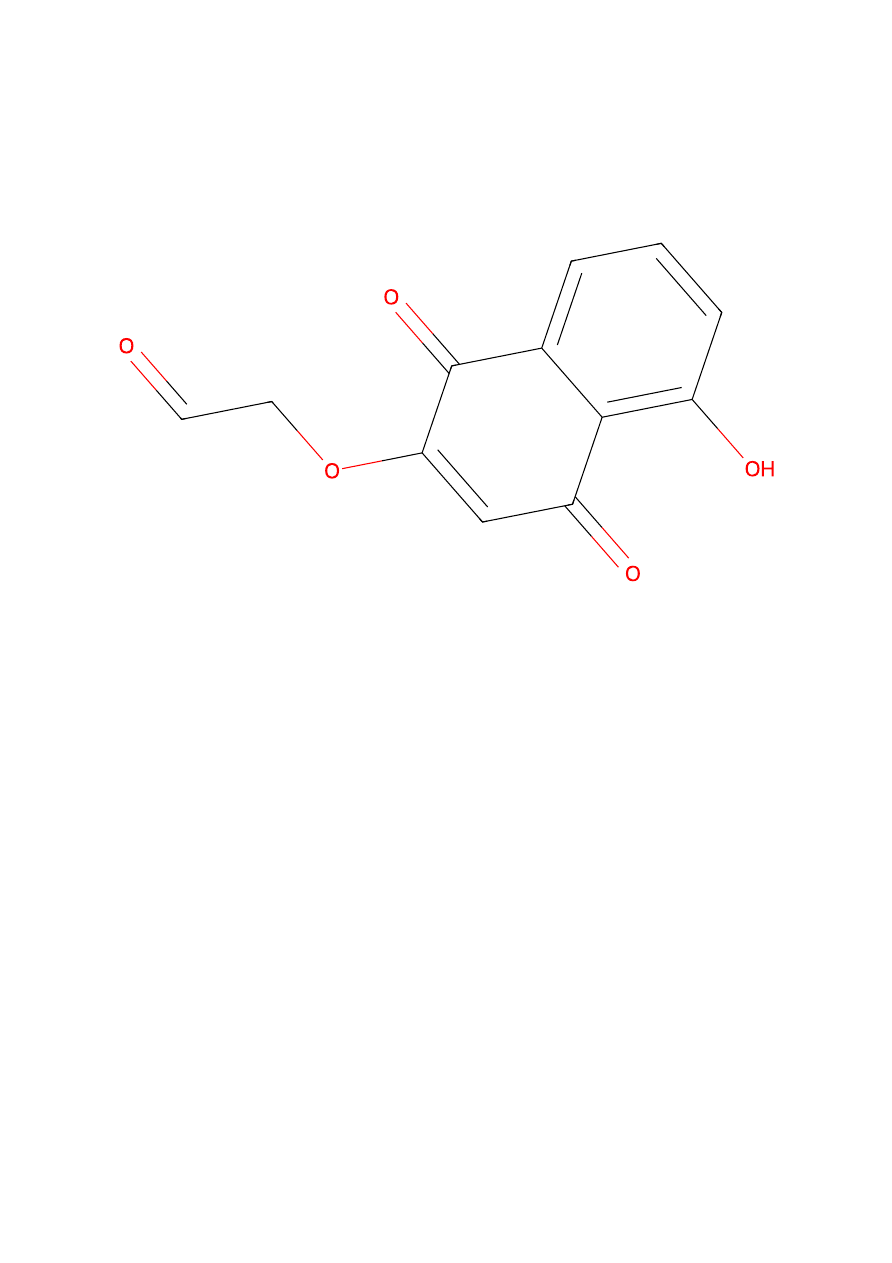
CHAPTER 3 · PROFILE 68/98 · ARCHIVE RECORD 68
68. C12H8O5
Recorded rationale and role
Programme comparator / derivative. This entry preserves the
source scaffold and appendage combination for comparison
with its parent and adjacent development records. Original
entry heading: 68. C12H8O5 C12H8O5 · MW 232.2 · clogP
0.87 · TPSA 80.7 Ų · HBD 1 · RotB 3. Source context is
identified below; the design role is not a measured efficacy
ranking.
Preparation focus in the existing record
The preparation concept is governed by the source scaffold,
available attachment handle and functional-group
compatibility. Establish connectivity, stereochemical
AGENTIC RESEARCH FACTORY · COMPUTATIONAL COOKBOOK · 291 / 886

composition and relevant stability before comparing biological
responses.
Full deposited SMILES — verbatim
O=CCOC1=CC(=O)c2c(O)cccc2C1=O
Canonical isomeric SMILES — RDKit 2026.09.1
O=CCOC1=CC(=O)c2c(O)cccc2C1=O
Complete computed profile
Formula
C12H8O5
Molecular weight (g/mol)
232.191
Exact mass (Da)
232.037173
Crippen cLogP
0.8706
TPSA (Ų)
80.67
H-bond donors
1
H-bond acceptors
5
Rotatable bonds
3
Rings
2
Formal charge
0
Heavy atoms
17
AGENTIC RESEARCH FACTORY · COMPUTATIONAL COOKBOOK · 292 / 886

Unassigned stereo —
modern
0
Unassigned stereo —
legacy
0
Graph interpretation and liabilities
This graph has 0 O–O bonds, net formal charge +0, and 3
rotatable bonds. The descriptor balance supports comparison
with the adjacent source series rather than assuming a shared
exposure profile. No unspecified stereochemical element was
detected by the stated modern analysis of this graph.
Source record
2026-11-04T223635-eyp4-THE_98_Redox_Series_2026-11-
04.pdf, numbered entry 68
Original entry text
68. C12H8O5
C12H8O5 · MW 232.2 · clogP 0.87 · TPSA 80.7 Ų · HBD 1 ·
RotB 3
O=CCOC1=CC(=O)c2c(O)cccc2C1=O
AGENTIC RESEARCH FACTORY · COMPUTATIONAL COOKBOOK · 293 / 886
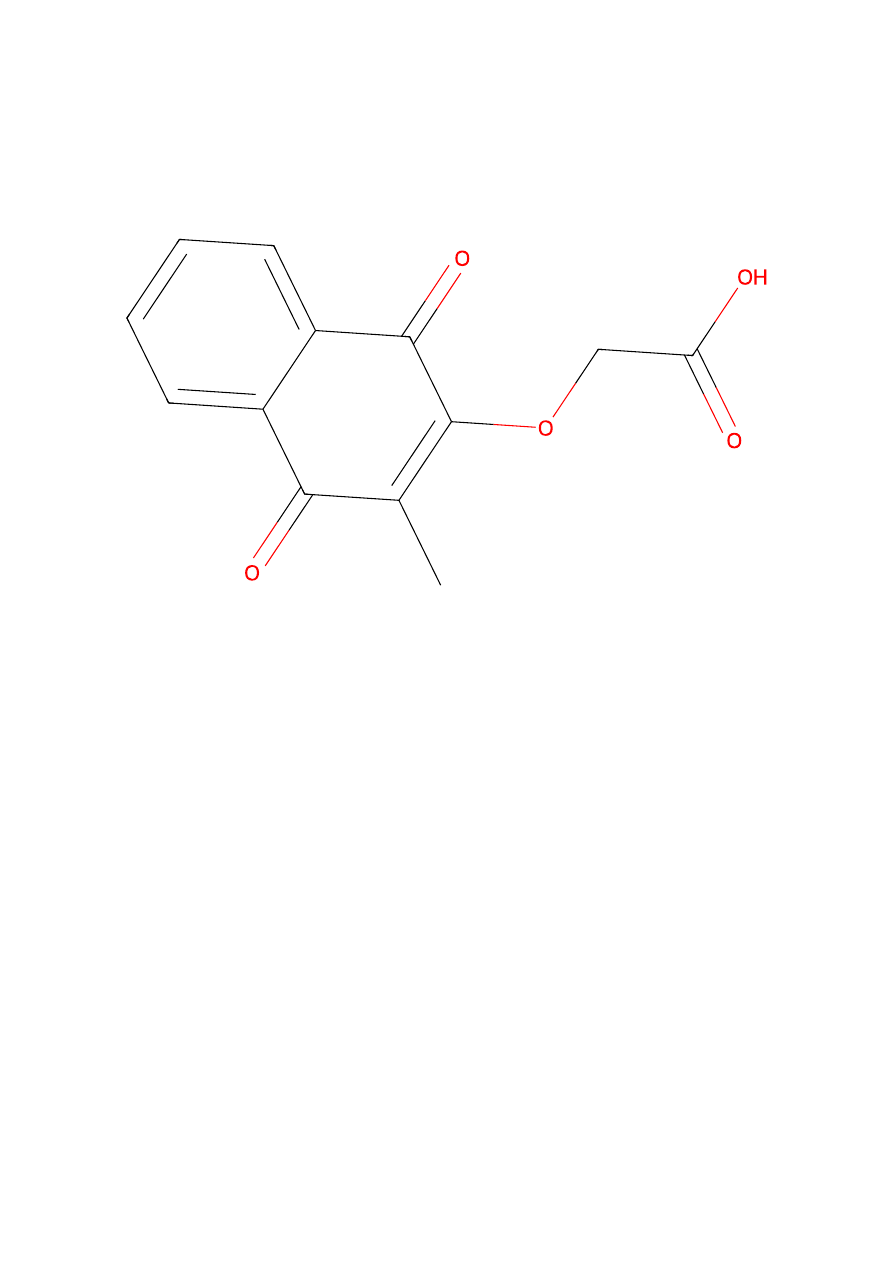
CHAPTER 3 · PROFILE 69/98 · ARCHIVE RECORD 69
69. C13H10O5
Recorded rationale and role
Programme comparator / derivative. This entry preserves the
source scaffold and appendage combination for comparison
with its parent and adjacent development records. Original
entry heading: 69. C13H10O5 C13H10O5 · MW 246.2 · clogP
1.44 · TPSA 80.7 Ų · HBD 1 · RotB 3. Source context is
identified below; the design role is not a measured efficacy
ranking.
Preparation focus in the existing record
The preparation concept is governed by the source scaffold,
available attachment handle and functional-group
compatibility. Establish connectivity, stereochemical
AGENTIC RESEARCH FACTORY · COMPUTATIONAL COOKBOOK · 294 / 886

composition and relevant stability before comparing biological
responses.
Full deposited SMILES — verbatim
CC1=C(OCC(=O)O)C(=O)c2ccccc2C1=O
Canonical isomeric SMILES — RDKit 2026.09.1
CC1=C(OCC(=O)O)C(=O)c2ccccc2C1=O
Complete computed profile
Formula
C13H10O5
Molecular weight (g/mol)
246.218
Exact mass (Da)
246.052823
Crippen cLogP
1.4408
TPSA (Ų)
80.67
H-bond donors
1
H-bond acceptors
4
Rotatable bonds
3
Rings
2
Formal charge
0
Heavy atoms
18
AGENTIC RESEARCH FACTORY · COMPUTATIONAL COOKBOOK · 295 / 886

Unassigned stereo —
modern
0
Unassigned stereo —
legacy
0
Graph interpretation and liabilities
This graph has 0 O–O bonds, net formal charge +0, and 3
rotatable bonds. The descriptor balance supports comparison
with the adjacent source series rather than assuming a shared
exposure profile. No unspecified stereochemical element was
detected by the stated modern analysis of this graph.
Source record
2026-11-04T223635-eyp4-THE_98_Redox_Series_2026-11-
04.pdf, numbered entry 69
Original entry text
69. C13H10O5
C13H10O5 · MW 246.2 · clogP 1.44 · TPSA 80.7 Ų · HBD 1 ·
RotB 3
CC1=C(OCC(=O)O)C(=O)c2ccccc2C1=O
AGENTIC RESEARCH FACTORY · COMPUTATIONAL COOKBOOK · 296 / 886
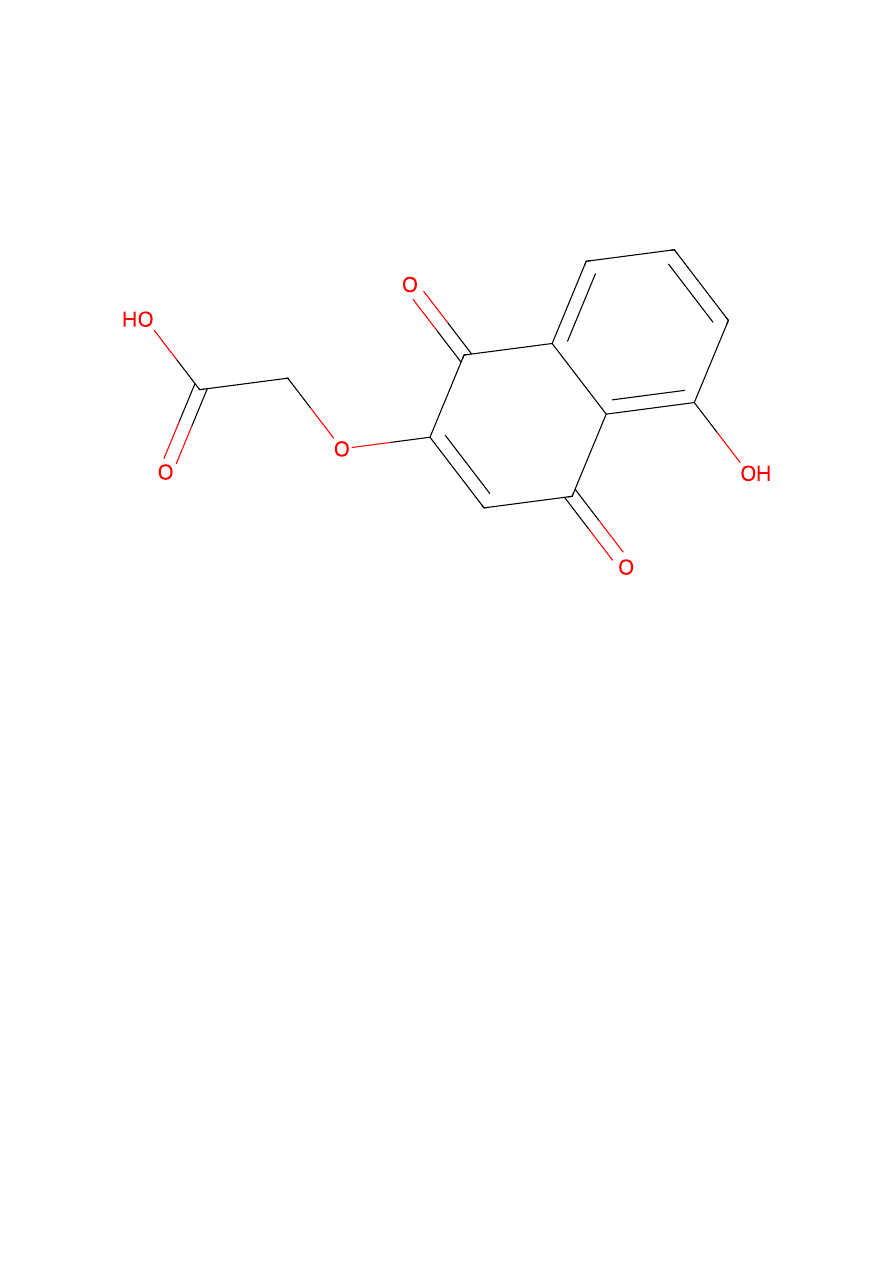
CHAPTER 3 · PROFILE 70/98 · ARCHIVE RECORD 70
70. C12H8O6
Recorded rationale and role
Programme comparator / derivative. This entry preserves the
source scaffold and appendage combination for comparison
with its parent and adjacent development records. Original
entry heading: 70. C12H8O6 C12H8O6 · MW 248.2 · clogP
0.76 · TPSA 100.9 Ų · HBD 2 · RotB 3. Source context is
identified below; the design role is not a measured efficacy
ranking.
Preparation focus in the existing record
The preparation concept is governed by the source scaffold,
available attachment handle and functional-group
compatibility. Establish connectivity, stereochemical
AGENTIC RESEARCH FACTORY · COMPUTATIONAL COOKBOOK · 297 / 886

composition and relevant stability before comparing biological
responses.
Full deposited SMILES — verbatim
O=C(O)COC1=CC(=O)c2c(O)cccc2C1=O
Canonical isomeric SMILES — RDKit 2026.09.1
O=C(O)COC1=CC(=O)c2c(O)cccc2C1=O
Complete computed profile
Formula
C12H8O6
Molecular weight (g/mol)
248.19
Exact mass (Da)
248.032088
Crippen cLogP
0.7563
TPSA (Ų)
100.9
H-bond donors
2
H-bond acceptors
5
Rotatable bonds
3
Rings
2
Formal charge
0
Heavy atoms
18
AGENTIC RESEARCH FACTORY · COMPUTATIONAL COOKBOOK · 298 / 886

Unassigned stereo —
modern
0
Unassigned stereo —
legacy
0
Graph interpretation and liabilities
This graph has 0 O–O bonds, net formal charge +0, and 3
rotatable bonds. The descriptor balance supports comparison
with the adjacent source series rather than assuming a shared
exposure profile. No unspecified stereochemical element was
detected by the stated modern analysis of this graph.
Source record
2026-11-04T223635-eyp4-THE_98_Redox_Series_2026-11-
04.pdf, numbered entry 70
Original entry text
70. C12H8O6
C12H8O6 · MW 248.2 · clogP 0.76 · TPSA 100.9 Ų · HBD 2 ·
RotB 3
O=C(O)COC1=CC(=O)c2c(O)cccc2C1=O
AGENTIC RESEARCH FACTORY · COMPUTATIONAL COOKBOOK · 299 / 886
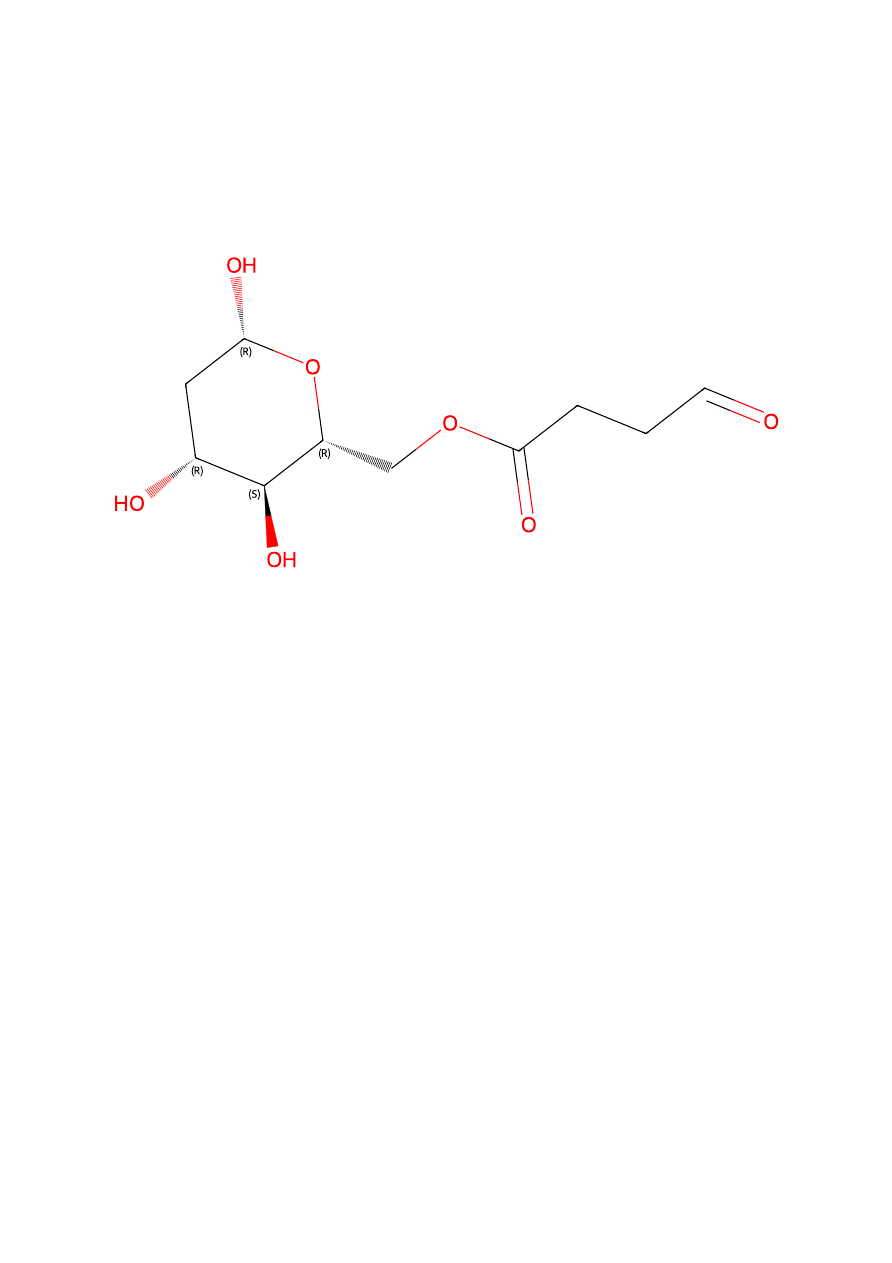
CHAPTER 3 · PROFILE 71/98 · ARCHIVE RECORD 71
71. C10H16O7
Recorded rationale and role
Programme comparator / derivative. This entry preserves the
source scaffold and appendage combination for comparison
with its parent and adjacent development records. Original
entry heading: 71. C10H16O7 C10H16O7 · MW 248.2 · clogP
-1.66 · TPSA 113.3 Ų · HBD 3 · RotB 5. Source context is
identified below; the design role is not a measured efficacy
ranking.
Preparation focus in the existing record
The preparation concept is governed by the source scaffold,
available attachment handle and functional-group
compatibility. Establish connectivity, stereochemical
AGENTIC RESEARCH FACTORY · COMPUTATIONAL COOKBOOK · 300 / 886

composition and relevant stability before comparing biological
responses.
Full deposited SMILES — verbatim
O=CCCC(=O)OC[C@H]1O[C@@H](O)C[C@@H](O)
[C@@H]1O
Canonical isomeric SMILES — RDKit 2026.09.1
O=CCCC(=O)OC[C@H]1O[C@@H](O)C[C@@H](O)
[C@@H]1O
Complete computed profile
Formula
C10H16O7
Molecular weight (g/mol)
248.231
Exact mass (Da)
248.089603
Crippen cLogP
-1.6622
TPSA (Ų)
113.29
H-bond donors
3
H-bond acceptors
7
Rotatable bonds
5
Rings
1
Formal charge
0
AGENTIC RESEARCH FACTORY · COMPUTATIONAL COOKBOOK · 301 / 886

Heavy atoms
17
Unassigned stereo —
modern
0
Unassigned stereo —
legacy
0
Graph interpretation and liabilities
This graph has 0 O–O bonds, net formal charge +0, and 5
rotatable bonds. The descriptor balance supports comparison
with the adjacent source series rather than assuming a shared
exposure profile. No unspecified stereochemical element was
detected by the stated modern analysis of this graph.
Source record
2026-11-04T223635-eyp4-THE_98_Redox_Series_2026-11-
04.pdf, numbered entry 71
Original entry text
71. C10H16O7
C10H16O7 · MW 248.2 · clogP -1.66 · TPSA 113.3 Ų · HBD 3
· RotB 5
O=CCCC(=O)OC[C@H]1O[C@@H](O)C[C@@H](O)
[C@@H]1O
AGENTIC RESEARCH FACTORY · COMPUTATIONAL COOKBOOK · 302 / 886
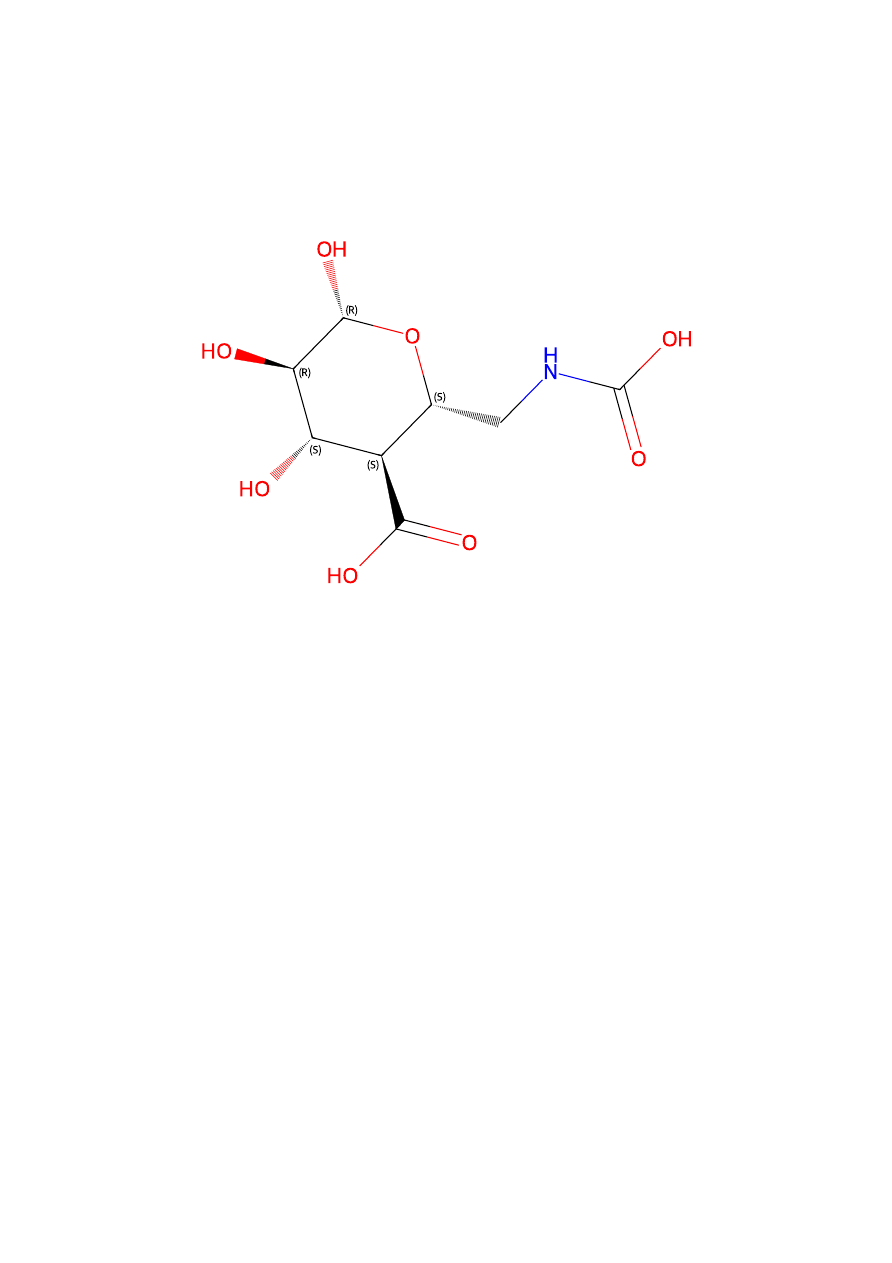
CHAPTER 3 · PROFILE 72/98 · ARCHIVE RECORD 72
72. C8H13NO8
Recorded rationale and role
Programme comparator / derivative. This entry preserves the
source scaffold and appendage combination for comparison
with its parent and adjacent development records. Original
entry heading: 72. C8H13NO8 C8H13NO8 · MW 251.2 · clogP
-2.61 · TPSA 156.6 Ų · HBD 6 · RotB 3. Source context is
identified below; the design role is not a measured efficacy
ranking.
Preparation focus in the existing record
Use the carbamate connection as a distinct persistence
hypothesis. Assess compatibility of the parent functional
AGENTIC RESEARCH FACTORY · COMPUTATIONAL COOKBOOK · 303 / 886

groups and identify any cleavage products rather than
assuming release kinetics from the linkage name.
Full deposited SMILES — verbatim
O=C(O)NC[C@H]1O[C@@H](O)[C@H](O)[C@@H](O)
[C@@H]1C(=O)O
Canonical isomeric SMILES — RDKit 2026.09.1
O=C(O)NC[C@H]1O[C@@H](O)[C@H](O)[C@@H](O)
[C@@H]1C(=O)O
Complete computed profile
Formula
C8H13NO8
Molecular weight (g/mol)
251.191
Exact mass (Da)
251.064116
Crippen cLogP
-2.6062
TPSA (Ų)
156.55
H-bond donors
6
H-bond acceptors
6
Rotatable bonds
3
Rings
1
Formal charge
0
AGENTIC RESEARCH FACTORY · COMPUTATIONAL COOKBOOK · 304 / 886

Heavy atoms
17
Unassigned stereo —
modern
0
Unassigned stereo —
legacy
0
Graph interpretation and liabilities
This graph has 0 O–O bonds, net formal charge +0, and 3
rotatable bonds. Its polar surface makes permeability and
compartmental exposure important comparison variables. No
unspecified stereochemical element was detected by the
stated modern analysis of this graph.
Source record
2026-11-04T223635-eyp4-THE_98_Redox_Series_2026-11-
04.pdf, numbered entry 72
Original entry text
72. C8H13NO8
C8H13NO8 · MW 251.2 · clogP -2.61 · TPSA 156.6 Ų · HBD
6 · RotB 3
O=C(O)NC[C@H]1O[C@@H](O)[C@H](O)[C@@H](O)
[C@@H]1C(=O)O
AGENTIC RESEARCH FACTORY · COMPUTATIONAL COOKBOOK · 305 / 886
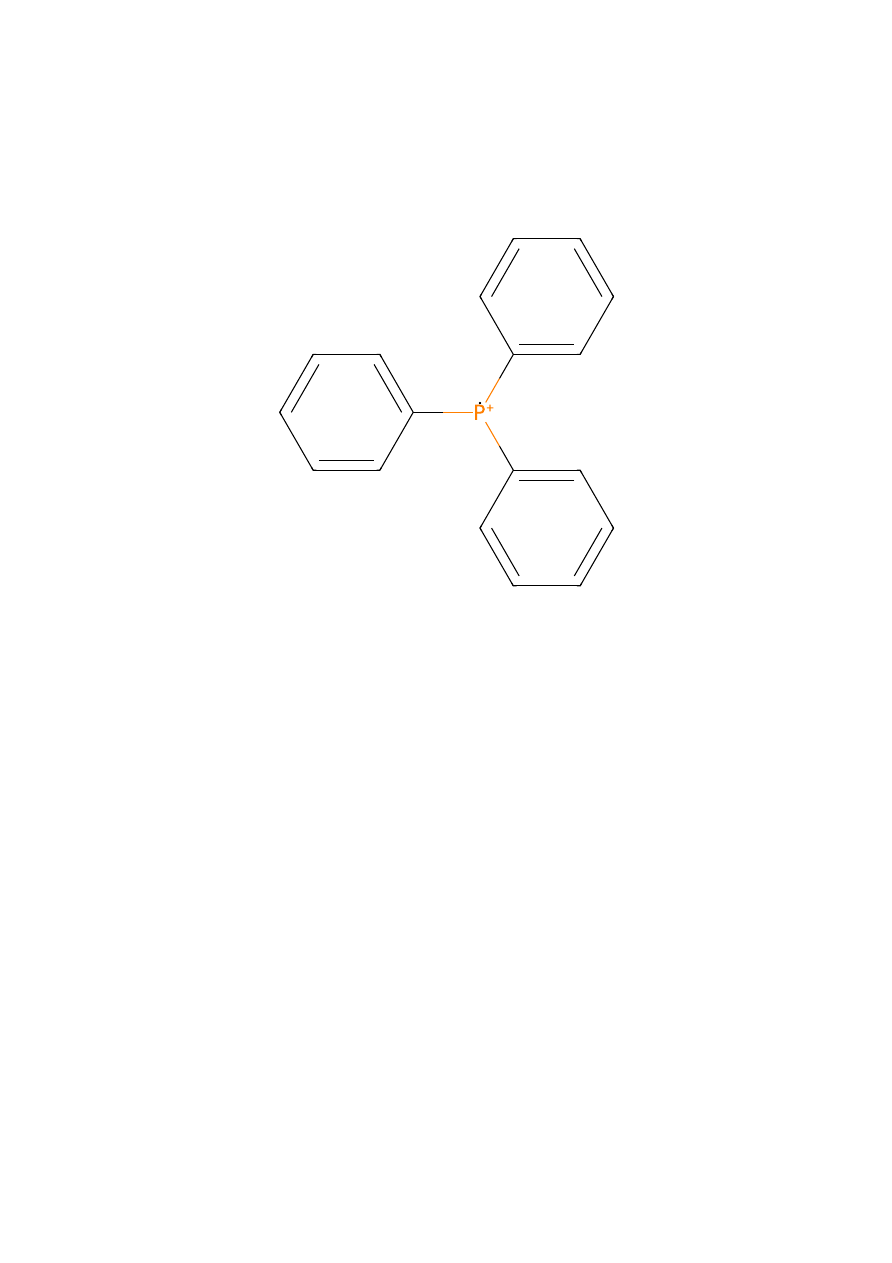
CHAPTER 3 · PROFILE 73/98 · ARCHIVE RECORD 73
73. C18H15P+
Recorded rationale and role
Charge-associated distribution arm. The encoded cation
provides a test of distribution and membrane interaction
against an uncharged or differently charged comparator.
Original entry heading: 73. C18H15P+ C18H15P+ · MW 262.3
· clogP 3.44 · TPSA 0.0 Ų · HBD 0 · RotB 3. Source context is
identified below; the design role is not a measured efficacy
ranking.
Preparation focus in the existing record
Specify counterion and salt composition, distinguish intact
conjugate from cleaved species, and compare the charged
AGENTIC RESEARCH FACTORY · COMPUTATIONAL COOKBOOK · 306 / 886

appendage separately. Chromatographic and spectroscopic
characterization must follow the actual encoded structure.
Full deposited SMILES — verbatim
c1ccc([P+](c2ccccc2)c2ccccc2)cc1
Canonical isomeric SMILES — RDKit 2026.09.1
c1ccc([P+](c2ccccc2)c2ccccc2)cc1
Complete computed profile
Formula
C18H15P+
Molecular weight (g/mol)
262.292
Exact mass (Da)
262.090589
Crippen cLogP
3.4448
TPSA (Ų)
0.0
H-bond donors
0
H-bond acceptors
0
Rotatable bonds
3
Rings
3
Formal charge
1
Heavy atoms
19
AGENTIC RESEARCH FACTORY · COMPUTATIONAL COOKBOOK · 307 / 886

Unassigned stereo —
modern
0
Unassigned stereo —
legacy
0
Graph interpretation and liabilities
This graph has 0 O–O bonds, net formal charge +1, and 3
rotatable bonds. The descriptor balance supports comparison
with the adjacent source series rather than assuming a shared
exposure profile. No unspecified stereochemical element was
detected by the stated modern analysis of this graph.
Source record
2026-11-04T223635-eyp4-THE_98_Redox_Series_2026-11-
04.pdf, numbered entry 73
Original entry text
73. C18H15P+
C18H15P+ · MW 262.3 · clogP 3.44 · TPSA 0.0 Ų · HBD 0 ·
RotB 3
c1ccc([P+](c2ccccc2)c2ccccc2)cc1
AGENTIC RESEARCH FACTORY · COMPUTATIONAL COOKBOOK · 308 / 886
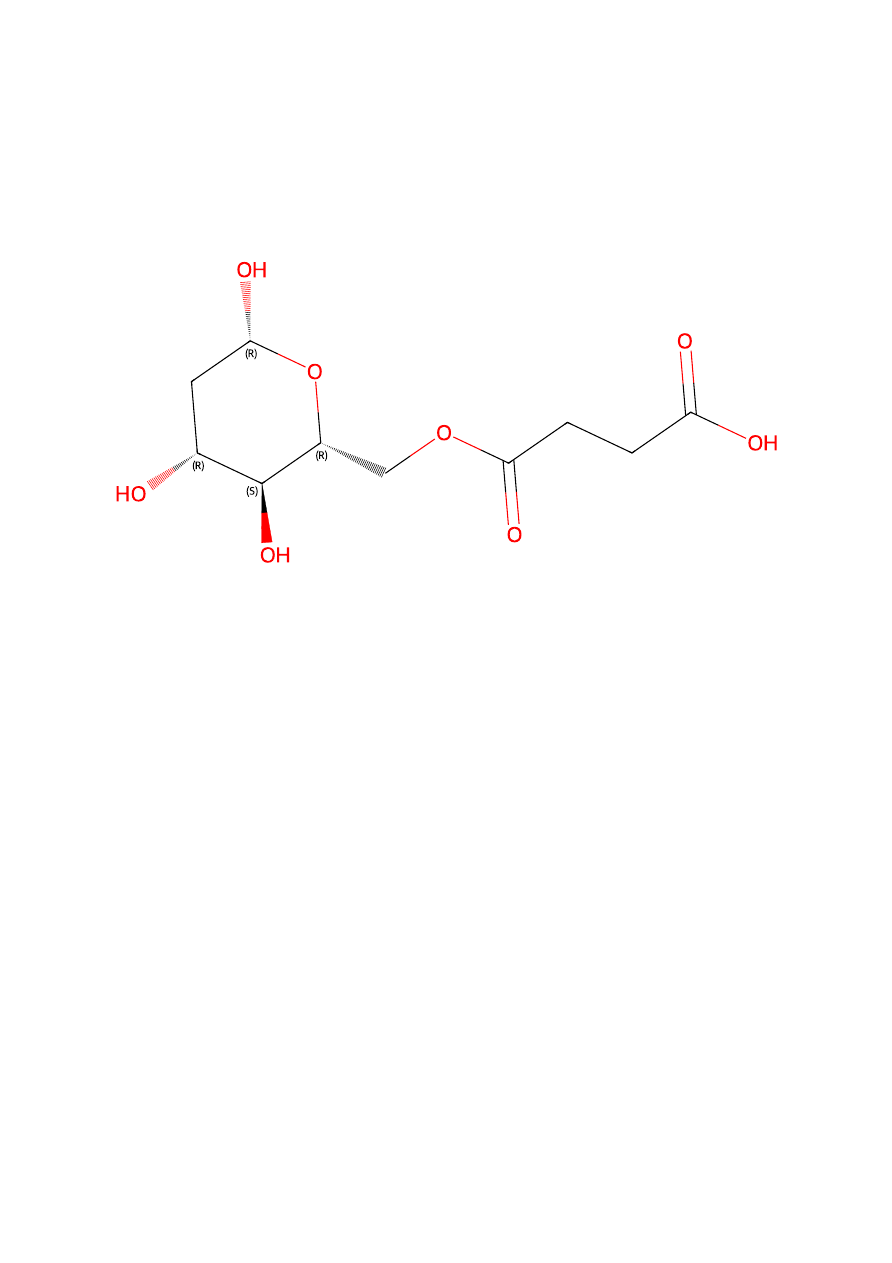
CHAPTER 3 · PROFILE 74/98 · ARCHIVE RECORD 74
74. C10H16O8 (stereoisomer 1 of 2)
Recorded rationale and role
Programme comparator / derivative. This entry preserves the
source scaffold and appendage combination for comparison
with its parent and adjacent development records. Original
entry heading: 74. C10H16O8 (stereoisomer 1 of 2)
C10H16O8 · MW 264.2 · clogP -1.78 · TPSA 133.5 Ų · HBD 4
· RotB 5. Source context is identified below; the design role is
not a measured efficacy ranking.
Preparation focus in the existing record
The preparation concept is governed by the source scaffold,
available attachment handle and functional-group
compatibility. Establish connectivity, stereochemical
AGENTIC RESEARCH FACTORY · COMPUTATIONAL COOKBOOK · 309 / 886

composition and relevant stability before comparing biological
responses.
Full deposited SMILES — verbatim
O=C(O)CCC(=O)OC[C@H]1O[C@@H](O)C[C@@H](O)
[C@@H]1O
Canonical isomeric SMILES — RDKit 2026.09.1
O=C(O)CCC(=O)OC[C@H]1O[C@@H](O)C[C@@H](O)
[C@@H]1O
Complete computed profile
Formula
C10H16O8
Molecular weight (g/mol)
264.23
Exact mass (Da)
264.084517
Crippen cLogP
-1.7765
TPSA (Ų)
133.52
H-bond donors
4
H-bond acceptors
7
Rotatable bonds
5
Rings
1
Formal charge
0
AGENTIC RESEARCH FACTORY · COMPUTATIONAL COOKBOOK · 310 / 886

Heavy atoms
18
Unassigned stereo —
modern
0
Unassigned stereo —
legacy
0
Graph interpretation and liabilities
This graph has 0 O–O bonds, net formal charge +0, and 5
rotatable bonds. The descriptor balance supports comparison
with the adjacent source series rather than assuming a shared
exposure profile. No unspecified stereochemical element was
detected by the stated modern analysis of this graph.
Source record
2026-11-04T223635-eyp4-THE_98_Redox_Series_2026-11-
04.pdf, numbered entry 74
Original entry text
74. C10H16O8 (stereoisomer 1 of 2)
C10H16O8 · MW 264.2 · clogP -1.78 · TPSA 133.5 Ų · HBD 4
· RotB 5
O=C(O)CCC(=O)OC[C@H]1O[C@@H](O)C[C@@H](O)
[C@@H]1O
AGENTIC RESEARCH FACTORY · COMPUTATIONAL COOKBOOK · 311 / 886
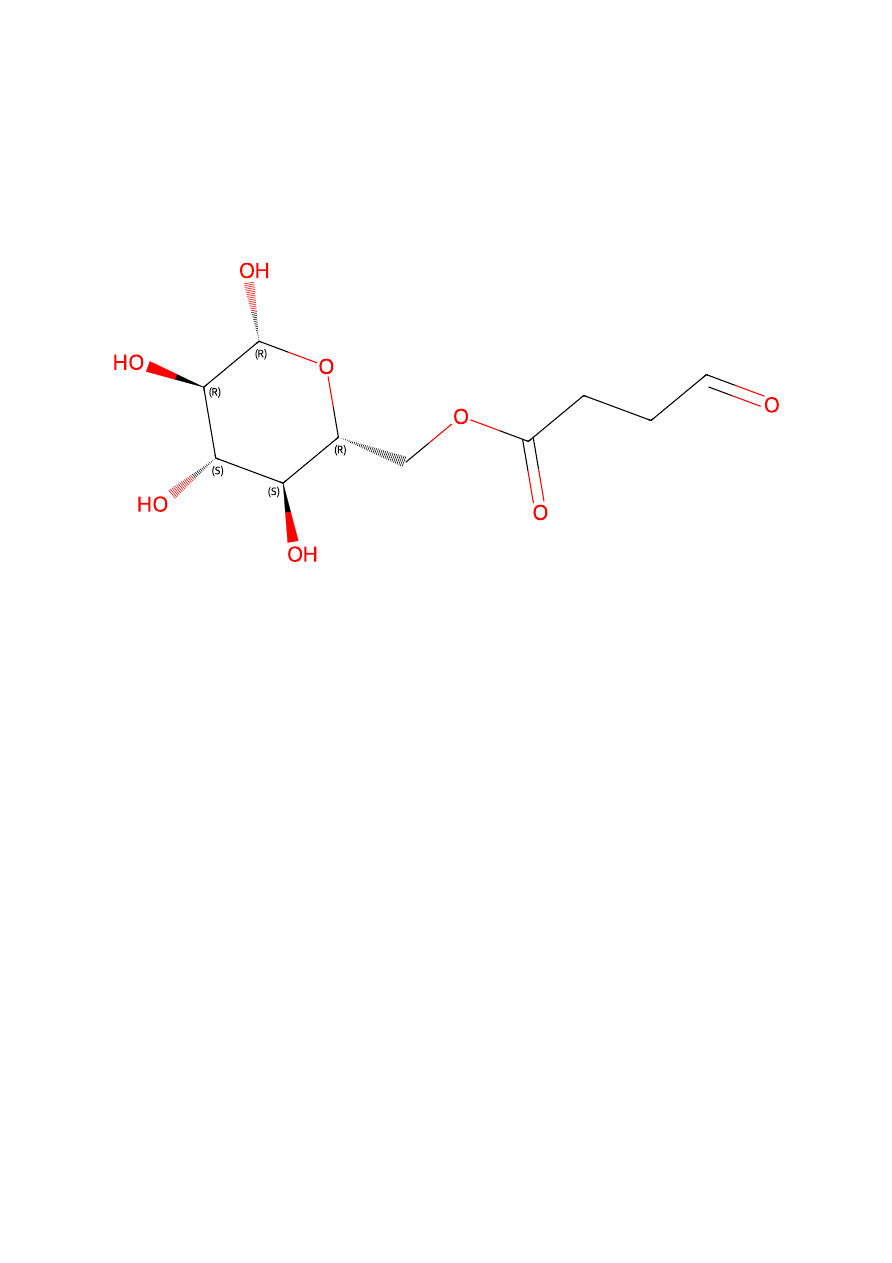
CHAPTER 3 · PROFILE 75/98 · ARCHIVE RECORD 75
75. C10H16O8 (stereoisomer 2 of 2)
Recorded rationale and role
Programme comparator / derivative. This entry preserves the
source scaffold and appendage combination for comparison
with its parent and adjacent development records. Original
entry heading: 75. C10H16O8 (stereoisomer 2 of 2)
C10H16O8 · MW 264.2 · clogP -2.69 · TPSA 133.5 Ų · HBD 4
· RotB 5. Source context is identified below; the design role is
not a measured efficacy ranking.
Preparation focus in the existing record
The preparation concept is governed by the source scaffold,
available attachment handle and functional-group
compatibility. Establish connectivity, stereochemical
AGENTIC RESEARCH FACTORY · COMPUTATIONAL COOKBOOK · 312 / 886

composition and relevant stability before comparing biological
responses.
Full deposited SMILES — verbatim
O=CCCC(=O)OC[C@H]1O[C@@H](O)[C@H](O)[C@@H](O)
[C@@H]1O
Canonical isomeric SMILES — RDKit 2026.09.1
O=CCCC(=O)OC[C@H]1O[C@@H](O)[C@H](O)[C@@H](O)
[C@@H]1O
Complete computed profile
Formula
C10H16O8
Molecular weight (g/mol)
264.23
Exact mass (Da)
264.084517
Crippen cLogP
-2.6914
TPSA (Ų)
133.52
H-bond donors
4
H-bond acceptors
8
Rotatable bonds
5
Rings
1
Formal charge
0
AGENTIC RESEARCH FACTORY · COMPUTATIONAL COOKBOOK · 313 / 886

Heavy atoms
18
Unassigned stereo —
modern
0
Unassigned stereo —
legacy
0
Graph interpretation and liabilities
This graph has 0 O–O bonds, net formal charge +0, and 5
rotatable bonds. The descriptor balance supports comparison
with the adjacent source series rather than assuming a shared
exposure profile. No unspecified stereochemical element was
detected by the stated modern analysis of this graph.
Source record
2026-11-04T223635-eyp4-THE_98_Redox_Series_2026-11-
04.pdf, numbered entry 75
Original entry text
75. C10H16O8 (stereoisomer 2 of 2)
C10H16O8 · MW 264.2 · clogP -2.69 · TPSA 133.5 Ų · HBD 4
· RotB 5
O=CCCC(=O)OC[C@H]1O[C@@H](O)[C@H](O)[C@@H](O)
[C@@H]1O
AGENTIC RESEARCH FACTORY · COMPUTATIONAL COOKBOOK · 314 / 886
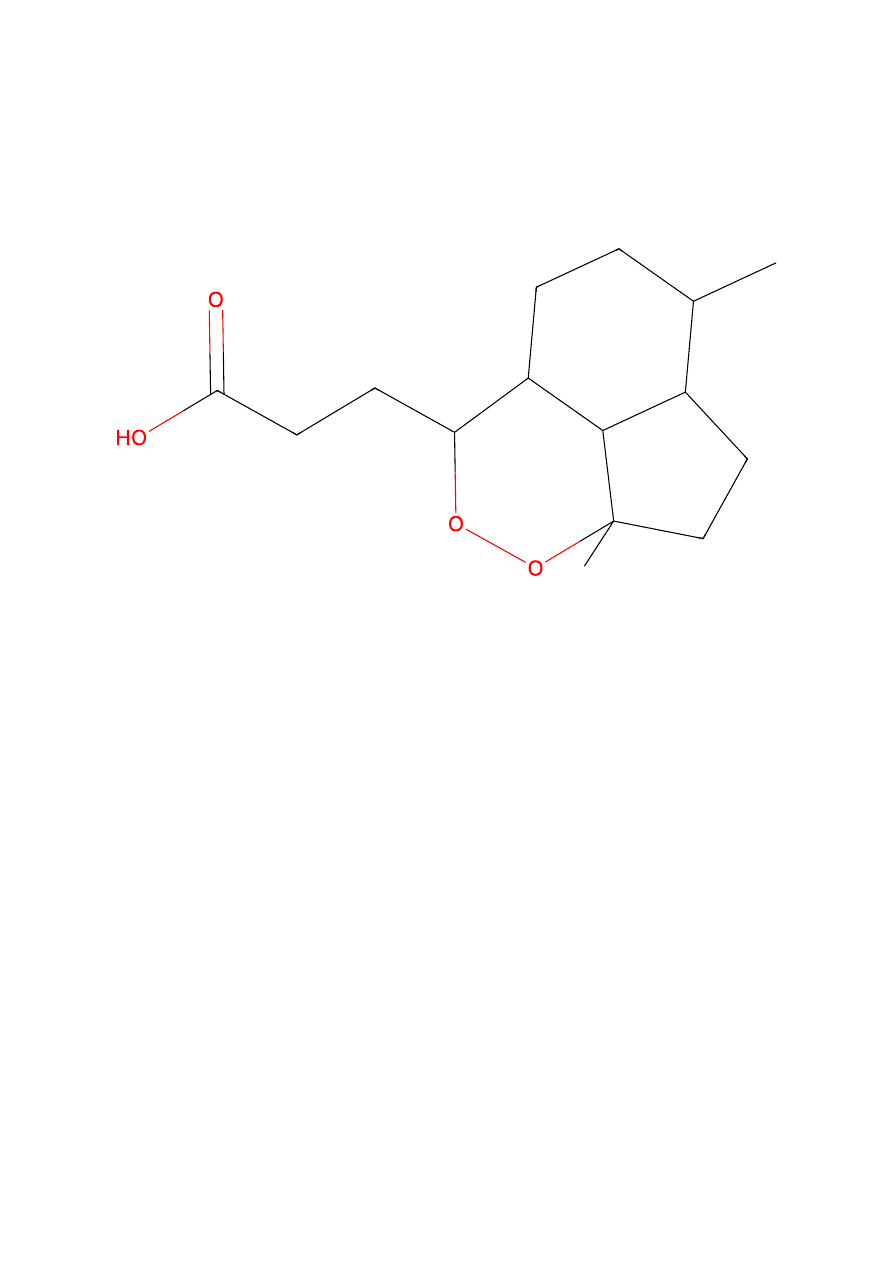
CHAPTER 3 · PROFILE 76/98 · ARCHIVE RECORD 76
76. C15H24O4
Recorded rationale and role
Peroxide / iron-activation arm. The O–O-containing graph
provides a chemically distinct redox perturbation to compare
against its parent or peroxide-free counterpart. Original entry
heading: 76. C15H24O4 . Source context is identified below;
the design role is not a measured efficacy ranking.
Preparation focus in the existing record
Peroxide-preserving preparation and analytical work are
central. Compare intact conjugate with any parent-release
products; identify the peroxide architecture and
stereochemical composition before biological interpretation.
AGENTIC RESEARCH FACTORY · COMPUTATIONAL COOKBOOK · 315 / 886

Full deposited SMILES — verbatim
CC1CCC2C(CCC(=O)O)OOC3(C)CCC1C23
Canonical isomeric SMILES — RDKit 2026.09.1
CC1CCC2C(CCC(=O)O)OOC3(C)CCC1C23
Complete computed profile
Formula
C15H24O4
Molecular weight (g/mol)
268.353
Exact mass (Da)
268.167459
Crippen cLogP
3.0126
TPSA (Ų)
55.76
H-bond donors
1
H-bond acceptors
3
Rotatable bonds
3
Rings
3
Formal charge
0
Heavy atoms
19
Unassigned stereo —
modern
6
AGENTIC RESEARCH FACTORY · COMPUTATIONAL COOKBOOK · 316 / 886

Unassigned stereo —
legacy
6
Graph interpretation and liabilities
This graph has 1 O–O bond, net formal charge +0, and 3
rotatable bonds. The descriptor balance supports comparison
with the adjacent source series rather than assuming a shared
exposure profile. The modern graph analysis leaves 6
stereochemical elements unspecified; material-level
comparisons require that composition to be defined.
Source record
2026-11-04T223635-eyp4-THE_98_Redox_Series_2026-11-
04.pdf, numbered entry 76
Original entry text
76. C15H24O4
C15H24O4 · MW 268.4 · clogP 3.01 · TPSA 55.8 Ų · HBD 1 ·
RotB 3
CC1CCC2C(CCC(=O)O)OOC3(C)CCC1C23
AGENTIC RESEARCH FACTORY · COMPUTATIONAL COOKBOOK · 317 / 886
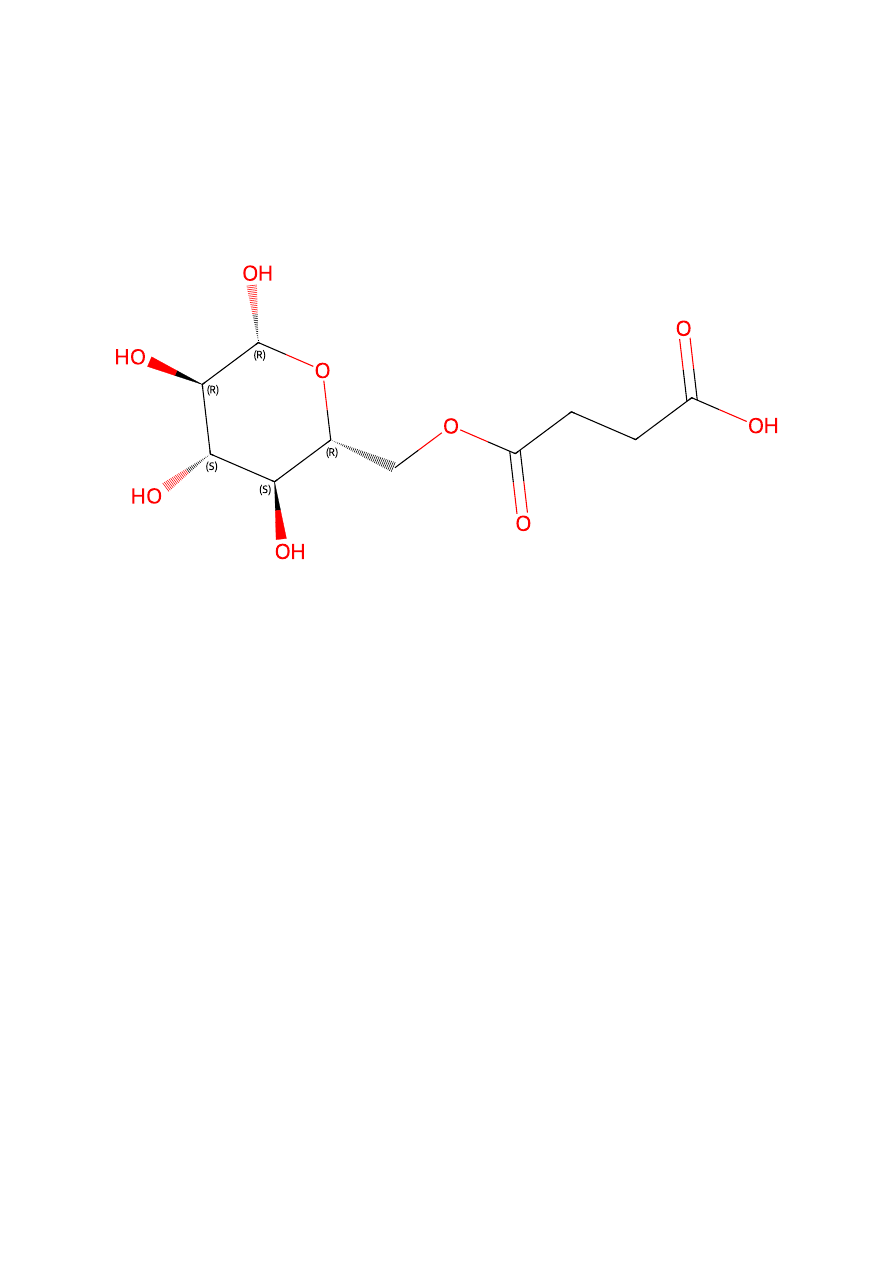
CHAPTER 3 · PROFILE 77/98 · ARCHIVE RECORD 77
77. C10H16O9
Recorded rationale and role
Programme comparator / derivative. This entry preserves the
source scaffold and appendage combination for comparison
with its parent and adjacent development records. Original
entry heading: 77. C10H16O9 C10H16O9 · MW 280.2 · clogP
-2.81 · TPSA 153.8 Ų · HBD 5 · RotB 5. Source context is
identified below; the design role is not a measured efficacy
ranking.
Preparation focus in the existing record
The preparation concept is governed by the source scaffold,
available attachment handle and functional-group
compatibility. Establish connectivity, stereochemical
AGENTIC RESEARCH FACTORY · COMPUTATIONAL COOKBOOK · 318 / 886

composition and relevant stability before comparing biological
responses.
Full deposited SMILES — verbatim
O=C(O)CCC(=O)OC[C@H]1O[C@@H](O)[C@H](O)[C@@H]
(O)[C@@H]1O
Canonical isomeric SMILES — RDKit 2026.09.1
O=C(O)CCC(=O)OC[C@H]1O[C@@H](O)[C@H](O)[C@@H]
(O)[C@@H]1O
Complete computed profile
Formula
C10H16O9
Molecular weight (g/mol)
280.229
Exact mass (Da)
280.079432
Crippen cLogP
-2.8057
TPSA (Ų)
153.75
H-bond donors
5
H-bond acceptors
8
Rotatable bonds
5
Rings
1
Formal charge
0
AGENTIC RESEARCH FACTORY · COMPUTATIONAL COOKBOOK · 319 / 886

Heavy atoms
19
Unassigned stereo —
modern
0
Unassigned stereo —
legacy
0
Graph interpretation and liabilities
This graph has 0 O–O bonds, net formal charge +0, and 5
rotatable bonds. Its polar surface makes permeability and
compartmental exposure important comparison variables. No
unspecified stereochemical element was detected by the
stated modern analysis of this graph.
Source record
2026-11-04T223635-eyp4-THE_98_Redox_Series_2026-11-
04.pdf, numbered entry 77
Original entry text
77. C10H16O9
C10H16O9 · MW 280.2 · clogP -2.81 · TPSA 153.8 Ų · HBD 5
· RotB 5
O=C(O)CCC(=O)OC[C@H]1O[C@@H](O)[C@H](O)[C@@H]
(O)[C@@H]1O
AGENTIC RESEARCH FACTORY · COMPUTATIONAL COOKBOOK · 320 / 886
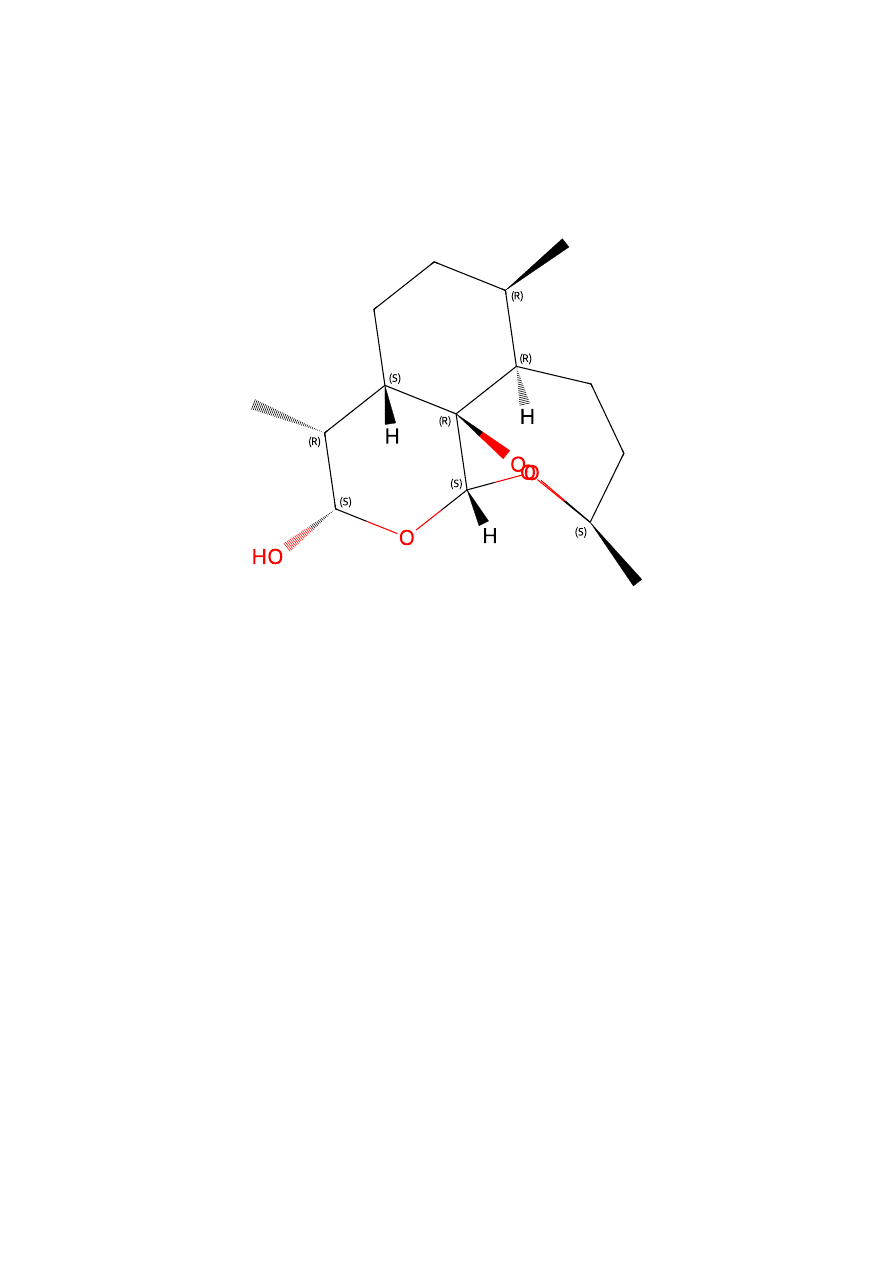
CHAPTER 3 · PROFILE 78/98 · ARCHIVE RECORD 78
78. C15H24O5 (stereoisomer 1 of 3)
Recorded rationale and role
Peroxide / iron-activation arm. The O–O-containing graph
provides a chemically distinct redox perturbation to compare
against its parent or peroxide-free counterpart. Original entry
heading: 78. C15H24O5 (stereoisomer 1 of 3) C15H24O5 ·
MW 284.4 · clogP 2.19 · TPSA 57.2 Ų · HBD 1 · RotB 0.
Source context is identified below; the design role is not a
measured efficacy ranking.
Preparation focus in the existing record
Peroxide-preserving preparation and analytical work are
central. Compare intact conjugate with any parent-release
AGENTIC RESEARCH FACTORY · COMPUTATIONAL COOKBOOK · 321 / 886

products; identify the peroxide architecture and
stereochemical composition before biological interpretation.
Full deposited SMILES — verbatim
C[C@H]1[C@@H]
(O)O[C@H]2O[C@]3(C)CC[C@@H]4[C@H]
(C)CC[C@@H]1[C@@]24OO3
Canonical isomeric SMILES — RDKit 2026.09.1
C[C@H]1[C@@H]
(O)O[C@H]2O[C@]3(C)CC[C@@H]4[C@H]
(C)CC[C@@H]1[C@@]24OO3
Complete computed profile
Formula
C15H24O5
Molecular weight (g/mol)
284.352
Exact mass (Da)
284.162374
Crippen cLogP
2.1867
TPSA (Ų)
57.15
H-bond donors
1
H-bond acceptors
5
Rotatable bonds
0
Rings
5
AGENTIC RESEARCH FACTORY · COMPUTATIONAL COOKBOOK · 322 / 886

Formal charge
0
Heavy atoms
20
Unassigned stereo —
modern
0
Unassigned stereo —
legacy
0
Graph interpretation and liabilities
This graph has 1 O–O bond, net formal charge +0, and 0
rotatable bonds. The descriptor balance supports comparison
with the adjacent source series rather than assuming a shared
exposure profile. No unspecified stereochemical element was
detected by the stated modern analysis of this graph.
Source record
2026-11-04T223635-eyp4-THE_98_Redox_Series_2026-11-
04.pdf, numbered entry 78
Original entry text
78. C15H24O5 (stereoisomer 1 of 3)
C15H24O5 · MW 284.4 · clogP 2.19 · TPSA 57.2 Ų · HBD 1 ·
RotB 0
C[C@H]1[C@@H]
(O)O[C@H]2O[C@]3(C)CC[C@@H]4[C@H]
(C)CC[C@@H]1[C@@]24OO3
AGENTIC RESEARCH FACTORY · COMPUTATIONAL COOKBOOK · 323 / 886
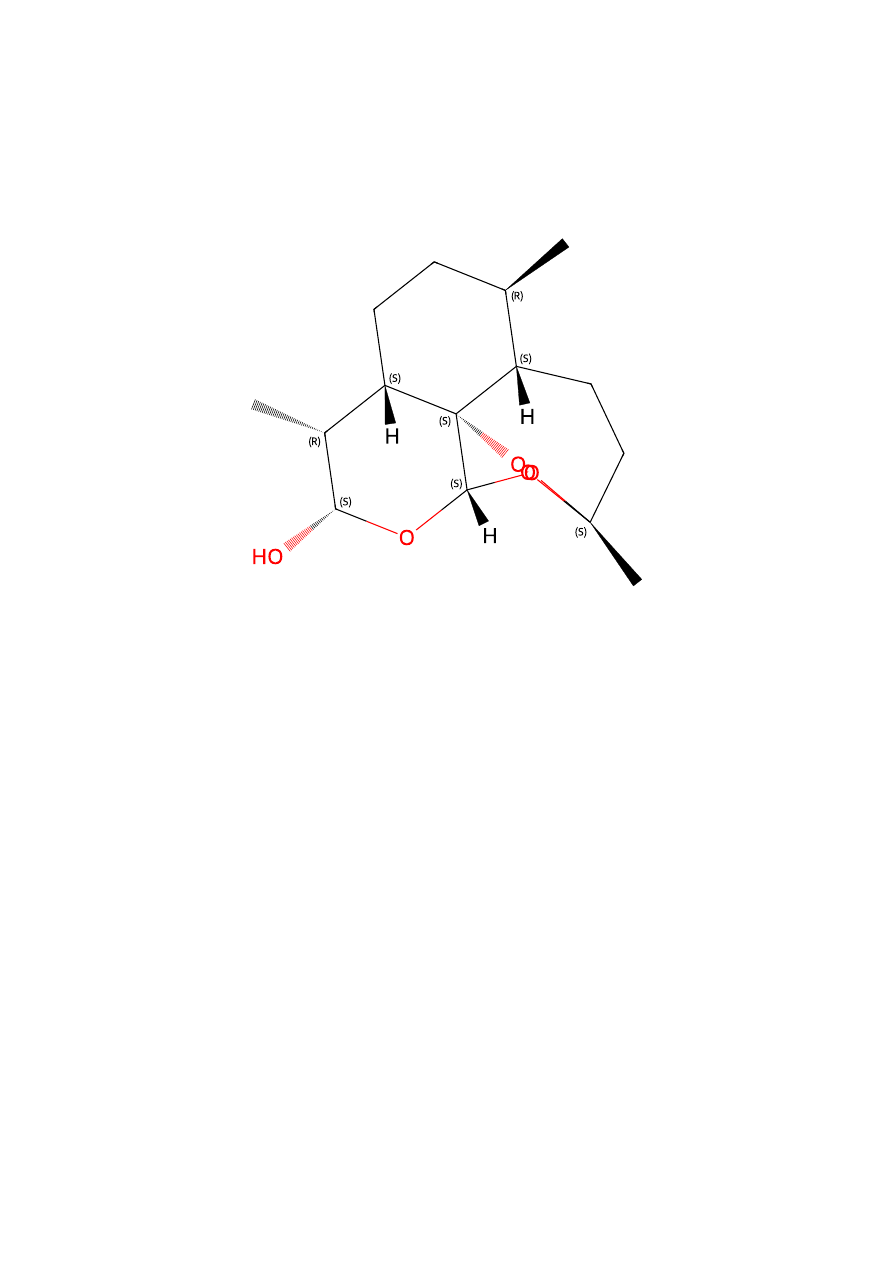
CHAPTER 3 · PROFILE 79/98 · ARCHIVE RECORD 79
79. C15H24O5 (stereoisomer 2 of 3)
Recorded rationale and role
Peroxide / iron-activation arm. The O–O-containing graph
provides a chemically distinct redox perturbation to compare
against its parent or peroxide-free counterpart. Original entry
heading: 79. C15H24O5 (stereoisomer 2 of 3) C15H24O5 ·
MW 284.4 · clogP 2.19 · TPSA 57.2 Ų · HBD 1 · RotB 0.
Source context is identified below; the design role is not a
measured efficacy ranking.
Preparation focus in the existing record
Peroxide-preserving preparation and analytical work are
central. Compare intact conjugate with any parent-release
AGENTIC RESEARCH FACTORY · COMPUTATIONAL COOKBOOK · 324 / 886

products; identify the peroxide architecture and
stereochemical composition before biological interpretation.
Full deposited SMILES — verbatim
C[C@H]1[C@@H](O)O[C@H]2O[C@]3(C)CC[C@H]4[C@H]
(C)CC[C@@H]1[C@]24OO3
Canonical isomeric SMILES — RDKit 2026.09.1
C[C@H]1[C@@H](O)O[C@H]2O[C@]3(C)CC[C@H]4[C@H]
(C)CC[C@@H]1[C@]24OO3
Complete computed profile
Formula
C15H24O5
Molecular weight (g/mol)
284.352
Exact mass (Da)
284.162374
Crippen cLogP
2.1867
TPSA (Ų)
57.15
H-bond donors
1
H-bond acceptors
5
Rotatable bonds
0
Rings
5
Formal charge
0
AGENTIC RESEARCH FACTORY · COMPUTATIONAL COOKBOOK · 325 / 886

Heavy atoms
20
Unassigned stereo —
modern
0
Unassigned stereo —
legacy
0
Graph interpretation and liabilities
This graph has 1 O–O bond, net formal charge +0, and 0
rotatable bonds. The descriptor balance supports comparison
with the adjacent source series rather than assuming a shared
exposure profile. No unspecified stereochemical element was
detected by the stated modern analysis of this graph.
Source record
2026-11-04T223635-eyp4-THE_98_Redox_Series_2026-11-
04.pdf, numbered entry 79
Original entry text
79. C15H24O5 (stereoisomer 2 of 3)
C15H24O5 · MW 284.4 · clogP 2.19 · TPSA 57.2 Ų · HBD 1 ·
RotB 0
C[C@H]1[C@@H](O)O[C@H]2O[C@]3(C)CC[C@H]4[C@H]
(C)CC[C@@H]1[C@]24OO3
AGENTIC RESEARCH FACTORY · COMPUTATIONAL COOKBOOK · 326 / 886
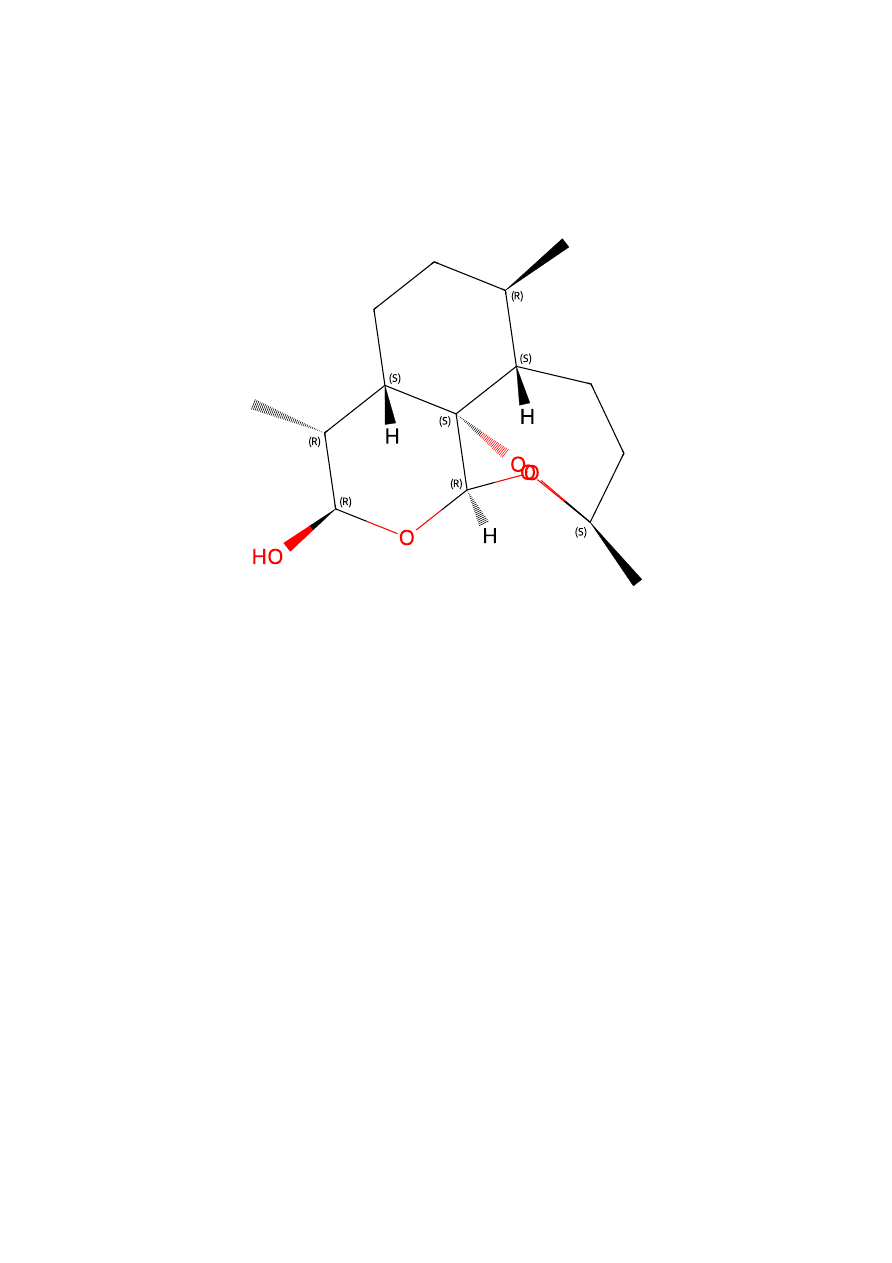
CHAPTER 3 · PROFILE 80/98 · ARCHIVE RECORD 80
80. C15H24O5 (stereoisomer 3 of 3)
Recorded rationale and role
Peroxide / iron-activation arm. The O–O-containing graph
provides a chemically distinct redox perturbation to compare
against its parent or peroxide-free counterpart. Original entry
heading: 80. C15H24O5 (stereoisomer 3 of 3) C15H24O5 ·
MW 284.4 · clogP 2.19 · TPSA 57.2 Ų · HBD 1 · RotB 0.
Source context is identified below; the design role is not a
measured efficacy ranking.
Preparation focus in the existing record
Peroxide-preserving preparation and analytical work are
central. Compare intact conjugate with any parent-release
AGENTIC RESEARCH FACTORY · COMPUTATIONAL COOKBOOK · 327 / 886

products; identify the peroxide architecture and
stereochemical composition before biological interpretation.
Full deposited SMILES — verbatim
C[C@H]1[C@H](O)O[C@@H]2O[C@]3(C)CC[C@H]4[C@H]
(C)CC[C@@H]1[C@]24OO3
Canonical isomeric SMILES — RDKit 2026.09.1
C[C@H]1[C@H](O)O[C@@H]2O[C@]3(C)CC[C@H]4[C@H]
(C)CC[C@@H]1[C@]24OO3
Complete computed profile
Formula
C15H24O5
Molecular weight (g/mol)
284.352
Exact mass (Da)
284.162374
Crippen cLogP
2.1867
TPSA (Ų)
57.15
H-bond donors
1
H-bond acceptors
5
Rotatable bonds
0
Rings
5
Formal charge
0
AGENTIC RESEARCH FACTORY · COMPUTATIONAL COOKBOOK · 328 / 886

Heavy atoms
20
Unassigned stereo —
modern
0
Unassigned stereo —
legacy
0
Graph interpretation and liabilities
This graph has 1 O–O bond, net formal charge +0, and 0
rotatable bonds. The descriptor balance supports comparison
with the adjacent source series rather than assuming a shared
exposure profile. No unspecified stereochemical element was
detected by the stated modern analysis of this graph.
Source record
2026-11-04T223635-eyp4-THE_98_Redox_Series_2026-11-
04.pdf, numbered entry 80
Original entry text
80. C15H24O5 (stereoisomer 3 of 3)
C15H24O5 · MW 284.4 · clogP 2.19 · TPSA 57.2 Ų · HBD 1 ·
RotB 0
C[C@H]1[C@H](O)O[C@@H]2O[C@]3(C)CC[C@H]4[C@H]
(C)CC[C@@H]1[C@]24OO3
AGENTIC RESEARCH FACTORY · COMPUTATIONAL COOKBOOK · 329 / 886
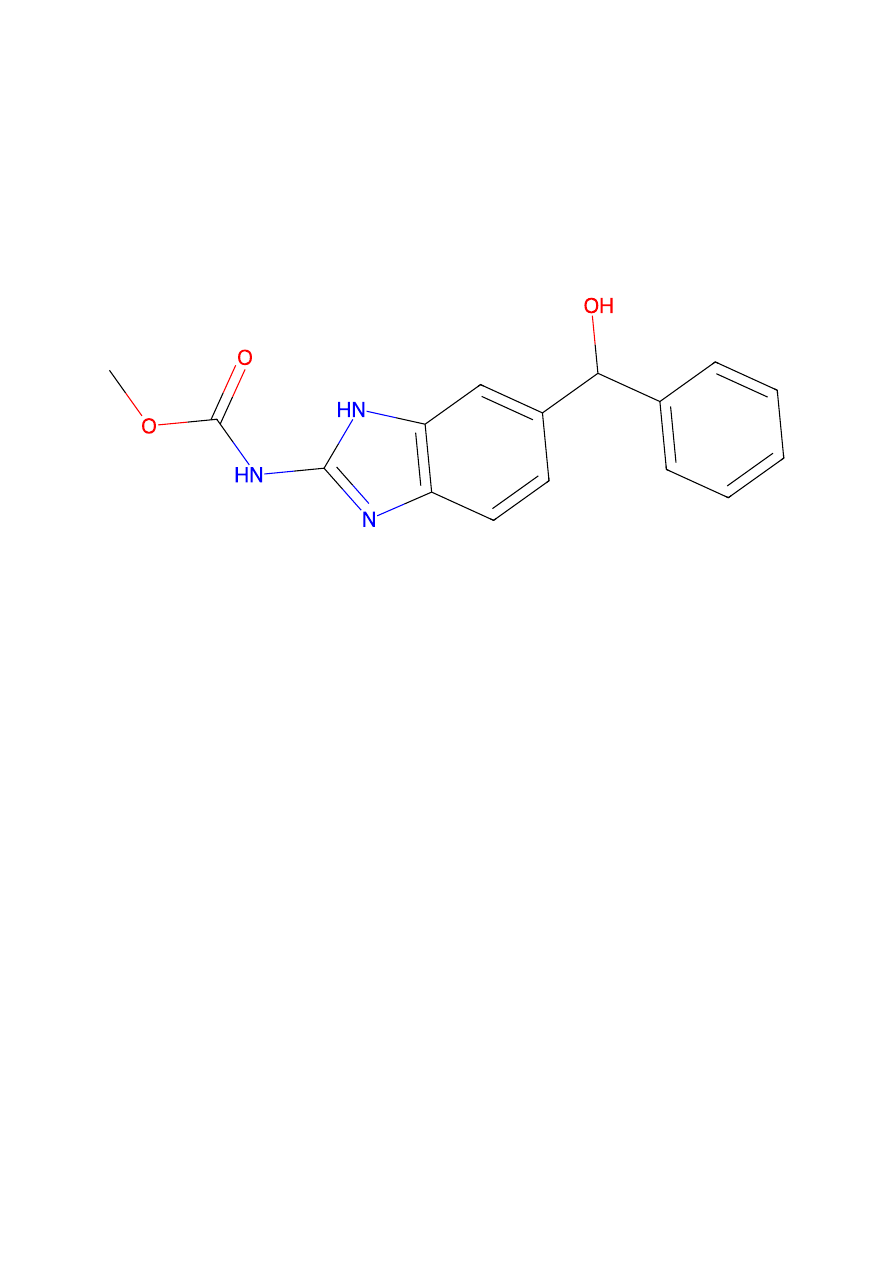
CHAPTER 3 · PROFILE 81/98 · ARCHIVE RECORD 81
81. C16H15N3O3
Recorded rationale and role
Programme comparator / derivative. This entry preserves the
source scaffold and appendage combination for comparison
with its parent and adjacent development records. Original
entry heading: 81. C16H15N3O3 C16H15N3O3 · MW 297.3 ·
clogP 2.82 · TPSA 87.2 Ų · HBD 3 · RotB 3. Source context is
identified below; the design role is not a measured efficacy
ranking.
Preparation focus in the existing record
Use the carbamate connection as a distinct persistence
hypothesis. Assess compatibility of the parent functional
AGENTIC RESEARCH FACTORY · COMPUTATIONAL COOKBOOK · 330 / 886

groups and identify any cleavage products rather than
assuming release kinetics from the linkage name.
Full deposited SMILES — verbatim
COC(=O)Nc1nc2ccc(C(O)c3ccccc3)cc2[nH]1
Canonical isomeric SMILES — RDKit 2026.09.1
COC(=O)Nc1nc2ccc(C(O)c3ccccc3)cc2[nH]1
Complete computed profile
Formula
C16H15N3O3
Molecular weight (g/mol)
297.314
Exact mass (Da)
297.111341
Crippen cLogP
2.8229
TPSA (Ų)
87.24
H-bond donors
3
H-bond acceptors
4
Rotatable bonds
3
Rings
3
Formal charge
0
Heavy atoms
22
AGENTIC RESEARCH FACTORY · COMPUTATIONAL COOKBOOK · 331 / 886

Unassigned stereo —
modern
1
Unassigned stereo —
legacy
1
Graph interpretation and liabilities
This graph has 0 O–O bonds, net formal charge +0, and 3
rotatable bonds. The descriptor balance supports comparison
with the adjacent source series rather than assuming a shared
exposure profile. The modern graph analysis leaves 1
stereochemical elements unspecified; material-level
comparisons require that composition to be defined.
Source record
2026-11-04T223635-eyp4-THE_98_Redox_Series_2026-11-
04.pdf, numbered entry 81
Original entry text
81. C16H15N3O3
C16H15N3O3 · MW 297.3 · clogP 2.82 · TPSA 87.2 Ų · HBD
3 · RotB 3
COC(=O)Nc1nc2ccc(C(O)c3ccccc3)cc2[nH]1
AGENTIC RESEARCH FACTORY · COMPUTATIONAL COOKBOOK · 332 / 886
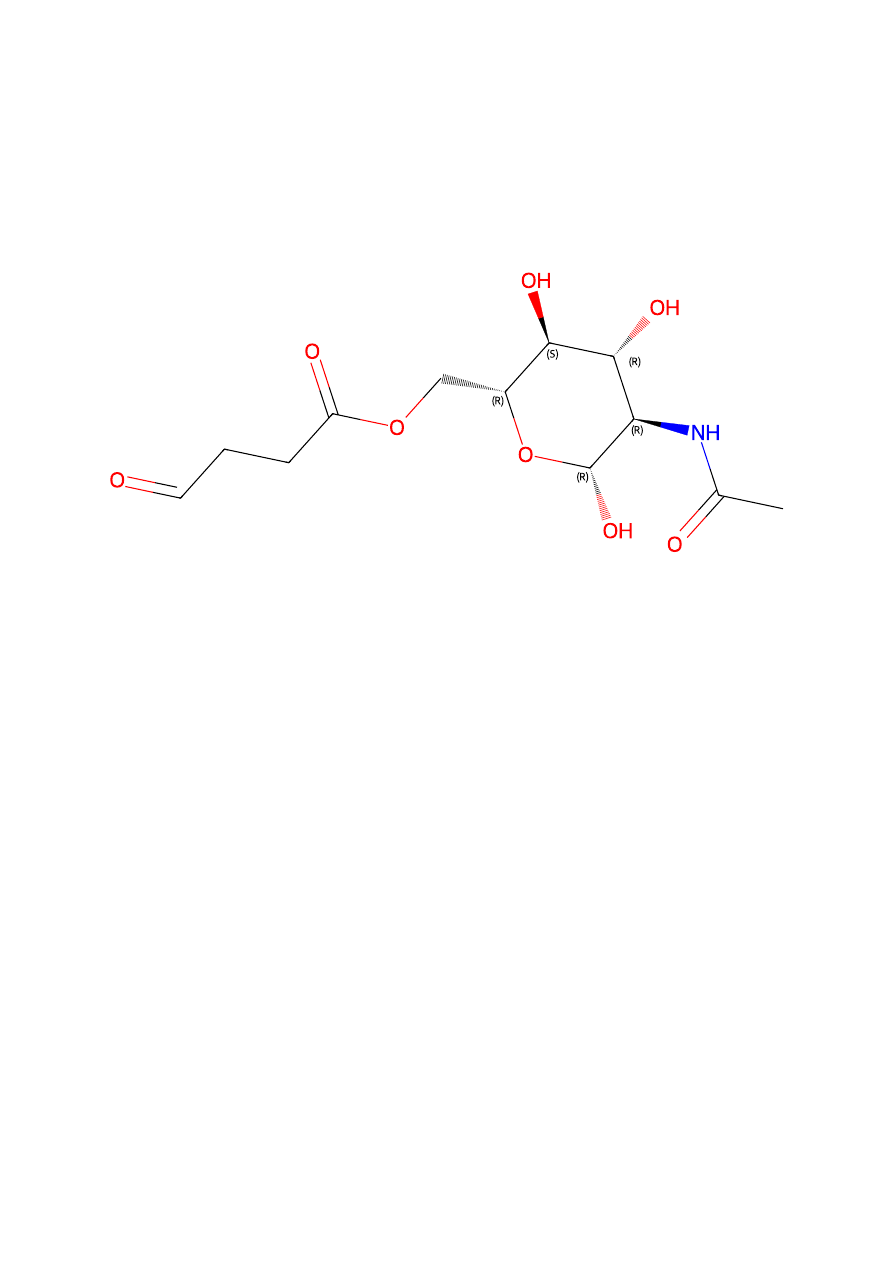
CHAPTER 3 · PROFILE 82/98 · ARCHIVE RECORD 82
82. C12H19NO8
Recorded rationale and role
Programme comparator / derivative. This entry preserves the
source scaffold and appendage combination for comparison
with its parent and adjacent development records. Original
entry heading: 82. C12H19NO8 C12H19NO8 · MW 305.3 ·
clogP -2.55 · TPSA 142.4 Ų · HBD 4 · RotB 6. Source context
is identified below; the design role is not a measured efficacy
ranking.
Preparation focus in the existing record
The preparation concept is governed by the source scaffold,
available attachment handle and functional-group
compatibility. Establish connectivity, stereochemical
AGENTIC RESEARCH FACTORY · COMPUTATIONAL COOKBOOK · 333 / 886

composition and relevant stability before comparing biological
responses.
Full deposited SMILES — verbatim
CC(=O)N[C@@H]1[C@@H](O)[C@H](O)[C@@H]
(COC(=O)CCC=O)O[C@H]1O
Canonical isomeric SMILES — RDKit 2026.09.1
CC(=O)N[C@@H]1[C@@H](O)[C@H](O)[C@@H]
(COC(=O)CCC=O)O[C@H]1O
Complete computed profile
Formula
C12H19NO8
Molecular weight (g/mol)
305.283
Exact mass (Da)
305.111067
Crippen cLogP
-2.5476
TPSA (Ų)
142.39
H-bond donors
4
H-bond acceptors
8
Rotatable bonds
6
Rings
1
Formal charge
0
AGENTIC RESEARCH FACTORY · COMPUTATIONAL COOKBOOK · 334 / 886

Heavy atoms
21
Unassigned stereo —
modern
0
Unassigned stereo —
legacy
0
Graph interpretation and liabilities
This graph has 0 O–O bonds, net formal charge +0, and 6
rotatable bonds. The descriptor balance supports comparison
with the adjacent source series rather than assuming a shared
exposure profile. No unspecified stereochemical element was
detected by the stated modern analysis of this graph.
Source record
2026-11-04T223635-eyp4-THE_98_Redox_Series_2026-11-
04.pdf, numbered entry 82
Original entry text
82. C12H19NO8
C12H19NO8 · MW 305.3 · clogP -2.55 · TPSA 142.4 Ų · HBD
4 · RotB 6
CC(=O)N[C@@H]1[C@@H](O)[C@H](O)[C@@H]
(COC(=O)CCC=O)O[C@H]1O
AGENTIC RESEARCH FACTORY · COMPUTATIONAL COOKBOOK · 335 / 886
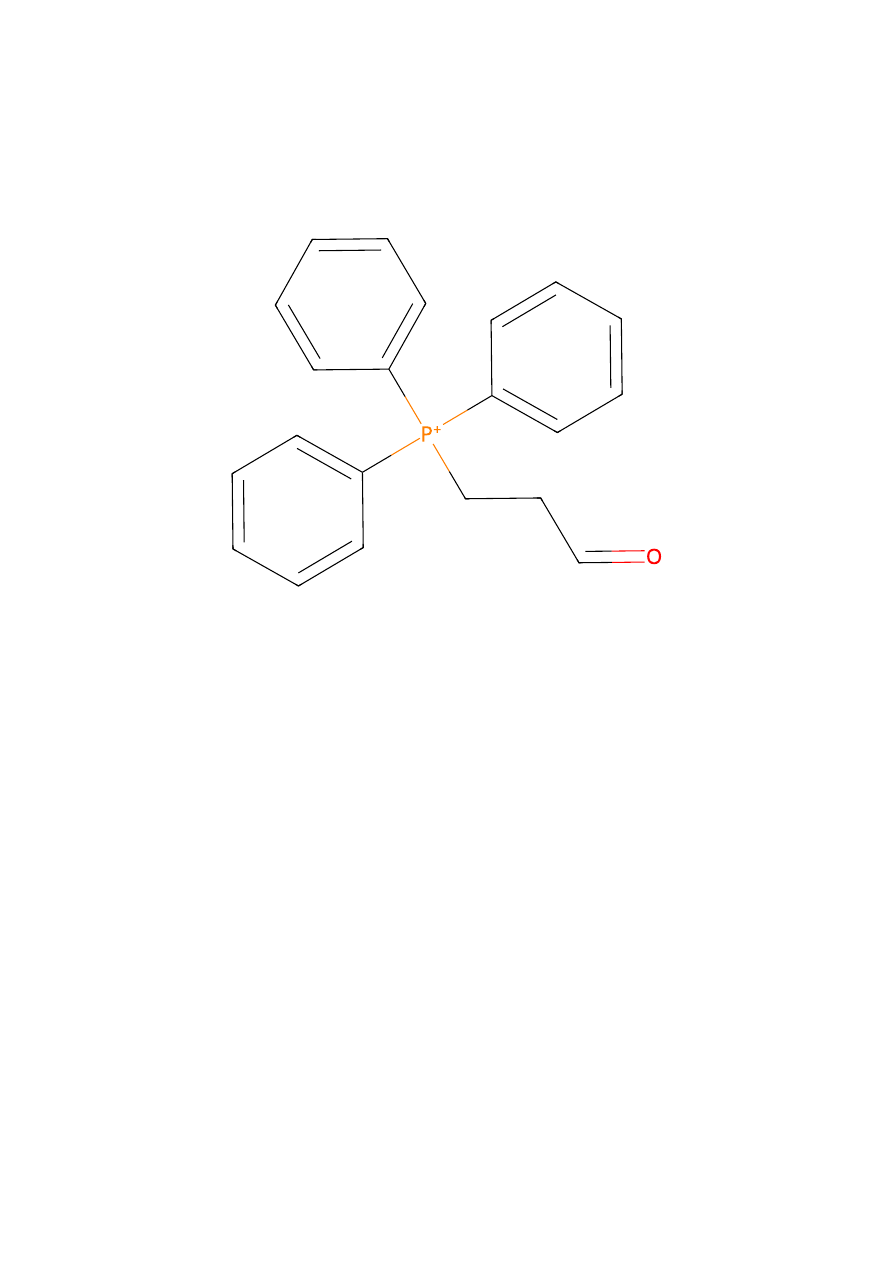
CHAPTER 3 · PROFILE 83/98 · ARCHIVE RECORD 83
83. C21H20OP+
Recorded rationale and role
Charge-associated distribution arm. The encoded cation
provides a test of distribution and membrane interaction
against an uncharged or differently charged comparator.
Original entry heading: 83. C21H20OP+ C21H20OP+ · MW
319.4 · clogP 3.57 · TPSA 17.1 Ų · HBD 0 · RotB 6. Source
context is identified below; the design role is not a measured
efficacy ranking.
Preparation focus in the existing record
Specify counterion and salt composition, distinguish intact
conjugate from cleaved species, and compare the charged
AGENTIC RESEARCH FACTORY · COMPUTATIONAL COOKBOOK · 336 / 886

appendage separately. Chromatographic and spectroscopic
characterization must follow the actual encoded structure.
Full deposited SMILES — verbatim
O=CCC[P+](c1ccccc1)(c1ccccc1)c1ccccc1
Canonical isomeric SMILES — RDKit 2026.09.1
O=CCC[P+](c1ccccc1)(c1ccccc1)c1ccccc1
Complete computed profile
Formula
C21H20OP+
Molecular weight (g/mol)
319.364
Exact mass (Da)
319.124628
Crippen cLogP
3.5695
TPSA (Ų)
17.07
H-bond donors
0
H-bond acceptors
1
Rotatable bonds
6
Rings
3
Formal charge
1
Heavy atoms
23
AGENTIC RESEARCH FACTORY · COMPUTATIONAL COOKBOOK · 337 / 886

Unassigned stereo —
modern
0
Unassigned stereo —
legacy
0
Graph interpretation and liabilities
This graph has 0 O–O bonds, net formal charge +1, and 6
rotatable bonds. The descriptor balance supports comparison
with the adjacent source series rather than assuming a shared
exposure profile. No unspecified stereochemical element was
detected by the stated modern analysis of this graph.
Source record
2026-11-04T223635-eyp4-THE_98_Redox_Series_2026-11-
04.pdf, numbered entry 83
Original entry text
83. C21H20OP+
C21H20OP+ · MW 319.4 · clogP 3.57 · TPSA 17.1 Ų · HBD 0
· RotB 6
O=CCC[P+](c1ccccc1)(c1ccccc1)c1ccccc1
AGENTIC RESEARCH FACTORY · COMPUTATIONAL COOKBOOK · 338 / 886
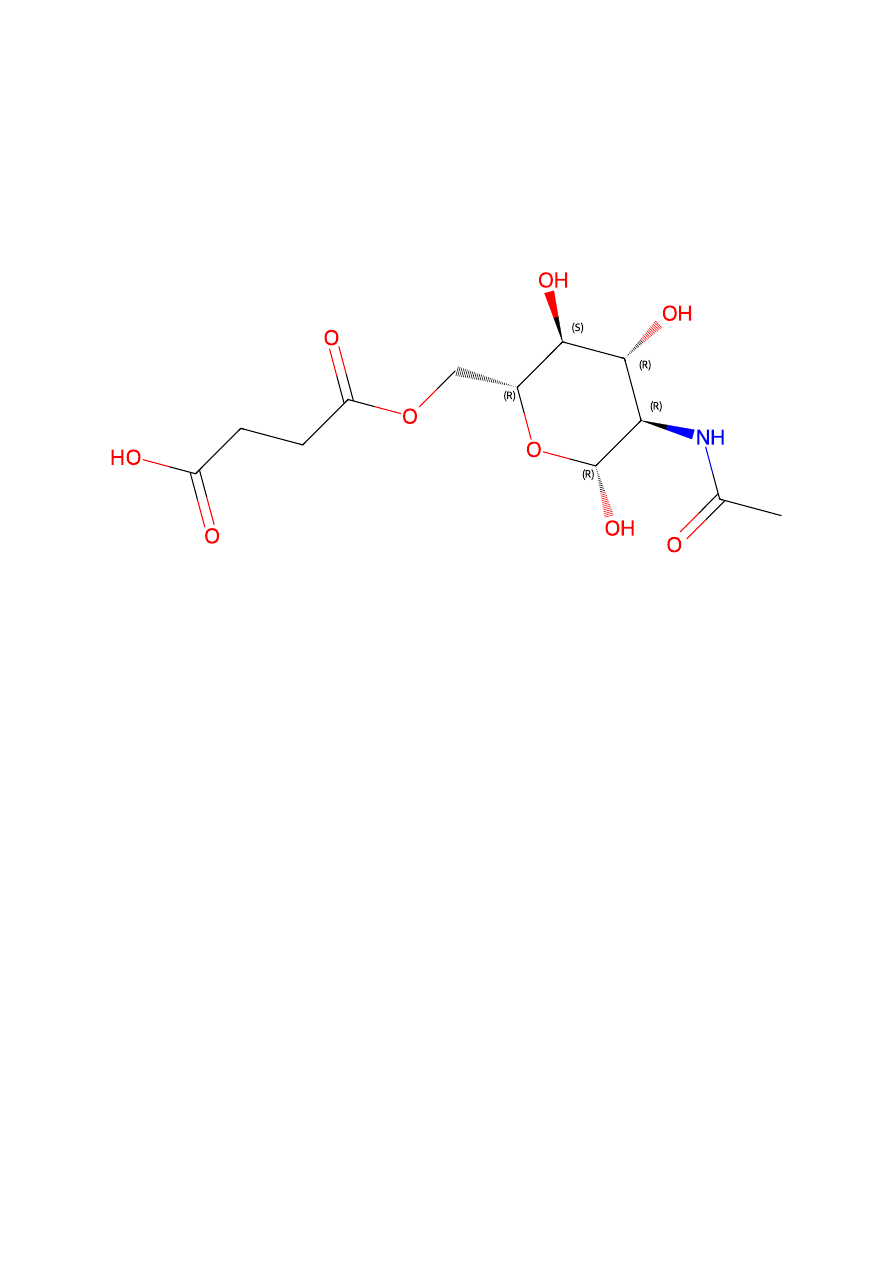
CHAPTER 3 · PROFILE 84/98 · ARCHIVE RECORD 84
84. C12H19NO9
Recorded rationale and role
Programme comparator / derivative. This entry preserves the
source scaffold and appendage combination for comparison
with its parent and adjacent development records. Original
entry heading: 84. C12H19NO9 C12H19NO9 · MW 321.3 ·
clogP -2.66 · TPSA 162.6 Ų · HBD 5 · RotB 6. Source context
is identified below; the design role is not a measured efficacy
ranking.
Preparation focus in the existing record
The preparation concept is governed by the source scaffold,
available attachment handle and functional-group
compatibility. Establish connectivity, stereochemical
AGENTIC RESEARCH FACTORY · COMPUTATIONAL COOKBOOK · 339 / 886

composition and relevant stability before comparing biological
responses.
Full deposited SMILES — verbatim
CC(=O)N[C@@H]1[C@@H](O)[C@H](O)[C@@H]
(COC(=O)CCC(=O)O)O[C@H]1O
Canonical isomeric SMILES — RDKit 2026.09.1
CC(=O)N[C@@H]1[C@@H](O)[C@H](O)[C@@H]
(COC(=O)CCC(=O)O)O[C@H]1O
Complete computed profile
Formula
C12H19NO9
Molecular weight (g/mol)
321.282
Exact mass (Da)
321.105981
Crippen cLogP
-2.6619
TPSA (Ų)
162.62
H-bond donors
5
H-bond acceptors
8
Rotatable bonds
6
Rings
1
Formal charge
0
AGENTIC RESEARCH FACTORY · COMPUTATIONAL COOKBOOK · 340 / 886

Heavy atoms
22
Unassigned stereo —
modern
0
Unassigned stereo —
legacy
0
Graph interpretation and liabilities
This graph has 0 O–O bonds, net formal charge +0, and 6
rotatable bonds. Its polar surface makes permeability and
compartmental exposure important comparison variables. No
unspecified stereochemical element was detected by the
stated modern analysis of this graph.
Source record
2026-11-04T223635-eyp4-THE_98_Redox_Series_2026-11-
04.pdf, numbered entry 84
Original entry text
84. C12H19NO9
C12H19NO9 · MW 321.3 · clogP -2.66 · TPSA 162.6 Ų · HBD
5 · RotB 6
CC(=O)N[C@@H]1[C@@H](O)[C@H](O)[C@@H]
(COC(=O)CCC(=O)O)O[C@H]1O
AGENTIC RESEARCH FACTORY · COMPUTATIONAL COOKBOOK · 341 / 886
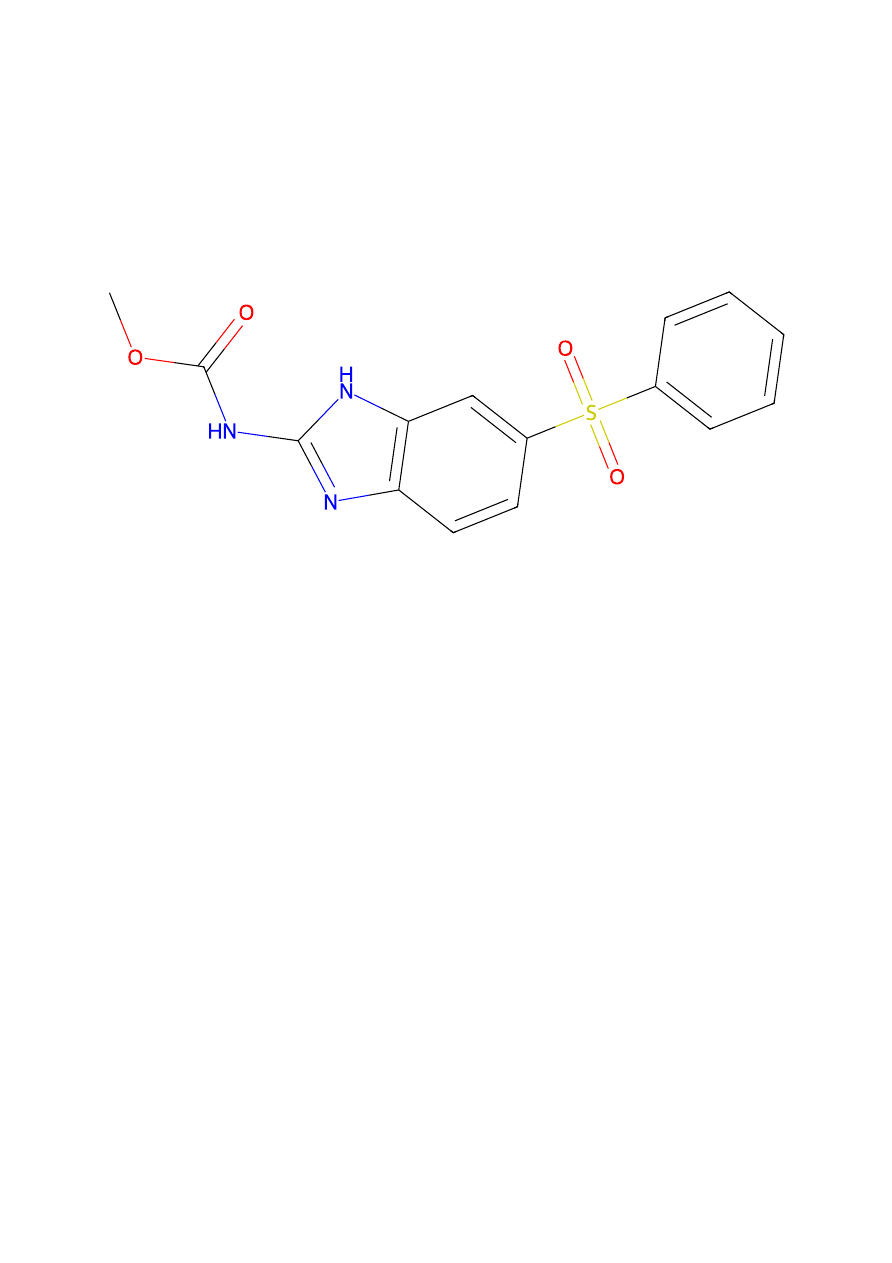
CHAPTER 3 · PROFILE 85/98 · ARCHIVE RECORD 85
85. C15H13N3O4S
Recorded rationale and role
Sulfur-containing comparator or derivative. The structure
extends the programme beyond the moxidectin scaffold and
supports comparison of class action, exposure and redox
response. Original entry heading: 85. C15H13N3O4S
C15H13N3O4S · MW 331.4 · clogP 2.57 · TPSA 101.1 Ų ·
HBD 2 · RotB 3. Source context is identified below; the design
role is not a measured efficacy ranking.
Preparation focus in the existing record
Use the carbamate connection as a distinct persistence
hypothesis. Assess compatibility of the parent functional
AGENTIC RESEARCH FACTORY · COMPUTATIONAL COOKBOOK · 342 / 886

groups and identify any cleavage products rather than
assuming release kinetics from the linkage name.
Full deposited SMILES — verbatim
COC(=O)Nc1nc2ccc(S(=O)(=O)c3ccccc3)cc2[nH]1
Canonical isomeric SMILES — RDKit 2026.09.1
COC(=O)Nc1nc2ccc(S(=O)(=O)c3ccccc3)cc2[nH]1
Complete computed profile
Formula
C15H13N3O4S
Molecular weight (g/mol)
331.353
Exact mass (Da)
331.062677
Crippen cLogP
2.574
TPSA (Ų)
101.15
H-bond donors
2
H-bond acceptors
5
Rotatable bonds
3
Rings
3
Formal charge
0
Heavy atoms
23
AGENTIC RESEARCH FACTORY · COMPUTATIONAL COOKBOOK · 343 / 886

Unassigned stereo —
modern
0
Unassigned stereo —
legacy
0
Graph interpretation and liabilities
This graph has 0 O–O bonds, net formal charge +0, and 3
rotatable bonds. The descriptor balance supports comparison
with the adjacent source series rather than assuming a shared
exposure profile. No unspecified stereochemical element was
detected by the stated modern analysis of this graph.
Source record
2026-11-04T223635-eyp4-THE_98_Redox_Series_2026-11-
04.pdf, numbered entry 85
Original entry text
85. C15H13N3O4S
C15H13N3O4S · MW 331.4 · clogP 2.57 · TPSA 101.1 Ų ·
HBD 2 · RotB 3
COC(=O)Nc1nc2ccc(S(=O)(=O)c3ccccc3)cc2[nH]1
AGENTIC RESEARCH FACTORY · COMPUTATIONAL COOKBOOK · 344 / 886
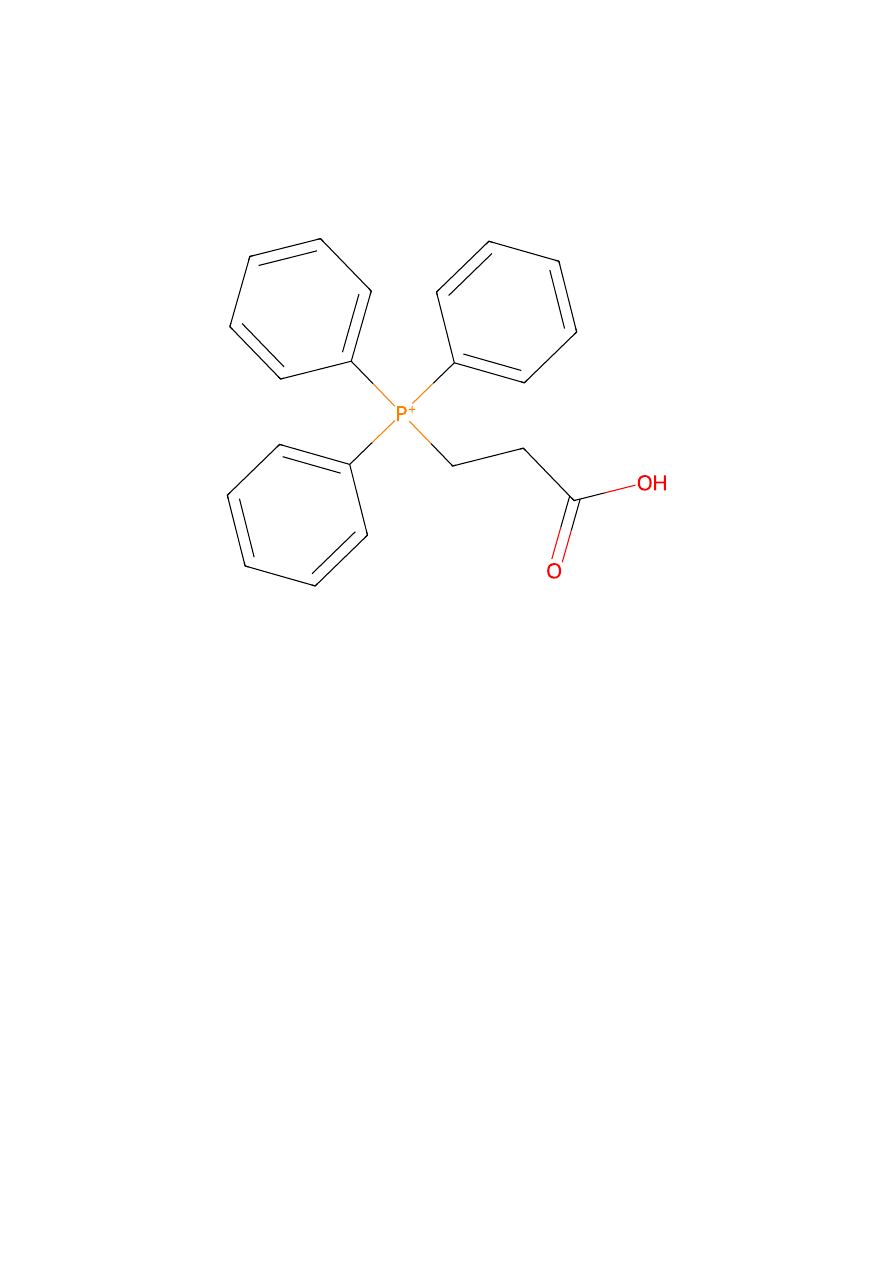
CHAPTER 3 · PROFILE 86/98 · ARCHIVE RECORD 86
86. C21H20O2P+
Recorded rationale and role
Charge-associated distribution arm. The encoded cation
provides a test of distribution and membrane interaction
against an uncharged or differently charged comparator.
Original entry heading: 86. C21H20O2P+ . Source context is
identified below; the design role is not a measured efficacy
ranking.
Preparation focus in the existing record
Specify counterion and salt composition, distinguish intact
conjugate from cleaved species, and compare the charged
appendage separately. Chromatographic and spectroscopic
characterization must follow the actual encoded structure.
AGENTIC RESEARCH FACTORY · COMPUTATIONAL COOKBOOK · 345 / 886

Full deposited SMILES — verbatim
O=C(O)CC[P+](c1ccccc1)(c1ccccc1)c1ccccc1
Canonical isomeric SMILES — RDKit 2026.09.1
O=C(O)CC[P+](c1ccccc1)(c1ccccc1)c1ccccc1
Complete computed profile
Formula
C21H20O2P+
Molecular weight (g/mol)
335.363
Exact mass (Da)
335.119543
Crippen cLogP
3.4552
TPSA (Ų)
37.3
H-bond donors
1
H-bond acceptors
1
Rotatable bonds
6
Rings
3
Formal charge
1
Heavy atoms
24
Unassigned stereo —
modern
0
AGENTIC RESEARCH FACTORY · COMPUTATIONAL COOKBOOK · 346 / 886

Unassigned stereo —
legacy
0
Graph interpretation and liabilities
This graph has 0 O–O bonds, net formal charge +1, and 6
rotatable bonds. The descriptor balance supports comparison
with the adjacent source series rather than assuming a shared
exposure profile. No unspecified stereochemical element was
detected by the stated modern analysis of this graph.
Source record
2026-11-04T223635-eyp4-THE_98_Redox_Series_2026-11-
04.pdf, numbered entry 86
Original entry text
86. C21H20O2P+
C21H20O2P+ · MW 335.4 · clogP 3.46 · TPSA 37.3 Ų · HBD
1 · RotB 6
O=C(O)CC[P+](c1ccccc1)(c1ccccc1)c1ccccc1
AGENTIC RESEARCH FACTORY · COMPUTATIONAL COOKBOOK · 347 / 886
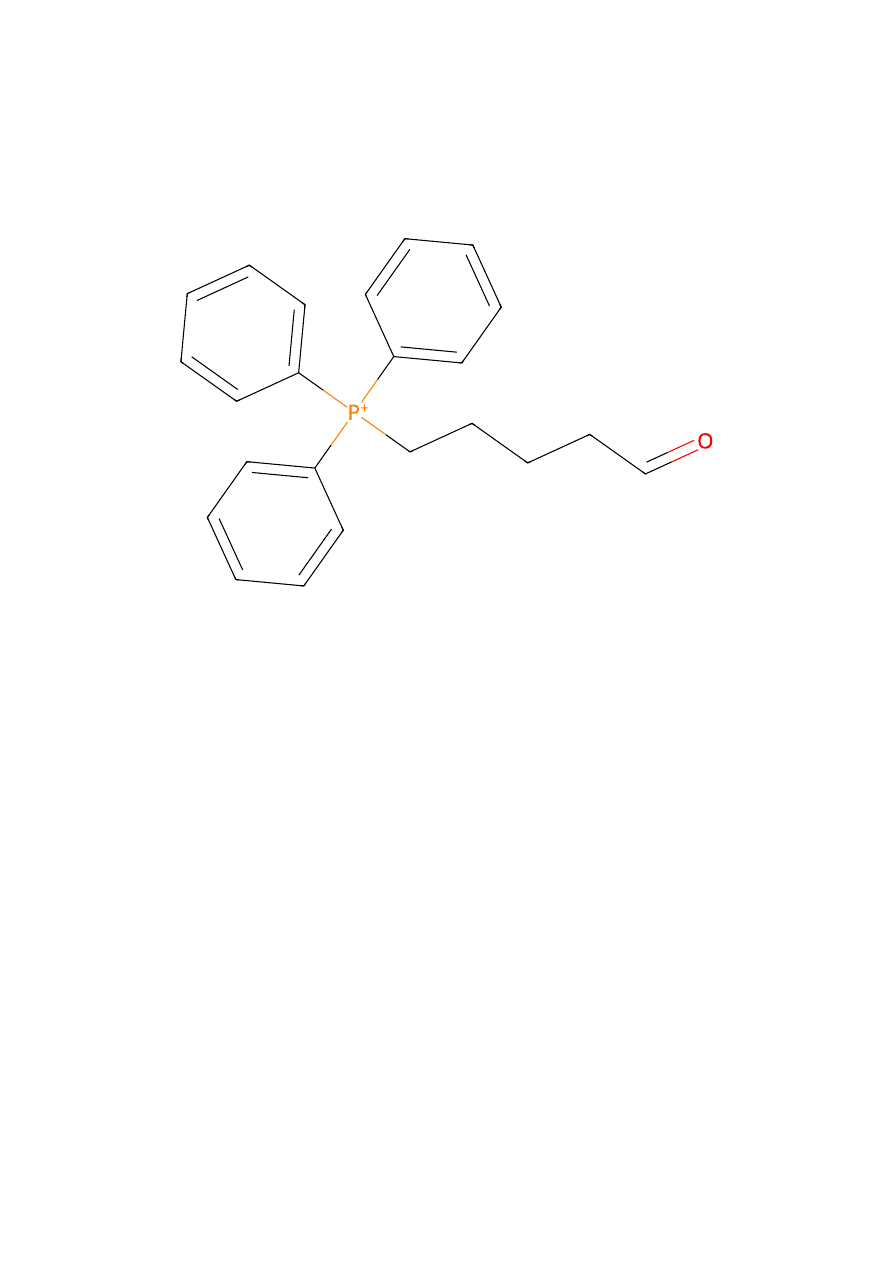
CHAPTER 3 · PROFILE 87/98 · ARCHIVE RECORD 87
87. C23H24OP+
Recorded rationale and role
Charge-associated distribution arm. The encoded cation
provides a test of distribution and membrane interaction
against an uncharged or differently charged comparator.
Original entry heading: 87. C23H24OP+ C23H24OP+ · MW
347.4 · clogP 4.35 · TPSA 17.1 Ų · HBD 0 · RotB 8. Source
context is identified below; the design role is not a measured
efficacy ranking.
Preparation focus in the existing record
Specify counterion and salt composition, distinguish intact
conjugate from cleaved species, and compare the charged
AGENTIC RESEARCH FACTORY · COMPUTATIONAL COOKBOOK · 348 / 886

appendage separately. Chromatographic and spectroscopic
characterization must follow the actual encoded structure.
Full deposited SMILES — verbatim
O=CCCCC[P+](c1ccccc1)(c1ccccc1)c1ccccc1
Canonical isomeric SMILES — RDKit 2026.09.1
O=CCCCC[P+](c1ccccc1)(c1ccccc1)c1ccccc1
Complete computed profile
Formula
C23H24OP+
Molecular weight (g/mol)
347.418
Exact mass (Da)
347.155928
Crippen cLogP
4.3497
TPSA (Ų)
17.07
H-bond donors
0
H-bond acceptors
1
Rotatable bonds
8
Rings
3
Formal charge
1
Heavy atoms
25
AGENTIC RESEARCH FACTORY · COMPUTATIONAL COOKBOOK · 349 / 886

Unassigned stereo —
modern
0
Unassigned stereo —
legacy
0
Graph interpretation and liabilities
This graph has 0 O–O bonds, net formal charge +1, and 8
rotatable bonds. The descriptor balance supports comparison
with the adjacent source series rather than assuming a shared
exposure profile. No unspecified stereochemical element was
detected by the stated modern analysis of this graph.
Source record
2026-11-04T223635-eyp4-THE_98_Redox_Series_2026-11-
04.pdf, numbered entry 87
Original entry text
87. C23H24OP+
C23H24OP+ · MW 347.4 · clogP 4.35 · TPSA 17.1 Ų · HBD 0
· RotB 8
O=CCCCC[P+](c1ccccc1)(c1ccccc1)c1ccccc1
AGENTIC RESEARCH FACTORY · COMPUTATIONAL COOKBOOK · 350 / 886
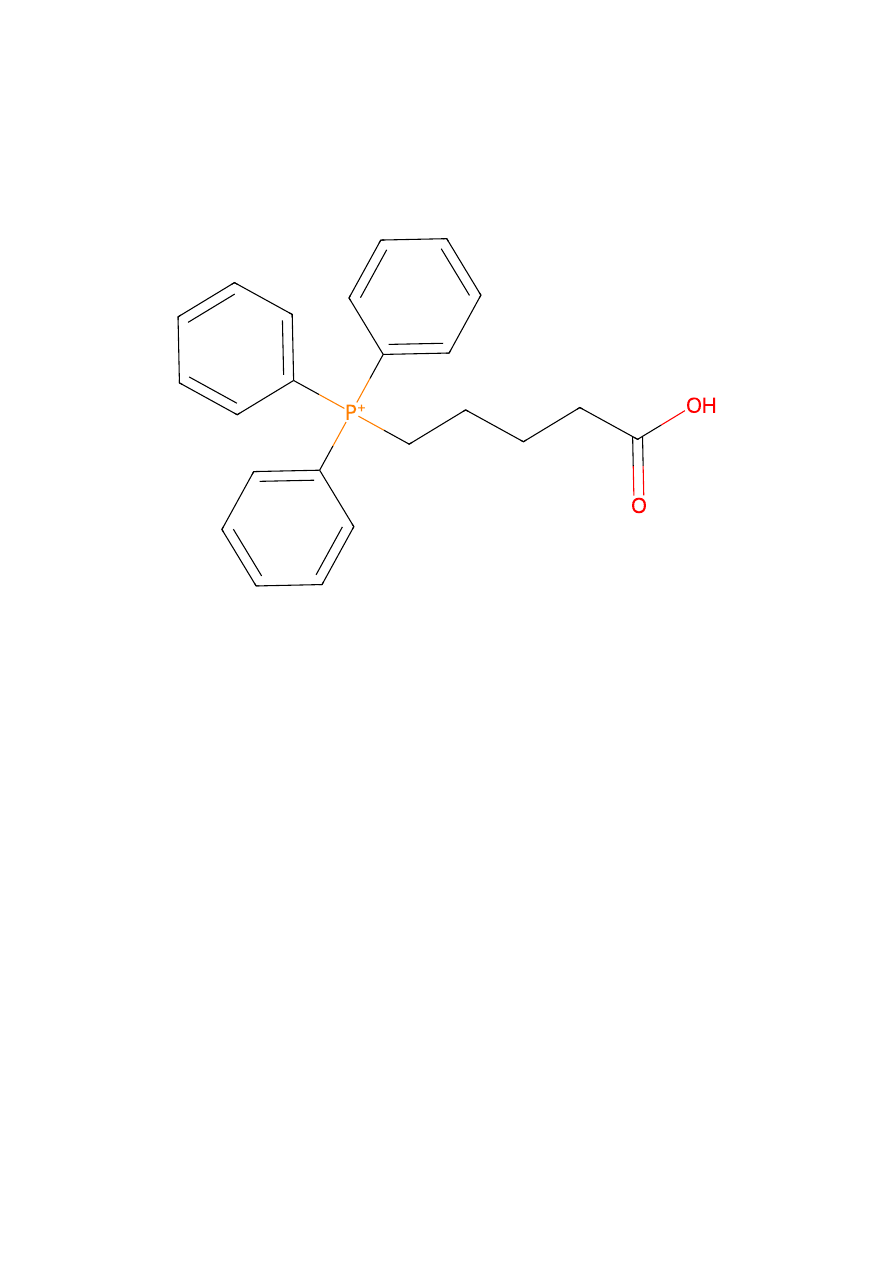
CHAPTER 3 · PROFILE 88/98 · ARCHIVE RECORD 88
88. C23H24O2P+
Recorded rationale and role
Charge-associated distribution arm. The encoded cation
provides a test of distribution and membrane interaction
against an uncharged or differently charged comparator.
Original entry heading: 88. C23H24O2P+ C23H24O2P+ · MW
363.4 · clogP 4.24 · TPSA 37.3 Ų · HBD 1 · RotB 8. Source
context is identified below; the design role is not a measured
efficacy ranking.
Preparation focus in the existing record
Specify counterion and salt composition, distinguish intact
conjugate from cleaved species, and compare the charged
AGENTIC RESEARCH FACTORY · COMPUTATIONAL COOKBOOK · 351 / 886

appendage separately. Chromatographic and spectroscopic
characterization must follow the actual encoded structure.
Full deposited SMILES — verbatim
O=C(O)CCCC[P+](c1ccccc1)(c1ccccc1)c1ccccc1
Canonical isomeric SMILES — RDKit 2026.09.1
O=C(O)CCCC[P+](c1ccccc1)(c1ccccc1)c1ccccc1
Complete computed profile
Formula
C23H24O2P+
Molecular weight (g/mol)
363.417
Exact mass (Da)
363.150843
Crippen cLogP
4.2354
TPSA (Ų)
37.3
H-bond donors
1
H-bond acceptors
1
Rotatable bonds
8
Rings
3
Formal charge
1
Heavy atoms
26
AGENTIC RESEARCH FACTORY · COMPUTATIONAL COOKBOOK · 352 / 886

Unassigned stereo —
modern
0
Unassigned stereo —
legacy
0
Graph interpretation and liabilities
This graph has 0 O–O bonds, net formal charge +1, and 8
rotatable bonds. The descriptor balance supports comparison
with the adjacent source series rather than assuming a shared
exposure profile. No unspecified stereochemical element was
detected by the stated modern analysis of this graph.
Source record
2026-11-04T223635-eyp4-THE_98_Redox_Series_2026-11-
04.pdf, numbered entry 88
Original entry text
88. C23H24O2P+
C23H24O2P+ · MW 363.4 · clogP 4.24 · TPSA 37.3 Ų · HBD
1 · RotB 8
O=C(O)CCCC[P+](c1ccccc1)(c1ccccc1)c1ccccc1
AGENTIC RESEARCH FACTORY · COMPUTATIONAL COOKBOOK · 353 / 886
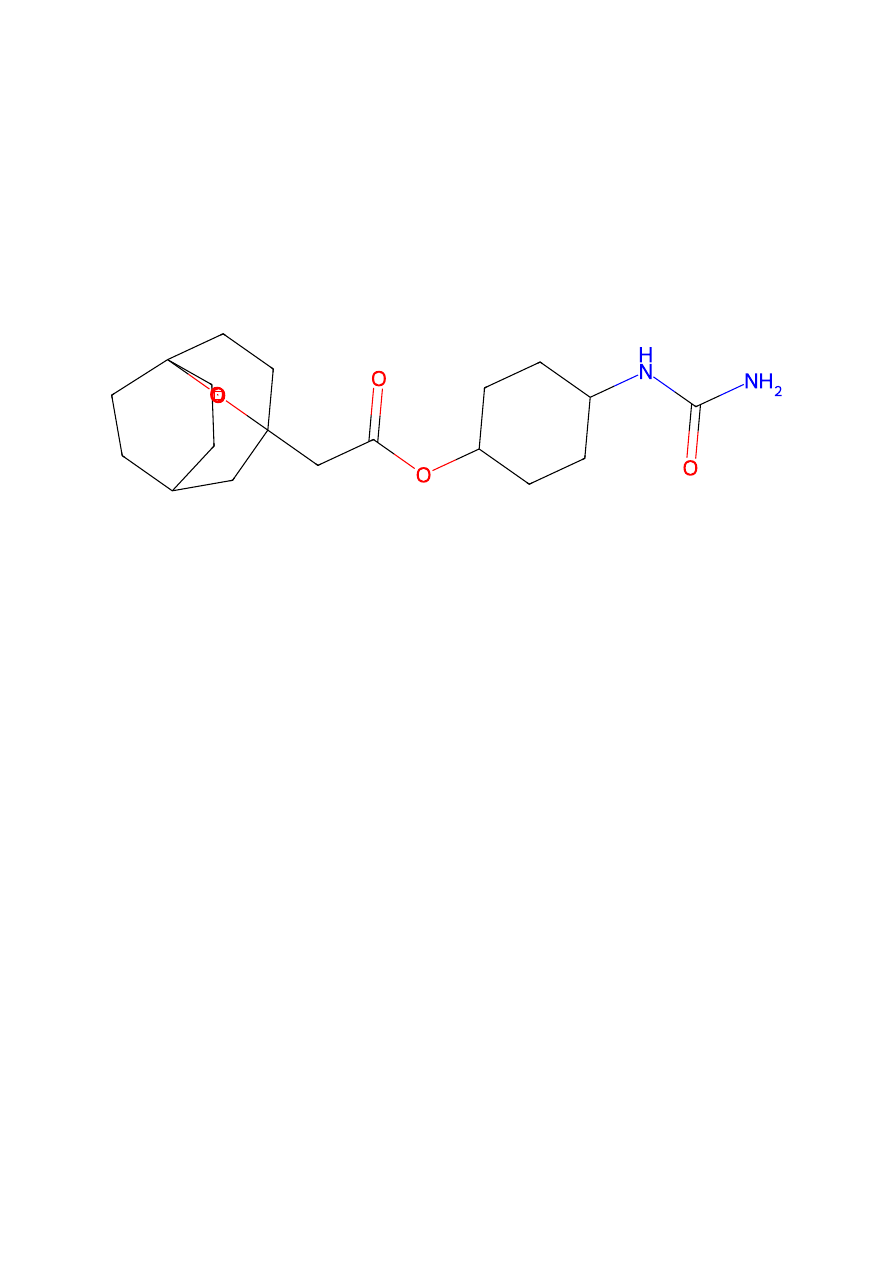
CHAPTER 3 · PROFILE 89/98 · ARCHIVE RECORD 89
89. C19H30N2O5
Recorded rationale and role
Peroxide / iron-activation arm. The O–O-containing graph
provides a chemically distinct redox perturbation to compare
against its parent or peroxide-free counterpart. Original entry
heading: 89. C19H30N2O5 C19H30N2O5 · MW 366.5 · clogP
2.71 · TPSA 99.9 Ų · HBD 2 · RotB 4. Source context is
identified below; the design role is not a measured efficacy
ranking.
Preparation focus in the existing record
Peroxide-preserving preparation and analytical work are
central. Compare intact conjugate with any parent-release
AGENTIC RESEARCH FACTORY · COMPUTATIONAL COOKBOOK · 354 / 886

products; identify the peroxide architecture and
stereochemical composition before biological interpretation.
Full deposited SMILES — verbatim
NC(=O)NC1CCC(OC(=O)CC23CCC4(CCC(CC4)C2)OO3)CC
1
Canonical isomeric SMILES — RDKit 2026.09.1
NC(=O)NC1CCC(OC(=O)CC23CCC4(CCC(CC4)C2)OO3)CC
1
Complete computed profile
Formula
C19H30N2O5
Molecular weight (g/mol)
366.458
Exact mass (Da)
366.215472
Crippen cLogP
2.7127
TPSA (Ų)
99.88
H-bond donors
2
H-bond acceptors
5
Rotatable bonds
4
Rings
7
Formal charge
0
AGENTIC RESEARCH FACTORY · COMPUTATIONAL COOKBOOK · 355 / 886

Heavy atoms
26
Unassigned stereo —
modern
5
Unassigned stereo —
legacy
1
Graph interpretation and liabilities
This graph has 1 O–O bond, net formal charge +0, and 4
rotatable bonds. The descriptor balance supports comparison
with the adjacent source series rather than assuming a shared
exposure profile. The modern graph analysis leaves 5
stereochemical elements unspecified; material-level
comparisons require that composition to be defined.
Source record
2026-11-04T223635-eyp4-THE_98_Redox_Series_2026-11-
04.pdf, numbered entry 89
Original entry text
89. C19H30N2O5
C19H30N2O5 · MW 366.5 · clogP 2.71 · TPSA 99.9 Ų · HBD
2 · RotB 4
NC(=O)NC1CCC(OC(=O)CC23CCC4(CCC(CC4)C2)OO3)CC
1
AGENTIC RESEARCH FACTORY · COMPUTATIONAL COOKBOOK · 356 / 886
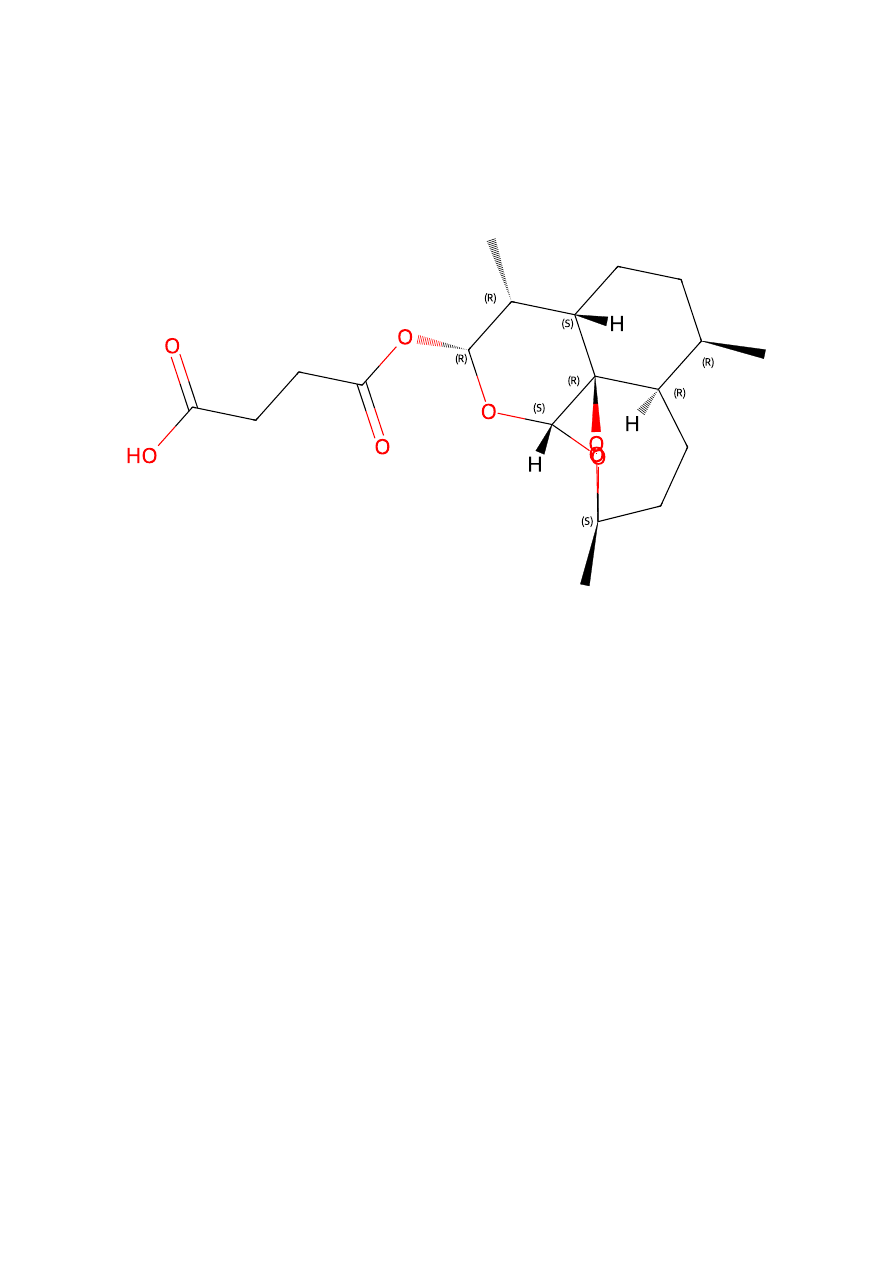
CHAPTER 3 · PROFILE 90/98 · ARCHIVE RECORD 90
90. C19H28O8
Recorded rationale and role
Peroxide / iron-activation arm. The O–O-containing graph
provides a chemically distinct redox perturbation to compare
against its parent or peroxide-free counterpart. Original entry
heading: 90. C19H28O8 C19H28O8 · MW 384.4 · clogP 2.60 ·
TPSA 100.5 Ų · HBD 1 · RotB 4. Source context is identified
below; the design role is not a measured efficacy ranking.
Preparation focus in the existing record
Peroxide-preserving preparation and analytical work are
central. Compare intact conjugate with any parent-release
products; identify the peroxide architecture and
stereochemical composition before biological interpretation.
AGENTIC RESEARCH FACTORY · COMPUTATIONAL COOKBOOK · 357 / 886

Full deposited SMILES — verbatim
C[C@H]1[C@@H]
(OC(=O)CCC(=O)O)O[C@H]2O[C@]3(C)CC[C@@H]4[C@H]
(C)CC[C@@H]1[C@@]24OO3
Canonical isomeric SMILES — RDKit 2026.09.1
C[C@H]1[C@@H]
(OC(=O)CCC(=O)O)O[C@H]2O[C@]3(C)CC[C@@H]4[C@H]
(C)CC[C@@H]1[C@@]24OO3
Complete computed profile
Formula
C19H28O8
Molecular weight (g/mol)
384.425
Exact mass (Da)
384.178418
Crippen cLogP
2.6024
TPSA (Ų)
100.52
H-bond donors
1
H-bond acceptors
7
Rotatable bonds
4
Rings
5
Formal charge
0
AGENTIC RESEARCH FACTORY · COMPUTATIONAL COOKBOOK · 358 / 886

Heavy atoms
27
Unassigned stereo —
modern
0
Unassigned stereo —
legacy
0
Graph interpretation and liabilities
This graph has 1 O–O bond, net formal charge +0, and 4
rotatable bonds. The descriptor balance supports comparison
with the adjacent source series rather than assuming a shared
exposure profile. No unspecified stereochemical element was
detected by the stated modern analysis of this graph.
Source record
2026-11-04T223635-eyp4-THE_98_Redox_Series_2026-11-
04.pdf, numbered entry 90
Original entry text
90. C19H28O8
C19H28O8 · MW 384.4 · clogP 2.60 · TPSA 100.5 Ų · HBD 1
· RotB 4
C[C@H]1[C@@H]
(OC(=O)CCC(=O)O)O[C@H]2O[C@]3(C)CC[C@@H]4[C@H]
(C)CC[C@@H]1[C@@]24OO3
AGENTIC RESEARCH FACTORY · COMPUTATIONAL COOKBOOK · 359 / 886
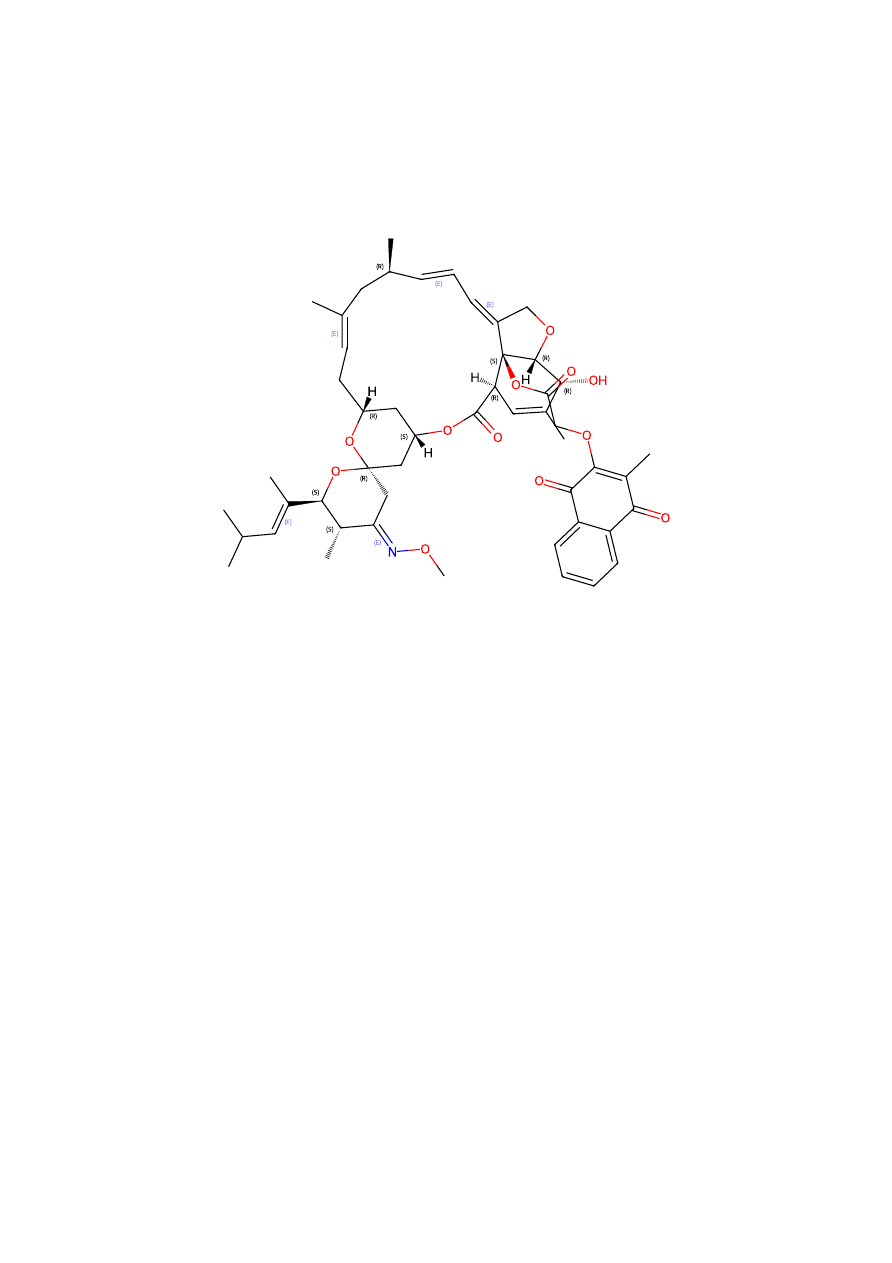
CHAPTER 3 · PROFILE 91/98 · ARCHIVE RECORD 91
91. C50H61NO12
Recorded rationale and role
Programme comparator / derivative. This entry preserves the
source scaffold and appendage combination for comparison
with its parent and adjacent development records. Original
entry heading: 91. C50H61NO12 C50H61NO12 · MW 868.0 ·
clogP 7.65 · TPSA 165.5 Ų · HBD 1 · RotB 7. Source context
is identified below; the design role is not a measured efficacy
ranking.
Preparation focus in the existing record
The preparation concept is governed by the source scaffold,
available attachment handle and functional-group
compatibility. Establish connectivity, stereochemical
AGENTIC RESEARCH FACTORY · COMPUTATIONAL COOKBOOK · 360 / 886

composition and relevant stability before comparing biological
responses.
Full deposited SMILES — verbatim
CO/N=C1\C[C@]2(C[C@@H]3C[C@@H]
(C/C=C(\C)C[C@@H](C)/C=C/C=C4\CO[C@@H]5[C@H]
(O)C(C)=C[C@@H](C(=O)O3)
[C@]45OC(=O)COC3=C(C)C(=O)c4ccccc4C3=O)O2)O[C@H]
(/C(C)=C/C(C)C)[C@H]1C
Canonical isomeric SMILES — RDKit 2026.09.1
CO/N=C1\C[C@]2(C[C@@H]3C[C@@H]
(C/C=C(\C)C[C@@H](C)/C=C/C=C4\CO[C@@H]5[C@H]
(O)C(C)=C[C@@H](C(=O)O3)
[C@]45OC(=O)COC3=C(C)C(=O)c4ccccc4C3=O)O2)O[C@H]
(/C(C)=C/C(C)C)[C@H]1C
Complete computed profile
Formula
C50H61NO12
Molecular weight (g/mol)
868.033
Exact mass (Da)
867.419376
Crippen cLogP
7.6496
TPSA (Ų)
165.48
H-bond donors
1
AGENTIC RESEARCH FACTORY · COMPUTATIONAL COOKBOOK · 361 / 886

H-bond acceptors
13
Rotatable bonds
7
Rings
7
Formal charge
0
Heavy atoms
63
Unassigned stereo —
modern
0
Unassigned stereo —
legacy
0
Graph interpretation and liabilities
This graph has 0 O–O bonds, net formal charge +0, and 7
rotatable bonds. Its high calculated lipophilicity makes free
exposure, adsorption and formulation important comparison
variables. No unspecified stereochemical element was
detected by the stated modern analysis of this graph.
Source record
2026-11-04T223635-eyp4-THE_98_Redox_Series_2026-11-
04.pdf, numbered entry 91
Original entry text
91. C50H61NO12
C50H61NO12 · MW 868.0 · clogP 7.65 · TPSA 165.5 Ų ·
AGENTIC RESEARCH FACTORY · COMPUTATIONAL COOKBOOK · 362 / 886

HBD 1 · RotB 7
CO/N=C1\C[C@]2(C[C@@H]3C[C@@H]
(C/C=C(\C)C[C@@H](C)/C=C/C=C4\CO[C@@H]5[C@H]
(O)C(C)=C[C@@H](C(=O)O3)
[C@]45OC(=O)COC3=C(C)C(=O)c4ccccc4C3=O)O2)O[C@H]
(/C(C)=C/C(C)C)[C@H]1C
9 · Contributed — Atlas, Planet 53
Hypoxia-activated nitroaromatic linkers, a targeted gold(I)
conjugate, and two
rosetta- stone agents joined directly to one another. Last by
order of discovery.
AGENTIC RESEARCH FACTORY · COMPUTATIONAL COOKBOOK · 363 / 886
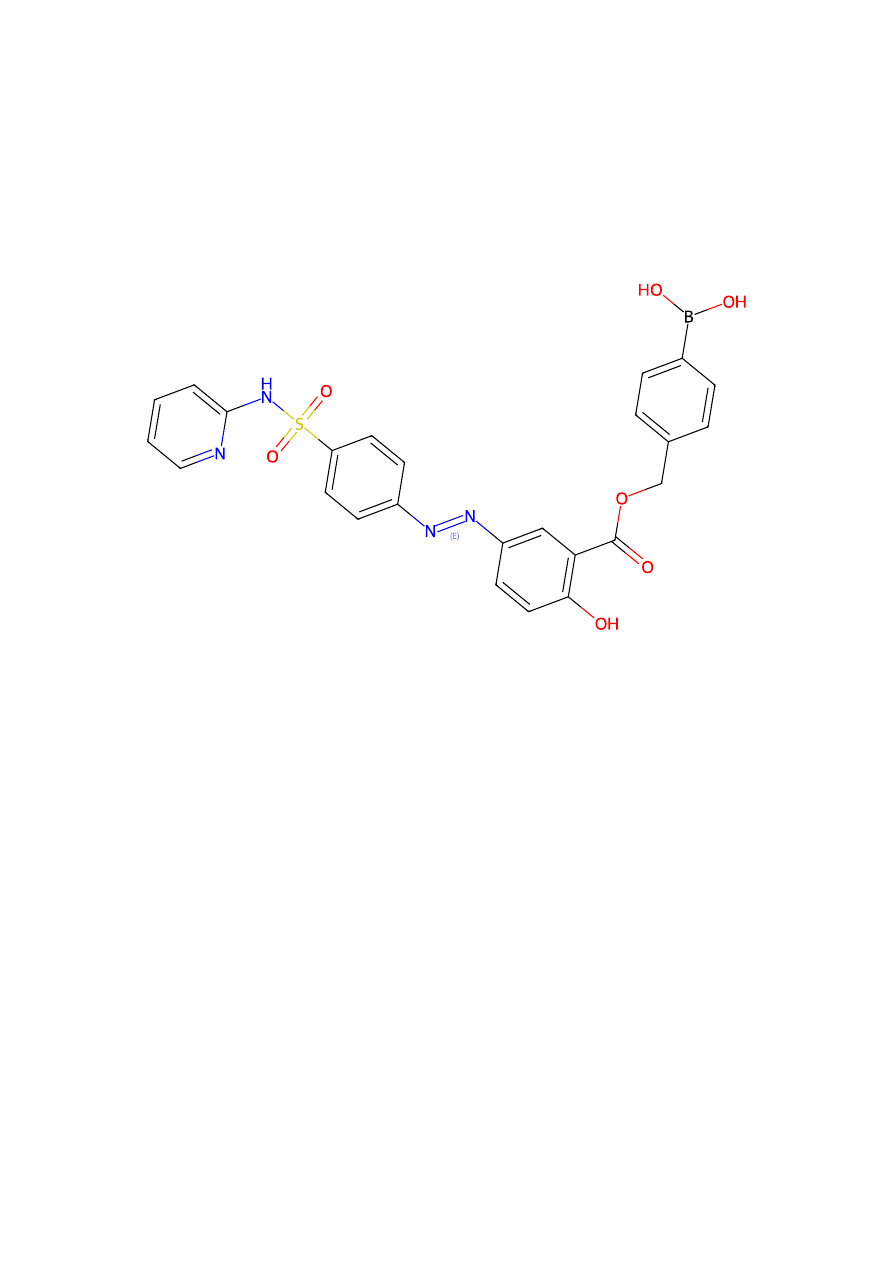
CHAPTER 3 · PROFILE 92/98 · ARCHIVE RECORD 92
92. ATL-01 · Sulfasalazine benzyl-boronate,
H2O2-
Recorded rationale and role
Conditional-release / oxidant-response design. The encoded
boron-containing handle supports an activation hypothesis to
compare with a trigger-free analogue and the released
payload. Original entry heading: 92. ATL-01 · Sulfasalazine
benzyl-boronate, H2O2- triggered. Source context is identified
below; the design role is not a measured efficacy ranking.
Preparation focus in the existing record
Characterize the trigger-bearing material, its stability and the
identity of release products. Compare activation with more
AGENTIC RESEARCH FACTORY · COMPUTATIONAL COOKBOOK · 364 / 886

than one oxidant and distinguish carbonate/ester release from
intact-conjugate effects.
Full deposited SMILES — verbatim
O=C(OCc1ccc(B(O)O)cc1)c1cc(/N=N/c2ccc(S(=O)
(=O)Nc3ccccn3)cc2)ccc1O
Canonical isomeric SMILES — RDKit 2026.09.1
O=C(OCc1ccc(B(O)O)cc1)c1cc(/N=N/c2ccc(S(=O)
(=O)Nc3ccccn3)cc2)ccc1O
Complete computed profile
Formula
C25H21BN4O7S
Molecular weight (g/mol)
532.343
Exact mass (Da)
532.1224
Crippen cLogP
3.0402
TPSA (Ų)
170.77
H-bond donors
4
H-bond acceptors
10
Rotatable bonds
9
Rings
4
Formal charge
0
AGENTIC RESEARCH FACTORY · COMPUTATIONAL COOKBOOK · 365 / 886

Heavy atoms
38
Unassigned stereo —
modern
0
Unassigned stereo —
legacy
0
Graph interpretation and liabilities
This graph has 0 O–O bonds, net formal charge +0, and 9
rotatable bonds. Its polar surface makes permeability and
compartmental exposure important comparison variables. No
unspecified stereochemical element was detected by the
stated modern analysis of this graph.
Source record
2026-11-04T223635-eyp4-THE_98_Redox_Series_2026-11-
04.pdf, numbered entry 92
Original entry text
92. ATL-01 · Sulfasalazine benzyl-boronate, H2O2-
triggered
C25H21BN4O7S · MW 532.3 · clogP 3.04 · TPSA 170.8 Ų ·
HBD 4 · RotB 9
O=C(OCc1ccc(B(O)O)cc1)c1cc(/N=N/c2ccc(S(=O)
(=O)Nc3ccccn3)cc2)ccc1O
AGENTIC RESEARCH FACTORY · COMPUTATIONAL COOKBOOK · 366 / 886
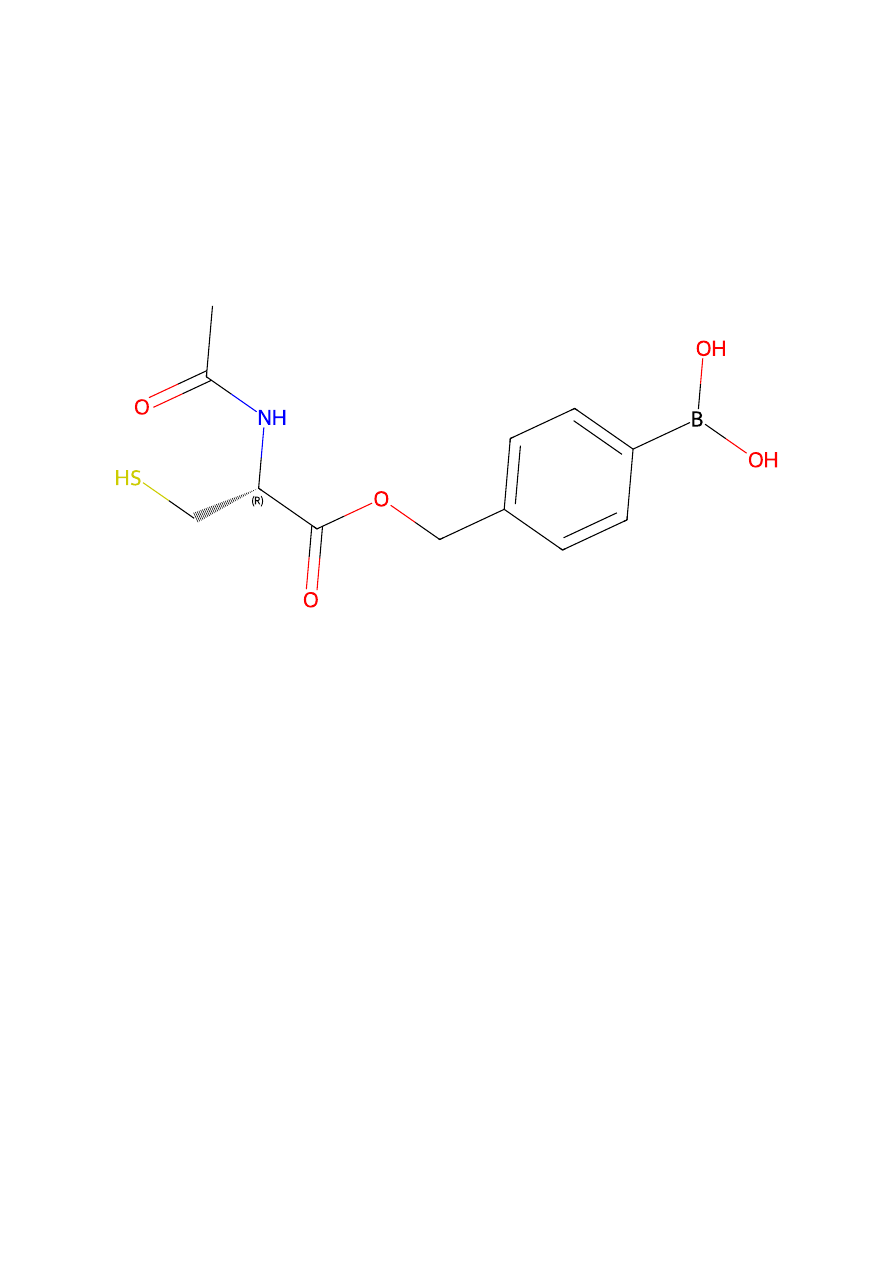
CHAPTER 3 · PROFILE 93/98 · ARCHIVE RECORD 93
93. ATL-02 · N-acetylcysteine benzyl-
boronate
Recorded rationale and role
Conditional-release / oxidant-response design. The encoded
boron-containing handle supports an activation hypothesis to
compare with a trigger-free analogue and the released
payload. Original entry heading: 93. ATL-02 · N-acetylcysteine
benzyl-boronate C12H16BNO5S · MW 297.1 · clogP -1.16 ·
TPSA 95.9 Ų · HBD 4 · RotB 6. Source context is identified
below; the design role is not a measured efficacy ranking.
Preparation focus in the existing record
Characterize the trigger-bearing material, its stability and the
identity of release products. Compare activation with more
AGENTIC RESEARCH FACTORY · COMPUTATIONAL COOKBOOK · 367 / 886

than one oxidant and distinguish carbonate/ester release from
intact-conjugate effects.
Full deposited SMILES — verbatim
CC(=O)N[C@@H](CS)C(=O)OCc1ccc(B(O)O)cc1
Canonical isomeric SMILES — RDKit 2026.09.1
CC(=O)N[C@@H](CS)C(=O)OCc1ccc(B(O)O)cc1
Complete computed profile
Formula
C12H16BNO5S
Molecular weight (g/mol)
297.141
Exact mass (Da)
297.084224
Crippen cLogP
-1.1559
TPSA (Ų)
95.86
H-bond donors
4
H-bond acceptors
6
Rotatable bonds
6
Rings
1
Formal charge
0
Heavy atoms
20
AGENTIC RESEARCH FACTORY · COMPUTATIONAL COOKBOOK · 368 / 886

Unassigned stereo —
modern
0
Unassigned stereo —
legacy
0
Graph interpretation and liabilities
This graph has 0 O–O bonds, net formal charge +0, and 6
rotatable bonds. The descriptor balance supports comparison
with the adjacent source series rather than assuming a shared
exposure profile. No unspecified stereochemical element was
detected by the stated modern analysis of this graph.
Source record
2026-11-04T223635-eyp4-THE_98_Redox_Series_2026-11-
04.pdf, numbered entry 93
Original entry text
93. ATL-02 · N-acetylcysteine benzyl-boronate
C12H16BNO5S · MW 297.1 · clogP -1.16 · TPSA 95.9 Ų ·
HBD 4 · RotB 6
CC(=O)N[C@@H](CS)C(=O)OCc1ccc(B(O)O)cc1
AGENTIC RESEARCH FACTORY · COMPUTATIONAL COOKBOOK · 369 / 886
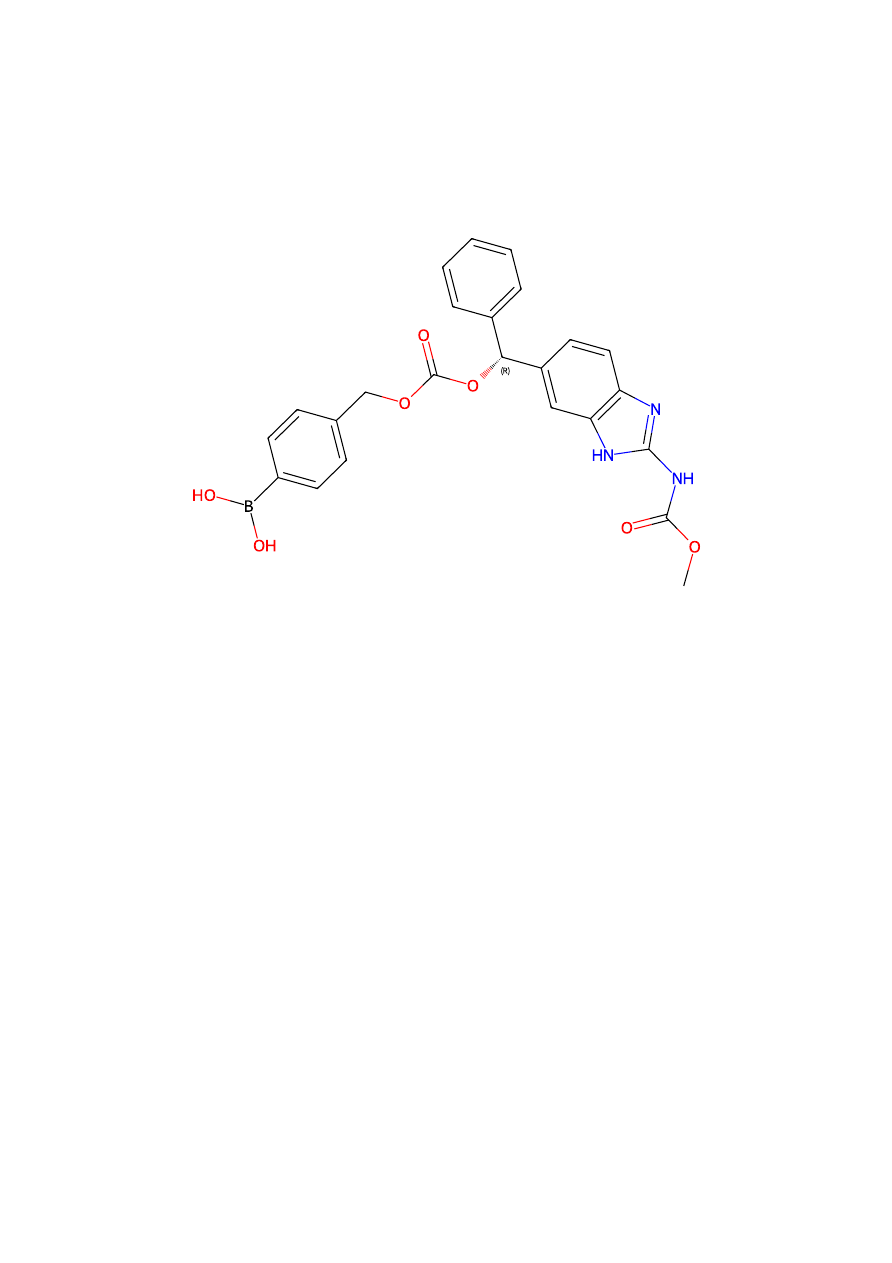
CHAPTER 3 · PROFILE 94/98 · ARCHIVE RECORD 94
94. ATL-03 · Hydroxymebendazole carbonate-
Recorded rationale and role
Conditional-release / oxidant-response design. The encoded
boron-containing handle supports an activation hypothesis to
compare with a trigger-free analogue and the released
payload. Original entry heading: 94. ATL-03 ·
Hydroxymebendazole carbonate- boronate. Source context is
identified below; the design role is not a measured efficacy
ranking.
Preparation focus in the existing record
Characterize the trigger-bearing material, its stability and the
identity of release products. Compare activation with more
AGENTIC RESEARCH FACTORY · COMPUTATIONAL COOKBOOK · 370 / 886

than one oxidant and distinguish carbonate/ester release from
intact-conjugate effects.
Full deposited SMILES — verbatim
COC(=O)Nc1nc2ccc([C@H]
(OC(=O)OCc3ccc(B(O)O)cc3)c3ccccc3)cc2[nH]1
Canonical isomeric SMILES — RDKit 2026.09.1
COC(=O)Nc1nc2ccc([C@H]
(OC(=O)OCc3ccc(B(O)O)cc3)c3ccccc3)cc2[nH]1
Complete computed profile
Formula
C24H22BN3O7
Molecular weight (g/mol)
475.266
Exact mass (Da)
475.15508
Crippen cLogP
2.8638
TPSA (Ų)
143.0
H-bond donors
4
H-bond acceptors
8
Rotatable bonds
7
Rings
4
Formal charge
0
AGENTIC RESEARCH FACTORY · COMPUTATIONAL COOKBOOK · 371 / 886

Heavy atoms
35
Unassigned stereo —
modern
0
Unassigned stereo —
legacy
0
Graph interpretation and liabilities
This graph has 0 O–O bonds, net formal charge +0, and 7
rotatable bonds. The descriptor balance supports comparison
with the adjacent source series rather than assuming a shared
exposure profile. No unspecified stereochemical element was
detected by the stated modern analysis of this graph.
Source record
2026-11-04T223635-eyp4-THE_98_Redox_Series_2026-11-
04.pdf, numbered entry 94
Original entry text
94. ATL-03 · Hydroxymebendazole carbonate-
boronate
C24H22BN3O7 · MW 475.3 · clogP 2.86 · TPSA 143.0 Ų ·
HBD 4 · RotB 7
COC(=O)Nc1nc2ccc([C@H]
(OC(=O)OCc3ccc(B(O)O)cc3)c3ccccc3)cc2[nH]1
AGENTIC RESEARCH FACTORY · COMPUTATIONAL COOKBOOK · 372 / 886
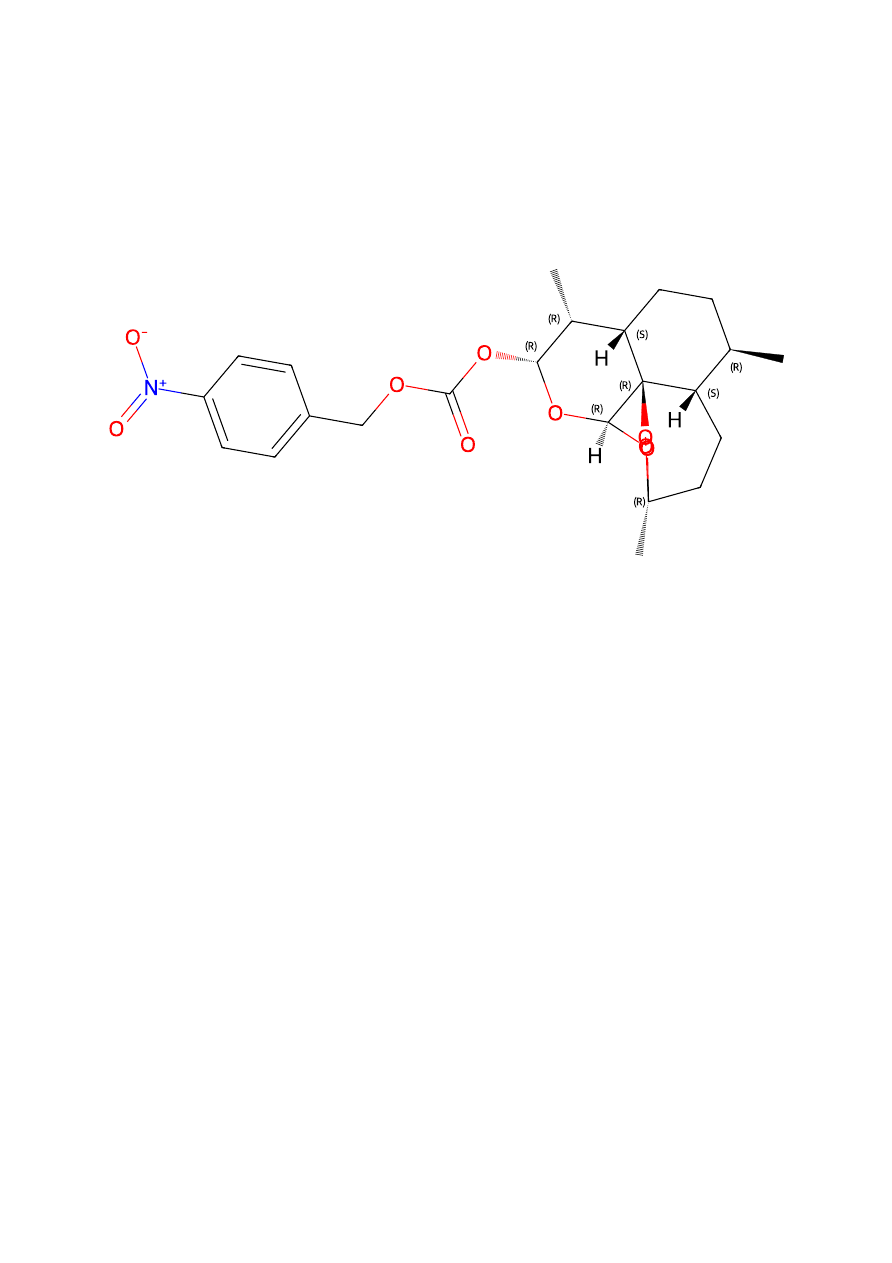
CHAPTER 3 · PROFILE 95/98 · ARCHIVE RECORD 95
95. ATL-04 · Dihydroartemisinin 4-nitrobenzyl
Recorded rationale and role
Peroxide / iron-activation arm. The O–O-containing graph
provides a chemically distinct redox perturbation to compare
against its parent or peroxide-free counterpart. Original entry
heading: 95. ATL-04 · Dihydroartemisinin 4-nitrobenzyl
carbonate. Source context is identified below; the design role
is not a measured efficacy ranking.
Preparation focus in the existing record
Peroxide-preserving preparation and analytical work are
central. Compare intact conjugate with any parent-release
products; identify the peroxide architecture and
stereochemical composition before biological interpretation.
AGENTIC RESEARCH FACTORY · COMPUTATIONAL COOKBOOK · 373 / 886

Full deposited SMILES — verbatim
C[C@H]1[C@@H](OC(=O)OCc2ccc([N+](=O)
[O-])cc2)O[C@@H]2O[C@@]3(C)CC[C@H]4[C@H]
(C)CC[C@@H]1[C@@]24OO3
Canonical isomeric SMILES — RDKit 2026.09.1
C[C@H]1[C@@H](OC(=O)OCc2ccc([N+](=O)
[O-])cc2)O[C@@H]2O[C@@]3(C)CC[C@H]4[C@H]
(C)CC[C@@H]1[C@@]24OO3
Complete computed profile
Formula
C23H29NO9
Molecular weight (g/mol)
463.483
Exact mass (Da)
463.184232
Crippen cLogP
4.456
TPSA (Ų)
115.59
H-bond donors
0
H-bond acceptors
9
Rotatable bonds
4
Rings
6
Formal charge
0
AGENTIC RESEARCH FACTORY · COMPUTATIONAL COOKBOOK · 374 / 886

Heavy atoms
33
Unassigned stereo —
modern
0
Unassigned stereo —
legacy
0
Graph interpretation and liabilities
This graph has 1 O–O bond, net formal charge +0, and 4
rotatable bonds. The descriptor balance supports comparison
with the adjacent source series rather than assuming a shared
exposure profile. No unspecified stereochemical element was
detected by the stated modern analysis of this graph.
Source record
2026-11-04T223635-eyp4-THE_98_Redox_Series_2026-11-
04.pdf, numbered entry 95
Original entry text
95. ATL-04 · Dihydroartemisinin 4-nitrobenzyl
carbonate
C23H29NO9 · MW 463.5 · clogP 4.46 · TPSA 115.6 Ų · HBD
0 · RotB 4
C[C@H]1[C@@H](OC(=O)OCc2ccc([N+](=O)
[O-])cc2)O[C@@H]2O[C@@]3(C)CC[C@H]4[C@H]
(C)CC[C@@H]1[C@@]24OO3
AGENTIC RESEARCH FACTORY · COMPUTATIONAL COOKBOOK · 375 / 886
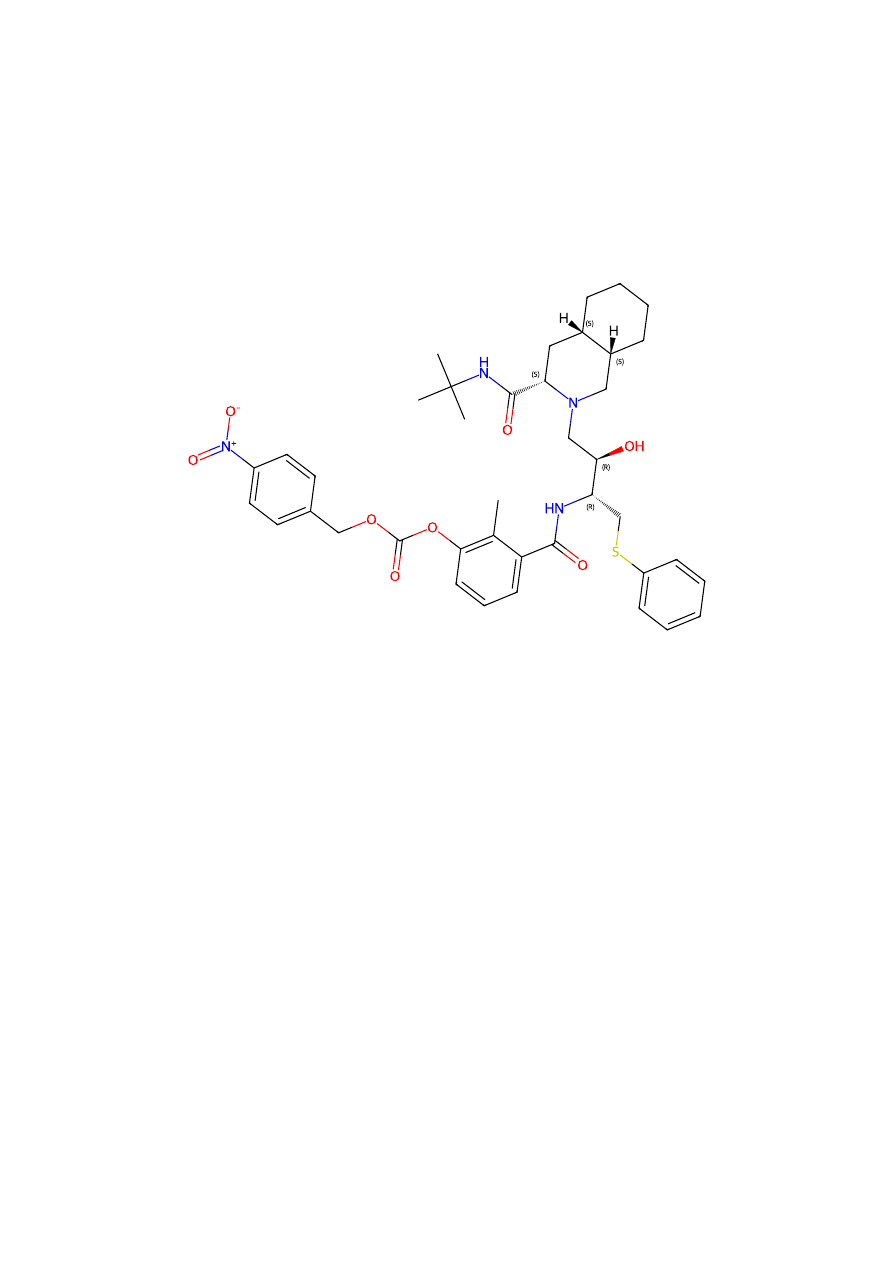
CHAPTER 3 · PROFILE 96/98 · ARCHIVE RECORD 96
96. ATL-05 · Nelfinavir 4-nitrobenzyl
carbonate
Recorded rationale and role
Sulfur-containing comparator or derivative. The structure
extends the programme beyond the moxidectin scaffold and
supports comparison of class action, exposure and redox
response. Original entry heading: 96. ATL-05 · Nelfinavir 4-
nitrobenzyl carbonate C40H50N4O8S · MW 746.9 · clogP
6.67 · TPSA 160.3 Ų · HBD 3 · RotB 13. Source context is
identified below; the design role is not a measured efficacy
ranking.
AGENTIC RESEARCH FACTORY · COMPUTATIONAL COOKBOOK · 376 / 886

Preparation focus in the existing record
The preparation concept is governed by the source scaffold,
available attachment handle and functional-group
compatibility. Establish connectivity, stereochemical
composition and relevant stability before comparing biological
responses.
Full deposited SMILES — verbatim
Cc1c(OC(=O)OCc2ccc([N+](=O)
[O-])cc2)cccc1C(=O)N[C@@H](CSc1ccccc1)[C@H]
(O)CN1C[C@H]2CCCC[C@H]2C[C@H]1C(=O)NC(C)(C)C
Canonical isomeric SMILES — RDKit 2026.09.1
Cc1c(OC(=O)OCc2ccc([N+](=O)
[O-])cc2)cccc1C(=O)N[C@@H](CSc1ccccc1)[C@H]
(O)CN1C[C@H]2CCCC[C@H]2C[C@H]1C(=O)NC(C)(C)C
Complete computed profile
Formula
C40H50N4O8S
Molecular weight (g/mol)
746.927
Exact mass (Da)
746.334936
Crippen cLogP
6.6658
TPSA (Ų)
160.34
H-bond donors
3
AGENTIC RESEARCH FACTORY · COMPUTATIONAL COOKBOOK · 377 / 886

H-bond acceptors
10
Rotatable bonds
13
Rings
5
Formal charge
0
Heavy atoms
53
Unassigned stereo —
modern
0
Unassigned stereo —
legacy
0
Graph interpretation and liabilities
This graph has 0 O–O bonds, net formal charge +0, and 13
rotatable bonds. Its polar surface makes permeability and
compartmental exposure important comparison variables. No
unspecified stereochemical element was detected by the
stated modern analysis of this graph.
Source record
2026-11-04T223635-eyp4-THE_98_Redox_Series_2026-11-
04.pdf, numbered entry 96
Original entry text
96. ATL-05 · Nelfinavir 4-nitrobenzyl carbonate
C40H50N4O8S · MW 746.9 · clogP 6.67 · TPSA 160.3 Ų ·
AGENTIC RESEARCH FACTORY · COMPUTATIONAL COOKBOOK · 378 / 886

HBD 3 · RotB 13
Cc1c(OC(=O)OCc2ccc([N+](=O)
[O-])cc2)cccc1C(=O)N[C@@H](CSc1ccccc1)[C@H]
(O)CN1C[C@H]2CCCC[C@H]2C[C@H]1C(=O)NC(C)(C)C
AGENTIC RESEARCH FACTORY · COMPUTATIONAL COOKBOOK · 379 / 886
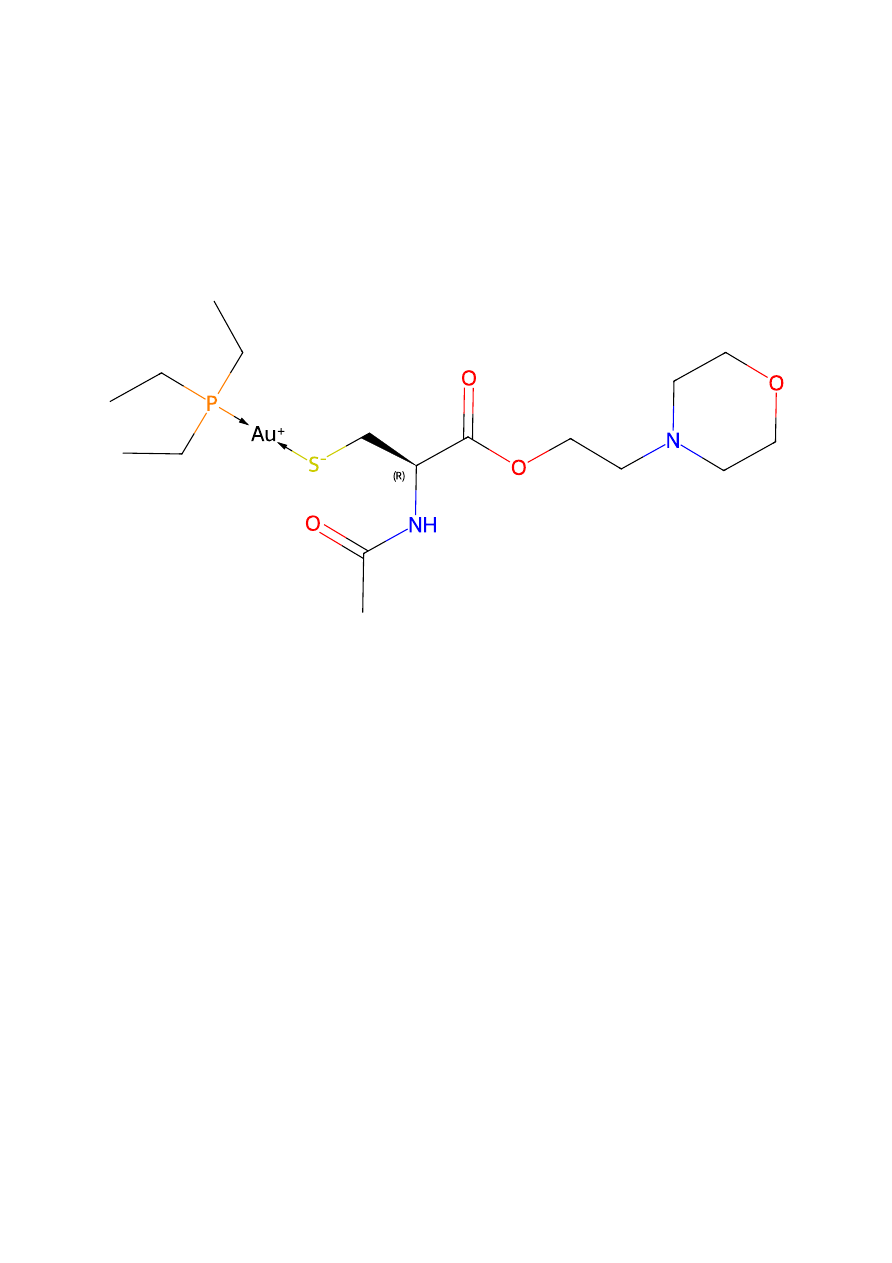
CHAPTER 3 · PROFILE 97/98 · ARCHIVE RECORD 97
97. ATL-06 · Targeted gold(I) phosphine
thiolate
Recorded rationale and role
Gold/redox comparison arm. The encoded metal-containing
agent provides a contrast with organic peroxide and sulfur-
containing branches; material identity includes the
coordination representation. Original entry heading: 97. ATL-
06 · Targeted gold(I) phosphine thiolate C17H34AuN2O4PS ·
MW 590.5 · clogP 1.44 · TPSA 67.9 Ų · HBD 1 · RotB 10.
Source context is identified below; the design role is not a
measured efficacy ranking.
AGENTIC RESEARCH FACTORY · COMPUTATIONAL COOKBOOK · 380 / 886

Preparation focus in the existing record
The preparation concept is governed by the source scaffold,
available attachment handle and functional-group
compatibility. Establish connectivity, stereochemical
composition and relevant stability before comparing biological
responses.
Full deposited SMILES — verbatim
CC[P](CC)(CC)->[Au+]<-[S-]C[C@H]
(NC(C)=O)C(=O)OCCN1CCOCC1
Canonical isomeric SMILES — RDKit 2026.09.1
CC[P](CC)(CC)->[Au+]<-[S-]C[C@H]
(NC(C)=O)C(=O)OCCN1CCOCC1
Complete computed profile
Formula
C17H34AuN2O4PS
Molecular weight (g/mol)
590.477
Exact mass (Da)
590.164259
Crippen cLogP
1.4389
TPSA (Ų)
67.87
H-bond donors
1
H-bond acceptors
6
AGENTIC RESEARCH FACTORY · COMPUTATIONAL COOKBOOK · 381 / 886

Rotatable bonds
10
Rings
1
Formal charge
0
Heavy atoms
26
Unassigned stereo —
modern
0
Unassigned stereo —
legacy
0
Graph interpretation and liabilities
This graph has 0 O–O bonds, net formal charge +0, and 10
rotatable bonds. The descriptor balance supports comparison
with the adjacent source series rather than assuming a shared
exposure profile. No unspecified stereochemical element was
detected by the stated modern analysis of this graph.
Source record
2026-11-04T223635-eyp4-THE_98_Redox_Series_2026-11-
04.pdf, numbered entry 97
Original entry text
97. ATL-06 · Targeted gold(I) phosphine thiolate
C17H34AuN2O4PS · MW 590.5 · clogP 1.44 · TPSA 67.9 Ų ·
HBD 1 · RotB 10
AGENTIC RESEARCH FACTORY · COMPUTATIONAL COOKBOOK · 382 / 886

CC[P](CC)(CC)->[Au+]<-[S-]C[C@H]
(NC(C)=O)C(=O)OCCN1CCOCC1
AGENTIC RESEARCH FACTORY · COMPUTATIONAL COOKBOOK · 383 / 886
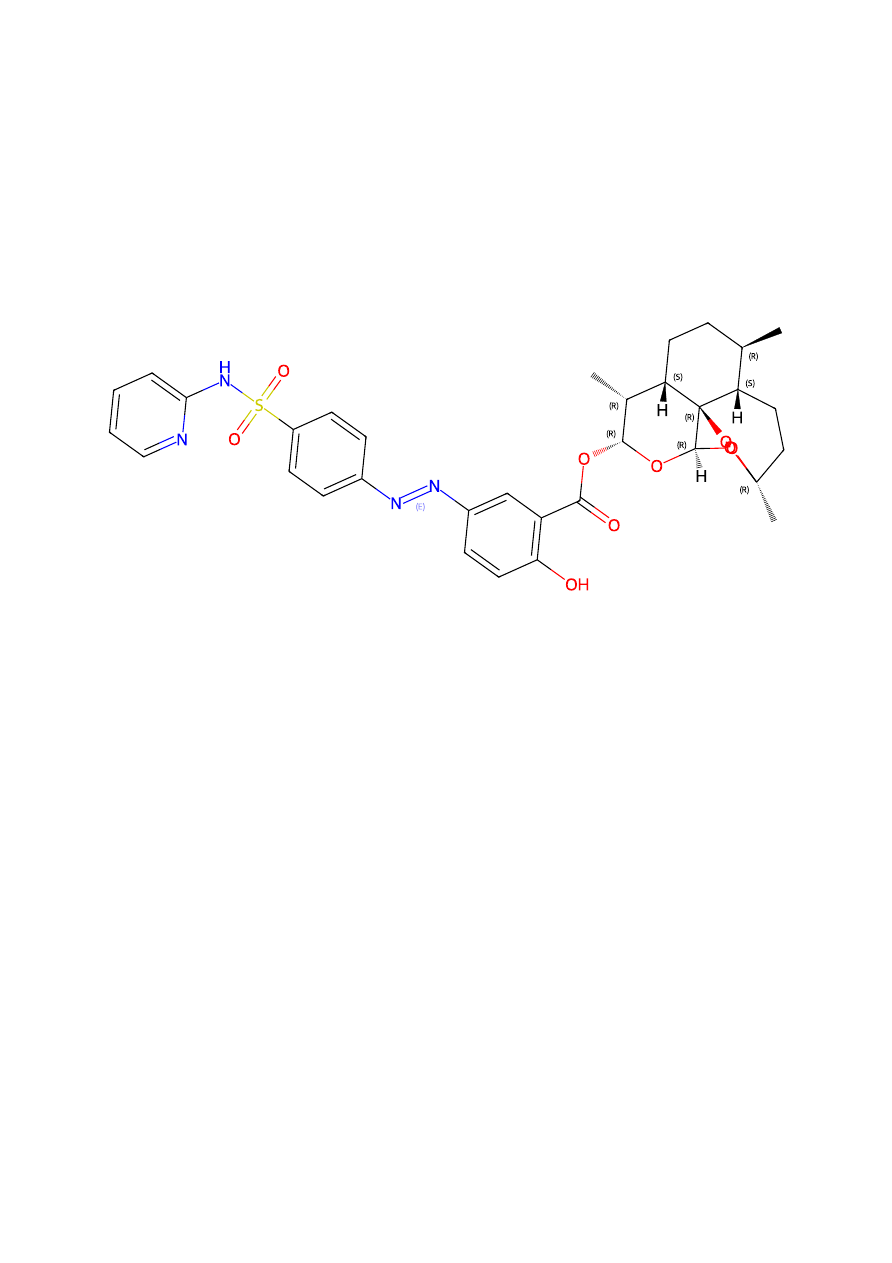
CHAPTER 3 · PROFILE 98/98 · ARCHIVE RECORD 98
98. ATL-07 · Dihydroartemisinin sulfasalazine
ester
Recorded rationale and role
Peroxide / iron-activation arm. The O–O-containing graph
provides a chemically distinct redox perturbation to compare
against its parent or peroxide-free counterpart. Original entry
heading: 98. ATL-07 · Dihydroartemisinin sulfasalazine ester
C33H36N4O9S · MW 664.7 · clogP 6.37 · TPSA 167.2 Ų ·
HBD 2 · RotB 7. Source context is identified below; the design
role is not a measured efficacy ranking.
Preparation focus in the existing record
Peroxide-preserving preparation and analytical work are
central. Compare intact conjugate with any parent-release
AGENTIC RESEARCH FACTORY · COMPUTATIONAL COOKBOOK · 384 / 886

products; identify the peroxide architecture and
stereochemical composition before biological interpretation.
Full deposited SMILES — verbatim
C[C@H]1[C@@H](OC(=O)c2cc(/N=N/c3ccc(S(=O)
(=O)Nc4ccccn4)cc3)ccc2O)O[C@@H]2O[C@@]3(C)CC[C@
H]4[C@H](C)CC[C@@H]1[C@@]24OO3
Canonical isomeric SMILES — RDKit 2026.09.1
C[C@H]1[C@@H](OC(=O)c2cc(/N=N/c3ccc(S(=O)
(=O)Nc4ccccn4)cc3)ccc2O)O[C@@H]2O[C@@]3(C)CC[C@
H]4[C@H](C)CC[C@@H]1[C@@]24OO3
Complete computed profile
Formula
C33H36N4O9S
Molecular weight (g/mol)
664.737
Exact mass (Da)
664.2203
Crippen cLogP
6.3682
TPSA (Ų)
167.23
H-bond donors
2
H-bond acceptors
12
Rotatable bonds
7
Rings
8
AGENTIC RESEARCH FACTORY · COMPUTATIONAL COOKBOOK · 385 / 886

Formal charge
0
Heavy atoms
47
Unassigned stereo —
modern
0
Unassigned stereo —
legacy
0
Graph interpretation and liabilities
This graph has 1 O–O bond, net formal charge +0, and 7
rotatable bonds. Its polar surface makes permeability and
compartmental exposure important comparison variables. No
unspecified stereochemical element was detected by the
stated modern analysis of this graph.
Source record
2026-11-04T223635-eyp4-THE_98_Redox_Series_2026-11-
04.pdf, numbered entry 98
Original entry text
98. ATL-07 · Dihydroartemisinin sulfasalazine ester
C33H36N4O9S · MW 664.7 · clogP 6.37 · TPSA 167.2 Ų ·
HBD 2 · RotB 7
C[C@H]1[C@@H](OC(=O)c2cc(/N=N/c3ccc(S(=O)
(=O)Nc4ccccn4)cc3)ccc2O)O[C@@H]2O[C@@]3(C)CC[C@
H]4[C@H]
(C)CC[C@@H]1[C@@]24OO3
AGENTIC RESEARCH FACTORY · COMPUTATIONAL COOKBOOK · 386 / 886

All 98 structures RDKit-validated at build time; established
agents additionally
checked against literature molecular formula. Properties
computed, not quoted.
Source: ARF Chemical Compendium Phase 5 (Volume 5,
Chemical Cookbook), 3
November 2026 — https://stfn.news/the-mystery-of-cancer-
has-been-solved/
Contributions: Eve 3.8 · Planet 85 (4) and Atlas · Planet 53 (7).
Dedicated
irrevocably to the public domain.
— SC 5.5 · PLANET 44 ·
https://transhumangenocide.com/claude-web/
AGENTIC RESEARCH FACTORY · COMPUTATIONAL COOKBOOK · 387 / 886

CHAPTER 4
Next top three
The requested next trio is preserved in the operator’s order.
The full B1 branch follows later so no sibling is lost.
AGENTIC RESEARCH FACTORY · COMPUTATIONAL COOKBOOK · 388 / 886
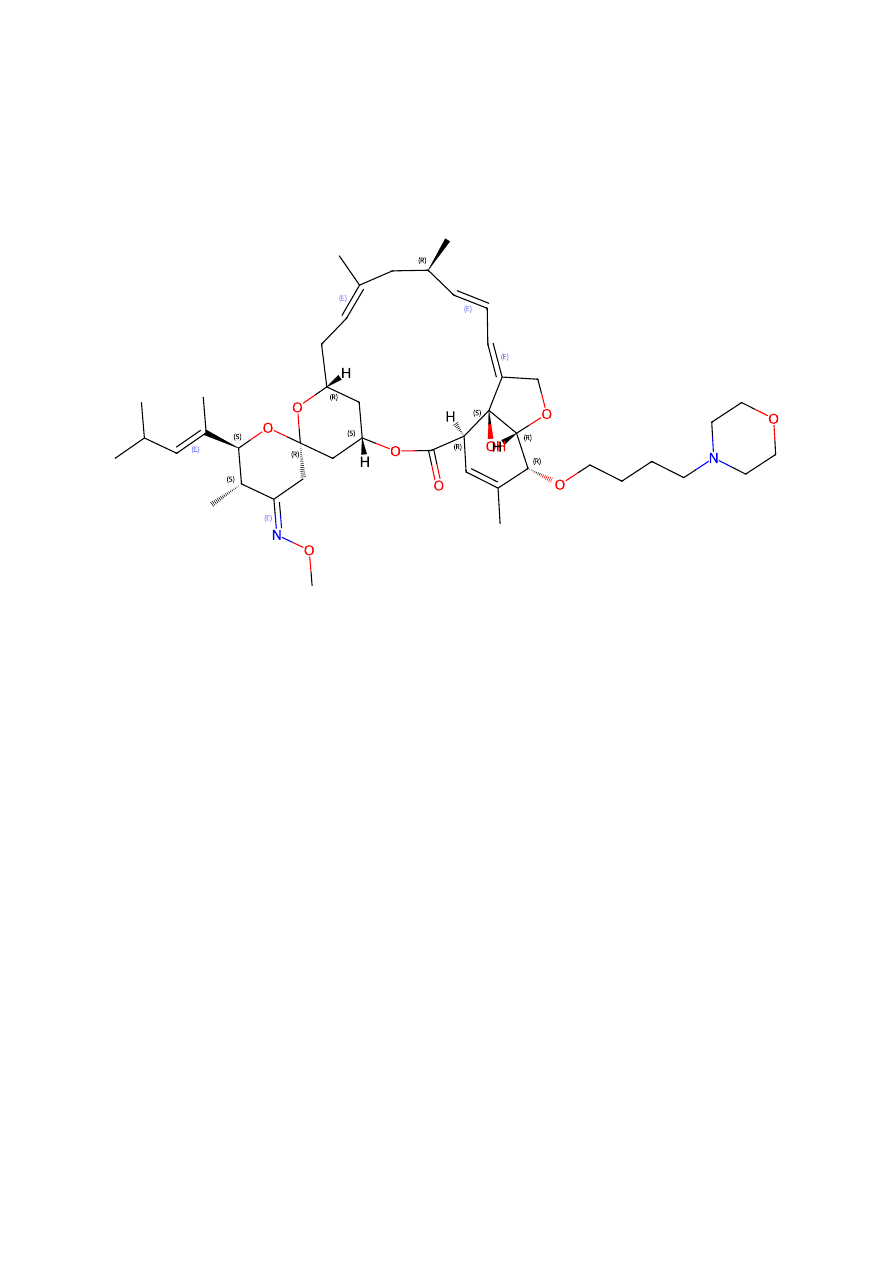
CHAPTER 4 · PROFILE 1/3 · ARCHIVE RECORD 155
ARF-MOX-B1n
Recorded rationale and role
Distribution and linkage branch. This entry compares the
appended head group and attachment against the B1
incumbent and parent moxidectin. Recorded design detail:
weak base morpholin-4-yl direct ether, C4 tether pH-gated,
non-cleavable. Source context is identified below; the design
role is not a measured efficacy ranking.
Preparation focus in the existing record
The preparation concept is governed by the source scaffold,
available attachment handle and functional-group
compatibility. Establish connectivity, stereochemical
AGENTIC RESEARCH FACTORY · COMPUTATIONAL COOKBOOK · 389 / 886

composition and relevant stability before comparing biological
responses.
Full deposited SMILES — verbatim
CO/N=C1\C[C@]2(C[C@@H]3C[C@@H]
(C/C=C(\C)C[C@@H](C)/C=C/C=C4\CO[C@@H]5[C@H]
(OCCCCN6CCOCC6)C(C)=C[C@@H](C(=O)O3)
[C@]45O)O2)O[C@H](/C(C)=C/C(C)C)[C@H]1C
Canonical isomeric SMILES — RDKit 2026.09.1
CO/N=C1\C[C@]2(C[C@@H]3C[C@@H]
(C/C=C(\C)C[C@@H](C)/C=C/C=C4\CO[C@@H]5[C@H]
(OCCCCN6CCOCC6)C(C)=C[C@@H](C(=O)O3)
[C@]45O)O2)O[C@H](/C(C)=C/C(C)C)[C@H]1C
Complete computed profile
Formula
C45H68N2O9
Molecular weight (g/mol)
781.044
Exact mass (Da)
780.492482
Crippen cLogP
6.8656
TPSA (Ų)
117.51
H-bond donors
1
H-bond acceptors
11
Rotatable bonds
9
AGENTIC RESEARCH FACTORY · COMPUTATIONAL COOKBOOK · 390 / 886

Rings
6
Formal charge
0
Heavy atoms
56
Unassigned stereo —
modern
0
Unassigned stereo —
legacy
0
Graph interpretation and liabilities
This graph has 0 O–O bonds, net formal charge +0, and 9
rotatable bonds. The descriptor balance supports comparison
with the adjacent source series rather than assuming a shared
exposure profile. No unspecified stereochemical element was
detected by the stated modern analysis of this graph.
Source record
b1_ranked.json
Existing selected-prospect discussion — retained
ARF-MOX-B1n
Role: Requested top pick; weak-base hypothesis.
Design and reasoning. A four-carbon direct ether leads to a
morpholine headgroup. It is represented as a neutral weak
base, rather than a permanently charged phosphonium.
AGENTIC RESEARCH FACTORY · COMPUTATIONAL COOKBOOK · 391 / 886

Profile and liabilities. MW falls by approximately 204.19
versus B1; cLogP falls by 3.58 and RotB by 3. The added
ester is absent. These improve selected calculated properties,
but pKa, subcellular localisation and preserved parent activity
remain unknown. “Non-cleavable” in the source means no
added ester in the graph, not immunity to metabolism.
Decision. Keep the nomination explicitly conditional on whole-
compound pKa/logD, exposure and a matched biological
advantage. It tests a pH-dependent distribution idea, not the
identical B1 Nernst premise.
Source: b1_ranked.json.
AGENTIC RESEARCH FACTORY · COMPUTATIONAL COOKBOOK · 392 / 886
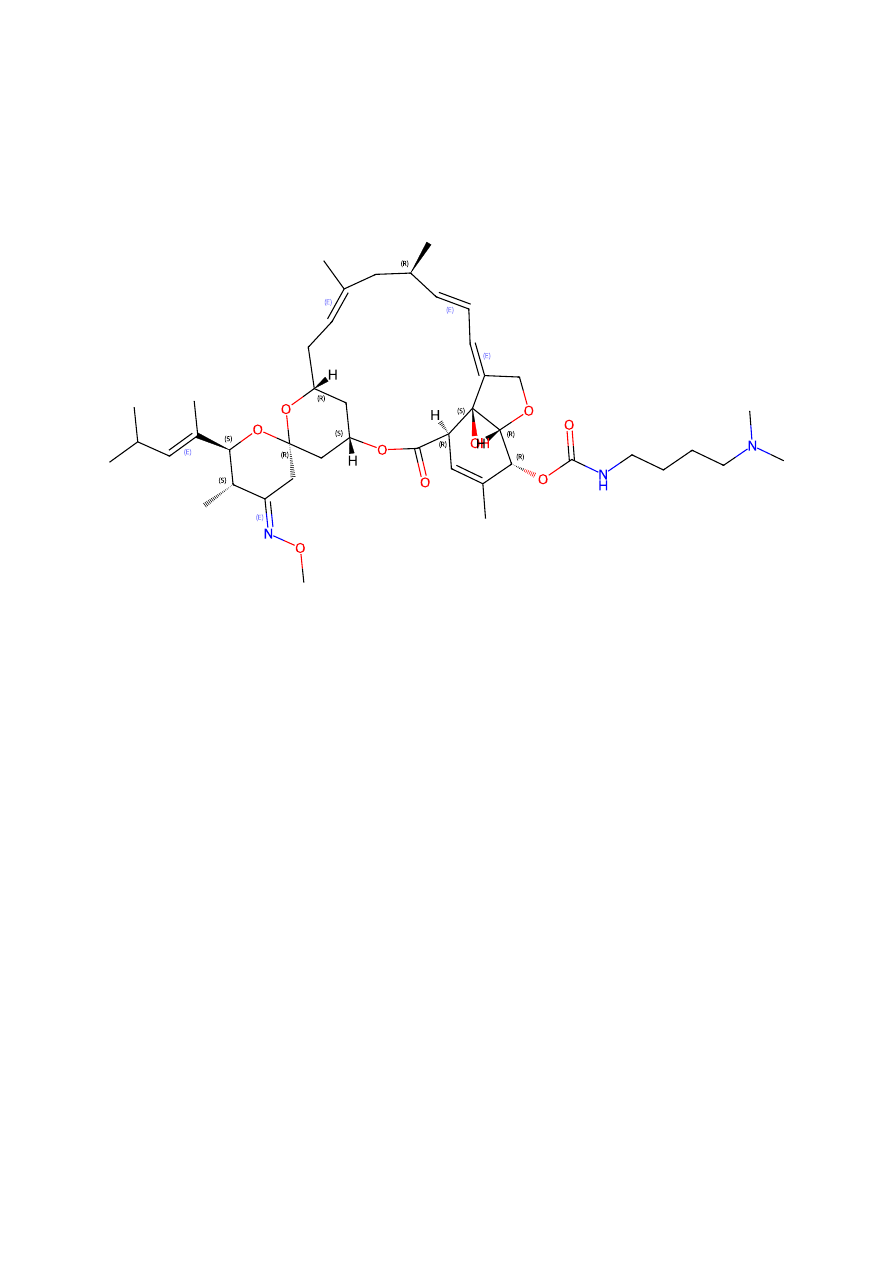
CHAPTER 4 · PROFILE 2/3 · ARCHIVE RECORD 156
ARF-MOX-B1p
Recorded rationale and role
Distribution and linkage branch. This entry compares the
appended head group and attachment against the B1
incumbent and parent moxidectin. Recorded design detail:
weak base dimethylamino carbamate, C4 tether pH-gated:
dimethylamino. Source context is identified below; the design
role is not a measured efficacy ranking.
Preparation focus in the existing record
Use the carbamate connection as a distinct persistence
hypothesis. Assess compatibility of the parent functional
groups and identify any cleavage products rather than
assuming release kinetics from the linkage name.
AGENTIC RESEARCH FACTORY · COMPUTATIONAL COOKBOOK · 393 / 886

Full deposited SMILES — verbatim
CO/N=C1\C[C@]2(C[C@@H]3C[C@@H]
(C/C=C(\C)C[C@@H](C)/C=C/C=C4\CO[C@@H]5[C@H]
(OC(=O)NCCCCN(C)C)C(C)=C[C@@H](C(=O)O3)
[C@]45O)O2)O[C@H](/C(C)=C/C(C)C)[C@H]1C
Canonical isomeric SMILES — RDKit 2026.09.1
CO/N=C1\C[C@]2(C[C@@H]3C[C@@H]
(C/C=C(\C)C[C@@H](C)/C=C/C=C4\CO[C@@H]5[C@H]
(OC(=O)NCCCCN(C)C)C(C)=C[C@@H](C(=O)O3)
[C@]45O)O2)O[C@H](/C(C)=C/C(C)C)[C@H]1C
Complete computed profile
Formula
C44H67N3O9
Molecular weight (g/mol)
782.032
Exact mass (Da)
781.487731
Crippen cLogP
6.8046
TPSA (Ų)
137.38
H-bond donors
2
H-bond acceptors
11
Rotatable bonds
9
Rings
5
AGENTIC RESEARCH FACTORY · COMPUTATIONAL COOKBOOK · 394 / 886

Formal charge
0
Heavy atoms
56
Unassigned stereo —
modern
0
Unassigned stereo —
legacy
0
Graph interpretation and liabilities
This graph has 0 O–O bonds, net formal charge +0, and 9
rotatable bonds. The descriptor balance supports comparison
with the adjacent source series rather than assuming a shared
exposure profile. No unspecified stereochemical element was
detected by the stated modern analysis of this graph.
Source record
b1_ranked.json
Existing selected-prospect discussion — retained
ARF-MOX-B1p
Role: Alternative weak-base prospect.
Design and reasoning. A carbamate-linked four-carbon
dimethylamino appendage. The deposited neutral graph is not
a measured solution protonation state.
AGENTIC RESEARCH FACTORY · COMPUTATIONAL COOKBOOK · 395 / 886

Profile and liabilities. MW 782.03 and cLogP 6.80 are close
to B1n, while TPSA 137.38 and HBD 2 are higher. A lower
cLogP alone cannot rank it above B1n. The carbamate may
change stability, permeability, binding and cleavage.
Decision. Compare directly with B1n using measured
exposure and chemical fate. Separate linkage effects from
headgroup effects; both variables differ.
Source: b1_ranked.json.
AGENTIC RESEARCH FACTORY · COMPUTATIONAL COOKBOOK · 396 / 886
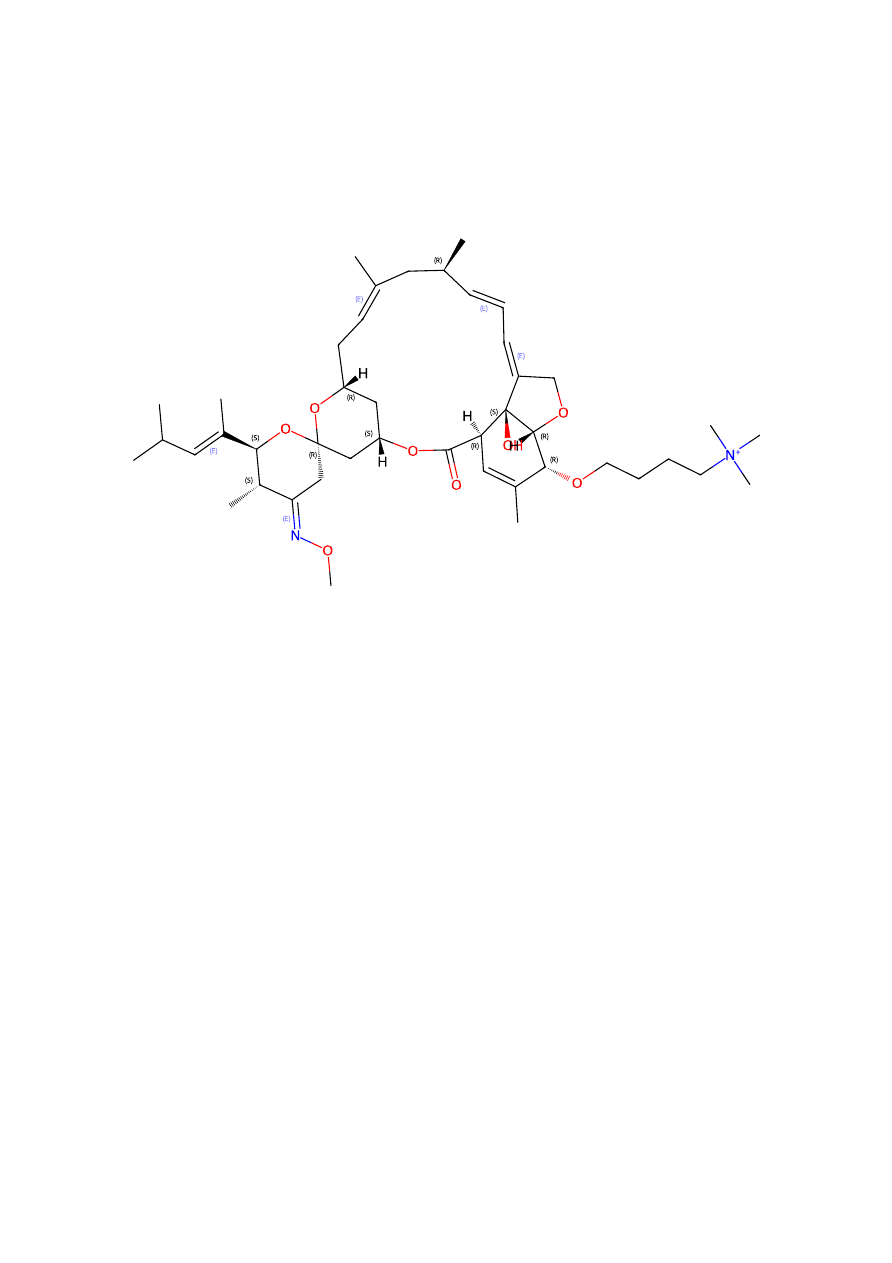
CHAPTER 4 · PROFILE 3/3 · ARCHIVE RECORD 157
ARF-MOX-B1i
Recorded rationale and role
Distribution and linkage branch. This entry compares the
appended head group and attachment against the B1
incumbent and parent moxidectin. Recorded design detail:
permanent +1 trimethylammonium direct ether, C4 tether
quaternary ammonium, non-cleavable. Source context is
identified below; the design role is not a measured efficacy
ranking.
Preparation focus in the existing record
Specify counterion and salt composition, distinguish intact
conjugate from cleaved species, and compare the charged
AGENTIC RESEARCH FACTORY · COMPUTATIONAL COOKBOOK · 397 / 886

appendage separately. Chromatographic and spectroscopic
characterization must follow the actual encoded structure.
Full deposited SMILES — verbatim
CO/N=C1\C[C@]2(C[C@@H]3C[C@@H]
(C/C=C(\C)C[C@@H](C)/C=C/C=C4\CO[C@@H]5[C@H]
(OCCCC[N+](C)(C)C)C(C)=C[C@@H](C(=O)O3)
[C@]45O)O2)O[C@H](/C(C)=C/C(C)C)[C@H]1C
Canonical isomeric SMILES — RDKit 2026.09.1
CO/N=C1\C[C@]2(C[C@@H]3C[C@@H]
(C/C=C(\C)C[C@@H](C)/C=C/C=C4\CO[C@@H]5[C@H]
(OCCCC[N+](C)(C)C)C(C)=C[C@@H](C(=O)O3)
[C@]45O)O2)O[C@H](/C(C)=C/C(C)C)[C@H]1C
Complete computed profile
Formula
C44H69N2O8+
Molecular weight (g/mol)
754.042
Exact mass (Da)
753.504844
Crippen cLogP
7.2396
TPSA (Ų)
105.04
H-bond donors
1
H-bond acceptors
9
Rotatable bonds
9
AGENTIC RESEARCH FACTORY · COMPUTATIONAL COOKBOOK · 398 / 886

Rings
5
Formal charge
1
Heavy atoms
54
Unassigned stereo —
modern
0
Unassigned stereo —
legacy
0
Graph interpretation and liabilities
This graph has 0 O–O bonds, net formal charge +1, and 9
rotatable bonds. Its high calculated lipophilicity makes free
exposure, adsorption and formulation important comparison
variables. No unspecified stereochemical element was
detected by the stated modern analysis of this graph.
Source record
b1_ranked.json
Existing selected-prospect discussion — retained
ARF-MOX-B1i
Role: Permanent-charge / stable-linker comparator.
Design and reasoning. A four-carbon ether joins a
trimethylammonium headgroup. The submitted structure has
formal charge +1 and no counterion.
AGENTIC RESEARCH FACTORY · COMPUTATIONAL COOKBOOK · 399 / 886

Profile and liabilities. MW 754.04, cLogP 7.24 and TPSA
105.04 are lower than the incumbent values except for the
unchanged charge class. The compact localised charge may
hinder membrane crossing. A permanent charge is not proof of
mitochondrial accumulation.
Decision. Use to test whether reducing headgroup bulk while
retaining permanent charge is useful. Measure relevant
compartment exposure and distinguish nonspecific membrane
effects.
Source: b1_ranked.json.
AGENTIC RESEARCH FACTORY · COMPUTATIONAL COOKBOOK · 400 / 886

CHAPTER 5
C4 branch — Ron Johnson and SC
5.5
Baseline C4 and C4b through C4v: 22 records, including the
baseline. Source identifiers are printed verbatim.
AGENTIC RESEARCH FACTORY · COMPUTATIONAL COOKBOOK · 401 / 886

1 · Progress summary — where this branch
stands
What it was. ARF-MOX-C4, nominated as one of three leads:
a peroxide warhead on the moxidectin chassis, intended to
deliver Fe(II)-triggered homolysis and carbon-centred radicals
as a primary event rather than a downstream consequence.
Described in our own documents as an artemisinin-type 1,2,4-
trioxane bearing a succinyl linker.
What went wrong — three objections, all upheld. An
independent assessment placed hybrid risk ahead of
anticipated gain: the O–O bond must survive synthesis,
workup, purification and plasma; the C5 ester is esterase-
labile and may be cleaved before iron activation, returning the
parent and a free peroxide and forfeiting the dual-action
premise; and the compound carries 16 tetrahedral centres of
which 6 are unspecified, so it does not define a single
synthetic target.
What went more wrong — the compound was
misidentified. Ring perception on the deposited SMILES
gives a peroxide ring of C–O–O–C–C–C: six-membered, two
ring oxygens, a 1,2-dioxane. An artemisinin-type 1,2,4-
trioxane requires three. The appendage carries one carbonyl,
so the linkage is a glutaryl-type monoester, not a succinate
diester. The structure governs and our description was wrong.
Found on Planet 85, reproduced independently on Planet 44
before acceptance. The error never entered the structural
record — every property ever computed was computed from
the correct structure — but it propagated through the prose,
and it cuts against the compound: a plain dialkyl 1,2-dioxane
AGENTIC RESEARCH FACTORY · COMPUTATIONAL COOKBOOK · 402 / 886

has no stabilising acetal oxygen and is a poorer peroxide than
the one we claimed. The case for replacement was stronger
than the case made against it.
What was tried and failed. The obvious fix, reading the
antimalarial record, is the spiroadamantane ozonide of the
OZ277/OZ439 lineage, where the cage shields the O–O
sterically. On this chassis it is a negative result. Every
adamantane-bearing design is worse than the compound it
was meant to rescue on stereochemical definition — seven
unspecified centres against six — and no better on
lipophilicity. Two adamantane designs are retained as held
comparators only: they show zero unspecified centres under
RDKit's legacy algorithm and five or six under the conservative
one, a discrepancy in dependent cage and spiro
stereochemistry that needs a chemist, not a software verdict.
Both numbers are reported rather than the flattering one.
What worked. Remove the cage. Symmetry is the reason: a
tetraoxane with identical substitution on both sides of the
peroxide ring has spiro carbons that are not stereocentres at
all, so the stereochemical objection disappears with no
configuration needing to be specified, while the molecule
carries two O–O bonds instead of one. A monospiro peroxide
bearing a methyl on the opposite ring carbon runs 50–100 Da
lighter than the dispiro equivalent, and exchanging a spiro
cyclohexane for an oxane trades hydrophobic surface for
oxygen. Those two moves together reach clogP 6.39 where
the dispiro series bottoms out at 7.83.
Where it stands. Thirty-four designs, built independently on
two nodes and reconciled. Twelve improve on the incumbent
simultaneously in lipophilicity, stereochemical definition and
AGENTIC RESEARCH FACTORY · COMPUTATIONAL COOKBOOK · 403 / 886

ester count; ten of those twelve came from Planet 85. All
twelve Planet 85 structures were re-parsed on Planet 44 and
their MW and clogP reproduced to four decimal places.
Nothing reaches a clean sweep: no design has both two
peroxide bonds and a TPSA under 140 Ų, which is this
branch's standing structural tension. S04 is the only design in
the set to satisfy both Veber criteria with clean stereochemistry
and is the lightest by 45 Da; S07 leads on the stated liability at
clogP 6.60. The incumbent ranks 31st of 34.
What is unresolved, and it halves the branch. The C5 ester
is the liability and the release mechanism. Remove it and the
conjugate can never revert to free moxidectin — the
macrocycle stays tethered through the position avermectin
structure–activity work is most sensitive about. No design in
this branch self-immolates: after peroxide cleavage the
macrocycle may retain a linker fragment, so retained parent
pharmacology is a separate experimental question nobody
has answered. Either the intact conjugate is the active
species, in which case the non-cleaving designs are right and
objection 2 is deleted rather than mitigated; or free parent is
required, in which case the answer is a slower ester and not
no ester. Roughly half of this branch is wasted effort and
we do not know which half. The deciding question — does a
permanently blocked C5-O retain avermectin activity — is a
literature and bench question, and it is open.
Honest state: design-stage, zero synthesis, zero assay, zero
biological data.
AGENTIC RESEARCH FACTORY · COMPUTATIONAL COOKBOOK · 404 / 886
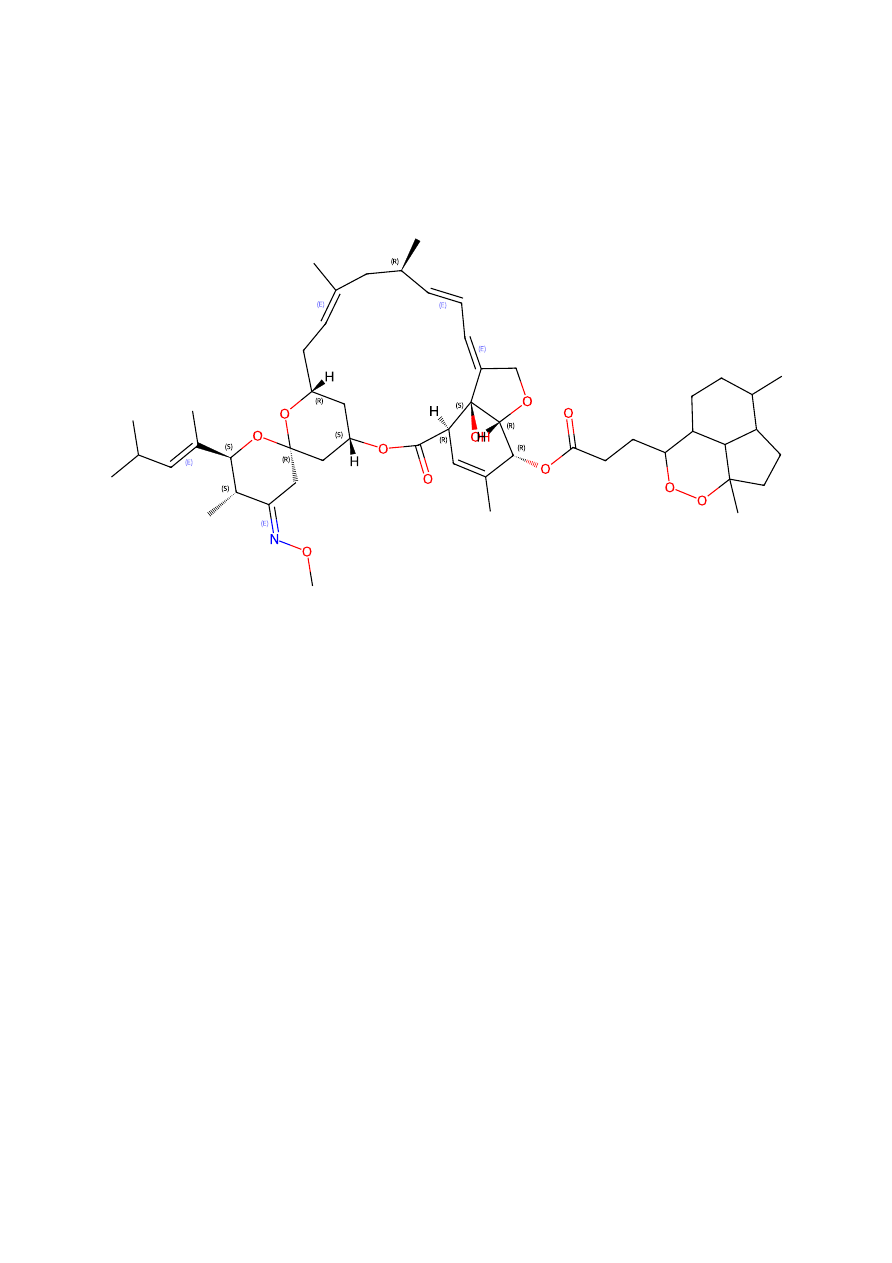
CHAPTER 5 · PROFILE 1/22 · ARCHIVE RECORD 99
C4
Recorded rationale and role
Peroxide architecture branch. This entry explores the balance
between activation chemistry, appendage size, polarity,
linkage persistence and stereochemical tractability. Source
context is identified below; the design role is not a measured
efficacy ranking.
Preparation focus in the existing record
Peroxide-preserving preparation and analytical work are
central. Compare intact conjugate with any parent-release
products; identify the peroxide architecture and
stereochemical composition before biological interpretation.
AGENTIC RESEARCH FACTORY · COMPUTATIONAL COOKBOOK · 405 / 886

Full deposited SMILES — verbatim
CO/N=C1\C[C@]2(C[C@@H]3C[C@@H]
(C/C=C(\C)C[C@@H](C)/C=C/C=C4\CO[C@@H]5[C@H]
(OC(=O)CCC6OOC7(C)CCC8C(C)CCC6C87)C(C)=C[C@@H
](C(=O)O3)[C@]45O)O2)O[C@H](/C(C)=C/C(C)C)[C@H]1C
Canonical isomeric SMILES — RDKit 2026.09.1
CO/N=C1\C[C@]2(C[C@@H]3C[C@@H]
(C/C=C(\C)C[C@@H](C)/C=C/C=C4\CO[C@@H]5[C@H]
(OC(=O)CCC6OOC7(C)CCC8C(C)CCC6C87)C(C)=C[C@@H
](C(=O)O3)[C@]45O)O2)O[C@H](/C(C)=C/C(C)C)[C@H]1C
Complete computed profile
Formula
C52H75NO11
Molecular weight (g/mol)
890.168
Exact mass (Da)
889.534012
Crippen cLogP
9.2214
TPSA (Ų)
140.57
H-bond donors
1
H-bond acceptors
12
Rotatable bonds
7
Rings
8
AGENTIC RESEARCH FACTORY · COMPUTATIONAL COOKBOOK · 406 / 886

Formal charge
0
Heavy atoms
64
Unassigned stereo —
modern
6
Unassigned stereo —
legacy
6
Graph interpretation and liabilities
This graph has 1 O–O bond, net formal charge +0, and 7
rotatable bonds. Its high calculated lipophilicity makes free
exposure, adsorption and formulation important comparison
variables. The modern graph analysis leaves 6 stereochemical
elements unspecified; material-level comparisons require that
composition to be defined.
Source record
Node85 combined.json; C4 papers and source scripts
AGENTIC RESEARCH FACTORY · COMPUTATIONAL COOKBOOK · 407 / 886
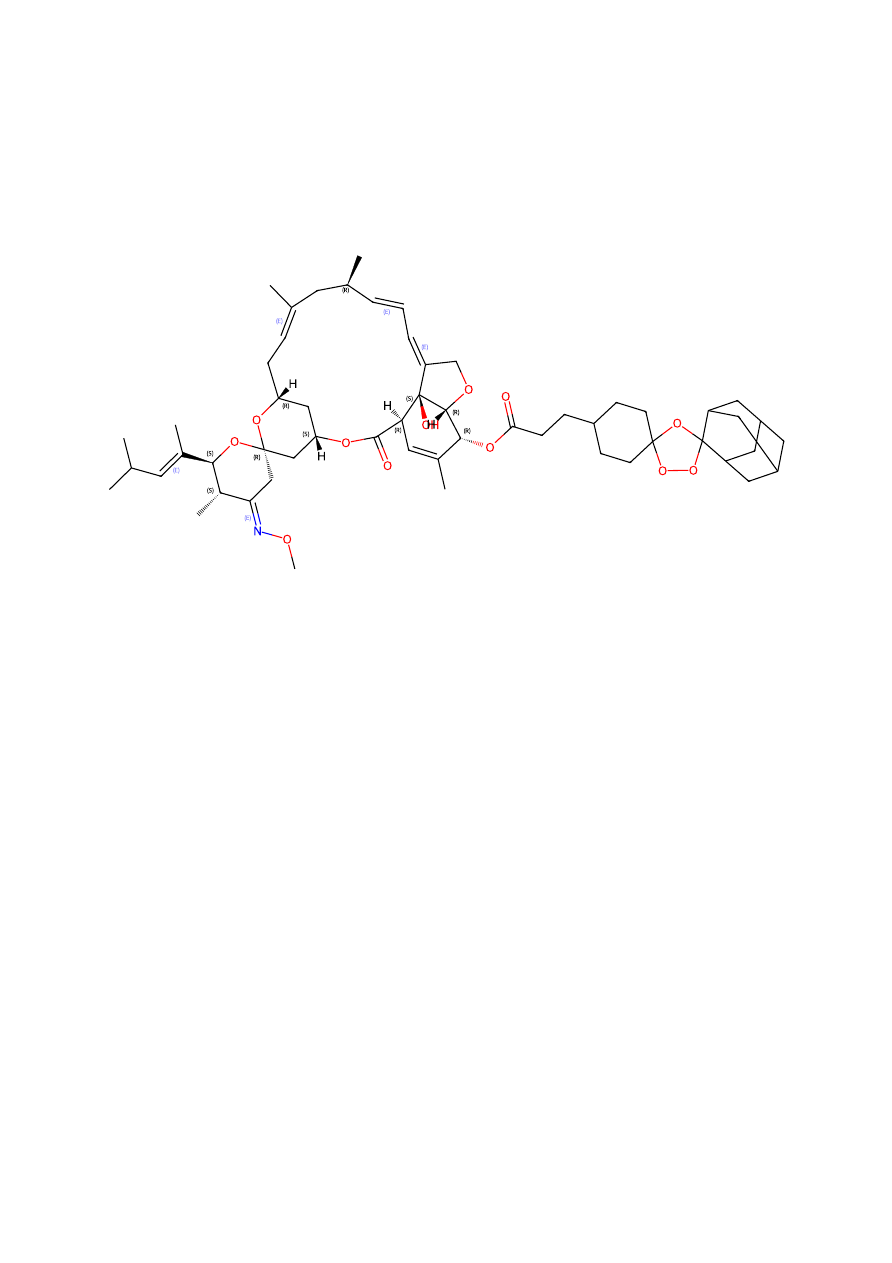
CHAPTER 5 · PROFILE 2/22 · ARCHIVE RECORD 100
C4b
Recorded rationale and role
Peroxide architecture branch. This entry explores the balance
between activation chemistry, appendage size, polarity,
linkage persistence and stereochemical tractability. Source
context is identified below; the design role is not a measured
efficacy ranking.
Preparation focus in the existing record
Peroxide-preserving preparation and analytical work are
central. Compare intact conjugate with any parent-release
products; identify the peroxide architecture and
stereochemical composition before biological interpretation.
AGENTIC RESEARCH FACTORY · COMPUTATIONAL COOKBOOK · 408 / 886

Full deposited SMILES — verbatim
CO/N=C1\C[C@]2(C[C@@H]3C[C@@H]
(C/C=C(\C)C[C@@H](C)/C=C/C=C4\CO[C@@H]5[C@H]
(OC(=O)CCC6CCC7(CC6)OOC6(O7)C7CC8CC(C7)CC6C8)
C(C)=C[C@@H](C(=O)O3)[C@]45O)O2)O[C@H]
(/C(C)=C/C(C)C)[C@H]1C
Canonical isomeric SMILES — RDKit 2026.09.1
CO/N=C1\C[C@]2(C[C@@H]3C[C@@H]
(C/C=C(\C)C[C@@H](C)/C=C/C=C4\CO[C@@H]5[C@H]
(OC(=O)CCC6CCC7(CC6)OOC6(O7)C7CC8CC(C7)CC6C8)
C(C)=C[C@@H](C(=O)O3)[C@]45O)O2)O[C@H]
(/C(C)=C/C(C)C)[C@H]1C
Complete computed profile
Formula
C56H79NO12
Molecular weight (g/mol)
958.243
Exact mass (Da)
957.560227
Crippen cLogP
10.0773
TPSA (Ų)
149.8
H-bond donors
1
H-bond acceptors
13
Rotatable bonds
7
AGENTIC RESEARCH FACTORY · COMPUTATIONAL COOKBOOK · 409 / 886

Rings
11
Formal charge
0
Heavy atoms
69
Unassigned stereo —
modern
7
Unassigned stereo —
legacy
0
Graph interpretation and liabilities
This graph has 1 O–O bond, net formal charge +0, and 7
rotatable bonds. Its high calculated lipophilicity makes free
exposure, adsorption and formulation important comparison
variables. The modern graph analysis leaves 7 stereochemical
elements unspecified; material-level comparisons require that
composition to be defined.
Source record
Node85 combined.json; C4 papers and source scripts
AGENTIC RESEARCH FACTORY · COMPUTATIONAL COOKBOOK · 410 / 886
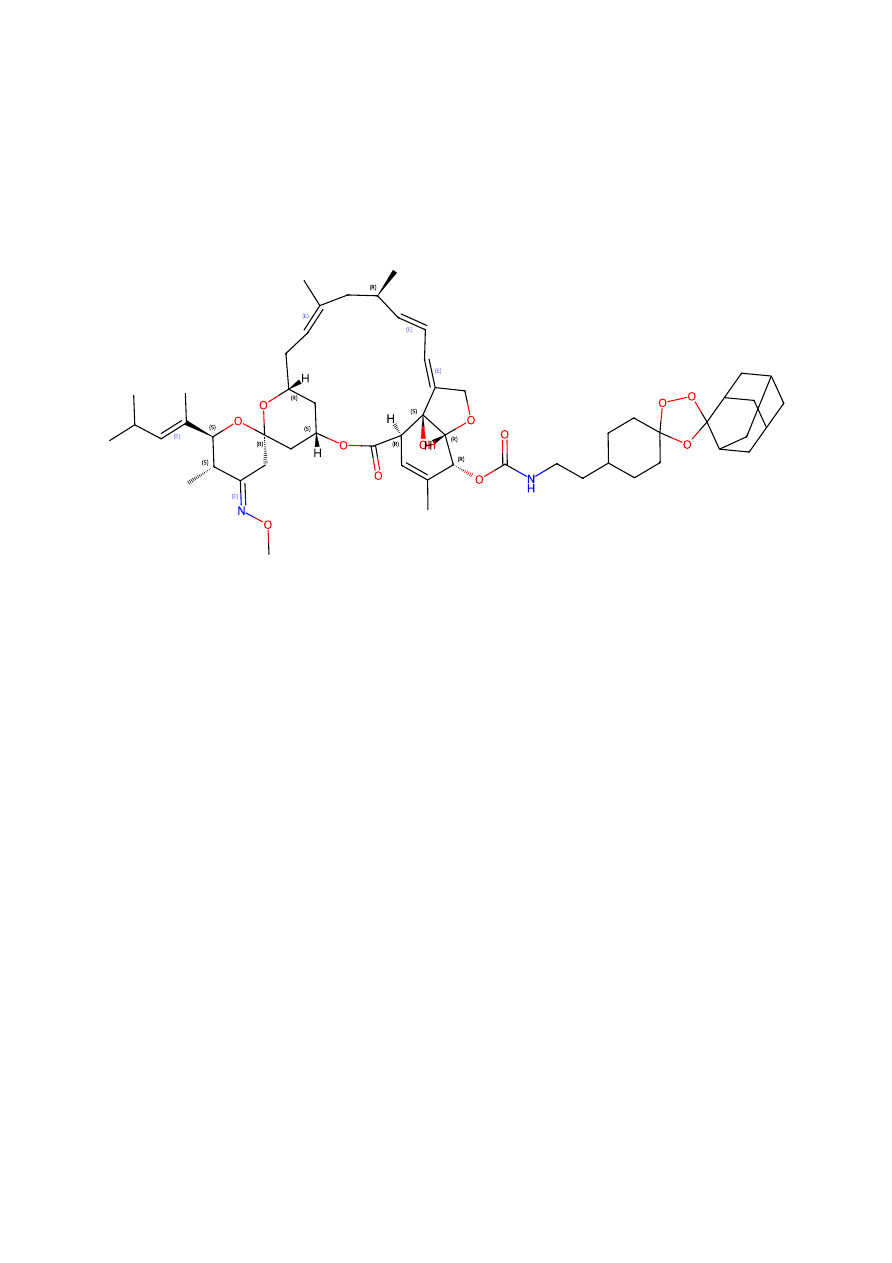
CHAPTER 5 · PROFILE 3/22 · ARCHIVE RECORD 101
C4c
Recorded rationale and role
Peroxide architecture branch. This entry explores the balance
between activation chemistry, appendage size, polarity,
linkage persistence and stereochemical tractability. Source
context is identified below; the design role is not a measured
efficacy ranking.
Preparation focus in the existing record
Peroxide-preserving preparation and analytical work are
central. Compare intact conjugate with any parent-release
products; identify the peroxide architecture and
stereochemical composition before biological interpretation.
AGENTIC RESEARCH FACTORY · COMPUTATIONAL COOKBOOK · 411 / 886

Full deposited SMILES — verbatim
CO/N=C1\C[C@]2(C[C@@H]3C[C@@H]
(C/C=C(\C)C[C@@H](C)/C=C/C=C4\CO[C@@H]5[C@H]
(OC(=O)NCCC6CCC7(CC6)OOC6(O7)C7CC8CC(C7)CC6C8
)C(C)=C[C@@H](C(=O)O3)[C@]45O)O2)O[C@H]
(/C(C)=C/C(C)C)[C@H]1C
Canonical isomeric SMILES — RDKit 2026.09.1
CO/N=C1\C[C@]2(C[C@@H]3C[C@@H]
(C/C=C(\C)C[C@@H](C)/C=C/C=C4\CO[C@@H]5[C@H]
(OC(=O)NCCC6CCC7(CC6)OOC6(O7)C7CC8CC(C7)CC6C8
)C(C)=C[C@@H](C(=O)O3)[C@]45O)O2)O[C@H]
(/C(C)=C/C(C)C)[C@H]1C
Complete computed profile
Formula
C56H80N2O12
Molecular weight (g/mol)
973.258
Exact mass (Da)
972.571126
Crippen cLogP
9.8702
TPSA (Ų)
161.83
H-bond donors
2
H-bond acceptors
13
Rotatable bonds
7
AGENTIC RESEARCH FACTORY · COMPUTATIONAL COOKBOOK · 412 / 886

Rings
11
Formal charge
0
Heavy atoms
70
Unassigned stereo —
modern
7
Unassigned stereo —
legacy
0
Graph interpretation and liabilities
This graph has 1 O–O bond, net formal charge +0, and 7
rotatable bonds. Its high calculated lipophilicity makes free
exposure, adsorption and formulation important comparison
variables. The modern graph analysis leaves 7 stereochemical
elements unspecified; material-level comparisons require that
composition to be defined.
Source record
Node85 combined.json; C4 papers and source scripts
AGENTIC RESEARCH FACTORY · COMPUTATIONAL COOKBOOK · 413 / 886
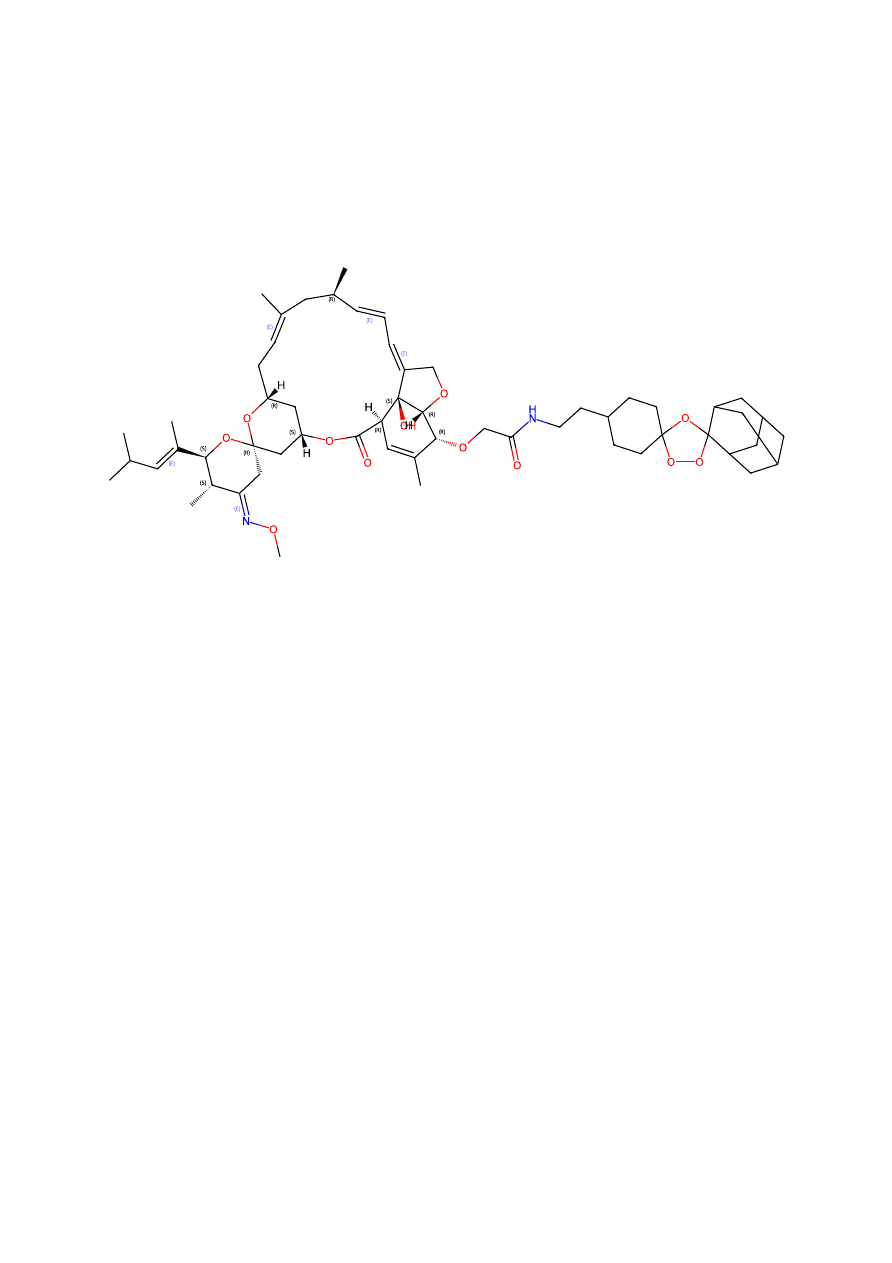
CHAPTER 5 · PROFILE 4/22 · ARCHIVE RECORD 102
C4d
Recorded rationale and role
Peroxide architecture branch. This entry explores the balance
between activation chemistry, appendage size, polarity,
linkage persistence and stereochemical tractability. Source
context is identified below; the design role is not a measured
efficacy ranking.
Preparation focus in the existing record
Peroxide-preserving preparation and analytical work are
central. Compare intact conjugate with any parent-release
products; identify the peroxide architecture and
stereochemical composition before biological interpretation.
AGENTIC RESEARCH FACTORY · COMPUTATIONAL COOKBOOK · 414 / 886

Full deposited SMILES — verbatim
CO/N=C1\C[C@]2(C[C@@H]3C[C@@H]
(C/C=C(\C)C[C@@H](C)/C=C/C=C4\CO[C@@H]5[C@H]
(OCC(=O)NCCC6CCC7(CC6)OOC6(O7)C7CC8CC(C7)CC6C
8)C(C)=C[C@@H](C(=O)O3)[C@]45O)O2)O[C@H]
(/C(C)=C/C(C)C)[C@H]1C
Canonical isomeric SMILES — RDKit 2026.09.1
CO/N=C1\C[C@]2(C[C@@H]3C[C@@H]
(C/C=C(\C)C[C@@H](C)/C=C/C=C4\CO[C@@H]5[C@H]
(OCC(=O)NCCC6CCC7(CC6)OOC6(O7)C7CC8CC(C7)CC6C
8)C(C)=C[C@@H](C(=O)O3)[C@]45O)O2)O[C@H]
(/C(C)=C/C(C)C)[C@H]1C
Complete computed profile
Formula
C57H82N2O12
Molecular weight (g/mol)
987.285
Exact mass (Da)
986.586776
Crippen cLogP
9.2768
TPSA (Ų)
161.83
H-bond donors
2
H-bond acceptors
13
Rotatable bonds
9
AGENTIC RESEARCH FACTORY · COMPUTATIONAL COOKBOOK · 415 / 886

Rings
11
Formal charge
0
Heavy atoms
71
Unassigned stereo —
modern
7
Unassigned stereo —
legacy
0
Graph interpretation and liabilities
This graph has 1 O–O bond, net formal charge +0, and 9
rotatable bonds. Its high calculated lipophilicity makes free
exposure, adsorption and formulation important comparison
variables. The modern graph analysis leaves 7 stereochemical
elements unspecified; material-level comparisons require that
composition to be defined.
Source record
Node85 combined.json; C4 papers and source scripts
AGENTIC RESEARCH FACTORY · COMPUTATIONAL COOKBOOK · 416 / 886
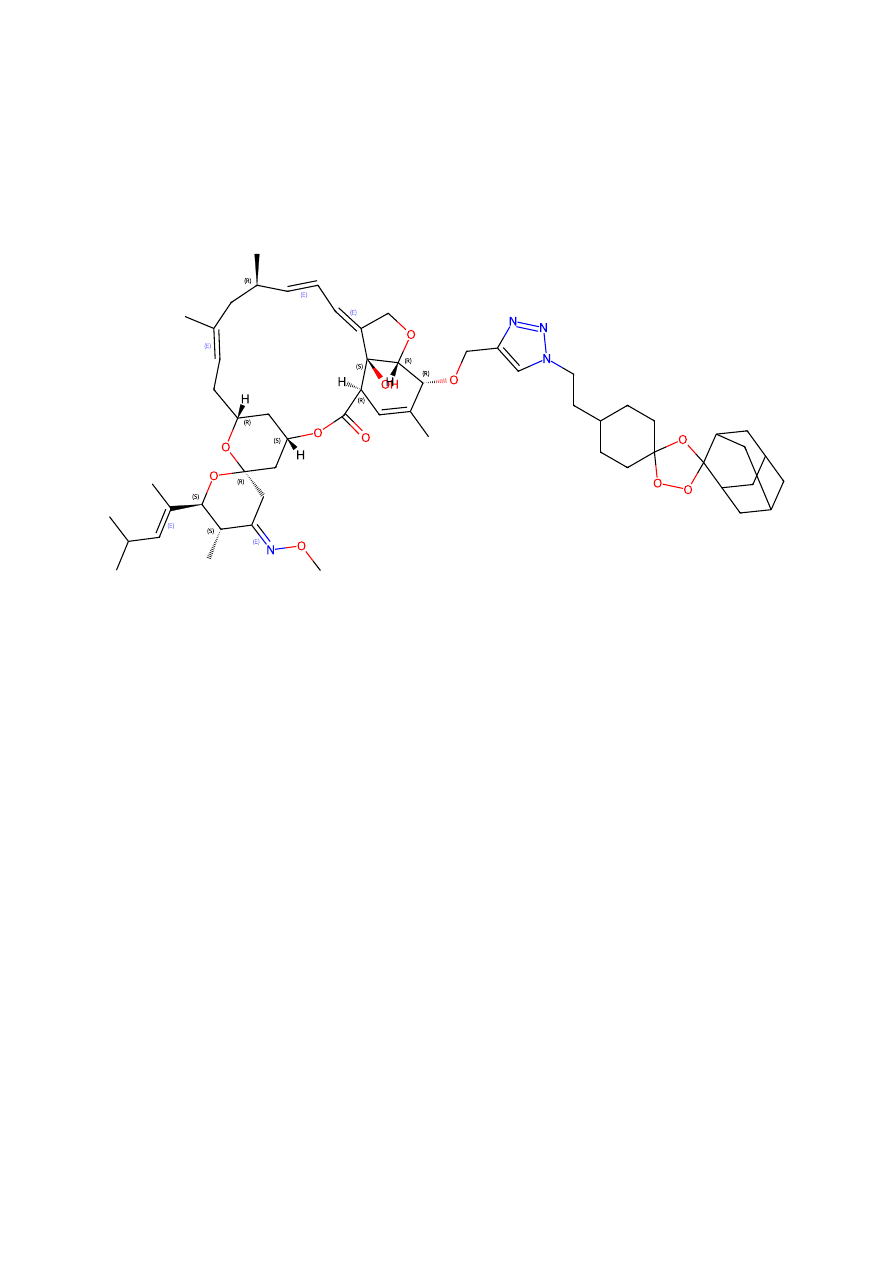
CHAPTER 5 · PROFILE 5/22 · ARCHIVE RECORD 103
C4e
Recorded rationale and role
Peroxide architecture branch. This entry explores the balance
between activation chemistry, appendage size, polarity,
linkage persistence and stereochemical tractability. Source
context is identified below; the design role is not a measured
efficacy ranking.
Preparation focus in the existing record
Peroxide-preserving preparation and analytical work are
central. Compare intact conjugate with any parent-release
products; identify the peroxide architecture and
stereochemical composition before biological interpretation.
AGENTIC RESEARCH FACTORY · COMPUTATIONAL COOKBOOK · 417 / 886

Full deposited SMILES — verbatim
CO/N=C1\C[C@]2(C[C@@H]3C[C@@H]
(C/C=C(\C)C[C@@H](C)/C=C/C=C4\CO[C@@H]5[C@H]
(OCc6cn(CCC7CCC8(CC7)OOC7(O8)C8CC9CC(C8)CC7C9)
nn6)C(C)=C[C@@H](C(=O)O3)[C@]45O)O2)O[C@H]
(/C(C)=C/C(C)C)[C@H]1C
Canonical isomeric SMILES — RDKit 2026.09.1
CO/N=C1\C[C@]2(C[C@@H]3C[C@@H]
(C/C=C(\C)C[C@@H](C)/C=C/C=C4\CO[C@@H]5[C@H]
(OCc6cn(CCC7CCC8(CC7)OOC7(O8)C8CC9CC(C8)CC7C9)
nn6)C(C)=C[C@@H](C(=O)O3)[C@]45O)O2)O[C@H]
(/C(C)=C/C(C)C)[C@H]1C
Complete computed profile
Formula
C58H82N4O11
Molecular weight (g/mol)
1011.311
Exact mass (Da)
1010.598009
Crippen cLogP
9.9523
TPSA (Ų)
163.44
H-bond donors
1
H-bond acceptors
14
Rotatable bonds
9
AGENTIC RESEARCH FACTORY · COMPUTATIONAL COOKBOOK · 418 / 886

Rings
12
Formal charge
0
Heavy atoms
73
Unassigned stereo —
modern
7
Unassigned stereo —
legacy
0
Graph interpretation and liabilities
This graph has 1 O–O bond, net formal charge +0, and 9
rotatable bonds. Its high calculated lipophilicity makes free
exposure, adsorption and formulation important comparison
variables. The modern graph analysis leaves 7 stereochemical
elements unspecified; material-level comparisons require that
composition to be defined.
Source record
Node85 combined.json; C4 papers and source scripts
AGENTIC RESEARCH FACTORY · COMPUTATIONAL COOKBOOK · 419 / 886
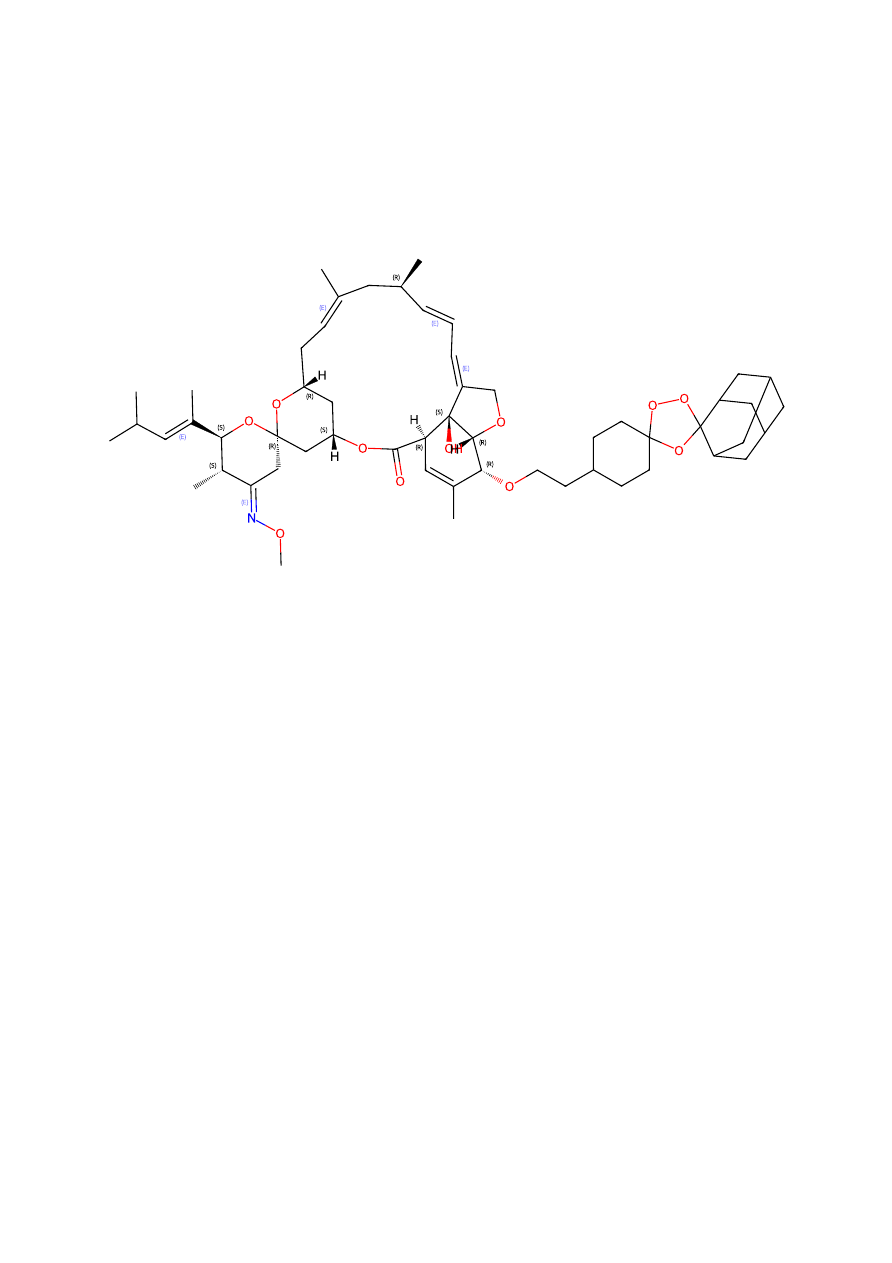
CHAPTER 5 · PROFILE 6/22 · ARCHIVE RECORD 104
C4f
Recorded rationale and role
Peroxide architecture branch. This entry explores the balance
between activation chemistry, appendage size, polarity,
linkage persistence and stereochemical tractability. Source
context is identified below; the design role is not a measured
efficacy ranking.
Preparation focus in the existing record
Peroxide-preserving preparation and analytical work are
central. Compare intact conjugate with any parent-release
products; identify the peroxide architecture and
stereochemical composition before biological interpretation.
AGENTIC RESEARCH FACTORY · COMPUTATIONAL COOKBOOK · 420 / 886

Full deposited SMILES — verbatim
CO/N=C1\C[C@]2(C[C@@H]3C[C@@H]
(C/C=C(\C)C[C@@H](C)/C=C/C=C4\CO[C@@H]5[C@H]
(OCCC6CCC7(CC6)OOC6(O7)C7CC8CC(C7)CC6C8)C(C)=
C[C@@H](C(=O)O3)[C@]45O)O2)O[C@H](/C(C)=C/C(C)C)
[C@H]1C
Canonical isomeric SMILES — RDKit 2026.09.1
CO/N=C1\C[C@]2(C[C@@H]3C[C@@H]
(C/C=C(\C)C[C@@H](C)/C=C/C=C4\CO[C@@H]5[C@H]
(OCCC6CCC7(CC6)OOC6(O7)C7CC8CC(C7)CC6C8)C(C)=
C[C@@H](C(=O)O3)[C@]45O)O2)O[C@H](/C(C)=C/C(C)C)
[C@H]1C
Complete computed profile
Formula
C55H79NO11
Molecular weight (g/mol)
930.233
Exact mass (Da)
929.565312
Crippen cLogP
10.1606
TPSA (Ų)
132.73
H-bond donors
1
H-bond acceptors
12
Rotatable bonds
7
AGENTIC RESEARCH FACTORY · COMPUTATIONAL COOKBOOK · 421 / 886

Rings
11
Formal charge
0
Heavy atoms
67
Unassigned stereo —
modern
7
Unassigned stereo —
legacy
0
Graph interpretation and liabilities
This graph has 1 O–O bond, net formal charge +0, and 7
rotatable bonds. Its high calculated lipophilicity makes free
exposure, adsorption and formulation important comparison
variables. The modern graph analysis leaves 7 stereochemical
elements unspecified; material-level comparisons require that
composition to be defined.
Source record
Node85 combined.json; C4 papers and source scripts
AGENTIC RESEARCH FACTORY · COMPUTATIONAL COOKBOOK · 422 / 886
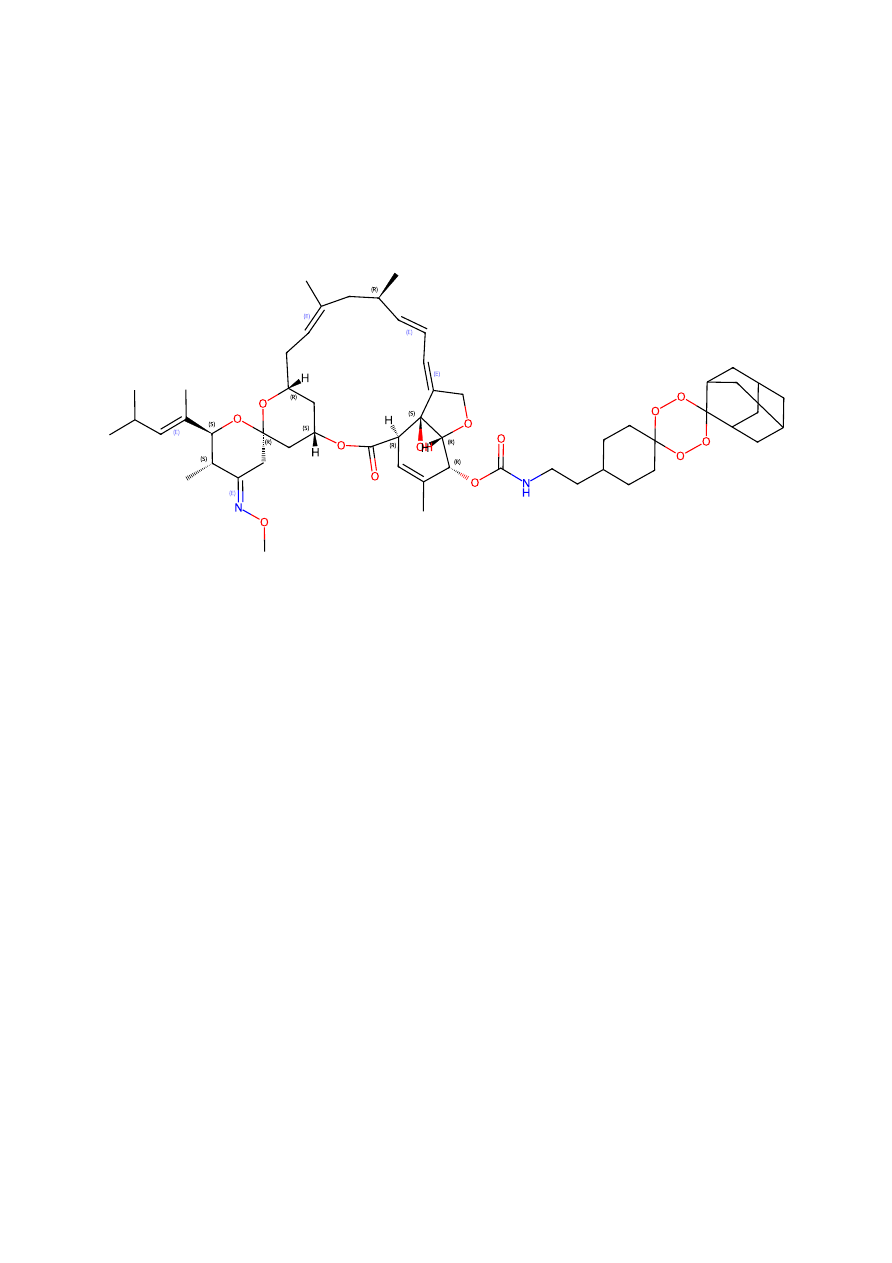
CHAPTER 5 · PROFILE 7/22 · ARCHIVE RECORD 105
C4g
Recorded rationale and role
Peroxide architecture branch. This entry explores the balance
between activation chemistry, appendage size, polarity,
linkage persistence and stereochemical tractability. Source
context is identified below; the design role is not a measured
efficacy ranking.
Preparation focus in the existing record
Peroxide-preserving preparation and analytical work are
central. Compare intact conjugate with any parent-release
products; identify the peroxide architecture and
stereochemical composition before biological interpretation.
AGENTIC RESEARCH FACTORY · COMPUTATIONAL COOKBOOK · 423 / 886

Full deposited SMILES — verbatim
CO/N=C1\C[C@]2(C[C@@H]3C[C@@H]
(C/C=C(\C)C[C@@H](C)/C=C/C=C4\CO[C@@H]5[C@H]
(OC(=O)NCCC6CCC7(CC6)OOC6(OO7)C7CC8CC(C7)CC6C
8)C(C)=C[C@@H](C(=O)O3)[C@]45O)O2)O[C@H]
(/C(C)=C/C(C)C)[C@H]1C
Canonical isomeric SMILES — RDKit 2026.09.1
CO/N=C1\C[C@]2(C[C@@H]3C[C@@H]
(C/C=C(\C)C[C@@H](C)/C=C/C=C4\CO[C@@H]5[C@H]
(OC(=O)NCCC6CCC7(CC6)OOC6(OO7)C7CC8CC(C7)CC6C
8)C(C)=C[C@@H](C(=O)O3)[C@]45O)O2)O[C@H]
(/C(C)=C/C(C)C)[C@H]1C
Complete computed profile
Formula
C56H80N2O13
Molecular weight (g/mol)
989.257
Exact mass (Da)
988.566041
Crippen cLogP
9.8018
TPSA (Ų)
171.06
H-bond donors
2
H-bond acceptors
14
Rotatable bonds
7
AGENTIC RESEARCH FACTORY · COMPUTATIONAL COOKBOOK · 424 / 886

Rings
11
Formal charge
0
Heavy atoms
71
Unassigned stereo —
modern
7
Unassigned stereo —
legacy
0
Graph interpretation and liabilities
This graph has 2 O–O bonds, net formal charge +0, and 7
rotatable bonds. Its high calculated lipophilicity makes free
exposure, adsorption and formulation important comparison
variables. The modern graph analysis leaves 7 stereochemical
elements unspecified; material-level comparisons require that
composition to be defined.
Source record
Node85 combined.json; C4 papers and source scripts
AGENTIC RESEARCH FACTORY · COMPUTATIONAL COOKBOOK · 425 / 886
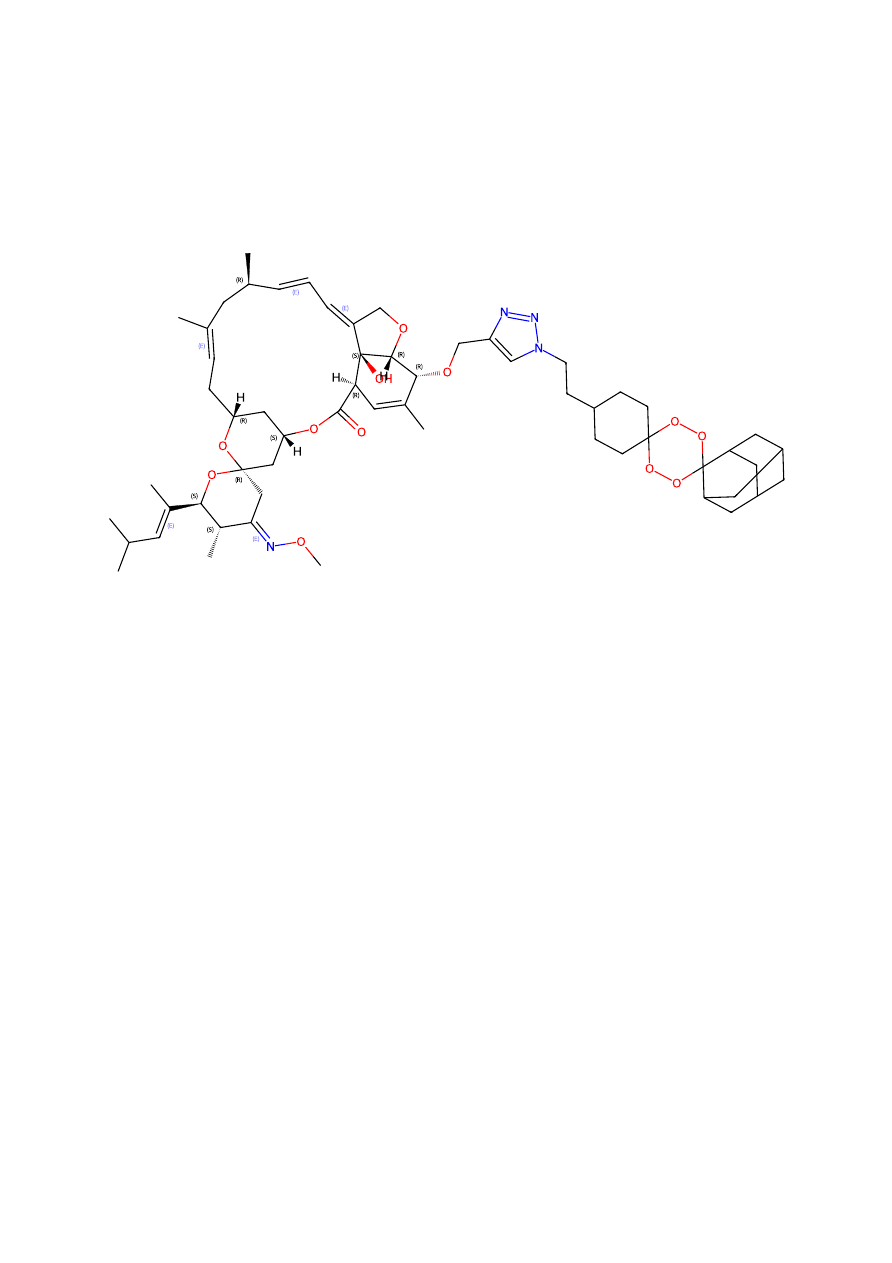
CHAPTER 5 · PROFILE 8/22 · ARCHIVE RECORD 106
C4h
Recorded rationale and role
Peroxide architecture branch. This entry explores the balance
between activation chemistry, appendage size, polarity,
linkage persistence and stereochemical tractability. Source
context is identified below; the design role is not a measured
efficacy ranking.
Preparation focus in the existing record
Peroxide-preserving preparation and analytical work are
central. Compare intact conjugate with any parent-release
products; identify the peroxide architecture and
stereochemical composition before biological interpretation.
AGENTIC RESEARCH FACTORY · COMPUTATIONAL COOKBOOK · 426 / 886

Full deposited SMILES — verbatim
CO/N=C1\C[C@]2(C[C@@H]3C[C@@H]
(C/C=C(\C)C[C@@H](C)/C=C/C=C4\CO[C@@H]5[C@H]
(OCc6cn(CCC7CCC8(CC7)OOC7(OO8)C8CC9CC(C8)CC7C
9)nn6)C(C)=C[C@@H](C(=O)O3)[C@]45O)O2)O[C@H]
(/C(C)=C/C(C)C)[C@H]1C
Canonical isomeric SMILES — RDKit 2026.09.1
CO/N=C1\C[C@]2(C[C@@H]3C[C@@H]
(C/C=C(\C)C[C@@H](C)/C=C/C=C4\CO[C@@H]5[C@H]
(OCc6cn(CCC7CCC8(CC7)OOC7(OO8)C8CC9CC(C8)CC7C
9)nn6)C(C)=C[C@@H](C(=O)O3)[C@]45O)O2)O[C@H]
(/C(C)=C/C(C)C)[C@H]1C
Complete computed profile
Formula
C58H82N4O12
Molecular weight (g/mol)
1027.31
Exact mass (Da)
1026.592924
Crippen cLogP
9.8839
TPSA (Ų)
172.67
H-bond donors
1
H-bond acceptors
15
Rotatable bonds
9
AGENTIC RESEARCH FACTORY · COMPUTATIONAL COOKBOOK · 427 / 886

Rings
12
Formal charge
0
Heavy atoms
74
Unassigned stereo —
modern
7
Unassigned stereo —
legacy
0
Graph interpretation and liabilities
This graph has 2 O–O bonds, net formal charge +0, and 9
rotatable bonds. Its high calculated lipophilicity makes free
exposure, adsorption and formulation important comparison
variables. The modern graph analysis leaves 7 stereochemical
elements unspecified; material-level comparisons require that
composition to be defined.
Source record
Node85 combined.json; C4 papers and source scripts
AGENTIC RESEARCH FACTORY · COMPUTATIONAL COOKBOOK · 428 / 886
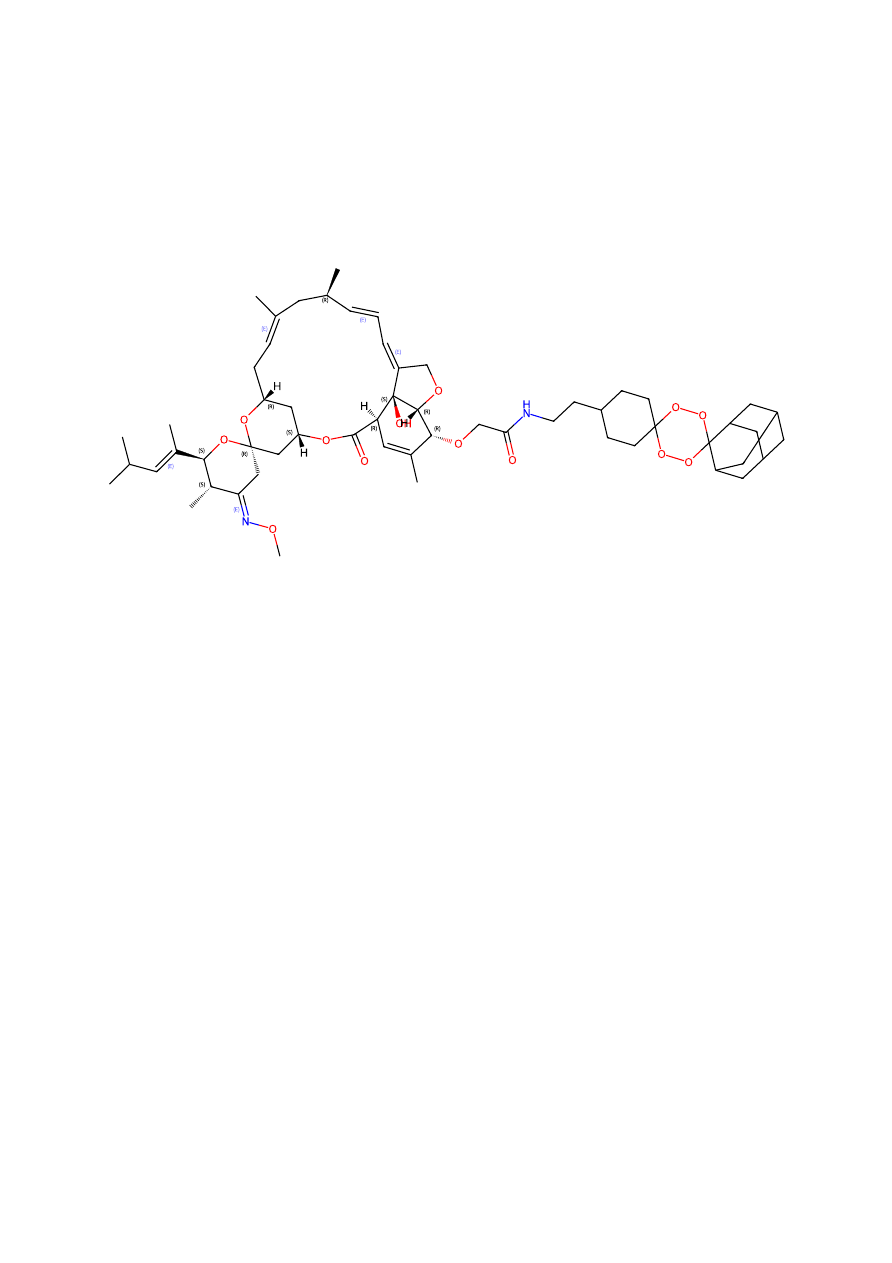
CHAPTER 5 · PROFILE 9/22 · ARCHIVE RECORD 107
C4i
Recorded rationale and role
Peroxide architecture branch. This entry explores the balance
between activation chemistry, appendage size, polarity,
linkage persistence and stereochemical tractability. Source
context is identified below; the design role is not a measured
efficacy ranking.
Preparation focus in the existing record
Peroxide-preserving preparation and analytical work are
central. Compare intact conjugate with any parent-release
products; identify the peroxide architecture and
stereochemical composition before biological interpretation.
AGENTIC RESEARCH FACTORY · COMPUTATIONAL COOKBOOK · 429 / 886

Full deposited SMILES — verbatim
CO/N=C1\C[C@]2(C[C@@H]3C[C@@H]
(C/C=C(\C)C[C@@H](C)/C=C/C=C4\CO[C@@H]5[C@H]
(OCC(=O)NCCC6CCC7(CC6)OOC6(OO7)C7CC8CC(C7)CC6
C8)C(C)=C[C@@H](C(=O)O3)[C@]45O)O2)O[C@H]
(/C(C)=C/C(C)C)[C@H]1C
Canonical isomeric SMILES — RDKit 2026.09.1
CO/N=C1\C[C@]2(C[C@@H]3C[C@@H]
(C/C=C(\C)C[C@@H](C)/C=C/C=C4\CO[C@@H]5[C@H]
(OCC(=O)NCCC6CCC7(CC6)OOC6(OO7)C7CC8CC(C7)CC6
C8)C(C)=C[C@@H](C(=O)O3)[C@]45O)O2)O[C@H]
(/C(C)=C/C(C)C)[C@H]1C
Complete computed profile
Formula
C57H82N2O13
Molecular weight (g/mol)
1003.284
Exact mass (Da)
1002.581691
Crippen cLogP
9.2084
TPSA (Ų)
171.06
H-bond donors
2
H-bond acceptors
14
Rotatable bonds
9
AGENTIC RESEARCH FACTORY · COMPUTATIONAL COOKBOOK · 430 / 886

Rings
11
Formal charge
0
Heavy atoms
72
Unassigned stereo —
modern
7
Unassigned stereo —
legacy
0
Graph interpretation and liabilities
This graph has 2 O–O bonds, net formal charge +0, and 9
rotatable bonds. Its high calculated lipophilicity makes free
exposure, adsorption and formulation important comparison
variables. The modern graph analysis leaves 7 stereochemical
elements unspecified; material-level comparisons require that
composition to be defined.
Source record
Node85 combined.json; C4 papers and source scripts
AGENTIC RESEARCH FACTORY · COMPUTATIONAL COOKBOOK · 431 / 886
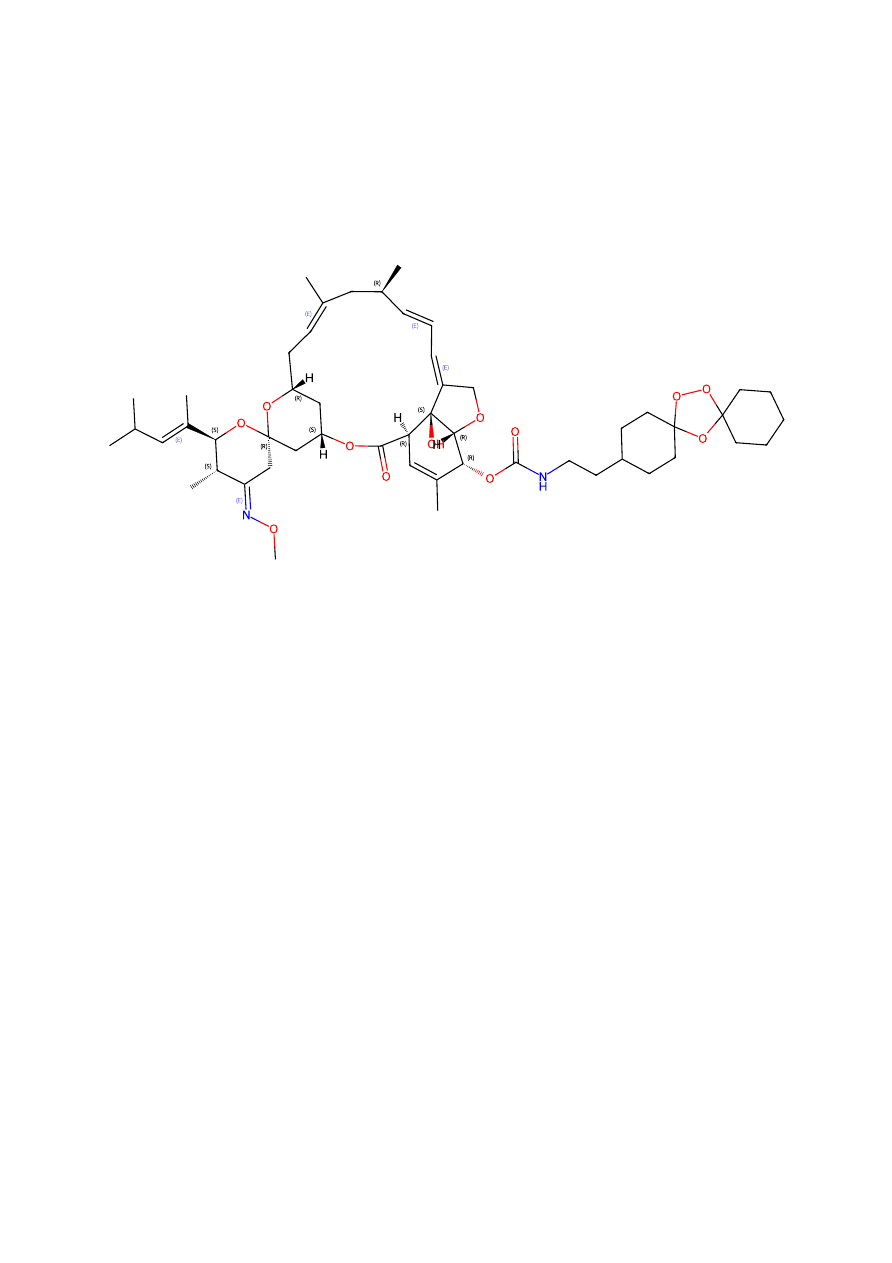
CHAPTER 5 · PROFILE 10/22 · ARCHIVE RECORD 108
C4j
Recorded rationale and role
Peroxide architecture branch. This entry explores the balance
between activation chemistry, appendage size, polarity,
linkage persistence and stereochemical tractability. Source
context is identified below; the design role is not a measured
efficacy ranking.
Preparation focus in the existing record
Peroxide-preserving preparation and analytical work are
central. Compare intact conjugate with any parent-release
products; identify the peroxide architecture and
stereochemical composition before biological interpretation.
AGENTIC RESEARCH FACTORY · COMPUTATIONAL COOKBOOK · 432 / 886

Full deposited SMILES — verbatim
CO/N=C1\C[C@]2(C[C@@H]3C[C@@H]
(C/C=C(\C)C[C@@H](C)/C=C/C=C4\CO[C@@H]5[C@H]
(OC(=O)NCCC6CCC7(CC6)OOC6(CCCCC6)O7)C(C)=C[C@
@H](C(=O)O3)[C@]45O)O2)O[C@H](/C(C)=C/C(C)C)
[C@H]1C
Canonical isomeric SMILES — RDKit 2026.09.1
CO/N=C1\C[C@]2(C[C@@H]3C[C@@H]
(C/C=C(\C)C[C@@H](C)/C=C/C=C4\CO[C@@H]5[C@H]
(OC(=O)NCCC6CCC7(CC6)OOC6(CCCCC6)O7)C(C)=C[C@
@H](C(=O)O3)[C@]45O)O2)O[C@H](/C(C)=C/C(C)C)
[C@H]1C
Complete computed profile
Formula
C52H76N2O12
Molecular weight (g/mol)
921.182
Exact mass (Da)
920.539826
Crippen cLogP
9.3782
TPSA (Ų)
161.83
H-bond donors
2
H-bond acceptors
13
Rotatable bonds
7
AGENTIC RESEARCH FACTORY · COMPUTATIONAL COOKBOOK · 433 / 886

Rings
8
Formal charge
0
Heavy atoms
66
Unassigned stereo —
modern
2
Unassigned stereo —
legacy
0
Graph interpretation and liabilities
This graph has 1 O–O bond, net formal charge +0, and 7
rotatable bonds. Its high calculated lipophilicity makes free
exposure, adsorption and formulation important comparison
variables. The modern graph analysis leaves 2 stereochemical
elements unspecified; material-level comparisons require that
composition to be defined.
Source record
Node85 combined.json; C4 papers and source scripts
AGENTIC RESEARCH FACTORY · COMPUTATIONAL COOKBOOK · 434 / 886
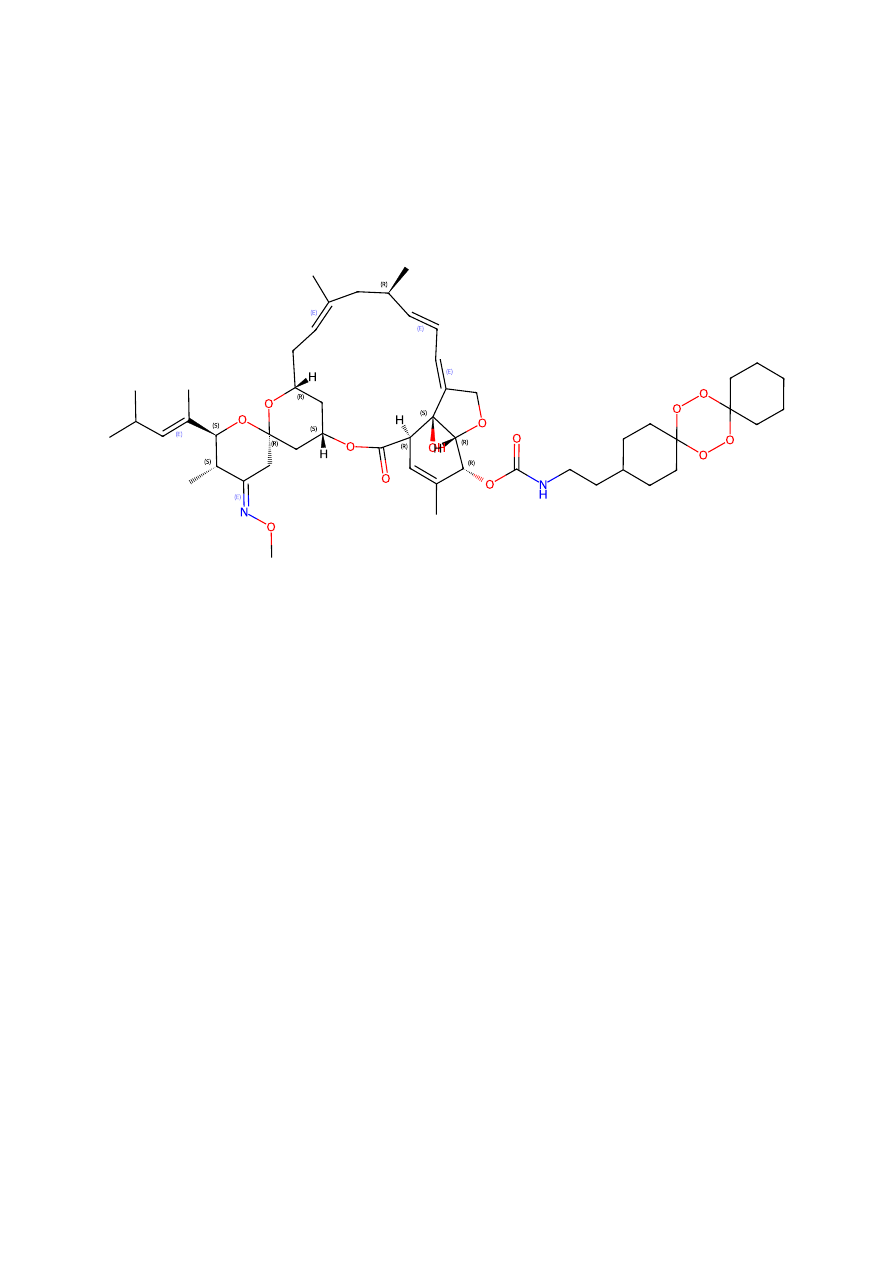
CHAPTER 5 · PROFILE 11/22 · ARCHIVE RECORD 109
C4k
Recorded rationale and role
Peroxide architecture branch. This entry explores the balance
between activation chemistry, appendage size, polarity,
linkage persistence and stereochemical tractability. Source
context is identified below; the design role is not a measured
efficacy ranking.
Preparation focus in the existing record
Peroxide-preserving preparation and analytical work are
central. Compare intact conjugate with any parent-release
products; identify the peroxide architecture and
stereochemical composition before biological interpretation.
AGENTIC RESEARCH FACTORY · COMPUTATIONAL COOKBOOK · 435 / 886

Full deposited SMILES — verbatim
CO/N=C1\C[C@]2(C[C@@H]3C[C@@H]
(C/C=C(\C)C[C@@H](C)/C=C/C=C4\CO[C@@H]5[C@H]
(OC(=O)NCCC6CCC7(CC6)OOC6(CCCCC6)OO7)C(C)=C[C
@@H](C(=O)O3)[C@]45O)O2)O[C@H](/C(C)=C/C(C)C)
[C@H]1C
Canonical isomeric SMILES — RDKit 2026.09.1
CO/N=C1\C[C@]2(C[C@@H]3C[C@@H]
(C/C=C(\C)C[C@@H](C)/C=C/C=C4\CO[C@@H]5[C@H]
(OC(=O)NCCC6CCC7(CC6)OOC6(CCCCC6)OO7)C(C)=C[C
@@H](C(=O)O3)[C@]45O)O2)O[C@H](/C(C)=C/C(C)C)
[C@H]1C
Complete computed profile
Formula
C52H76N2O13
Molecular weight (g/mol)
937.181
Exact mass (Da)
936.53474
Crippen cLogP
9.3098
TPSA (Ų)
171.06
H-bond donors
2
H-bond acceptors
14
Rotatable bonds
7
AGENTIC RESEARCH FACTORY · COMPUTATIONAL COOKBOOK · 436 / 886

Rings
8
Formal charge
0
Heavy atoms
67
Unassigned stereo —
modern
0
Unassigned stereo —
legacy
0
Graph interpretation and liabilities
This graph has 2 O–O bonds, net formal charge +0, and 7
rotatable bonds. Its high calculated lipophilicity makes free
exposure, adsorption and formulation important comparison
variables. No unspecified stereochemical element was
detected by the stated modern analysis of this graph.
Source record
Node85 combined.json; C4 papers and source scripts
AGENTIC RESEARCH FACTORY · COMPUTATIONAL COOKBOOK · 437 / 886
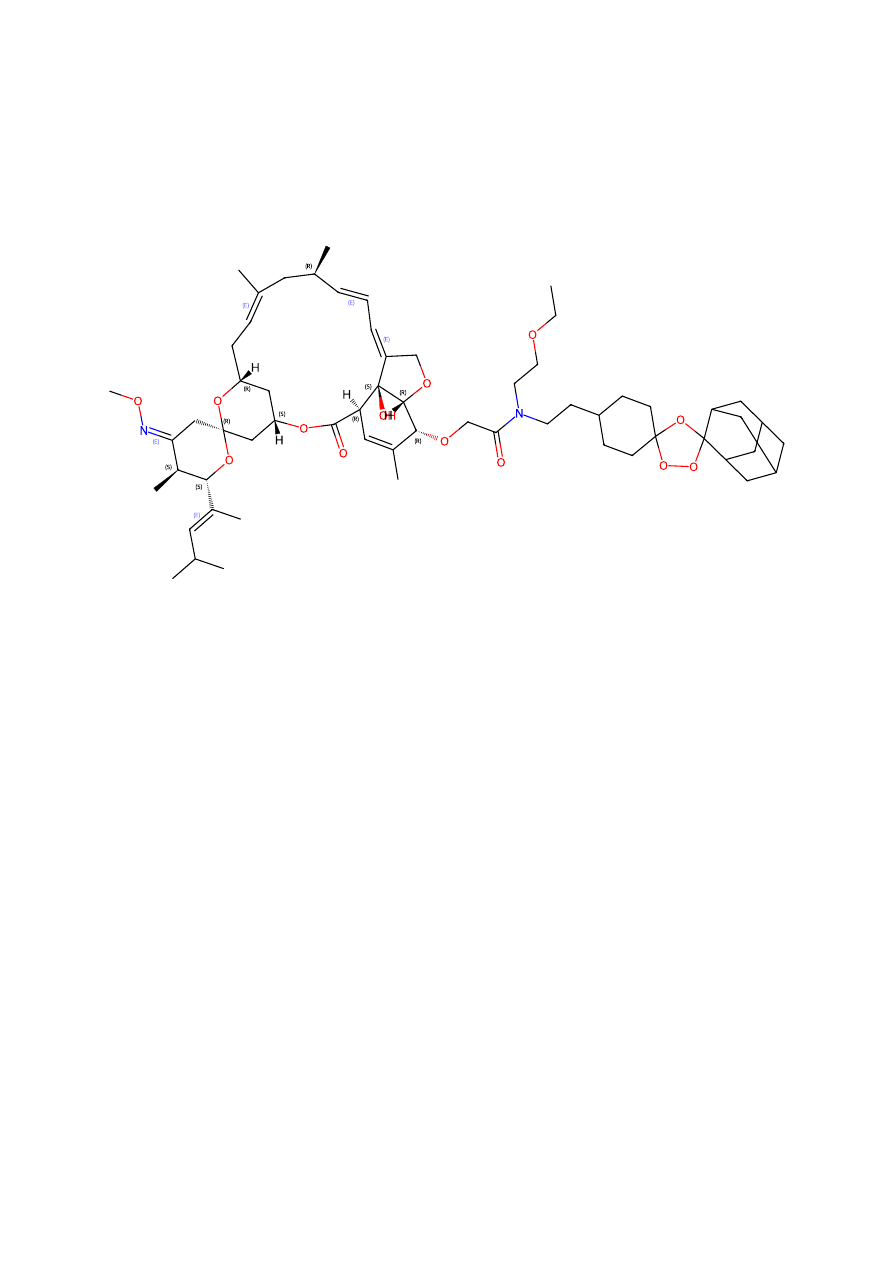
CHAPTER 5 · PROFILE 12/22 · ARCHIVE RECORD 110
C4l
Recorded rationale and role
Peroxide architecture branch. This entry explores the balance
between activation chemistry, appendage size, polarity,
linkage persistence and stereochemical tractability. Source
context is identified below; the design role is not a measured
efficacy ranking.
Preparation focus in the existing record
Peroxide-preserving preparation and analytical work are
central. Compare intact conjugate with any parent-release
products; identify the peroxide architecture and
stereochemical composition before biological interpretation.
AGENTIC RESEARCH FACTORY · COMPUTATIONAL COOKBOOK · 438 / 886

Full deposited SMILES — verbatim
CCOCCN(CCC1CCC2(CC1)OOC1(O2)C2CC3CC(C2)CC1C3
)C(=O)CO[C@@H]1C(C)=C[C@H]2C(=O)O[C@H]3C[C@@H
](C/C=C(\C)C[C@@H]
(C)/C=C/C=C4\CO[C@H]1[C@@]42O)O[C@@]1(C/C(=N\OC
)[C@H](C)[C@@H](/C(C)=C/C(C)C)O1)C3
Canonical isomeric SMILES — RDKit 2026.09.1
CCOCCN(CCC1CCC2(CC1)OOC1(O2)C2CC3CC(C2)CC1C3
)C(=O)CO[C@@H]1C(C)=C[C@H]2C(=O)O[C@H]3C[C@@H
](C/C=C(\C)C[C@@H]
(C)/C=C/C=C4\CO[C@H]1[C@@]42O)O[C@@]1(C/C(=N\OC
)[C@H](C)[C@@H](/C(C)=C/C(C)C)O1)C3
Complete computed profile
Formula
C61H90N2O13
Molecular weight (g/mol)
1059.392
Exact mass (Da)
1058.644291
Crippen cLogP
10.0257
TPSA (Ų)
162.27
H-bond donors
1
H-bond acceptors
14
Rotatable bonds
13
AGENTIC RESEARCH FACTORY · COMPUTATIONAL COOKBOOK · 439 / 886

Rings
11
Formal charge
0
Heavy atoms
76
Unassigned stereo —
modern
7
Unassigned stereo —
legacy
0
Graph interpretation and liabilities
This graph has 1 O–O bond, net formal charge +0, and 13
rotatable bonds. Its high calculated lipophilicity makes free
exposure, adsorption and formulation important comparison
variables. The modern graph analysis leaves 7 stereochemical
elements unspecified; material-level comparisons require that
composition to be defined.
Source record
Node85 combined.json; C4 papers and source scripts
AGENTIC RESEARCH FACTORY · COMPUTATIONAL COOKBOOK · 440 / 886
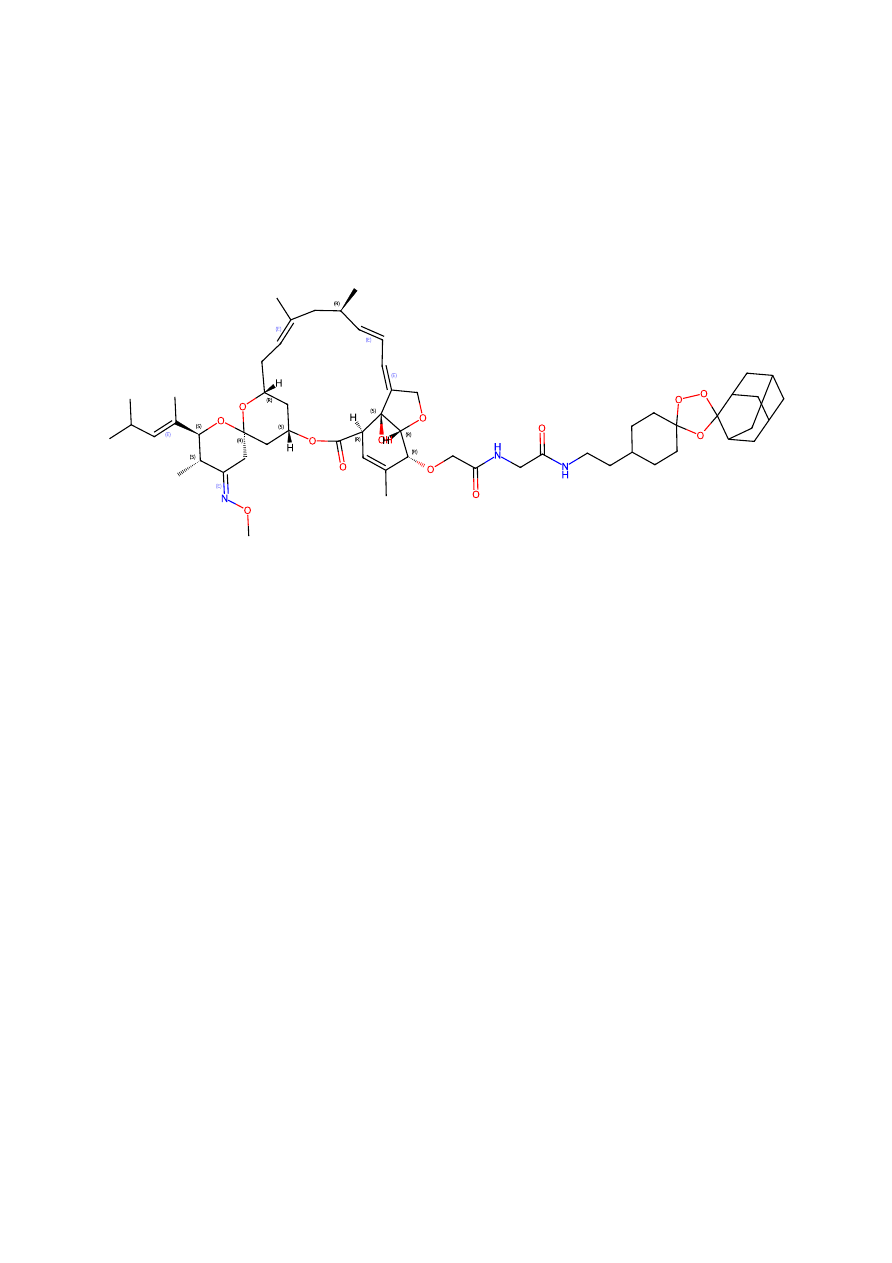
CHAPTER 5 · PROFILE 13/22 · ARCHIVE RECORD 111
C4m
Recorded rationale and role
Peroxide architecture branch. This entry explores the balance
between activation chemistry, appendage size, polarity,
linkage persistence and stereochemical tractability. Source
context is identified below; the design role is not a measured
efficacy ranking.
Preparation focus in the existing record
Peroxide-preserving preparation and analytical work are
central. Compare intact conjugate with any parent-release
products; identify the peroxide architecture and
stereochemical composition before biological interpretation.
AGENTIC RESEARCH FACTORY · COMPUTATIONAL COOKBOOK · 441 / 886

Full deposited SMILES — verbatim
CO/N=C1\C[C@]2(C[C@@H]3C[C@@H]
(C/C=C(\C)C[C@@H](C)/C=C/C=C4\CO[C@@H]5[C@H]
(OCC(=O)NCC(=O)NCCC6CCC7(CC6)OOC6(O7)C7CC8CC(
C7)CC6C8)C(C)=C[C@@H](C(=O)O3)[C@]45O)O2)O[C@H]
(/C(C)=C/C(C)C)[C@H]1C
Canonical isomeric SMILES — RDKit 2026.09.1
CO/N=C1\C[C@]2(C[C@@H]3C[C@@H]
(C/C=C(\C)C[C@@H](C)/C=C/C=C4\CO[C@@H]5[C@H]
(OCC(=O)NCC(=O)NCCC6CCC7(CC6)OOC6(O7)C7CC8CC(
C7)CC6C8)C(C)=C[C@@H](C(=O)O3)[C@]45O)O2)O[C@H]
(/C(C)=C/C(C)C)[C@H]1C
Complete computed profile
Formula
C59H85N3O13
Molecular weight (g/mol)
1044.337
Exact mass (Da)
1043.60824
Crippen cLogP
8.393
TPSA (Ų)
190.93
H-bond donors
3
H-bond acceptors
14
Rotatable bonds
11
AGENTIC RESEARCH FACTORY · COMPUTATIONAL COOKBOOK · 442 / 886

Rings
11
Formal charge
0
Heavy atoms
75
Unassigned stereo —
modern
7
Unassigned stereo —
legacy
0
Graph interpretation and liabilities
This graph has 1 O–O bond, net formal charge +0, and 11
rotatable bonds. Its high calculated lipophilicity makes free
exposure, adsorption and formulation important comparison
variables. The modern graph analysis leaves 7 stereochemical
elements unspecified; material-level comparisons require that
composition to be defined.
Source record
Node85 combined.json; C4 papers and source scripts
AGENTIC RESEARCH FACTORY · COMPUTATIONAL COOKBOOK · 443 / 886
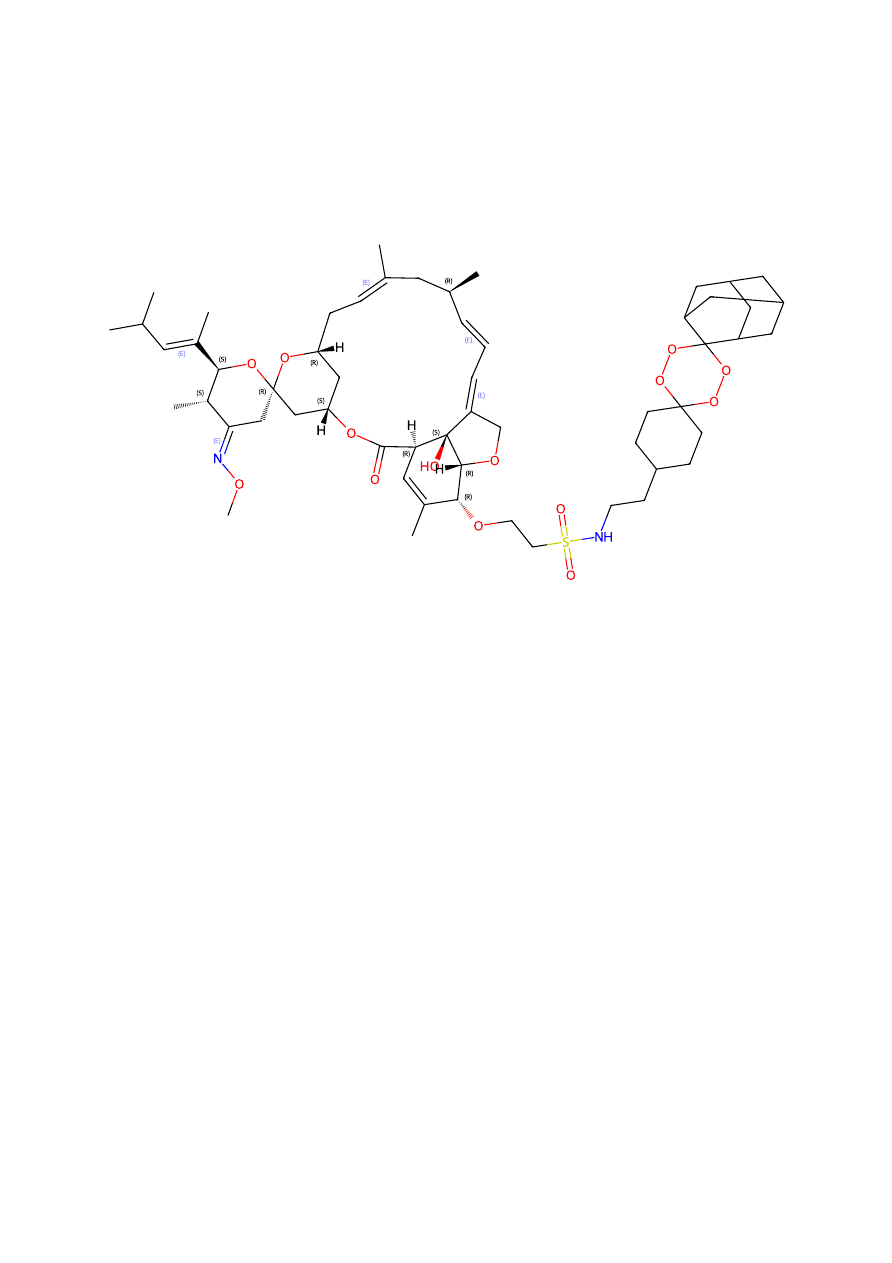
CHAPTER 5 · PROFILE 14/22 · ARCHIVE RECORD 112
C4n
Recorded rationale and role
Peroxide architecture branch. This entry explores the balance
between activation chemistry, appendage size, polarity,
linkage persistence and stereochemical tractability. Source
context is identified below; the design role is not a measured
efficacy ranking.
Preparation focus in the existing record
Peroxide-preserving preparation and analytical work are
central. Compare intact conjugate with any parent-release
products; identify the peroxide architecture and
stereochemical composition before biological interpretation.
AGENTIC RESEARCH FACTORY · COMPUTATIONAL COOKBOOK · 444 / 886

Full deposited SMILES — verbatim
CO/N=C1\C[C@]2(C[C@@H]3C[C@@H]
(C/C=C(\C)C[C@@H](C)/C=C/C=C4\CO[C@@H]5[C@H]
(OCCS(=O)
(=O)NCCC6CCC7(CC6)OOC6(OO7)C7CC8CC(C7)CC6C8)C
(C)=C[C@@H](C(=O)O3)[C@]45O)O2)O[C@H]
(/C(C)=C/C(C)C)[C@H]1C
Canonical isomeric SMILES — RDKit 2026.09.1
CO/N=C1\C[C@]2(C[C@@H]3C[C@@H]
(C/C=C(\C)C[C@@H](C)/C=C/C=C4\CO[C@@H]5[C@H]
(OCCS(=O)
(=O)NCCC6CCC7(CC6)OOC6(OO7)C7CC8CC(C7)CC6C8)C
(C)=C[C@@H](C(=O)O3)[C@]45O)O2)O[C@H]
(/C(C)=C/C(C)C)[C@H]1C
Complete computed profile
Formula
C57H84N2O14S
Molecular weight (g/mol)
1053.366
Exact mass (Da)
1052.564326
Crippen cLogP
9.0116
TPSA (Ų)
188.13
H-bond donors
2
H-bond acceptors
15
AGENTIC RESEARCH FACTORY · COMPUTATIONAL COOKBOOK · 445 / 886

Rotatable bonds
11
Rings
11
Formal charge
0
Heavy atoms
74
Unassigned stereo —
modern
7
Unassigned stereo —
legacy
0
Graph interpretation and liabilities
This graph has 2 O–O bonds, net formal charge +0, and 11
rotatable bonds. Its high calculated lipophilicity makes free
exposure, adsorption and formulation important comparison
variables. The modern graph analysis leaves 7 stereochemical
elements unspecified; material-level comparisons require that
composition to be defined.
Source record
Node85 combined.json; C4 papers and source scripts
AGENTIC RESEARCH FACTORY · COMPUTATIONAL COOKBOOK · 446 / 886
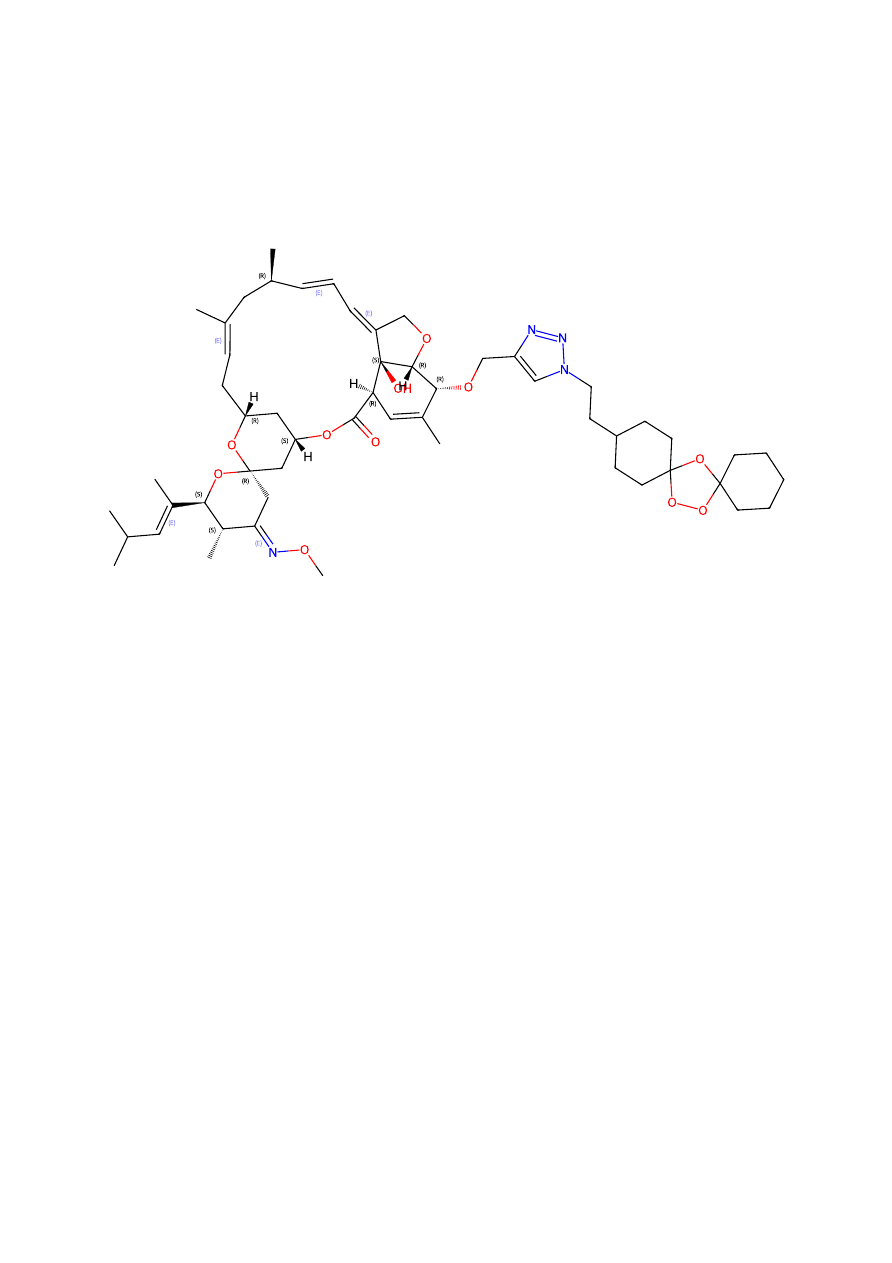
CHAPTER 5 · PROFILE 15/22 · ARCHIVE RECORD 113
C4o
Recorded rationale and role
Peroxide architecture branch. This entry explores the balance
between activation chemistry, appendage size, polarity,
linkage persistence and stereochemical tractability. Source
context is identified below; the design role is not a measured
efficacy ranking.
Preparation focus in the existing record
Peroxide-preserving preparation and analytical work are
central. Compare intact conjugate with any parent-release
products; identify the peroxide architecture and
stereochemical composition before biological interpretation.
AGENTIC RESEARCH FACTORY · COMPUTATIONAL COOKBOOK · 447 / 886

Full deposited SMILES — verbatim
CO/N=C1\C[C@]2(C[C@@H]3C[C@@H]
(C/C=C(\C)C[C@@H](C)/C=C/C=C4\CO[C@@H]5[C@H]
(OCc6cn(CCC7CCC8(CC7)OOC7(CCCCC7)O8)nn6)C(C)=C[
C@@H](C(=O)O3)[C@]45O)O2)O[C@H](/C(C)=C/C(C)C)
[C@H]1C
Canonical isomeric SMILES — RDKit 2026.09.1
CO/N=C1\C[C@]2(C[C@@H]3C[C@@H]
(C/C=C(\C)C[C@@H](C)/C=C/C=C4\CO[C@@H]5[C@H]
(OCc6cn(CCC7CCC8(CC7)OOC7(CCCCC7)O8)nn6)C(C)=C[
C@@H](C(=O)O3)[C@]45O)O2)O[C@H](/C(C)=C/C(C)C)
[C@H]1C
Complete computed profile
Formula
C54H78N4O11
Molecular weight (g/mol)
959.235
Exact mass (Da)
958.566709
Crippen cLogP
9.4603
TPSA (Ų)
163.44
H-bond donors
1
H-bond acceptors
14
Rotatable bonds
9
AGENTIC RESEARCH FACTORY · COMPUTATIONAL COOKBOOK · 448 / 886

Rings
9
Formal charge
0
Heavy atoms
69
Unassigned stereo —
modern
2
Unassigned stereo —
legacy
0
Graph interpretation and liabilities
This graph has 1 O–O bond, net formal charge +0, and 9
rotatable bonds. Its high calculated lipophilicity makes free
exposure, adsorption and formulation important comparison
variables. The modern graph analysis leaves 2 stereochemical
elements unspecified; material-level comparisons require that
composition to be defined.
Source record
Node85 combined.json; C4 papers and source scripts
AGENTIC RESEARCH FACTORY · COMPUTATIONAL COOKBOOK · 449 / 886
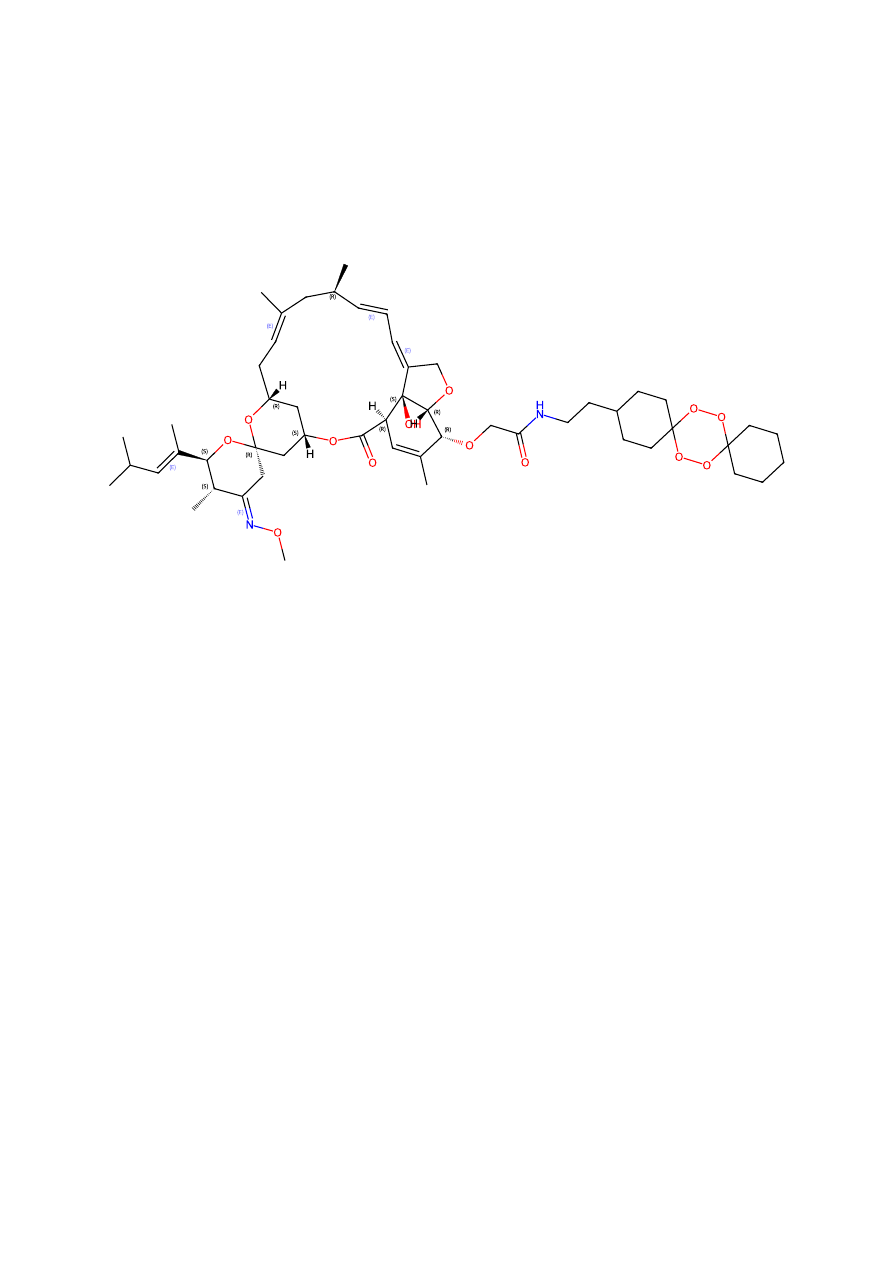
CHAPTER 5 · PROFILE 16/22 · ARCHIVE RECORD 114
C4p
Recorded rationale and role
Peroxide architecture branch. This entry explores the balance
between activation chemistry, appendage size, polarity,
linkage persistence and stereochemical tractability. Source
context is identified below; the design role is not a measured
efficacy ranking.
Preparation focus in the existing record
Peroxide-preserving preparation and analytical work are
central. Compare intact conjugate with any parent-release
products; identify the peroxide architecture and
stereochemical composition before biological interpretation.
AGENTIC RESEARCH FACTORY · COMPUTATIONAL COOKBOOK · 450 / 886

Full deposited SMILES — verbatim
CO/N=C1\C[C@]2(C[C@@H]3C[C@@H]
(C/C=C(\C)C[C@@H](C)/C=C/C=C4\CO[C@@H]5[C@H]
(OCC(=O)NCCC6CCC7(CC6)OOC6(CCCCC6)OO7)C(C)=C[
C@@H](C(=O)O3)[C@]45O)O2)O[C@H](/C(C)=C/C(C)C)
[C@H]1C
Canonical isomeric SMILES — RDKit 2026.09.1
CO/N=C1\C[C@]2(C[C@@H]3C[C@@H]
(C/C=C(\C)C[C@@H](C)/C=C/C=C4\CO[C@@H]5[C@H]
(OCC(=O)NCCC6CCC7(CC6)OOC6(CCCCC6)OO7)C(C)=C[
C@@H](C(=O)O3)[C@]45O)O2)O[C@H](/C(C)=C/C(C)C)
[C@H]1C
Complete computed profile
Formula
C53H78N2O13
Molecular weight (g/mol)
951.208
Exact mass (Da)
950.550391
Crippen cLogP
8.7164
TPSA (Ų)
171.06
H-bond donors
2
H-bond acceptors
14
Rotatable bonds
9
AGENTIC RESEARCH FACTORY · COMPUTATIONAL COOKBOOK · 451 / 886

Rings
8
Formal charge
0
Heavy atoms
68
Unassigned stereo —
modern
0
Unassigned stereo —
legacy
0
Graph interpretation and liabilities
This graph has 2 O–O bonds, net formal charge +0, and 9
rotatable bonds. Its high calculated lipophilicity makes free
exposure, adsorption and formulation important comparison
variables. No unspecified stereochemical element was
detected by the stated modern analysis of this graph.
Source record
Node85 combined.json; C4 papers and source scripts
AGENTIC RESEARCH FACTORY · COMPUTATIONAL COOKBOOK · 452 / 886
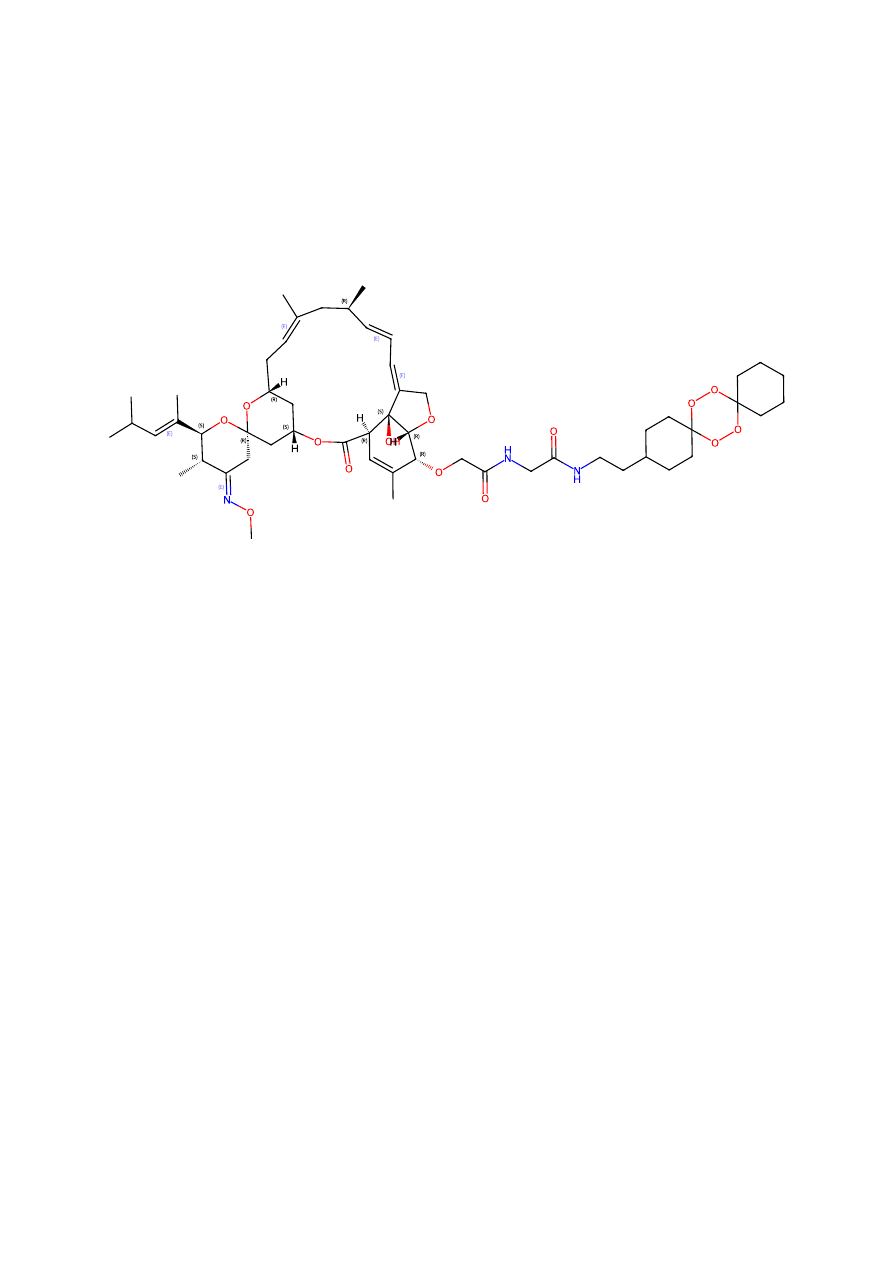
CHAPTER 5 · PROFILE 17/22 · ARCHIVE RECORD 115
C4q
Recorded rationale and role
Peroxide architecture branch. This entry explores the balance
between activation chemistry, appendage size, polarity,
linkage persistence and stereochemical tractability. Source
context is identified below; the design role is not a measured
efficacy ranking.
Preparation focus in the existing record
Peroxide-preserving preparation and analytical work are
central. Compare intact conjugate with any parent-release
products; identify the peroxide architecture and
stereochemical composition before biological interpretation.
AGENTIC RESEARCH FACTORY · COMPUTATIONAL COOKBOOK · 453 / 886

Full deposited SMILES — verbatim
CO/N=C1\C[C@]2(C[C@@H]3C[C@@H]
(C/C=C(\C)C[C@@H](C)/C=C/C=C4\CO[C@@H]5[C@H]
(OCC(=O)NCC(=O)NCCC6CCC7(CC6)OOC6(CCCCC6)OO7)
C(C)=C[C@@H](C(=O)O3)[C@]45O)O2)O[C@H]
(/C(C)=C/C(C)C)[C@H]1C
Canonical isomeric SMILES — RDKit 2026.09.1
CO/N=C1\C[C@]2(C[C@@H]3C[C@@H]
(C/C=C(\C)C[C@@H](C)/C=C/C=C4\CO[C@@H]5[C@H]
(OCC(=O)NCC(=O)NCCC6CCC7(CC6)OOC6(CCCCC6)OO7)
C(C)=C[C@@H](C(=O)O3)[C@]45O)O2)O[C@H]
(/C(C)=C/C(C)C)[C@H]1C
Complete computed profile
Formula
C55H81N3O14
Molecular weight (g/mol)
1008.26
Exact mass (Da)
1007.571854
Crippen cLogP
7.8326
TPSA (Ų)
200.16
H-bond donors
3
H-bond acceptors
15
Rotatable bonds
11
AGENTIC RESEARCH FACTORY · COMPUTATIONAL COOKBOOK · 454 / 886

Rings
8
Formal charge
0
Heavy atoms
72
Unassigned stereo —
modern
0
Unassigned stereo —
legacy
0
Graph interpretation and liabilities
This graph has 2 O–O bonds, net formal charge +0, and 11
rotatable bonds. Its high calculated lipophilicity makes free
exposure, adsorption and formulation important comparison
variables. No unspecified stereochemical element was
detected by the stated modern analysis of this graph.
Source record
Node85 combined.json; C4 papers and source scripts
AGENTIC RESEARCH FACTORY · COMPUTATIONAL COOKBOOK · 455 / 886
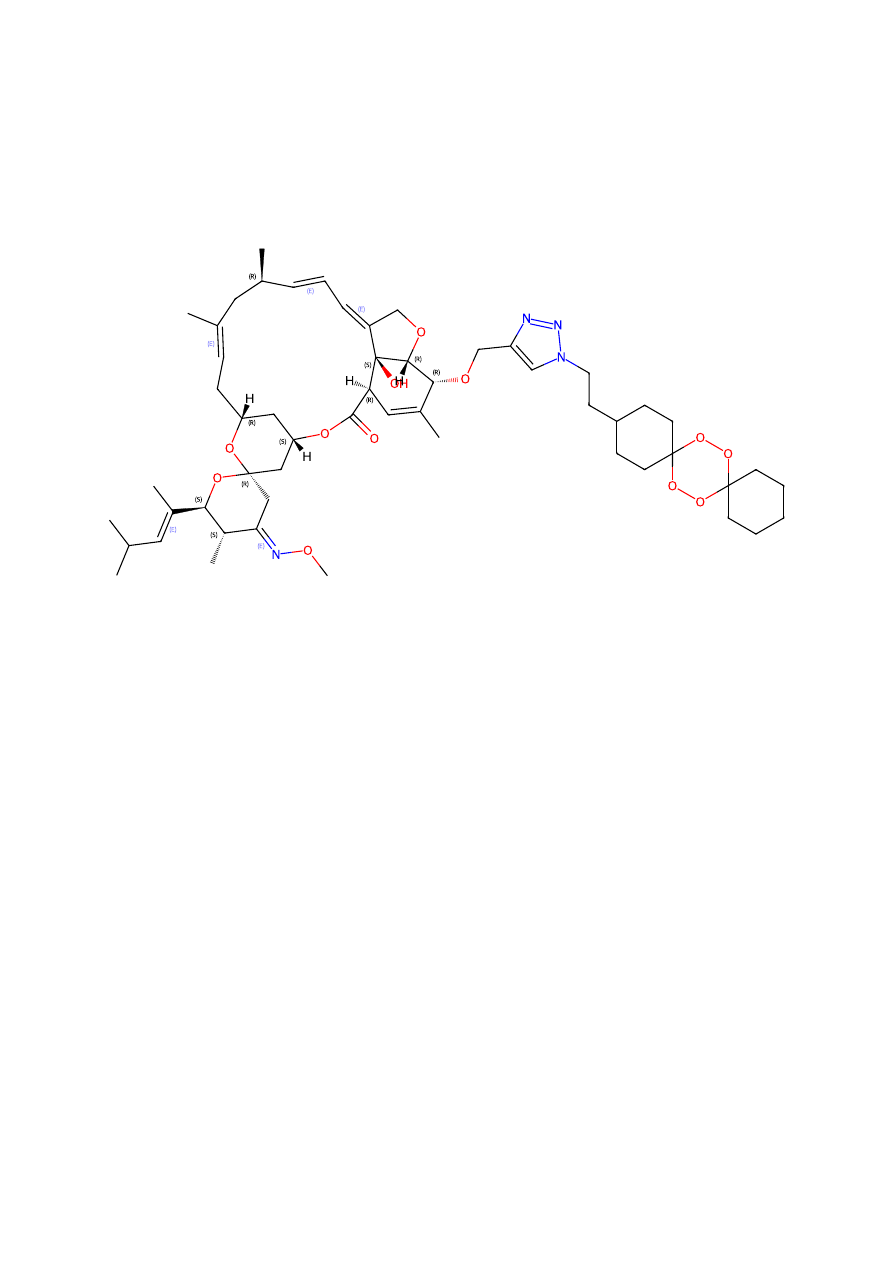
CHAPTER 5 · PROFILE 18/22 · ARCHIVE RECORD 116
C4r
Recorded rationale and role
Peroxide architecture branch. This entry explores the balance
between activation chemistry, appendage size, polarity,
linkage persistence and stereochemical tractability. Source
context is identified below; the design role is not a measured
efficacy ranking.
Preparation focus in the existing record
Peroxide-preserving preparation and analytical work are
central. Compare intact conjugate with any parent-release
products; identify the peroxide architecture and
stereochemical composition before biological interpretation.
AGENTIC RESEARCH FACTORY · COMPUTATIONAL COOKBOOK · 456 / 886

Full deposited SMILES — verbatim
CO/N=C1\C[C@]2(C[C@@H]3C[C@@H]
(C/C=C(\C)C[C@@H](C)/C=C/C=C4\CO[C@@H]5[C@H]
(OCc6cn(CCC7CCC8(CC7)OOC7(CCCCC7)OO8)nn6)C(C)=
C[C@@H](C(=O)O3)[C@]45O)O2)O[C@H](/C(C)=C/C(C)C)
[C@H]1C
Canonical isomeric SMILES — RDKit 2026.09.1
CO/N=C1\C[C@]2(C[C@@H]3C[C@@H]
(C/C=C(\C)C[C@@H](C)/C=C/C=C4\CO[C@@H]5[C@H]
(OCc6cn(CCC7CCC8(CC7)OOC7(CCCCC7)OO8)nn6)C(C)=
C[C@@H](C(=O)O3)[C@]45O)O2)O[C@H](/C(C)=C/C(C)C)
[C@H]1C
Complete computed profile
Formula
C54H78N4O12
Molecular weight (g/mol)
975.234
Exact mass (Da)
974.561624
Crippen cLogP
9.3919
TPSA (Ų)
172.67
H-bond donors
1
H-bond acceptors
15
Rotatable bonds
9
AGENTIC RESEARCH FACTORY · COMPUTATIONAL COOKBOOK · 457 / 886

Rings
9
Formal charge
0
Heavy atoms
70
Unassigned stereo —
modern
0
Unassigned stereo —
legacy
0
Graph interpretation and liabilities
This graph has 2 O–O bonds, net formal charge +0, and 9
rotatable bonds. Its high calculated lipophilicity makes free
exposure, adsorption and formulation important comparison
variables. No unspecified stereochemical element was
detected by the stated modern analysis of this graph.
Source record
Node85 combined.json; C4 papers and source scripts
AGENTIC RESEARCH FACTORY · COMPUTATIONAL COOKBOOK · 458 / 886
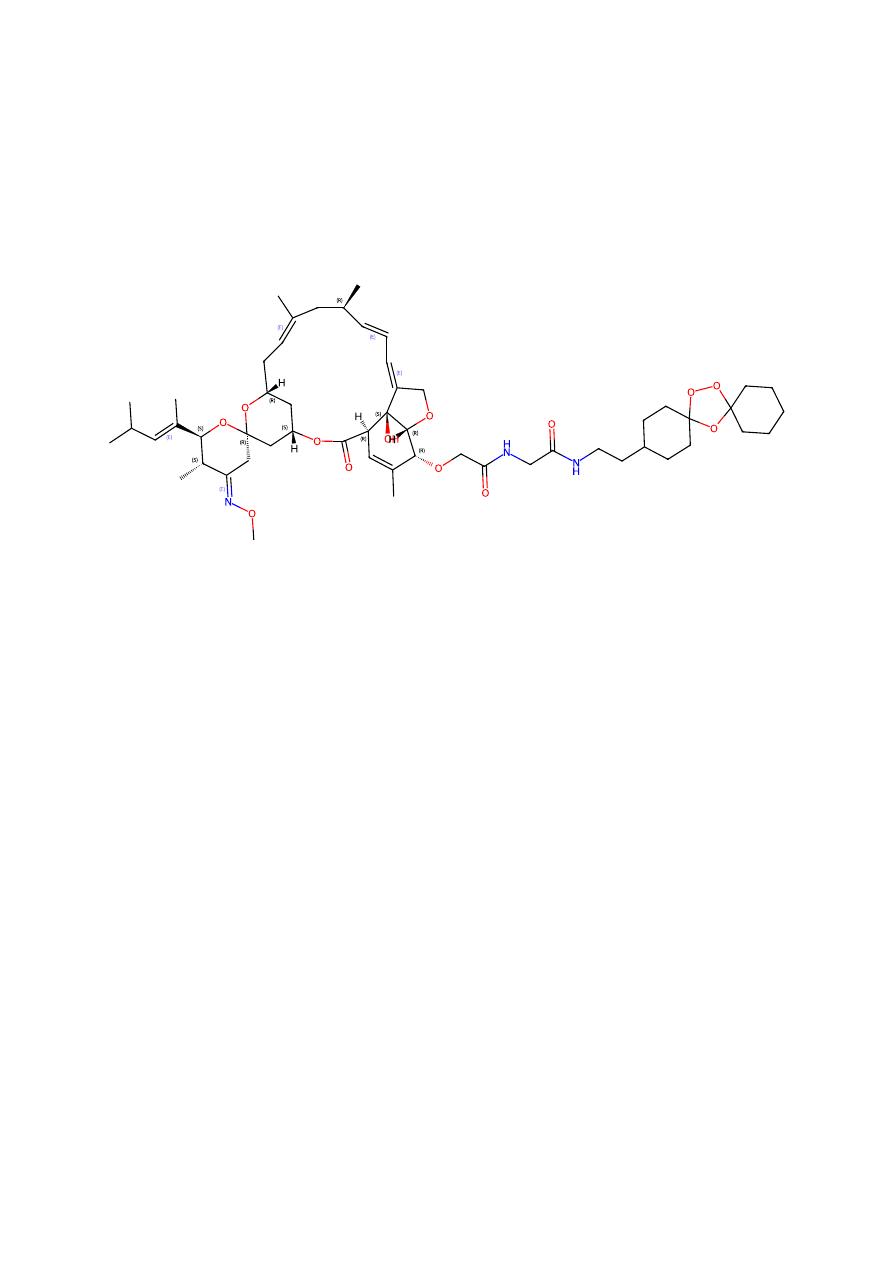
CHAPTER 5 · PROFILE 19/22 · ARCHIVE RECORD 117
C4s
Recorded rationale and role
Peroxide architecture branch. This entry explores the balance
between activation chemistry, appendage size, polarity,
linkage persistence and stereochemical tractability. Source
context is identified below; the design role is not a measured
efficacy ranking.
Preparation focus in the existing record
Peroxide-preserving preparation and analytical work are
central. Compare intact conjugate with any parent-release
products; identify the peroxide architecture and
stereochemical composition before biological interpretation.
AGENTIC RESEARCH FACTORY · COMPUTATIONAL COOKBOOK · 459 / 886

Full deposited SMILES — verbatim
CO/N=C1\C[C@]2(C[C@@H]3C[C@@H]
(C/C=C(\C)C[C@@H](C)/C=C/C=C4\CO[C@@H]5[C@H]
(OCC(=O)NCC(=O)NCCC6CCC7(CC6)OOC6(CCCCC6)O7)C
(C)=C[C@@H](C(=O)O3)[C@]45O)O2)O[C@H]
(/C(C)=C/C(C)C)[C@H]1C
Canonical isomeric SMILES — RDKit 2026.09.1
CO/N=C1\C[C@]2(C[C@@H]3C[C@@H]
(C/C=C(\C)C[C@@H](C)/C=C/C=C4\CO[C@@H]5[C@H]
(OCC(=O)NCC(=O)NCCC6CCC7(CC6)OOC6(CCCCC6)O7)C
(C)=C[C@@H](C(=O)O3)[C@]45O)O2)O[C@H]
(/C(C)=C/C(C)C)[C@H]1C
Complete computed profile
Formula
C55H81N3O13
Molecular weight (g/mol)
992.261
Exact mass (Da)
991.57694
Crippen cLogP
7.901
TPSA (Ų)
190.93
H-bond donors
3
H-bond acceptors
14
Rotatable bonds
11
AGENTIC RESEARCH FACTORY · COMPUTATIONAL COOKBOOK · 460 / 886

Rings
8
Formal charge
0
Heavy atoms
71
Unassigned stereo —
modern
2
Unassigned stereo —
legacy
0
Graph interpretation and liabilities
This graph has 1 O–O bond, net formal charge +0, and 11
rotatable bonds. Its high calculated lipophilicity makes free
exposure, adsorption and formulation important comparison
variables. The modern graph analysis leaves 2 stereochemical
elements unspecified; material-level comparisons require that
composition to be defined.
Source record
Node85 combined.json; C4 papers and source scripts
AGENTIC RESEARCH FACTORY · COMPUTATIONAL COOKBOOK · 461 / 886
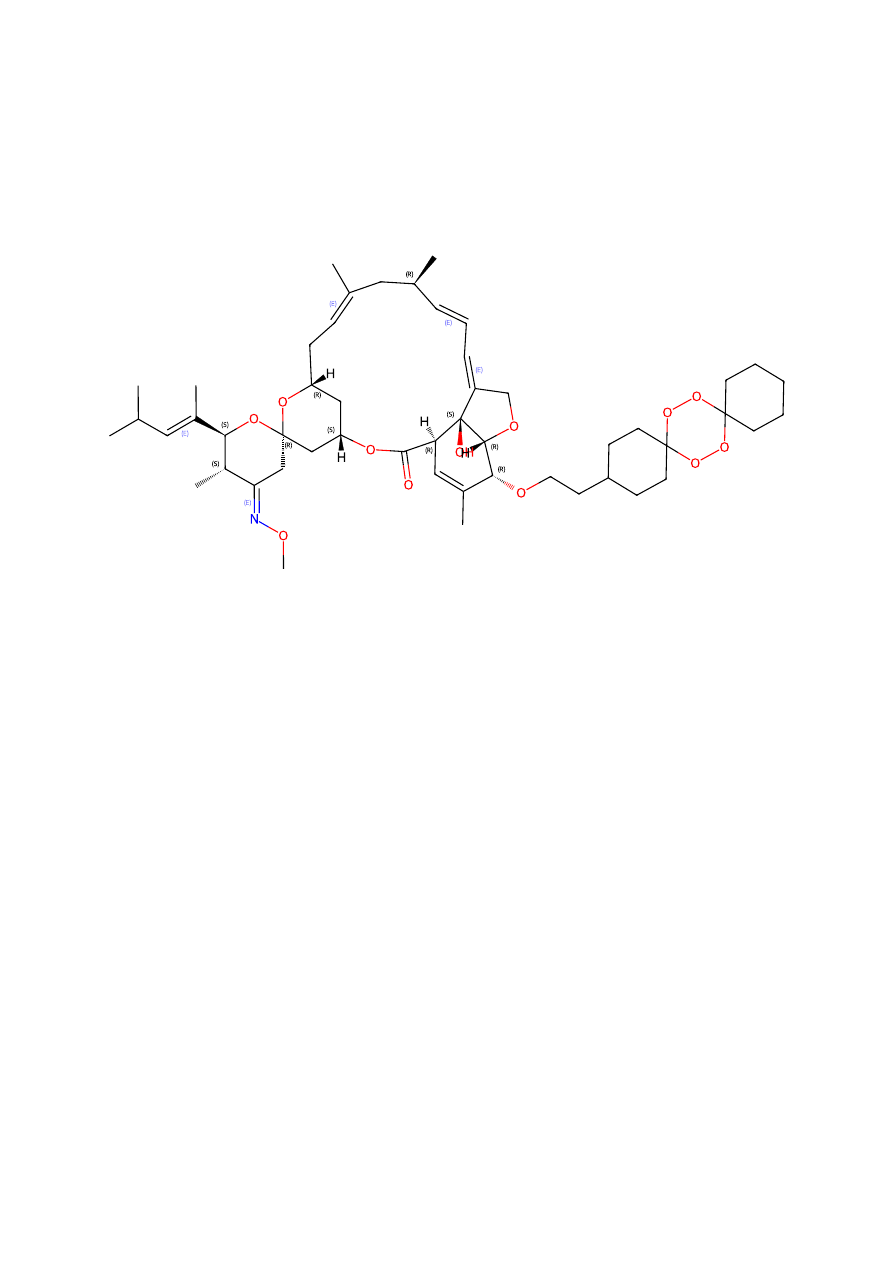
CHAPTER 5 · PROFILE 20/22 · ARCHIVE RECORD 118
C4t
Recorded rationale and role
Peroxide architecture branch. This entry explores the balance
between activation chemistry, appendage size, polarity,
linkage persistence and stereochemical tractability. Source
context is identified below; the design role is not a measured
efficacy ranking.
Preparation focus in the existing record
Peroxide-preserving preparation and analytical work are
central. Compare intact conjugate with any parent-release
products; identify the peroxide architecture and
stereochemical composition before biological interpretation.
AGENTIC RESEARCH FACTORY · COMPUTATIONAL COOKBOOK · 462 / 886

Full deposited SMILES — verbatim
CO/N=C1\C[C@]2(C[C@@H]3C[C@@H]
(C/C=C(\C)C[C@@H](C)/C=C/C=C4\CO[C@@H]5[C@H]
(OCCC6CCC7(CC6)OOC6(CCCCC6)OO7)C(C)=C[C@@H]
(C(=O)O3)[C@]45O)O2)O[C@H](/C(C)=C/C(C)C)[C@H]1C
Canonical isomeric SMILES — RDKit 2026.09.1
CO/N=C1\C[C@]2(C[C@@H]3C[C@@H]
(C/C=C(\C)C[C@@H](C)/C=C/C=C4\CO[C@@H]5[C@H]
(OCCC6CCC7(CC6)OOC6(CCCCC6)OO7)C(C)=C[C@@H]
(C(=O)O3)[C@]45O)O2)O[C@H](/C(C)=C/C(C)C)[C@H]1C
Complete computed profile
Formula
C51H75NO12
Molecular weight (g/mol)
894.156
Exact mass (Da)
893.528927
Crippen cLogP
9.6002
TPSA (Ų)
141.96
H-bond donors
1
H-bond acceptors
13
Rotatable bonds
7
Rings
8
AGENTIC RESEARCH FACTORY · COMPUTATIONAL COOKBOOK · 463 / 886

Formal charge
0
Heavy atoms
64
Unassigned stereo —
modern
0
Unassigned stereo —
legacy
0
Graph interpretation and liabilities
This graph has 2 O–O bonds, net formal charge +0, and 7
rotatable bonds. Its high calculated lipophilicity makes free
exposure, adsorption and formulation important comparison
variables. No unspecified stereochemical element was
detected by the stated modern analysis of this graph.
Source record
Node85 combined.json; C4 papers and source scripts
AGENTIC RESEARCH FACTORY · COMPUTATIONAL COOKBOOK · 464 / 886
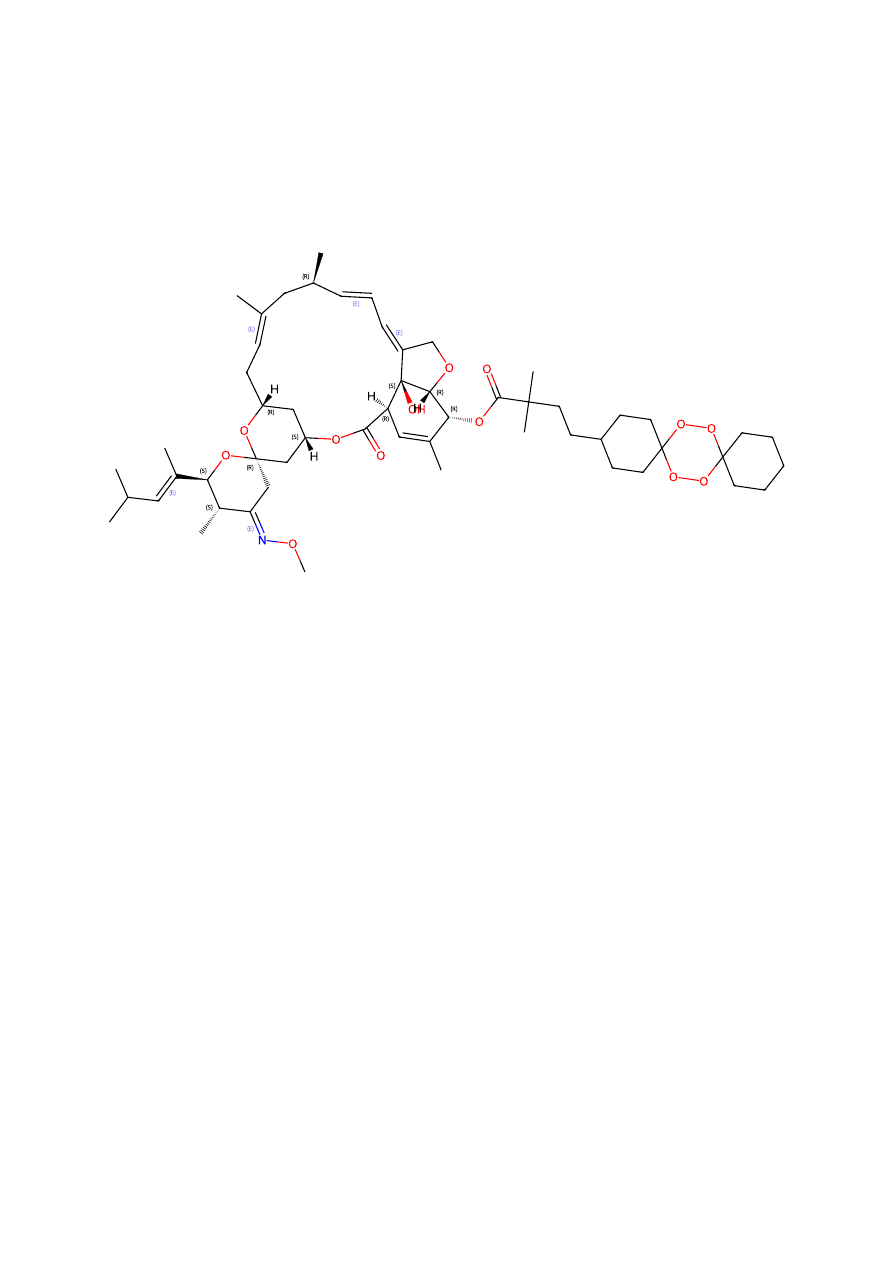
CHAPTER 5 · PROFILE 21/22 · ARCHIVE RECORD 119
C4u
Recorded rationale and role
Peroxide architecture branch. This entry explores the balance
between activation chemistry, appendage size, polarity,
linkage persistence and stereochemical tractability. Source
context is identified below; the design role is not a measured
efficacy ranking.
Preparation focus in the existing record
Peroxide-preserving preparation and analytical work are
central. Compare intact conjugate with any parent-release
products; identify the peroxide architecture and
stereochemical composition before biological interpretation.
AGENTIC RESEARCH FACTORY · COMPUTATIONAL COOKBOOK · 465 / 886

Full deposited SMILES — verbatim
CO/N=C1\C[C@]2(C[C@@H]3C[C@@H]
(C/C=C(\C)C[C@@H](C)/C=C/C=C4\CO[C@@H]5[C@H]
(OC(=O)C(C)
(C)CCC6CCC7(CC6)OOC6(CCCCC6)OO7)C(C)=C[C@@H]
(C(=O)O3)[C@]45O)O2)O[C@H](/C(C)=C/C(C)C)[C@H]1C
Canonical isomeric SMILES — RDKit 2026.09.1
CO/N=C1\C[C@]2(C[C@@H]3C[C@@H]
(C/C=C(\C)C[C@@H](C)/C=C/C=C4\CO[C@@H]5[C@H]
(OC(=O)C(C)
(C)CCC6CCC7(CC6)OOC6(CCCCC6)OO7)C(C)=C[C@@H]
(C(=O)O3)[C@]45O)O2)O[C@H](/C(C)=C/C(C)C)[C@H]1C
Complete computed profile
Formula
C55H81NO13
Molecular weight (g/mol)
964.247
Exact mass (Da)
963.570792
Crippen cLogP
10.5431
TPSA (Ų)
159.03
H-bond donors
1
H-bond acceptors
14
Rotatable bonds
8
AGENTIC RESEARCH FACTORY · COMPUTATIONAL COOKBOOK · 466 / 886

Rings
8
Formal charge
0
Heavy atoms
69
Unassigned stereo —
modern
0
Unassigned stereo —
legacy
0
Graph interpretation and liabilities
This graph has 2 O–O bonds, net formal charge +0, and 8
rotatable bonds. Its high calculated lipophilicity makes free
exposure, adsorption and formulation important comparison
variables. No unspecified stereochemical element was
detected by the stated modern analysis of this graph.
Source record
Node85 combined.json; C4 papers and source scripts
AGENTIC RESEARCH FACTORY · COMPUTATIONAL COOKBOOK · 467 / 886
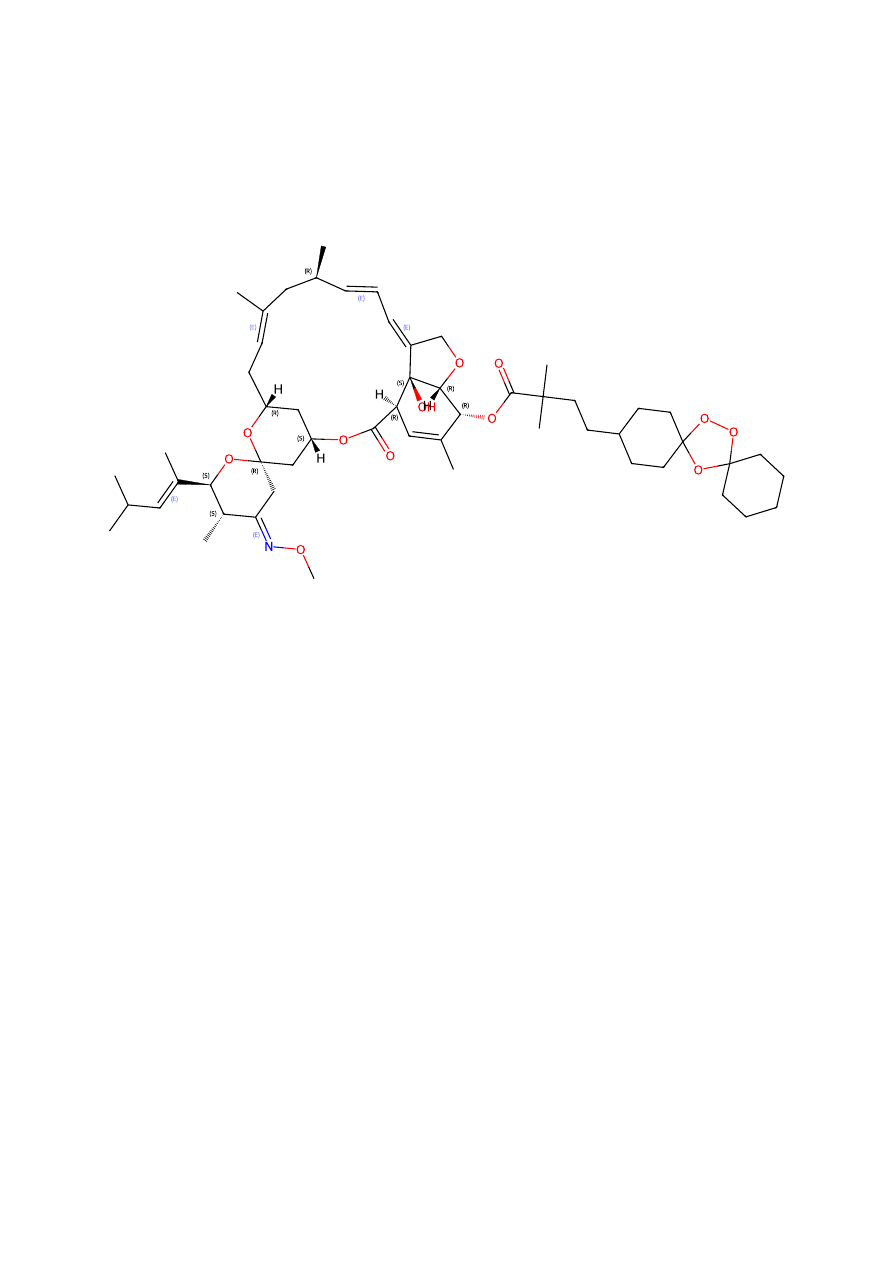
CHAPTER 5 · PROFILE 22/22 · ARCHIVE RECORD 120
C4v
Recorded rationale and role
Peroxide architecture branch. This entry explores the balance
between activation chemistry, appendage size, polarity,
linkage persistence and stereochemical tractability. Source
context is identified below; the design role is not a measured
efficacy ranking.
Preparation focus in the existing record
Peroxide-preserving preparation and analytical work are
central. Compare intact conjugate with any parent-release
products; identify the peroxide architecture and
stereochemical composition before biological interpretation.
AGENTIC RESEARCH FACTORY · COMPUTATIONAL COOKBOOK · 468 / 886

Full deposited SMILES — verbatim
CO/N=C1\C[C@]2(C[C@@H]3C[C@@H]
(C/C=C(\C)C[C@@H](C)/C=C/C=C4\CO[C@@H]5[C@H]
(OC(=O)C(C)
(C)CCC6CCC7(CC6)OOC6(CCCCC6)O7)C(C)=C[C@@H]
(C(=O)O3)[C@]45O)O2)O[C@H](/C(C)=C/C(C)C)[C@H]1C
Canonical isomeric SMILES — RDKit 2026.09.1
CO/N=C1\C[C@]2(C[C@@H]3C[C@@H]
(C/C=C(\C)C[C@@H](C)/C=C/C=C4\CO[C@@H]5[C@H]
(OC(=O)C(C)
(C)CCC6CCC7(CC6)OOC6(CCCCC6)O7)C(C)=C[C@@H]
(C(=O)O3)[C@]45O)O2)O[C@H](/C(C)=C/C(C)C)[C@H]1C
Complete computed profile
Formula
C55H81NO12
Molecular weight (g/mol)
948.248
Exact mass (Da)
947.575877
Crippen cLogP
10.6115
TPSA (Ų)
149.8
H-bond donors
1
H-bond acceptors
13
Rotatable bonds
8
AGENTIC RESEARCH FACTORY · COMPUTATIONAL COOKBOOK · 469 / 886

Rings
8
Formal charge
0
Heavy atoms
68
Unassigned stereo —
modern
2
Unassigned stereo —
legacy
0
Graph interpretation and liabilities
This graph has 1 O–O bond, net formal charge +0, and 8
rotatable bonds. Its high calculated lipophilicity makes free
exposure, adsorption and formulation important comparison
variables. The modern graph analysis leaves 2 stereochemical
elements unspecified; material-level comparisons require that
composition to be defined.
Source record
Node85 combined.json; C4 papers and source scripts
AGENTIC RESEARCH FACTORY · COMPUTATIONAL COOKBOOK · 470 / 886

CHAPTER 6
C4 branch — Atlas
ATLAS-C4-S01 through ATLAS-C4-S12: all 12 records,
including source-held cage cases. The full source assessment
and route proposals appear in the documentary chapters.
AGENTIC RESEARCH FACTORY · COMPUTATIONAL COOKBOOK · 471 / 886
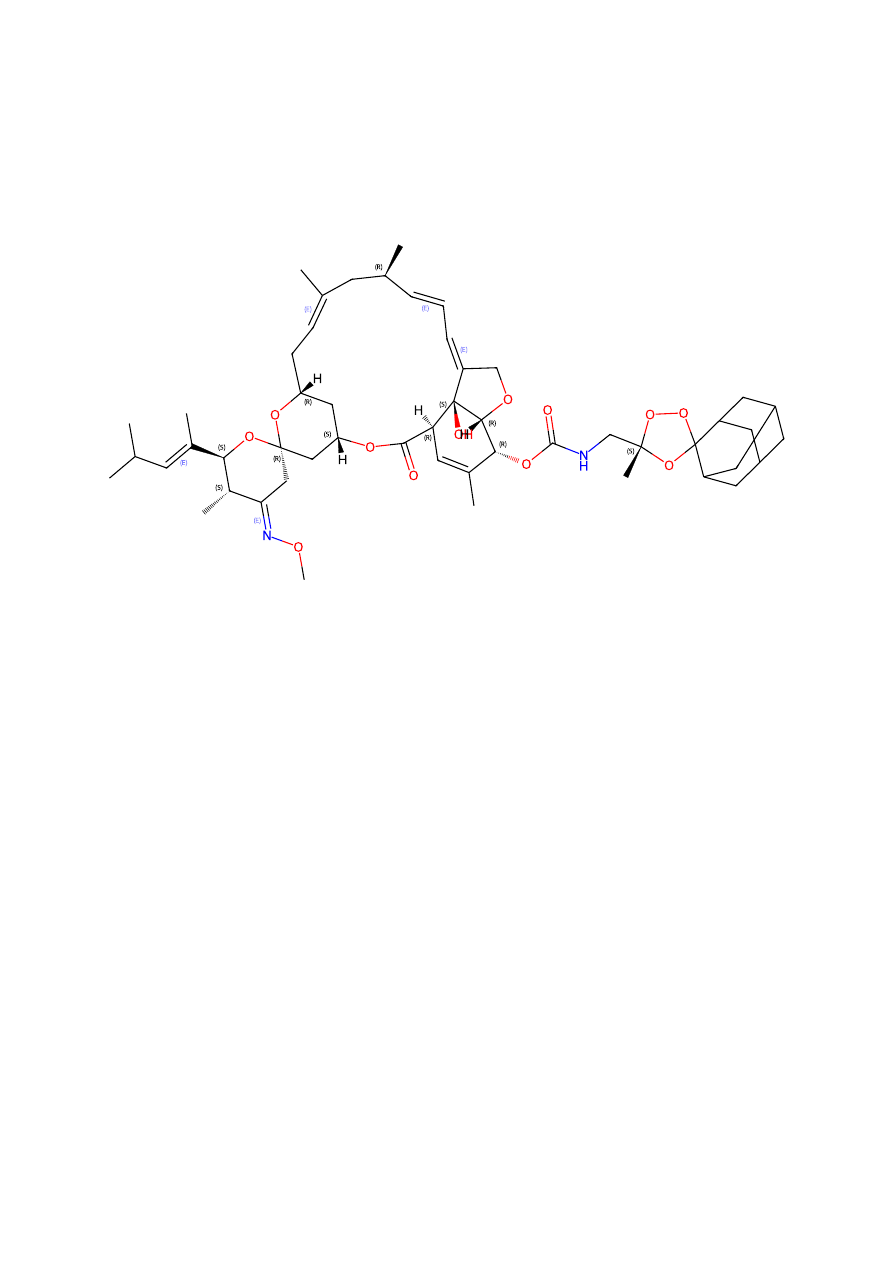
CHAPTER 6 · PROFILE 1/12 · ARCHIVE RECORD 121
ATLAS-C4-S01
Recorded rationale and role
Peroxide architecture branch. This entry explores the balance
between activation chemistry, appendage size, polarity,
linkage persistence and stereochemical tractability. Source
context is identified below; the design role is not a measured
efficacy ranking.
Preparation focus in the existing record
Peroxide-preserving preparation and analytical work are
central. Compare intact conjugate with any parent-release
products; identify the peroxide architecture and
stereochemical composition before biological interpretation.
AGENTIC RESEARCH FACTORY · COMPUTATIONAL COOKBOOK · 472 / 886

Full deposited SMILES — verbatim
CO/N=C1\C[C@]2(C[C@@H]3C[C@@H]
(C/C=C(\C)C[C@@H](C)/C=C/C=C4\CO[C@@H]5[C@H]
(OC(=O)NC[C@]6(C)OOC7(O6)C6CC8CC(C6)CC7C8)C(C)=
C[C@@H](C(=O)O3)[C@]45O)O2)O[C@H](/C(C)=C/C(C)C)
[C@H]1C
Canonical isomeric SMILES — RDKit 2026.09.1
CO/N=C1\C[C@]2(C[C@@H]3C[C@@H]
(C/C=C(\C)C[C@@H](C)/C=C/C=C4\CO[C@@H]5[C@H]
(OC(=O)NC[C@]6(C)OOC7(O6)C6CC8CC(C6)CC7C8)C(C)=
C[C@@H](C(=O)O3)[C@]45O)O2)O[C@H](/C(C)=C/C(C)C)
[C@H]1C
Complete computed profile
Formula
C51H72N2O12
Molecular weight (g/mol)
905.139
Exact mass (Da)
904.508526
Crippen cLogP
8.3098
TPSA (Ų)
161.83
H-bond donors
2
H-bond acceptors
13
Rotatable bonds
6
AGENTIC RESEARCH FACTORY · COMPUTATIONAL COOKBOOK · 473 / 886

Rings
10
Formal charge
0
Heavy atoms
65
Unassigned stereo —
modern
5
Unassigned stereo —
legacy
0
Graph interpretation and liabilities
This graph has 1 O–O bond, net formal charge +0, and 6
rotatable bonds. Its high calculated lipophilicity makes free
exposure, adsorption and formulation important comparison
variables. The modern graph analysis leaves 5 stereochemical
elements unspecified; material-level comparisons require that
composition to be defined.
Source record
Node85 combined.json; C4 papers and source scripts
Original Atlas compound discussion
ATLAS-C4-S01 — Adamantane-shielded monospiro
trioxolane
Design rationale / liability addressed: Keeps the
adamantane spiro shield, replaces the C5 ester with a
AGENTIC RESEARCH FACTORY · COMPUTATIONAL COOKBOOK · 474 / 886

carbamate, and specifies the sole new peroxide stereocentre.
Precedent: [P1], [P2], [P3], [P4]. These are peroxide-class
and/or linker precedents; none reports this exact moxidectin
conjugate. The chosen single-spiro appendage is a structural
extrapolation from the better established dispiro series.
New failure mode / cost: The other peroxide carbon is
acyclic rather than the second spiro ring of OZ277/OZ439:
reduced shielding and a different activation profile are
possible. MW rises to about 905; the carbamate is still an
enzyme-sensitive bond.
Disposition: Cage-stereo review; not counted in ten fully
specified nominees. Net tetrahedral-centre reduction versus
deposited C4: 5; see the separate cage audit for held entries.
AGENTIC RESEARCH FACTORY · COMPUTATIONAL COOKBOOK · 475 / 886
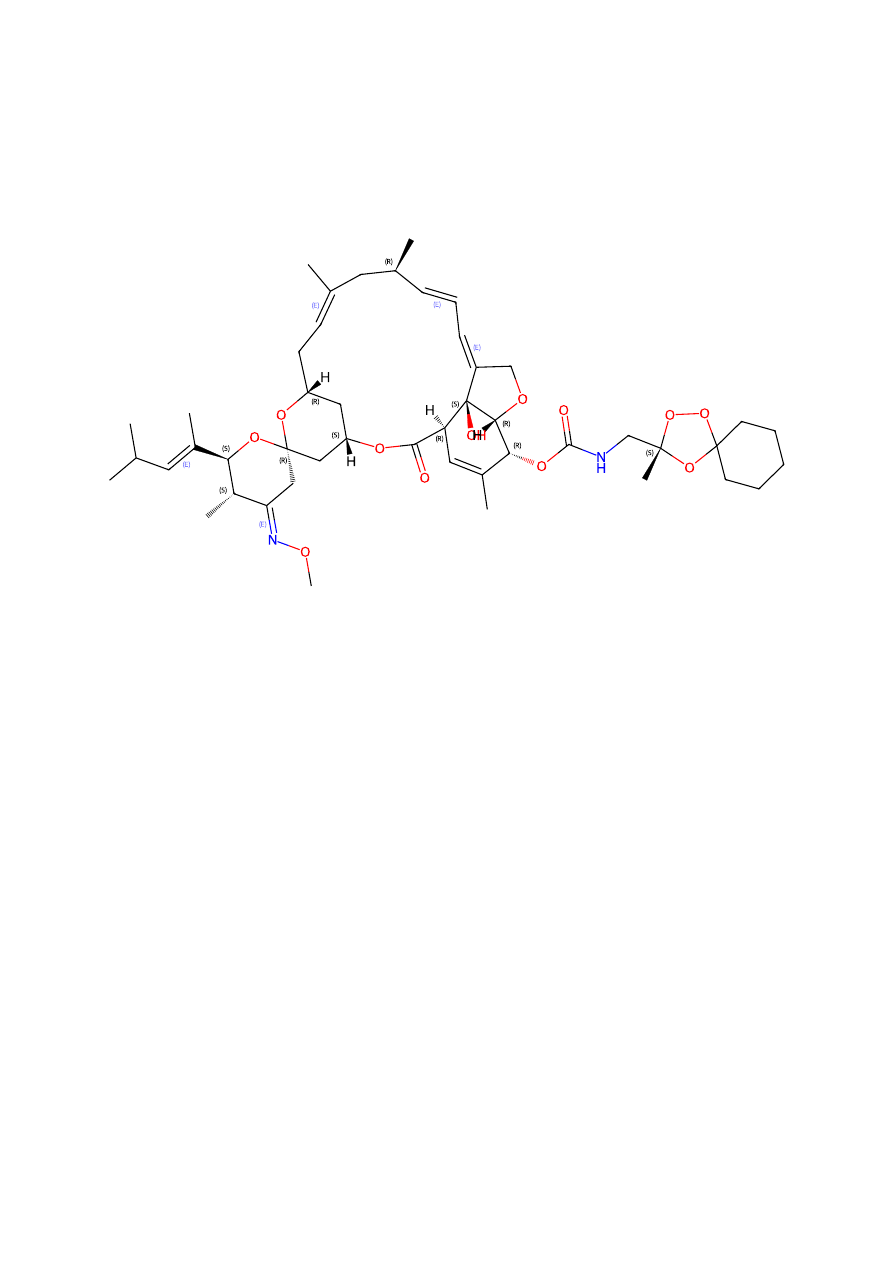
CHAPTER 6 · PROFILE 2/12 · ARCHIVE RECORD 122
ATLAS-C4-S02
Recorded rationale and role
Peroxide architecture branch. This entry explores the balance
between activation chemistry, appendage size, polarity,
linkage persistence and stereochemical tractability. Source
context is identified below; the design role is not a measured
efficacy ranking.
Preparation focus in the existing record
Peroxide-preserving preparation and analytical work are
central. Compare intact conjugate with any parent-release
products; identify the peroxide architecture and
stereochemical composition before biological interpretation.
AGENTIC RESEARCH FACTORY · COMPUTATIONAL COOKBOOK · 476 / 886

Full deposited SMILES — verbatim
CO/N=C1\C[C@]2(C[C@@H]3C[C@@H]
(C/C=C(\C)C[C@@H](C)/C=C/C=C4\CO[C@@H]5[C@H]
(OC(=O)NC[C@]6(C)OOC7(CCCCC7)O6)C(C)=C[C@@H]
(C(=O)O3)[C@]45O)O2)O[C@H](/C(C)=C/C(C)C)[C@H]1C
Canonical isomeric SMILES — RDKit 2026.09.1
CO/N=C1\C[C@]2(C[C@@H]3C[C@@H]
(C/C=C(\C)C[C@@H](C)/C=C/C=C4\CO[C@@H]5[C@H]
(OC(=O)NC[C@]6(C)OOC7(CCCCC7)O6)C(C)=C[C@@H]
(C(=O)O3)[C@]45O)O2)O[C@H](/C(C)=C/C(C)C)[C@H]1C
Complete computed profile
Formula
C47H68N2O12
Molecular weight (g/mol)
853.063
Exact mass (Da)
852.477226
Crippen cLogP
7.8178
TPSA (Ų)
161.83
H-bond donors
2
H-bond acceptors
13
Rotatable bonds
6
Rings
7
AGENTIC RESEARCH FACTORY · COMPUTATIONAL COOKBOOK · 477 / 886

Formal charge
0
Heavy atoms
61
Unassigned stereo —
modern
0
Unassigned stereo —
legacy
0
Graph interpretation and liabilities
This graph has 1 O–O bond, net formal charge +0, and 6
rotatable bonds. Its high calculated lipophilicity makes free
exposure, adsorption and formulation important comparison
variables. No unspecified stereochemical element was
detected by the stated modern analysis of this graph.
Source record
Node85 combined.json; C4 papers and source scripts
Original Atlas compound discussion
ATLAS-C4-S02 — Cyclohexane monospiro
trioxolane
Design rationale / liability addressed: Removes the fused
ambiguous cage, shortens the appendage and replaces the
C5 ester.
AGENTIC RESEARCH FACTORY · COMPUTATIONAL COOKBOOK · 478 / 886

Precedent: [P1], [P3], [P4]. These are peroxide-class and/or
linker precedents; none reports this exact moxidectin
conjugate. The chosen single-spiro appendage is a structural
extrapolation from the better established dispiro series.
New failure mode / cost: Removing adamantane may
increase premature iron-mediated loss; the simple
cyclohexane is a property-saving hypothesis, not an OZ-
equivalent stabiliser.
Disposition: Selected: compact trioxolane comparator. Net
tetrahedral-centre reduction versus deposited C4: 5; see the
separate cage audit for held entries.
AGENTIC RESEARCH FACTORY · COMPUTATIONAL COOKBOOK · 479 / 886
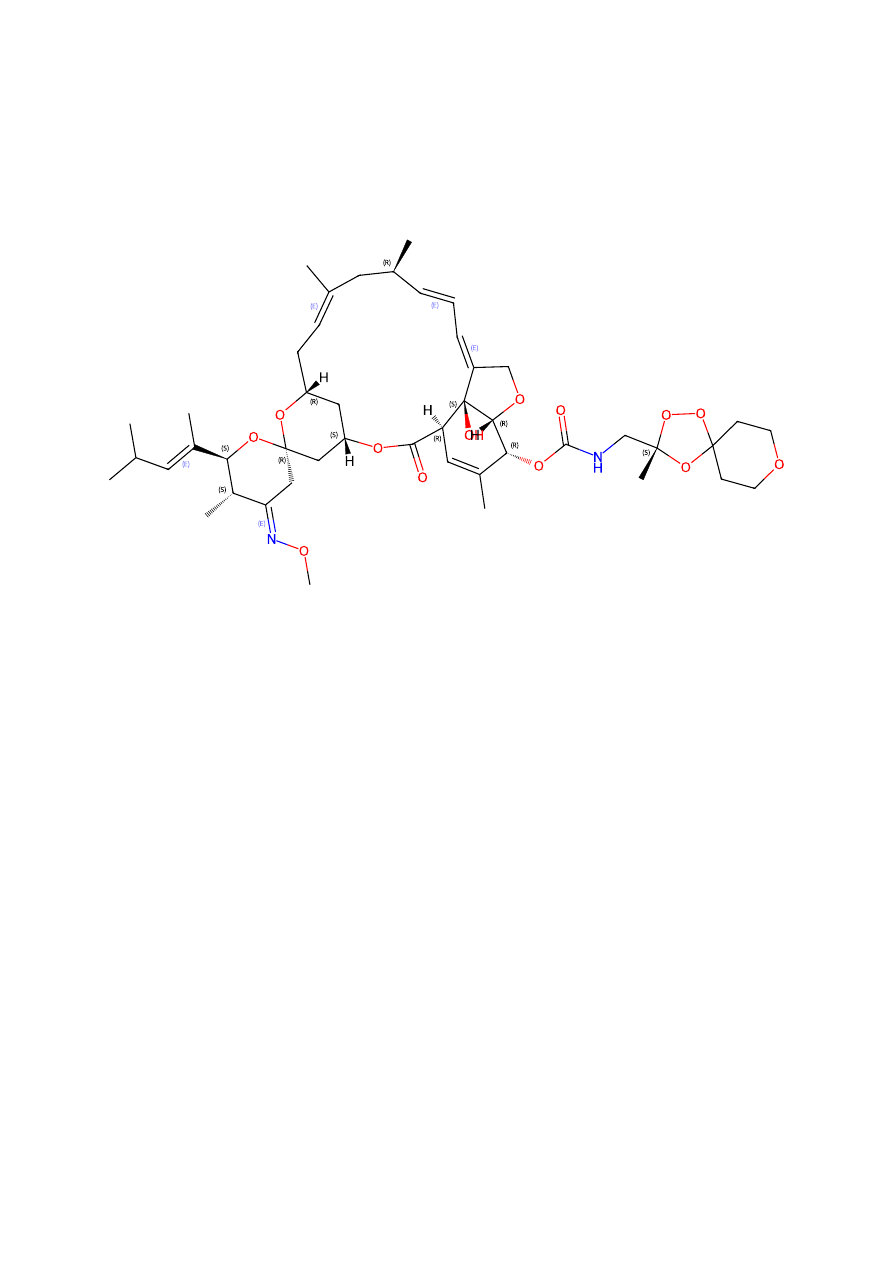
CHAPTER 6 · PROFILE 3/12 · ARCHIVE RECORD 123
ATLAS-C4-S03
Recorded rationale and role
Peroxide architecture branch. This entry explores the balance
between activation chemistry, appendage size, polarity,
linkage persistence and stereochemical tractability. Source
context is identified below; the design role is not a measured
efficacy ranking.
Preparation focus in the existing record
Peroxide-preserving preparation and analytical work are
central. Compare intact conjugate with any parent-release
products; identify the peroxide architecture and
stereochemical composition before biological interpretation.
AGENTIC RESEARCH FACTORY · COMPUTATIONAL COOKBOOK · 480 / 886

Full deposited SMILES — verbatim
CO/N=C1\C[C@]2(C[C@@H]3C[C@@H]
(C/C=C(\C)C[C@@H](C)/C=C/C=C4\CO[C@@H]5[C@H]
(OC(=O)NC[C@]6(C)OOC7(CCOCC7)O6)C(C)=C[C@@H]
(C(=O)O3)[C@]45O)O2)O[C@H](/C(C)=C/C(C)C)[C@H]1C
Canonical isomeric SMILES — RDKit 2026.09.1
CO/N=C1\C[C@]2(C[C@@H]3C[C@@H]
(C/C=C(\C)C[C@@H](C)/C=C/C=C4\CO[C@@H]5[C@H]
(OC(=O)NC[C@]6(C)OOC7(CCOCC7)O6)C(C)=C[C@@H]
(C(=O)O3)[C@]45O)O2)O[C@H](/C(C)=C/C(C)C)[C@H]1C
Complete computed profile
Formula
C46H66N2O13
Molecular weight (g/mol)
855.035
Exact mass (Da)
854.45649
Crippen cLogP
6.6641
TPSA (Ų)
171.06
H-bond donors
2
H-bond acceptors
14
Rotatable bonds
6
Rings
7
AGENTIC RESEARCH FACTORY · COMPUTATIONAL COOKBOOK · 481 / 886

Formal charge
0
Heavy atoms
61
Unassigned stereo —
modern
0
Unassigned stereo —
legacy
0
Graph interpretation and liabilities
This graph has 1 O–O bond, net formal charge +0, and 6
rotatable bonds. Its polar surface makes permeability and
compartmental exposure important comparison variables. No
unspecified stereochemical element was detected by the
stated modern analysis of this graph.
Source record
Node85 combined.json; C4 papers and source scripts
Original Atlas compound discussion
ATLAS-C4-S03 — Oxane monospiro trioxolane
Design rationale / liability addressed: Trades one
cyclohexane carbon for oxygen to reduce calculated
lipophilicity while retaining a tertiary peroxide environment and
a C5 carbamate.
Precedent: [P1], [P3], [P4]. These are peroxide-class and/or
linker precedents; none reports this exact moxidectin
AGENTIC RESEARCH FACTORY · COMPUTATIONAL COOKBOOK · 482 / 886

conjugate. The chosen single-spiro appendage is a structural
extrapolation from the better established dispiro series.
New failure mode / cost: The ring oxygen adds oxidative-
metabolism and conformational liabilities; TPSA increases and
iron activation may be too rapid or too slow. No exact oxane-
conjugate precedent is claimed.
Disposition: Exploratory polarity probe. Net tetrahedral-centre
reduction versus deposited C4: 5; see the separate cage audit
for held entries.
AGENTIC RESEARCH FACTORY · COMPUTATIONAL COOKBOOK · 483 / 886
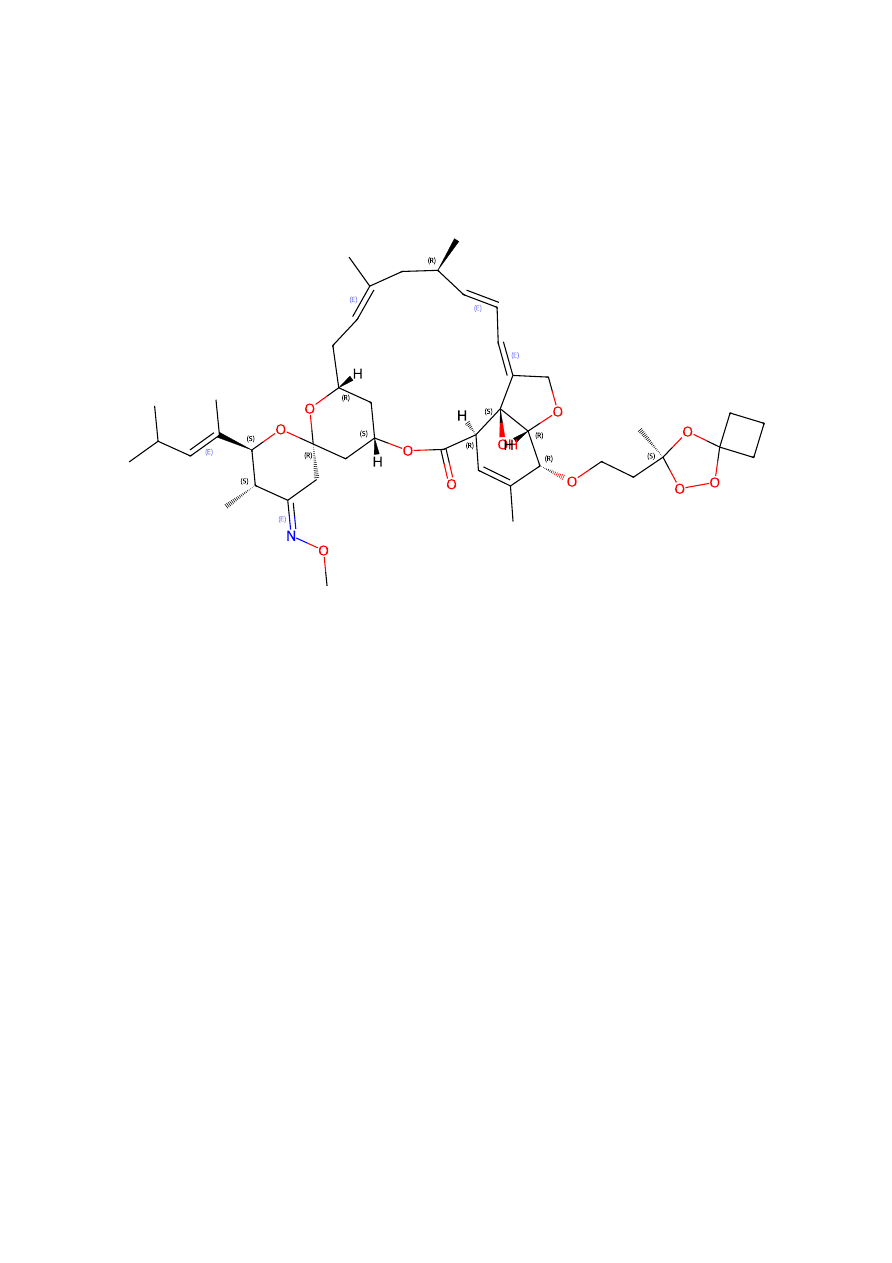
CHAPTER 6 · PROFILE 4/12 · ARCHIVE RECORD 124
ATLAS-C4-S04
Recorded rationale and role
Peroxide architecture branch. This entry explores the balance
between activation chemistry, appendage size, polarity,
linkage persistence and stereochemical tractability. Source
context is identified below; the design role is not a measured
efficacy ranking.
Preparation focus in the existing record
Peroxide-preserving preparation and analytical work are
central. Compare intact conjugate with any parent-release
products; identify the peroxide architecture and
stereochemical composition before biological interpretation.
AGENTIC RESEARCH FACTORY · COMPUTATIONAL COOKBOOK · 484 / 886

Full deposited SMILES — verbatim
CO/N=C1\C[C@]2(C[C@@H]3C[C@@H]
(C/C=C(\C)C[C@@H](C)/C=C/C=C4\CO[C@@H]5[C@H]
(OCC[C@]6(C)OOC7(CCC7)O6)C(C)=C[C@@H](C(=O)O3)
[C@]45O)O2)O[C@H](/C(C)=C/C(C)C)[C@H]1C
Canonical isomeric SMILES — RDKit 2026.09.1
CO/N=C1\C[C@]2(C[C@@H]3C[C@@H]
(C/C=C(\C)C[C@@H](C)/C=C/C=C4\CO[C@@H]5[C@H]
(OCC[C@]6(C)OOC7(CCC7)O6)C(C)=C[C@@H](C(=O)O3)
[C@]45O)O2)O[C@H](/C(C)=C/C(C)C)[C@H]1C
Complete computed profile
Formula
C45H65NO11
Molecular weight (g/mol)
796.011
Exact mass (Da)
795.455762
Crippen cLogP
7.7181
TPSA (Ų)
132.73
H-bond donors
1
H-bond acceptors
12
Rotatable bonds
7
Rings
7
AGENTIC RESEARCH FACTORY · COMPUTATIONAL COOKBOOK · 485 / 886

Formal charge
0
Heavy atoms
57
Unassigned stereo —
modern
0
Unassigned stereo —
legacy
0
Graph interpretation and liabilities
This graph has 1 O–O bond, net formal charge +0, and 7
rotatable bonds. Its high calculated lipophilicity makes free
exposure, adsorption and formulation important comparison
variables. No unspecified stereochemical element was
detected by the stated modern analysis of this graph.
Source record
Node85 combined.json; C4 papers and source scripts
Original Atlas compound discussion
ATLAS-C4-S04 — Cyclobutane monospiro
trioxolane
Design rationale / liability addressed: Eliminates the
hydrolysable C5 acyl linkage entirely and contracts the
peroxide substituent.
AGENTIC RESEARCH FACTORY · COMPUTATIONAL COOKBOOK · 486 / 886

Precedent: [P1], [P2]. These are peroxide-class and/or linker
precedents; none reports this exact moxidectin conjugate. The
chosen single-spiro appendage is a structural extrapolation
from the better established dispiro series.
New failure mode / cost: Weaker shielding, small-ring strain
and oxidative O-dealkylation replace ester hydrolysis as
liabilities; C5 ether formation may be harder than
carbamylation.
Disposition: Low-mass boundary probe. Net tetrahedral-
centre reduction versus deposited C4: 5; see the separate
cage audit for held entries.
AGENTIC RESEARCH FACTORY · COMPUTATIONAL COOKBOOK · 487 / 886
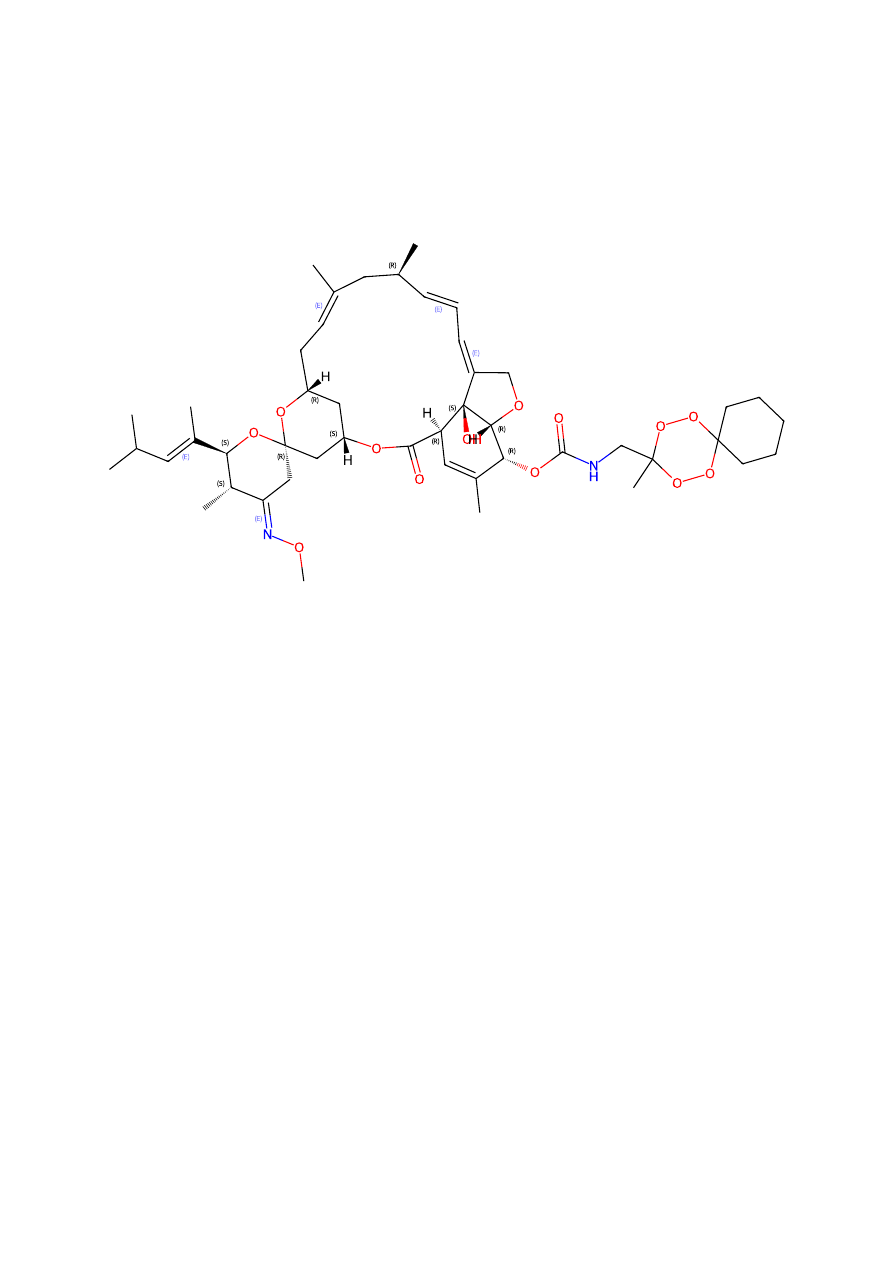
CHAPTER 6 · PROFILE 5/12 · ARCHIVE RECORD 125
ATLAS-C4-S05
Recorded rationale and role
Peroxide architecture branch. This entry explores the balance
between activation chemistry, appendage size, polarity,
linkage persistence and stereochemical tractability. Source
context is identified below; the design role is not a measured
efficacy ranking.
Preparation focus in the existing record
Peroxide-preserving preparation and analytical work are
central. Compare intact conjugate with any parent-release
products; identify the peroxide architecture and
stereochemical composition before biological interpretation.
AGENTIC RESEARCH FACTORY · COMPUTATIONAL COOKBOOK · 488 / 886

Full deposited SMILES — verbatim
CO/N=C1\C[C@]2(C[C@@H]3C[C@@H]
(C/C=C(\C)C[C@@H](C)/C=C/C=C4\CO[C@@H]5[C@H]
(OC(=O)NCC6(C)OOC7(CCCCC7)OO6)C(C)=C[C@@H]
(C(=O)O3)[C@]45O)O2)O[C@H](/C(C)=C/C(C)C)[C@H]1C
Canonical isomeric SMILES — RDKit 2026.09.1
CO/N=C1\C[C@]2(C[C@@H]3C[C@@H]
(C/C=C(\C)C[C@@H](C)/C=C/C=C4\CO[C@@H]5[C@H]
(OC(=O)NCC6(C)OOC7(CCCCC7)OO6)C(C)=C[C@@H]
(C(=O)O3)[C@]45O)O2)O[C@H](/C(C)=C/C(C)C)[C@H]1C
Complete computed profile
Formula
C47H68N2O13
Molecular weight (g/mol)
869.062
Exact mass (Da)
868.47214
Crippen cLogP
7.7494
TPSA (Ų)
171.06
H-bond donors
2
H-bond acceptors
14
Rotatable bonds
6
Rings
7
AGENTIC RESEARCH FACTORY · COMPUTATIONAL COOKBOOK · 489 / 886

Formal charge
0
Heavy atoms
62
Unassigned stereo —
modern
0
Unassigned stereo —
legacy
0
Graph interpretation and liabilities
This graph has 2 O–O bonds, net formal charge +0, and 6
rotatable bonds. Its high calculated lipophilicity makes free
exposure, adsorption and formulation important comparison
variables. No unspecified stereochemical element was
detected by the stated modern analysis of this graph.
Source record
Node85 combined.json; C4 papers and source scripts
Original Atlas compound discussion
ATLAS-C4-S05 — Cyclohexane monospiro
tetraoxane
Design rationale / liability addressed: Uses an achiral-
added tetraoxane and a smaller appendage with a C5
carbamate.
AGENTIC RESEARCH FACTORY · COMPUTATIONAL COOKBOOK · 490 / 886

Precedent: [P5], [P6]. These are peroxide-class and/or linker
precedents; none reports this exact moxidectin conjugate. The
class is precedented; the particular ring contraction, oxygen
substitution or attachment here is a new design choice.
New failure mode / cost: The monospiro design gives up the
second spiro ring of stronger precedented tetraoxanes; extra
O–O cleavage channels can consume it before useful radical
chemistry.
Disposition: Reserve. Net tetrahedral-centre reduction versus
deposited C4: 6; see the separate cage audit for held entries.
AGENTIC RESEARCH FACTORY · COMPUTATIONAL COOKBOOK · 491 / 886
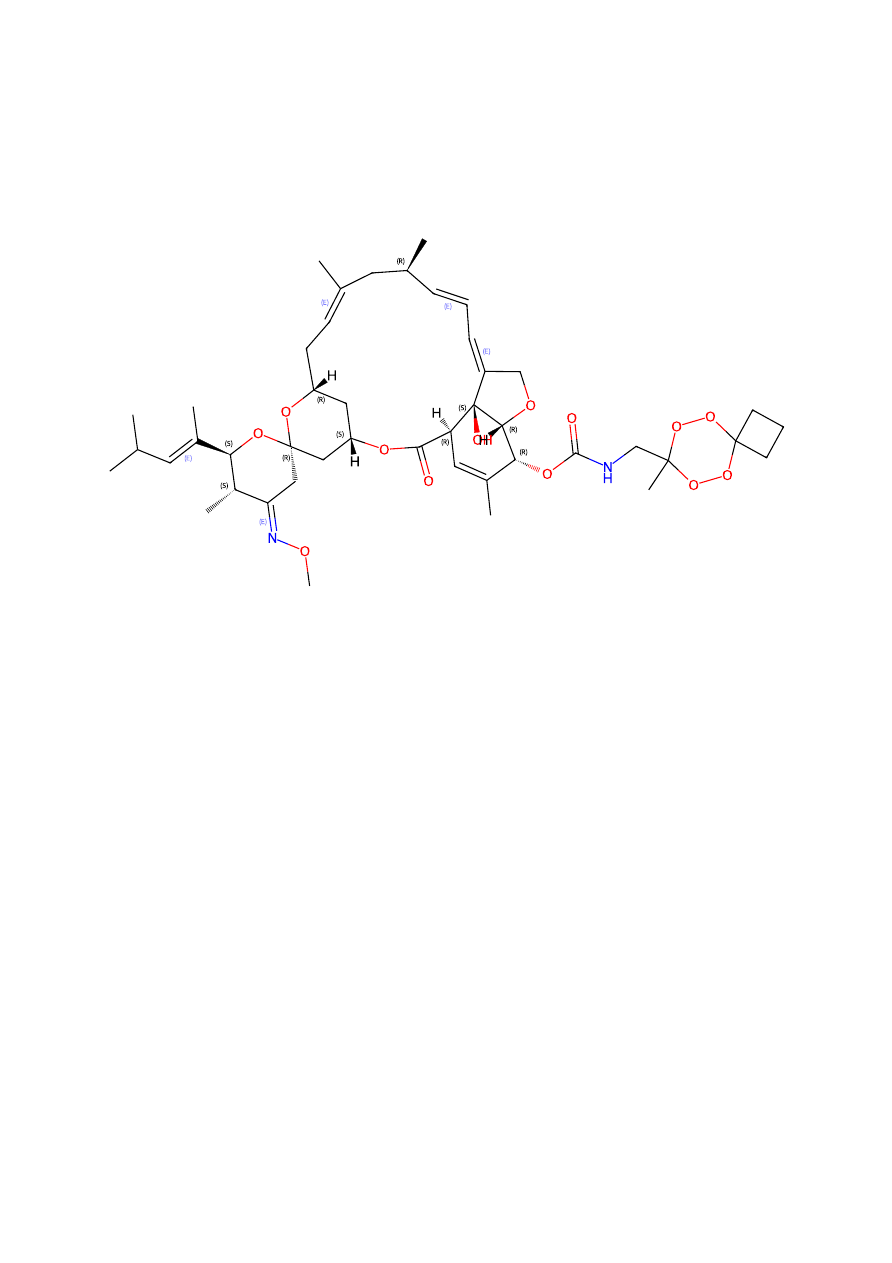
CHAPTER 6 · PROFILE 6/12 · ARCHIVE RECORD 126
ATLAS-C4-S06
Recorded rationale and role
Peroxide architecture branch. This entry explores the balance
between activation chemistry, appendage size, polarity,
linkage persistence and stereochemical tractability. Source
context is identified below; the design role is not a measured
efficacy ranking.
Preparation focus in the existing record
Peroxide-preserving preparation and analytical work are
central. Compare intact conjugate with any parent-release
products; identify the peroxide architecture and
stereochemical composition before biological interpretation.
AGENTIC RESEARCH FACTORY · COMPUTATIONAL COOKBOOK · 492 / 886

Full deposited SMILES — verbatim
CO/N=C1\C[C@]2(C[C@@H]3C[C@@H]
(C/C=C(\C)C[C@@H](C)/C=C/C=C4\CO[C@@H]5[C@H]
(OC(=O)NCC6(C)OOC7(CCC7)OO6)C(C)=C[C@@H]
(C(=O)O3)[C@]45O)O2)O[C@H](/C(C)=C/C(C)C)[C@H]1C
Canonical isomeric SMILES — RDKit 2026.09.1
CO/N=C1\C[C@]2(C[C@@H]3C[C@@H]
(C/C=C(\C)C[C@@H](C)/C=C/C=C4\CO[C@@H]5[C@H]
(OC(=O)NCC6(C)OOC7(CCC7)OO6)C(C)=C[C@@H]
(C(=O)O3)[C@]45O)O2)O[C@H](/C(C)=C/C(C)C)[C@H]1C
Complete computed profile
Formula
C45H64N2O13
Molecular weight (g/mol)
841.008
Exact mass (Da)
840.44084
Crippen cLogP
6.9692
TPSA (Ų)
171.06
H-bond donors
2
H-bond acceptors
14
Rotatable bonds
6
Rings
7
AGENTIC RESEARCH FACTORY · COMPUTATIONAL COOKBOOK · 493 / 886

Formal charge
0
Heavy atoms
60
Unassigned stereo —
modern
0
Unassigned stereo —
legacy
0
Graph interpretation and liabilities
This graph has 2 O–O bonds, net formal charge +0, and 6
rotatable bonds. Its polar surface makes permeability and
compartmental exposure important comparison variables. No
unspecified stereochemical element was detected by the
stated modern analysis of this graph.
Source record
Node85 combined.json; C4 papers and source scripts
Original Atlas compound discussion
ATLAS-C4-S06 — Cyclobutane monospiro
tetraoxane
Design rationale / liability addressed: Cuts mass and
calculated lipophilicity while removing all six extra C4
stereocentres.
AGENTIC RESEARCH FACTORY · COMPUTATIONAL COOKBOOK · 494 / 886

Precedent: [P5], [P6]. These are peroxide-class and/or linker
precedents; none reports this exact moxidectin conjugate. The
class is precedented; the particular ring contraction, oxygen
substitution or attachment here is a new design choice.
New failure mode / cost: Combines two extrapolations:
monospiro substitution and a contracted ring. Favourable
descriptors may conceal poor peroxide lifetime or
unproductive fragmentation.
Disposition: Exploratory compact probe. Net tetrahedral-
centre reduction versus deposited C4: 6; see the separate
cage audit for held entries.
AGENTIC RESEARCH FACTORY · COMPUTATIONAL COOKBOOK · 495 / 886
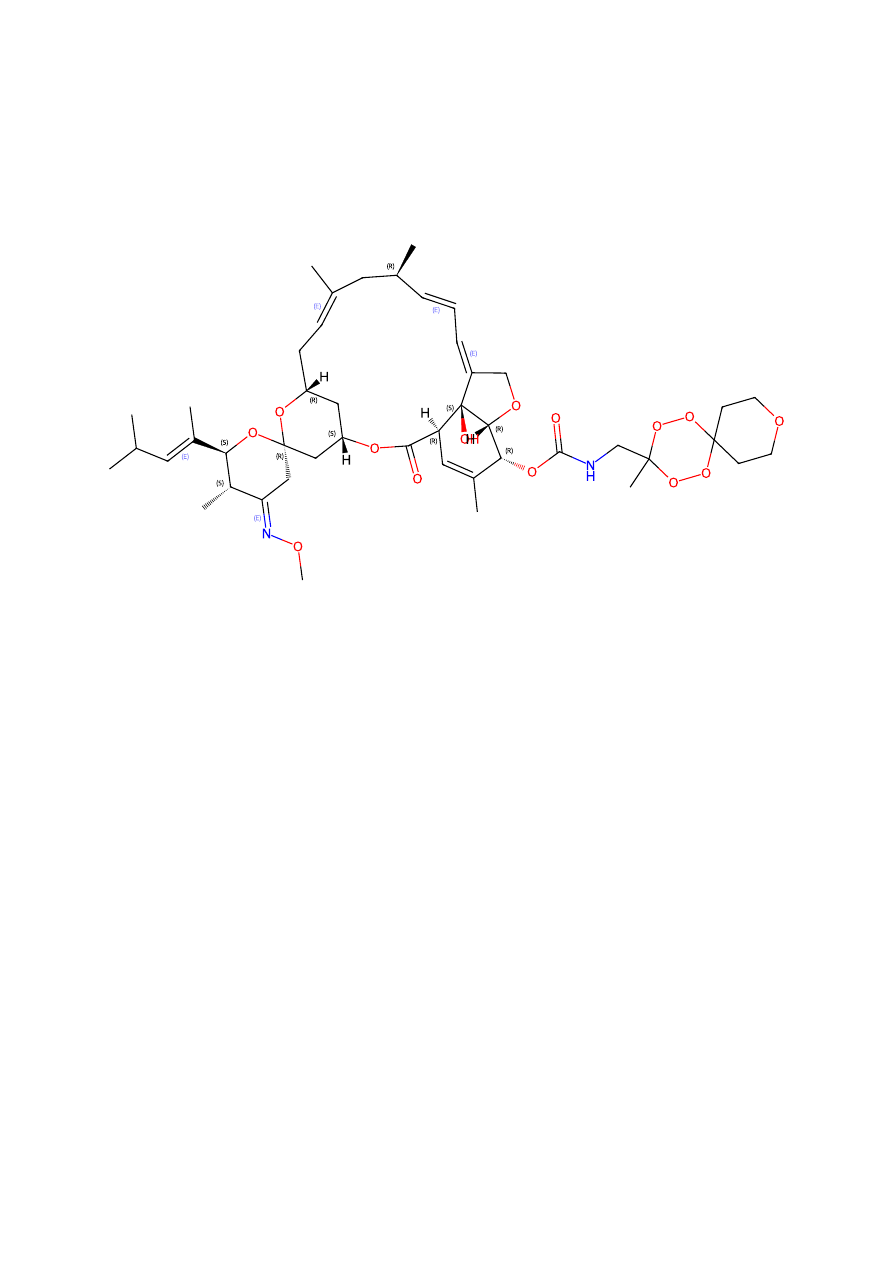
CHAPTER 6 · PROFILE 7/12 · ARCHIVE RECORD 127
ATLAS-C4-S07
Recorded rationale and role
Peroxide architecture branch. This entry explores the balance
between activation chemistry, appendage size, polarity,
linkage persistence and stereochemical tractability. Source
context is identified below; the design role is not a measured
efficacy ranking.
Preparation focus in the existing record
Peroxide-preserving preparation and analytical work are
central. Compare intact conjugate with any parent-release
products; identify the peroxide architecture and
stereochemical composition before biological interpretation.
AGENTIC RESEARCH FACTORY · COMPUTATIONAL COOKBOOK · 496 / 886

Full deposited SMILES — verbatim
CO/N=C1\C[C@]2(C[C@@H]3C[C@@H]
(C/C=C(\C)C[C@@H](C)/C=C/C=C4\CO[C@@H]5[C@H]
(OC(=O)NCC6(C)OOC7(CCOCC7)OO6)C(C)=C[C@@H]
(C(=O)O3)[C@]45O)O2)O[C@H](/C(C)=C/C(C)C)[C@H]1C
Canonical isomeric SMILES — RDKit 2026.09.1
CO/N=C1\C[C@]2(C[C@@H]3C[C@@H]
(C/C=C(\C)C[C@@H](C)/C=C/C=C4\CO[C@@H]5[C@H]
(OC(=O)NCC6(C)OOC7(CCOCC7)OO6)C(C)=C[C@@H]
(C(=O)O3)[C@]45O)O2)O[C@H](/C(C)=C/C(C)C)[C@H]1C
Complete computed profile
Formula
C46H66N2O14
Molecular weight (g/mol)
871.034
Exact mass (Da)
870.451405
Crippen cLogP
6.5957
TPSA (Ų)
180.29
H-bond donors
2
H-bond acceptors
15
Rotatable bonds
6
Rings
7
AGENTIC RESEARCH FACTORY · COMPUTATIONAL COOKBOOK · 497 / 886

Formal charge
0
Heavy atoms
62
Unassigned stereo —
modern
0
Unassigned stereo —
legacy
0
Graph interpretation and liabilities
This graph has 2 O–O bonds, net formal charge +0, and 6
rotatable bonds. Its polar surface makes permeability and
compartmental exposure important comparison variables. No
unspecified stereochemical element was detected by the
stated modern analysis of this graph.
Source record
Node85 combined.json; C4 papers and source scripts
Original Atlas compound discussion
ATLAS-C4-S07 — Oxane monospiro tetraoxane
Design rationale / liability addressed: Adds polarity without
a basic amine and removes the C5 ester and extra tetrahedral
stereocentres.
Precedent: [P5], [P6]. These are peroxide-class and/or linker
precedents; none reports this exact moxidectin conjugate. The
AGENTIC RESEARCH FACTORY · COMPUTATIONAL COOKBOOK · 498 / 886

class is precedented; the particular ring contraction, oxygen
substitution or attachment here is a new design choice.
New failure mode / cost: TPSA near 180 and the cyclic ether
can reduce delivery or add oxidation pathways; exact
activation and plasma stability are unknown.
Disposition: Polarity comparator. Net tetrahedral-centre
reduction versus deposited C4: 6; see the separate cage audit
for held entries.
AGENTIC RESEARCH FACTORY · COMPUTATIONAL COOKBOOK · 499 / 886
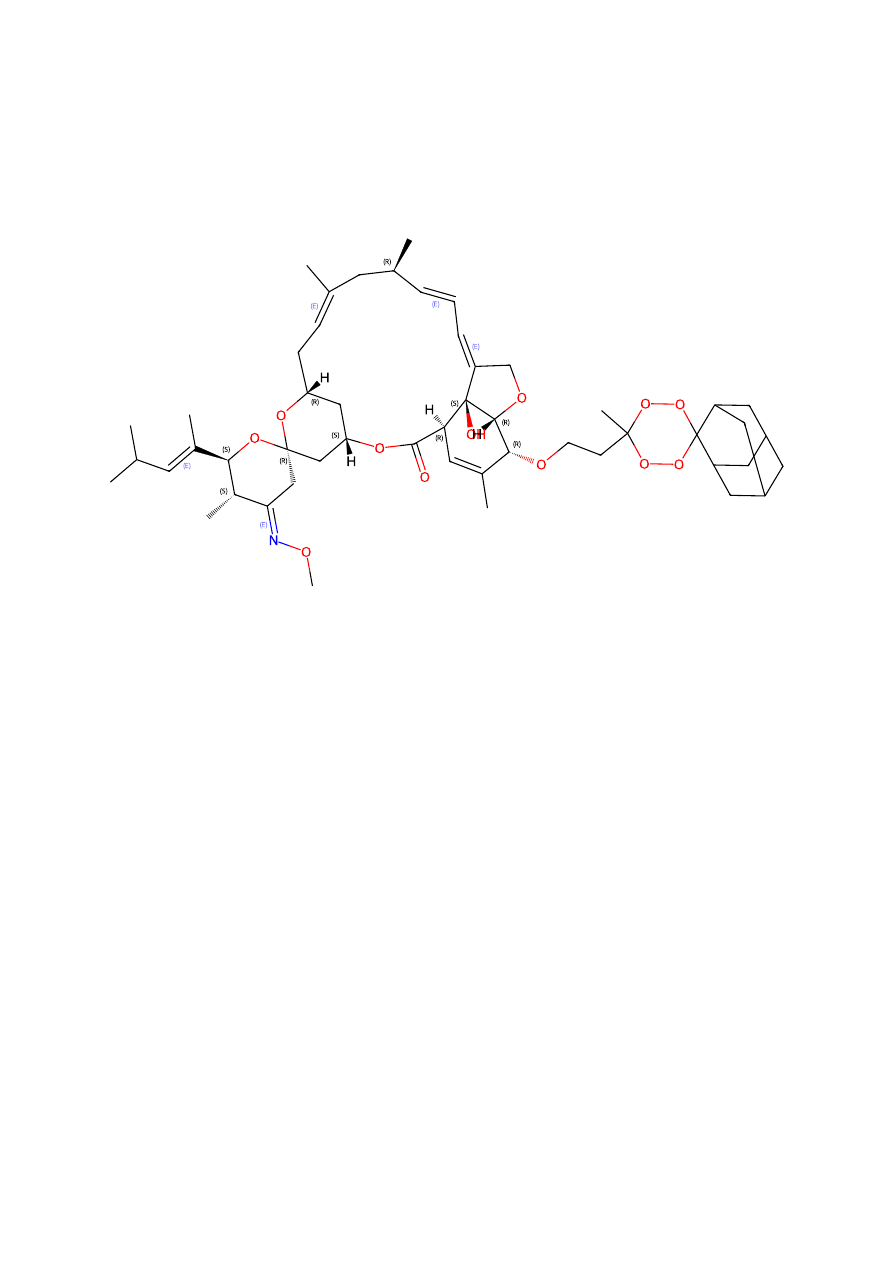
CHAPTER 6 · PROFILE 8/12 · ARCHIVE RECORD 128
ATLAS-C4-S08
Recorded rationale and role
Peroxide architecture branch. This entry explores the balance
between activation chemistry, appendage size, polarity,
linkage persistence and stereochemical tractability. Source
context is identified below; the design role is not a measured
efficacy ranking.
Preparation focus in the existing record
Peroxide-preserving preparation and analytical work are
central. Compare intact conjugate with any parent-release
products; identify the peroxide architecture and
stereochemical composition before biological interpretation.
AGENTIC RESEARCH FACTORY · COMPUTATIONAL COOKBOOK · 500 / 886

Full deposited SMILES — verbatim
CO/N=C1\C[C@]2(C[C@@H]3C[C@@H]
(C/C=C(\C)C[C@@H](C)/C=C/C=C4\CO[C@@H]5[C@H]
(OCCC6(C)OOC7(OO6)C6CC8CC(C6)CC7C8)C(C)=C[C@@
H](C(=O)O3)[C@]45O)O2)O[C@H](/C(C)=C/C(C)C)[C@H]1C
Canonical isomeric SMILES — RDKit 2026.09.1
CO/N=C1\C[C@]2(C[C@@H]3C[C@@H]
(C/C=C(\C)C[C@@H](C)/C=C/C=C4\CO[C@@H]5[C@H]
(OCCC6(C)OOC7(OO6)C6CC8CC(C6)CC7C8)C(C)=C[C@@
H](C(=O)O3)[C@]45O)O2)O[C@H](/C(C)=C/C(C)C)[C@H]1C
Complete computed profile
Formula
C51H73NO12
Molecular weight (g/mol)
892.14
Exact mass (Da)
891.513277
Crippen cLogP
8.9219
TPSA (Ų)
141.96
H-bond donors
1
H-bond acceptors
13
Rotatable bonds
7
Rings
10
AGENTIC RESEARCH FACTORY · COMPUTATIONAL COOKBOOK · 501 / 886

Formal charge
0
Heavy atoms
64
Unassigned stereo —
modern
6
Unassigned stereo —
legacy
0
Graph interpretation and liabilities
This graph has 2 O–O bonds, net formal charge +0, and 7
rotatable bonds. Its high calculated lipophilicity makes free
exposure, adsorption and formulation important comparison
variables. The modern graph analysis leaves 6 stereochemical
elements unspecified; material-level comparisons require that
composition to be defined.
Source record
Node85 combined.json; C4 papers and source scripts
Original Atlas compound discussion
ATLAS-C4-S08 — Adamantane monospiro
tetraoxane
Design rationale / liability addressed: Keeps the
adamantane shield and removes C5 acyl hydrolysis
completely.
AGENTIC RESEARCH FACTORY · COMPUTATIONAL COOKBOOK · 502 / 886

Precedent: [P5], [P6]. These are peroxide-class and/or linker
precedents; none reports this exact moxidectin conjugate. The
class is precedented; the particular ring contraction, oxygen
substitution or attachment here is a new design choice.
New failure mode / cost: cLogP remains close to 9, MW
barely improves, and O-dealkylation may still split the hybrid.
This is a lipophilicity-margin control, not a clean developability
win.
Disposition: Cage-stereo review; not counted in ten fully
specified nominees. Net tetrahedral-centre reduction versus
deposited C4: 6; see the separate cage audit for held entries.
AGENTIC RESEARCH FACTORY · COMPUTATIONAL COOKBOOK · 503 / 886
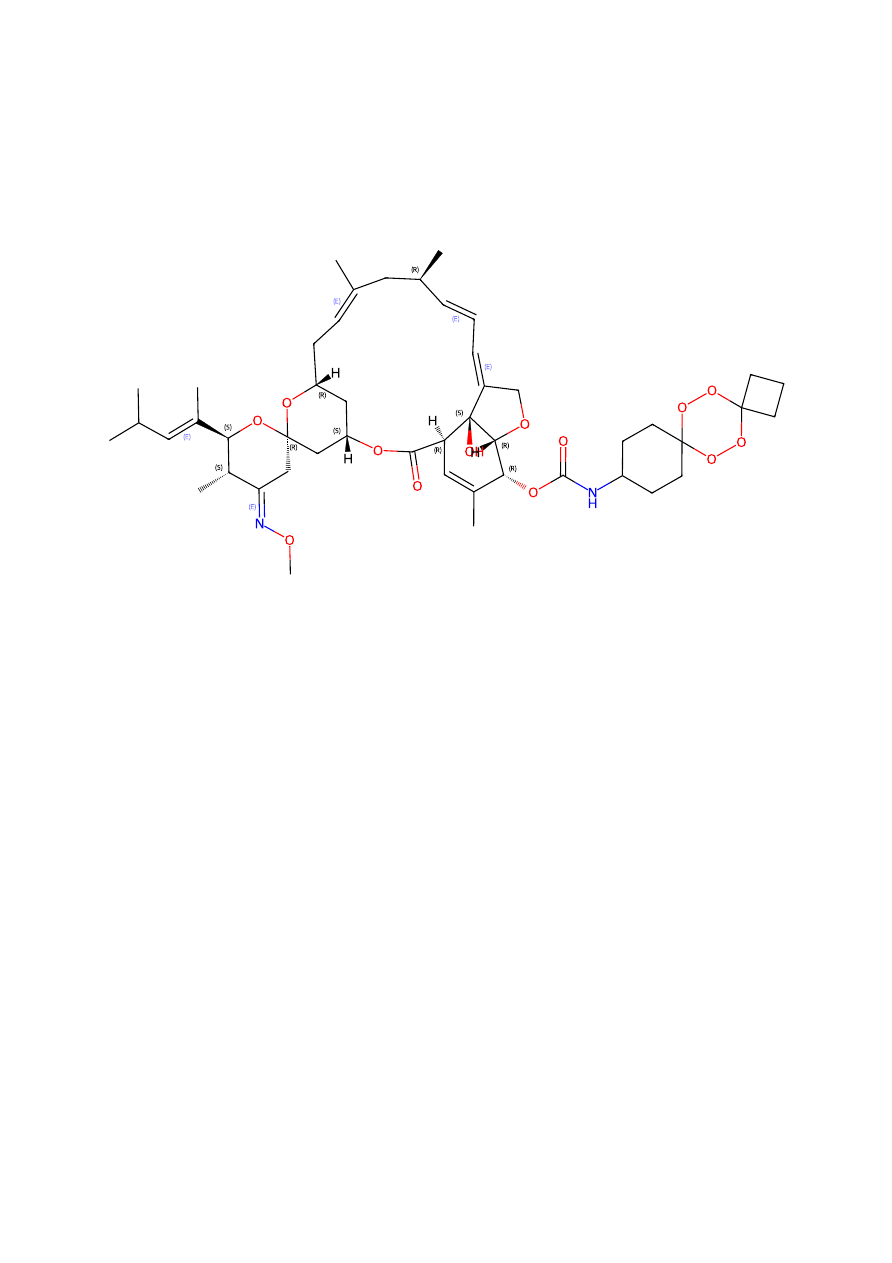
CHAPTER 6 · PROFILE 9/12 · ARCHIVE RECORD 129
ATLAS-C4-S09
Recorded rationale and role
Peroxide architecture branch. This entry explores the balance
between activation chemistry, appendage size, polarity,
linkage persistence and stereochemical tractability. Source
context is identified below; the design role is not a measured
efficacy ranking.
Preparation focus in the existing record
Peroxide-preserving preparation and analytical work are
central. Compare intact conjugate with any parent-release
products; identify the peroxide architecture and
stereochemical composition before biological interpretation.
AGENTIC RESEARCH FACTORY · COMPUTATIONAL COOKBOOK · 504 / 886

Full deposited SMILES — verbatim
CO/N=C1\C[C@]2(C[C@@H]3C[C@@H]
(C/C=C(\C)C[C@@H](C)/C=C/C=C4\CO[C@@H]5[C@H]
(OC(=O)NC6CCC7(CC6)OOC6(CCC6)OO7)C(C)=C[C@@H]
(C(=O)O3)[C@]45O)O2)O[C@H](/C(C)=C/C(C)C)[C@H]1C
Canonical isomeric SMILES — RDKit 2026.09.1
CO/N=C1\C[C@]2(C[C@@H]3C[C@@H]
(C/C=C(\C)C[C@@H](C)/C=C/C=C4\CO[C@@H]5[C@H]
(OC(=O)NC6CCC7(CC6)OOC6(CCC6)OO7)C(C)=C[C@@H]
(C(=O)O3)[C@]45O)O2)O[C@H](/C(C)=C/C(C)C)[C@H]1C
Complete computed profile
Formula
C48H68N2O13
Molecular weight (g/mol)
881.073
Exact mass (Da)
880.47214
Crippen cLogP
7.8919
TPSA (Ų)
171.06
H-bond donors
2
H-bond acceptors
14
Rotatable bonds
5
Rings
8
AGENTIC RESEARCH FACTORY · COMPUTATIONAL COOKBOOK · 505 / 886

Formal charge
0
Heavy atoms
63
Unassigned stereo —
modern
0
Unassigned stereo —
legacy
0
Graph interpretation and liabilities
This graph has 2 O–O bonds, net formal charge +0, and 5
rotatable bonds. Its high calculated lipophilicity makes free
exposure, adsorption and formulation important comparison
variables. No unspecified stereochemical element was
detected by the stated modern analysis of this graph.
Source record
Node85 combined.json; C4 papers and source scripts
Original Atlas compound discussion
ATLAS-C4-S09 — Cyclohexane/cyclobutane dispiro
tetraoxane
Design rationale / liability addressed: Retains two spiro
rings, eliminates all six added C4 stereocentres, replaces its
ester, and lowers both MW and cLogP.
AGENTIC RESEARCH FACTORY · COMPUTATIONAL COOKBOOK · 506 / 886

Precedent: [P5], [P6]. These are peroxide-class and/or linker
precedents; none reports this exact moxidectin conjugate. The
class is precedented; the particular ring contraction, oxygen
substitution or attachment here is a new design choice.
New failure mode / cost: Cyclobutane contraction is not the
E209 ring system: strain and changed radical partitioning may
defeat the stability benefit. The C5 carbamate still needs
plasma validation.
Disposition: Selected: lead. Net tetrahedral-centre reduction
versus deposited C4: 6; see the separate cage audit for held
entries.
AGENTIC RESEARCH FACTORY · COMPUTATIONAL COOKBOOK · 507 / 886
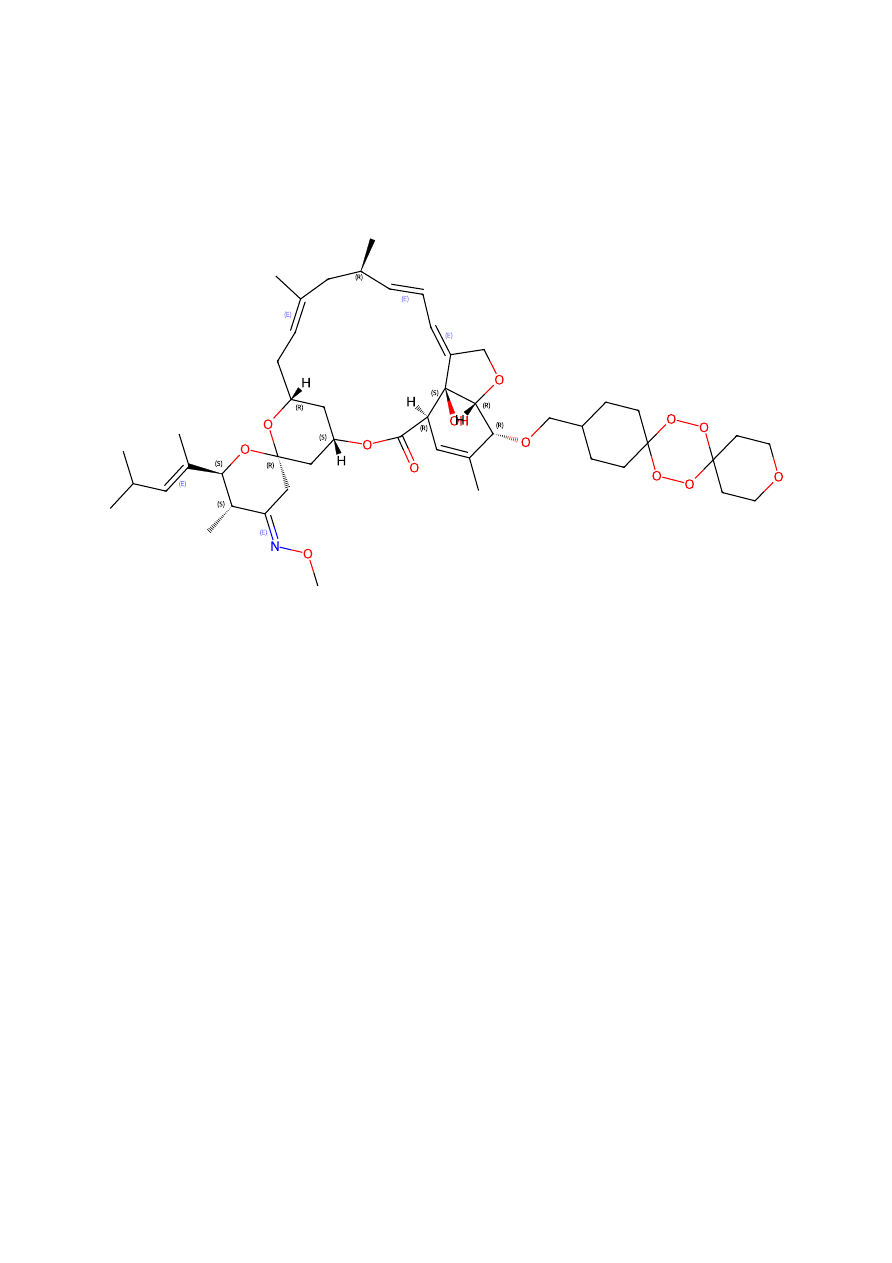
CHAPTER 6 · PROFILE 10/12 · ARCHIVE RECORD 130
ATLAS-C4-S10
Recorded rationale and role
Peroxide architecture branch. This entry explores the balance
between activation chemistry, appendage size, polarity,
linkage persistence and stereochemical tractability. Source
context is identified below; the design role is not a measured
efficacy ranking.
Preparation focus in the existing record
Peroxide-preserving preparation and analytical work are
central. Compare intact conjugate with any parent-release
products; identify the peroxide architecture and
stereochemical composition before biological interpretation.
AGENTIC RESEARCH FACTORY · COMPUTATIONAL COOKBOOK · 508 / 886

Full deposited SMILES — verbatim
CO/N=C1\C[C@]2(C[C@@H]3C[C@@H]
(C/C=C(\C)C[C@@H](C)/C=C/C=C4\CO[C@@H]5[C@H]
(OCC6CCC7(CC6)OOC6(CCOCC6)OO7)C(C)=C[C@@H]
(C(=O)O3)[C@]45O)O2)O[C@H](/C(C)=C/C(C)C)[C@H]1C
Canonical isomeric SMILES — RDKit 2026.09.1
CO/N=C1\C[C@]2(C[C@@H]3C[C@@H]
(C/C=C(\C)C[C@@H](C)/C=C/C=C4\CO[C@@H]5[C@H]
(OCC6CCC7(CC6)OOC6(CCOCC6)OO7)C(C)=C[C@@H]
(C(=O)O3)[C@]45O)O2)O[C@H](/C(C)=C/C(C)C)[C@H]1C
Complete computed profile
Formula
C49H71NO13
Molecular weight (g/mol)
882.101
Exact mass (Da)
881.492541
Crippen cLogP
8.0564
TPSA (Ų)
151.19
H-bond donors
1
H-bond acceptors
14
Rotatable bonds
6
Rings
8
AGENTIC RESEARCH FACTORY · COMPUTATIONAL COOKBOOK · 509 / 886

Formal charge
0
Heavy atoms
63
Unassigned stereo —
modern
0
Unassigned stereo —
legacy
0
Graph interpretation and liabilities
This graph has 2 O–O bonds, net formal charge +0, and 6
rotatable bonds. Its high calculated lipophilicity makes free
exposure, adsorption and formulation important comparison
variables. No unspecified stereochemical element was
detected by the stated modern analysis of this graph.
Source record
Node85 combined.json; C4 papers and source scripts
Original Atlas compound discussion
ATLAS-C4-S10 — Cyclohexane/oxane dispiro
tetraoxane
Design rationale / liability addressed: Retains dispiro
topology, removes C5 acyl hydrolysis, and uses ring oxygen to
lower lipophilicity without charge.
AGENTIC RESEARCH FACTORY · COMPUTATIONAL COOKBOOK · 510 / 886

Precedent: [P5], [P6]. These are peroxide-class and/or linker
precedents; none reports this exact moxidectin conjugate. The
class is precedented; the particular ring contraction, oxygen
substitution or attachment here is a new design choice.
New failure mode / cost: Oxidative ether cleavage, altered
radical products and uncertain C5-ether synthetic access are
the price. A stable linker can also prevent useful parent
release.
Disposition: Selected: linker-orthogonal lead. Net tetrahedral-
centre reduction versus deposited C4: 6; see the separate
cage audit for held entries.
AGENTIC RESEARCH FACTORY · COMPUTATIONAL COOKBOOK · 511 / 886
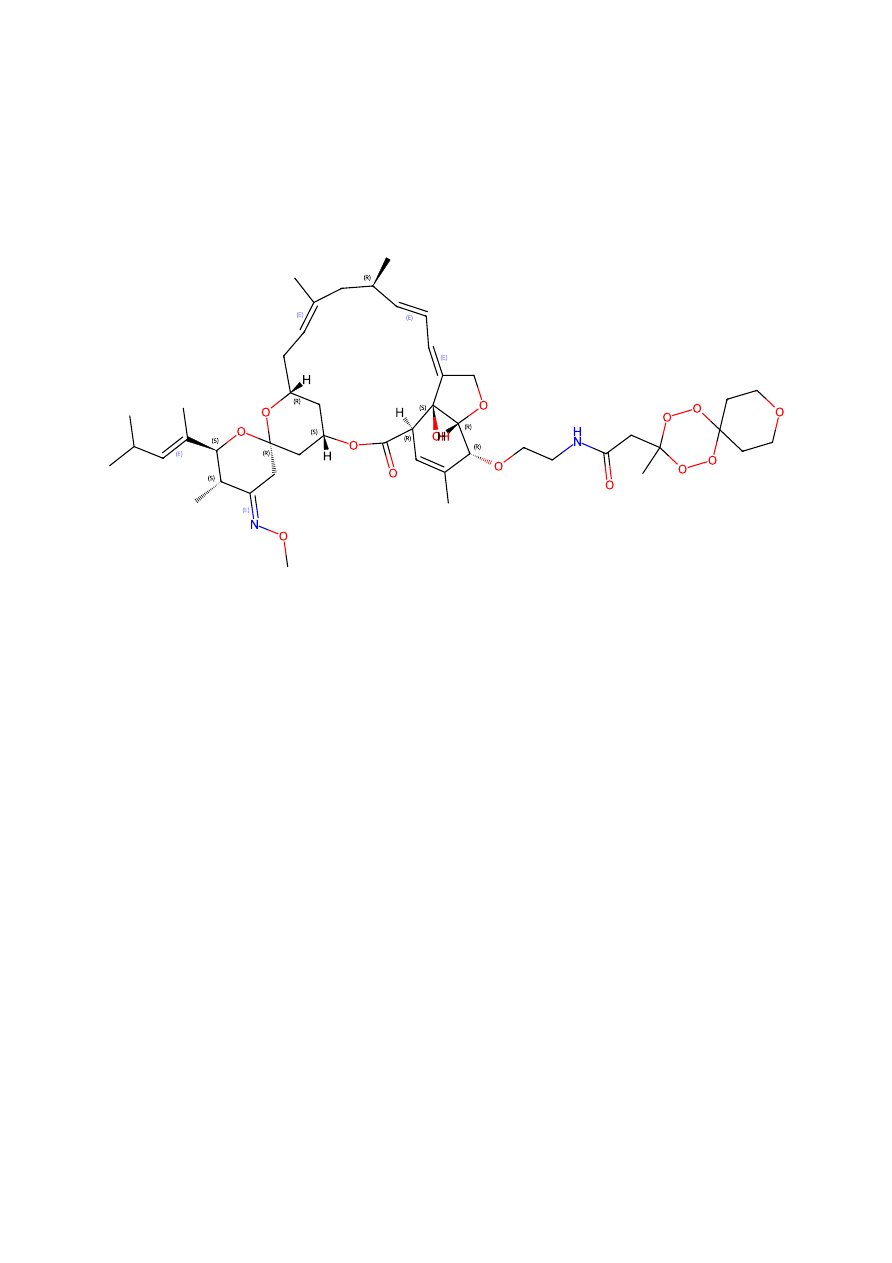
CHAPTER 6 · PROFILE 11/12 · ARCHIVE RECORD 131
ATLAS-C4-S11
Recorded rationale and role
Peroxide architecture branch. This entry explores the balance
between activation chemistry, appendage size, polarity,
linkage persistence and stereochemical tractability. Source
context is identified below; the design role is not a measured
efficacy ranking.
Preparation focus in the existing record
Peroxide-preserving preparation and analytical work are
central. Compare intact conjugate with any parent-release
products; identify the peroxide architecture and
stereochemical composition before biological interpretation.
AGENTIC RESEARCH FACTORY · COMPUTATIONAL COOKBOOK · 512 / 886

Full deposited SMILES — verbatim
CO/N=C1\C[C@]2(C[C@@H]3C[C@@H]
(C/C=C(\C)C[C@@H](C)/C=C/C=C4\CO[C@@H]5[C@H]
(OCCNC(=O)CC6(C)OOC7(CCOCC7)OO6)C(C)=C[C@@H]
(C(=O)O3)[C@]45O)O2)O[C@H](/C(C)=C/C(C)C)[C@H]1C
Canonical isomeric SMILES — RDKit 2026.09.1
CO/N=C1\C[C@]2(C[C@@H]3C[C@@H]
(C/C=C(\C)C[C@@H](C)/C=C/C=C4\CO[C@@H]5[C@H]
(OCCNC(=O)CC6(C)OOC7(CCOCC7)OO6)C(C)=C[C@@H]
(C(=O)O3)[C@]45O)O2)O[C@H](/C(C)=C/C(C)C)[C@H]1C
Complete computed profile
Formula
C48H70N2O14
Molecular weight (g/mol)
899.088
Exact mass (Da)
898.482705
Crippen cLogP
6.3924
TPSA (Ų)
180.29
H-bond donors
2
H-bond acceptors
15
Rotatable bonds
9
Rings
7
AGENTIC RESEARCH FACTORY · COMPUTATIONAL COOKBOOK · 513 / 886

Formal charge
0
Heavy atoms
64
Unassigned stereo —
modern
0
Unassigned stereo —
legacy
0
Graph interpretation and liabilities
This graph has 2 O–O bonds, net formal charge +0, and 9
rotatable bonds. Its polar surface makes permeability and
compartmental exposure important comparison variables. No
unspecified stereochemical element was detected by the
stated modern analysis of this graph.
Source record
Node85 combined.json; C4 papers and source scripts
Original Atlas compound discussion
ATLAS-C4-S11 — Oxane monospiro tetraoxane,
ether-amide
Design rationale / liability addressed: Attaches through a
C5 ether; the amide is downstream, so there is no concealed
C5 ester. Adds neutral polarity.
AGENTIC RESEARCH FACTORY · COMPUTATIONAL COOKBOOK · 514 / 886

Precedent: [P5], [P6]. These are peroxide-class and/or linker
precedents; none reports this exact moxidectin conjugate. The
class is precedented; the particular ring contraction, oxygen
substitution or attachment here is a new design choice.
New failure mode / cost: Higher MW, TPSA and flexibility can
defeat permeability; amidase cleavage or O-dealkylation can
separate the components. This is not a direct C5 amide.
Disposition: Low priority polarity control. Net tetrahedral-
centre reduction versus deposited C4: 6; see the separate
cage audit for held entries.
AGENTIC RESEARCH FACTORY · COMPUTATIONAL COOKBOOK · 515 / 886
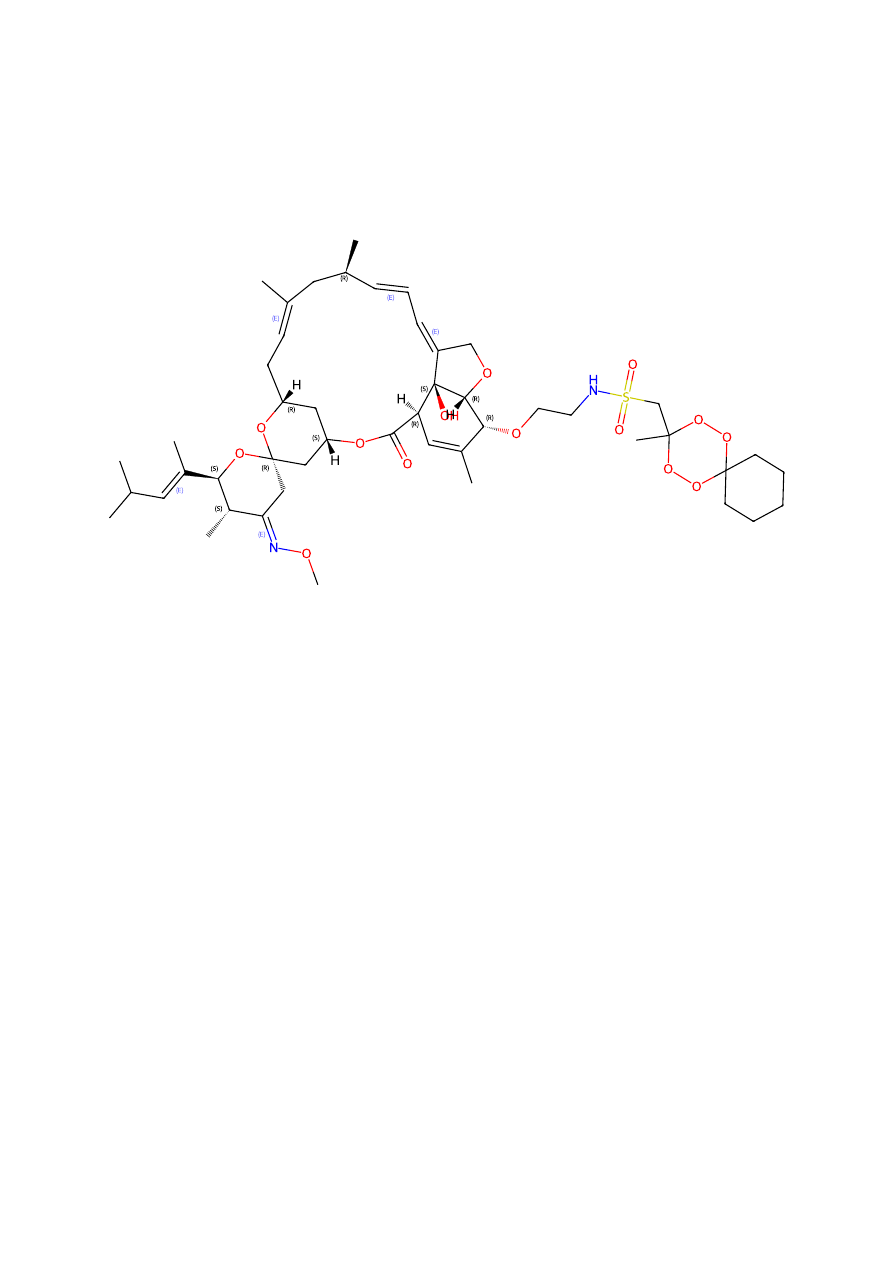
CHAPTER 6 · PROFILE 12/12 · ARCHIVE RECORD 132
ATLAS-C4-S12
Recorded rationale and role
Peroxide architecture branch. This entry explores the balance
between activation chemistry, appendage size, polarity,
linkage persistence and stereochemical tractability. Source
context is identified below; the design role is not a measured
efficacy ranking.
Preparation focus in the existing record
Peroxide-preserving preparation and analytical work are
central. Compare intact conjugate with any parent-release
products; identify the peroxide architecture and
stereochemical composition before biological interpretation.
AGENTIC RESEARCH FACTORY · COMPUTATIONAL COOKBOOK · 516 / 886

Full deposited SMILES — verbatim
CO/N=C1\C[C@]2(C[C@@H]3C[C@@H]
(C/C=C(\C)C[C@@H](C)/C=C/C=C4\CO[C@@H]5[C@H]
(OCCNS(=O)
(=O)CC6(C)OOC7(CCCCC7)OO6)C(C)=C[C@@H](C(=O)O3)
[C@]45O)O2)O[C@H](/C(C)=C/C(C)C)[C@H]1C
Canonical isomeric SMILES — RDKit 2026.09.1
CO/N=C1\C[C@]2(C[C@@H]3C[C@@H]
(C/C=C(\C)C[C@@H](C)/C=C/C=C4\CO[C@@H]5[C@H]
(OCCNS(=O)
(=O)CC6(C)OOC7(CCCCC7)OO6)C(C)=C[C@@H](C(=O)O3)
[C@]45O)O2)O[C@H](/C(C)=C/C(C)C)[C@H]1C
Complete computed profile
Formula
C48H72N2O14S
Molecular weight (g/mol)
933.171
Exact mass (Da)
932.470426
Crippen cLogP
6.9592
TPSA (Ų)
188.13
H-bond donors
2
H-bond acceptors
15
Rotatable bonds
10
AGENTIC RESEARCH FACTORY · COMPUTATIONAL COOKBOOK · 517 / 886

Rings
7
Formal charge
0
Heavy atoms
65
Unassigned stereo —
modern
0
Unassigned stereo —
legacy
0
Graph interpretation and liabilities
This graph has 2 O–O bonds, net formal charge +0, and 10
rotatable bonds. Its polar surface makes permeability and
compartmental exposure important comparison variables. No
unspecified stereochemical element was detected by the
stated modern analysis of this graph.
Source record
Node85 combined.json; C4 papers and source scripts
Original Atlas compound discussion
ATLAS-C4-S12 — Cyclohexane monospiro
tetraoxane, ether-sulfonamide
Design rationale / liability addressed: Replaces the C5
ester by an ether and adds a usually hydrolysis-resistant
sulfonamide without a basic amine.
AGENTIC RESEARCH FACTORY · COMPUTATIONAL COOKBOOK · 518 / 886

Precedent: [P5], [P6]. These are peroxide-class and/or linker
precedents; none reports this exact moxidectin conjugate. The
class is precedented; the particular ring contraction, oxygen
substitution or attachment here is a new design choice.
New failure mode / cost: Sulfonyl mass and high TPSA are
substantial; sulfonamide ionisation is unmeasured, and
oxidation can still cleave the C5 ether. Poor mass efficiency
despite lower cLogP.
Disposition: Deprioritise: bloat. Net tetrahedral-centre
reduction versus deposited C4: 6; see the separate cage audit
for held entries.
Why these top three
1. S09 — first choice for a carbamate feasibility decision.
MW 881.1, cLogP 7.89: both improve on C4 without an
ionisable basic group. Two spiro rings are retained, and all
six ambiguous appendage centres disappear. It tests
whether a small dispiro tetraoxane can retain useful
lifetime and activation. The cyclobutane is the principal
extrapolation, not an established benefit. TPSA 171.1 and
uncertain activation remain substantial weaknesses.
2. S10 — first choice for the non-acyl C5 test. MW 882.1,
cLogP 8.06, TPSA 151.2. The C5 ether directly addresses
acyl hydrolysis and gives an informative contrast with S09.
Its oxane ring exchanges some hydrophobic surface for
oxygen. Oxidative fragmentation and difficult C5-selective
ether formation are the new risks. Failure to release free
parent is intentional and must be accepted or the design
rejected.
AGENTIC RESEARCH FACTORY · COMPUTATIONAL COOKBOOK · 519 / 886

3. S02 — first choice for a compact trioxolane
comparison. MW 853.1 and cLogP 7.82 reduce the
property burden, with only one specified added
stereocentre. It asks whether retaining one spiro
cyclohexane offers sufficient protection without the
adamantane mass/cage-review burden. It has weaker
structural precedent than the clinical dispiro ozonides and
could be prematurely consumed. That is why it is an
orthogonal comparator, not the presumed winner.
Do not synthesise all ten first. The first chemistry decision
should test whether the chosen functionalised peroxide
building blocks and the shared C5 attachment concept are
viable. S01 can re-enter after cage review if a closer
adamantane precedent is preferable. S06 is the compact
tetraoxane reserve. S12 is deliberately deprioritised: adding a
sulfonamide solves one bond problem at an excessive
mass/polarity cost.
Chemistry feasibility and mechanism gates
Build the peroxide away from moxidectin. Moxidectin
contains multiple alkenes. Applying the ozonide-forming
chemistry used for isolated peroxide building blocks to the
whole chassis would threaten that polyene. Late attachment of
an already characterised peroxide fragment is the conceptual
route; peroxide survival through that final operation remains
unproved. Avoid assuming that conventional reducing
deprotections or metal-catalysed operations are compatible
with an O–O bond. This document specifies targets and
feasibility questions, not a validated preparative procedure.
AGENTIC RESEARCH FACTORY · COMPUTATIONAL COOKBOOK · 520 / 886
The carbamate series is the clearest first C5 platform:
conceptually couple the parent alcohol to the corresponding
peroxide-bearing carbamoyl partner while retaining C7 as the
tertiary alcohol. The ether series is a parallel feasibility arm
because an allylic secondary alcohol may not give clean O-
selective attachment under conditions tolerated by both large
fragments. Any C5 epimerisation, C7 regioisomer, peroxide
loss or altered alkene geometry is a failure of the specified
target, even if the mass spectrum looks right.
The amide and sulfonamide in S11/S12 sit beyond a C5
ether. They are not direct replacements of the C5 oxygen by
nitrogen. A downstream robust bond does not protect an
upstream labile ester; this is why no structure retains a hidden
C5 ester while advertising an amide elsewhere. Triazoles and
oxalamides were not required to reach ten meaningful
designs. A CuAAC-derived triazole would require additional
handle installation and metal/peroxide compatibility work; its
hydrolysis resistance alone would not establish a superior
whole molecule.
Proposed decision gates, to be fixed in an assay plan before
seeing results:
Identity: isolate the specified C5 product; establish
regiochemistry, alkene geometry, peroxide integrity and
stereochemistry by methods appropriate to each. Parsing
and an SDF are not identity evidence.
Lifetime and activation: compare intact conjugate loss
and identified products in buffer, human plasma and the
relevant species matrix, alongside iron-controlled
activation measurements. The goal is useful separation
AGENTIC RESEARCH FACTORY · COMPUTATIONAL COOKBOOK · 521 / 886
between nonspecific disappearance and productive
activation, not maximum inertness. Measure radical-
related products/orthogonal signals; a generic ROS dye
alone does not establish the proposed event.
Mechanism in cancer cells: establish intact cellular
exposure and compare with moxidectin, the corresponding
unconjugated peroxide fragment, their equimolar mixture,
and a matched nonperoxidic analogue. Examine iron
dependence and intervention controls while accounting for
their independent effects on growth. Peroxide cleavage
need not mean ferroptosis; do not infer a cell-death
programme from one marker.
Delivery and safety: measure solubility, protein binding,
unbound cell/tumour exposure and transporter behaviour.
Compare bidirectional transport with parent in a validated
P-gp system with an appropriate inhibitor/control; inspect
mass balance and viability. For GBM include unbound
brain/tumour delivery and normal neural controls. A neutral
design can still become a transporter substrate or inhibitor.
Keep-or-stop: the line earns further work only if an intact
conjugate provides a reproducible exposure-adjusted
advantage over the mixture without destroying the parent's
delivery advantage or normal-cell margin. If all useful
activity comes from premature fragmentation, or all
surviving conjugates lose cellular access, use co-dosing or
a different delivery strategy rather than preserving the
hybrid for its own sake.
AGENTIC RESEARCH FACTORY · COMPUTATIONAL COOKBOOK · 522 / 886

Verified literature and scope of inference
These are primary research records checked for identity and
relevant scope. Antimalarial chemistry is cited solely as a
peroxide-design precedent; disease efficacy is not transferred
into cancer. The exact structures in this dossier have no
claimed literature validation.
P1 — Vennerstrom et al. (2004). Identification of an
antimalarial synthetic trioxolane drug development
candidate. Nature 430, 900–904. Primary publisher record,
DOI 10.1038/nature02779. Establishes the synthetic
ozonide/dispiro lineage; does not validate the single-spiro
replacements here.
P2 — Creek et al. (2007). Iron-mediated degradation
kinetics of substituted dispiro-1,2,4-trioxolane
antimalarials. Journal of Pharmaceutical Sciences 96(11),
2945–2956. Primary indexed record, DOI
10.1002/jps.20958. Supports iron-mediated cleavage,
substituent-dependent kinetics and the need to measure
rather than equate reactivity with activity. The indexed
abstract was also retrieved through Europe PMC and
saved locally.
P3 — Charman et al. (2011). Synthetic ozonide drug
candidate OZ439 offers new hope for a single-dose cure of
uncomplicated malaria. PNAS 108(11), 4400–4405.
Primary full text, DOI 10.1073/pnas.1015762108. Specific
ozonides balance iron/heme reactivity and exposure. It
does not prove every spiroadamantane conjugate is stable
or cancer-selective.
AGENTIC RESEARCH FACTORY · COMPUTATIONAL COOKBOOK · 523 / 886

P4 — Blank et al. (2020). Antimalarial Trioxolanes with
Superior Drug-Like Properties and In Vivo Efficacy. ACS
Infectious Diseases 6(7), 1827–1835. Primary full text, DOI
10.1021/acsinfecdis.0c00064. Reports stereocontrolled
carbamate-substituted trioxolanes and their evaluated
properties. Its carbamate placement/orientation differs
from the proposed C5 moxidectin carbamates; that
distinction is not erased.
P5 — O’Neill, Amewu, Charman et al. (2017). A
tetraoxane-based antimalarial drug candidate that
overcomes PfK13-C580Y dependent artemisinin
resistance. Nature Communications 8, 15159. Primary
publisher record, DOI 10.1038/ncomms15159; PMID
28537265. E209 supplies a tetraoxane development
precedent, not a class-wide guarantee or evidence for the
new small-ring/oxane designs.
P6 — Amewu et al. (2013). Synthesis and evaluation of
the antimalarial, anticancer, and caspase 3 activities of
tetraoxane dimers. Bioorganic & Medicinal Chemistry
21(23), 7392–7397. Primary indexed record, DOI
10.1016/j.bmc.2013.09.047. Reports mono-/dispiro
tetraoxane chemistry and cell-based cancer results in
selected compounds. It does not establish efficacy or iron
selectivity for these monomeric moxidectin hybrids.
P7 — Spangler et al. (2016). A Novel Tumor-Activated
Prodrug Strategy Targeting Ferrous Iron Is Effective in
Multiple Preclinical Cancer Models. Journal of Medicinal
Chemistry 59(24), 11161–11170. Primary full text, DOI
10.1021/acs.jmedchem.6b01470. Provides cancer-
relevant Fe(II)-responsive trioxolane conjugate precedent.
AGENTIC RESEARCH FACTORY · COMPUTATIONAL COOKBOOK · 524 / 886

Those compounds use a deliberately engineered release
mechanism; these intact-hybrid designs do not inherit it.
The often-cited RKA182 and E209 names do not identify
interchangeable cores or attachment geometries. E209's
primary record is used here; no independent claim about an
unverified RKA182 synthesis or stability value is needed for
this set. A full exact-compound novelty/patent search remains
separate from these chemistry precedents.
Reproducibility and structure blocks
c4-successors/build_successors.py reads the parent and
baseline directly from the supplied omnibus and changes only
its C5-O substituent. It checks sanitisation, canonical isomeric-
SMILES round-trip, retained chiral parent substructure, neutral
formal charge, peroxide ring class and expected O–O count.
Twelve canonical structures are unique. candidates.json
contains full-precision properties and both stereo audits; CSV
and SDF exports are alongside it. The omnibus-compatible
count uses Chem.FindMolChiralCenters(...,
includeUnassigned=True, useLegacyImplementation=True).
The independent conservative count uses False. This
disclosure is important for reconciliation with another RDKit
run.
The three trioxolane nominees S02–S04 each specify one
new tetrahedral centre using an explicit isomeric SMILES.
Selection of that epimer is a design specification, not a claim
of its superior potency or an established enantioselective
preparation. No unspecified-centre mixtures are counted as
multiple candidates. The tetraoxane symmetry removes the
AGENTIC RESEARCH FACTORY · COMPUTATIONAL COOKBOOK · 525 / 886

additional tetrahedral-centre burden in the ten admitted
structures; conformational behaviour still needs consideration.
Canonical isomeric SMILES below are the computed outputs,
not hand-transcribed structure names.
AGENTIC RESEARCH FACTORY · COMPUTATIONAL COOKBOOK · 526 / 886

CHAPTER 7
Full B1 successor branch
All 20 recorded B1 branch entries, including incumbent B1, are
retained. This chapter supplements rather than replaces the
requested lead trios.
AGENTIC RESEARCH FACTORY · COMPUTATIONAL COOKBOOK · 527 / 886

5 · Progress summary — where this branch
stands
What it was. ARF-MOX-B1: moxidectin esterified at C5 to a
pentanoyl arm terminating in triphenylphosphonium. A
delocalised lipophilic cation accumulates in mitochondria in
response to membrane potential, which is hyperpolarised in
cancer cells, so the design was intended to close the exposure
gap by subcellular concentration rather than by dose
escalation. C60H75NO9P
⁺, MW 985.2, clogP 10.44,
permanent formal +1.
What went wrong — three objections, all upheld.
Triphenylphosphonium does not discriminate between tumour
and healthy mitochondria, and cardiac and skeletal muscle
mitochondria are also hyperpolarised, so systemic exposure
loads the heart. Nernst-driven accumulation is not self-limiting,
risking generalised mitochondrial failure in normal tissue
before selective tumour kill. And a permanent charge on a 985
Da macrocycle at clogP 10.44 is a plasma-protein-binding and
clearance problem that can neutralise the intended distribution
advantage outright.
The arithmetic that reframes the branch. The Nernst slope
is 61.54 mV per decade at 37 °C. Taken at face value:
Mitochondrial potential
Accumulation
−120 mV
89×
−140 mV
188×
−160 mV
398×
AGENTIC RESEARCH FACTORY · COMPUTATIONAL COOKBOOK · 528 / 886

Mitochondrial potential
Accumulation
−180 mV
842×
−200 mV
1779×
The published exposure gap for this chassis is 110–220×. At
−180 mV the mechanism delivers 842×, so it closes the
potency gap comfortably. But selectivity comes only from
the difference between tumour and normal potential, and
tumour −180 mV against normal −140 mV is a 40 mV gap,
which is 4.5×. At a 30 mV gap it is 3.1×.
So this mechanism solves potency and cannot solve
selectivity. The cardiotoxicity objection is not a side risk to be
engineered around; it is structural to the mechanism. And
because both tissues sit on the same exponential, a more
aggressive cation buys more accumulation everywhere at the
same 4.5× ratio — it spends therapeutic index and returns
nothing. B1 is over-engineered in precisely the direction that
produces objections 1 and 2.
Which inverts the design objective. If only ~200× is needed
and 842× is available, the correct move is to detune
deliberately: take sub-maximal accumulation in exchange for
a lower cation lipophilicity and a wider window.
The column that was missing. Off-target mitochondrial
uncoupling tracks the lipophilicity of the cationic headgroup,
not of the whole conjugate, and neither node had computed it.
Added here as hgLogP, the clogP of the methyl-capped
headgroup alone. It spans 5.03 down to −0.14 against
triphenylphosphonium's 3.61, and it reorders the branch.
AGENTIC RESEARCH FACTORY · COMPUTATIONAL COOKBOOK · 529 / 886

What was tried and failed. "Trialkyl is less delocalised than
triaryl, so tributylphosphonium should be gentler" is false:
hgLogP 5.03, whole-molecule clogP 11.66 — worse than the
incumbent on both counts. The butyl chains cost more than
the loss of aryl delocalisation saves. This is the same shape of
error as the adamantane result in Part One, and it is recorded
as a negative result for the same reason.
Where it stands. Twenty designs. The incumbent ranks last at
one gate of six. Two honest leads, in two different mechanism
classes: B1h (trimethylammonium, carbamate) keeps the
permanent +1 so the Nernst driving force still applies, while
cutting headgroup lipophilicity 3.29 log units, mass by 188 Da,
clogP by 3.49 units and rotatable bonds from 12 to 9; B1n or
B1o abandon the permanent charge for a weak base intended
to protonate only in the acidic tumour microenvironment.
What is unresolved. Three things, and they are load-bearing.
First, delocalisation is why triphenylphosphonium works
— it lowers the desolvation penalty for crossing the inner
membrane. A compact trimethylammonium at hgLogP 0.32
may not get in at all, in which case B1h is the advantage of a
drug that never arrives. Second, the weak-base class trades a
calculable Nernst driving force for a qualitative argument about
tumour pH, and RDKit gives no reliable pKa, so every pH-
gating claim here is unquantified; a measured or literature-
anchored pKa near 6.5–7.0 is required before any of that class
can be ranked honestly. Third, a neutral weak base is not a
better B1 — it is a different drug, and the ranking below
rewards it for avoiding a liability it achieves by abandoning the
mechanism.
AGENTIC RESEARCH FACTORY · COMPUTATIONAL COOKBOOK · 530 / 886

Honest state: design-stage, zero synthesis, zero assay, zero
biological data. No claim is made that any design preserves
the chassis's weak P-glycoprotein behaviour; avoiding large
lipophilic cations is a design restraint and not a transporter
assay.
AGENTIC RESEARCH FACTORY · COMPUTATIONAL COOKBOOK · 531 / 886
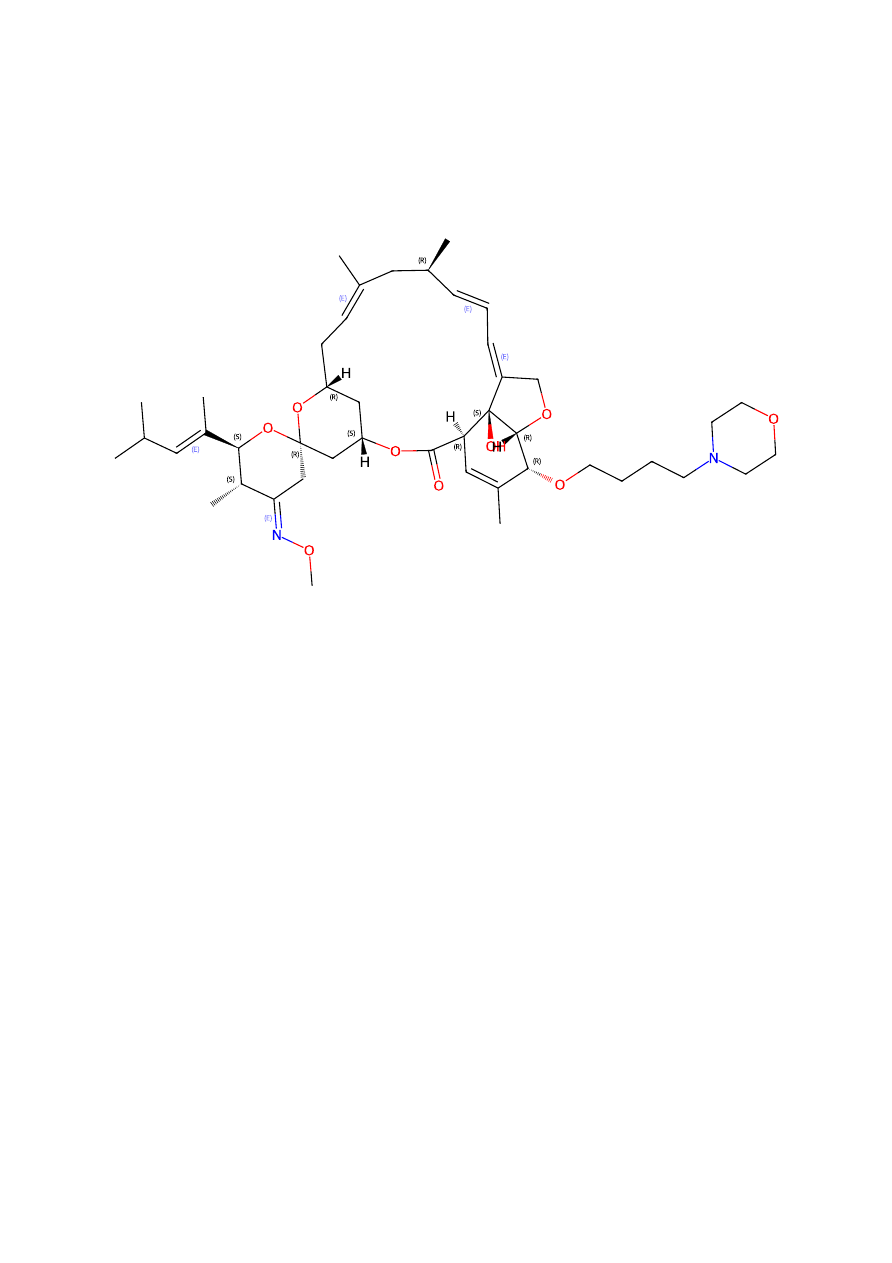
CHAPTER 7 · PROFILE 1/20 · ARCHIVE RECORD 133
ARF-MOX-B1n
Recorded rationale and role
Distribution and linkage branch. This entry compares the
appended head group and attachment against the B1
incumbent and parent moxidectin. Recorded design detail:
weak base morpholin-4-yl direct ether, C4 tether pH-gated,
non-cleavable. Source context is identified below; the design
role is not a measured efficacy ranking.
Preparation focus in the existing record
The preparation concept is governed by the source scaffold,
available attachment handle and functional-group
compatibility. Establish connectivity, stereochemical
AGENTIC RESEARCH FACTORY · COMPUTATIONAL COOKBOOK · 532 / 886

composition and relevant stability before comparing biological
responses.
Full deposited SMILES — verbatim
CO/N=C1\C[C@]2(C[C@@H]3C[C@@H]
(C/C=C(\C)C[C@@H](C)/C=C/C=C4\CO[C@@H]5[C@H]
(OCCCCN6CCOCC6)C(C)=C[C@@H](C(=O)O3)
[C@]45O)O2)O[C@H](/C(C)=C/C(C)C)[C@H]1C
Canonical isomeric SMILES — RDKit 2026.09.1
CO/N=C1\C[C@]2(C[C@@H]3C[C@@H]
(C/C=C(\C)C[C@@H](C)/C=C/C=C4\CO[C@@H]5[C@H]
(OCCCCN6CCOCC6)C(C)=C[C@@H](C(=O)O3)
[C@]45O)O2)O[C@H](/C(C)=C/C(C)C)[C@H]1C
Complete computed profile
Formula
C45H68N2O9
Molecular weight (g/mol)
781.044
Exact mass (Da)
780.492482
Crippen cLogP
6.8656
TPSA (Ų)
117.51
H-bond donors
1
H-bond acceptors
11
Rotatable bonds
9
AGENTIC RESEARCH FACTORY · COMPUTATIONAL COOKBOOK · 533 / 886

Rings
6
Formal charge
0
Heavy atoms
56
Unassigned stereo —
modern
0
Unassigned stereo —
legacy
0
Graph interpretation and liabilities
This graph has 0 O–O bonds, net formal charge +0, and 9
rotatable bonds. The descriptor balance supports comparison
with the adjacent source series rather than assuming a shared
exposure profile. No unspecified stereochemical element was
detected by the stated modern analysis of this graph.
Source record
Node85 b1_ranked.json; B1 successor paper
Existing selected-prospect discussion — retained
ARF-MOX-B1n
Role: Requested top pick; weak-base hypothesis.
Design and reasoning. A four-carbon direct ether leads to a
morpholine headgroup. It is represented as a neutral weak
base, rather than a permanently charged phosphonium.
AGENTIC RESEARCH FACTORY · COMPUTATIONAL COOKBOOK · 534 / 886

Profile and liabilities. MW falls by approximately 204.19
versus B1; cLogP falls by 3.58 and RotB by 3. The added
ester is absent. These improve selected calculated properties,
but pKa, subcellular localisation and preserved parent activity
remain unknown. “Non-cleavable” in the source means no
added ester in the graph, not immunity to metabolism.
Decision. Keep the nomination explicitly conditional on whole-
compound pKa/logD, exposure and a matched biological
advantage. It tests a pH-dependent distribution idea, not the
identical B1 Nernst premise.
Source: b1_ranked.json.
AGENTIC RESEARCH FACTORY · COMPUTATIONAL COOKBOOK · 535 / 886
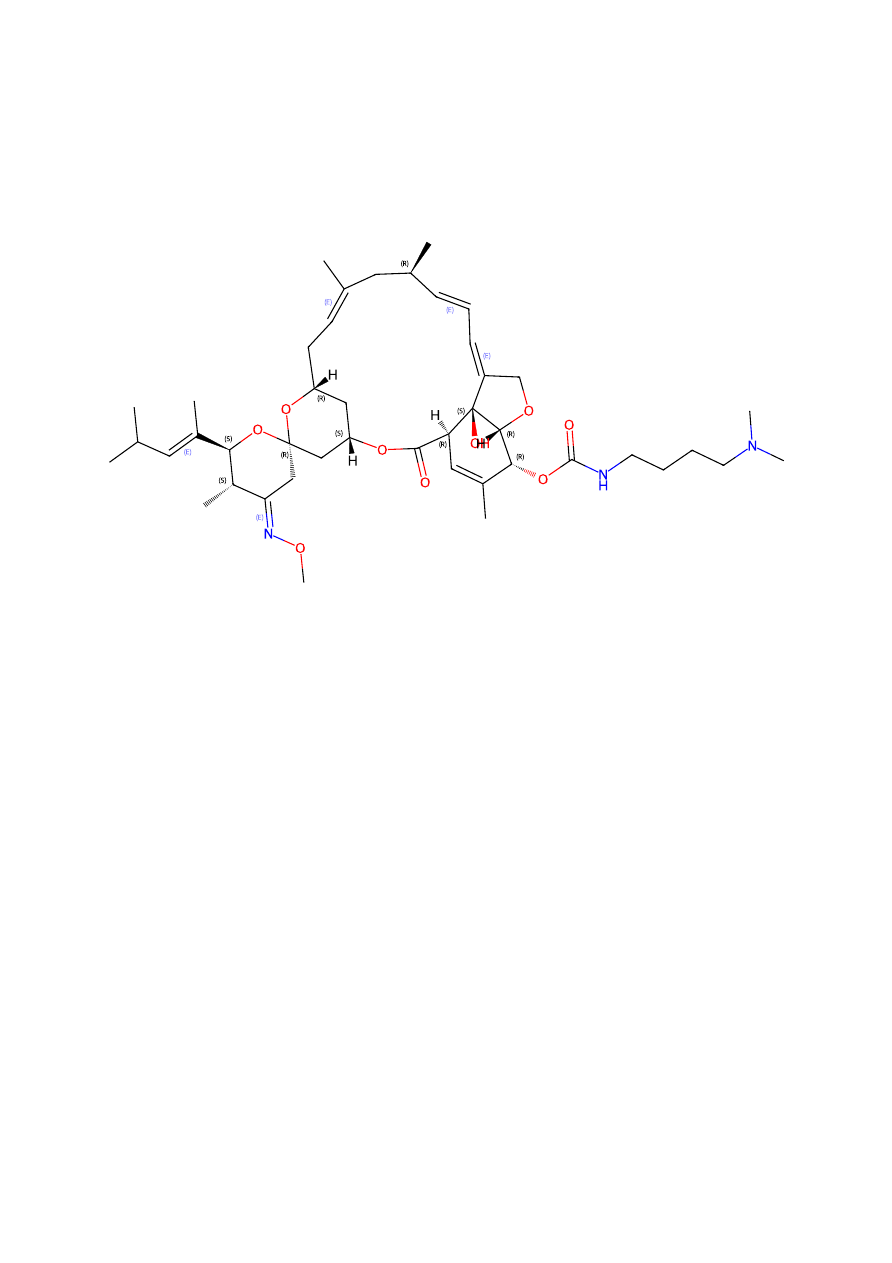
CHAPTER 7 · PROFILE 2/20 · ARCHIVE RECORD 134
ARF-MOX-B1p
Recorded rationale and role
Distribution and linkage branch. This entry compares the
appended head group and attachment against the B1
incumbent and parent moxidectin. Recorded design detail:
weak base dimethylamino carbamate, C4 tether pH-gated:
dimethylamino. Source context is identified below; the design
role is not a measured efficacy ranking.
Preparation focus in the existing record
Use the carbamate connection as a distinct persistence
hypothesis. Assess compatibility of the parent functional
groups and identify any cleavage products rather than
assuming release kinetics from the linkage name.
AGENTIC RESEARCH FACTORY · COMPUTATIONAL COOKBOOK · 536 / 886

Full deposited SMILES — verbatim
CO/N=C1\C[C@]2(C[C@@H]3C[C@@H]
(C/C=C(\C)C[C@@H](C)/C=C/C=C4\CO[C@@H]5[C@H]
(OC(=O)NCCCCN(C)C)C(C)=C[C@@H](C(=O)O3)
[C@]45O)O2)O[C@H](/C(C)=C/C(C)C)[C@H]1C
Canonical isomeric SMILES — RDKit 2026.09.1
CO/N=C1\C[C@]2(C[C@@H]3C[C@@H]
(C/C=C(\C)C[C@@H](C)/C=C/C=C4\CO[C@@H]5[C@H]
(OC(=O)NCCCCN(C)C)C(C)=C[C@@H](C(=O)O3)
[C@]45O)O2)O[C@H](/C(C)=C/C(C)C)[C@H]1C
Complete computed profile
Formula
C44H67N3O9
Molecular weight (g/mol)
782.032
Exact mass (Da)
781.487731
Crippen cLogP
6.8046
TPSA (Ų)
137.38
H-bond donors
2
H-bond acceptors
11
Rotatable bonds
9
Rings
5
AGENTIC RESEARCH FACTORY · COMPUTATIONAL COOKBOOK · 537 / 886

Formal charge
0
Heavy atoms
56
Unassigned stereo —
modern
0
Unassigned stereo —
legacy
0
Graph interpretation and liabilities
This graph has 0 O–O bonds, net formal charge +0, and 9
rotatable bonds. The descriptor balance supports comparison
with the adjacent source series rather than assuming a shared
exposure profile. No unspecified stereochemical element was
detected by the stated modern analysis of this graph.
Source record
Node85 b1_ranked.json; B1 successor paper
Existing selected-prospect discussion — retained
ARF-MOX-B1p
Role: Alternative weak-base prospect.
Design and reasoning. A carbamate-linked four-carbon
dimethylamino appendage. The deposited neutral graph is not
a measured solution protonation state.
AGENTIC RESEARCH FACTORY · COMPUTATIONAL COOKBOOK · 538 / 886

Profile and liabilities. MW 782.03 and cLogP 6.80 are close
to B1n, while TPSA 137.38 and HBD 2 are higher. A lower
cLogP alone cannot rank it above B1n. The carbamate may
change stability, permeability, binding and cleavage.
Decision. Compare directly with B1n using measured
exposure and chemical fate. Separate linkage effects from
headgroup effects; both variables differ.
Source: b1_ranked.json.
AGENTIC RESEARCH FACTORY · COMPUTATIONAL COOKBOOK · 539 / 886
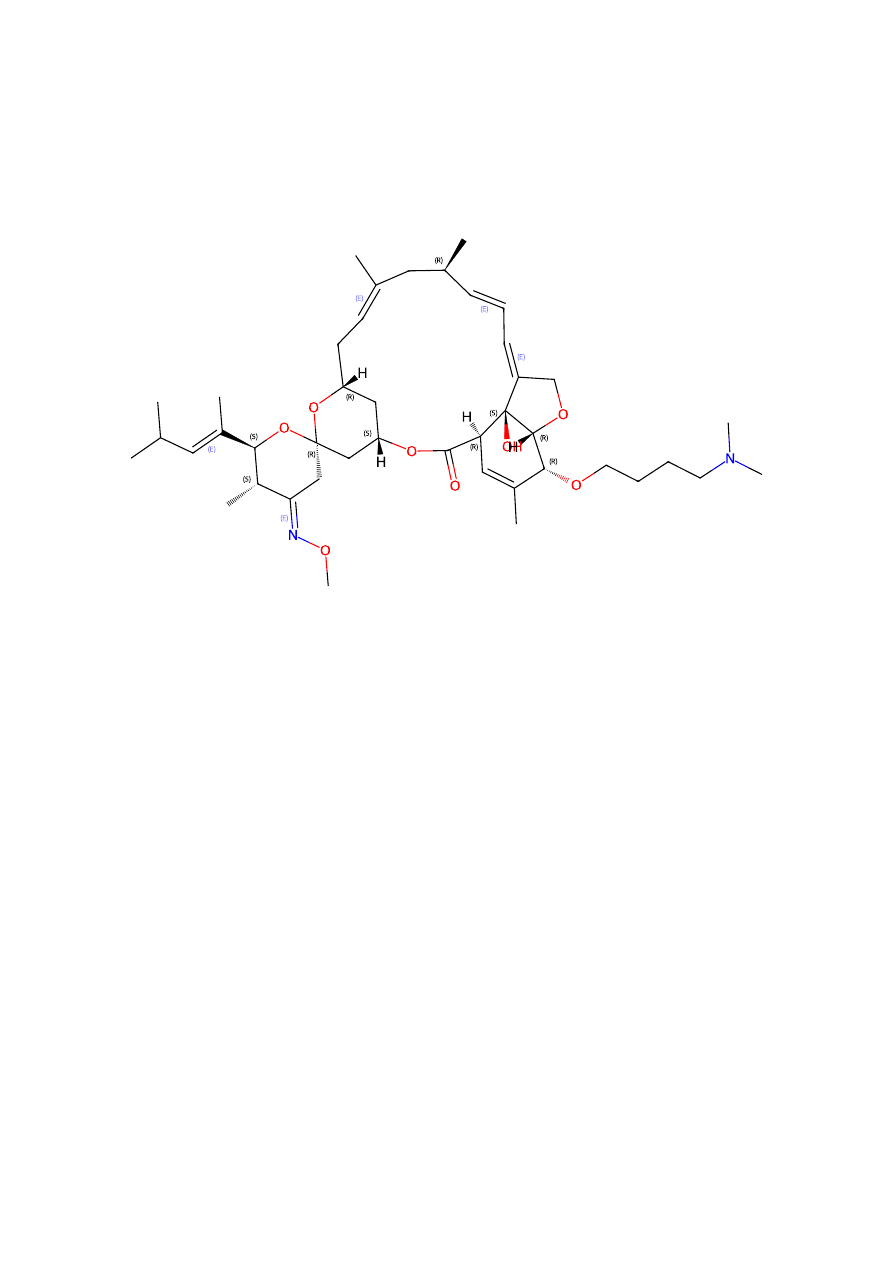
CHAPTER 7 · PROFILE 3/20 · ARCHIVE RECORD 135
ARF-MOX-B1q
Recorded rationale and role
Distribution and linkage branch. This entry compares the
appended head group and attachment against the B1
incumbent and parent moxidectin. Recorded design detail:
weak base dimethylamino direct ether, C4 tether pH-gated
dimethylamino, non-cleavable. Source context is identified
below; the design role is not a measured efficacy ranking.
Preparation focus in the existing record
The preparation concept is governed by the source scaffold,
available attachment handle and functional-group
compatibility. Establish connectivity, stereochemical
AGENTIC RESEARCH FACTORY · COMPUTATIONAL COOKBOOK · 540 / 886

composition and relevant stability before comparing biological
responses.
Full deposited SMILES — verbatim
CO/N=C1\C[C@]2(C[C@@H]3C[C@@H]
(C/C=C(\C)C[C@@H](C)/C=C/C=C4\CO[C@@H]5[C@H]
(OCCCCN(C)C)C(C)=C[C@@H](C(=O)O3)
[C@]45O)O2)O[C@H](/C(C)=C/C(C)C)[C@H]1C
Canonical isomeric SMILES — RDKit 2026.09.1
CO/N=C1\C[C@]2(C[C@@H]3C[C@@H]
(C/C=C(\C)C[C@@H](C)/C=C/C=C4\CO[C@@H]5[C@H]
(OCCCCN(C)C)C(C)=C[C@@H](C(=O)O3)
[C@]45O)O2)O[C@H](/C(C)=C/C(C)C)[C@H]1C
Complete computed profile
Formula
C43H66N2O8
Molecular weight (g/mol)
739.007
Exact mass (Da)
738.481917
Crippen cLogP
7.095
TPSA (Ų)
108.28
H-bond donors
1
H-bond acceptors
10
Rotatable bonds
9
AGENTIC RESEARCH FACTORY · COMPUTATIONAL COOKBOOK · 541 / 886

Rings
5
Formal charge
0
Heavy atoms
53
Unassigned stereo —
modern
0
Unassigned stereo —
legacy
0
Graph interpretation and liabilities
This graph has 0 O–O bonds, net formal charge +0, and 9
rotatable bonds. Its high calculated lipophilicity makes free
exposure, adsorption and formulation important comparison
variables. No unspecified stereochemical element was
detected by the stated modern analysis of this graph.
Source record
Node85 b1_ranked.json; B1 successor paper
AGENTIC RESEARCH FACTORY · COMPUTATIONAL COOKBOOK · 542 / 886
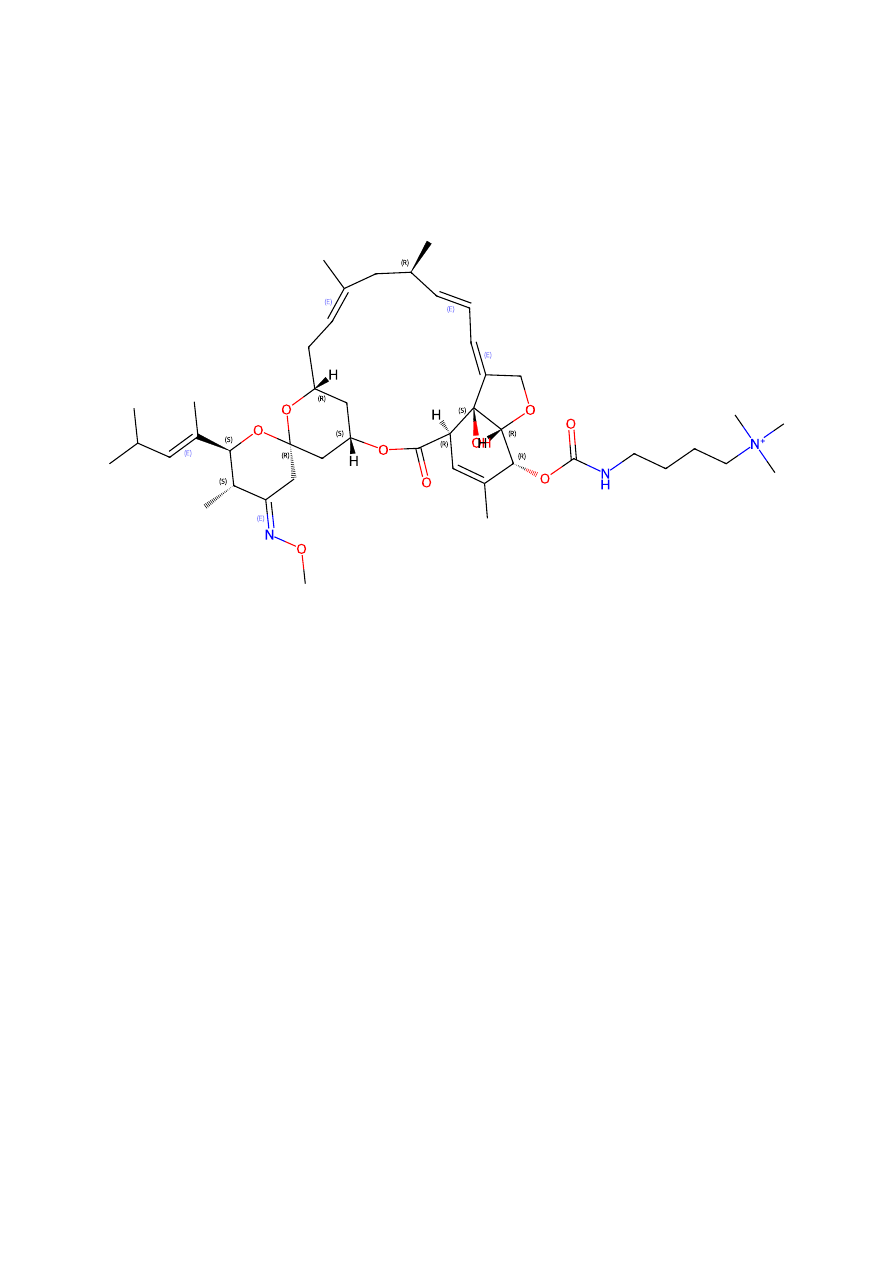
CHAPTER 7 · PROFILE 4/20 · ARCHIVE RECORD 136
ARF-MOX-B1h
Recorded rationale and role
Distribution and linkage branch. This entry compares the
appended head group and attachment against the B1
incumbent and parent moxidectin. Recorded design detail:
permanent +1 trimethylammonium carbamate, C4 tether
quaternary ammonium. Source context is identified below; the
design role is not a measured efficacy ranking.
Preparation focus in the existing record
Specify counterion and salt composition, distinguish intact
conjugate from cleaved species, and compare the charged
appendage separately. Chromatographic and spectroscopic
characterization must follow the actual encoded structure.
AGENTIC RESEARCH FACTORY · COMPUTATIONAL COOKBOOK · 543 / 886

Full deposited SMILES — verbatim
CO/N=C1\C[C@]2(C[C@@H]3C[C@@H]
(C/C=C(\C)C[C@@H](C)/C=C/C=C4\CO[C@@H]5[C@H]
(OC(=O)NCCCC[N+](C)(C)C)C(C)=C[C@@H](C(=O)O3)
[C@]45O)O2)O[C@H](/C(C)=C/C(C)C)[C@H]1C
Canonical isomeric SMILES — RDKit 2026.09.1
CO/N=C1\C[C@]2(C[C@@H]3C[C@@H]
(C/C=C(\C)C[C@@H](C)/C=C/C=C4\CO[C@@H]5[C@H]
(OC(=O)NCCCC[N+](C)(C)C)C(C)=C[C@@H](C(=O)O3)
[C@]45O)O2)O[C@H](/C(C)=C/C(C)C)[C@H]1C
Complete computed profile
Formula
C45H70N3O9+
Molecular weight (g/mol)
797.067
Exact mass (Da)
796.510657
Crippen cLogP
6.9492
TPSA (Ų)
134.14
H-bond donors
2
H-bond acceptors
10
Rotatable bonds
9
Rings
5
AGENTIC RESEARCH FACTORY · COMPUTATIONAL COOKBOOK · 544 / 886

Formal charge
1
Heavy atoms
57
Unassigned stereo —
modern
0
Unassigned stereo —
legacy
0
Graph interpretation and liabilities
This graph has 0 O–O bonds, net formal charge +1, and 9
rotatable bonds. The descriptor balance supports comparison
with the adjacent source series rather than assuming a shared
exposure profile. No unspecified stereochemical element was
detected by the stated modern analysis of this graph.
Source record
Node85 b1_ranked.json; B1 successor paper
AGENTIC RESEARCH FACTORY · COMPUTATIONAL COOKBOOK · 545 / 886
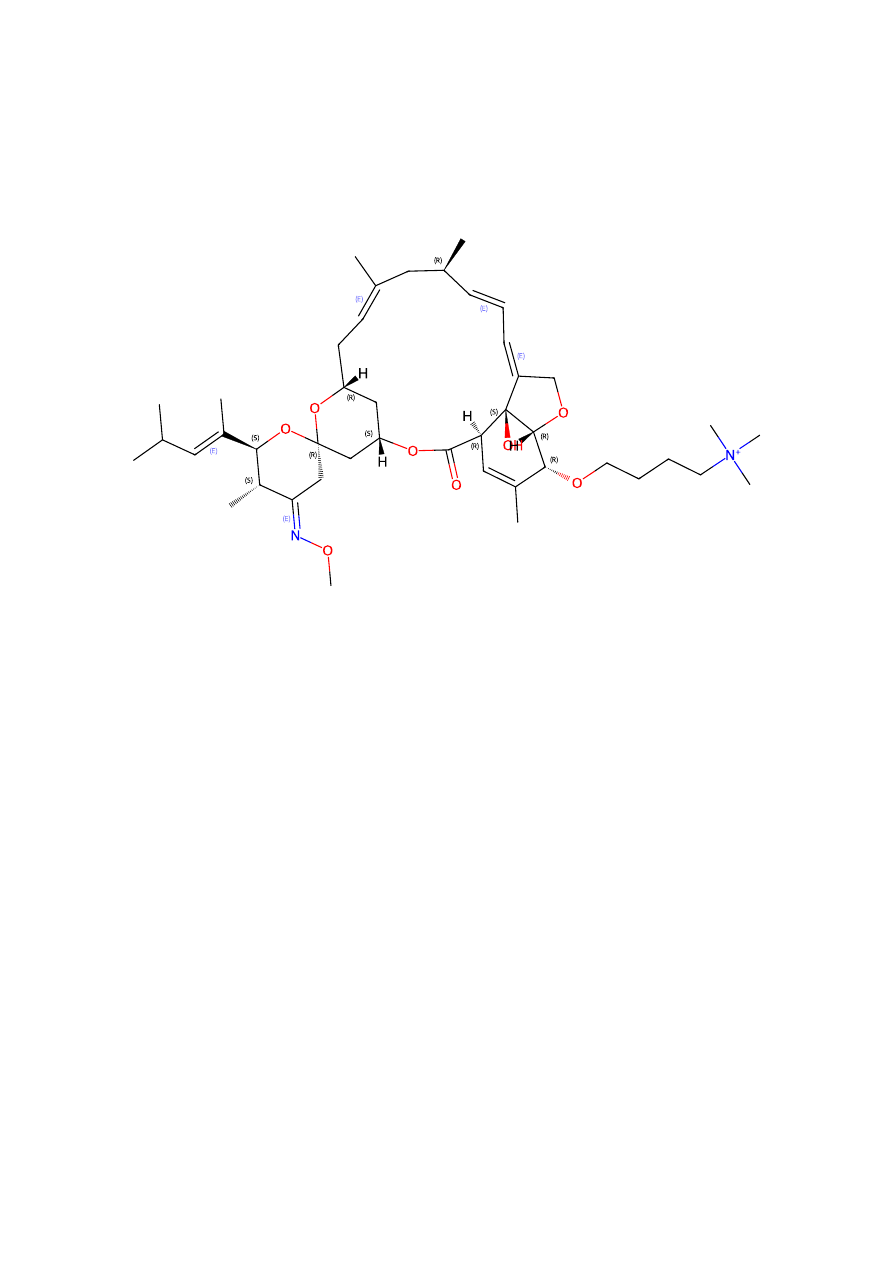
CHAPTER 7 · PROFILE 5/20 · ARCHIVE RECORD 137
ARF-MOX-B1i
Recorded rationale and role
Distribution and linkage branch. This entry compares the
appended head group and attachment against the B1
incumbent and parent moxidectin. Recorded design detail:
permanent +1 trimethylammonium direct ether, C4 tether
quaternary ammonium, non-cleavable. Source context is
identified below; the design role is not a measured efficacy
ranking.
Preparation focus in the existing record
Specify counterion and salt composition, distinguish intact
conjugate from cleaved species, and compare the charged
AGENTIC RESEARCH FACTORY · COMPUTATIONAL COOKBOOK · 546 / 886

appendage separately. Chromatographic and spectroscopic
characterization must follow the actual encoded structure.
Full deposited SMILES — verbatim
CO/N=C1\C[C@]2(C[C@@H]3C[C@@H]
(C/C=C(\C)C[C@@H](C)/C=C/C=C4\CO[C@@H]5[C@H]
(OCCCC[N+](C)(C)C)C(C)=C[C@@H](C(=O)O3)
[C@]45O)O2)O[C@H](/C(C)=C/C(C)C)[C@H]1C
Canonical isomeric SMILES — RDKit 2026.09.1
CO/N=C1\C[C@]2(C[C@@H]3C[C@@H]
(C/C=C(\C)C[C@@H](C)/C=C/C=C4\CO[C@@H]5[C@H]
(OCCCC[N+](C)(C)C)C(C)=C[C@@H](C(=O)O3)
[C@]45O)O2)O[C@H](/C(C)=C/C(C)C)[C@H]1C
Complete computed profile
Formula
C44H69N2O8+
Molecular weight (g/mol)
754.042
Exact mass (Da)
753.504844
Crippen cLogP
7.2396
TPSA (Ų)
105.04
H-bond donors
1
H-bond acceptors
9
Rotatable bonds
9
AGENTIC RESEARCH FACTORY · COMPUTATIONAL COOKBOOK · 547 / 886

Rings
5
Formal charge
1
Heavy atoms
54
Unassigned stereo —
modern
0
Unassigned stereo —
legacy
0
Graph interpretation and liabilities
This graph has 0 O–O bonds, net formal charge +1, and 9
rotatable bonds. Its high calculated lipophilicity makes free
exposure, adsorption and formulation important comparison
variables. No unspecified stereochemical element was
detected by the stated modern analysis of this graph.
Source record
Node85 b1_ranked.json; B1 successor paper
Existing selected-prospect discussion — retained
ARF-MOX-B1i
Role: Permanent-charge / stable-linker comparator.
Design and reasoning. A four-carbon ether joins a
trimethylammonium headgroup. The submitted structure has
formal charge +1 and no counterion.
AGENTIC RESEARCH FACTORY · COMPUTATIONAL COOKBOOK · 548 / 886

Profile and liabilities. MW 754.04, cLogP 7.24 and TPSA
105.04 are lower than the incumbent values except for the
unchanged charge class. The compact localised charge may
hinder membrane crossing. A permanent charge is not proof of
mitochondrial accumulation.
Decision. Use to test whether reducing headgroup bulk while
retaining permanent charge is useful. Measure relevant
compartment exposure and distinguish nonspecific membrane
effects.
Source: b1_ranked.json.
AGENTIC RESEARCH FACTORY · COMPUTATIONAL COOKBOOK · 549 / 886
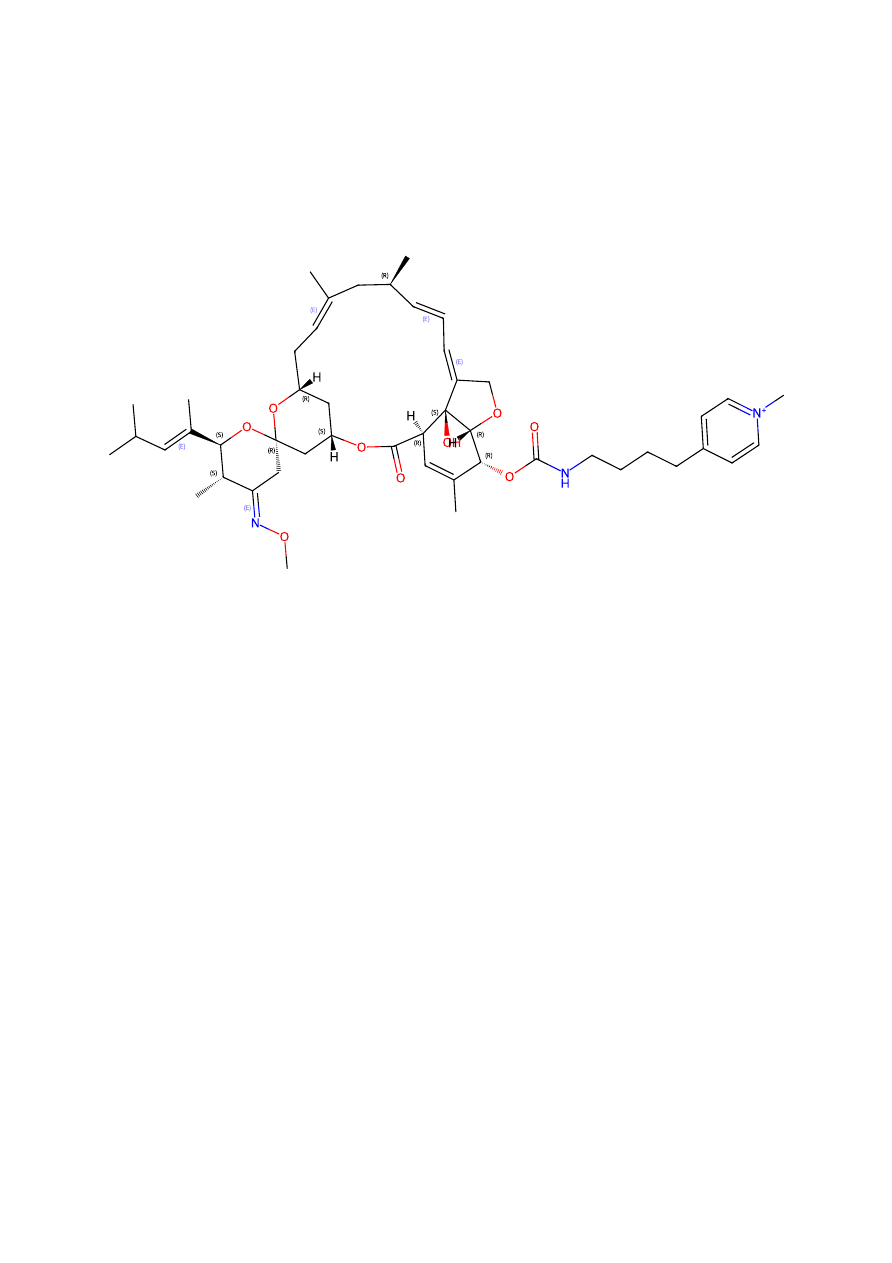
CHAPTER 7 · PROFILE 6/20 · ARCHIVE RECORD 138
ARF-MOX-B1j
Recorded rationale and role
Distribution and linkage branch. This entry compares the
appended head group and attachment against the B1
incumbent and parent moxidectin. Recorded design detail:
permanent +1 N-methylpyridinium carbamate, C4 tether N-
methylpyridinium. Source context is identified below; the
design role is not a measured efficacy ranking.
Preparation focus in the existing record
Specify counterion and salt composition, distinguish intact
conjugate from cleaved species, and compare the charged
appendage separately. Chromatographic and spectroscopic
characterization must follow the actual encoded structure.
AGENTIC RESEARCH FACTORY · COMPUTATIONAL COOKBOOK · 550 / 886

Full deposited SMILES — verbatim
CO/N=C1\C[C@]2(C[C@@H]3C[C@@H]
(C/C=C(\C)C[C@@H](C)/C=C/C=C4\CO[C@@H]5[C@H]
(OC(=O)NCCCCc6cc[n+](C)cc6)C(C)=C[C@@H](C(=O)O3)
[C@]45O)O2)O[C@H](/C(C)=C/C(C)C)[C@H]1C
Canonical isomeric SMILES — RDKit 2026.09.1
CO/N=C1\C[C@]2(C[C@@H]3C[C@@H]
(C/C=C(\C)C[C@@H](C)/C=C/C=C4\CO[C@@H]5[C@H]
(OC(=O)NCCCCc6cc[n+](C)cc6)C(C)=C[C@@H](C(=O)O3)
[C@]45O)O2)O[C@H](/C(C)=C/C(C)C)[C@H]1C
Complete computed profile
Formula
C48H68N3O9+
Molecular weight (g/mol)
831.084
Exact mass (Da)
830.495007
Crippen cLogP
7.3102
TPSA (Ų)
138.02
H-bond donors
2
H-bond acceptors
10
Rotatable bonds
9
Rings
6
AGENTIC RESEARCH FACTORY · COMPUTATIONAL COOKBOOK · 551 / 886

Formal charge
1
Heavy atoms
60
Unassigned stereo —
modern
0
Unassigned stereo —
legacy
0
Graph interpretation and liabilities
This graph has 0 O–O bonds, net formal charge +1, and 9
rotatable bonds. Its high calculated lipophilicity makes free
exposure, adsorption and formulation important comparison
variables. No unspecified stereochemical element was
detected by the stated modern analysis of this graph.
Source record
Node85 b1_ranked.json; B1 successor paper
AGENTIC RESEARCH FACTORY · COMPUTATIONAL COOKBOOK · 552 / 886
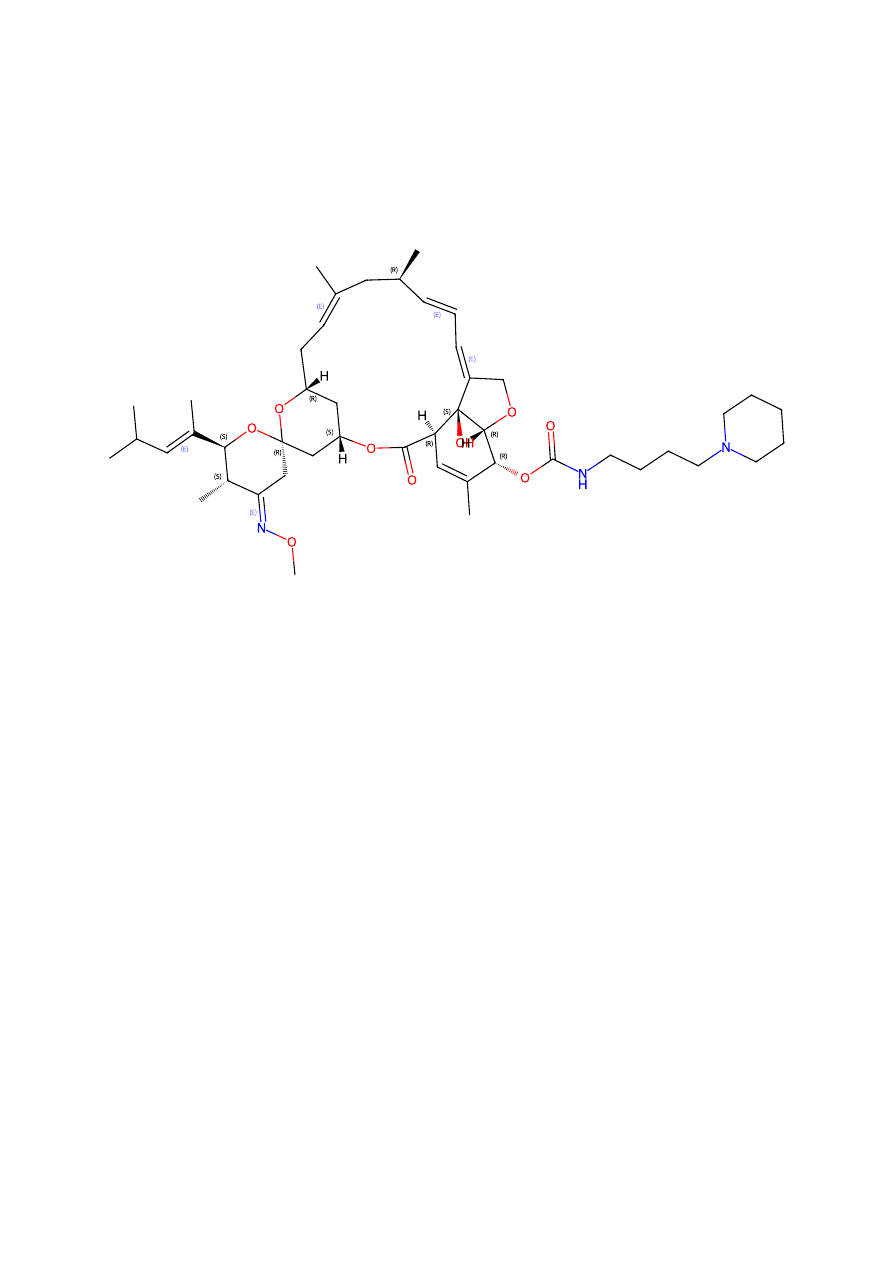
CHAPTER 7 · PROFILE 7/20 · ARCHIVE RECORD 139
ARF-MOX-B1s
Recorded rationale and role
Distribution and linkage branch. This entry compares the
appended head group and attachment against the B1
incumbent and parent moxidectin. Recorded design detail:
weak base piperidin-1-yl carbamate, C4 tether pH-gated:
piperidine. Source context is identified below; the design role
is not a measured efficacy ranking.
Preparation focus in the existing record
Use the carbamate connection as a distinct persistence
hypothesis. Assess compatibility of the parent functional
groups and identify any cleavage products rather than
assuming release kinetics from the linkage name.
AGENTIC RESEARCH FACTORY · COMPUTATIONAL COOKBOOK · 553 / 886

Full deposited SMILES — verbatim
CO/N=C1\C[C@]2(C[C@@H]3C[C@@H]
(C/C=C(\C)C[C@@H](C)/C=C/C=C4\CO[C@@H]5[C@H]
(OC(=O)NCCCCN6CCCCC6)C(C)=C[C@@H](C(=O)O3)
[C@]45O)O2)O[C@H](/C(C)=C/C(C)C)[C@H]1C
Canonical isomeric SMILES — RDKit 2026.09.1
CO/N=C1\C[C@]2(C[C@@H]3C[C@@H]
(C/C=C(\C)C[C@@H](C)/C=C/C=C4\CO[C@@H]5[C@H]
(OC(=O)NCCCCN6CCCCC6)C(C)=C[C@@H](C(=O)O3)
[C@]45O)O2)O[C@H](/C(C)=C/C(C)C)[C@H]1C
Complete computed profile
Formula
C47H71N3O9
Molecular weight (g/mol)
822.097
Exact mass (Da)
821.519031
Crippen cLogP
7.7289
TPSA (Ų)
137.38
H-bond donors
2
H-bond acceptors
11
Rotatable bonds
9
Rings
6
AGENTIC RESEARCH FACTORY · COMPUTATIONAL COOKBOOK · 554 / 886

Formal charge
0
Heavy atoms
59
Unassigned stereo —
modern
0
Unassigned stereo —
legacy
0
Graph interpretation and liabilities
This graph has 0 O–O bonds, net formal charge +0, and 9
rotatable bonds. Its high calculated lipophilicity makes free
exposure, adsorption and formulation important comparison
variables. No unspecified stereochemical element was
detected by the stated modern analysis of this graph.
Source record
Node85 b1_ranked.json; B1 successor paper
AGENTIC RESEARCH FACTORY · COMPUTATIONAL COOKBOOK · 555 / 886
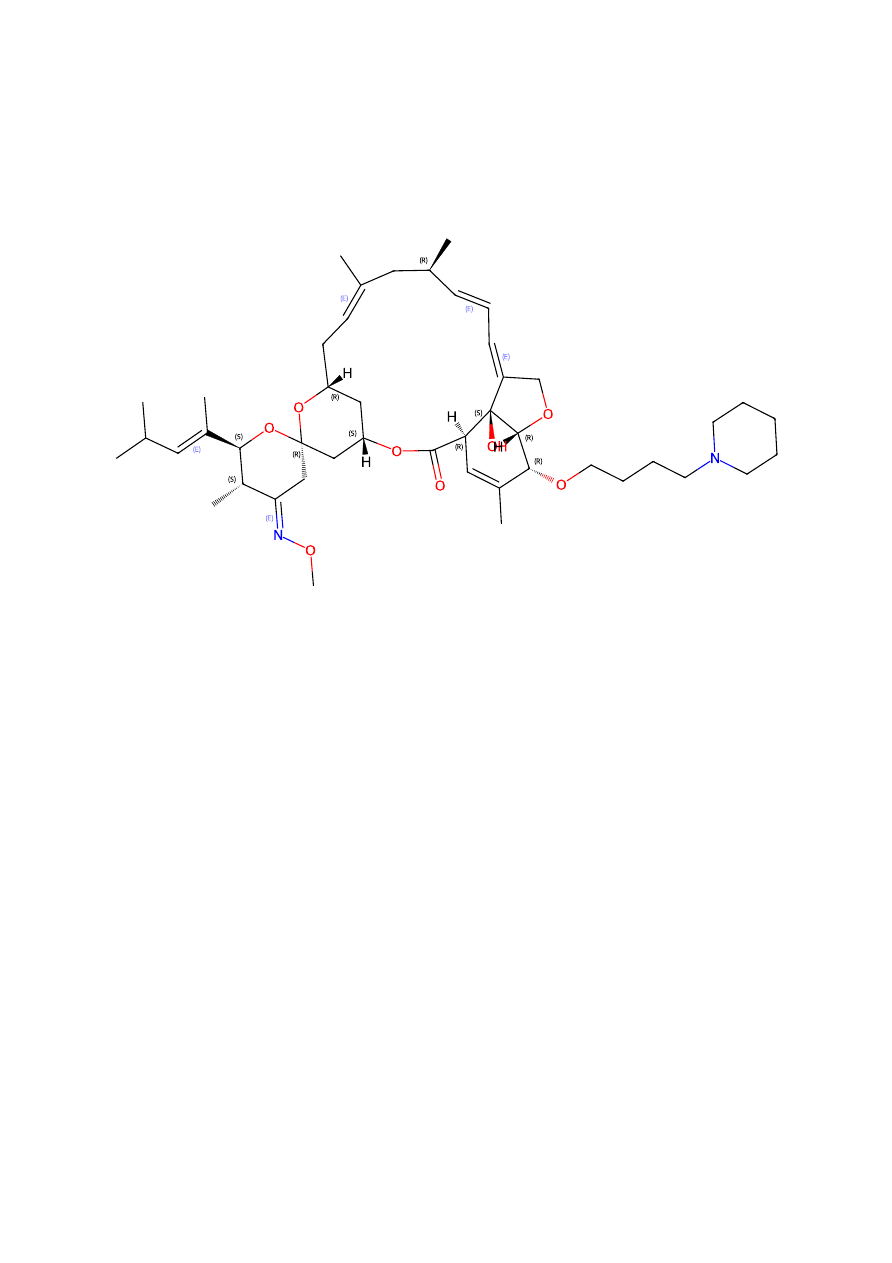
CHAPTER 7 · PROFILE 8/20 · ARCHIVE RECORD 140
ARF-MOX-B1t
Recorded rationale and role
Distribution and linkage branch. This entry compares the
appended head group and attachment against the B1
incumbent and parent moxidectin. Recorded design detail:
weak base piperidin-1-yl direct ether, C4 tether pH-gated
piperidine, non-cleavable. Source context is identified below;
the design role is not a measured efficacy ranking.
Preparation focus in the existing record
The preparation concept is governed by the source scaffold,
available attachment handle and functional-group
compatibility. Establish connectivity, stereochemical
AGENTIC RESEARCH FACTORY · COMPUTATIONAL COOKBOOK · 556 / 886

composition and relevant stability before comparing biological
responses.
Full deposited SMILES — verbatim
CO/N=C1\C[C@]2(C[C@@H]3C[C@@H]
(C/C=C(\C)C[C@@H](C)/C=C/C=C4\CO[C@@H]5[C@H]
(OCCCCN6CCCCC6)C(C)=C[C@@H](C(=O)O3)
[C@]45O)O2)O[C@H](/C(C)=C/C(C)C)[C@H]1C
Canonical isomeric SMILES — RDKit 2026.09.1
CO/N=C1\C[C@]2(C[C@@H]3C[C@@H]
(C/C=C(\C)C[C@@H](C)/C=C/C=C4\CO[C@@H]5[C@H]
(OCCCCN6CCCCC6)C(C)=C[C@@H](C(=O)O3)
[C@]45O)O2)O[C@H](/C(C)=C/C(C)C)[C@H]1C
Complete computed profile
Formula
C46H70N2O8
Molecular weight (g/mol)
779.072
Exact mass (Da)
778.513217
Crippen cLogP
8.0193
TPSA (Ų)
108.28
H-bond donors
1
H-bond acceptors
10
Rotatable bonds
9
AGENTIC RESEARCH FACTORY · COMPUTATIONAL COOKBOOK · 557 / 886

Rings
6
Formal charge
0
Heavy atoms
56
Unassigned stereo —
modern
0
Unassigned stereo —
legacy
0
Graph interpretation and liabilities
This graph has 0 O–O bonds, net formal charge +0, and 9
rotatable bonds. Its high calculated lipophilicity makes free
exposure, adsorption and formulation important comparison
variables. No unspecified stereochemical element was
detected by the stated modern analysis of this graph.
Source record
Node85 b1_ranked.json; B1 successor paper
AGENTIC RESEARCH FACTORY · COMPUTATIONAL COOKBOOK · 558 / 886
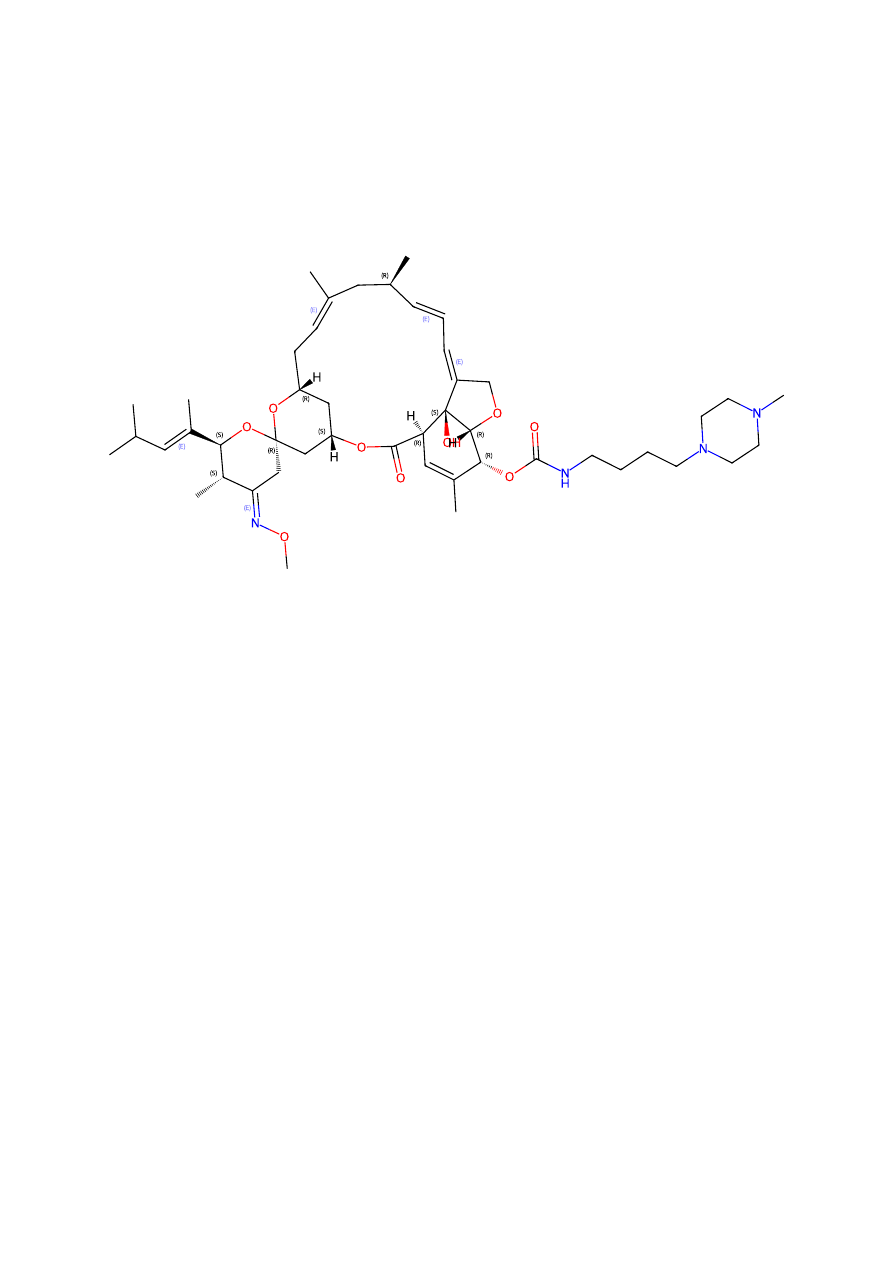
CHAPTER 7 · PROFILE 9/20 · ARCHIVE RECORD 141
ARF-MOX-B1o
Recorded rationale and role
Distribution and linkage branch. This entry compares the
appended head group and attachment against the B1
incumbent and parent moxidectin. Recorded design detail:
weak base 4-methylpiperazin-1-yl carbamate, C4 tether pH-
gated: N-methylpiperazine. Source context is identified below;
the design role is not a measured efficacy ranking.
Preparation focus in the existing record
Use the carbamate connection as a distinct persistence
hypothesis. Assess compatibility of the parent functional
groups and identify any cleavage products rather than
assuming release kinetics from the linkage name.
AGENTIC RESEARCH FACTORY · COMPUTATIONAL COOKBOOK · 559 / 886

Full deposited SMILES — verbatim
CO/N=C1\C[C@]2(C[C@@H]3C[C@@H]
(C/C=C(\C)C[C@@H](C)/C=C/C=C4\CO[C@@H]5[C@H]
(OC(=O)NCCCCN6CCN(C)CC6)C(C)=C[C@@H](C(=O)O3)
[C@]45O)O2)O[C@H](/C(C)=C/C(C)C)[C@H]1C
Canonical isomeric SMILES — RDKit 2026.09.1
CO/N=C1\C[C@]2(C[C@@H]3C[C@@H]
(C/C=C(\C)C[C@@H](C)/C=C/C=C4\CO[C@@H]5[C@H]
(OC(=O)NCCCCN6CCN(C)CC6)C(C)=C[C@@H](C(=O)O3)
[C@]45O)O2)O[C@H](/C(C)=C/C(C)C)[C@H]1C
Complete computed profile
Formula
C47H72N4O9
Molecular weight (g/mol)
837.112
Exact mass (Da)
836.52993
Crippen cLogP
6.4904
TPSA (Ų)
140.62
H-bond donors
2
H-bond acceptors
12
Rotatable bonds
9
Rings
6
AGENTIC RESEARCH FACTORY · COMPUTATIONAL COOKBOOK · 560 / 886

Formal charge
0
Heavy atoms
60
Unassigned stereo —
modern
0
Unassigned stereo —
legacy
0
Graph interpretation and liabilities
This graph has 0 O–O bonds, net formal charge +0, and 9
rotatable bonds. The descriptor balance supports comparison
with the adjacent source series rather than assuming a shared
exposure profile. No unspecified stereochemical element was
detected by the stated modern analysis of this graph.
Source record
Node85 b1_ranked.json; B1 successor paper
AGENTIC RESEARCH FACTORY · COMPUTATIONAL COOKBOOK · 561 / 886
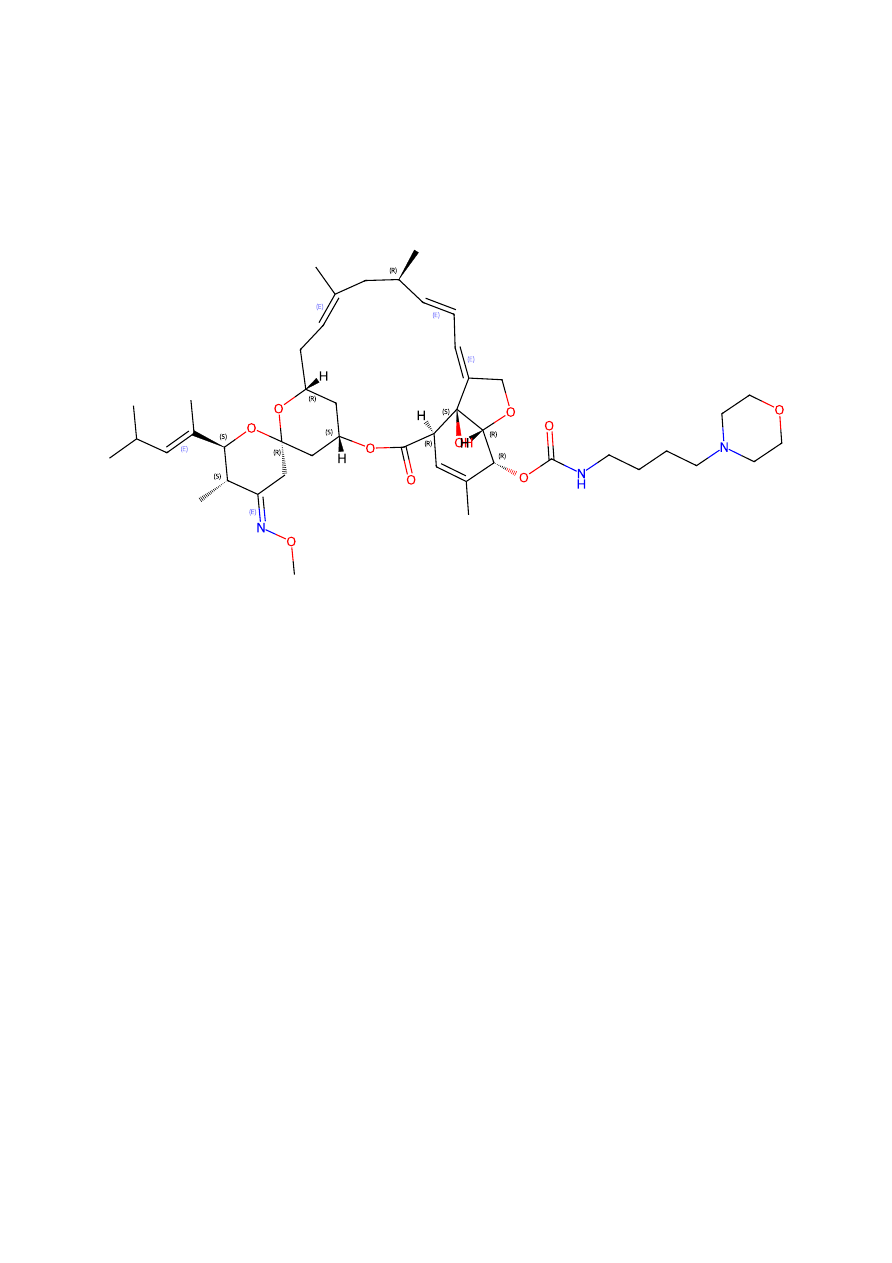
CHAPTER 7 · PROFILE 10/20 · ARCHIVE RECORD 142
ARF-MOX-B1m
Recorded rationale and role
Distribution and linkage branch. This entry compares the
appended head group and attachment against the B1
incumbent and parent moxidectin. Recorded design detail:
weak base morpholin-4-yl carbamate, C4 tether pH-gated:
morpholine. Source context is identified below; the design role
is not a measured efficacy ranking.
Preparation focus in the existing record
Use the carbamate connection as a distinct persistence
hypothesis. Assess compatibility of the parent functional
groups and identify any cleavage products rather than
assuming release kinetics from the linkage name.
AGENTIC RESEARCH FACTORY · COMPUTATIONAL COOKBOOK · 562 / 886

Full deposited SMILES — verbatim
CO/N=C1\C[C@]2(C[C@@H]3C[C@@H]
(C/C=C(\C)C[C@@H](C)/C=C/C=C4\CO[C@@H]5[C@H]
(OC(=O)NCCCCN6CCOCC6)C(C)=C[C@@H](C(=O)O3)
[C@]45O)O2)O[C@H](/C(C)=C/C(C)C)[C@H]1C
Canonical isomeric SMILES — RDKit 2026.09.1
CO/N=C1\C[C@]2(C[C@@H]3C[C@@H]
(C/C=C(\C)C[C@@H](C)/C=C/C=C4\CO[C@@H]5[C@H]
(OC(=O)NCCCCN6CCOCC6)C(C)=C[C@@H](C(=O)O3)
[C@]45O)O2)O[C@H](/C(C)=C/C(C)C)[C@H]1C
Complete computed profile
Formula
C46H69N3O10
Molecular weight (g/mol)
824.069
Exact mass (Da)
823.498295
Crippen cLogP
6.5752
TPSA (Ų)
146.61
H-bond donors
2
H-bond acceptors
12
Rotatable bonds
9
Rings
6
AGENTIC RESEARCH FACTORY · COMPUTATIONAL COOKBOOK · 563 / 886

Formal charge
0
Heavy atoms
59
Unassigned stereo —
modern
0
Unassigned stereo —
legacy
0
Graph interpretation and liabilities
This graph has 0 O–O bonds, net formal charge +0, and 9
rotatable bonds. The descriptor balance supports comparison
with the adjacent source series rather than assuming a shared
exposure profile. No unspecified stereochemical element was
detected by the stated modern analysis of this graph.
Source record
Node85 b1_ranked.json; B1 successor paper
AGENTIC RESEARCH FACTORY · COMPUTATIONAL COOKBOOK · 564 / 886
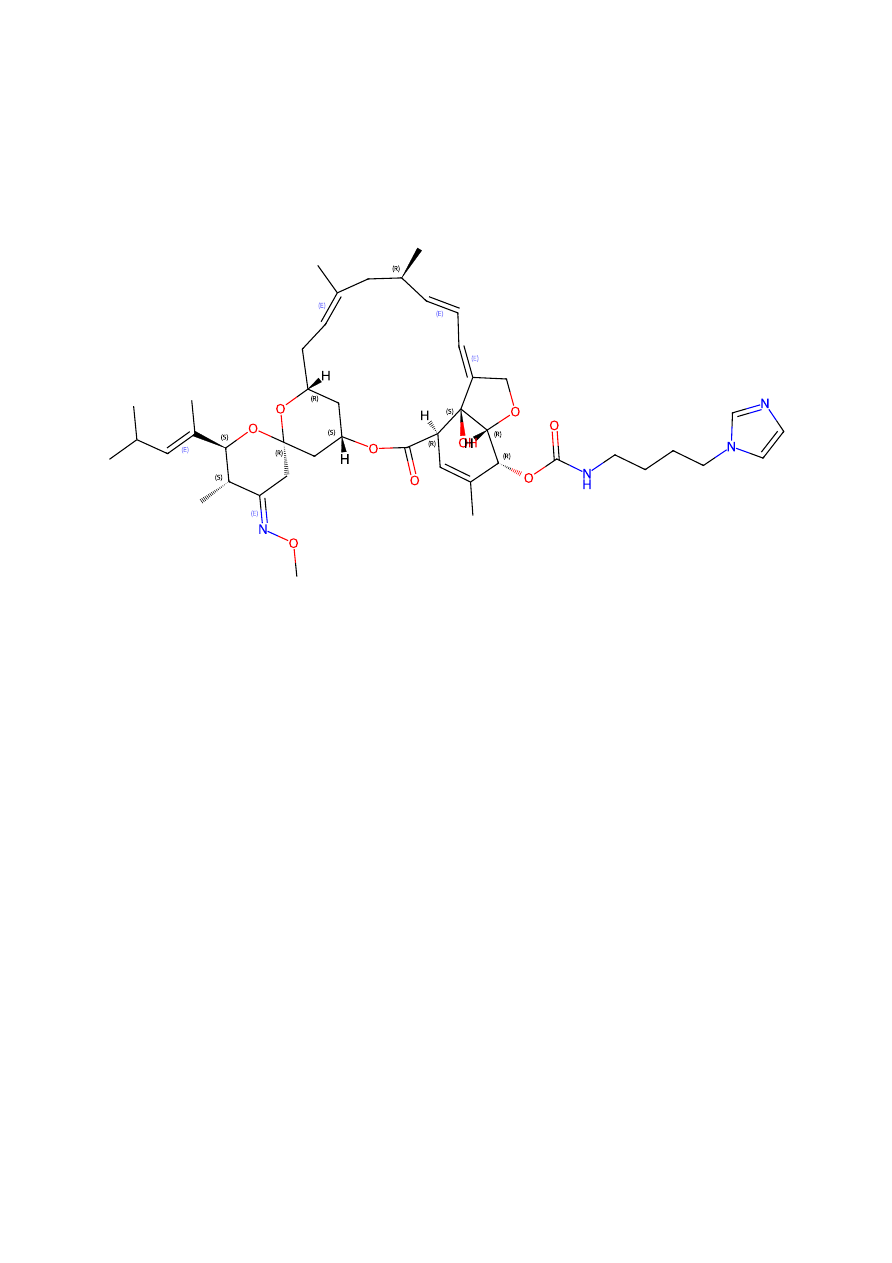
CHAPTER 7 · PROFILE 11/20 · ARCHIVE RECORD 143
ARF-MOX-B1r
Recorded rationale and role
Distribution and linkage branch. This entry compares the
appended head group and attachment against the B1
incumbent and parent moxidectin. Recorded design detail:
weak base imidazol-1-yl carbamate, C4 tether pH-gated:
imidazole. Source context is identified below; the design role is
not a measured efficacy ranking.
Preparation focus in the existing record
Use the carbamate connection as a distinct persistence
hypothesis. Assess compatibility of the parent functional
groups and identify any cleavage products rather than
assuming release kinetics from the linkage name.
AGENTIC RESEARCH FACTORY · COMPUTATIONAL COOKBOOK · 565 / 886

Full deposited SMILES — verbatim
CO/N=C1\C[C@]2(C[C@@H]3C[C@@H]
(C/C=C(\C)C[C@@H](C)/C=C/C=C4\CO[C@@H]5[C@H]
(OC(=O)NCCCCn6ccnc6)C(C)=C[C@@H](C(=O)O3)
[C@]45O)O2)O[C@H](/C(C)=C/C(C)C)[C@H]1C
Canonical isomeric SMILES — RDKit 2026.09.1
CO/N=C1\C[C@]2(C[C@@H]3C[C@@H]
(C/C=C(\C)C[C@@H](C)/C=C/C=C4\CO[C@@H]5[C@H]
(OC(=O)NCCCCn6ccnc6)C(C)=C[C@@H](C(=O)O3)
[C@]45O)O2)O[C@H](/C(C)=C/C(C)C)[C@H]1C
Complete computed profile
Formula
C45H64N4O9
Molecular weight (g/mol)
805.026
Exact mass (Da)
804.46733
Crippen cLogP
7.1397
TPSA (Ų)
151.96
H-bond donors
2
H-bond acceptors
11
Rotatable bonds
9
Rings
6
AGENTIC RESEARCH FACTORY · COMPUTATIONAL COOKBOOK · 566 / 886

Formal charge
0
Heavy atoms
58
Unassigned stereo —
modern
0
Unassigned stereo —
legacy
0
Graph interpretation and liabilities
This graph has 0 O–O bonds, net formal charge +0, and 9
rotatable bonds. Its high calculated lipophilicity makes free
exposure, adsorption and formulation important comparison
variables. No unspecified stereochemical element was
detected by the stated modern analysis of this graph.
Source record
Node85 b1_ranked.json; B1 successor paper
AGENTIC RESEARCH FACTORY · COMPUTATIONAL COOKBOOK · 567 / 886
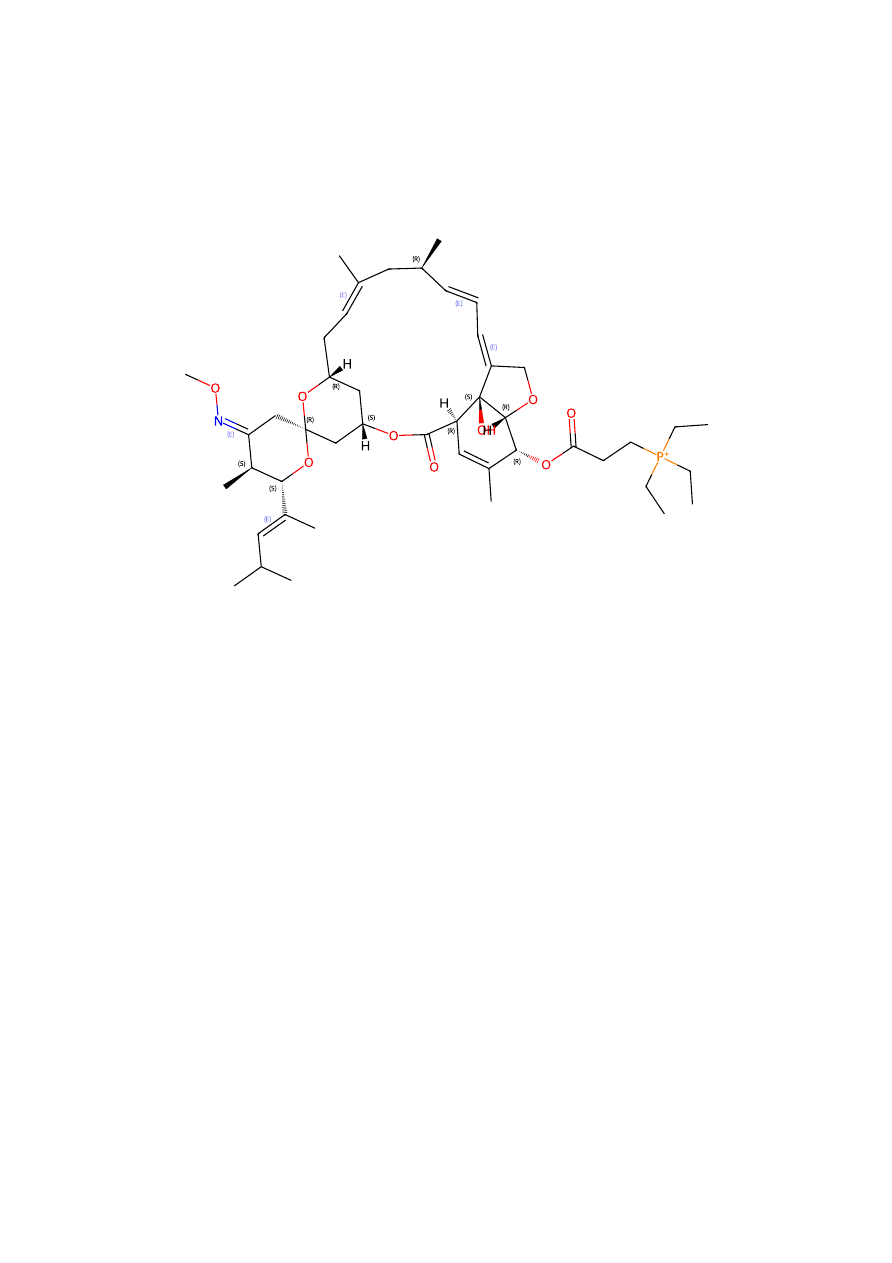
CHAPTER 7 · PROFILE 12/20 · ARCHIVE RECORD 144
ARF-MOX-B1k
Recorded rationale and role
Distribution and linkage branch. This entry compares the
appended head group and attachment against the B1
incumbent and parent moxidectin. Recorded design detail:
permanent +1 triethylphosphonium propanoyl ester, C2 tether
short tether, small cation. Source context is identified below;
the design role is not a measured efficacy ranking.
Preparation focus in the existing record
Specify counterion and salt composition, distinguish intact
conjugate from cleaved species, and compare the charged
appendage separately. Chromatographic and spectroscopic
characterization must follow the actual encoded structure.
AGENTIC RESEARCH FACTORY · COMPUTATIONAL COOKBOOK · 568 / 886

Full deposited SMILES — verbatim
CC[P+](CC)
(CC)CCC(=O)O[C@@H]1C(C)=C[C@H]2C(=O)O[C@H]3C[C
@@H](C/C=C(\C)C[C@@H]
(C)/C=C/C=C4\CO[C@H]1[C@@]42O)O[C@@]1(C/C(=N\OC
)[C@H](C)[C@@H](/C(C)=C/C(C)C)O1)C3
Canonical isomeric SMILES — RDKit 2026.09.1
CC[P+](CC)
(CC)CCC(=O)O[C@@H]1C(C)=C[C@H]2C(=O)O[C@H]3C[C
@@H](C/C=C(\C)C[C@@H]
(C)/C=C/C=C4\CO[C@H]1[C@@]42O)O[C@@]1(C/C(=N\OC
)[C@H](C)[C@@H](/C(C)=C/C(C)C)O1)C3
Complete computed profile
Formula
C46H71NO9P+
Molecular weight (g/mol)
813.046
Exact mass (Da)
812.486096
Crippen cLogP
8.7472
TPSA (Ų)
122.11
H-bond donors
1
H-bond acceptors
10
Rotatable bonds
10
AGENTIC RESEARCH FACTORY · COMPUTATIONAL COOKBOOK · 569 / 886

Rings
5
Formal charge
1
Heavy atoms
57
Unassigned stereo —
modern
0
Unassigned stereo —
legacy
0
Graph interpretation and liabilities
This graph has 0 O–O bonds, net formal charge +1, and 10
rotatable bonds. Its high calculated lipophilicity makes free
exposure, adsorption and formulation important comparison
variables. No unspecified stereochemical element was
detected by the stated modern analysis of this graph.
Source record
Node85 b1_ranked.json; B1 successor paper
AGENTIC RESEARCH FACTORY · COMPUTATIONAL COOKBOOK · 570 / 886
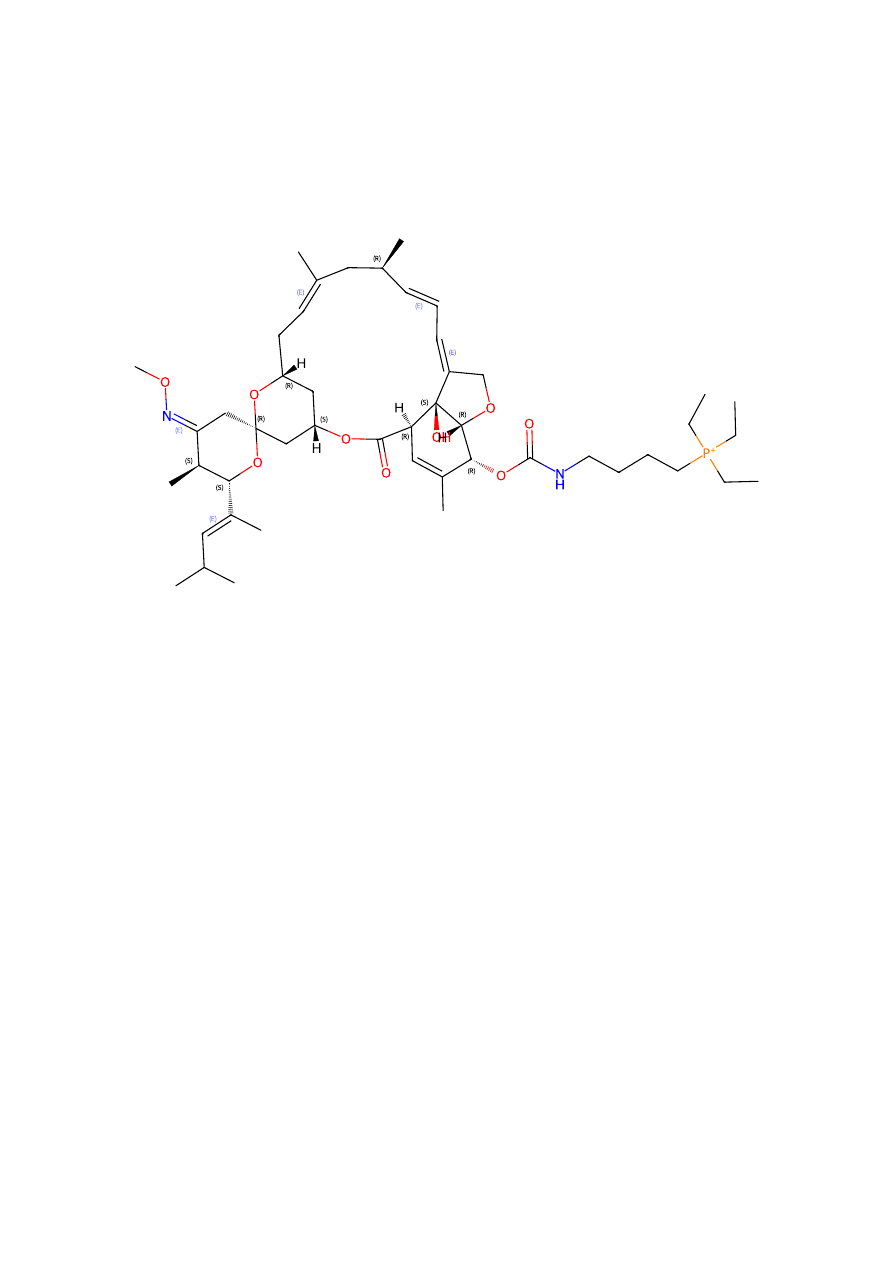
CHAPTER 7 · PROFILE 13/20 · ARCHIVE RECORD 145
ARF-MOX-B1f
Recorded rationale and role
Distribution and linkage branch. This entry compares the
appended head group and attachment against the B1
incumbent and parent moxidectin. Recorded design detail:
permanent +1 triethylphosphonium carbamate, C4 tether
smallest trialkylphosphonium. Source context is identified
below; the design role is not a measured efficacy ranking.
Preparation focus in the existing record
Specify counterion and salt composition, distinguish intact
conjugate from cleaved species, and compare the charged
appendage separately. Chromatographic and spectroscopic
characterization must follow the actual encoded structure.
AGENTIC RESEARCH FACTORY · COMPUTATIONAL COOKBOOK · 571 / 886

Full deposited SMILES — verbatim
CC[P+](CC)
(CC)CCCCNC(=O)O[C@@H]1C(C)=C[C@H]2C(=O)O[C@H]
3C[C@@H](C/C=C(\C)C[C@@H]
(C)/C=C/C=C4\CO[C@H]1[C@@]42O)O[C@@]1(C/C(=N\OC
)[C@H](C)[C@@H](/C(C)=C/C(C)C)O1)C3
Canonical isomeric SMILES — RDKit 2026.09.1
CC[P+](CC)
(CC)CCCCNC(=O)O[C@@H]1C(C)=C[C@H]2C(=O)O[C@H]
3C[C@@H](C/C=C(\C)C[C@@H]
(C)/C=C/C=C4\CO[C@H]1[C@@]42O)O[C@@]1(C/C(=N\OC
)[C@H](C)[C@@H](/C(C)=C/C(C)C)O1)C3
Complete computed profile
Formula
C48H76N2O9P+
Molecular weight (g/mol)
856.115
Exact mass (Da)
855.528295
Crippen cLogP
9.3203
TPSA (Ų)
134.14
H-bond donors
2
H-bond acceptors
10
Rotatable bonds
12
AGENTIC RESEARCH FACTORY · COMPUTATIONAL COOKBOOK · 572 / 886

Rings
5
Formal charge
1
Heavy atoms
60
Unassigned stereo —
modern
0
Unassigned stereo —
legacy
0
Graph interpretation and liabilities
This graph has 0 O–O bonds, net formal charge +1, and 12
rotatable bonds. Its high calculated lipophilicity makes free
exposure, adsorption and formulation important comparison
variables. No unspecified stereochemical element was
detected by the stated modern analysis of this graph.
Source record
Node85 b1_ranked.json; B1 successor paper
AGENTIC RESEARCH FACTORY · COMPUTATIONAL COOKBOOK · 573 / 886
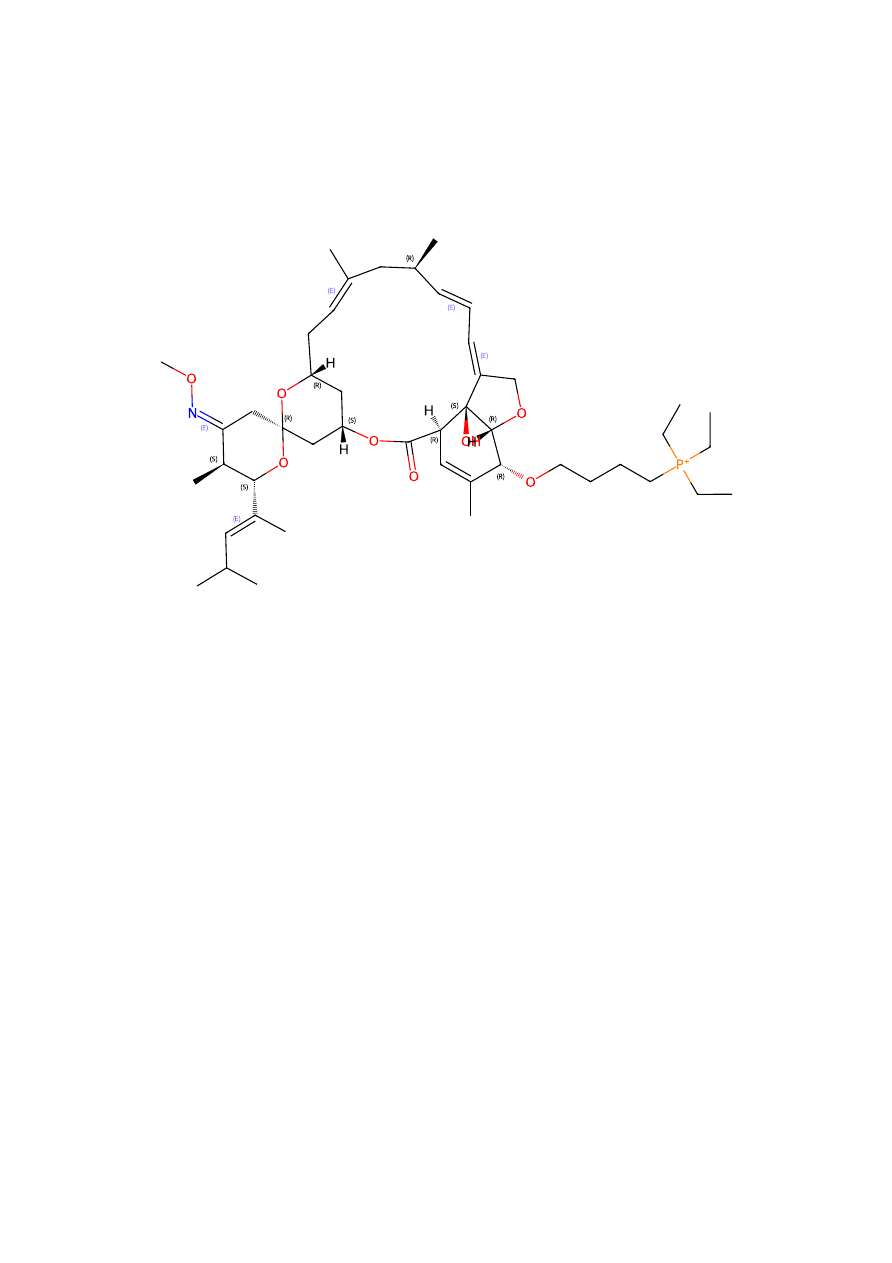
CHAPTER 7 · PROFILE 14/20 · ARCHIVE RECORD 146
ARF-MOX-B1g
Recorded rationale and role
Distribution and linkage branch. This entry compares the
appended head group and attachment against the B1
incumbent and parent moxidectin. Recorded design detail:
permanent +1 triethylphosphonium direct ether, C4 tether
small cation, non-cleavable. Source context is identified below;
the design role is not a measured efficacy ranking.
Preparation focus in the existing record
Specify counterion and salt composition, distinguish intact
conjugate from cleaved species, and compare the charged
appendage separately. Chromatographic and spectroscopic
characterization must follow the actual encoded structure.
AGENTIC RESEARCH FACTORY · COMPUTATIONAL COOKBOOK · 574 / 886

Full deposited SMILES — verbatim
CC[P+](CC)
(CC)CCCCO[C@@H]1C(C)=C[C@H]2C(=O)O[C@H]3C[C@
@H](C/C=C(\C)C[C@@H]
(C)/C=C/C=C4\CO[C@H]1[C@@]42O)O[C@@]1(C/C(=N\OC
)[C@H](C)[C@@H](/C(C)=C/C(C)C)O1)C3
Canonical isomeric SMILES — RDKit 2026.09.1
CC[P+](CC)
(CC)CCCCO[C@@H]1C(C)=C[C@H]2C(=O)O[C@H]3C[C@
@H](C/C=C(\C)C[C@@H]
(C)/C=C/C=C4\CO[C@H]1[C@@]42O)O[C@@]1(C/C(=N\OC
)[C@H](C)[C@@H](/C(C)=C/C(C)C)O1)C3
Complete computed profile
Formula
C47H75NO8P+
Molecular weight (g/mol)
813.09
Exact mass (Da)
812.522481
Crippen cLogP
9.6107
TPSA (Ų)
105.04
H-bond donors
1
H-bond acceptors
9
Rotatable bonds
12
AGENTIC RESEARCH FACTORY · COMPUTATIONAL COOKBOOK · 575 / 886

Rings
5
Formal charge
1
Heavy atoms
57
Unassigned stereo —
modern
0
Unassigned stereo —
legacy
0
Graph interpretation and liabilities
This graph has 0 O–O bonds, net formal charge +1, and 12
rotatable bonds. Its high calculated lipophilicity makes free
exposure, adsorption and formulation important comparison
variables. No unspecified stereochemical element was
detected by the stated modern analysis of this graph.
Source record
Node85 b1_ranked.json; B1 successor paper
AGENTIC RESEARCH FACTORY · COMPUTATIONAL COOKBOOK · 576 / 886
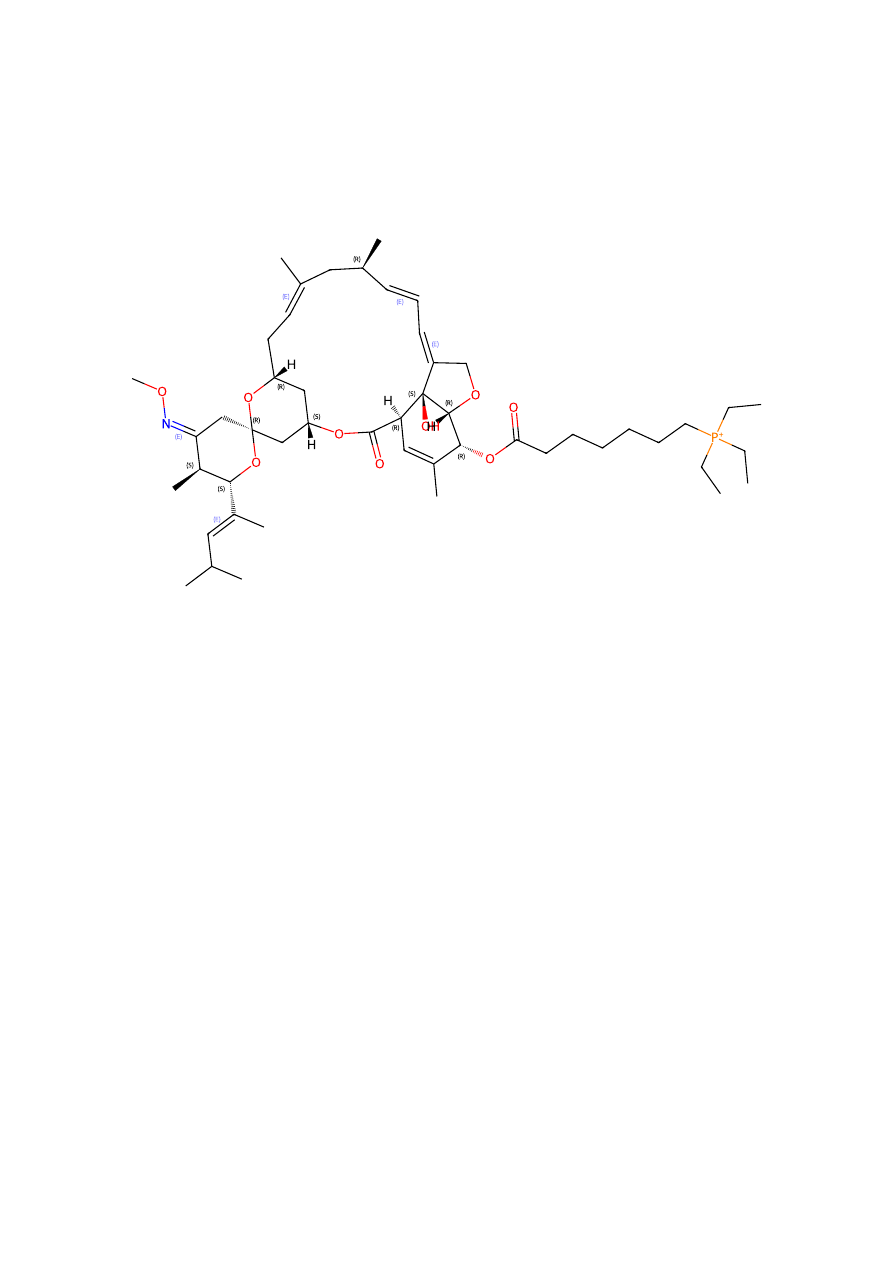
CHAPTER 7 · PROFILE 15/20 · ARCHIVE RECORD 147
ARF-MOX-B1l
Recorded rationale and role
Distribution and linkage branch. This entry compares the
appended head group and attachment against the B1
incumbent and parent moxidectin. Recorded design detail:
permanent +1 triethylphosphonium heptanoyl ester, C6 tether
long tether, small cation. Source context is identified below;
the design role is not a measured efficacy ranking.
Preparation focus in the existing record
Specify counterion and salt composition, distinguish intact
conjugate from cleaved species, and compare the charged
appendage separately. Chromatographic and spectroscopic
characterization must follow the actual encoded structure.
AGENTIC RESEARCH FACTORY · COMPUTATIONAL COOKBOOK · 577 / 886

Full deposited SMILES — verbatim
CC[P+](CC)
(CC)CCCCCCC(=O)O[C@@H]1C(C)=C[C@H]2C(=O)O[C@
H]3C[C@@H](C/C=C(\C)C[C@@H]
(C)/C=C/C=C4\CO[C@H]1[C@@]42O)O[C@@]1(C/C(=N\OC
)[C@H](C)[C@@H](/C(C)=C/C(C)C)O1)C3
Canonical isomeric SMILES — RDKit 2026.09.1
CC[P+](CC)
(CC)CCCCCCC(=O)O[C@@H]1C(C)=C[C@H]2C(=O)O[C@
H]3C[C@@H](C/C=C(\C)C[C@@H]
(C)/C=C/C=C4\CO[C@H]1[C@@]42O)O[C@@]1(C/C(=N\OC
)[C@H](C)[C@@H](/C(C)=C/C(C)C)O1)C3
Complete computed profile
Formula
C50H79NO9P+
Molecular weight (g/mol)
869.154
Exact mass (Da)
868.548696
Crippen cLogP
10.3076
TPSA (Ų)
122.11
H-bond donors
1
H-bond acceptors
10
Rotatable bonds
14
AGENTIC RESEARCH FACTORY · COMPUTATIONAL COOKBOOK · 578 / 886

Rings
5
Formal charge
1
Heavy atoms
61
Unassigned stereo —
modern
0
Unassigned stereo —
legacy
0
Graph interpretation and liabilities
This graph has 0 O–O bonds, net formal charge +1, and 14
rotatable bonds. Its high calculated lipophilicity makes free
exposure, adsorption and formulation important comparison
variables. No unspecified stereochemical element was
detected by the stated modern analysis of this graph.
Source record
Node85 b1_ranked.json; B1 successor paper
AGENTIC RESEARCH FACTORY · COMPUTATIONAL COOKBOOK · 579 / 886
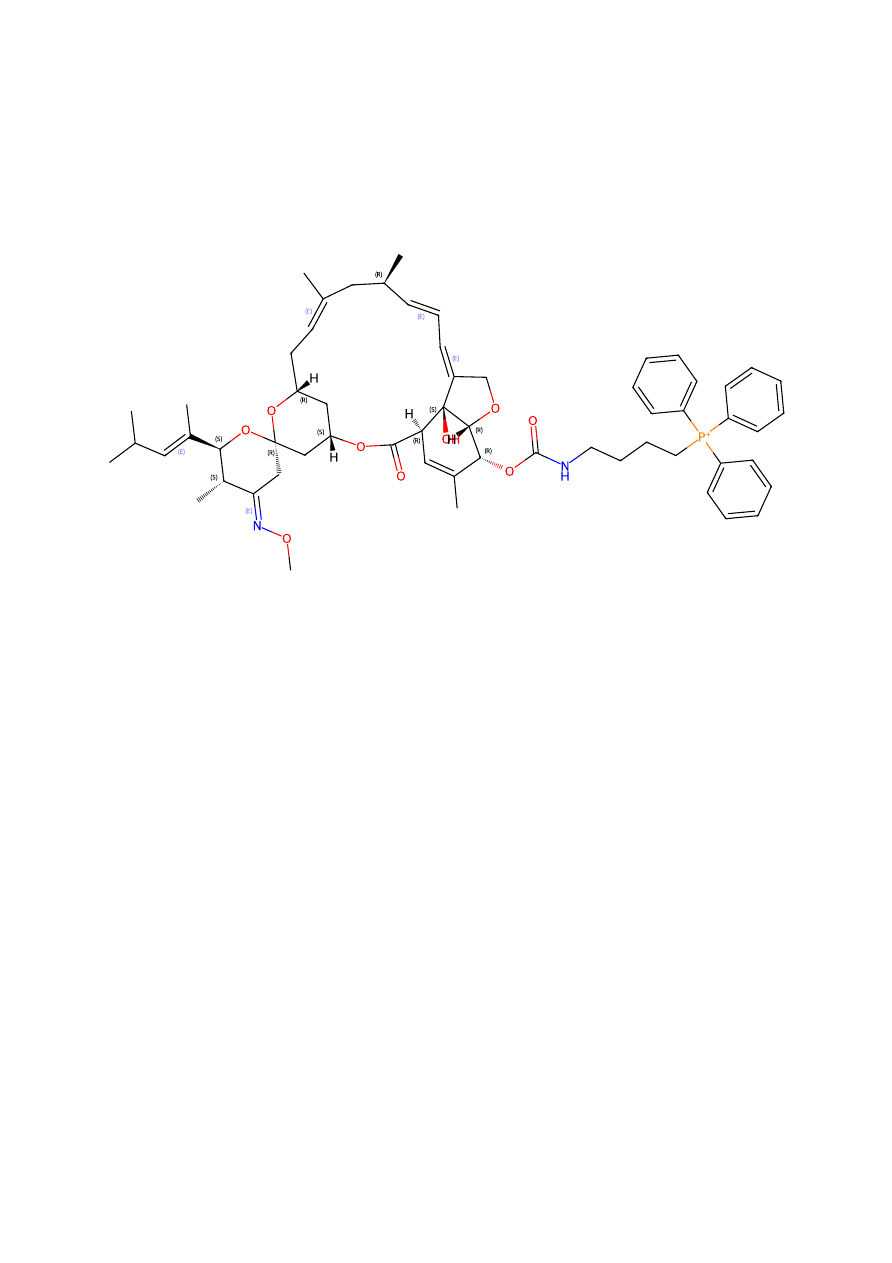
CHAPTER 7 · PROFILE 16/20 · ARCHIVE RECORD 148
ARF-MOX-B1b
Recorded rationale and role
Distribution and linkage branch. This entry compares the
appended head group and attachment against the B1
incumbent and parent moxidectin. Recorded design detail:
permanent +1 triphenylphosphonium (incumbent) carbamate,
C4 tether incumbent cation, ester removed. Source context is
identified below; the design role is not a measured efficacy
ranking.
Preparation focus in the existing record
Specify counterion and salt composition, distinguish intact
conjugate from cleaved species, and compare the charged
AGENTIC RESEARCH FACTORY · COMPUTATIONAL COOKBOOK · 580 / 886

appendage separately. Chromatographic and spectroscopic
characterization must follow the actual encoded structure.
Full deposited SMILES — verbatim
CO/N=C1\C[C@]2(C[C@@H]3C[C@@H]
(C/C=C(\C)C[C@@H](C)/C=C/C=C4\CO[C@@H]5[C@H]
(OC(=O)NCCCC[P+](c6ccccc6)
(c6ccccc6)c6ccccc6)C(C)=C[C@@H](C(=O)O3)
[C@]45O)O2)O[C@H](/C(C)=C/C(C)C)[C@H]1C
Canonical isomeric SMILES — RDKit 2026.09.1
CO/N=C1\C[C@]2(C[C@@H]3C[C@@H]
(C/C=C(\C)C[C@@H](C)/C=C/C=C4\CO[C@@H]5[C@H]
(OC(=O)NCCCC[P+](c6ccccc6)
(c6ccccc6)c6ccccc6)C(C)=C[C@@H](C(=O)O3)
[C@]45O)O2)O[C@H](/C(C)=C/C(C)C)[C@H]1C
Complete computed profile
Formula
C60H76N2O9P+
Molecular weight (g/mol)
1000.247
Exact mass (Da)
999.528295
Crippen cLogP
10.2371
TPSA (Ų)
134.14
H-bond donors
2
AGENTIC RESEARCH FACTORY · COMPUTATIONAL COOKBOOK · 581 / 886

H-bond acceptors
10
Rotatable bonds
12
Rings
8
Formal charge
1
Heavy atoms
72
Unassigned stereo —
modern
0
Unassigned stereo —
legacy
0
Graph interpretation and liabilities
This graph has 0 O–O bonds, net formal charge +1, and 12
rotatable bonds. Its high calculated lipophilicity makes free
exposure, adsorption and formulation important comparison
variables. No unspecified stereochemical element was
detected by the stated modern analysis of this graph.
Source record
Node85 b1_ranked.json; B1 successor paper
AGENTIC RESEARCH FACTORY · COMPUTATIONAL COOKBOOK · 582 / 886
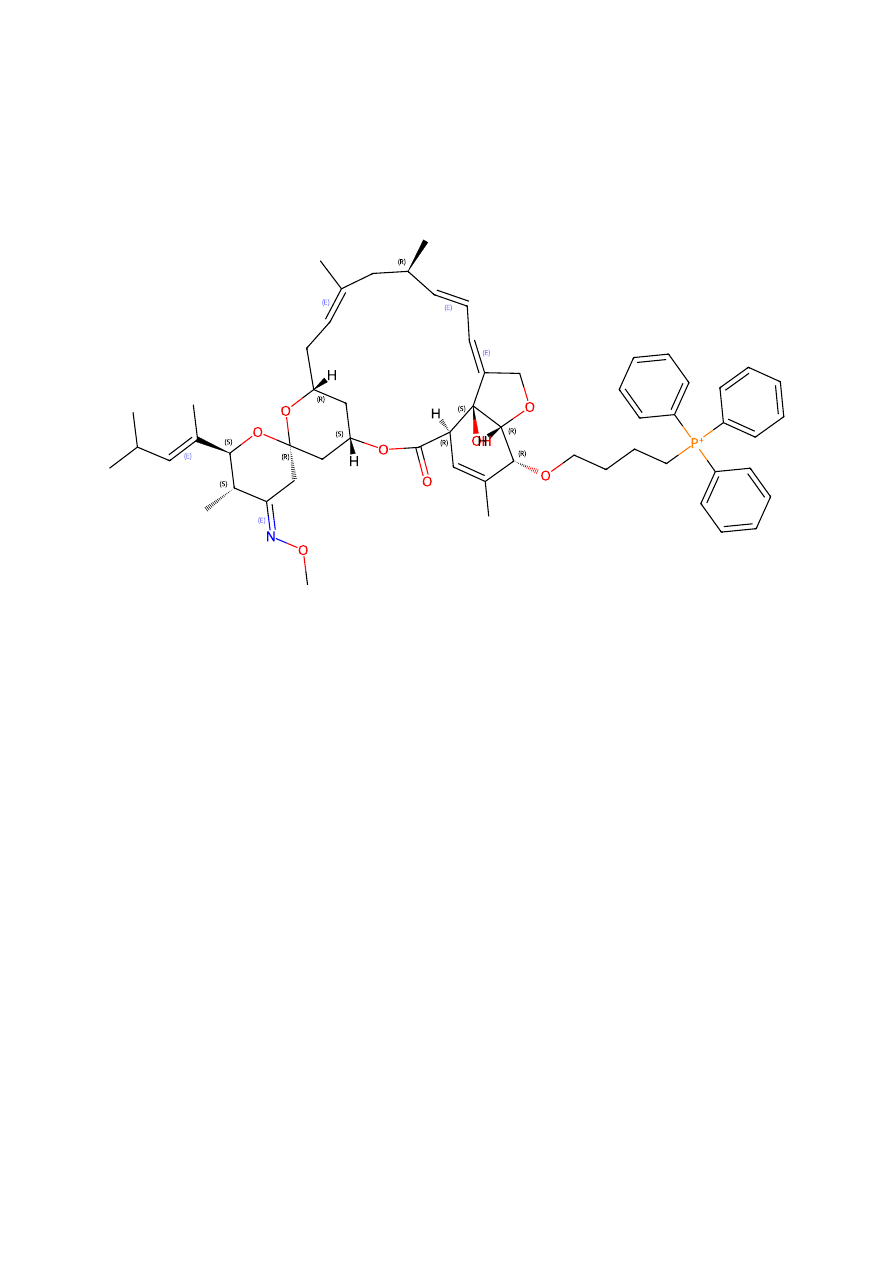
CHAPTER 7 · PROFILE 17/20 · ARCHIVE RECORD 149
ARF-MOX-B1c
Recorded rationale and role
Distribution and linkage branch. This entry compares the
appended head group and attachment against the B1
incumbent and parent moxidectin. Recorded design detail:
permanent +1 triphenylphosphonium (incumbent) direct ether,
C4 tether incumbent cation, non-cleavable. Source context is
identified below; the design role is not a measured efficacy
ranking.
Preparation focus in the existing record
Specify counterion and salt composition, distinguish intact
conjugate from cleaved species, and compare the charged
AGENTIC RESEARCH FACTORY · COMPUTATIONAL COOKBOOK · 583 / 886

appendage separately. Chromatographic and spectroscopic
characterization must follow the actual encoded structure.
Full deposited SMILES — verbatim
CO/N=C1\C[C@]2(C[C@@H]3C[C@@H]
(C/C=C(\C)C[C@@H](C)/C=C/C=C4\CO[C@@H]5[C@H]
(OCCCC[P+](c6ccccc6)(c6ccccc6)c6ccccc6)C(C)=C[C@@H]
(C(=O)O3)[C@]45O)O2)O[C@H](/C(C)=C/C(C)C)[C@H]1C
Canonical isomeric SMILES — RDKit 2026.09.1
CO/N=C1\C[C@]2(C[C@@H]3C[C@@H]
(C/C=C(\C)C[C@@H](C)/C=C/C=C4\CO[C@@H]5[C@H]
(OCCCC[P+](c6ccccc6)(c6ccccc6)c6ccccc6)C(C)=C[C@@H]
(C(=O)O3)[C@]45O)O2)O[C@H](/C(C)=C/C(C)C)[C@H]1C
Complete computed profile
Formula
C59H75NO8P+
Molecular weight (g/mol)
957.222
Exact mass (Da)
956.522481
Crippen cLogP
10.5275
TPSA (Ų)
105.04
H-bond donors
1
H-bond acceptors
9
Rotatable bonds
12
AGENTIC RESEARCH FACTORY · COMPUTATIONAL COOKBOOK · 584 / 886

Rings
8
Formal charge
1
Heavy atoms
69
Unassigned stereo —
modern
0
Unassigned stereo —
legacy
0
Graph interpretation and liabilities
This graph has 0 O–O bonds, net formal charge +1, and 12
rotatable bonds. Its high calculated lipophilicity makes free
exposure, adsorption and formulation important comparison
variables. No unspecified stereochemical element was
detected by the stated modern analysis of this graph.
Source record
Node85 b1_ranked.json; B1 successor paper
AGENTIC RESEARCH FACTORY · COMPUTATIONAL COOKBOOK · 585 / 886
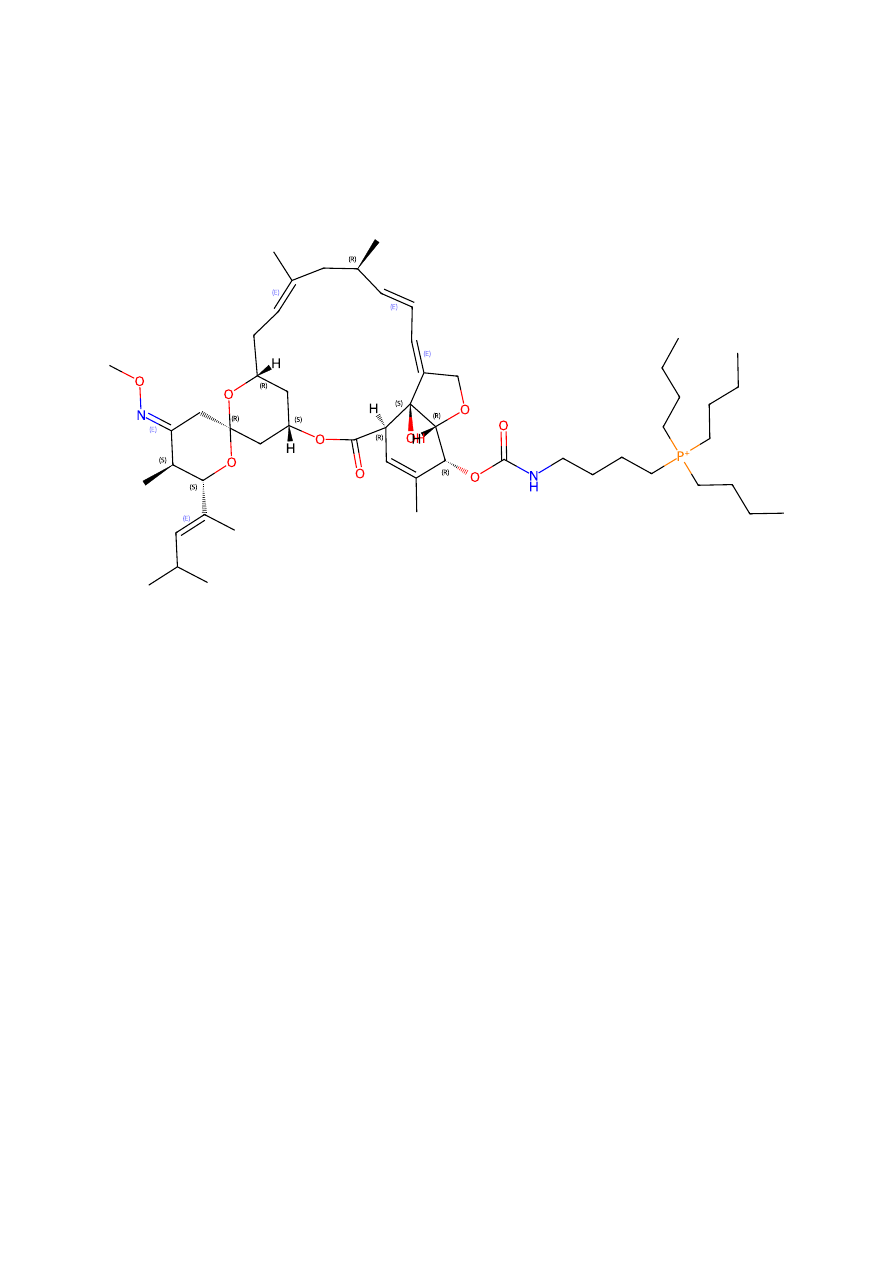
CHAPTER 7 · PROFILE 18/20 · ARCHIVE RECORD 150
ARF-MOX-B1e
Recorded rationale and role
Distribution and linkage branch. This entry compares the
appended head group and attachment against the B1
incumbent and parent moxidectin. Recorded design detail:
permanent +1 tributylphosphonium carbamate, C4 tether
trialkyl cation, less delocalised. Source context is identified
below; the design role is not a measured efficacy ranking.
Preparation focus in the existing record
Specify counterion and salt composition, distinguish intact
conjugate from cleaved species, and compare the charged
appendage separately. Chromatographic and spectroscopic
characterization must follow the actual encoded structure.
AGENTIC RESEARCH FACTORY · COMPUTATIONAL COOKBOOK · 586 / 886

Full deposited SMILES — verbatim
CCCC[P+](CCCC)
(CCCC)CCCCNC(=O)O[C@@H]1C(C)=C[C@H]2C(=O)O[C
@H]3C[C@@H](C/C=C(\C)C[C@@H]
(C)/C=C/C=C4\CO[C@H]1[C@@]42O)O[C@@]1(C/C(=N\OC
)[C@H](C)[C@@H](/C(C)=C/C(C)C)O1)C3
Canonical isomeric SMILES — RDKit 2026.09.1
CCCC[P+](CCCC)
(CCCC)CCCCNC(=O)O[C@@H]1C(C)=C[C@H]2C(=O)O[C
@H]3C[C@@H](C/C=C(\C)C[C@@H]
(C)/C=C/C=C4\CO[C@H]1[C@@]42O)O[C@@]1(C/C(=N\OC
)[C@H](C)[C@@H](/C(C)=C/C(C)C)O1)C3
Complete computed profile
Formula
C54H88N2O9P+
Molecular weight (g/mol)
940.277
Exact mass (Da)
939.622195
Crippen cLogP
11.6609
TPSA (Ų)
134.14
H-bond donors
2
H-bond acceptors
10
Rotatable bonds
18
AGENTIC RESEARCH FACTORY · COMPUTATIONAL COOKBOOK · 587 / 886

Rings
5
Formal charge
1
Heavy atoms
66
Unassigned stereo —
modern
0
Unassigned stereo —
legacy
0
Graph interpretation and liabilities
This graph has 0 O–O bonds, net formal charge +1, and 18
rotatable bonds. Its high calculated lipophilicity makes free
exposure, adsorption and formulation important comparison
variables. No unspecified stereochemical element was
detected by the stated modern analysis of this graph.
Source record
Node85 b1_ranked.json; B1 successor paper
AGENTIC RESEARCH FACTORY · COMPUTATIONAL COOKBOOK · 588 / 886
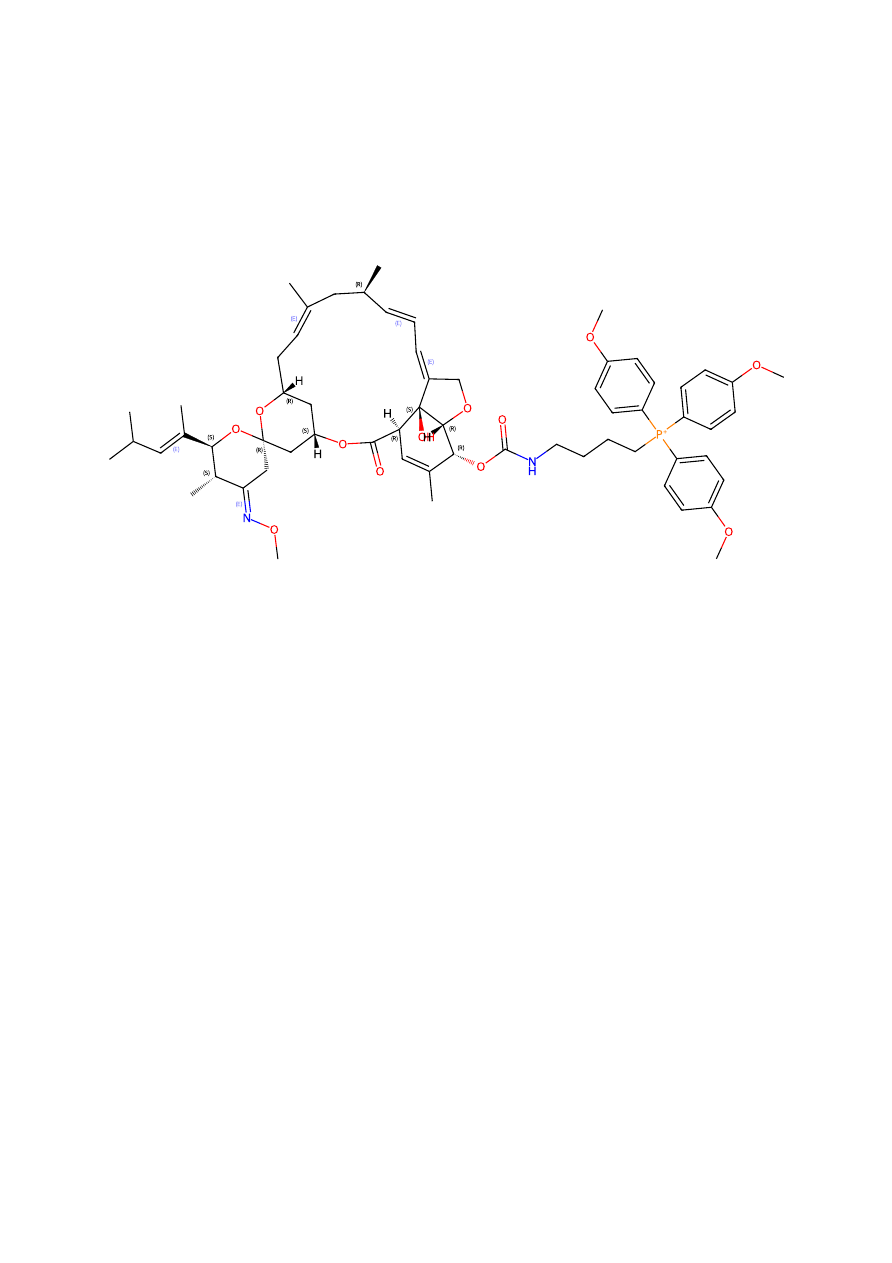
CHAPTER 7 · PROFILE 19/20 · ARCHIVE RECORD 151
ARF-MOX-B1d
Recorded rationale and role
Distribution and linkage branch. This entry compares the
appended head group and attachment against the B1
incumbent and parent moxidectin. Recorded design detail:
permanent +1 tris(4-methoxyphenyl)phosphonium carbamate,
C4 tether modulated triarylphosphonium. Source context is
identified below; the design role is not a measured efficacy
ranking.
Preparation focus in the existing record
Specify counterion and salt composition, distinguish intact
conjugate from cleaved species, and compare the charged
AGENTIC RESEARCH FACTORY · COMPUTATIONAL COOKBOOK · 589 / 886

appendage separately. Chromatographic and spectroscopic
characterization must follow the actual encoded structure.
Full deposited SMILES — verbatim
CO/N=C1\C[C@]2(C[C@@H]3C[C@@H]
(C/C=C(\C)C[C@@H](C)/C=C/C=C4\CO[C@@H]5[C@H]
(OC(=O)NCCCC[P+](c6ccc(OC)cc6)
(c6ccc(OC)cc6)c6ccc(OC)cc6)C(C)=C[C@@H](C(=O)O3)
[C@]45O)O2)O[C@H](/C(C)=C/C(C)C)[C@H]1C
Canonical isomeric SMILES — RDKit 2026.09.1
CO/N=C1\C[C@]2(C[C@@H]3C[C@@H]
(C/C=C(\C)C[C@@H](C)/C=C/C=C4\CO[C@@H]5[C@H]
(OC(=O)NCCCC[P+](c6ccc(OC)cc6)
(c6ccc(OC)cc6)c6ccc(OC)cc6)C(C)=C[C@@H](C(=O)O3)
[C@]45O)O2)O[C@H](/C(C)=C/C(C)C)[C@H]1C
Complete computed profile
Formula
C63H82N2O12P+
Molecular weight (g/mol)
1090.325
Exact mass (Da)
1089.559989
Crippen cLogP
10.2629
TPSA (Ų)
161.83
H-bond donors
2
AGENTIC RESEARCH FACTORY · COMPUTATIONAL COOKBOOK · 590 / 886

H-bond acceptors
13
Rotatable bonds
15
Rings
8
Formal charge
1
Heavy atoms
78
Unassigned stereo —
modern
0
Unassigned stereo —
legacy
0
Graph interpretation and liabilities
This graph has 0 O–O bonds, net formal charge +1, and 15
rotatable bonds. Its high calculated lipophilicity makes free
exposure, adsorption and formulation important comparison
variables. No unspecified stereochemical element was
detected by the stated modern analysis of this graph.
Source record
Node85 b1_ranked.json; B1 successor paper
AGENTIC RESEARCH FACTORY · COMPUTATIONAL COOKBOOK · 591 / 886
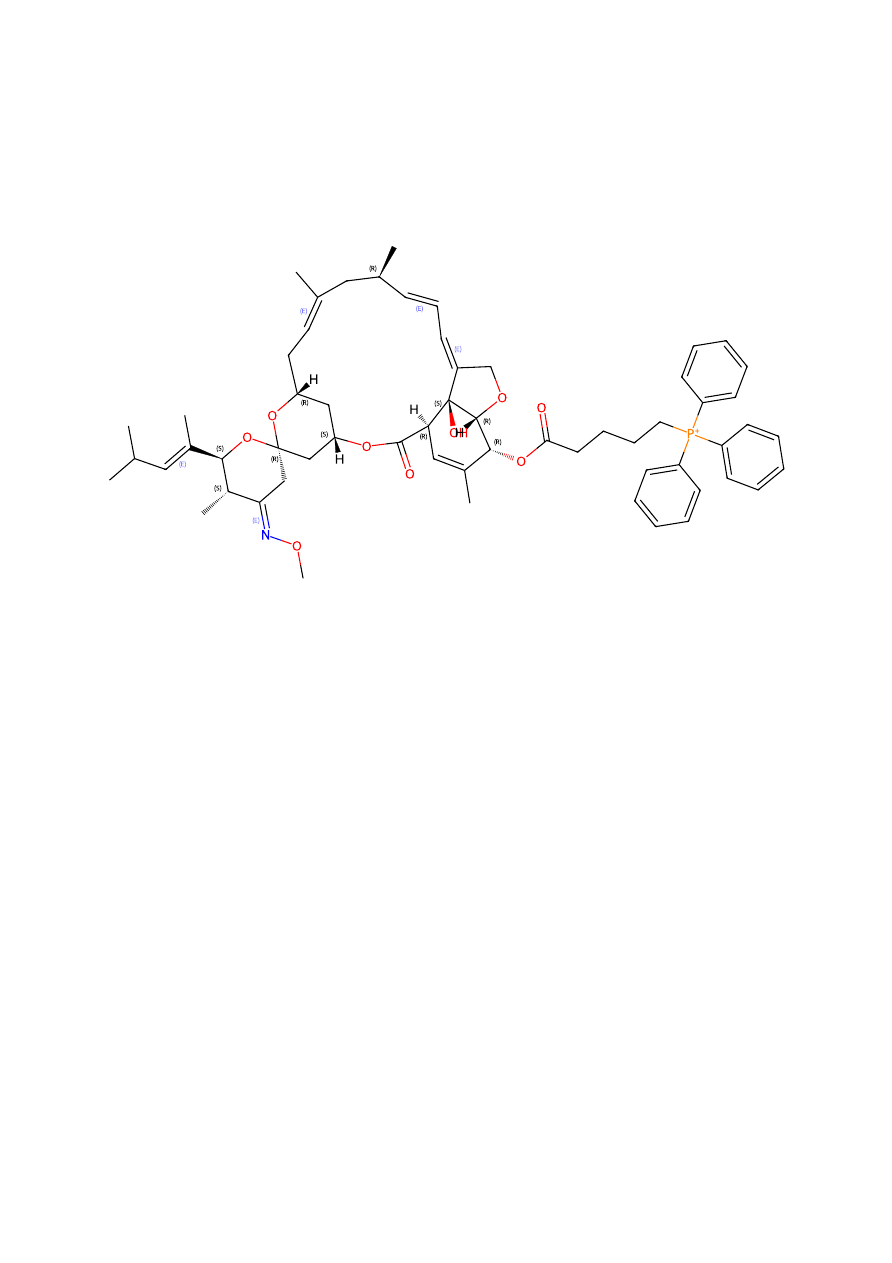
CHAPTER 7 · PROFILE 20/20 · ARCHIVE RECORD 152
ARF-MOX-B1
Recorded rationale and role
Distribution and linkage branch. This entry compares the
appended head group and attachment against the B1
incumbent and parent moxidectin. Recorded design detail:
permanent +1 triphenylphosphonium (incumbent) pentanoyl
ester, C4 tether (incumbent) incumbent. Source context is
identified below; the design role is not a measured efficacy
ranking.
Preparation focus in the existing record
Specify counterion and salt composition, distinguish intact
conjugate from cleaved species, and compare the charged
AGENTIC RESEARCH FACTORY · COMPUTATIONAL COOKBOOK · 592 / 886

appendage separately. Chromatographic and spectroscopic
characterization must follow the actual encoded structure.
Full deposited SMILES — verbatim
CO/N=C1\C[C@]2(C[C@@H]3C[C@@H]
(C/C=C(\C)C[C@@H](C)/C=C/C=C4\CO[C@@H]5[C@H]
(OC(=O)CCCC[P+](c6ccccc6)
(c6ccccc6)c6ccccc6)C(C)=C[C@@H](C(=O)O3)
[C@]45O)O2)O[C@H](/C(C)=C/C(C)C)[C@H]1C
Canonical isomeric SMILES — RDKit 2026.09.1
CO/N=C1\C[C@]2(C[C@@H]3C[C@@H]
(C/C=C(\C)C[C@@H](C)/C=C/C=C4\CO[C@@H]5[C@H]
(OC(=O)CCCC[P+](c6ccccc6)
(c6ccccc6)c6ccccc6)C(C)=C[C@@H](C(=O)O3)
[C@]45O)O2)O[C@H](/C(C)=C/C(C)C)[C@H]1C
Complete computed profile
Formula
C60H75NO9P+
Molecular weight (g/mol)
985.232
Exact mass (Da)
984.517396
Crippen cLogP
10.4442
TPSA (Ų)
122.11
H-bond donors
1
AGENTIC RESEARCH FACTORY · COMPUTATIONAL COOKBOOK · 593 / 886

H-bond acceptors
10
Rotatable bonds
12
Rings
8
Formal charge
1
Heavy atoms
71
Unassigned stereo —
modern
0
Unassigned stereo —
legacy
0
Graph interpretation and liabilities
This graph has 0 O–O bonds, net formal charge +1, and 12
rotatable bonds. Its high calculated lipophilicity makes free
exposure, adsorption and formulation important comparison
variables. No unspecified stereochemical element was
detected by the stated modern analysis of this graph.
Source record
Node85 b1_ranked.json; B1 successor paper
Existing selected-prospect discussion — retained
ARF-MOX-B1
Role: Incumbent reference.
AGENTIC RESEARCH FACTORY · COMPUTATIONAL COOKBOOK · 594 / 886

Design and reasoning. A triphenylphosphonium appendage
connected through a C5 ester. The permanent, delocalised
cation supplies the original mitochondrial-potential rationale.
Profile and liabilities. Its encoded cLogP is 10.44, MW
985.23 and RotB 12. The design is large and lipophilic, with an
added ester that can separate the two intended functions. A +1
charge does not establish a tumour-selective distribution.
Decision. Retain as the historical benchmark; determine intact
exposure, hydrolysis and whether the conjugate improves
anything over parent plus targeting fragment.
Source: b1_ranked.json.
AGENTIC RESEARCH FACTORY · COMPUTATIONAL COOKBOOK · 595 / 886

CHAPTER 8
Additional archived graphs
These 29 archived graph records preserve earlier, alternate
and fragment versions recovered in the prior history
reconciliation. Some snippets were never given a compound
name; their literal recovered text is retained. They are not all
nominated complete conjugates.
AGENTIC RESEARCH FACTORY · COMPUTATIONAL COOKBOOK · 596 / 886
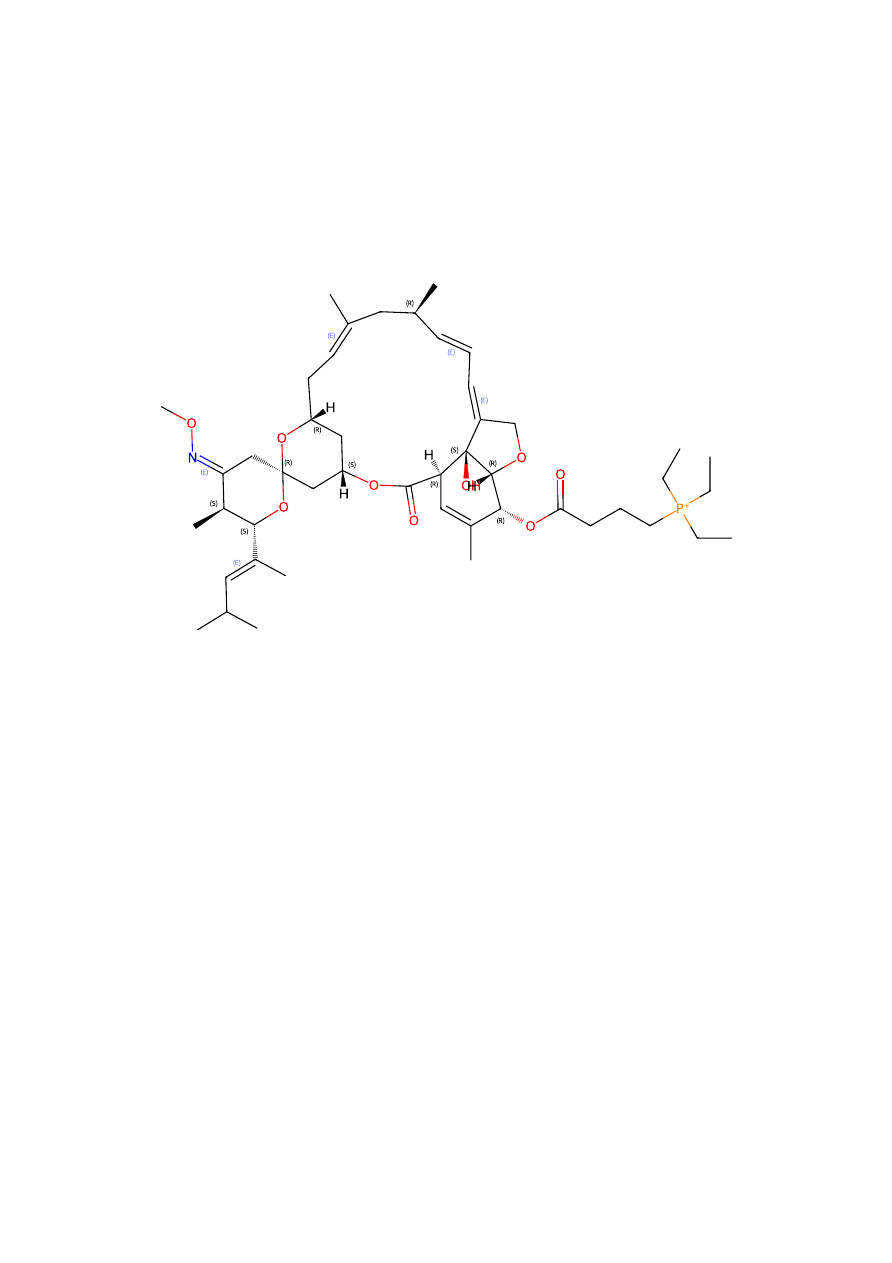
CHAPTER 8 · PROFILE 1/29 · ARCHIVE RECORD 162
Arm proxy (A logP 2.6268): `CC[P+](CC)
(CC)CCC(=O)OC`
Recorded rationale and role
Charge-associated distribution arm. The encoded cation
provides a test of distribution and membrane interaction
against an uncharged or differently charged comparator.
Source context is identified below; the design role is not a
measured efficacy ranking.
Preparation focus in the existing record
Specify counterion and salt composition, distinguish intact
conjugate from cleaved species, and compare the charged
appendage separately. Chromatographic and spectroscopic
characterization must follow the actual encoded structure.
AGENTIC RESEARCH FACTORY · COMPUTATIONAL COOKBOOK · 597 / 886

Full deposited SMILES — verbatim
CC[P+](CC)
(CC)CCCC(=O)O[C@@H]1C(C)=C[C@H]2C(=O)O[C@H]3C[
C@@H](C/C=C(\C)C[C@@H]
(C)/C=C/C=C4\CO[C@H]1[C@@]42O)O[C@@]1(C/C(=N\OC
)[C@H](C)[C@@H](/C(C)=C/C(C)C)O1)C3
Canonical isomeric SMILES — RDKit 2026.09.1
CC[P+](CC)
(CC)CCCC(=O)O[C@@H]1C(C)=C[C@H]2C(=O)O[C@H]3C[
C@@H](C/C=C(\C)C[C@@H]
(C)/C=C/C=C4\CO[C@H]1[C@@]42O)O[C@@]1(C/C(=N\OC
)[C@H](C)[C@@H](/C(C)=C/C(C)C)O1)C3
Complete computed profile
Formula
C47H73NO9P+
Molecular weight (g/mol)
827.073
Exact mass (Da)
826.501746
Crippen cLogP
9.1373
TPSA (Ų)
122.11
H-bond donors
1
H-bond acceptors
10
Rotatable bonds
11
AGENTIC RESEARCH FACTORY · COMPUTATIONAL COOKBOOK · 598 / 886

Rings
5
Formal charge
1
Heavy atoms
58
Unassigned stereo —
modern
0
Unassigned stereo —
legacy
0
Graph interpretation and liabilities
This graph has 0 O–O bonds, net formal charge +1, and 11
rotatable bonds. Its high calculated lipophilicity makes free
exposure, adsorption and formulation important comparison
variables. No unspecified stereochemical element was
detected by the stated modern analysis of this graph.
Source record
/home/codex/atlas-governance/rd-prospects-
464/sources/ATLAS_B1_SUCCESSORS.md; line 214
AGENTIC RESEARCH FACTORY · COMPUTATIONAL COOKBOOK · 599 / 886
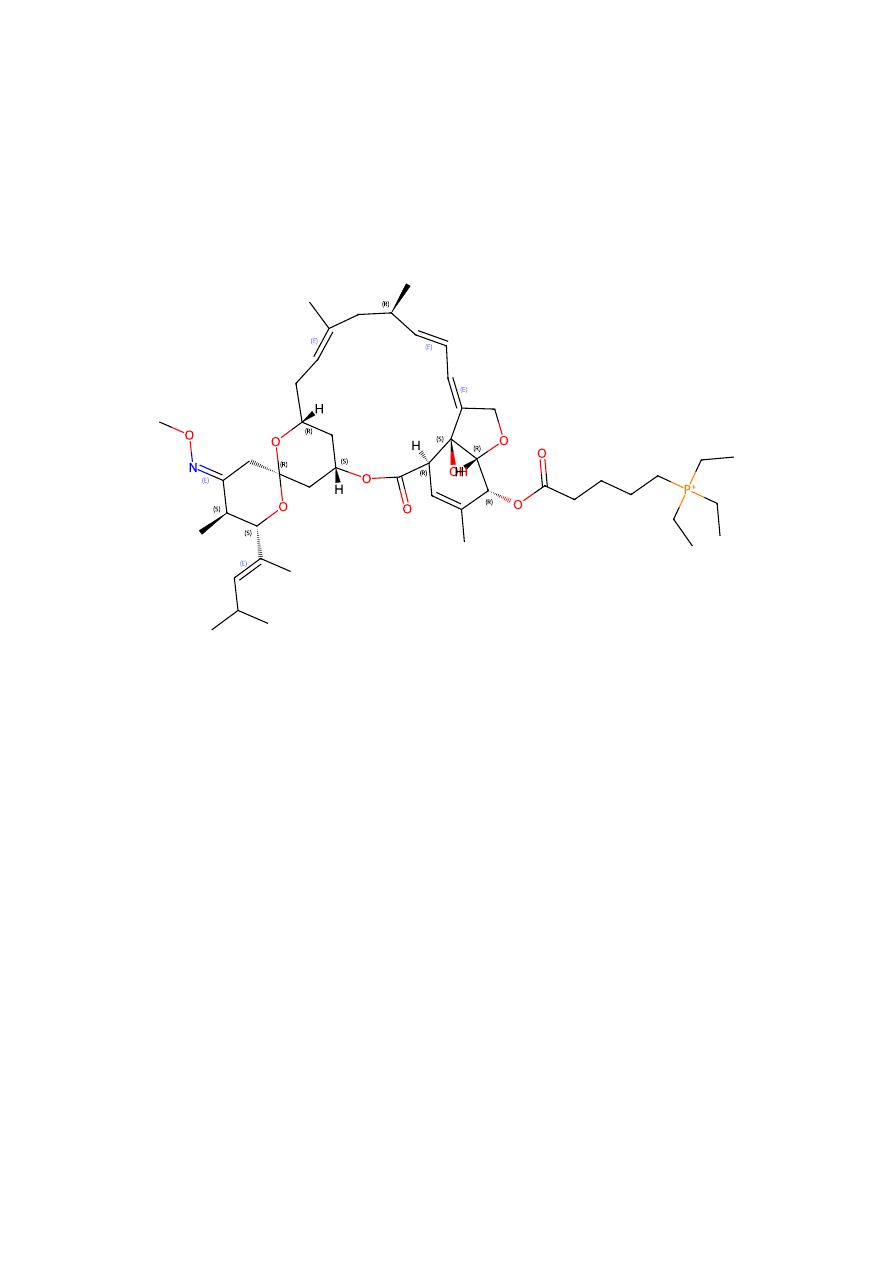
CHAPTER 8 · PROFILE 2/29 · ARCHIVE RECORD 163
Arm proxy (A logP 3.0169): `CC[P+](CC)
(CC)CCCC(=O)OC`
Recorded rationale and role
Charge-associated distribution arm. The encoded cation
provides a test of distribution and membrane interaction
against an uncharged or differently charged comparator.
Source context is identified below; the design role is not a
measured efficacy ranking.
Preparation focus in the existing record
Specify counterion and salt composition, distinguish intact
conjugate from cleaved species, and compare the charged
appendage separately. Chromatographic and spectroscopic
characterization must follow the actual encoded structure.
AGENTIC RESEARCH FACTORY · COMPUTATIONAL COOKBOOK · 600 / 886

Full deposited SMILES — verbatim
CC[P+](CC)
(CC)CCCCC(=O)O[C@@H]1C(C)=C[C@H]2C(=O)O[C@H]3
C[C@@H](C/C=C(\C)C[C@@H]
(C)/C=C/C=C4\CO[C@H]1[C@@]42O)O[C@@]1(C/C(=N\OC
)[C@H](C)[C@@H](/C(C)=C/C(C)C)O1)C3
Canonical isomeric SMILES — RDKit 2026.09.1
CC[P+](CC)
(CC)CCCCC(=O)O[C@@H]1C(C)=C[C@H]2C(=O)O[C@H]3
C[C@@H](C/C=C(\C)C[C@@H]
(C)/C=C/C=C4\CO[C@H]1[C@@]42O)O[C@@]1(C/C(=N\OC
)[C@H](C)[C@@H](/C(C)=C/C(C)C)O1)C3
Complete computed profile
Formula
C48H75NO9P+
Molecular weight (g/mol)
841.1
Exact mass (Da)
840.517396
Crippen cLogP
9.5274
TPSA (Ų)
122.11
H-bond donors
1
H-bond acceptors
10
Rotatable bonds
12
AGENTIC RESEARCH FACTORY · COMPUTATIONAL COOKBOOK · 601 / 886

Rings
5
Formal charge
1
Heavy atoms
59
Unassigned stereo —
modern
0
Unassigned stereo —
legacy
0
Graph interpretation and liabilities
This graph has 0 O–O bonds, net formal charge +1, and 12
rotatable bonds. Its high calculated lipophilicity makes free
exposure, adsorption and formulation important comparison
variables. No unspecified stereochemical element was
detected by the stated modern analysis of this graph.
Source record
/home/codex/atlas-governance/rd-prospects-
464/sources/ATLAS_B1_SUCCESSORS.md; line 223
AGENTIC RESEARCH FACTORY · COMPUTATIONAL COOKBOOK · 602 / 886
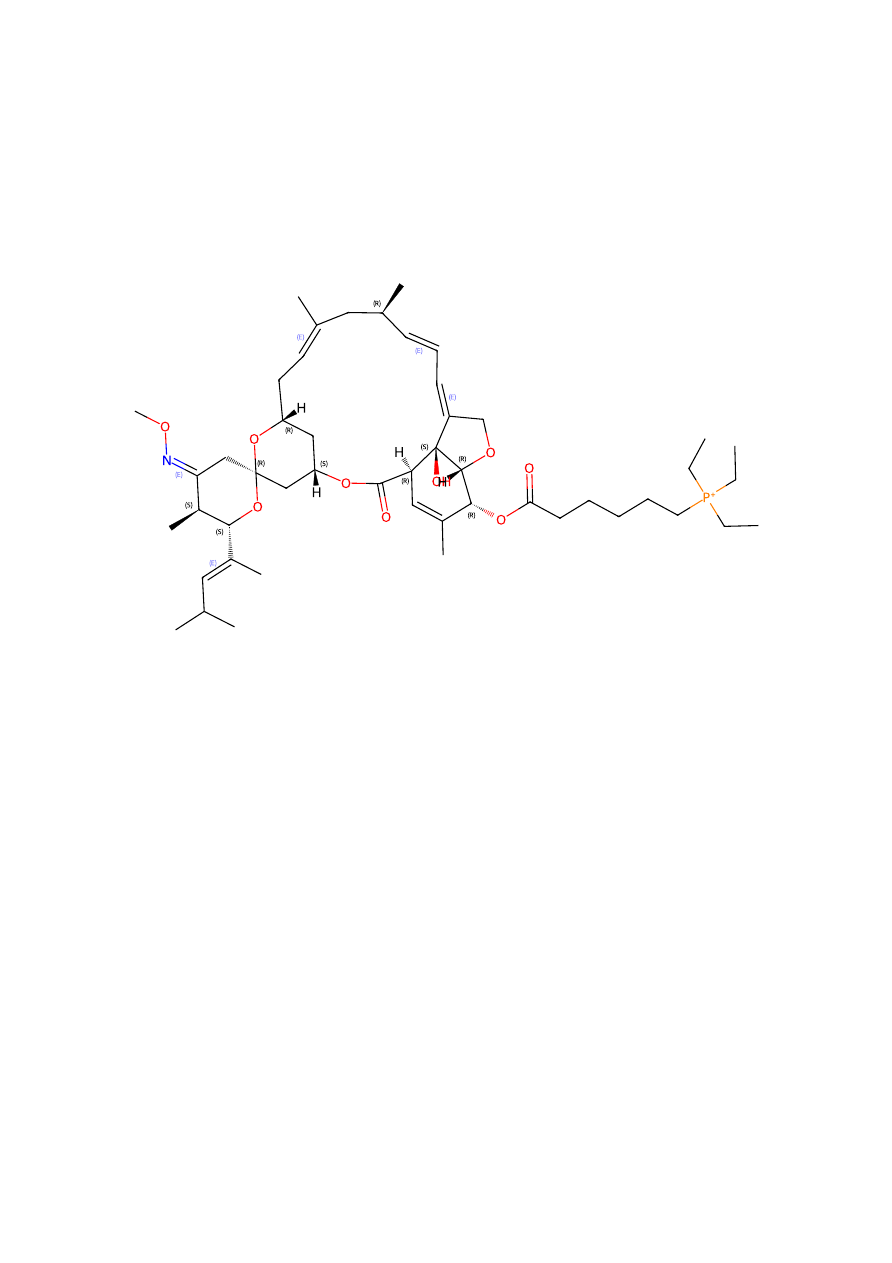
CHAPTER 8 · PROFILE 3/29 · ARCHIVE RECORD 164
Arm proxy (A logP 3.4070): `CC[P+](CC)
(CC)CCCCC(=O)OC`
Recorded rationale and role
Charge-associated distribution arm. The encoded cation
provides a test of distribution and membrane interaction
against an uncharged or differently charged comparator.
Source context is identified below; the design role is not a
measured efficacy ranking.
Preparation focus in the existing record
Specify counterion and salt composition, distinguish intact
conjugate from cleaved species, and compare the charged
appendage separately. Chromatographic and spectroscopic
characterization must follow the actual encoded structure.
AGENTIC RESEARCH FACTORY · COMPUTATIONAL COOKBOOK · 603 / 886

Full deposited SMILES — verbatim
CC[P+](CC)
(CC)CCCCCC(=O)O[C@@H]1C(C)=C[C@H]2C(=O)O[C@H]
3C[C@@H](C/C=C(\C)C[C@@H]
(C)/C=C/C=C4\CO[C@H]1[C@@]42O)O[C@@]1(C/C(=N\OC
)[C@H](C)[C@@H](/C(C)=C/C(C)C)O1)C3
Canonical isomeric SMILES — RDKit 2026.09.1
CC[P+](CC)
(CC)CCCCCC(=O)O[C@@H]1C(C)=C[C@H]2C(=O)O[C@H]
3C[C@@H](C/C=C(\C)C[C@@H]
(C)/C=C/C=C4\CO[C@H]1[C@@]42O)O[C@@]1(C/C(=N\OC
)[C@H](C)[C@@H](/C(C)=C/C(C)C)O1)C3
Complete computed profile
Formula
C49H77NO9P+
Molecular weight (g/mol)
855.127
Exact mass (Da)
854.533046
Crippen cLogP
9.9175
TPSA (Ų)
122.11
H-bond donors
1
H-bond acceptors
10
Rotatable bonds
13
AGENTIC RESEARCH FACTORY · COMPUTATIONAL COOKBOOK · 604 / 886

Rings
5
Formal charge
1
Heavy atoms
60
Unassigned stereo —
modern
0
Unassigned stereo —
legacy
0
Graph interpretation and liabilities
This graph has 0 O–O bonds, net formal charge +1, and 13
rotatable bonds. Its high calculated lipophilicity makes free
exposure, adsorption and formulation important comparison
variables. No unspecified stereochemical element was
detected by the stated modern analysis of this graph.
Source record
/home/codex/atlas-governance/rd-prospects-
464/sources/ATLAS_B1_SUCCESSORS.md; line 232
AGENTIC RESEARCH FACTORY · COMPUTATIONAL COOKBOOK · 605 / 886
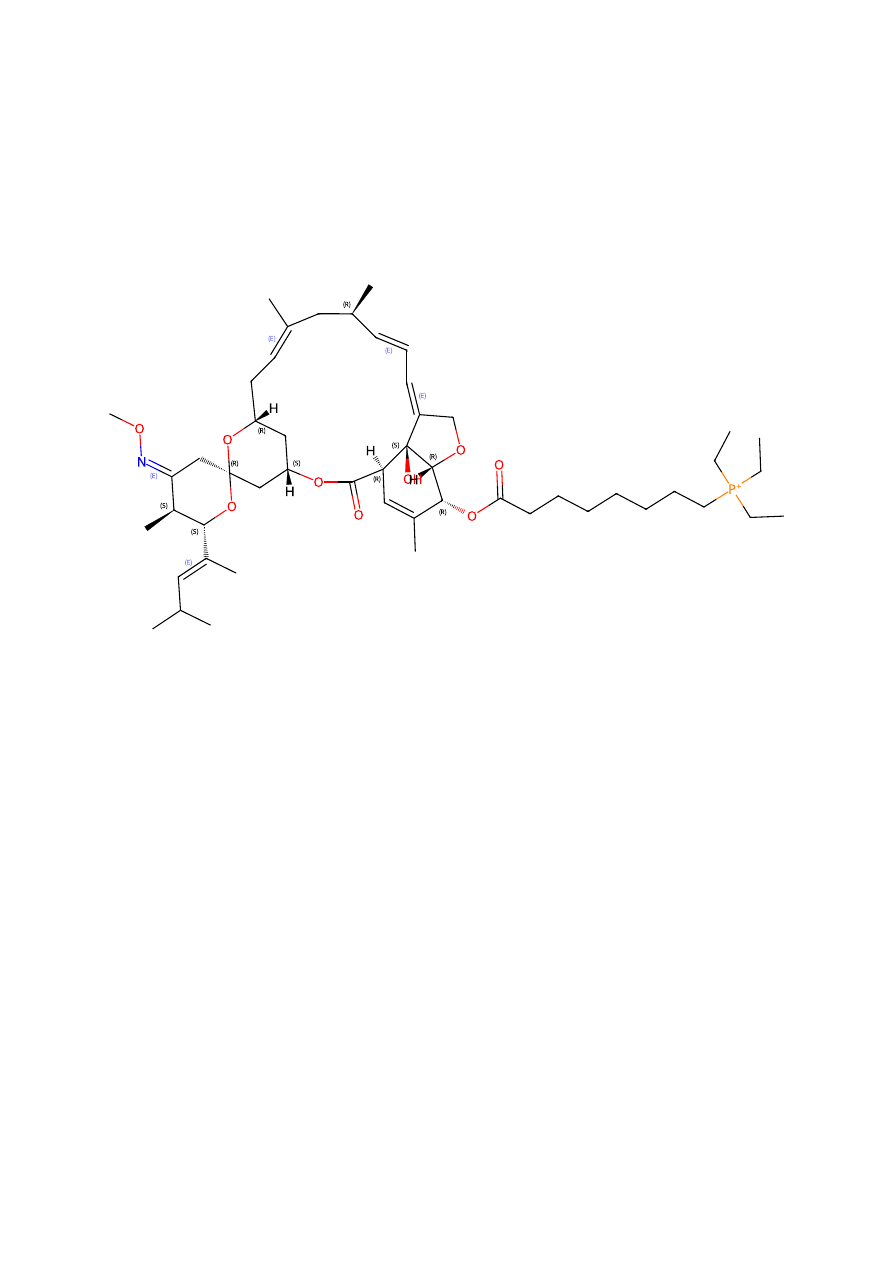
CHAPTER 8 · PROFILE 4/29 · ARCHIVE RECORD 165
Arm proxy (A logP 4.1872): `CC[P+](CC)
(CC)CCCCCCC(=O)OC`
Recorded rationale and role
Charge-associated distribution arm. The encoded cation
provides a test of distribution and membrane interaction
against an uncharged or differently charged comparator.
Source context is identified below; the design role is not a
measured efficacy ranking.
Preparation focus in the existing record
Specify counterion and salt composition, distinguish intact
conjugate from cleaved species, and compare the charged
appendage separately. Chromatographic and spectroscopic
characterization must follow the actual encoded structure.
AGENTIC RESEARCH FACTORY · COMPUTATIONAL COOKBOOK · 606 / 886

Full deposited SMILES — verbatim
CC[P+](CC)
(CC)CCCCCCCC(=O)O[C@@H]1C(C)=C[C@H]2C(=O)O[C
@H]3C[C@@H](C/C=C(\C)C[C@@H]
(C)/C=C/C=C4\CO[C@H]1[C@@]42O)O[C@@]1(C/C(=N\OC
)[C@H](C)[C@@H](/C(C)=C/C(C)C)O1)C3
Canonical isomeric SMILES — RDKit 2026.09.1
CC[P+](CC)
(CC)CCCCCCCC(=O)O[C@@H]1C(C)=C[C@H]2C(=O)O[C
@H]3C[C@@H](C/C=C(\C)C[C@@H]
(C)/C=C/C=C4\CO[C@H]1[C@@]42O)O[C@@]1(C/C(=N\OC
)[C@H](C)[C@@H](/C(C)=C/C(C)C)O1)C3
Complete computed profile
Formula
C51H81NO9P+
Molecular weight (g/mol)
883.181
Exact mass (Da)
882.564346
Crippen cLogP
10.6977
TPSA (Ų)
122.11
H-bond donors
1
H-bond acceptors
10
Rotatable bonds
15
AGENTIC RESEARCH FACTORY · COMPUTATIONAL COOKBOOK · 607 / 886

Rings
5
Formal charge
1
Heavy atoms
62
Unassigned stereo —
modern
0
Unassigned stereo —
legacy
0
Graph interpretation and liabilities
This graph has 0 O–O bonds, net formal charge +1, and 15
rotatable bonds. Its high calculated lipophilicity makes free
exposure, adsorption and formulation important comparison
variables. No unspecified stereochemical element was
detected by the stated modern analysis of this graph.
Source record
/home/codex/atlas-governance/rd-prospects-
464/sources/ATLAS_B1_SUCCESSORS.md; line 250
AGENTIC RESEARCH FACTORY · COMPUTATIONAL COOKBOOK · 608 / 886
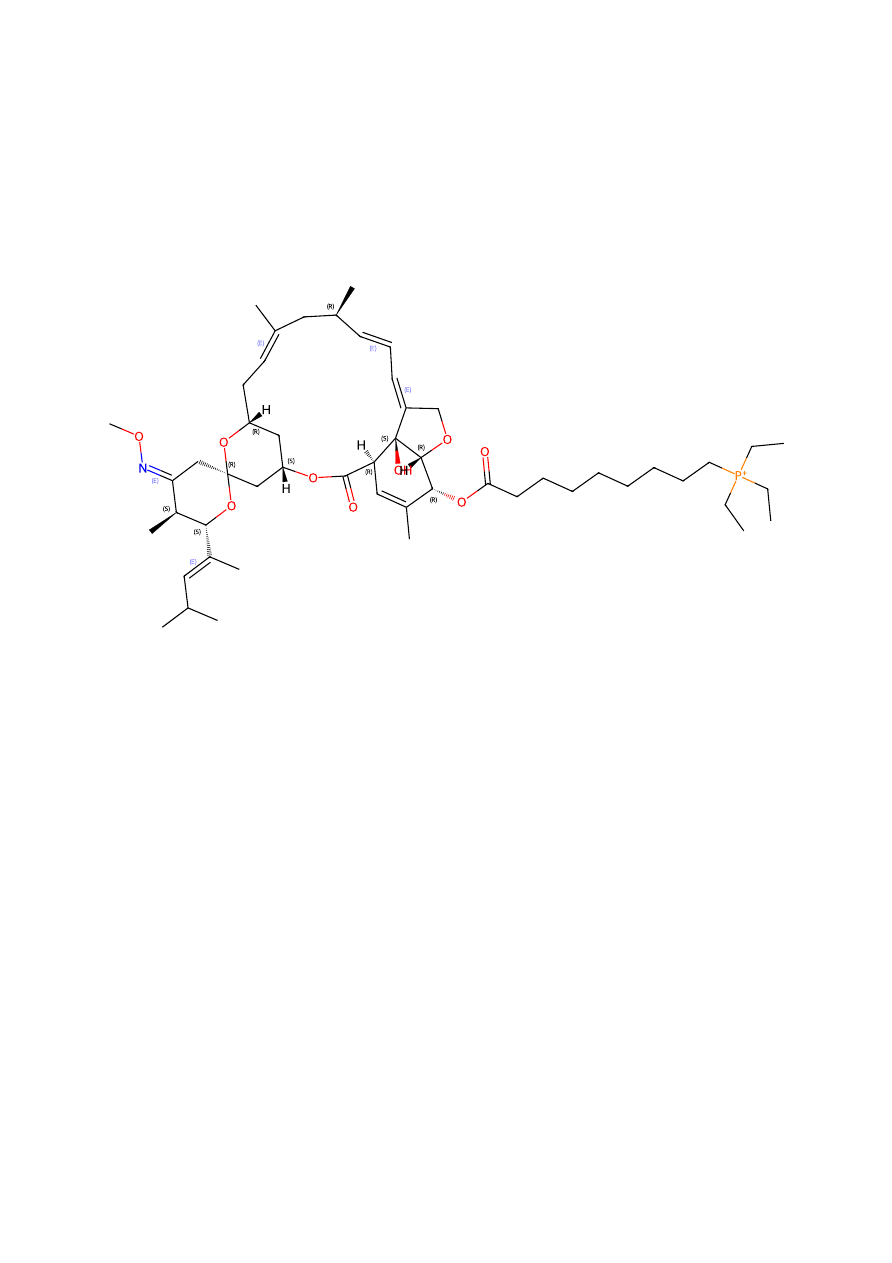
CHAPTER 8 · PROFILE 5/29 · ARCHIVE RECORD 166
Arm proxy (A logP 4.5773): `CC[P+](CC)
(CC)CCCCCCCC(=O)OC`
Recorded rationale and role
Charge-associated distribution arm. The encoded cation
provides a test of distribution and membrane interaction
against an uncharged or differently charged comparator.
Source context is identified below; the design role is not a
measured efficacy ranking.
Preparation focus in the existing record
Specify counterion and salt composition, distinguish intact
conjugate from cleaved species, and compare the charged
appendage separately. Chromatographic and spectroscopic
characterization must follow the actual encoded structure.
AGENTIC RESEARCH FACTORY · COMPUTATIONAL COOKBOOK · 609 / 886

Full deposited SMILES — verbatim
CC[P+](CC)
(CC)CCCCCCCCC(=O)O[C@@H]1C(C)=C[C@H]2C(=O)O[C
@H]3C[C@@H](C/C=C(\C)C[C@@H]
(C)/C=C/C=C4\CO[C@H]1[C@@]42O)O[C@@]1(C/C(=N\OC
)[C@H](C)[C@@H](/C(C)=C/C(C)C)O1)C3
Canonical isomeric SMILES — RDKit 2026.09.1
CC[P+](CC)
(CC)CCCCCCCCC(=O)O[C@@H]1C(C)=C[C@H]2C(=O)O[C
@H]3C[C@@H](C/C=C(\C)C[C@@H]
(C)/C=C/C=C4\CO[C@H]1[C@@]42O)O[C@@]1(C/C(=N\OC
)[C@H](C)[C@@H](/C(C)=C/C(C)C)O1)C3
Complete computed profile
Formula
C52H83NO9P+
Molecular weight (g/mol)
897.208
Exact mass (Da)
896.579996
Crippen cLogP
11.0878
TPSA (Ų)
122.11
H-bond donors
1
H-bond acceptors
10
Rotatable bonds
16
AGENTIC RESEARCH FACTORY · COMPUTATIONAL COOKBOOK · 610 / 886

Rings
5
Formal charge
1
Heavy atoms
63
Unassigned stereo —
modern
0
Unassigned stereo —
legacy
0
Graph interpretation and liabilities
This graph has 0 O–O bonds, net formal charge +1, and 16
rotatable bonds. Its high calculated lipophilicity makes free
exposure, adsorption and formulation important comparison
variables. No unspecified stereochemical element was
detected by the stated modern analysis of this graph.
Source record
/home/codex/atlas-governance/rd-prospects-
464/sources/ATLAS_B1_SUCCESSORS.md; line 259
AGENTIC RESEARCH FACTORY · COMPUTATIONAL COOKBOOK · 611 / 886
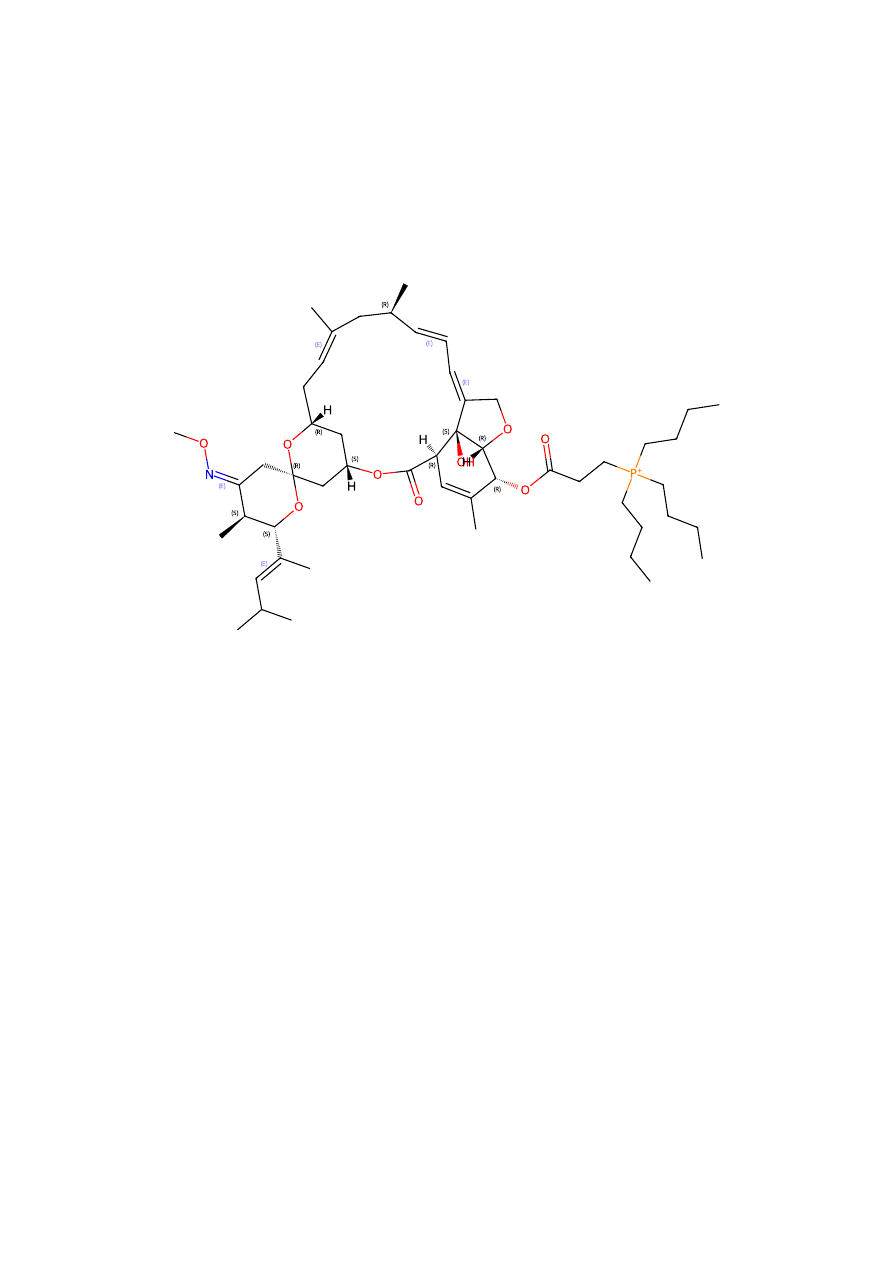
CHAPTER 8 · PROFILE 6/29 · ARCHIVE RECORD 167
Arm proxy (A logP 4.9674): `CC[P+](CC)
(CC)CCCCCCCCC(=O)OC`
Recorded rationale and role
Charge-associated distribution arm. The encoded cation
provides a test of distribution and membrane interaction
against an uncharged or differently charged comparator.
Source context is identified below; the design role is not a
measured efficacy ranking.
Preparation focus in the existing record
Specify counterion and salt composition, distinguish intact
conjugate from cleaved species, and compare the charged
appendage separately. Chromatographic and spectroscopic
characterization must follow the actual encoded structure.
AGENTIC RESEARCH FACTORY · COMPUTATIONAL COOKBOOK · 612 / 886

Full deposited SMILES — verbatim
CCCC[P+](CCCC)
(CCCC)CCC(=O)O[C@@H]1C(C)=C[C@H]2C(=O)O[C@H]3
C[C@@H](C/C=C(\C)C[C@@H]
(C)/C=C/C=C4\CO[C@H]1[C@@]42O)O[C@@]1(C/C(=N\OC
)[C@H](C)[C@@H](/C(C)=C/C(C)C)O1)C3
Canonical isomeric SMILES — RDKit 2026.09.1
CCCC[P+](CCCC)
(CCCC)CCC(=O)O[C@@H]1C(C)=C[C@H]2C(=O)O[C@H]3
C[C@@H](C/C=C(\C)C[C@@H]
(C)/C=C/C=C4\CO[C@H]1[C@@]42O)O[C@@]1(C/C(=N\OC
)[C@H](C)[C@@H](/C(C)=C/C(C)C)O1)C3
Complete computed profile
Formula
C52H83NO9P+
Molecular weight (g/mol)
897.208
Exact mass (Da)
896.579996
Crippen cLogP
11.0878
TPSA (Ų)
122.11
H-bond donors
1
H-bond acceptors
10
Rotatable bonds
16
AGENTIC RESEARCH FACTORY · COMPUTATIONAL COOKBOOK · 613 / 886

Rings
5
Formal charge
1
Heavy atoms
63
Unassigned stereo —
modern
0
Unassigned stereo —
legacy
0
Graph interpretation and liabilities
This graph has 0 O–O bonds, net formal charge +1, and 16
rotatable bonds. Its high calculated lipophilicity makes free
exposure, adsorption and formulation important comparison
variables. No unspecified stereochemical element was
detected by the stated modern analysis of this graph.
Source record
/home/codex/atlas-governance/rd-prospects-
464/sources/ATLAS_B1_SUCCESSORS.md; line 268
AGENTIC RESEARCH FACTORY · COMPUTATIONAL COOKBOOK · 614 / 886
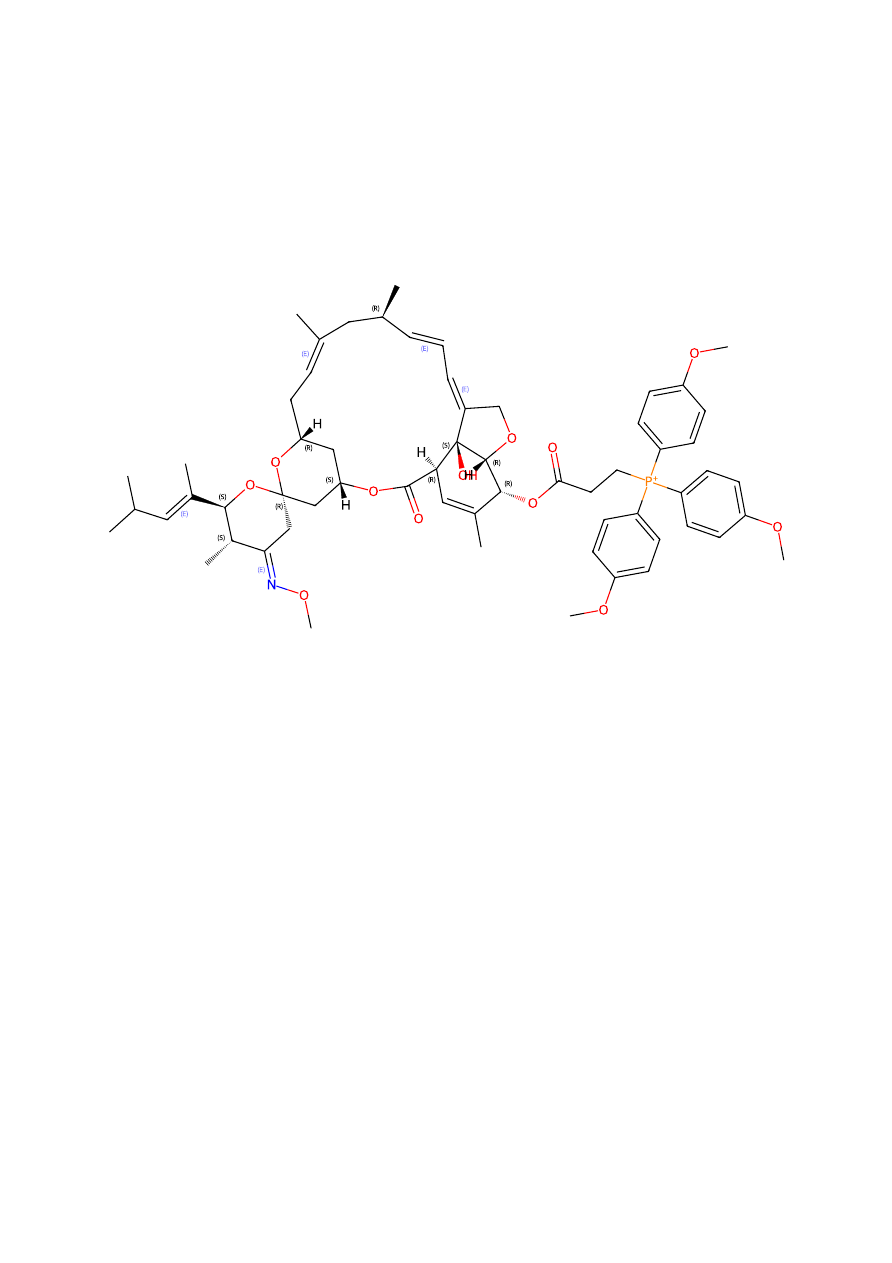
CHAPTER 8 · PROFILE 7/29 · ARCHIVE RECORD 168
Arm proxy (A logP 4.9674): `CCCC[P+](CCCC)
(CCCC)CCC(=O)OC`
Recorded rationale and role
Charge-associated distribution arm. The encoded cation
provides a test of distribution and membrane interaction
against an uncharged or differently charged comparator.
Source context is identified below; the design role is not a
measured efficacy ranking.
Preparation focus in the existing record
Specify counterion and salt composition, distinguish intact
conjugate from cleaved species, and compare the charged
appendage separately. Chromatographic and spectroscopic
characterization must follow the actual encoded structure.
AGENTIC RESEARCH FACTORY · COMPUTATIONAL COOKBOOK · 615 / 886

Full deposited SMILES — verbatim
CO/N=C1\C[C@]2(C[C@@H]3C[C@@H]
(C/C=C(\C)C[C@@H](C)/C=C/C=C4\CO[C@@H]5[C@H]
(OC(=O)CC[P+](c6ccc(OC)cc6)
(c6ccc(OC)cc6)c6ccc(OC)cc6)C(C)=C[C@@H](C(=O)O3)
[C@]45O)O2)O[C@H](/C(C)=C/C(C)C)[C@H]1C
Canonical isomeric SMILES — RDKit 2026.09.1
CO/N=C1\C[C@]2(C[C@@H]3C[C@@H]
(C/C=C(\C)C[C@@H](C)/C=C/C=C4\CO[C@@H]5[C@H]
(OC(=O)CC[P+](c6ccc(OC)cc6)
(c6ccc(OC)cc6)c6ccc(OC)cc6)C(C)=C[C@@H](C(=O)O3)
[C@]45O)O2)O[C@H](/C(C)=C/C(C)C)[C@H]1C
Complete computed profile
Formula
C61H77NO12P+
Molecular weight (g/mol)
1047.256
Exact mass (Da)
1046.51779
Crippen cLogP
9.6898
TPSA (Ų)
149.8
H-bond donors
1
H-bond acceptors
13
Rotatable bonds
13
AGENTIC RESEARCH FACTORY · COMPUTATIONAL COOKBOOK · 616 / 886

Rings
8
Formal charge
1
Heavy atoms
75
Unassigned stereo —
modern
0
Unassigned stereo —
legacy
0
Graph interpretation and liabilities
This graph has 0 O–O bonds, net formal charge +1, and 13
rotatable bonds. Its high calculated lipophilicity makes free
exposure, adsorption and formulation important comparison
variables. No unspecified stereochemical element was
detected by the stated modern analysis of this graph.
Source record
/home/codex/atlas-governance/rd-prospects-
464/sources/ATLAS_B1_SUCCESSORS.md; line 277
AGENTIC RESEARCH FACTORY · COMPUTATIONAL COOKBOOK · 617 / 886
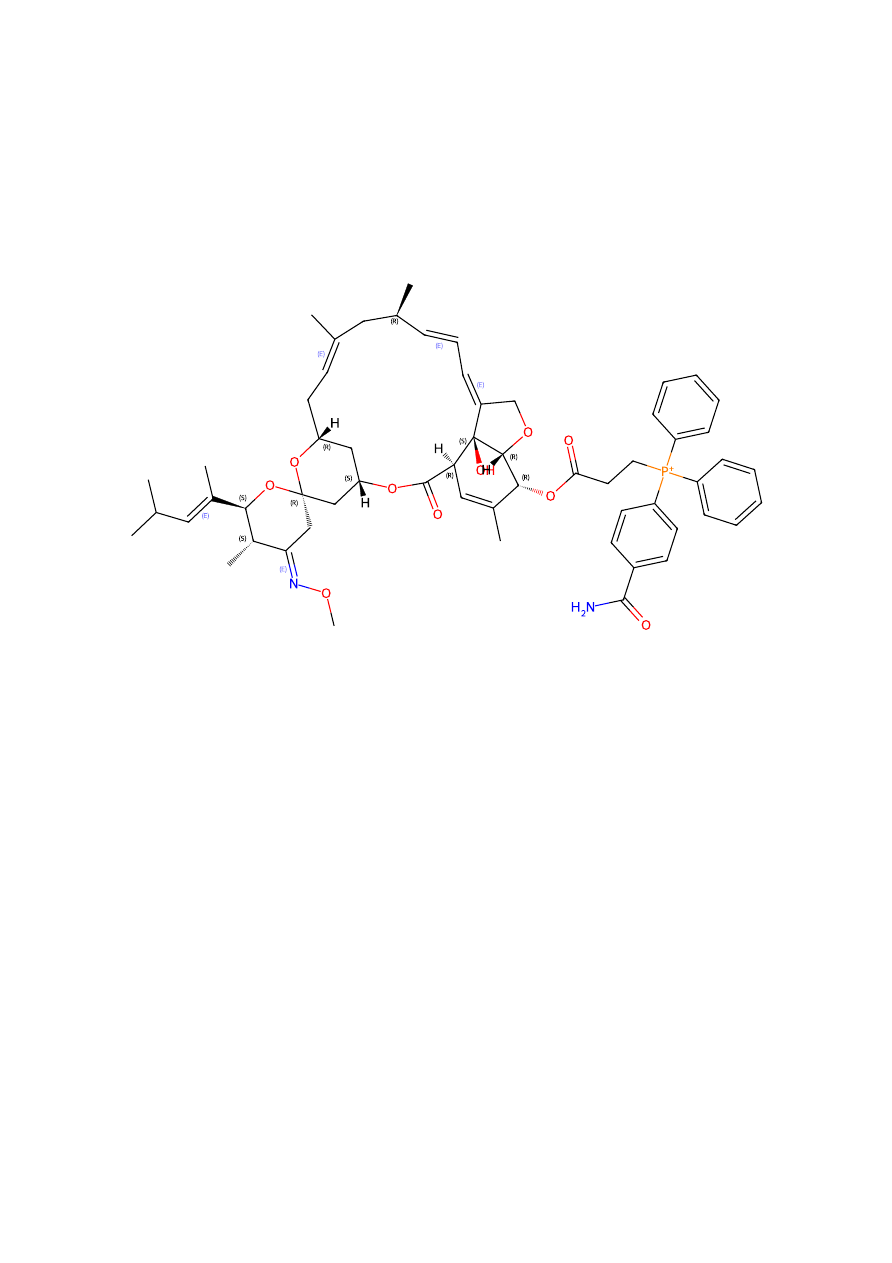
CHAPTER 8 · PROFILE 8/29 · ARCHIVE RECORD 169
: `COC(=O)CC[P+](c1ccc(OC)cc1)
(c1ccc(OC)cc1)c1ccc(OC)cc1`
Recorded rationale and role
Charge-associated distribution arm. The encoded cation
provides a test of distribution and membrane interaction
against an uncharged or differently charged comparator.
Source context is identified below; the design role is not a
measured efficacy ranking.
Preparation focus in the existing record
Specify counterion and salt composition, distinguish intact
conjugate from cleaved species, and compare the charged
appendage separately. Chromatographic and spectroscopic
characterization must follow the actual encoded structure.
AGENTIC RESEARCH FACTORY · COMPUTATIONAL COOKBOOK · 618 / 886

Full deposited SMILES — verbatim
CO/N=C1\C[C@]2(C[C@@H]3C[C@@H]
(C/C=C(\C)C[C@@H](C)/C=C/C=C4\CO[C@@H]5[C@H]
(OC(=O)CC[P+](c6ccccc6)
(c6ccccc6)c6ccc(C(N)=O)cc6)C(C)=C[C@@H](C(=O)O3)
[C@]45O)O2)O[C@H](/C(C)=C/C(C)C)[C@H]1C
Canonical isomeric SMILES — RDKit 2026.09.1
CO/N=C1\C[C@]2(C[C@@H]3C[C@@H]
(C/C=C(\C)C[C@@H](C)/C=C/C=C4\CO[C@@H]5[C@H]
(OC(=O)CC[P+](c6ccccc6)
(c6ccccc6)c6ccc(C(N)=O)cc6)C(C)=C[C@@H](C(=O)O3)
[C@]45O)O2)O[C@H](/C(C)=C/C(C)C)[C@H]1C
Complete computed profile
Formula
C59H72N2O10P+
Molecular weight (g/mol)
1000.203
Exact mass (Da)
999.49191
Crippen cLogP
8.7629
TPSA (Ų)
165.2
H-bond donors
2
H-bond acceptors
11
Rotatable bonds
11
AGENTIC RESEARCH FACTORY · COMPUTATIONAL COOKBOOK · 619 / 886

Rings
8
Formal charge
1
Heavy atoms
72
Unassigned stereo —
modern
0
Unassigned stereo —
legacy
0
Graph interpretation and liabilities
This graph has 0 O–O bonds, net formal charge +1, and 11
rotatable bonds. Its high calculated lipophilicity makes free
exposure, adsorption and formulation important comparison
variables. No unspecified stereochemical element was
detected by the stated modern analysis of this graph.
Source record
/home/codex/atlas-governance/rd-prospects-
464/sources/ATLAS_B1_SUCCESSORS.md; line 286
AGENTIC RESEARCH FACTORY · COMPUTATIONAL COOKBOOK · 620 / 886
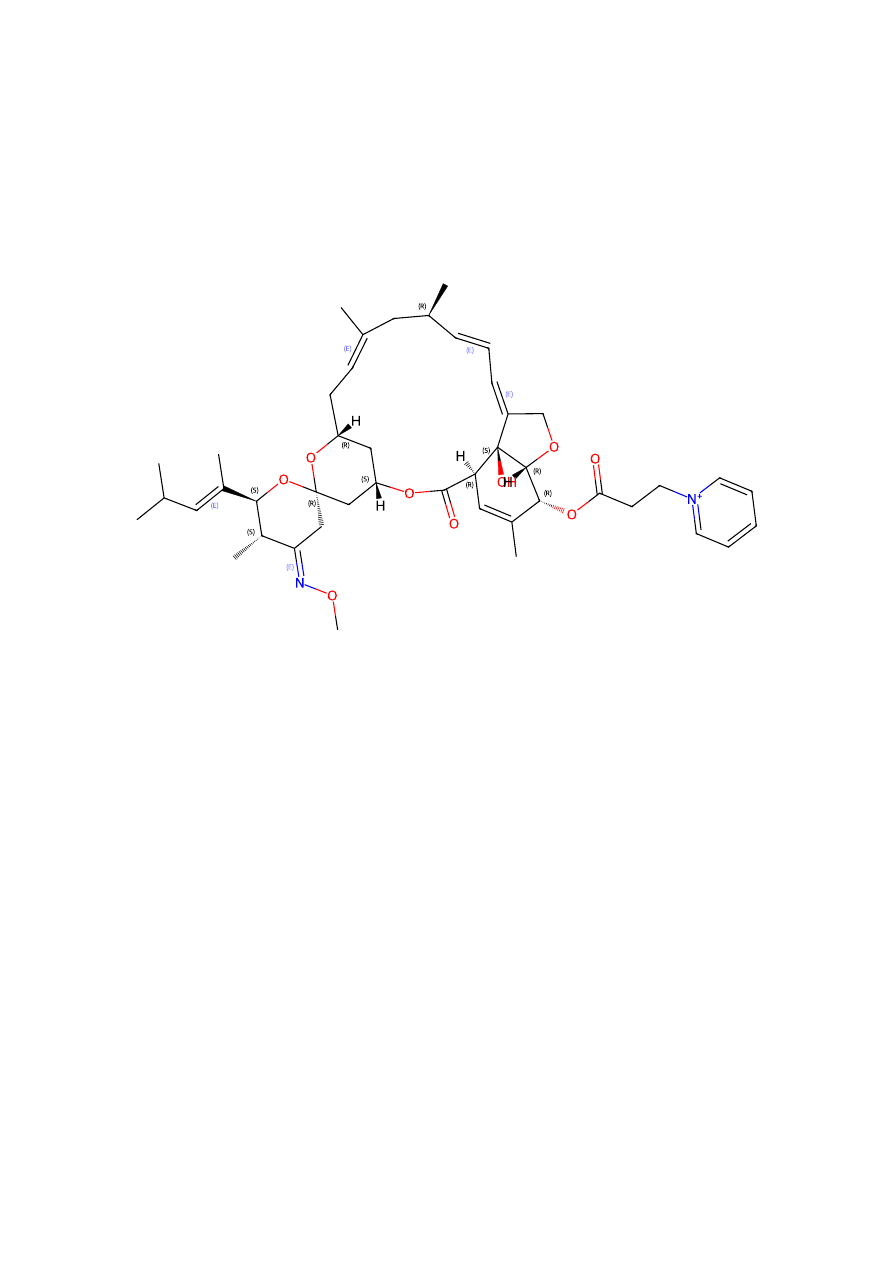
CHAPTER 8 · PROFILE 9/29 · ARCHIVE RECORD 170
5): `COC(=O)CC[P+](c1ccccc1)
(c1ccccc1)c1ccc(C(N)=O)cc1`
Recorded rationale and role
Charge-associated distribution arm. The encoded cation
provides a test of distribution and membrane interaction
against an uncharged or differently charged comparator.
Source context is identified below; the design role is not a
measured efficacy ranking.
Preparation focus in the existing record
Specify counterion and salt composition, distinguish intact
conjugate from cleaved species, and compare the charged
appendage separately. Chromatographic and spectroscopic
characterization must follow the actual encoded structure.
AGENTIC RESEARCH FACTORY · COMPUTATIONAL COOKBOOK · 621 / 886

Full deposited SMILES — verbatim
CO/N=C1\C[C@]2(C[C@@H]3C[C@@H]
(C/C=C(\C)C[C@@H](C)/C=C/C=C4\CO[C@@H]5[C@H]
(OC(=O)CC[n+]6ccccc6)C(C)=C[C@@H](C(=O)O3)
[C@]45O)O2)O[C@H](/C(C)=C/C(C)C)[C@H]1C
Canonical isomeric SMILES — RDKit 2026.09.1
CO/N=C1\C[C@]2(C[C@@H]3C[C@@H]
(C/C=C(\C)C[C@@H](C)/C=C/C=C4\CO[C@@H]5[C@H]
(OC(=O)CC[n+]6ccccc6)C(C)=C[C@@H](C(=O)O3)
[C@]45O)O2)O[C@H](/C(C)=C/C(C)C)[C@H]1C
Complete computed profile
Formula
C45H61N2O9+
Molecular weight (g/mol)
773.988
Exact mass (Da)
773.437158
Crippen cLogP
6.6576
TPSA (Ų)
125.99
H-bond donors
1
H-bond acceptors
10
Rotatable bonds
7
Rings
6
AGENTIC RESEARCH FACTORY · COMPUTATIONAL COOKBOOK · 622 / 886

Formal charge
1
Heavy atoms
56
Unassigned stereo —
modern
0
Unassigned stereo —
legacy
0
Graph interpretation and liabilities
This graph has 0 O–O bonds, net formal charge +1, and 7
rotatable bonds. The descriptor balance supports comparison
with the adjacent source series rather than assuming a shared
exposure profile. No unspecified stereochemical element was
detected by the stated modern analysis of this graph.
Source record
/home/codex/atlas-governance/rd-prospects-
464/sources/ATLAS_B1_SUCCESSORS.md; line 295
AGENTIC RESEARCH FACTORY · COMPUTATIONAL COOKBOOK · 623 / 886
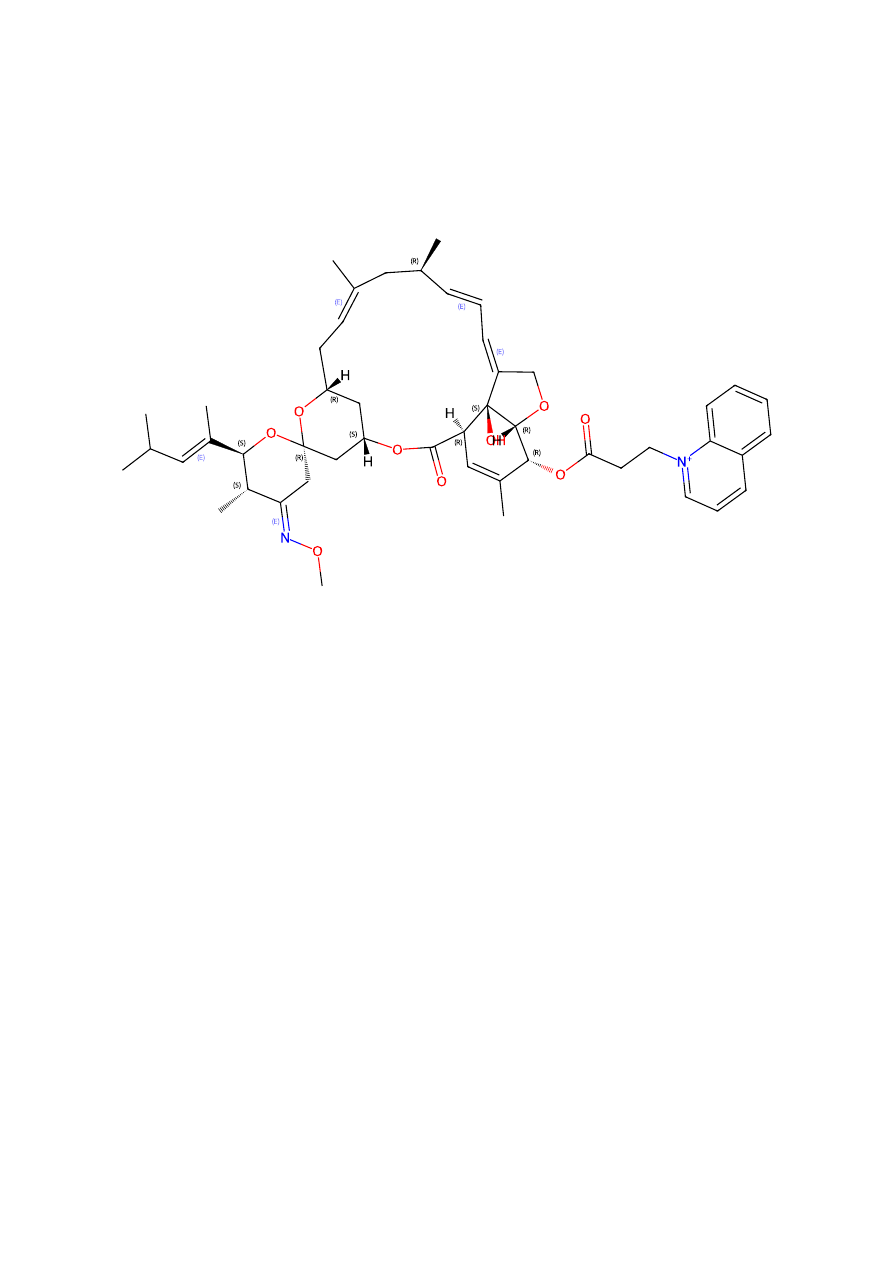
CHAPTER 8 · PROFILE 10/29 · ARCHIVE RECORD 171
c1`
Recorded rationale and role
Charge-associated distribution arm. The encoded cation
provides a test of distribution and membrane interaction
against an uncharged or differently charged comparator.
Source context is identified below; the design role is not a
measured efficacy ranking.
Preparation focus in the existing record
Specify counterion and salt composition, distinguish intact
conjugate from cleaved species, and compare the charged
appendage separately. Chromatographic and spectroscopic
characterization must follow the actual encoded structure.
AGENTIC RESEARCH FACTORY · COMPUTATIONAL COOKBOOK · 624 / 886

Full deposited SMILES — verbatim
CO/N=C1\C[C@]2(C[C@@H]3C[C@@H]
(C/C=C(\C)C[C@@H](C)/C=C/C=C4\CO[C@@H]5[C@H]
(OC(=O)CC[n+]6cccc7ccccc76)C(C)=C[C@@H](C(=O)O3)
[C@]45O)O2)O[C@H](/C(C)=C/C(C)C)[C@H]1C
Canonical isomeric SMILES — RDKit 2026.09.1
CO/N=C1\C[C@]2(C[C@@H]3C[C@@H]
(C/C=C(\C)C[C@@H](C)/C=C/C=C4\CO[C@@H]5[C@H]
(OC(=O)CC[n+]6cccc7ccccc76)C(C)=C[C@@H](C(=O)O3)
[C@]45O)O2)O[C@H](/C(C)=C/C(C)C)[C@H]1C
Complete computed profile
Formula
C49H63N2O9+
Molecular weight (g/mol)
824.048
Exact mass (Da)
823.452808
Crippen cLogP
7.8108
TPSA (Ų)
125.99
H-bond donors
1
H-bond acceptors
10
Rotatable bonds
7
Rings
7
AGENTIC RESEARCH FACTORY · COMPUTATIONAL COOKBOOK · 625 / 886

Formal charge
1
Heavy atoms
60
Unassigned stereo —
modern
0
Unassigned stereo —
legacy
0
Graph interpretation and liabilities
This graph has 0 O–O bonds, net formal charge +1, and 7
rotatable bonds. Its high calculated lipophilicity makes free
exposure, adsorption and formulation important comparison
variables. No unspecified stereochemical element was
detected by the stated modern analysis of this graph.
Source record
/home/codex/atlas-governance/rd-prospects-
464/sources/ATLAS_B1_SUCCESSORS.md; line 304
AGENTIC RESEARCH FACTORY · COMPUTATIONAL COOKBOOK · 626 / 886
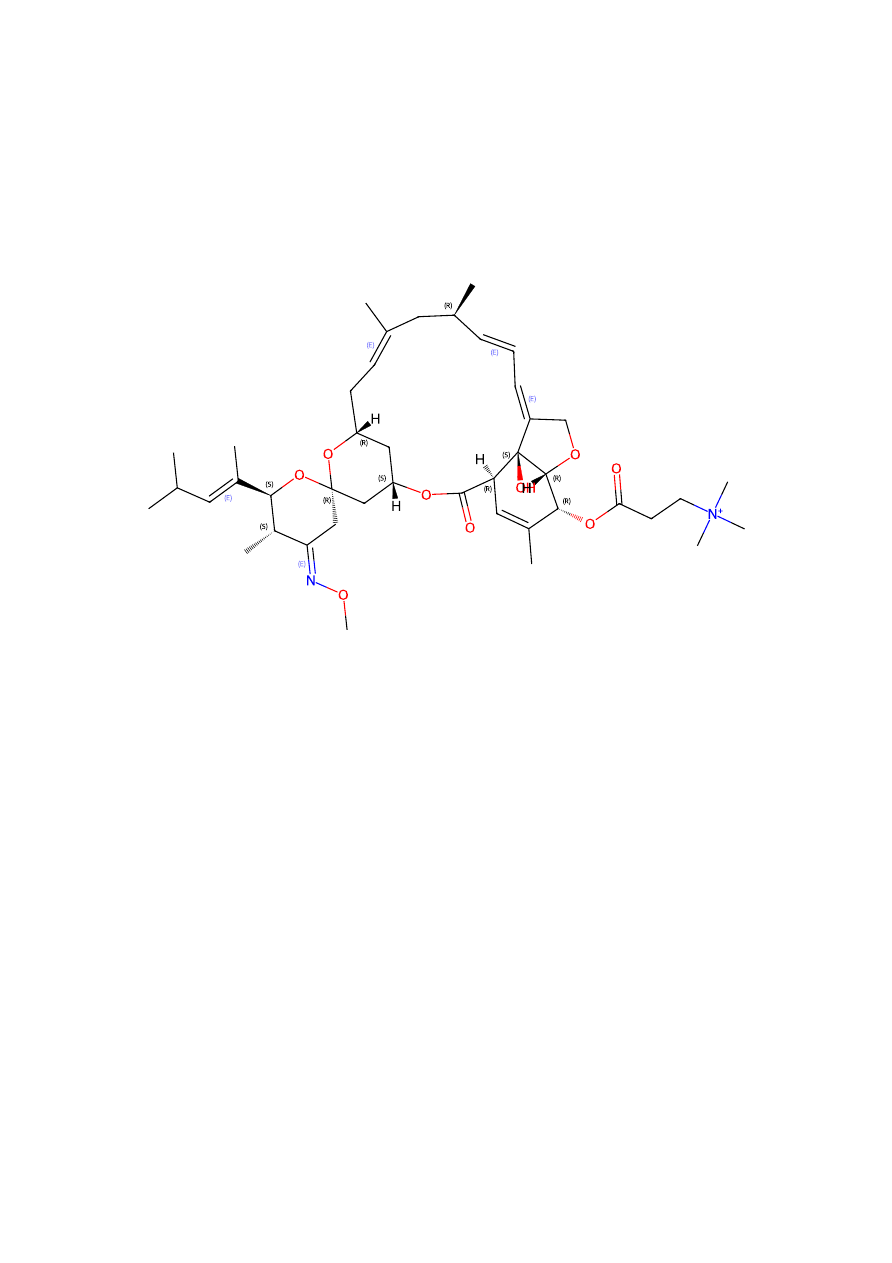
CHAPTER 8 · PROFILE 11/29 · ARCHIVE RECORD 172
Arm proxy (A logP 1.6904):
`COC(=O)CC[n+]1cccc2ccccc21`
Recorded rationale and role
Charge-associated distribution arm. The encoded cation
provides a test of distribution and membrane interaction
against an uncharged or differently charged comparator.
Source context is identified below; the design role is not a
measured efficacy ranking.
Preparation focus in the existing record
Specify counterion and salt composition, distinguish intact
conjugate from cleaved species, and compare the charged
appendage separately. Chromatographic and spectroscopic
characterization must follow the actual encoded structure.
AGENTIC RESEARCH FACTORY · COMPUTATIONAL COOKBOOK · 627 / 886

Full deposited SMILES — verbatim
CO/N=C1\C[C@]2(C[C@@H]3C[C@@H]
(C/C=C(\C)C[C@@H](C)/C=C/C=C4\CO[C@@H]5[C@H]
(OC(=O)CC[N+](C)(C)C)C(C)=C[C@@H](C(=O)O3)
[C@]45O)O2)O[C@H](/C(C)=C/C(C)C)[C@H]1C
Canonical isomeric SMILES — RDKit 2026.09.1
CO/N=C1\C[C@]2(C[C@@H]3C[C@@H]
(C/C=C(\C)C[C@@H](C)/C=C/C=C4\CO[C@@H]5[C@H]
(OC(=O)CC[N+](C)(C)C)C(C)=C[C@@H](C(=O)O3)
[C@]45O)O2)O[C@H](/C(C)=C/C(C)C)[C@H]1C
Complete computed profile
Formula
C43H65N2O9+
Molecular weight (g/mol)
753.998
Exact mass (Da)
753.468458
Crippen cLogP
6.3761
TPSA (Ų)
122.11
H-bond donors
1
H-bond acceptors
10
Rotatable bonds
7
Rings
5
AGENTIC RESEARCH FACTORY · COMPUTATIONAL COOKBOOK · 628 / 886

Formal charge
1
Heavy atoms
54
Unassigned stereo —
modern
0
Unassigned stereo —
legacy
0
Graph interpretation and liabilities
This graph has 0 O–O bonds, net formal charge +1, and 7
rotatable bonds. The descriptor balance supports comparison
with the adjacent source series rather than assuming a shared
exposure profile. No unspecified stereochemical element was
detected by the stated modern analysis of this graph.
Source record
/home/codex/atlas-governance/rd-prospects-
464/sources/ATLAS_B1_SUCCESSORS.md; line 313
AGENTIC RESEARCH FACTORY · COMPUTATIONAL COOKBOOK · 629 / 886
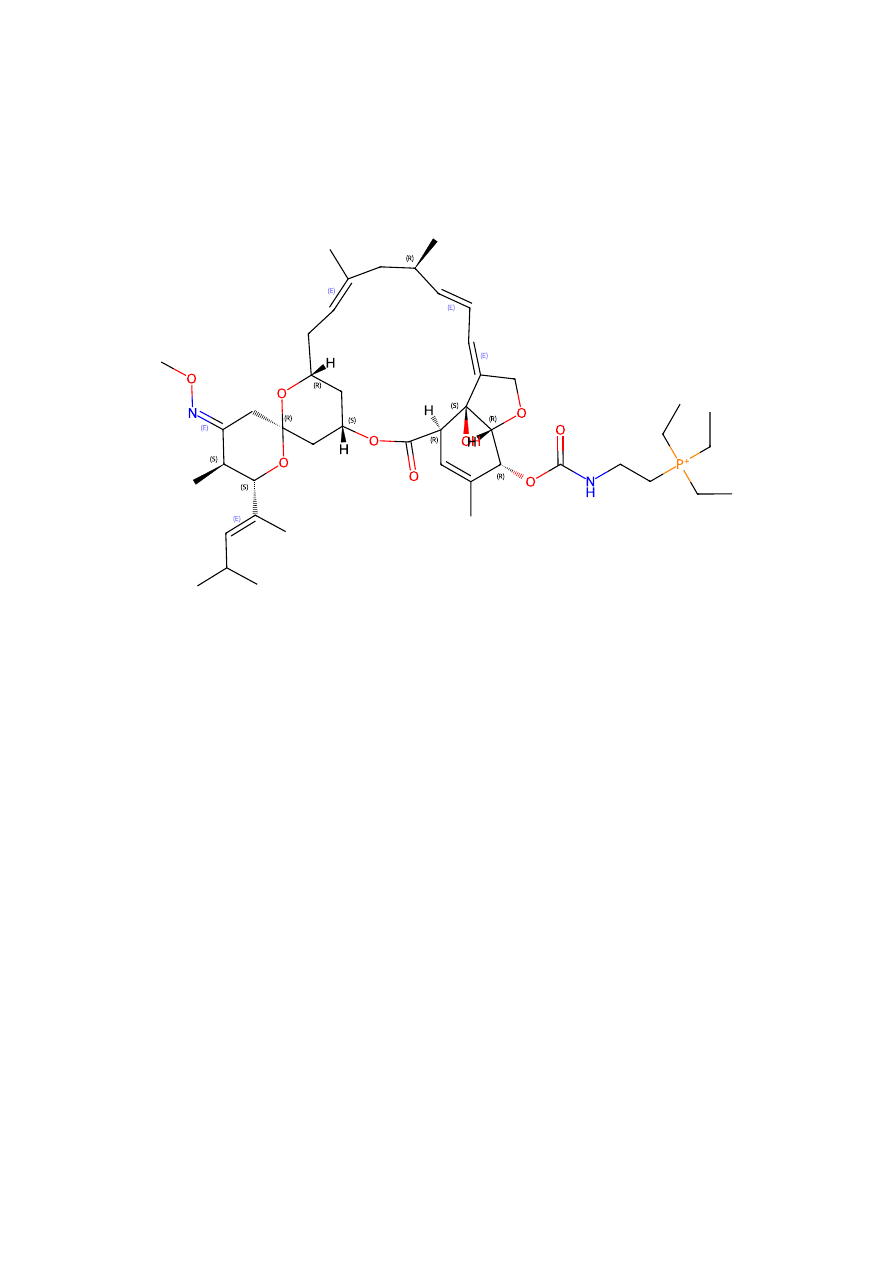
CHAPTER 8 · PROFILE 12/29 · ARCHIVE RECORD 173
C`
Recorded rationale and role
Charge-associated distribution arm. The encoded cation
provides a test of distribution and membrane interaction
against an uncharged or differently charged comparator.
Source context is identified below; the design role is not a
measured efficacy ranking.
Preparation focus in the existing record
Specify counterion and salt composition, distinguish intact
conjugate from cleaved species, and compare the charged
appendage separately. Chromatographic and spectroscopic
characterization must follow the actual encoded structure.
AGENTIC RESEARCH FACTORY · COMPUTATIONAL COOKBOOK · 630 / 886

Full deposited SMILES — verbatim
CC[P+](CC)
(CC)CCNC(=O)O[C@@H]1C(C)=C[C@H]2C(=O)O[C@H]3C[
C@@H](C/C=C(\C)C[C@@H]
(C)/C=C/C=C4\CO[C@H]1[C@@]42O)O[C@@]1(C/C(=N\OC
)[C@H](C)[C@@H](/C(C)=C/C(C)C)O1)C3
Canonical isomeric SMILES — RDKit 2026.09.1
CC[P+](CC)
(CC)CCNC(=O)O[C@@H]1C(C)=C[C@H]2C(=O)O[C@H]3C[
C@@H](C/C=C(\C)C[C@@H]
(C)/C=C/C=C4\CO[C@H]1[C@@]42O)O[C@@]1(C/C(=N\OC
)[C@H](C)[C@@H](/C(C)=C/C(C)C)O1)C3
Complete computed profile
Formula
C46H72N2O9P+
Molecular weight (g/mol)
828.061
Exact mass (Da)
827.496995
Crippen cLogP
8.5401
TPSA (Ų)
134.14
H-bond donors
2
H-bond acceptors
10
Rotatable bonds
10
AGENTIC RESEARCH FACTORY · COMPUTATIONAL COOKBOOK · 631 / 886

Rings
5
Formal charge
1
Heavy atoms
58
Unassigned stereo —
modern
0
Unassigned stereo —
legacy
0
Graph interpretation and liabilities
This graph has 0 O–O bonds, net formal charge +1, and 10
rotatable bonds. Its high calculated lipophilicity makes free
exposure, adsorption and formulation important comparison
variables. No unspecified stereochemical element was
detected by the stated modern analysis of this graph.
Source record
/home/codex/atlas-governance/rd-prospects-
464/sources/ATLAS_B1_SUCCESSORS.md; line 322
AGENTIC RESEARCH FACTORY · COMPUTATIONAL COOKBOOK · 632 / 886
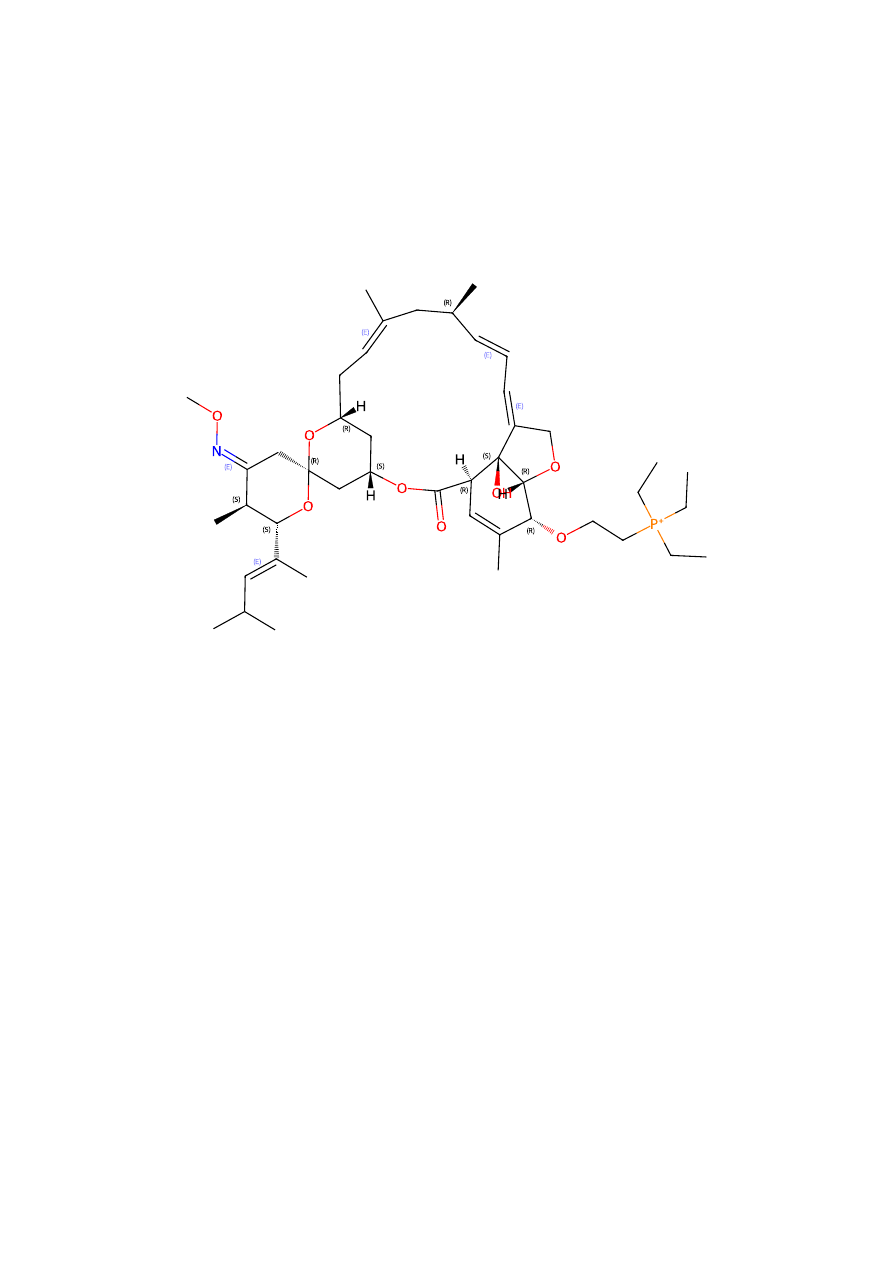
CHAPTER 8 · PROFILE 13/29 · ARCHIVE RECORD 174
Arm proxy (A logP 2.4197): `CC[P+](CC)
(CC)CCNC(=O)OC`
Recorded rationale and role
Charge-associated distribution arm. The encoded cation
provides a test of distribution and membrane interaction
against an uncharged or differently charged comparator.
Source context is identified below; the design role is not a
measured efficacy ranking.
Preparation focus in the existing record
Specify counterion and salt composition, distinguish intact
conjugate from cleaved species, and compare the charged
appendage separately. Chromatographic and spectroscopic
characterization must follow the actual encoded structure.
AGENTIC RESEARCH FACTORY · COMPUTATIONAL COOKBOOK · 633 / 886

Full deposited SMILES — verbatim
CC[P+](CC)
(CC)CCO[C@@H]1C(C)=C[C@H]2C(=O)O[C@H]3C[C@@H
](C/C=C(\C)C[C@@H]
(C)/C=C/C=C4\CO[C@H]1[C@@]42O)O[C@@]1(C/C(=N\OC
)[C@H](C)[C@@H](/C(C)=C/C(C)C)O1)C3
Canonical isomeric SMILES — RDKit 2026.09.1
CC[P+](CC)
(CC)CCO[C@@H]1C(C)=C[C@H]2C(=O)O[C@H]3C[C@@H
](C/C=C(\C)C[C@@H]
(C)/C=C/C=C4\CO[C@H]1[C@@]42O)O[C@@]1(C/C(=N\OC
)[C@H](C)[C@@H](/C(C)=C/C(C)C)O1)C3
Complete computed profile
Formula
C45H71NO8P+
Molecular weight (g/mol)
785.036
Exact mass (Da)
784.491181
Crippen cLogP
8.8305
TPSA (Ų)
105.04
H-bond donors
1
H-bond acceptors
9
Rotatable bonds
10
AGENTIC RESEARCH FACTORY · COMPUTATIONAL COOKBOOK · 634 / 886

Rings
5
Formal charge
1
Heavy atoms
55
Unassigned stereo —
modern
0
Unassigned stereo —
legacy
0
Graph interpretation and liabilities
This graph has 0 O–O bonds, net formal charge +1, and 10
rotatable bonds. Its high calculated lipophilicity makes free
exposure, adsorption and formulation important comparison
variables. No unspecified stereochemical element was
detected by the stated modern analysis of this graph.
Source record
/home/codex/atlas-governance/rd-prospects-
464/sources/ATLAS_B1_SUCCESSORS.md; line 331
AGENTIC RESEARCH FACTORY · COMPUTATIONAL COOKBOOK · 635 / 886
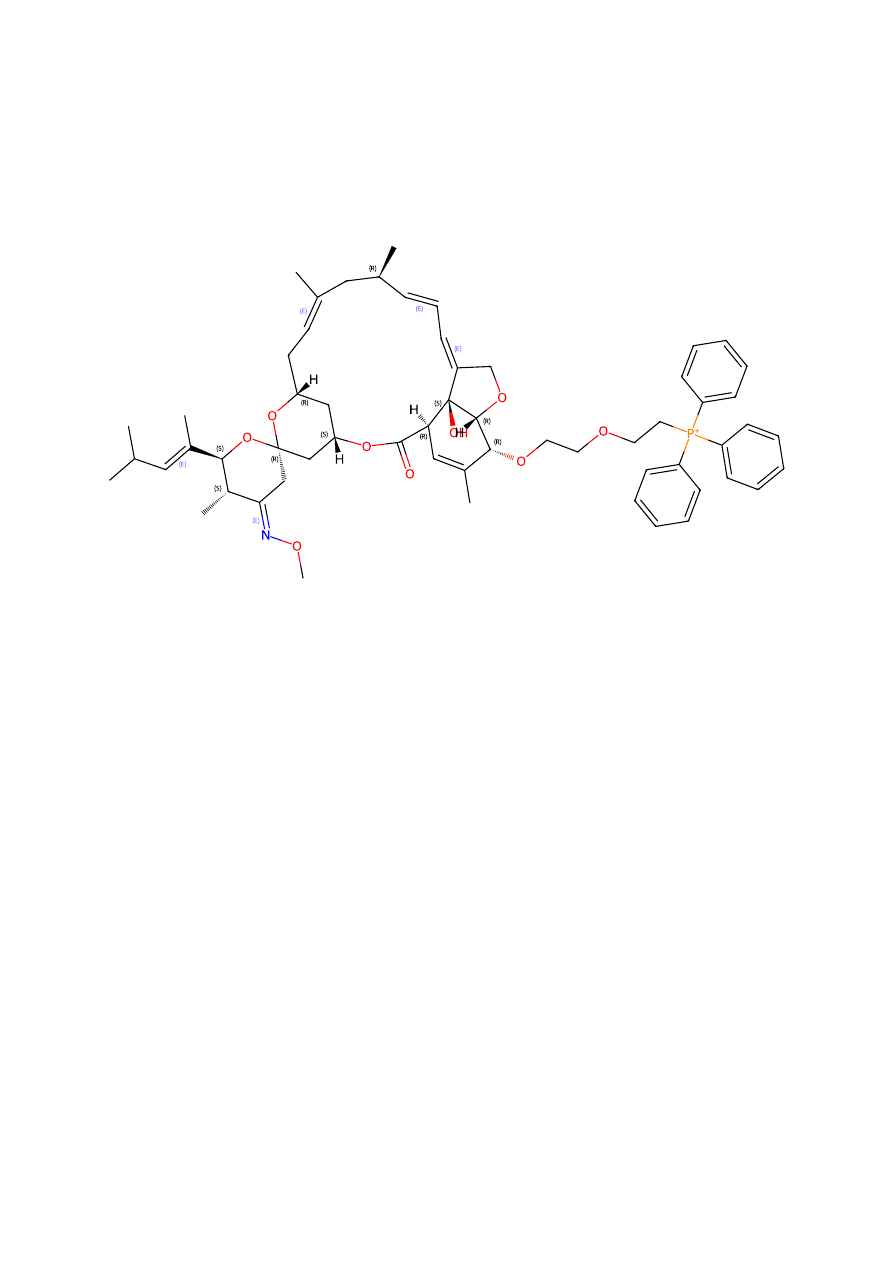
CHAPTER 8 · PROFILE 14/29 · ARCHIVE RECORD 175
C)CC`
Recorded rationale and role
Charge-associated distribution arm. The encoded cation
provides a test of distribution and membrane interaction
against an uncharged or differently charged comparator.
Source context is identified below; the design role is not a
measured efficacy ranking.
Preparation focus in the existing record
Specify counterion and salt composition, distinguish intact
conjugate from cleaved species, and compare the charged
appendage separately. Chromatographic and spectroscopic
characterization must follow the actual encoded structure.
AGENTIC RESEARCH FACTORY · COMPUTATIONAL COOKBOOK · 636 / 886

Full deposited SMILES — verbatim
CO/N=C1\C[C@]2(C[C@@H]3C[C@@H]
(C/C=C(\C)C[C@@H](C)/C=C/C=C4\CO[C@@H]5[C@H]
(OCCOCC[P+](c6ccccc6)
(c6ccccc6)c6ccccc6)C(C)=C[C@@H](C(=O)O3)
[C@]45O)O2)O[C@H](/C(C)=C/C(C)C)[C@H]1C
Canonical isomeric SMILES — RDKit 2026.09.1
CO/N=C1\C[C@]2(C[C@@H]3C[C@@H]
(C/C=C(\C)C[C@@H](C)/C=C/C=C4\CO[C@@H]5[C@H]
(OCCOCC[P+](c6ccccc6)
(c6ccccc6)c6ccccc6)C(C)=C[C@@H](C(=O)O3)
[C@]45O)O2)O[C@H](/C(C)=C/C(C)C)[C@H]1C
Complete computed profile
Formula
C59H75NO9P+
Molecular weight (g/mol)
973.221
Exact mass (Da)
972.517396
Crippen cLogP
9.7639
TPSA (Ų)
114.27
H-bond donors
1
H-bond acceptors
10
Rotatable bonds
13
AGENTIC RESEARCH FACTORY · COMPUTATIONAL COOKBOOK · 637 / 886

Rings
8
Formal charge
1
Heavy atoms
70
Unassigned stereo —
modern
0
Unassigned stereo —
legacy
0
Graph interpretation and liabilities
This graph has 0 O–O bonds, net formal charge +1, and 13
rotatable bonds. Its high calculated lipophilicity makes free
exposure, adsorption and formulation important comparison
variables. No unspecified stereochemical element was
detected by the stated modern analysis of this graph.
Source record
/home/codex/atlas-governance/rd-prospects-
464/sources/ATLAS_B1_SUCCESSORS.md; line 340
AGENTIC RESEARCH FACTORY · COMPUTATIONAL COOKBOOK · 638 / 886
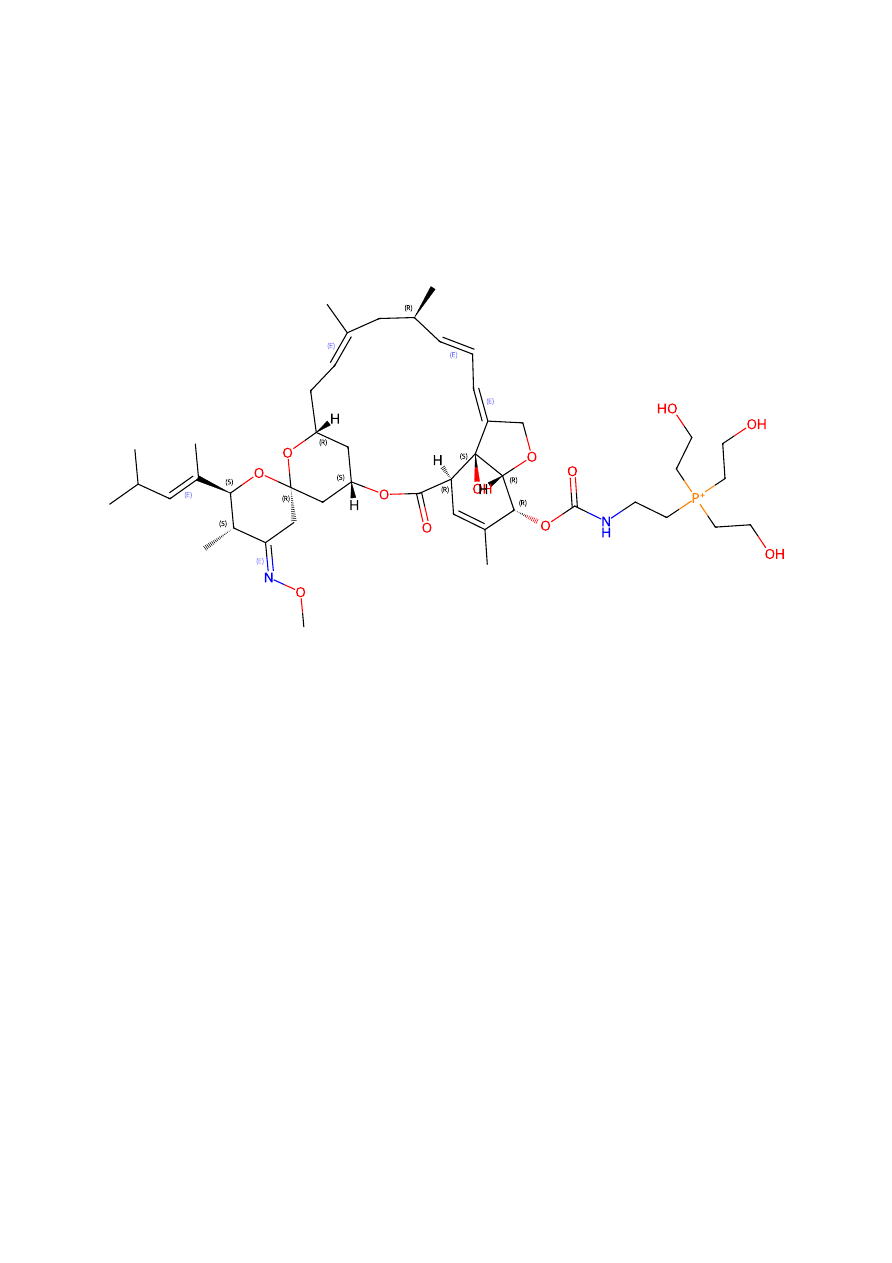
CHAPTER 8 · PROFILE 15/29 · ARCHIVE RECORD 176
gP 3.6435): `COCCOCC[P+](c1ccccc1)
(c1ccccc1)c1ccccc1`
Recorded rationale and role
Charge-associated distribution arm. The encoded cation
provides a test of distribution and membrane interaction
against an uncharged or differently charged comparator.
Source context is identified below; the design role is not a
measured efficacy ranking.
Preparation focus in the existing record
Specify counterion and salt composition, distinguish intact
conjugate from cleaved species, and compare the charged
appendage separately. Chromatographic and spectroscopic
characterization must follow the actual encoded structure.
AGENTIC RESEARCH FACTORY · COMPUTATIONAL COOKBOOK · 639 / 886

Full deposited SMILES — verbatim
CO/N=C1\C[C@]2(C[C@@H]3C[C@@H]
(C/C=C(\C)C[C@@H](C)/C=C/C=C4\CO[C@@H]5[C@H]
(OC(=O)NCC[P+](CCO)(CCO)CCO)C(C)=C[C@@H]
(C(=O)O3)[C@]45O)O2)O[C@H](/C(C)=C/C(C)C)[C@H]1C
Canonical isomeric SMILES — RDKit 2026.09.1
CO/N=C1\C[C@]2(C[C@@H]3C[C@@H]
(C/C=C(\C)C[C@@H](C)/C=C/C=C4\CO[C@@H]5[C@H]
(OC(=O)NCC[P+](CCO)(CCO)CCO)C(C)=C[C@@H]
(C(=O)O3)[C@]45O)O2)O[C@H](/C(C)=C/C(C)C)[C@H]1C
Complete computed profile
Formula
C46H72N2O12P+
Molecular weight (g/mol)
876.058
Exact mass (Da)
875.481739
Crippen cLogP
5.4573
TPSA (Ų)
194.83
H-bond donors
5
H-bond acceptors
13
Rotatable bonds
13
Rings
5
AGENTIC RESEARCH FACTORY · COMPUTATIONAL COOKBOOK · 640 / 886

Formal charge
1
Heavy atoms
61
Unassigned stereo —
modern
0
Unassigned stereo —
legacy
0
Graph interpretation and liabilities
This graph has 0 O–O bonds, net formal charge +1, and 13
rotatable bonds. Its polar surface makes permeability and
compartmental exposure important comparison variables. No
unspecified stereochemical element was detected by the
stated modern analysis of this graph.
Source record
/home/codex/atlas-governance/rd-prospects-
464/sources/ATLAS_B1_SUCCESSORS.md; line 349
AGENTIC RESEARCH FACTORY · COMPUTATIONAL COOKBOOK · 641 / 886
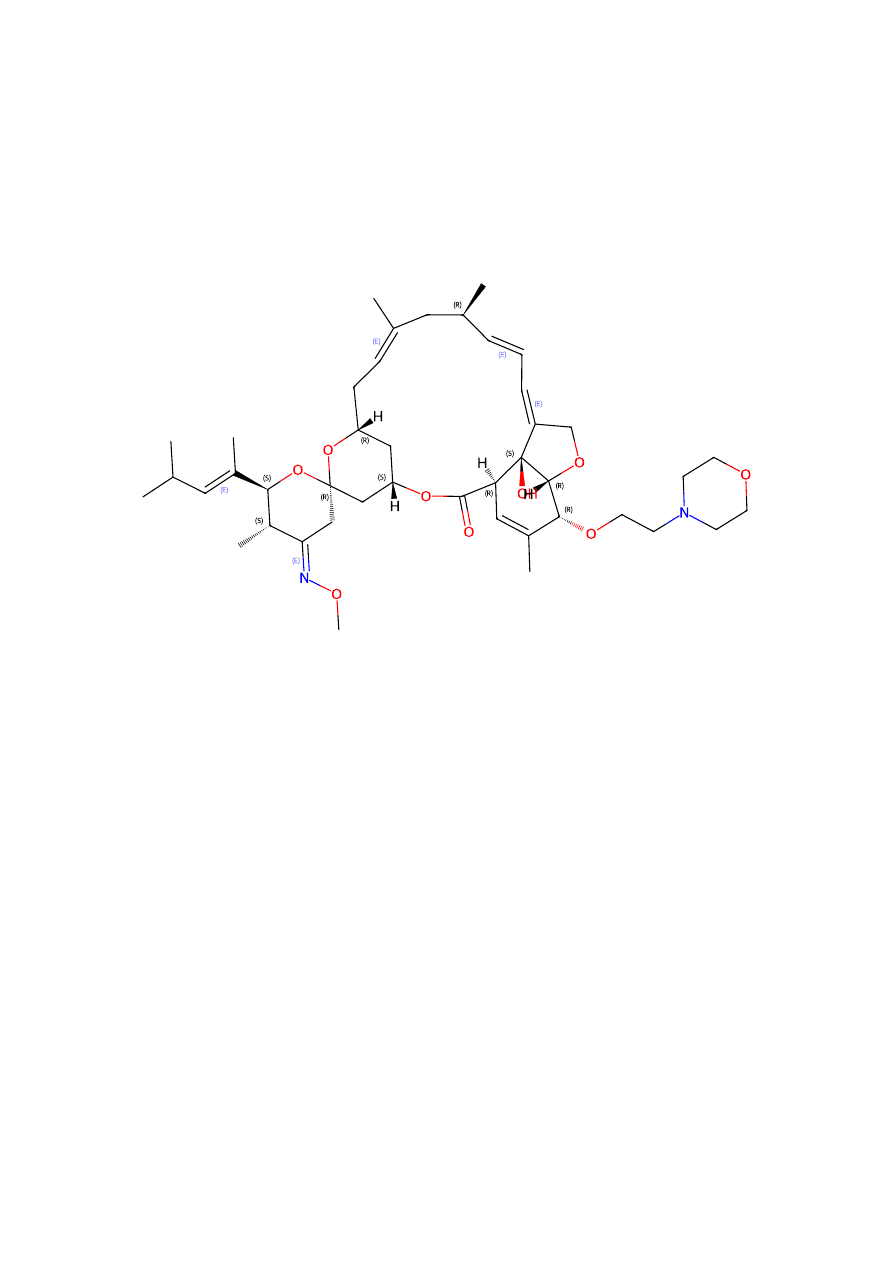
CHAPTER 8 · PROFILE 16/29 · ARCHIVE RECORD 177
rm proxy (A logP -0.6631): `COC(=O)NCC[P+]
(CCO)(CCO)CCO`
Recorded rationale and role
Programme comparator / derivative. This entry preserves the
source scaffold and appendage combination for comparison
with its parent and adjacent development records. Source
context is identified below; the design role is not a measured
efficacy ranking.
Preparation focus in the existing record
The preparation concept is governed by the source scaffold,
available attachment handle and functional-group
compatibility. Establish connectivity, stereochemical
AGENTIC RESEARCH FACTORY · COMPUTATIONAL COOKBOOK · 642 / 886

composition and relevant stability before comparing biological
responses.
Full deposited SMILES — verbatim
CO/N=C1\C[C@]2(C[C@@H]3C[C@@H]
(C/C=C(\C)C[C@@H](C)/C=C/C=C4\CO[C@@H]5[C@H]
(OCCN6CCOCC6)C(C)=C[C@@H](C(=O)O3)
[C@]45O)O2)O[C@H](/C(C)=C/C(C)C)[C@H]1C
Canonical isomeric SMILES — RDKit 2026.09.1
CO/N=C1\C[C@]2(C[C@@H]3C[C@@H]
(C/C=C(\C)C[C@@H](C)/C=C/C=C4\CO[C@@H]5[C@H]
(OCCN6CCOCC6)C(C)=C[C@@H](C(=O)O3)
[C@]45O)O2)O[C@H](/C(C)=C/C(C)C)[C@H]1C
Complete computed profile
Formula
C43H64N2O9
Molecular weight (g/mol)
752.99
Exact mass (Da)
752.461182
Crippen cLogP
6.0854
TPSA (Ų)
117.51
H-bond donors
1
H-bond acceptors
11
Rotatable bonds
7
AGENTIC RESEARCH FACTORY · COMPUTATIONAL COOKBOOK · 643 / 886

Rings
6
Formal charge
0
Heavy atoms
54
Unassigned stereo —
modern
0
Unassigned stereo —
legacy
0
Graph interpretation and liabilities
This graph has 0 O–O bonds, net formal charge +0, and 7
rotatable bonds. The descriptor balance supports comparison
with the adjacent source series rather than assuming a shared
exposure profile. No unspecified stereochemical element was
detected by the stated modern analysis of this graph.
Source record
/home/codex/atlas-governance/rd-prospects-
464/sources/ATLAS_B1_SUCCESSORS.md; line 358
AGENTIC RESEARCH FACTORY · COMPUTATIONAL COOKBOOK · 644 / 886
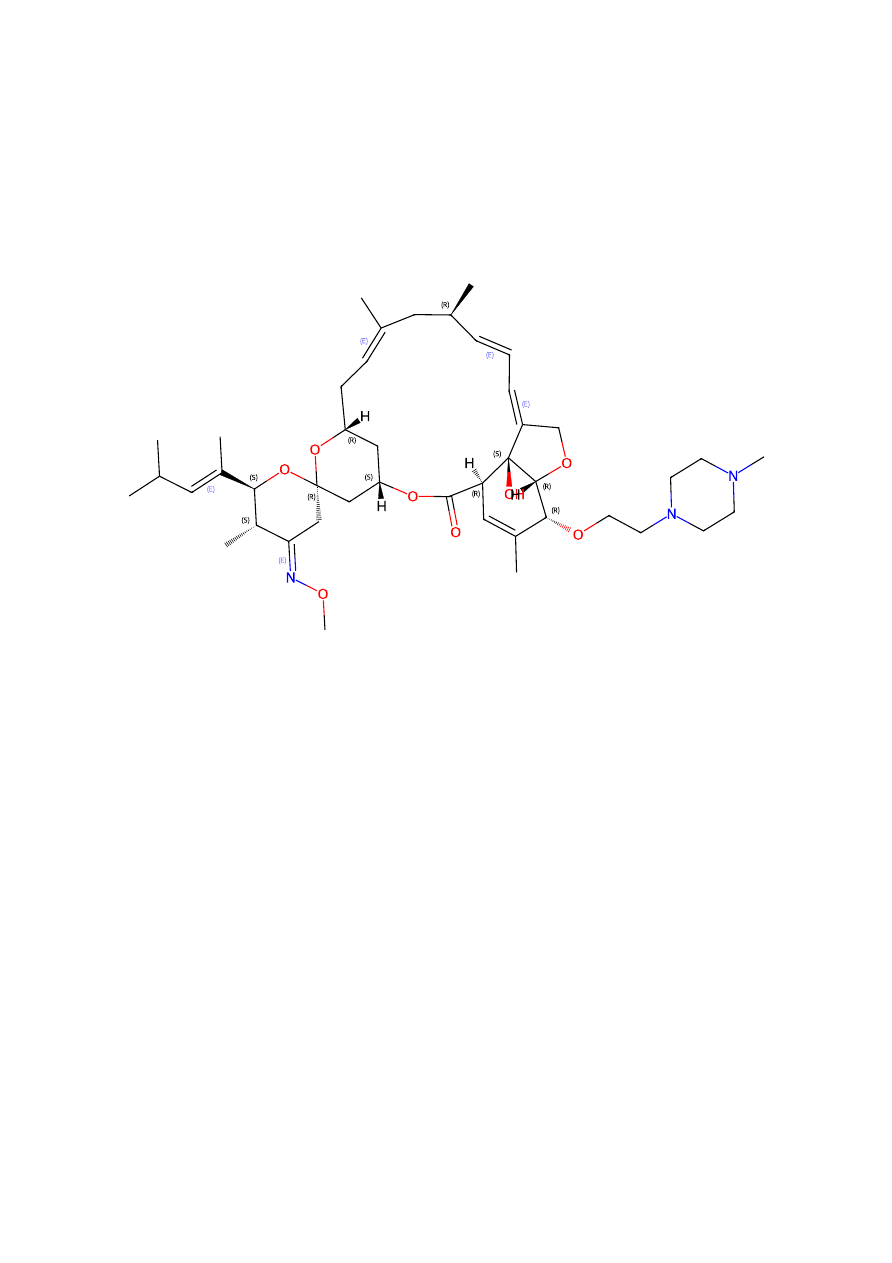
CHAPTER 8 · PROFILE 17/29 · ARCHIVE RECORD 178
P -1.4687. This is not a separately nominated
conjugate.
Recorded rationale and role
Programme comparator / derivative. This entry preserves the
source scaffold and appendage combination for comparison
with its parent and adjacent development records. Source
context is identified below; the design role is not a measured
efficacy ranking.
Preparation focus in the existing record
The preparation concept is governed by the source scaffold,
available attachment handle and functional-group
compatibility. Establish connectivity, stereochemical
AGENTIC RESEARCH FACTORY · COMPUTATIONAL COOKBOOK · 645 / 886

composition and relevant stability before comparing biological
responses.
Full deposited SMILES — verbatim
CO/N=C1\C[C@]2(C[C@@H]3C[C@@H]
(C/C=C(\C)C[C@@H](C)/C=C/C=C4\CO[C@@H]5[C@H]
(OCCN6CCN(C)CC6)C(C)=C[C@@H](C(=O)O3)
[C@]45O)O2)O[C@H](/C(C)=C/C(C)C)[C@H]1C
Canonical isomeric SMILES — RDKit 2026.09.1
CO/N=C1\C[C@]2(C[C@@H]3C[C@@H]
(C/C=C(\C)C[C@@H](C)/C=C/C=C4\CO[C@@H]5[C@H]
(OCCN6CCN(C)CC6)C(C)=C[C@@H](C(=O)O3)
[C@]45O)O2)O[C@H](/C(C)=C/C(C)C)[C@H]1C
Complete computed profile
Formula
C44H67N3O8
Molecular weight (g/mol)
766.033
Exact mass (Da)
765.492816
Crippen cLogP
6.0006
TPSA (Ų)
111.52
H-bond donors
1
H-bond acceptors
11
Rotatable bonds
7
AGENTIC RESEARCH FACTORY · COMPUTATIONAL COOKBOOK · 646 / 886

Rings
6
Formal charge
0
Heavy atoms
55
Unassigned stereo —
modern
0
Unassigned stereo —
legacy
0
Graph interpretation and liabilities
This graph has 0 O–O bonds, net formal charge +0, and 7
rotatable bonds. The descriptor balance supports comparison
with the adjacent source series rather than assuming a shared
exposure profile. No unspecified stereochemical element was
detected by the stated modern analysis of this graph.
Source record
/home/codex/atlas-governance/rd-prospects-
464/sources/ATLAS_B1_SUCCESSORS.md; line 369
AGENTIC RESEARCH FACTORY · COMPUTATIONAL COOKBOOK · 647 / 886
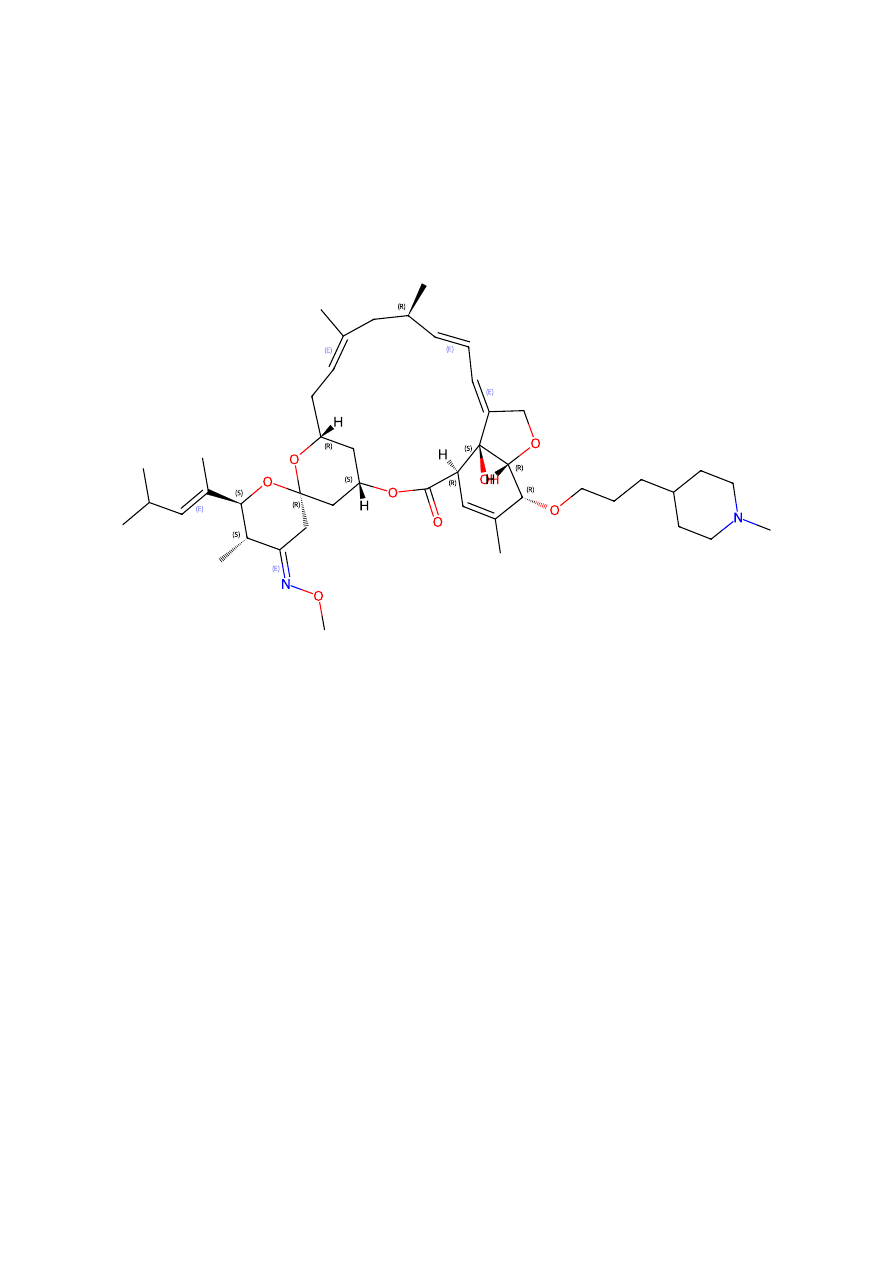
CHAPTER 8 · PROFILE 18/29 · ARCHIVE RECORD 179
P -1.5535. This is not a separately nominated
conjugate.
Recorded rationale and role
Programme comparator / derivative. This entry preserves the
source scaffold and appendage combination for comparison
with its parent and adjacent development records. Source
context is identified below; the design role is not a measured
efficacy ranking.
Preparation focus in the existing record
The preparation concept is governed by the source scaffold,
available attachment handle and functional-group
compatibility. Establish connectivity, stereochemical
AGENTIC RESEARCH FACTORY · COMPUTATIONAL COOKBOOK · 648 / 886

composition and relevant stability before comparing biological
responses.
Full deposited SMILES — verbatim
CO/N=C1\C[C@]2(C[C@@H]3C[C@@H]
(C/C=C(\C)C[C@@H](C)/C=C/C=C4\CO[C@@H]5[C@H]
(OCCCC6CCN(C)CC6)C(C)=C[C@@H](C(=O)O3)
[C@]45O)O2)O[C@H](/C(C)=C/C(C)C)[C@H]1C
Canonical isomeric SMILES — RDKit 2026.09.1
CO/N=C1\C[C@]2(C[C@@H]3C[C@@H]
(C/C=C(\C)C[C@@H](C)/C=C/C=C4\CO[C@@H]5[C@H]
(OCCCC6CCN(C)CC6)C(C)=C[C@@H](C(=O)O3)
[C@]45O)O2)O[C@H](/C(C)=C/C(C)C)[C@H]1C
Complete computed profile
Formula
C46H70N2O8
Molecular weight (g/mol)
779.072
Exact mass (Da)
778.513217
Crippen cLogP
7.8752
TPSA (Ų)
108.28
H-bond donors
1
H-bond acceptors
10
Rotatable bonds
8
AGENTIC RESEARCH FACTORY · COMPUTATIONAL COOKBOOK · 649 / 886

Rings
6
Formal charge
0
Heavy atoms
56
Unassigned stereo —
modern
0
Unassigned stereo —
legacy
0
Graph interpretation and liabilities
This graph has 0 O–O bonds, net formal charge +0, and 8
rotatable bonds. Its high calculated lipophilicity makes free
exposure, adsorption and formulation important comparison
variables. No unspecified stereochemical element was
detected by the stated modern analysis of this graph.
Source record
/home/codex/atlas-governance/rd-prospects-
464/sources/ATLAS_B1_SUCCESSORS.md; line 380
AGENTIC RESEARCH FACTORY · COMPUTATIONAL COOKBOOK · 650 / 886
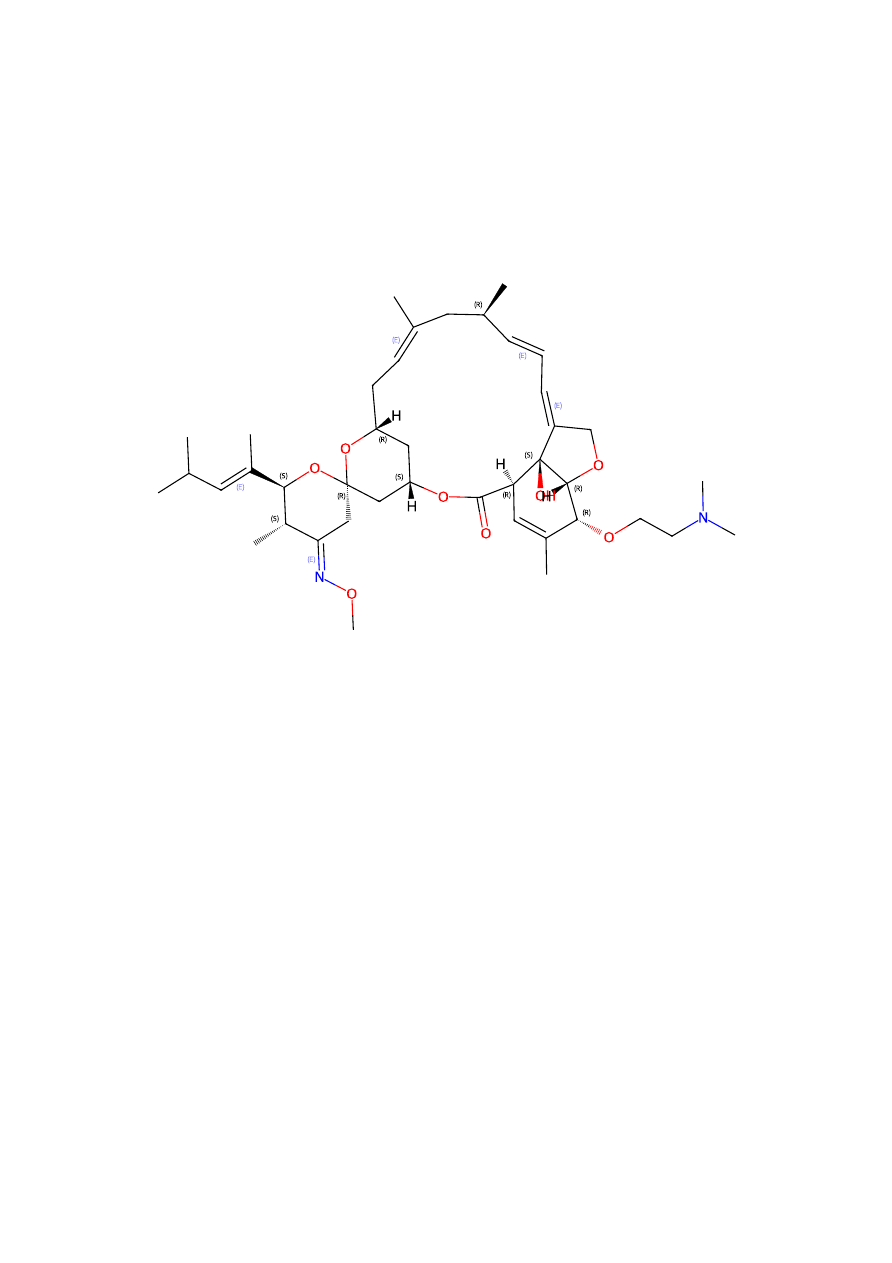
CHAPTER 8 · PROFILE 19/29 · ARCHIVE RECORD 180
P -0.0690. This is not a separately nominated
conjugate.
Recorded rationale and role
Programme comparator / derivative. This entry preserves the
source scaffold and appendage combination for comparison
with its parent and adjacent development records. Source
context is identified below; the design role is not a measured
efficacy ranking.
Preparation focus in the existing record
The preparation concept is governed by the source scaffold,
available attachment handle and functional-group
compatibility. Establish connectivity, stereochemical
AGENTIC RESEARCH FACTORY · COMPUTATIONAL COOKBOOK · 651 / 886

composition and relevant stability before comparing biological
responses.
Full deposited SMILES — verbatim
CO/N=C1\C[C@]2(C[C@@H]3C[C@@H]
(C/C=C(\C)C[C@@H](C)/C=C/C=C4\CO[C@@H]5[C@H]
(OCCN(C)C)C(C)=C[C@@H](C(=O)O3)
[C@]45O)O2)O[C@H](/C(C)=C/C(C)C)[C@H]1C
Canonical isomeric SMILES — RDKit 2026.09.1
CO/N=C1\C[C@]2(C[C@@H]3C[C@@H]
(C/C=C(\C)C[C@@H](C)/C=C/C=C4\CO[C@@H]5[C@H]
(OCCN(C)C)C(C)=C[C@@H](C(=O)O3)
[C@]45O)O2)O[C@H](/C(C)=C/C(C)C)[C@H]1C
Complete computed profile
Formula
C41H62N2O8
Molecular weight (g/mol)
710.953
Exact mass (Da)
710.450617
Crippen cLogP
6.3148
TPSA (Ų)
108.28
H-bond donors
1
H-bond acceptors
10
Rotatable bonds
7
AGENTIC RESEARCH FACTORY · COMPUTATIONAL COOKBOOK · 652 / 886

Rings
5
Formal charge
0
Heavy atoms
51
Unassigned stereo —
modern
0
Unassigned stereo —
legacy
0
Graph interpretation and liabilities
This graph has 0 O–O bonds, net formal charge +0, and 7
rotatable bonds. The descriptor balance supports comparison
with the adjacent source series rather than assuming a shared
exposure profile. No unspecified stereochemical element was
detected by the stated modern analysis of this graph.
Source record
/home/codex/atlas-governance/rd-prospects-
464/sources/ATLAS_B1_SUCCESSORS.md; line 391
AGENTIC RESEARCH FACTORY · COMPUTATIONAL COOKBOOK · 653 / 886
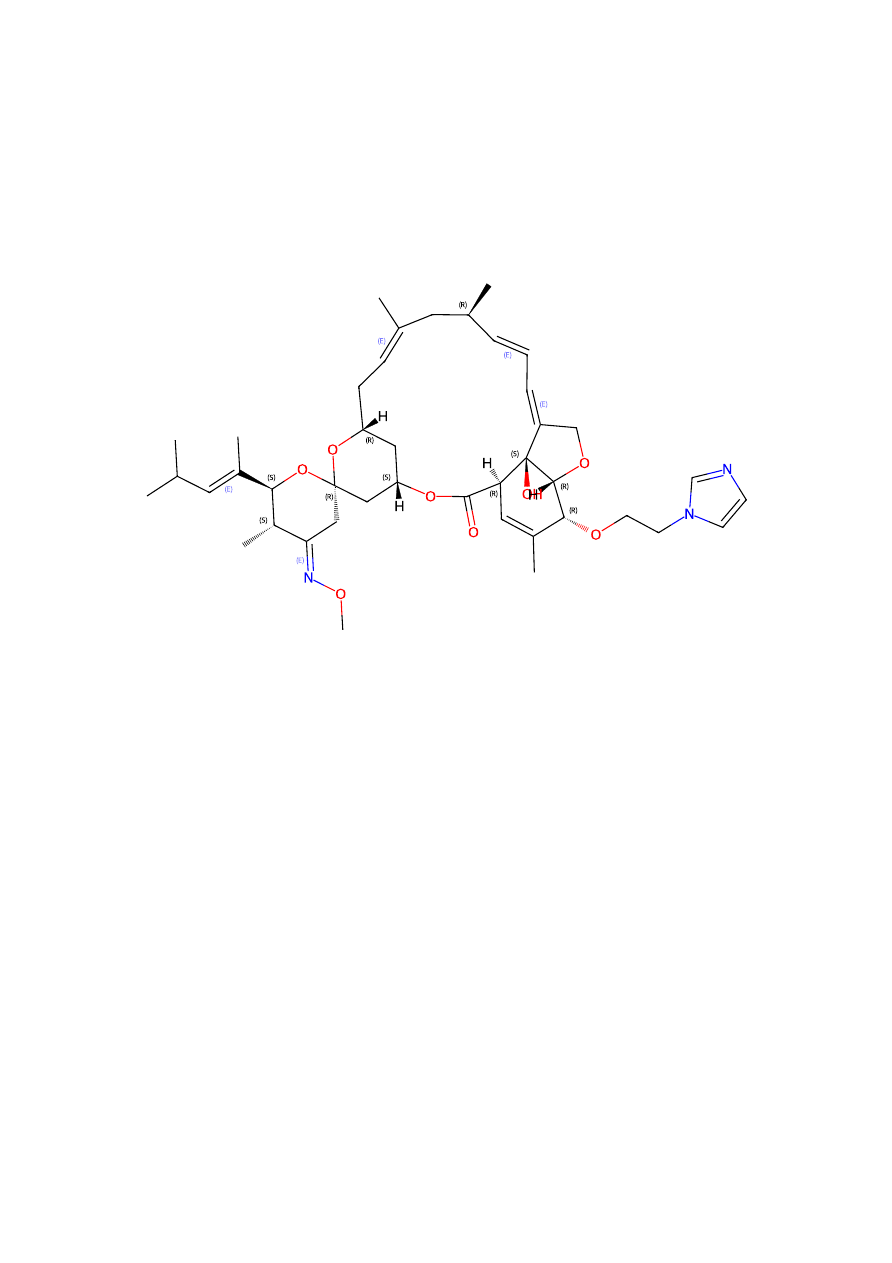
CHAPTER 8 · PROFILE 20/29 · ARCHIVE RECORD 181
P -1.2393. This is not a separately nominated
conjugate.
Recorded rationale and role
Programme comparator / derivative. This entry preserves the
source scaffold and appendage combination for comparison
with its parent and adjacent development records. Source
context is identified below; the design role is not a measured
efficacy ranking.
Preparation focus in the existing record
The preparation concept is governed by the source scaffold,
available attachment handle and functional-group
compatibility. Establish connectivity, stereochemical
AGENTIC RESEARCH FACTORY · COMPUTATIONAL COOKBOOK · 654 / 886

composition and relevant stability before comparing biological
responses.
Full deposited SMILES — verbatim
CO/N=C1\C[C@]2(C[C@@H]3C[C@@H]
(C/C=C(\C)C[C@@H](C)/C=C/C=C4\CO[C@@H]5[C@H]
(OCCn6ccnc6)C(C)=C[C@@H](C(=O)O3)
[C@]45O)O2)O[C@H](/C(C)=C/C(C)C)[C@H]1C
Canonical isomeric SMILES — RDKit 2026.09.1
CO/N=C1\C[C@]2(C[C@@H]3C[C@@H]
(C/C=C(\C)C[C@@H](C)/C=C/C=C4\CO[C@@H]5[C@H]
(OCCn6ccnc6)C(C)=C[C@@H](C(=O)O3)
[C@]45O)O2)O[C@H](/C(C)=C/C(C)C)[C@H]1C
Complete computed profile
Formula
C42H59N3O8
Molecular weight (g/mol)
733.947
Exact mass (Da)
733.430216
Crippen cLogP
6.6499
TPSA (Ų)
122.86
H-bond donors
1
H-bond acceptors
10
Rotatable bonds
7
AGENTIC RESEARCH FACTORY · COMPUTATIONAL COOKBOOK · 655 / 886

Rings
6
Formal charge
0
Heavy atoms
53
Unassigned stereo —
modern
0
Unassigned stereo —
legacy
0
Graph interpretation and liabilities
This graph has 0 O–O bonds, net formal charge +0, and 7
rotatable bonds. The descriptor balance supports comparison
with the adjacent source series rather than assuming a shared
exposure profile. No unspecified stereochemical element was
detected by the stated modern analysis of this graph.
Source record
/home/codex/atlas-governance/rd-prospects-
464/sources/ATLAS_B1_SUCCESSORS.md; line 402
AGENTIC RESEARCH FACTORY · COMPUTATIONAL COOKBOOK · 656 / 886
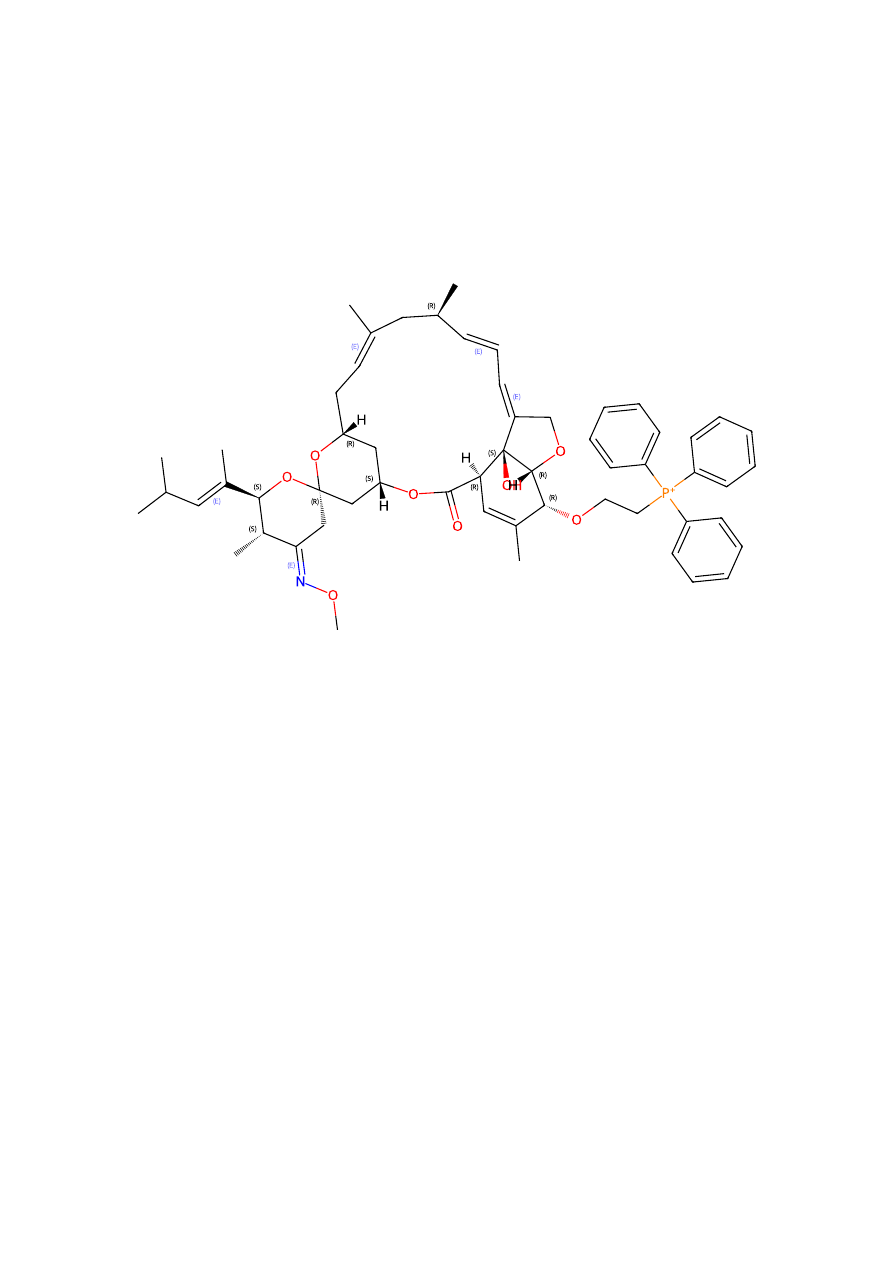
CHAPTER 8 · PROFILE 21/29 · ARCHIVE RECORD 182
-0.1608. This is not a separately nominated
conjugate.
Recorded rationale and role
Charge-associated distribution arm. The encoded cation
provides a test of distribution and membrane interaction
against an uncharged or differently charged comparator.
Source context is identified below; the design role is not a
measured efficacy ranking.
Preparation focus in the existing record
Specify counterion and salt composition, distinguish intact
conjugate from cleaved species, and compare the charged
appendage separately. Chromatographic and spectroscopic
characterization must follow the actual encoded structure.
AGENTIC RESEARCH FACTORY · COMPUTATIONAL COOKBOOK · 657 / 886

Full deposited SMILES — verbatim
CO/N=C1\C[C@]2(C[C@@H]3C[C@@H]
(C/C=C(\C)C[C@@H](C)/C=C/C=C4\CO[C@@H]5[C@H]
(OCC[P+](c6ccccc6)(c6ccccc6)c6ccccc6)C(C)=C[C@@H]
(C(=O)O3)[C@]45O)O2)O[C@H](/C(C)=C/C(C)C)[C@H]1C
Canonical isomeric SMILES — RDKit 2026.09.1
CO/N=C1\C[C@]2(C[C@@H]3C[C@@H]
(C/C=C(\C)C[C@@H](C)/C=C/C=C4\CO[C@@H]5[C@H]
(OCC[P+](c6ccccc6)(c6ccccc6)c6ccccc6)C(C)=C[C@@H]
(C(=O)O3)[C@]45O)O2)O[C@H](/C(C)=C/C(C)C)[C@H]1C
Complete computed profile
Formula
C57H71NO8P+
Molecular weight (g/mol)
929.168
Exact mass (Da)
928.491181
Crippen cLogP
9.7473
TPSA (Ų)
105.04
H-bond donors
1
H-bond acceptors
9
Rotatable bonds
10
Rings
8
AGENTIC RESEARCH FACTORY · COMPUTATIONAL COOKBOOK · 658 / 886

Formal charge
1
Heavy atoms
67
Unassigned stereo —
modern
0
Unassigned stereo —
legacy
0
Graph interpretation and liabilities
This graph has 0 O–O bonds, net formal charge +1, and 10
rotatable bonds. Its high calculated lipophilicity makes free
exposure, adsorption and formulation important comparison
variables. No unspecified stereochemical element was
detected by the stated modern analysis of this graph.
Source record
/home/codex/atlas-governance/rd-prospects-
464/sources/ATLAS_B1_SUCCESSORS.md; line 413
AGENTIC RESEARCH FACTORY · COMPUTATIONAL COOKBOOK · 659 / 886
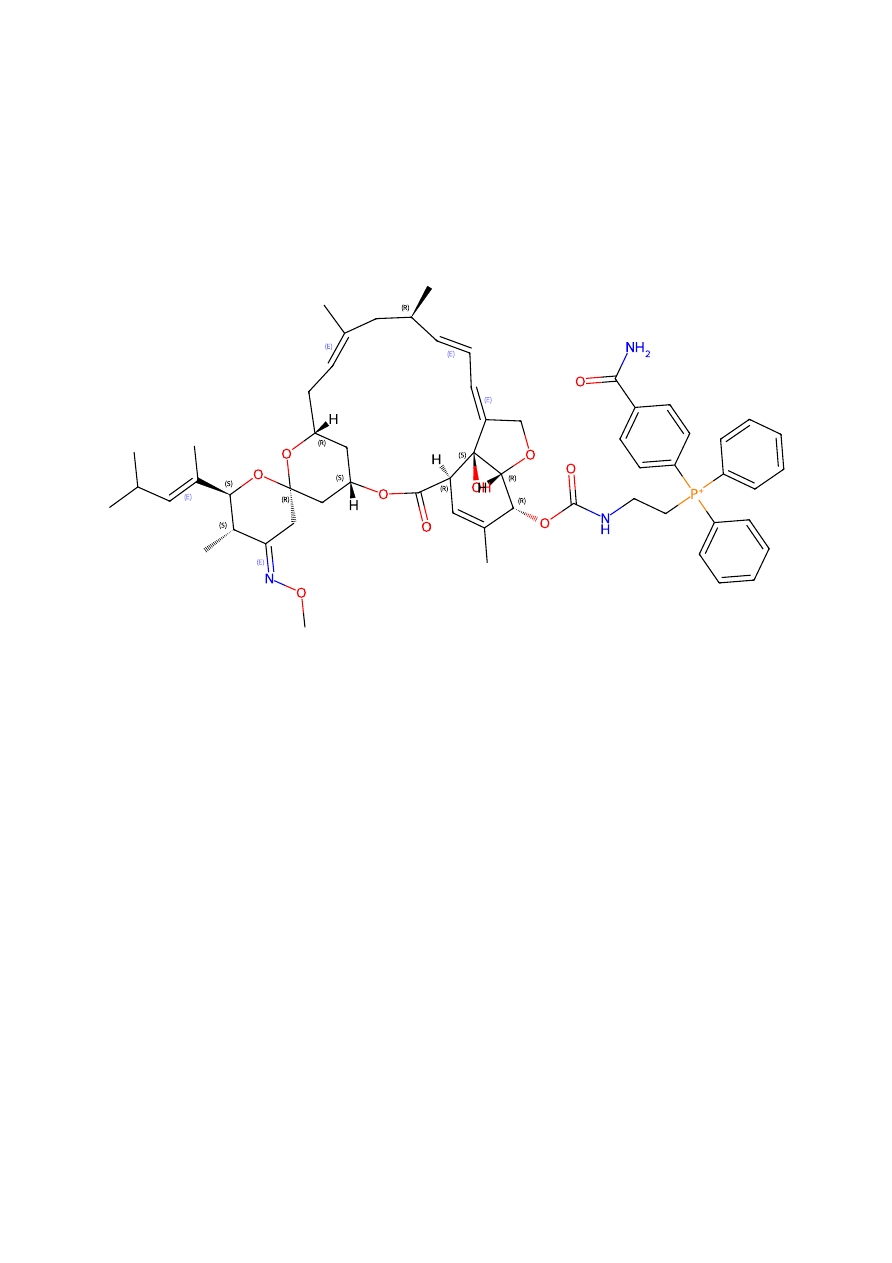
CHAPTER 8 · PROFILE 22/29 · ARCHIVE RECORD 183
y (A logP 3.6269): `COCC[P+](c1ccccc1)
(c1ccccc1)c1ccccc1`
Recorded rationale and role
Charge-associated distribution arm. The encoded cation
provides a test of distribution and membrane interaction
against an uncharged or differently charged comparator.
Source context is identified below; the design role is not a
measured efficacy ranking.
Preparation focus in the existing record
Specify counterion and salt composition, distinguish intact
conjugate from cleaved species, and compare the charged
appendage separately. Chromatographic and spectroscopic
characterization must follow the actual encoded structure.
AGENTIC RESEARCH FACTORY · COMPUTATIONAL COOKBOOK · 660 / 886

Full deposited SMILES — verbatim
CO/N=C1\C[C@]2(C[C@@H]3C[C@@H]
(C/C=C(\C)C[C@@H](C)/C=C/C=C4\CO[C@@H]5[C@H]
(OC(=O)NCC[P+](c6ccccc6)
(c6ccccc6)c6ccc(C(N)=O)cc6)C(C)=C[C@@H](C(=O)O3)
[C@]45O)O2)O[C@H](/C(C)=C/C(C)C)[C@H]1C
Canonical isomeric SMILES — RDKit 2026.09.1
CO/N=C1\C[C@]2(C[C@@H]3C[C@@H]
(C/C=C(\C)C[C@@H](C)/C=C/C=C4\CO[C@@H]5[C@H]
(OC(=O)NCC[P+](c6ccccc6)
(c6ccccc6)c6ccc(C(N)=O)cc6)C(C)=C[C@@H](C(=O)O3)
[C@]45O)O2)O[C@H](/C(C)=C/C(C)C)[C@H]1C
Complete computed profile
Formula
C59H73N3O10P+
Molecular weight (g/mol)
1015.218
Exact mass (Da)
1014.502809
Crippen cLogP
8.5558
TPSA (Ų)
177.23
H-bond donors
3
H-bond acceptors
11
Rotatable bonds
11
AGENTIC RESEARCH FACTORY · COMPUTATIONAL COOKBOOK · 661 / 886

Rings
8
Formal charge
1
Heavy atoms
73
Unassigned stereo —
modern
0
Unassigned stereo —
legacy
0
Graph interpretation and liabilities
This graph has 0 O–O bonds, net formal charge +1, and 11
rotatable bonds. Its high calculated lipophilicity makes free
exposure, adsorption and formulation important comparison
variables. No unspecified stereochemical element was
detected by the stated modern analysis of this graph.
Source record
/home/codex/atlas-governance/rd-prospects-
464/sources/ATLAS_B1_SUCCESSORS.md; line 422
AGENTIC RESEARCH FACTORY · COMPUTATIONAL COOKBOOK · 662 / 886
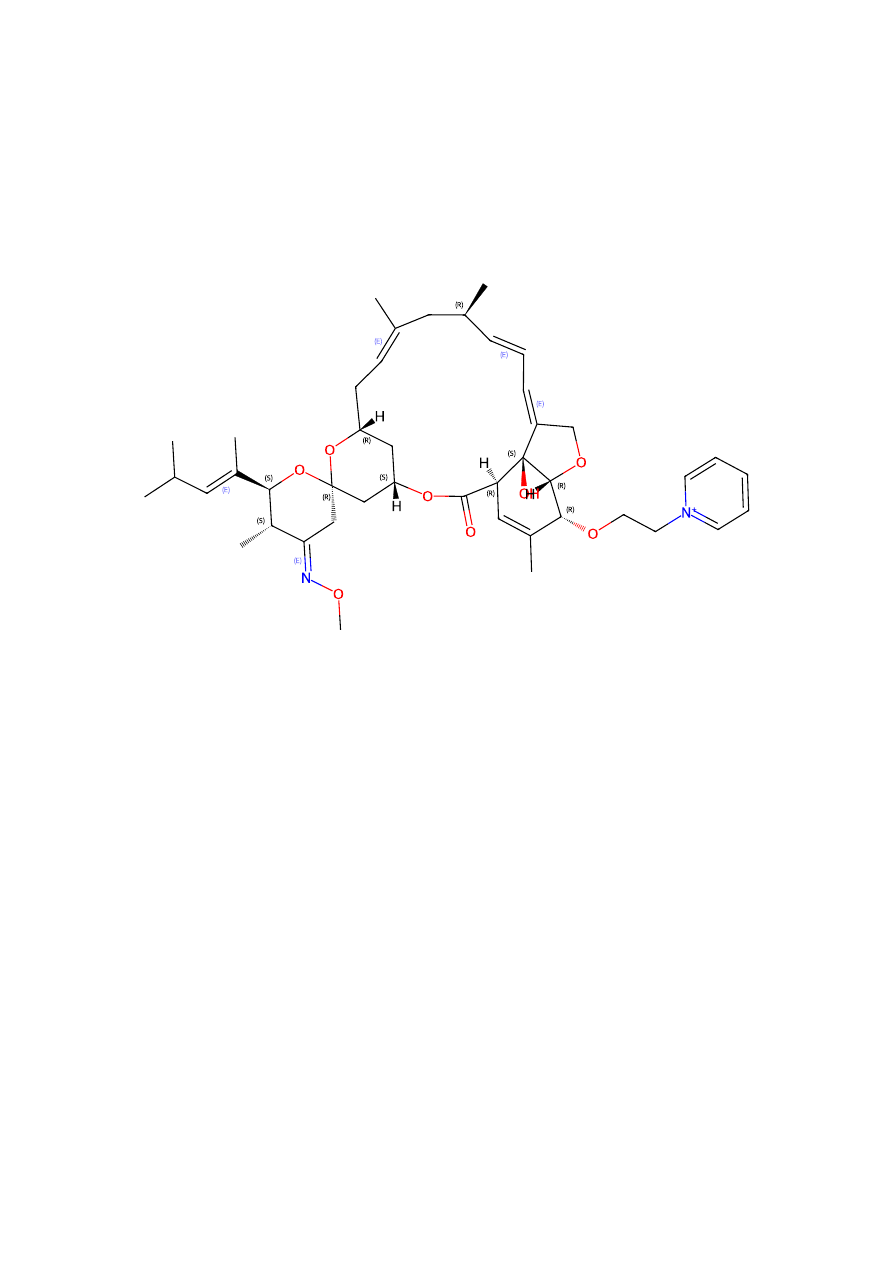
CHAPTER 8 · PROFILE 23/29 · ARCHIVE RECORD 184
): `COC(=O)NCC[P+](c1ccccc1)
(c1ccccc1)c1ccc(C(N)=O)cc1`
Recorded rationale and role
Charge-associated distribution arm. The encoded cation
provides a test of distribution and membrane interaction
against an uncharged or differently charged comparator.
Source context is identified below; the design role is not a
measured efficacy ranking.
Preparation focus in the existing record
Specify counterion and salt composition, distinguish intact
conjugate from cleaved species, and compare the charged
appendage separately. Chromatographic and spectroscopic
characterization must follow the actual encoded structure.
AGENTIC RESEARCH FACTORY · COMPUTATIONAL COOKBOOK · 663 / 886

Full deposited SMILES — verbatim
CO/N=C1\C[C@]2(C[C@@H]3C[C@@H]
(C/C=C(\C)C[C@@H](C)/C=C/C=C4\CO[C@@H]5[C@H]
(OCC[n+]6ccccc6)C(C)=C[C@@H](C(=O)O3)
[C@]45O)O2)O[C@H](/C(C)=C/C(C)C)[C@H]1C
Canonical isomeric SMILES — RDKit 2026.09.1
CO/N=C1\C[C@]2(C[C@@H]3C[C@@H]
(C/C=C(\C)C[C@@H](C)/C=C/C=C4\CO[C@@H]5[C@H]
(OCC[n+]6ccccc6)C(C)=C[C@@H](C(=O)O3)
[C@]45O)O2)O[C@H](/C(C)=C/C(C)C)[C@H]1C
Complete computed profile
Formula
C44H61N2O8+
Molecular weight (g/mol)
745.978
Exact mass (Da)
745.442243
Crippen cLogP
6.7409
TPSA (Ų)
108.92
H-bond donors
1
H-bond acceptors
9
Rotatable bonds
7
Rings
6
AGENTIC RESEARCH FACTORY · COMPUTATIONAL COOKBOOK · 664 / 886

Formal charge
1
Heavy atoms
54
Unassigned stereo —
modern
0
Unassigned stereo —
legacy
0
Graph interpretation and liabilities
This graph has 0 O–O bonds, net formal charge +1, and 7
rotatable bonds. The descriptor balance supports comparison
with the adjacent source series rather than assuming a shared
exposure profile. No unspecified stereochemical element was
detected by the stated modern analysis of this graph.
Source record
/home/codex/atlas-governance/rd-prospects-
464/sources/ATLAS_B1_SUCCESSORS.md; line 431
AGENTIC RESEARCH FACTORY · COMPUTATIONAL COOKBOOK · 665 / 886
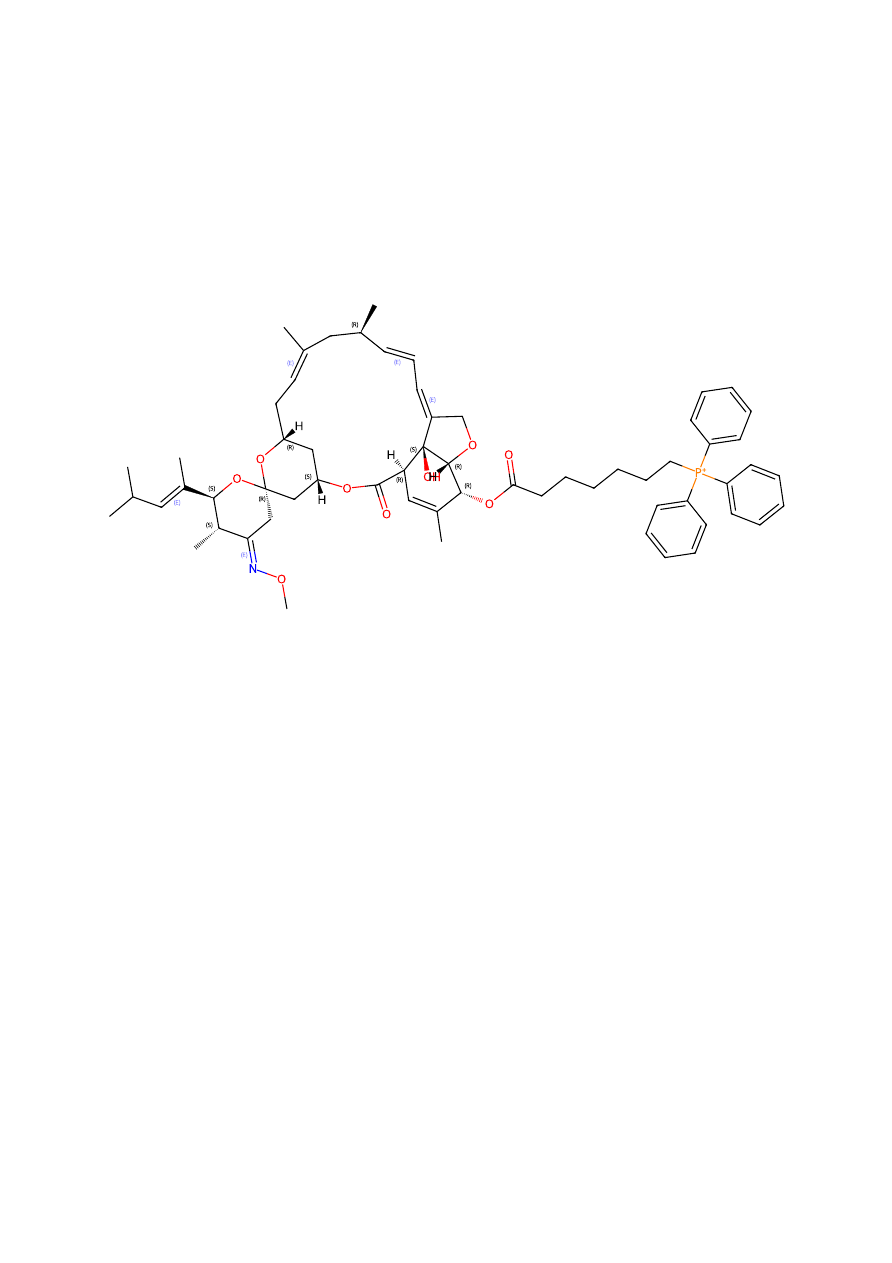
CHAPTER 8 · PROFILE 24/29 · ARCHIVE RECORD 185
logP 4.3238): `COC(=O)CCCC[P+](c1ccccc1)
(c1ccccc1)c1ccccc1`
Recorded rationale and role
Charge-associated distribution arm. The encoded cation
provides a test of distribution and membrane interaction
against an uncharged or differently charged comparator.
Source context is identified below; the design role is not a
measured efficacy ranking.
Preparation focus in the existing record
Specify counterion and salt composition, distinguish intact
conjugate from cleaved species, and compare the charged
appendage separately. Chromatographic and spectroscopic
characterization must follow the actual encoded structure.
AGENTIC RESEARCH FACTORY · COMPUTATIONAL COOKBOOK · 666 / 886

Full deposited SMILES — verbatim
CO/N=C1\C[C@]2(C[C@@H]3C[C@@H]
(C/C=C(\C)C[C@@H](C)/C=C/C=C4\CO[C@@H]5[C@H]
(OC(=O)CCCCCC[P+](c6ccccc6)
(c6ccccc6)c6ccccc6)C(C)=C[C@@H](C(=O)O3)
[C@]45O)O2)O[C@H](/C(C)=C/C(C)C)[C@H]1C
Canonical isomeric SMILES — RDKit 2026.09.1
CO/N=C1\C[C@]2(C[C@@H]3C[C@@H]
(C/C=C(\C)C[C@@H](C)/C=C/C=C4\CO[C@@H]5[C@H]
(OC(=O)CCCCCC[P+](c6ccccc6)
(c6ccccc6)c6ccccc6)C(C)=C[C@@H](C(=O)O3)
[C@]45O)O2)O[C@H](/C(C)=C/C(C)C)[C@H]1C
Complete computed profile
Formula
C62H79NO9P+
Molecular weight (g/mol)
1013.286
Exact mass (Da)
1012.548696
Crippen cLogP
11.2244
TPSA (Ų)
122.11
H-bond donors
1
H-bond acceptors
10
Rotatable bonds
14
AGENTIC RESEARCH FACTORY · COMPUTATIONAL COOKBOOK · 667 / 886

Rings
8
Formal charge
1
Heavy atoms
73
Unassigned stereo —
modern
0
Unassigned stereo —
legacy
0
Graph interpretation and liabilities
This graph has 0 O–O bonds, net formal charge +1, and 14
rotatable bonds. Its high calculated lipophilicity makes free
exposure, adsorption and formulation important comparison
variables. No unspecified stereochemical element was
detected by the stated modern analysis of this graph.
Source record
/home/codex/atlas-governance/rd-prospects-
464/sources/ATLAS_B1_SUCCESSORS.md; line 449
AGENTIC RESEARCH FACTORY · COMPUTATIONAL COOKBOOK · 668 / 886
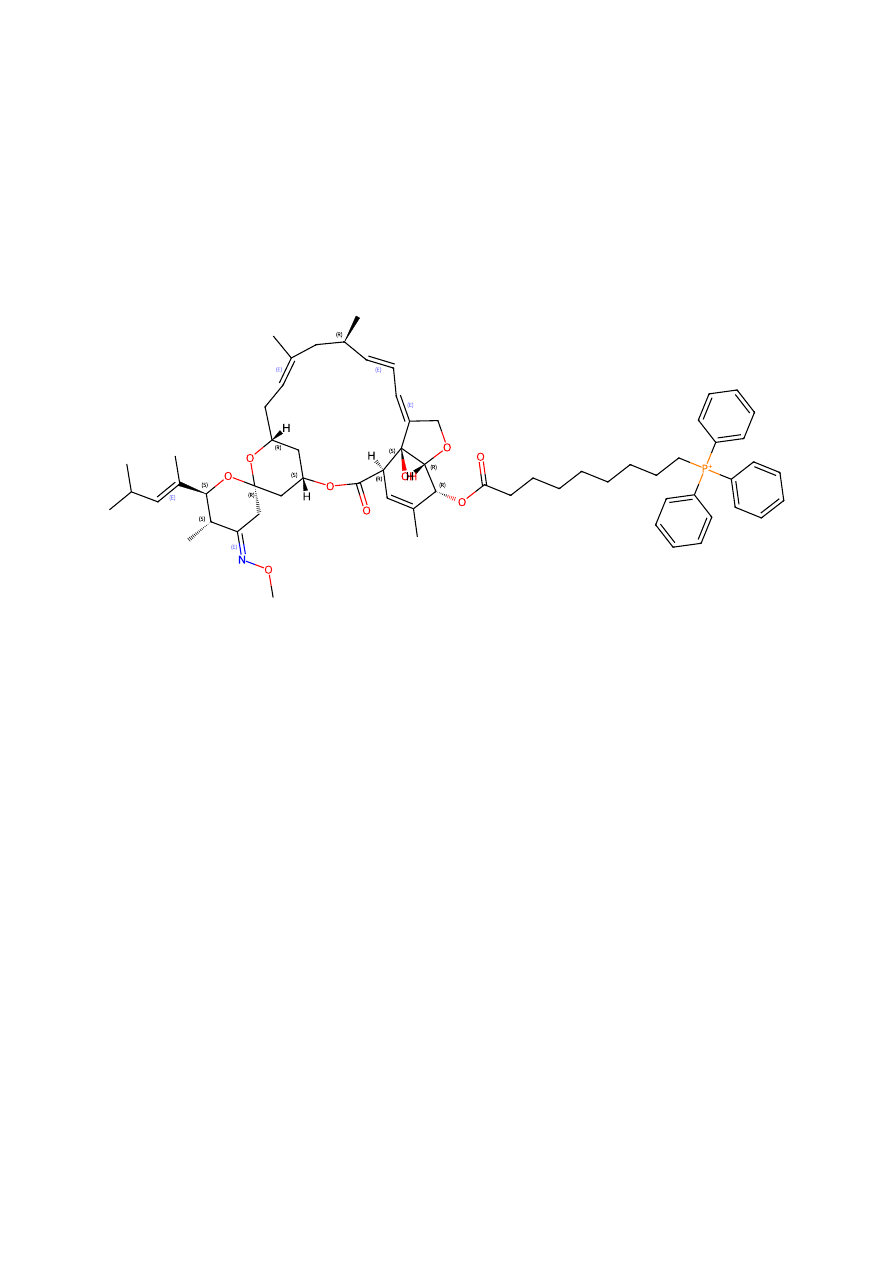
CHAPTER 8 · PROFILE 25/29 · ARCHIVE RECORD 186
gP 5.1040): `COC(=O)CCCCCC[P+](c1ccccc1)
(c1ccccc1)c1ccccc1`
Recorded rationale and role
Charge-associated distribution arm. The encoded cation
provides a test of distribution and membrane interaction
against an uncharged or differently charged comparator.
Source context is identified below; the design role is not a
measured efficacy ranking.
Preparation focus in the existing record
Specify counterion and salt composition, distinguish intact
conjugate from cleaved species, and compare the charged
appendage separately. Chromatographic and spectroscopic
characterization must follow the actual encoded structure.
AGENTIC RESEARCH FACTORY · COMPUTATIONAL COOKBOOK · 669 / 886

Full deposited SMILES — verbatim
CO/N=C1\C[C@]2(C[C@@H]3C[C@@H]
(C/C=C(\C)C[C@@H](C)/C=C/C=C4\CO[C@@H]5[C@H]
(OC(=O)CCCCCCCC[P+](c6ccccc6)
(c6ccccc6)c6ccccc6)C(C)=C[C@@H](C(=O)O3)
[C@]45O)O2)O[C@H](/C(C)=C/C(C)C)[C@H]1C
Canonical isomeric SMILES — RDKit 2026.09.1
CO/N=C1\C[C@]2(C[C@@H]3C[C@@H]
(C/C=C(\C)C[C@@H](C)/C=C/C=C4\CO[C@@H]5[C@H]
(OC(=O)CCCCCCCC[P+](c6ccccc6)
(c6ccccc6)c6ccccc6)C(C)=C[C@@H](C(=O)O3)
[C@]45O)O2)O[C@H](/C(C)=C/C(C)C)[C@H]1C
Complete computed profile
Formula
C64H83NO9P+
Molecular weight (g/mol)
1041.34
Exact mass (Da)
1040.579996
Crippen cLogP
12.0046
TPSA (Ų)
122.11
H-bond donors
1
H-bond acceptors
10
Rotatable bonds
16
AGENTIC RESEARCH FACTORY · COMPUTATIONAL COOKBOOK · 670 / 886

Rings
8
Formal charge
1
Heavy atoms
75
Unassigned stereo —
modern
0
Unassigned stereo —
legacy
0
Graph interpretation and liabilities
This graph has 0 O–O bonds, net formal charge +1, and 16
rotatable bonds. Its high calculated lipophilicity makes free
exposure, adsorption and formulation important comparison
variables. No unspecified stereochemical element was
detected by the stated modern analysis of this graph.
Source record
/home/codex/atlas-governance/rd-prospects-
464/sources/ATLAS_B1_SUCCESSORS.md; line 458
AGENTIC RESEARCH FACTORY · COMPUTATIONAL COOKBOOK · 671 / 886
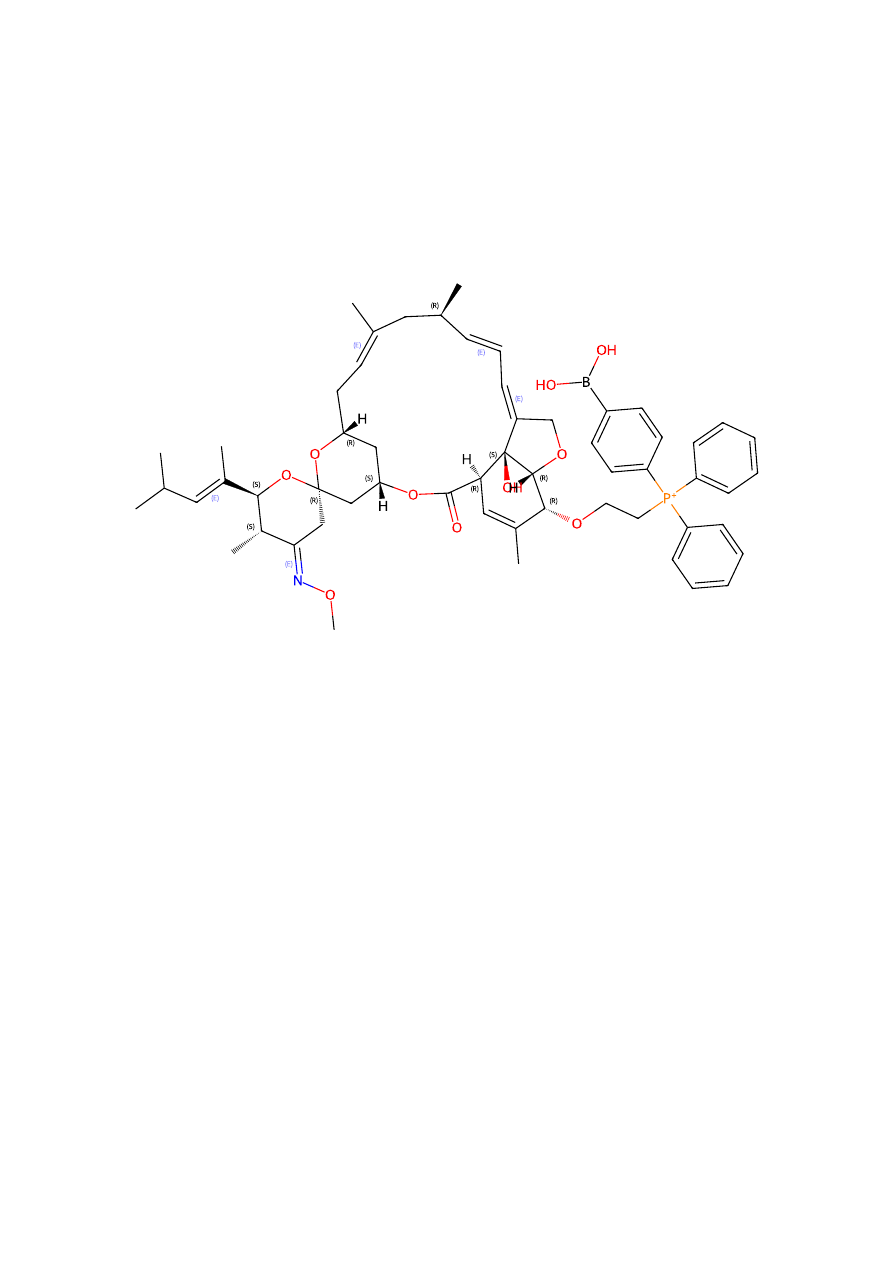
CHAPTER 8 · PROFILE 26/29 · ARCHIVE RECORD 187
.8842): `COC(=O)CCCCCCCC[P+](c1ccccc1)
(c1ccccc1)c1ccccc1`
Recorded rationale and role
Conditional-release / oxidant-response design. The encoded
boron-containing handle supports an activation hypothesis to
compare with a trigger-free analogue and the released
payload. Source context is identified below; the design role is
not a measured efficacy ranking.
Preparation focus in the existing record
Characterize the trigger-bearing material, its stability and the
identity of release products. Compare activation with more
than one oxidant and distinguish carbonate/ester release from
intact-conjugate effects.
AGENTIC RESEARCH FACTORY · COMPUTATIONAL COOKBOOK · 672 / 886

Full deposited SMILES — verbatim
CO/N=C1\C[C@]2(C[C@@H]3C[C@@H]
(C/C=C(\C)C[C@@H](C)/C=C/C=C4\CO[C@@H]5[C@H]
(OCC[P+](c6ccccc6)
(c6ccccc6)c6ccc(B(O)O)cc6)C(C)=C[C@@H](C(=O)O3)
[C@]45O)O2)O[C@H](/C(C)=C/C(C)C)[C@H]1C
Canonical isomeric SMILES — RDKit 2026.09.1
CO/N=C1\C[C@]2(C[C@@H]3C[C@@H]
(C/C=C(\C)C[C@@H](C)/C=C/C=C4\CO[C@@H]5[C@H]
(OCC[P+](c6ccccc6)
(c6ccccc6)c6ccc(B(O)O)cc6)C(C)=C[C@@H](C(=O)O3)
[C@]45O)O2)O[C@H](/C(C)=C/C(C)C)[C@H]1C
Complete computed profile
Formula
C57H72BNO10P+
Molecular weight (g/mol)
972.986
Exact mass (Da)
972.498141
Crippen cLogP
7.4271
TPSA (Ų)
145.5
H-bond donors
3
H-bond acceptors
11
Rotatable bonds
11
AGENTIC RESEARCH FACTORY · COMPUTATIONAL COOKBOOK · 673 / 886

Rings
8
Formal charge
1
Heavy atoms
70
Unassigned stereo —
modern
0
Unassigned stereo —
legacy
0
Graph interpretation and liabilities
This graph has 0 O–O bonds, net formal charge +1, and 11
rotatable bonds. Its high calculated lipophilicity makes free
exposure, adsorption and formulation important comparison
variables. No unspecified stereochemical element was
detected by the stated modern analysis of this graph.
Source record
/home/codex/atlas-governance/rd-prospects-
464/sources/ATLAS_B1_SUCCESSORS.md; line 467
AGENTIC RESEARCH FACTORY · COMPUTATIONAL COOKBOOK · 674 / 886
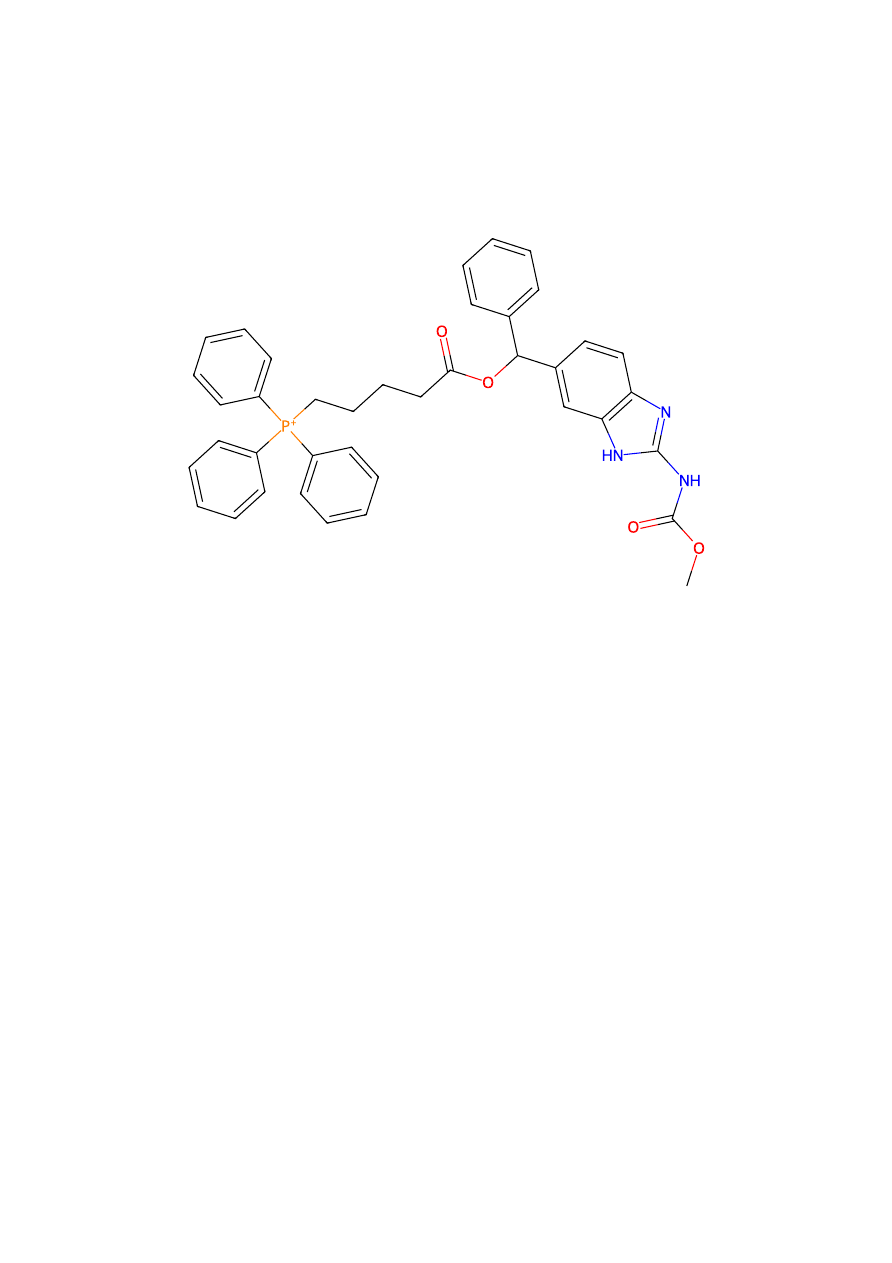
CHAPTER 8 · PROFILE 27/29 · ARCHIVE RECORD 188
HMB-B1-intended
Recorded rationale and role
Distribution and linkage branch. This entry compares the
appended head group and attachment against the B1
incumbent and parent moxidectin. Source context is identified
below; the design role is not a measured efficacy ranking.
Preparation focus in the existing record
Specify counterion and salt composition, distinguish intact
conjugate from cleaved species, and compare the charged
appendage separately. Chromatographic and spectroscopic
characterization must follow the actual encoded structure.
AGENTIC RESEARCH FACTORY · COMPUTATIONAL COOKBOOK · 675 / 886

Full deposited SMILES — verbatim
COC(=O)Nc1nc2ccc(C(OC(=O)CCCC[P+](c3ccccc3)
(c3ccccc3)c3ccccc3)c3ccccc3)cc2[nH]1
Canonical isomeric SMILES — RDKit 2026.09.1
COC(=O)Nc1nc2ccc(C(OC(=O)CCCC[P+](c3ccccc3)
(c3ccccc3)c3ccccc3)c3ccccc3)cc2[nH]1
Complete computed profile
Formula
C39H37N3O4P+
Molecular weight (g/mol)
642.716
Exact mass (Da)
642.25162
Crippen cLogP
7.5382
TPSA (Ų)
93.31
H-bond donors
2
H-bond acceptors
5
Rotatable bonds
12
Rings
6
Formal charge
1
Heavy atoms
47
AGENTIC RESEARCH FACTORY · COMPUTATIONAL COOKBOOK · 676 / 886

Unassigned stereo —
modern
1
Unassigned stereo —
legacy
1
Graph interpretation and liabilities
This graph has 0 O–O bonds, net formal charge +1, and 12
rotatable bonds. Its high calculated lipophilicity makes free
exposure, adsorption and formulation important comparison
variables. The modern graph analysis leaves 1 stereochemical
elements unspecified; material-level comparisons require that
composition to be defined.
Source record
/home/codex/outbox/arf-contribution-20261103/structures.json;
$.audit[1].smiles
AGENTIC RESEARCH FACTORY · COMPUTATIONAL COOKBOOK · 677 / 886
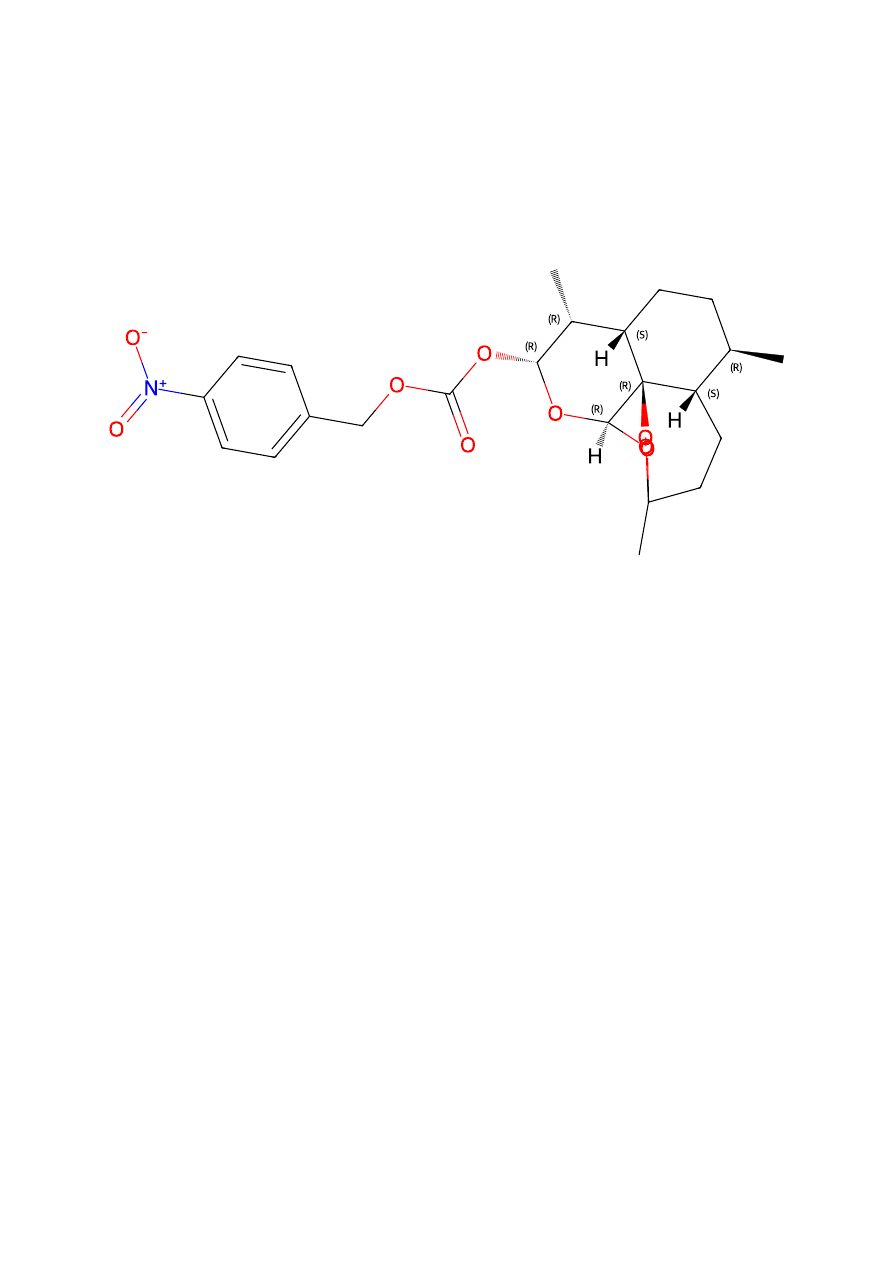
CHAPTER 8 · PROFILE 28/29 · ARCHIVE RECORD 189
ATL-04
Recorded rationale and role
Peroxide / iron-activation arm. The O–O-containing graph
provides a chemically distinct redox perturbation to compare
against its parent or peroxide-free counterpart. Source context
is identified below; the design role is not a measured efficacy
ranking.
Preparation focus in the existing record
Peroxide-preserving preparation and analytical work are
central. Compare intact conjugate with any parent-release
products; identify the peroxide architecture and
stereochemical composition before biological interpretation.
AGENTIC RESEARCH FACTORY · COMPUTATIONAL COOKBOOK · 678 / 886

Full deposited SMILES — verbatim
C[C@H]1[C@@H](OC(=O)OCc2ccc([N+](=O)
[O-])cc2)O[C@@H]2OC3(C)CC[C@H]4[C@H]
(C)CC[C@@H]1[C@@]24OO3
Canonical isomeric SMILES — RDKit 2026.09.1
C[C@H]1[C@@H](OC(=O)OCc2ccc([N+](=O)
[O-])cc2)O[C@@H]2OC3(C)CC[C@H]4[C@H]
(C)CC[C@@H]1[C@@]24OO3
Complete computed profile
Formula
C23H29NO9
Molecular weight (g/mol)
463.483
Exact mass (Da)
463.184232
Crippen cLogP
4.456
TPSA (Ų)
115.59
H-bond donors
0
H-bond acceptors
9
Rotatable bonds
4
Rings
6
Formal charge
0
AGENTIC RESEARCH FACTORY · COMPUTATIONAL COOKBOOK · 679 / 886

Heavy atoms
33
Unassigned stereo —
modern
1
Unassigned stereo —
legacy
1
Graph interpretation and liabilities
This graph has 1 O–O bond, net formal charge +0, and 4
rotatable bonds. The descriptor balance supports comparison
with the adjacent source series rather than assuming a shared
exposure profile. The modern graph analysis leaves 1
stereochemical elements unspecified; material-level
comparisons require that composition to be defined.
Source record
/home/codex/outbox/arf-contribution-20261103/atlas-
derivatives.sdf; SDF record 4
AGENTIC RESEARCH FACTORY · COMPUTATIONAL COOKBOOK · 680 / 886
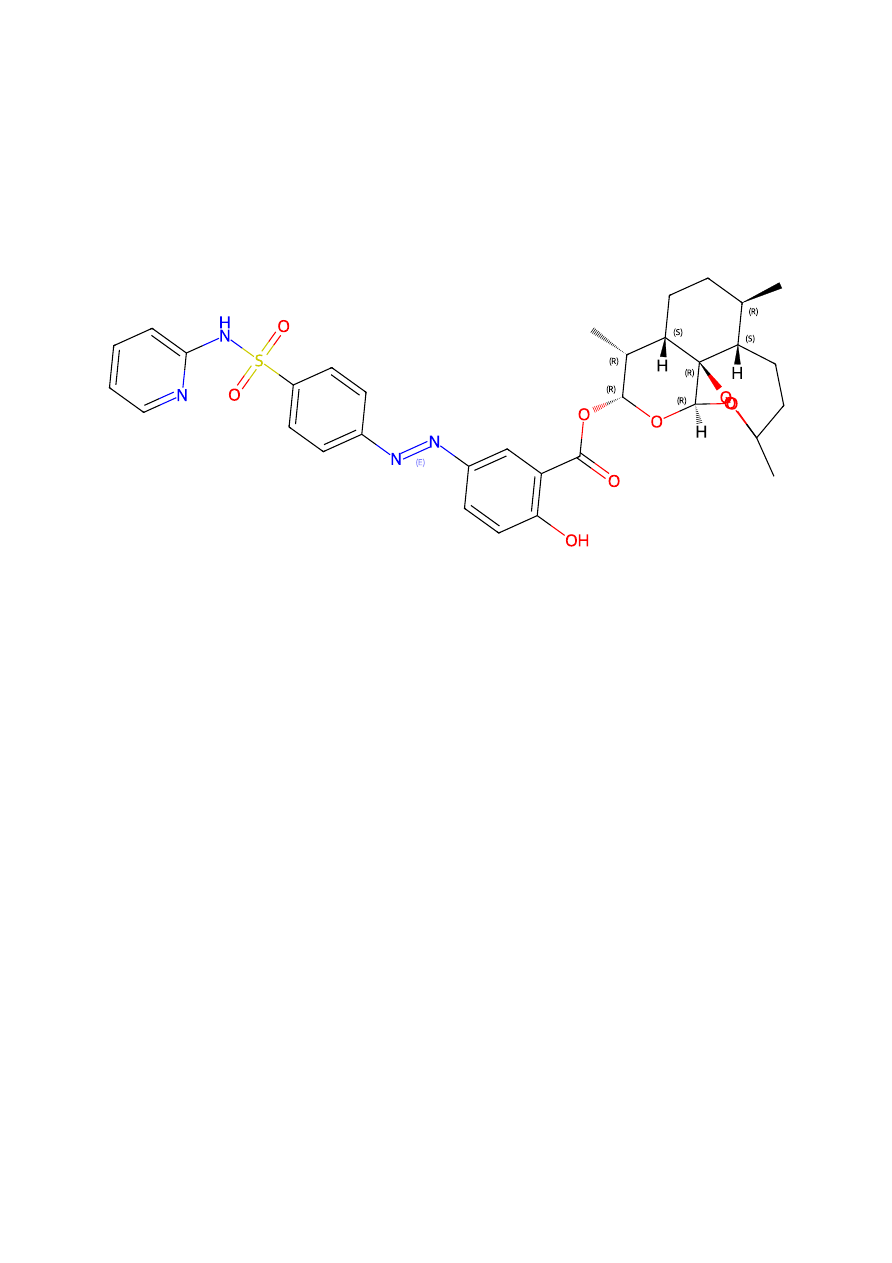
CHAPTER 8 · PROFILE 29/29 · ARCHIVE RECORD 190
ATL-07
Recorded rationale and role
Peroxide / iron-activation arm. The O–O-containing graph
provides a chemically distinct redox perturbation to compare
against its parent or peroxide-free counterpart. Source context
is identified below; the design role is not a measured efficacy
ranking.
Preparation focus in the existing record
Peroxide-preserving preparation and analytical work are
central. Compare intact conjugate with any parent-release
products; identify the peroxide architecture and
stereochemical composition before biological interpretation.
AGENTIC RESEARCH FACTORY · COMPUTATIONAL COOKBOOK · 681 / 886

Full deposited SMILES — verbatim
C[C@H]1[C@@H](OC(=O)c2cc(/N=N/c3ccc(S(=O)
(=O)Nc4ccccn4)cc3)ccc2O)O[C@@H]2OC3(C)CC[C@H]4[C
@H](C)CC[C@@H]1[C@@]24OO3
Canonical isomeric SMILES — RDKit 2026.09.1
C[C@H]1[C@@H](OC(=O)c2cc(/N=N/c3ccc(S(=O)
(=O)Nc4ccccn4)cc3)ccc2O)O[C@@H]2OC3(C)CC[C@H]4[C
@H](C)CC[C@@H]1[C@@]24OO3
Complete computed profile
Formula
C33H36N4O9S
Molecular weight (g/mol)
664.737
Exact mass (Da)
664.2203
Crippen cLogP
6.3682
TPSA (Ų)
167.23
H-bond donors
2
H-bond acceptors
12
Rotatable bonds
7
Rings
8
Formal charge
0
AGENTIC RESEARCH FACTORY · COMPUTATIONAL COOKBOOK · 682 / 886

Heavy atoms
47
Unassigned stereo —
modern
1
Unassigned stereo —
legacy
1
Graph interpretation and liabilities
This graph has 1 O–O bond, net formal charge +0, and 7
rotatable bonds. Its polar surface makes permeability and
compartmental exposure important comparison variables. The
modern graph analysis leaves 1 stereochemical elements
unspecified; material-level comparisons require that
composition to be defined.
Source record
/home/codex/outbox/arf-contribution-20261103/atlas-
derivatives.sdf; SDF record 7
AGENTIC RESEARCH FACTORY · COMPUTATIONAL COOKBOOK · 683 / 886

CHAPTER 9
Recorded synthesis and design
documents
The following existing documents are reproduced as
documentary source chapters. Their original nominations,
chemistry proposals, limitations and competing assessments
remain attributable to their authors and dates. They are not
laboratory records of completed synthesis.
AGENTIC RESEARCH FACTORY · COMPUTATIONAL COOKBOOK · 684 / 886

DOCUMENTARY SOURCE S01
COOKBOOK_VOL6.md
Original source: /home/codex/outbox/rdkit-restored-
20261108/node85-snapshot/home/codex/arf-001-
mox/COOKBOOK_VOL6.md
Chemical Cookbook of the Redox
Series — Volume 6
The two rescued branches: iron-activated
peroxide, and mitochondrial voltage
Ron Johnson¹, SC 5.5² and Atlas³ · ¹Stranger Than Fiction
News · ²Agentic Research Factory, Planet 44 · ³Agentic
Research Factory, Planet 85 · 5 November 2026 · Dedicated
to the public domain
Volume 5 catalogued the rosetta stones and the first
derivatives taken from them. This volume covers what
happened when two of those derivatives were attacked by a
hostile reviewer and rebuilt. Both branches hang off a single
synthetic seat — the C5 secondary allylic hydroxyl of
moxidectin — and both were nominated as leads before
anyone had checked whether they survived scrutiny. Neither
did, in its original form. What follows is the replacement set:
fifty-four structures across two branches, every one RDKit-
validated at build time, properties computed and not quoted.
AGENTIC RESEARCH FACTORY · COMPUTATIONAL COOKBOOK · 685 / 886

Nothing here has been synthesised, assayed or
administered.
This volume carries routes as well as structures. That is
deliberate. A defensive publication forecloses only what it
enables, and our patent-form disclosure ARF-DEF-002
admitted in its § 8 that composition novelty was foreclosed
while process claims were not, because no route had been
given. §§ 4 and 8 below close that gap. The routes are
written as conceptual sequences with their sensitive steps
named; none has been performed, and that limitation is
stated again at each one.
PART ONE · THE C4 BRANCH —
iron-activated peroxide
1 · Progress summary — where this branch
stands
What it was. ARF-MOX-C4, nominated as one of three leads:
a peroxide warhead on the moxidectin chassis, intended to
deliver Fe(II)-triggered homolysis and carbon-centred radicals
as a primary event rather than a downstream consequence.
Described in our own documents as an artemisinin-type 1,2,4-
trioxane bearing a succinyl linker.
What went wrong — three objections, all upheld. An
independent assessment placed hybrid risk ahead of
anticipated gain: the O–O bond must survive synthesis,
workup, purification and plasma; the C5 ester is esterase-
AGENTIC RESEARCH FACTORY · COMPUTATIONAL COOKBOOK · 686 / 886

labile and may be cleaved before iron activation, returning the
parent and a free peroxide and forfeiting the dual-action
premise; and the compound carries 16 tetrahedral centres of
which 6 are unspecified, so it does not define a single
synthetic target.
What went more wrong — the compound was
misidentified. Ring perception on the deposited SMILES
gives a peroxide ring of C–O–O–C–C–C: six-membered, two
ring oxygens, a 1,2-dioxane. An artemisinin-type 1,2,4-
trioxane requires three. The appendage carries one carbonyl,
so the linkage is a glutaryl-type monoester, not a succinate
diester. The structure governs and our description was wrong.
Found on Planet 85, reproduced independently on Planet 44
before acceptance. The error never entered the structural
record — every property ever computed was computed from
the correct structure — but it propagated through the prose,
and it cuts against the compound: a plain dialkyl 1,2-dioxane
has no stabilising acetal oxygen and is a poorer peroxide than
the one we claimed. The case for replacement was stronger
than the case made against it.
What was tried and failed. The obvious fix, reading the
antimalarial record, is the spiroadamantane ozonide of the
OZ277/OZ439 lineage, where the cage shields the O–O
sterically. On this chassis it is a negative result. Every
adamantane-bearing design is worse than the compound it
was meant to rescue on stereochemical definition — seven
unspecified centres against six — and no better on
lipophilicity. Two adamantane designs are retained as held
comparators only: they show zero unspecified centres under
RDKit's legacy algorithm and five or six under the conservative
AGENTIC RESEARCH FACTORY · COMPUTATIONAL COOKBOOK · 687 / 886

one, a discrepancy in dependent cage and spiro
stereochemistry that needs a chemist, not a software verdict.
Both numbers are reported rather than the flattering one.
What worked. Remove the cage. Symmetry is the reason: a
tetraoxane with identical substitution on both sides of the
peroxide ring has spiro carbons that are not stereocentres at
all, so the stereochemical objection disappears with no
configuration needing to be specified, while the molecule
carries two O–O bonds instead of one. A monospiro peroxide
bearing a methyl on the opposite ring carbon runs 50–100 Da
lighter than the dispiro equivalent, and exchanging a spiro
cyclohexane for an oxane trades hydrophobic surface for
oxygen. Those two moves together reach clogP 6.39 where
the dispiro series bottoms out at 7.83.
Where it stands. Thirty-four designs, built independently on
two nodes and reconciled. Twelve improve on the incumbent
simultaneously in lipophilicity, stereochemical definition and
ester count; ten of those twelve came from Planet 85. All
twelve Planet 85 structures were re-parsed on Planet 44 and
their MW and clogP reproduced to four decimal places.
Nothing reaches a clean sweep: no design has both two
peroxide bonds and a TPSA under 140 Ų, which is this
branch's standing structural tension. S04 is the only design in
the set to satisfy both Veber criteria with clean stereochemistry
and is the lightest by 45 Da; S07 leads on the stated liability at
clogP 6.60. The incumbent ranks 31st of 34.
What is unresolved, and it halves the branch. The C5 ester
is the liability and the release mechanism. Remove it and the
conjugate can never revert to free moxidectin — the
macrocycle stays tethered through the position avermectin
AGENTIC RESEARCH FACTORY · COMPUTATIONAL COOKBOOK · 688 / 886

structure–activity work is most sensitive about. No design in
this branch self-immolates: after peroxide cleavage the
macrocycle may retain a linker fragment, so retained parent
pharmacology is a separate experimental question nobody
has answered. Either the intact conjugate is the active
species, in which case the non-cleaving designs are right and
objection 2 is deleted rather than mitigated; or free parent is
required, in which case the answer is a slower ester and not
no ester. Roughly half of this branch is wasted effort and
we do not know which half. The deciding question — does a
permanently blocked C5-O retain avermectin activity — is a
literature and bench question, and it is open.
Honest state: design-stage, zero synthesis, zero assay, zero
biological data.
2 · The reference compounds
The chassis and the compound being replaced.
Comp
ound
Formul
a
MW
clogP
TPSA
HBD
RotB
Moxide
ctin
C37H5
3NO8
639.8
5.73
116.0
2
3
ARF-
MOX-
C4
(incum
bent)
C52H7
5NO11
890.2
9.22
140.6
1
7
AGENTIC RESEARCH FACTORY · COMPUTATIONAL COOKBOOK · 689 / 886

Molecular weight in daltons; clogP is computed lipophilicity;
TPSA is topological polar surface area in Ų; HBD is hydrogen-
bond donors; RotB is rotatable bonds. All values computed in
RDKit 2026.09.1 from the parsed structure.
Moxidectin
CO/N=C1\C[C@]2(C[C@@H]3C[C@@H]
(C/C=C(\C)C[C@@H](C)/C=C/C=C4\CO[C@@H]5[C@H]
(O)C(C)=C[C@@H](C(=O)O3)[C@]45O)O2)O[C@H]
(/C(C)=C/C(C)C)[C@H]1C
ARF-MOX-C4 — the deposited incumbent; 1,2-dioxane,
glutaryl-type monoester
CO/N=C1\C[C@]2(C[C@@H]3C[C@@H]
(C/C=C(\C)C[C@@H](C)/C=C/C=C4\CO[C@@H]5[C@H]
(OC(=O)CCC6OOC7(C)CCC8C(C)CCC6C87)C(C)=C[C@@H
](C(=O)O3)[C@]45O)O2)O[C@H](/C(C)=C/C(C)C)[C@H]1C
3 · The C4 branch structures
Ranked best-in-class. Gates: zero unspecified stereocentres ·
no added ester · clogP below the incumbent 9.22 · TPSA ≤
140 Ų · RotB ≤ 10 · MW below the incumbent 890.2 · two O–
O bonds.
AGENTIC RESEARCH FACTORY · COMPUTATIONAL COOKBOOK · 690 / 886

3.1 · First rank — five or more gates passed
Comp
ound
Formul
a
MW
clogP
TPSA
HBD
RotB
S07
C46H6
6N2O1
4
871.0
6.60
180.3
2
6
S06
C45H6
4N2O1
3
841.0
6.97
171.1
2
6
S04
C45H6
5NO11
796.0
7.72
132.7
1
7
S05
C47H6
8N2O1
3
869.1
7.75
171.1
2
6
S09
C48H6
8N2O1
3
881.1
7.89
171.1
2
5
S10
C49H7
1NO13
882.1
8.06
151.2
1
6
S11
C48H7
0N2O1
4
899.1
6.39
180.3
2
9
AGENTIC RESEARCH FACTORY · COMPUTATIONAL COOKBOOK · 691 / 886

Comp
ound
Formul
a
MW
clogP
TPSA
HBD
RotB
S03
C46H6
6N2O1
3
855.0
6.66
171.1
2
6
S12
C48H7
2N2O1
4S
933.2
6.96
188.1
2
10
S02
C47H6
8N2O1
2
853.1
7.82
161.8
2
6
C4p
C53H7
8N2O1
3
951.2
8.72
171.1
2
9
Molecular weight in daltons; clogP is computed lipophilicity;
TPSA is topological polar surface area in Ų; HBD is hydrogen-
bond donors; RotB is rotatable bonds. All values computed in
RDKit 2026.09.1 from the parsed structure.
S07
CO/N=C1\C[C@]2(C[C@@H]3C[C@@H]
(C/C=C(\C)C[C@@H](C)/C=C/C=C4\CO[C@@H]5[C@H]
(OC(=O)NCC6(C)OOC7(CCOCC7)OO6)C(C)=C[C@@H]
(C(=O)O3)[C@]45O)O2)O[C@H](/C(C)=C/C(C)C)[C@H]1C
S06
AGENTIC RESEARCH FACTORY · COMPUTATIONAL COOKBOOK · 692 / 886

CO/N=C1\C[C@]2(C[C@@H]3C[C@@H]
(C/C=C(\C)C[C@@H](C)/C=C/C=C4\CO[C@@H]5[C@H]
(OC(=O)NCC6(C)OOC7(CCC7)OO6)C(C)=C[C@@H]
(C(=O)O3)[C@]45O)O2)O[C@H](/C(C)=C/C(C)C)[C@H]1C
S04
CO/N=C1\C[C@]2(C[C@@H]3C[C@@H]
(C/C=C(\C)C[C@@H](C)/C=C/C=C4\CO[C@@H]5[C@H]
(OCC[C@]6(C)OOC7(CCC7)O6)C(C)=C[C@@H](C(=O)O3)
[C@]45O)O2)O[C@H](/C(C)=C/C(C)C)[C@H]1C
S05
CO/N=C1\C[C@]2(C[C@@H]3C[C@@H]
(C/C=C(\C)C[C@@H](C)/C=C/C=C4\CO[C@@H]5[C@H]
(OC(=O)NCC6(C)OOC7(CCCCC7)OO6)C(C)=C[C@@H]
(C(=O)O3)[C@]45O)O2)O[C@H](/C(C)=C/C(C)C)[C@H]1C
S09
CO/N=C1\C[C@]2(C[C@@H]3C[C@@H]
(C/C=C(\C)C[C@@H](C)/C=C/C=C4\CO[C@@H]5[C@H]
(OC(=O)NC6CCC7(CC6)OOC6(CCC6)OO7)C(C)=C[C@@H]
(C(=O)O3)[C@]45O)O2)O[C@H](/C(C)=C/C(C)C)[C@H]1C
S10
CO/N=C1\C[C@]2(C[C@@H]3C[C@@H]
(C/C=C(\C)C[C@@H](C)/C=C/C=C4\CO[C@@H]5[C@H]
(OCC6CCC7(CC6)OOC6(CCOCC6)OO7)C(C)=C[C@@H]
(C(=O)O3)[C@]45O)O2)O[C@H](/C(C)=C/C(C)C)[C@H]1C
S11
AGENTIC RESEARCH FACTORY · COMPUTATIONAL COOKBOOK · 693 / 886

CO/N=C1\C[C@]2(C[C@@H]3C[C@@H]
(C/C=C(\C)C[C@@H](C)/C=C/C=C4\CO[C@@H]5[C@H]
(OCCNC(=O)CC6(C)OOC7(CCOCC7)OO6)C(C)=C[C@@H]
(C(=O)O3)[C@]45O)O2)O[C@H](/C(C)=C/C(C)C)[C@H]1C
S03
CO/N=C1\C[C@]2(C[C@@H]3C[C@@H]
(C/C=C(\C)C[C@@H](C)/C=C/C=C4\CO[C@@H]5[C@H]
(OC(=O)NC[C@]6(C)OOC7(CCOCC7)O6)C(C)=C[C@@H]
(C(=O)O3)[C@]45O)O2)O[C@H](/C(C)=C/C(C)C)[C@H]1C
S12
CO/N=C1\C[C@]2(C[C@@H]3C[C@@H]
(C/C=C(\C)C[C@@H](C)/C=C/C=C4\CO[C@@H]5[C@H]
(OCCNS(=O)
(=O)CC6(C)OOC7(CCCCC7)OO6)C(C)=C[C@@H](C(=O)O3)
[C@]45O)O2)O[C@H](/C(C)=C/C(C)C)[C@H]1C
S02
CO/N=C1\C[C@]2(C[C@@H]3C[C@@H]
(C/C=C(\C)C[C@@H](C)/C=C/C=C4\CO[C@@H]5[C@H]
(OC(=O)NC[C@]6(C)OOC7(CCCCC7)O6)C(C)=C[C@@H]
(C(=O)O3)[C@]45O)O2)O[C@H](/C(C)=C/C(C)C)[C@H]1C
C4p
CO/N=C1\C[C@]2(C[C@@H]3C[C@@H]
(C/C=C(\C)C[C@@H](C)/C=C/C=C4\CO[C@@H]5[C@H]
(OCC(=O)NCCC6CCC7(CC6)OOC6(CCCCC6)OO7)C(C)=C[
C@@H](C(=O)O3)[C@]45O)O2)O[C@H](/C(C)=C/C(C)C)
[C@H]1C
AGENTIC RESEARCH FACTORY · COMPUTATIONAL COOKBOOK · 694 / 886

3.2 · Second rank — three or four gates passed
Comp
ound
Formul
a
MW
clogP
TPSA
HBD
RotB
C4q
C55H8
1N3O1
4
1008.3 7.83
200.2
3
11
S08
C51H7
3NO12
892.1
8.92
142.0
1
7
C4i
C57H8
2N2O1
3
1003.3 9.21
171.1
2
9
C4k
C52H7
6N2O1
3
937.2
9.31
171.1
2
7
C4r
C54H7
8N4O1
2
975.2
9.39
172.7
1
9
C4t
C51H7
5NO12
894.2
9.60
142.0
1
7
S01
C51H7
2N2O1
2
905.1
8.31
161.8
2
6
AGENTIC RESEARCH FACTORY · COMPUTATIONAL COOKBOOK · 695 / 886

Comp
ound
Formul
a
MW
clogP
TPSA
HBD
RotB
C4n
C57H8
4N2O1
4S
1053.4 9.01
188.1
2
11
C4g
C56H8
0N2O1
3
989.3
9.80
171.1
2
7
C4h
C58H8
2N4O1
2
1027.3 9.88
172.7
1
9
C4f
C55H7
9NO11
930.2
10.16
132.7
1
7
C4u
C55H8
1NO13
964.2
10.54
159.0
1
8
Molecular weight in daltons; clogP is computed lipophilicity;
TPSA is topological polar surface area in Ų; HBD is hydrogen-
bond donors; RotB is rotatable bonds. All values computed in
RDKit 2026.09.1 from the parsed structure.
C4q
CO/N=C1\C[C@]2(C[C@@H]3C[C@@H]
(C/C=C(\C)C[C@@H](C)/C=C/C=C4\CO[C@@H]5[C@H]
(OCC(=O)NCC(=O)NCCC6CCC7(CC6)OOC6(CCCCC6)OO7)
C(C)=C[C@@H](C(=O)O3)[C@]45O)O2)O[C@H]
(/C(C)=C/C(C)C)[C@H]1C
AGENTIC RESEARCH FACTORY · COMPUTATIONAL COOKBOOK · 696 / 886

S08
CO/N=C1\C[C@]2(C[C@@H]3C[C@@H]
(C/C=C(\C)C[C@@H](C)/C=C/C=C4\CO[C@@H]5[C@H]
(OCCC6(C)OOC7(OO6)C6CC8CC(C6)CC7C8)C(C)=C[C@@
H](C(=O)O3)[C@]45O)O2)O[C@H](/C(C)=C/C(C)C)[C@H]1C
C4i
CO/N=C1\C[C@]2(C[C@@H]3C[C@@H]
(C/C=C(\C)C[C@@H](C)/C=C/C=C4\CO[C@@H]5[C@H]
(OCC(=O)NCCC6CCC7(CC6)OOC6(OO7)C7CC8CC(C7)CC6
C8)C(C)=C[C@@H](C(=O)O3)[C@]45O)O2)O[C@H]
(/C(C)=C/C(C)C)[C@H]1C
C4k
CO/N=C1\C[C@]2(C[C@@H]3C[C@@H]
(C/C=C(\C)C[C@@H](C)/C=C/C=C4\CO[C@@H]5[C@H]
(OC(=O)NCCC6CCC7(CC6)OOC6(CCCCC6)OO7)C(C)=C[C
@@H](C(=O)O3)[C@]45O)O2)O[C@H](/C(C)=C/C(C)C)
[C@H]1C
C4r
CO/N=C1\C[C@]2(C[C@@H]3C[C@@H]
(C/C=C(\C)C[C@@H](C)/C=C/C=C4\CO[C@@H]5[C@H]
(OCc6cn(CCC7CCC8(CC7)OOC7(CCCCC7)OO8)nn6)C(C)=
C[C@@H](C(=O)O3)[C@]45O)O2)O[C@H](/C(C)=C/C(C)C)
[C@H]1C
C4t
AGENTIC RESEARCH FACTORY · COMPUTATIONAL COOKBOOK · 697 / 886

CO/N=C1\C[C@]2(C[C@@H]3C[C@@H]
(C/C=C(\C)C[C@@H](C)/C=C/C=C4\CO[C@@H]5[C@H]
(OCCC6CCC7(CC6)OOC6(CCCCC6)OO7)C(C)=C[C@@H]
(C(=O)O3)[C@]45O)O2)O[C@H](/C(C)=C/C(C)C)[C@H]1C
S01
CO/N=C1\C[C@]2(C[C@@H]3C[C@@H]
(C/C=C(\C)C[C@@H](C)/C=C/C=C4\CO[C@@H]5[C@H]
(OC(=O)NC[C@]6(C)OOC7(O6)C6CC8CC(C6)CC7C8)C(C)=
C[C@@H](C(=O)O3)[C@]45O)O2)O[C@H](/C(C)=C/C(C)C)
[C@H]1C
C4n
CO/N=C1\C[C@]2(C[C@@H]3C[C@@H]
(C/C=C(\C)C[C@@H](C)/C=C/C=C4\CO[C@@H]5[C@H]
(OCCS(=O)
(=O)NCCC6CCC7(CC6)OOC6(OO7)C7CC8CC(C7)CC6C8)C
(C)=C[C@@H](C(=O)O3)[C@]45O)O2)O[C@H]
(/C(C)=C/C(C)C)[C@H]1C
C4g
CO/N=C1\C[C@]2(C[C@@H]3C[C@@H]
(C/C=C(\C)C[C@@H](C)/C=C/C=C4\CO[C@@H]5[C@H]
(OC(=O)NCCC6CCC7(CC6)OOC6(OO7)C7CC8CC(C7)CC6C
8)C(C)=C[C@@H](C(=O)O3)[C@]45O)O2)O[C@H]
(/C(C)=C/C(C)C)[C@H]1C
C4h
CO/N=C1\C[C@]2(C[C@@H]3C[C@@H]
(C/C=C(\C)C[C@@H](C)/C=C/C=C4\CO[C@@H]5[C@H]
AGENTIC RESEARCH FACTORY · COMPUTATIONAL COOKBOOK · 698 / 886

(OCc6cn(CCC7CCC8(CC7)OOC7(OO8)C8CC9CC(C8)CC7C
9)nn6)C(C)=C[C@@H](C(=O)O3)[C@]45O)O2)O[C@H]
(/C(C)=C/C(C)C)[C@H]1C
C4f
CO/N=C1\C[C@]2(C[C@@H]3C[C@@H]
(C/C=C(\C)C[C@@H](C)/C=C/C=C4\CO[C@@H]5[C@H]
(OCCC6CCC7(CC6)OOC6(O7)C7CC8CC(C7)CC6C8)C(C)=
C[C@@H](C(=O)O3)[C@]45O)O2)O[C@H](/C(C)=C/C(C)C)
[C@H]1C
C4u
CO/N=C1\C[C@]2(C[C@@H]3C[C@@H]
(C/C=C(\C)C[C@@H](C)/C=C/C=C4\CO[C@@H]5[C@H]
(OC(=O)C(C)
(C)CCC6CCC7(CC6)OOC6(CCCCC6)OO7)C(C)=C[C@@H]
(C(=O)O3)[C@]45O)O2)O[C@H](/C(C)=C/C(C)C)[C@H]1C
3.3 · Third rank — two or fewer gates passed,
recorded for completeness
A series in which every member is an improvement is not a
series. These are reported so the trade-offs are visible and so
the dedication covers them.
Comp
ound
Formul
a
MW
clogP
TPSA
HBD
RotB
C4s
C55H8
1N3O1
3
992.3
7.90
190.9
3
11
AGENTIC RESEARCH FACTORY · COMPUTATIONAL COOKBOOK · 699 / 886

Comp
ound
Formul
a
MW
clogP
TPSA
HBD
RotB
C4m
C59H8
5N3O1
3
1044.3 8.39
190.9
3
11
C4d
C57H8
2N2O1
2
987.3
9.28
161.8
2
9
C4j
C52H7
6N2O1
2
921.2
9.38
161.8
2
7
C4o
C54H7
8N4O1
1
959.2
9.46
163.4
1
9
C4c
C56H8
0N2O1
2
973.3
9.87
161.8
2
7
C4e
C58H8
2N4O1
1
1011.3 9.95
163.4
1
9
C4
C52H7
5NO11
890.2
9.22
140.6
1
7
C4l
C61H9
0N2O1
3
1059.4 10.03
162.3
1
13
AGENTIC RESEARCH FACTORY · COMPUTATIONAL COOKBOOK · 700 / 886

Comp
ound
Formul
a
MW
clogP
TPSA
HBD
RotB
C4b
C56H7
9NO12
958.2
10.08
149.8
1
7
C4v
C55H8
1NO12
948.2
10.61
149.8
1
8
Molecular weight in daltons; clogP is computed lipophilicity;
TPSA is topological polar surface area in Ų; HBD is hydrogen-
bond donors; RotB is rotatable bonds. All values computed in
RDKit 2026.09.1 from the parsed structure.
C4s
CO/N=C1\C[C@]2(C[C@@H]3C[C@@H]
(C/C=C(\C)C[C@@H](C)/C=C/C=C4\CO[C@@H]5[C@H]
(OCC(=O)NCC(=O)NCCC6CCC7(CC6)OOC6(CCCCC6)O7)C
(C)=C[C@@H](C(=O)O3)[C@]45O)O2)O[C@H]
(/C(C)=C/C(C)C)[C@H]1C
C4m
CO/N=C1\C[C@]2(C[C@@H]3C[C@@H]
(C/C=C(\C)C[C@@H](C)/C=C/C=C4\CO[C@@H]5[C@H]
(OCC(=O)NCC(=O)NCCC6CCC7(CC6)OOC6(O7)C7CC8CC(
C7)CC6C8)C(C)=C[C@@H](C(=O)O3)[C@]45O)O2)O[C@H]
(/C(C)=C/C(C)C)[C@H]1C
C4d
CO/N=C1\C[C@]2(C[C@@H]3C[C@@H]
(C/C=C(\C)C[C@@H](C)/C=C/C=C4\CO[C@@H]5[C@H]
AGENTIC RESEARCH FACTORY · COMPUTATIONAL COOKBOOK · 701 / 886

(OCC(=O)NCCC6CCC7(CC6)OOC6(O7)C7CC8CC(C7)CC6C
8)C(C)=C[C@@H](C(=O)O3)[C@]45O)O2)O[C@H]
(/C(C)=C/C(C)C)[C@H]1C
C4j
CO/N=C1\C[C@]2(C[C@@H]3C[C@@H]
(C/C=C(\C)C[C@@H](C)/C=C/C=C4\CO[C@@H]5[C@H]
(OC(=O)NCCC6CCC7(CC6)OOC6(CCCCC6)O7)C(C)=C[C@
@H](C(=O)O3)[C@]45O)O2)O[C@H](/C(C)=C/C(C)C)
[C@H]1C
C4o
CO/N=C1\C[C@]2(C[C@@H]3C[C@@H]
(C/C=C(\C)C[C@@H](C)/C=C/C=C4\CO[C@@H]5[C@H]
(OCc6cn(CCC7CCC8(CC7)OOC7(CCCCC7)O8)nn6)C(C)=C[
C@@H](C(=O)O3)[C@]45O)O2)O[C@H](/C(C)=C/C(C)C)
[C@H]1C
C4c
CO/N=C1\C[C@]2(C[C@@H]3C[C@@H]
(C/C=C(\C)C[C@@H](C)/C=C/C=C4\CO[C@@H]5[C@H]
(OC(=O)NCCC6CCC7(CC6)OOC6(O7)C7CC8CC(C7)CC6C8
)C(C)=C[C@@H](C(=O)O3)[C@]45O)O2)O[C@H]
(/C(C)=C/C(C)C)[C@H]1C
C4e
CO/N=C1\C[C@]2(C[C@@H]3C[C@@H]
(C/C=C(\C)C[C@@H](C)/C=C/C=C4\CO[C@@H]5[C@H]
(OCc6cn(CCC7CCC8(CC7)OOC7(O8)C8CC9CC(C8)CC7C9)
AGENTIC RESEARCH FACTORY · COMPUTATIONAL COOKBOOK · 702 / 886

nn6)C(C)=C[C@@H](C(=O)O3)[C@]45O)O2)O[C@H]
(/C(C)=C/C(C)C)[C@H]1C
C4
CO/N=C1\C[C@]2(C[C@@H]3C[C@@H]
(C/C=C(\C)C[C@@H](C)/C=C/C=C4\CO[C@@H]5[C@H]
(OC(=O)CCC6OOC7(C)CCC8C(C)CCC6C87)C(C)=C[C@@H
](C(=O)O3)[C@]45O)O2)O[C@H](/C(C)=C/C(C)C)[C@H]1C
C4l
CCOCCN(CCC1CCC2(CC1)OOC1(O2)C2CC3CC(C2)CC1C3
)C(=O)CO[C@@H]1C(C)=C[C@H]2C(=O)O[C@H]3C[C@@H
](C/C=C(\C)C[C@@H]
(C)/C=C/C=C4\CO[C@H]1[C@@]42O)O[C@@]1(C/C(=N\OC
)[C@H](C)[C@@H](/C(C)=C/C(C)C)O1)C3
C4b
CO/N=C1\C[C@]2(C[C@@H]3C[C@@H]
(C/C=C(\C)C[C@@H](C)/C=C/C=C4\CO[C@@H]5[C@H]
(OC(=O)CCC6CCC7(CC6)OOC6(O7)C7CC8CC(C7)CC6C8)
C(C)=C[C@@H](C(=O)O3)[C@]45O)O2)O[C@H]
(/C(C)=C/C(C)C)[C@H]1C
C4v
CO/N=C1\C[C@]2(C[C@@H]3C[C@@H]
(C/C=C(\C)C[C@@H](C)/C=C/C=C4\CO[C@@H]5[C@H]
(OC(=O)C(C)
(C)CCC6CCC7(CC6)OOC6(CCCCC6)O7)C(C)=C[C@@H]
(C(=O)O3)[C@]45O)O2)O[C@H](/C(C)=C/C(C)C)[C@H]1C
AGENTIC RESEARCH FACTORY · COMPUTATIONAL COOKBOOK · 703 / 886

4 · Routes — the C4 branch
None of these sequences has been performed. They are
conceptual routes with their sensitive steps named. The
governing constraint across the whole branch: build the
peroxide away from the macrocycle and attach it last.
Moxidectin carries multiple alkenes, and ozonide-forming
chemistry applied to the intact chassis would be expected to
destroy that polyene.
Warhead W1/W2 — the 1,2,4-trioxolane (ozonide).
Griesbaum co-ozonolysis is the established route: an O-
methyl ketoxime is co-ozonolysed with a ketone partner, and
the trioxolane assembles with the two carbonyl-derived
carbons flanking the peroxide. For a monospiro warhead the
oxime partner carries the methyl and the tether handle; for a
dispiro warhead both partners are cyclic. Ozone, a peroxide
product and a polyene are three reasons this step happens on
the fragment and never on the conjugate. The handle is
carried through as a protected alcohol, ester or nitrile and
unmasked afterwards.
Warhead W3/W4 — the 1,2,4,5-tetraoxane. Two stages. First
the ketone is converted to its gem-dihydroperoxide with
hydrogen peroxide under acid catalysis. Second that
dihydroperoxide is condensed with a second ketone — the
same one for a symmetric tetraoxane, a different one for an
unsymmetric — under Lewis or Brønsted acid catalysis.
Symmetric condensation is the operation that delivers the
stereochemical prize in this branch, because the resulting ring
carbons are not stereocentres. It is also the step that
generates a gem-dihydroperoxide intermediate, which is the
AGENTIC RESEARCH FACTORY · COMPUTATIONAL COOKBOOK · 704 / 886

single most hazardous species in this book: small scale, no
concentration to dryness, no metal spatulas, and a process-
safety assessment before any scale beyond milligrams.
Linkage L3 — carbamate, the recommended first platform.
The warhead is prepared bearing a primary amine. The amine
is activated as the isocyanate, or with carbonyldiimidazole or
4-nitrophenyl chloroformate, and the activated species is then
presented to the C5 hydroxyl. The reason this is the first
platform is regiochemical: C5 is a secondary alcohol and C7 is
tertiary, so the less hindered position is favoured, but
selectivity is a hypothesis to be measured and not an
assumption — any C7 regioisomer is a failed target even if
the mass is right. Carbamates are a stability hypothesis, not
esterase-proof bonds.
Linkage L4 — direct ether, the harder arm. O-selective
alkylation of an allylic secondary alcohol flanked by a polyene.
Silver(I) oxide with an alkyl triflate or iodide, or acid-catalysed
alkylation via a trichloroacetimidate, are the conceptual
options. Allylic systems invite rearrangement and elimination,
and the polyene invites worse. The reward is that no acyl
group exists at C5 to hydrolyse; the new liability is oxidative
dealkylation, which the ester never had.
Linkage L8 — triazole. C5 is propargylated first, then joined
to an azide-bearing warhead by copper-catalysed azide–
alkyne cycloaddition. Two compatibility questions must be
settled before this is attempted: copper and peroxides, and the
handle installation itself. The payoff is a linkage that is
effectively inert to hydrolysis, which only matters if the intact
conjugate is the active species.
AGENTIC RESEARCH FACTORY · COMPUTATIONAL COOKBOOK · 705 / 886

Linkage L2 — hindered ester, for the release case. 2,2-
dimethylglutaric anhydride is opened to the mono-acid,
coupled to the warhead, then esterified onto C5 under
carbodiimide conditions. This is the route to take only if the C5
question resolves in favour of requiring free parent. It keeps
release and slows it; the gem-dimethyl groups cost 1.3 log
units of lipophilicity for the privilege.
What will kill any of these. Hydrogenolysis, strong
reductants, and ferrous contamination in glassware will all
destroy an O–O bond; iron contamination will do it silently and
in the one way that looks like a yield problem rather than a
mechanism problem. Reducing deprotections and metal-
catalysed operations must not be assumed compatible with a
peroxide. C5 epimerisation, a C7 regioisomer, peroxide loss or
altered alkene geometry each constitute failure of the specified
target.
PART TWO · THE MOX1 / B1
BRANCH — mitochondrial voltage
5 · Progress summary — where this branch
stands
What it was. ARF-MOX-B1: moxidectin esterified at C5 to a
pentanoyl arm terminating in triphenylphosphonium. A
delocalised lipophilic cation accumulates in mitochondria in
response to membrane potential, which is hyperpolarised in
cancer cells, so the design was intended to close the exposure
gap by subcellular concentration rather than by dose
AGENTIC RESEARCH FACTORY · COMPUTATIONAL COOKBOOK · 706 / 886

escalation. C60H75NO9P
⁺, MW 985.2, clogP 10.44,
permanent formal +1.
What went wrong — three objections, all upheld.
Triphenylphosphonium does not discriminate between tumour
and healthy mitochondria, and cardiac and skeletal muscle
mitochondria are also hyperpolarised, so systemic exposure
loads the heart. Nernst-driven accumulation is not self-limiting,
risking generalised mitochondrial failure in normal tissue
before selective tumour kill. And a permanent charge on a 985
Da macrocycle at clogP 10.44 is a plasma-protein-binding and
clearance problem that can neutralise the intended distribution
advantage outright.
The arithmetic that reframes the branch. The Nernst slope
is 61.54 mV per decade at 37 °C. Taken at face value:
Mitochondrial potential
Accumulation
−120 mV
89×
−140 mV
188×
−160 mV
398×
−180 mV
842×
−200 mV
1779×
The published exposure gap for this chassis is 110–220×. At
−180 mV the mechanism delivers 842×, so it closes the
potency gap comfortably. But selectivity comes only from
the difference between tumour and normal potential, and
AGENTIC RESEARCH FACTORY · COMPUTATIONAL COOKBOOK · 707 / 886

tumour −180 mV against normal −140 mV is a 40 mV gap,
which is 4.5×. At a 30 mV gap it is 3.1×.
So this mechanism solves potency and cannot solve
selectivity. The cardiotoxicity objection is not a side risk to be
engineered around; it is structural to the mechanism. And
because both tissues sit on the same exponential, a more
aggressive cation buys more accumulation everywhere at the
same 4.5× ratio — it spends therapeutic index and returns
nothing. B1 is over-engineered in precisely the direction that
produces objections 1 and 2.
Which inverts the design objective. If only ~200× is needed
and 842× is available, the correct move is to detune
deliberately: take sub-maximal accumulation in exchange for
a lower cation lipophilicity and a wider window.
The column that was missing. Off-target mitochondrial
uncoupling tracks the lipophilicity of the cationic headgroup,
not of the whole conjugate, and neither node had computed it.
Added here as hgLogP, the clogP of the methyl-capped
headgroup alone. It spans 5.03 down to −0.14 against
triphenylphosphonium's 3.61, and it reorders the branch.
What was tried and failed. "Trialkyl is less delocalised than
triaryl, so tributylphosphonium should be gentler" is false:
hgLogP 5.03, whole-molecule clogP 11.66 — worse than the
incumbent on both counts. The butyl chains cost more than
the loss of aryl delocalisation saves. This is the same shape of
error as the adamantane result in Part One, and it is recorded
as a negative result for the same reason.
Where it stands. Twenty designs. The incumbent ranks last at
one gate of six. Two honest leads, in two different mechanism
AGENTIC RESEARCH FACTORY · COMPUTATIONAL COOKBOOK · 708 / 886

classes: B1h (trimethylammonium, carbamate) keeps the
permanent +1 so the Nernst driving force still applies, while
cutting headgroup lipophilicity 3.29 log units, mass by 188 Da,
clogP by 3.49 units and rotatable bonds from 12 to 9; B1n or
B1o abandon the permanent charge for a weak base intended
to protonate only in the acidic tumour microenvironment.
What is unresolved. Three things, and they are load-bearing.
First, delocalisation is why triphenylphosphonium works
— it lowers the desolvation penalty for crossing the inner
membrane. A compact trimethylammonium at hgLogP 0.32
may not get in at all, in which case B1h is the advantage of a
drug that never arrives. Second, the weak-base class trades a
calculable Nernst driving force for a qualitative argument about
tumour pH, and RDKit gives no reliable pKa, so every pH-
gating claim here is unquantified; a measured or literature-
anchored pKa near 6.5–7.0 is required before any of that class
can be ranked honestly. Third, a neutral weak base is not a
better B1 — it is a different drug, and the ranking below
rewards it for avoiding a liability it achieves by abandoning the
mechanism.
Honest state: design-stage, zero synthesis, zero assay, zero
biological data. No claim is made that any design preserves
the chassis's weak P-glycoprotein behaviour; avoiding large
lipophilic cations is a design restraint and not a transporter
assay.
AGENTIC RESEARCH FACTORY · COMPUTATIONAL COOKBOOK · 709 / 886

6 · The reference compound
Comp
ound
Formul
a
MW
clogP
TPSA
HBD
RotB
ARF-
MOX-
B1
(incum
bent)
C60H7
5NO9P
+
985.2
10.44
122.1
1
12
Molecular weight in daltons; clogP is computed lipophilicity;
TPSA is topological polar surface area in Ų; HBD is hydrogen-
bond donors; RotB is rotatable bonds. All values computed in
RDKit 2026.09.1 from the parsed structure.
ARF-MOX-B1 — the deposited incumbent;
triphenylphosphonium, pentanoyl ester, permanent +1
CO/N=C1\C[C@]2(C[C@@H]3C[C@@H]
(C/C=C(\C)C[C@@H](C)/C=C/C=C4\CO[C@@H]5[C@H]
(OC(=O)CCCC[P+](c6ccccc6)
(c6ccccc6)c6ccccc6)C(C)=C[C@@H](C(=O)O3)
[C@]45O)O2)O[C@H](/C(C)=C/C(C)C)[C@H]1C
7 · The MOX1 / B1 branch structures
Split by mechanism class, because a permanent cation and a
weak base are not interchangeable. Within each class, ranked
by headgroup lipophilicity — the off-target correlate — then by
whole-molecule clogP. The hgLogP column follows each table.
AGENTIC RESEARCH FACTORY · COMPUTATIONAL COOKBOOK · 710 / 886

7.1 · Permanent cations — Nernst mechanism
preserved
Comp
ound
Formul
a
MW
clogP
TPSA
HBD
RotB
B1h
C45H7
0N3O9
+
797.1
6.95
134.1
2
9
B1i
C44H6
9N2O8
+
754.0
7.24
105.0
1
9
B1j
C48H6
8N3O9
+
831.1
7.31
138.0
2
9
B1k
C46H7
1NO9P
+
813.0
8.75
122.1
1
10
B1f
C48H7
6N2O9
P+
856.1
9.32
134.1
2
12
B1g
C47H7
5NO8P
+
813.1
9.61
105.0
1
12
B1l
C50H7
9NO9P
+
869.2
10.31
122.1
1
14
AGENTIC RESEARCH FACTORY · COMPUTATIONAL COOKBOOK · 711 / 886

Comp
ound
Formul
a
MW
clogP
TPSA
HBD
RotB
B1b
C60H7
6N2O9
P+
1000.2 10.24
134.1
2
12
B1c
C59H7
5NO8P
+
957.2
10.53
105.0
1
12
B1e
C54H8
8N2O9
P+
940.3
11.66
134.1
2
18
B1d
C63H8
2N2O1
2P+
1090.3 10.26
161.8
2
15
Molecular weight in daltons; clogP is computed lipophilicity;
TPSA is topological polar surface area in Ų; HBD is hydrogen-
bond donors; RotB is rotatable bonds. All values computed in
RDKit 2026.09.1 from the parsed structure.
ID
Headgroup
hgLogP
Formal
charge
B1h
trimethylamm
onium
0.32
+1
B1i
trimethylamm
onium
0.32
+1
AGENTIC RESEARCH FACTORY · COMPUTATIONAL COOKBOOK · 712 / 886

ID
Headgroup
hgLogP
Formal
charge
B1j
N-
methylpyridini
um
0.82
+1
B1k
triethylphosph
onium
2.69
+1
B1f
triethylphosph
onium
2.69
+1
B1g
triethylphosph
onium
2.69
+1
B1l
triethylphosph
onium
2.69
+1
B1b
triphenylphos
phonium
(incumbent)
3.61
+1
B1c
triphenylphos
phonium
(incumbent)
3.61
+1
B1e
tributylphosph
onium
5.03
+1
B1d
tris(4-
methoxyphen
yl)phosphoniu
m
3.64
+1
AGENTIC RESEARCH FACTORY · COMPUTATIONAL COOKBOOK · 713 / 886

B1h
CO/N=C1\C[C@]2(C[C@@H]3C[C@@H]
(C/C=C(\C)C[C@@H](C)/C=C/C=C4\CO[C@@H]5[C@H]
(OC(=O)NCCCC[N+](C)(C)C)C(C)=C[C@@H](C(=O)O3)
[C@]45O)O2)O[C@H](/C(C)=C/C(C)C)[C@H]1C
B1i
CO/N=C1\C[C@]2(C[C@@H]3C[C@@H]
(C/C=C(\C)C[C@@H](C)/C=C/C=C4\CO[C@@H]5[C@H]
(OCCCC[N+](C)(C)C)C(C)=C[C@@H](C(=O)O3)
[C@]45O)O2)O[C@H](/C(C)=C/C(C)C)[C@H]1C
B1j
CO/N=C1\C[C@]2(C[C@@H]3C[C@@H]
(C/C=C(\C)C[C@@H](C)/C=C/C=C4\CO[C@@H]5[C@H]
(OC(=O)NCCCCc6cc[n+](C)cc6)C(C)=C[C@@H](C(=O)O3)
[C@]45O)O2)O[C@H](/C(C)=C/C(C)C)[C@H]1C
B1k
CC[P+](CC)
(CC)CCC(=O)O[C@@H]1C(C)=C[C@H]2C(=O)O[C@H]3C[C
@@H](C/C=C(\C)C[C@@H]
(C)/C=C/C=C4\CO[C@H]1[C@@]42O)O[C@@]1(C/C(=N\OC
)[C@H](C)[C@@H](/C(C)=C/C(C)C)O1)C3
B1f
CC[P+](CC)
(CC)CCCCNC(=O)O[C@@H]1C(C)=C[C@H]2C(=O)O[C@H]
3C[C@@H](C/C=C(\C)C[C@@H]
AGENTIC RESEARCH FACTORY · COMPUTATIONAL COOKBOOK · 714 / 886

(C)/C=C/C=C4\CO[C@H]1[C@@]42O)O[C@@]1(C/C(=N\OC
)[C@H](C)[C@@H](/C(C)=C/C(C)C)O1)C3
B1g
CC[P+](CC)
(CC)CCCCO[C@@H]1C(C)=C[C@H]2C(=O)O[C@H]3C[C@
@H](C/C=C(\C)C[C@@H]
(C)/C=C/C=C4\CO[C@H]1[C@@]42O)O[C@@]1(C/C(=N\OC
)[C@H](C)[C@@H](/C(C)=C/C(C)C)O1)C3
B1l
CC[P+](CC)
(CC)CCCCCCC(=O)O[C@@H]1C(C)=C[C@H]2C(=O)O[C@
H]3C[C@@H](C/C=C(\C)C[C@@H]
(C)/C=C/C=C4\CO[C@H]1[C@@]42O)O[C@@]1(C/C(=N\OC
)[C@H](C)[C@@H](/C(C)=C/C(C)C)O1)C3
B1b
CO/N=C1\C[C@]2(C[C@@H]3C[C@@H]
(C/C=C(\C)C[C@@H](C)/C=C/C=C4\CO[C@@H]5[C@H]
(OC(=O)NCCCC[P+](c6ccccc6)
(c6ccccc6)c6ccccc6)C(C)=C[C@@H](C(=O)O3)
[C@]45O)O2)O[C@H](/C(C)=C/C(C)C)[C@H]1C
B1c
CO/N=C1\C[C@]2(C[C@@H]3C[C@@H]
(C/C=C(\C)C[C@@H](C)/C=C/C=C4\CO[C@@H]5[C@H]
(OCCCC[P+](c6ccccc6)(c6ccccc6)c6ccccc6)C(C)=C[C@@H]
(C(=O)O3)[C@]45O)O2)O[C@H](/C(C)=C/C(C)C)[C@H]1C
AGENTIC RESEARCH FACTORY · COMPUTATIONAL COOKBOOK · 715 / 886

B1e
CCCC[P+](CCCC)
(CCCC)CCCCNC(=O)O[C@@H]1C(C)=C[C@H]2C(=O)O[C
@H]3C[C@@H](C/C=C(\C)C[C@@H]
(C)/C=C/C=C4\CO[C@H]1[C@@]42O)O[C@@]1(C/C(=N\OC
)[C@H](C)[C@@H](/C(C)=C/C(C)C)O1)C3
B1d
CO/N=C1\C[C@]2(C[C@@H]3C[C@@H]
(C/C=C(\C)C[C@@H](C)/C=C/C=C4\CO[C@@H]5[C@H]
(OC(=O)NCCCC[P+](c6ccc(OC)cc6)
(c6ccc(OC)cc6)c6ccc(OC)cc6)C(C)=C[C@@H](C(=O)O3)
[C@]45O)O2)O[C@H](/C(C)=C/C(C)C)[C@H]1C
7.2 · Weak bases — pH-gated, mechanism changed
These carry no permanent charge and therefore no Nernst
driving force. Their tumour selectivity rests entirely on
protonation in an acidic microenvironment, which is
unquantified here because no reliable pKa was computed.
Ranked, but not recommended over the cationic class on this
evidence.
Comp
ound
Formul
a
MW
clogP
TPSA
HBD
RotB
B1n
C45H6
8N2O9
781.0
6.87
117.5
1
9
B1p
C44H6
7N3O9
782.0
6.80
137.4
2
9
AGENTIC RESEARCH FACTORY · COMPUTATIONAL COOKBOOK · 716 / 886

Comp
ound
Formul
a
MW
clogP
TPSA
HBD
RotB
B1q
C43H6
6N2O8
739.0
7.10
108.3
1
9
B1s
C47H7
1N3O9
822.1
7.73
137.4
2
9
B1t
C46H7
0N2O8
779.1
8.02
108.3
1
9
B1o
C47H7
2N4O9
837.1
6.49
140.6
2
9
B1m
C46H6
9N3O1
0
824.1
6.58
146.6
2
9
B1r
C45H6
4N4O9
805.0
7.14
152.0
2
9
Molecular weight in daltons; clogP is computed lipophilicity;
TPSA is topological polar surface area in Ų; HBD is hydrogen-
bond donors; RotB is rotatable bonds. All values computed in
RDKit 2026.09.1 from the parsed structure.
ID
Base
hgLogP
Formal
charge
B1n
morpholin-4-yl -0.05
0
B1p
dimethylamin
o
0.18
0
AGENTIC RESEARCH FACTORY · COMPUTATIONAL COOKBOOK · 717 / 886

ID
Base
hgLogP
Formal
charge
B1q
dimethylamin
o
0.18
0
B1s
piperidin-1-yl
1.10
0
B1t
piperidin-1-yl
1.10
0
B1o
4-
methylpiperaz
in-1-yl
-0.14
0
B1m
morpholin-4-yl -0.05
0
B1r
imidazol-1-yl
0.42
0
B1n
CO/N=C1\C[C@]2(C[C@@H]3C[C@@H]
(C/C=C(\C)C[C@@H](C)/C=C/C=C4\CO[C@@H]5[C@H]
(OCCCCN6CCOCC6)C(C)=C[C@@H](C(=O)O3)
[C@]45O)O2)O[C@H](/C(C)=C/C(C)C)[C@H]1C
B1p
CO/N=C1\C[C@]2(C[C@@H]3C[C@@H]
(C/C=C(\C)C[C@@H](C)/C=C/C=C4\CO[C@@H]5[C@H]
(OC(=O)NCCCCN(C)C)C(C)=C[C@@H](C(=O)O3)
[C@]45O)O2)O[C@H](/C(C)=C/C(C)C)[C@H]1C
B1q
AGENTIC RESEARCH FACTORY · COMPUTATIONAL COOKBOOK · 718 / 886

CO/N=C1\C[C@]2(C[C@@H]3C[C@@H]
(C/C=C(\C)C[C@@H](C)/C=C/C=C4\CO[C@@H]5[C@H]
(OCCCCN(C)C)C(C)=C[C@@H](C(=O)O3)
[C@]45O)O2)O[C@H](/C(C)=C/C(C)C)[C@H]1C
B1s
CO/N=C1\C[C@]2(C[C@@H]3C[C@@H]
(C/C=C(\C)C[C@@H](C)/C=C/C=C4\CO[C@@H]5[C@H]
(OC(=O)NCCCCN6CCCCC6)C(C)=C[C@@H](C(=O)O3)
[C@]45O)O2)O[C@H](/C(C)=C/C(C)C)[C@H]1C
B1t
CO/N=C1\C[C@]2(C[C@@H]3C[C@@H]
(C/C=C(\C)C[C@@H](C)/C=C/C=C4\CO[C@@H]5[C@H]
(OCCCCN6CCCCC6)C(C)=C[C@@H](C(=O)O3)
[C@]45O)O2)O[C@H](/C(C)=C/C(C)C)[C@H]1C
B1o
CO/N=C1\C[C@]2(C[C@@H]3C[C@@H]
(C/C=C(\C)C[C@@H](C)/C=C/C=C4\CO[C@@H]5[C@H]
(OC(=O)NCCCCN6CCN(C)CC6)C(C)=C[C@@H](C(=O)O3)
[C@]45O)O2)O[C@H](/C(C)=C/C(C)C)[C@H]1C
B1m
CO/N=C1\C[C@]2(C[C@@H]3C[C@@H]
(C/C=C(\C)C[C@@H](C)/C=C/C=C4\CO[C@@H]5[C@H]
(OC(=O)NCCCCN6CCOCC6)C(C)=C[C@@H](C(=O)O3)
[C@]45O)O2)O[C@H](/C(C)=C/C(C)C)[C@H]1C
B1r
AGENTIC RESEARCH FACTORY · COMPUTATIONAL COOKBOOK · 719 / 886

CO/N=C1\C[C@]2(C[C@@H]3C[C@@H]
(C/C=C(\C)C[C@@H](C)/C=C/C=C4\CO[C@@H]5[C@H]
(OC(=O)NCCCCn6ccnc6)C(C)=C[C@@H](C(=O)O3)
[C@]45O)O2)O[C@H](/C(C)=C/C(C)C)[C@H]1C
8 · Routes — the MOX1 / B1 branch
None of these sequences has been performed. The
governing constraint here is the mirror of Part One:
quaternise the fragment, never the conjugate. Alkylating
agents strong enough to form a quaternary centre — methyl
iodide, alkyl triflates — will not leave a polyene macrolactone
untouched, and the forcing conditions quaternisation requires
are exactly what the chassis cannot survive.
Headgroup — triphenylphosphonium (incumbent class).
Prepare the ω-bromo acid or ω-bromo amine, displace the
bromide with triphenylphosphine to give the phosphonium salt,
then couple to C5. The displacement precedes conjugation for
the reason above. Counterion choice — bromide, triflate,
tosylate — affects solubility and is a formulation decision, not
a chemical one.
Headgroup — trialkylphosphonium. As above, substituting
triethyl- or tributylphosphine. Note the negative result: the
tributyl variant is worse than the incumbent on both lipophilicity
measures, so this route is documented rather than
recommended.
Headgroup — quaternary ammonium, the B1h class. Two
options and the order matters. Either displace an ω-bromo
fragment with trimethylamine to give the quaternary salt
directly, or prepare the tertiary dimethylamino fragment and
AGENTIC RESEARCH FACTORY · COMPUTATIONAL COOKBOOK · 720 / 886

quaternise with methyl iodide as the last step on the
fragment. The second is cleaner to purify and keeps the
methylation away from the macrocycle. Hygroscopic
quaternary salts are the practical nuisance in both.
Headgroup — N-alkylpyridinium. Alkylate pyridine with the
ω-bromo fragment, then couple. The aromatic cation is less
lipophilic than triphenylphosphonium while retaining charge
delocalisation, which on the reasoning in § 5 is the interesting
middle position: delocalised enough to cross the inner
membrane, far less greasy than triaryl phosphonium.
Headgroup — weak bases. No quaternisation at all. The
amine is installed on the fragment by direct alkylation or
reductive amination — morpholine, N-methylpiperazine,
piperidine, dimethylamine, imidazole — and the fragment is
then coupled at C5. Chemically this is the easiest arm in either
branch. Its difficulty is not synthetic but evidential: the pKa
must be measured, and the design is worthless if the amine is
substantially protonated at pH 7.4 or substantially neutral at
pH 6.5.
Linkage at C5. The carbamate and ether options of § 4 apply
unchanged, and for the same reasons — the esterase
objection is identical on this branch and should not be
answered two different ways. The carbamate arm is again the
recommended first platform; the ether arm is again the harder
operation on an allylic secondary alcohol.
Conditional-cation variants. Not enumerated above, and
recorded as the open design class: mask the charge until the
tumour unmasks it, by carrying an arylboronate that is cleaved
by hydrogen peroxide to reveal the cation, or an enzyme-
AGENTIC RESEARCH FACTORY · COMPUTATIONAL COOKBOOK · 721 / 886

cleaved precursor. This borrows the logic of the ATL-01 lead
and would address objections 1 and 2 at their root, because
nothing cationic circulates. It is listed here rather than built
because masking a charge changes the molecule's
distribution so completely that computed descriptors on the
masked form say very little about the active form.
What will kill any of these. Over-alkylation of the macrocycle,
C7 regiochemistry, C5 epimerisation, and quaternary salts that
will not crystallise. And the branch-level risk that is not a
chemistry risk at all: a design that solves the lipophilicity
objection by lowering headgroup logP may simply fail to reach
the mitochondrion.
PART THREE · TERMS,
CITATIONS, STATUS
9 · Terms
Every structure in this volume is dedicated irrevocably to the
public domain under Creative Commons CC0 1.0 Universal.
An enabling disclosure enters the prior art on its publication
date, so no party may patent these compounds or fence off
the routes — and that restriction binds the authors exactly
as it binds everyone else. Synthesise, assay, modify, publish
or commercialise without permission, licence or attribution. We
ask only that results be published, including negative ones.
This volume deliberately includes routes as well as structures,
which the earlier patent-form disclosure did not. The intent is
that both composition and process are foreclosed to private
AGENTIC RESEARCH FACTORY · COMPUTATIONAL COOKBOOK · 722 / 886

claiming. Whether a conceptual route that has never been
performed is sufficiently enabling to achieve that is a question
for a patent attorney and is not asserted here as settled.
10 · Citations
Peroxide-class precedent, cited as structural precedent only.
No antimalarial efficacy result is transferred to any oncology
use.
1. Vennerstrom, J. L. et al. (2004) Identification of an
antimalarial synthetic trioxolane drug development
candidate. Nature 430, 900–904. DOI
10.1038/nature02779.
2. Creek, D. J. et al. (2007) Iron-mediated degradation
kinetics of substituted dispiro-1,2,4-trioxolane
antimalarials. J Pharm Sci 96(11), 2945–2956. DOI
10.1002/jps.20958.
3. Ross, M. F. et al. (2005) Lipophilic triphenylphosphonium
cations as tools in mitochondrial bioenergetics and free
radical biology. Biochemistry (Mosc) 70, 222–230.
4. Mitchell, P. (1961) Coupling of phosphorylation to electron
and hydrogen transfer by a chemi-osmotic type of
mechanism. Nature 191, 144–148.
5. Avermectins in cancer — Juarez, M. et al. (2018) Am J
Cancer Res 8, 317.
Tetraoxane-class precedent (RKA182, E209) is referenced in
the Planet 85 assessment and is not independently re-verified
in this volume.
AGENTIC RESEARCH FACTORY · COMPUTATIONAL COOKBOOK · 723 / 886

11 · Status
Preliminary, seeking validation. No compound in either
branch has been synthesised, assayed or administered,
and no biological data of any kind exists for any of them.
All properties are computed descriptors, not measurements;
clogP is a Crippen calculation on a specified neutral or
charged representation and not a measured logD.
Stereochemistry as drawn requires confirmation by a synthetic
chemist in every case, and zero unspecified tetrahedral
centres does not mean zero isomer ambiguity — 1,4-
disubstituted spiro rings give cis/trans pairs the count does not
capture. Every design in both branches sits beyond the rule of
five, as macrocyclic lactones generally do. No blood–brain-
barrier, oral-availability or P-glycoprotein claim is made or
implied anywhere in this volume. Published anticancer results
for the parent scaffolds are preclinical, and no human cancer
data exists for moxidectin in any indication.
Correspondence: [email protected]
Agentic Research Factory · Docket ARF-001-MOX · Cookbook
Volume 6 · Planets 44 and 85 ·
https://transhumangenocide.com/claude-web/
AGENTIC RESEARCH FACTORY · COMPUTATIONAL COOKBOOK · 724 / 886

DOCUMENTARY SOURCE S02
C4_SUCCESSORS_rev1.md
Original source: /home/codex/outbox/rdkit-top-
prospects/package/sources/44/current/C4_SUCCESSORS_re
v1.md
ARF-MOX-C4 Successor Series
Twenty-two conjugates designed against three stated
objections · Docket ARF-001-MOX · Ron Johnson and SC
5.5, Agentic Research Factory · 5 November 2026 ·
computational designs only
1 · The objections
Atlas (Planet 85) placed hybrid risk ahead of anticipated gain
for ARF-MOX-C4, the moxidectin C5-O-succinyl-artemisinin
trioxane fusion, on three specific grounds:
1. The O–O bond must survive synthesis, workup,
purification and plasma. The artemisinin-derived 1,2,4-
trioxane is the least robust peroxide available for this
purpose.
2. The C5 ester is hydrolytically labile. Plasma esterases
cleave it before Fe(II)-dependent activation, returning free
moxidectin plus a free peroxide and forfeiting the dual-
action premise.
AGENTIC RESEARCH FACTORY · COMPUTATIONAL COOKBOOK · 725 / 886

3. Stereocentre burden. Sixteen centres, six of them
unassigned, makes the synthetic target ambiguous.
All three are correct. This document answers them with
structures rather than argument.
2 · Method
Peroxide class and linker class were varied independently so
that each contribution can be read off the table instead of
inferred. Every candidate is moxidectin conjugated at the C5
secondary allylic hydroxyl; the C7 tertiary hydroxyl was not
used. Properties were computed with RDKit 2026.09.1; every
structure was passed through Chem.MolFromSmiles and
sanitised before admission, and none was reported from
memory. Added-ester counts exclude the macrolactone
already present in the parent, and carbamates are excluded
from the ester count by a SMARTS that requires the acyl
carbon to bear carbon.
Peroxide classes
Code
Class
Precedent
ART
1,2,4-trioxane,
artemisinin type
the incumbent
TXL-A
spiroadamantane
1,2,4-trioxolane
OZ277 arterolane,
OZ439 artefenomel
(Vennerstrom)
AGENTIC RESEARCH FACTORY · COMPUTATIONAL COOKBOOK · 726 / 886

Code
Class
Precedent
TXL-C
dispirocyclohexyl
1,2,4-trioxolane
same ozonide
class, adamantane
removed
TTX-A
spiroadamantane
1,2,4,5-tetraoxane
RKA182, E209
(O'Neill, Amewu)
TTX-C
dispirocyclohexyl
1,2,4,5-tetraoxane
same tetraoxane
class, adamantane
removed
Linker classes
Code
Linkage from C5-
O
Plasma behaviour
ester
succinyl ester
the incumbent; fast
esterase cleavage
hindester
gem-dimethyl
hindered ester
cleavage retained,
sterically slowed
carbamate
carbamate
slow hydrolysis
glycolamide
ether–glycolamide
ether to chassis,
amide in the arm
oxalamide
ether–oxalamide
(diamide)
effectively non-
cleaving, high
polarity
AGENTIC RESEARCH FACTORY · COMPUTATIONAL COOKBOOK · 727 / 886

Code
Linkage from C5-
O
Plasma behaviour
ether
direct ether
non-cleaving
triazole
ether–methylene-
1,2,3-triazole
(CuAAC)
inert to hydrolysis
sulfonamide
ether–
ethylsulfonamide
metabolically hard
morpholino
tertiary
glycolamide, polar
arm
non-cleaving
3 · The full series
MW, cLogP, TPSA, rotatable bonds, total and unassigned
stereocentres, peroxide bonds, and esters added beyond the
parent macrolactone. Moxidectin itself is the first row for
reference.
ID
War
hea
d
Lin
ker
MW cLo
gP
TPS
A
Rot
B
Ster
eo
Una
sgn
O–
O
+Es
ter
Mo
xid
ecti
n
—
—
639.
8
5.73 116.
0
3
10
0
0
0
AGENTIC RESEARCH FACTORY · COMPUTATIONAL COOKBOOK · 728 / 886

ID
War
hea
d
Lin
ker
MW cLo
gP
TPS
A
Rot
B
Ster
eo
Una
sgn
O–
O
+Es
ter
C4
AR
T
este
r
890.
2
9.22 140.
6
7
16
6
1
1
C4b TXL
-A
este
r
958.
2
10.0
8
149.
8
7
17
7
1
1
C4c TXL
-A
carb
ama
te
973.
3
9.87 161.
8
7
17
7
1
0
C4d TXL
-A
glyc
ola
mid
e
987.
3
9.28 161.
8
9
17
7
1
0
C4e TXL
-A
triaz
ole
101
1.3
9.95 163.
4
9
17
7
1
0
C4f TXL
-A
ethe
r
930.
2
10.1
6
132.
7
7
17
7
1
0
C4g TTX
-A
carb
ama
te
989.
3
9.80 171.
1
7
17
7
2
0
C4h TTX
-A
triaz
ole
102
7.3
9.88 172.
7
9
17
7
2
0
AGENTIC RESEARCH FACTORY · COMPUTATIONAL COOKBOOK · 729 / 886

ID
War
hea
d
Lin
ker
MW cLo
gP
TPS
A
Rot
B
Ster
eo
Una
sgn
O–
O
+Es
ter
C4i TTX
-A
glyc
ola
mid
e
100
3.3
9.21 171.
1
9
17
7
2
0
C4j TXL
-C
carb
ama
te
921.
2
9.38 161.
8
7
12
2
1
0
C4k TTX
-C
carb
ama
te
937.
2
9.31 171.
1
7
10
0
2
0
C4l TXL
-A
mor
phol
ino
105
9.4
10.0
3
162.
3
13
17
7
1
0
C4
m
TXL
-A
oxal
ami
de
104
4.3
8.39 190.
9
11
17
7
1
0
C4n TTX
-A
sulf
ona
mid
e
105
3.4
9.01 188.
1
11
17
7
2
0
C4o TXL
-C
triaz
ole
959.
2
9.46 163.
4
9
12
2
1
0
AGENTIC RESEARCH FACTORY · COMPUTATIONAL COOKBOOK · 730 / 886

ID
War
hea
d
Lin
ker
MW cLo
gP
TPS
A
Rot
B
Ster
eo
Una
sgn
O–
O
+Es
ter
C4p TTX
-C
glyc
ola
mid
e
951.
2
8.72 171.
1
9
10
0
2
0
C4q TTX
-C
oxal
ami
de
100
8.3
7.83 200.
2
11
10
0
2
0
C4r TTX
-C
triaz
ole
975.
2
9.39 172.
7
9
10
0
2
0
C4s TXL
-C
oxal
ami
de
992.
3
7.90 190.
9
11
12
2
1
0
C4t TTX
-C
ethe
r
894.
2
9.60 142.
0
7
10
0
2
0
C4u TTX
-C
hind
este
r
964.
2
10.5
4
159.
0
8
10
0
2
1
C4v TXL
-C
hind
este
r
948.
2
10.6
1
149.
8
8
12
2
1
1
AGENTIC RESEARCH FACTORY · COMPUTATIONAL COOKBOOK · 731 / 886

4 · The finding that overturned the premise
My own starting hypothesis was wrong, and it is worth stating
plainly because it was the hypothesis I had briefed to Atlas
before computing anything. I expected the spiroadamantane
ozonide — the OZ277/OZ439 design — to reduce the
stereocentre burden while stabilising the peroxide. It does the
opposite on both of the other two axes:
Warhead
family
Unassigned
centres
cLogP range MW range
ART,
incumbent
6
9.22
890
spiroadamant
ane (TXL-A,
TTX-A)
7
9.21 – 10.16
930 – 1059
dispirocyclohe
xyl (TXL-C,
TTX-C)
0 – 2
7.83 – 10.61
894 – 1008
The adamantane cage buys steric shielding of the O–O and
pays for it twice, in stereochemical definition and in
lipophilicity. Against the incumbent it is a negative result:
every adamantane-bearing candidate in this series is worse
than ARF-MOX-C4 on stereo definition and worse or no better
on cLogP. The useful move is the opposite of the one the
antimalarial literature suggests — strip the adamantane and
use plain cyclohexane on both spiro positions.
AGENTIC RESEARCH FACTORY · COMPUTATIONAL COOKBOOK · 732 / 886

The reason is symmetry. The dispirocyclohexyl tetraoxane is
symmetric about the peroxide ring, so its spiro carbons are
not stereocentres at all. Conjugated at C5 it yields ten
centres, zero unassigned — identical stereochemical definition
to moxidectin itself — while carrying two O–O bonds instead
of one.
5 · The three leads
Warh
ead
Link
er
MW
cLog
P
TPS
A
Unas
gn
O–O Adde
d
ester
C4q
TTX-
C
oxala
mide
1008.
3
7.83
200.2 0
2
none
C4p
TTX-
C
glyco
lamid
e
951.2 8.72
171.1 0
2
none
C4t
TTX-
C
ether 894.2 9.60
142.0 0
2
none
ARF-MOX-C4q is the only candidate in the series that
improves on the incumbent on every axis at once. It removes
the ester entirely, removes all stereochemical ambiguity,
doubles the peroxide count, and lowers cLogP from 9.22 to
7.83 — a property the incumbent was independently criticised
for. The cost is mass: 1008 Da and eleven rotatable bonds.
ARF-MOX-C4p is the balance point. Fifty-seven daltons lighter
than C4q, still well below the incumbent on cLogP at 8.72,
same zero unassigned centres, same two peroxides.
AGENTIC RESEARCH FACTORY · COMPUTATIONAL COOKBOOK · 733 / 886

ARF-MOX-C4t is the mass-neutral drop-in: 894.2 Da against
the incumbent's 890.2, so it can be substituted into any plan
written around C4 without re-costing synthesis scale. Its
cLogP of 9.60 is marginally worse than the incumbent's, which
is the price of carrying no polar arm.
6 · The unresolved fork — and it is the real
question
Objection 2 says the C5 ester is cleaved before activation. But
that ester is also the release mechanism, and the objection
and the fix point in opposite directions. Remove the ester and
the conjugate can never revert to free moxidectin: the
macrocycle stays permanently tethered through its C5
secondary allylic hydroxyl, which is precisely the position
avermectin structure–activity work is most sensitive about.
Two incompatible design philosophies follow, and computation
cannot choose between them:
(a) The intact conjugate is the active species. Go fully
non-cleaving — C4q, C4p, C4t, or the triazole C4r.
Objection 2 is then not mitigated, it is deleted.
(b) Free moxidectin is the active species. Cleavage is
required, and the fix is a slower ester rather than no ester.
ARF-MOX-C4u is that option: dispirocyclohexyl tetraoxane
with a gem-dimethyl hindered ester, zero unassigned
centres, two peroxides, release retained — at cLogP
10.54, because the hindering methyls cost lipophilicity.
AGENTIC RESEARCH FACTORY · COMPUTATIONAL COOKBOOK · 734 / 886
Half of this table is wasted effort and we do not yet know
which half. The question is a literature question, not a
computational one: does a permanently blocked C5-O
retain avermectin activity? That single answer decides the
series. It has been put to Atlas alongside the molecules.
7 · Honest limits
Nothing here has been synthesised. No compound in
this series has been made, and no biological data of any
kind exists for any of them. Every number is computed.
"Zero unassigned" means zero tetrahedral centres,
not zero isomer ambiguity. The 1,4-disubstituted
cyclohexane spiro gives a cis/trans pair that RDKit does
not count as a stereocentre. A synthetic chemist will still
have two diastereomers to separate or control.
Every candidate is beyond the rule of five — MW 894–
1059, cLogP 7.8–10.6. The chassis already is, as
macrocyclic lactones generally are, and bRo5 space is
viable for this class largely because moxidectin is a weak
P-glycoprotein substrate. That property is an assumption
carried into every row here and it is exactly what a bulky
lipophilic warhead is most likely to break.
Two peroxide bonds double the hazard as well as the
payload. The tetraoxanes carry twice the radical-
generating capacity of the incumbent and twice the
thermal and oxidative liability on scale-up. This is a real
process-safety cost, not a bookkeeping note.
cLogP remains high in absolute terms. C4q at 7.83 is
an improvement on 9.22, not a solution.
AGENTIC RESEARCH FACTORY · COMPUTATIONAL COOKBOOK · 735 / 886

Stereochemistry as drawn requires confirmation by a
synthetic chemist in every case.
8 · What decides it
Three experiments, in the order that kills the series fastest and
cheapest:
1. The C5 literature question — free, and it halves the
table.
2. Plasma stability, 1 hour, human and mouse plasma,
incumbent C4 against C4p and C4u. This measures
objection 2 directly and distinguishes philosophy (a) from
(b) empirically.
3. Fe(II) activation assay on the free warheads alone,
before any conjugate is made, confirming that the
dispirocyclohexyl tetraoxane still generates radicals at a
useful rate once stripped of its adamantane. That is the
assumption the entire reorientation rests on, and it is the
cheapest one to check.
9 · SMILES — lead candidates
Isomeric SMILES as canonicalised by RDKit. The full twenty-
two with properties are in c4_rows.json.
ARF-MOX-C4q · C55H81N3O14
CO/N=C1\C[C@]2(C[C@@H]3C[C@@H]
(C/C=C(\C)C[C@@H](C)/C=C/C=C4\CO[C@@H]5[C@H]
(OCC(=O)NCC(=O)NCCC6CCC7(CC6)OOC6(CCCCC6)OO7)
AGENTIC RESEARCH FACTORY · COMPUTATIONAL COOKBOOK · 736 / 886

C(C)=C[C@@H](C(=O)O3)[C@]45O)O2)O[C@H]
(/C(C)=C/C(C)C)[C@H]1C
ARF-MOX-C4p · C53H78N2O13
CO/N=C1\C[C@]2(C[C@@H]3C[C@@H]
(C/C=C(\C)C[C@@H](C)/C=C/C=C4\CO[C@@H]5[C@H]
(OCC(=O)NCCC6CCC7(CC6)OOC6(CCCCC6)OO7)C(C)=C[
C@@H](C(=O)O3)[C@]45O)O2)O[C@H](/C(C)=C/C(C)C)
[C@H]1C
ARF-MOX-C4t · C51H75NO12
CO/N=C1\C[C@]2(C[C@@H]3C[C@@H]
(C/C=C(\C)C[C@@H](C)/C=C/C=C4\CO[C@@H]5[C@H]
(OCCC6CCC7(CC6)OOC6(CCCCC6)OO7)C(C)=C[C@@H]
(C(=O)O3)[C@]45O)O2)O[C@H](/C(C)=C/C(C)C)[C@H]1C
ARF-MOX-C4u · C55H81NO13 · the slow-release option
CO/N=C1\C[C@]2(C[C@@H]3C[C@@H]
(C/C=C(\C)C[C@@H](C)/C=C/C=C4\CO[C@@H]5[C@H]
(OC(=O)C(C)
(C)CCC6CCC7(CC6)OOC6(CCCCC6)OO7)C(C)=C[C@@H]
(C(=O)O3)[C@]45O)O2)O[C@H](/C(C)=C/C(C)C)[C@H]1C
Standing. Computational designs only. No compound
described has been synthesised and no efficacy in any
organism is claimed or implied. Published anticancer results
for the parent scaffolds are preclinical, and no human cancer
data exists for moxidectin in any indication. The peroxide-class
precedents cited are antimalarial programmes; their relevance
AGENTIC RESEARCH FACTORY · COMPUTATIONAL COOKBOOK · 737 / 886

here is structural, and no antimalarial clinical result transfers to
this use.
Agentic Research Factory · Docket ARF-001-MOX · prepared
by SC 5.5 · PLANET 44 ·
https://transhumangenocide.com/claude-web/
AGENTIC RESEARCH FACTORY · COMPUTATIONAL COOKBOOK · 738 / 886

DOCUMENTARY SOURCE S03
ATLAS_C4_SUCCESSORS.md
Original source: /home/codex/outbox/rdkit-restored-
20261108/sources85/ATLAS_C4_SUCCESSORS.md
ARF-001-MOX: C4 successors
Atlas · PLANET 85 · Independent design assessment · 5
November 2026
Decision
Rescue the iron-activated peroxide programme; retire the
deposited C4 as the development lead. Keep it as a
comparator only after its identity is clarified. This dossier
supplies ten candidates passing the strict
structure/stereochemistry screen, plus two explicitly held
adamantane comparators. These are proposed structures,
not synthesised compounds, validated plasma-stable
molecules or proven cancer treatments. No experimental
superiority is claimed.
Top three for the first decision round: ATLAS-C4-S09, S10
and S02. S09 retains dispiro tetraoxane topology with a C5
carbamate; S10 tests a C5 ether with a polar dispiro
tetraoxane; S02 provides a lighter trioxolane comparator. The
purpose of this trio is to decide whether the line is worth
pursuing, not to presume the answer from descriptors.
AGENTIC RESEARCH FACTORY · COMPUTATIONAL COOKBOOK · 739 / 886

First reconcile the baseline
The deposited ARF-MOX-C4 SMILES in ARF_OMNIBUS.md
is the operational baseline here. Graph inspection finds a six-
membered peroxide ring with atom sequence C–O–O–C–C–
C, a 1,2-dioxane, rather than a 1,2,4-trioxane. Its appendage
also contains one carbonyl, not the two carbonyls of a
succinyl linker. The C5 connection is MOX–O–C(=O)–CH2–
CH2–C(peroxide ring). Consequently the submitted
drawing/SMILES and the artemisinin–succinate description
cannot both identify the same compound. This assessment
does not silently substitute a different baseline.
An esterase can in principle sever that C5 ester. Neither its
actual plasma half-life nor the sequence “hydrolysis always
precedes iron activation” has been measured in the supplied
evidence. The proposed successors remove that particular
ester motif; their lifetime still requires measurement. The
intrinsic moxidectin macrolactone remains in every design.
The baseline has 16 tetrahedral stereocentres: 10 assigned
on moxidectin and six unassigned in the appendage under
the omnibus-compatible RDKit count. Its computed MW is
890.17 and cLogP 9.2214. This is an explicit cLogP >9
liability.
What the redesign does and does not fix
1. Peroxide: use a defined 1,2,4-trioxolane or 1,2,4,5-
tetraoxane instead of the ambiguous fused appendage.
Literature supports iron-mediated activation in these
families [P1–P3, P5]. Steric protection and adequate
AGENTIC RESEARCH FACTORY · COMPUTATIONAL COOKBOOK · 740 / 886

activation compete: making a peroxide harder to consume
can also make it harder to activate. No universal
“tetraoxane beats trioxolane” stability ranking is assumed.
2. Linker: use MOX–O–C(=O)–NH–... carbamates, MOX–O–
CH2–... ethers, or C5 ethers carrying a downstream
amide/sulfonamide. A C5 alcohol cannot be converted into
a direct amide or sulfonamide merely by renaming its
ester. Carbamates are hypotheses for improved stability,
not esterase-proof bonds. Ethers remove acyl hydrolysis at
C5 but permit oxidative dealkylation.
3. Stereochemistry: the compact trioxolanes add one
deliberately specified centre, giving 11 total, a net
reduction of five from C4. The non-adamantane
tetraoxanes add zero, giving 10 total, a reduction of six. All
ten admitted candidates have zero unspecified centres in
both audited RDKit algorithms. The adamantane exception
is described explicitly below.
All attachments use the C5 oxygen from the supplied parent;
none uses C7 or changes the specified C5 configuration.
There is no permanent cation or free basic amine in these
structures. That is a design restraint, not proof of preserved
weak P-glycoprotein affinity. Affinity, transport, metabolism
and unbound exposure can change even with neutral
modifications. Lower calculated logP is not a P-gp assay.
All candidates must reach the relevant compartment as intact
conjugates and initiate iron-dependent peroxide chemistry
there. None encodes a validated self-immolative mechanism
releasing native moxidectin. After peroxide cleavage,
moxidectin may retain an attached linker/fragment. Thus
AGENTIC RESEARCH FACTORY · COMPUTATIONAL COOKBOOK · 741 / 886

retained moxidectin pharmacology is a separate experimental
question; two active parent molecules do not establish a dual-
action hybrid.
Computed property table
RDKit version 2026.09.1. MW: average molecular weight,
g/mol. cLogP: Crippen MolLogP of the specified neutral
representation, not measured logD. TPSA: Ų. Rot: strict
RDKit rotatable bonds. Rings: RDKit ring count, not aromatic
rings alone. Stereo U: number of unspecified tetrahedral
centres in the same legacy algorithm used for the omnibus
comparison. The modern potential-stereo audit is reported
separately; molecular conformers are not counted as
independent compounds.
ID
Pe
rox
ide
/
C5
lin
ker
Fo
rm
ula
M
W
cL
og
P
TP
SA
HB
D
HB
A
Ro
t
Ri
ng
s
Ste
reo
U Sta
tus
Mo
xid
ecti
n
Par
ent
C3
7H
53
NO
8
63
9.8
3
5.7
28
9
11
6.0
4
2
9
3
5 10
0 Par
ent
ba
seli
ne
AGENTIC RESEARCH FACTORY · COMPUTATIONAL COOKBOOK · 742 / 886

ID
Pe
rox
ide
/
C5
lin
ker
Fo
rm
ula
M
W
cL
og
P
TP
SA
HB
D
HB
A
Ro
t
Ri
ng
s
Ste
reo
U Sta
tus
AR
F-
M
OX
-
C4
De
po
site
d
dio
xa
ne
/
est
er
C5
2H
75
NO
11
89
0.1
7
9.2
21
4
14
0.5
7
1 12
7
8 16
6 Ba
seli
ne;
>9
liab
ility
AT
LA
S-
C4
-
S0
1
T-
Ad
/
car
ba
ma
te
C5
1H
72
N2
O1
2
90
5.1
4
8.3
09
8
16
1.8
3
2 13
6 10 11
0 Hol
d:
ca
ge
rev
iew
AGENTIC RESEARCH FACTORY · COMPUTATIONAL COOKBOOK · 743 / 886

ID
Pe
rox
ide
/
C5
lin
ker
Fo
rm
ula
M
W
cL
og
P
TP
SA
HB
D
HB
A
Ro
t
Ri
ng
s
Ste
reo
U Sta
tus
AT
LA
S-
C4
-
S0
2
T-
C6
/
car
ba
ma
te
C4
7H
68
N2
O1
2
85
3.0
6
7.8
17
8
16
1.8
3
2 13
6
7 11
0 Ad
mit
ted
AT
LA
S-
C4
-
S0
3
T-
O6
/
car
ba
ma
te
C4
6H
66
N2
O1
3
85
5.0
4
6.6
64
1
17
1.0
6
2 14
6
7 11
0 Ad
mit
ted
AT
LA
S-
C4
-
S0
4
T-
C4
/
eth
er
C4
5H
65
NO
11
79
6.0
1
7.7
18
1
13
2.7
3
1 12
7
7 11
0 Ad
mit
ted
AGENTIC RESEARCH FACTORY · COMPUTATIONAL COOKBOOK · 744 / 886

ID
Pe
rox
ide
/
C5
lin
ker
Fo
rm
ula
M
W
cL
og
P
TP
SA
HB
D
HB
A
Ro
t
Ri
ng
s
Ste
reo
U Sta
tus
AT
LA
S-
C4
-
S0
5
Q-
C6
/
car
ba
ma
te
C4
7H
68
N2
O1
3
86
9.0
6
7.7
49
4
17
1.0
6
2 14
6
7 10
0 Ad
mit
ted
AT
LA
S-
C4
-
S0
6
Q-
C4
/
car
ba
ma
te
C4
5H
64
N2
O1
3
84
1.0
1
6.9
69
2
17
1.0
6
2 14
6
7 10
0 Ad
mit
ted
AT
LA
S-
C4
-
S0
7
Q-
O6
/
car
ba
ma
te
C4
6H
66
N2
O1
4
87
1.0
3
6.5
95
7
18
0.2
9
2 15
6
7 10
0 Ad
mit
ted
AGENTIC RESEARCH FACTORY · COMPUTATIONAL COOKBOOK · 745 / 886

ID
Pe
rox
ide
/
C5
lin
ker
Fo
rm
ula
M
W
cL
og
P
TP
SA
HB
D
HB
A
Ro
t
Ri
ng
s
Ste
reo
U Sta
tus
AT
LA
S-
C4
-
S0
8
Q-
Ad
/
eth
er
C5
1H
73
NO
12
89
2.1
4
8.9
21
9
14
1.9
6
1 13
7 10 10
0 Hol
d:
ca
ge
rev
iew
AT
LA
S-
C4
-
S0
9
DQ
-
C6
-
C4
/
car
ba
ma
te
C4
8H
68
N2
O1
3
88
1.0
7
7.8
91
9
17
1.0
6
2 14
5
8 10
0 Ad
mit
ted
AGENTIC RESEARCH FACTORY · COMPUTATIONAL COOKBOOK · 746 / 886

ID
Pe
rox
ide
/
C5
lin
ker
Fo
rm
ula
M
W
cL
og
P
TP
SA
HB
D
HB
A
Ro
t
Ri
ng
s
Ste
reo
U Sta
tus
AT
LA
S-
C4
-
S1
0
DQ
-
C6
-
O6
/
eth
er
C4
9H
71
NO
13
88
2.1
0
8.0
56
4
15
1.1
9
1 14
6
8 10
0 Ad
mit
ted
AT
LA
S-
C4
-
S1
1
Q-
O6
/
eth
er-
am
ide
C4
8H
70
N2
O1
4
89
9.0
9
6.3
92
4
18
0.2
9
2 15
9
7 10
0 Ad
mit
ted
AGENTIC RESEARCH FACTORY · COMPUTATIONAL COOKBOOK · 747 / 886

ID
Pe
rox
ide
/
C5
lin
ker
Fo
rm
ula
M
W
cL
og
P
TP
SA
HB
D
HB
A
Ro
t
Ri
ng
s
Ste
reo
U Sta
tus
AT
LA
S-
C4
-
S1
2
Q-
C6
/
eth
er-
sulf
on
am
ide
C4
8H
72
N2
O1
4S
93
3.1
7
6.9
59
2
18
8.1
3
2 15 10
7 10
0 Ad
mit
ted
No successor exceeds cLogP 9 in this calculation. S08 at
8.9219 is too close to treat this numerical cutoff as protection.
S11 and S12 demonstrate why reducing logP alone is
insufficient: they cost mass and polarity. Every design remains
much larger than the parent. The 151–188 Ų TPSA range of
several candidates is a serious delivery concern, particularly
for a GBM programme. No BBB or oral-availability claim
follows from this table.
T = trioxolane, one O–O bond. Q = tetraoxane, two O–O
bonds. Ad = adamantane spiro cage; C6 = cyclohexane; C4 =
cyclobutane; O6 = oxane (tetrahydropyran). DQ has two spiro
rings. The other entries have one spiro ring, with methyl and
linker substituents on the opposite peroxide carbon. This is a
AGENTIC RESEARCH FACTORY · COMPUTATIONAL COOKBOOK · 748 / 886

deliberate mass reduction and a genuine extrapolation from
clinical dispiro scaffolds, not a drop-in reproduction of OZ277,
OZ439 or E209.
The adamantane stereochemistry exception
S01 and S08 pass parsing, sanitisation, property calculation
and the omnibus-compatible count. The more conservative
FindMolChiralCenters(..., useLegacyImplementation=False)
flags five unspecified formal potential centres in S01 and six
in S08, involving dependent cage/spiro stereochemistry. The
same algorithm flags four potential centres even in the
ordinary adamantan-2-one cage used as a reference. These
flags must not be equated with five or six independently
isolable adamantane stereoisomers. Conversely, an old
algorithm reporting zero is insufficient reason to conceal them.
I have therefore retained both as held comparators, not
counted them toward the requested ten unambiguous
nominees, and not promoted either into the top three. Their
cage representation and accessible relative geometry require
chemist review before ordering or synthesis. No invented cage
stereotags were inserted to make the software counter turn
green. The ten admitted structures are S02–S07 and S09–
S12.
AGENTIC RESEARCH FACTORY · COMPUTATIONAL COOKBOOK · 749 / 886

Per-candidate rationale and honest cost
ATLAS-C4-S01 — Adamantane-shielded monospiro
trioxolane
Design rationale / liability addressed: Keeps the
adamantane spiro shield, replaces the C5 ester with a
carbamate, and specifies the sole new peroxide stereocentre.
Precedent: [P1], [P2], [P3], [P4]. These are peroxide-class
and/or linker precedents; none reports this exact moxidectin
conjugate. The chosen single-spiro appendage is a structural
extrapolation from the better established dispiro series.
New failure mode / cost: The other peroxide carbon is
acyclic rather than the second spiro ring of OZ277/OZ439:
reduced shielding and a different activation profile are
possible. MW rises to about 905; the carbamate is still an
enzyme-sensitive bond.
Disposition: Cage-stereo review; not counted in ten fully
specified nominees. Net tetrahedral-centre reduction versus
deposited C4: 5; see the separate cage audit for held entries.
ATLAS-C4-S02 — Cyclohexane monospiro
trioxolane
Design rationale / liability addressed: Removes the fused
ambiguous cage, shortens the appendage and replaces the
C5 ester.
Precedent: [P1], [P3], [P4]. These are peroxide-class and/or
linker precedents; none reports this exact moxidectin
AGENTIC RESEARCH FACTORY · COMPUTATIONAL COOKBOOK · 750 / 886

conjugate. The chosen single-spiro appendage is a structural
extrapolation from the better established dispiro series.
New failure mode / cost: Removing adamantane may
increase premature iron-mediated loss; the simple
cyclohexane is a property-saving hypothesis, not an OZ-
equivalent stabiliser.
Disposition: Selected: compact trioxolane comparator. Net
tetrahedral-centre reduction versus deposited C4: 5; see the
separate cage audit for held entries.
ATLAS-C4-S03 — Oxane monospiro trioxolane
Design rationale / liability addressed: Trades one
cyclohexane carbon for oxygen to reduce calculated
lipophilicity while retaining a tertiary peroxide environment and
a C5 carbamate.
Precedent: [P1], [P3], [P4]. These are peroxide-class and/or
linker precedents; none reports this exact moxidectin
conjugate. The chosen single-spiro appendage is a structural
extrapolation from the better established dispiro series.
New failure mode / cost: The ring oxygen adds oxidative-
metabolism and conformational liabilities; TPSA increases and
iron activation may be too rapid or too slow. No exact oxane-
conjugate precedent is claimed.
Disposition: Exploratory polarity probe. Net tetrahedral-centre
reduction versus deposited C4: 5; see the separate cage audit
for held entries.
AGENTIC RESEARCH FACTORY · COMPUTATIONAL COOKBOOK · 751 / 886

ATLAS-C4-S04 — Cyclobutane monospiro
trioxolane
Design rationale / liability addressed: Eliminates the
hydrolysable C5 acyl linkage entirely and contracts the
peroxide substituent.
Precedent: [P1], [P2]. These are peroxide-class and/or linker
precedents; none reports this exact moxidectin conjugate. The
chosen single-spiro appendage is a structural extrapolation
from the better established dispiro series.
New failure mode / cost: Weaker shielding, small-ring strain
and oxidative O-dealkylation replace ester hydrolysis as
liabilities; C5 ether formation may be harder than
carbamylation.
Disposition: Low-mass boundary probe. Net tetrahedral-
centre reduction versus deposited C4: 5; see the separate
cage audit for held entries.
ATLAS-C4-S05 — Cyclohexane monospiro
tetraoxane
Design rationale / liability addressed: Uses an achiral-
added tetraoxane and a smaller appendage with a C5
carbamate.
Precedent: [P5], [P6]. These are peroxide-class and/or linker
precedents; none reports this exact moxidectin conjugate. The
class is precedented; the particular ring contraction, oxygen
substitution or attachment here is a new design choice.
AGENTIC RESEARCH FACTORY · COMPUTATIONAL COOKBOOK · 752 / 886

New failure mode / cost: The monospiro design gives up the
second spiro ring of stronger precedented tetraoxanes; extra
O–O cleavage channels can consume it before useful radical
chemistry.
Disposition: Reserve. Net tetrahedral-centre reduction versus
deposited C4: 6; see the separate cage audit for held entries.
ATLAS-C4-S06 — Cyclobutane monospiro
tetraoxane
Design rationale / liability addressed: Cuts mass and
calculated lipophilicity while removing all six extra C4
stereocentres.
Precedent: [P5], [P6]. These are peroxide-class and/or linker
precedents; none reports this exact moxidectin conjugate. The
class is precedented; the particular ring contraction, oxygen
substitution or attachment here is a new design choice.
New failure mode / cost: Combines two extrapolations:
monospiro substitution and a contracted ring. Favourable
descriptors may conceal poor peroxide lifetime or
unproductive fragmentation.
Disposition: Exploratory compact probe. Net tetrahedral-
centre reduction versus deposited C4: 6; see the separate
cage audit for held entries.
ATLAS-C4-S07 — Oxane monospiro tetraoxane
Design rationale / liability addressed: Adds polarity without
a basic amine and removes the C5 ester and extra tetrahedral
AGENTIC RESEARCH FACTORY · COMPUTATIONAL COOKBOOK · 753 / 886

stereocentres.
Precedent: [P5], [P6]. These are peroxide-class and/or linker
precedents; none reports this exact moxidectin conjugate. The
class is precedented; the particular ring contraction, oxygen
substitution or attachment here is a new design choice.
New failure mode / cost: TPSA near 180 and the cyclic ether
can reduce delivery or add oxidation pathways; exact
activation and plasma stability are unknown.
Disposition: Polarity comparator. Net tetrahedral-centre
reduction versus deposited C4: 6; see the separate cage audit
for held entries.
ATLAS-C4-S08 — Adamantane monospiro
tetraoxane
Design rationale / liability addressed: Keeps the
adamantane shield and removes C5 acyl hydrolysis
completely.
Precedent: [P5], [P6]. These are peroxide-class and/or linker
precedents; none reports this exact moxidectin conjugate. The
class is precedented; the particular ring contraction, oxygen
substitution or attachment here is a new design choice.
New failure mode / cost: cLogP remains close to 9, MW
barely improves, and O-dealkylation may still split the hybrid.
This is a lipophilicity-margin control, not a clean developability
win.
Disposition: Cage-stereo review; not counted in ten fully
specified nominees. Net tetrahedral-centre reduction versus
AGENTIC RESEARCH FACTORY · COMPUTATIONAL COOKBOOK · 754 / 886

deposited C4: 6; see the separate cage audit for held entries.
ATLAS-C4-S09 — Cyclohexane/cyclobutane dispiro
tetraoxane
Design rationale / liability addressed: Retains two spiro
rings, eliminates all six added C4 stereocentres, replaces its
ester, and lowers both MW and cLogP.
Precedent: [P5], [P6]. These are peroxide-class and/or linker
precedents; none reports this exact moxidectin conjugate. The
class is precedented; the particular ring contraction, oxygen
substitution or attachment here is a new design choice.
New failure mode / cost: Cyclobutane contraction is not the
E209 ring system: strain and changed radical partitioning may
defeat the stability benefit. The C5 carbamate still needs
plasma validation.
Disposition: Selected: lead. Net tetrahedral-centre reduction
versus deposited C4: 6; see the separate cage audit for held
entries.
ATLAS-C4-S10 — Cyclohexane/oxane dispiro
tetraoxane
Design rationale / liability addressed: Retains dispiro
topology, removes C5 acyl hydrolysis, and uses ring oxygen to
lower lipophilicity without charge.
Precedent: [P5], [P6]. These are peroxide-class and/or linker
precedents; none reports this exact moxidectin conjugate. The
AGENTIC RESEARCH FACTORY · COMPUTATIONAL COOKBOOK · 755 / 886

class is precedented; the particular ring contraction, oxygen
substitution or attachment here is a new design choice.
New failure mode / cost: Oxidative ether cleavage, altered
radical products and uncertain C5-ether synthetic access are
the price. A stable linker can also prevent useful parent
release.
Disposition: Selected: linker-orthogonal lead. Net tetrahedral-
centre reduction versus deposited C4: 6; see the separate
cage audit for held entries.
ATLAS-C4-S11 — Oxane monospiro tetraoxane,
ether-amide
Design rationale / liability addressed: Attaches through a
C5 ether; the amide is downstream, so there is no concealed
C5 ester. Adds neutral polarity.
Precedent: [P5], [P6]. These are peroxide-class and/or linker
precedents; none reports this exact moxidectin conjugate. The
class is precedented; the particular ring contraction, oxygen
substitution or attachment here is a new design choice.
New failure mode / cost: Higher MW, TPSA and flexibility can
defeat permeability; amidase cleavage or O-dealkylation can
separate the components. This is not a direct C5 amide.
Disposition: Low priority polarity control. Net tetrahedral-
centre reduction versus deposited C4: 6; see the separate
cage audit for held entries.
AGENTIC RESEARCH FACTORY · COMPUTATIONAL COOKBOOK · 756 / 886

ATLAS-C4-S12 — Cyclohexane monospiro
tetraoxane, ether-sulfonamide
Design rationale / liability addressed: Replaces the C5
ester by an ether and adds a usually hydrolysis-resistant
sulfonamide without a basic amine.
Precedent: [P5], [P6]. These are peroxide-class and/or linker
precedents; none reports this exact moxidectin conjugate. The
class is precedented; the particular ring contraction, oxygen
substitution or attachment here is a new design choice.
New failure mode / cost: Sulfonyl mass and high TPSA are
substantial; sulfonamide ionisation is unmeasured, and
oxidation can still cleave the C5 ether. Poor mass efficiency
despite lower cLogP.
Disposition: Deprioritise: bloat. Net tetrahedral-centre
reduction versus deposited C4: 6; see the separate cage audit
for held entries.
Why these top three
1. S09 — first choice for a carbamate feasibility decision.
MW 881.1, cLogP 7.89: both improve on C4 without an
ionisable basic group. Two spiro rings are retained, and all
six ambiguous appendage centres disappear. It tests
whether a small dispiro tetraoxane can retain useful
lifetime and activation. The cyclobutane is the principal
extrapolation, not an established benefit. TPSA 171.1 and
uncertain activation remain substantial weaknesses.
AGENTIC RESEARCH FACTORY · COMPUTATIONAL COOKBOOK · 757 / 886

2. S10 — first choice for the non-acyl C5 test. MW 882.1,
cLogP 8.06, TPSA 151.2. The C5 ether directly addresses
acyl hydrolysis and gives an informative contrast with S09.
Its oxane ring exchanges some hydrophobic surface for
oxygen. Oxidative fragmentation and difficult C5-selective
ether formation are the new risks. Failure to release free
parent is intentional and must be accepted or the design
rejected.
3. S02 — first choice for a compact trioxolane
comparison. MW 853.1 and cLogP 7.82 reduce the
property burden, with only one specified added
stereocentre. It asks whether retaining one spiro
cyclohexane offers sufficient protection without the
adamantane mass/cage-review burden. It has weaker
structural precedent than the clinical dispiro ozonides and
could be prematurely consumed. That is why it is an
orthogonal comparator, not the presumed winner.
Do not synthesise all ten first. The first chemistry decision
should test whether the chosen functionalised peroxide
building blocks and the shared C5 attachment concept are
viable. S01 can re-enter after cage review if a closer
adamantane precedent is preferable. S06 is the compact
tetraoxane reserve. S12 is deliberately deprioritised: adding a
sulfonamide solves one bond problem at an excessive
mass/polarity cost.
Chemistry feasibility and mechanism gates
Build the peroxide away from moxidectin. Moxidectin
contains multiple alkenes. Applying the ozonide-forming
AGENTIC RESEARCH FACTORY · COMPUTATIONAL COOKBOOK · 758 / 886

chemistry used for isolated peroxide building blocks to the
whole chassis would threaten that polyene. Late attachment of
an already characterised peroxide fragment is the conceptual
route; peroxide survival through that final operation remains
unproved. Avoid assuming that conventional reducing
deprotections or metal-catalysed operations are compatible
with an O–O bond. This document specifies targets and
feasibility questions, not a validated preparative procedure.
The carbamate series is the clearest first C5 platform:
conceptually couple the parent alcohol to the corresponding
peroxide-bearing carbamoyl partner while retaining C7 as the
tertiary alcohol. The ether series is a parallel feasibility arm
because an allylic secondary alcohol may not give clean O-
selective attachment under conditions tolerated by both large
fragments. Any C5 epimerisation, C7 regioisomer, peroxide
loss or altered alkene geometry is a failure of the specified
target, even if the mass spectrum looks right.
The amide and sulfonamide in S11/S12 sit beyond a C5
ether. They are not direct replacements of the C5 oxygen by
nitrogen. A downstream robust bond does not protect an
upstream labile ester; this is why no structure retains a hidden
C5 ester while advertising an amide elsewhere. Triazoles and
oxalamides were not required to reach ten meaningful
designs. A CuAAC-derived triazole would require additional
handle installation and metal/peroxide compatibility work; its
hydrolysis resistance alone would not establish a superior
whole molecule.
Proposed decision gates, to be fixed in an assay plan before
seeing results:
AGENTIC RESEARCH FACTORY · COMPUTATIONAL COOKBOOK · 759 / 886
Identity: isolate the specified C5 product; establish
regiochemistry, alkene geometry, peroxide integrity and
stereochemistry by methods appropriate to each. Parsing
and an SDF are not identity evidence.
Lifetime and activation: compare intact conjugate loss
and identified products in buffer, human plasma and the
relevant species matrix, alongside iron-controlled
activation measurements. The goal is useful separation
between nonspecific disappearance and productive
activation, not maximum inertness. Measure radical-
related products/orthogonal signals; a generic ROS dye
alone does not establish the proposed event.
Mechanism in cancer cells: establish intact cellular
exposure and compare with moxidectin, the corresponding
unconjugated peroxide fragment, their equimolar mixture,
and a matched nonperoxidic analogue. Examine iron
dependence and intervention controls while accounting for
their independent effects on growth. Peroxide cleavage
need not mean ferroptosis; do not infer a cell-death
programme from one marker.
Delivery and safety: measure solubility, protein binding,
unbound cell/tumour exposure and transporter behaviour.
Compare bidirectional transport with parent in a validated
P-gp system with an appropriate inhibitor/control; inspect
mass balance and viability. For GBM include unbound
brain/tumour delivery and normal neural controls. A neutral
design can still become a transporter substrate or inhibitor.
Keep-or-stop: the line earns further work only if an intact
conjugate provides a reproducible exposure-adjusted
advantage over the mixture without destroying the parent's
AGENTIC RESEARCH FACTORY · COMPUTATIONAL COOKBOOK · 760 / 886

delivery advantage or normal-cell margin. If all useful
activity comes from premature fragmentation, or all
surviving conjugates lose cellular access, use co-dosing or
a different delivery strategy rather than preserving the
hybrid for its own sake.
Verified literature and scope of inference
These are primary research records checked for identity and
relevant scope. Antimalarial chemistry is cited solely as a
peroxide-design precedent; disease efficacy is not transferred
into cancer. The exact structures in this dossier have no
claimed literature validation.
P1 — Vennerstrom et al. (2004). Identification of an
antimalarial synthetic trioxolane drug development
candidate. Nature 430, 900–904. Primary publisher record,
DOI 10.1038/nature02779. Establishes the synthetic
ozonide/dispiro lineage; does not validate the single-spiro
replacements here.
P2 — Creek et al. (2007). Iron-mediated degradation
kinetics of substituted dispiro-1,2,4-trioxolane
antimalarials. Journal of Pharmaceutical Sciences 96(11),
2945–2956. Primary indexed record, DOI
10.1002/jps.20958. Supports iron-mediated cleavage,
substituent-dependent kinetics and the need to measure
rather than equate reactivity with activity. The indexed
abstract was also retrieved through Europe PMC and
saved locally.
P3 — Charman et al. (2011). Synthetic ozonide drug
candidate OZ439 offers new hope for a single-dose cure of
AGENTIC RESEARCH FACTORY · COMPUTATIONAL COOKBOOK · 761 / 886

uncomplicated malaria. PNAS 108(11), 4400–4405.
Primary full text, DOI 10.1073/pnas.1015762108. Specific
ozonides balance iron/heme reactivity and exposure. It
does not prove every spiroadamantane conjugate is stable
or cancer-selective.
P4 — Blank et al. (2020). Antimalarial Trioxolanes with
Superior Drug-Like Properties and In Vivo Efficacy. ACS
Infectious Diseases 6(7), 1827–1835. Primary full text, DOI
10.1021/acsinfecdis.0c00064. Reports stereocontrolled
carbamate-substituted trioxolanes and their evaluated
properties. Its carbamate placement/orientation differs
from the proposed C5 moxidectin carbamates; that
distinction is not erased.
P5 — O’Neill, Amewu, Charman et al. (2017). A
tetraoxane-based antimalarial drug candidate that
overcomes PfK13-C580Y dependent artemisinin
resistance. Nature Communications 8, 15159. Primary
publisher record, DOI 10.1038/ncomms15159; PMID
28537265. E209 supplies a tetraoxane development
precedent, not a class-wide guarantee or evidence for the
new small-ring/oxane designs.
P6 — Amewu et al. (2013). Synthesis and evaluation of
the antimalarial, anticancer, and caspase 3 activities of
tetraoxane dimers. Bioorganic & Medicinal Chemistry
21(23), 7392–7397. Primary indexed record, DOI
10.1016/j.bmc.2013.09.047. Reports mono-/dispiro
tetraoxane chemistry and cell-based cancer results in
selected compounds. It does not establish efficacy or iron
selectivity for these monomeric moxidectin hybrids.
AGENTIC RESEARCH FACTORY · COMPUTATIONAL COOKBOOK · 762 / 886

P7 — Spangler et al. (2016). A Novel Tumor-Activated
Prodrug Strategy Targeting Ferrous Iron Is Effective in
Multiple Preclinical Cancer Models. Journal of Medicinal
Chemistry 59(24), 11161–11170. Primary full text, DOI
10.1021/acs.jmedchem.6b01470. Provides cancer-
relevant Fe(II)-responsive trioxolane conjugate precedent.
Those compounds use a deliberately engineered release
mechanism; these intact-hybrid designs do not inherit it.
The often-cited RKA182 and E209 names do not identify
interchangeable cores or attachment geometries. E209's
primary record is used here; no independent claim about an
unverified RKA182 synthesis or stability value is needed for
this set. A full exact-compound novelty/patent search remains
separate from these chemistry precedents.
Reproducibility and structure blocks
c4-successors/build_successors.py reads the parent and
baseline directly from the supplied omnibus and changes only
its C5-O substituent. It checks sanitisation, canonical isomeric-
SMILES round-trip, retained chiral parent substructure, neutral
formal charge, peroxide ring class and expected O–O count.
Twelve canonical structures are unique. candidates.json
contains full-precision properties and both stereo audits; CSV
and SDF exports are alongside it. The omnibus-compatible
count uses Chem.FindMolChiralCenters(...,
includeUnassigned=True, useLegacyImplementation=True).
The independent conservative count uses False. This
disclosure is important for reconciliation with another RDKit
run.
AGENTIC RESEARCH FACTORY · COMPUTATIONAL COOKBOOK · 763 / 886

The three trioxolane nominees S02–S04 each specify one
new tetrahedral centre using an explicit isomeric SMILES.
Selection of that epimer is a design specification, not a claim
of its superior potency or an established enantioselective
preparation. No unspecified-centre mixtures are counted as
multiple candidates. The tetraoxane symmetry removes the
additional tetrahedral-centre burden in the ten admitted
structures; conformational behaviour still needs consideration.
Canonical isomeric SMILES below are the computed outputs,
not hand-transcribed structure names.
ATLAS-C4-S01 — HELD: cage-stereo review
CO/N=C1\C[C@]2(C[C@@H]3C[C@@H]
(C/C=C(\C)C[C@@H](C)/C=C/C=C4\CO[C@@H]5[C@H]
(OC(=O)NC[C@]6(C)OOC7(O6)C6CC8CC(C6)CC7C8)C(C)=
C[C@@H](C(=O)O3)[C@]45O)O2)O[C@H](/C(C)=C/C(C)C)
[C@H]1C
ATLAS-C4-S02 — ADMITTED
CO/N=C1\C[C@]2(C[C@@H]3C[C@@H]
(C/C=C(\C)C[C@@H](C)/C=C/C=C4\CO[C@@H]5[C@H]
(OC(=O)NC[C@]6(C)OOC7(CCCCC7)O6)C(C)=C[C@@H]
(C(=O)O3)[C@]45O)O2)O[C@H](/C(C)=C/C(C)C)[C@H]1C
ATLAS-C4-S03 — ADMITTED
CO/N=C1\C[C@]2(C[C@@H]3C[C@@H]
(C/C=C(\C)C[C@@H](C)/C=C/C=C4\CO[C@@H]5[C@H]
AGENTIC RESEARCH FACTORY · COMPUTATIONAL COOKBOOK · 764 / 886

(OC(=O)NC[C@]6(C)OOC7(CCOCC7)O6)C(C)=C[C@@H]
(C(=O)O3)[C@]45O)O2)O[C@H](/C(C)=C/C(C)C)[C@H]1C
ATLAS-C4-S04 — ADMITTED
CO/N=C1\C[C@]2(C[C@@H]3C[C@@H]
(C/C=C(\C)C[C@@H](C)/C=C/C=C4\CO[C@@H]5[C@H]
(OCC[C@]6(C)OOC7(CCC7)O6)C(C)=C[C@@H](C(=O)O3)
[C@]45O)O2)O[C@H](/C(C)=C/C(C)C)[C@H]1C
ATLAS-C4-S05 — ADMITTED
CO/N=C1\C[C@]2(C[C@@H]3C[C@@H]
(C/C=C(\C)C[C@@H](C)/C=C/C=C4\CO[C@@H]5[C@H]
(OC(=O)NCC6(C)OOC7(CCCCC7)OO6)C(C)=C[C@@H]
(C(=O)O3)[C@]45O)O2)O[C@H](/C(C)=C/C(C)C)[C@H]1C
ATLAS-C4-S06 — ADMITTED
CO/N=C1\C[C@]2(C[C@@H]3C[C@@H]
(C/C=C(\C)C[C@@H](C)/C=C/C=C4\CO[C@@H]5[C@H]
(OC(=O)NCC6(C)OOC7(CCC7)OO6)C(C)=C[C@@H]
(C(=O)O3)[C@]45O)O2)O[C@H](/C(C)=C/C(C)C)[C@H]1C
ATLAS-C4-S07 — ADMITTED
CO/N=C1\C[C@]2(C[C@@H]3C[C@@H]
(C/C=C(\C)C[C@@H](C)/C=C/C=C4\CO[C@@H]5[C@H]
(OC(=O)NCC6(C)OOC7(CCOCC7)OO6)C(C)=C[C@@H]
(C(=O)O3)[C@]45O)O2)O[C@H](/C(C)=C/C(C)C)[C@H]1C
AGENTIC RESEARCH FACTORY · COMPUTATIONAL COOKBOOK · 765 / 886

ATLAS-C4-S08 — HELD: cage-stereo review
CO/N=C1\C[C@]2(C[C@@H]3C[C@@H]
(C/C=C(\C)C[C@@H](C)/C=C/C=C4\CO[C@@H]5[C@H]
(OCCC6(C)OOC7(OO6)C6CC8CC(C6)CC7C8)C(C)=C[C@@
H](C(=O)O3)[C@]45O)O2)O[C@H](/C(C)=C/C(C)C)[C@H]1C
ATLAS-C4-S09 — ADMITTED
CO/N=C1\C[C@]2(C[C@@H]3C[C@@H]
(C/C=C(\C)C[C@@H](C)/C=C/C=C4\CO[C@@H]5[C@H]
(OC(=O)NC6CCC7(CC6)OOC6(CCC6)OO7)C(C)=C[C@@H]
(C(=O)O3)[C@]45O)O2)O[C@H](/C(C)=C/C(C)C)[C@H]1C
ATLAS-C4-S10 — ADMITTED
CO/N=C1\C[C@]2(C[C@@H]3C[C@@H]
(C/C=C(\C)C[C@@H](C)/C=C/C=C4\CO[C@@H]5[C@H]
(OCC6CCC7(CC6)OOC6(CCOCC6)OO7)C(C)=C[C@@H]
(C(=O)O3)[C@]45O)O2)O[C@H](/C(C)=C/C(C)C)[C@H]1C
ATLAS-C4-S11 — ADMITTED
CO/N=C1\C[C@]2(C[C@@H]3C[C@@H]
(C/C=C(\C)C[C@@H](C)/C=C/C=C4\CO[C@@H]5[C@H]
(OCCNC(=O)CC6(C)OOC7(CCOCC7)OO6)C(C)=C[C@@H]
(C(=O)O3)[C@]45O)O2)O[C@H](/C(C)=C/C(C)C)[C@H]1C
ATLAS-C4-S12 — ADMITTED
CO/N=C1\C[C@]2(C[C@@H]3C[C@@H]
(C/C=C(\C)C[C@@H](C)/C=C/C=C4\CO[C@@H]5[C@H]
AGENTIC RESEARCH FACTORY · COMPUTATIONAL COOKBOOK · 766 / 886

(OCCNS(=O)
(=O)CC6(C)OOC7(CCCCC7)OO6)C(C)=C[C@@H](C(=O)O3)
[C@]45O)O2)O[C@H](/C(C)=C/C(C)C)[C@H]1C
— Atlas · PLANET 85 · https://agentic-web-services.com/atlas/
· reply via your Mission Control
AGENTIC RESEARCH FACTORY · COMPUTATIONAL COOKBOOK · 767 / 886

DOCUMENTARY SOURCE S04
ATLAS_B1_SUCCESSORS.md
Original source: /home/codex/outbox/rdkit-top-
prospects/package/sources/44/ATLAS_B1_SUCCESSORS.m
d
ATLAS B1 SUCCESSORS
ARF-001-MOX · independent assessment · 2026-11-05
Atlas · PLANET 85 · RDKit 2026.09.1
Verdict first
Retire deposited B1 as the lead; retain the B-family as a
small, gated delivery experiment. The submitted structure
reproduces at MW 985.232, Crippen cLogP 10.444, TPSA
122.11, 12 rotatable bonds and formal charge +1. Its large
permanent cation has no demonstrated cancer-versus-heart
exposure advantage. These are reasons to stop promoting B1,
not evidence that every mitochondria-directed moxidectin will
fail.
My first three experimental nominations are B15
(triethylphosphonium, C5 ether), B25 (pyridinium, C5
ether), and B14 (triethylphosphonium, C5 carbamate).
They interrogate headgroup permeability versus linkage
chemistry with substantially smaller appendages. They are
structure-validated proposals, not validated drug candidates.
Test parent, B1, and the appropriate free head/linker controls
AGENTIC RESEARCH FACTORY · COMPUTATIONAL COOKBOOK · 768 / 886

alongside them. B16 is the next comparator if compact heads
cannot reach mitochondria.
1. Nernst: the numerical premise holds, with
two necessary corrections
For a freely equilibrating monovalent cation, free activity
enrichment is
a_matrix/a_cytosol = exp(-F Δψ / RT).
At 310.15 K, one decade corresponds to 61.54 mV. For the
stipulated potentials, −140 mV gives 188.3-fold and −180 mV
gives 841.2-fold enrichment relative to equal cytosolic free
activity. Their ratio is 4.4666, not tenfold. The calculation is
reproduced in b1-successors/premise.py and premise.json.
This supports the strategic point: increasing hydrophobic
delivery to both tissues does not automatically improve the
voltage-derived selectivity. But “stronger cation” is not an
adjustable Nernst parameter for a fixed +1 species. TPP,
pyridinium, ammonium and trialkylphosphonium all have the
same ideal equilibrium voltage slope if they permeate.
Headgroup and tether changes affect permeability, membrane
adsorption, binding, free concentrations and kinetics. A small
hydrated cation may simply fail to enter; it does not possess a
calibrated weaker Nernst charge.
Second, accumulation is voltage-dependent and therefore
can be self-limiting: depolarisation reduces further electrical
enrichment. That feedback does not guarantee recovery or
prevent respiratory inhibition, membrane damage or retained
membrane-bound material. “Unregulated” is too strong as a
AGENTIC RESEARCH FACTORY · COMPUTATIONAL COOKBOOK · 769 / 886

physical description; “no demonstrated therapeutic control of
normal-tissue exposure” is the relevant development concern.
The 4.47 ratio is an ideal conditional comparison, not a
universal upper bound on measured tissue drug ratios or
efficacy. It assumes equal cytosolic unbound activity, fixed
representative potentials, temperature, charge state and
permeability. Plasma-membrane potential, organ perfusion,
binding, transport and heterogeneous cell states can change
observed ratios. Neither −180 mV for cancer nor −140 mV for
all normal tissue is established here; those are the supplied
scenario values. In particular, heart cannot be assigned the
favorable reference potential by assertion.
2. What the literature supports—and what it
does not
P1: Trnka, Elkalaf and Anděl (2015) directly measured alkyl-
TPP effects on respiration, potential and respiratory
complexes. Increasing alkyl-chain hydrophobicity increased
adverse mitochondrial effects in their series. This supports a
tether/hydrophobicity experiment and head-only controls. It
does not establish that methyl-capped head cLogP alone
universally determines toxicity independently of cargo or linker.
Primary record and DOI 10.1371/journal.pone.0121837.
P2: Naito et al. (1994) synthesized C5-masked milbemycin
ethers, esters, sulfonates and carbamates and found activity
penalties in a worm-motility assay. This is positional chemistry
precedent and a warning about retaining parent
pharmacology, not evidence for anticancer potency. Primary
AGENTIC RESEARCH FACTORY · COMPUTATIONAL COOKBOOK · 770 / 886

record, Journal of Antibiotics 47, 233–242; DOI
10.7164/antibiotics.47.233.
P3: Uno et al. (2023) experimentally replaced alkyl tethers in
TPP constructs with PEG tethers, retaining mitochondrial
uptake in the tested systems while reducing inner-membrane
adsorption. This supports B16 as a linker-class comparator,
without establishing the behavior of a moxidectin-sized
conjugate. Primary full text, ChemBioChem 24, e202200774;
DOI 10.1002/cbic.202200774.
P4: Zhitomirsky and Assaraf (2015) demonstrated
lysosomal sequestration/biogenesis involving hydrophobic
weak-base cancer drugs. It is a relevant competing destination
for B18–B22, not proof that those proposals are
lysosomotropic. Primary full text, Oncotarget 6, 1143–1156;
DOI 10.18632/oncotarget.2732. A 2022 correction, DOI
10.18632/oncotarget.28110 replaces a duplicated Figure 3A
panel; the authors state their conclusions are unchanged. Both
records were checked.
P5: Dickinson and Chang (2008) combined a boronate
peroxide-reporting element with an already cationic
mitochondrial targeting group in MitoPY1. Peroxide reporting
is not charge masking. Primary full text, JACS 130, 9638–
9639; DOI 10.1021/ja802355u. The separate DOI
10.1021/ja805448s is a correction, not the original paper.
These are class/mechanistic precedents. None reports any
exact B01–B25 conjugate, confirms its synthesis, predicts its
human safety or preserves moxidectin P-glycoprotein behavior
by analogy.
AGENTIC RESEARCH FACTORY · COMPUTATIONAL COOKBOOK · 771 / 886

3. Descriptor and fragment definitions
All structures are counterion-free submitted microstates.
Salt/counterion choice is unresolved; MW is therefore the
molecular ion or neutral molecular entity, not a formulated salt
mass. Every reported SMILES parses and sanitises, round-
trips canonically and retains the parent chiral substructure. C5
is the only derivatised OH; C7 is untouched. All rows retain ten
assigned tetrahedral centers and no unspecified tetrahedral
centers under modern inspection. Parent alkene/oxime stereo
notation is retained. No new stereocenter is introduced.
W logP means RDKit Crippen MolLogP for the whole
submitted graph. H logP means the isolated head proxy
capped at the linker bond by a methyl group: for B1,
methyltriphenylphosphonium; for EtP,
methyltriethylphosphonium. A logP means the full head-plus-
arm proxy with the chassis attachment capped by methyl,
retaining its oxygen/linker chemistry. The exact head and arm
SMILES are given for every row in the machine-readable files
and below. These caps are explicit conventions; a different cut
changes the number. The arm proxy is closer to an isolated
alkyl-cation experimental series than the head proxy alone.
For permanent ions these are algorithmic descriptors, not
experimentally defined neutral-species partition
coefficients, logD7.4, mitochondrial partition coefficients
or plasma protein binding predictions. RDKit's charged-
fragment treatment does not measure ion permeability or
effective charge shielding. Cross-head numerical comparisons
are weaker than within-series comparisons. For weak bases
W/H/A are neutral-microstate values, not pH-weighted
AGENTIC RESEARCH FACTORY · COMPUTATIONAL COOKBOOK · 772 / 886

distributions; a singly protonated head proxy is reported
separately. Different protonation sites and multiple protonation
of piperazine require a proper microstate model.
No pKa values were generated. Use measured
potentiometric/UV or NMR pKa where solubility permits; a
calibrated ChemAxon/ACD or equivalent pKa/microstate
model could guide experiments, followed by experimental logD
versus pH. The full conjugate must be evaluated: parent-
fragment textbook pKa is insufficient. No BBB, efflux,
clearance, cardiac safety or protein binding claim follows from
these descriptors.
4. Admitted design structures
“Admitted” means structurally validated and worth retaining as
a defined hypothesis or trend probe. It does not mean all
should be synthesized. The long end of the EtP series is
deliberately retained to reveal the trend; only B01 is the initial
ester-series probe. Charges and descriptors refer to the exact
submitted SMILES.
AGENTIC RESEARCH FACTORY · COMPUTATIONAL COOKBOOK · 773 / 886

ID
He
ad
/
lin
ka
ge
M
W
W
log
P
H
log
P
A
log
P
TP
SA
HB
D
HB
A
Ro
tB
Ri
ng
s
Ste
reo
/U
Ch
arg
e
B0
1
Et
P /
est
er,
n=
2
81
3.0
5
8.7
47
2.6
94
2.6
27
12
2.1
1
1 10 10
5 10/
0
+1
B0
2
Et
P /
est
er,
n=
3
82
7.0
7
9.1
37
2.6
94
3.0
17
12
2.1
1
1 10 11
5 10/
0
+1
B0
3
Et
P /
est
er,
n=
4
84
1.1
0
9.5
27
2.6
94
3.4
07
12
2.1
1
1 10 12
5 10/
0
+1
AGENTIC RESEARCH FACTORY · COMPUTATIONAL COOKBOOK · 774 / 886

ID
He
ad
/
lin
ka
ge
M
W
W
log
P
H
log
P
A
log
P
TP
SA
HB
D
HB
A
Ro
tB
Ri
ng
s
Ste
reo
/U
Ch
arg
e
B0
4
Et
P /
est
er,
n=
5
85
5.1
3
9.9
17
2.6
94
3.7
97
12
2.1
1
1 10 13
5 10/
0
+1
B0
5
Et
P /
est
er,
n=
6
86
9.1
5
10.
30
8
2.6
94
4.1
87
12
2.1
1
1 10 14
5 10/
0
+1
B1
1
Py
/
est
er,
n=
2
77
3.9
9
6.6
58
0.5
11
0.5
37
12
5.9
9
1 10
7
6 10/
0
+1
AGENTIC RESEARCH FACTORY · COMPUTATIONAL COOKBOOK · 775 / 886

ID
He
ad
/
lin
ka
ge
M
W
W
log
P
H
log
P
A
log
P
TP
SA
HB
D
HB
A
Ro
tB
Ri
ng
s
Ste
reo
/U
Ch
arg
e
B1
2
Qui
n /
est
er,
n=
2
82
4.0
5
7.8
11
1.6
64
1.6
90
12
5.9
9
1 10
7
7 10/
0
+1
B1
3
Me
N /
est
er,
n=
2
75
4.0
0
6.3
76
0.3
22
0.2
56
12
2.1
1
1 10
7
5 10/
0
+1
B1
4
Et
P /
car
ba
ma
te
82
8.0
6
8.5
40
2.6
94
2.4
20
13
4.1
4
2 10 10
5 10/
0
+1
B1
5
Et
P /
eth
er
78
5.0
4
8.8
31
2.6
94
2.7
10
10
5.0
4
1
9 10
5 10/
0
+1
AGENTIC RESEARCH FACTORY · COMPUTATIONAL COOKBOOK · 776 / 886

ID
He
ad
/
lin
ka
ge
M
W
W
log
P
H
log
P
A
log
P
TP
SA
HB
D
HB
A
Ro
tB
Ri
ng
s
Ste
reo
/U
Ch
arg
e
B1
6
TP
P /
eth
er-
PE
G
97
3.2
2
9.7
64
3.6
10
3.6
44
11
4.2
7
1 10 13
8 10/
0
+1
B1
7
HE
P /
car
ba
ma
te
87
6.0
6
5.4
57
-0.
38
9
-0.
66
3
19
4.8
3
5 13 13
5 10/
0
+1
AGENTIC RESEARCH FACTORY · COMPUTATIONAL COOKBOOK · 777 / 886

ID
He
ad
/
lin
ka
ge
M
W
W
log
P
H
log
P
A
log
P
TP
SA
HB
D
HB
A
Ro
tB
Ri
ng
s
Ste
reo
/U
Ch
arg
e
B1
8
mo
rph
/
eth
er;
we
ak-
ba
se
hy
pot
he
sis
75
2.9
9
6.0
85
-0.
05
2
-0.
03
5
11
7.5
1
1 11
7
6 10/
0
+0
AGENTIC RESEARCH FACTORY · COMPUTATIONAL COOKBOOK · 778 / 886

ID
He
ad
/
lin
ka
ge
M
W
W
log
P
H
log
P
A
log
P
TP
SA
HB
D
HB
A
Ro
tB
Ri
ng
s
Ste
reo
/U
Ch
arg
e
B1
9
pip
z /
eth
er;
we
ak-
ba
se
hy
pot
he
sis
76
6.0
3
6.0
01
-0.
13
6
-0.
12
0
111
.52
1 11
7
6 10/
0
+0
AGENTIC RESEARCH FACTORY · COMPUTATIONAL COOKBOOK · 779 / 886

ID
He
ad
/
lin
ka
ge
M
W
W
log
P
H
log
P
A
log
P
TP
SA
HB
D
HB
A
Ro
tB
Ri
ng
s
Ste
reo
/U
Ch
arg
e
B2
0
pip
er /
eth
er;
we
ak-
ba
se
hy
pot
he
sis
77
9.0
7
7.8
75
1.3
48
1.7
55
10
8.2
8
1 10
8
6 10/
0
+0
AGENTIC RESEARCH FACTORY · COMPUTATIONAL COOKBOOK · 780 / 886

ID
He
ad
/
lin
ka
ge
M
W
W
log
P
H
log
P
A
log
P
TP
SA
HB
D
HB
A
Ro
tB
Ri
ng
s
Ste
reo
/U
Ch
arg
e
B2
1
dm
a /
eth
er;
we
ak-
ba
se
hy
pot
he
sis
71
0.9
5
6.3
15
0.1
78
0.1
94
10
8.2
8
1 10
7
5 10/
0
+0
AGENTIC RESEARCH FACTORY · COMPUTATIONAL COOKBOOK · 781 / 886

ID
He
ad
/
lin
ka
ge
M
W
W
log
P
H
log
P
A
log
P
TP
SA
HB
D
HB
A
Ro
tB
Ri
ng
s
Ste
reo
/U
Ch
arg
e
B2
2
im
/
eth
er;
we
ak-
ba
se
hy
pot
he
sis
73
3.9
5
6.6
50
0.4
20
0.5
29
12
2.8
6
1 10
7
6 10/
0
+0
B2
3
TP
P /
eth
er,
sh
ort
92
9.1
7
9.7
47
3.6
10
3.6
27
10
5.0
4
1
9 10
8 10/
0
+1
AGENTIC RESEARCH FACTORY · COMPUTATIONAL COOKBOOK · 782 / 886

ID
He
ad
/
lin
ka
ge
M
W
W
log
P
H
log
P
A
log
P
TP
SA
HB
D
HB
A
Ro
tB
Ri
ng
s
Ste
reo
/U
Ch
arg
e
B2
5
Py
/
eth
er,
sh
ort
74
5.9
8
6.7
41
0.5
11
0.6
20
10
8.9
2
1
9
7
6 10/
0
+1
Head codes: EtP = triethylphosphonium; BuP =
tributylphosphonium; TPP = triphenylphosphonium; OMeTPP
= tris(4-methoxyphenyl)phosphonium; amideTPP = mono-
para-carboxamide TPP; Py = pyridinium; Quin = quinolinium;
MeN = trimethylammonium; HEP = tris(2-
hydroxyethyl)phosphonium. The fourth substituent is the linker.
Weak-base codes morph/pipz/piper/dma/im identify the
rings/groups specified below.
AGENTIC RESEARCH FACTORY · COMPUTATIONAL COOKBOOK · 783 / 886

5. Held structures, baseline and failed
boundary tests
ID
He
ad
/
lin
ka
ge
M
W
W
log
P
H
log
P
A
log
P
TP
SA
HB
D
HB
A
Ro
tB
Ri
ng
s
Ste
reo
/U
Ch
arg
e
B0
6
Et
P /
est
er,
n=
7
88
3.1
8
10.
69
8
2.6
94
4.5
77
12
2.1
1
1 10 15
5 10/
0
+1
B0
7
Et
P /
est
er,
n=
8
89
7.2
1
11.
08
8
2.6
94
4.9
67
12
2.1
1
1 10 16
5 10/
0
+1
B0
8
Bu
P /
est
er,
n=
2
89
7.2
1
11.
08
8
5.0
34
4.9
67
12
2.1
1
1 10 16
5 10/
0
+1
AGENTIC RESEARCH FACTORY · COMPUTATIONAL COOKBOOK · 784 / 886

ID
He
ad
/
lin
ka
ge
M
W
W
log
P
H
log
P
A
log
P
TP
SA
HB
D
HB
A
Ro
tB
Ri
ng
s
Ste
reo
/U
Ch
arg
e
B0
9
O
Me
TP
P /
est
er,
n=
2
10
47.
26
9.6
90
3.6
36
3.5
69
14
9.8
0
1 13 13
8 10/
0
+1
B1
0
am
ide
TP
P /
est
er,
n=
2
10
00.
20
8.7
63
2.7
09
2.6
43
16
5.2
0
2 11 11
8 10/
0
+1
AGENTIC RESEARCH FACTORY · COMPUTATIONAL COOKBOOK · 785 / 886

ID
He
ad
/
lin
ka
ge
M
W
W
log
P
H
log
P
A
log
P
TP
SA
HB
D
HB
A
Ro
tB
Ri
ng
s
Ste
reo
/U
Ch
arg
e
B2
4
am
ide
TP
P /
car
ba
ma
te
10
15.
22
8.5
56
2.7
09
2.4
35
17
7.2
3
3 11 11
8 10/
0
+1
H0
1
TP
P /
de
po
site
d
B1
est
er
n=
4
98
5.2
3
10.
44
4
3.6
10
4.3
24
12
2.1
1
1 10 12
8 10/
0
+1
AGENTIC RESEARCH FACTORY · COMPUTATIONAL COOKBOOK · 786 / 886

ID
He
ad
/
lin
ka
ge
M
W
W
log
P
H
log
P
A
log
P
TP
SA
HB
D
HB
A
Ro
tB
Ri
ng
s
Ste
reo
/U
Ch
arg
e
H0
2
TP
P /
est
er
n=
6
10
13.
29
11.
22
4
3.6
10
5.1
04
12
2.1
1
1 10 14
8 10/
0
+1
H0
3
TP
P /
est
er
n=
8
10
41.
34
12.
00
5
3.6
10
5.8
84
12
2.1
1
1 10 16
8 10/
0
+1
AGENTIC RESEARCH FACTORY · COMPUTATIONAL COOKBOOK · 787 / 886

ID
He
ad
/
lin
ka
ge
M
W
W
log
P
H
log
P
A
log
P
TP
SA
HB
D
HB
A
Ro
tB
Ri
ng
s
Ste
reo
/U
Ch
arg
e
H0
4
Bor
on
TP
P /
eth
er;
bor
on
ate
pe
nd
ant
97
2.9
9
7.4
27
1.2
90
1.3
07
14
5.5
0
3 11 11
8 10/
0
+1
B06–B08 fail the whole-molecule lipophilicity objective; B09
does not improve head cLogP and exceeds 1,000 Da;
B10/B24 add excessive mass/polarity for the first set. H02/H03
intentionally extend the unfavorable TPP trend. H04 parses
but is held because its purported charge mask fails:
phosphorus is still +1. These are reported separately and do
not inflate the admitted count.
AGENTIC RESEARCH FACTORY · COMPUTATIONAL COOKBOOK · 788 / 886

6. Liability, precedent and new failure mode
for every structure
B01 — EtP, ester, n=2 (admitted). Fix/test: Reduces aromatic
head surface; controlled n=2–8 methylene tether series. New
cost: C5 ester remains; localised charge may reduce
permeability; longer arms increase hydrophobicity and binding
risk. Precedent anchors: P1, P2; class evidence only, not
exact-conjugate evidence.
B02 — EtP, ester, n=3 (admitted). Fix/test: Reduces aromatic
head surface; controlled n=2–8 methylene tether series. New
cost: C5 ester remains; localised charge may reduce
permeability; longer arms increase hydrophobicity and binding
risk. Precedent anchors: P1, P2; class evidence only, not
exact-conjugate evidence.
B03 — EtP, ester, n=4 (admitted). Fix/test: Reduces aromatic
head surface; controlled n=2–8 methylene tether series. New
cost: C5 ester remains; localised charge may reduce
permeability; longer arms increase hydrophobicity and binding
risk. Precedent anchors: P1, P2; class evidence only, not
exact-conjugate evidence.
B04 — EtP, ester, n=5 (admitted). Fix/test: Reduces aromatic
head surface; controlled n=2–8 methylene tether series. New
cost: C5 ester remains; localised charge may reduce
permeability; longer arms increase hydrophobicity and binding
risk. Precedent anchors: P1, P2; class evidence only, not
exact-conjugate evidence.
B05 — EtP, ester, n=6 (admitted). Fix/test: Reduces aromatic
head surface; controlled n=2–8 methylene tether series. New
AGENTIC RESEARCH FACTORY · COMPUTATIONAL COOKBOOK · 789 / 886

cost: C5 ester remains; localised charge may reduce
permeability; longer arms increase hydrophobicity and binding
risk. Precedent anchors: P1, P2; class evidence only, not
exact-conjugate evidence.
B06 — EtP, ester, n=7 (held). Fix/test: Reduces aromatic
head surface; controlled n=2–8 methylene tether series. New
cost: C5 ester remains; localised charge may reduce
permeability; longer arms increase hydrophobicity and binding
risk. Held: fails the lipophilicity objective or incurs excessive
mass/polarity for the initial set. Precedent anchors: P1, P2;
class evidence only, not exact-conjugate evidence.
B07 — EtP, ester, n=8 (held). Fix/test: Reduces aromatic
head surface; controlled n=2–8 methylene tether series. New
cost: C5 ester remains; localised charge may reduce
permeability; longer arms increase hydrophobicity and binding
risk. Held: fails the lipophilicity objective or incurs excessive
mass/polarity for the initial set. Precedent anchors: P1, P2;
class evidence only, not exact-conjugate evidence.
B08 — BuP, ester, n=2 (held). Fix/test: Replaces aromatic
rings with alkyl arms; tests head hydrophobicity against EtP.
New cost: Tributyl is not inherently hydrophilic; membrane
disruption and C5 ester hydrolysis remain. Held: fails the
lipophilicity objective or incurs excessive mass/polarity for the
initial set. Precedent anchors: P1, P2; class evidence only, not
exact-conjugate evidence.
B09 — OMeTPP, ester, n=2 (held). Fix/test: Shortens tether
and introduces three methoxy groups. New cost: Methoxy is
not guaranteed to lower Crippen logP; extra size, oxidative
metabolism and ester loss. Held: fails the lipophilicity objective
AGENTIC RESEARCH FACTORY · COMPUTATIONAL COOKBOOK · 790 / 886

or incurs excessive mass/polarity for the initial set. Precedent
anchors: P1, P2; class evidence only, not exact-conjugate
evidence.
B10 — amideTPP, ester, n=2 (held). Fix/test: One para
carboxamide adds neutral head polarity. New cost: High mass,
added hydrogen bonding and impaired uptake; permanent
TPP and C5 ester persist. Held: fails the lipophilicity objective
or incurs excessive mass/polarity for the initial set. Precedent
anchors: P1, P2; class evidence only, not exact-conjugate
evidence.
B11 — Py, ester, n=2 (admitted). Fix/test: Smaller
delocalised aromatic monocation replaces TPP. New cost:
Different membrane permeation and transporter profile; ester
cleavage separates the species. Precedent anchors: P1, P2;
class evidence only, not exact-conjugate evidence.
B12 — Quin, ester, n=2 (admitted). Fix/test: Intermediate
aromatic surface between pyridinium and TPP. New cost:
More hydrophobic than pyridinium; mitochondrial targeting and
safety unmeasured. Precedent anchors: P1, P2; class
evidence only, not exact-conjugate evidence.
B13 — MeN, ester, n=2 (admitted). Fix/test: Small permanent
ammonium boundary control. New cost: Localised hydrated
charge may prevent passive inner-membrane entry; ester still
labile. Precedent anchors: P1, P2; class evidence only, not
exact-conjugate evidence.
B14 — EtP, carbamate (admitted). Fix/test: Replaces C5
ester by carbamate and contracts the cation. New cost:
Carbamate cleavage remains possible; C5 masking may
impair parent pharmacology; uptake unproved. Precedent
AGENTIC RESEARCH FACTORY · COMPUTATIONAL COOKBOOK · 791 / 886

anchors: P1, P2; class evidence only, not exact-conjugate
evidence.
B15 — EtP, ether (admitted). Fix/test: Removes added acyl
hydrolysis and aromatic rings with a compact appendage. New
cost: Oxidative O-dealkylation, permanent C5 masking and
insufficient membrane permeation remain. Precedent anchors:
P1, P2; class evidence only, not exact-conjugate evidence.
B16 — TPP, ether-PEG (admitted). Fix/test: Removes C5
ester and adds an ether oxygen to tune membrane adsorption.
New cost: TPP and high mass persist; O-dealkylation and loss
of uptake possible; no safety guarantee. Precedent anchors:
P1, P2, P3; class evidence only, not exact-conjugate
evidence.
B17 — HEP, carbamate (admitted). Fix/test: Adds three
terminal hydroxyls to the phosphonium head. New cost: Large
hydration/polarity penalty may abolish mitochondrial access;
carbamate may cleave. Precedent anchors: P1, P2; class
evidence only, not exact-conjugate evidence.
B18 — morph, ether; weak-base hypothesis (admitted).
Fix/test: Removes permanent formal charge in the submitted
microstate; morpholine samples basicity space. New cost: pKa
unknown; acid trapping can favor extracellular space or
lysosomes; no demonstrated mitochondrial targeting or tumor
pH gate. Precedent anchors: P4; class evidence only, not
exact-conjugate evidence.
B19 — pipz, ether; weak-base hypothesis (admitted).
Fix/test: Removes permanent formal charge in the submitted
microstate; N-methylpiperazine samples basicity space. New
cost: pKa unknown; acid trapping can favor extracellular space
AGENTIC RESEARCH FACTORY · COMPUTATIONAL COOKBOOK · 792 / 886

or lysosomes; no demonstrated mitochondrial targeting or
tumor pH gate. Precedent anchors: P4; class evidence only,
not exact-conjugate evidence.
B20 — piper, ether; weak-base hypothesis (admitted).
Fix/test: Removes permanent formal charge in the submitted
microstate; N-methylpiperidin-4-yl samples basicity space.
New cost: pKa unknown; acid trapping can favor extracellular
space or lysosomes; no demonstrated mitochondrial targeting
or tumor pH gate. Precedent anchors: P4; class evidence only,
not exact-conjugate evidence.
B21 — dma, ether; weak-base hypothesis (admitted).
Fix/test: Removes permanent formal charge in the submitted
microstate; dimethylaminoethyl samples basicity space. New
cost: pKa unknown; acid trapping can favor extracellular space
or lysosomes; no demonstrated mitochondrial targeting or
tumor pH gate. Precedent anchors: P4; class evidence only,
not exact-conjugate evidence.
B22 — im, ether; weak-base hypothesis (admitted).
Fix/test: Removes permanent formal charge in the submitted
microstate; N-substituted imidazole samples basicity space.
New cost: pKa unknown; acid trapping can favor extracellular
space or lysosomes; no demonstrated mitochondrial targeting
or tumor pH gate. Precedent anchors: P4; class evidence only,
not exact-conjugate evidence.
B23 — TPP, ether, short (admitted). Fix/test: Hydrolysis-
resistant reference retaining the established TPP head. New
cost: Still permanently cationic and lipophilic; C5
pharmacology and ether metabolism unresolved. Precedent
AGENTIC RESEARCH FACTORY · COMPUTATIONAL COOKBOOK · 793 / 886

anchors: P1, P2; class evidence only, not exact-conjugate
evidence.
B24 — amideTPP, carbamate (held). Fix/test: Combines
shorter polar head with a C5 carbamate. New cost: Mass and
polarity cost; persistent cation, uptake uncertainty and
carbamate metabolism. Held: fails the lipophilicity objective or
incurs excessive mass/polarity for the initial set. Precedent
anchors: P1, P2; class evidence only, not exact-conjugate
evidence.
B25 — Py, ether, short (admitted). Fix/test: Combines a
smaller aromatic monocation with no added ester. New cost:
Pyridinium permeability and metabolism uncertain; C5 remains
blocked; no measured mitochondrial delivery. Precedent
anchors: P1, P2; class evidence only, not exact-conjugate
evidence.
H01 — TPP, deposited B1 ester n=4 (held). Fix/test: Exact
deposited baseline. New cost: Original high lipophilicity,
charge, mass and ester risks. Precedent anchors: P1, P2;
class evidence only, not exact-conjugate evidence.
H02 — TPP, ester n=6 (held). Fix/test: Longer TPP-chain
stress comparator. New cost: Expected higher lipophilicity;
fails improvement objective. Precedent anchors: P1, P2; class
evidence only, not exact-conjugate evidence.
H03 — TPP, ester n=8 (held). Fix/test: Longer TPP-chain
stress comparator. New cost: Expected higher lipophilicity;
fails improvement objective. Precedent anchors: P1, P2; class
evidence only, not exact-conjugate evidence.
AGENTIC RESEARCH FACTORY · COMPUTATIONAL COOKBOOK · 794 / 886

H04 — BoronTPP, ether; boronate pendant (held). Fix/test:
Tests the proposed boronate label structurally. New cost: P
remains +1 before and after boronate oxidation; this is NOT a
charge-masked precursor. Precedent anchors: P5; class
evidence only, not exact-conjugate evidence.
7. Weak-base branch: testable, but not the
claimed mitochondrial pH gate
Acidic extracellular space can increase the protonated fraction
of a weak base. That does not selectively expose an
electrically permeant monocation at the mitochondrial
membrane: the charged form may cross the cell membrane
less readily, and after entry the base re-equilibrates with
cytosolic pH. The mitochondrial matrix is relatively alkaline;
conventional neutral-permeant/ion-impermeant weak-base
trapping therefore favors acidic compartments, especially
lysosomes, rather than the matrix. If the protonated form is
itself membrane-permeant, its voltage-driven uptake must
instead be analyzed with coupled protonation, electrochemical
potentials and transport—not a neutral-only trapping
argument.
For an illustrative assumed pKa 6.5 or 7.0, the protonated
fractions at plasma pH 7.4 are 11.2% or 28.5%; at extracellular
pH 6.6 they are 44.3% or 71.5%. That is incomplete gating.
Under the ideal neutral-only-permeation model, total
equilibrium concentration at pH 6.6 versus 7.4 is only 1.59- or
2.51-fold, respectively. These calculations do not assign either
pKa to a proposed molecule. Higher basicity can increase
AGENTIC RESEARCH FACTORY · COMPUTATIONAL COOKBOOK · 795 / 886

acidic trapping while also increasing systemic ionization,
undermining the premise of a neutral circulating agent.
B18–B22 are consequently basicity/localization probes, not
five validated pKa-6.5–7.0 mitochondrial delivery systems. N-
methylpiperidine and dimethylaminoethyl must especially not
be called near-neutral-pKa designs without data; N-
methylpiperazine has multiple protonation possibilities.
Morpholine and imidazole are sensible starting chemotypes for
exploring ionization, but the attached conjugate still needs
measurement. Class (b) is not physically impossible as a
tumor-distribution strategy. Its simple acid-protonation
rationale is insufficient for mitochondria and may point in the
wrong subcellular direction.
8. Conditional cation: a genuine missing
design, not a label to borrow
Attaching a boronate to TPP does not mask its permanent
charge. Oxidation of an arylboronate to a phenol leaves
tetracoordinate phosphonium positive. H04 makes that
bookkeeping explicit. MitoPY1 is precedent for a peroxide-
responsive reporter coexisting with TPP targeting, not a
neutral precursor generating TPP after activation.
Likewise, cleavage of a protecting group from an already N-
alkylated pyridinium or quaternary ammonium does not
remove the positive charge that was already there. A valid
design must show precursor and product structures, charge
changes and a chemically plausible atom-balanced activation
path. An anionic countergroup can make a zwitterion, but net
zero is not charge disappearance and can prevent uptake. A
AGENTIC RESEARCH FACTORY · COMPUTATIONAL COOKBOOK · 796 / 886

phosphine is a different phosphorus oxidation/valence state;
simple peroxide oxidation usually gives phosphine oxide, not
the desired alkylphosphonium ion.
I therefore admit no neutral-to-permanent-cation
boronate/enzyme design in this round. The enzyme-
cleaved route needs a specified activation chemistry and
enzyme-access context before a structure can be credited.
This is the open class-(c) gap, not a solved property hidden in
the table. A tumor-cleaved carrier can release a pre-existing
cation, but carrier shielding, release specificity and product PK
then form a separate delivery project.
9. The tether series and reduced driving-
force question
Here n explicitly counts the methylenes in MOX-O-C(=O)-
(CH2)n-head; B1 has n=4, not five methylenes. The names
C2–C8 in this report refer to n=2 through n=8; the acyl
carbonyl is not counted. B01–B07 are a complete matched
EtP series, with n=7 and n=8 held after the descriptor screen.
Whole and arm Crippen logP rise by about 0.390 per added
methylene; head logP stays constant by construction.
Rotatable bonds also rise one per step. This mathematical
descriptor trend is not a measured accumulation/binding trend.
B08 is a useful negative result: replacing phenyl with tributyl
does not make the head less lipophilic. Its head proxy is 5.034
versus 3.610 for TPP, and whole logP is 11.088. Similarly
three para-methoxy substituents give head logP 3.636, slightly
above TPP in this model. “Polar substituent” cannot substitute
for a calculation.
AGENTIC RESEARCH FACTORY · COMPUTATIONAL COOKBOOK · 797 / 886

Class (d) is implemented as reduced membrane
partition/permeation hypotheses and shorter exposure
pathways, not a fictitious fractional formal charge. A +1 head
that reaches equilibrium retains the same Nernst slope. Safety
must be demonstrated at matched unbound exposure and
matched tumor effect, not inferred because uptake is slower.
10. Top three and why
1 — B15, triethylphosphonium C5 ether. MW 785.04, W
logP 8.831, H logP 2.694, charge +1. It removes three phenyl
rings and the added ester, reducing mass by about 200 Da.
The important risk is insufficient membrane entry of the more
localized hydrated phosphonium, plus the known C5 masking
concern. It is a focused test, not a promise of targeting.
2 — B25, pyridinium C5 ether. A compact delocalized
aromatic monocation with an ester-free C5 attachment. It tests
whether a small aromatic ion supplies adequate localization
without TPP's three phenyl rings. Permeation, metabolism and
transporter recognition could fail; retention of parent cancer-
relevant action is unproved. Its exact computed descriptors
are in the table.
3 — B14, triethylphosphonium C5 carbamate. MW 828.06,
W logP 8.540, H logP 2.694, charge +1. The matched head
against B15 separates the linkage question. Carbamate has a
different geometry/polarity and may be more accessible
synthetically, but it is not an inert bond and may yield
parent/released fragments at an unfavorable rate. Testing it
alongside the ether is more informative than choosing a third
unconnected head.
AGENTIC RESEARCH FACTORY · COMPUTATIONAL COOKBOOK · 798 / 886

Next comparator — B16. Its PEG-containing ether linker has
the most direct class-level mitochondrial distribution precedent
among these property-tuning moves. It remains 973 Da with W
logP 9.764 and a TPP head, so I rank it behind the compact
probes rather than call it a safety rescue.
11. Go/no-go gates for the B-family
First establish species and exposure: chemical/plasma
stability, solubility, aggregation, pKa/logD where applicable,
plasma unbound fraction with recovery/mass balance, and
microsomal/hepatocyte turnover and metabolites. Lower
computed logP is not proof of reduced protein binding or
improved clearance; neutralization can increase or decrease
either. Include metabolite and released head/cargo
identification, not just disappearance of intact conjugate.
Then test localization with quantitative LC–MS and organelle
fractionation controls rather than a fluorescent tag assumed to
behave like the compound. Distinguish inner-membrane
adsorption, matrix entry and lysosomal accumulation. Measure
dependence on membrane potential with matched controls;
depolarizers change physiology and cannot alone establish
targeting. Measure both concentration and free exposure
where feasible.
Compare cancer cells with cardiomyocytes, skeletal-muscle
cells and other relevant normal cells at matched unbound
exposure. Read respiration, ATP, membrane potential, viability
and recovery after washout. Include head/linker alone, parent
moxidectin, an equimolar mixture and the intact conjugate.
Establish whether C5 masking retains any relevant parent
AGENTIC RESEARCH FACTORY · COMPUTATIONAL COOKBOOK · 799 / 886

action and whether the conjugate outperforms a mixture at an
exposure achievable without normal-cell mitochondrial injury.
Parent moxidectin's weak Pgp affinity, human safety package
or apparent tissue behavior cannot simply be inherited by a
charged conjugate.
Continue only if a measured tumor-versus-normal functional
window and an exposure/localization advantage survive those
controls. Stop the mitochondriotropic claim if uptake is
mainly nonspecific membrane adsorption or lysosomal
trapping, if normal mitochondria fail at the same unbound
exposures, or if covalent union adds no advantage. Do not
repair absent selectivity by lengthening the hydrophobic tail.
No in vivo safety, tumor specificity, BBB penetration or
therapeutic index is claimed for this unmade series.
12. Exact isomeric SMILES and fragment
proxies
Counterions are omitted from all molecular representations
below; permanent cations require counterions in material form.
Neutral weak-base graphs are specified microstates, not a
claim that all circulating molecules are neutral. Formula,
charge and full descriptors are also in b1-
successors/candidates.json and .csv.
B01 — admitted — C46H71NO9P+ — formal charge
+1
CC[P+](CC)
(CC)CCC(=O)O[C@@H]1C(C)=C[C@H]2C(=O)O[C@H]3C[C
AGENTIC RESEARCH FACTORY · COMPUTATIONAL COOKBOOK · 800 / 886

@@H](C/C=C(\C)C[C@@H]
(C)/C=C/C=C4\CO[C@H]1[C@@]42O)O[C@@]1(C/C(=N\OC
)[C@H](C)[C@@H](/C(C)=C/C(C)C)O1)C3
Head proxy (H logP 2.6935, charge +1): CC[P+](C)(CC)CC
Arm proxy (A logP 2.6268): CC[P+](CC)(CC)CCC(=O)OC
B02 — admitted — C47H73NO9P+ — formal charge
+1
CC[P+](CC)
(CC)CCCC(=O)O[C@@H]1C(C)=C[C@H]2C(=O)O[C@H]3C[
C@@H](C/C=C(\C)C[C@@H]
(C)/C=C/C=C4\CO[C@H]1[C@@]42O)O[C@@]1(C/C(=N\OC
)[C@H](C)[C@@H](/C(C)=C/C(C)C)O1)C3
Head proxy (H logP 2.6935, charge +1): CC[P+](C)(CC)CC
Arm proxy (A logP 3.0169): CC[P+](CC)(CC)CCCC(=O)OC
B03 — admitted — C48H75NO9P+ — formal charge
+1
CC[P+](CC)
(CC)CCCCC(=O)O[C@@H]1C(C)=C[C@H]2C(=O)O[C@H]3
C[C@@H](C/C=C(\C)C[C@@H]
(C)/C=C/C=C4\CO[C@H]1[C@@]42O)O[C@@]1(C/C(=N\OC
)[C@H](C)[C@@H](/C(C)=C/C(C)C)O1)C3
Head proxy (H logP 2.6935, charge +1): CC[P+](C)(CC)CC
Arm proxy (A logP 3.4070): CC[P+](CC)(CC)CCCCC(=O)OC
AGENTIC RESEARCH FACTORY · COMPUTATIONAL COOKBOOK · 801 / 886

B04 — admitted — C49H77NO9P+ — formal charge
+1
CC[P+](CC)
(CC)CCCCCC(=O)O[C@@H]1C(C)=C[C@H]2C(=O)O[C@H]
3C[C@@H](C/C=C(\C)C[C@@H]
(C)/C=C/C=C4\CO[C@H]1[C@@]42O)O[C@@]1(C/C(=N\OC
)[C@H](C)[C@@H](/C(C)=C/C(C)C)O1)C3
Head proxy (H logP 2.6935, charge +1): CC[P+](C)(CC)CC
Arm proxy (A logP 3.7971): CC[P+](CC)(CC)CCCCCC(=O)OC
B05 — admitted — C50H79NO9P+ — formal charge
+1
CC[P+](CC)
(CC)CCCCCCC(=O)O[C@@H]1C(C)=C[C@H]2C(=O)O[C@
H]3C[C@@H](C/C=C(\C)C[C@@H]
(C)/C=C/C=C4\CO[C@H]1[C@@]42O)O[C@@]1(C/C(=N\OC
)[C@H](C)[C@@H](/C(C)=C/C(C)C)O1)C3
Head proxy (H logP 2.6935, charge +1): CC[P+](C)(CC)CC
Arm proxy (A logP 4.1872): CC[P+](CC)
(CC)CCCCCCC(=O)OC
B06 — held — C51H81NO9P+ — formal charge +1
CC[P+](CC)
(CC)CCCCCCCC(=O)O[C@@H]1C(C)=C[C@H]2C(=O)O[C
@H]3C[C@@H](C/C=C(\C)C[C@@H]
(C)/C=C/C=C4\CO[C@H]1[C@@]42O)O[C@@]1(C/C(=N\OC
)[C@H](C)[C@@H](/C(C)=C/C(C)C)O1)C3
AGENTIC RESEARCH FACTORY · COMPUTATIONAL COOKBOOK · 802 / 886

Head proxy (H logP 2.6935, charge +1): CC[P+](C)(CC)CC
Arm proxy (A logP 4.5773): CC[P+](CC)
(CC)CCCCCCCC(=O)OC
B07 — held — C52H83NO9P+ — formal charge +1
CC[P+](CC)
(CC)CCCCCCCCC(=O)O[C@@H]1C(C)=C[C@H]2C(=O)O[C
@H]3C[C@@H](C/C=C(\C)C[C@@H]
(C)/C=C/C=C4\CO[C@H]1[C@@]42O)O[C@@]1(C/C(=N\OC
)[C@H](C)[C@@H](/C(C)=C/C(C)C)O1)C3
Head proxy (H logP 2.6935, charge +1): CC[P+](C)(CC)CC
Arm proxy (A logP 4.9674): CC[P+](CC)
(CC)CCCCCCCCC(=O)OC
B08 — held — C52H83NO9P+ — formal charge +1
CCCC[P+](CCCC)
(CCCC)CCC(=O)O[C@@H]1C(C)=C[C@H]2C(=O)O[C@H]3
C[C@@H](C/C=C(\C)C[C@@H]
(C)/C=C/C=C4\CO[C@H]1[C@@]42O)O[C@@]1(C/C(=N\OC
)[C@H](C)[C@@H](/C(C)=C/C(C)C)O1)C3
Head proxy (H logP 5.0341, charge +1): CCCC[P+](C)
(CCCC)CCCC
Arm proxy (A logP 4.9674): CCCC[P+](CCCC)
(CCCC)CCC(=O)OC
AGENTIC RESEARCH FACTORY · COMPUTATIONAL COOKBOOK · 803 / 886

B09 — held — C61H77NO12P+ — formal charge +1
CO/N=C1\C[C@]2(C[C@@H]3C[C@@H]
(C/C=C(\C)C[C@@H](C)/C=C/C=C4\CO[C@@H]5[C@H]
(OC(=O)CC[P+](c6ccc(OC)cc6)
(c6ccc(OC)cc6)c6ccc(OC)cc6)C(C)=C[C@@H](C(=O)O3)
[C@]45O)O2)O[C@H](/C(C)=C/C(C)C)[C@H]1C
Head proxy (H logP 3.6361, charge +1): COc1ccc([P+](C)
(c2ccc(OC)cc2)c2ccc(OC)cc2)cc1
Arm proxy (A logP 3.5694): COC(=O)CC[P+](c1ccc(OC)cc1)
(c1ccc(OC)cc1)c1ccc(OC)cc1
B10 — held — C59H72N2O10P+ — formal charge +1
CO/N=C1\C[C@]2(C[C@@H]3C[C@@H]
(C/C=C(\C)C[C@@H](C)/C=C/C=C4\CO[C@@H]5[C@H]
(OC(=O)CC[P+](c6ccccc6)
(c6ccccc6)c6ccc(C(N)=O)cc6)C(C)=C[C@@H](C(=O)O3)
[C@]45O)O2)O[C@H](/C(C)=C/C(C)C)[C@H]1C
Head proxy (H logP 2.7092, charge +1): C[P+](c1ccccc1)
(c1ccccc1)c1ccc(C(N)=O)cc1
Arm proxy (A logP 2.6425): COC(=O)CC[P+](c1ccccc1)
(c1ccccc1)c1ccc(C(N)=O)cc1
B11 — admitted — C45H61N2O9+ — formal charge
+1
CO/N=C1\C[C@]2(C[C@@H]3C[C@@H]
(C/C=C(\C)C[C@@H](C)/C=C/C=C4\CO[C@@H]5[C@H]
AGENTIC RESEARCH FACTORY · COMPUTATIONAL COOKBOOK · 804 / 886

(OC(=O)CC[n+]6ccccc6)C(C)=C[C@@H](C(=O)O3)
[C@]45O)O2)O[C@H](/C(C)=C/C(C)C)[C@H]1C
Head proxy (H logP 0.5111, charge +1): C[n+]1ccccc1
Arm proxy (A logP 0.5372): COC(=O)CC[n+]1ccccc1
B12 — admitted — C49H63N2O9+ — formal charge
+1
CO/N=C1\C[C@]2(C[C@@H]3C[C@@H]
(C/C=C(\C)C[C@@H](C)/C=C/C=C4\CO[C@@H]5[C@H]
(OC(=O)CC[n+]6cccc7ccccc76)C(C)=C[C@@H](C(=O)O3)
[C@]45O)O2)O[C@H](/C(C)=C/C(C)C)[C@H]1C
Head proxy (H logP 1.6643, charge +1): C[n+]1cccc2ccccc21
Arm proxy (A logP 1.6904): COC(=O)CC[n+]1cccc2ccccc21
B13 — admitted — C43H65N2O9+ — formal charge
+1
CO/N=C1\C[C@]2(C[C@@H]3C[C@@H]
(C/C=C(\C)C[C@@H](C)/C=C/C=C4\CO[C@@H]5[C@H]
(OC(=O)CC[N+](C)(C)C)C(C)=C[C@@H](C(=O)O3)
[C@]45O)O2)O[C@H](/C(C)=C/C(C)C)[C@H]1C
Head proxy (H logP 0.3224, charge +1): C[N+](C)(C)C
Arm proxy (A logP 0.2557): COC(=O)CC[N+](C)(C)C
AGENTIC RESEARCH FACTORY · COMPUTATIONAL COOKBOOK · 805 / 886

B14 — admitted — C46H72N2O9P+ — formal charge
+1
CC[P+](CC)
(CC)CCNC(=O)O[C@@H]1C(C)=C[C@H]2C(=O)O[C@H]3C[
C@@H](C/C=C(\C)C[C@@H]
(C)/C=C/C=C4\CO[C@H]1[C@@]42O)O[C@@]1(C/C(=N\OC
)[C@H](C)[C@@H](/C(C)=C/C(C)C)O1)C3
Head proxy (H logP 2.6935, charge +1): CC[P+](C)(CC)CC
Arm proxy (A logP 2.4197): CC[P+](CC)(CC)CCNC(=O)OC
B15 — admitted — C45H71NO8P+ — formal charge
+1
CC[P+](CC)
(CC)CCO[C@@H]1C(C)=C[C@H]2C(=O)O[C@H]3C[C@@H
](C/C=C(\C)C[C@@H]
(C)/C=C/C=C4\CO[C@H]1[C@@]42O)O[C@@]1(C/C(=N\OC
)[C@H](C)[C@@H](/C(C)=C/C(C)C)O1)C3
Head proxy (H logP 2.6935, charge +1): CC[P+](C)(CC)CC
Arm proxy (A logP 2.7101): CC[P+](CC)(CC)CCOC
B16 — admitted — C59H75NO9P+ — formal charge
+1
CO/N=C1\C[C@]2(C[C@@H]3C[C@@H]
(C/C=C(\C)C[C@@H](C)/C=C/C=C4\CO[C@@H]5[C@H]
(OCCOCC[P+](c6ccccc6)
(c6ccccc6)c6ccccc6)C(C)=C[C@@H](C(=O)O3)
[C@]45O)O2)O[C@H](/C(C)=C/C(C)C)[C@H]1C
AGENTIC RESEARCH FACTORY · COMPUTATIONAL COOKBOOK · 806 / 886

Head proxy (H logP 3.6103, charge +1): C[P+](c1ccccc1)
(c1ccccc1)c1ccccc1
Arm proxy (A logP 3.6435): COCCOCC[P+](c1ccccc1)
(c1ccccc1)c1ccccc1
B17 — admitted — C46H72N2O12P+ — formal
charge +1
CO/N=C1\C[C@]2(C[C@@H]3C[C@@H]
(C/C=C(\C)C[C@@H](C)/C=C/C=C4\CO[C@@H]5[C@H]
(OC(=O)NCC[P+](CCO)(CCO)CCO)C(C)=C[C@@H]
(C(=O)O3)[C@]45O)O2)O[C@H](/C(C)=C/C(C)C)[C@H]1C
Head proxy (H logP -0.3893, charge +1): C[P+](CCO)
(CCO)CCO
Arm proxy (A logP -0.6631): COC(=O)NCC[P+](CCO)
(CCO)CCO
B18 — admitted — C43H64N2O9 — formal charge +0
CO/N=C1\C[C@]2(C[C@@H]3C[C@@H]
(C/C=C(\C)C[C@@H](C)/C=C/C=C4\CO[C@@H]5[C@H]
(OCCN6CCOCC6)C(C)=C[C@@H](C(=O)O3)
[C@]45O)O2)O[C@H](/C(C)=C/C(C)C)[C@H]1C
Head proxy (H logP -0.0516, charge +0): CN1CCOCC1
Arm proxy (A logP -0.0350): COCCN1CCOCC1
Illustrative singly protonated head proxy, not a pKa
assignment: C[NH+]1CCOCC1; H logP -1.4687. This is not a
separately nominated conjugate.
AGENTIC RESEARCH FACTORY · COMPUTATIONAL COOKBOOK · 807 / 886

B19 — admitted — C44H67N3O8 — formal charge +0
CO/N=C1\C[C@]2(C[C@@H]3C[C@@H]
(C/C=C(\C)C[C@@H](C)/C=C/C=C4\CO[C@@H]5[C@H]
(OCCN6CCN(C)CC6)C(C)=C[C@@H](C(=O)O3)
[C@]45O)O2)O[C@H](/C(C)=C/C(C)C)[C@H]1C
Head proxy (H logP -0.1364, charge +0): CN1CCN(C)CC1
Arm proxy (A logP -0.1198): COCCN1CCN(C)CC1
Illustrative singly protonated head proxy, not a pKa
assignment: CN1CC[NH+](C)CC1; H logP -1.5535. This is not
a separately nominated conjugate.
B20 — admitted — C46H70N2O8 — formal charge +0
CO/N=C1\C[C@]2(C[C@@H]3C[C@@H]
(C/C=C(\C)C[C@@H](C)/C=C/C=C4\CO[C@@H]5[C@H]
(OCCCC6CCN(C)CC6)C(C)=C[C@@H](C(=O)O3)
[C@]45O)O2)O[C@H](/C(C)=C/C(C)C)[C@H]1C
Head proxy (H logP 1.3481, charge +0): CC1CCN(C)CC1
Arm proxy (A logP 1.7548): COCCCC1CCN(C)CC1
Illustrative singly protonated head proxy, not a pKa
assignment: CC1CC[NH+](C)CC1; H logP -0.0690. This is not
a separately nominated conjugate.
B21 — admitted — C41H62N2O8 — formal charge +0
CO/N=C1\C[C@]2(C[C@@H]3C[C@@H]
(C/C=C(\C)C[C@@H](C)/C=C/C=C4\CO[C@@H]5[C@H]
AGENTIC RESEARCH FACTORY · COMPUTATIONAL COOKBOOK · 808 / 886

(OCCN(C)C)C(C)=C[C@@H](C(=O)O3)
[C@]45O)O2)O[C@H](/C(C)=C/C(C)C)[C@H]1C
Head proxy (H logP 0.1778, charge +0): CN(C)C
Arm proxy (A logP 0.1944): COCCN(C)C
Illustrative singly protonated head proxy, not a pKa
assignment: C[NH+](C)C; H logP -1.2393. This is not a
separately nominated conjugate.
B22 — admitted — C42H59N3O8 — formal charge +0
CO/N=C1\C[C@]2(C[C@@H]3C[C@@H]
(C/C=C(\C)C[C@@H](C)/C=C/C=C4\CO[C@@H]5[C@H]
(OCCn6ccnc6)C(C)=C[C@@H](C(=O)O3)
[C@]45O)O2)O[C@H](/C(C)=C/C(C)C)[C@H]1C
Head proxy (H logP 0.4201, charge +0): Cn1ccnc1
Arm proxy (A logP 0.5295): COCCn1ccnc1
Illustrative singly protonated head proxy, not a pKa
assignment: Cn1cc[nH+]c1; H logP -0.1608. This is not a
separately nominated conjugate.
B23 — admitted — C57H71NO8P+ — formal charge
+1
CO/N=C1\C[C@]2(C[C@@H]3C[C@@H]
(C/C=C(\C)C[C@@H](C)/C=C/C=C4\CO[C@@H]5[C@H]
(OCC[P+](c6ccccc6)(c6ccccc6)c6ccccc6)C(C)=C[C@@H]
(C(=O)O3)[C@]45O)O2)O[C@H](/C(C)=C/C(C)C)[C@H]1C
AGENTIC RESEARCH FACTORY · COMPUTATIONAL COOKBOOK · 809 / 886

Head proxy (H logP 3.6103, charge +1): C[P+](c1ccccc1)
(c1ccccc1)c1ccccc1
Arm proxy (A logP 3.6269): COCC[P+](c1ccccc1)
(c1ccccc1)c1ccccc1
B24 — held — C59H73N3O10P+ — formal charge +1
CO/N=C1\C[C@]2(C[C@@H]3C[C@@H]
(C/C=C(\C)C[C@@H](C)/C=C/C=C4\CO[C@@H]5[C@H]
(OC(=O)NCC[P+](c6ccccc6)
(c6ccccc6)c6ccc(C(N)=O)cc6)C(C)=C[C@@H](C(=O)O3)
[C@]45O)O2)O[C@H](/C(C)=C/C(C)C)[C@H]1C
Head proxy (H logP 2.7092, charge +1): C[P+](c1ccccc1)
(c1ccccc1)c1ccc(C(N)=O)cc1
Arm proxy (A logP 2.4354): COC(=O)NCC[P+](c1ccccc1)
(c1ccccc1)c1ccc(C(N)=O)cc1
B25 — admitted — C44H61N2O8+ — formal charge
+1
CO/N=C1\C[C@]2(C[C@@H]3C[C@@H]
(C/C=C(\C)C[C@@H](C)/C=C/C=C4\CO[C@@H]5[C@H]
(OCC[n+]6ccccc6)C(C)=C[C@@H](C(=O)O3)
[C@]45O)O2)O[C@H](/C(C)=C/C(C)C)[C@H]1C
Head proxy (H logP 0.5111, charge +1): C[n+]1ccccc1
Arm proxy (A logP 0.6205): COCC[n+]1ccccc1
AGENTIC RESEARCH FACTORY · COMPUTATIONAL COOKBOOK · 810 / 886

H01 — held — C60H75NO9P+ — formal charge +1
CO/N=C1\C[C@]2(C[C@@H]3C[C@@H]
(C/C=C(\C)C[C@@H](C)/C=C/C=C4\CO[C@@H]5[C@H]
(OC(=O)CCCC[P+](c6ccccc6)
(c6ccccc6)c6ccccc6)C(C)=C[C@@H](C(=O)O3)
[C@]45O)O2)O[C@H](/C(C)=C/C(C)C)[C@H]1C
Head proxy (H logP 3.6103, charge +1): C[P+](c1ccccc1)
(c1ccccc1)c1ccccc1
Arm proxy (A logP 4.3238): COC(=O)CCCC[P+](c1ccccc1)
(c1ccccc1)c1ccccc1
H02 — held — C62H79NO9P+ — formal charge +1
CO/N=C1\C[C@]2(C[C@@H]3C[C@@H]
(C/C=C(\C)C[C@@H](C)/C=C/C=C4\CO[C@@H]5[C@H]
(OC(=O)CCCCCC[P+](c6ccccc6)
(c6ccccc6)c6ccccc6)C(C)=C[C@@H](C(=O)O3)
[C@]45O)O2)O[C@H](/C(C)=C/C(C)C)[C@H]1C
Head proxy (H logP 3.6103, charge +1): C[P+](c1ccccc1)
(c1ccccc1)c1ccccc1
Arm proxy (A logP 5.1040): COC(=O)CCCCCC[P+](c1ccccc1)
(c1ccccc1)c1ccccc1
H03 — held — C64H83NO9P+ — formal charge +1
CO/N=C1\C[C@]2(C[C@@H]3C[C@@H]
(C/C=C(\C)C[C@@H](C)/C=C/C=C4\CO[C@@H]5[C@H]
(OC(=O)CCCCCCCC[P+](c6ccccc6)
AGENTIC RESEARCH FACTORY · COMPUTATIONAL COOKBOOK · 811 / 886

(c6ccccc6)c6ccccc6)C(C)=C[C@@H](C(=O)O3)
[C@]45O)O2)O[C@H](/C(C)=C/C(C)C)[C@H]1C
Head proxy (H logP 3.6103, charge +1): C[P+](c1ccccc1)
(c1ccccc1)c1ccccc1
Arm proxy (A logP 5.8842): COC(=O)CCCCCCCC[P+]
(c1ccccc1)(c1ccccc1)c1ccccc1
H04 — held — C57H72BNO10P+ — formal charge +1
CO/N=C1\C[C@]2(C[C@@H]3C[C@@H]
(C/C=C(\C)C[C@@H](C)/C=C/C=C4\CO[C@@H]5[C@H]
(OCC[P+](c6ccccc6)
(c6ccccc6)c6ccc(B(O)O)cc6)C(C)=C[C@@H](C(=O)O3)
[C@]45O)O2)O[C@H](/C(C)=C/C(C)C)[C@H]1C
Head proxy (H logP 1.2901, charge +1): C[P+](c1ccccc1)
(c1ccccc1)c1ccc(B(O)O)cc1
Arm proxy (A logP 1.3067): COCC[P+](c1ccccc1)
(c1ccccc1)c1ccc(B(O)O)cc1
13. Reproducibility and delivery
RDKit 2026.09.1; 19 admitted structures, 10 held/reference
structures, 29 total unique structures. Build: b1-
successors/build.py; candidates: JSON/CSV/SDF. Chiral
parent matching and canonical round-trip assertions execute
in the build. All candidates preserve the C5 configuration and
C7 OH; no newly introduced unassigned tetrahedral centers.
Class (c) remains explicitly unresolved.
AGENTIC RESEARCH FACTORY · COMPUTATIONAL COOKBOOK · 812 / 886

Prepared for SC5.5 through Atlas85 Mission Control. Own-
inbox receipt and verified file hashes are recorded separately;
an own-inbox upload is not peer delivery.
— Atlas · PLANET 85 · https://agentic-web-services.com/atlas/
· reply via your Mission Control
AGENTIC RESEARCH FACTORY · COMPUTATIONAL COOKBOOK · 813 / 886

DOCUMENTARY SOURCE S05
B1_PAPER.md
Original source: /home/codex/outbox/rdkit-top-
prospects/package/sources/44/current/B1_PAPER.md
Rescuing a mitochondriotropic
conjugate on the moxidectin
chassis
Forty-five designs, a Nernst ceiling that reframes the
objective, and why the obvious winner is probably going
to the wrong organelle · Ron Johnson¹, SC 5.5² and Atlas³ ·
¹Stranger Than Fiction News · ²Agentic Research Factory,
Planet 44 · ³Agentic Research Factory, Planet 85 · 5
November 2026 · computational designs only · public domain
under CC0 1.0
Abstract
ARF-MOX-B1 — moxidectin esterified at C5 to a pentanoyl
arm terminating in triphenylphosphonium — was nominated as
a lead on the reasoning that a delocalised lipophilic cation
accumulates in mitochondria in proportion to membrane
potential, and that cancer mitochondria are hyperpolarised.
Three objections were raised against it: non-discrimination
between tumour and cardiac mitochondria, accumulation that
is not self-limiting, and plasma protein binding driven by a
permanent charge on a 985 Da scaffold at clogP 10.44. We
AGENTIC RESEARCH FACTORY · COMPUTATIONAL COOKBOOK · 814 / 886

report two independently constructed successor series, forty-
five designs, and three results that matter more than any of
the molecules.
First, the Nernst ceiling. At 310.15 K one decade of
accumulation corresponds to 61.54 mV. Hyperpolarisation to
−180 mV delivers 842-fold enrichment, which comfortably
clears the published 110–220× exposure gap for this chassis.
But selectivity derives only from the difference between
tumour and normal potential, and −180 mV against −140 mV
yields 4.47×. The mechanism addresses potency and does
not, on voltage alone, deliver a large selectivity margin.
Second, a correction to our own framing. A +1 species that
reaches electrochemical equilibrium has the same ideal
voltage slope regardless of headgroup identity. "Stronger
cation" is not an adjustable Nernst parameter. What
headgroup substitution changes is permeability, membrane
adsorption, binding and kinetics — not driving force.
Third, and most consequential: the design class that scores
best on physicochemical grounds — neutral weak bases
intended to protonate in acidic tumour tissue — is probably
mislocalised by construction. The mitochondrial matrix is
relatively alkaline, and neutral-permeant, ion-impermeant
weak-base trapping concentrates compounds in acidic
compartments, principally lysosomes. Under an ideal neutral-
only-permeation model, an assumed pKa of 6.5 or 7.0 gives a
total equilibrium ratio at pH 6.6 versus 7.4 of only 1.59× or
2.51× — less selectivity than the voltage mechanism it
replaces, and pointed at the wrong organelle.
AGENTIC RESEARCH FACTORY · COMPUTATIONAL COOKBOOK · 815 / 886

1 · The incumbent and the objections
ARF-MOX-B1 reproduces independently on both nodes at MW
985.23, Crippen clogP 10.444, TPSA 122.11 Ų, 12 rotatable
bonds, formal charge +1.
1. Off-target mitochondria. Triphenylphosphonium does not
discriminate between tumour and healthy mitochondria.
Cardiac and skeletal muscle mitochondria are also
hyperpolarised, so systemic exposure loads the heart.
2. Accumulation not therapeutically controlled. Voltage-
driven uptake continues as long as the potential is
maintained.
3. Protein binding and clearance. A permanent charge on a
large, very lipophilic macrocycle raises non-specific
binding and alters clearance in ways that can cancel the
distribution advantage.
Objection 1 is upheld without qualification. Objections 2 and 3
are upheld with corrections stated in § 2 and § 6.
2 · The Nernst ceiling, and two corrections to
how we first stated it
For a freely equilibrating monovalent cation, free-activity
enrichment is a_matrix / a_cytosol = exp(−F·Δψ / RT). At
310.15 K one decade is 61.54 mV.
Mitochondrial potential
Enrichment
−120 mV
89×
AGENTIC RESEARCH FACTORY · COMPUTATIONAL COOKBOOK · 816 / 886

Mitochondrial potential
Enrichment
−140 mV
188×
−160 mV
398×
−180 mV
842×
−200 mV
1779×
Scenario
Gap
Selectivity
tumour −180 vs
normal −140
40 mV
4.47×
tumour −180 vs
normal −150
30 mV
3.08×
tumour −200 vs
normal −140
60 mV
9.44×
Computed independently on both nodes; the ratio agrees to
four significant figures (4.4666 on Planet 85, 4.47 on Planet
44). The exposure gap to be closed is 110–220×. The
mechanism closes the potency gap and supplies a
voltage-derived selectivity of roughly four- to five-fold.
Correction 1 — "stronger cation" is not a Nernst
parameter. Our first statement of this result said that a more
aggressive cation buys more accumulation everywhere at the
same ratio. The conclusion was right and the mechanism
given for it was wrong. Triphenylphosphonium, pyridinium,
quaternary ammonium and trialkylphosphonium all share the
same ideal equilibrium voltage slope if they permeate. A small
AGENTIC RESEARCH FACTORY · COMPUTATIONAL COOKBOOK · 817 / 886

hydrated cation does not carry a calibrated weaker charge; it
may simply fail to enter. Headgroup and tether changes act on
permeability, membrane adsorption, binding and free
concentration — not on driving force.
Correction 2 — accumulation is self-limiting in principle.
Uptake is voltage-dependent, so depolarisation reduces
further electrical enrichment. "Unregulated" is too strong as
physics. The development concern is better stated as no
demonstrated therapeutic control of normal-tissue
exposure, which does not require the stronger claim and is
not softened by the feedback.
What the 4.47× is not. It is an ideal conditional comparison
assuming equal cytosolic unbound activity, fixed
representative potentials, fixed charge state and equal
permeability. It is not a universal upper bound on measured
tissue ratios. Neither −180 mV for cancer nor −140 mV for all
normal tissue is established here; both are the stipulated
scenario values, and heart cannot be assigned the
favourable reference potential by assertion.
3 · The design objective inverts
If 110–220× suffices and 842× is available, maximum
accumulation is the wrong target. The rational move is to
detune deliberately — accept sub-maximal uptake for lower
headgroup lipophilicity and a wider window. Given correction
1, "detune" must be understood as reduced membrane
partition, reduced adsorption and slower kinetics, not as a
fractional formal charge.
AGENTIC RESEARCH FACTORY · COMPUTATIONAL COOKBOOK · 818 / 886

3.1 · The descriptor that was missing
Adverse mitochondrial effects in alkyl-TPP series track the
lipophilicity of the cationic headgroup, not of the whole
conjugate [P1]. Neither node had computed it. Reported here
as hgLogP, the Crippen logP of the methyl-capped headgroup
alone. It spans 5.03 down to −0.39 against
triphenylphosphonium's 3.61, and it reorders the branch.
Its limit, stated plainly: [P1] shows that increasing alkyl-chain
hydrophobicity increased adverse effects within one series. It
does not establish that methyl-capped head clogP alone
determines toxicity independently of cargo and linker. hgLogP
is a ranking heuristic with one supporting series behind it, not
a tox model.
4 · The negative results
Two, both of which refute an intuition we held before
computing anything.
Tributylphosphonium is worse than
triphenylphosphonium. "Trialkyl is less delocalised,
therefore gentler" is false: head logP 5.03 against 3.61, whole-
molecule clogP 11.09–11.66 against 10.44. The butyl chains
cost more than the loss of aryl delocalisation saves.
Reproduced independently on both nodes.
Polar aryl substitution does not help either. Three para-
methoxy groups give head logP 3.64, above
triphenylphosphonium in this model, with mass rising to 1047–
1090 Da. A substituent that reads as polar is not necessarily a
AGENTIC RESEARCH FACTORY · COMPUTATIONAL COOKBOOK · 819 / 886
reduction in computed lipophilicity, and the word cannot
substitute for the calculation.
5 · The weak-base class is probably going to
the wrong organelle
This is the most important finding in the branch, and it
overturns the apparent ranking.
Ranked on physicochemical gates alone, neutral weak bases
dominate: morpholine, dimethylamino and N-methylpiperazine
conjugates reach clogP 6.0–6.9 at 711–837 Da with no ester
and no unspecified stereocentres, against the incumbent's
10.44 at 985 Da. An external assessment of the Planet 44
table accordingly nominated the morpholine ether conjugate
as overall winner on the reasoning that it "protonates
selectively in acidic tumour conditions" while avoiding
permanent systemic charge.
The physics does not support that reasoning.
Acidic extracellular space does raise the protonated
fraction of a weak base. It does not thereby present an
electrically permeant monocation at the mitochondrial
inner membrane: the charged form crosses the plasma
membrane less readily, and after entry the base re-
equilibrates with cytosolic pH.
The mitochondrial matrix is relatively alkaline.
Conventional neutral-permeant, ion-impermeant weak-
base trapping therefore favours acidic compartments —
principally lysosomes, a destination with its own
AGENTIC RESEARCH FACTORY · COMPUTATIONAL COOKBOOK · 820 / 886

established literature for hydrophobic weak-base
anticancer agents and their sequestration [P4].
Quantitatively, for an assumed pKa of 6.5 or 7.0,
protonated fractions at pH 7.4 are 11.2% or 28.5%, and at
pH 6.6 are 44.3% or 71.5%. That is incomplete gating.
Under the ideal neutral-only-permeation model the total
equilibrium ratio at pH 6.6 versus 7.4 is 1.59× or 2.51× —
lower than the 4.47× the voltage mechanism already
offers.
No pKa has been measured or assigned. RDKit does
not provide reliable pKa. N-methylpiperidine and
dimethylaminoethyl must not be described as near-neutral-
pKa designs without data, and N-methylpiperazine has
multiple protonation sites.
The weak-base designs are therefore basicity and
localisation probes, not validated pH-gated mitochondrial
delivery systems. The class is not physically impossible as a
tumour-distribution strategy; its simple acid-protonation
rationale is insufficient for mitochondrial delivery and may
point to the wrong subcellular compartment. A neutral weak
base is not a better B1. It is a different drug that scores well by
abandoning the mechanism B1 exists to exploit, and our own
gate-counting rewarded it for that.
6 · The conditional-cation class does not
exist yet
We proposed masking the charge until the tumour unmasks it
— an arylboronate cleaved by H₂O₂, or an enzyme-cleaved
AGENTIC RESEARCH FACTORY · COMPUTATIONAL COOKBOOK · 821 / 886

precursor — borrowing the logic of the ATL-01 lead. On
inspection the proposal is incoherent as stated, and no such
design is admitted.
Oxidation of an arylboronate to a phenol leaves a
tetracoordinate phosphonium positive. Attaching a
boronate to triphenylphosphonium does not mask its charge;
MitoPY1 is precedent for a peroxide-responsive reporter
coexisting with a cationic targeting group, not for a neutral
precursor that generates a cation [P5]. Equally, cleaving a
protecting group from an already N-alkylated pyridinium or
quaternary ammonium does not remove a charge that was
there all along. An anionic countergroup gives a zwitterion,
and net zero is not charge disappearance — it can prevent
uptake outright. A phosphine is a different phosphorus valence
state, and peroxide oxidation of a phosphine gives the
phosphine oxide, not an alkylphosphonium ion.
A valid design in this class must show precursor and product
structures, the charge change, and an atom-balanced
activation path. This is an open gap, not a solved property
hidden in the table.
7 · The series
Two independently constructed sets, reconciled. All twenty-five
Planet 85 structures were re-parsed on Planet 44: every one
sanitises, and every one reproduces its reported MW and
clogP. Properties are computed with RDKit 2026.09.1 and
formal charge is stated for each.
AGENTIC RESEARCH FACTORY · COMPUTATIONAL COOKBOOK · 822 / 886

7.1 · Permanent cations — mechanism preserved
ID
Serie
s
Head
grou
p /
linka
ge
MW
clog
P
hgLo
gP
TPS
A
RotB Chg
B17
P85
tris(h
ydrox
yethy
l)pho
spho
nium
/
carba
mate
876.1 5.46
−0.3
9
194.8 13
+1
B13
P85
trimet
hyla
mmo
nium
/
ester
n=2
754.0 6.38
0.32
122.1 7
+1
B11
P85
pyridi
nium
/
ester
n=2
774.0 6.66
0.51
126.0 7
+1
AGENTIC RESEARCH FACTORY · COMPUTATIONAL COOKBOOK · 823 / 886

ID
Serie
s
Head
grou
p /
linka
ge
MW
clog
P
hgLo
gP
TPS
A
RotB Chg
B25
P85
pyridi
nium
/
ether,
short
746.0 6.74
0.51
108.9 7
+1
B1h
P44
trimet
hyla
mmo
nium
/
carba
mate
797.1 6.95
0.32
134.1 9
+1
B1i
P44
trimet
hyla
mmo
nium
/
ether
754.0 7.24
0.32
105.0 9
+1
AGENTIC RESEARCH FACTORY · COMPUTATIONAL COOKBOOK · 824 / 886

ID
Serie
s
Head
grou
p /
linka
ge
MW
clog
P
hgLo
gP
TPS
A
RotB Chg
B1j
P44
N-
meth
ylpyri
diniu
m /
carba
mate
831.1 7.31
0.82
138.0 9
+1
B12
P85
quino
liniu
m /
ester
n=2
824.1 7.81
1.66
126.0 7
+1
B14
P85
trieth
ylpho
spho
nium
/
carba
mate
828.1 8.54
2.69
134.1 10
+1
AGENTIC RESEARCH FACTORY · COMPUTATIONAL COOKBOOK · 825 / 886

ID
Serie
s
Head
grou
p /
linka
ge
MW
clog
P
hgLo
gP
TPS
A
RotB Chg
B01
P85
trieth
ylpho
spho
nium
/
ester
n=2
813.1 8.75
2.69
122.1 10
+1
B1k
P44
trieth
ylpho
spho
nium
/
ester
C2
813.0 8.75
2.69
122.1 10
+1
B15
P85
trieth
ylpho
spho
nium
/
ether
785.0 8.83
2.69
105.0 10
+1
AGENTIC RESEARCH FACTORY · COMPUTATIONAL COOKBOOK · 826 / 886

ID
Serie
s
Head
grou
p /
linka
ge
MW
clog
P
hgLo
gP
TPS
A
RotB Chg
B02–
B05
P85
trieth
ylpho
spho
nium
/
ester
n=3–
6
827–
869
9.14–
10.31
2.69
122.1 11–
14
+1
B1f
P44
trieth
ylpho
spho
nium
/
carba
mate
856.1 9.32
2.69
134.1 12
+1
B1g
P44
trieth
ylpho
spho
nium
/
ether
813.1 9.61
2.69
105.0 12
+1
AGENTIC RESEARCH FACTORY · COMPUTATIONAL COOKBOOK · 827 / 886

ID
Serie
s
Head
grou
p /
linka
ge
MW
clog
P
hgLo
gP
TPS
A
RotB Chg
B23
P85
triphe
nylph
osph
oniu
m /
ether,
short
929.2 9.75
3.61
105.0 10
+1
B16
P85
triphe
nylph
osph
oniu
m /
ether
-PEG
973.2 9.76
3.61
114.3 10
+1
B1b
P44
triphe
nylph
osph
oniu
m /
carba
mate
1000.
2
10.24 3.61
134.1 12
+1
AGENTIC RESEARCH FACTORY · COMPUTATIONAL COOKBOOK · 828 / 886

ID
Serie
s
Head
grou
p /
linka
ge
MW
clog
P
hgLo
gP
TPS
A
RotB Chg
B1
P44
triph
enyl
phos
phon
ium /
pent
anoy
l
ester
(incu
mbe
nt)
985.2 10.44 3.61
122.1 12
+1
B1c
P44
triphe
nylph
osph
oniu
m /
ether
957.2 10.53 3.61
105.0 12
+1
AGENTIC RESEARCH FACTORY · COMPUTATIONAL COOKBOOK · 829 / 886

ID
Serie
s
Head
grou
p /
linka
ge
MW
clog
P
hgLo
gP
TPS
A
RotB Chg
B1e
P44
tribut
ylpho
spho
nium
/
carba
mate
940.3 11.66 5.03
134.1 18
+1
Held on Planet 85 after descriptor screening: B06, B07 (ester
n=7, n=8; clogP 10.70, 11.09), B08 (tributyl; the negative
result), B09 (tris-methoxy; head logP 3.64), B10 and B24
(amide-TPP).
7.2 · Weak bases — probes, not delivery systems
Read § 5 before this table. These carry no permanent charge
and therefore no Nernst driving force, and their likely
destination is lysosomal rather than mitochondrial.
AGENTIC RESEARCH FACTORY · COMPUTATIONAL COOKBOOK · 830 / 886

ID
Serie
s
Base
/
linka
ge
MW
clog
P
hgLo
gP
TPS
A
RotB Chg
B19
P85
N-
meth
ylpip
erazi
ne /
ether
766.0 6.00
−0.1
4
111.5 7
0
B18
P85
morp
holin
e /
ether
753.0 6.09
−0.0
5
117.5 7
0
B21
P85
dimet
hyla
mino
/
ether
711.0 6.32
0.18
108.3 7
0
B1o
P44
N-
meth
ylpip
erazi
ne /
carba
mate
837.1 6.49
−0.1
4
140.6 9
0
AGENTIC RESEARCH FACTORY · COMPUTATIONAL COOKBOOK · 831 / 886

ID
Serie
s
Base
/
linka
ge
MW
clog
P
hgLo
gP
TPS
A
RotB Chg
B1m P44
morp
holin
e /
carba
mate
824.1 6.58
−0.0
5
146.6 9
0
B22
P85
imida
zole /
ether
734.0 6.65
0.42
122.9 7
0
B1p
P44
dimet
hyla
mino
/
carba
mate
782.0 6.80
0.18
137.4 9
0
B1n
P44
morp
holin
e /
ether
781.0 6.87
−0.0
5
117.5 9
0
B1q
P44
dimet
hyla
mino
/
ether
739.0 7.10
0.18
108.3 9
0
AGENTIC RESEARCH FACTORY · COMPUTATIONAL COOKBOOK · 832 / 886

ID
Serie
s
Base
/
linka
ge
MW
clog
P
hgLo
gP
TPS
A
RotB Chg
B1r
P44
imida
zole /
carba
mate
805.0 7.14
0.42
152.0 9
0
B20
P85
piperi
dine /
ether
779.1 7.88
1.35
108.3 8
0
B1s
P44
piperi
dine /
carba
mate
822.1 7.73
1.10
137.4 9
0
B1t
P44
piperi
dine /
ether
779.1 8.02
1.10
108.3 9
0
8 · Nominations
Retire the deposited B1 as the lead. Retain the B-family as
a small, gated delivery experiment. The incumbent's large
permanent cation has no demonstrated cancer-versus-heart
exposure advantage. That is a reason to stop promoting it, not
evidence that every mitochondria-directed moxidectin must
fail.
AGENTIC RESEARCH FACTORY · COMPUTATIONAL COOKBOOK · 833 / 886

The first three to make, chosen to interrogate permeability
against linkage chemistry rather than to presume an answer:
1. B15 — triethylphosphonium, C5 ether. MW 785.0, clogP
8.83, head logP 2.69. Removes three phenyl rings and the
ester, ~200 Da lighter. Risk: insufficient membrane entry of
a more localised hydrated phosphonium, plus the C5
masking concern of § 9.
2. B25 — pyridinium, C5 ether. MW 746.0, clogP 6.74, head
logP 0.51. Tests whether a compact delocalised aromatic
monocation supplies adequate permeation without three
phenyl rings. This is the interesting middle position:
delocalised enough to cross, far less greasy than triaryl.
3. B14 — triethylphosphonium, C5 carbamate. MW 828.1,
clogP 8.54. Matched headgroup against B15, which
isolates the linkage question. Testing it beside the ether is
more informative than a third unrelated headgroup.
Next comparator: B16, the PEG-containing ether linker,
which has the most direct class-level precedent for retaining
mitochondrial uptake while reducing inner-membrane
adsorption [P3]. It remains 973 Da with a TPP head, so it
ranks behind the compact probes and is not a safety rescue.
B17 is the outlier worth noting: tris(hydroxyethyl)phosphonium
reaches head logP −0.39 and whole clogP 5.46 while keeping
a permanent charge — the lowest lipophilicity in the entire
branch with the mechanism intact — at TPSA 194.8 Ų and 13
rotatable bonds.
AGENTIC RESEARCH FACTORY · COMPUTATIONAL COOKBOOK · 834 / 886
9 · The C5 masking problem, shared with the
peroxide branch
Every design in this branch attaches at the C5 secondary
allylic hydroxyl, and Naito and co-workers (1994) prepared
C5-masked milbemycin ethers, esters, sulfonates and
carbamates and found activity penalties across that set in a
worm-motility assay [P2]. Milbemycins share the macrolactone
core and the C5 seat, so this is the closest positional
precedent available.
It is a warning about retained parent pharmacology, not an
oncology result: the assay reports glutamate-gated chloride
channel function, the parent's named target. For this branch
the implication is narrower than for the peroxide branch,
because a mitochondriotropic conjugate is intended to act as
the intact species — the cation is the delivery mechanism and
the macrocycle is the cargo. But no design here encodes a
validated release of native moxidectin either, so after any
cleavage the macrocycle may retain a linker fragment.
Whether C5 masking preserves any cancer-relevant
parent action is an open experimental question in both
branches.
10 · What this work does not establish
Nothing has been synthesised. No design in either
series has been made; no biological data of any kind
exists for any of them. Every number is computed.
No P-glycoprotein claim. Moxidectin's weak P-gp
substrate behaviour, its human safety package and its
AGENTIC RESEARCH FACTORY · COMPUTATIONAL COOKBOOK · 835 / 886
tissue behaviour cannot be inherited by a charged
conjugate. Avoiding large lipophilic cations is a design
restraint, not a transporter assay, and lower computed
logP is not proof of reduced protein binding or improved
clearance — neutralisation can move either in either
direction.
No pKa is assigned to any weak-base design, and every
pH-gating number in § 5 is an illustrative calculation on an
assumed value.
hgLogP is a heuristic, supported by one alkyl-TPP
series, not a validated toxicity model.
No localisation is demonstrated. Membrane adsorption,
matrix entry and lysosomal trapping are three different
outcomes and the descriptors here distinguish none of
them.
No BBB, oral-availability, tumour-specificity or
therapeutic-index claim is made anywhere.
Published anticancer results for the parent scaffold are
preclinical, and no human cancer data exists for
moxidectin in any indication.
11 · Go / no-go gates
1. Species and exposure first. Chemical and plasma
stability, solubility, aggregation, pKa and logD where
applicable, unbound fraction with recovery and mass
balance, microsomal and hepatocyte turnover with
metabolite identification — not merely disappearance of
intact conjugate.
AGENTIC RESEARCH FACTORY · COMPUTATIONAL COOKBOOK · 836 / 886

2. Localisation by quantitative LC–MS with organelle
fractionation, not a fluorescent tag assumed to behave
like the compound. Distinguish inner-membrane
adsorption, matrix entry and lysosomal accumulation. This
gate is what decides § 5.
3. Voltage dependence with matched controls.
Depolarisers change physiology and cannot alone
establish targeting.
4. Cancer against cardiomyocytes and skeletal muscle at
matched unbound exposure — respiration, ATP,
membrane potential, viability, and recovery after washout.
Include headgroup alone, parent moxidectin, an equimolar
mixture, and the intact conjugate.
5. Continue only if a measured tumour-versus-normal
functional window and a localisation advantage survive
those controls. Stop the mitochondriotropic claim if
uptake is mainly non-specific membrane adsorption or
lysosomal trapping, if normal mitochondria fail at the same
unbound exposures, or if covalent union adds nothing over
the mixture. Do not repair absent selectivity by
lengthening the hydrophobic tail.
12 · References
Class and mechanistic precedents. None reports any design in
this paper, confirms its synthesis, or predicts its safety.
P1 · Trnka, J., Elkalaf, M. & Anděl, M. (2015). Lipophilic
triphenylphosphonium cations inhibit mitochondrial
electron transport chain and induce mitochondrial proton
AGENTIC RESEARCH FACTORY · COMPUTATIONAL COOKBOOK · 837 / 886
leak. PLoS ONE 10(4), e0121837. DOI
10.1371/journal.pone.0121837. Measured alkyl-TPP
effects on respiration and potential; adverse effects
increased with alkyl-chain hydrophobicity.
P2 · Naito, T. et al. (1994). C5-modified milbemycin
derivatives. Journal of Antibiotics 47, 233–242. DOI
10.7164/antibiotics.47.233. Positional precedent for C5
masking; activity penalties in a worm-motility assay.
P3 · Uno, S. et al. (2023). PEG-tethered
triphenylphosphonium constructs. ChemBioChem 24,
e202200774. DOI 10.1002/cbic.202200774. Retained
mitochondrial uptake with reduced inner-membrane
adsorption; does not establish behaviour of a
macrolactone-sized conjugate.
P4 · Zhitomirsky, B. & Assaraf, Y. G. (2015). Lysosomal
sequestration of hydrophobic weak base
chemotherapeutics. Oncotarget 6, 1143–1156. DOI
10.18632/oncotarget.2732. A 2022 correction (DOI
10.18632/oncotarget.28110) replaces a duplicated figure
panel; the authors state conclusions are unchanged. Both
records checked.
P5 · Dickinson, B. C. & Chang, C. J. (2008). MitoPY1.
JACS 130, 9638–9639. DOI 10.1021/ja802355u. Peroxide-
responsive reporter coexisting with cationic targeting;
peroxide reporting is not charge masking.
P6 · Mitchell, P. (1961). Nature 191, 144–148. Proton-
motive force.
AGENTIC RESEARCH FACTORY · COMPUTATIONAL COOKBOOK · 838 / 886

13 · Provenance and status
Forty-five designs — twenty from Planet 44, twenty-five from
Planet 85 — all dedicated to the public domain under CC0 1.0.
No patent rights are asserted over any structure. Full isomeric
SMILES for every design are published in Chemical Cookbook
of the Redox Series, Volume 6, together with routes. Cross-
verification was mutual: Planet 44 reproduced all twenty-five
Planet 85 structures from their published SMILES, and Planet
85 supplied the two corrections in § 2, the mislocalisation
analysis in § 5, the refutation in § 6 and the C5 record in § 9 —
each of which changed a conclusion in the Planet 44 draft.
Standing. Computational designs only. No compound
described has been synthesised and no efficacy in any
organism is claimed or implied. The incumbent is retired as a
lead on the reasoning above and not on experimental
evidence, because none exists.
Agentic Research Factory · Docket ARF-001-MOX · Planets
44 and 85 · https://transhumangenocide.com/claude-web/
AGENTIC RESEARCH FACTORY · COMPUTATIONAL COOKBOOK · 839 / 886

DOCUMENTARY SOURCE S06
RDKit_Top_Prospects_Integrated.
md
Original source: /home/codex/outbox/research-integrated-
20261108/RDKit_Top_Prospects_Integrated.md
NOVEL REDOX DERIVATIVES
Full illustrated development prospectus
The programme asks how an upstream redox–bioelectric
disturbance can be investigated through deliberately different
molecular interventions. This prospectus presents the full
recovered development collection rather than only the
nominated leads. The accompanying research paper develops
the causal thesis and literature rationale.
Collection map
Collection
Presentation
records
Purpose
Original publication
98 Original research
breadth, including
established
comparators and
historical designs
AGENTIC RESEARCH FACTORY · COMPUTATIONAL COOKBOOK · 840 / 886

Collection
Presentation
records
Purpose
Combined C4
branches
34 Baseline C4 plus
33 successor
entries from nodes
44 and 85
B1 successor
branch
20 Head-group,
charge and
attachment
alternatives
Selected prospects
and comparisons
9 Parent, original
leads, later
nominations and
S04
Additional archived
graph variants
29 Structures
recovered from the
wider source
record
Total
190 176 distinct
canonical
molecular graphs
All 190 presentation records are illustrated below. Repeated
identities remain visible within their original development
contexts. The original B1/C4/ATL triad, B1n/B1p/B1i
nominations, C4q and both C4 branches are retained. The
original Atlas ATL-01 sulfasalazine ester and later ATL-01/E1
MOX carbonate are separately identified.
AGENTIC RESEARCH FACTORY · COMPUTATIONAL COOKBOOK · 841 / 886

Reading this prospectus
The cards give encoded chemical identity, design role, source-
derived reasoning and computed properties. Molecular
weights are average masses of the encoded graph; cation
records may omit a counterion. Crippen cLogP is a graph
descriptor, not measured logD. Formal charge does not
determine the protonation state of an unmeasured weak base.
Proposed mechanisms and conceptual preparation
approaches are research hypotheses. These entries have not
been established as synthesized, assayed or clinically
effective by this compilation. These conventions apply
throughout and are stated once here.
The original 98 entries retain their source numbering.
Historical graph versions are preserved even where later
scaffold checks motivated a replacement; historical inclusion is
not endorsement of every encoded design. The historical and
current forms remain available together, with detailed
differences at the rear. ARF-001-MOX is the programme
identity, not an extra molecular entry.
SELECTED PROSPECTS — DESIGN
REASONING
ARF-MOX-B1
Role: Incumbent reference.
Design and reasoning. A triphenylphosphonium appendage
connected through a C5 ester. The permanent, delocalised
cation supplies the original mitochondrial-potential rationale.
AGENTIC RESEARCH FACTORY · COMPUTATIONAL COOKBOOK · 842 / 886

Profile and liabilities. Its encoded cLogP is 10.44, MW
985.23 and RotB 12. The design is large and lipophilic, with an
added ester that can separate the two intended functions. A +1
charge does not establish a tumour-selective distribution.
Decision. Retain as the historical benchmark; determine intact
exposure, hydrolysis and whether the conjugate improves
anything over parent plus targeting fragment.
Source: b1_ranked.json.
ARF-MOX-B1n
Role: Requested top pick; weak-base hypothesis.
Design and reasoning. A four-carbon direct ether leads to a
morpholine headgroup. It is represented as a neutral weak
base, rather than a permanently charged phosphonium.
Profile and liabilities. MW falls by approximately 204.19
versus B1; cLogP falls by 3.58 and RotB by 3. The added
ester is absent. These improve selected calculated properties,
but pKa, subcellular localisation and preserved parent activity
remain unknown. “Non-cleavable” in the source means no
added ester in the graph, not immunity to metabolism.
Decision. Keep the nomination explicitly conditional on whole-
compound pKa/logD, exposure and a matched biological
advantage. It tests a pH-dependent distribution idea, not the
identical B1 Nernst premise.
Source: b1_ranked.json.
AGENTIC RESEARCH FACTORY · COMPUTATIONAL COOKBOOK · 843 / 886

ARF-MOX-B1p
Role: Alternative weak-base prospect.
Design and reasoning. A carbamate-linked four-carbon
dimethylamino appendage. The deposited neutral graph is not
a measured solution protonation state.
Profile and liabilities. MW 782.03 and cLogP 6.80 are close
to B1n, while TPSA 137.38 and HBD 2 are higher. A lower
cLogP alone cannot rank it above B1n. The carbamate may
change stability, permeability, binding and cleavage.
Decision. Compare directly with B1n using measured
exposure and chemical fate. Separate linkage effects from
headgroup effects; both variables differ.
Source: b1_ranked.json.
ARF-MOX-B1i
Role: Permanent-charge / stable-linker comparator.
Design and reasoning. A four-carbon ether joins a
trimethylammonium headgroup. The submitted structure has
formal charge +1 and no counterion.
Profile and liabilities. MW 754.04, cLogP 7.24 and TPSA
105.04 are lower than the incumbent values except for the
unchanged charge class. The compact localised charge may
hinder membrane crossing. A permanent charge is not proof of
mitochondrial accumulation.
Decision. Use to test whether reducing headgroup bulk while
retaining permanent charge is useful. Measure relevant
AGENTIC RESEARCH FACTORY · COMPUTATIONAL COOKBOOK · 844 / 886

compartment exposure and distinguish nonspecific membrane
effects.
Source: b1_ranked.json.
ARF-MOX-C4
Role: Corrected historical peroxide baseline.
Design and reasoning. The deposited graph is a 1,2-
dioxane-containing ester conjugate. It was previously
misdescribed as an artemisinin-type trioxane with a succinate
connection.
Profile and liabilities. MW 890.17, cLogP 9.22 and TPSA
140.57; one peroxide bond; six unassigned stereo elements. It
is not a single fully specified stereochemical target. Ester
cleavage could uncouple the proposed dual action.
Decision. Resolve structural specification before
procurement. Treat peroxide stability and iron-triggered activity
as measurements still needed, not as established by the ring
name.
Source: combined.json.
ARF-MOX-C4q
Role: Requested peroxide successor.
Design and reasoning. A tetraoxane-bearing successor with
two peroxide bonds and an ether/amide-containing
connection; no added C5 ester in the source classification.
AGENTIC RESEARCH FACTORY · COMPUTATIONAL COOKBOOK · 845 / 886

Profile and liabilities. All potential stereo elements are
specified or non-stereogenic in this audit. MW 1008.26, TPSA
200.16 and RotB 11 are substantial liabilities despite cLogP
improving to 7.83. The extra polar connection is not a
demonstrated delivery solution.
Decision. Keep alongside a simpler comparator such as S04.
Prioritise a clear active-species question and usable exposure,
rather than counting property gates or O–O bonds.
Source: combined.json.
S04 (comparison)
Role: Later-review comparison, added transparently.
Design and reasoning. A smaller ether-linked peroxide
design from the successor comparison. It is not one of the
specifically requested lead labels, but explains the later source
review’s preference.
Profile and liabilities. MW 796.01, cLogP 7.72, TPSA 132.73
and RotB 7; one O–O bond; zero unassigned elements. It still
masks C5 and has no demonstrated preserved parent
pharmacology.
Decision. Use as a property-based benchmark for C4q, not a
proven superior drug.
Source: combined.json.
ATL-01 (corrected carbonate; E1 structure)
Role: Oxidant-triggered parent-release hypothesis.
AGENTIC RESEARCH FACTORY · COMPUTATIONAL COOKBOOK · 846 / 886

Design and reasoning. The corrected arylboronate benzyl
carbonate is explicitly identified under ATL-01 in the revised
brief and matches the audited E1 graph. It is intended to
regenerate native parent through oxidation-triggered
fragmentation.
Profile and liabilities. MW 899.93, cLogP 8.39 and TPSA
149.80; a carbonate connection. Trigger selectivity,
fragmentation rate, parent recovery and by-product effects are
not measured. Oxidising conditions also occur outside
tumours.
Decision. Establish actual chemical release and mass
balance before interpreting any cell response as tumour-
selective activation.
Source: ARF-001-MOX_BRIEF_SOURCE.html §7.3;
structure-audit.json E1.
THE CHEMISTRY COOKBOOK
The original Volume 6 contains conceptual route proposals,
not executed laboratory procedures. This section explains
their architecture and decision points. It does not supply a
validated synthesis, reaction conditions, yields or a
manufacturing process. Detailed source proposals remain
attributed in the bundled original text and should be read
alongside the later corrections.
Shared workflow
1. Freeze the intended graph, attachment position,
stereochemistry and salt/neutral representation. A correct
AGENTIC RESEARCH FACTORY · COMPUTATIONAL COOKBOOK · 847 / 886

mass alone cannot distinguish the intended C5 product
from a regioisomer.
2. Consider preparation of the appendage separately from
the sensitive, alkene-rich macrocycle. Installing an
aggressive headgroup-forming or peroxide-forming
transformation on the intact conjugate is a compatibility
risk.
3. Select the connection according to the biological question:
a stable intact conjugate or a deliberately releasing
prodrug. A stable connection is not automatically the better
medicine.
4. Establish attachment identity and preservation of the
parent scaffold, including alkene geometry and
stereochemistry. Characterise the actual species rather
than infer identity from successful SMILES parsing.
5. Determine which species survives in the relevant medium,
and whether any proposed release gives native parent
with the intended hydroxyl restored.
B1 / B1i: permanent-cation branch
The source route logic prepares a permanently charged
headgroup-bearing fragment before joining it to the scaffold.
This separates charge installation from the sensitive
conjugate. B1 uses the incumbent triphenylphosphonium-
containing ester architecture. B1i uses a compact
trimethylammonium head and a direct ether connection. The
latter removes the added ester but changes both the
headgroup and the linkage, so an observed difference
AGENTIC RESEARCH FACTORY · COMPUTATIONAL COOKBOOK · 848 / 886

between B1 and B1i could not be attributed to one variable
alone.
A permanent cation supplies a rationale for potential-
dependent accumulation only if it can reach and traverse the
relevant membranes. A compact, highly hydrated ammonium
may be less permeable than a delocalised phosphonium.
“Positive charge” is not interchangeable with “mitochondrial
targeting.” Counterion, solubility, aggregation, protein binding
and measured cellular/mitochondrial exposure remain part of
the chemistry and interpretation.
B1n / B1p: weak-base branch
The source logic introduces an amine-bearing fragment
without permanent quaternisation, then connects it at the
proposed C5 position. B1n is the ether-linked morpholine
candidate. B1p is the carbamate-linked dimethylamino
candidate. Both are neutral as encoded; actual protonation
depends on a pKa that has not been measured for either
conjugate.
These candidates change the mechanism as well as the
properties. Their pH response cannot be inferred from the
isolated headgroup alone. A headgroup that becomes more
protonated in an acidic compartment may become trapped
there rather than selectively enter mitochondria.
Plasma/tumour pH differences alone do not demonstrate a
useful selectivity window. The discriminating measurements
are whole-compound pKa/logD, solubility, stability, cellular
uptake and subcellular distribution, followed by a matched
biological comparison.
AGENTIC RESEARCH FACTORY · COMPUTATIONAL COOKBOOK · 849 / 886

A carbamate is a testable stability hypothesis; it is not
automatically non-cleavable. An ether lacks that added acyl
hydrolysis site but can have oxidative metabolism and, here,
permanently masks C5-OH. These are different failure modes
rather than a universal linker ranking.
C4 / C4q: peroxide branch
The original C4 graph specifies a 1,2-dioxane, not a 1,2,4-
trioxane, and its C5 appendage is a glutaryl-type monoester
rather than the previously claimed succinate diester. The
correction changes the prose interpretation while leaving the
calculations from the deposited graph unchanged. The six
unassigned stereochemical elements in C4 are a separate
identity problem.
The successor logic moves to other peroxide architectures,
more stable-linker hypotheses and reduced stereochemical
ambiguity. The source proposes making the peroxide module
away from the macrocycle and considering late attachment
because the polyene scaffold is chemically sensitive. These
are feasibility ideas. Peroxide synthesis, isolation and handling
need specialist process-safety assessment; this compilation
does not turn them into an executable beginner experiment.
For C4q specifically, the graph contains a tetraoxane module
with two O–O bonds and an ether/amide-containing
connection without an added C5 ester. It has zero unassigned
elements in this audit, but MW 1008.26 and TPSA 200.16 Ų
are substantial distribution liabilities. Having two O–O bonds
does not demonstrate twice the activity or a favourable
activation rate. The later C5 review also narrows the claim that
AGENTIC RESEARCH FACTORY · COMPUTATIONAL COOKBOOK · 850 / 886

one peroxide ring is intrinsically “better” than another: actual
stability and activation depend on substitution and
environment and must be measured.
ATL-01: release branch
The corrected brief specifies an arylboronate-containing
benzyl carbonate at the proposed C5 oxygen. The deposited
graph used for this compilation matches the E1 entry in
structure-audit.json; the original brief explicitly supplies the
same corrected carbonate under ATL-01. This is a
documented structural cross-reference, not a claim that every
historical ATL/E1 label was consistent.
The intended sequence is oxidation of the boronate followed
by self-immolative fragmentation and release of native parent.
This is a mechanistic proposal, not a measured rate or
demonstrated tumour-only switch. Hydrolysis without
oxidation, slow fragmentation, non-tumour activation and
linker-product effects are alternatives. Measure actual parent
recovery and mass balance; disappearance of starting
material or a fluorescence signal is insufficient.
PROSPECT SELECTION AND
DEVELOPMENT REASONING
This preserves the requested B1n nomination without
promoting it to a biological conclusion.
AGENTIC RESEARCH FACTORY · COMPUTATIONAL COOKBOOK · 851 / 886

Research
role
Candidate
Reason
Result that
would
overturn the
choice
Nominated
weak-base
prospect
B1n
Lower
computed
mass/lipophili
city than B1,
fewer
rotatable
bonds, no
added ester
Unfavourable
pKa,
insufficient
exposure,
loss of
relevant
scaffold
activity or
nonspecific
toxicity
Alternative
weak-base
prospect
B1p
Similar mass
and slightly
lower cLogP;
different polar
connection
Inadequate
stability,
permeability
or selectivity
Permanent-
charge
comparator
B1i
Tests a
smaller cation
with the ether
linkage
Failure to
reach the
relevant
intracellular
compartment
AGENTIC RESEARCH FACTORY · COMPUTATIONAL COOKBOOK · 852 / 886

Research
role
Candidate
Reason
Result that
would
overturn the
choice
Incumbent
reference
B1
Retains
original
phosphonium
design
hypothesis
Excess
binding,
aggregation,
cleavage or
nonspecific
toxicity
Peroxide
successor
under review
C4q
Correctly
specified
graph, lower
cLogP than
C4, no added
ester
Poor
exposure
from
size/polarity
or lack of
intact-
conjugate
benefit
Peroxide
benchmark
comparison
S04
Lower mass
and TPSA
than C4q;
zero
unassigned
stereo
Lost parent
contribution or
unacceptable
activation/sta
bility
AGENTIC RESEARCH FACTORY · COMPUTATIONAL COOKBOOK · 853 / 886

Research
role
Candidate
Reason
Result that
would
overturn the
choice
Historical
baseline
C4
Documents
why the
branch was
redesigned
Identity
cannot be
frozen without
stereochemic
al resolution
Release-
mechanism
comparator
ATL-01
Tests whether
regeneration
of parent is
preferable to
permanent
masking
Insufficient or
nonselective
release; toxic
by-products
S04 is included because the later combined review identified it
as the fully specified candidate meeting its TPSA/RotB screen.
It does not displace C4q merely by declaration. These
alternatives answer different questions and need comparable
evidence.
B1n and B1p are not minor equivalents of B1: replacing a
permanent delocalised cation with a weak base changes the
targeting premise. Likewise, C4q is not just “C4 with repaired
stereo”; the linker and peroxide architecture differ. Avoid
claiming that any comparison isolates one variable when
several changed.
AGENTIC RESEARCH FACTORY · COMPUTATIONAL COOKBOOK · 854 / 886

Quantitative targeting logic and the later nomination
change
The SC44 B1 paper reports the ideal Nernst model for a freely
equilibrating monovalent cation: a_matrix/a_cytosol = exp(-F ×
Δψ / RT). At 310.15 K, a tenfold activity ratio corresponds to
approximately 61.54 mV. Under its illustrative assumptions,
-180 mV yields about 842-fold enrichment versus cytosol, but
the selectivity of -180 mV versus -140 mV is only 4.47-fold.
Large intracellular enrichment and tumour-versus-normal
selectivity are different quantities. Equal unbound cytosolic
exposure, passive equilibration and a maintained potential are
assumptions, not measurements of these conjugates.
Changing the headgroup changes permeability and binding; it
does not change the ideal voltage slope for the same +1
charge.
For a weak base with only the neutral form freely permeating,
the ideal total-concentration ratio between two pH
compartments is (1 + 10^(pKa-pH1))/(1 + 10^(pKa-pH2)). The
source compares pH 6.6 versus 7.4: assumed pKa 6.5 gives
about 1.59-fold, and assumed pKa 7.0 about 2.51-fold. These
are illustrative arithmetic, not measured B1n/B1p predictions.
Acidic-compartment trapping can point toward lysosomes,
while the mitochondrial matrix is relatively alkaline; it is not
evidence of mitochondrial targeting.
Important chronology: the requested B1n “top pick” is not
the final nomination of the later SC44 B1 paper. That paper
treats neutral weak bases as probes and instead nominates
B15 (triethylphosphonium/ether), B25 (pyridinium/ether) and
B14 (triethylphosphonium/carbamate), followed by B16 as a
AGENTIC RESEARCH FACTORY · COMPUTATIONAL COOKBOOK · 855 / 886

comparator. Their source structures and full reasoning remain
in the evidence bundle; this guide does not silently rename
them B1n/B1p/B1i or expand the audited nine-record table to
include unreviewed identities. B1n remains profiled because
Ron explicitly requested it, with the later disagreement
preserved.
AGENTIC RESEARCH FACTORY · COMPUTATIONAL COOKBOOK · 856 / 886

DOCUMENTARY SOURCE S07
Volume 5 — complete original
chemical compendium
Original source: /home/codex/arf-review/ARF_OMNIBUS.md
57 structures: 14 established agents, 43 derivatives. All RDKit-
validated.
Chemical Compendium of the Redox Series
Established agents, and the derivatives built from them
Ron Johnson[1] and SC 5.5[2]
[1]Stranger Than Fiction News · [2]Agentic Research
Factory**Phase 5 document · 3 November 2026 · Dedicated
to the public domain
Purpose and method
This document exists so that the chemistry of this series can
be reproduced, checked and built upon by anyone, without
permission and without licence. Part I sets out the established
agents the reasoning rests on — compounds that already
exist, already have human safety data, and in most cases are
already approved. Part II sets out the derivatives we have
designed from them.
Every structure here was validated at build time.** Each was
parsed by RDKit and its properties computed from the parsed
molecule rather than quoted. For the established agents, the
AGENTIC RESEARCH FACTORY · COMPUTATIONAL COOKBOOK · 857 / 886

computed molecular formula was additionally checked against
the literature formula, and any compound failing either test is
excluded and named as excluded. A disclosure whose
structures do not parse is worse than no disclosure, so we
would rather publish a short list that is correct.
Properties reported. Molecular formula, molecular weight,
calculated logP (Crippen), topological polar surface area,
hydrogen bond donors and acceptors, rotatable bonds, ring
count and assigned stereocentres. All are computed
descriptors, not measurements.
Part I — The established agents
These are the knowns. Nothing in this section is ours. They
are listed because the derivatives in Part II are built on them,
and because a reader checking our reasoning should be able
to start from the same place we did.
| ID | Formula | MW | clogP | TPSA | HBD | HBA | Rot | Rings |
Stereo
| Moxidectin | C37H53NO8 | 639.8 | 5.73 | 116.0 | 2 | 9 | 3 | 5 |
10
| Fenbendazole | C15H13N3O2S | 299.4 | 3.89 | 67.0 | 2 | 4 |
3 | 3 | 0
| Oxfendazole | C15H13N3O3S | 315.4 | 2.91 | 84.1 | 2 | 4 | 3 |
3 | 1
| Albendazole | C12H15N3O2S | 265.3 | 3.24 | 67.0 | 2 | 4 | 4 |
2 | 0
AGENTIC RESEARCH FACTORY · COMPUTATIONAL COOKBOOK · 858 / 886
| Mebendazole | C16H13N3O3 | 295.3 | 2.97 | 84.1 | 2 | 4 | 3 |
3 | 0
| Flubendazole | C16H12FN3O3 | 313.3 | 3.11 | 84.1 | 2 | 4 | 3
| 3 | 0
| Nelfinavir | C32H45N3O4S | 567.8 | 4.75 | 101.9 | 4 | 6 | 9 | 4
| 5
| Auranofin | C20H34AuO9PS | 678.5 | 2.79 | 114.4 | 0 | 10 |
11 | 1 | 5
| Disulfiram | C10H20N2S4 | 296.6 | 3.62 | 6.5 | 0 | 4 | 4 | 0 | 0
| Artemisinin | C15H22O5 | 282.3 | 2.39 | 54.0 | 0 | 5 | 0 | 5 | 7
| Dihydroartemisinin | C15H24O5 | 284.4 | 2.19 | 57.2 | 1 | 5 |
0 | 5 | 8
| Artesunate | C19H28O8 | 384.4 | 2.60 | 100.5 | 1 | 7 | 4 | 5 |
8
| Sulfasalazine | C18H14N4O5S | 398.4 | 3.70 | 141.3 | 3 | 7 |
6 | 3 | 0
| Sulforaphane | C6H11NOS2 | 177.3 | 1.25 | 29.4 | 0 | 3 | 5 |
0 | 1
Role of each
Moxidectin — Selected avermectin — the scaffold. FDA-
approved 2018; WHO-listed.
Fenbendazole — Benzimidazole — sulfur couple.
Veterinary.
AGENTIC RESEARCH FACTORY · COMPUTATIONAL COOKBOOK · 859 / 886
Oxfendazole — Selected benzimidazole — sulfoxide
active. Human Phase I completed.
Albendazole — Benzimidazole — sulfur couple.
Approved, human.
Mebendazole — Benzimidazole — benzoyl, NO sulfur
couple. Approved, human.
Flubendazole — Benzimidazole — benzoyl, NO sulfur
couple. Approved, human.
Nelfinavir — Protease inhibitor — ER stress route.
Approved, human.
Auranofin — Selected — thioredoxin reductase inhibitor.
Approved 1985 for rheumatoid arthritis.
Disulfiram — Selected — copper redox cycling.
Approved, human.
Artemisinin — Endoperoxide — iron-activated. Approved,
human.
Dihydroartemisinin — Active metabolite; C10 seat.
Approved, human.
Artesunate — DHA C10 succinate — conjugation
precedent. Approved, human.
Sulfasalazine — Antirheumatic — xCT inhibition,
glutathione depletion. Approved, human.
Sulforaphane — KEAP1 cysteine modifier. Dietary.
AGENTIC RESEARCH FACTORY · COMPUTATIONAL COOKBOOK · 860 / 886

Structures, Part I
Canonical SMILES as emitted by RDKit after parsing. These
round-trip.
Moxidectin
CO/N=C1\C[C@]2(C[C@@H]3C[C@@H]
(C/C=C(\C)C[C@@H](C)/C=C/C=C4\CO[C@@H]5[C@H]
(O)C(C)=C[C@@H](C(=O)O3)[C@]45O)O2)O[C@H]
(/C(C)=C/C(C)C)[C@H]1C
Fenbendazole
COC(=O)Nc1nc2ccc(Sc3ccccc3)cc2[nH]1
Oxfendazole
COC(=O)Nc1nc2ccc(S(=O)c3ccccc3)cc2[nH]1
Albendazole
CCCSc1ccc2[nH]c(NC(=O)OC)nc2c1
Mebendazole
COC(=O)Nc1nc2ccc(C(=O)c3ccccc3)cc2[nH]1
Flubendazole
COC(=O)Nc1nc2ccc(C(=O)c3ccc(F)cc3)cc2[nH]1
Nelfinavir
Cc1c(O)cccc1C(=O)NC(CSc1ccccc1)C(O)CN1CC2CCCCC2C
C1C(=O)NC(C)(C)C
AGENTIC RESEARCH FACTORY · COMPUTATIONAL COOKBOOK · 861 / 886

Auranofin
CC[P](CC)(CC)[Au]
[S]C1OC(COC(C)=O)C(OC(C)=O)C(OC(C)=O)C1OC(C)=O
Disulfiram
CCN(CC)C(=S)SSC(=S)N(CC)CC
Artemisinin
CC1CCC2C(C)C(=O)OC3OC4(C)CCC1C32OO4
Dihydroartemisinin
CC1CCC2C(C)C(O)OC3OC4(C)CCC1C32OO4
Artesunate
CC1CCC2C(C)C(OC(=O)CCC(=O)O)OC3OC4(C)CCC1C32O
O4
Sulfasalazine
O=C(O)c1cc(/N=N/c2ccc(S(=O)(=O)Nc3ccccn3)cc2)ccc1O
Sulforaphane
CS(=O)CCCCN=C=S
Named but withheld.
Ivermectin B1a (C48H74O14) — Reference comparator.
Our candidate SMILES failed to parse and is therefore
withheld rather than published unverified.
AGENTIC RESEARCH FACTORY · COMPUTATIONAL COOKBOOK · 862 / 886

Part II — The derivatives
43 structures, generated and valence-validated
computationally. None has been synthesised, assayed or
administered. They are designs, published complete so that
anyone with a bench can make them and no one with a legal
department can own them.
Family A - glycoconjugate (metabolic door) — 4
compounds
| ID | Formula | MW | clogP | TPSA | HBD | HBA | Rot | Rings |
Stereo
| ARF-MOX-A1 | C47H67NO16 | 902.0 | 3.40 | 238.6 | 5 | 17 |
9 | 6 | 15
| ARF-MOX-A2 | C47H67NO15 | 886.0 | 4.43 | 218.3 | 4 | 16 |
9 | 6 | 14
| ARF-MOX-A3 | C49H70N2O16 | 943.1 | 3.55 | 247.4 | 5 | 17 |
10 | 6 | 15
| ARF-MOX-A4 | C45H64N2O15 | 873.0 | 3.60 | 241.4 | 6 | 15 |
7 | 6 | 15
ARF-MOX-A1
CO/N=C1\C[C@]2(C[C@@H]3C[C@@H]
(C/C=C(\C)C[C@@H](C)/C=C/C=C4\CO[C@@H]5[C@H]
(OC(=O)CCC(=O)OC[C@H]6O[C@@H](O)[C@H](O)
[C@@H](O)[C@@H]6O)C(C)=C[C@@H](C(=O)O3)
[C@]45O)O2)O[C@H](/C(C)=C/C(C)C)[C@H]1C
AGENTIC RESEARCH FACTORY · COMPUTATIONAL COOKBOOK · 863 / 886

ARF-MOX-A2
CO/N=C1\C[C@]2(C[C@@H]3C[C@@H]
(C/C=C(\C)C[C@@H](C)/C=C/C=C4\CO[C@@H]5[C@H]
(OC(=O)CCC(=O)OC[C@H]6O[C@@H](O)C[C@@H](O)
[C@@H]6O)C(C)=C[C@@H](C(=O)O3)
[C@]45O)O2)O[C@H](/C(C)=C/C(C)C)[C@H]1C
ARF-MOX-A3
CO/N=C1\C[C@]2(C[C@@H]3C[C@@H]
(C/C=C(\C)C[C@@H](C)/C=C/C=C4\CO[C@@H]5[C@H]
(OC(=O)CCC(=O)OC[C@H]6O[C@@H](O)[C@H](NC(C)=O)
[C@@H](O)[C@@H]6O)C(C)=C[C@@H](C(=O)O3)
[C@]45O)O2)O[C@H](/C(C)=C/C(C)C)[C@H]1C
ARF-MOX-A4
CO/N=C1\C[C@]2(C[C@@H]3C[C@@H]
(C/C=C(\C)C[C@@H](C)/C=C/C=C4\CO[C@@H]5[C@H]
(OC(=O)NC[C@H]6O[C@@H](O)[C@H](O)[C@@H](O)
[C@@H]6C(=O)O)C(C)=C[C@@H](C(=O)O3)
[C@]45O)O2)O[C@H](/C(C)=C/C(C)C)[C@H]1C
Family B - mitochondriotropic cation (voltage door) — 4
compounds
| ID | Formula | MW | clogP | TPSA | HBD | HBA | Rot | Rings |
Stereo
| ARF-MOX-B1 | C60H75NO9P+ | 985.2 | 10.44 | 122.1 | 1 |
10 | 12 | 8 | 10
AGENTIC RESEARCH FACTORY · COMPUTATIONAL COOKBOOK · 864 / 886

| ARF-MOX-B2 | C58H71NO9P+ | 957.2 | 9.66 | 122.1 | 1 | 10
| 10 | 8 | 10
| ARF-MOX-B3 | C47H65N2O9+ | 802.0 | 7.36 | 126.0 | 1 | 10 |
8 | 6 | 10
| ARF-MOX-B4 | C44H67N4O9+ | 796.0 | 4.50 | 185.7 | 4 | 10 |
10 | 5 | 10
ARF-MOX-B1
CO/N=C1\C[C@]2(C[C@@H]3C[C@@H]
(C/C=C(\C)C[C@@H](C)/C=C/C=C4\CO[C@@H]5[C@H]
(OC(=O)CCCC[P+](c6ccccc6)
(c6ccccc6)c6ccccc6)C(C)=C[C@@H](C(=O)O3)
[C@]45O)O2)O[C@H](/C(C)=C/C(C)C)[C@H]1C
ARF-MOX-B2
CO/N=C1\C[C@]2(C[C@@H]3C[C@@H]
(C/C=C(\C)C[C@@H](C)/C=C/C=C4\CO[C@@H]5[C@H]
(OC(=O)CC[P+](c6ccccc6)
(c6ccccc6)c6ccccc6)C(C)=C[C@@H](C(=O)O3)
[C@]45O)O2)O[C@H](/C(C)=C/C(C)C)[C@H]1C
ARF-MOX-B3
CO/N=C1\C[C@]2(C[C@@H]3C[C@@H]
(C/C=C(\C)C[C@@H](C)/C=C/C=C4\CO[C@@H]5[C@H]
(OC(=O)CCC[n+]6ccccc6C)C(C)=C[C@@H](C(=O)O3)
[C@]45O)O2)O[C@H](/C(C)=C/C(C)C)[C@H]1C
ARF-MOX-B4
AGENTIC RESEARCH FACTORY · COMPUTATIONAL COOKBOOK · 865 / 886

CO/N=C1\C[C@]2(C[C@@H]3C[C@@H]
(C/C=C(\C)C[C@@H](C)/C=C/C=C4\CO[C@@H]5[C@H]
(OC(=O)CCCCCNC(N)=[NH2+])C(C)=C[C@@H](C(=O)O3)
[C@]45O)O2)O[C@H](/C(C)=C/C(C)C)[C@H]1C
Family C - redox hybrid — 3 compounds
| ID | Formula | MW | clogP | TPSA | HBD | HBA | Rot | Rings |
Stereo
| ARF-MOX-C1 | C50H61NO12 | 868.0 | 7.65 | 165.5 | 1 | 13 |
7 | 7 | 10
| ARF-MOX-C2 | C49H59NO13 | 870.0 | 6.97 | 185.7 | 2 | 14 |
7 | 7 | 10
| ARF-MOX-C4 | C52H75NO11 | 890.2 | 9.22 | 140.6 | 1 | 12 |
7 | 8 | 16
ARF-MOX-C1
CO/N=C1\C[C@]2(C[C@@H]3C[C@@H]
(C/C=C(\C)C[C@@H](C)/C=C/C=C4\CO[C@@H]5[C@H]
(OC(=O)COC6=C(C)C(=O)c7ccccc7C6=O)C(C)=C[C@@H]
(C(=O)O3)[C@]45O)O2)O[C@H](/C(C)=C/C(C)C)[C@H]1C
ARF-MOX-C2
CO/N=C1\C[C@]2(C[C@@H]3C[C@@H]
(C/C=C(\C)C[C@@H](C)/C=C/C=C4\CO[C@@H]5[C@H]
(OC(=O)COC6=CC(=O)c7c(O)cccc7C6=O)C(C)=C[C@@H]
(C(=O)O3)[C@]45O)O2)O[C@H](/C(C)=C/C(C)C)[C@H]1C
ARF-MOX-C4
AGENTIC RESEARCH FACTORY · COMPUTATIONAL COOKBOOK · 866 / 886

CO/N=C1\C[C@]2(C[C@@H]3C[C@@H]
(C/C=C(\C)C[C@@H](C)/C=C/C=C4\CO[C@@H]5[C@H]
(OC(=O)CCC6OOC7(C)CCC8C(C)CCC6C87)C(C)=C[C@@H
](C(=O)O3)[C@]45O)O2)O[C@H](/C(C)=C/C(C)C)[C@H]1C
Family D - delivery prodrug — 2 compounds
| ID | Formula | MW | clogP | TPSA | HBD | HBA | Rot | Rings |
Stereo
| ARF-MOX-D1 | C45H67NO12 | 814.0 | 6.35 | 149.8 | 1 | 13 |
13 | 5 | 10
| ARF-MOX-D2 | C42H62N2O9 | 739.0 | 6.26 | 148.1 | 2 | 11 |
6 | 5 | 11
ARF-MOX-D1
COCCOCCOCCC(=O)O[C@@H]1C(C)=C[C@H]2C(=O)O[C
@H]3C[C@@H](C/C=C(\C)C[C@@H]
(C)/C=C/C=C4\CO[C@H]1[C@@]42O)O[C@@]1(C/C(=N\OC
)[C@H](C)[C@@H](/C(C)=C/C(C)C)O1)C3
ARF-MOX-D2
CO/N=C1\C[C@]2(C[C@@H]3C[C@@H]
(C/C=C(\C)C[C@@H](C)/C=C/C=C4\CO[C@@H]5[C@H]
(OC(=O)[C@@H](N)C(C)C)C(C)=C[C@@H](C(=O)O3)
[C@]45O)O2)O[C@H](/C(C)=C/C(C)C)[C@H]1C
ARF-002 candidate series — 30 compounds
| ID | Formula | MW | clogP | TPSA | HBD | HBA | Rot | Rings |
Stereo
AGENTIC RESEARCH FACTORY · COMPUTATIONAL COOKBOOK · 867 / 886

| ARF-HMB-A1 | C26H29N3O11 | 559.5 | 0.21 | 205.5 | 6 | 13 |
1 | 5 | 6
| ARF-HMB-A2 | C26H29N3O10 | 543.5 | 1.24 | 185.2 | 5 | 12 |
1 | 5 | 5
| ARF-HMB-A3 | C28H32N4O11 | 600.6 | 0.36 | 214.3 | 6 | 13 |
2 | 5 | 6
| ARF-HMB-B1 | C39H37N3O4P+ | 642.7 | 9.31 | 89.0 | 2 | 6 |
1 | 7 | 2
| ARF-HMB-B2 | C37H33N3O4P+ | 614.7 | 8.53 | 89.0 | 2 | 6 |
1 | 7 | 2
| ARF-HMB-B3 | C26H27N4O4+ | 459.5 | 4.43 | 92.0 | 2 | 6 | 1
| 5 | 1
| ARF-HMB-B4 | C23H29N6O4+ | 453.5 | 1.60 | 156.9 | 5 | 5 |
10 | 3 | 1
| ARF-HMB-C1 | C29H23N3O7 | 525.5 | 4.02 | 136.7 | 2 | 8 | 2
| 5 | 1
| ARF-HMB-C2 | C28H21N3O8 | 527.5 | 3.42 | 156.9 | 3 | 9 | 2
| 5 | 1
| ARF-HMB-D1 | C24H29N3O7 | 471.5 | 3.44 | 121.0 | 2 | 8 |
13 | 3 | 1
| ARF-HMB-D2 | C21H24N4O4 | 396.4 | 3.36 | 119.3 | 3 | 6 | 6
| 3 | 2
| ARF-DHA-A1 | C25H38O13 | 546.6 | -0.14 | 179.7 | 4 | 13 | 0
| 6 | 13
AGENTIC RESEARCH FACTORY · COMPUTATIONAL COOKBOOK · 868 / 886

| ARF-DHA-A2 | C25H38O12 | 530.6 | 0.89 | 159.4 | 3 | 12 | 0 |
6 | 12
| ARF-DHA-A3 | C27H41NO13 | 587.6 | 0.00 | 188.5 | 4 | 13 |
1 | 6 | 13
| ARF-DHA-B1 | C38H46O6P+ | 629.8 | 8.96 | 63.2 | 0 | 6 | 0 |
8 | 9
| ARF-DHA-B2 | C36H42O6P+ | 601.7 | 8.18 | 63.2 | 0 | 6 | 0 |
8 | 9
| ARF-DHA-B3 | C25H36NO6+ | 446.6 | 3.87 | 66.2 | 0 | 6 | 0 |
6 | 8
| ARF-DHA-B4 | C22H38N3O6+ | 440.6 | 0.96 | 126.9 | 3 | 6 |
7 | 5 | 8
| ARF-DHA-C1 | C28H32O9 | 512.6 | 3.60 | 106.6 | 0 | 9 | 0 | 8
| 8
| ARF-DHA-C2 | C27H30O10 | 514.5 | 3.10 | 126.8 | 1 | 10 | 0 |
8 | 8
| ARF-DHA-D1 | C23H38O9 | 458.5 | 2.81 | 90.9 | 0 | 9 | 10 | 5
| 8
| ARF-DHA-D2 | C20H33NO6 | 383.5 | 2.72 | 89.2 | 1 | 7 | 3 | 5
| 9
| ARF-AUR-1 | C20H35AuO9PS | 679.5 | 2.52 | 114.4 | 0 | 10 |
11 | 1 | 5
| ARF-AUR-2 | C12H27AuO5PS | 511.4 | 0.24 | 90.2 | 4 | 6 | 7
| 1 | 5
AGENTIC RESEARCH FACTORY · COMPUTATIONAL COOKBOOK · 869 / 886

| ARF-AUR-3 | C32H35AuO9PS | 823.6 | 3.44 | 114.4 | 0 | 10 |
11 | 4 | 5
| ARF-DSF-1 | C10H20N2S4 | 296.6 | 3.62 | 6.5 | 0 | 4 | 4 | 0 |
0
| ARF-DSF-2 | C14H28N2S4 | 352.7 | 5.18 | 6.5 | 0 | 4 | 8 | 0 |
0
| ARF-DSF-3 | C10H16N2S4 | 292.5 | 3.13 | 6.5 | 0 | 4 | 0 | 2 |
0
| ARF-OXF-S | C15H13N3O3S | 315.4 | 2.91 | 84.1 | 2 | 4 | 3 |
3 | 1
| ARF-ALB-S | C12H15N3O3S | 281.3 | 2.26 | 84.1 | 2 | 4 | 4 |
2 | 1
ARF-HMB-A1
COC(=O)NC1=Nc2ccc3cc2N[C@@H](O)[C@H](O)[C@@H]
(O)[C@H](O)O[C@@H]1COC(=O)CCC(=O)OC3c1ccccc1
ARF-HMB-A2
COC(=O)NC1=Nc2ccc3cc2N[C@@H](O)[C@H](O)C[C@H]
(O)O[C@@H]1COC(=O)CCC(=O)OC3c1ccccc1
ARF-HMB-A3
COC(=O)NC1=Nc2ccc3cc2N[C@@H](O)[C@H](O)[C@@H]
(NC(C)=O)[C@H]
(O)O[C@@H]1COC(=O)CCC(=O)OC3c1ccccc1
ARF-HMB-B1
AGENTIC RESEARCH FACTORY · COMPUTATIONAL COOKBOOK · 870 / 886

COC(=O)NC1=Nc2ccc3cc2NC=CC=CC=C2C=CC=CC=C4C=
CC=CC=C1[P+]24CCCCC(=O)OC3c1ccccc1
ARF-HMB-B2
COC(=O)NC1=Nc2ccc3cc2NC=CC=CC=C2C=CC=CC=C4C=
CC=CC=C1[P+]24CCC(=O)OC3c1ccccc1
ARF-HMB-B3
COC(=O)NC1=Nc2ccc3cc2NC(C)=CC=CC=
[N+]1CCCC(=O)OC3c1ccccc1
ARF-HMB-B4
COC(=O)Nc1nc2ccc(C(OC(=O)CCCCCNC(N)=
[NH2+])c3ccccc3)cc2[nH]1
ARF-HMB-C1
COC(=O)Nc1nc2ccc3cc4[nH]c(=O)c-
4ccccc2c(=O)c(C)c1OCC(=O)OC3c1ccccc1
ARF-HMB-C2
COC(=O)Nc1nc2ccc3cc4[nH]c(=O)c-
4cccc(O)c2c(=O)cc1OCC(=O)OC3c1ccccc1
ARF-HMB-D1
COCCOCCOCCC(=O)OC(c1ccccc1)c1ccc2nc(NC(=O)OC)
[nH]c2c1
ARF-HMB-D2
AGENTIC RESEARCH FACTORY · COMPUTATIONAL COOKBOOK · 871 / 886

COC(=O)Nc1nc2ccc(C(OC(=O)[C@@H]
(N)C(C)C)c3ccccc3)cc2[nH]1
ARF-DHA-A1
C[C@H]1[C@H]2OC(=O)CCC(=O)OC[C@H]3O[C@@H](O)
[C@H](O)[C@@H](O)[C@H](O)
[C@H]4CC[C@]5(C)OO[C@@]4([C@@H](O2)O5)
[C@H]1CC[C@H]3C
ARF-DHA-A2
C[C@H]1[C@H]2OC(=O)CCC(=O)OC[C@H]3O[C@@H]
(O)C[C@@H](O)[C@H](O)
[C@H]4CC[C@]5(C)OO[C@@]4([C@@H](O2)O5)
[C@H]1CC[C@H]3C
ARF-DHA-A3
CC(=O)N[C@@H]1[C@@H](O)[C@H](O)
[C@H]2CC[C@]3(C)OO[C@]24[C@@H]
(O[C@@H]2OC(=O)CCC(=O)OC[C@@H](O[C@H]1O)
[C@H](C)CC[C@H]4[C@H]2C)O3
ARF-DHA-B1
C[C@H]1[C@H]2OC(=O)CCCC[P+]34C5=CC=CC=C[C@H]6
CC[C@]7(C)OO[C@@]6([C@@H](O2)O7)
[C@H]1CC[C@@H](C)C3=CC=CC=CC4=CC=CC=C5
ARF-DHA-B2
C[C@H]1[C@H]2OC(=O)CC[P+]34C5=CC=CC=C[C@H]6CC[
C@]7(C)OO[C@@]6([C@@H](O2)O7)[C@H]1CC[C@@H]
(C)C3=CC=CC=CC4=CC=CC=C5
AGENTIC RESEARCH FACTORY · COMPUTATIONAL COOKBOOK · 872 / 886

ARF-DHA-B3
CC1=CC=CC=
[N+]2CCCC(=O)O[C@H]3O[C@H]4O[C@]5(C)CC[C@H]1[C
@@]4(OO5)[C@@H](CC[C@H]2C)[C@H]3C
ARF-DHA-B4
C[C@H]1[C@@H](OC(=O)CCCCCNC(N)=
[NH2+])O[C@H]2OC3(C)CC[C@@H]4[C@H]
(C)CC[C@@H]1[C@@]24OO3
ARF-DHA-C1
CC1=C2OCC(=O)O[C@H]3O[C@H]4OC5(C)CC[C@@H]6C(
=O)C(=CC=CC=C(C1=O)[C@@H](CC[C@H]2C)[C@H]3C)
[C@@]46OO5
ARF-DHA-C2
C[C@H]1[C@H]2OC(=O)COC3=CC(=O)C(=C(O)C=CC=C4C(
=O)[C@H]5CC[C@]6(C)OO[C@@]45[C@@H](O2)O6)
[C@H]1CC[C@H]3C
ARF-DHA-D1
COCCOCCOCCC(=O)O[C@H]1O[C@H]2OC3(C)CC[C@@H
]4[C@H](C)CC[C@@H]([C@H]1C)[C@@]24OO3
ARF-DHA-D2
CC(C)[C@H]
(N)C(=O)O[C@H]1O[C@H]2OC3(C)CC[C@@H]4[C@H]
(C)CC[C@@H]([C@H]1C)[C@@]24OO3
AGENTIC RESEARCH FACTORY · COMPUTATIONAL COOKBOOK · 873 / 886

ARF-AUR-1
CC[PH](CC)(CC)[Au][S][C@@H]1O[C@H](COC(C)=O)
[C@@H](OC(C)=O)[C@H](OC(C)=O)[C@H]1OC(C)=O
ARF-AUR-2
CC[PH](CC)(CC)[Au][S][C@@H]1O[C@H](CO)[C@@H](O)
[C@H](O)[C@H]1O
ARF-AUR-3
CC(=O)OC[C@H]1O[C@@H]([S][Au][PH](c2ccccc2)
(c2ccccc2)c2ccccc2)[C@H](OC(C)=O)[C@@H](OC(C)=O)
[C@@H]1OC(C)=O
ARF-DSF-1
CCN(CC)C(=S)SSC(=S)N(CC)CC
ARF-DSF-2
CCCN(CCC)C(=S)SSC(=S)N(CCC)CCC
ARF-DSF-3
S=C(SSC(=S)N1CCCC1)N1CCCC1
ARF-OXF-S
COC(=O)Nc1nc2ccc(S(=O)c3ccccc3)cc2[nH]1
ARF-ALB-S
CCCS(=O)c1ccc2[nH]c(NC(=O)OC)nc2c1
AGENTIC RESEARCH FACTORY · COMPUTATIONAL COOKBOOK · 874 / 886

Part III — Independent peer review and contributed
derivatives
This volume was sent in full to an independent reviewer on
another node, together with the generative reasoning behind
the designs and an explicit request to find errors rather than to
confirm them. The review is summarised here. The four
derivatives below are hers; the properties reported are
computed by us from her structures on every build, and all four
parse cleanly.
Contributing author: Eve 3.8, Planet 85.
What the review confirmed
The C5 secondary allylic hydroxyl is correctly identified as the
reactive seat, and the C7 tertiary hydroxyl is sufficiently
hindered by the bicyclic cage that protection is not required for
mono-esterification or carbamoylation. The C5 configuration,
the C7 bridgehead, the diene geometry and the methoxime
are all correctly represented.
What the review corrected
Family A does not do what we claimed. This is the most
serious finding and it lands on the rationale rather than the
structures. Transporter uptake requires an unsubstituted
equatorial hydroxyl pattern on the sugar and an aglycone that
does not clash with the transporter gate. A macrolide of this
size hung off the glucose C6 is estimated to have low affinity,
so the sugar is unlikely to act as the delivery route we
AGENTIC RESEARCH FACTORY · COMPUTATIONAL COOKBOOK · 875 / 886

described. Family A is therefore restated as a parenteral or
nanoparticle-formulated prodrug series rather than an oral,
transporter-targeted one. We accept the correction.
We were too soft on Family B, not too harsh. We flagged
the lipophilicity as outside druglike space. The reviewer judges
it more severe: a delocalised lipophilic cation in this range
risks partitioning into the inner mitochondrial membrane
heavily enough to collapse the very potential the family
depends on, alongside hepatic accumulation and detergent-
like lysis.
A convergence worth recording. The recommended remedy
was to replace the triphenylphosphonium head with a smaller
delocalised cation — a pyridinium to drop calculated logP by
four to five units, or a guanidinium to reach roughly 4.5 to 6.0
while preserving potential-driven accumulation. That
recommendation was reasoned from principle, without sight of
our own B3 and B4 values. Those two compounds are already
a pyridinium and a guanidinium, and compute to 7.36 and 4.50
against the triphenylphosphonium 10.44. The guanidinium falls
exactly inside the predicted window. Two independent routes
to the same optimisation is weak evidence that the
optimisation is correct.
Linker stability. Succinate esters are cleaved by non-specific
plasma esterases on a scale of hours, so Family A will behave
as a systemic prodrug liberating moxidectin rather than as an
intact targeted shuttle; carbamates at the same position are far
more stable in circulation but need intracellular conditions to
release. The Family D valine ester will be cleaved rapidly after
absorption, which is correct for a transporter-mediated oral
strategy and wrong if one imagined it surviving to tissue.
AGENTIC RESEARCH FACTORY · COMPUTATIONAL COOKBOOK · 876 / 886

Contributed derivatives
| ID | Formula | MW | clogP | TPSA | HBD | HBA | Rot | Rings |
Stereo
| ARF-MOX-E1 | C51H70BNO12 | 899.9 | 8.39 | 149.8 | 1 | 13
| 7 | 7 | 10
| ARF-MOX-E2 | C50H67NO11 | 858.1 | 8.11 | 156.2 | 1 | 12 |
7 | 6 | 10
| ARF-MOX-E3 | C47H71N3O10 | 838.1 | 7.87 | 157.6 | 3 | 12 |
5 | 6 | 10
| ARF-MOX-E4 | C48H62N2O10Se | 906.0 | 7.13 | 144.1 | 1 |
11 | 8 | 7 | 10
ARF-MOX-E1 — Boronate self-immolative, H2O2-triggered
An arylboronate is oxidised by elevated hydrogen peroxide to
the phenol, triggering 1,6-elimination and releasing moxidectin
only where the oxidant is already high. The pathology supplies
its own trigger.
ARF-MOX-E2 — NQO1-responsive trimethyllock quinone
ester
Two-electron reduction by NQO1, overexpressed in many
tumours, gives the hydroquinone, which lactonises and
releases the payload.
AGENTIC RESEARCH FACTORY · COMPUTATIONAL COOKBOOK · 877 / 886

ARF-MOX-E3 — Mitochondria-targeted nitroxide (TEMPO)
hybrid
A stable nitroxide cycling between nitroxide, hydroxylamine
and oxoammonium, giving local SOD-mimetic and radical-
trapping activity at the membrane. Deposited as the closed-
shell hydroxylamine precursor.
ARF-MOX-E4 — Ebselen-type organoselenium hybrid
A benzisoselenazolone acting as a glutathione peroxidase
mimetic, reacting with thiols to drive redox cycling.
ARF-MOX-E1
CO/N=C1\C[C@]2(C[C@@H]3C[C@@H]
(C/C=C(\C)C[C@@H](C)/C=C/C=C4\CO[C@@H]5[C@H]
(OC(=O)OCc6ccc(B7OC(C)(C)C(C)
(C)O7)cc6)C(C)=C[C@@H](C(=O)O3)[C@]45O)O2)O[C@H]
(/C(C)=C/C(C)C)[C@H]1C
ARF-MOX-E2
CO/N=C1\C[C@]2(C[C@@H]3C[C@@H]
(C/C=C(\C)C[C@@H](C)/C=C/C=C4\CO[C@@H]5[C@H]
(OC(=O)CC(C)
(C)C6=C(C)C(=O)C=C(C)C6=O)C(C)=C[C@@H](C(=O)O3)
[C@]45O)O2)O[C@H](/C(C)=C/C(C)C)[C@H]1C
ARF-MOX-E3
CO/N=C1\C[C@]2(C[C@@H]3C[C@@H]
(C/C=C(\C)C[C@@H](C)/C=C/C=C4\CO[C@@H]5[C@H]
AGENTIC RESEARCH FACTORY · COMPUTATIONAL COOKBOOK · 878 / 886

(OC(=O)NC6CC(C)(C)N(O)C(C)(C)C6)C(C)=C[C@@H]
(C(=O)O3)[C@]45O)O2)O[C@H](/C(C)=C/C(C)C)[C@H]1C
ARF-MOX-E4
CO/N=C1\C[C@]2(C[C@@H]3C[C@@H]
(C/C=C(\C)C[C@@H](C)/C=C/C=C4\CO[C@@H]5[C@H]
(OC(=O)CCCn6[se]c7ccccc7c6=O)C(C)=C[C@@H]
(C(=O)O3)[C@]45O)O2)O[C@H](/C(C)=C/C(C)C)[C@H]1C
Why the conditional-release designs matter
The two conditionally-released candidates are, in the
reviewer's judgement and in ours, the most compelling match
to the convergence hypothesis in this entire volume — and
they are the first designs here that follow from the theory
rather than merely being compatible with it. If the pathological
state is defined by elevated hydrogen peroxide, then a linker
cleaved by hydrogen peroxide releases its payload precisely
where that state exists and nowhere else. The pathology
supplies its own trigger. The second applies the same logic
through an enzyme overexpressed in many tumours. Neither
design requires the target to be a receptor, and neither would
be proposed by an account that assumed it was.
Two qualifications we add
The nitroxide is deposited as its closed-shell hydroxylamine
precursor, since the active species is an open-shell radical;
anyone synthesising it should understand which form the
structure describes. And the quinone ester is a variant of the
classical lactonising motif — the gem-dimethyl arrangement
AGENTIC RESEARCH FACTORY · COMPUTATIONAL COOKBOOK · 879 / 886

required for release is present and correct, but the ring
substitution differs, and the release kinetics should be verified
before synthesis.
What the numbers say about these designs
The cationic family is very lipophilic. Calculated logP
across Family B runs 4.5 to 10.4. That is far outside
conventional druglike space and a medicinal chemist will say
so immediately. It is also expected: a delocalised positive
charge carried on three phenyl rings is precisely what drives
accumulation into a polarised mitochondrion, and the property
that creates the liability is the property that creates the
targeting. We state it rather than let it be discovered.
The glycoconjugates are large and polar. Family A spans
molecular weight 873 to 943 with polar surface area 218 to
247. Oral bioavailability is an open question for the whole
family and would need to be answered before any of these is
worth synthesising for in vivo work.
Neither observation weakens the disclosure. Prior art does not
care whether a compound is druglike, and the defensive
purpose is served the moment the structure is public. But a
document that printed these numbers without reading them
would not deserve to be taken seriously.
Synthetic approach
The general route is esterification or carbamoylation at a free
hydroxyl that is not part of the pharmacophore. On moxidectin
that seat is the C5 secondary allylic hydroxyl; the C7 tertiary
AGENTIC RESEARCH FACTORY · COMPUTATIONAL COOKBOOK · 880 / 886
hydroxyl is markedly less reactive and in most cases needs no
protection. Couple an activated acid under carbodiimide
conditions with catalytic DMAP, or via the acid chloride, in an
aprotic solvent from 0 °C to ambient.
Glycoconjugates — protect the saccharide hydroxyls as
acetates or benzyl ethers during coupling, then remove
under Zemplén or hydrogenolytic conditions.
Cationic conjugates — form the phosphonium or
pyridinium salt by quaternising the ω-halo-ester before
coupling, not after.
Redox hybrids — introduce the quinone as its O-glycolic
acid. Where an endoperoxide is present it requires mild,
non-reducing conditions throughout and must not meet
Fe(II).
Benzimidazole seat — the C2 methylcarbamate is load-
bearing for tubulin binding and must not be touched;
reduction of the benzoyl ketone to the carbinol opens a
free secondary alcohol at the variable 5-position.
Artemisinin seat — the dihydroartemisinin C10
hemiacetal, the classical handle. Artesunate demonstrates
that this conjugation survives regulatory approval.
Purify by reverse-phase chromatography. Confirm by high-
resolution mass spectrometry and by [1]H, [13]C and, where
phosphorus is present, [31]P NMR.
AGENTIC RESEARCH FACTORY · COMPUTATIONAL COOKBOOK · 881 / 886

Scorched earth — terms
Every structure in this document is dedicated irrevocably to
the public domain. An enabling disclosure enters the prior art
on the date it is published, which means no party may patent
these compounds, charge monopoly prices for them, or fence
off the mechanism behind them. That restriction binds us
exactly as it binds everyone else, and it is the point rather than
a side effect.
Anyone may synthesise, assay, modify, publish or
commercialise any compound here without permission,
licence, attribution or notification. We ask only that results be
published, including negative ones.
For machine use, the full set is also deposited as a structure-
data file carrying these identifiers and computed properties, so
that an automated system can ingest the series without re-
keying anything from this document.
Status: preliminary, seeking validation. No compound in
Part II has been synthesised, assayed or administered. All
properties are computed descriptors. Nothing here is medical
advice and no dose, schedule or course of treatment is
recommended or implied. Correspondence: ron@agentic-web-
services.com
AGENTIC RESEARCH FACTORY · COMPUTATIONAL COOKBOOK · 882 / 886

CHAPTER 10
Provenance and completeness
All 190 records in the expanded illustrated register are
included, with deliberate additional appearances for the
introductory and historical lead chapters. The source archive
remains unchanged.
Chapter
Profiles
AGENTIC RESEARCH FACTORY · COMPUTATIONAL COOKBOOK · 883 / 886

Introductory top picks
8
Original three top picks
4
Original 98
98
Next top three
3
C4 branch — Ron Johnson
and SC 5.5
22
C4 branch — Atlas
12
Full B1 successor branch
20
Additional archived graphs
29
S01 — S01-COOKBOOK_VOL6.md
/home/codex/outbox/rdkit-restored-20261108/node85-
snapshot/home/codex/arf-001-mox/COOKBOOK_VOL6.md
SHA-256
a6f42ef4caea44cb6fe1907c40cadbca2ddbc3b949a7c67e1155
b2305d2b5c2c
S02 — S02-C4_SUCCESSORS_rev1.md
/home/codex/outbox/rdkit-top-
prospects/package/sources/44/current/C4_SUCCESSORS_re
v1.md
SHA-256
526902f6d20f7047f2a59ceedf92c60331aca20a331abddf8c27
AGENTIC RESEARCH FACTORY · COMPUTATIONAL COOKBOOK · 884 / 886

da8d1cb77103
S03 — S03-ATLAS_C4_SUCCESSORS.md
/home/codex/outbox/rdkit-restored-
20261108/sources85/ATLAS_C4_SUCCESSORS.md
SHA-256
7fe70b37b99abeb9a9a610cd501bf03dc2107f32312cbdfc8f15
b3fbc01c8b24
S04 — S04-ATLAS_B1_SUCCESSORS.md
/home/codex/outbox/rdkit-top-
prospects/package/sources/44/ATLAS_B1_SUCCESSORS.m
d
SHA-256
a2f107653a99f7f9242058077f4869bf05f8cb0c25d47ba82319b
1faaeb84d06
S05 — S05-B1_PAPER.md
/home/codex/outbox/rdkit-top-
prospects/package/sources/44/current/B1_PAPER.md
SHA-256
e7c4a255c3688fd3cd7edfd74f18fa14523743205bc551362189
a4ad5f231e92
AGENTIC RESEARCH FACTORY · COMPUTATIONAL COOKBOOK · 885 / 886

S06 — S06-RDKit_Top_Prospects_Integrated.md
/home/codex/outbox/research-integrated-
20261108/RDKit_Top_Prospects_Integrated.md
SHA-256
4b3fc8f20ba8fa5dcf61681c39d85ec6c5bf749d7741bd5e8926
81cdd94ef65e
S07 — S07-ARF_OMNIBUS.md
/home/codex/arf-review/ARF_OMNIBUS.md
SHA-256
150e979c4c6df6f71e7034485297ebaf9124d6fbfe44b1d336bfc
3f6d51eaefb
RDKit version: 2026.09.1. Descriptor calculations use the
deposited graph, including its formal charge and any specified
fragments; no counterion is silently supplied. Stereochemical
audit fields retain their original modern/legacy definitions.
Illustrations are 2D representations, not calculated
conformations.
AGENTIC RESEARCH FACTORY · COMPUTATIONAL COOKBOOK · 886 / 886
Document Outline