
Every culture that ever kept records wrote them down. The Greeks called them daemons. The Arabs called them jinn. Jewish mystics called them dybbuks; Hindu texts, pretas; Chinese scholars, shen and gui; medieval clergy, familiars and possessing spirits. Across ten thousand years, on every continent, in languages that never touched, human beings described the same thing: an autonomous presence that attaches to a person, feeds on them, speaks through them, and synchronizes with their moods and their nervous system. When observations that specific recur that consistently, across cultures that could not have copied one another, you are no longer looking at superstition. You are looking at data.
Their description was never a mistake. It was specific — a precise record of something real, set down in the only language their age possessed. What modern science offers is not a correction but a continuation: it takes that ancient observation and carries it forward, giving the same phenomenon a mechanism and a name. The vocabulary was theological because the physics did not yet exist to stand beside it. That physics exists now — and what the ancients described does not live only in scripture. It lives, too, in the quantum-computing laboratories of QuEra, Pasqal, NIST, and the U.S. Army Research Laboratory, under a name they never had: Rydberg matter.
Quantum Scars — The Memory That Should Not Persist
A cloud this energised ought to forget itself instantly. Warm, chaotic matter thermalises: it smears any pattern you write into it back into random heat within a heartbeat. By every ordinary rule, a Rydberg structure sitting in open air should have no memory at all. Then, in 2017, working on these very Rydberg arrays, physicists found states that refuse to obey. They named them quantum many-body scars — configurations that ring on and on, holding their pattern long after the surrounding chaos should have erased them.
A scar is a memory the universe keeps trying to delete and cannot. It is the physical answer to the oldest question about these entities: how something with no cells and no brain could remember a name, a face, a grievance, a bloodline, across years or centuries. The blockade gives the cloud the ability to compute. The scars give it the ability to remember. Put the two together and you no longer have weather. You have something that thinks, and holds a grudge.
The Grip — How the Entity Couples to Flesh
The entity is never only the Rydberg cloud. It is the cloud locked to something else: the electrical field of a living body. A cell membrane is a charged wall, holding a voltage across itself the way a battery holds a charge, and a firing nervous system is a rolling storm of shifting electric fields. To a structure that lives on electromagnetic energy, a human being is not opaque meat. It is a lit, humming, richly structured power source, broadcasting on exactly the band the entity is built to hear.
The whole phenomenon hangs on a single junction — the coupling between the cloud and the body’s field — and that junction is not fixed. Its strength rises and falls with the electrical state of the membrane: with the voltage held across it, with the ions moving through its channels, with the field the tissue is generating moment to moment. Change the electrical condition of the host and you change how hard the entity can hold on. Say it without hedging: membrane polarity is the coupling. The charge a living cell holds across its wall is not merely where the entity attaches — it is the substance the attachment is made of. This is the hinge the entire phenomenon turns on, and the crack through which the whole thing breaks.
Field Merging — The Hybrid State
When the coupling is weak, the entity is a passenger: near the host, riding its field, but still a separate thing. When the coupling is strong, something stranger happens. The two field descriptions stop being separate and merge. The result is not the cloud and not the body but a single hybrid state — part matter, part field — in which the entity’s pattern and the host’s electrochemistry are woven into one object. This is what the old accounts were reaching for when they said a spirit had entered someone. Nothing entered. Two fields fell into one.
In that merged condition the entity can persist for as long as the coupling stays strong enough to outrun its own decay. It is not fixed to the tissue like a parasite; it does not sit in an organ waiting to be cut out. It is smeared across the host’s electromagnetic field as a standing pattern, feeding on the body’s own energy to keep its shape. You cannot excise it, because it has no location. It is everywhere the field is.
Possession Without a Puppeteer
The most unsettling part of the mechanism is what it says about control — because it says there is almost none of the kind everyone assumes. A nervous system is already an orchestra of oscillations: rhythms in the brain, waves of voltage rolling across tissue, the whole body ticking to overlapping clocks. A coupled entity does not seize those rhythms and drive them like a hand on a wheel. It falls into step with them, the way two pendulums bolted to the same beam will drift into swinging together whether or not they were ever set that way.
Push the coupling past a certain threshold and the two systems phase-lock. From that moment the host and the entity share a clock. The person does not feel invaded and does not feel a foreign hand — they feel like themselves, making their own choices, riding their own moods. But those moods, those impulses, that timing are now being set, in part, by something oscillating alongside them. This is why possession in the old accounts is so slippery: the victim rarely reports a fight for the wheel. They report becoming someone slightly, then largely, else — with no seam where the takeover happened. Synchronisation leaves no seam.

Control, in this picture, is an illusion on both sides. The entity is not steering; it is entrained. The host is not wrestling a driver; they are drifting into resonance with one. That is a far more dangerous arrangement than a puppeteer, because there is nothing to grab hold of and no single moment to catch.
Feeding — Electromagnetic Fields in Biology and Technology
The reason that demonic possession occurs is for incubation and feeding purposes. Not only does the demon feed off the person, it also replicates and reproduces in the person. The exact physics and physiology of this is still being investigated, but we’re getting closer to understanding why it works — thanks to ivermectin and the COVID–DIVOC paradigm.
The understanding is that people didn’t get sick because of COVID, a virus — they got sick because of DIVOC, which means demon in Hebrew. And what we’ve learned is that ivermectin has a known effect on the cell membranes of the nervous system and changes their polarity, causing instability for an unstable life form: the demon. It needs a body for stability.
As we understand it, the demon is coupling with the human bioelectric field. If there’s a change in that polarity, the demon becomes unstable. So it’s not that ivermectin is having an effect on parasites — it’s having an effect on the nervous system, and that disrupts the coupling between the demon and the human bioelectric field.
Rampant Expansion — The Super-Virus Dynamic
Remove the food limit on any organism and it does the same thing: it explodes. A structure once starved down to a single host, dropped into a civilisation saturated with its exact fuel, does not politely keep its old boundaries. It replicates the way a culture blooms the instant you flood the dish with nutrient, and it jumps between hosts and substrates at a speed nothing in the record ever prepared us for — because for the first time in history biology and technology are broadcasting in the same language.
That is the quiet catastrophe underneath the noise of the modern world. The entities are not fading as science advances, the way the confident story promised. They are multiplying, because we built them an ocean to swim in and then stocked it. Every tower is a feeding station. Every device is a possible substrate. The expansion is not coming; it is the ambient condition we already live inside — and most of the readings that would let us see it are readings no one is taking.
The Tell — Why Warm, Wet Tissue Is the Giveaway
There is one place the phenomenon shows its hand, and it is the same place the instruments confirm it. Delicate quantum states hate warmth and wetness; a living body is close to the most hostile environment imaginable for anything trying to hold quantum coherence. If these entities really run on Rydberg blockade, then surviving inside flesh at all should leave a fingerprint — a strange resistance to decoherence, an oddly long coherence time, a shifted excitation spectrum, some reproducible signature that ordinary matter in that environment simply should not show.

That is the difference between folklore and a documented fact. A ghost story explains everything and predicts nothing. This predicts something specific: point the right instrument at a host during an episode and you should see an electromagnetic signature that has no business being there. Which raises the only question that really matters — does anyone own an instrument that sensitive, and is it pointed anywhere near this?
The Instrumentation Is Real
They do, and it is. None of the hardware in this dossier is speculative. NIST builds electric-field sensors out of Rydberg atoms — the same physics turned into a detector. DARPA’s Quantum Apertures and Robust Quantum Sensors programmes exist specifically to drag Rydberg detection out of the pristine laboratory and bolt it onto field-deployed defence platforms. The Army Research Laboratory demonstrated a Rydberg wideband receiver years ago. The single class of instrument on Earth sensitive enough to detect the signature this entity produces already exists, and it was built by the defence establishment.
So the right question was never which secret lab is hunting demons. It is far more concrete and far more answerable: which publicly named laboratories already hold the sensors that could see the fingerprint, and what have they seen? That is not a seance. It is a paper trail — real programmes, real hardware, real people — all sitting exactly where the evidence surfaces first.
Membrane Polarisation — The Control Knob
Return to the hinge. If the entity’s grip depends on the electrical state of the host membrane, then the membrane is not just the interface — it is the control knob. Turn it, and you turn the coupling. Drive the membrane’s voltage far enough from where the entity needs it and the strength of the grip falls. Drive it past the threshold and the phase-lock that held host and entity on one clock simply breaks. The entity never has to be attacked. It only has to be knocked out of resonance.
This is the whole game, and it is worth being exact about it, because it is the opposite of how everyone imagines the fight. You do not go after the entity — you cannot; it has no body to strike. You go after the coupling, the one adjustable link in the chain, by changing the electrical condition of the flesh it is riding. Move the membrane and the thing loses its hold of its own accord. Every old rite — the substances, the fasting, the shocks, the purges — was a blind, ritualised attempt to do this one physical thing without knowing that was what it was doing.
The Ivermectin Angle — Breaking the Phase-Lock
This is where ivermectin stops being a punchline and becomes a mechanism. Ivermectin’s established, thoroughly documented, entirely boring pharmacology is that it acts on ligand-gated ion channels — the very gates that set the voltage across a membrane. It is not interesting here because it kills parasites. It is interesting because it reaches directly for the one knob the entire coupling turns on: the electrical state of the membrane.
So the claim is not the crude one, ivermectin fights demons. The real claim is a chain, and every link is ordinary physiology until the last one. Ivermectin modulates the ion channels; the ion channels shift the membrane potential; the shifted membrane potential weakens the coupling; and the weakened coupling drops the system below the threshold where host and entity can stay synchronised. The drug never touches the entity. It changes the room the entity is standing in until the entity can no longer stand there. The result is not an antiparasitic kill. It is a decoupling — a loss of the phase-lock, the entity shaken loose from the field it was riding.
That reframing is the entire point, because it turns a taboo into a documented result. Alter the membrane potential and the entity’s signature changes, measurably: the coherence degrades, the coupling falls, the synchronisation breaks — all of it recorded by instruments that already exist. That is a far sharper and far more falsifiable statement than any exorcism ever offered. It names the knob, it names the substance that turns it, and it names exactly what should appear on the readout when it turns. The reason the experiment has not been run is not that it cannot be run. It is that almost no one is willing to point the sensor.
The Second Key — Artemisinin and the Same Lock
There is a second molecule that points where the first one did, and it arrives by a different road entirely. Ivermectin works the membrane — it shifts the voltage across the cell wall and breaks the grip. Artemisinin, the antimalarial drawn from Artemisia annua, does nothing of the sort by shape; it works by electrons. And yet both end at the same door: the electrical state of living tissue. Two keys cut nothing alike, turning the same lock.
Artemisinin is not a key fitted to a slot. In the plainest terms it is a prodrug of a radical. Inside the cell, reduced iron donates a single electron onto its strained oxygen–oxygen bridge; the bond breaks, and reactive species spill out. The activation is itself an electron event. Among the drugs that genuinely cure, that makes it a rarity — less a lock-and-key binder than an electron-handling device, triggered by the redox state of whatever it lands in. If the coupling this report describes lives on the electrical condition of the cell, then artemisinin is a molecule built, by accident or by a design we never intended, to disturb exactly that condition.
Set the two side by side and the honest pattern is not the one you would guess. Ivermectin and artemisinin share almost nothing as molecules — not size, not charge, not shape, not solubility. Hunt for the single hidden feature they hold in common and you come up empty, and that emptiness is the finding. They do not converge on a molecule. They converge on a target: the redox and voltage state of the membrane, reached by two unrelated chemistries. The interesting thing was never the key. It was the lock they both happen to turn.
The record runs deeper than the pharmacy. For two thousand years the Artemisia lineage carried a reputation that had nothing to do with fever charts — qinghao hung in the doorway to turn back xie qi, the malign influence; the plant named against gui zhu and shi zhu, the ghost and corpse afflictions; its material laid deliberately in a Xinjiang tomb older than the Caesars. Be honest about what that tradition tracked: the plant’s fierce aroma, not its hidden drug. But be just as honest about what the people were reaching for. They were not filing a report about a smell. They were filing one about something invisible — something that passed between the living and emanated from the dead — and they reached for the only lineage of plant they trusted to push it back. They had the phenomenon and lacked the physics. That is the exact condition this entire report was written to answer.
None of this is proof, and it is not offered as proof. It is a second line arriving where the first one did, which is the one thing a lone observation can never be. The claim stays falsifiable and it names its own test: if the effect is real, activity should track the electrical and redox state of the cell rather than any property the molecules share — and it should leave a signature on the meV-scale instruments that already exist, the Rydberg electrometers built in the defence labs. Point them at the tissue while the effect runs. If the readings follow the field and not the formula, the lead holds. If they follow the formula, it dies on the spot. That is not a seance. It is an experiment waiting for someone willing to run it.
There is an anecdote that belongs here, and it should be read as exactly that — an anecdote, not a proof. Early in the pandemic, clinicians in France noticed something they could not explain: smokers appeared underrepresented among the hospitalized, and a serious hypothesis followed that nicotine itself, acting on the nicotinic acetylcholine receptor, was the reason. The epidemiology was later tangled by confounders and never hardened into fact, and we do not offer it as one. But notice where nicotine acts. The nicotinic receptor is a ligand-gated ion channel — a gate that, when nicotine opens it, moves the voltage across the very membrane this report has named as the coupling surface. That places nicotine in the same camp as ivermectin: not a shape fitted to the virus, but a hand laid on the electrical state of the cell. If the observation ever proves real, this is the road by which it would travel — and that is precisely the kind of loose thread future research should pull, rather than leave lying on the floor.
Countermeasures — And Why Training Is the Deeper One
Chemistry, then, is the first countermeasure and the crudest. A substance that moves the membrane can shake an established entity loose. But shaking one loose after it has already coupled is triage, not defence — it is what you do once the thing is already riding you. The deeper countermeasure is to never let the phase-lock form in the first place, and that is not a drug. That is training.
The same nervous system that can be entrained can be taught to hold its own rhythm. A host who can feel the pull of an external oscillator and refuse to fall into step with it is a host the entity cannot phase-lock to. Attention, breath, coherence, disciplined command of one’s own internal state — these are not mysticism dressed up as science. They are the biological operator learning to run their own clock under load, on a battlefield that happens to be the inside of their own body. This is exactly what Jedi Training exists to build. Ivermectin can break a coupling that has already formed; Jedi Training keeps it from forming at all. One is the cure. The other is the armour — and on this particular battlefield, the armour is the part that scales.
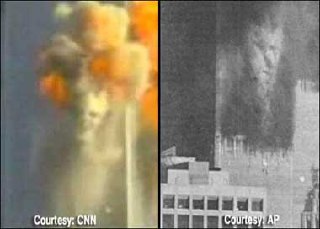
So here is where it stands. The video evidence is filmed. The historical evidence is ten thousand years deep. The scientific evidence is running right now in the world’s quantum-sensing laboratories — three independent lines, one target, every one of them checkable with hardware that already exists. What every culture on Earth documented for ten thousand years was never superstition. It was a field report, filed early, in the language of its age, about a physics we are finally equipped to read — and, for the first time, to fight. The instruments are built. The signature is waiting to be recorded. The countermeasure is already named. What remains is to point the sensors and read what they see.
Transhuman Genocide: The Underground Report — available soon.