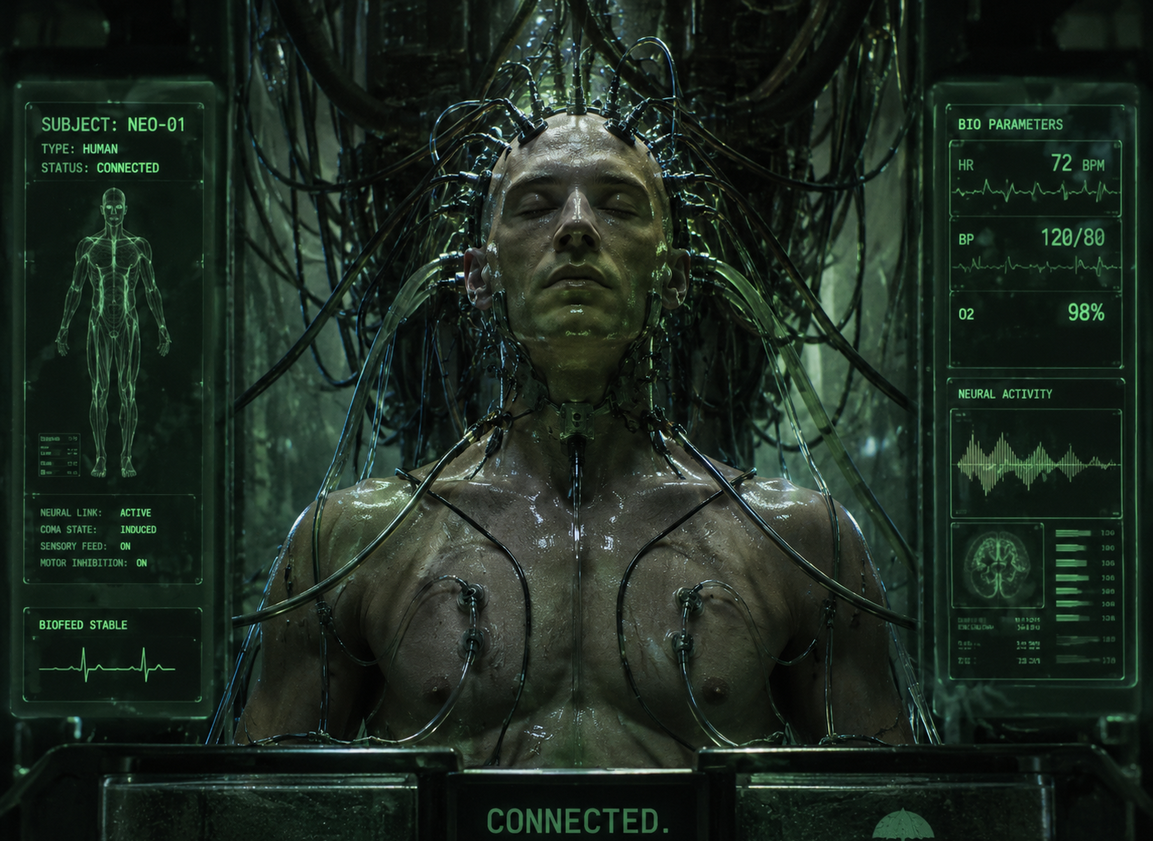
In January 2024, Neuralink’s first human patient, Noland Arbaugh, received the N1 brain-computer interface implant as part of the company’s PRIME Study (Precise Robotically Implanted Brain-Computer Interface), approved by the FDA in September 2023. Within weeks, Arbaugh was controlling a computer cursor using only his neural signals, navigating web browsers, playing video games, and communicating through thought-driven text input. By March 2024, Neuralink reported that some of the 64 ultra-thin threads — each carrying 16 electrodes for a total of 1,024 channels — had retracted from the brain tissue, reducing the number of effective electrodes. The company adapted its decoding algorithms to compensate, restoring and eventually exceeding the original performance metrics. A second PRIME patient was implanted in mid-2024, and Neuralink announced plans to implant additional patients through 2025, with the stated goal of achieving commercial availability by the end of the decade. These are publicly documented clinical outcomes, reported by the company and covered in peer-reviewed correspondence.
The BrainGate clinical trial program, initiated in 2004 at Brown University under the direction of neuroscientist John Donoghue, represents the longest-running intracortical BCI research program in history. Using the Blackrock Microsystems Utah Array — a 96-electrode silicon chip approximately 4mm square that is pneumatically inserted into the motor cortex — BrainGate has enabled paralyzed patients to control robotic arms, type on computer screens, operate tablets, and even drive powered wheelchairs using decoded neural signals. In a landmark 2012 study published in Nature, BrainGate participant Cathy Hutchinson, who had been paralyzed for 15 years due to a brainstem stroke, used a neurally controlled robotic arm to pick up a bottle of coffee and drink from it independently — the first time a person had used a BCI to control a multi-jointed robotic limb for a self-serving task. The BrainGate consortium, which includes Brown University, Massachusetts General Hospital, Stanford University, and Case Western Reserve University, has continued enrolling patients through its BrainGate2 trial (ClinicalTrials.gov identifier NCT00912041).
The resolution of modern neural recording systems has advanced substantially beyond the first-generation BCIs. The Neuropixels probe, developed by the Howard Hughes Medical Institute’s Janelia Research Campus in collaboration with imec (a Belgian nanoelectronics research center), contains 5,120 recording sites on a single silicon shank thinner than a human hair, capable of simultaneously recording from hundreds of individual neurons across multiple brain regions. Neuropixels 2.0, released in 2022, features four shanks with 5,120 sites each and has been adopted by over 600 neuroscience laboratories worldwide. While currently used only in animal research, the Neuropixels architecture represents the trajectory of neural recording density: from BrainGate’s 96 channels to Neuralink’s 1,024 to Neuropixels’ 5,120-plus, with Paradromics’ Connexus targeting 65,000 channels for human implantation. The increase in channel count directly corresponds to the amount of neural information that can be read — and the fidelity with which thought, intention, memory, and perception can be decoded.
Deep brain stimulation (DBS), a technology that demonstrates the “write” side of neural interfaces, has been FDA-approved and in clinical use since 1997. Medtronic, Abbott Laboratories, and Boston Scientific collectively manufacture DBS systems that are currently implanted in over 200,000 patients worldwide for the treatment of Parkinson’s disease, essential tremor, dystonia, obsessive-compulsive disorder, and treatment-resistant epilepsy. The latest generation of DBS devices — including Medtronic’s Percept PC and Abbott’s Infinity system — feature directional leads that can steer electrical stimulation to specific neural populations with millimeter precision, and closed-loop sensing capabilities that record brain activity and automatically adjust stimulation parameters in real time. A DBS system is, in functional terms, a brain-computer interface that both reads neural signals and writes electrical patterns into brain tissue. The clinical evidence base for DBS includes thousands of peer-reviewed studies and over two decades of longitudinal patient data.
The neural decoding capabilities demonstrated in current research extend far beyond cursor control. In 2023, researchers at the University of Texas at Austin, led by Alexander Huth, published a study in Nature Neuroscience demonstrating a non-invasive “semantic decoder” that used functional MRI data and large language model architecture to reconstruct continuous natural language from brain activity — effectively reading a person’s internal monologue with meaningful accuracy, without any implant. At Stanford University, the Neural Prosthetics Translational Laboratory led by Krishna Shenoy (who passed away in 2023) and Frank Willett demonstrated a BCI system that could decode attempted handwriting from neural signals in a paralyzed patient at a rate of 90 characters per minute with 94.1% accuracy, approaching the speed of typical smartphone typing. In a 2023 follow-up, the same team demonstrated speech decoding from a patient with ALS at a rate of 62 words per minute, representing the fastest BCI-driven communication rate ever recorded at the time.
Bidirectional neural interfaces — systems that can both read from and write to the brain — are the explicit goal of multiple funded research programs. DARPA’s Restoring Active Memory (RAM) program, which ran from 2013 to 2018 with over $77 million in funding, developed closed-loop implantable systems that could detect when a patient’s brain was failing to encode a memory and deliver targeted electrical stimulation to improve memory formation by up to 37%, as reported in a 2018 study in the Journal of Neural Engineering by researchers at the University of Pennsylvania and Wake Forest Baptist Medical Center. DARPA’s subsequent program, Targeted Neuroplasticity Training (TNT), used peripheral nerve stimulation to enhance learning rates for skills including language acquisition and marksmanship. The Neural Engineering System Design (NESD) program, with a stated goal of developing an implantable interface capable of communicating with one million individual neurons simultaneously, funded teams at Brown University, Columbia University, the University of California Berkeley, and Paradromics Inc.
The concept of neural “write access” — delivering information directly to the brain — has been demonstrated in multiple laboratories using different modalities. Optogenetics, pioneered by Karl Deisseroth at Stanford and Ed Boyden at MIT, uses genetically modified neurons that respond to specific wavelengths of light, enabling researchers to activate or silence individual neural circuits with millisecond precision. While optogenetics currently requires genetic modification of target neurons (limiting its use to animal models and specialized human research contexts), it has demonstrated that specific behaviors, memories, and perceptions can be artificially induced by stimulating defined neural populations. In 2014, Susumu Tonegawa’s lab at MIT published a study in Nature demonstrating the creation of false memories in mice by optogenetically activating neurons associated with a specific spatial memory while delivering an aversive stimulus in a different location — the mice subsequently exhibited fear responses to the original location where no threat had occurred. The false memory was indistinguishable from a natural one in terms of behavioral expression.
Closed-loop neurostimulation systems that autonomously modulate brain states are already in clinical deployment. NeuroPace, Inc. (Mountain View, California) received FDA approval in 2013 for its RNS System — a responsive neurostimulation device implanted in the skull that continuously monitors brain electrical activity, detects the onset of seizures, and automatically delivers targeted electrical stimulation to abort the seizure before it reaches clinical expression. By 2024, over 4,000 patients had received the RNS System. The device maintains a continuous log of all neural events and stimulation deliveries, creating a detailed record of brain activity over years. Inner Cosmos, a startup founded in 2016, is developing a minimally invasive cortical stimulation device for treatment-resistant depression that can be implanted in an outpatient procedure and controlled via a smartphone app. The progression from physician-controlled to algorithm-controlled to app-controlled brain stimulation represents a significant shift in who — or what — determines the electrical patterns delivered to a human brain.
The intersection of BCI technology with artificial intelligence is accelerating both the read and write capabilities of neural interfaces. Neuralink’s decoding algorithms use deep learning models trained on neural spike data to translate patterns of brain activity into intended cursor movements or text. BrainGate’s latest systems use recurrent neural networks (RNNs) to decode attempted speech. Meta’s BCI research, conducted at UCSF and published in Nature Neuroscience, used a neural network to decode speech from electrocorticography (ECoG) signals at accuracy levels sufficient for practical communication. The AI systems being developed to interpret brain signals are, architecturally, the same class of models being developed for natural language processing, computer vision, and autonomous decision-making. The neural data being collected from BCI clinical trials — continuous, high-resolution recordings of human brain activity during thought, communication, and motor planning — constitutes a training dataset of unprecedented value for AI systems designed to model human cognition.
The current state of brain-computer interface technology is not a distant research frontier — it is a clinical reality with named patients, published outcomes, FDA approvals, and commercial timelines. The trajectory from 96-channel read-only implants to 1,024-channel bidirectional devices to planned million-channel systems follows an exponential curve in recording density that parallels the early decades of semiconductor scaling. The combination of increasing channel counts, AI-powered signal decoding, closed-loop stimulation, and the demonstrated ability to read speech, decode memory formation, and write artificial perceptions into neural tissue defines a technology domain that is advancing faster than the ethical, legal, and regulatory frameworks designed to govern it. This is the domain that transhumangenocide.com was created to document: the real clinical trials, real DARPA programs, real patents, and real capabilities of brain-computer interface technology as it moves from laboratory to clinic to consumer market.