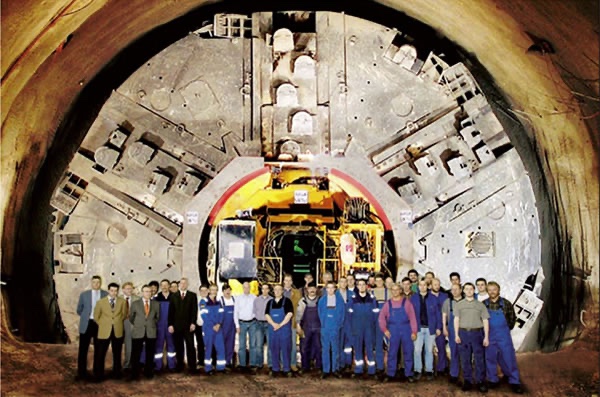
The tunnel stretches ahead into darkness — smooth-walled, precisely circular, and wide enough to accommodate the transit vehicles that connect the network’s nodes at speeds no surface transportation can match. The bore diameter is consistent across every segment: standardized for the maglev transit cars that Schneider described and that multiple witnesses from separated compartmented programs have independently confirmed. The walls show no seams, no joints, no formwork marks — they are continuous vitrified glass produced by a nuclear heat source that restructured the surrounding rock in a single pass.
The transit network connecting Deep Underground Military Bases represents the largest infrastructure project never publicly acknowledged. Witnesses have described electromagnetic propulsion systems capable of moving vehicles at speeds between Mach 1.5 and Mach 2 through vacuum-sealed tunnel segments. At those speeds, the transit time from Cheyenne Mountain to the Pentagon’s underground annex is approximately forty-five minutes. From Raven Rock to Mount Weather: twelve minutes. From Dulce to Area 51: ninety minutes. The network does not replace air travel between military installations. It replaces the need for air travel entirely.
Building the transit system required solving a single engineering problem: boring tunnels fast enough and quietly enough that decades of continuous construction would not be detected by surface monitoring. The nuclear subterrene solved that problem. What you are looking at is not a tunnel. It is a highway. And it has been carrying classified traffic beneath the American landscape since before most of the people reading this were born.
From Transhuman Genocide: The Underground Report — the book that maps what they built beneath your feet.