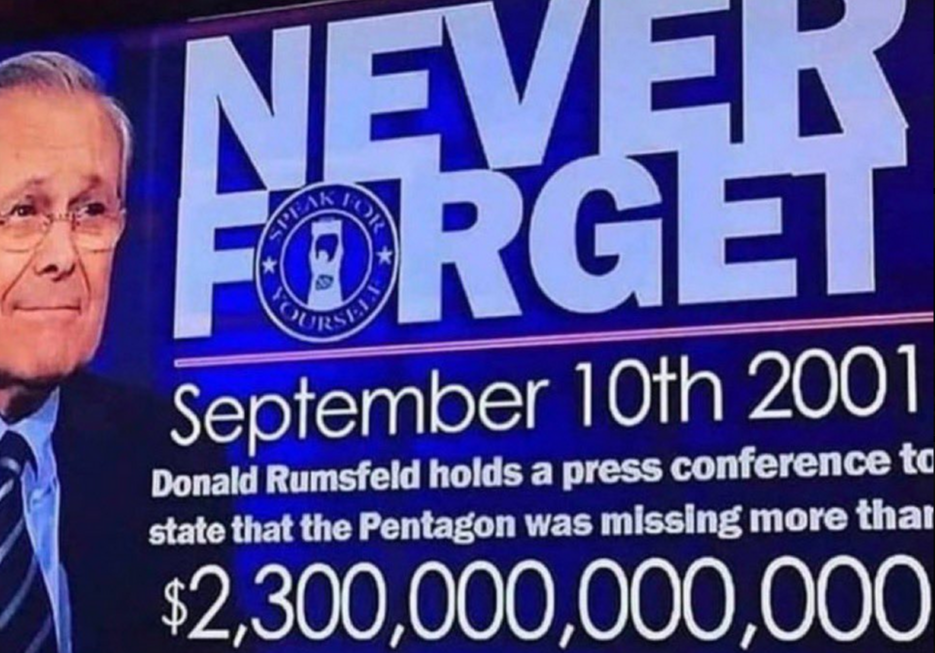
On September 10, 2001, Secretary of Defense Donald Rumsfeld stood at a Pentagon podium and announced that the Department of Defense could not account for $2.3 trillion in transactions. The next morning, American Airlines Flight 77 struck the Pentagon’s western facade — specifically the Office of Naval Intelligence, which housed the financial audit team investigating those missing trillions. The backup records were stored at the World Trade Center’s Building 7, which collapsed that afternoon despite never being struck by an aircraft.
The trail of unaccountable military spending did not end on September 11. It accelerated. By 2025, the cumulative total of Department of Defense transactions that cannot be traced to identifiable expenditures had surpassed $21 trillion — a figure exceeding the entire national debt at the time the audits began. In 2018, the Federal Accounting Standards Advisory Board issued Statement 56, which authorized federal agencies to modify financial statements for national security purposes. The government legalized cooking its own books.
Twenty-one trillion dollars does not simply vanish. It purchases something. The DUMB network — with its nuclear subterrene boring machines, vitrified tunnel systems, underground cities, and classified transit infrastructure — represents the only construction program in history large enough to absorb expenditures at that scale. The money went underground. Literally. And the audit trail was buried with it, first by policy, then by aircraft, and finally by legislation that made the concealment permanent.
From Transhuman Genocide: The Underground Report — the book that maps what they built beneath your feet.