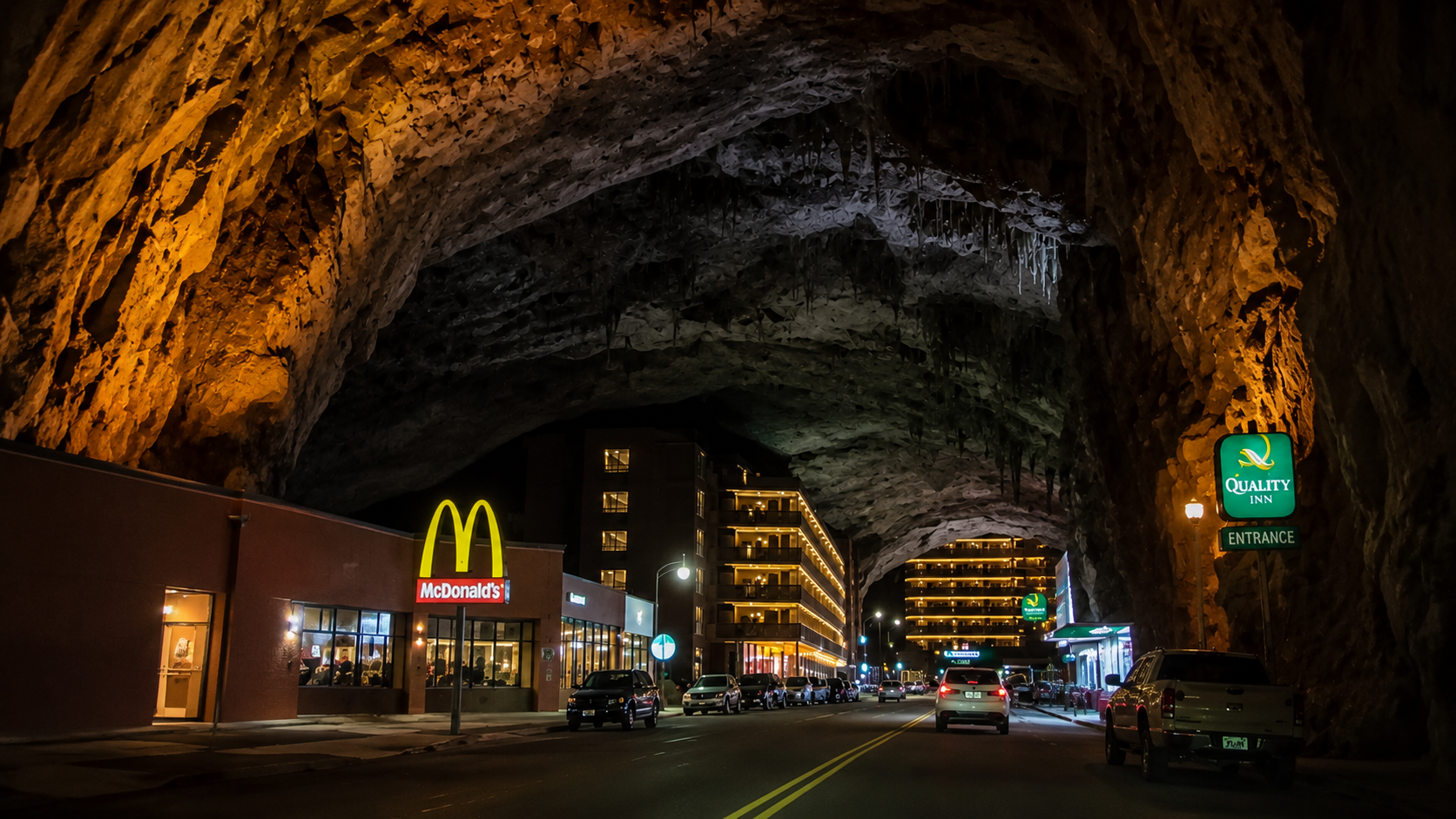
Eight hundred feet below the surface, a city operates. Not a bunker. Not a command post. A city — with commercial infrastructure, food service, residential quarters, and recreational facilities designed for populations measured in thousands. The image depicts what multiple witnesses from compartmented programs have described: self-sustaining underground communities complete with artificial lighting systems that simulate daylight cycles, climate-controlled environments maintained at surface-standard temperatures, and amenities that would be recognizable in any American suburb. Including, according to testimony, a McDonald’s.
The existence of underground cities is not speculation. It is engineering. Any facility designed to sustain thousands of personnel for months or years requires exactly the infrastructure visible here: food preparation, waste processing, water treatment, medical services, and morale facilities. The military has published doctrine on underground sustainment operations since the 1950s. The only question is scale. And the scale question was answered by the budget: $21 trillion in unauditable Pentagon transactions over three decades — enough to build and sustain a parallel civilization underground.
The population capacity of the underground network is the most closely guarded figure in American defense planning. Continuity of government doctrine requires the survival of executive, legislative, and judicial branches — approximately 6,000 designated successors. But the facilities built to house them can sustain populations ten to fifty times that number. The underground cities were not built to save the government. They were built to save a civilization. Just not the one on the surface.
From Transhuman Genocide: The Underground Report — the book that maps what they built beneath your feet.