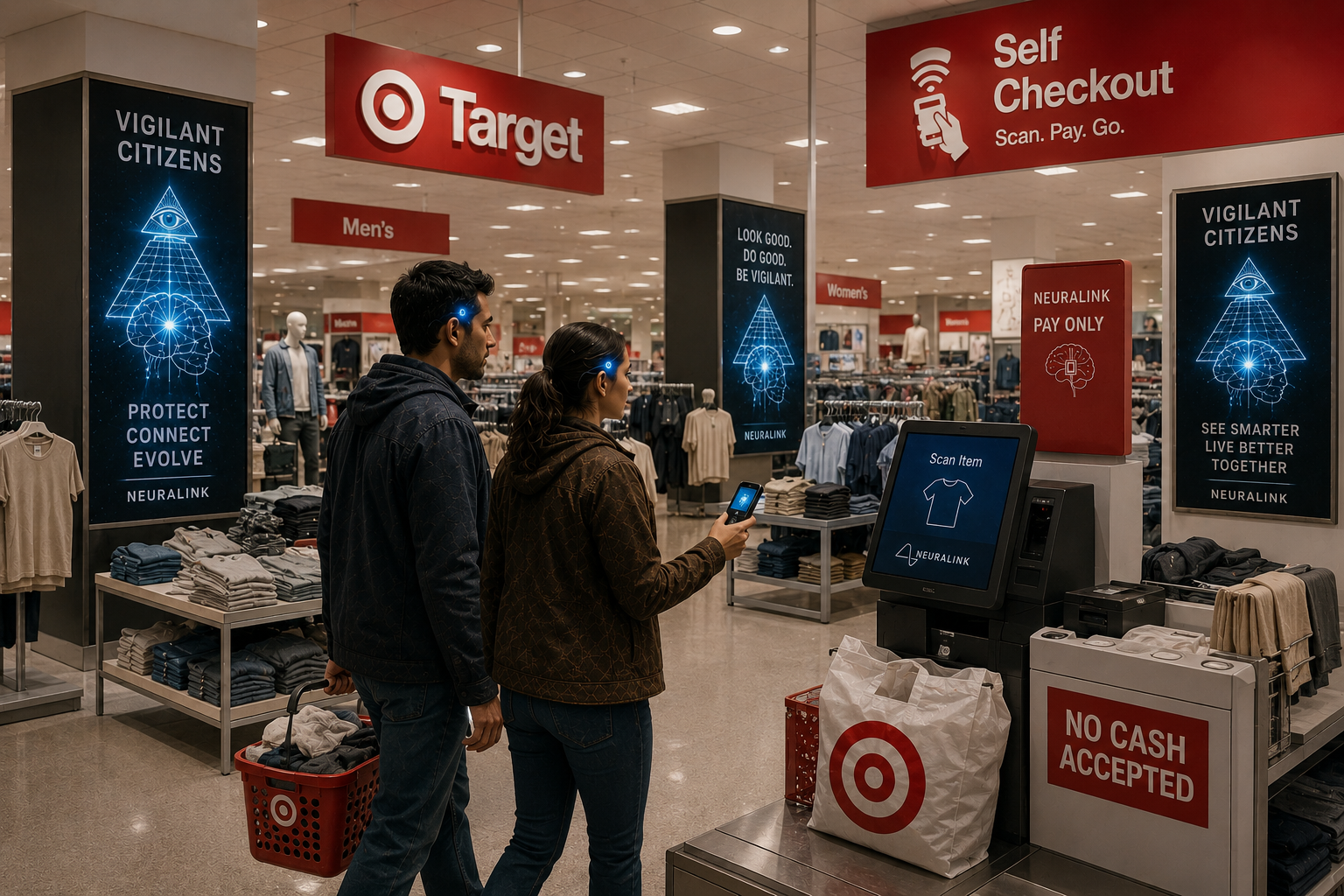
The modern retail environment has become one of the most sophisticated surveillance platforms in civilian life, and the transformation happened so gradually that most consumers never registered the shift. What began as loss prevention cameras in the 1970s has evolved into an integrated biometric identification, behavioral analytics, and AI-driven tracking ecosystem that rivals the capabilities of state intelligence agencies. The stores you walk into today know who you are before you reach the first aisle — and the technology enabling this is not classified or speculative. It is commercially available, widely deployed, and documented in corporate filings, patent applications, and peer-reviewed computer science research.
Amazon’s Just Walk Out technology, deployed in Amazon Go stores beginning in January 2018 in Seattle, represents the most visible implementation of cashierless retail. The system uses a combination of computer vision, sensor fusion, and deep learning algorithms to track every item a customer picks up, puts back, or walks out with. The original stores used hundreds of ceiling-mounted cameras running proprietary CV models, weight sensors on shelves, and RFID as a fallback layer. Customers scanned the Amazon app, their palm via Amazon One, or a linked credit card upon entry, then simply left with their items. Amazon deployed the technology in over 40 locations including Amazon Go, Amazon Go Grocery, and select Whole Foods stores before announcing in 2024 that it would wind down Just Walk Out in favor of Dash Cart smart shopping carts in larger formats. However, the core technology was licensed to third-party retailers through Amazon Web Services, meaning the underlying computer vision and sensor fusion stack continues to spread through the retail industry under white-label agreements.
Amazon One, the company’s palm recognition payment system, deserves particular scrutiny. Launched in September 2020, the system captures a customer’s palm vein pattern — the subcutaneous vascular structure unique to each individual — using infrared imaging. Unlike fingerprints, palm vein patterns cannot be captured from surfaces a person has touched, which Amazon markets as a privacy advantage. By 2024, Amazon One was deployed in over 500 locations including all Whole Foods stores in the United States, Panera Bread restaurants, and select third-party retailers. Customers link their palm print to a credit card or Amazon account, then pay by hovering their hand over a reader. The system processes the biometric match in under 300 milliseconds. Amazon stores palm data in a custom-built cloud enclave and states it is encrypted and never stored on the device. However, privacy advocates including the Electronic Frontier Foundation and Senator Amy Klobuchar have raised concerns about the creation of a centralized biometric database linked to purchase histories, noting that unlike a credit card, you cannot cancel or replace your palm vein pattern if the data is compromised.
Facial recognition in retail has expanded far beyond what most consumers realize. Clearview AI, which scraped over 40 billion facial images from social media platforms and the open web, has marketed its facial recognition technology to retailers for loss prevention since at least 2020. Rite Aid deployed facial recognition systems in approximately 200 stores across the United States before the Federal Trade Commission issued a consent order in December 2023 banning the company from using facial surveillance for five years. The FTC found that Rite Aid’s system disproportionately generated false positive matches for women and people of color, flagging innocent customers as suspected shoplifters based on flawed algorithmic identification. In Australia, retailer Bunnings Warehouse and entertainment company Kmart were found to have deployed Clearview AI’s technology by the Australian Human Rights Commission. China’s retail sector uses facial recognition at a scale that dwarfs Western deployments — the country had an estimated 626 million surveillance cameras by 2023, with facial recognition integrated into payment systems through Alipay’s Smile to Pay and WeChat’s facial payment terminals, which are installed in tens of thousands of retail locations.
The data generated by these systems extends well beyond the transaction itself. Retail analytics platforms such as RetailNext, ShopperTrak (now part of Sensormatic Solutions, a subsidiary of Johnson Controls), and Prism Skylabs use in-store cameras and sensors to track foot traffic patterns, dwell times at specific displays, customer navigation paths through stores, and demographic profiling based on estimated age, gender, and even emotional state. A 2022 research paper published in the IEEE Transactions on Information Forensics and Security detailed methods for re-identifying individuals across multiple retail locations using gait analysis — the distinctive pattern of a person’s walk — even when facial recognition is unavailable or deliberately defeated by the subject wearing a mask. The paper demonstrated accuracy rates exceeding 90% in controlled environments. This means that even a customer who pays cash and avoids facial recognition can be tracked across stores by the way they walk.
The patent landscape reveals the direction the industry is heading. U.S. Patent 10,956,849, assigned to Walmart, describes a system for monitoring customer biometrics including heart rate, body temperature, and grip force on shopping cart handles to assess stress levels and shopping satisfaction. U.S. Patent 11,227,217, assigned to Amazon Technologies, describes a system for identifying customers by their hand geometry in a cashierless store environment. U.S. Patent 10,282,720, also assigned to Amazon, covers a system that tracks items removed from shelves using a combination of cameras, weight sensors, and LIDAR. Collectively, these patents describe a retail environment where every physical movement, biometric signal, and purchasing decision is captured, analyzed, and stored — a comprehensive digital twin of the consumer that follows them from store entry to departure and links to their broader purchase and behavioral history across all connected platforms.
The regulatory response has been fragmented and largely inadequate. The European Union’s General Data Protection Regulation (GDPR) classifies biometric data as a special category requiring explicit consent, but enforcement has been inconsistent. Illinois’s Biometric Information Privacy Act (BIPA), enacted in 2008, remains the strongest U.S. biometric privacy law and has generated billions of dollars in class action settlements, including a $650 million settlement with Facebook (now Meta) in 2021 over its facial recognition tagging feature. However, most U.S. states have no biometric privacy law at all, and federal legislation has repeatedly stalled. The American Data Privacy and Protection Act, introduced in 2022, included biometric protections but never reached a floor vote. This regulatory vacuum means that retail biometric surveillance is expanding faster than the legal framework designed to govern it.
The convergence of cashierless technology with digital payment infrastructure is creating a system where anonymous commerce becomes increasingly difficult. Sweden, a country where cash transactions now account for less than 10% of all retail payments, has already seen businesses refuse cash entirely. In China, mobile payment platforms Alipay and WeChat Pay process over $35 trillion in transactions annually, creating a comprehensive digital record of virtually every purchase made in the country. When these payment records are combined with facial recognition, location tracking, and behavioral analytics, the result is a surveillance architecture that knows not just what you bought, but where you were when you bought it, how long you considered the purchase, what your emotional state appeared to be, and who was standing near you at the time.
The national security implications are significant. The FBI’s Next Generation Identification (NGI) system contains over 150 million facial recognition records compiled from law enforcement databases, visa applications, and state driver’s license photos. Customs and Border Protection’s Traveler Verification Service uses facial recognition at airports and land border crossings. When these government databases are considered alongside the private-sector biometric data being collected by retailers, payment processors, and tech companies, the total biometric surveillance infrastructure — public and private combined — represents a capability that no government in human history has possessed. The technical ability to identify, track, and profile any individual in real time across both physical and digital spaces is no longer theoretical. It is operational.
The trajectory from loyalty cards to palm vein scanners traces a consistent arc: each generation of retail technology captures more personal data with less consumer awareness and fewer meaningful consent mechanisms. The question this site has consistently raised — what infrastructure is being built while public attention is directed elsewhere — finds one of its clearest answers in the retail environment. The stores that millions of people visit daily have become intake points for a biometric surveillance system that is commercial in its branding but intelligence-grade in its capabilities. Understanding this transformation is essential to the broader investigation documented across these pages, because the same technologies, the same companies, and the same funding streams that enable retail surveillance connect directly to the defense, intelligence, and advanced technology programs examined elsewhere on this site.