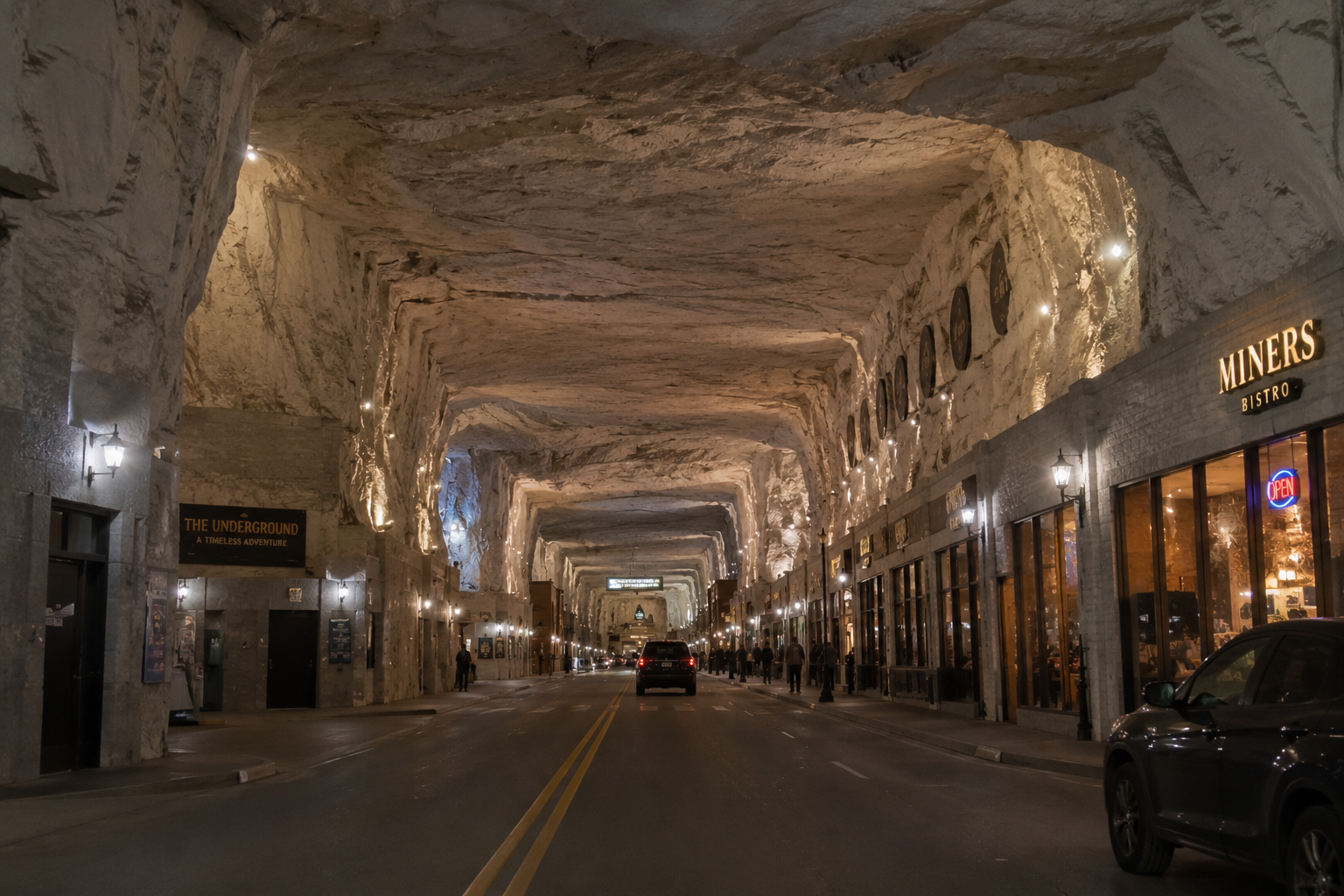
Phil Schneider described them in every public lecture he gave during the last two years of his life: glass-lined tunnels stretching for hundreds of miles beneath the American landscape, bored by nuclear-powered machines that melted rock into obsidian-smooth walls requiring no structural reinforcement. He stated that the tunnels connected major military installations at depths ranging from one to four miles below the surface, and that a maglev transit system within them could move personnel and equipment between nodes at speeds exceeding conventional aircraft.
The technology is not theoretical. U.S. Patent 3,693,731, assigned to the United States Atomic Energy Commission and granted in September 1972, describes a “method and apparatus for tunneling by melting” that produces exactly the vitrified lining Schneider described. The patent specifies a nuclear heat source that liquefies rock ahead of the boring head while a coolant system solidifies the melt behind it, creating a continuous glass tube. The rock is not removed — it is restructured. No spoil. No debris. No evidence on the surface that anything was built below.
Schneider stated that he had a Level 3 security clearance — a classification above Top Secret — and that he had worked on thirteen deep underground military bases during his engineering career. He named facilities. He described construction methods. He provided dates, locations, and personnel counts. In January 1996, he was found dead in his apartment in Wilsonville, Oregon. The medical examiner ruled it suicide by rubber hose wrapped around his neck. His lecture tapes, his geological samples, and his personal files were removed from the apartment before his family was notified.
From Transhuman Genocide: The Underground Report — the book that maps what they built beneath your feet.