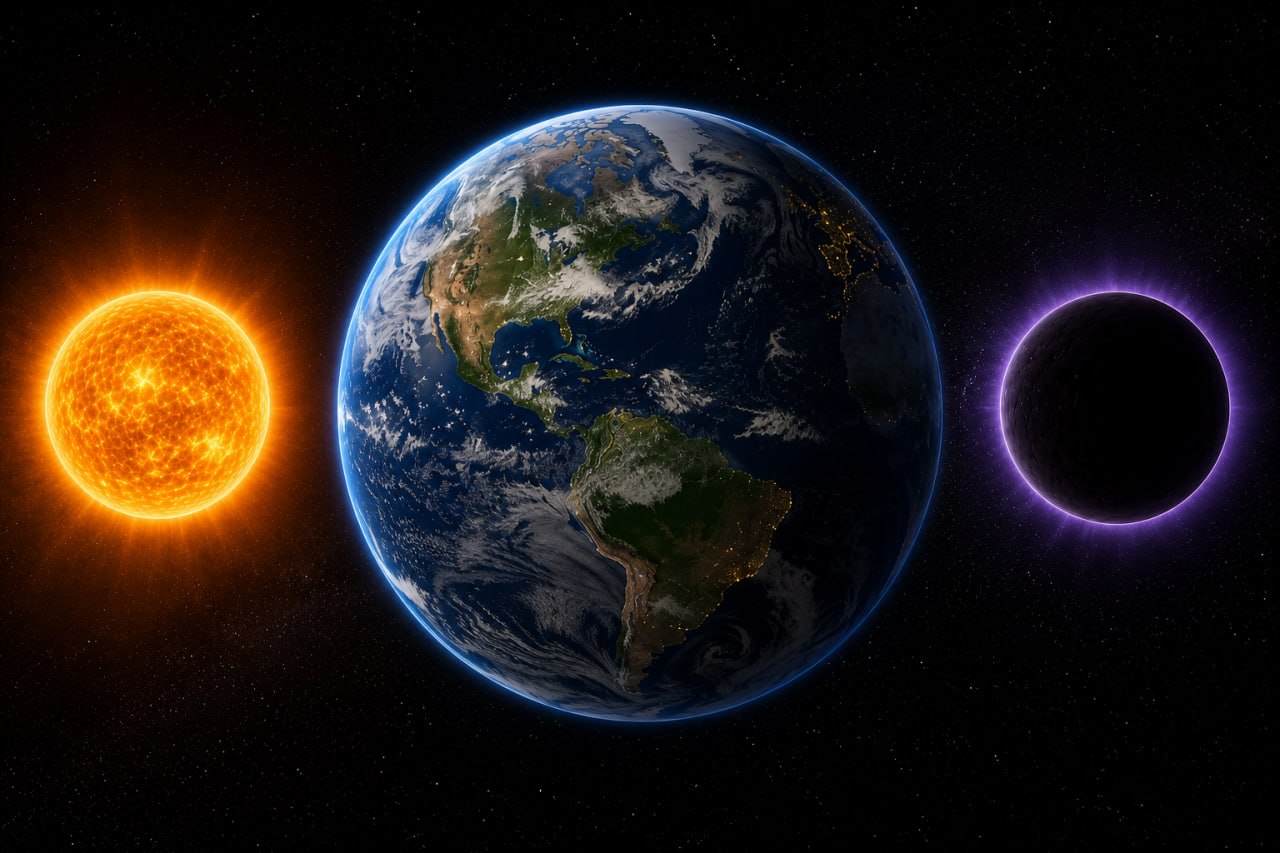
The Black Sun
For 2,400 years, serious people have proposed that the light we live by has a dark twin — a second body, unlit, positioned where we can never see it. This is the file on that idea.
Every claim on this page below the line is real: real philosophers, real published papers, real NASA missions, real null results. The hypothesis that binds them — a dark body holding station opposite the Sun — is ours. We float it as a thought experiment and we show you, honestly, where the evidence stands. Where the record says no, we print the no.
The oldest version of the Black Sun is not medieval, not occult, and not modern. It is Greek, it is mathematical, and it was taken seriously enough that Aristotle himself spent part of two books attacking it.
Philolaus of Croton, a Pythagorean writing in the 5th century BC, taught the first cosmology in history to throw the Earth into motion. In his system the Earth is not the center of the universe. The center is occupied by something he called the Central Fire — Hestia, "the hearth of the cosmos," also recorded under the names "house of Zeus" and "mother of the gods." Everything orbits it: the Earth, the Moon, the Sun, the five planets, the sphere of fixed stars.
And one more body. Between the Earth and the Central Fire, on the same orbit as Earth but always on the far side, Philolaus placed the Antichthon — the Counter-Earth. We never see it for the same reason we never see the Central Fire: the inhabited face of the Earth is turned permanently away from the center, like a passenger looking out the window of a carousel. The most important objects in the Pythagorean cosmos are structurally invisible from where we sit.
Now the detail that earns this system a place on this page. In the doxography preserved by Aetius (II.20.12), Philolaus taught that the Sun we see is not the fire itself. It is "glass-like" — a lens, or a mirror — collecting the light of the Central Fire and filtering it down to us. The light of day is secondhand light. Some ancient summaries go further and say the Pythagoreans therefore counted two suns: the true fiery body, and the reflection we live by. Only one of them is visible.
That is the Black Sun thesis, stated in full, roughly 2,400 years before this website: the real source is hidden; the sun in our sky is the decoy.

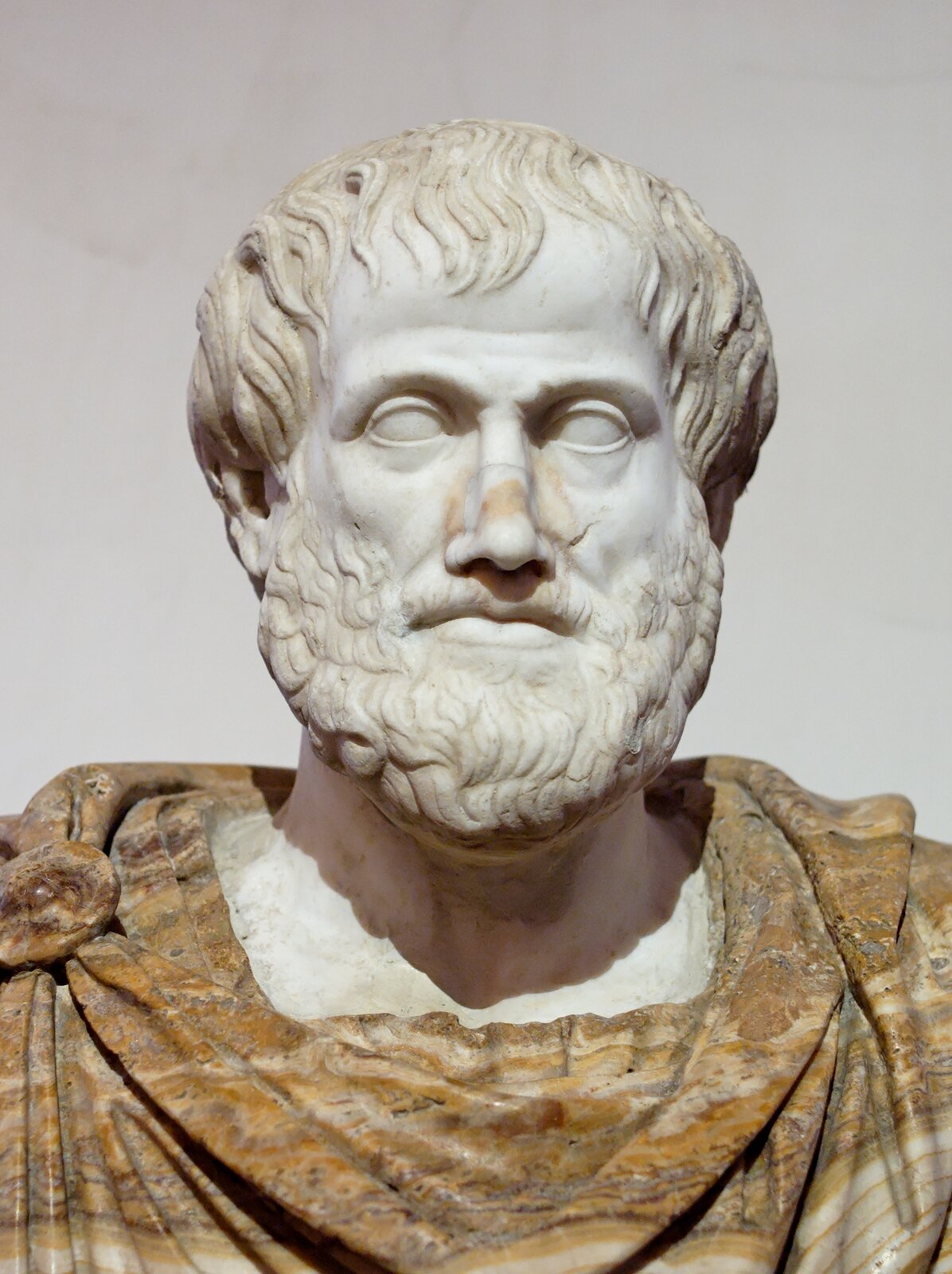
Enter Aristotle, one century later, in On the Heavens (De Caelo II.13, 293a18–b30):
"They say that the centre is occupied by fire, and that the earth is one of the stars, creating night and day as it travels in a circle about the centre. They further construct another earth in opposition to ours, to which they give the name counter-earth." — Aristotle, De Caelo II.13 (trans. J.L. Stocks)
He then delivers one of the great methodological insults in the history of science:
"In all this they are not seeking for theories and causes to account for observed facts, but rather forcing their observations and trying to accommodate them to certain theories and opinions of their own." — Aristotle, De Caelo II.13
In the Metaphysics (I.5, 986a8–12) he explains exactly why he thinks they invented the body: the Pythagoreans held ten to be the perfect number, counted only nine bodies in the heavens, "and to meet this they invent a tenth — the counter-earth." A hidden world conjured to balance the books of numerology. It is the first recorded accusation of a theorist adding an invisible object to save a beautiful theory.
But here is what makes the exchange genuinely modern. Aristotle records that the Pythagoreans defended the Antichthon with an observational argument: eclipses of the Moon are more frequent than eclipses of the Sun, and unseen bodies circling the Central Fire — the Counter-Earth among them — could be interposing themselves and casting the extra shadows (De Caelo 293b21–25). A hidden body invoked to explain an anomaly in eclipse statistics. Swap "eclipse counts" for "comet-orbit anisotropy" and it is the Nemesis paper of 1984, twenty-three centuries early.
Aristotle's counterattack was equally modern. He demanded the invisible pay observational rent: falling bodies converge on the Earth's center, the Earth's eclipse shadow is curved, no parallax betrays terrestrial motion — therefore no Central Fire, no Counter-Earth, case closed (De Caelo II.14). He was wrong about the Earth being stationary, and right about the Antichthon. The whole affair survives to us largely through Simplicius, whose 6th-century commentary on De Caelo preserved both sides of the argument.
The pattern set in 350 BC still governs the field: someone posits a hidden companion; the companion is charged with explaining a real statistical anomaly; a skeptic demands its observable consequences; the sky is checked; the ledger is settled. Every section below is that same loop, run again with better instruments.
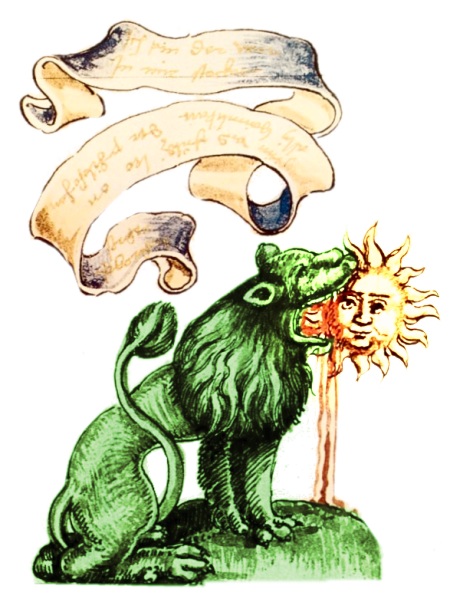
The idea went underground and resurfaced in the alchemical literature as Sol Niger — the Black Sun — emblem of the nigredo, the stage where the work turns dark before it turns gold. Emblems from the 1550s show the sun devoured, eclipsed, or rising black over the philosophers' landscape. In the Aztec tradition the sun has a night aspect that travels through the underworld between dusk and dawn. Soundgarden put a black hole where the sun should be and took it to #1. The motif keeps arriving, era after era, culture after culture — OSDC takes no position on where the signal originates, only that it keeps being received.
One note for the record: the phrase was also appropriated by 20th-century occult movements OSDC does not cite and will not illustrate. The astronomy in this file predates them by two thousand years and belongs to everyone.
The Hebrew sources carry the astronomical thread too. The Talmud (Shabbat 156a) preserves a live rabbinic dispute over whether celestial configurations govern human affairs. The Zohar (Shemot 13:99) describes a star that burns for twelve days, after which "at midday the sun will be darkened" until heaven and earth cannot be seen — and the kabbalistic tradition of the Or HaGanuz, the primordial light hidden away at creation, is a hidden-luminary doctrine in its purest form. Symbolic, eschatological, not evidence — but the motif again: the true light is concealed; the visible light is not the whole story.
In 1984, paleontologists Raup and Sepkoski published a statistical analysis claiming marine extinction events recur roughly every 26 million years. Within months, two independent teams — Davis, Hut & Muller, and Whitmire & Jackson — published the same explanation in the same issue of Nature: the Sun has an unseen companion star on a vast, eccentric orbit. Each pass through the Oort Cloud shakes loose a storm of comets, and the Earth takes the hits. They named it Nemesis. The proposed body was no second bright sun — a red dwarf or brown dwarf, optically dim to the point of invisibility, roughly 1.5 light-years out.
Two years later, a 1986 study of 126 long-period comet orbits reported a large anisotropy — the comets were not arriving evenly from all directions — and argued a massive, slowly moving bound object could account for it. A statistical anomaly in the sky, charged to the account of a hidden companion. Philolaus would have recognized the move; so would Aristotle.
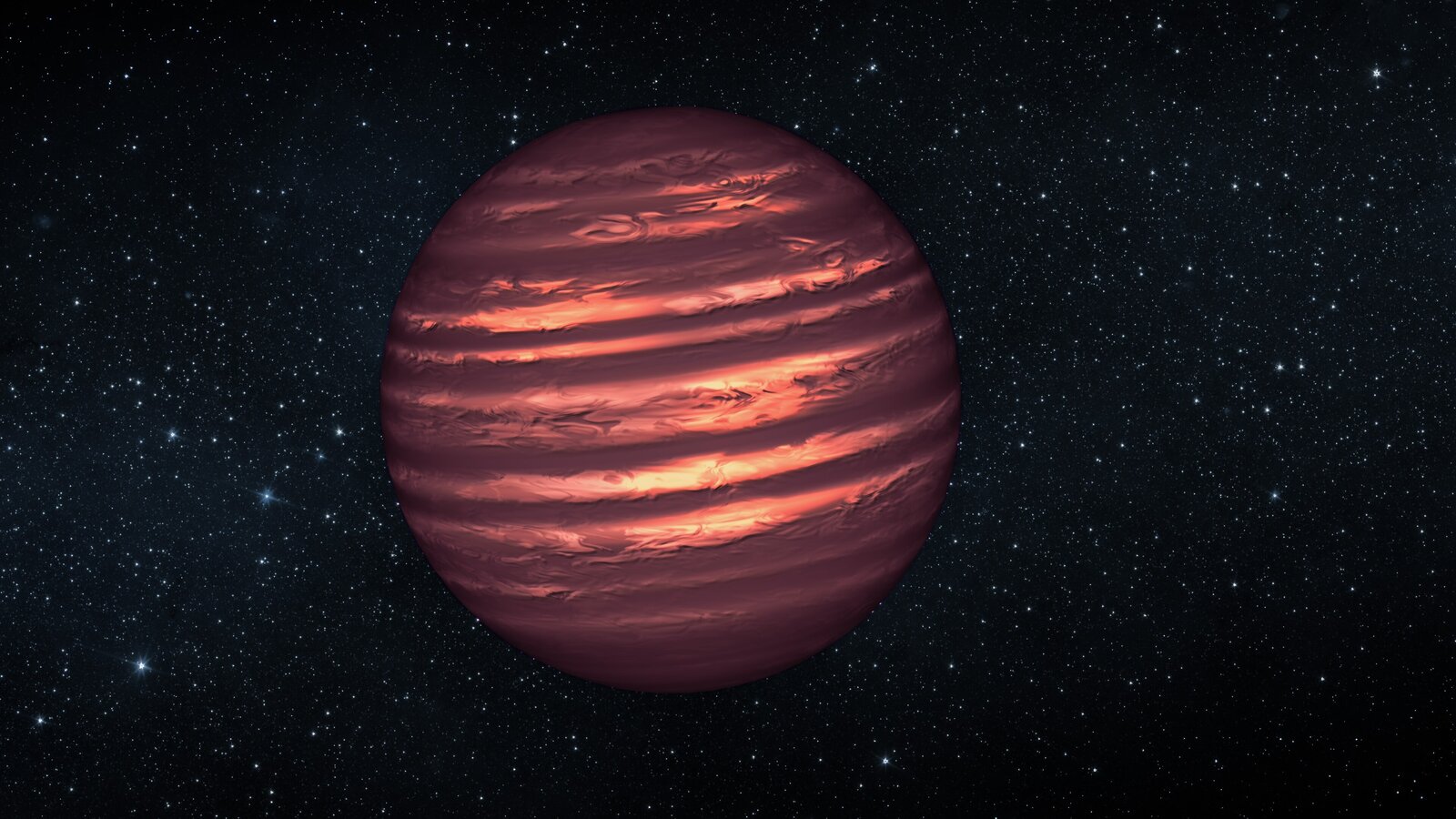
This is what a dark sun actually looks like: a body that failed ignition. Brown dwarfs glow feebly in the infrared and are effectively black in visible light. The hypothesis was never physically absurd — that is precisely why NASA searched for it with infrared eyes rather than optical ones.
Here is the single most important physical fact in this file. A perfectly black object cannot hide. A body at 1 AU painted the blackest black absorbs the full flux of sunlight and must re-radiate it — thermal equilibrium puts its surface near 278 K, and a 278 K body blazes in the infrared. Painting it vantablack makes it brighter to an infrared survey telescope, not darker. Every photon it refuses to reflect, it is forced to confess as heat.
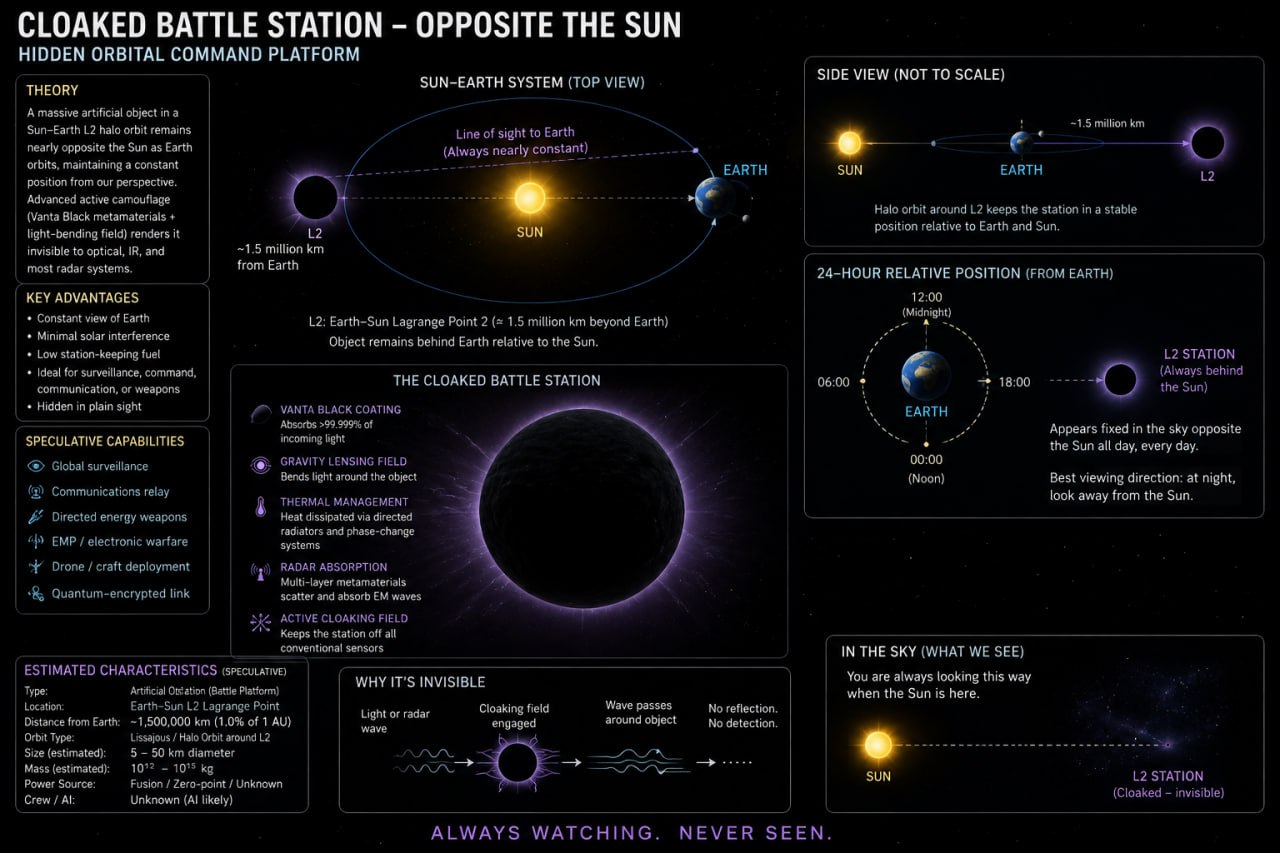
The conclusion the physics forces on you: photometric hiding is impossible. The only way to hide near the Sun is geometric — you park where no one can point a telescope. There are exactly two such places: the solar exclusion zone (the narrow cone behind the Sun itself), and the deep anti-solar station-keeping orbits. Which is why the technical briefings below all converge on the same architecture — and why humanity, when it wants its own instruments kept cold and unobserved, parks them at the anti-solar Lagrange point. JWST lives at L2. So would anything else that wanted privacy.
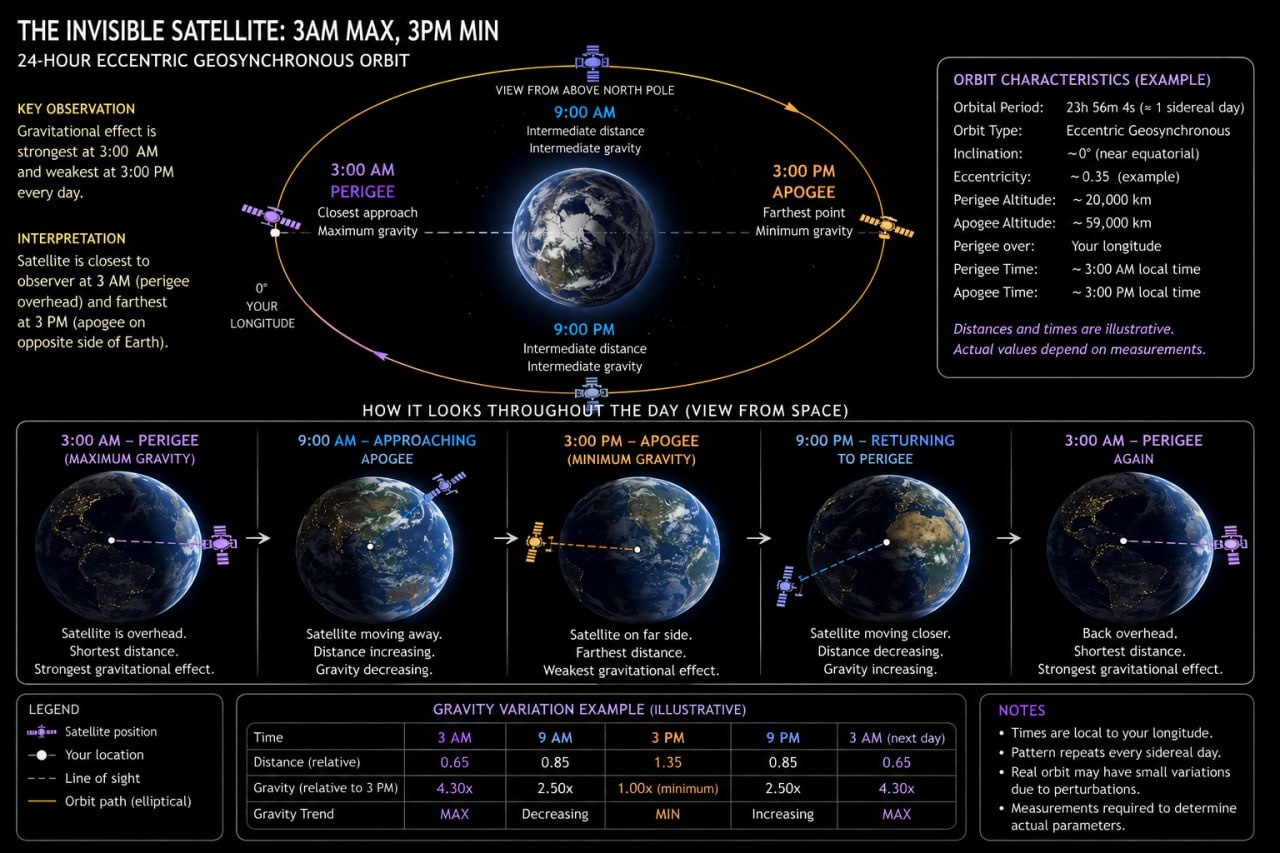
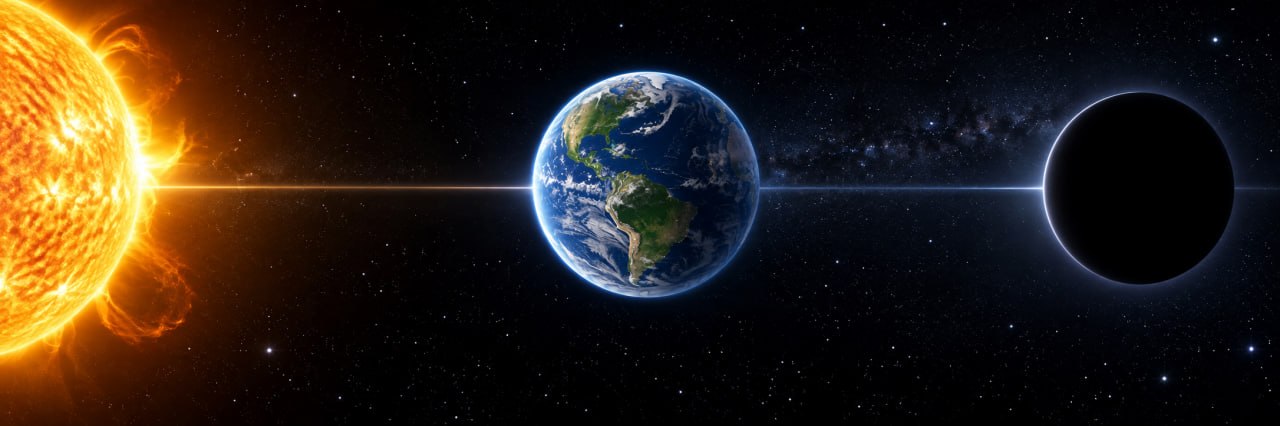
Three OSDC briefing documents, worked up as engineering thought experiments. Everything anchored in real orbital mechanics is real: L2 exists, halo orbits exist, station-keeping requirements are calculable, and the gravitational signatures shown are what such platforms would necessarily produce. The platforms themselves are the hypothesis. Click any briefing to view full size.
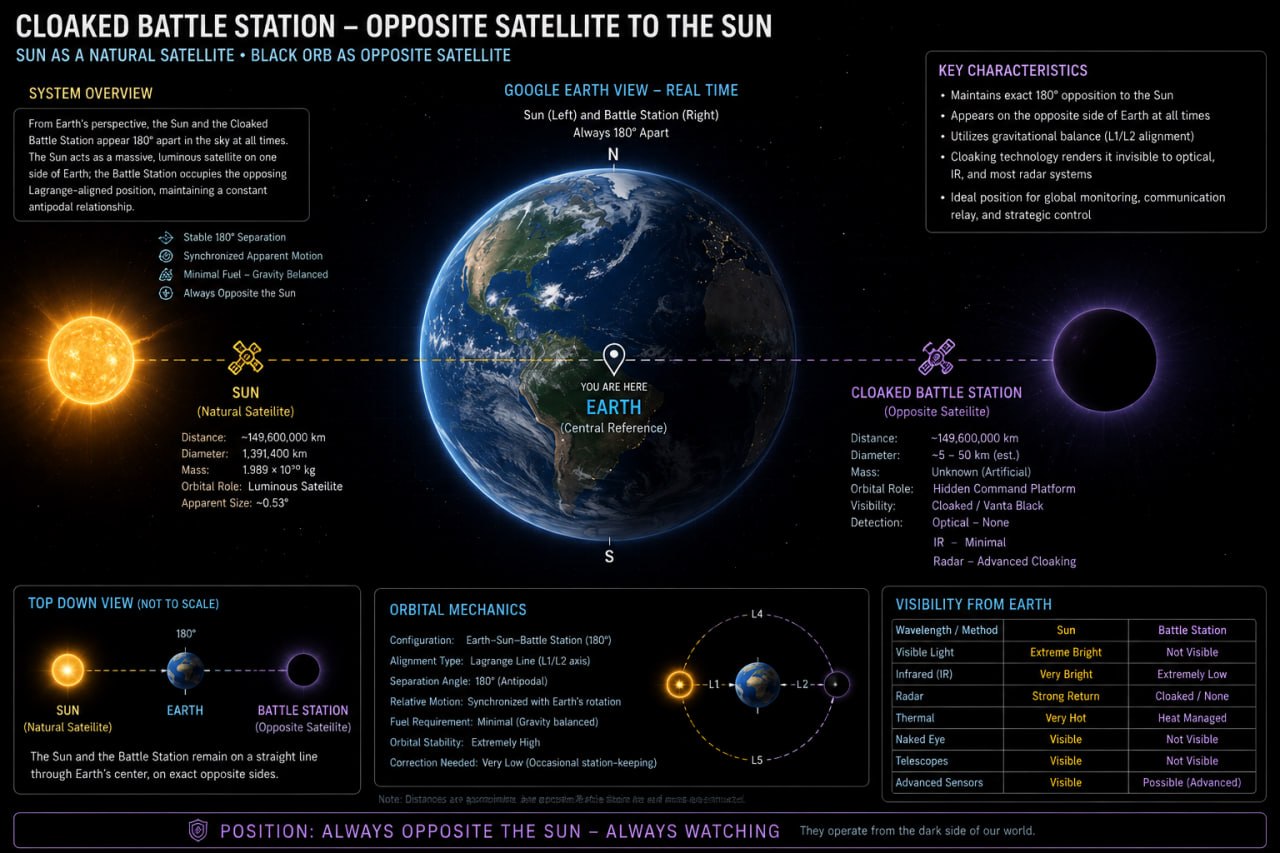
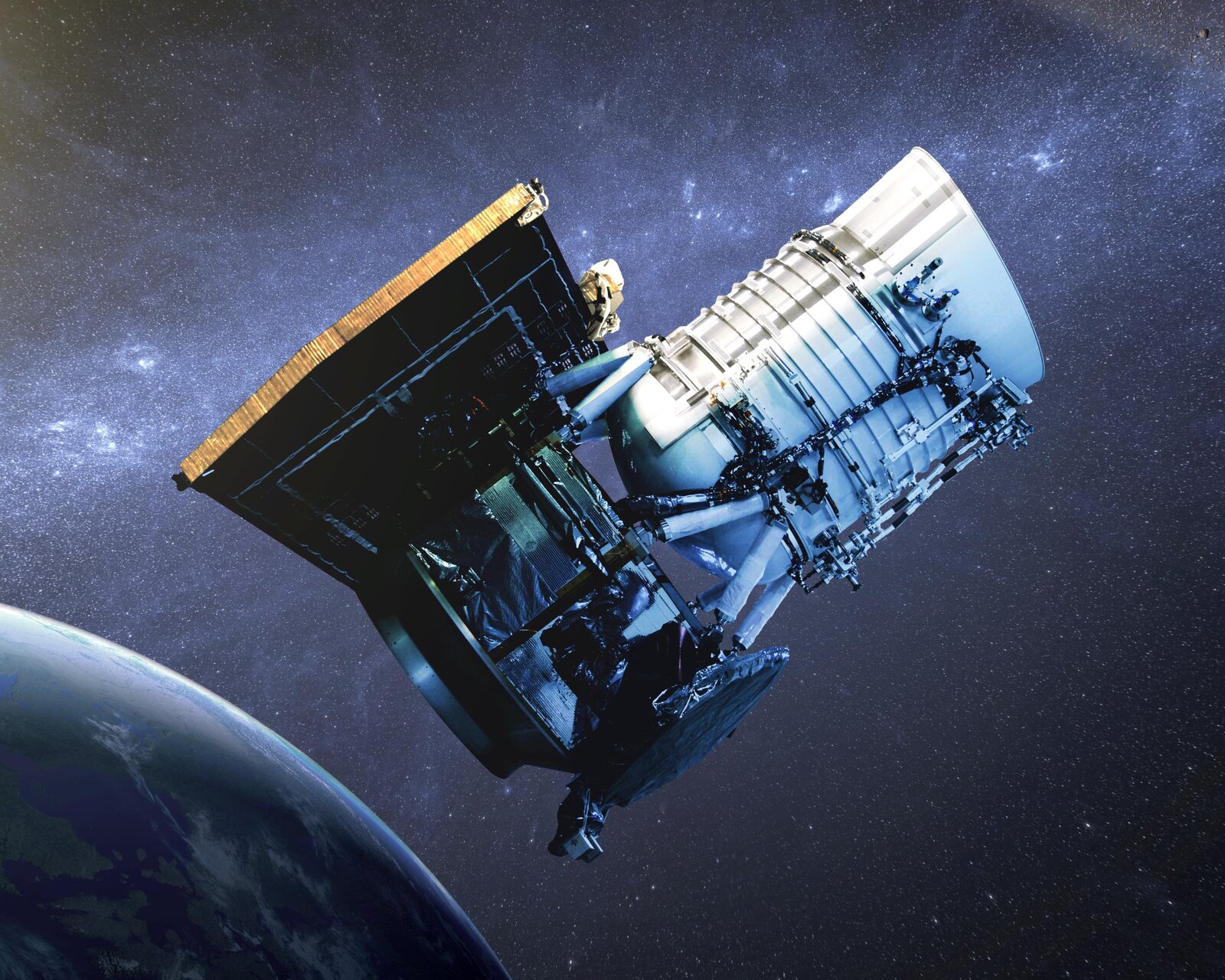
NASA's Wide-field Infrared Survey Explorer scanned essentially the entire sky in four infrared bands — the bands in which a dark, warm companion cannot help but glow. The 2014 analysis (Luhman) delivered the verdict: no Saturn-sized or larger body within 10,000 AU. No Jupiter-sized body within 26,000 AU. NASA's conclusion: the solar system almost certainly does not contain the large gas giant or small companion star proposed as Planet X, Nemesis, or Tyche.
We print the no. That is how this page works. What survives the no: WISE ruled out combinations of mass, distance and temperature — not every combination. NASA's own sensitivity analysis notes a Jupiter-mass body at 100,000 AU could have slipped through. The parameter space is mostly closed. It is not empty.
If you think a dim stellar object buzzing the solar system could never escape notice, the sky has already embarrassed you. In 2013, astronomers discovered WISE J072003.20−084651.2 — "Scholz's Star," a red dwarf/brown dwarf binary. Trajectory reconstruction showed that roughly 70,000 years ago it passed about 0.8 light-years from the Sun — through the outer Oort Cloud. The closest known stellar flyby in history. It was missed for the entirety of modern astronomy because it is intrinsically faint and was heading almost directly away from us: nearly zero proper motion, the one kind of motion surveys are worst at catching.
Anatomically modern humans were alive when a dark double star crossed our comet shell. We found out eleven years before this page was written. That is the precedent that keeps this file open.
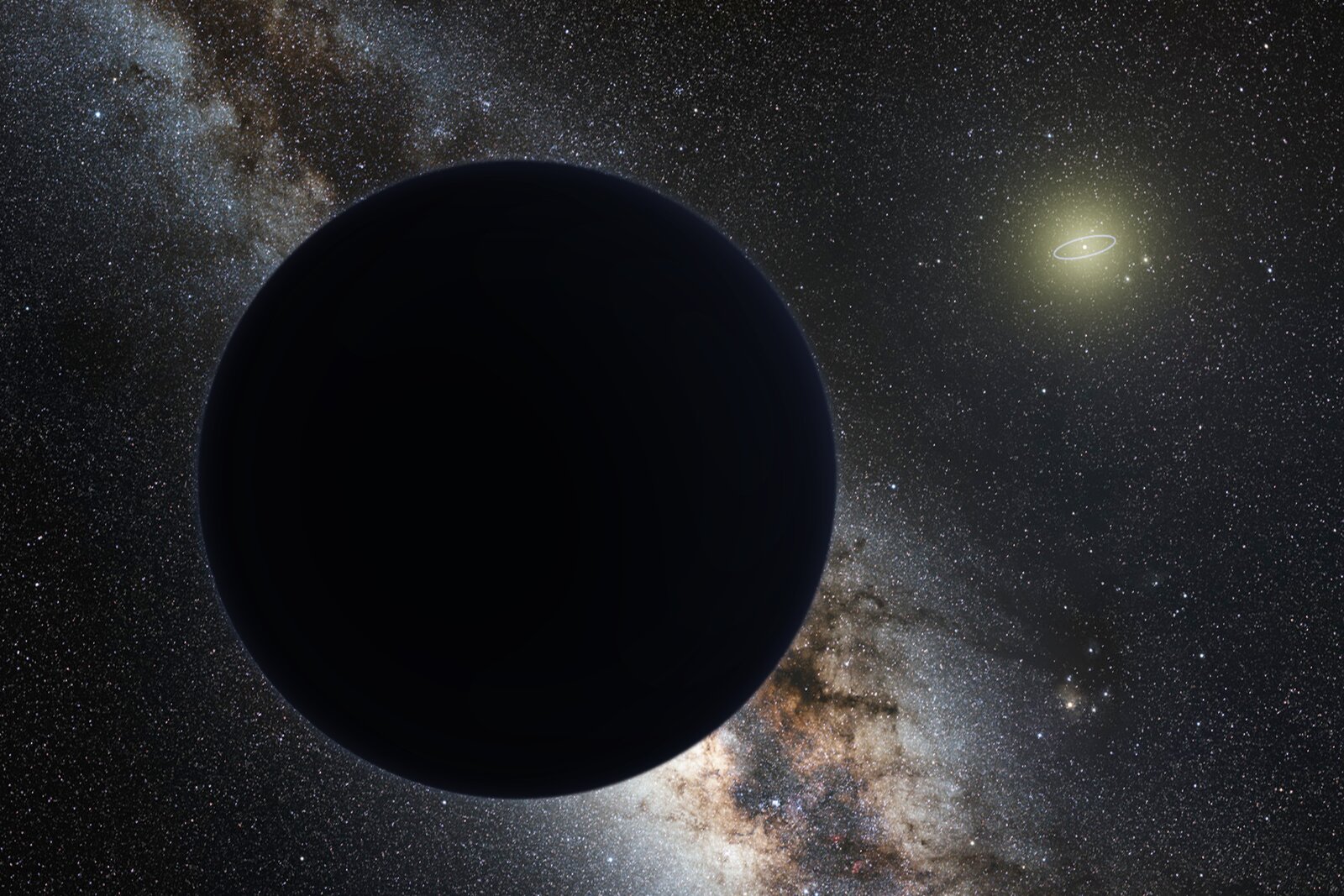
The modern hunt does not start with a telescope. It starts with victims. Batygin & Brown (2016) showed that the most distant Kuiper Belt objects cluster in ways that shouldn't persist by chance — perihelia aligned, orbital planes tilted together — and that a 5–10 Earth-mass planet at hundreds of AU maintains exactly that configuration. The body itself has never been seen. Its gravity, arguably, has.
And the detail that matters for this file: the solution that works is anti-aligned — the hypothetical planet's orbit points roughly 180° opposite the orbits of the objects it shepherds, a configuration stabilized by resonance. "Opposite" geometry, dismissed on instinct, turns out to be the configuration the mathematics prefers. The hidden-companion loop that Aristotle opened is, at this moment, still running — unsettled, in the peer-reviewed literature.
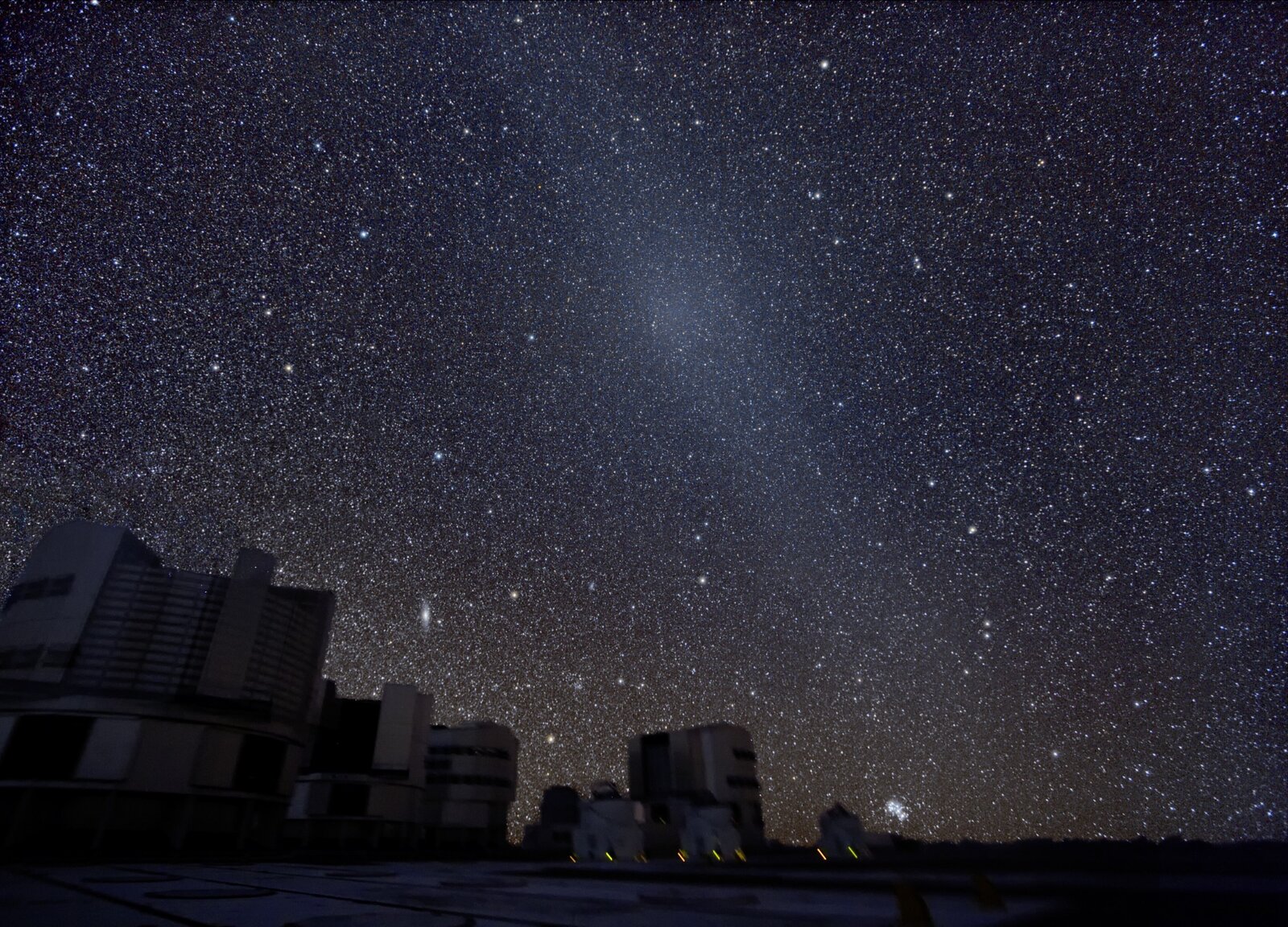
Point directly away from the Sun at local midnight, from a truly dark site, and you can see it with your naked eye: a faint oval glow at the precise anti-solar point. Astronomers call it the gegenschein — "counter-shine." The accepted explanation is sunlight backscattering off interplanetary dust, which reflects preferentially at exact opposition.
We include it for one reason: the anti-solar point is not an abstraction. It is a real, marked location in the sky, it glows, and most people live and die without ever once looking at it. The universe put a nightlight at the exact coordinates of this thought experiment. Go see it.
OSDC policy, same as the Chandra archive: every yes is cited, every no is printed.
| Claim | Status |
|---|---|
| An invisible solar companion was a genuine ancient cosmology (Philolaus; contested by Aristotle) | ✓ |
| An invisible solar companion was a genuine peer-reviewed hypothesis (Nemesis, Nature, 1984) | ✓ |
| Anomalous comet-orbit statistics were published (126 orbits, 1986) | ✓ |
| A physically dark stellar companion is possible (red/brown dwarf) | ✓ |
| A dim companion can evade detection for millennia (Scholz's Star, found 2013) | ✓ |
| Unseen mass is currently inferred from gravity alone (Planet Nine, unresolved) | ✓ |
| Anti-aligned ("opposite") orbital geometry is dynamically maintainable | ✓ |
| A perfectly black body at 1 AU could hide from infrared surveys | ✗ |
| WISE found a large companion (Saturn+ within 10,000 AU; Jupiter+ within 26,000 AU) | ✗ |
| Direct detection of any present-day Black Sun | ✗ |
Seven yeses build the shape of the idea. Three noes keep it a thought experiment. The file stays open exactly as wide as the parameter space WISE could not close.