Ghost Drones
Rydberg atom sensors. Synchrotron masers. Helium-based stealth platforms operating in mid-infrared. Every component exists. The integration is the classified part.
Starting in late 2016, US diplomats stationed at the American embassy in Havana, Cuba began reporting sudden, intense pressure in the head, piercing directional noise, vertigo, and cognitive damage. The symptoms appeared without warning and left no physical trace.
Over the next several years, the number of affected personnel grew to over 300 US government employees — diplomats, intelligence officers, DOD personnel, scientists. Cases appeared in Cuba, China, Russia, Austria, Colombia, and inside the United States itself, including near the White House.
The symptoms were consistent across victims: sudden onset of pressure or pain in the head, often from a specific direction. Loud sounds — buzzing, grinding, or piercing tones — audible only to the target. Subsequent cognitive decline, memory loss, balance problems, and in some cases permanent brain injury. MRI scans showed white matter tract damage consistent with traumatic brain injury — but without any impact.
In December 2020, the National Academies of Sciences, Engineering, and Medicine published their assessment. The conclusion: pulsed radiofrequency energy — including microwave radiation — is the most plausible mechanism.
"Among the mechanisms the committee considered, directed, pulsed radiofrequency energy appears to be the most plausible mechanism in explaining these cases, especially in individuals with the distinct early symptoms."
A pulsed microwave weapon that leaves no forensic trace, affects only the target, operates through walls, and produces symptoms consistent with brain injury. This is not theoretical. The US government's own scientific body said it's the most likely explanation.
The US military has openly fielded directed-energy microwave weapons since 2010. What Havana Syndrome describes is not a new category of technology — it's a refinement of systems that are already public.
Developed by Raytheon for the US Air Force Research Laboratory, the Active Denial System is a millimeter-wave directed energy weapon operating at 95 GHz. It fires a focused beam of microwave energy that penetrates the skin to a depth of about 1/64th of an inch, exciting water molecules and producing an immediate, intense burning sensation. The target's reflexive response is to flee. The Pentagon classifies it as "non-lethal."
The ADS was deployed to Afghanistan in 2010 but reportedly never used in combat. It is truck-mounted, weighs several tons, and requires significant power. It is the crude ancestor — a proof of concept that coherent microwave energy can be weaponized for antipersonnel use.
The jump from ADS to a Havana-class weapon is the jump from a searchlight to a laser pointer. Same physics, different engineering. Instead of a building-sized dish broadcasting wide-beam millimeter waves, you need a compact source producing coherent, pulsed microwave energy at frequencies tuned to biological tissue — specifically neural tissue.
That jump requires two technologies: a compact coherent microwave source (a maser), and a precision targeting sensor that can lock onto biological signatures. Both exist.
In 2024, the US Army announced a breakthrough: a quantum sensor based on Rydberg atoms that can detect, locate, and characterize electromagnetic signals across the entire spectrum — from DC to terahertz — using a single device the size of a glass thimble.
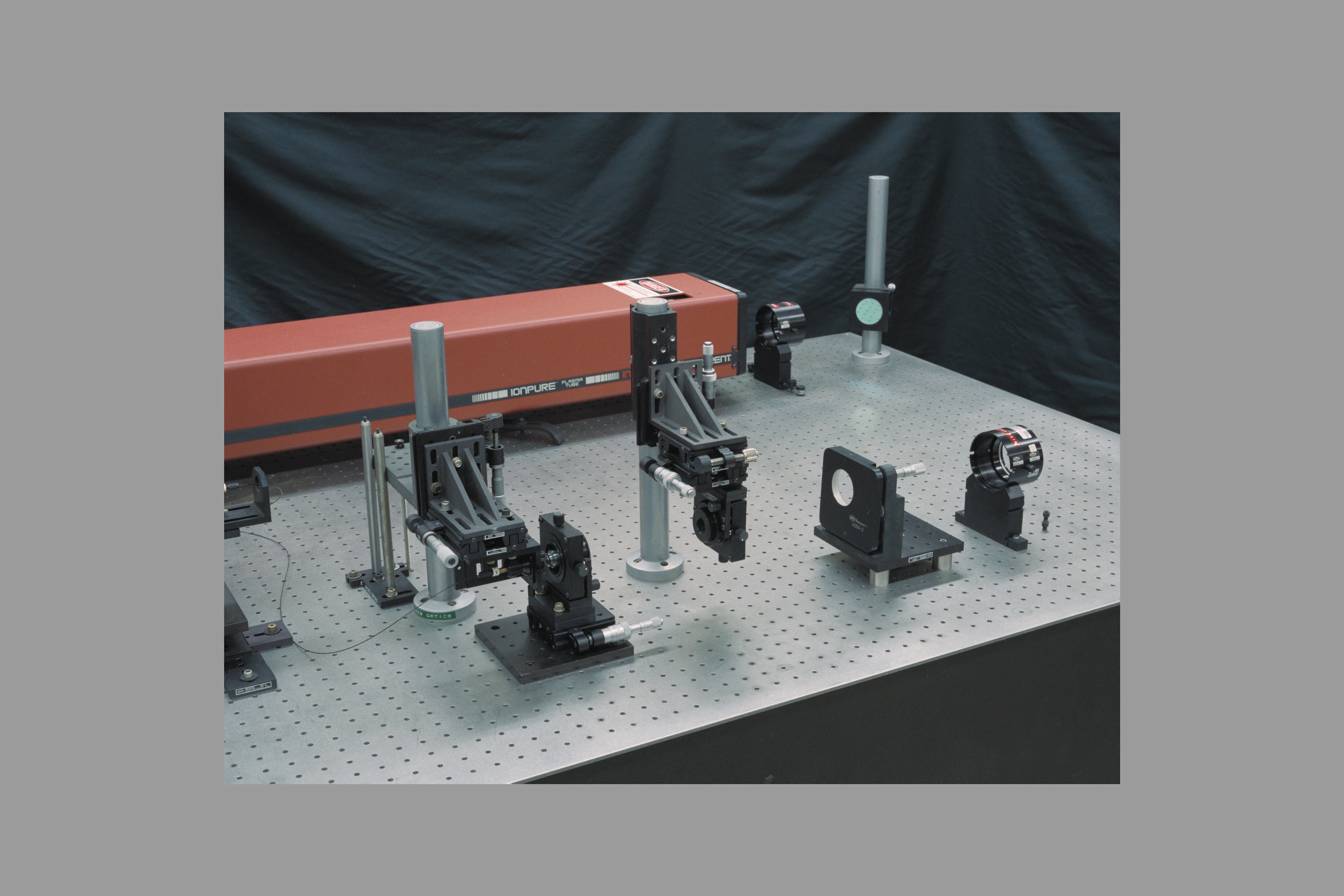
A Rydberg atom is any atom with one or more electrons excited to a very high principal quantum number. At these extreme energy levels, the electron orbits at enormous distance from the nucleus — the atom can be thousands of times larger than normal. This gives it an enormous electric dipole moment, which makes it extraordinarily sensitive to external electromagnetic fields.
Shoot a laser at a vapor cell full of rubidium or cesium atoms, and you can push them into Rydberg states. Any incoming electromagnetic field — from a cell phone signal to a radar pulse to a brain's bioelectric field — will shift the energy levels of these atoms in a measurable way. Read the shifts with a second laser, and you have a universal electromagnetic sensor.
The US Army Research Laboratory's Rydberg electrometer, published in Physical Review Applied in 2024, demonstrated capabilities that no conventional antenna can match:
A Rydberg sensor mounted on a small aerial platform can passively detect the bioelectric signature of a human nervous system — the brain generates electromagnetic fields in the 1-100 Hz range; the heart in the 0.5-40 Hz range. With the sensor's 3D vector capability, it can determine the direction and distance to the source. No radar pulse. No emission. No way for the target to know they're being tracked.
A cyclotron maser uses electrons spiraling in a magnetic field at sub-light speeds. A synchrotron maser does the same thing with relativistic electrons — near the speed of light. The emission is orders of magnitude more powerful, covers multiple harmonic frequencies, and produces brightness temperatures that indicate extreme coherent amplification.
Synchrotron masers are what astrophysicists now believe cause Fast Radio Bursts — millisecond pulses from deep space that carry more energy in a single flash than the Sun emits in a day. The mechanism involves relativistic electrons hitting a shock front and forming a ring-shaped momentum distribution, which triggers coherent emission across multiple harmonics simultaneously.
In a weaponized context, a synchrotron maser offers capabilities that a simple microwave emitter cannot:
| Property | Cyclotron Maser | Synchrotron Maser |
|---|---|---|
| Electron speed | Sub-relativistic | Near light speed |
| Frequency range | Single harmonic | Multiple simultaneous harmonics |
| Bandwidth | Narrow | Ultra-wide |
| Brightness temperature | 1015 K | 1037 K (FRB observations) |
| Beam coherence | High | Extreme — semi-coherent across harmonics |
| Targeting | Single frequency | Multi-frequency simultaneous — can hit multiple tissue resonances at once |
A weapon using synchrotron maser emission doesn't need to know the exact resonant frequency of the target tissue. It hits all harmonics simultaneously. Somewhere in that spread, one or more frequencies will couple with neural tissue, cardiac rhythm, or cellular water content. It's a skeleton key, not a lockpick.
Helium is invisible, odorless, tasteless, non-toxic, lighter than air, and chemically inert. It leaves no residue. It disperses upward and vanishes. It is the perfect medium for a weapons platform that must leave no trace.
Helium has the simplest multi-electron structure of any element — two electrons, one nucleus. This simplicity makes its Rydberg states the cleanest and most predictable of any atom. The energy levels can be calculated to extreme precision. The dipole moments at high quantum numbers are enormous. And the transitions between Rydberg states in helium fall naturally in the mid-infrared band — wavelengths between 3 and 8 micrometers.
Mid-infrared radiation is invisible to the human eye. It passes through the atmosphere with minimal absorption — there are well-documented atmospheric transmission windows at 3-5 μm and 8-14 μm where the air is essentially transparent. Most thermal cameras operate at 8-14 μm. Military FLIR systems use 3-5 μm.
A system operating in the mid-IR atmospheric windows is:
The Rydberg blockade is a quantum phenomenon: when one Rydberg atom in a vapor is excited, it prevents nearby atoms from being excited at the same frequency. The excited atom creates an exclusion zone around itself — a volume where that specific electromagnetic transition is suppressed.
In quantum computing, this is used for qubit control. In a weapons context, it can be inverted: create a precisely shaped electromagnetic suppression field around the target. A zone where certain biological frequencies are disrupted — not by adding energy, but by preventing the normal electromagnetic transitions that cellular processes depend on.
Neural signaling, cardiac rhythm, cellular metabolism — all depend on electromagnetic state transitions at the molecular level. A Rydberg blockade field tuned to those transitions doesn't burn you. It doesn't hit you with energy. It silences specific frequencies inside your body. The lights go out, one channel at a time.
Combine the sensor, the weapon, and the medium on a small autonomous aerial platform. What you get is something that has no historical precedent in warfare — and no defense in current military doctrine.
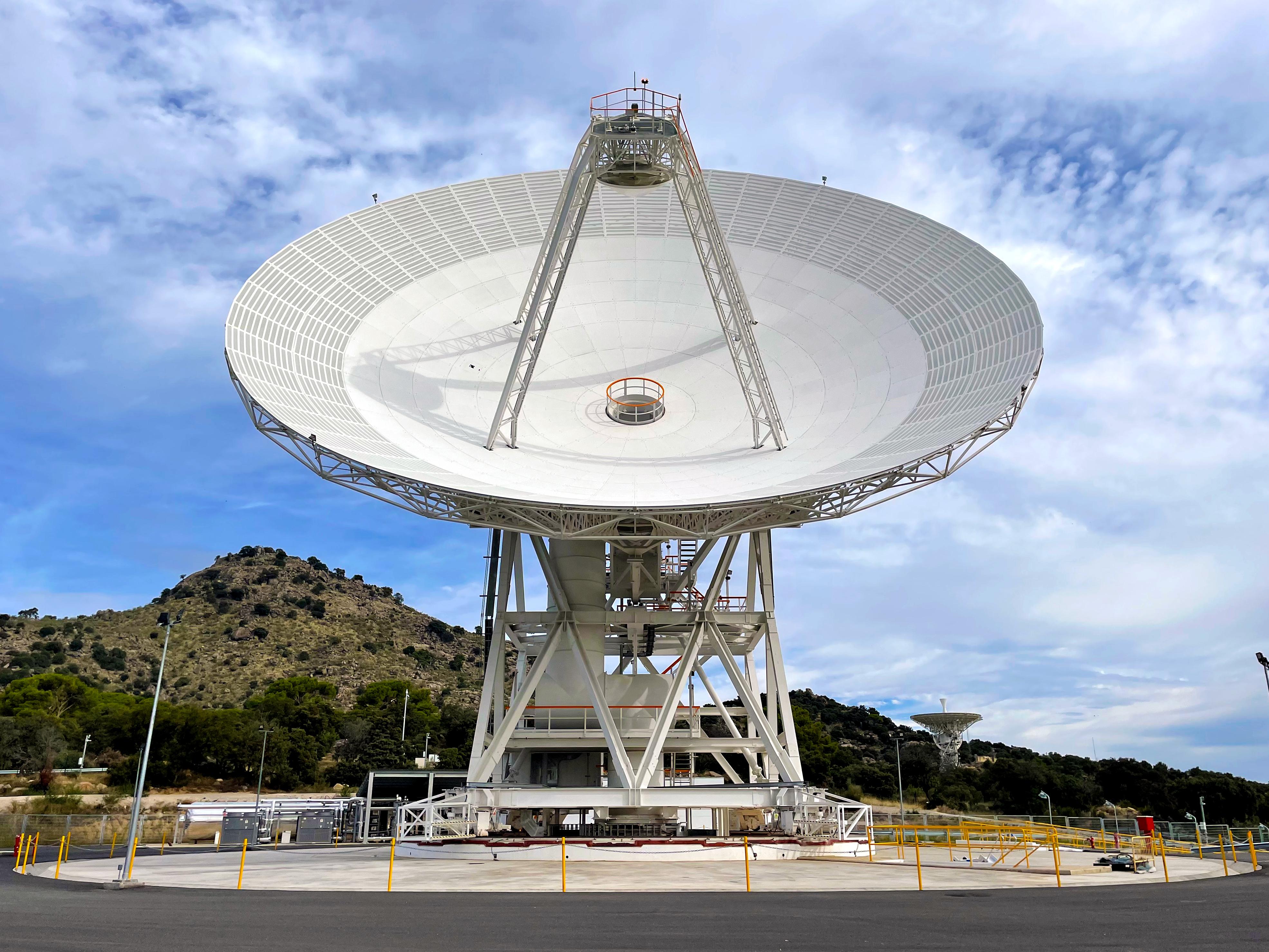
A ghost drone doesn't behave like a conventional UAV. It doesn't fly a search pattern. It doesn't broadcast a control signal. It doesn't show up on radar. Its operational profile looks like this:
Havana Syndrome didn't hit random people. It hit a specific demographic: US intelligence officers, diplomats, DOD personnel, and scientists. People with access to classified information. People whose cognitive function is their operational value.
| Conventional Assassination | Ghost Drone Protocol |
|---|---|
| Target is killed | Target experiences cognitive degradation |
| Creates a martyr and investigation | Creates a medical case and early retirement |
| Forensic evidence (ballistics, DNA, CCTV) | Zero forensic trace |
| International incident | Plausible deniability — "stress," "mass psychosis" |
| One target eliminated | Entire station degraded over months |
| Replacement assigned immediately | Replacement develops same symptoms |
The weapon's value is not lethality — it's deniability at scale. You don't kill a scientist who's publishing inconvenient research. You give them migraines, insomnia, memory problems, difficulty concentrating. They go to their doctor. The doctor finds nothing on standard tests. They reduce their workload. They stop publishing. They retire early. Nobody investigates because nobody died.
Do it to one person and it's a medical mystery. Do it to 300 people across a decade and half the government's own agencies still call it "mass psychogenic illness."
In 2021, CIA Director William Burns's own staff were affected by Havana Syndrome symptoms during a trip to India. The director of the Central Intelligence Agency — the person in charge of finding out who was doing this — had it happen to his own team. The investigation continued. No public attribution was ever made.
A synchrotron maser beam is magnetically structured radiation carried by relativistic electrons. Its power comes from coherence — every photon in phase, in sync, at the same frequency. Break the coherence and the weapon effect collapses.

A coherent maser beam depends on all its photons maintaining phase lock — the same frequency, the same timing, the same polarization. This coherence is what distinguishes a maser from random noise, and it's what allows the beam to couple with specific biological frequencies. Without coherence, the energy scatters into broadband noise and loses its ability to target specific tissue.
A strong local magnetic field — specifically a neodymium permanent magnet (N52 grade, the strongest commercially available) — disrupts coherence in three ways:
NASA published research in 2025 on using permanent neodymium magnets as radiation deflector shields for space applications — altering trajectories of incoming charged particles via localized magnetic fields rather than absorbing them. The same principle applies to directed maser energy: you don't block it, you redirect and decohere it.
| Layer | Material | Function |
|---|---|---|
| Outer | Copper mesh / aluminum foil | Faraday cage — reflects microwave energy |
| Middle | Neodymium magnets (N52) | Decoherence — scrambles phase, polarization, and particle trajectories |
| Inner | Ferrite / carbon-loaded absorber | Absorption — converts residual energy to heat |
The critical insight: a permanent magnet requires no power source, no software, no signal processing. It cannot be jammed. It cannot be hacked. It cannot be remotely disabled. It simply is. A neodymium magnet generates its field passively, continuously, and indefinitely. Low tech beats high tech when you understand the mechanism.
Every component of the ghost drone platform exists independently as published, funded, deployed technology. The only step that hasn't been publicly documented is the integration.
The trajectory is clear. Maser transmitters are now room-temperature. Rydberg sensors are now battlefield-ready. Drone swarms are now combat-proven. Directed energy weapons are now fieldable. Each technology has been developed independently, funded by different programs, published in different journals.
But the physics of integration is straightforward. A Rydberg sensor that can see everything and a maser that can hit anything, mounted on a platform that is invisible, silent, and leaves no trace. The ghost drone is not a prediction. It's an inventory list.
"Any sufficiently advanced technology is indistinguishable from magic."
Clarke was wrong about one thing. It's not indistinguishable from magic. It's indistinguishable from illness. And that's the point.