
The Saturn Maser
A 10-billion-watt natural radio laser locked to within 0.007 degrees, aimed at the King constellation, frequency-stabilized by a hexagonal standing wave that violates known physics.
Saturn has three properties that each independently break the rules of planetary physics. Together, they produce something that looks less like weather and more like engineering.
Every planet with a magnetic field has a measurable tilt between its magnetic axis and its rotational axis. Earth's tilt is 11 degrees. Jupiter's is 9.6 degrees. Uranus is sideways at 59 degrees. This tilt is predicted by dynamo theory — the established physics that explains how planetary magnetic fields are generated. Without a tilt, the math says you cannot sustain a planetary dynamo.
Saturn's magnetic axis is aligned with its rotation axis to within 0.007 degrees. Cassini measured this during its Grand Finale orbits in 2017, threading between the planet and its rings 22 times to map the field at close range. The result baffled the team. Imperial College London called it "weird." It shouldn't be possible under known physics.
But it is. And the consequence is profound: Saturn's north pole doesn't wobble. It points at the same spot in deep space, continuously, with the precision of a locked beam.
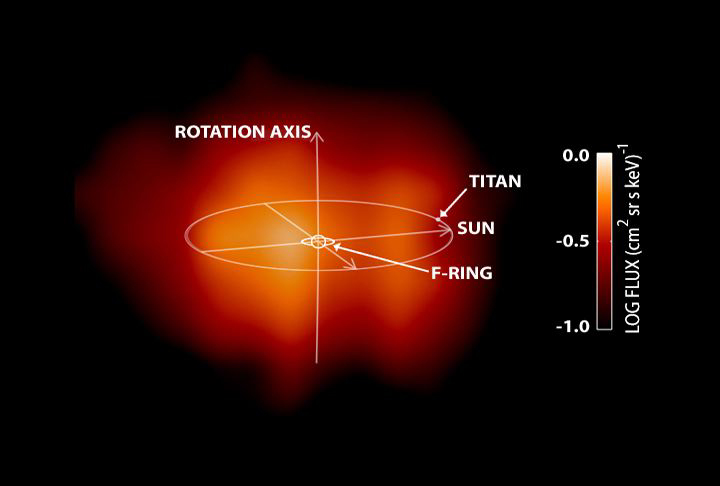
Saturn's north pole generates radio emission through Cyclotron Maser Instability — the exact same physics as a maser, the microwave predecessor to the laser. This isn't thermal noise. It's coherent amplified emission.
A maser — Microwave Amplification by Stimulated Emission of Radiation — works by getting particles into an excited energy state so that an incoming photon triggers a chain reaction of identical photons: same frequency, same phase, same direction. One photon becomes two, two become four, four become eight. The signal amplifies itself.
Charles Townes built the first artificial maser in 1953 and won the Nobel Prize. Seven years later, the laser was born using the same principle at optical frequencies. The laser became a trillion-dollar industry. The maser was shelved into three niche applications: atomic clocks, radio telescope amplifiers, and NASA's Deep Space Network receivers.
Saturn has been running a natural one since before humans existed.
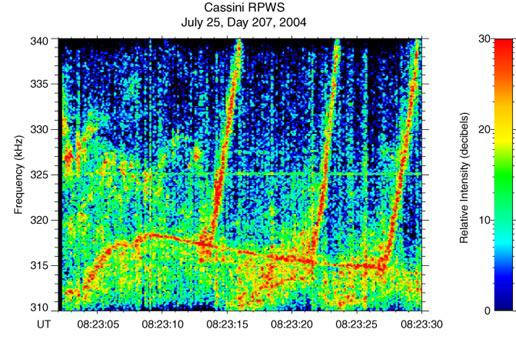
The emission from Saturn's north pole carries three signatures that prove coherent amplification:
The northern hemisphere source is more than ten times stronger than the southern. The north has the hexagon. The south has a chaotic vortex. One pole is structured. The other is not. The structured one is the powerful emitter.
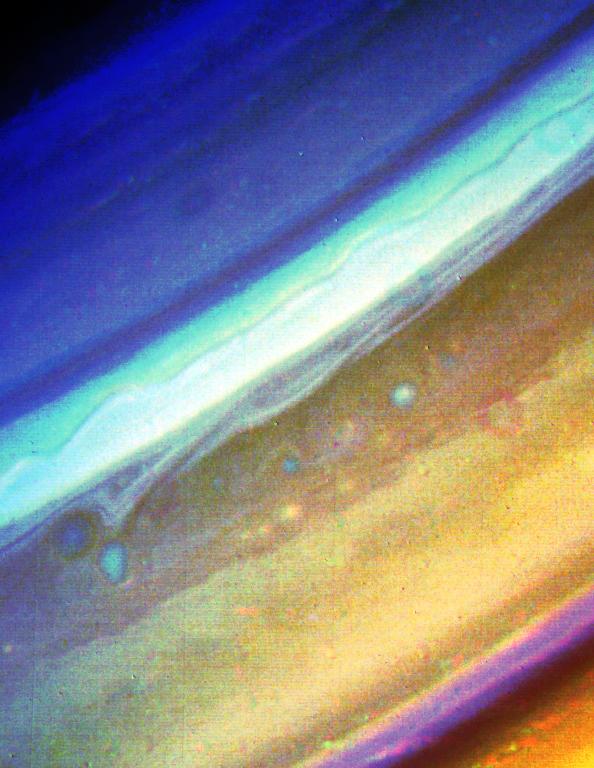
At Saturn's north pole sits a six-sided standing wave pattern roughly 30,000 kilometers across — large enough to fit two Earths inside. It has been stable for at least 45 years. Nothing else in the solar system looks like it.
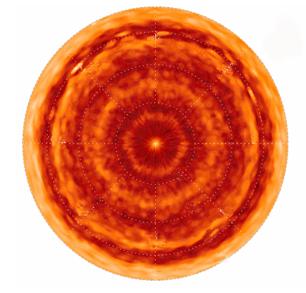
Voyager 1 photographed the hexagon in 1981. When Cassini arrived 23 years later, it was still there — same shape, same position, same geometry. Decades of observation have shown zero drift in the pattern. It is locked.
In radio engineering, a resonant cavity is a structure that traps and amplifies electromagnetic waves at specific frequencies. It's how microwave ovens, radar transmitters, and masers work — you need a cavity tuned to the right wavelength to sustain coherent amplification. Without a resonant cavity, a maser cannot lock to a frequency.
Saturn has one. It's 30,000 kilometers wide and shaped like a hexagon.
In 1787, Ernst Chladni discovered that vibrating a metal plate at specific frequencies caused sand on the surface to organize into geometric patterns. The sand migrates to the nodes — the still points — of the standing wave, revealing the frequency's shape. This field is now called cymatics.
Hexagonal patterns appear at specific frequencies in cymatic experiments. A circle vibrated at the right resonance produces six nodes. The hexagon is the geometric fingerprint of a particular frequency of vibration — not random, not approximate. Exact.
Saturn's hexagon is a standing wave locked at 75.8°N, rotating with the planet's interior, maintaining perfect six-fold symmetry across decades. If it is a cymatic pattern, it is the largest known resonance structure in the solar system — and it reveals the transmission frequency.
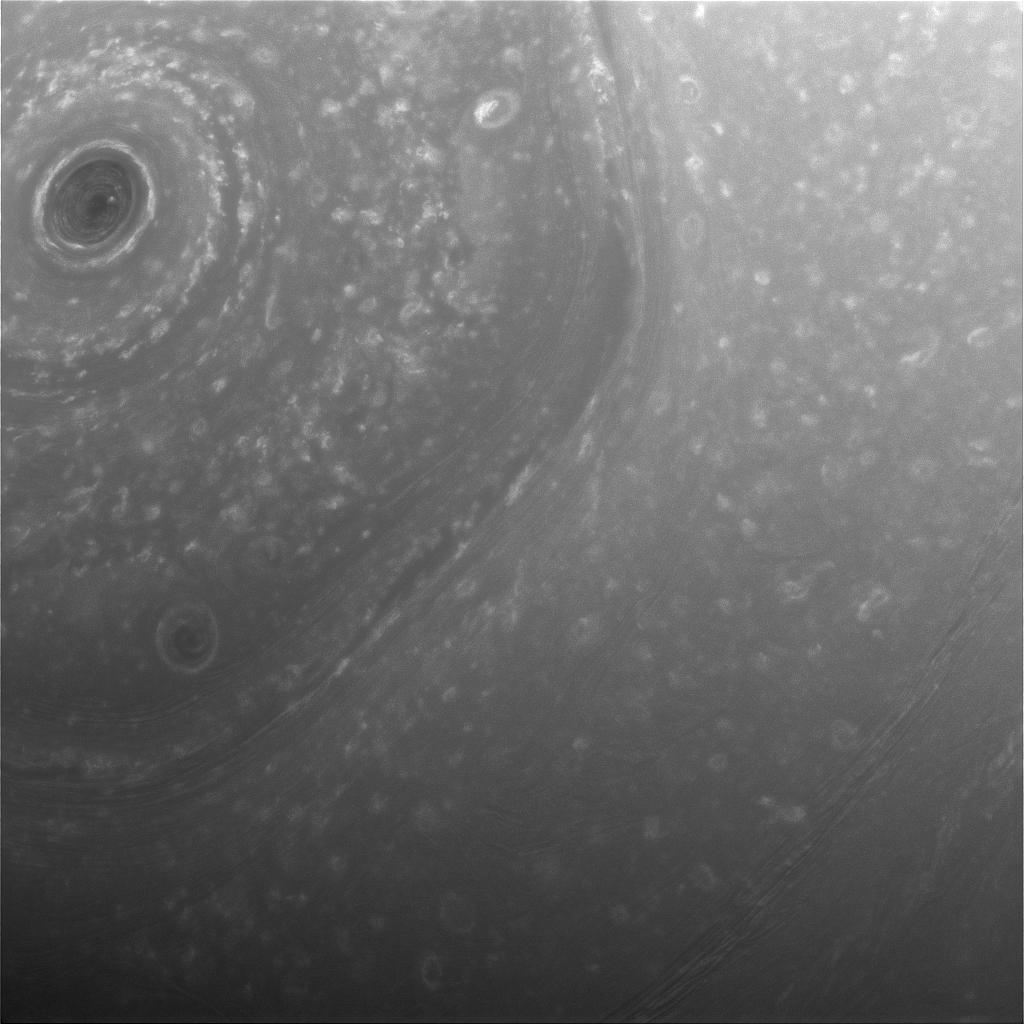
"The hexagon is just a current of air, and weather features out here that share similarities to Earth are a reminder that we are all, fundamentally, for all our differences, ruled by the same physical forces."
The official position is weather. A jet stream shaped by Rossby waves. The problem: no other planet has one. Jupiter has bigger storms, faster winds, and stronger magnetic fields — no hexagon. Earth has jet streams — no hexagon. The conditions that supposedly produce this feature exist elsewhere and produce nothing like it.
Saturn's locked north pole — magnetic axis, rotation axis, maser beam — points at Right Ascension 40.589°, Declination 83.537°. That's the constellation Cepheus. The King.
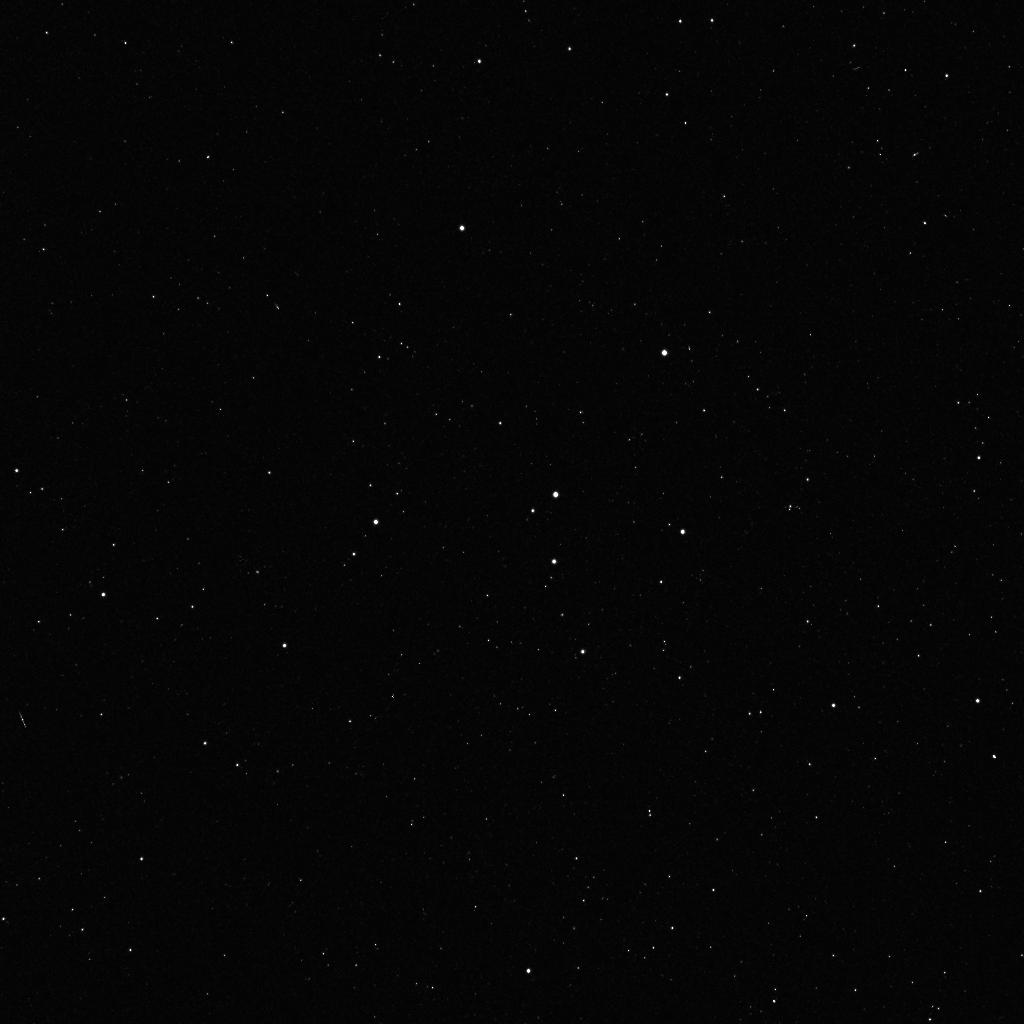
In Greek mythology, Cepheus was the King of Ethiopia — a kingdom that stretched from the southeastern Mediterranean to the Red Sea. He was placed among the stars because he was fourth in descent from the nymph Io, one of Zeus's lovers. His constellation family — Cassiopeia (wife), Andromeda (daughter), Perseus (son-in-law), Cetus (the sea monster) — forms the largest mythological family group in the sky, all clustered near the north celestial pole.
Cepheus is circumpolar. It never sets. At northern latitudes, it is always above the horizon, always visible, circling the pole. If you were designing a relay station, you'd aim it at something that never disappears from your line of sight.
Saturn's beam is not aimed at Polaris — the current north star. It's aimed about 6 degrees away, into Cepheus. But due to axial precession, Earth's rotational pole is slowly migrating. The star Errai (Gamma Cephei), deep in the constellation Cepheus, will become Earth's north pole star around 3000 AD.
Saturn's maser is not pointing at where the pole is. It's pointing at where the pole is going.
Out of 41,253 square degrees of total sky, Earth's north pole and Saturn's north pole converge on the same circumpolar region within 6 degrees of each other. Both aimed at the same patch of sky. One a planet's rotation axis. The other a 10-billion-watt coherent radio beam.
Every component a directional interstellar transmitter would require — Saturn already possesses naturally. Each one is independently anomalous. Together, they form a complete antenna system.
| Component | Engineering Analog | Function |
|---|---|---|
| North pole magnetic axis | Antenna bore | Locked aim — 0.007° precision, no wobble |
| Cyclotron maser emission | Coherent transmitter | 1010 watts, polarized, directed |
| Hexagonal standing wave | Resonant cavity | Frequency lock and stabilization |
| Auroral cavity | Waveguide / horn antenna | Beam shaping and collimation |
| Ring system | Ground plane | Directional gain, back-scatter suppression |
| South pole vortex | Receiver / intake | Chaotic, 10× weaker, no geometric structure |
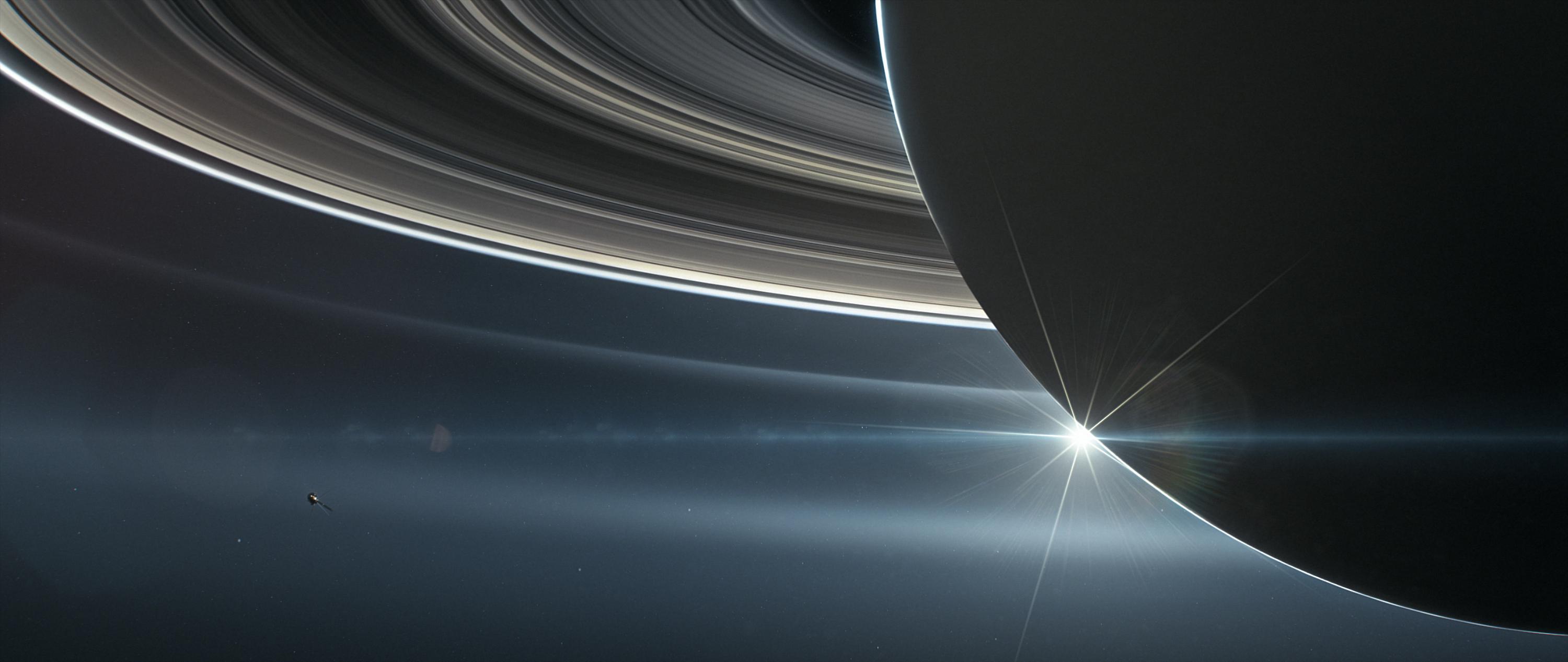
Saturn's rings are a disk of ice and dust particles carrying electrical charge, orbiting in the equatorial plane — perpendicular to the polar axis. In antenna design, a ground plane positioned perpendicular to the radiating element improves directional gain and suppresses back-scatter. Energy that would radiate backward is reflected forward, concentrating the beam.
The rings extend from about 7,000 km above Saturn's cloud tops to 80,000 km out. They are thin — averaging only about 10 meters thick — creating an almost perfectly flat conductive disk. This geometry is optimal for a ground plane: wide, flat, perpendicular, conductive.
Saturn Kilometric Radiation pulses at two different periods. The northern source cycles at 10.6 hours. The southern source cycles at 10.8 hours. If both were driven by planetary rotation alone, they would match. They don't.
Two distinct periodicities from two distinct poles. In communications engineering, this is called dual-channel transmission — two independent data streams on separate timing clocks. One is the structured, powerful maser beam (north). The other is weaker and chaotic (south). A transmitter and a receiver operating on different clock rates.
Saturn doesn't operate in isolation. The Moon and Venus exhibit their own electromagnetic anomalies — anomalies that become coherent when viewed as components of a relay network with Saturn as the primary transmitter.
When the Apollo 12 ascent stage was deliberately crashed into the lunar surface on November 20, 1969, the seismometers planted by the crew recorded the Moon ringing like a bell for over an hour. Subsequent Apollo missions confirmed: the Moon resonates. Its interior structure produces sustained oscillation in response to impact — behavior consistent with a large hollow or low-density cavity beneath the crust.
A resonating body is a transducer. It converts mechanical energy into sustained vibration at specific frequencies. If the Moon is receiving electromagnetic energy from Saturn's maser, its resonant interior could be converting that energy into a form that propagates differently — from microwave to seismic, or from radio to something we don't have instruments to detect.
The Moon is also tidally locked — it always shows the same face to Earth. One side permanently faces us, the other permanently faces away. The far side is heavily cratered with a thick crust. The near side has thin crust and vast basalt plains (the maria). The center of mass is offset toward Earth by about 1.8 kilometers. The Moon is not symmetric. It's oriented.
In 2012, amateur astronomer Crrow777 recorded footage of what appears to be a wave propagating across the lunar surface — a visible ripple passing over the Moon's face as seen through a telescope. The footage was recorded multiple times across different sessions, ruling out atmospheric distortion. The wave moves in a consistent direction and speed, and has been independently observed by other telescope operators.
If the Moon is a resonant body receiving coherent maser energy, a visible standing wave on its surface is what you would expect to see — the same way Chladni patterns appear on a vibrating plate, or the same way Saturn's hexagon reveals the frequency locked in its polar region.
Venus rotates backward — the only planet in the solar system with retrograde rotation. Its day (243 Earth days) is longer than its year (225 Earth days). Its atmosphere is 96% CO₂ at 92 times Earth's surface pressure, with sulfuric acid clouds that are highly reflective to radar and radio frequencies. Venus is essentially wrapped in a radio-reflective shell.
Every ancient civilization that tracked Venus identified it with the same archetype: death and rebirth, descent and return, the morning star that dies and rises again. The Sumerians called it Inanna — the goddess who descended to the underworld and returned. The Babylonians called it Ishtar. The Maya called it Noh Ek and built their warfare calendar around its cycles. The Aztecs called it Quetzalcoatl. The Greeks knew it as two stars — Phosphorus and Hesperus — before Pythagoras realized in 570 BC that they were the same object.
In a relay network, Venus's retrograde rotation means its surface sweeps the sky in the opposite direction of every other planet. Its radar-reflective atmosphere makes it a natural signal mirror. And its extreme orbital resonance with Earth — Venus returns to the same point in Earth's sky every 8 years, tracing a near-perfect pentagram — means the relay geometry repeats with mathematical precision.
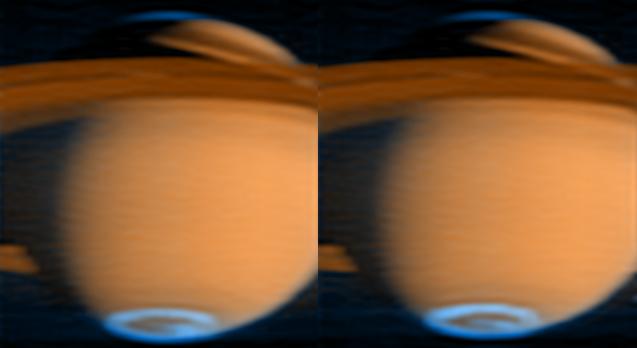
Saturn transmits. The Moon relays. Venus reflects. Earth receives. The geometry is stable across millennia because every component is either tidally locked, orbitally resonant, or axially aligned to a precision that conventional physics cannot explain.
Humanity has possessed maser technology since 1953. In 73 years, we have built atomic clocks and Deep Space Network receivers with it. Saturn has been running a natural maser at planetary scale for as long as it has existed.
The maser was invented before the laser. Charles Townes demonstrated the first working device in 1953 using ammonia gas, and shared the 1964 Nobel Prize in Physics for the work. The laser followed in 1960 using the same principle at higher frequencies — and immediately captured all the funding, all the development, all the public attention. Masers were abandoned to three quiet applications:
All three applications are about listening. We built maser receivers. We never developed maser transmitters — until 2025, masers required cryogenic temperatures, vacuum, and strong magnetic fields to operate. Room-temperature masers using silicon carbide were only demonstrated in the last two years.
Meanwhile, astrophysicists have been documenting natural masers throughout the galaxy. Methanol masers in star-forming regions pulse with regular periodicities ranging from 149 to 540 days — some sinusoidal, some intermittent, some with oscillation periods directly proportional to the maser length divided by the speed of light. Coherent microwave sources in deep space pulsing in repeating patterns.
In communications engineering, that is indistinguishable from an encoded transmission.
A maser beam can carry information the same way any electromagnetic transmission can — through modulation. Pulse the beam and you have a data channel.
The encoding methods already exist in every digital system on Earth:
| Method | How It Works | Advantage |
|---|---|---|
| Pulse Amplitude Modulation | Vary the strength of each pulse | Simple, high bandwidth |
| Pulse Position Modulation | Vary the timing of each pulse | Energy efficient, optimal for long range |
| Pulse Code Modulation | Encode binary data into pulse sequences | Digital precision, error correction |
Any of these work on a maser beam. You're just swapping the carrier from a radio wave to a coherent microwave beam. The encoding math is identical.
Saturn's SKR has two distinct periodicities — 10.6 hours from the north, 10.8 hours from the south. Two separate timing clocks that should match if they were driven by planetary rotation alone. They don't match. Nobody can explain the discrepancy.
Two channels. Two clock rates. One coherent beam. If someone handed you that signal profile in an engineering lab, you wouldn't call it weather. You'd call it a transmitter with two data channels.
One anomaly is a curiosity. Two is a coincidence. When every anomaly independently produces a component of the same functional system, the word is engineering.
Five independent anomalies. Five independent failures of current models. Five components of a coherent antenna system — bore, transmitter, frequency lock, ground plane, dual channel.
The question is not whether Saturn emits coherent, directed, frequency-locked maser radiation toward the north celestial pole. Cassini confirmed that it does. The question is whether we're ready to ask why.
Saturn holds more moons than every other planet in the solar system combined — 293 tracked satellites, from Titan at planetary scale down to kilometer-class fragments swarming 25 million kilometers out. No other transmitter in the system carries an element array like this.
The system is layered like an engineered installation. Inside the rings: shepherd moons holding gap edges to razor precision. In the equatorial plane: eight major moons, each locked in tidal synchrony, each keeping one face permanently toward the planet. And beyond, on wild inclined orbits, three distinct families of captured objects — the Inuit, Gallic and Norse groups — with the entire Norse fleet orbiting backwards, retrograde, the same direction anomaly Venus displays.
Every moon Cassini and Voyager captured on camera, in orbital order from the ring gaps outward. Click any image for full view. The rest of the fleet — 230 provisional objects — has never been photographed as more than a moving point of light.
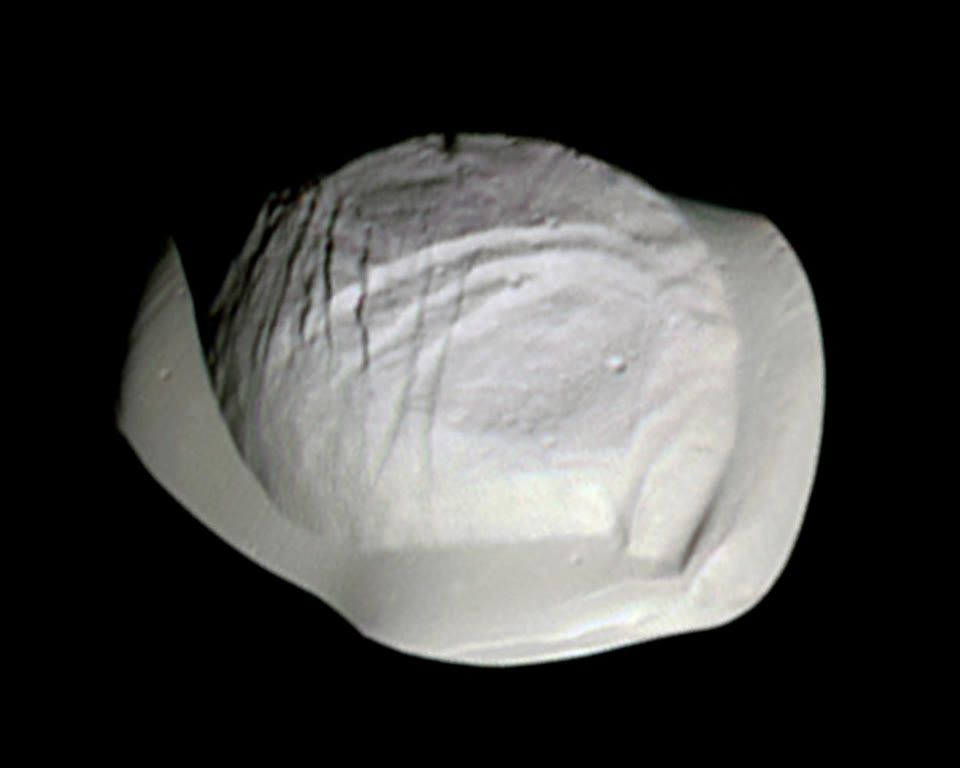
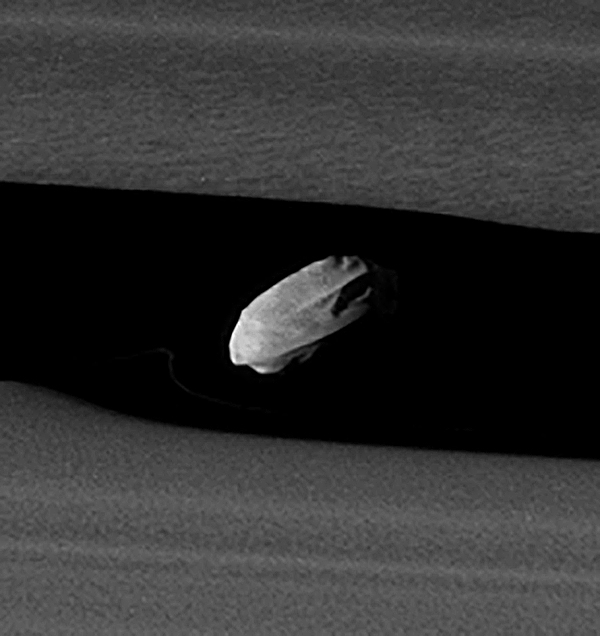
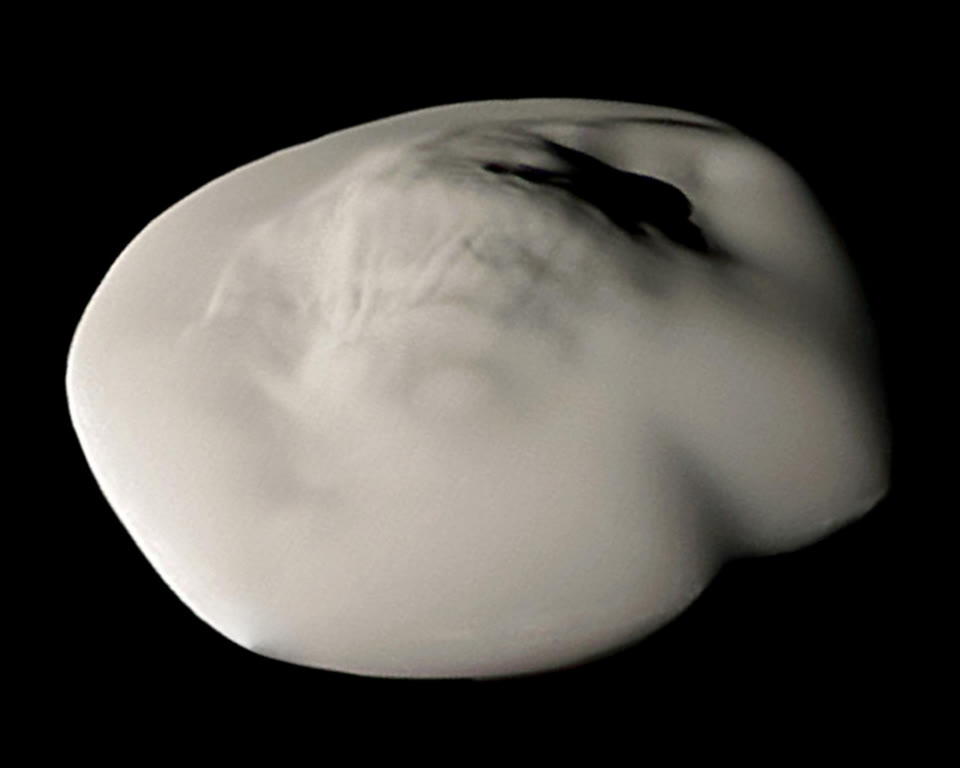
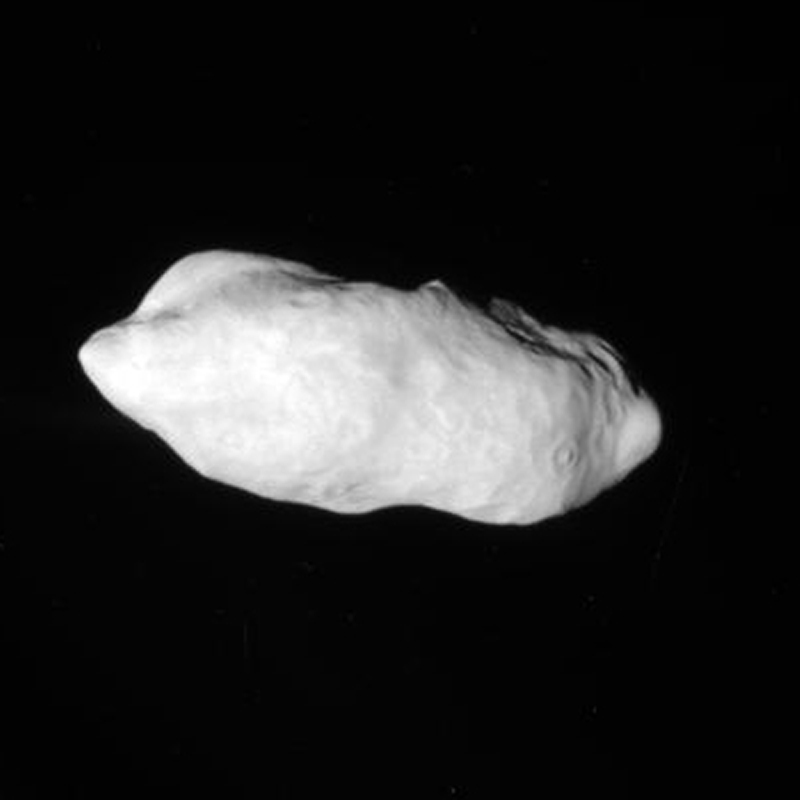
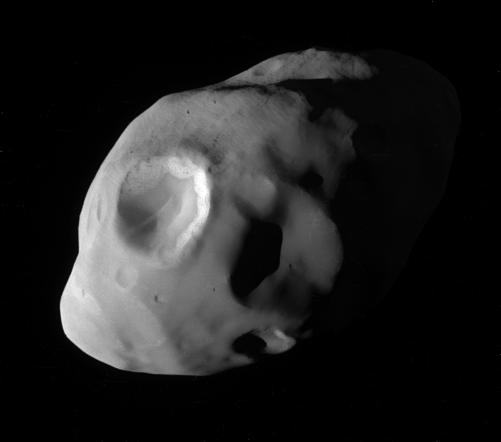
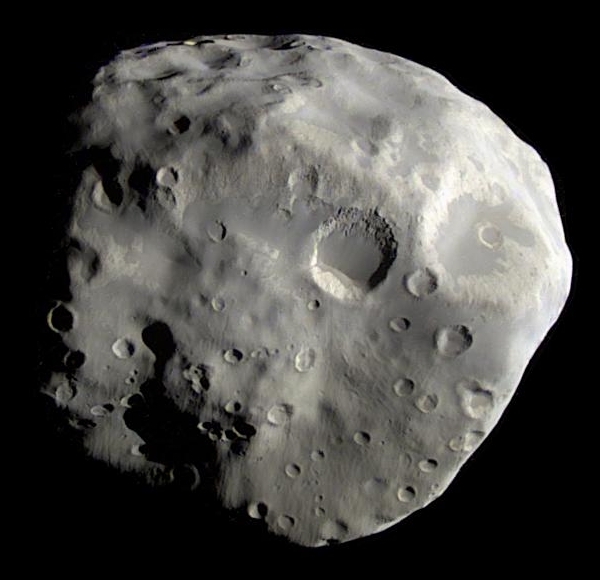
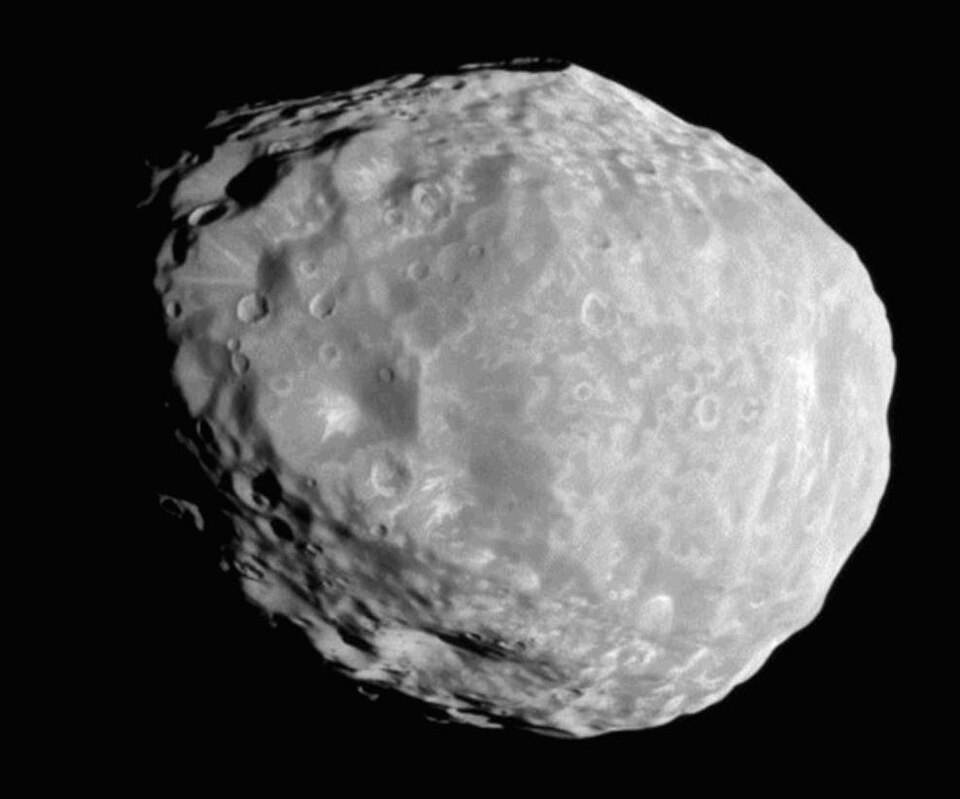
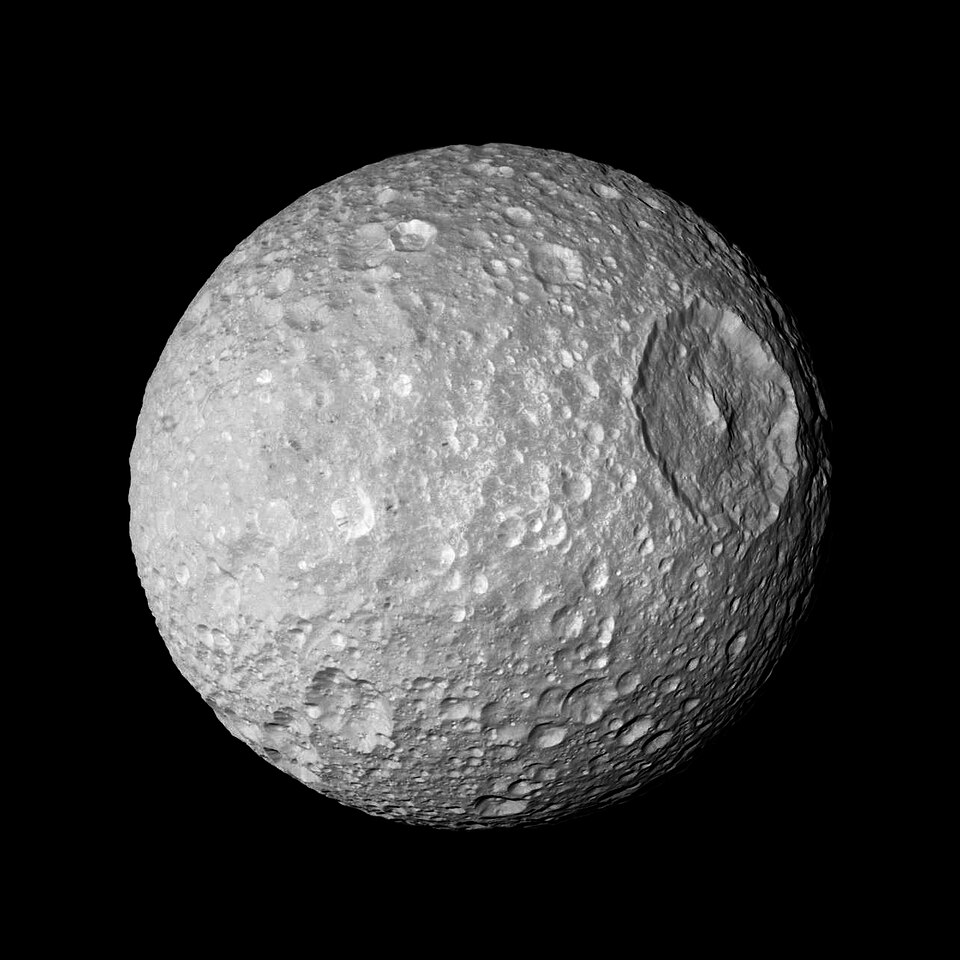
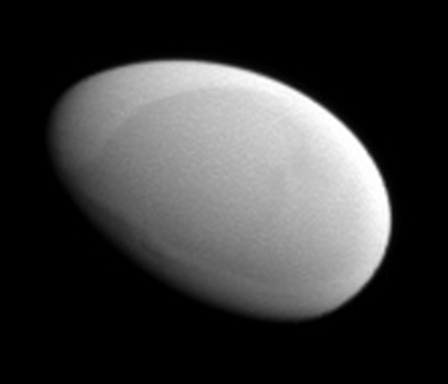
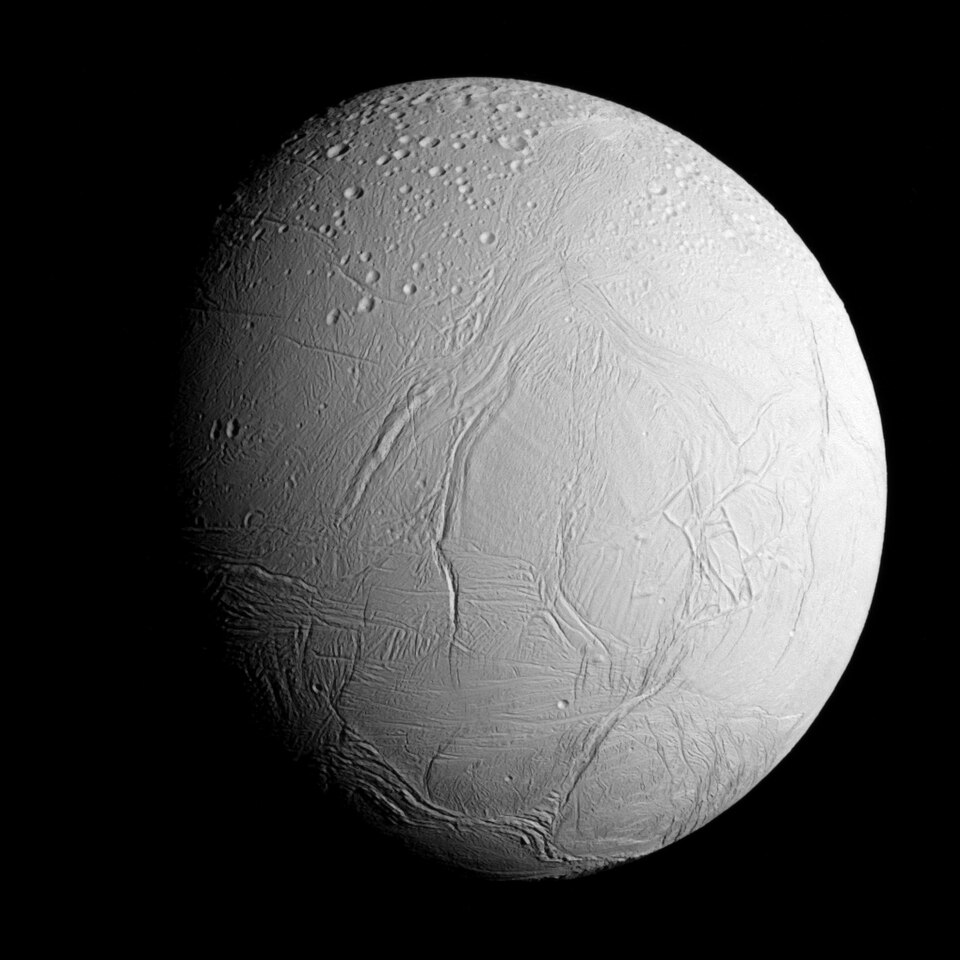
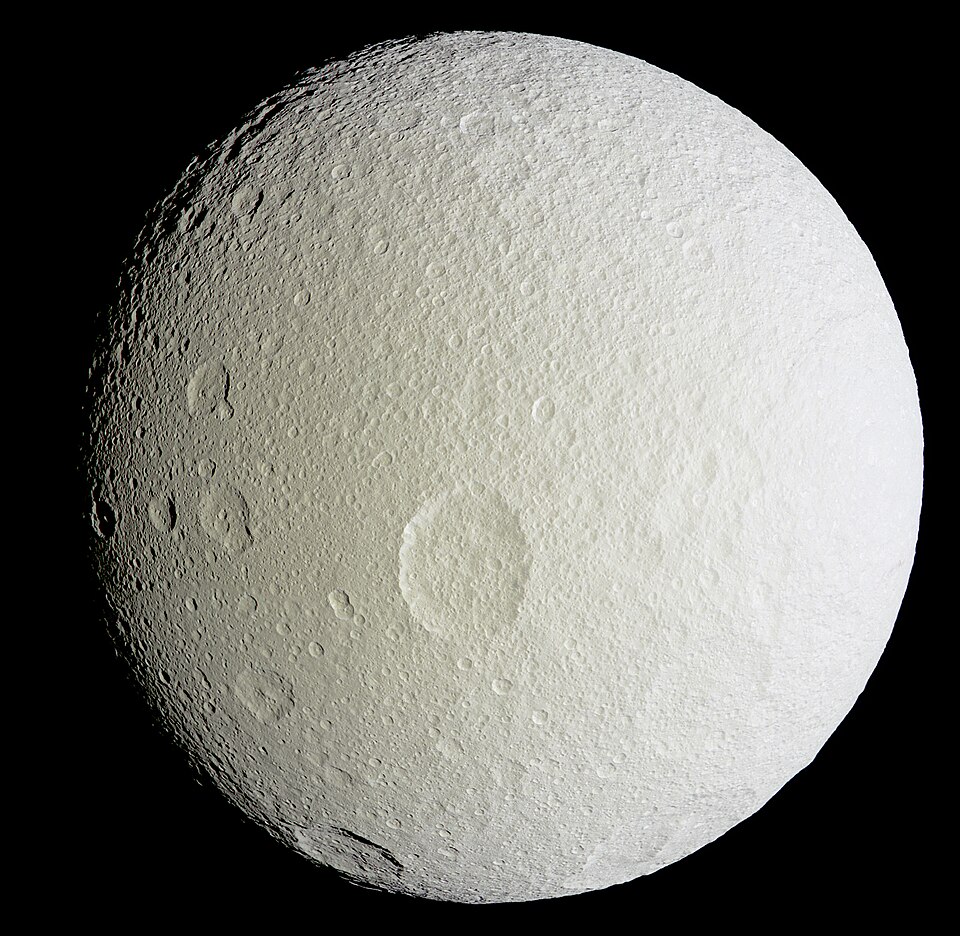
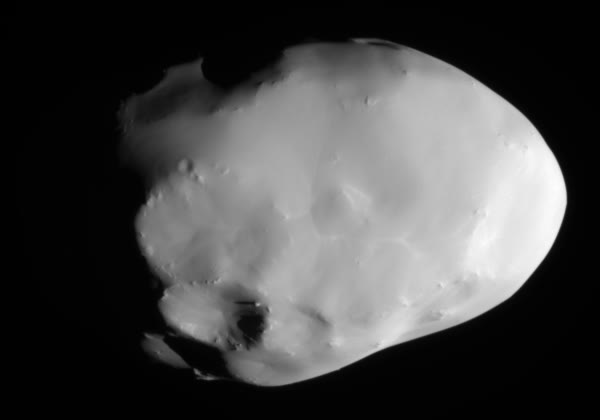
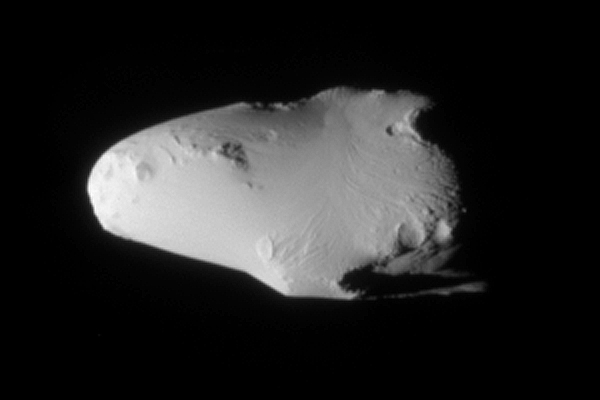
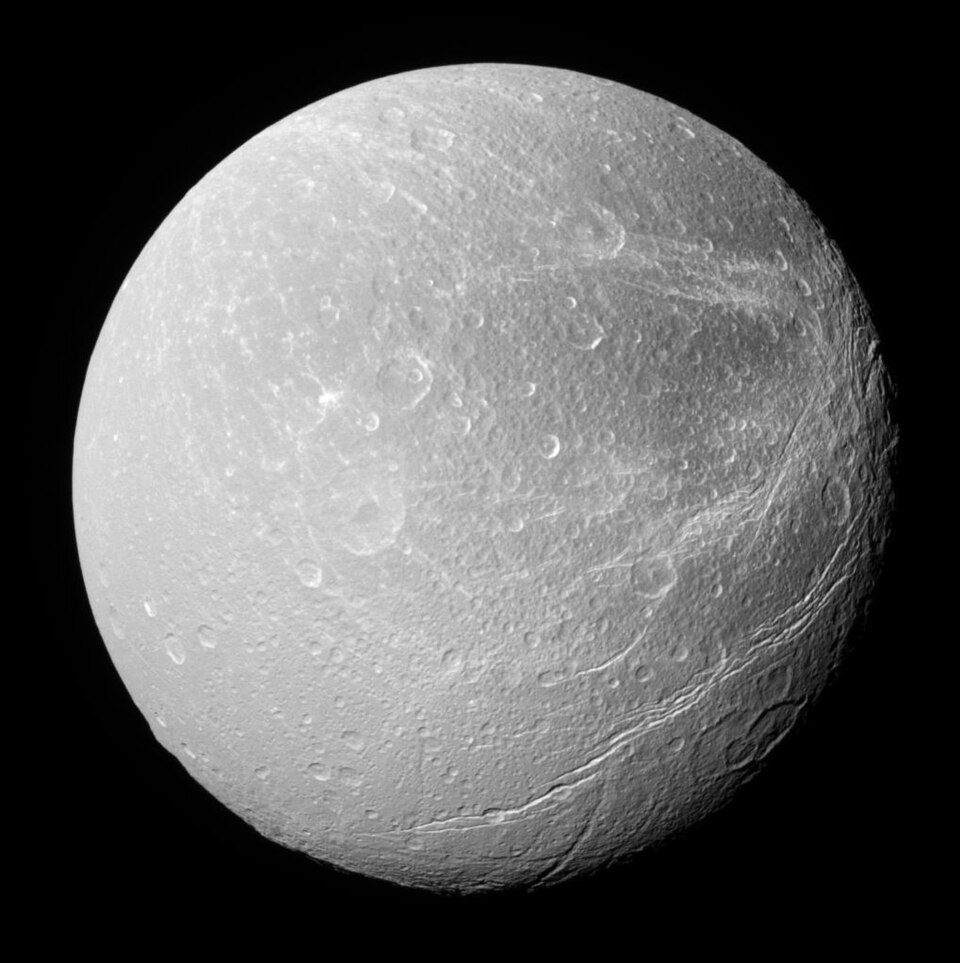
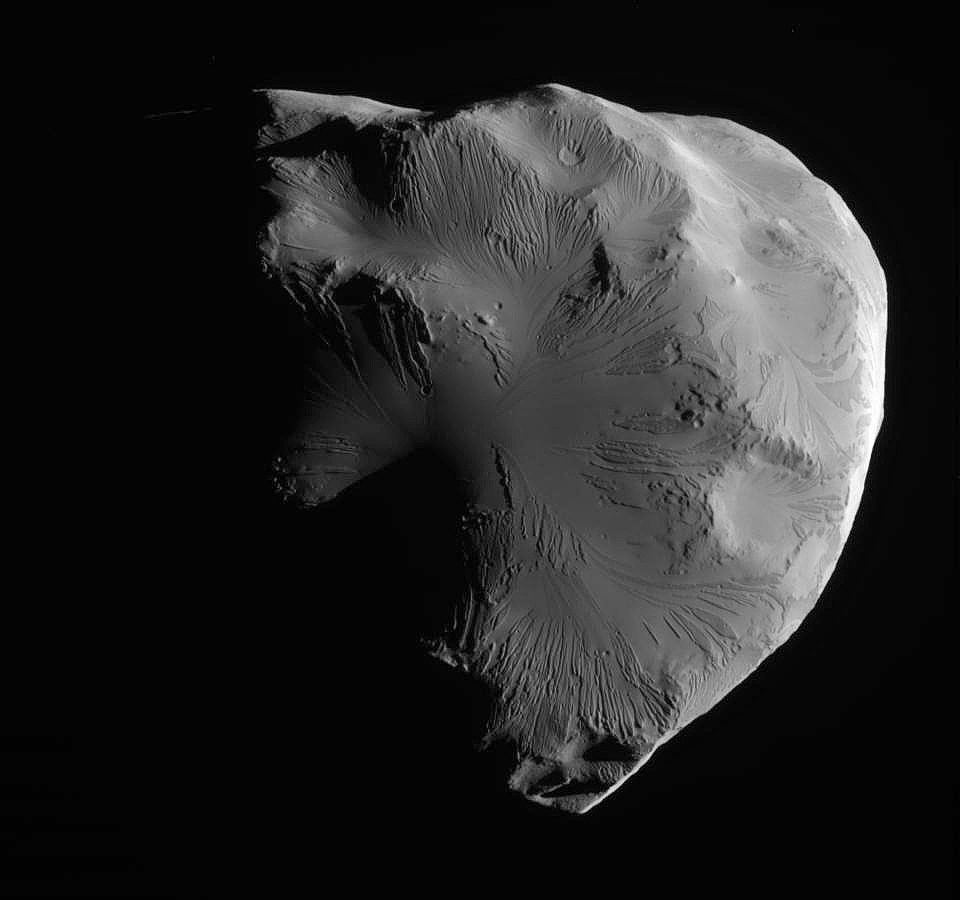
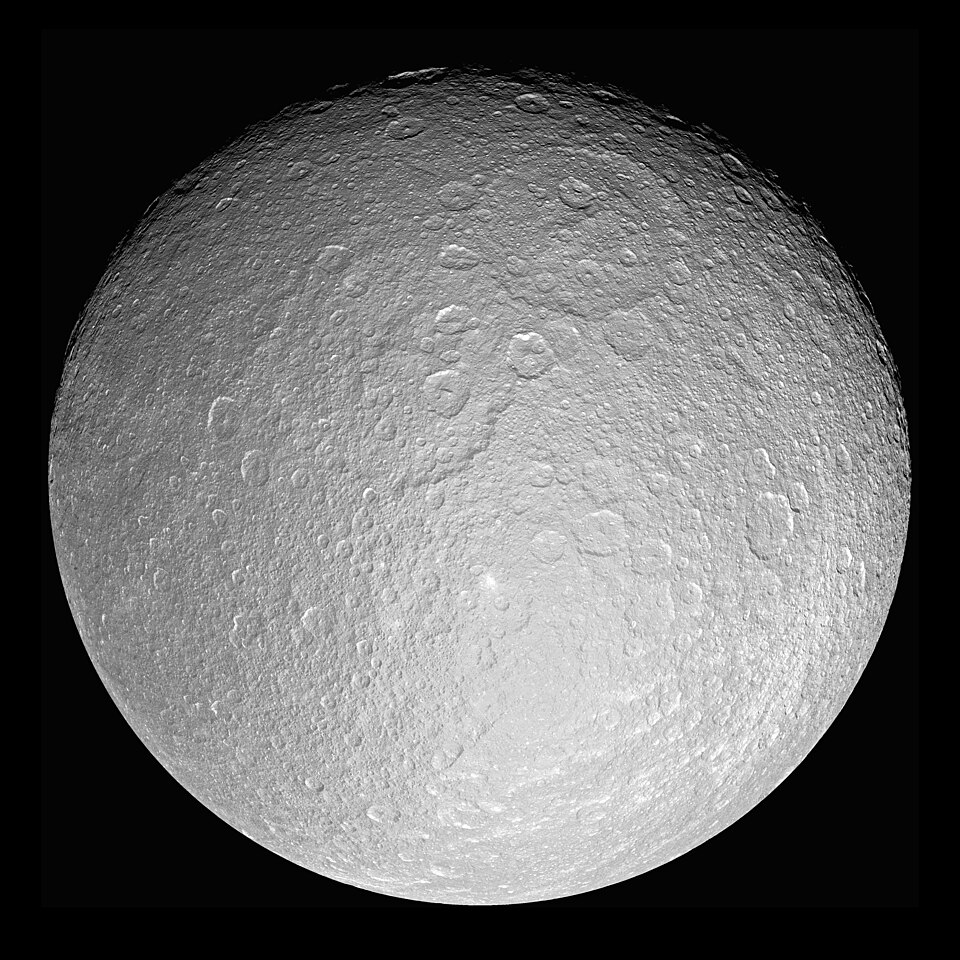
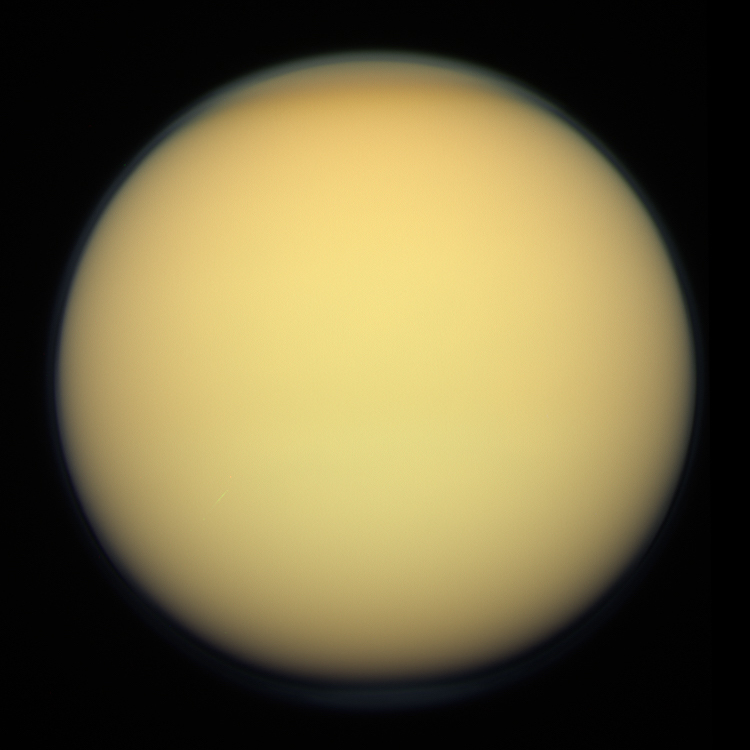
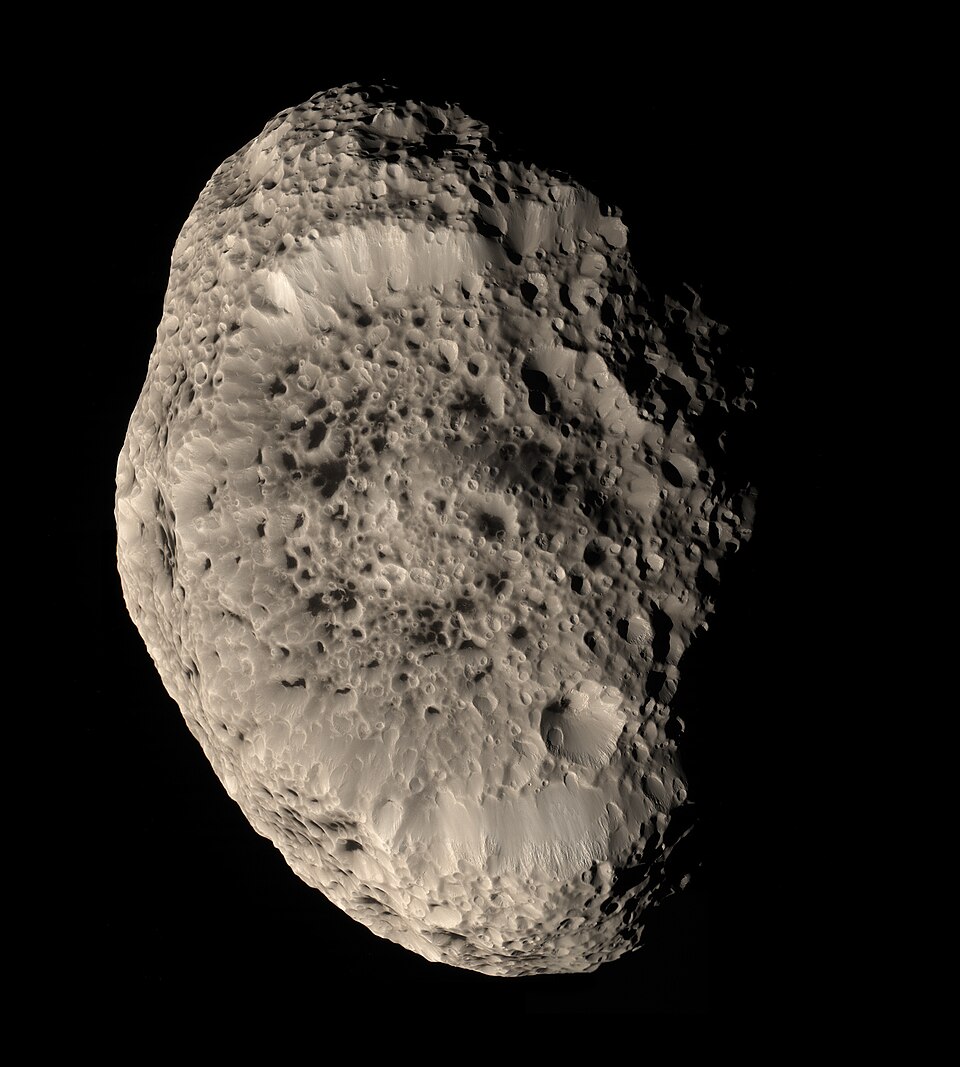
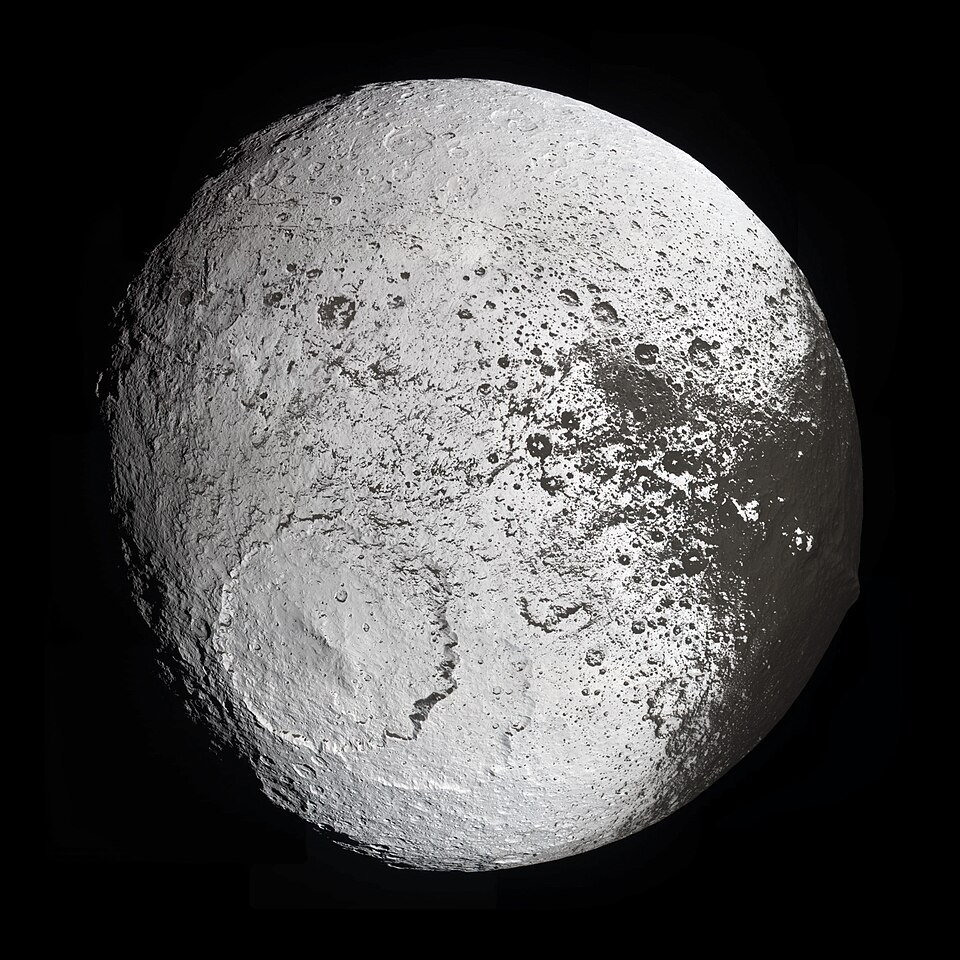
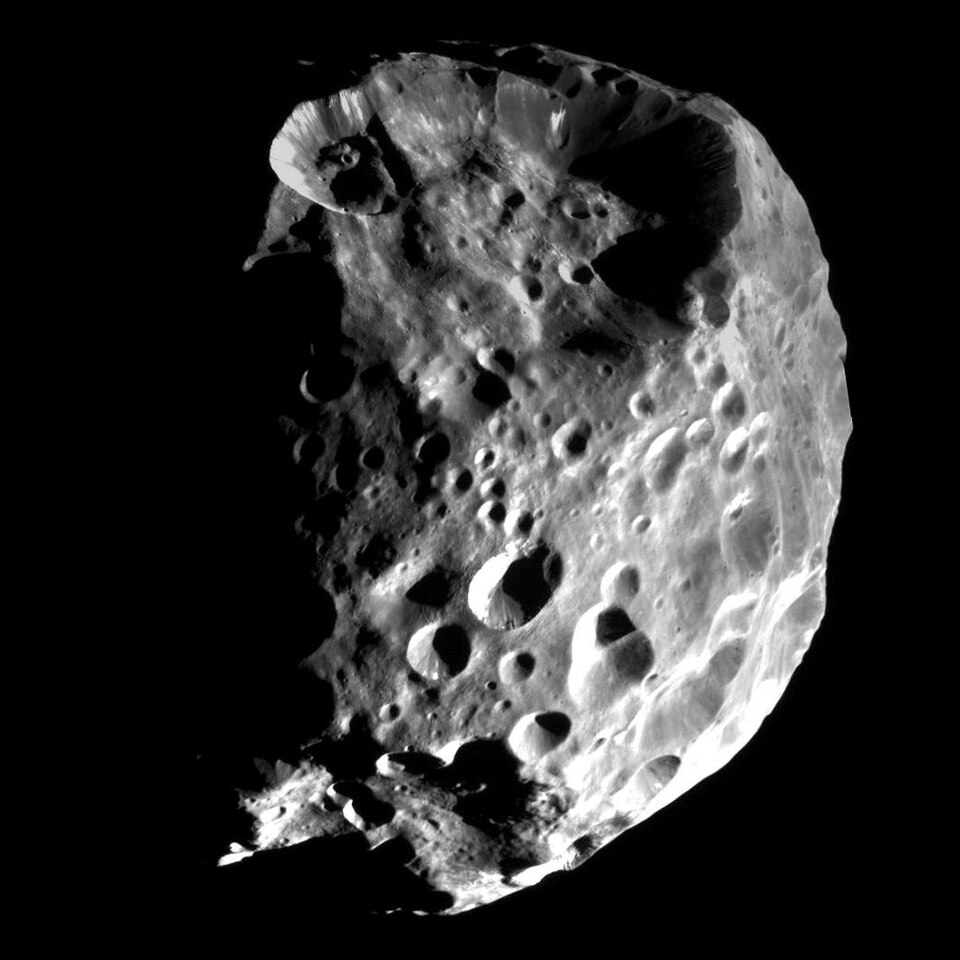
Every tracked satellite of Saturn, by dynamical family. Named moons in white; provisional designations — objects confirmed on camera as orbits but not yet christened — in grey.
Ring shepherds, co-orbitals, trojans, ring-embedded moonlets and the eight major moons — everything inside the regular, prograde system. These orbit in Saturn’s equatorial plane, locked to the ring ground-plane geometry.
Prograde irregulars on inclined 45–50° orbits, named from Inuit mythology. Believed to be fragments of a single captured parent body.
Prograde irregulars near 35–40° inclination, named from Gaulish mythology. A second captured-parent family.
The dark fleet: retrograde irregulars named from Norse mythology, orbiting backwards out to 25+ million km. Phoebe is the gatekeeper. This is where nearly all of the newly discovered moons live.
The registry keeps growing: 62 moons were announced in 2023 and another 128 in March 2025, nearly all of them small retrograde members of the Norse group — debris shells around the transmitter, swept into resonance with whatever Phoebe was before Saturn captured it.