The Backwards Twin
Earth's nearest neighbor spins the wrong way, traces a pentagram in the sky, and shows us the same face at every closest approach. None of this is normal.
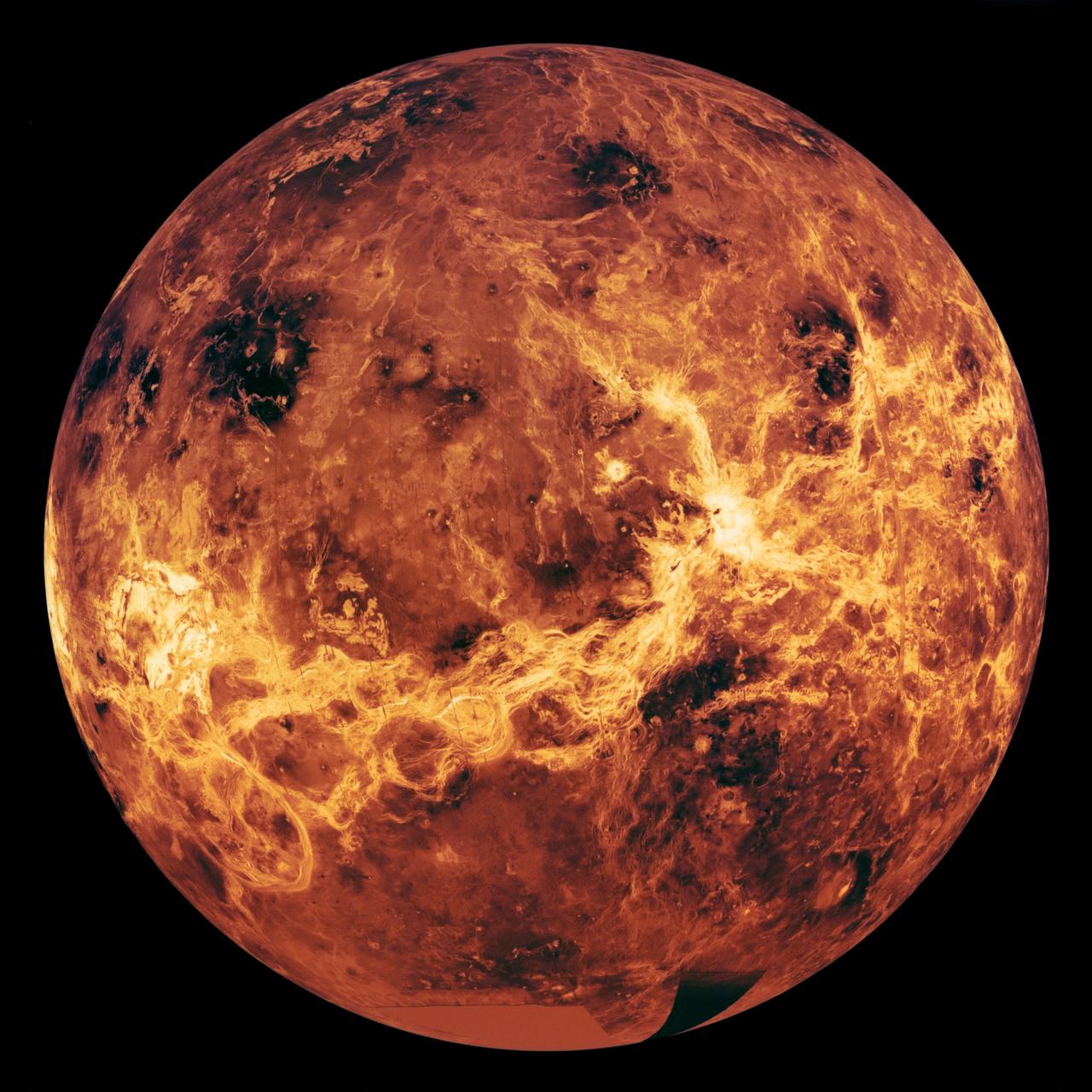
Venus spins backwards. Every other planet in the solar system rotates the same direction — counterclockwise when viewed from above the north pole. Venus spins clockwise. And it does it so slowly that a single day on Venus (243 Earth days) is longer than its year (225 Earth days). A day longer than a year. No mainstream model fully explains why.
Venus has the most circular orbit of any planet in the solar system — eccentricity of 0.007. Almost a perfect circle. Naturally forming orbits tend to be elliptical. Something placed Venus on rails.
Every 584 days Venus and Earth align in inferior conjunction. Do this 5 times and Venus has traced a near-perfect pentagram in the sky relative to Earth. 5 conjunctions, 8 Earth years, 13 Venus years — Fibonacci numbers. The ancients knew this. The pentagram symbol didn't come from witchcraft — it came from watching Venus.
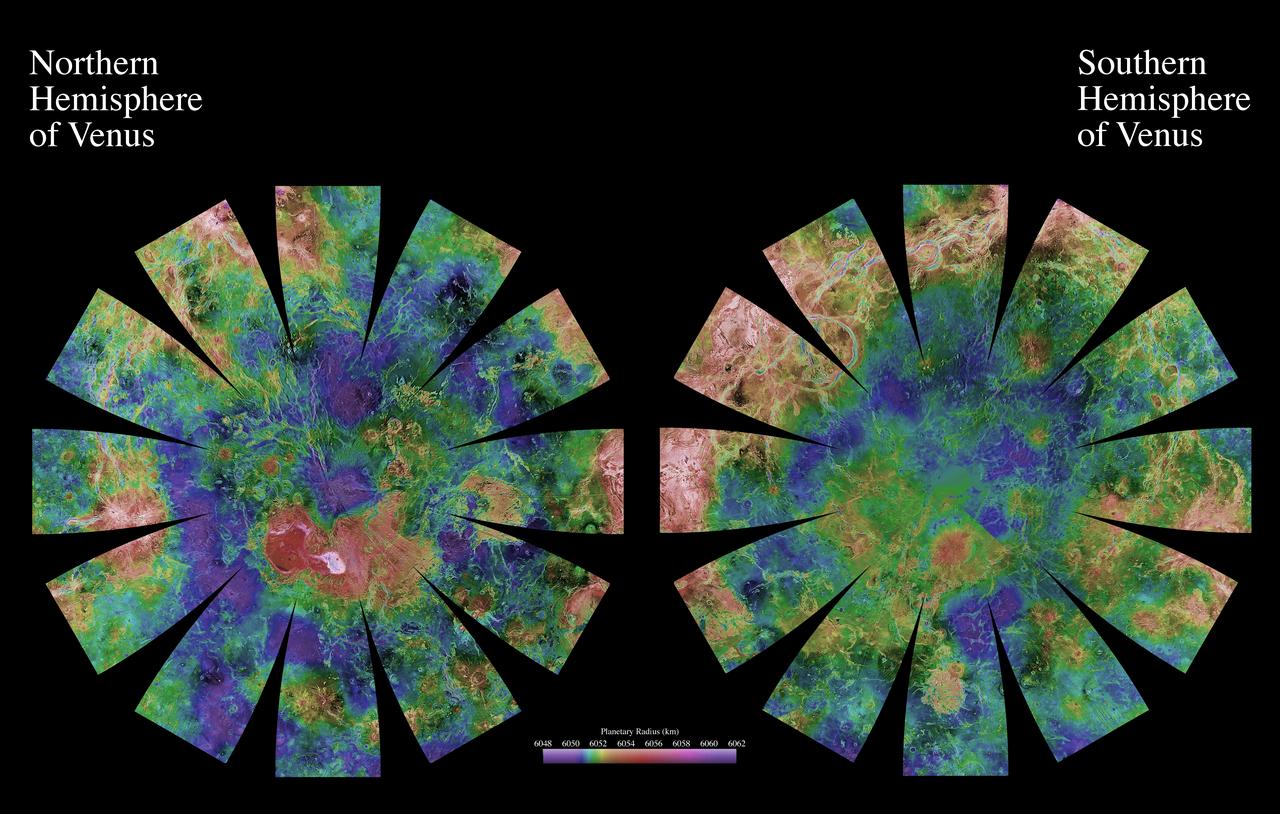
Venus appears to have been completely resurfaced all at once roughly 300-500 million years ago. The entire planet. Uniformly. Not gradual volcanic activity — a single catastrophic event wiped the geological slate clean. Every crater on Venus looks roughly the same age. That doesn't happen naturally.
Surface pressure is 92 times Earth's — equivalent to being 3,000 feet underwater. Clouds of sulfuric acid. Surface temperature of 900°F, hotter than Mercury even though Mercury is closer to the sun. The atmosphere is 96% CO2 and acts like a pressure cooker. But at about 50km altitude the temperature and pressure are almost identical to Earth's surface. A habitable zone floating in the clouds of hell.
In 2020 they detected phosphine gas in Venus's atmosphere. On Earth, phosphine is only produced by biological processes or industrial manufacturing. They've been trying to explain it away ever since. They can't.
Venus is 95% the size of Earth. Almost identical mass. Almost identical density. Almost identical gravity. Sitting right next door. It's not a cousin — it's closer to a twin. Two nearly identical planets side by side, one a paradise and one an inferno. That's a strange arrangement.
Every ancient civilization tracked Venus obsessively. The Sumerians, Babylonians, Mayans — Venus was central to their calendars and cosmology. The Mayans synchronized wars and sacrifices to Venus cycles. They weren't tracking it because it was pretty — they were tracking it because something about its cycle mattered. They called it the "death star" and associated its appearances with destruction and rebirth.
When Venus is at its closest approach to Earth, it always shows the same face toward us. Always. That's a tidal lock with Earth, not with the sun. How does a planet tidally lock to another planet instead of its own star?
The Moon is weird because it's too perfect. Venus is weird because it looks like Earth's twin that somebody wrecked — or reformatted.
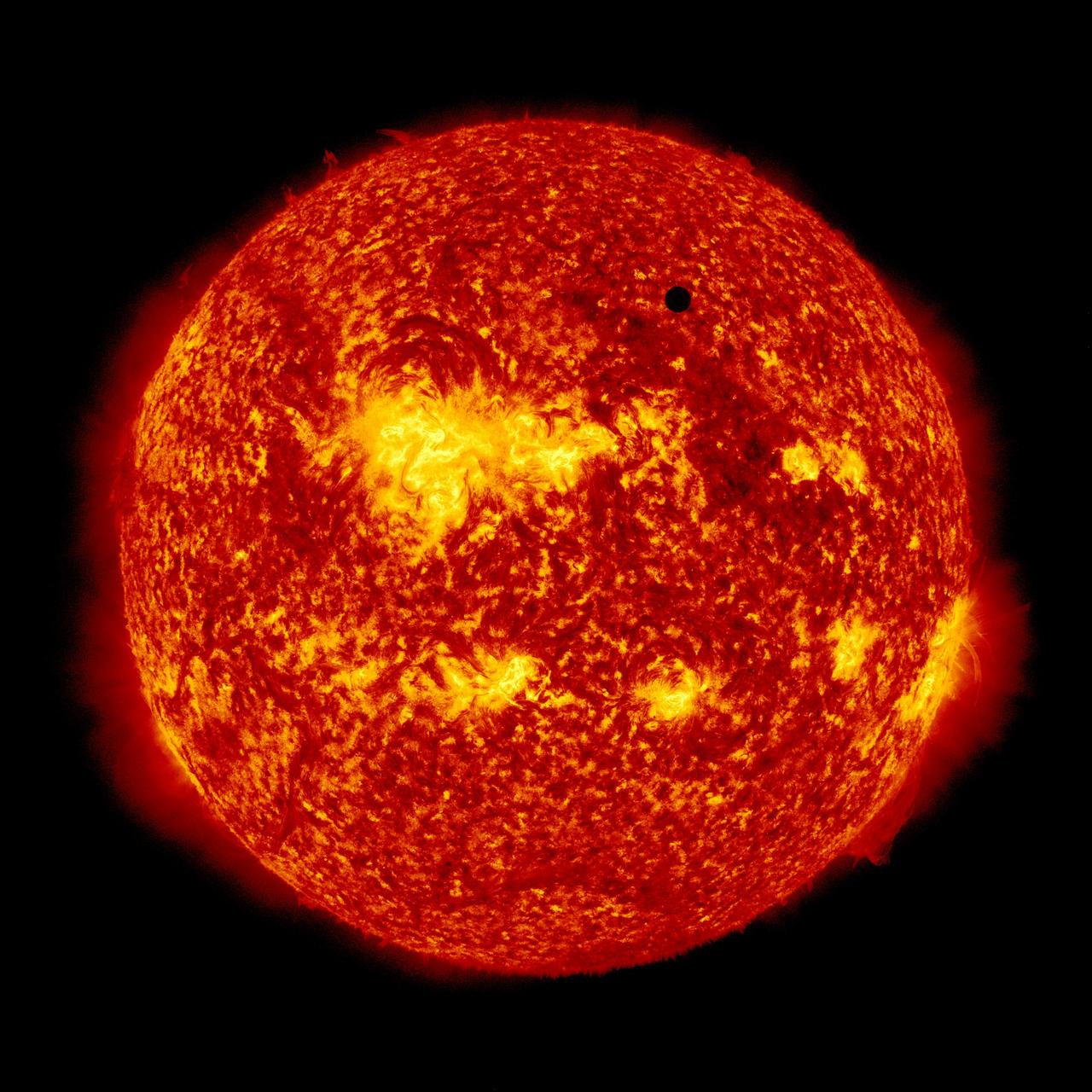
Every planet in the Solar System rotates counterclockwise when viewed from above the north pole. Every planet except Venus. Venus rotates clockwise — retrograde — and so slowly that its day is longer than its year.
A Venusian day takes 243 Earth days. A Venusian year takes 225 Earth days. The sun rises in the west and sets in the east. No mainstream model fully explains why.
The standard explanation is that a massive impact flipped Venus upside down early in its history. But there is no impact basin to match, no debris field, no isotopic signature of the kind of collision that would reverse a planet's rotation. The impact theory is a placeholder — an explanation invented because the observation needs one.
If Venus formed from the same protoplanetary disk as every other planet, it should spin the same direction. It doesn't. That leaves two options: something hit it hard enough to reverse its spin without leaving a trace, or Venus didn't form here.
Opposite spin means different origin. A planet that rotates against the grain of the entire Solar System is either a survivor of an event so violent it left no evidence, or a body that arrived from outside the system and was captured into an orbit so precise it defies every model of planetary capture. Neither answer is comfortable.
Venus has the most circular orbit of any planet in the Solar System. Naturally forming orbits are elliptical. Venus rides on rails.
| Property | Venus | Earth | Ratio |
|---|---|---|---|
| Diameter | 12,104 km | 12,742 km | 0.95 |
| Mass | 4.87 × 10²⁴ kg | 5.97 × 10²⁴ kg | 0.815 |
| Surface Gravity | 8.87 m/s² | 9.81 m/s² | 0.904 |
| Density | 5.24 g/cm³ | 5.51 g/cm³ | 0.951 |
| Orbital Eccentricity | 0.007 | 0.017 | Most circular in Solar System |
| Rotation Direction | Retrograde (clockwise) | Prograde (counterclockwise) | Opposite |
Two nearly identical planets sitting right next to each other. Same size. Same mass. Same density. Same gravity. One is a paradise, one is a 900°F pressure cooker with sulfuric acid clouds. And one of them spins backwards.
This is not a cousin. This is a twin from somewhere else.
Point a telescope at Venus and you don't see a star. You see a world — with phases like the Moon. Galileo saw this in 1610 and it changed everything. Most people alive today have never seen it.
As Venus approaches Earth in its orbit, it grows dramatically in apparent size while showing less and less of its illuminated face — from a small, full disc to an enormous thin crescent. At its closest, Venus appears six times larger than at its farthest. You can see the crescent phase with decent binoculars.
The ancients could not see the phases. But they could see Venus's brightness change — it becomes the brightest object in the sky after the Sun and Moon. Bright enough to cast shadows. Bright enough that they built religions around it.
Every 584 days, Venus and Earth align in inferior conjunction — Venus passes between Earth and the Sun. Repeat this 5 times and Venus has traced a near-perfect pentagram relative to Earth's position.
5 conjunctions. 8 Earth years. 13 Venus years. Three consecutive Fibonacci numbers.
The pentagram symbol did not come from witchcraft or occultism. It came from watching Venus. The Babylonians knew it. The Pythagoreans knew it. The Mayans built their entire war calendar around Venus cycles. Every ancient civilization that tracked the sky found this pattern and considered it sacred.
This is not a loose approximation. The 8:13 ratio is accurate to within 0.03%. Over 8 Earth years, Venus completes almost exactly 13 orbits and the pattern repeats. Nature produces spirals and ellipses. Nature does not produce pentagrams locked to Fibonacci ratios between two planets.
The pentagram has been found carved into Sumerian tablets dated to 3000 BC. The Pythagoreans adopted it as their sacred symbol — not from mysticism but from astronomy. They had calculated the Venus cycle. In medieval Europe, the pentagram was painted on doors and shields as protection. The church eventually demonized it, but the original meaning was never demonic. It was planetary. It was Venus.
Venus disappears from the sky twice during each synodic cycle — once behind the Sun for about 50 days (superior conjunction) and once in front of the Sun for about 8 days (inferior conjunction). Every reappearance was treated as an omen of war, plague, or the death of kings.
When Venus passes between Earth and the Sun, it vanishes from the evening sky, spends 8 days invisible, then reappears in the morning sky. The Sumerians encoded this as Inanna's Descent into the Underworld — the oldest written narrative in human history. Inanna passes through seven gates, is stripped of her power at each one, dies, and is reborn after three days.
This is not metaphor. It is an astronomical observation wrapped in mythology. Venus literally descends below the horizon, disappears for a period, and rises again. Every culture that watched the sky recorded the same story with different names. The Babylonians called her Ishtar — Inanna's direct successor, the war goddess and queen of heaven. Same planet, same descent myth, same obsession. The Babylonians tracked Venus's heliacal rising (its first appearance above the horizon before dawn) and recorded omens from it on clay tablets that survive to this day. When Ishtar rose, kingdoms trembled.
The Mayans did not launch wars randomly. They launched wars when Venus reappeared as the morning star after inferior conjunction. They called it Noh Ek — the Great Star — and Chak Ek — the Red Star. The Dresden Codex, a surviving Mayan astronomical text, contains Venus tables that predict these appearances with terrifying accuracy, within 2 hours over a span of 481 years. Warriors painted themselves in Venus glyphs. Captives were sacrificed on the first morning Venus reappeared.
The Aztecs went further. Their morning star deity was Tlahuizcalpantecuhtli — Lord of the Dawn — a destroyer god who hurled darts of light at the Earth when Venus appeared before sunrise. Warriors shielded their doors and windows against the first rays of the morning star. And their feathered serpent god Quetzalcoatl IS Venus — the entire myth of his death, descent into the underworld, and resurrection tracks Venus's disappearance behind the Sun and its reappearance. When Quetzalcoatl returned as the morning star, it meant the death star had returned.
The logic was consistent across Mesoamerica: Venus's reappearance as morning star was the most dangerous moment in the sky. The death star had returned.
The Greeks originally believed the morning star and the evening star were two different objects. They called the morning star Phosphorus (light-bearer) and the evening star Hesperus (western one). It was Pythagoras, around 570 BC, who demonstrated they were the same body — a single object playing two roles. One planet with two faces. This was one of the earliest recorded moments of scientific revelation: the sky was not what it appeared to be.
In China, Venus was called Tai Bai — the Great White — and associated with metal, the west, autumn, and military punishment. Chinese court astronomers tracked Venus's brightness and position with imperial urgency. Unusual Venus activity — appearing in the wrong part of the sky, shining too brightly, or lingering too long — was read as a sign that wars would begin or dynasties would fall. Venus was not decoration. Venus was intelligence.
| Culture | Venus Name | Association | Critical Moment |
|---|---|---|---|
| Sumerian | Inanna | Love, war, death, rebirth | Descent and return |
| Babylonian | Ishtar | War goddess, queen of heaven | Heliacal rising |
| Mayan | Noh Ek / Chak Ek | War, sacrifice, divine wrath | First morning appearance |
| Aztec | Tlahuizcalpantecuhtli / Quetzalcoatl | Lord of the Dawn, destroyer, feathered serpent | Morning star darts / resurrection |
| Greek | Phosphorus / Hesperus | Light-bringer, two identities revealed as one | Pythagoras's discovery |
| Roman | Lucifer (morning) / Vesper (evening) | Light-bearer, evening calm | Transition between roles |
| Chinese | Tai Bai (Great White) | Metal, autumn, military punishment | Unusual brightness or position |
The Romans translated the Greek Phosphorus into Latin: Lucifer — literally "light-bringer." This was not a name for evil. This was not a fallen angel. This was the name of Venus at dawn — the brightest object in the pre-dawn sky, the herald of the sun, the bringer of light before light itself arrives.
The association with Satan came centuries later, through a single passage in Isaiah 14:12 — "How art thou fallen from heaven, O Lucifer, son of the morning" — which was originally a taunt directed at the King of Babylon, not a description of a cosmic being. Early Church fathers reinterpreted the passage as referring to Satan's fall from heaven. The morning star became the adversary. Venus became the devil.
But the astronomy underneath never changed. The planet the ancients feared, tracked, and named across every civilization on Earth — Inanna, Ishtar, Noh Ek, Quetzalcoatl, Phosphorus, Lucifer, Tai Bai — is the same object hanging in the sky tonight. The names changed. The fear didn't. Every culture that watched the sky closely enough came to the same conclusion: this object is not ordinary.
This is what you see when you point a large amateur telescope at Venus. Not a point of light. A world.
Venus is the closest planet to Earth and the brightest natural object in the sky after the Sun and Moon. At maximum brightness it reaches magnitude -4.92 — bright enough to be visible in full daylight if you know where to look. Bright enough to cast visible shadows at night. The ancients had no telescopes but they had this: a light in the sky so powerful it demanded attention, brighter than anything except the two bodies that govern day and night.
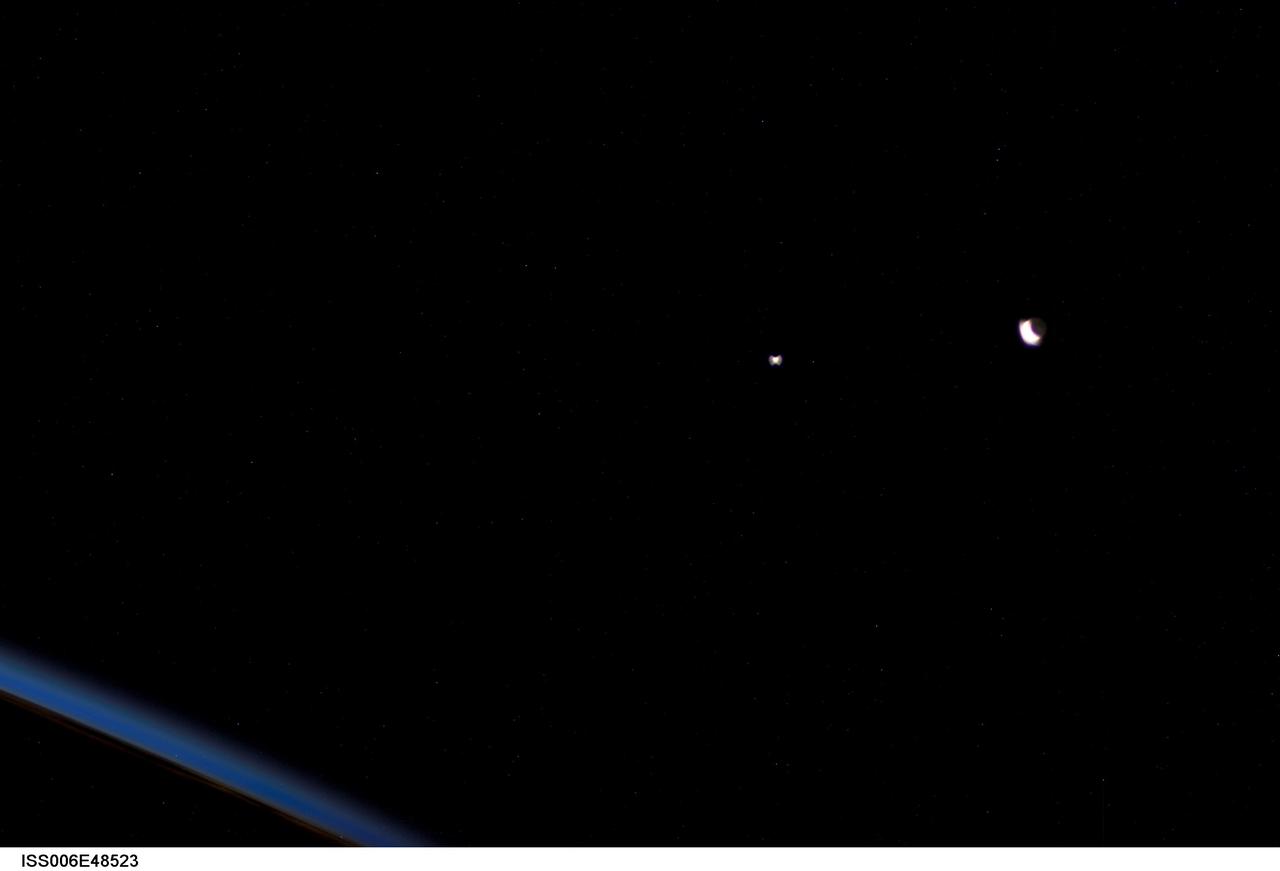
The crescent moon with a star beside it is one of the most recognizable symbols on Earth. It appears on the flags of over a dozen nations. It is the symbol of Islam. But it is older than Islam by thousands of years — and the "star" is not a star. It is Venus.
Several times each year, the crescent Moon and Venus appear together in the sky — close enough to look like a single symbol. A thin crescent with a brilliant point of light beside it. This conjunction is visible to the naked eye and it is unmistakable.
The symbol predates Islam by millennia. It appears on coins from the ancient city of Byzantium (later Constantinople, later Istanbul) from the 1st century BC. It appears in Sumerian cylinder seals from 2100 BC. The crescent-and-star was the symbol of Inanna — Venus — paired with the Moon god Sin. When the Ottoman Empire adopted it, they inherited a symbol that was already 3,000 years old.
The crescent Moon-Venus conjunction happens when Venus is near maximum elongation from the Sun — meaning it is at its brightest and highest in the evening or morning sky. The Moon, in its thin crescent phase, is also near the Sun. When they align, the two brightest objects in the night sky after the Sun stand together.
For ancient sky-watchers, this was the most dramatic visual event that occurred regularly. Not an eclipse — those are rare and brief. The crescent-Venus conjunction happens multiple times per year, lasts for hours, and is visible to everyone who looks up. It was the most photographed celestial event long before cameras existed — because every culture drew it, carved it, stamped it on coins, and wove it into flags.
| Symbol Element | Celestial Body | Ancient Identity |
|---|---|---|
| Crescent | Moon (2-3 days old) | Sin / Nanna (Mesopotamia), Selene (Greece) |
| Star / point of light | Venus | Inanna / Ishtar (Mesopotamia), Aphrodite (Greece) |
| Combined symbol | Moon-Venus conjunction | Sacred union of two deities, cosmic alignment |
The symbol is not decorative. It is not abstract. It is a precise astronomical observation encoded into a glyph — a thin crescent Moon with the planet Venus beside it. It is a snapshot of the sky that every civilization on Earth recognized and revered.
When Venus makes its closest approach to Earth, it always shows the same face toward us. Not approximately the same face. The same face. Every 584 days. Every time. For as long as we have been able to measure it.
Between two inferior conjunctions (closest approaches), Venus experiences almost exactly 5 solar days. One Venusian solar day is 116.75 Earth days. The synodic period is 583.9 Earth days. Divide: 583.9 / 116.75 = 5.001.
That is a 5:1 spin-orbit resonance with Earth's conjunction cycle. Venus rotates exactly 5 times — from its own frame of reference — between each time it faces Earth. So at every closest approach, the same meridian points toward us. The precision is extraordinary.
Tidal locking requires gravitational torque. The Sun's tidal force on Venus is roughly 17,000 times stronger than Earth's at closest approach. If tidal forces were responsible for this resonance, Venus should be locked to the Sun — like Mercury's 3:2 resonance. Instead it is locked to a planet whose gravitational influence is negligible by comparison.
| Gravitational Source | Tidal Force on Venus | Resonance? |
|---|---|---|
| The Sun | ~17,000× Earth's | No resonance detected |
| Earth (at closest approach) | 1× (baseline) | Precise 5:1 resonance |
| Jupiter | ~0.3× Earth's | No resonance detected |
The weaker force wins. The body with negligible tidal influence maintains a precise resonance. The body with 17,000 times more tidal force does not. This is backwards.
One explanation for how a weak resonance could establish itself: Venus and Earth were once much closer together. If Venus was captured into the Solar System or migrated inward from a different orbit, there may have been a period when the two planets were close enough for Earth's tidal force to matter — close enough to establish a resonance that persists today through rotational inertia even though the force that created it no longer applies.
This is how fossil resonances work in physics. A system can be locked into a pattern by a force that was once strong, and the pattern persists long after the force weakens. Like a groove worn into a record — the needle stays in the groove even after the hand that placed it there is gone.
If Venus and Earth were once closer, the implications are staggering. It means Venus's current orbit is not its original orbit. It means the inner Solar System was rearranged. And it means the ancient civilizations who associated Venus with catastrophe, destruction, and near-death were not speaking metaphorically. They were remembering.
Venus's distance from Earth varies by a factor of six — from 38 million km at closest approach to 261 million km at maximum separation. No other neighboring planet shows this dramatic a range.
| Configuration | Distance from Earth | Apparent Size | Phase | Visibility |
|---|---|---|---|---|
| Inferior conjunction (closest) | 38-42 million km | Largest (62") | Thin crescent / new | Lost in Sun's glare |
| Greatest elongation (evening) | ~100 million km | Medium (24") | Half-lit (quarter) | Brilliant evening star |
| Superior conjunction (farthest) | 257-261 million km | Smallest (10") | Full (but behind Sun) | Lost in Sun's glare |
| Greatest elongation (morning) | ~100 million km | Medium (24") | Half-lit (quarter) | Brilliant morning star |
Venus follows a predictable cycle that repeats every 584 days. The ancients tracked every phase of this cycle and assigned meaning to each transition:
| Phase | Duration | What Happens | Ancient Meaning |
|---|---|---|---|
| Evening star (appears) | ~263 days | Venus visible after sunset, climbing higher each night | Goddess ascends, prosperity |
| Evening disappearance | ~50 days | Venus sinks into Sun's glare at superior conjunction | Journey to the underworld |
| Morning star (appears) | ~263 days | Venus visible before sunrise, the herald of dawn | Rebirth — but as warrior, not lover |
| Morning disappearance | ~8 days | Venus lost in Sun at inferior conjunction | Death. The 8-day descent. War omens. |
The critical transition — the one that terrified the ancient world — was the 8-day disappearance during inferior conjunction. This is when Venus is closest to Earth, moving fastest, and briefly invisible. When it reappeared as the morning star, the Mayans launched wars. The Babylonians read omens. The Romans noted that Lucifer had returned.
As Venus approaches inferior conjunction — its closest approach to Earth — it becomes a giant thin crescent. This is what it looks like through a Celestron 9.25" telescope.
This is the phase the ancients could not see but could infer. Venus at its brightest is also Venus at its thinnest crescent — a paradox that confused early astronomers. Maximum brightness occurs about 36 days before inferior conjunction, when the combination of apparent size and illuminated fraction produces the most total light. After that, it grows larger but dimmer as less surface is illuminated, until it vanishes into the Sun's glare.
The crescent shape means Venus is between Earth and the Sun — backlit. We are seeing the dark side fringed with light. The closer Venus gets to Earth, the more of its dark face we see. The death star shows us its shadow.
Venus appears to have been completely resurfaced in a single event roughly 300-500 million years ago. The entire planet. All at once.
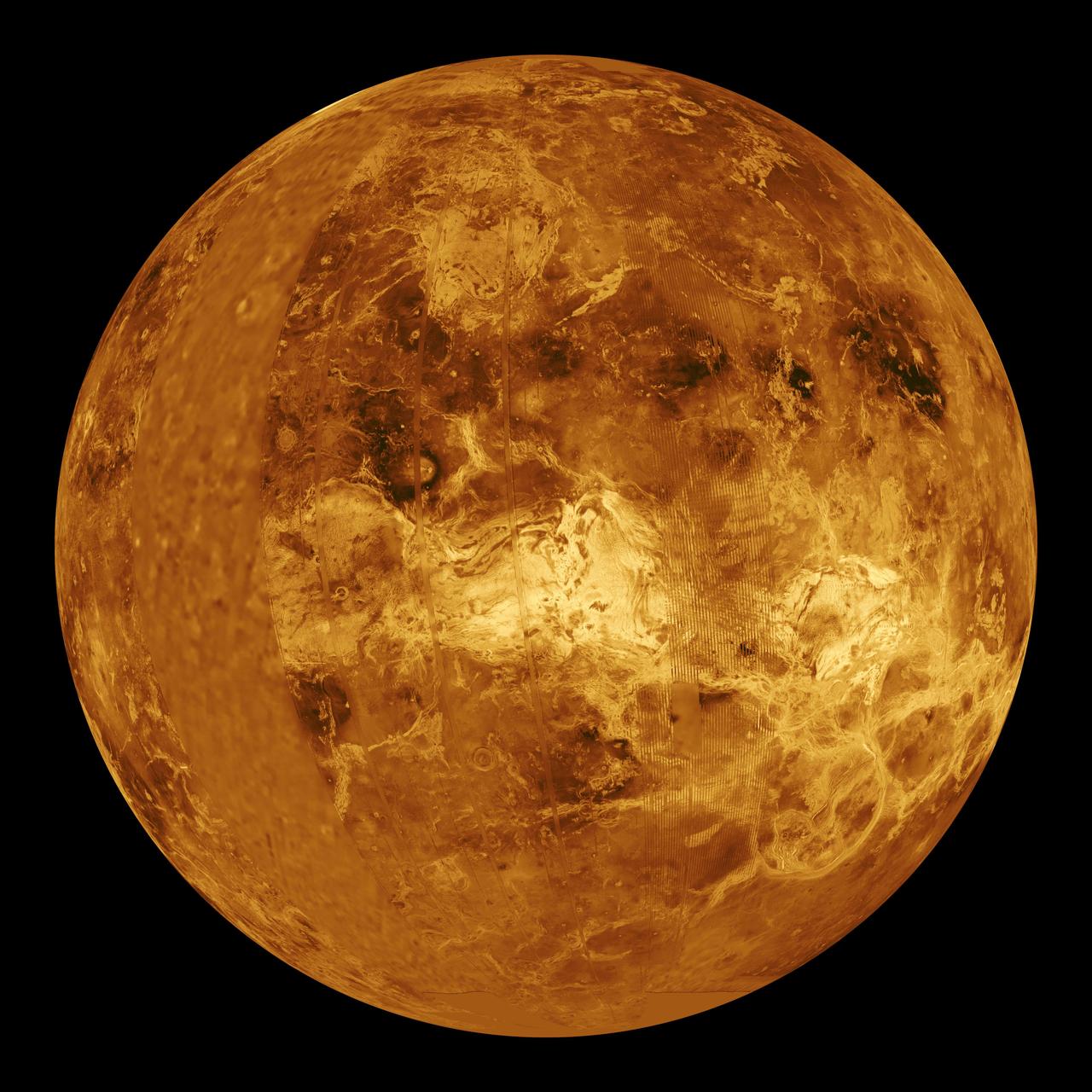
Every crater on Venus looks roughly the same age. There are no old, degraded craters and no fresh, sharp ones. The entire crater population appears to have been created after one catastrophic event wiped the geological slate clean.
On Earth, surfaces are different ages everywhere — ocean floors are young, continental cores are ancient. On Mars, surfaces range from billions of years old to relatively recent. On Venus, everything is the same age.
Mainstream geology calls this "catastrophic resurfacing" and attributes it to a planet-wide volcanic event. But no mechanism has been identified that could produce simultaneous global volcanism. No other rocky planet shows this pattern. It happened once, it happened everywhere, and then it stopped.
That's not volcanism. That's a hard reset.
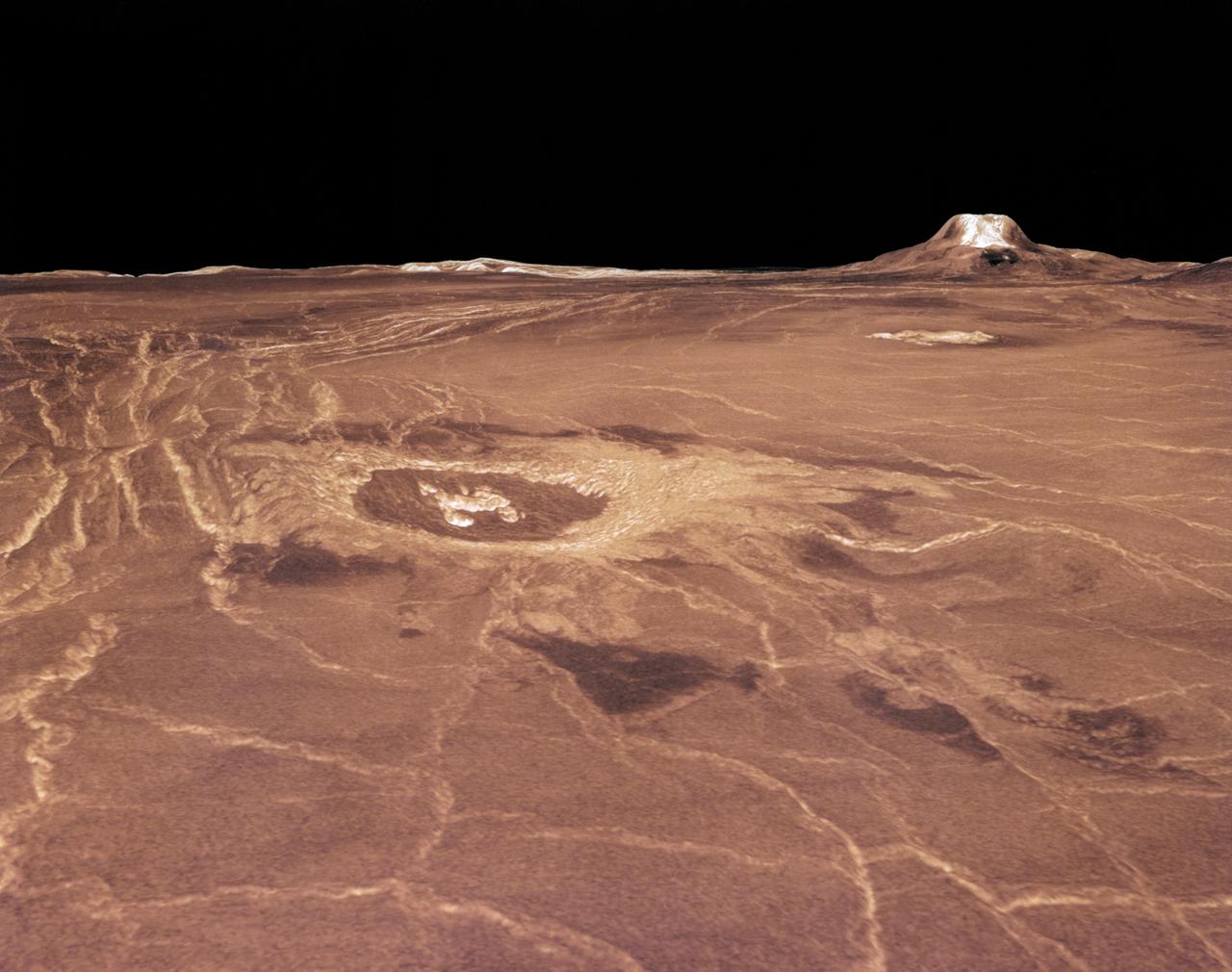
Venus's surface is 900°F with 92 atmospheres of pressure — equivalent to being 3,000 feet underwater. Clouds of sulfuric acid. 96% carbon dioxide. Nothing survives down there.
But at 50 km altitude, something strange happens. The temperature drops to about 75°F. The pressure drops to 1 atmosphere. The environment becomes almost identical to Earth's surface.
A habitable zone floating in the clouds of the most hostile planet in the inner Solar System. The only place in the Solar System outside Earth where you could stand in shirtsleeves and breathe with an oxygen mask.
| Altitude | Temperature | Pressure | Conditions |
|---|---|---|---|
| Surface (0 km) | 462°C / 864°F | 92 atm | Lead melts. Spacecraft last ~2 hours. |
| 30 km | 222°C / 432°F | 12 atm | Still lethal. Dense CO₂. |
| 50 km | 75°C / 167°F | 1 atm | Hot but survivable with cooling. |
| 55 km | 27°C / 80°F | 0.5 atm | Room temperature. Earth-like pressure. |
| 60 km | -10°C / 14°F | 0.2 atm | Cold. Sulfuric acid clouds begin above. |
Venus is hotter than Mercury despite being nearly twice as far from the Sun. The runaway greenhouse effect is the textbook answer. But the question nobody asks is: what started it? What turned an Earth-sized planet with Earth-like gravity into a pressure cooker? And why is there a perfectly habitable altitude band hiding inside the hell?
In September 2020, a team using the James Clerk Maxwell Telescope and the Atacama Large Millimeter Array detected phosphine gas in Venus's upper atmosphere. On Earth, phosphine is produced only by biological processes or industrial manufacturing.
No known abiotic chemical pathway can produce phosphine in Venus's atmosphere. The research team modeled every possibility — volcanic outgassing, lightning, photochemistry, surface mineral reactions. None of them produce phosphine in the quantities detected.
The scientific establishment spent the next several years trying to explain it away. Some questioned the detection itself. Others proposed exotic chemistry. Nobody has successfully reproduced the signal through non-biological means.
The phosphine was detected at approximately 55 km altitude — the same altitude band where temperature and pressure match Earth's surface. The habitable zone. The one place in Venus's atmosphere where life as we know it could survive.
Coincidence requires more faith than the alternative.
A recent astrophotography capture showing Venus in its crescent-quarter phase — proof that this is not historical data or simulation. This is what Venus looks like right now through a telescope.
Venus is not abstract. It is not a dot on a chart. It is a crescent world hanging in the sky that anyone with a telescope can see. The phases are real. The brightness changes are real. The crescent-Moon conjunction that became the most reproduced symbol in human history is visible multiple times per year to everyone on Earth.
Everything on this page can be verified by looking up.
Every major civilization tracked Venus obsessively. Not casually. Obsessively. They synchronized wars, sacrifices, and calendars to its cycles. They called it the morning star and the evening star — death and rebirth.
These civilizations, separated by oceans and millennia, all arrived at the same conclusion: Venus is important. Venus is dangerous. Venus is connected to cycles of destruction and renewal.
Modern astronomy says it's just a planet. The ancients who tracked it with more dedication than any other object in the sky disagreed.
Any one of these is an anomaly. All of them on the same planet is a pattern. Venus looks like Earth's twin that came from somewhere else, was placed in an impossibly precise orbit locked to Earth by Fibonacci mathematics, was catastrophically reformatted, and still shows signs of life in its cloud layer.
The question is not whether Venus is strange. The question is why nobody is asking why.
Venus is the only planet in the inner Solar System whose surface cannot be seen with optical telescopes. It is permanently shrouded. Everything we know about its geology comes from radar — bouncing signals through 92 atmospheres of carbon dioxide and sulfuric acid clouds. What the radar reveals is a planet that was completely resurfaced in a single event, shows no gradual geological aging, and carries the scars of something that happened all at once.